The straight-line length of the blade measured from the mune-machi to the tip.
Why It Matters
Using nagasa provides a consistent blade-length reference across swords with different curvature and mounting styles.
The width of the blade near the machi.
Why It Matters
Width at the base provides a clear reference for the blade’s taper and overall proportions.
The thickness of the blade near its base.
Why It Matters
Base thickness helps describe the blade’s structural proportions when read together with width and taper.
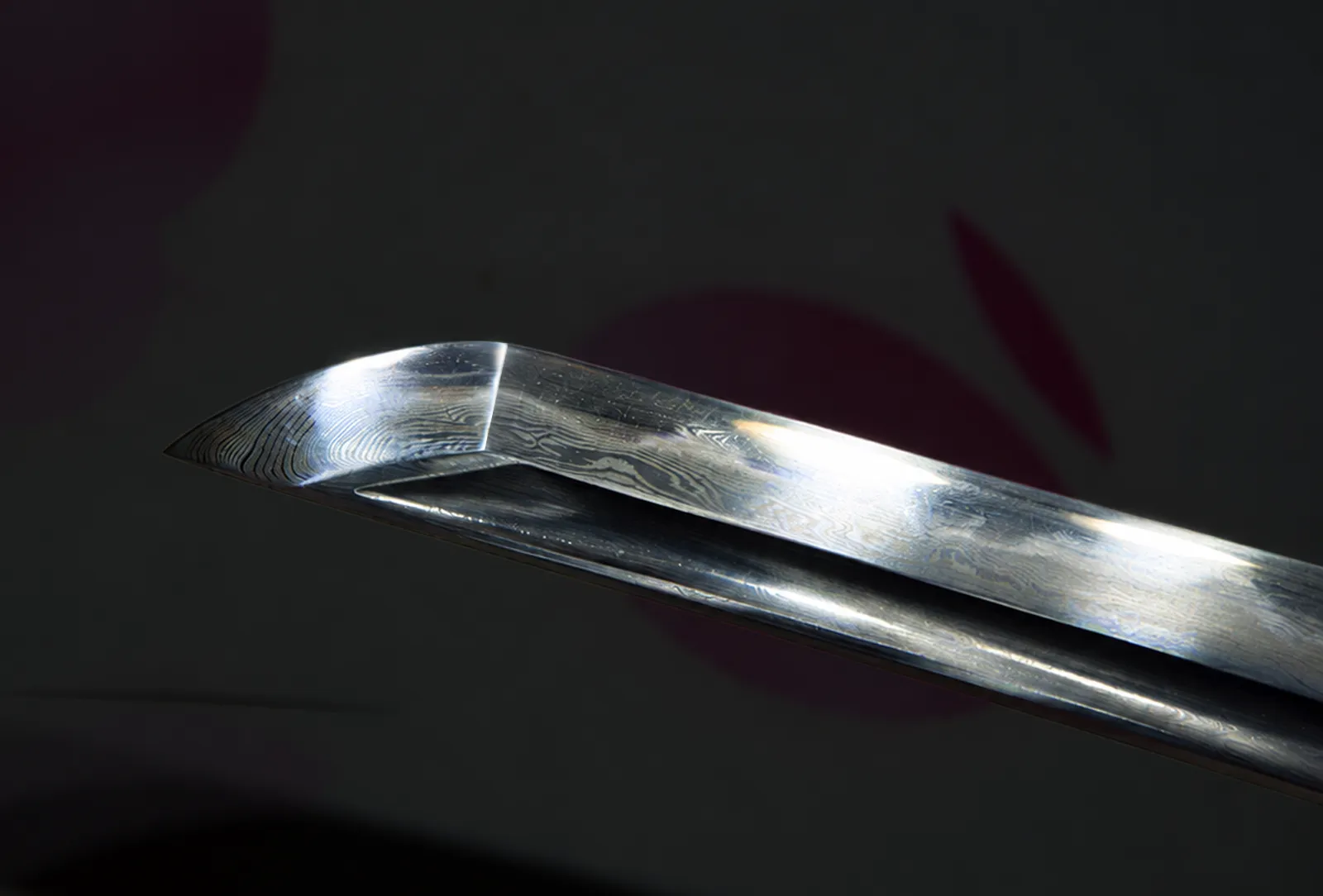
608 Patterned Steel is a type of layered steel used in Longquan swordmaking. It combines 60-series steel with T8 carbon tool steel. Additional folding and surface finishing can produce different visible patterns.
Why It Matters
The combination of different steels creates a layered structure with distinctive grain patterns. Further folding can refine these patterns, while polishing and surface finishing bring out the visual character of the steel. This gives swordmakers flexibility in creating different blade finishes from the same base material.
Clay Tempering is a common commercial English label for clay-assisted differential hardening. The traditional Japanese terminology distinguishes two related operations. Tsuchioki (土置き / つちおき) is the application of yakiba-tsuchi (焼刃土), a refractory clay-based coating, in varying thicknesses across the blade. Yaki-ire (焼入れ / やきいれ) is the subsequent heating and rapid quenching operation. Together, these operations help produce different hardening characteristics across the blade and contribute to the formation of a hamon (刃文). Here, Clay Tempering refers to the hardening method, not to the separate post-quench tempering process.
Why It Matters
During quenching, the thinly coated or exposed cutting edge usually cools more rapidly and can form hard, wear-resistant martensite. Thicker clay over the blade body and spine slows cooling, allowing comparatively softer, tougher structures to develop. This deliberate contrast gives the blade a hard edge with a more resilient body, while the transition creates the hamon revealed by polishing.
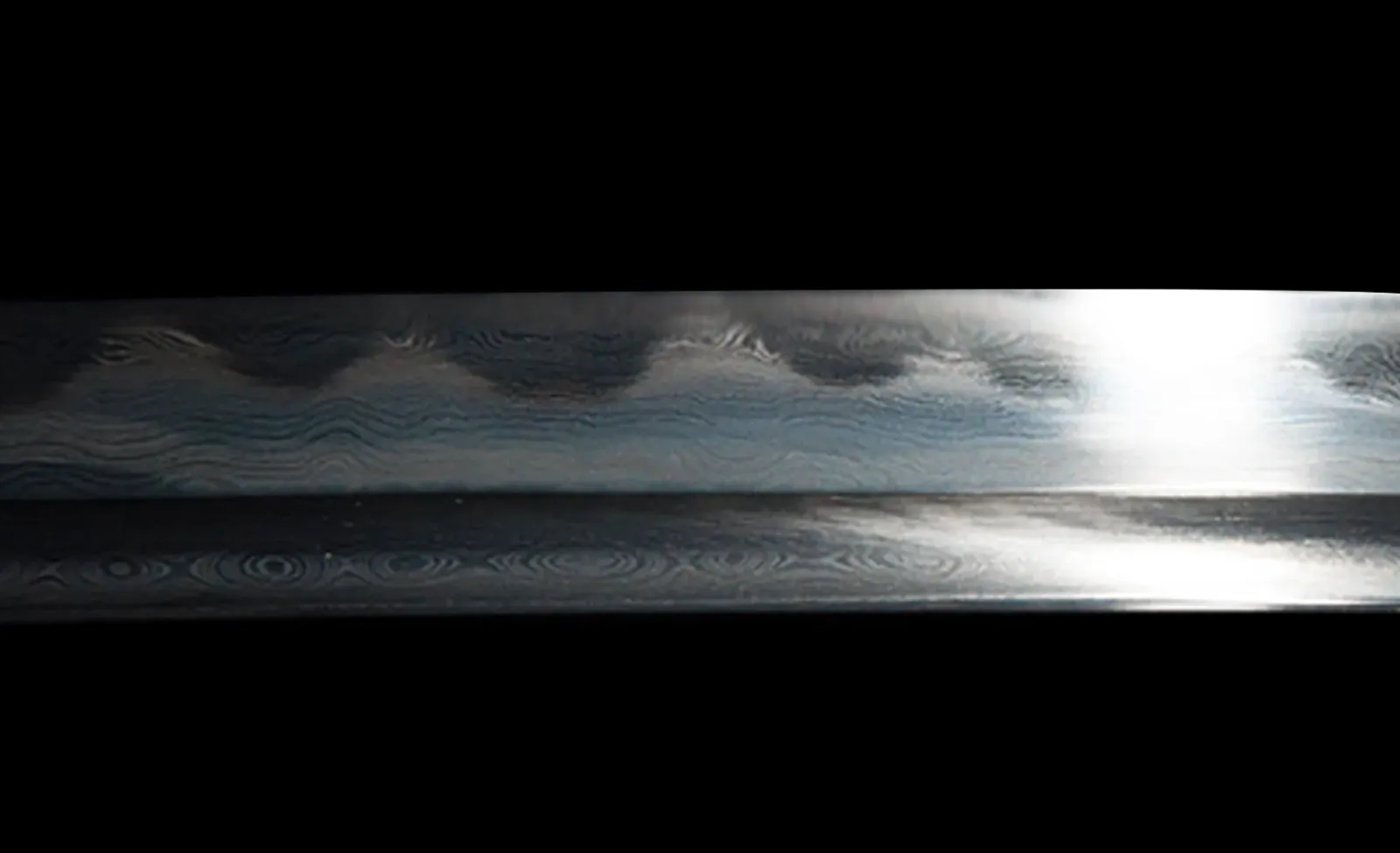
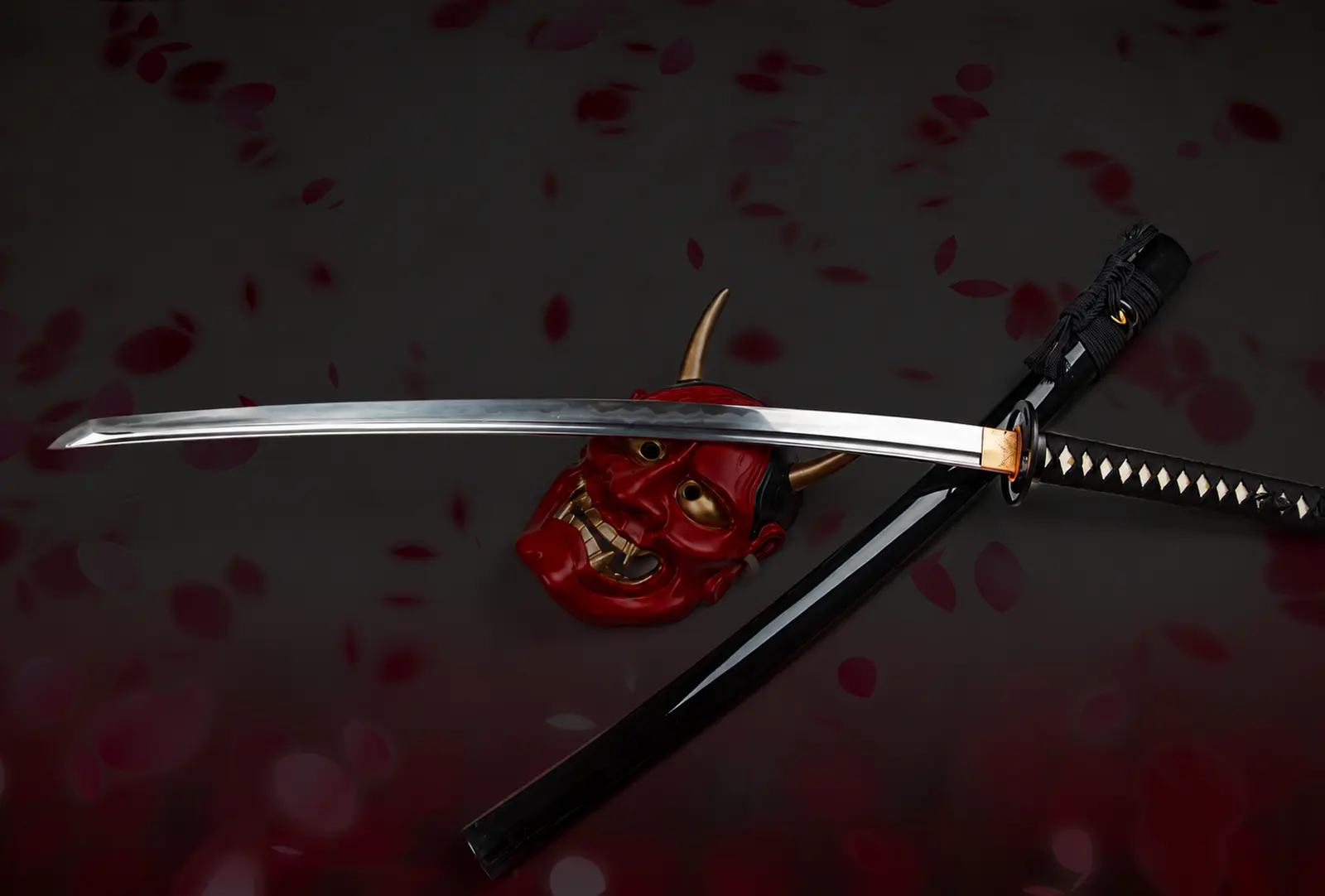
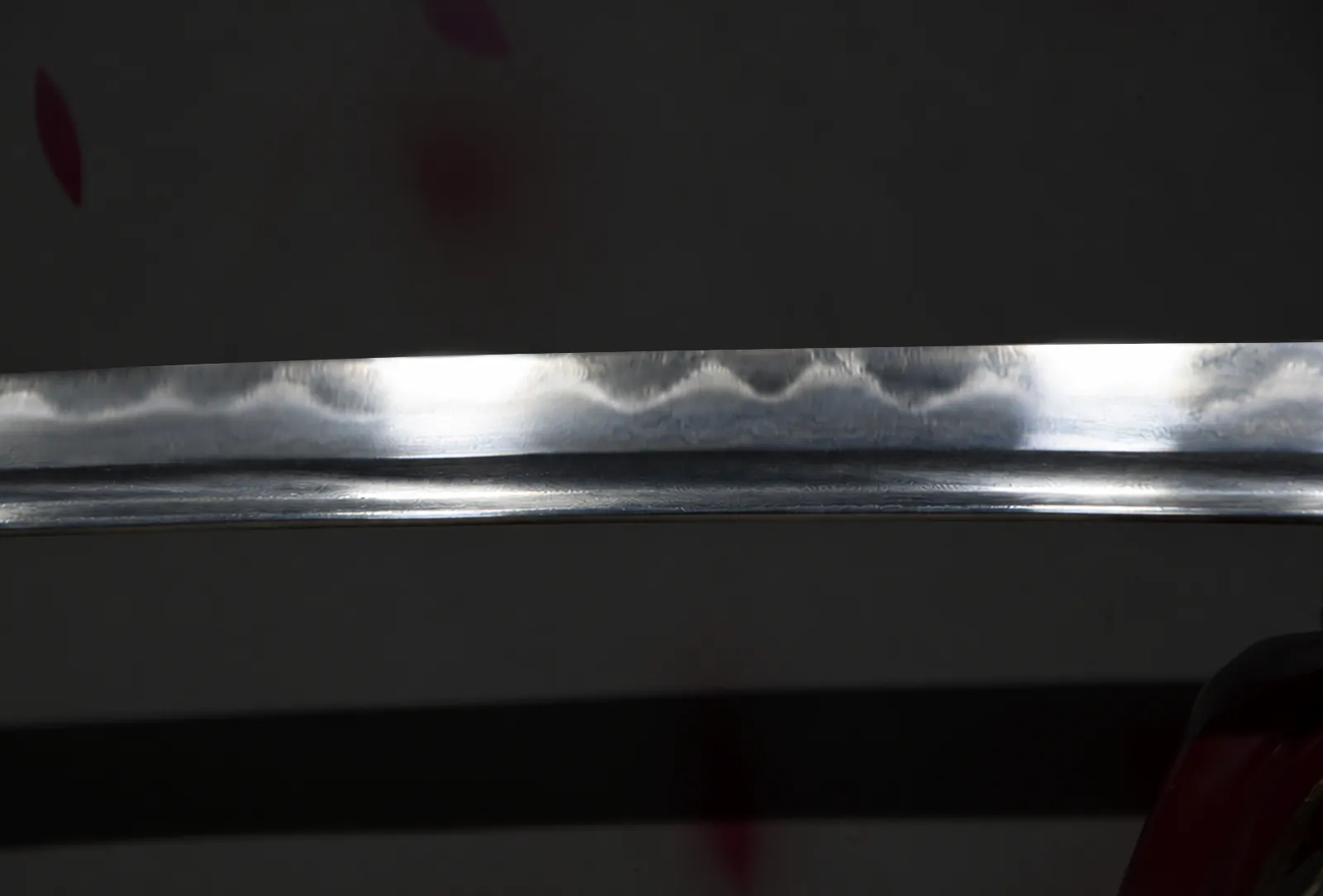
Das sichtbare Muster entlang des gehärteten Schneidenbereichs, das durch differenzielle Härtung entsteht und durch die Politur sichtbar gemacht wird.
Why It Matters
The hamon makes the transition between differently hardened regions visible after polishing. It records the swordsmith’s clay application and quenching work while giving the cutting edge its distinctive line and activity.
A hamon pattern composed of repeating rounded or semicircular elements.
Why It Matters
Its repeated rounded peaks give the hamon a recognizable rhythm along the cutting edge.
A blade groove whose tip-side end narrows to a point rather than finishing in a rounded stop. The Japanese term Ken no Hi (剣の樋) describes a pointed-ended groove. In modern product descriptions, this geometry may be called a pointed-termination bō-hi. Both pointed and rounded styles are genuine recessed grooves.
Why It Matters
The tapering termination gives the groove a deliberate finish toward the kissaki. It allows the groove to complement the blade’s point geometry without interrupting the main blade profile.
A geometric yokote is the transverse boundary where the surfaces of the main blade and kissaki meet with a distinct change in their geometry. Unlike a purely visual yokote, it is not created solely by a line of contrasting polish.
Why It Matters
The physical change of plane gives the kissaki a clearly defined three-dimensional transition and contributes to the point’s finished geometry.
Mirror polish is a blade finish refined to a smooth, highly reflective appearance. The term describes the resulting surface and does not on its own specify the abrasives, number of stages or proportion of hand work involved.
Why It Matters
A mirror finish highlights the blade's clean lines and controlled reflections, giving the steel a crisp visual presence. Its reflective character can also create a deliberate contrast with areas finished to a softer or more subdued tone.
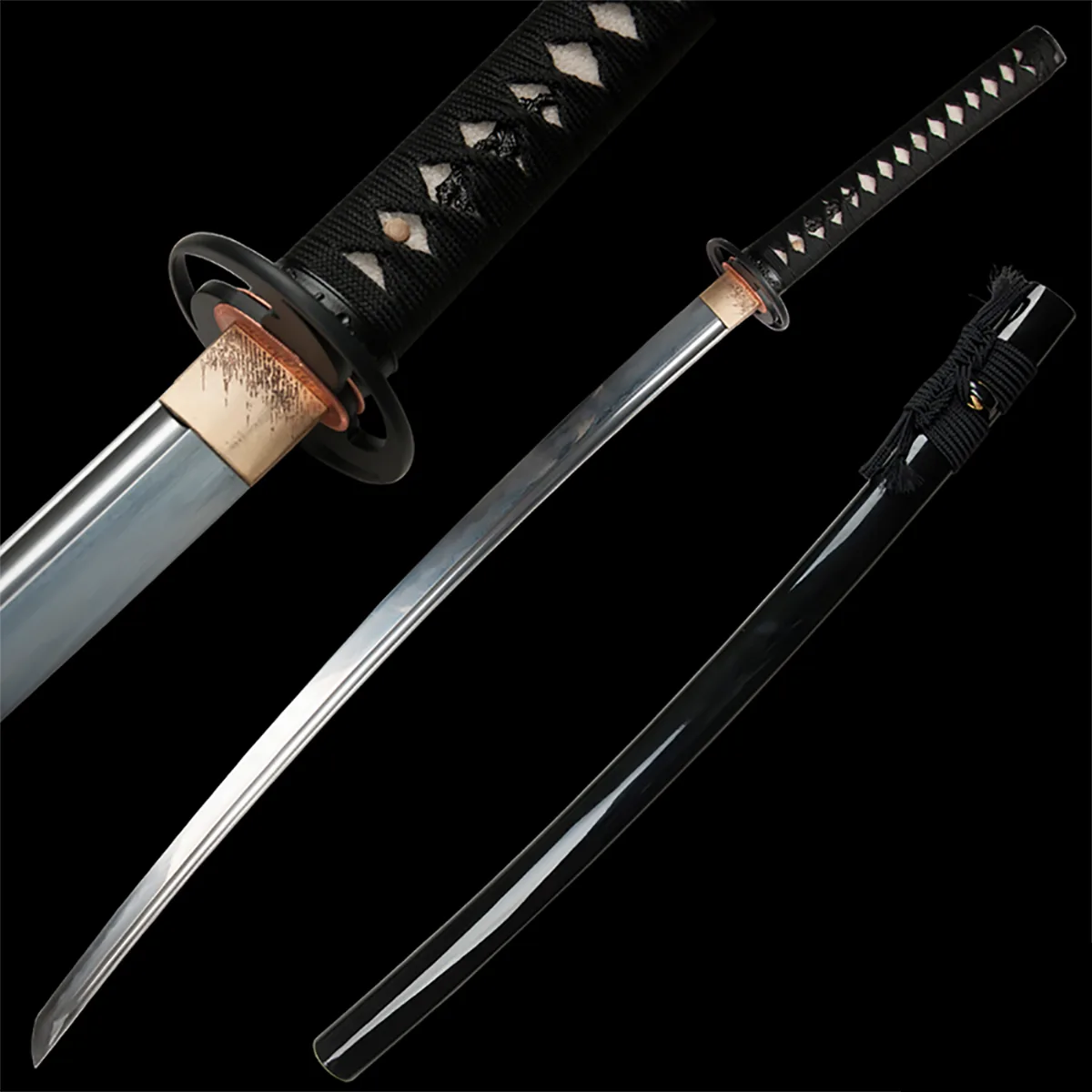
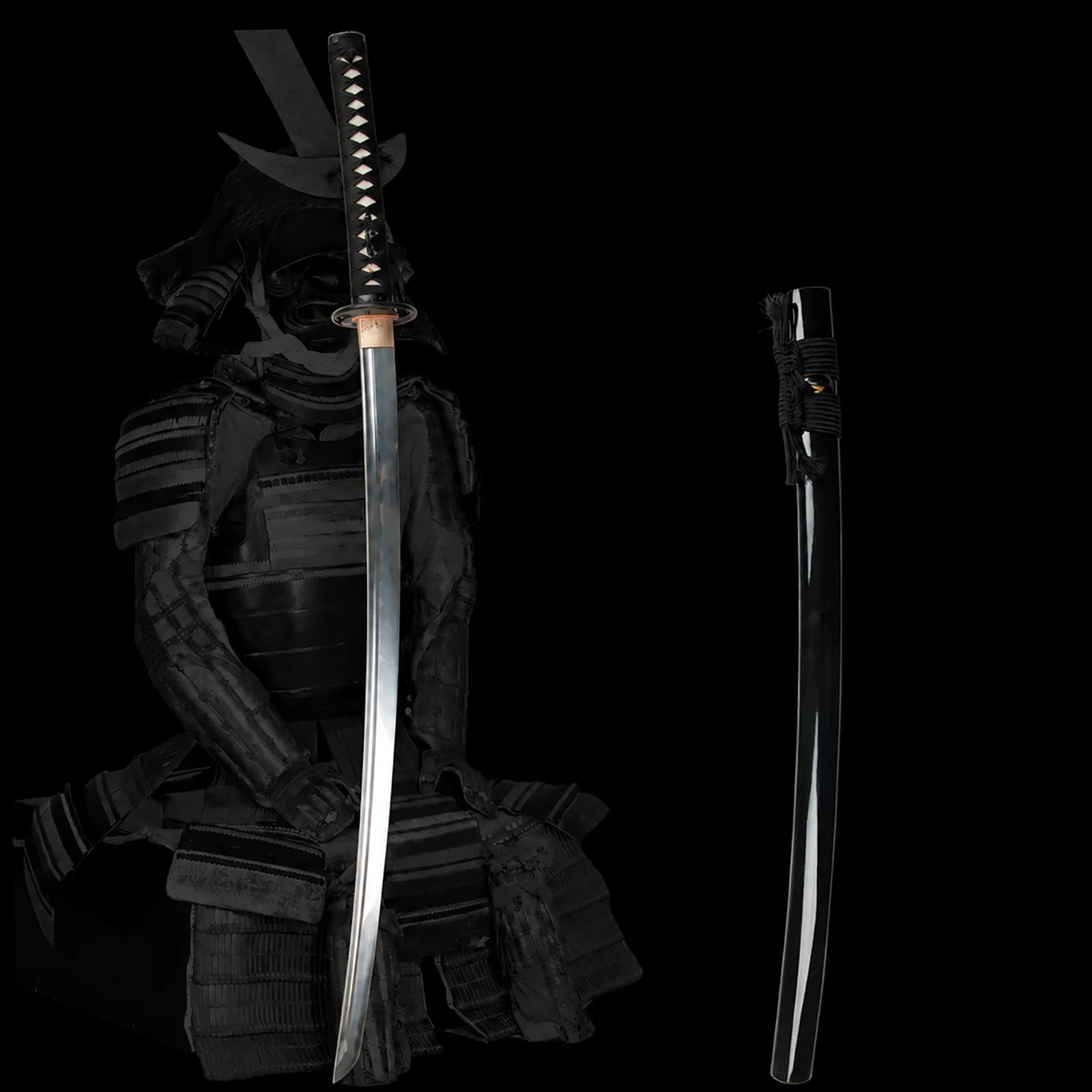
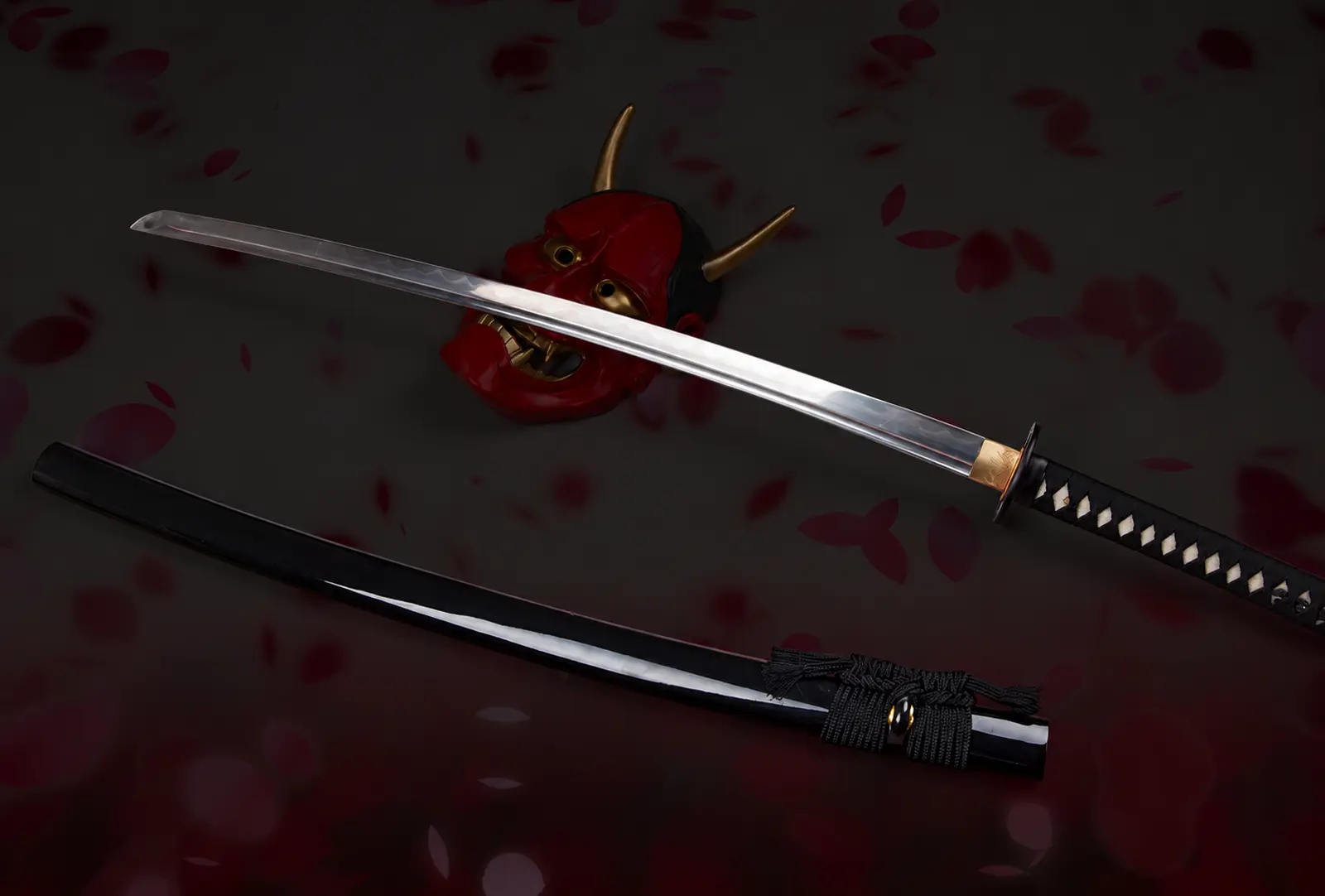
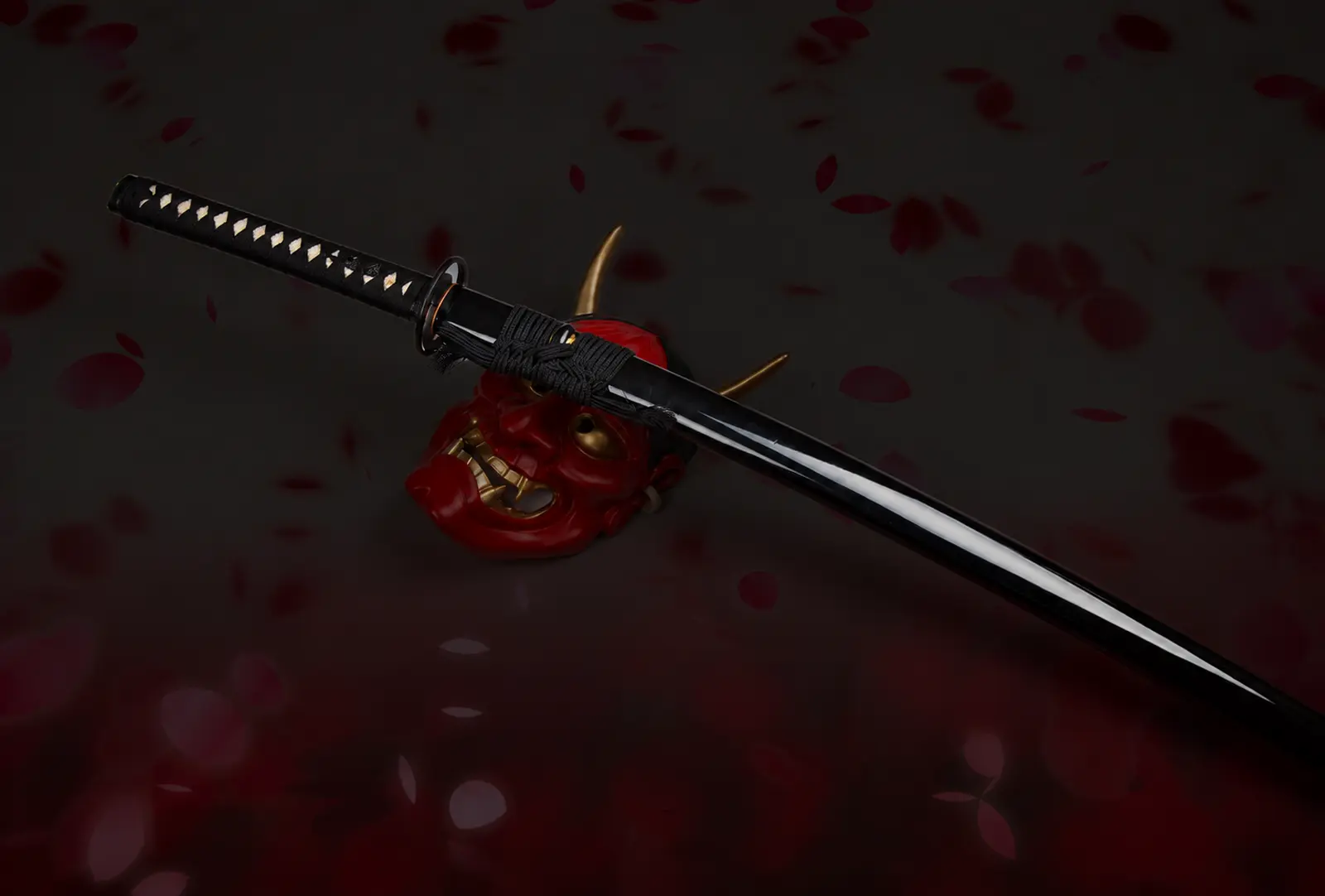
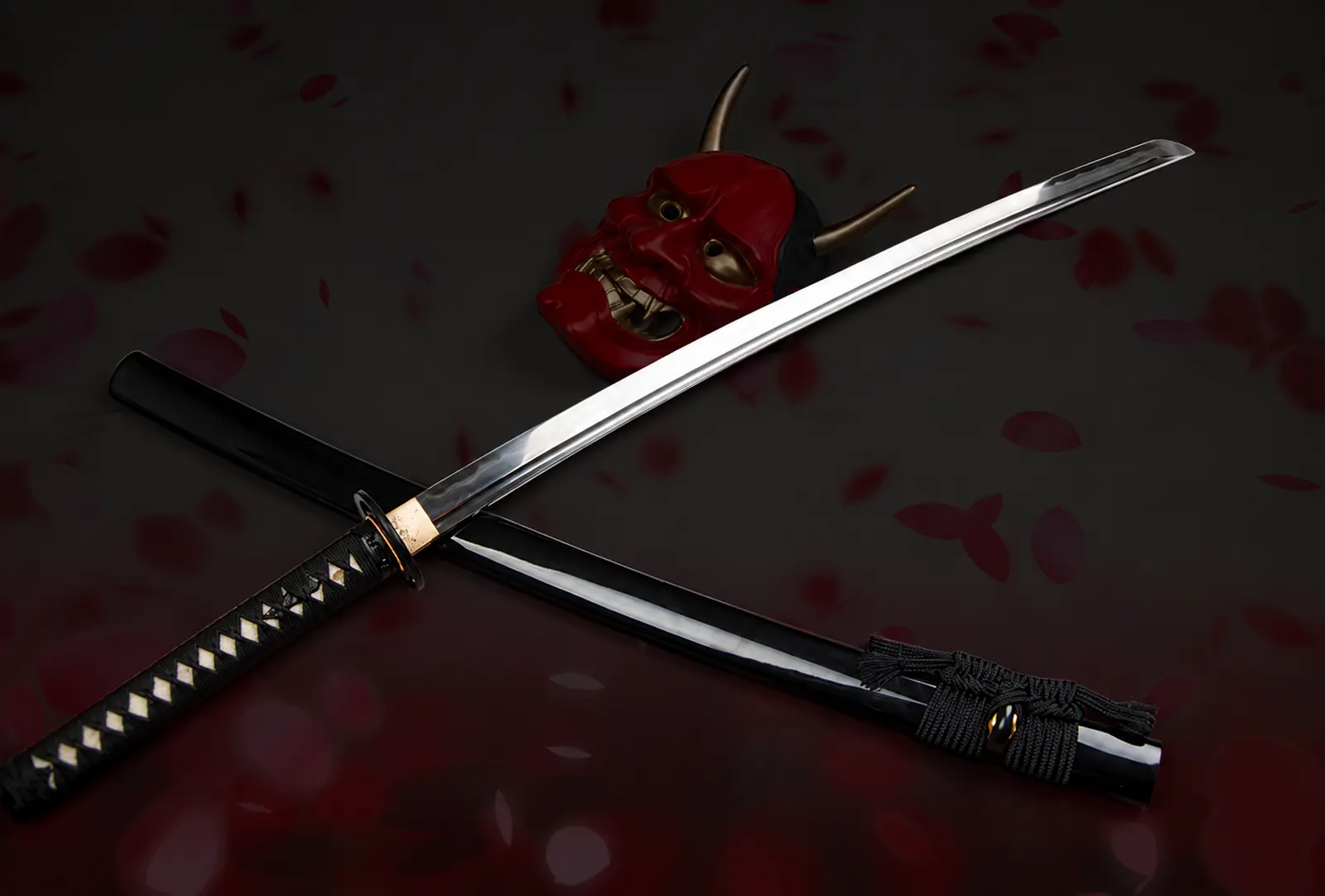
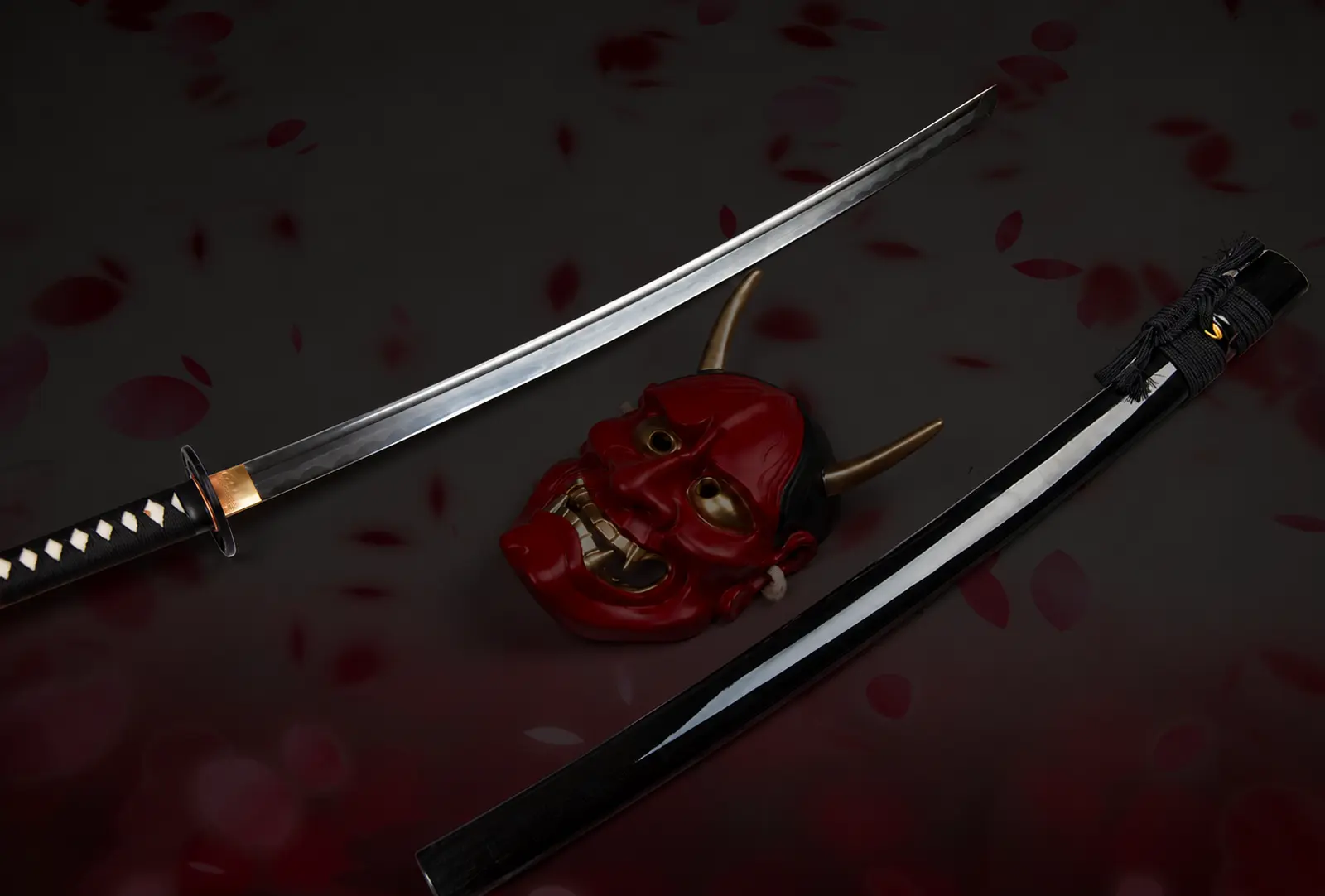
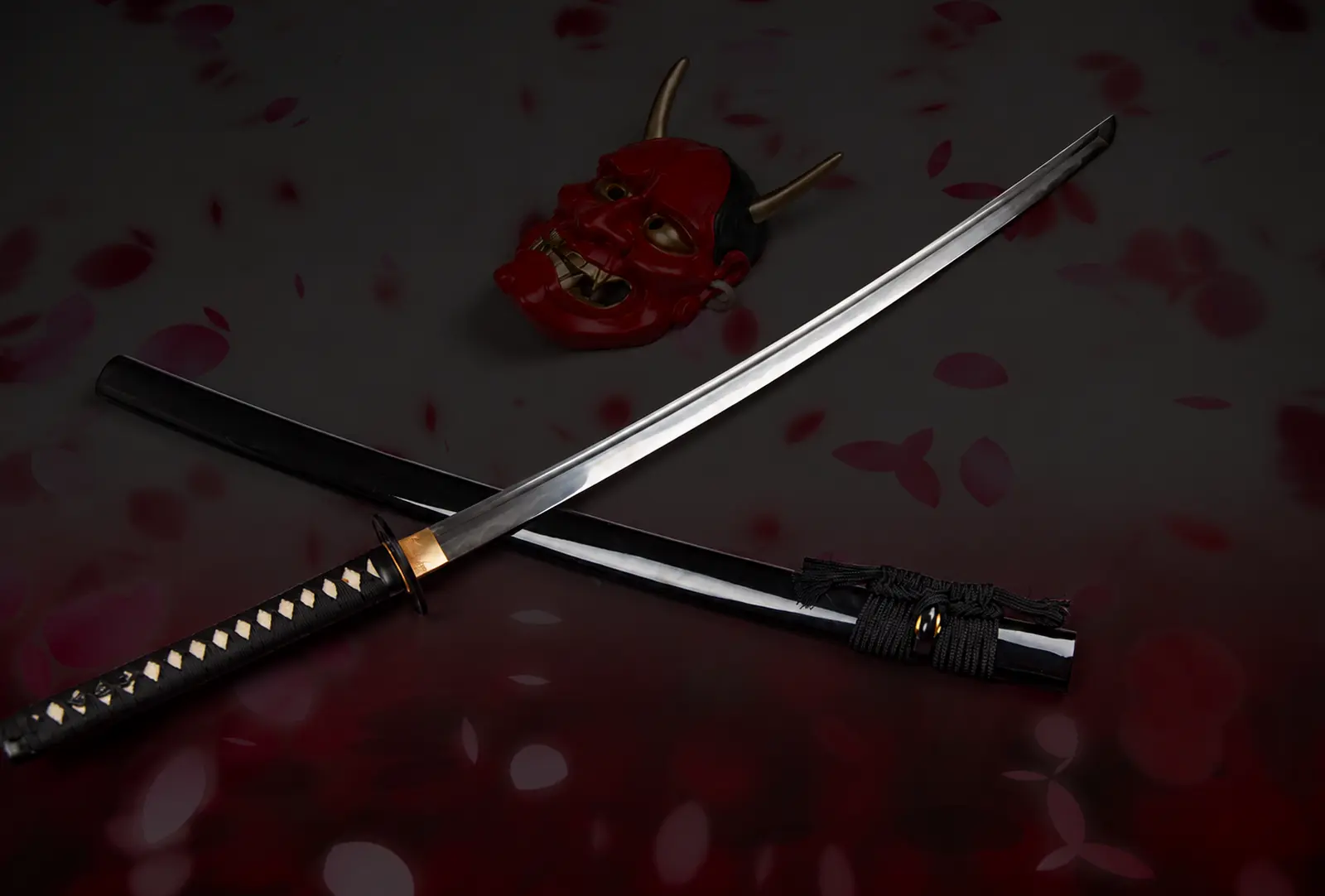
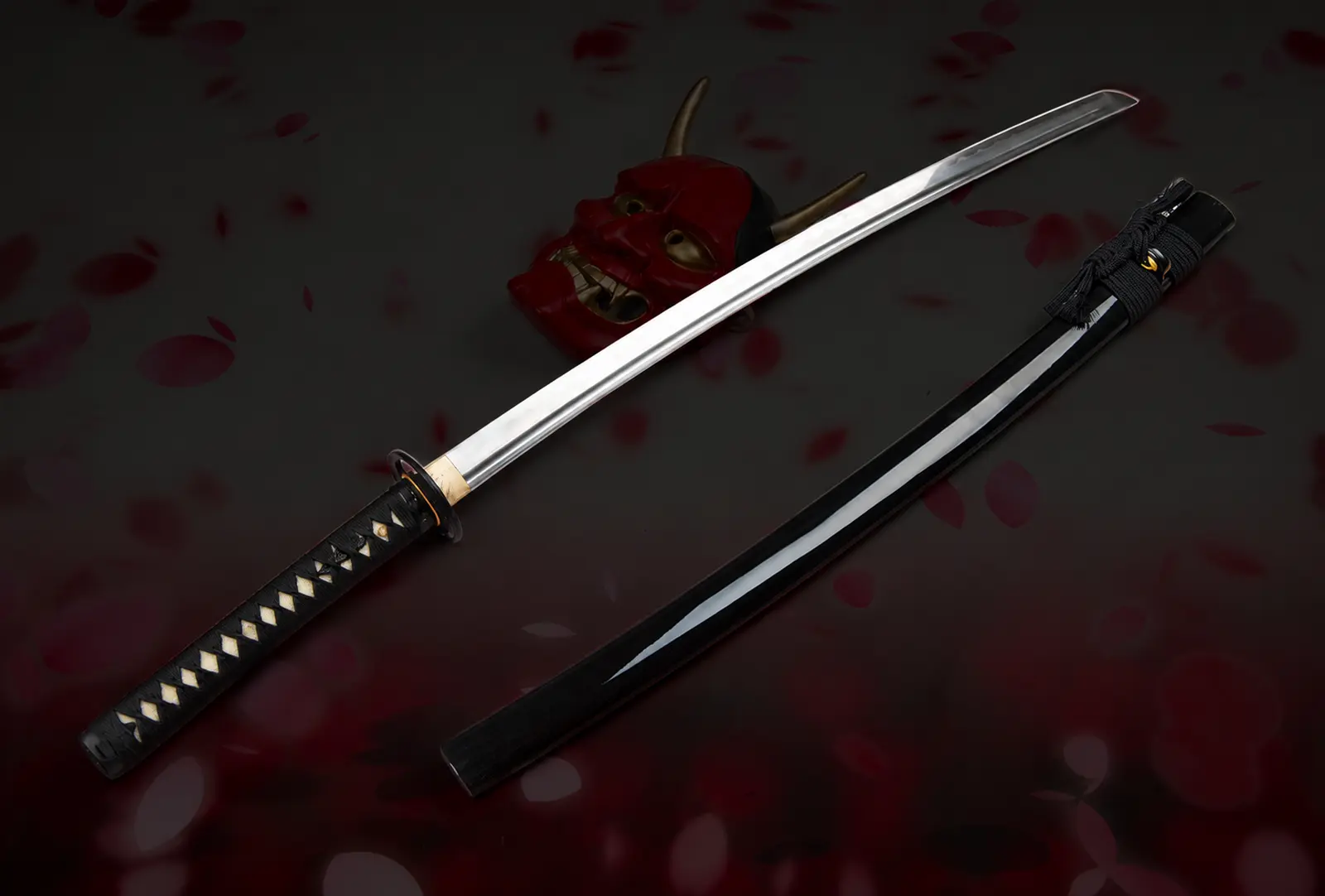
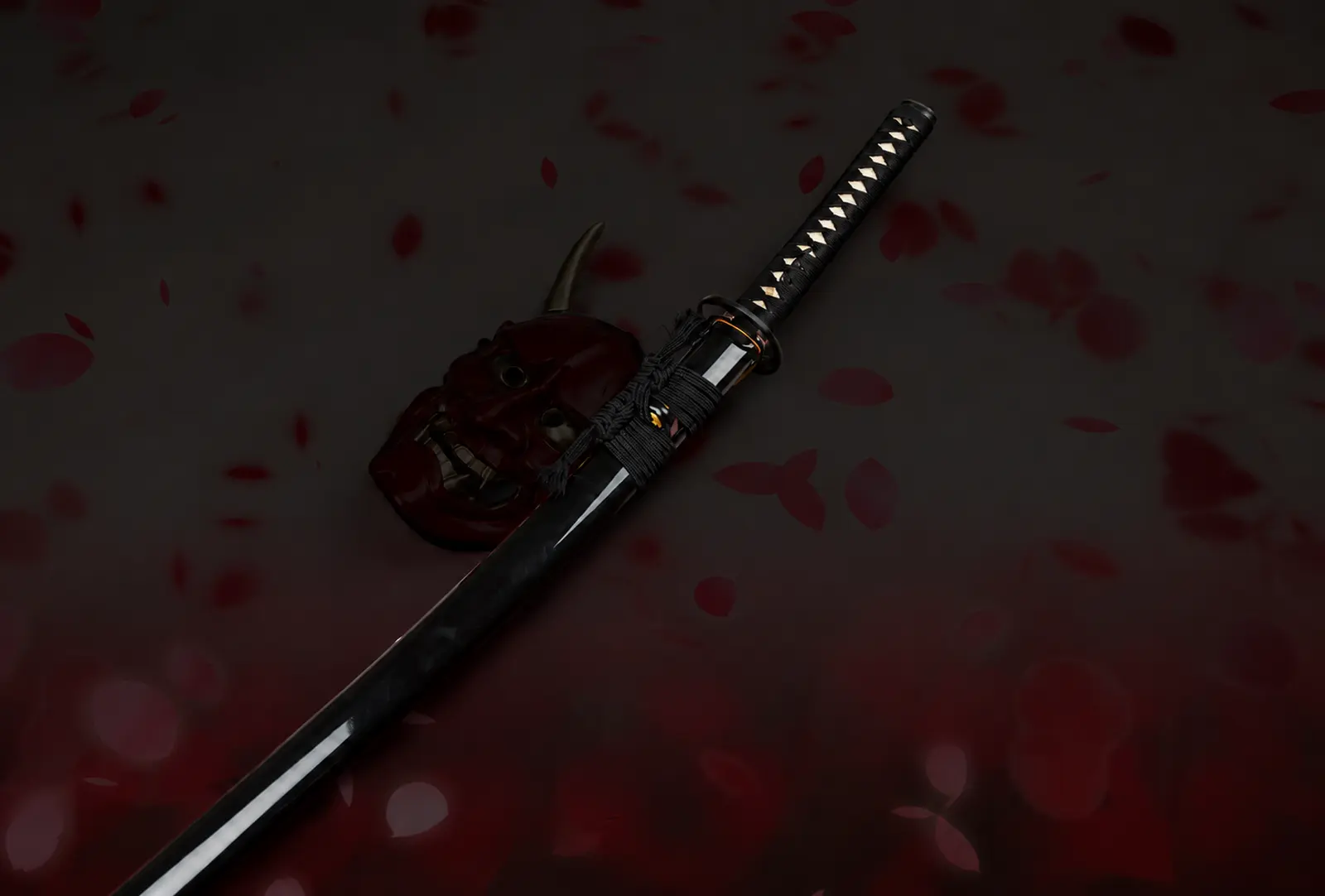
The fitted scabbard that houses and protects the blade.
Why It Matters
A closely fitted saya houses the blade and protects its polished surfaces when sheathed. The wooden core, mouth fitting, finish, and cord arrangement also shape the scabbard’s function and appearance.
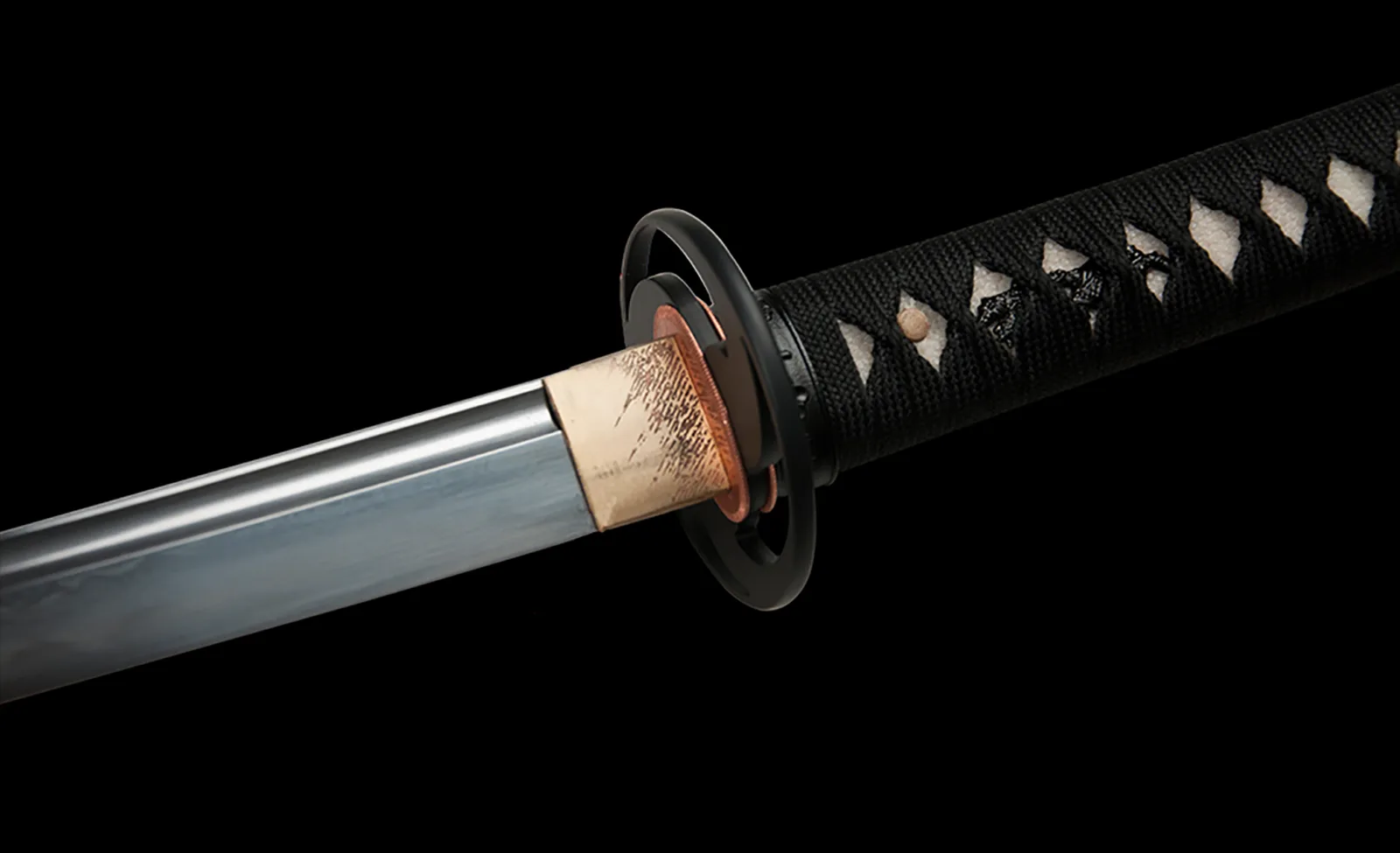
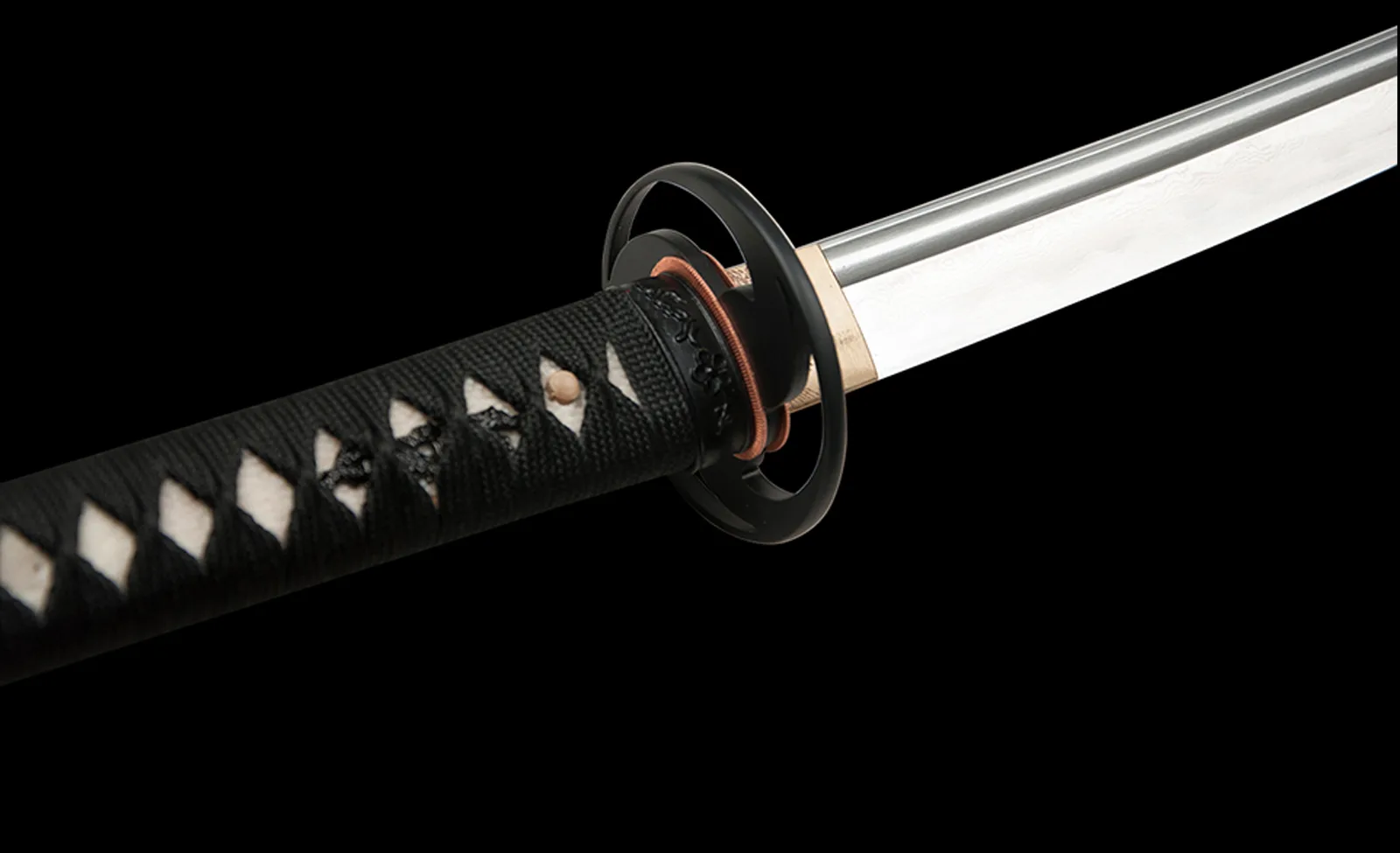
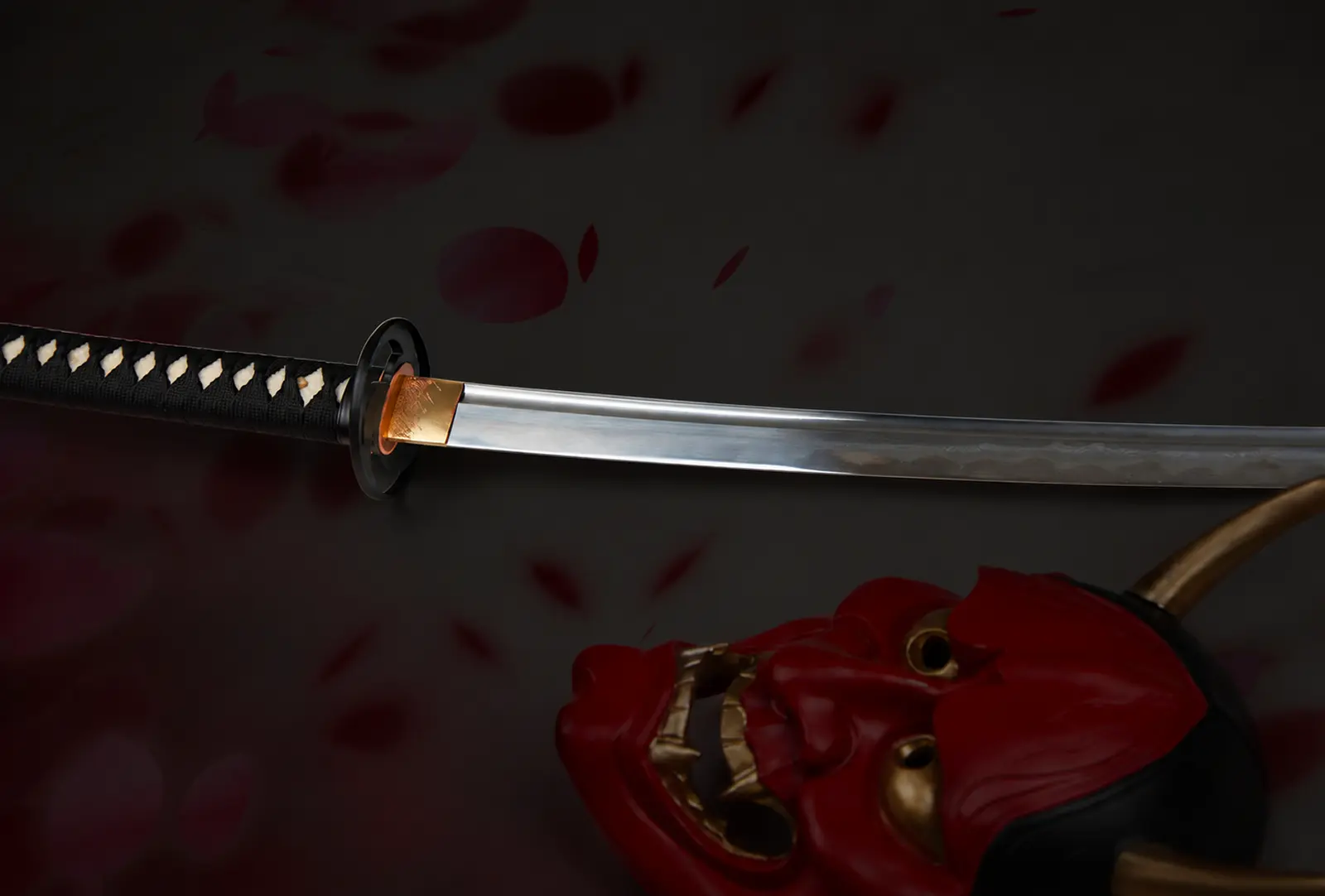
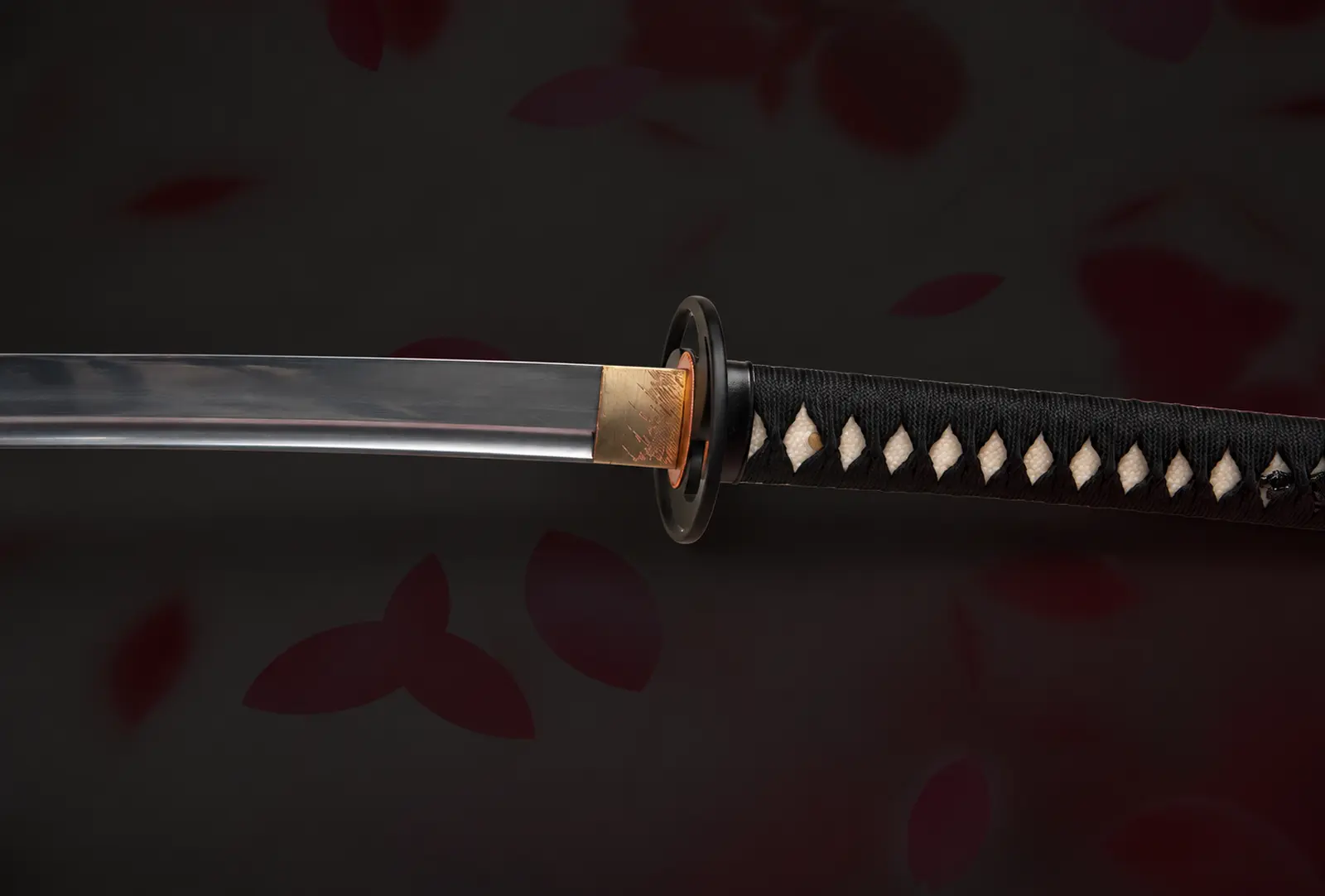
The fitted metal collar around the base of the blade immediately above the nakago.
Why It Matters
The fitted habaki seats against the koiguchi of the saya, helping hold the sheathed sword securely and maintain the intended relationship between blade and scabbard. Its precision is as important as its decorative finish.
The guard positioned between the blade and tsuka.
Why It Matters
The tsuba separates the user’s hand from the blade and completes the handle-side mounting. Its shape, weight, and metalwork also contribute to the sword’s balance and visual character.
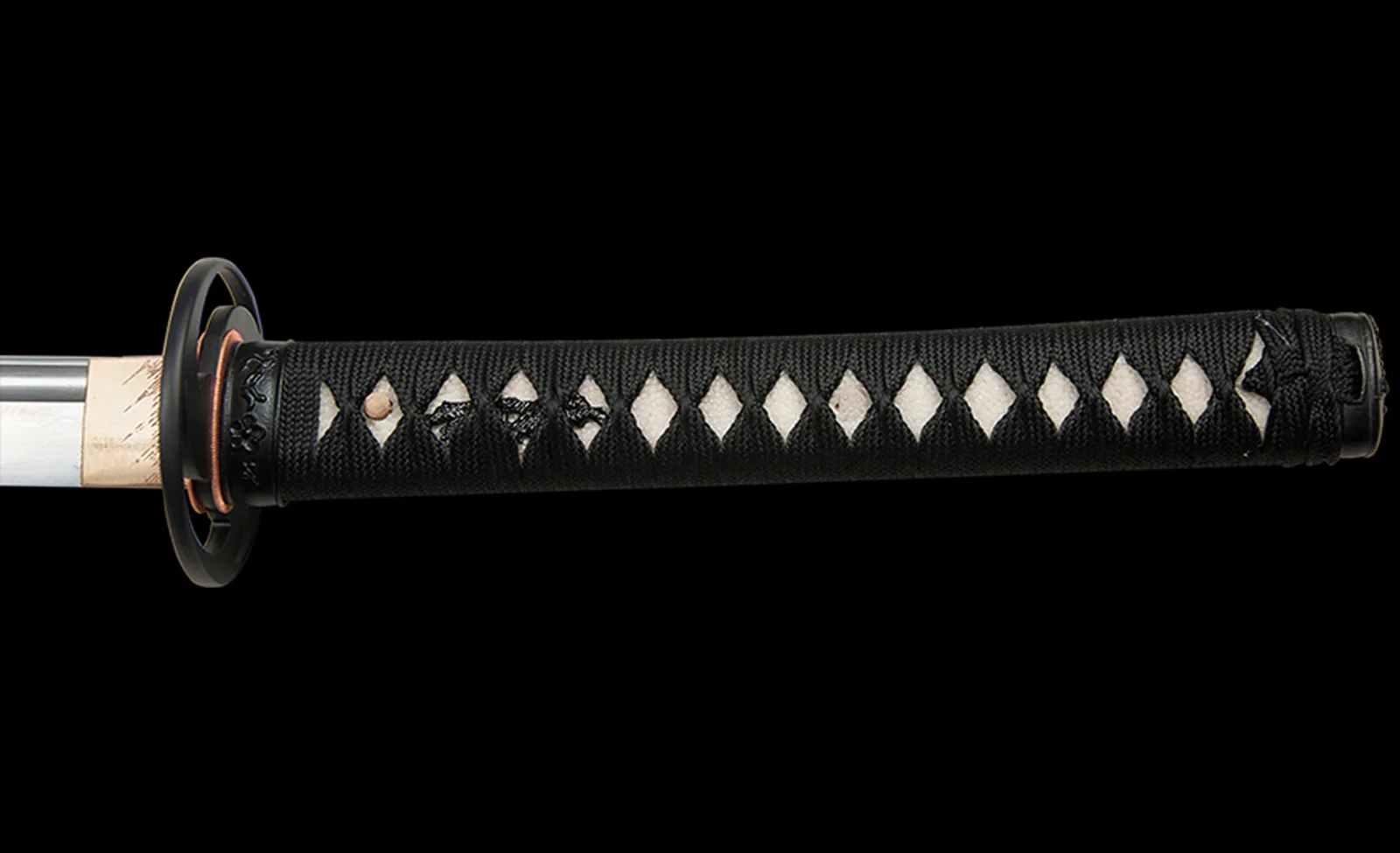
The complete handle or hilt assembly of a Japanese sword.
Why It Matters
The wooden core, ray-skin underlay, wrap, and fittings form a closely fitted handle assembly around the tang. Their fit and construction contribute to secure handling and the character of the completed mounting.
The cord or braid used to wrap the tsuka.
Why It Matters
The fiber, weave, and tension of the wrapping affect grip feel and the stability of the handle covering. Its color and texture also play a major role in the character of the tsuka.
The craft and method of wrapping the tsuka with ito.
Why It Matters
Careful wrap tension and consistent diamond geometry contribute to a secure, even-feeling handle and a refined finished appearance.
Ray skin traditionally used on a tsuka beneath the handle wrapping, and also used on some sword scabbards as a textured exterior covering.
Why It Matters
On a tsuka, the raised texture of the ray skin provides a grippy underlayer beneath the handle wrapping. When used on a saya, it creates a distinctive full-length textured exterior.
Small shaped paper supports placed beneath the ito during traditional tsukamaki.
Why It Matters
These small supports help maintain even diamond openings and give the wrapped handle a crisp, consistent form.
A broad, elongated groove running along a substantial portion of the blade.
Why It Matters
Removing material along the blade changes its weight distribution and can reduce overall mass while preserving the sword’s basic form. The groove also adds a distinct line to the blade’s geometry.
The transverse line separating the kissaki from the main body on blade forms that have a defined yokote.
Why It Matters
A defined yokote gives the kissaki a clear transition from the main blade and emphasizes the point’s three-dimensional form.
The point section of the blade, typically separated from the main body by the yokote.
Why It Matters
The point’s length and contour affect its silhouette and how the polishing transitions into the tip.
Rezensionen
Es gibt noch keine Rezensionen.