Beschreibung
Three-Tone Polish. Pattern in Motion.
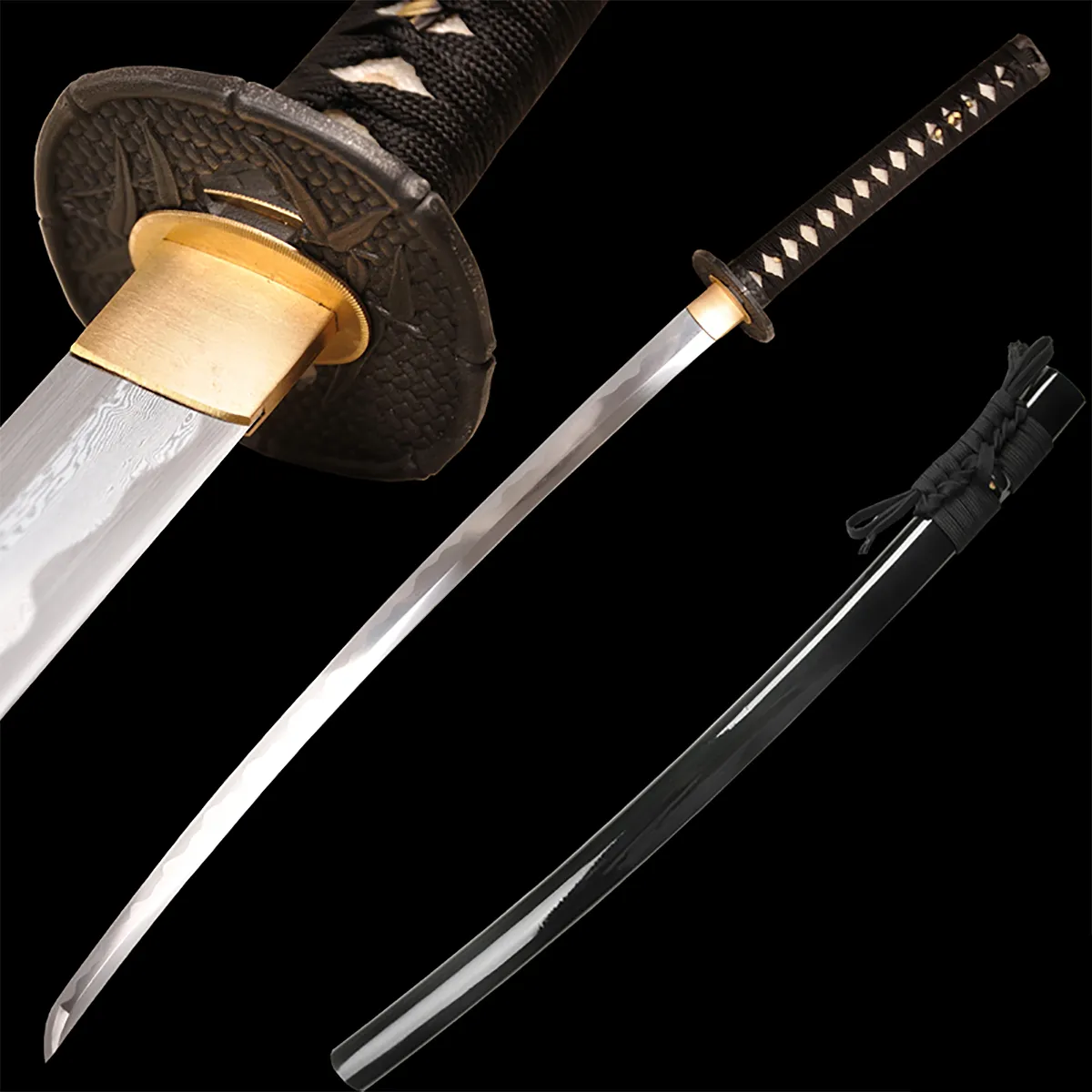
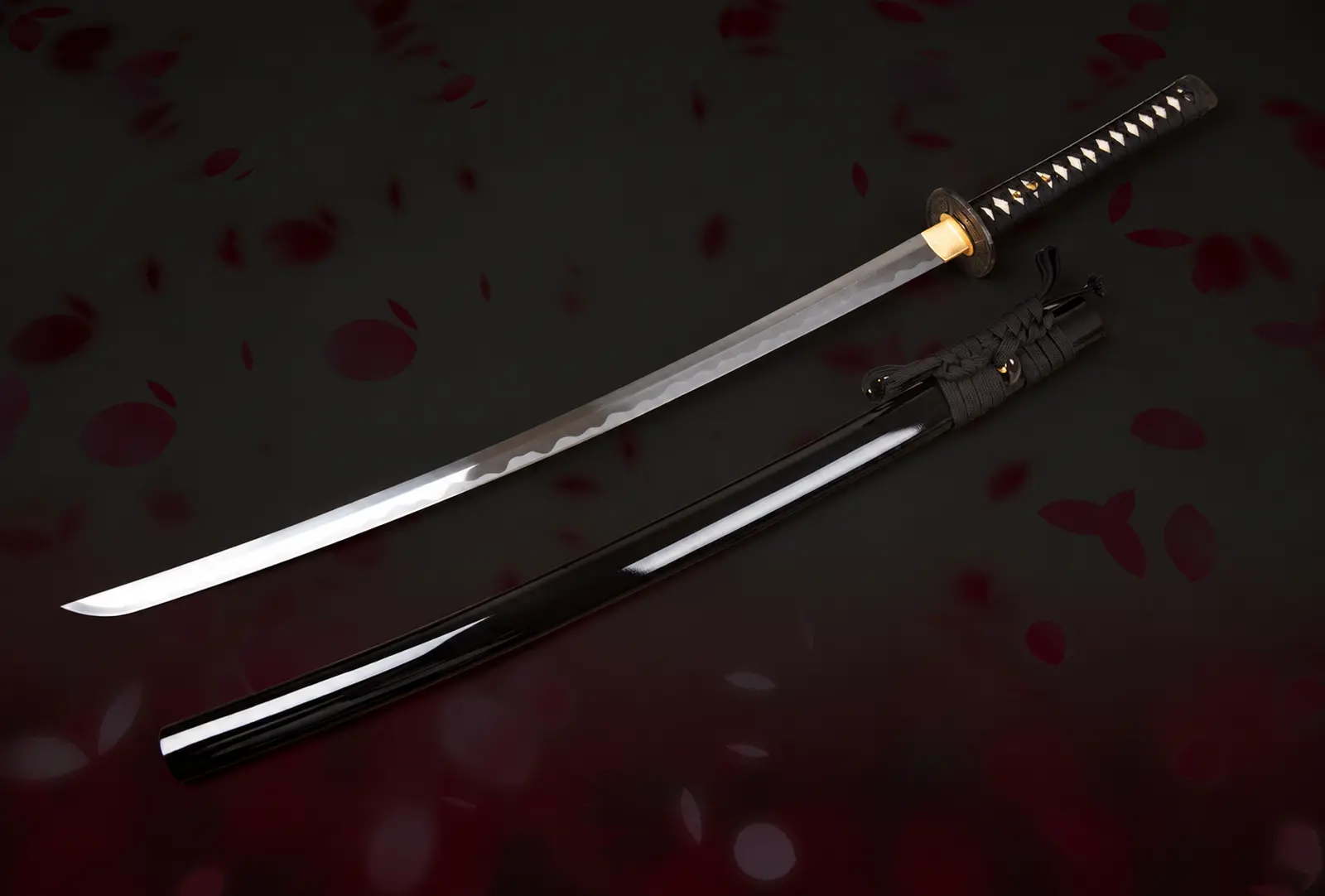
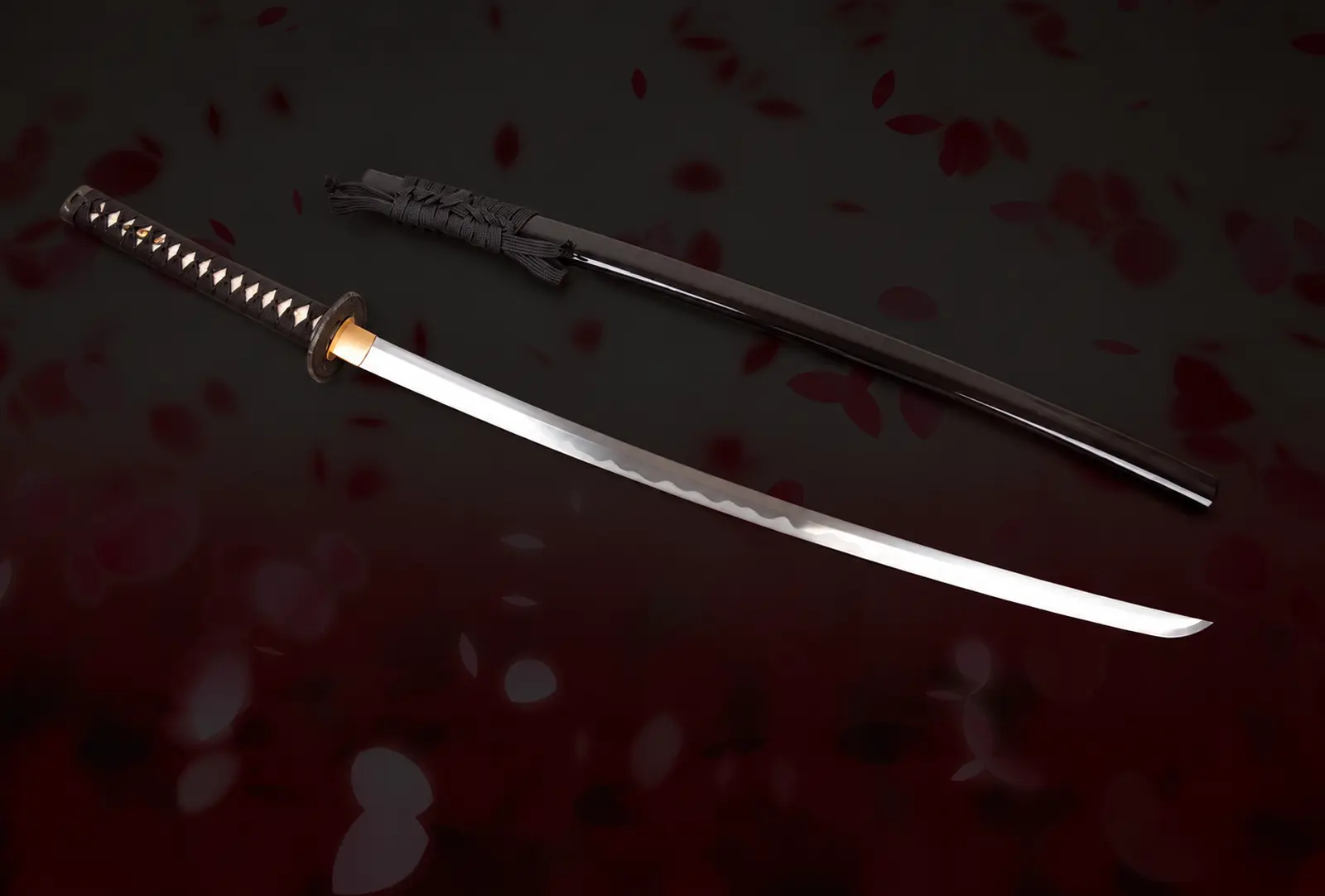
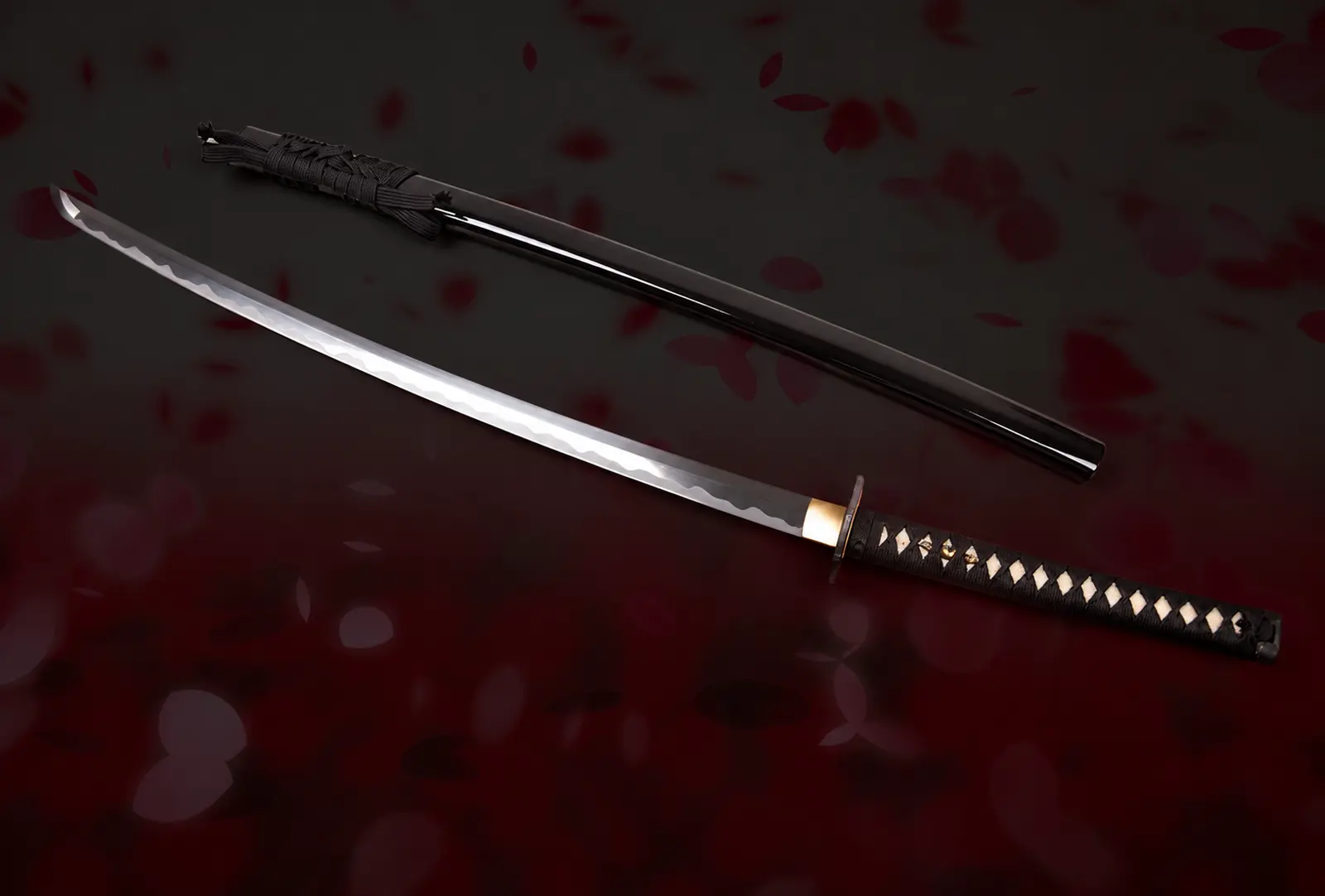
Built around a patterned-steel blade, this katana combines oil-quenched construction with Three-Tone Polish, creating a distinctive interplay of light and shadow across the steel.
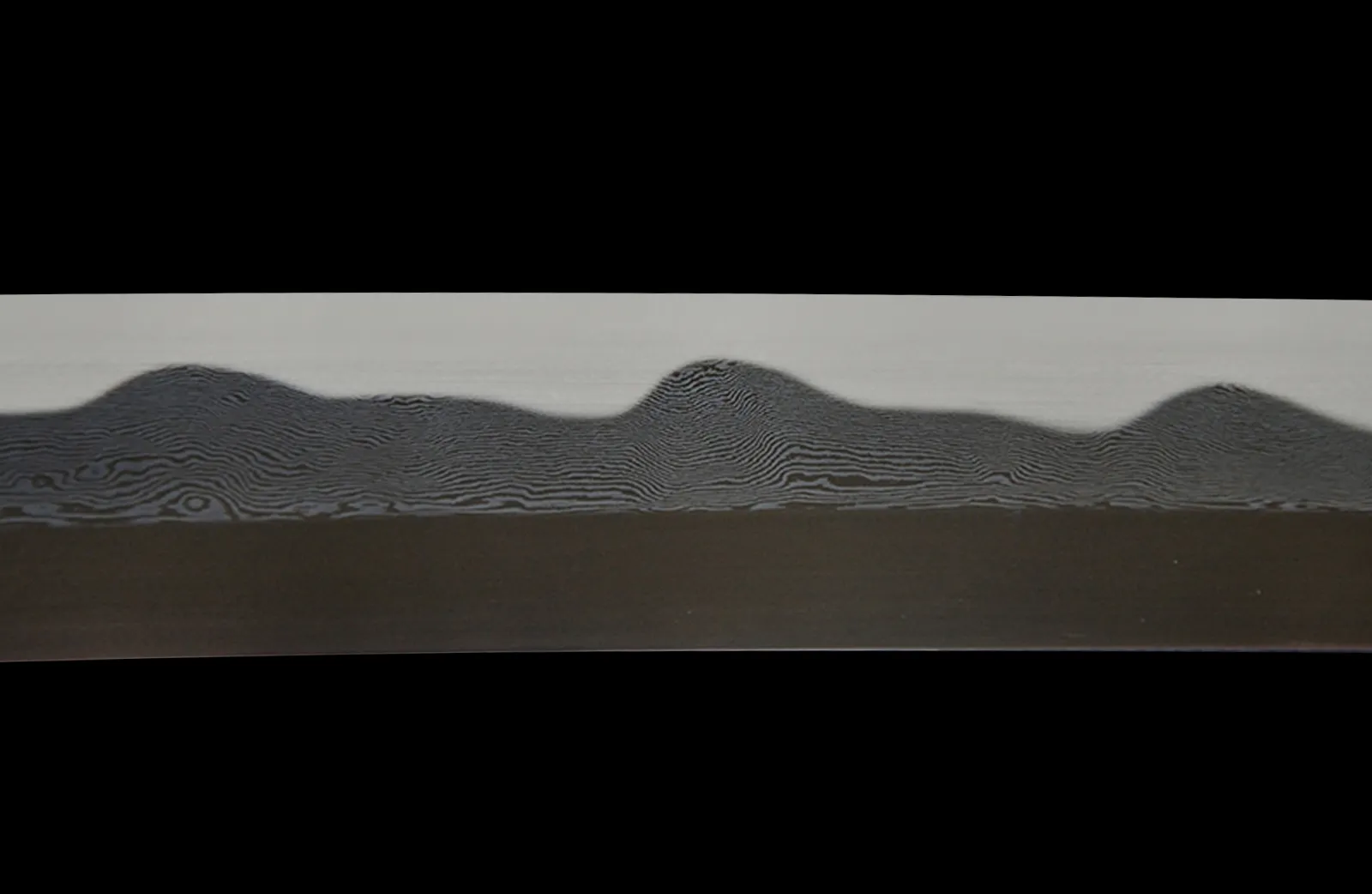
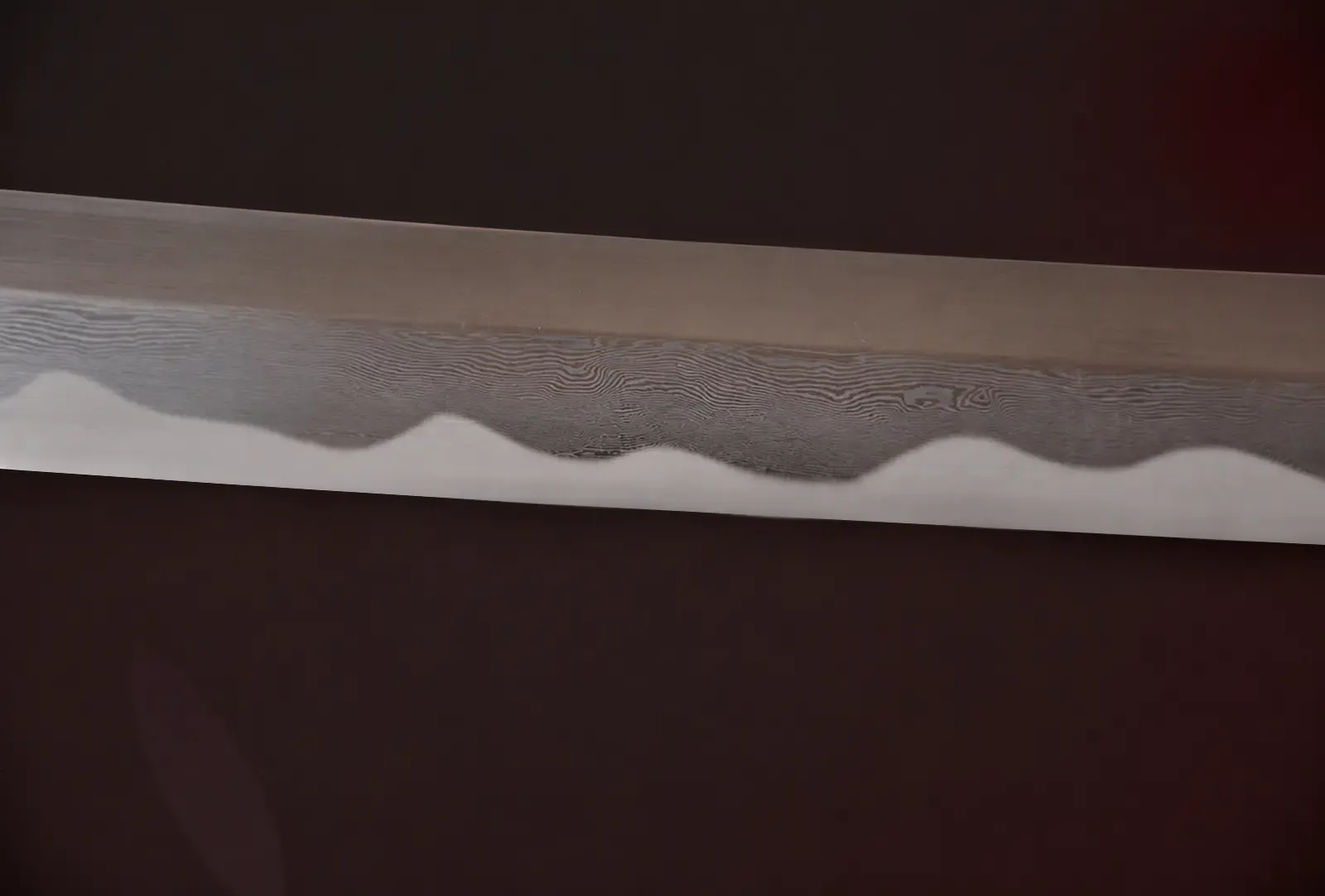
A bright shinogi-ji, a subdued blade surface, and a pale decorative hamon-style pattern establish contrasting tones along the blade. The decorative pattern is created through surface finishing rather than differential hardening.
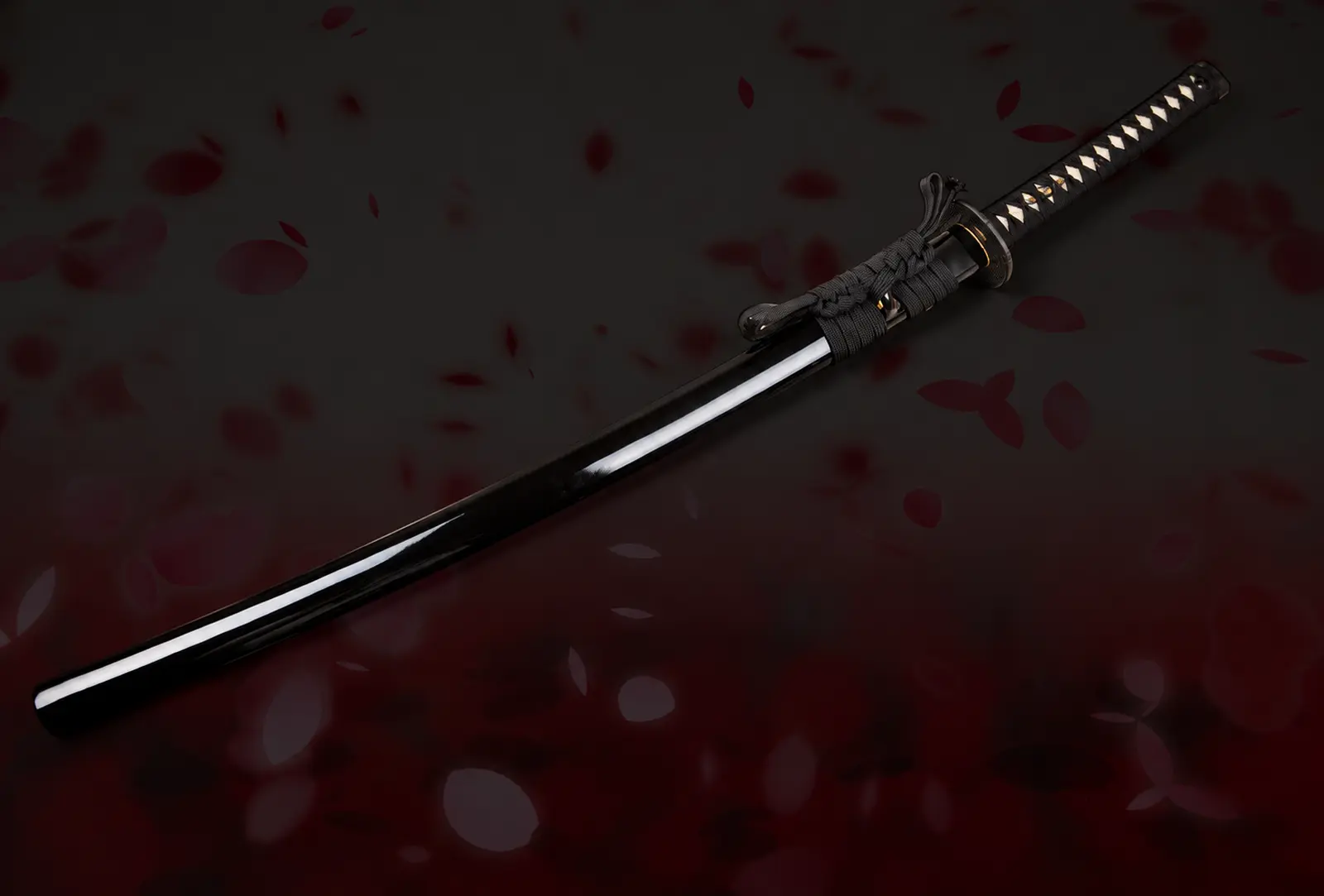
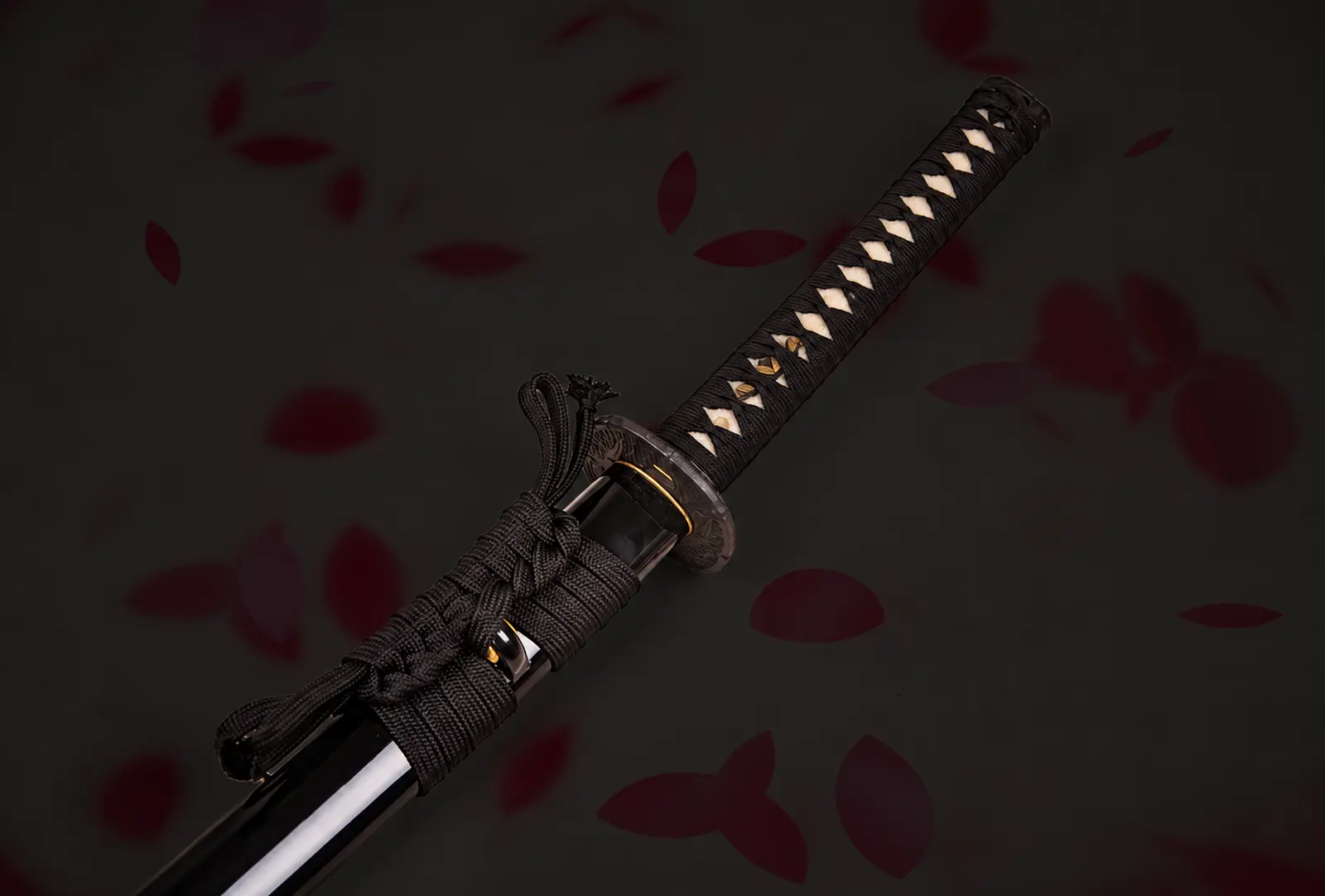
Textured iron fittings, a black-wrapped tsuka, and a lacquered wooden saya complete the composition. Against the quiet darkness of its mountings, the polished blade becomes the central expression of the piece.
Craft in Every Detail.
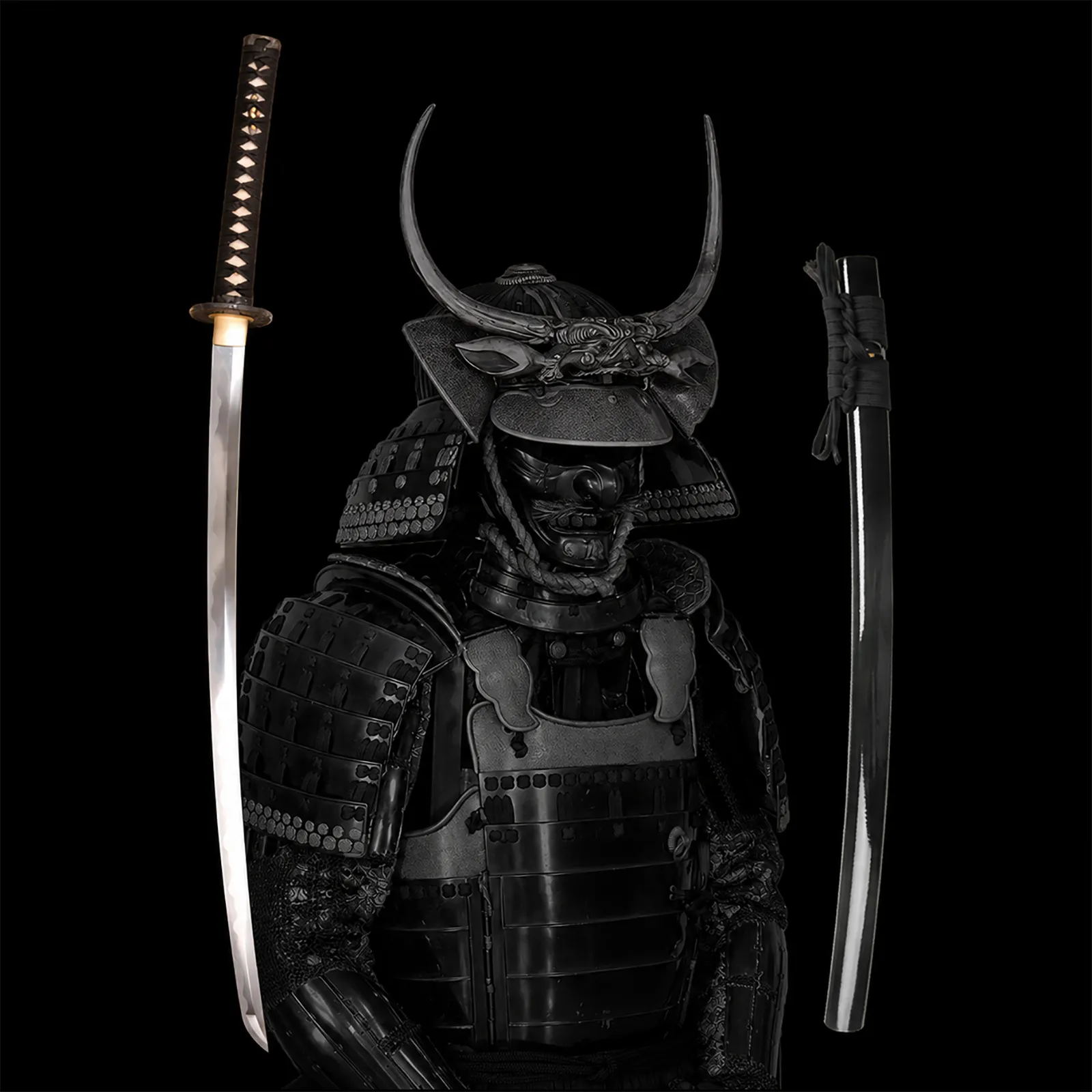
From the contrast of iron and brass to the subtle texture of patterned steel, each component contributes to the character of the finished katana. A closer look reveals the details behind its restrained black-and-silver presentation.
A Contrast of Materials.
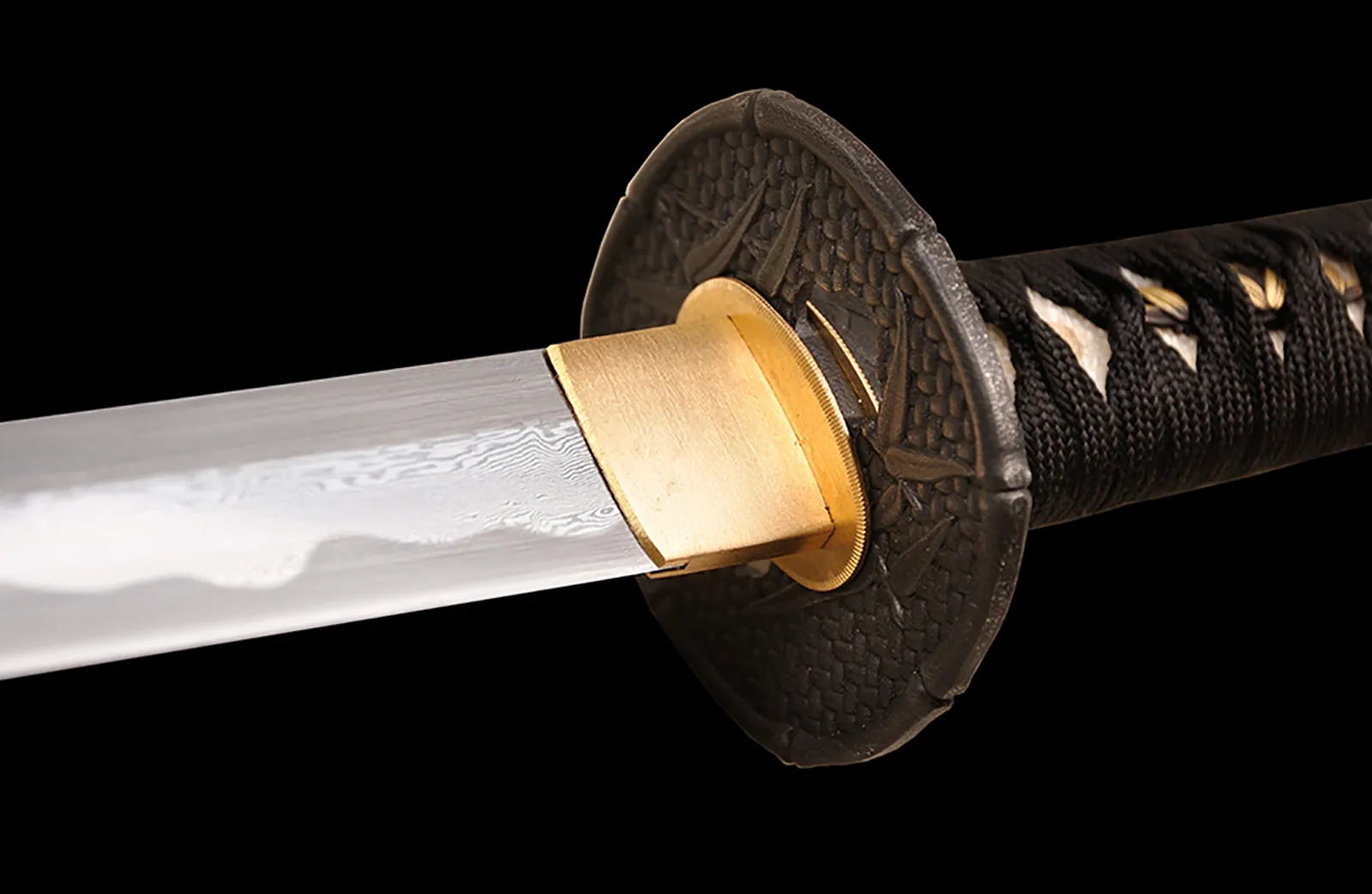
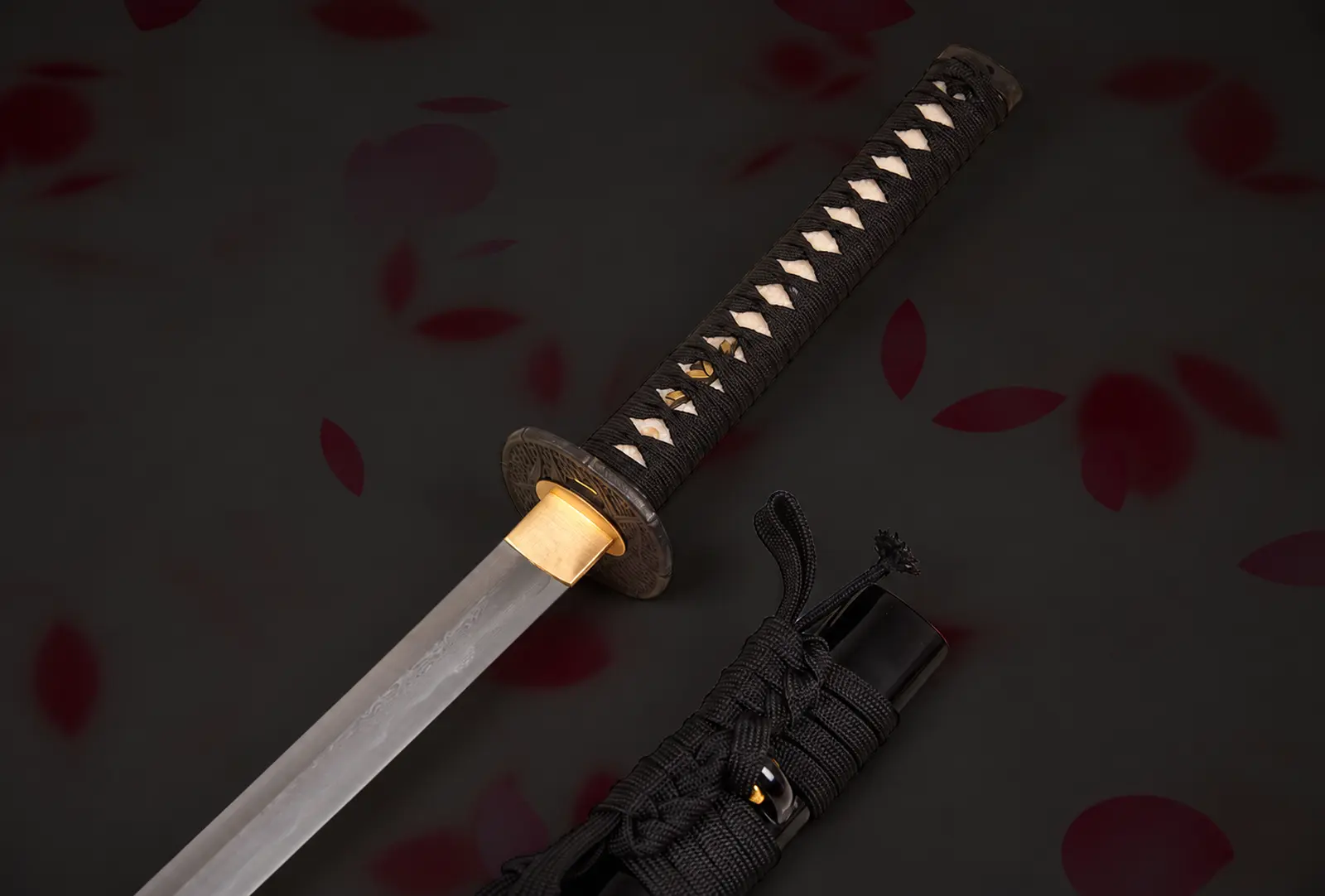
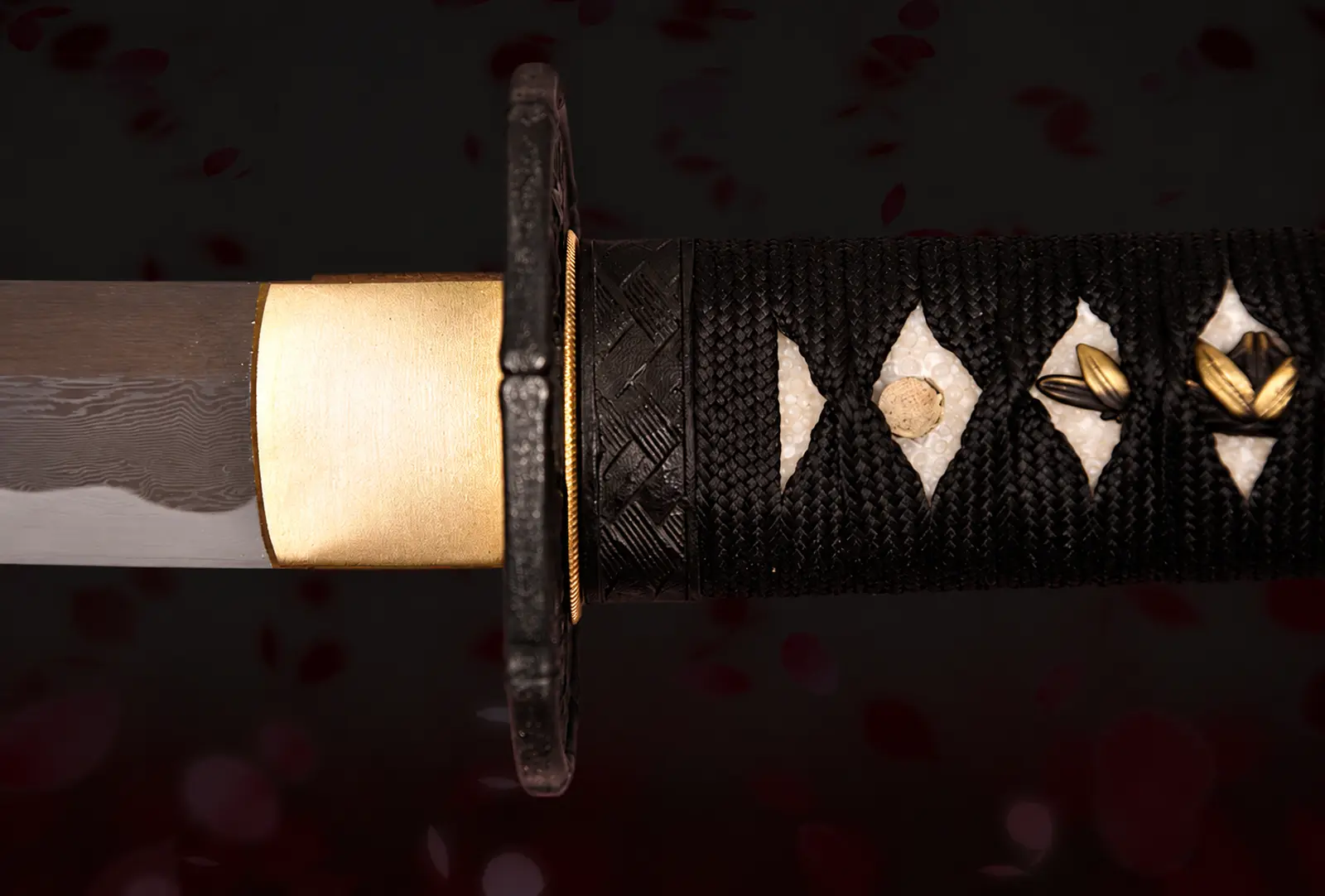
The textured iron tsuba brings a dark, sculptural presence to the mounting, while the warm brass habaki provides a distinctive transition between the polished blade and the black-wrapped handle.
Wrapped with Intention.
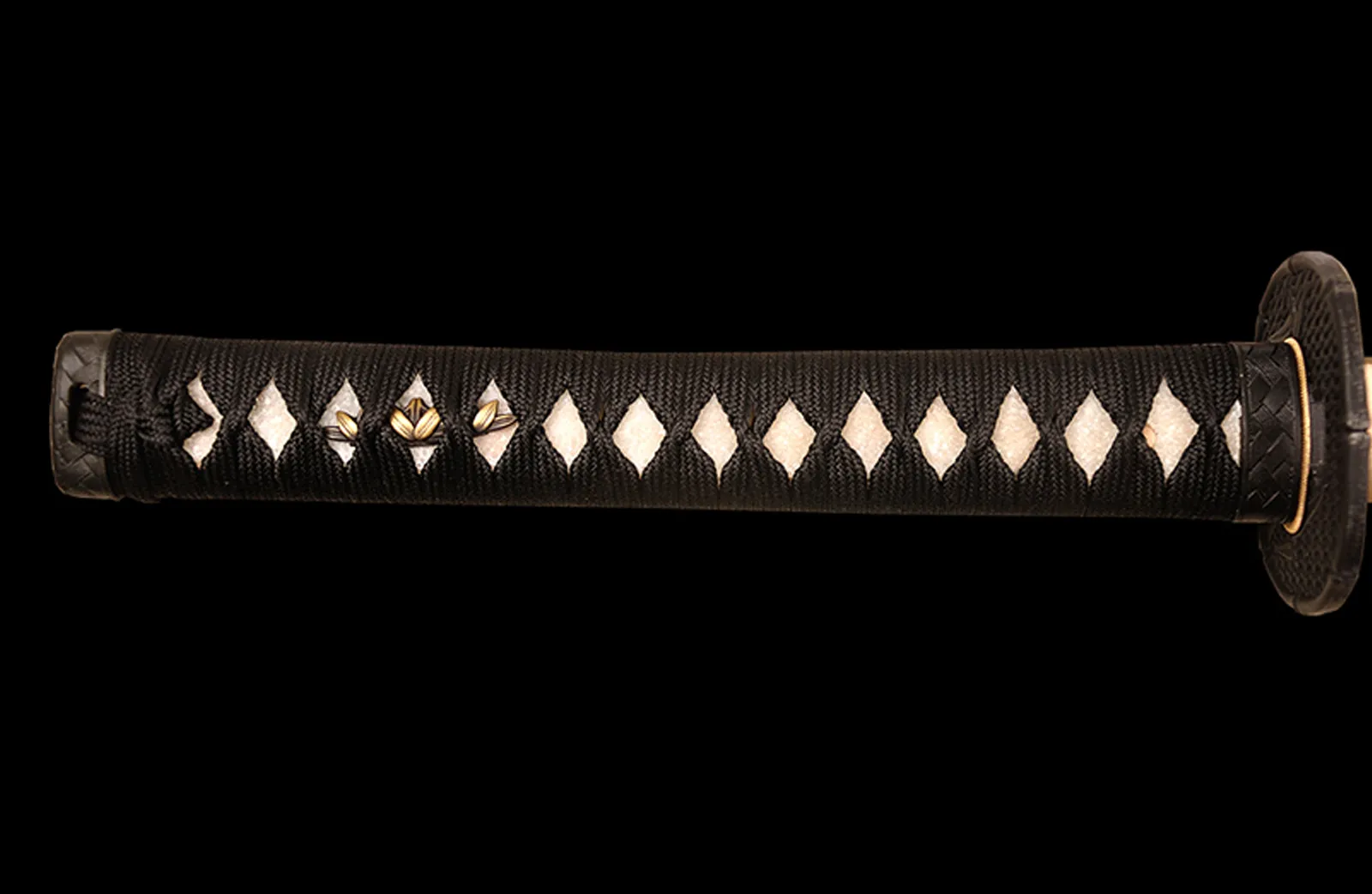
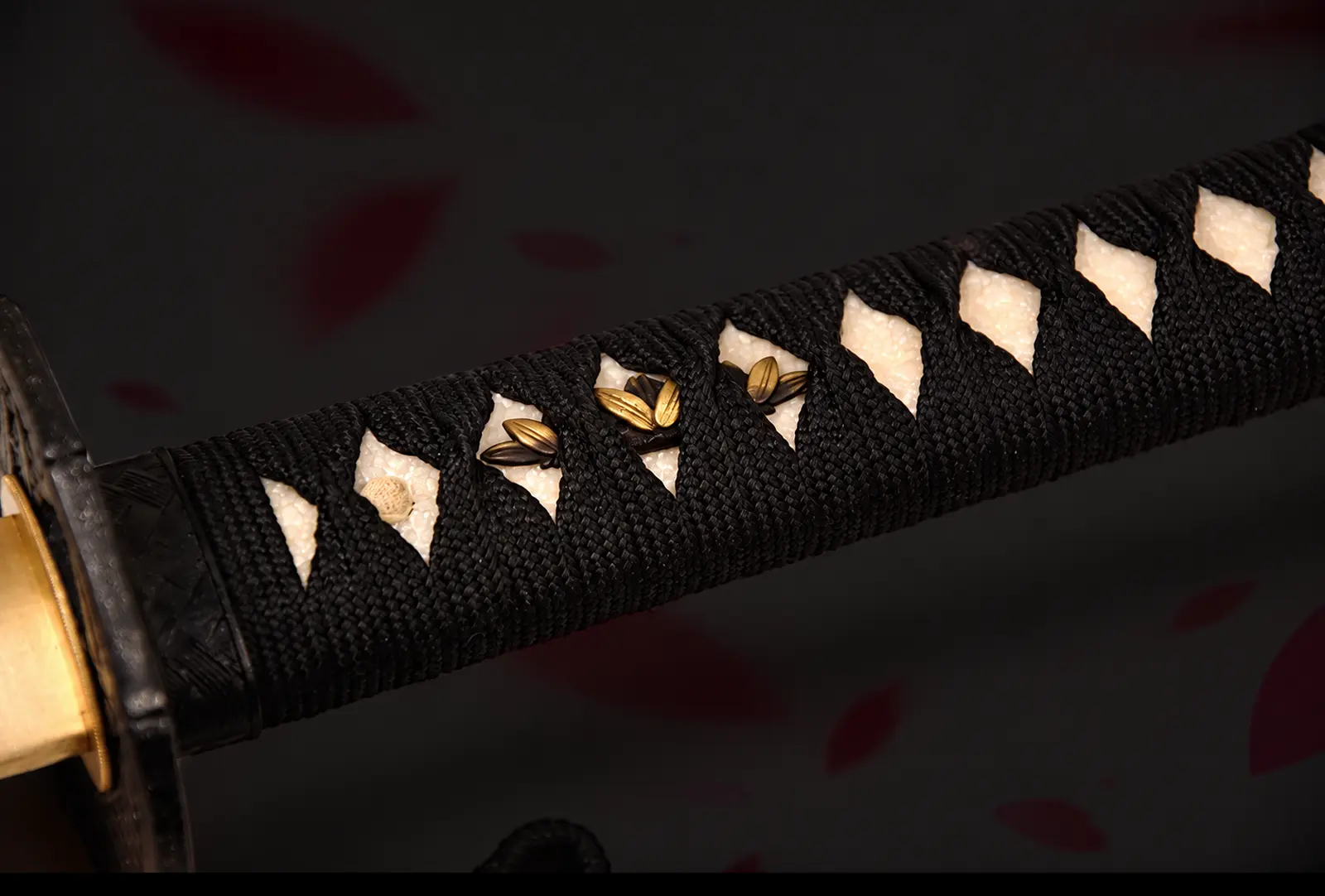
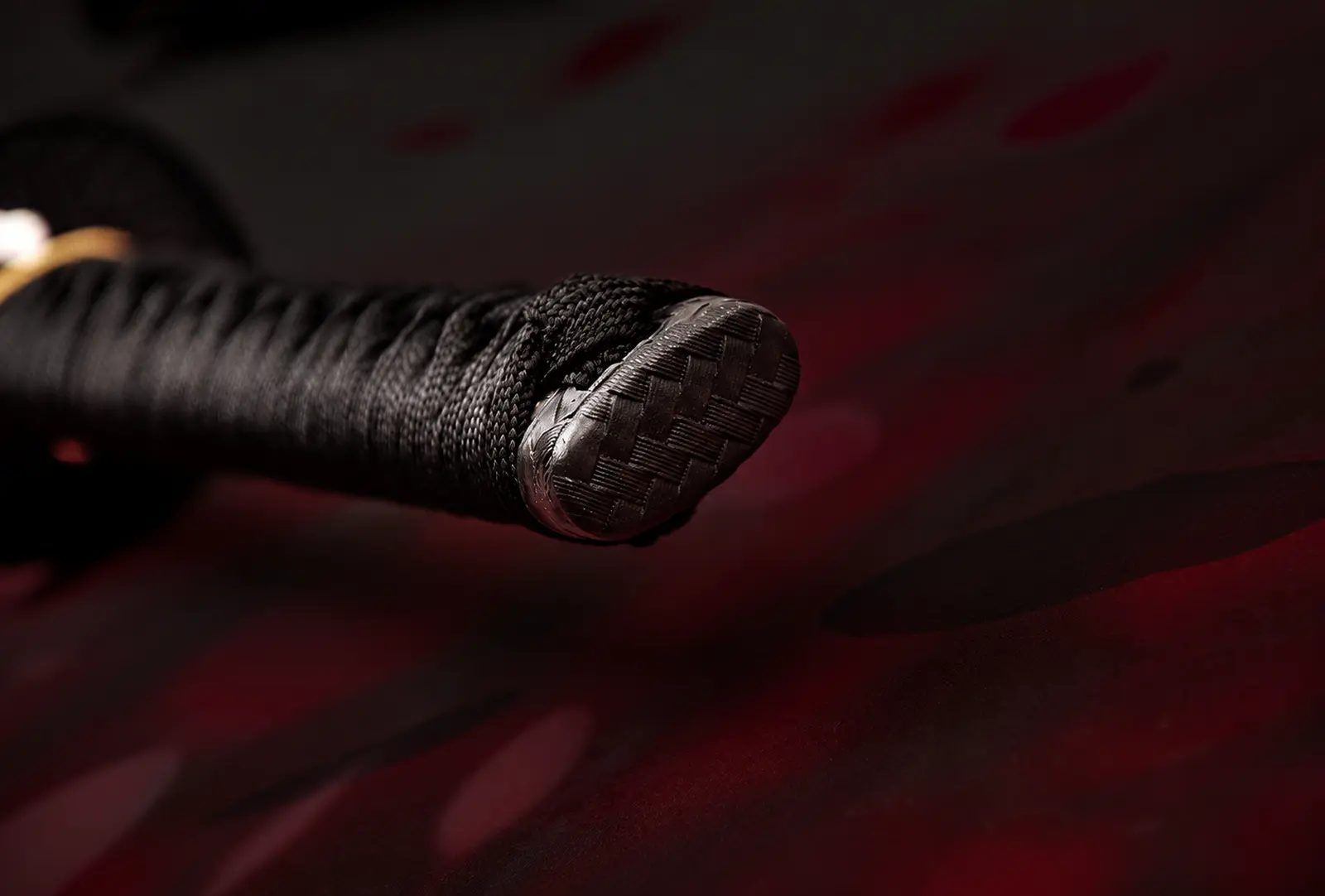
The tsuka combines black tsuka-ito with genuine rayskin beneath the wrap. Alternating diamond-shaped openings reveal the textured surface and decorative menuki.
A Hishigami upgrade adds paper supports beneath the wrapping to create a more consistently shaped diamond pattern and a refined grip finish.
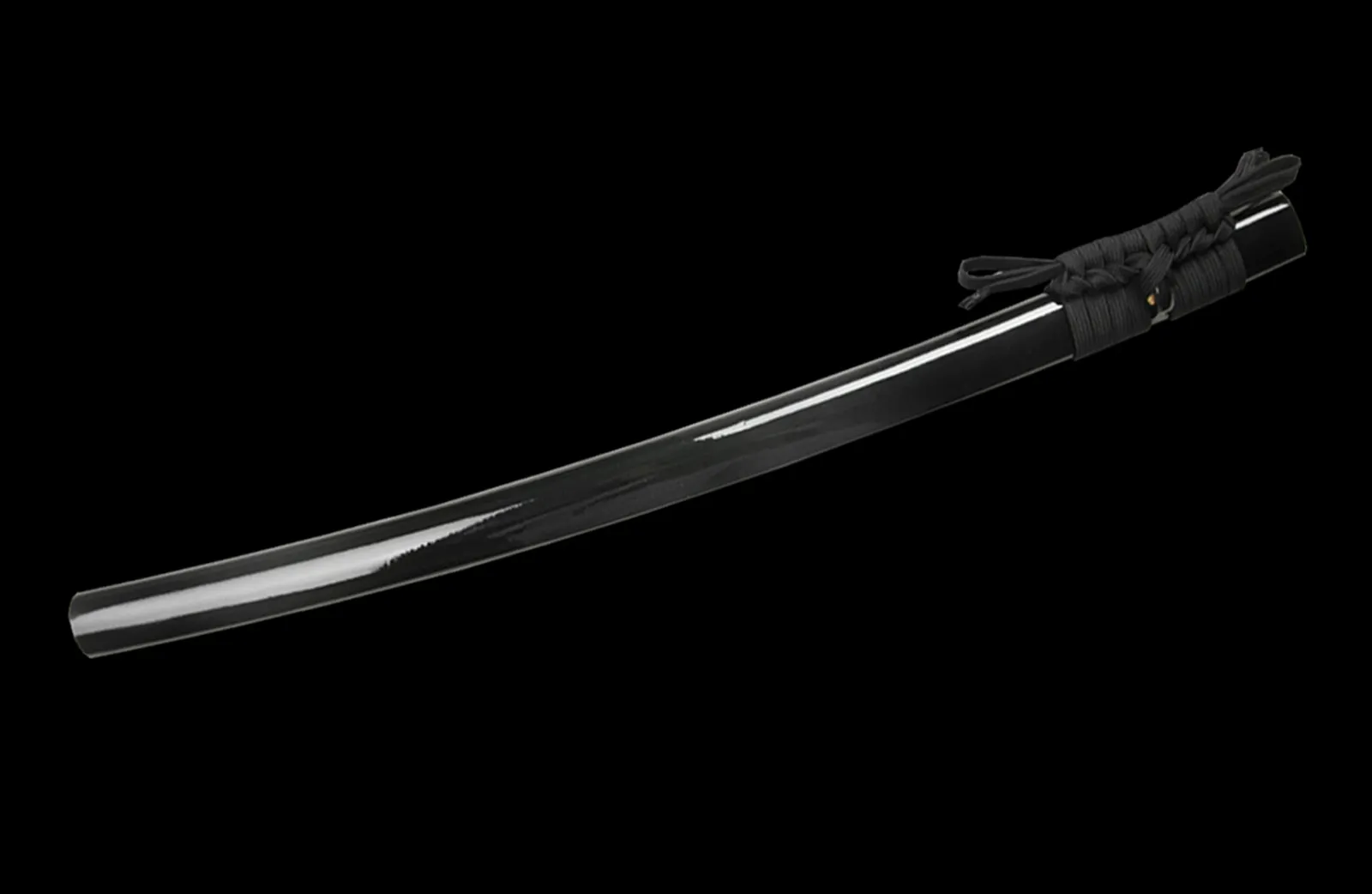
Quiet in Form.
The black lacquered saya is made from Qingpi Wood, with wooden koiguchi, kurigata, and kojiri fittings. A black sageo completes the understated presentation.
Three Tones. One Distinctive Blade.
The patterned-steel blade is finished with Three-Tone Polish, creating a deliberate contrast between the reflective shinogi-ji, the softer-toned ji, and the pale edge area. Under changing light, the layered steel textures become an essential part of the blade's visual character.
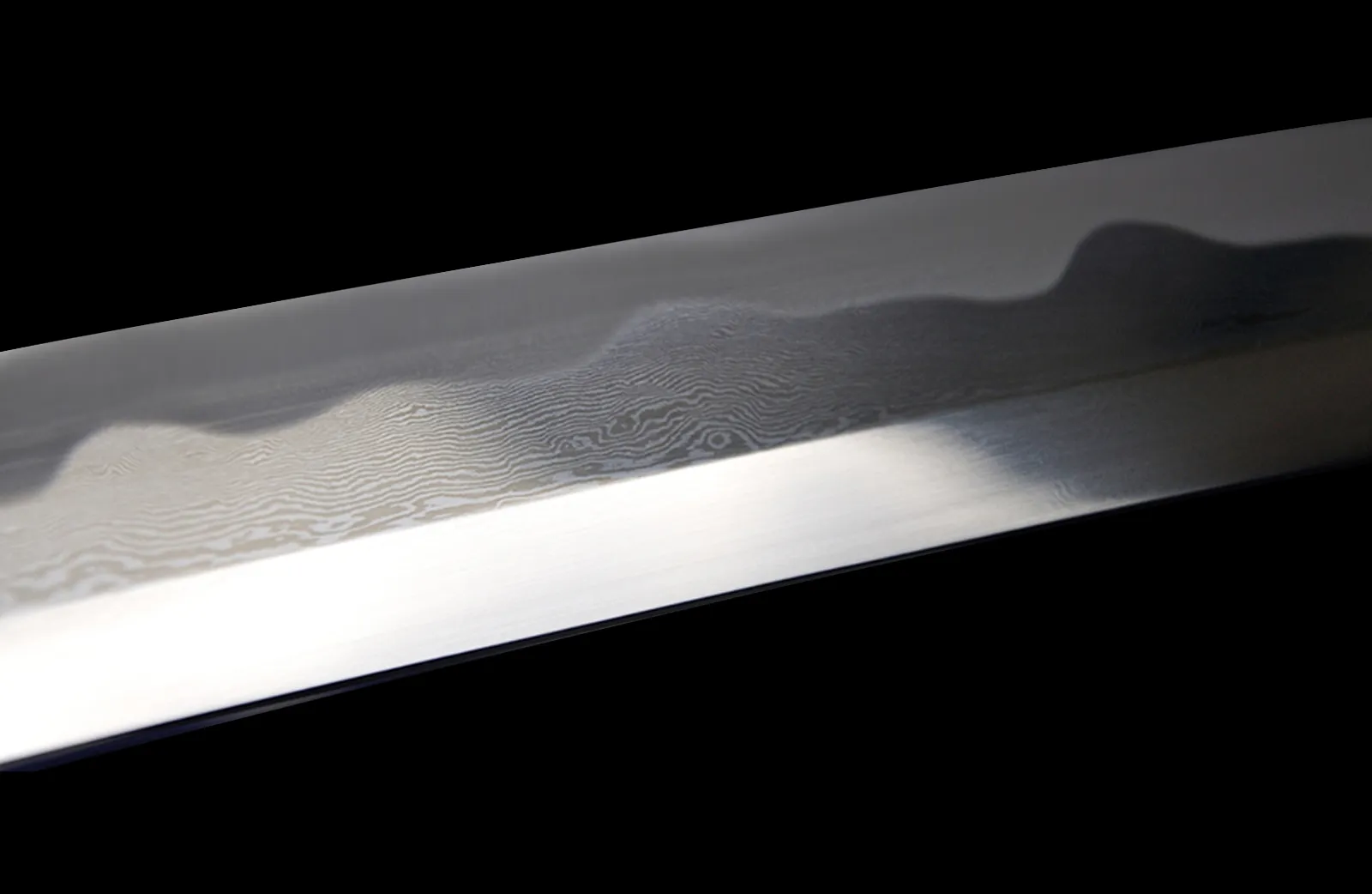
A Pattern Revealed by Light.
A flowing, wave-like decorative hamon moves across the patterned steel surface. Its appearance is produced through surface finishing rather than clay-coated differential hardening. Fine steel grain and contrasting polished regions give the blade its distinctive layered appearance.
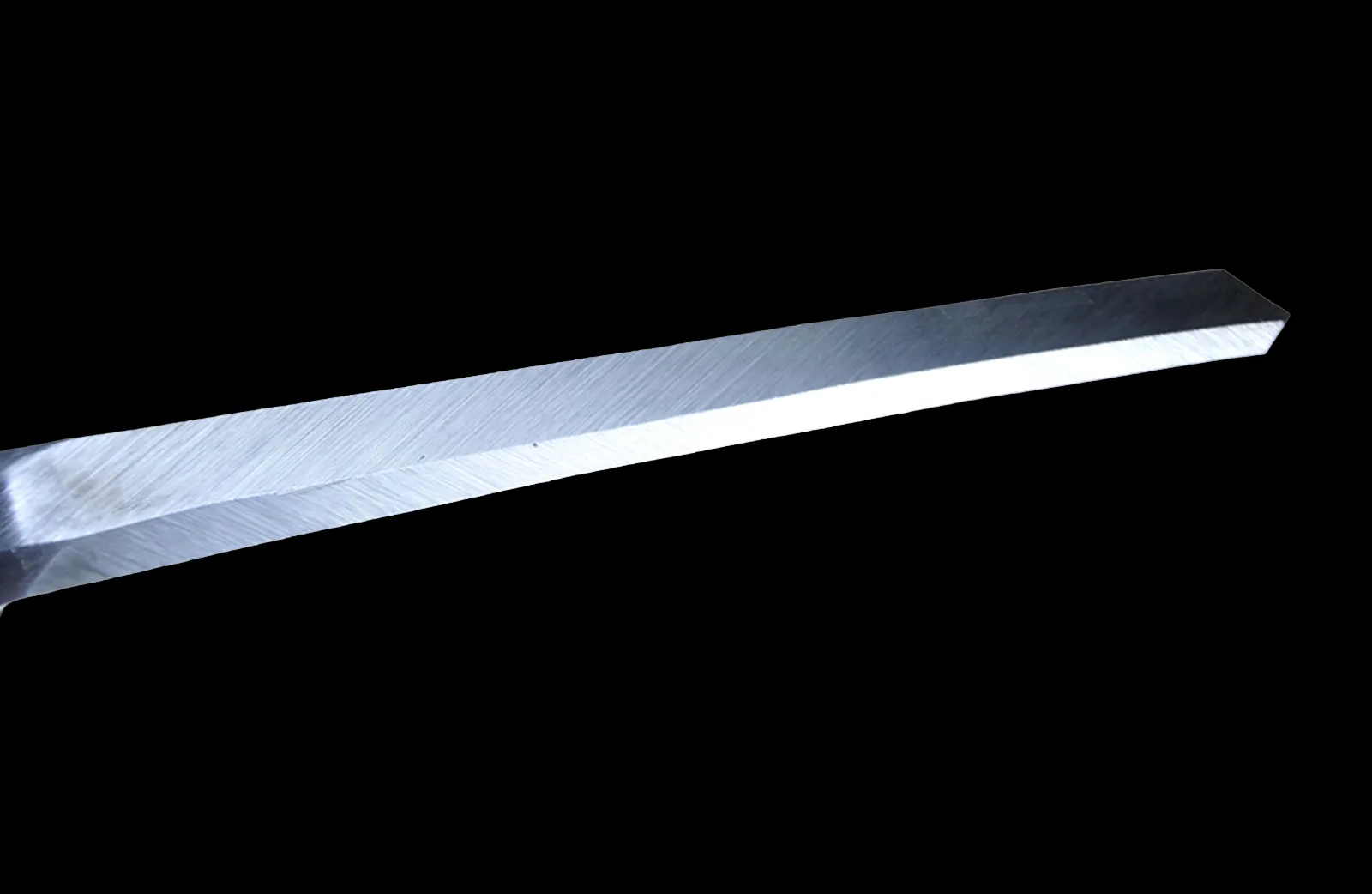
Details Beneath the Handle.
Beneath the assembled tsuka, the steel nakago features Basic Yasurime. Diagonal file marks create a visible texture along the tang, reflecting a traditional element of Japanese sword finishing.
THE CRAFT CONTINUES BEYOND WHAT IS VISIBLE.
Petals & Steel.
A study of polished steel, dark iron, and quiet detail. From the flowing lines of the blade to the texture of its mountings, each photograph reveals another perspective on the finished katana.
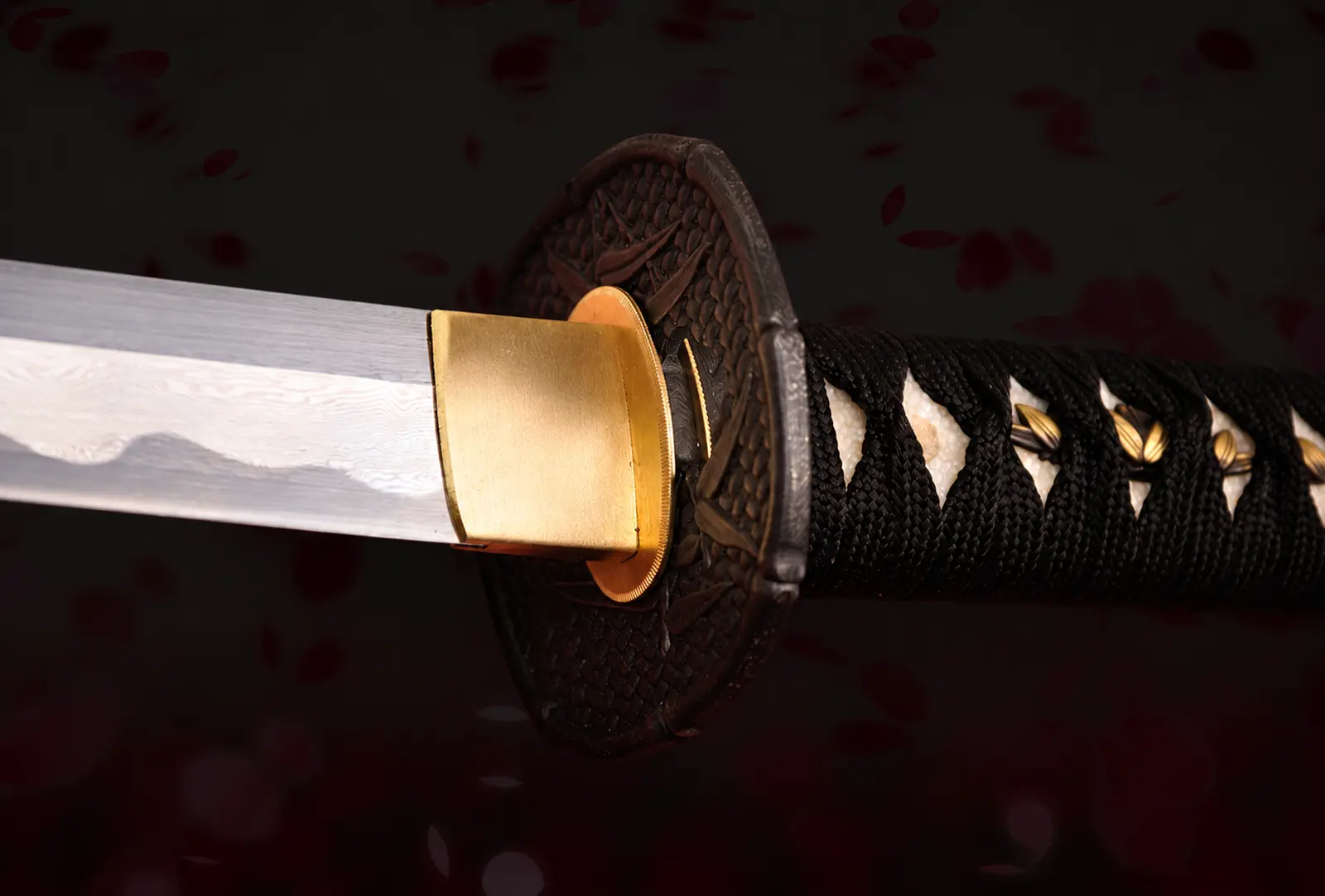
Steel in Three Tones.
Layered steel texture and contrasting polished surfaces, revealed under changing light.
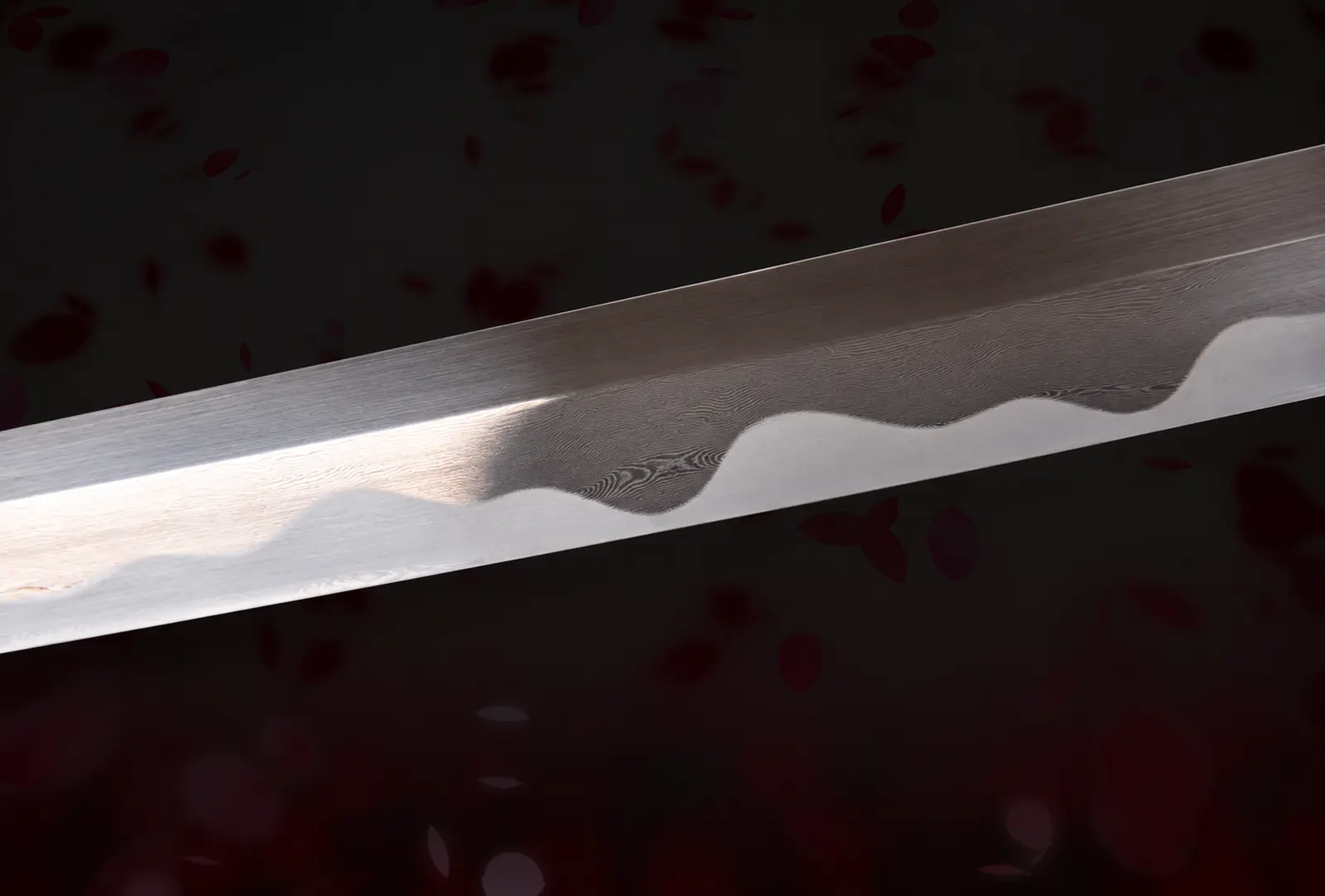
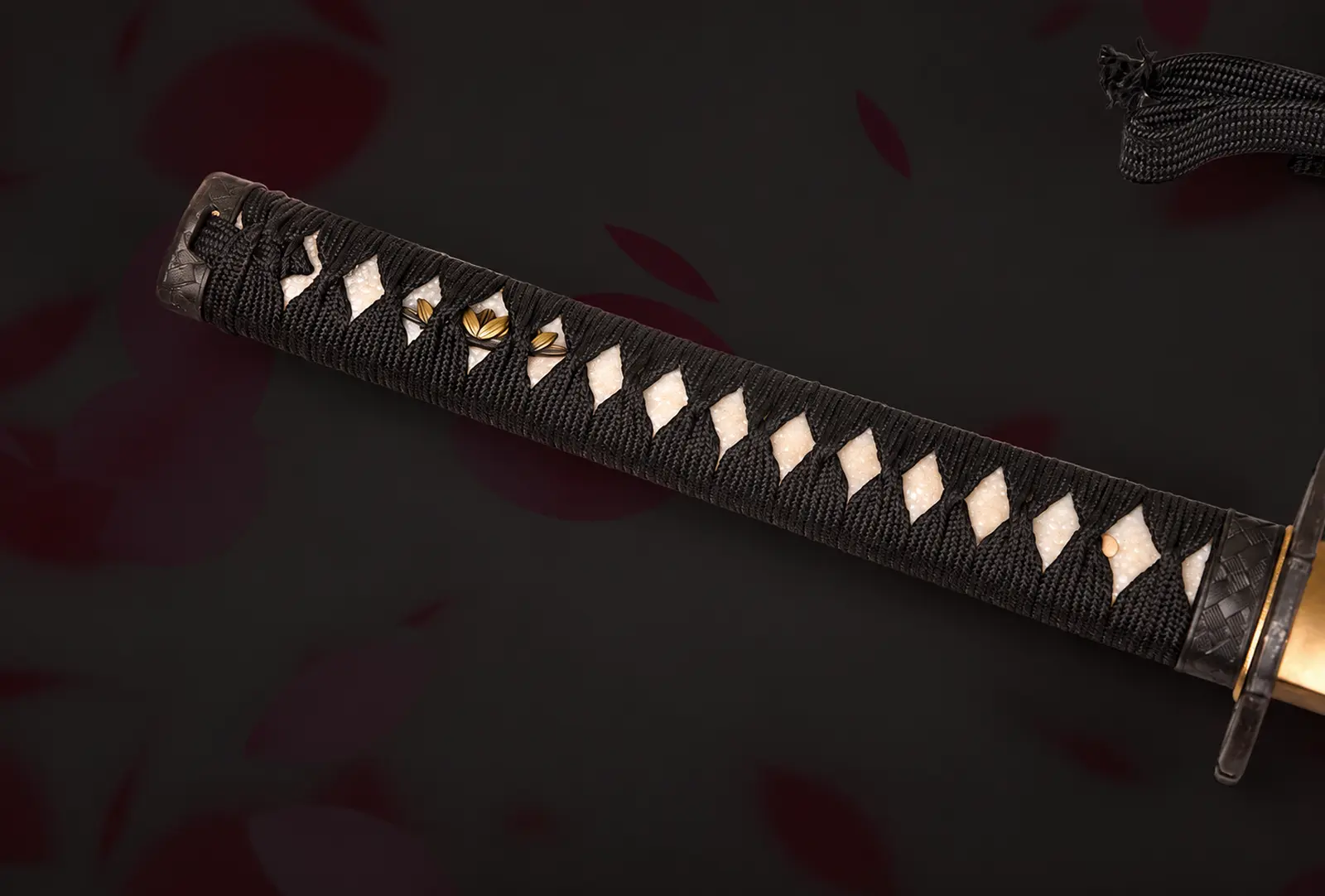
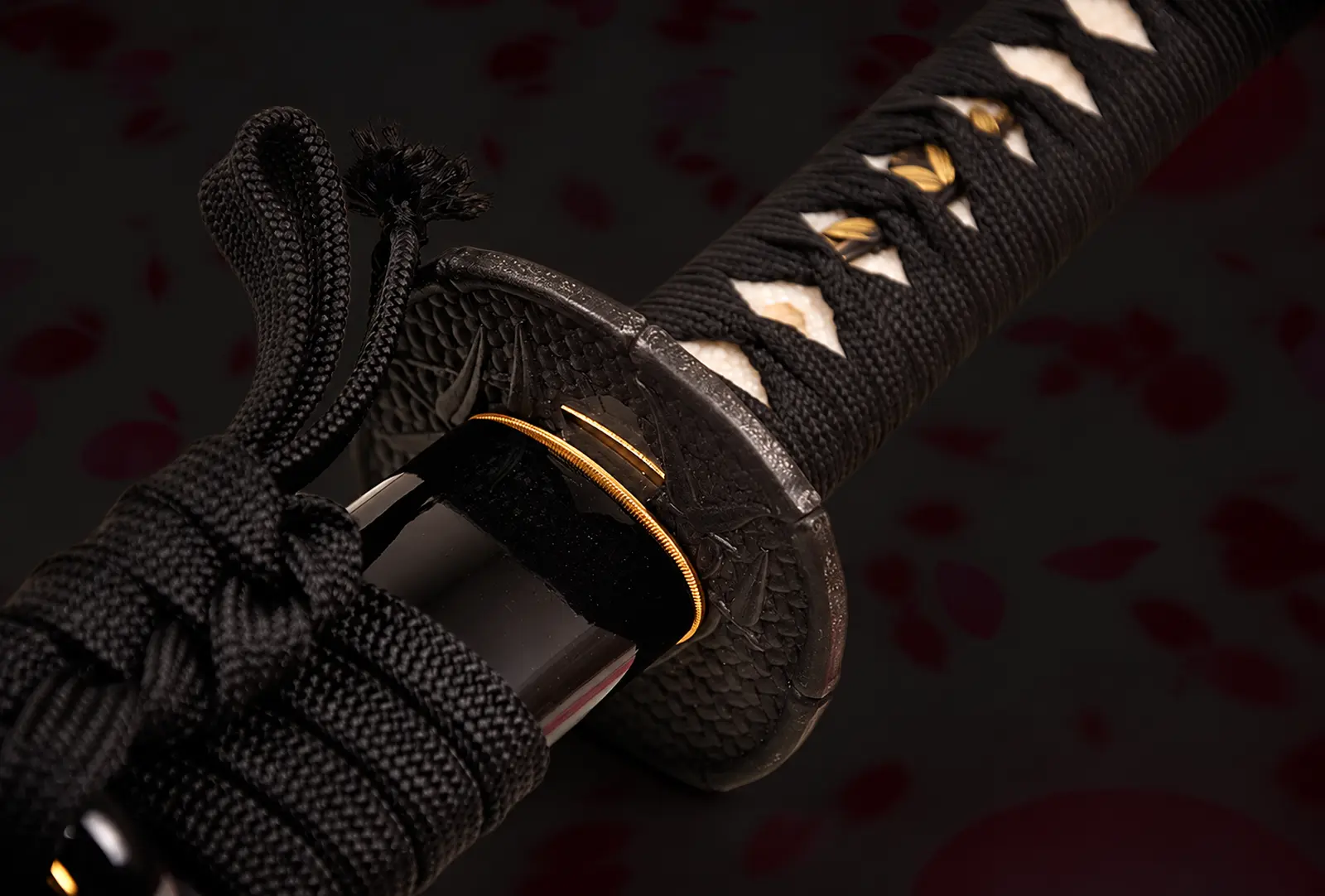
A Wave Across the Steel.
A decorative hamon-style pattern follows the polished surface of the patterned-steel blade.
Rezensionen
Es gibt noch keine Rezensionen.