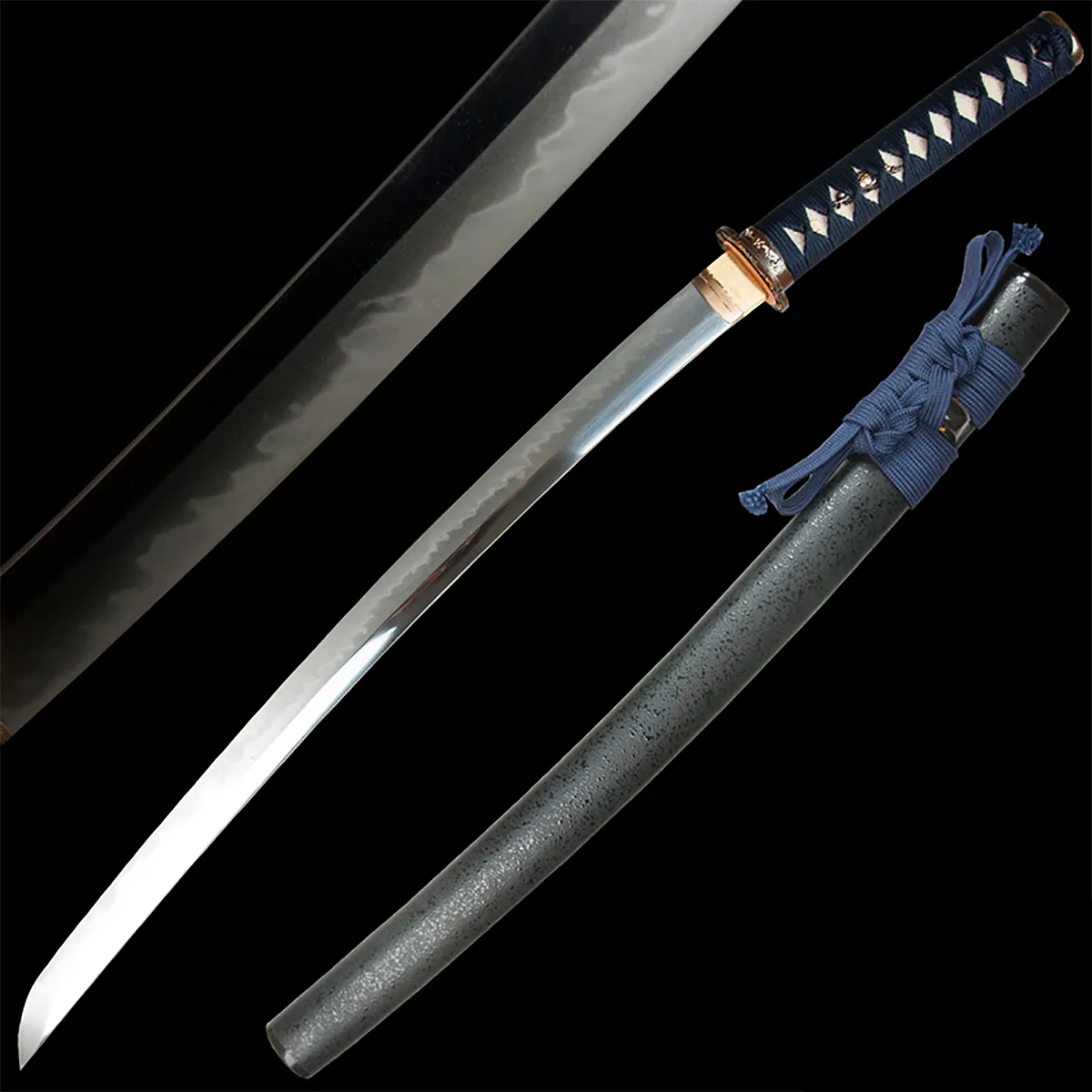
Beschreibung
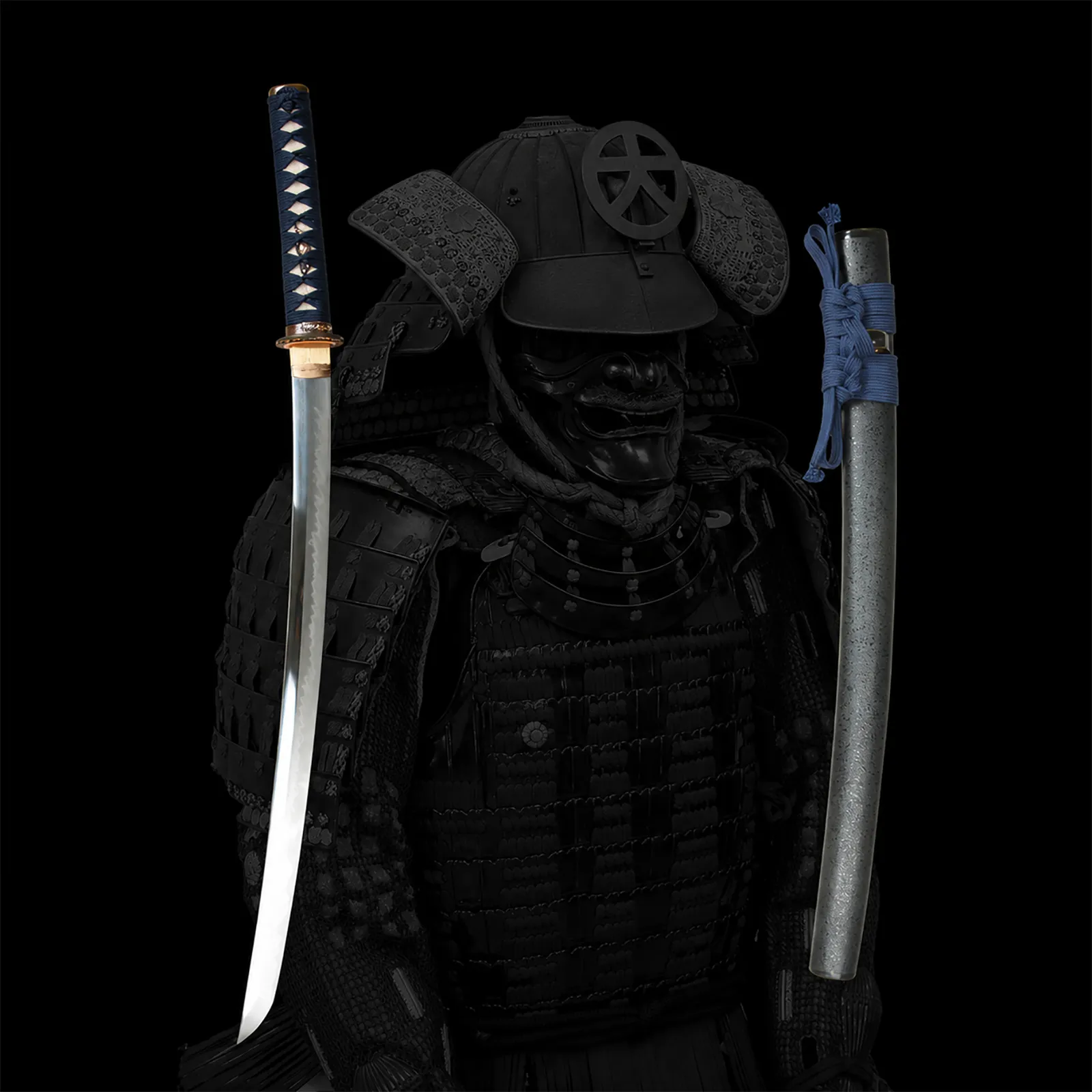
A Short Blade. A Lasting Presence.
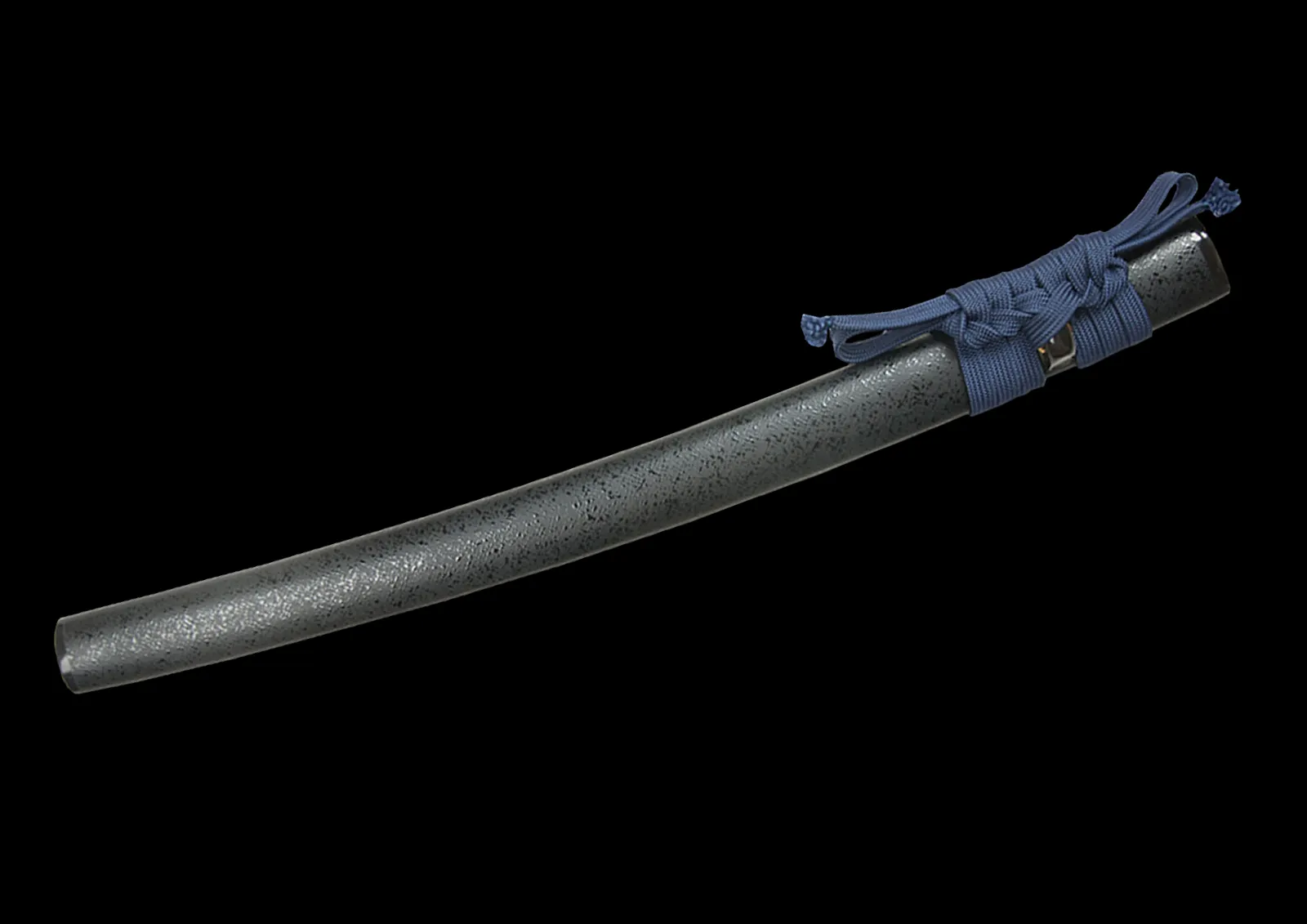
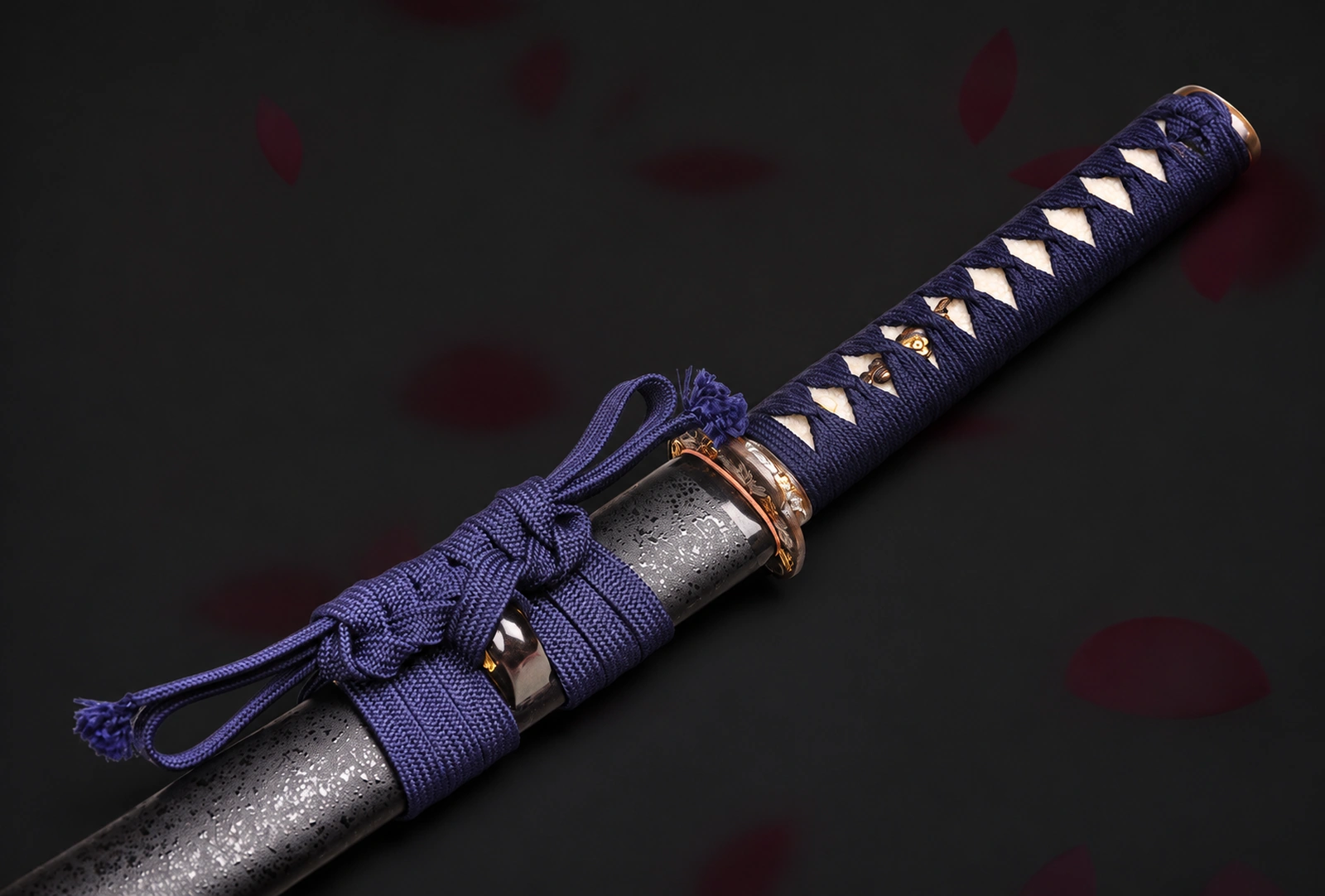
Against the shadow of samurai armor, the Chōji-midare Wakizashi reveals its distinctive character through a compact blade, deep-blue handle wrapping, and a textured gray saya. Its restrained appearance draws attention to the proportions and details of the sword itself.
Beyond its form, the blade features differential clay hardening and Japanese-style polishing, revealing the flowing character of its hamon. Subtle variations in the hardening pattern give each finished blade its own individual expression.
Details Beneath the Surface.
The Chōji-midare Wakizashi brings together traditional sword fittings, a deep-blue handle wrapping, and a distinctive gray scabbard. Beyond these details, its character emerges through differential clay hardening and the subtle contrasts of Japanese-style polishing.
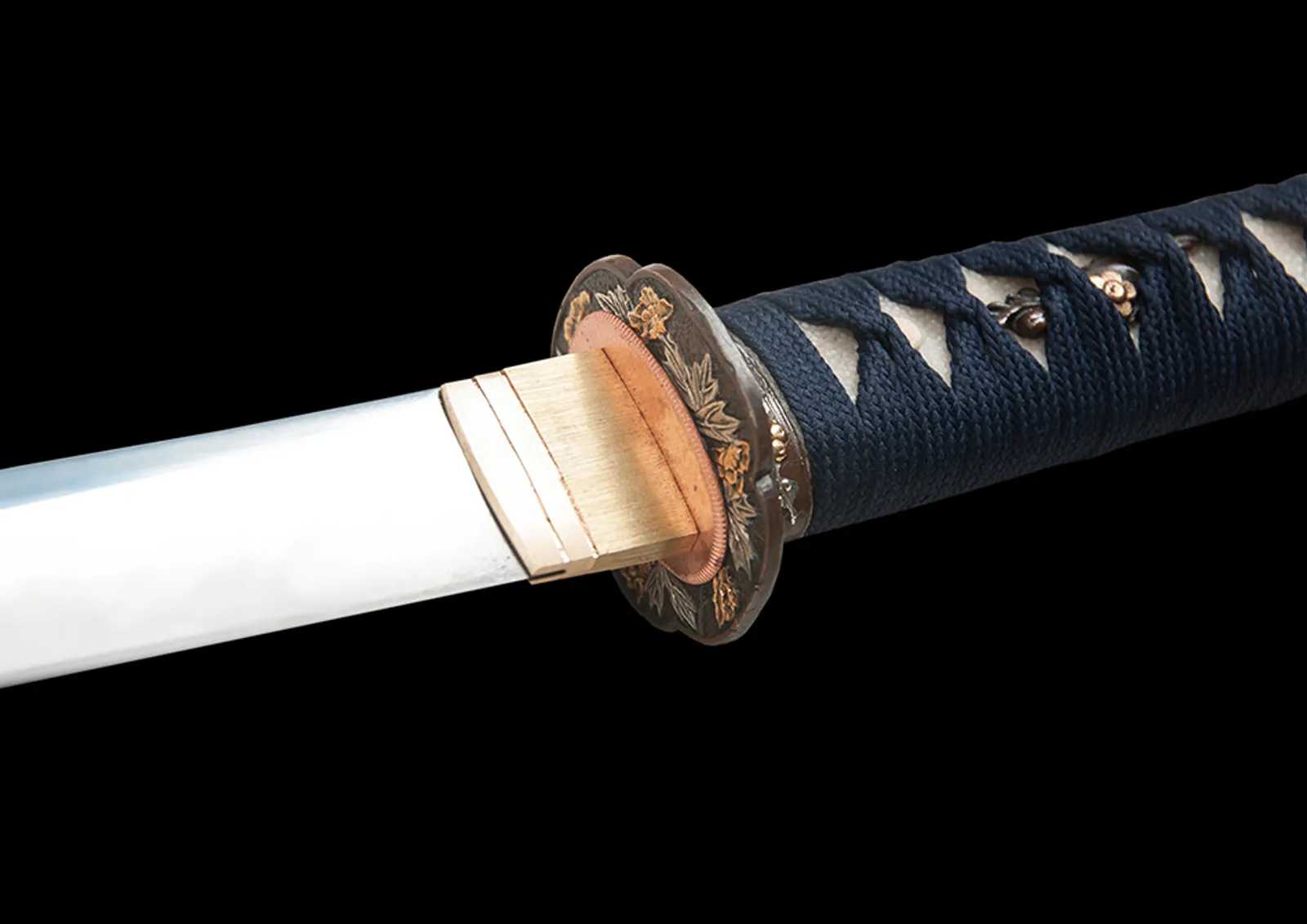
An Ornate Touch.
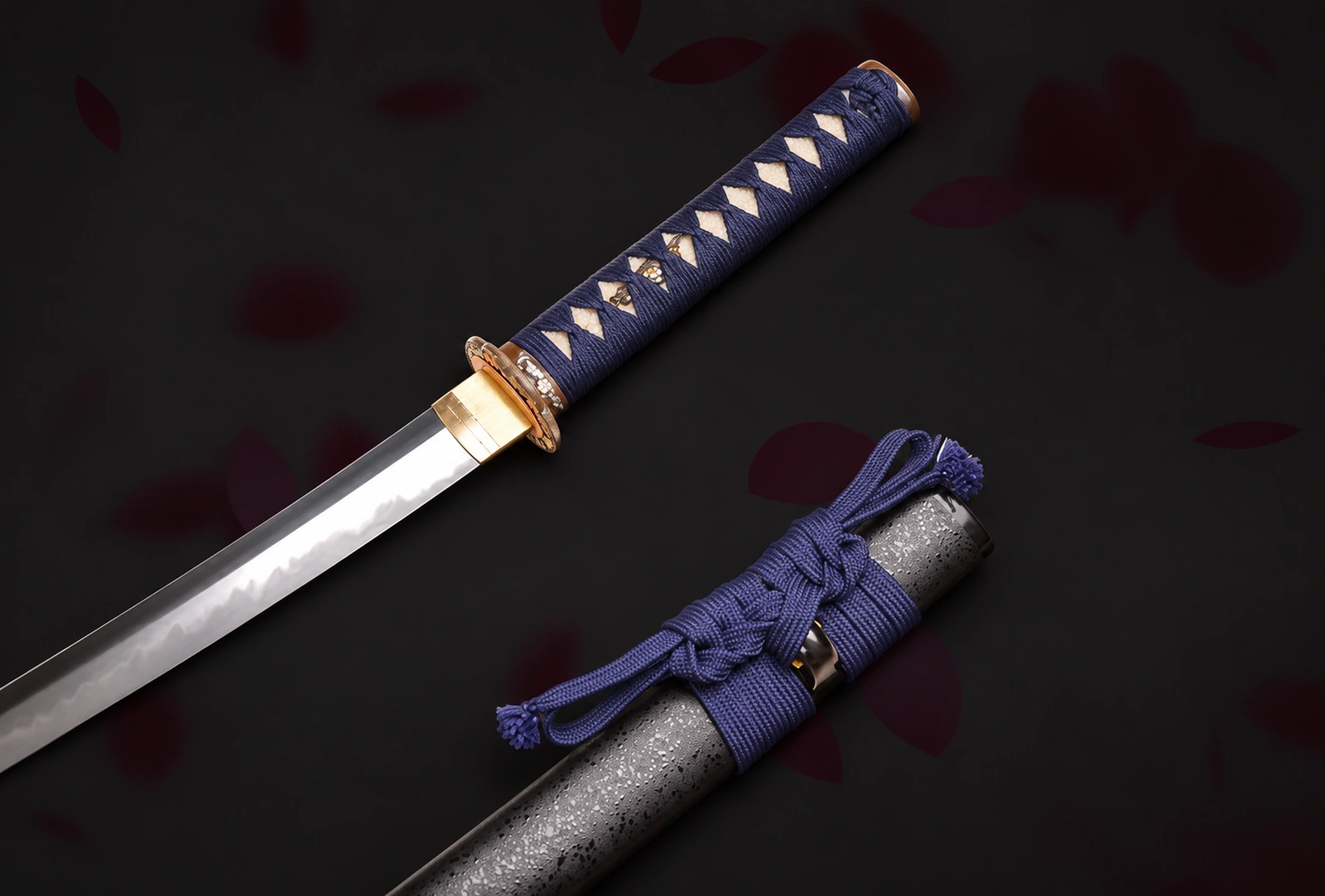
The decorated tsuba features warm metallic detailing that contrasts with the deep-blue handle wrapping. A brass habaki completes the transition between the blade and its traditional fittings.
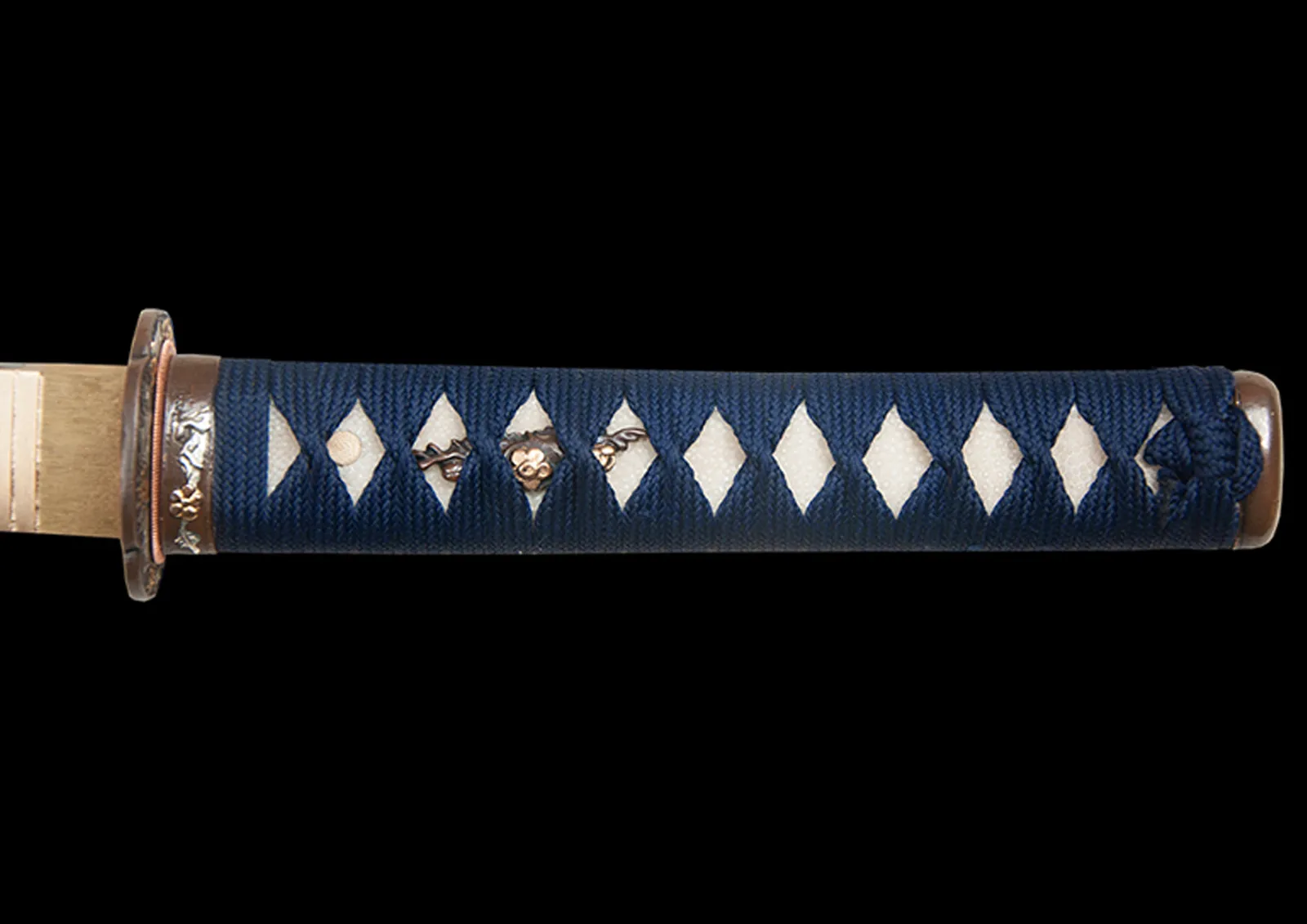
A Study in Blue.
Deep-blue tsuka-ito follows a traditional diamond wrapping pattern, revealing pale samegawa beneath. Decorative menuki introduce small metallic accents within the repeating rhythm of the grip.
Texture in the Quiet.
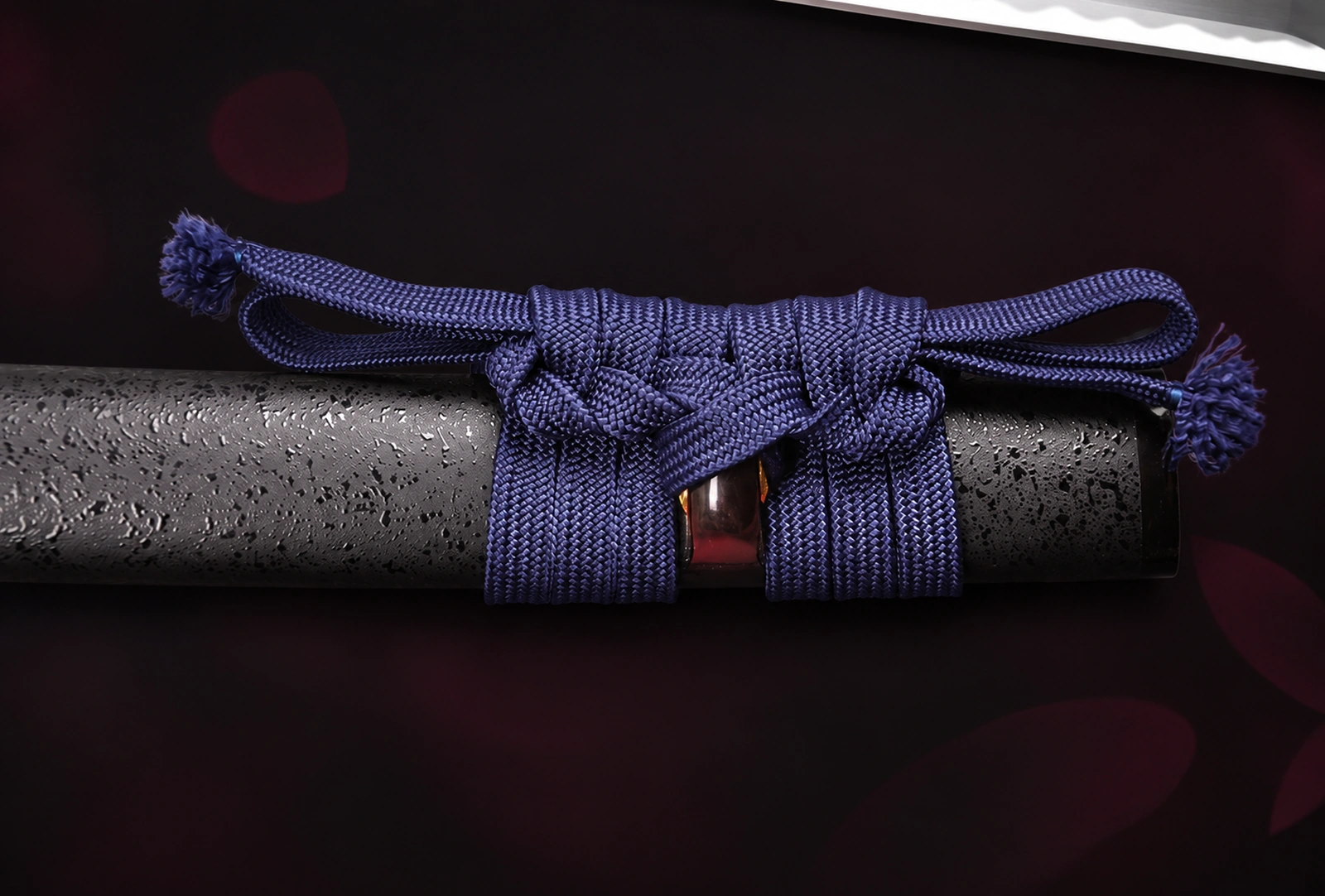
The gray saya carries a subtly speckled surface, paired with a deep-blue sageo. Its restrained texture complements the handle wrapping and gives this wakizashi a cohesive, understated appearance.
Where Light Meets Steel.
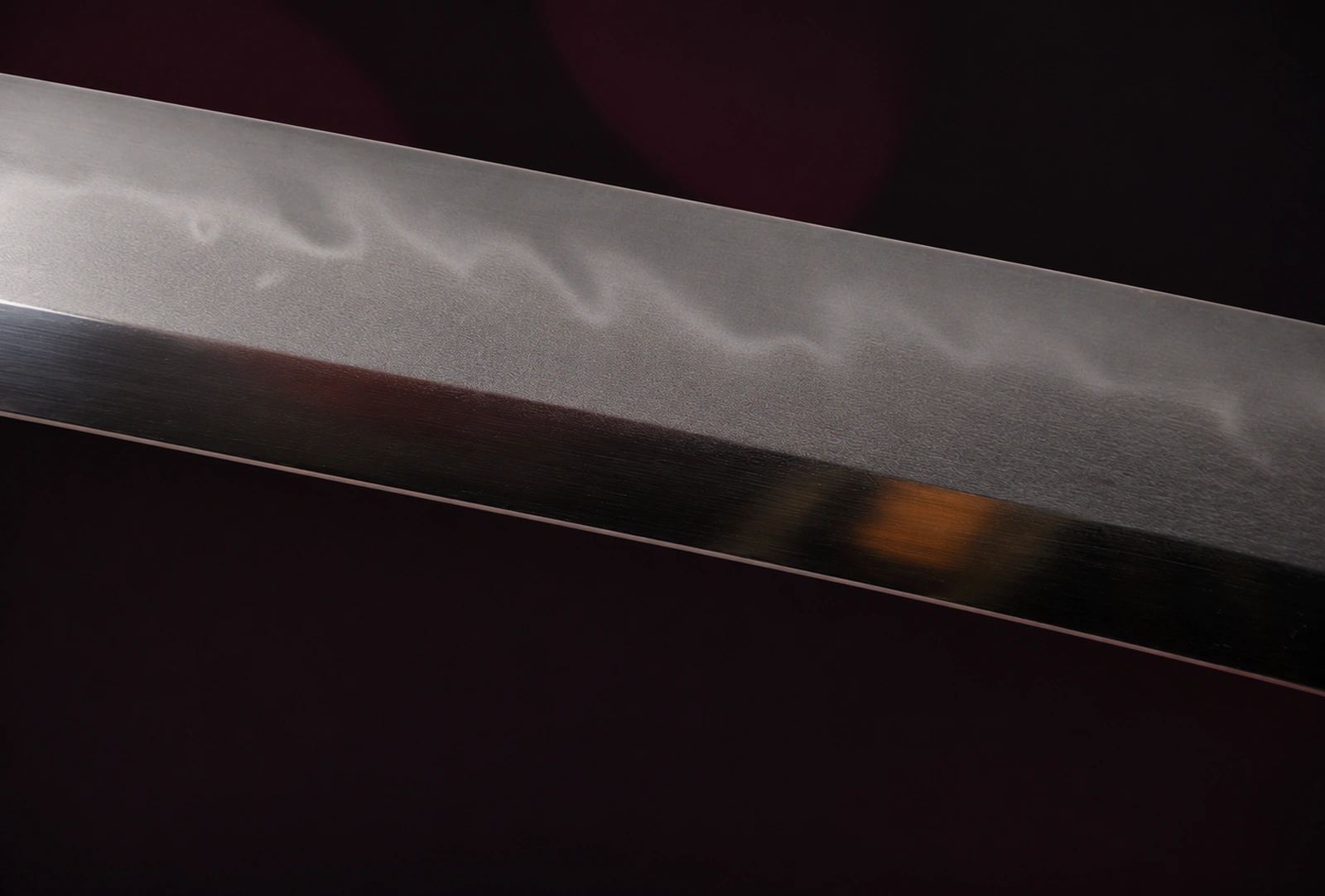
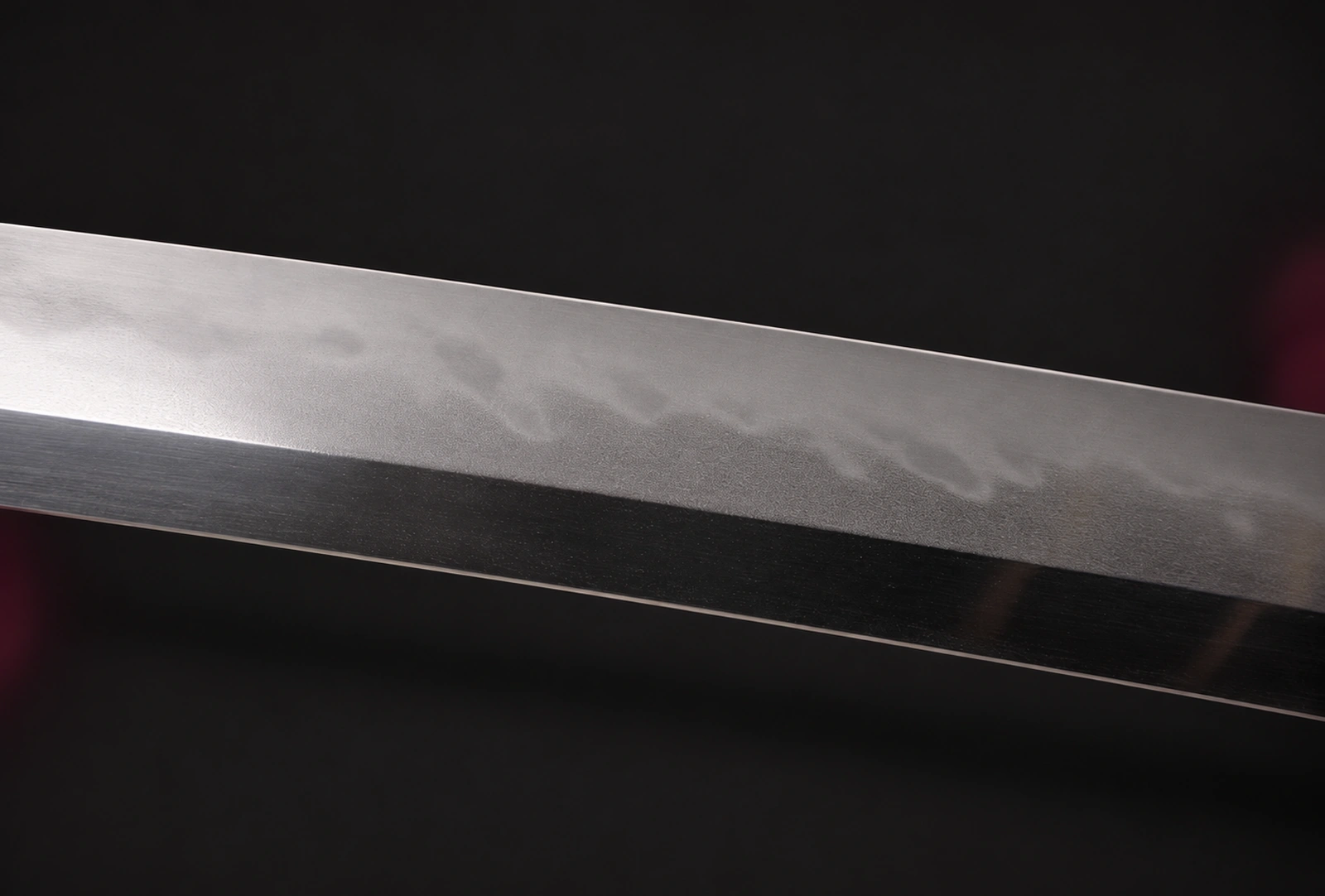
Japanese-style polishing brings out the contrast between the bright cutting-edge region and the subdued gray surface of the blade. The finish reveals subtle jihada and the layered visual character of the hamon formed through differential hardening.
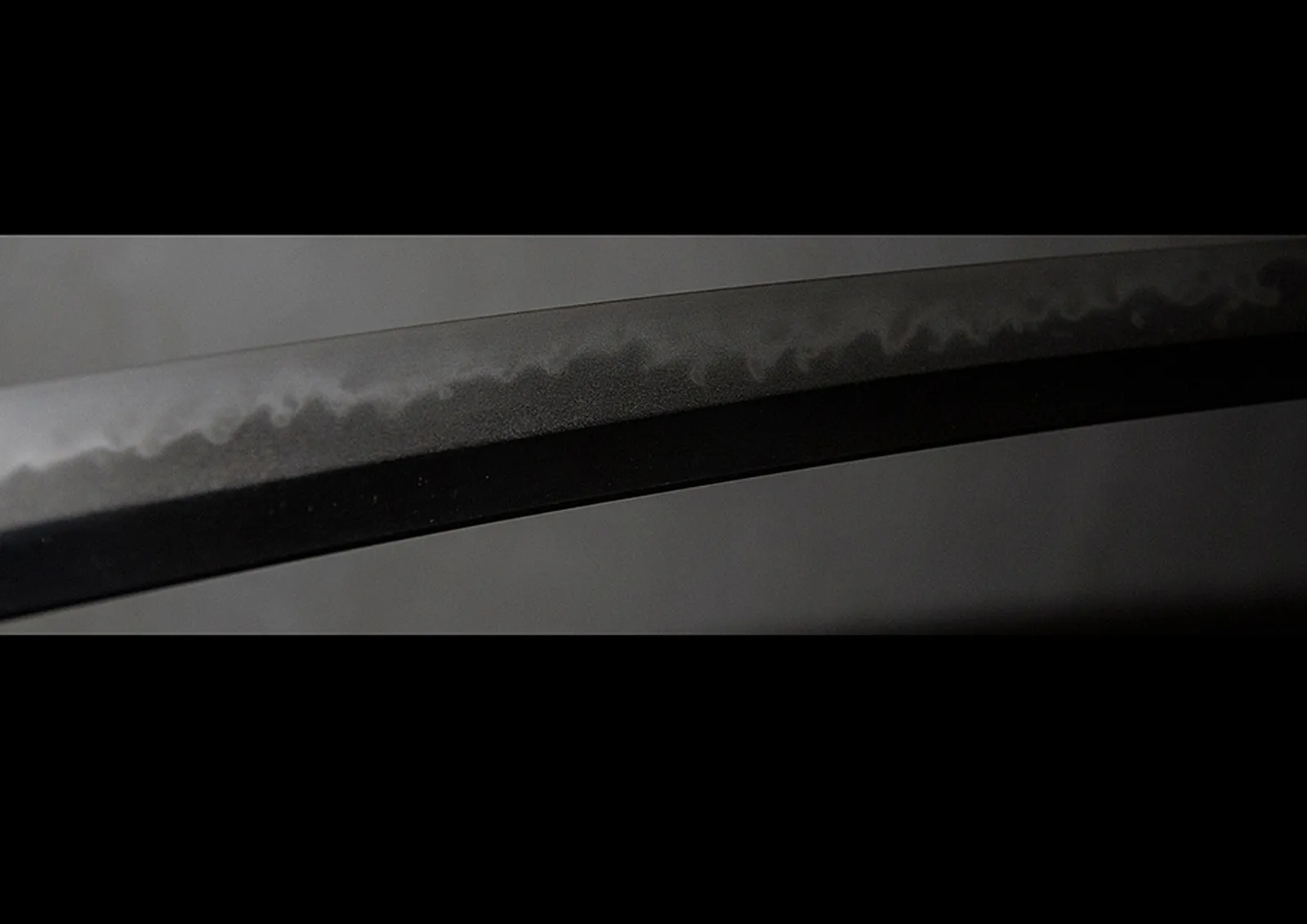
The transition from the brighter edge to the darker steel surface brings the hardened pattern into view. Rather than relying on a decorative surface line, the blade displays a hamon developed through differential clay hardening.
The Pattern Continues.
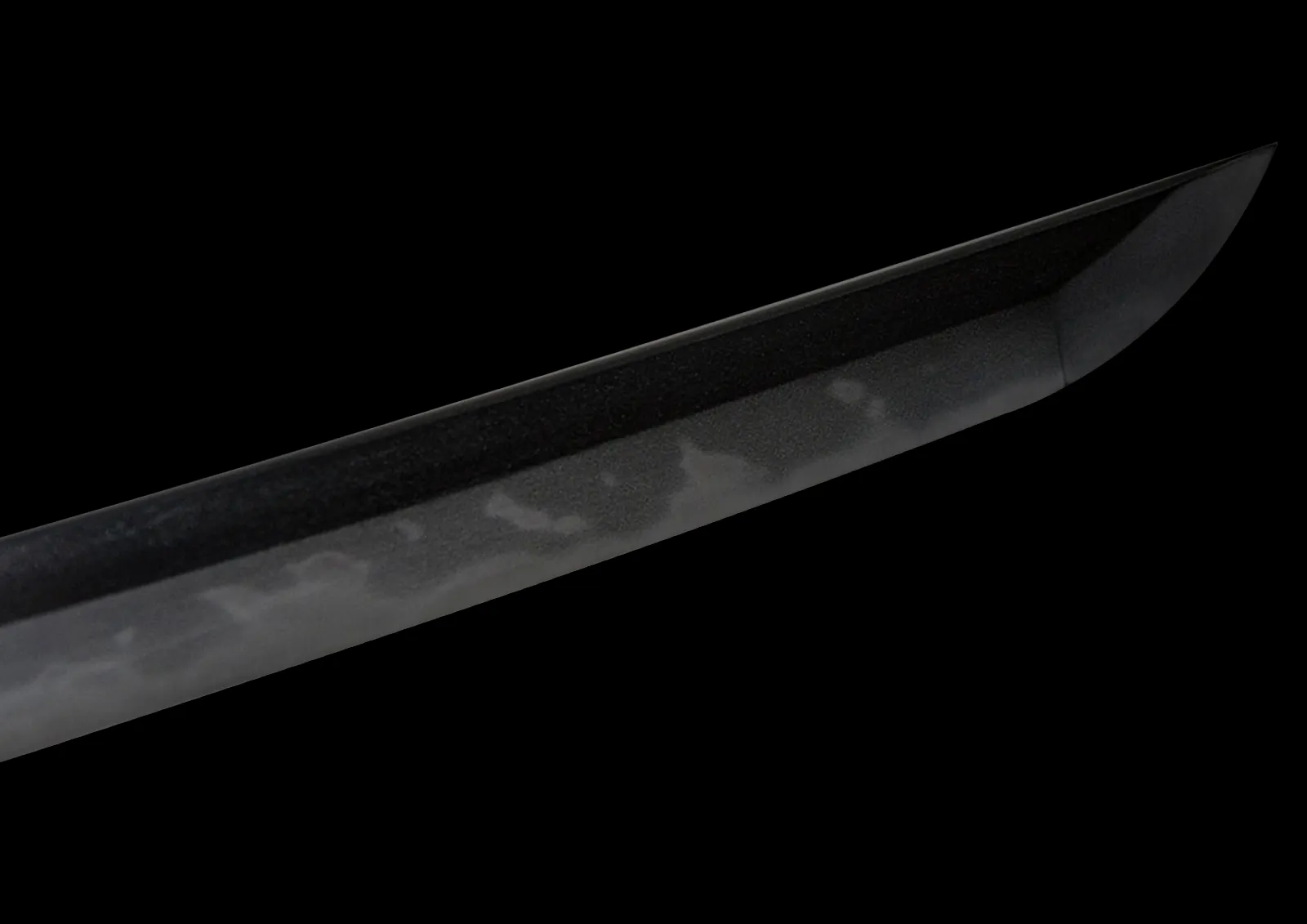
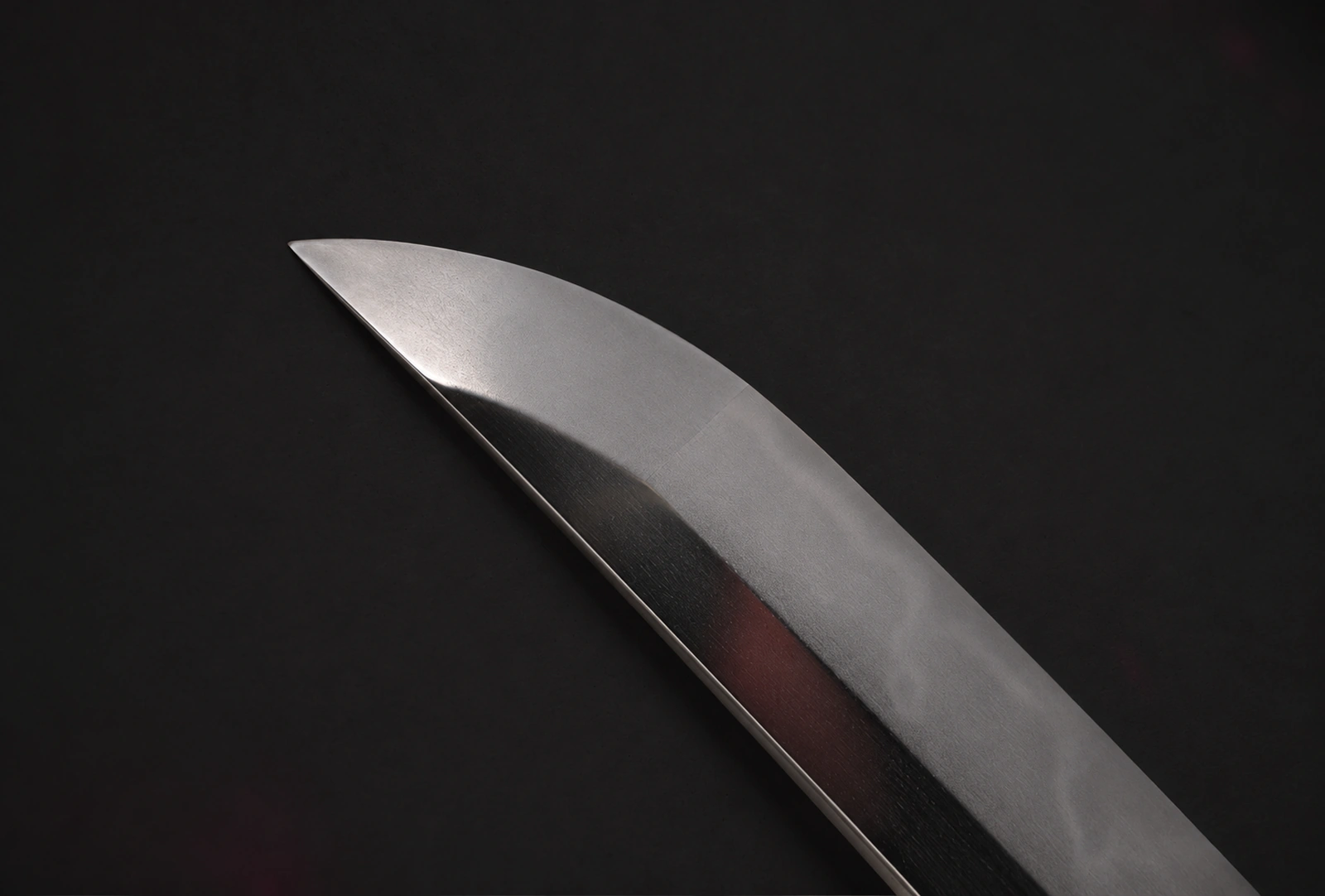
As the blade approaches the kissaki, the changing steel tones reveal another perspective on the hardening pattern. The irregular boundary is an important part of the blade's visual character.
The Character of Chōji-midare.
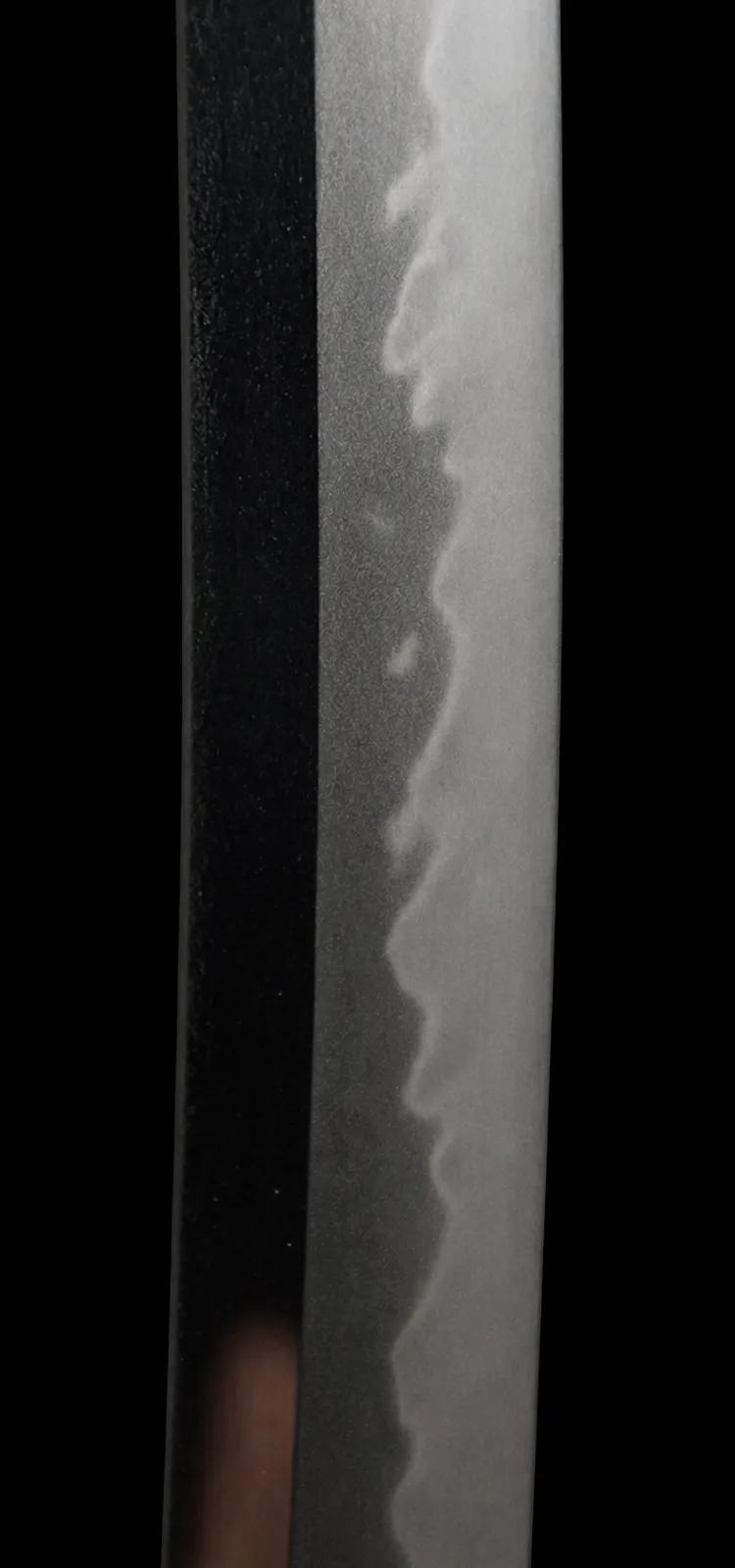
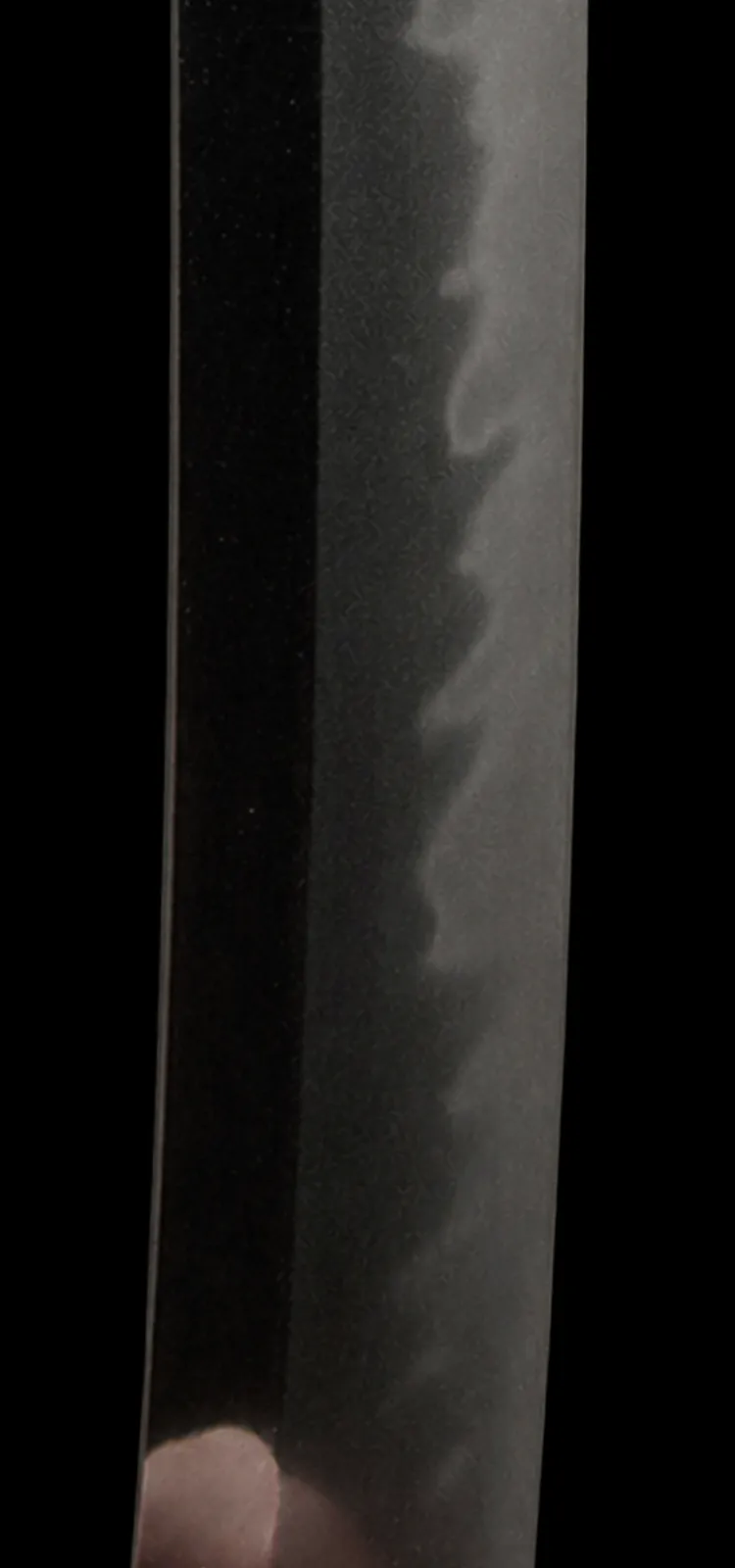
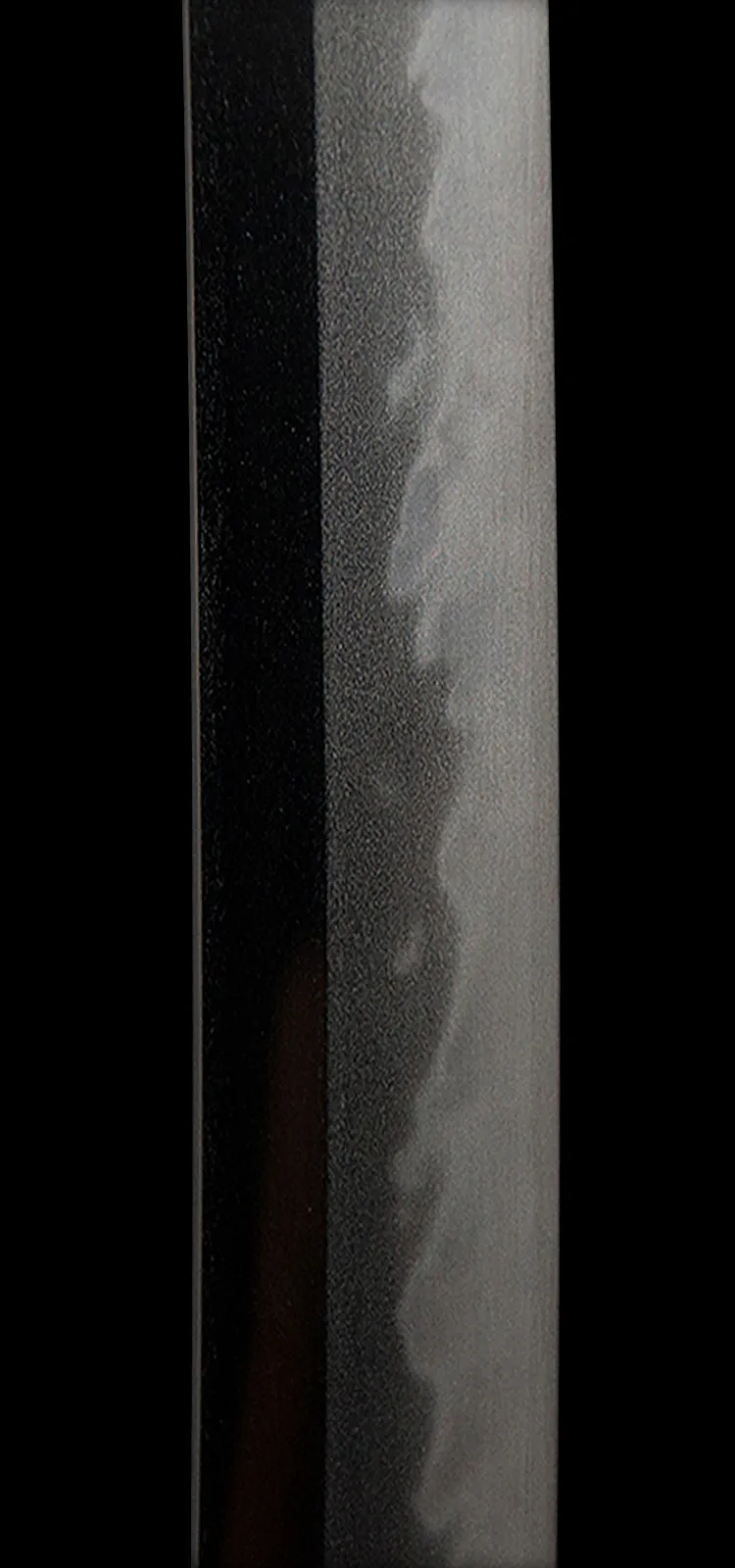
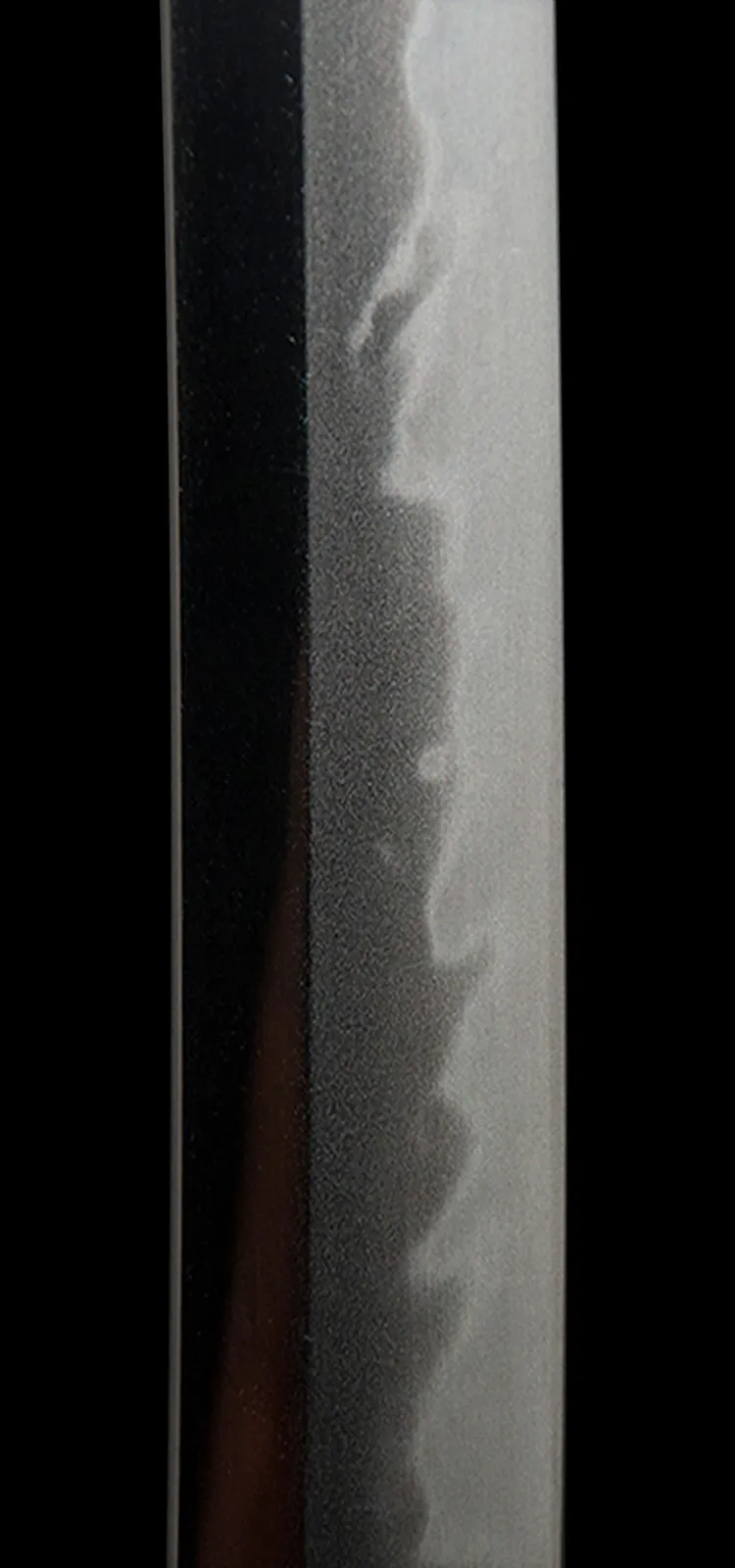
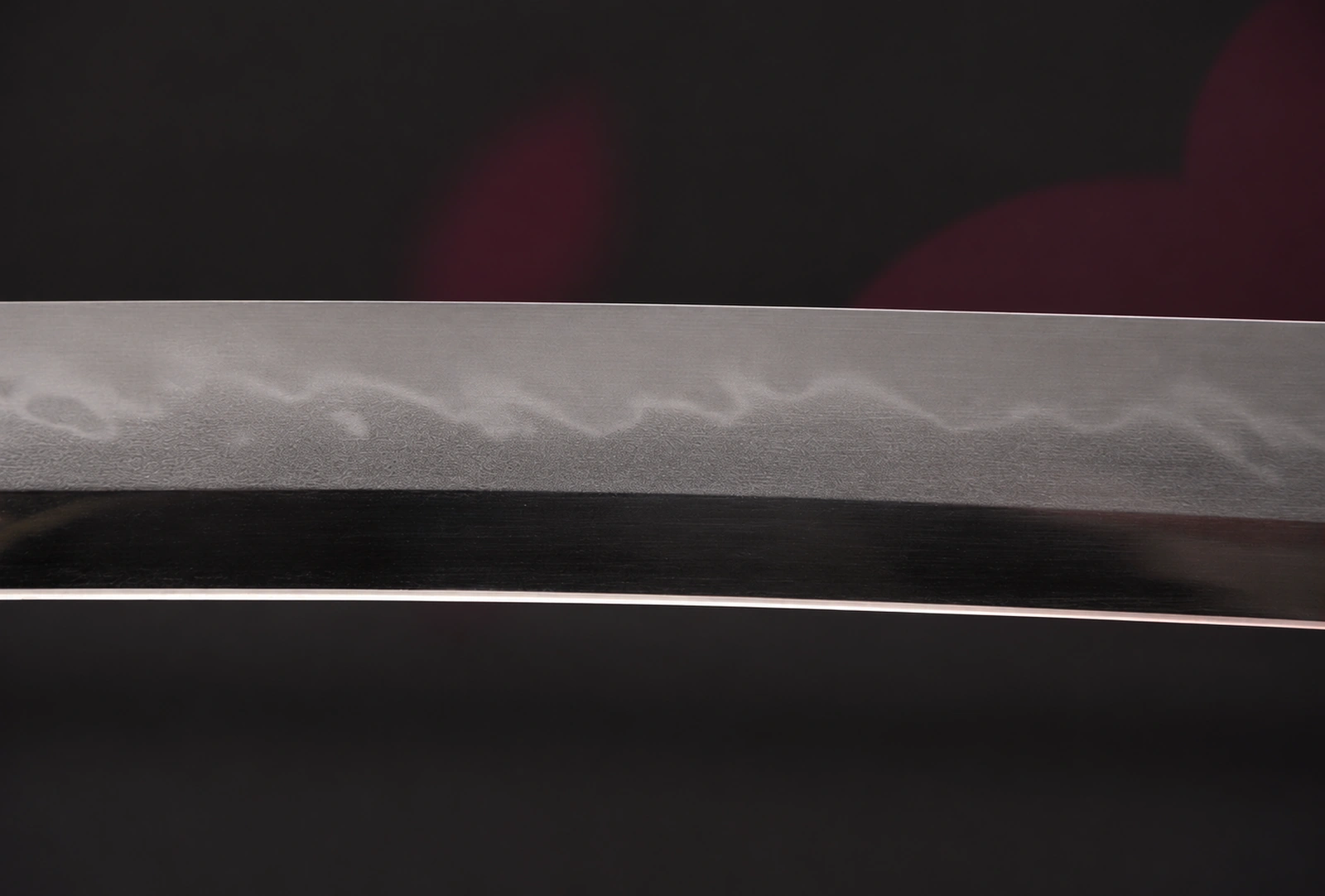
Chōji-midare is a traditional hamon pattern characterized by irregular, clove-bud-like formations along the hardened edge. Its alternating rises and recesses create a distinctive rhythm across the blade.
Although the overall character remains recognizable, the precise shape of the hardening boundary differs from blade to blade. These close-up photographs reveal individual sections of the naturally varied pattern.
No Two Patterns Are Exactly Alike.
Differential hardening produces subtle variations in the shape and activity of each blade's hamon. On some blades, fine ko-nie particles and sunagashi activity may also become visible under suitable lighting.
The precise distribution and density of these fine details naturally vary. Rather than following an identical arrangement, each finished blade develops its own individual character.
03 / SAKURA GALLERY
Steel Beneath the Falling Petals.
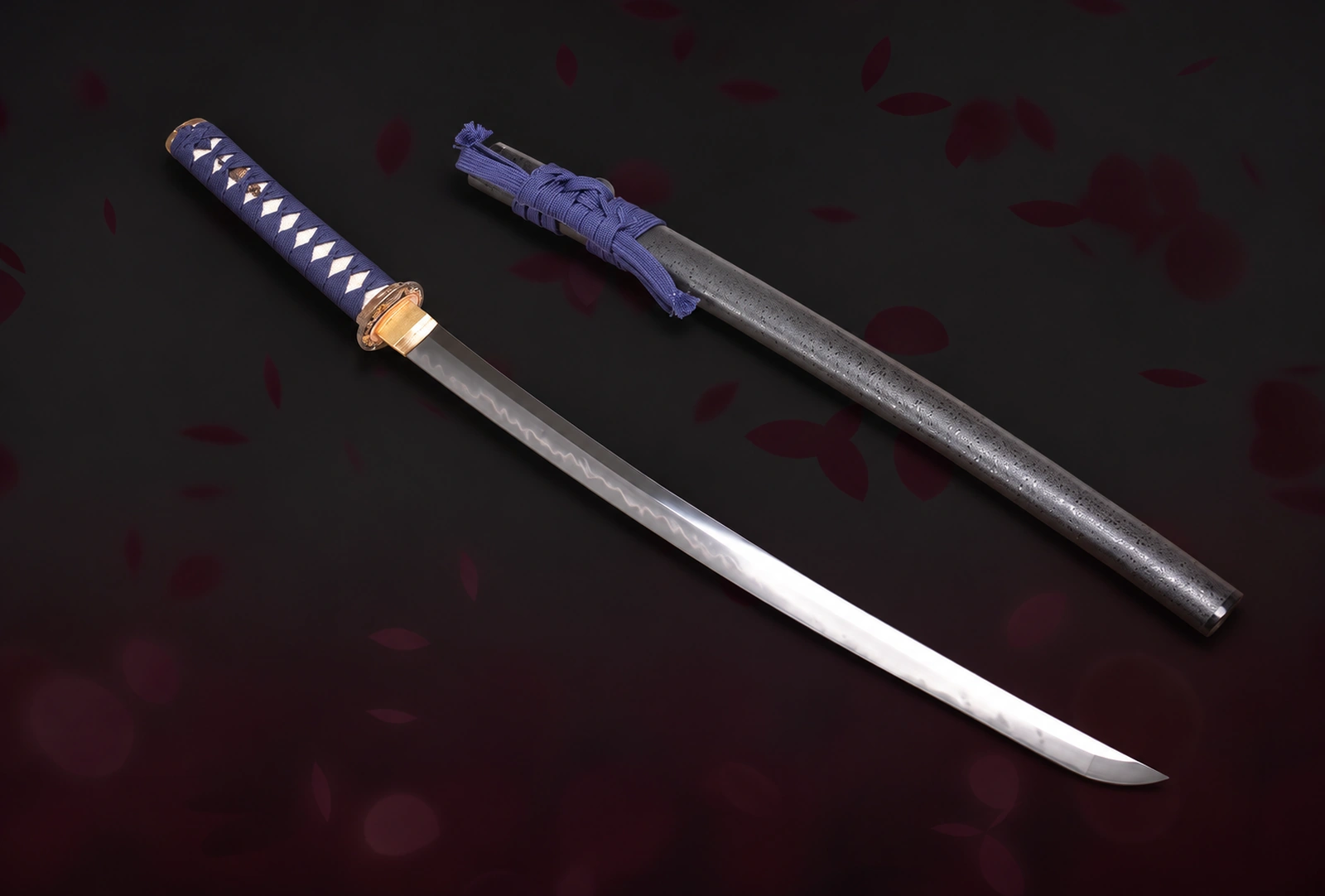
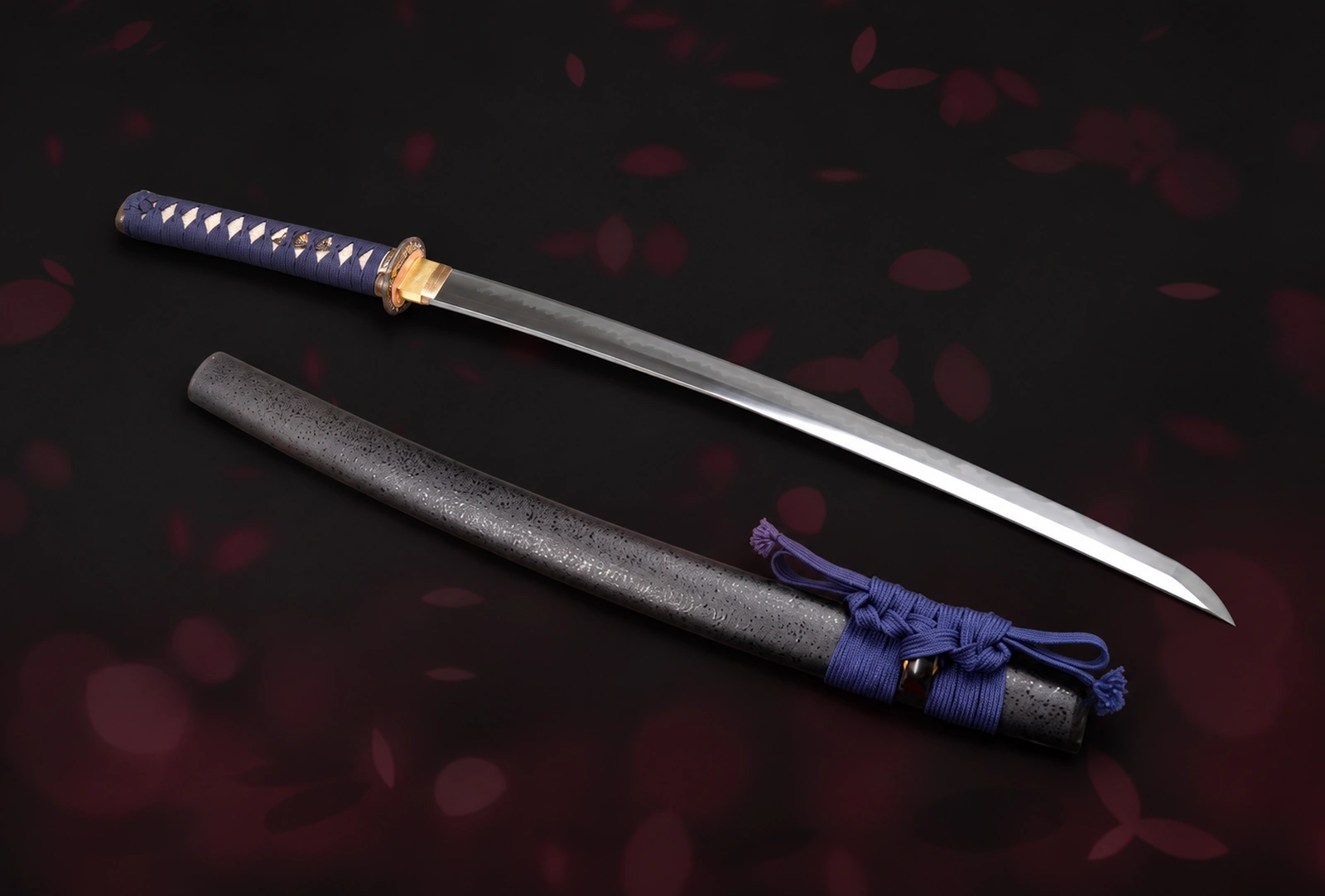
Set against a dark, petal-strewn backdrop, the Chōji-midare wakizashi brings together deep-blue wrapping, a subtly textured gray saya, and the quiet brilliance of polished steel. These portraits offer a closer look at the complete composition and the details that make it distinctive.
04 / THE HAMON IN CLOSE FOCUS
A Pattern That Moves with Light.
The gently changing outline of the Chōji-midare hamon becomes more apparent as the light moves across the blade. Japanese-style polishing reveals a contrast between the brighter edge region and the more subdued steel surface, allowing the hardening pattern to take center stage.
05 / THE COMPLETE PORTRAIT
Balance in Every View.
Seen as a whole, the shorter wakizashi form brings the polished blade, deep-blue fittings, and understated scabbard into balance. The close views that follow return to the blade itself, where the natural variation of the hamon gives each section its own expression.
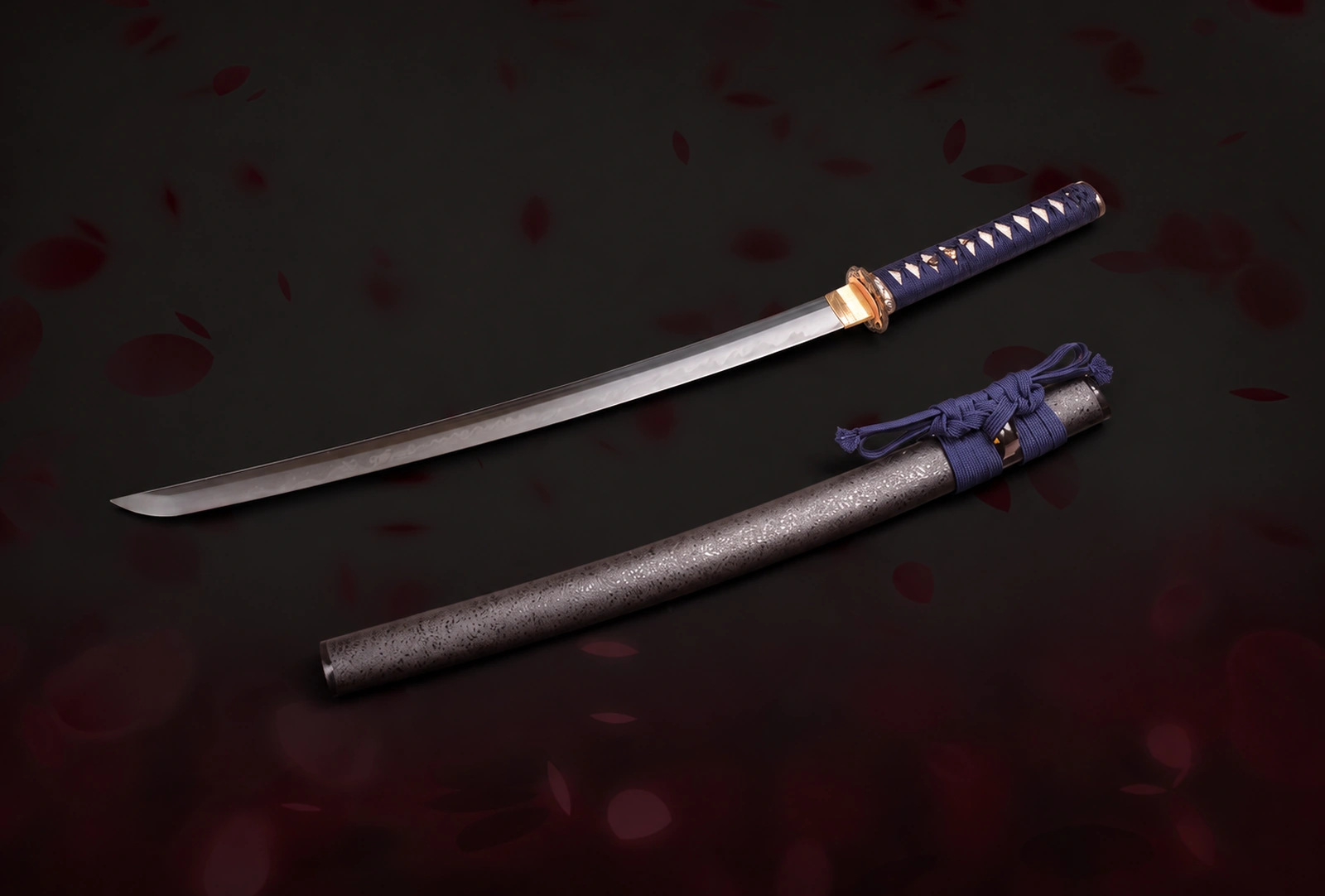
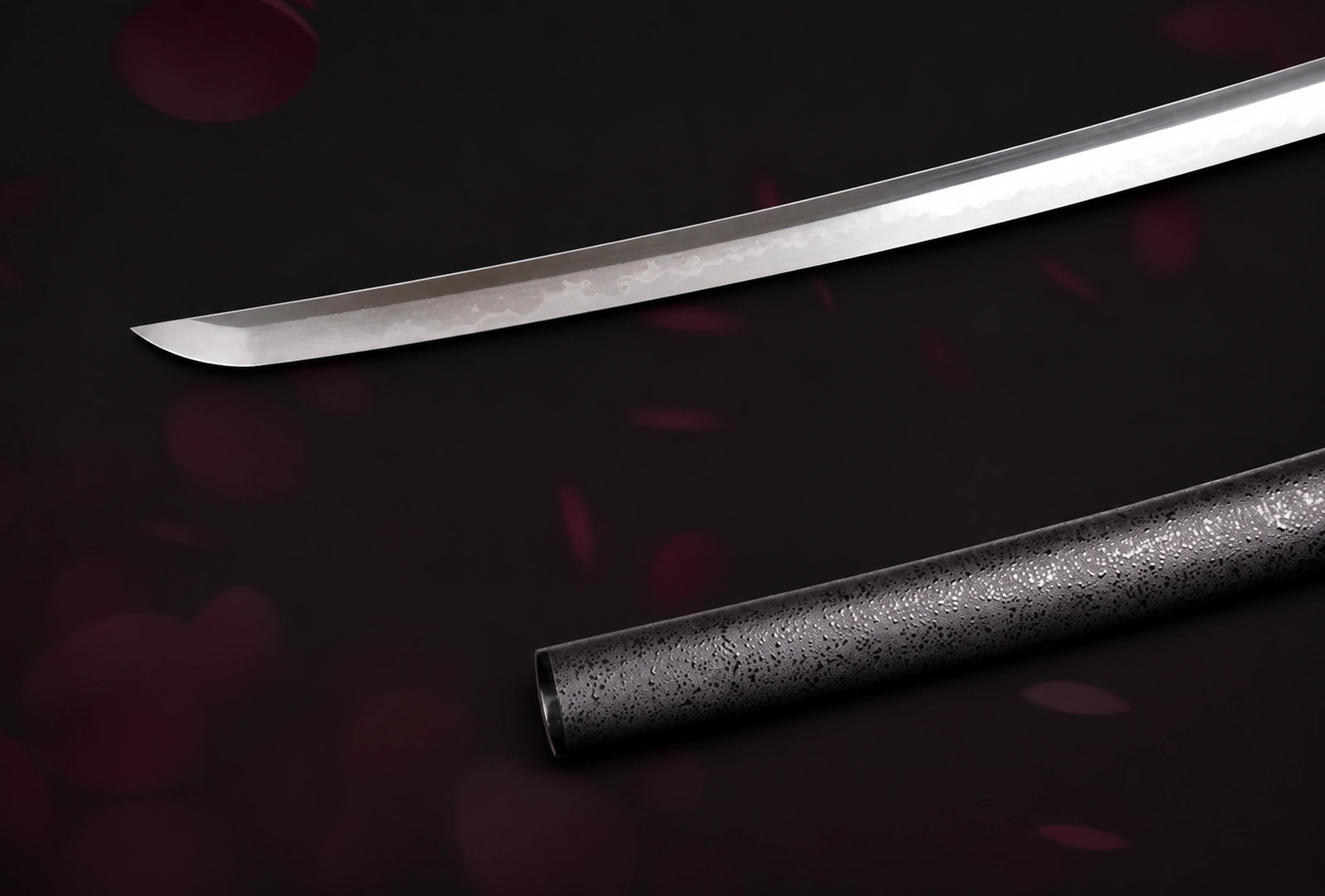
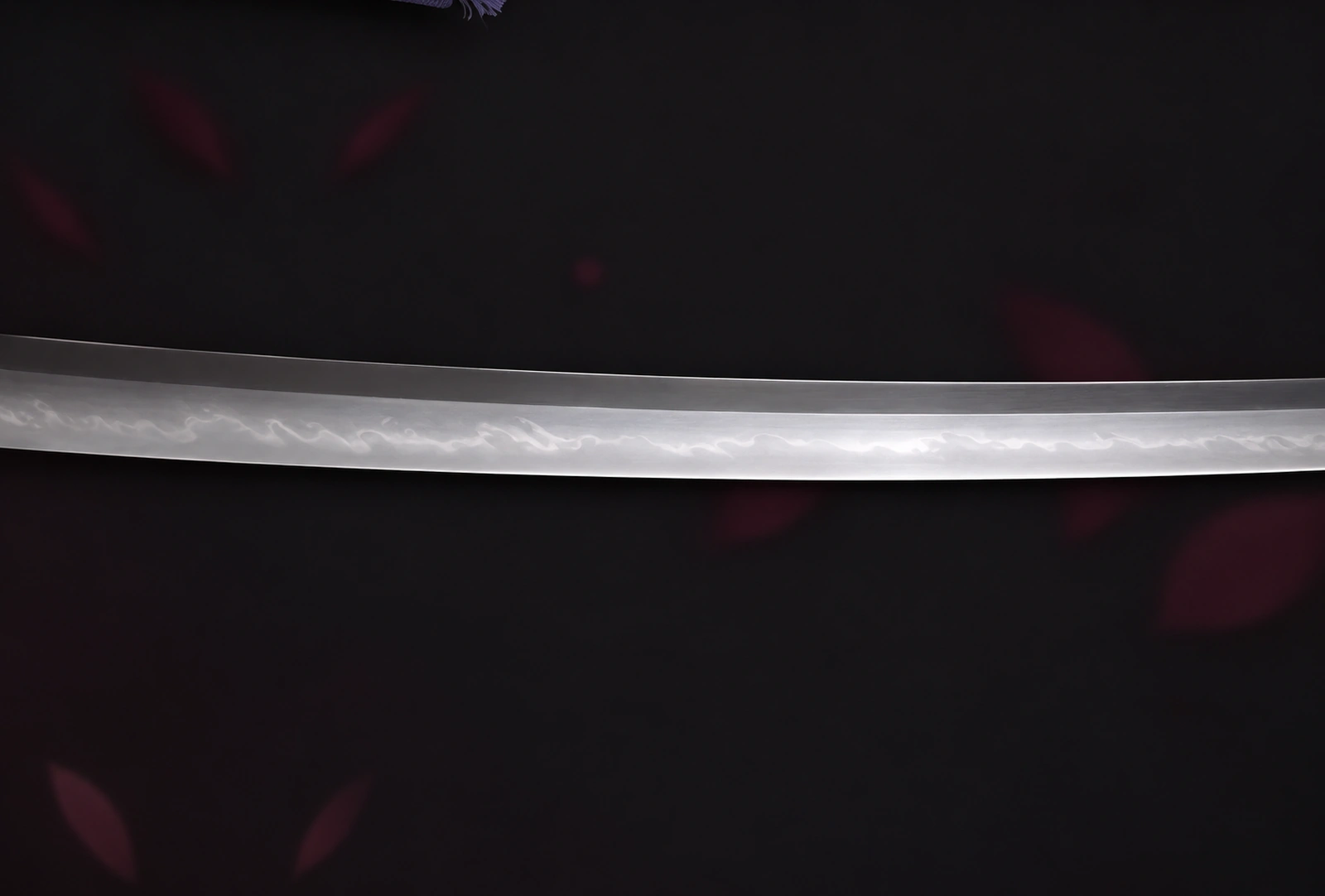
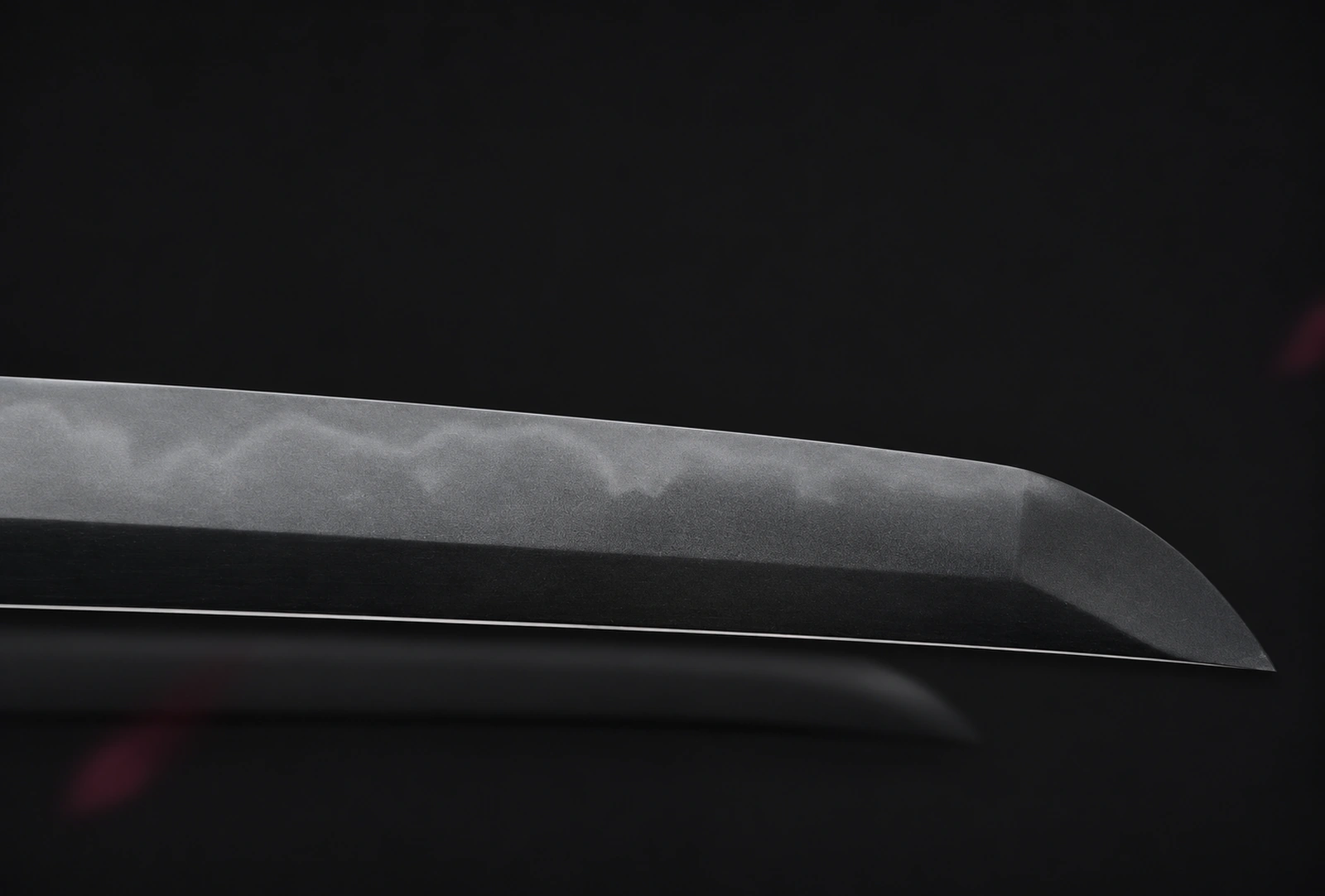
The shape and fine details of a clay-tempered hamon vary naturally between individual blades. These photographs illustrate the character of the design rather than an identical pattern on every finished piece.
Rezensionen
Es gibt noch keine Rezensionen.