QUIET CRAFTSMANSHIP · LONGQUAN

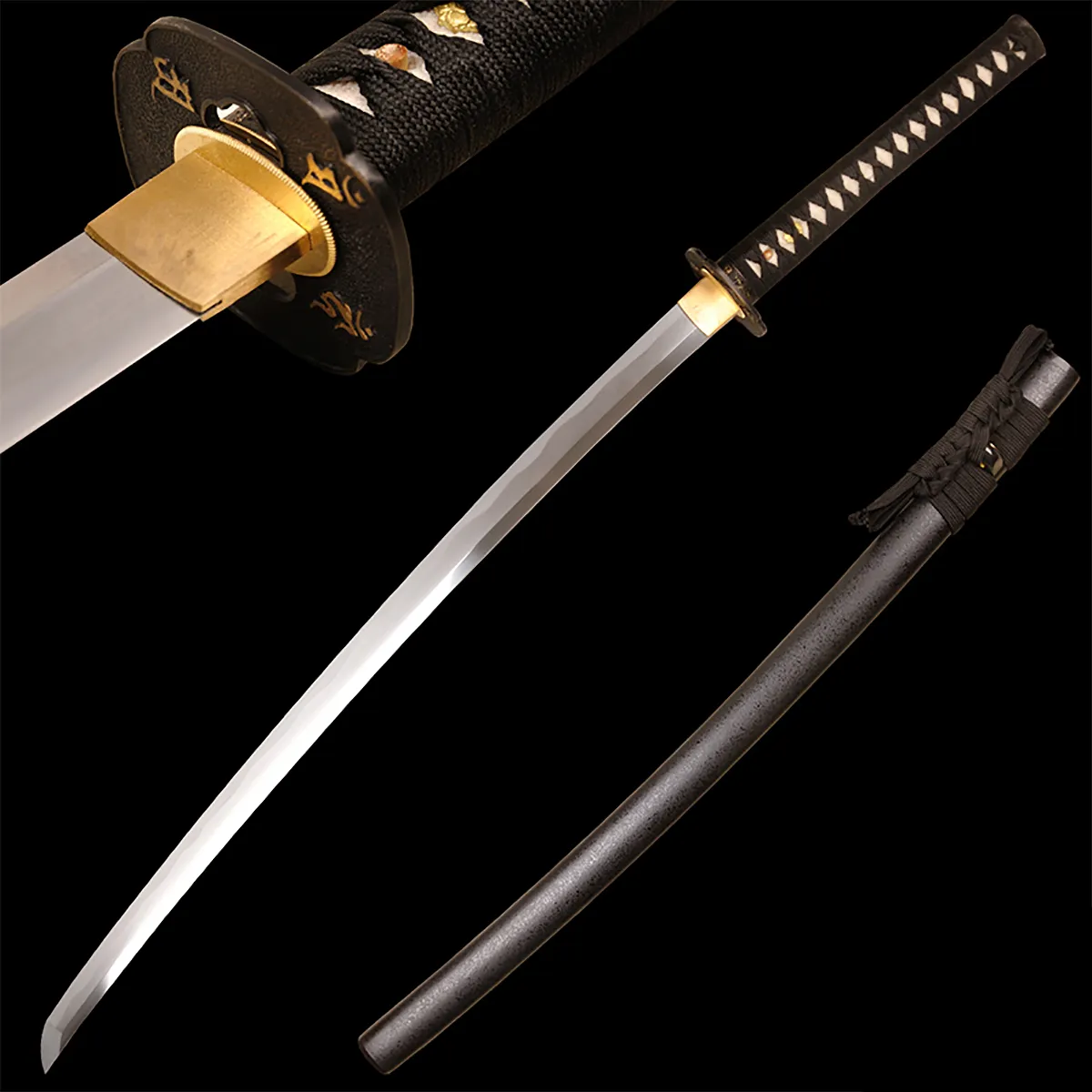
Japanese-Polished Full-Steel Clay-Tempered Katana Plus

¥1,293.00

CUSTOMIZE THIS KATANA
Each katana is configured individually.
Multiple katana purchases are placed as separate orders.

KATANA CUSTOMIZER

Customize Your Katana.

Choose from the configuration options available for this katana.

WORKSHOP NOTES

Hello, everyone. I'm Lao Yan. I showed a similar sword in my previous video.

The blade in that earlier video had a small surface pit, so I sold that separate piece at half price.

This one has been newly assembled. I'm taking some pictures before sending it to the customer.

The customer also asked me to choose the metal fittings for him.

As I mentioned in the last video, let me show you this sword again.

This is a T10 carbon steel blade with a three-tone polish and a nashiji-style texture.

The overall difference from the earlier standard version isn't especially large.

The default configuration includes a horn-fitted saya.

It also includes hishigami paper supports under the handle wrap, and the initial blade finish is...

...a little more refined, with a slightly finer nashiji-style texture than the earlier version.

Overall, it's a modest price increase. The difference isn't huge.

It's an accessible option, and you can choose from different iron fittings.

The horn-fitted saya and hishigami account for much of the difference in configuration.

The polishing result is what you're seeing here in the video.

The pale finish along the edge is whiter on this one. The earlier finish was more translucent.

And then there's the surface grain...

You could call it hada-like, perhaps. What I mean here is that the nashiji-style texture is finer.

The previous version looked a little rougher; this one is more delicate. At the time, I hadn't even listed this version yet...

...but several customers had already ordered one after watching the earlier video.

The finishing work on this one is also a little more refined.

The area along the shinogi has also received a mirror polish.

That gives it a clearer, more translucent reflection. It's especially visible from this angle.

The underlying blade finish is a little better. Of course, you generally get what you pay for.

A modest increase in price does reflect some extra attention to finishing.

Everyone has different tastes and preferences.

For a simple entry-level art sword, I think it's quite attractive.

I won't go over every detail again; I already covered this style in the previous video.

I wanted to show this newly assembled piece without the flaw found on that other blade. It makes for a much cleaner video.

This one is going out to the customer this afternoon, so that's my brief introduction.

One more thing about the closed-style metal fitting we discussed: it's taking longer than expected.

At the time, it looked as though it might be finished by the end of that month or in early September.

Personally, I still prefer the open-style version, because the closed-style one...

...has a few small issues I won't get into here. Still, it's an option worth developing.

A steel mold should give us much finer detail. That's all for this quick update.

Technical Overview

Core specifications.

Nagasa
710 mm
Motohaba
32 mm
Motokasane
7 mm
Tsuka Length
250 mm
Overall Length
1010 mm
Weight without Saya
920 g
Weight with Saya
1190 g
Handmade product dimensions may vary slightly.
Blade & Craft

Blade craftsmanship.

Blade Material
T10 Carbon Steel
Construction
Maru Construction
Heat Treatment
Clay Tempering
Hamon
Clay-Tempered Hamon
Hamon Pattern
Gunome
Polish
Three-Tone Polish
Surface Finish
Fine Nashiji-Style Texture
Handle Wrap Support
Hishigami Included

Beschreibung

01 / STEEL, LIGHT & FINISH

The Art of Three-Tone Polish.

A katana does not need elaborate ornament to leave an impression. Here, T10 carbon steel, a clay-tempered hamon, and a carefully considered Three-Tone Polish give the blade its character. The contrast is quiet at first — then revealed as light moves across the steel.

T10 STEEL / GUNOME HAMON / THREE-TONE POLISH
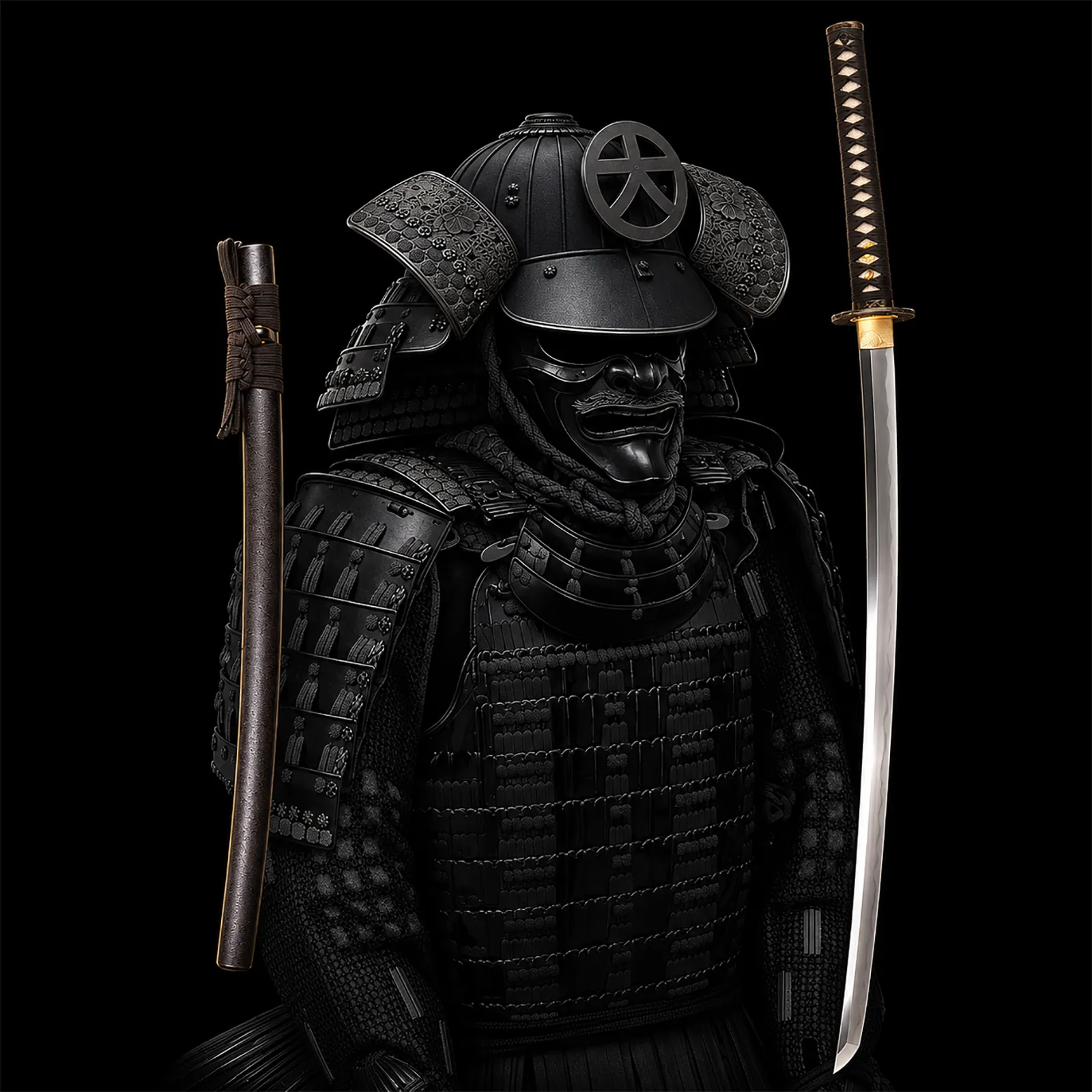
Japanese-polished T10 katana with dark handle wrap and brass-tone fittings displayed beside black samurai armor and a dark saya.
A study in contrast: polished steel, warm metal accents, and the stillness of dark armor.

THE MATERIAL FOUNDATION

One Steel. A Clear Foundation.

The blade begins with T10 carbon steel in Maru construction — a single-steel construction rather than a laminated arrangement of different grades. This straightforward foundation places the focus on the blade's form, hardening, and final surface treatment.

The steel is shaped into a curved katana profile with a defined shinogi. Its visual character comes from how the blade's surfaces are formed and finished, not from a claim of complex multilayer forging.

01 / STEEL T10 Carbon Steel

A single-steel blade, made in Maru construction.

02 / HAMON Gunome

A rhythmic, rounded pattern formed through clay tempering.

03 / POLISH Three-Tone Polish

Contrasting finishes that give each surface its own response to light.

THE TEMPERED EDGE

A Pattern with Rhythm.

The blade is treated through clay tempering, producing a visible hamon along the hardened edge. Its Gunome pattern introduces a succession of rounded forms, setting a gentle rhythm against the longer, quieter line of the blade.

The hamon is a feature of the heat-treated blade. It is distinct from the bright highlights and surface textures brought forward during polishing — details that deserve to be appreciated on their own terms.

THE FINISHED SURFACE

Three Tones. One Blade.

Three-Tone Polish draws deliberate contrast between the blade's surfaces. Brighter areas meet softer gray sections, while the reflective shinogi-ji introduces another response to the same light. The result is a finish that changes character as the viewing angle shifts.

The subdued grain-like appearance is described here as a fine Nashiji-style texture. It refers to the visible finish, not a claim that the pattern is a traditional forged hada or a gold Nashiji lacquer treatment. The emphasis remains on the surface actually presented by the blade.

THE COMPLETE PRESENTATION

Restraint in the Mounting.

A dark saya, black handle wrapping, and the contrast of warm metal fittings frame the polished blade. Beneath the wrap, hishigami supports the diamond pattern of the handle wrapping — one of the practical details included in this specification.

The horn-fitted scabbard and selected fittings complete the standard presentation, while the available mounting options allow personal choices in the finished appearance. The blade remains the starting point; the mounting gives it its own expression.

BEYOND THE FIRST IMPRESSION

The first impression is the silhouette. The lasting impression is found in the transitions between steel, temper line, polish, and light.

02 / MOUNTING, TEXTURE & LIGHT

The Details Behind the Blade.

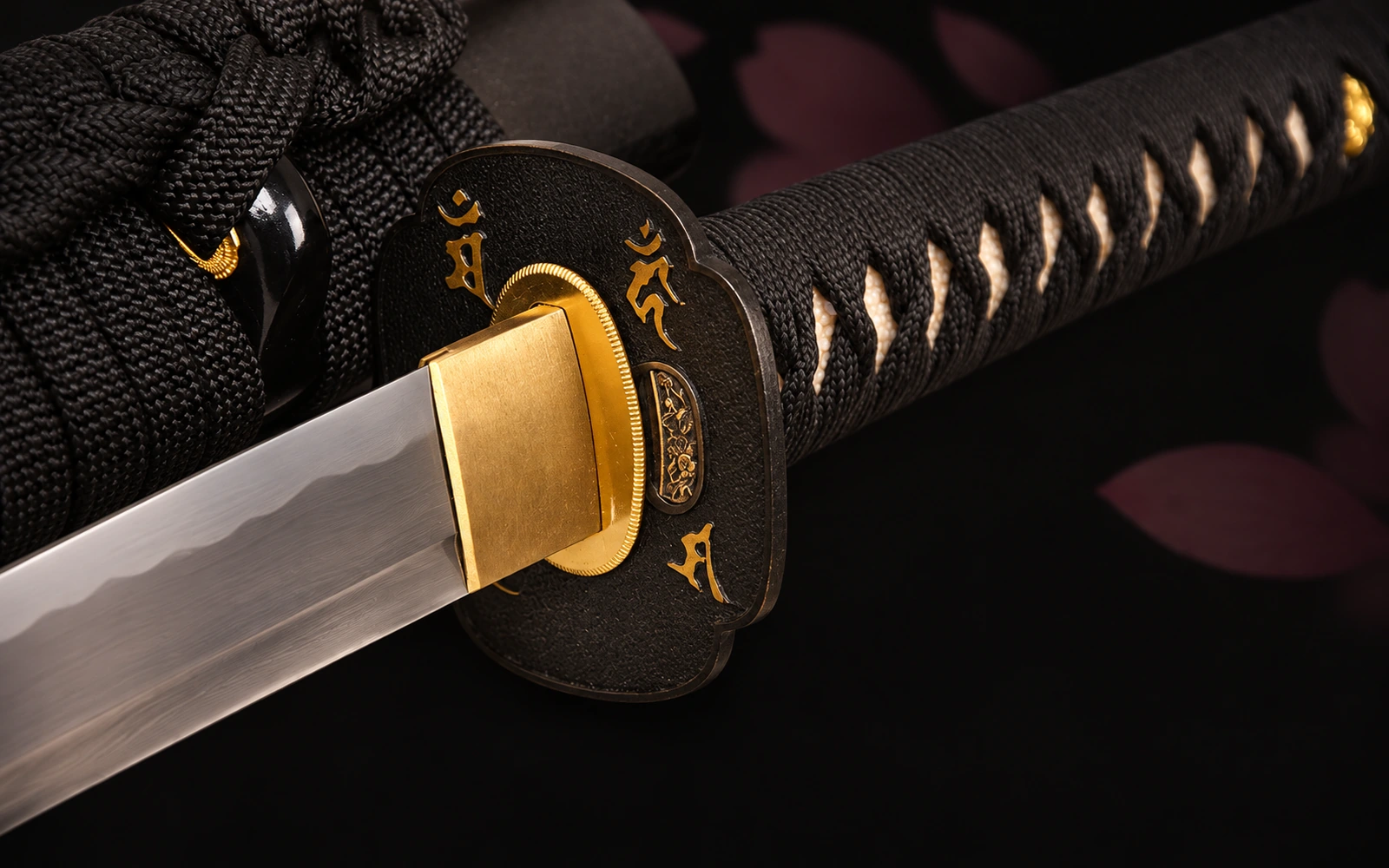
A closer view begins where fittings meet steel. A dark tsuba, a warm brass habaki, and a carefully wrapped tsuka establish the visual language of this katana. From there, the eye follows the fittings to the blade’s changing surface.

FITTINGS / HANDLE / SAYA / POLISH / HAMON
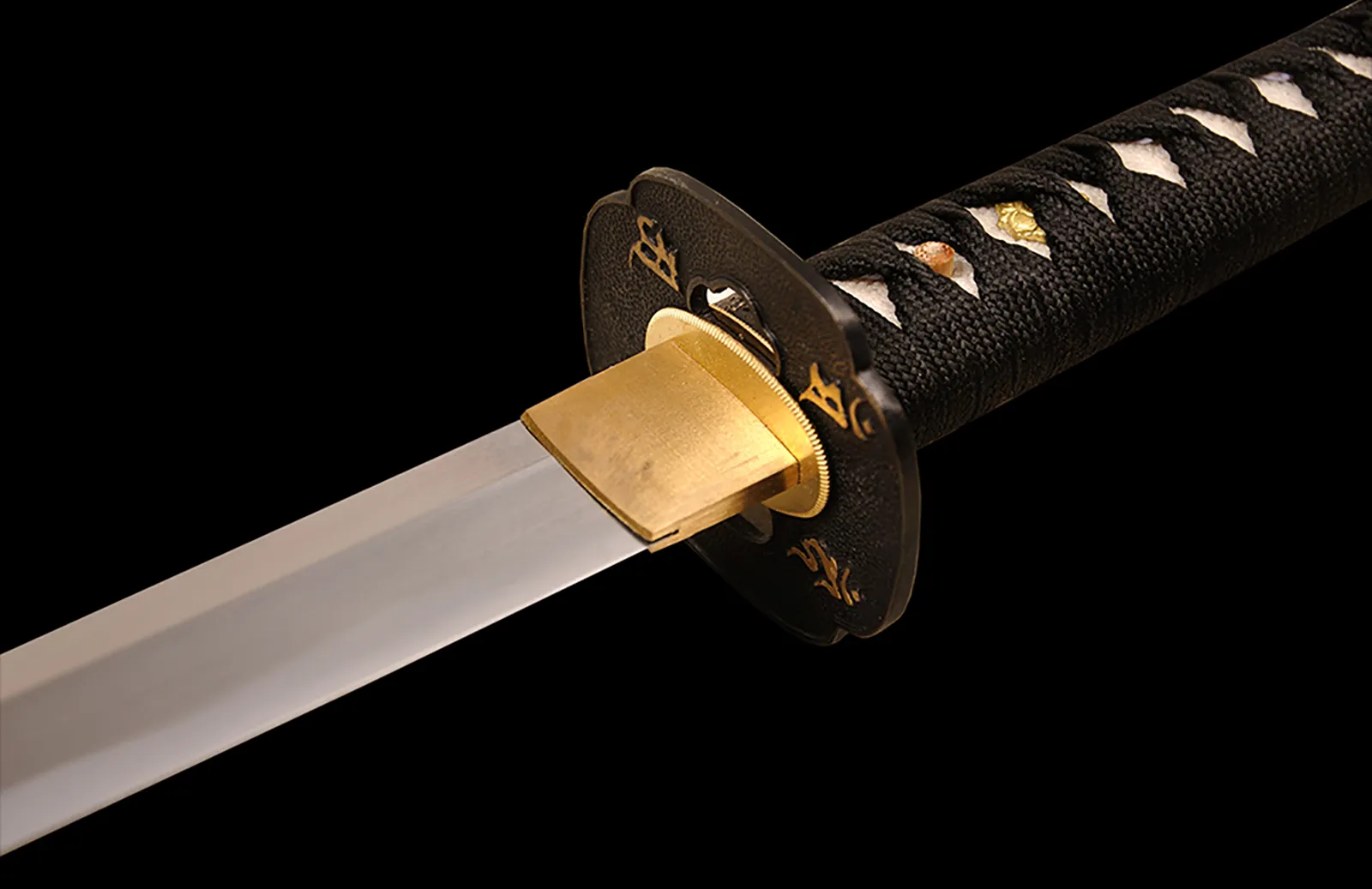
Close-up of a T10 katana showing the black and gold tsuba, brass habaki, and black tsuka-ito wrapping.
Blackened fittings, a warm brass habaki, and the first transition from mounting to steel.

01 / THE WRAPPED HANDLE

The Craft of Tsukamaki.

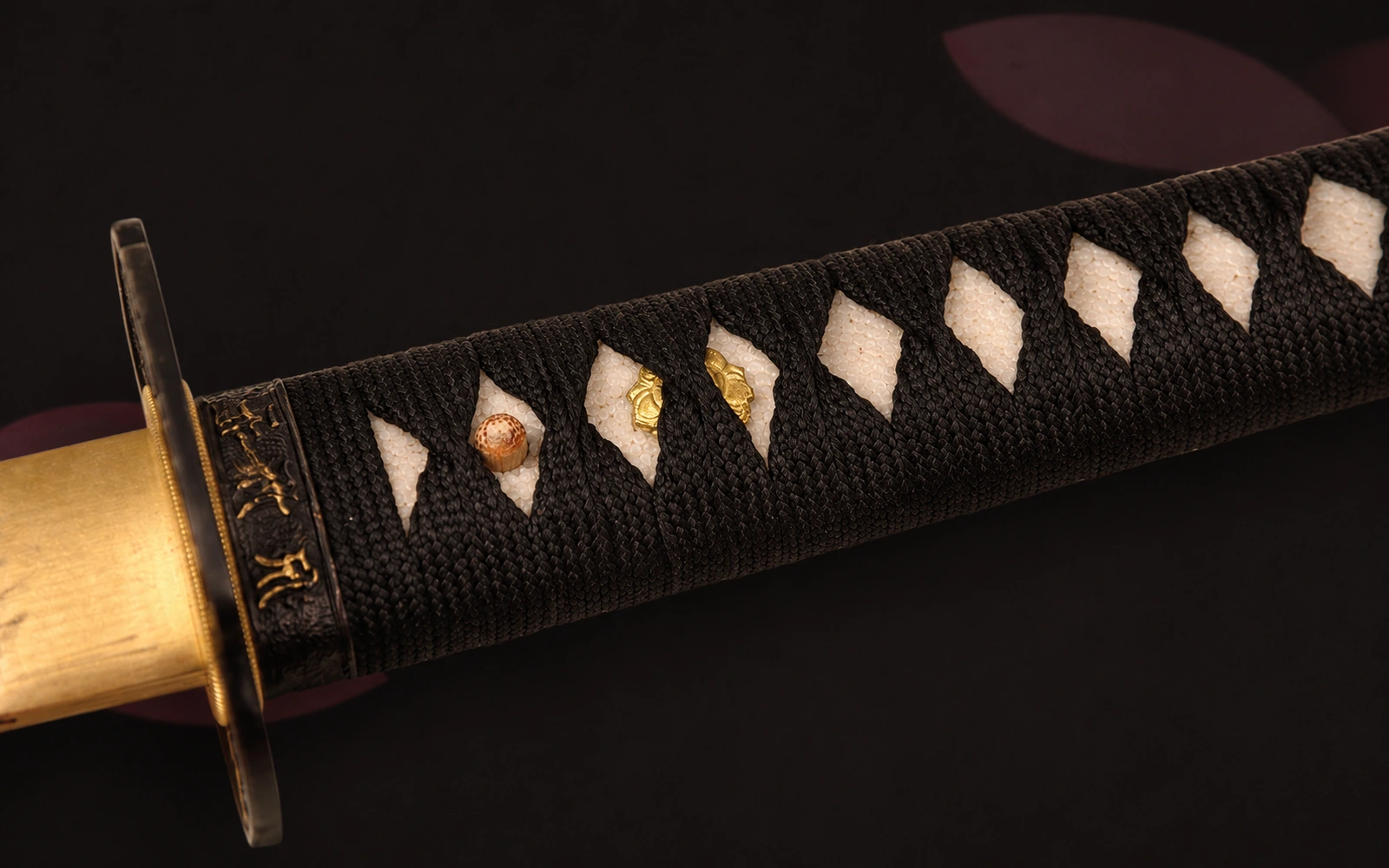
The black tsuka-ito forms a measured diamond pattern along the handle. White samegawa appears through each opening, while the small menuki gives the monochrome surface a restrained point of warmth.

Beneath the visible wrapping, hishigami is included as part of the handle construction. These folded paper supports help shape the diamond intersections; they are a detail of the specified assembly, not something exposed in the photograph.
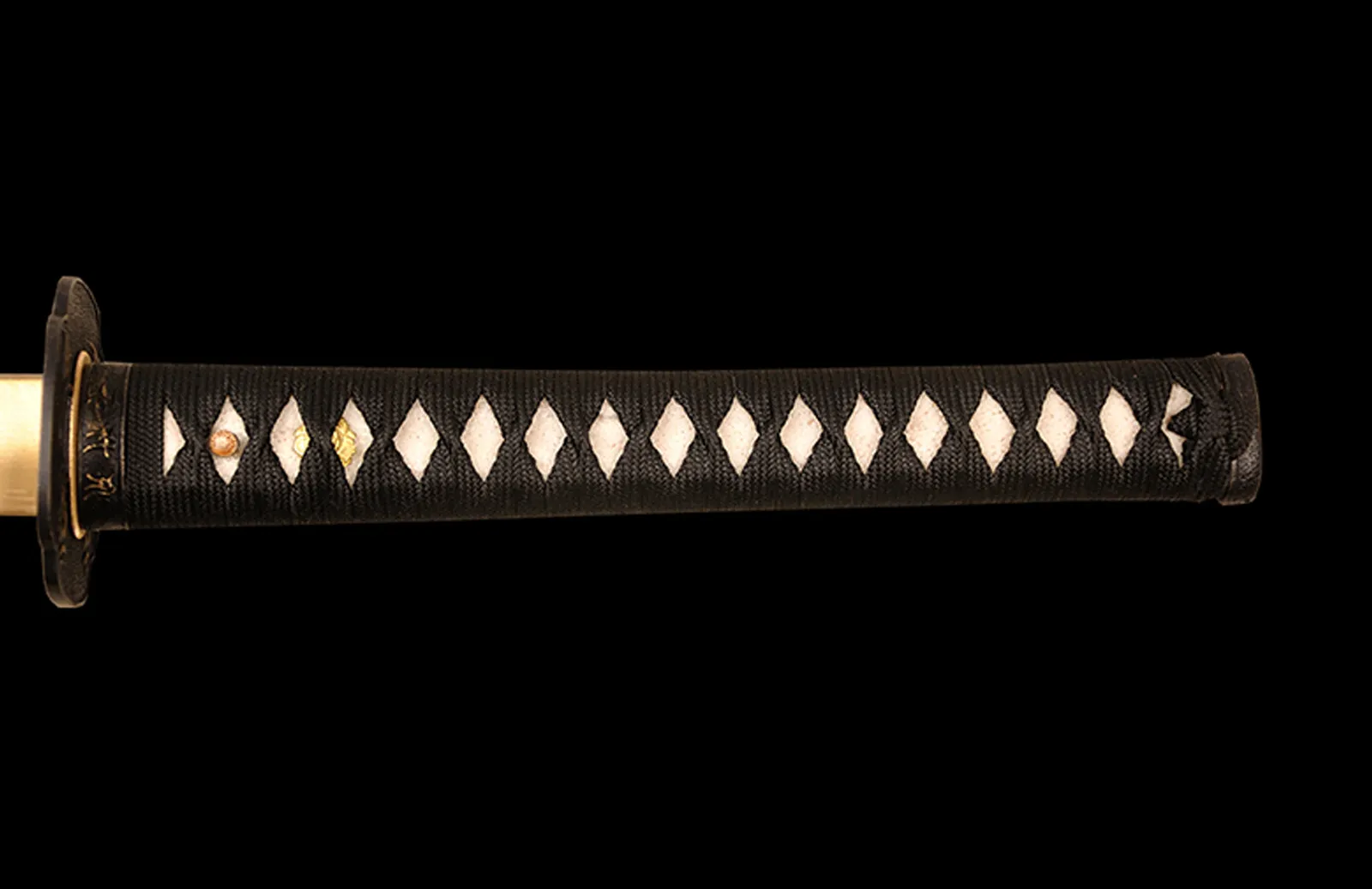
Full side detail of the black tsuka-ito wrapping with white samegawa in the diamond openings and a decorative menuki.
A disciplined diamond pattern, with white samegawa visible beneath the dark handle wrap.

02 / THE SCABBARD

The Quiet Finish of the Saya.

The deep-black saya continues the blade’s curve without competing for attention. Its subtly textured surface catches only a narrow band of light, leaving the profile to speak for itself.

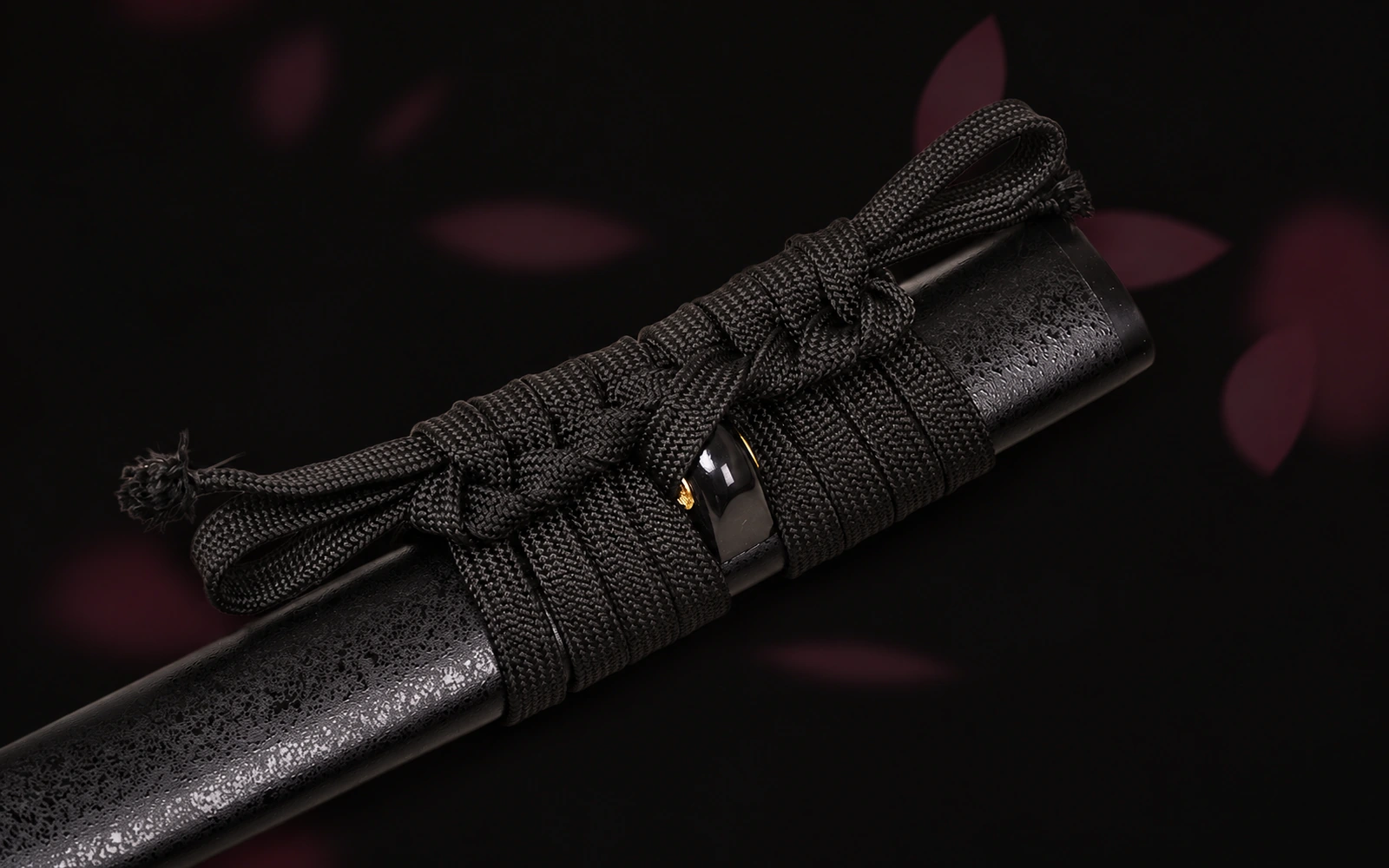
The standard horn-fitted scabbard is paired with a dark sageo in imitation silk. The tied cord completes the mounting while keeping the overall palette subdued.
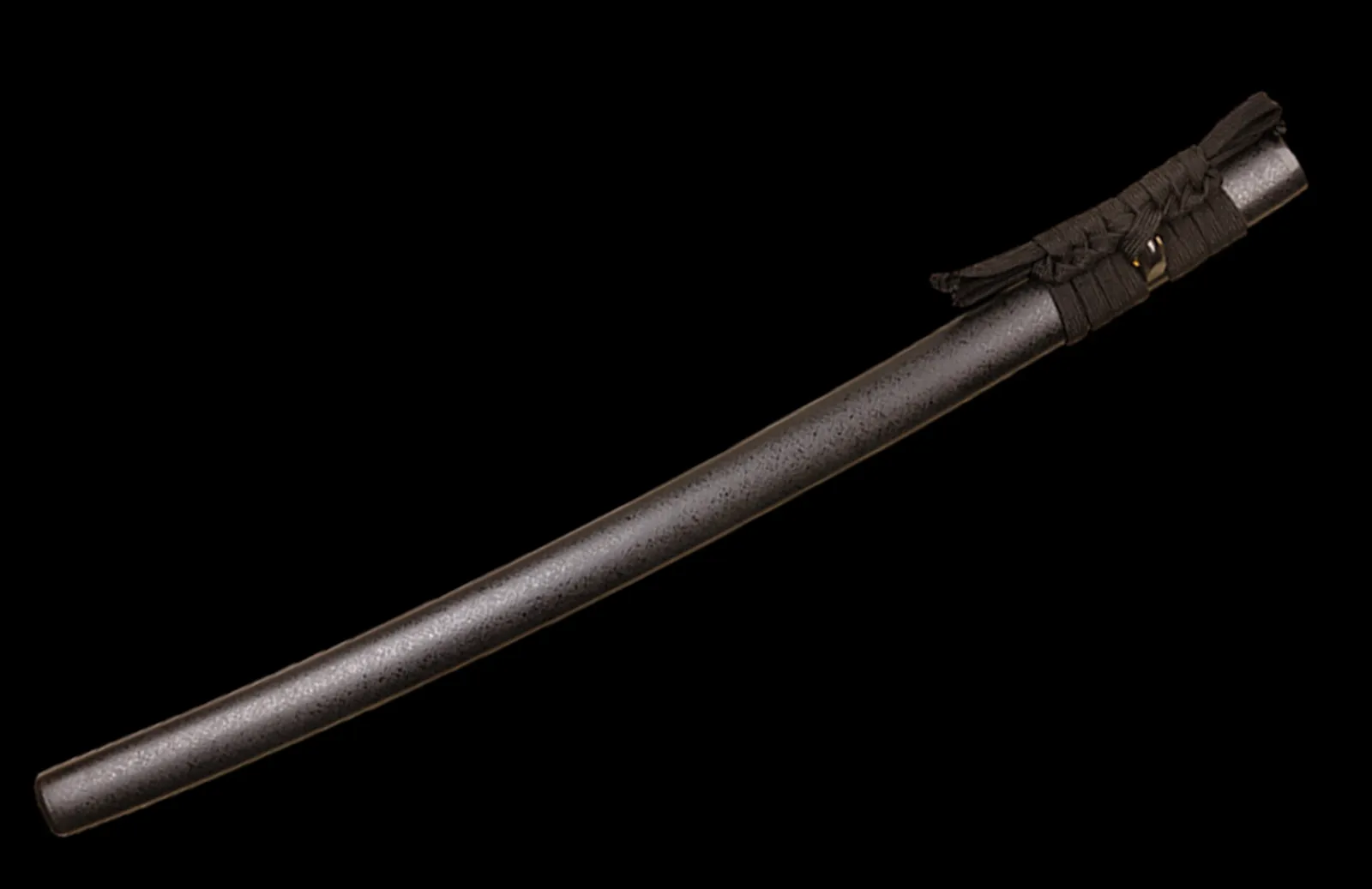
Curved black saya with a textured dark surface and imitation-silk sageo tied near the opening.
The black saya follows the sword’s curve, while the tied sageo adds a final quiet detail.

03 / SURFACE AND REFLECTION

Three Tones. One Blade.

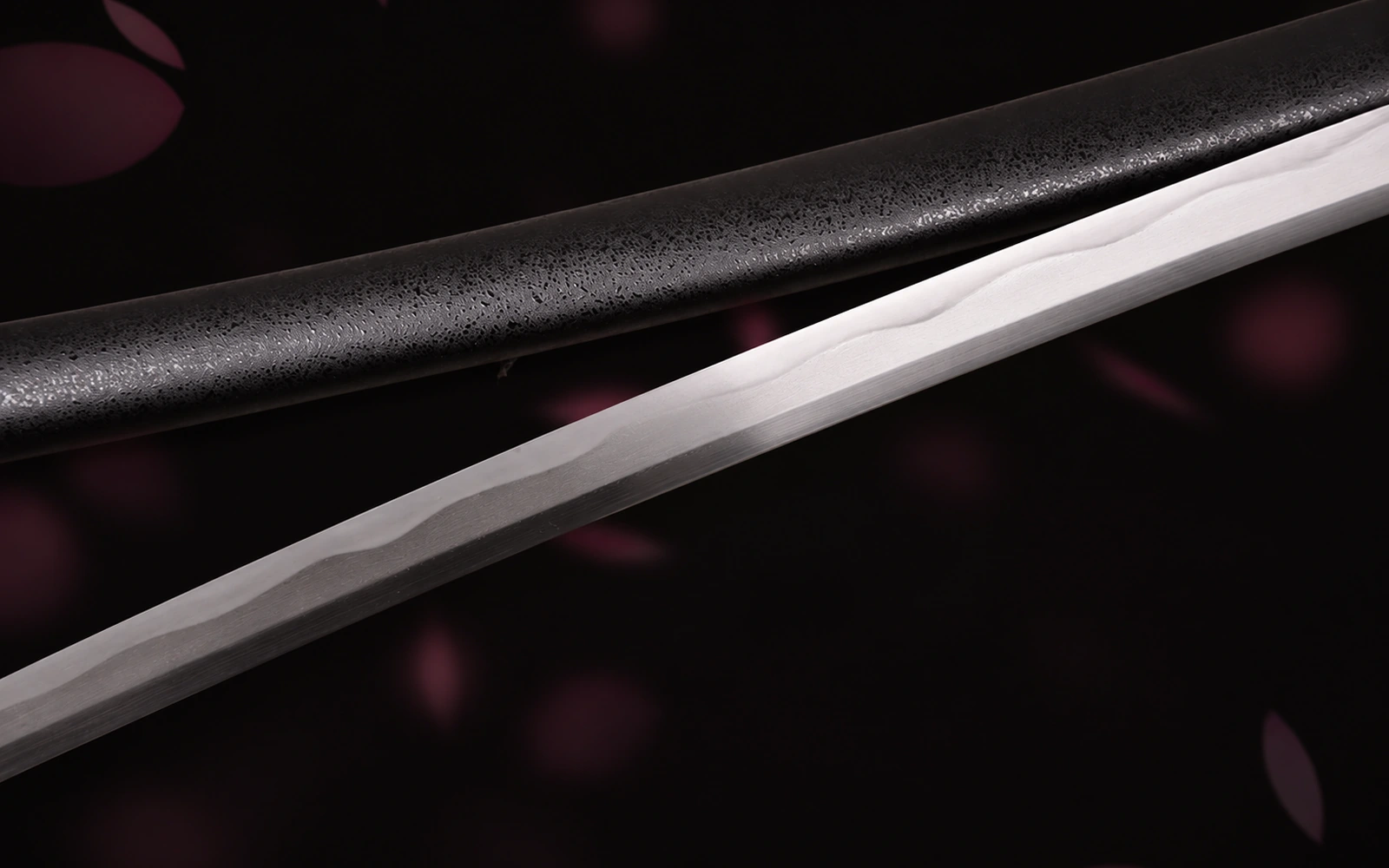
The focus now moves from the mounting to T10 carbon steel. A Three-Tone Polish brings different blade surfaces into contrast: soft gray gives way to a brighter polished plane, then to deeper reflected darkness.

The finish is not simply a high-gloss surface. Its character comes from the controlled transitions between tones, which remain legible as the viewing angle and light change.
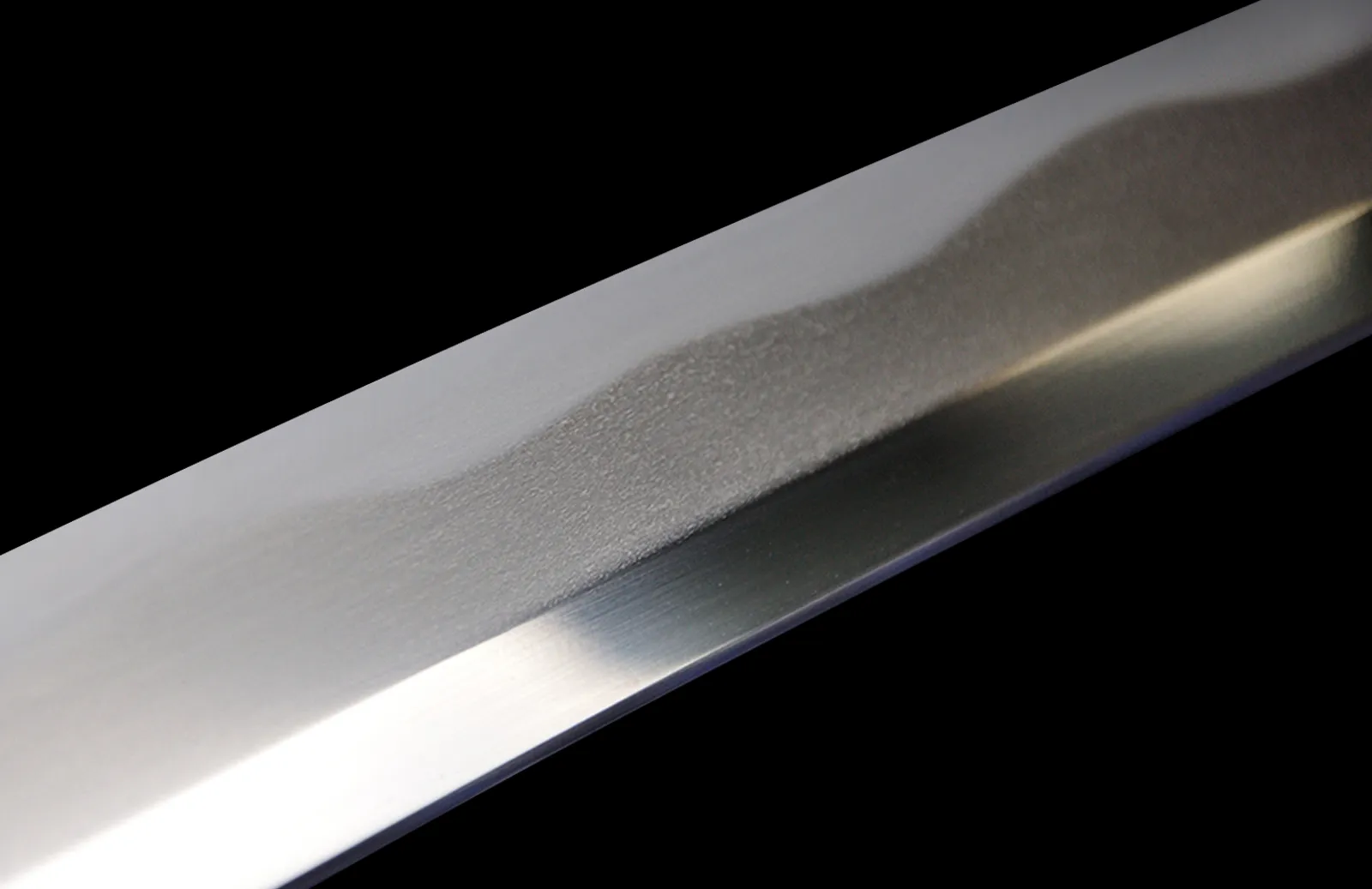
Close view of a T10 carbon steel katana blade showing three-tone polish and contrasting reflective surfaces.
Brighter and darker planes respond differently to the same light.

04 / THE FINE SURFACE

The Texture Beneath the Light.

Beneath the pale upper finish lies a fine, even, grain-like texture described as Nashiji-style. The small variations become especially visible beside the smooth, dark reflective surface.

This is a description of the finished appearance. It is distinct from traditional forged hada, and its appeal here is the delicate contrast it gives to the polished blade.
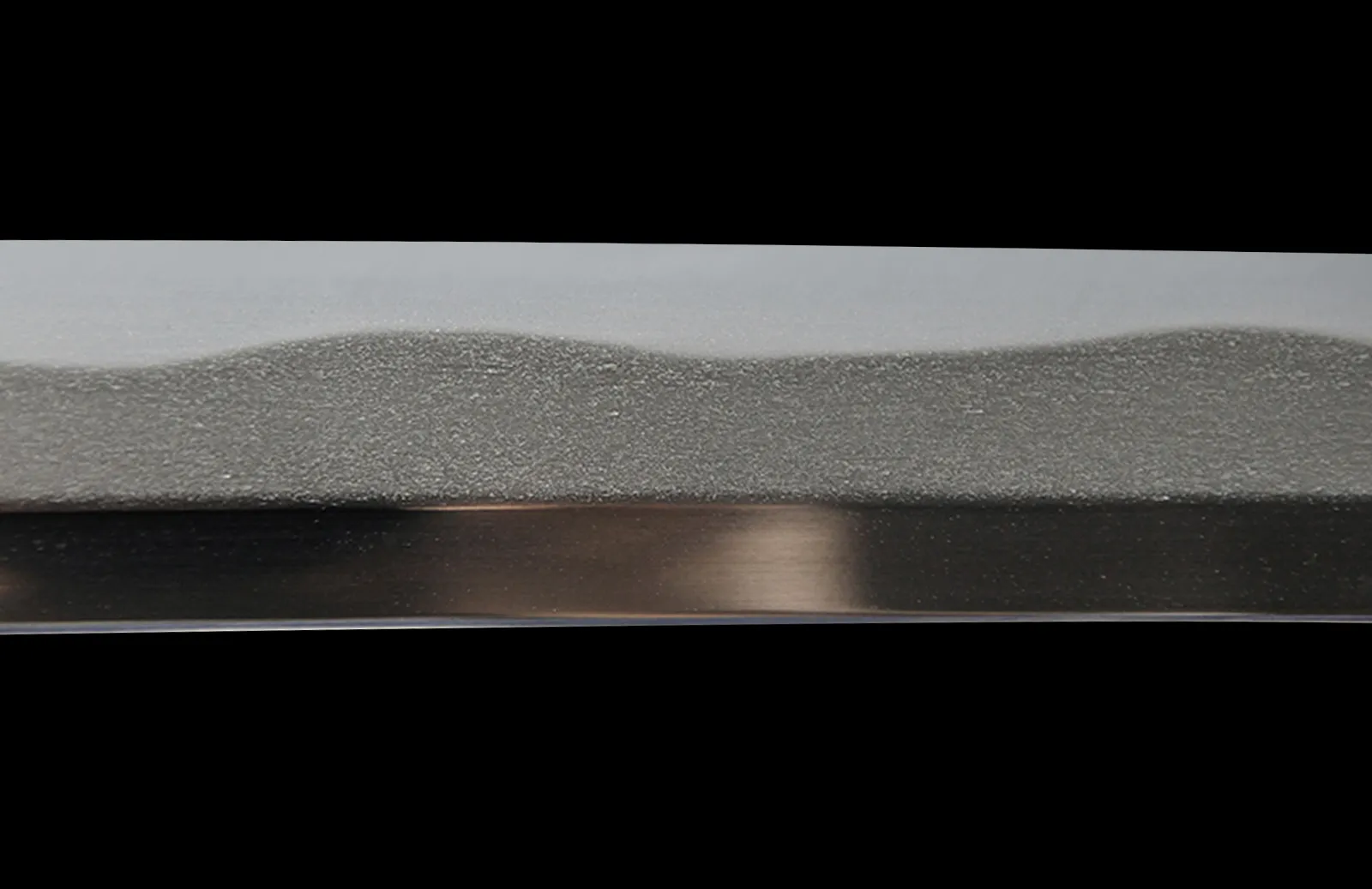
Macro detail of a T10 katana blade with fine Nashiji-style texture, a softly undulating boundary, and dark polished steel.
A fine, softly textured surface sits between the lighter finish and deeper reflection.

05 / THE TEMPERED PATTERN

The Rhythm of Gunome.

The clay-tempered blade is specified with a Gunome hamon. Its gentle succession of rounded rises brings movement to the line of the blade, set against the calmer, more uniform polishing zones.

The tempered pattern, the fine Nashiji-style finish, and the reflections are separate details. Together, they reward the close, changing view rather than demanding attention all at once.
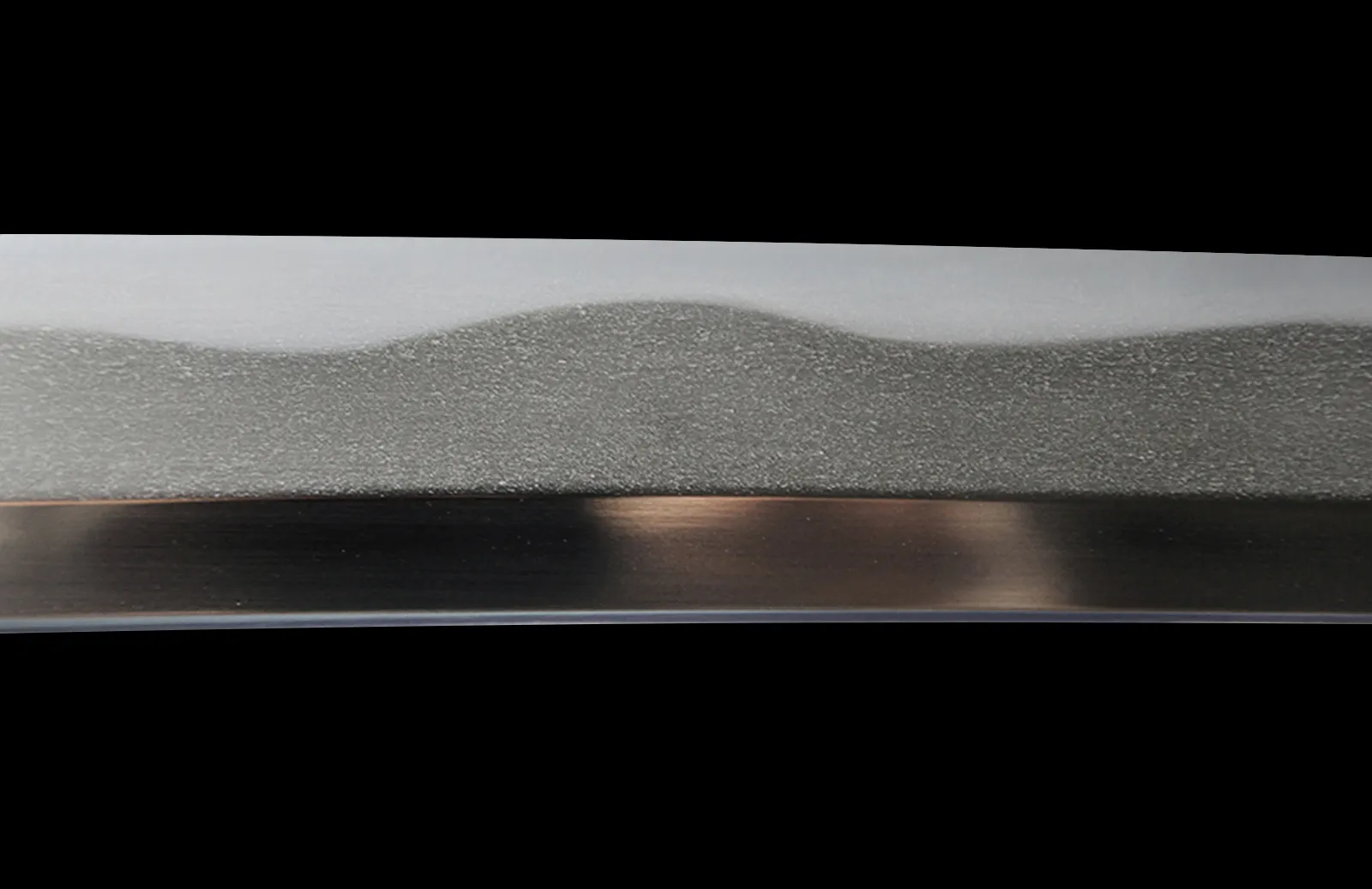
Second close view of a T10 katana blade with an undulating Gunome hamon appearance and fine Nashiji-style surface texture.
The wave-like rhythm and restrained polish reveal another view of the same blade.

THE VIEW THAT REMAINS

From the quiet fit of the mounting to the last reflection on steel.

A complete katana is understood in details — then remembered as one form.

03 / COLLECTOR GALLERY

The Katana in Full.

A katana is best understood from more than one angle. Across these thirteen photographs, the full silhouette gives way to the quieter details of its black mounting and the shifting light across the blade.

FORM / FITTINGS / STEEL / LIGHT
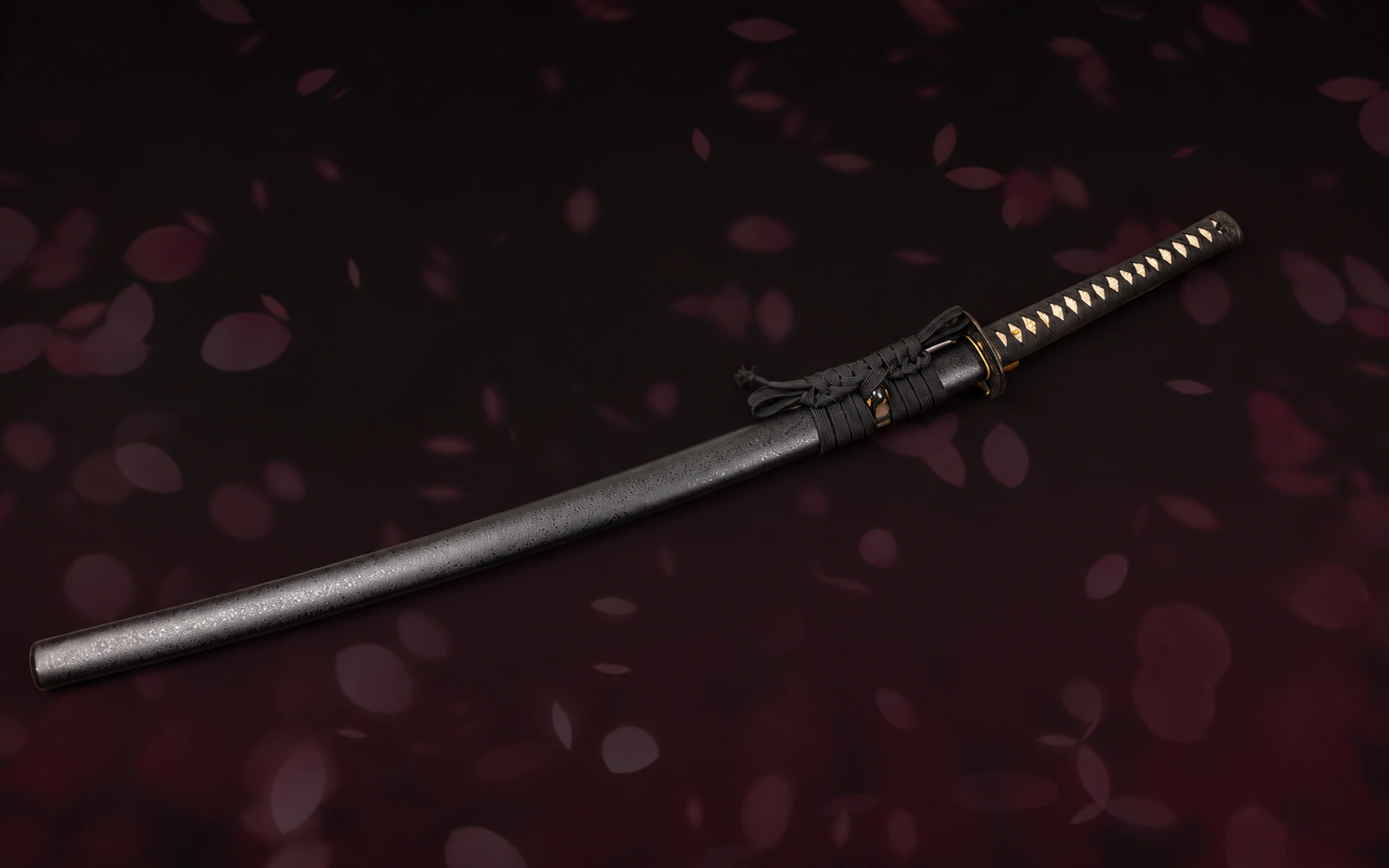
Complete black-mounted T10 katana displayed against a dark red floral background.
The whole form, at rest.

01 / COMPLETE FORM

The Whole Silhouette.

The gently curved blade sits beside its dark saya. Together they reveal the balanced character of a complete katana, without the need for elaborate display.
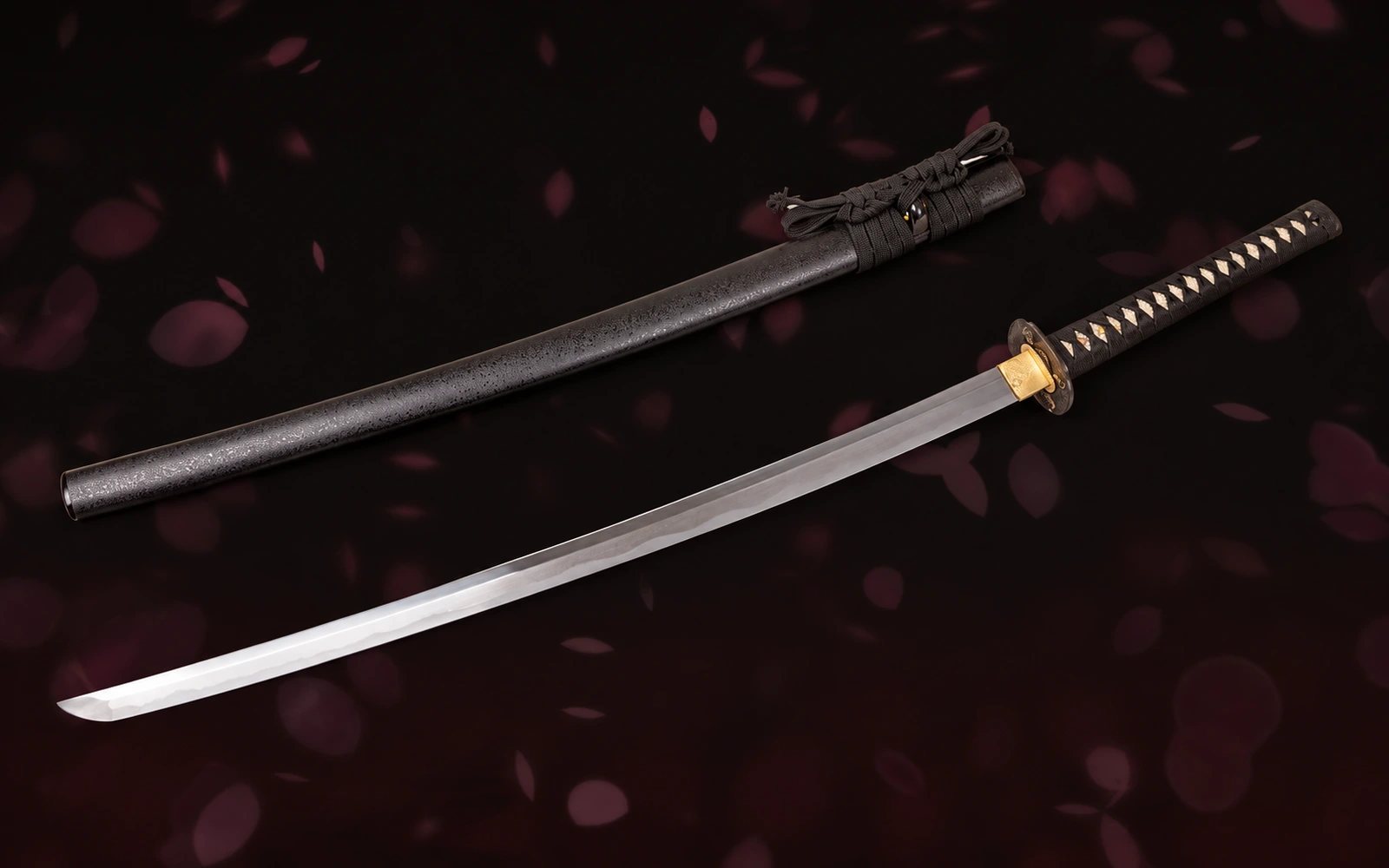
Drawn T10 katana blade displayed beside the black saya on a dark red floral background.
Steel and saya, seen together.

02 / THE MOUNTING

Black, Brass, and Detail.

Black tsuka-ito, pale samegawa openings, brass accents and a neatly tied sageo keep the mounting cohesive. Every close view adds a small detail to the whole.
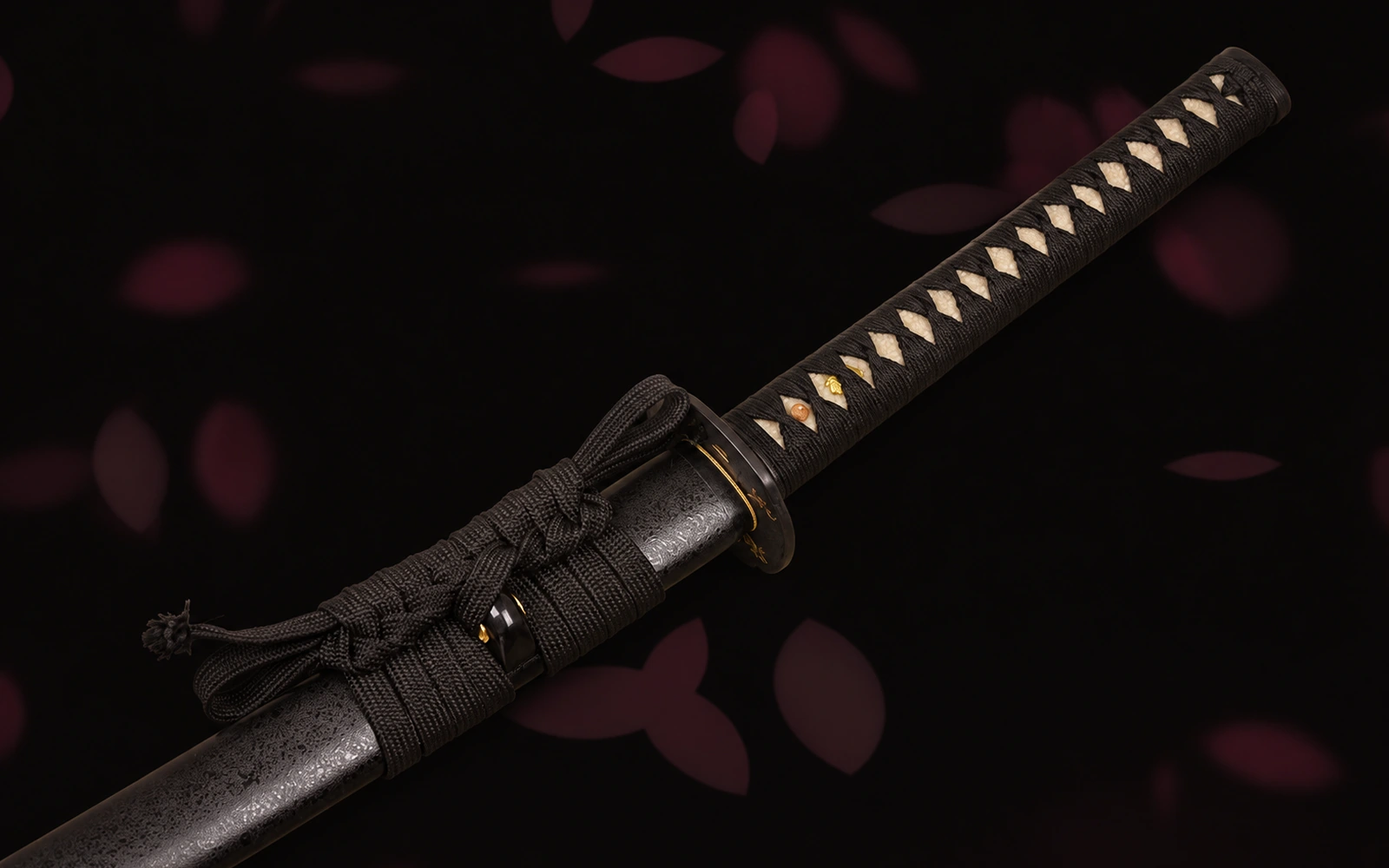
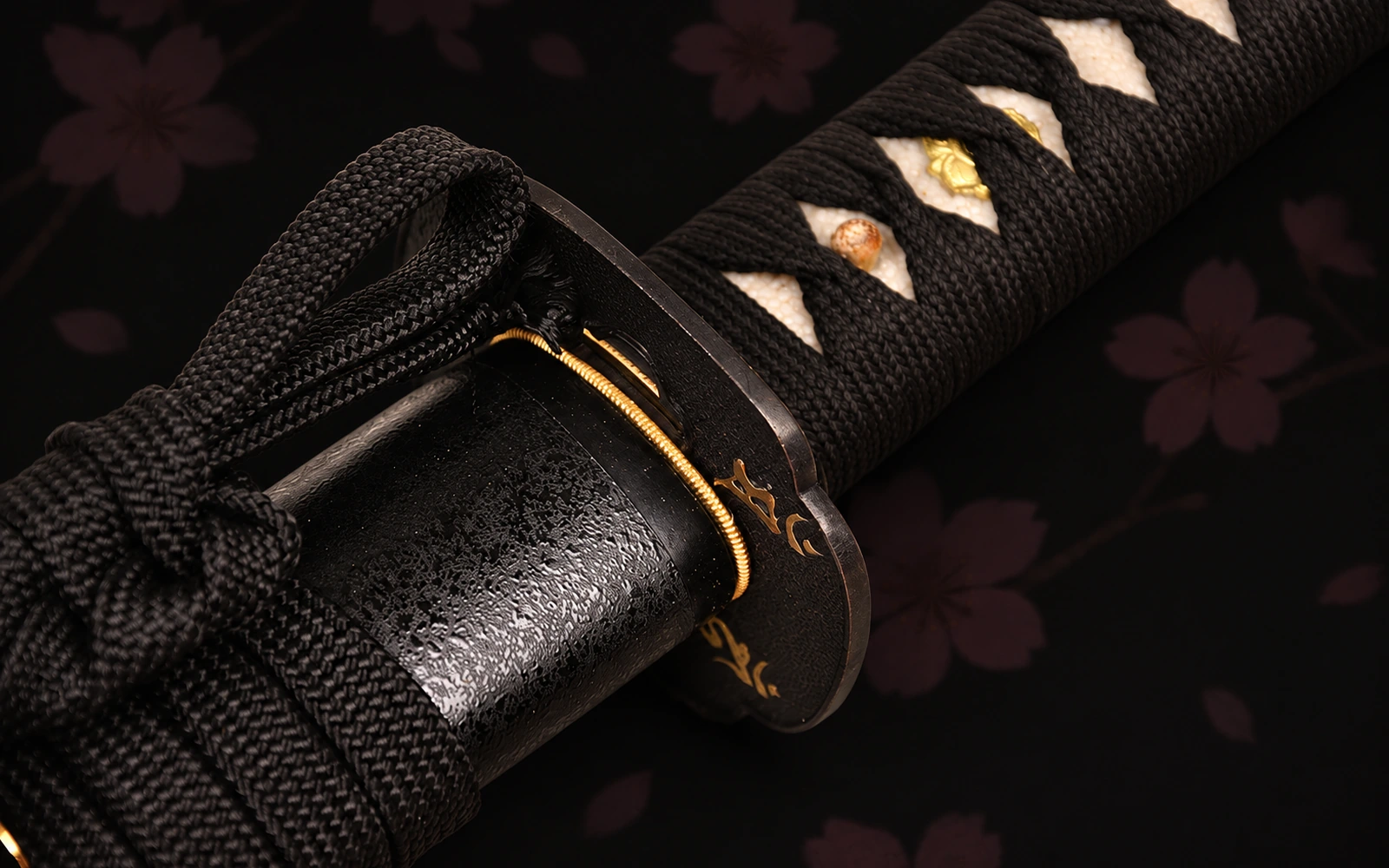
Close-up of the black katana mounting, handle and dark scabbard with decorative fittings.
Fittings in a quieter light.
Detail of the black saya cord binding and dark metal fittings against a red floral backdrop.
The tied cord and dark finish.
Close view of the black and gold tsuba, brass habaki, and wrapped katana handle.
Brass between the steel and grip.
Katana tsuka with black diamond-pattern handle wrap and pale samegawa openings.
The rhythm of the handle wrap.
Detail of the black textured saya and its tied sageo cord.
The cord completes the saya.

03 / STEEL & LIGHT

A Change in Reflection.

The T10 blade changes under the light. Three-Tone Polish separates matte and reflective surfaces, while the Gunome hamon lends a softer rhythm to the steel.
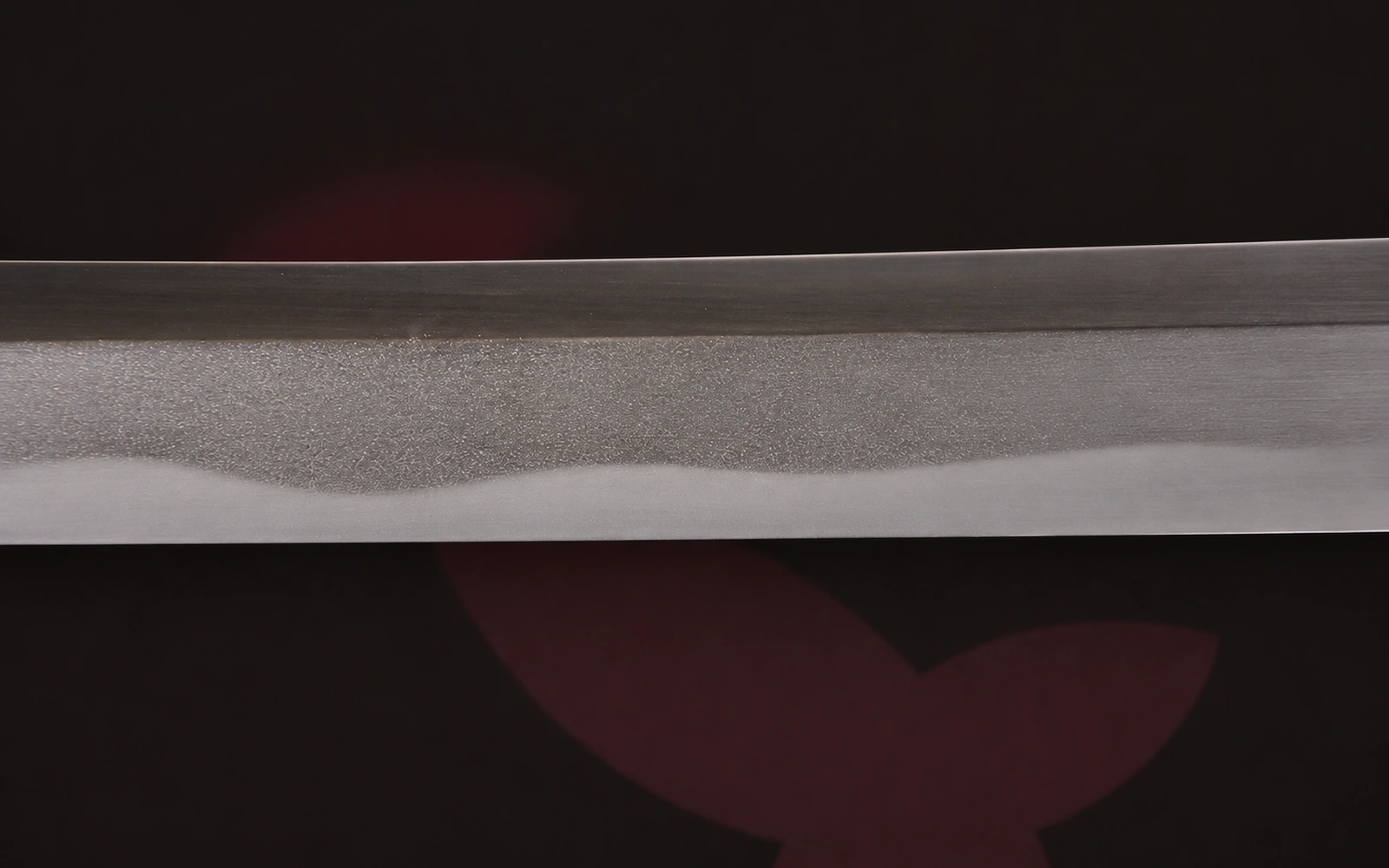
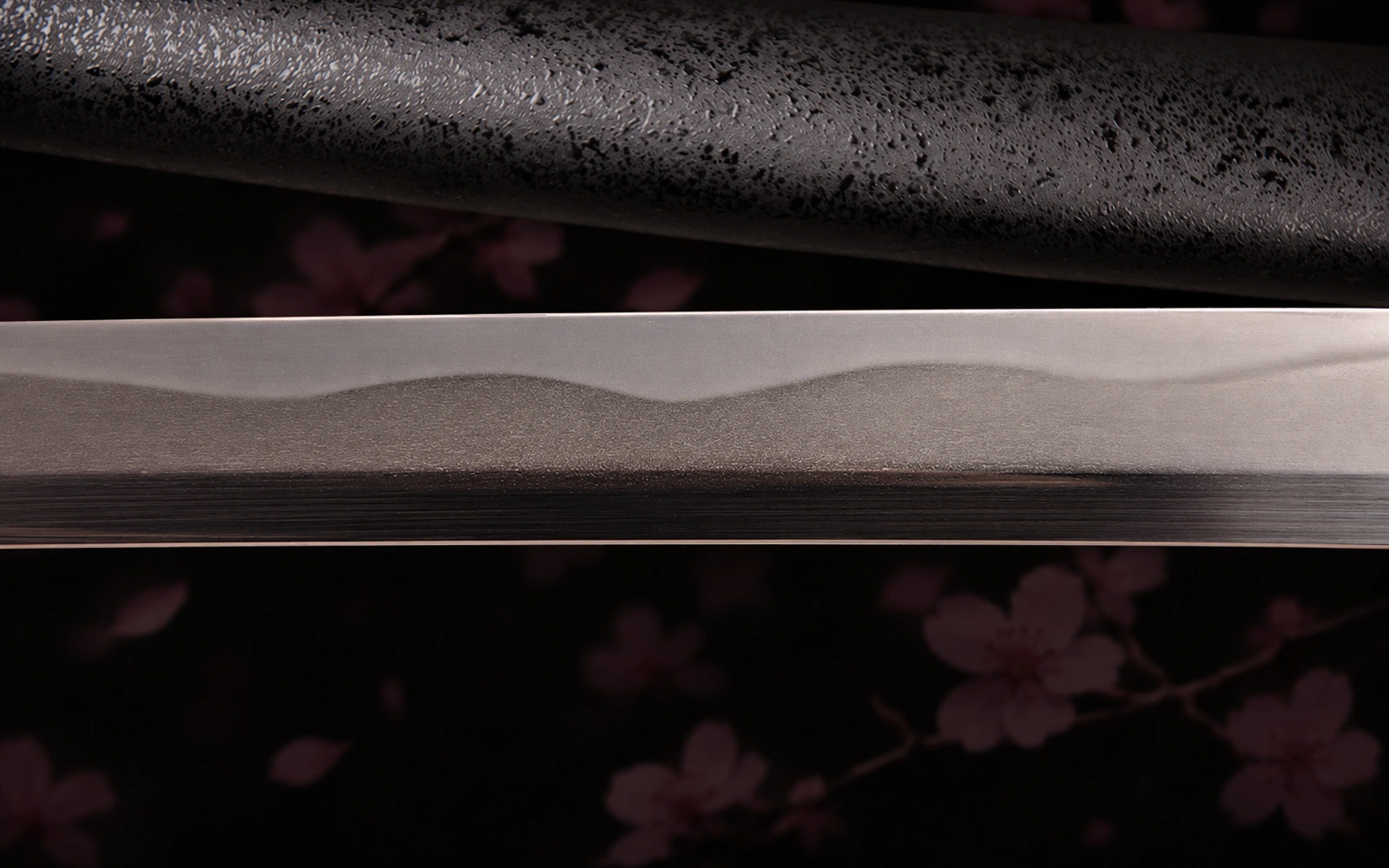
Horizontal close-up of the T10 katana blade with contrasting polished surfaces.
Three tones along the blade.
Close-up of the T10 katana showing an undulating temper pattern and textured polished surface.
A glimpse of the changing temper line.
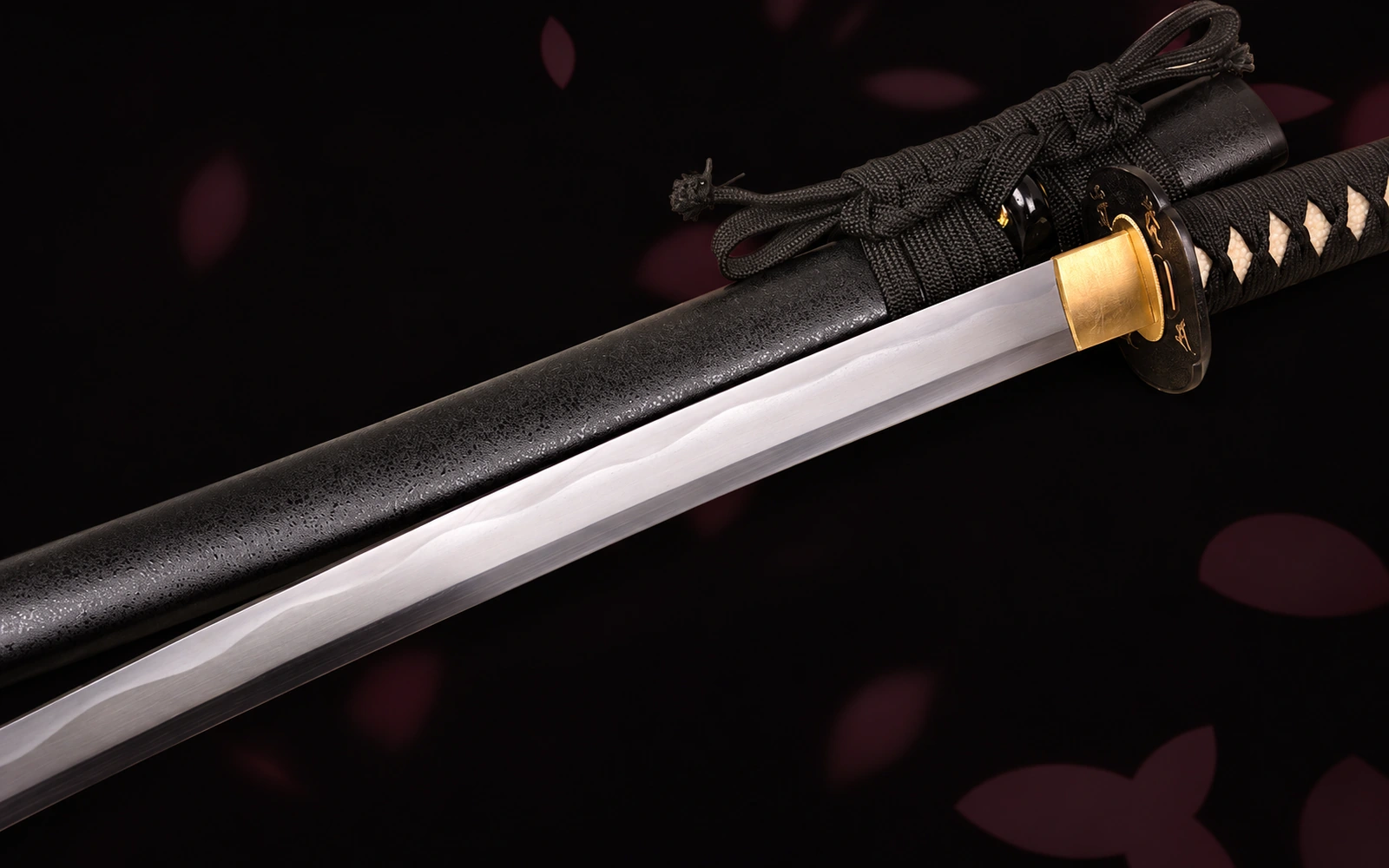
T10 katana blade arranged alongside a dark scabbard with black and brass fittings.
A passing highlight along steel.
Oblique close-up of the katana blade beside its black saya, showing polished reflections.
Polished steel in softer light.

04 / FINAL PORTRAIT

From the fittings to the last reflection, the same katana returns to view: one complete work, presented in its own light.
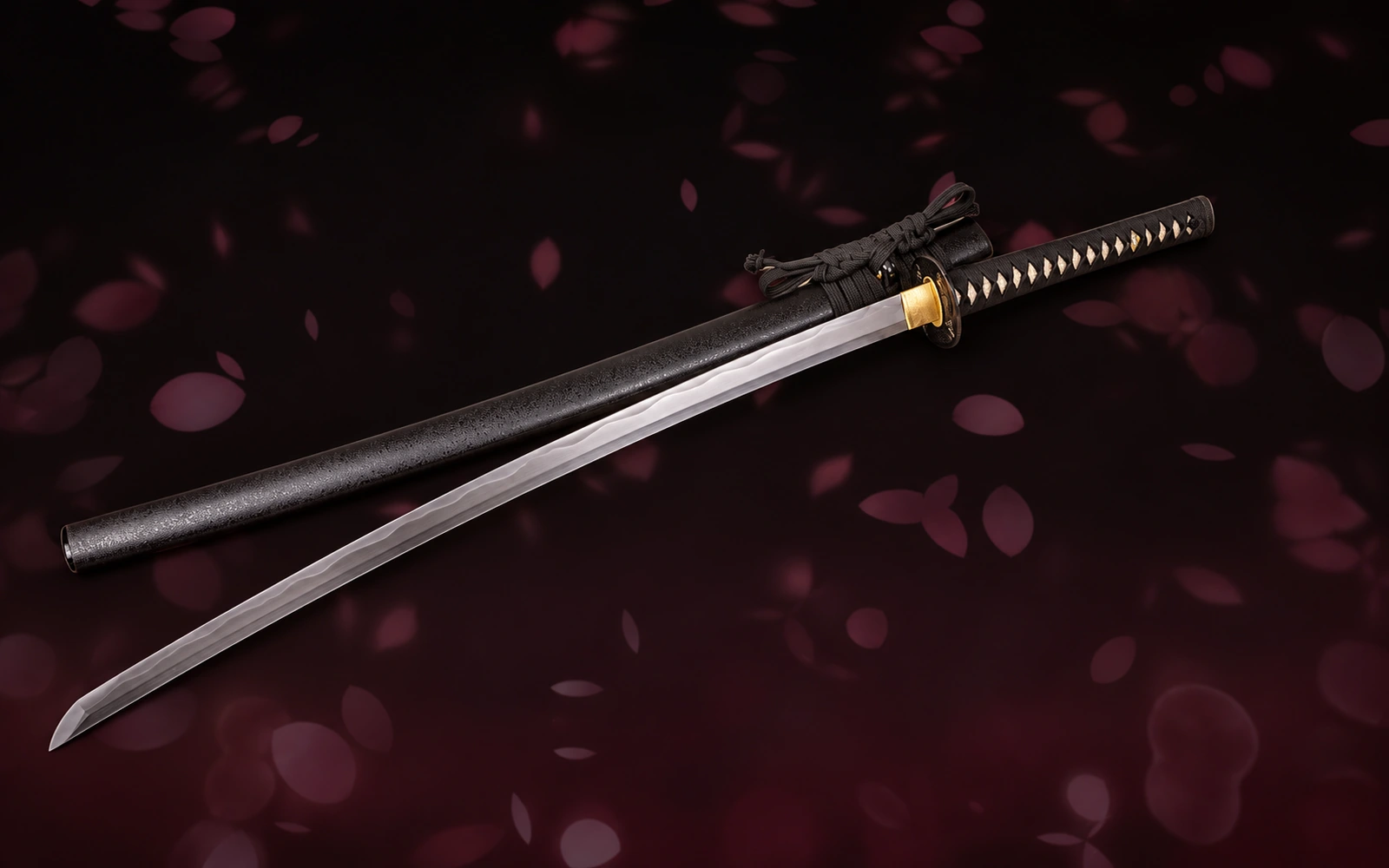
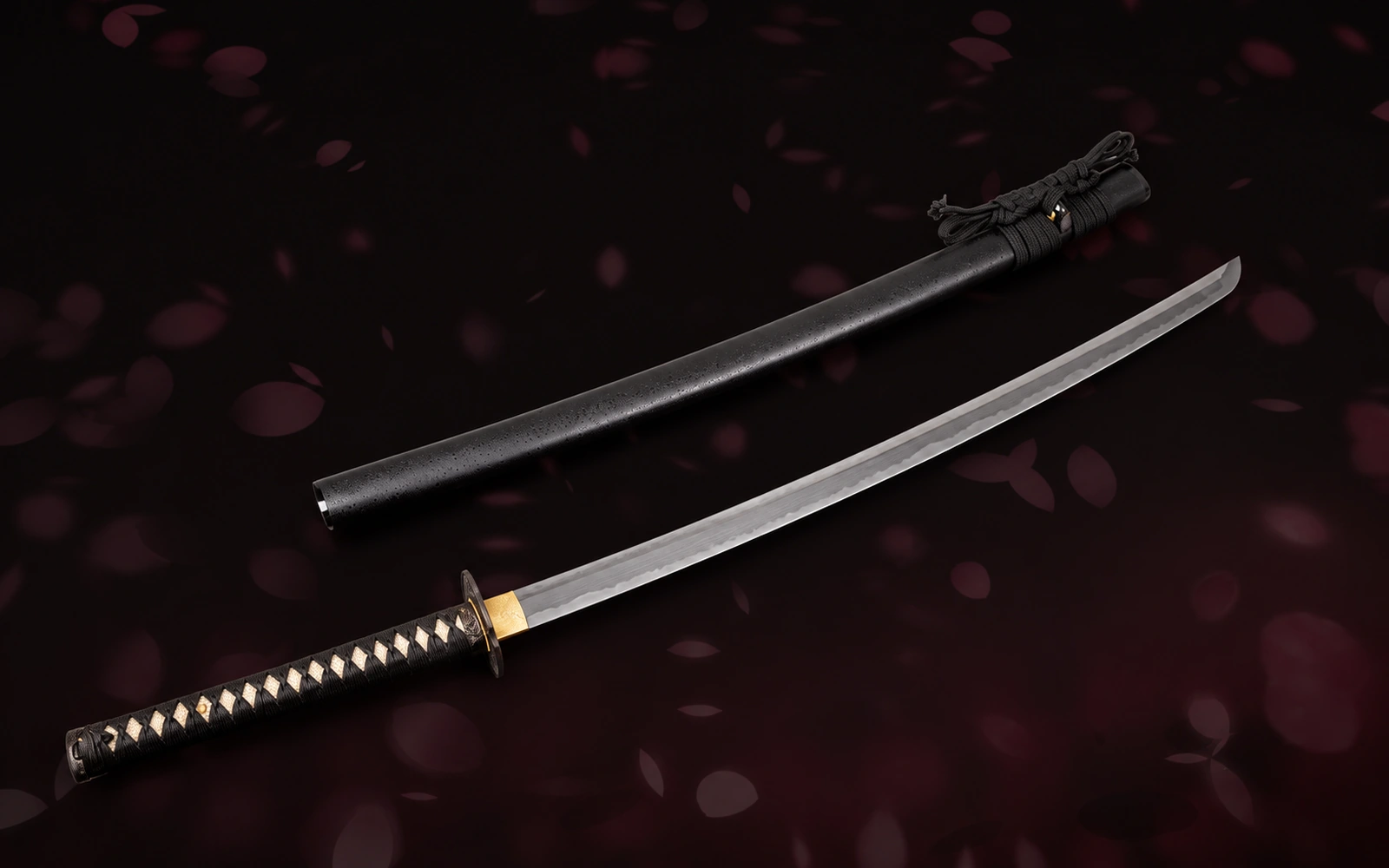
Complete Japanese-polished T10 katana displayed diagonally against a dark floral backdrop.
The complete blade returns.
Complete black-mounted katana with its dark saya displayed on a red floral background.
One final view of the katana.

Seen in full. Remembered in detail.

WKATANA

Rezensionen

Es gibt noch keine Rezensionen.

Schreibe die erste Rezension für „Japanese-Polished Full-Steel Clay-Tempered Katana Plus“

Deine E-Mail-Adresse wird nicht veröffentlicht. Erforderliche Felder sind mit * markiert