QUIET CRAFTSMANSHIP · LONGQUAN

Manganese Steel Tameshigiri Katana

¥699.00

PRODUCT OPTIONS

Configure this sword.

Choose the product-specific options below.

WORKSHOP NOTES

Hello, everyone!

I'm Lao Yan from our sword workshop.

Today I have an update to share.

When we launched the previous 699 series in 2022,

there were several good ideas we could not put into production.

With this new version,

we have tried to bring those ideas together.

Here is the second-generation 699 katana.

The blade material remains the same:

manganese steel.

It retains a defined yokote and a shaped blade tip.

The main upgrades are to the overall appearance and fittings.

The handle was made to match the dimensions of the fuchi.

We also cut a recess for the samegawa.

Its end has a distinctive, gently tapered shape.

The result is a slimmer handle

that feels very comfortable in the hand.

We cut this wheel-openwork iron tsuba ourselves.

There are mass-produced versions of this design,

but their finishing is often quite different.

This one gives the sword a more refined appearance.

We also upgraded the closed-style fitting near the guard

and added chrysanthemum-pattern seppa.

We also revised the saya.

It was made to match the dimensions of the handle fittings,

so the fit is more precise.

The transition between the parts looks more natural,

and the assembled sword has a smoother overall profile.

We also rebalanced the blade and its mounting.

Without the saya, it now weighs approximately 750 grams.

The crane-tsuba version shown here weighs about 759 grams.

Crane-tsuba examples generally fall around 750 to 760 grams.

The wheel-openwork version is usually around 750 grams.

Some examples may weigh slightly less,

and some slightly more,

but the difference is small.

Now, about the handle wrap.

Conventional cotton wraps can become fuzzy with use

and start looking worn.

For this version, we chose a more durable tiger-pattern wrap.

It also has a more refined texture.

The handle retains its paper-shimmed assembly.

Overall,

this is still a production-series sword,

but we had a dedicated handle and saya made for it.

We wanted, as far as possible,

to move beyond ordinary off-the-shelf fittings

and offer a well-equipped manganese-steel cutting katana at a reasonable price.

That is the overview of this version.

Thank you for watching.

See you next time!

Technical Overview

Core specifications.

Nagasa
700 mm
Motohaba
30 mm
Weight without Saya
750 g
Weight without saya varies by ±30 g depending on the selected tsuba. Handmade dimensions may vary slightly.
Blade & Craft

Blade craftsmanship.

Blade Material
60Si2Mn Spring Steel
Yokote
True Yokote
Blade Groove
Cut Blade Groove
Heat Treatment
Oil Quenching
Polish
Semi-Hand Mirror Polish
Tsuka Wrap
Leather Wrap with Hishigami
Saya
Horn-Fitted Slim Saya

Beschreibung

Close view of the wheel-openwork iron tsuba, metal habaki and black leather-wrapped grip on the tameshigiri katana
The junction of the blade, guard and grip, seen in close detail.

02 / CRAFT IN THE DETAILS

Steel, Wrap & the Line at the Point.

The character of this tameshigiri katana comes into focus where the blade meets the handle. A wheel-openwork iron tsuba, shaped metal habaki and dark leather wrapping bring the assembly together.

These are close, practical details: a guard with a clear open pattern, a fitted transition at the blade, and a grip made with the hand in mind.

01 / THE GRIP

The Pattern Beneath the Wrap.

Black leather crosses over pale samegawa in an even sequence of diamonds. Metal menuki appear between the folds, while hishigami support the geometry of the wrapping. The detail is designed to be seen up close, but felt in the hand.
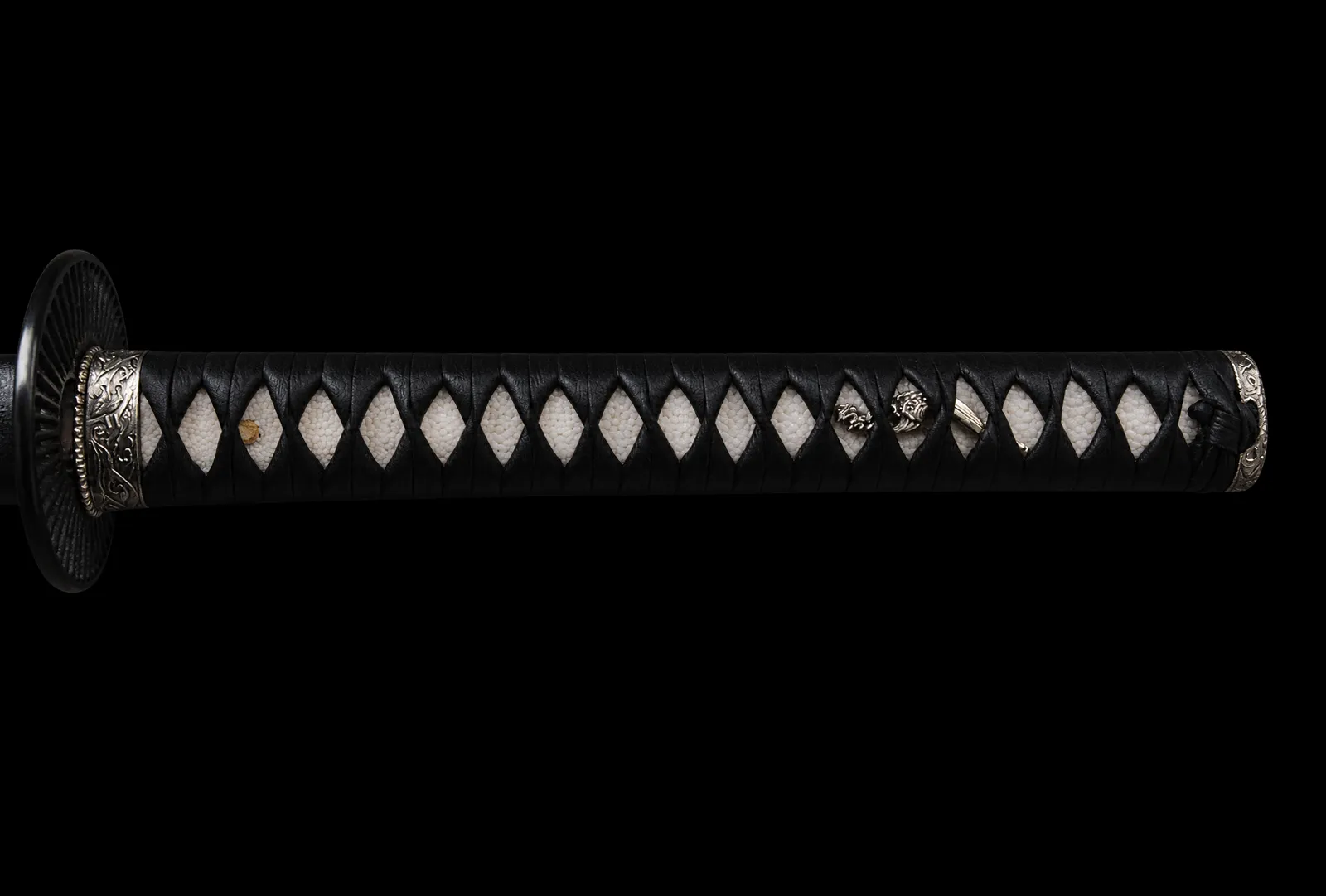
Black leather tsuka wrap with pale samegawa diamond openings, visible menuki and decorative metal fittings
The grip's leather wrapping, pale openings and fitted metal details.

02 / BLADE & SURFACE

Light Along the Steel.

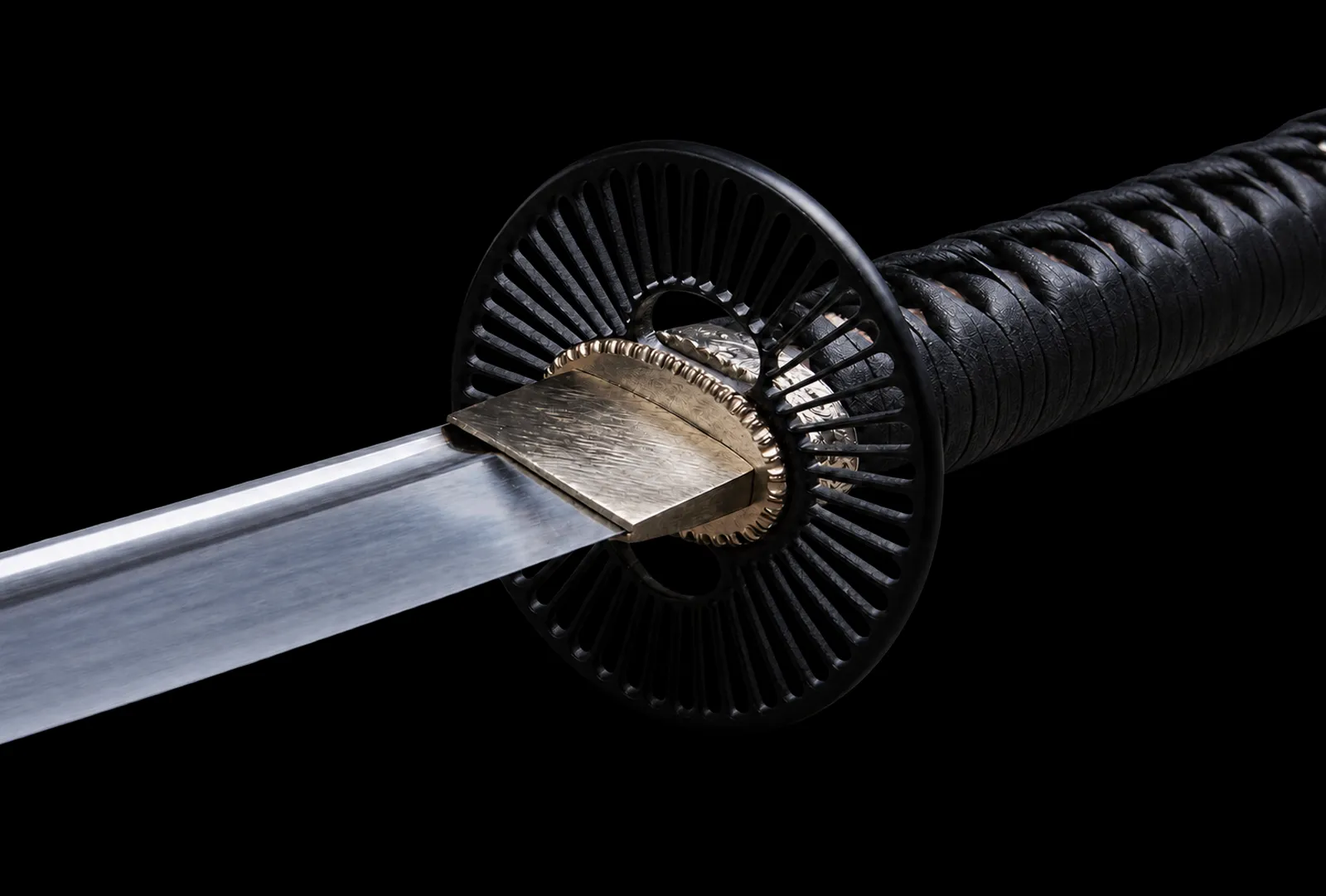
The 60Si2Mn spring-steel blade is oil quenched and finished with a semi-hand mirror polish. The polished planes catch light differently, revealing the transition between the broad blade face and the cut blade groove.

The groove is part of the blade's actual geometry, not a line added to its surface. In this view, its reflective edge draws the eye forward from the guard.
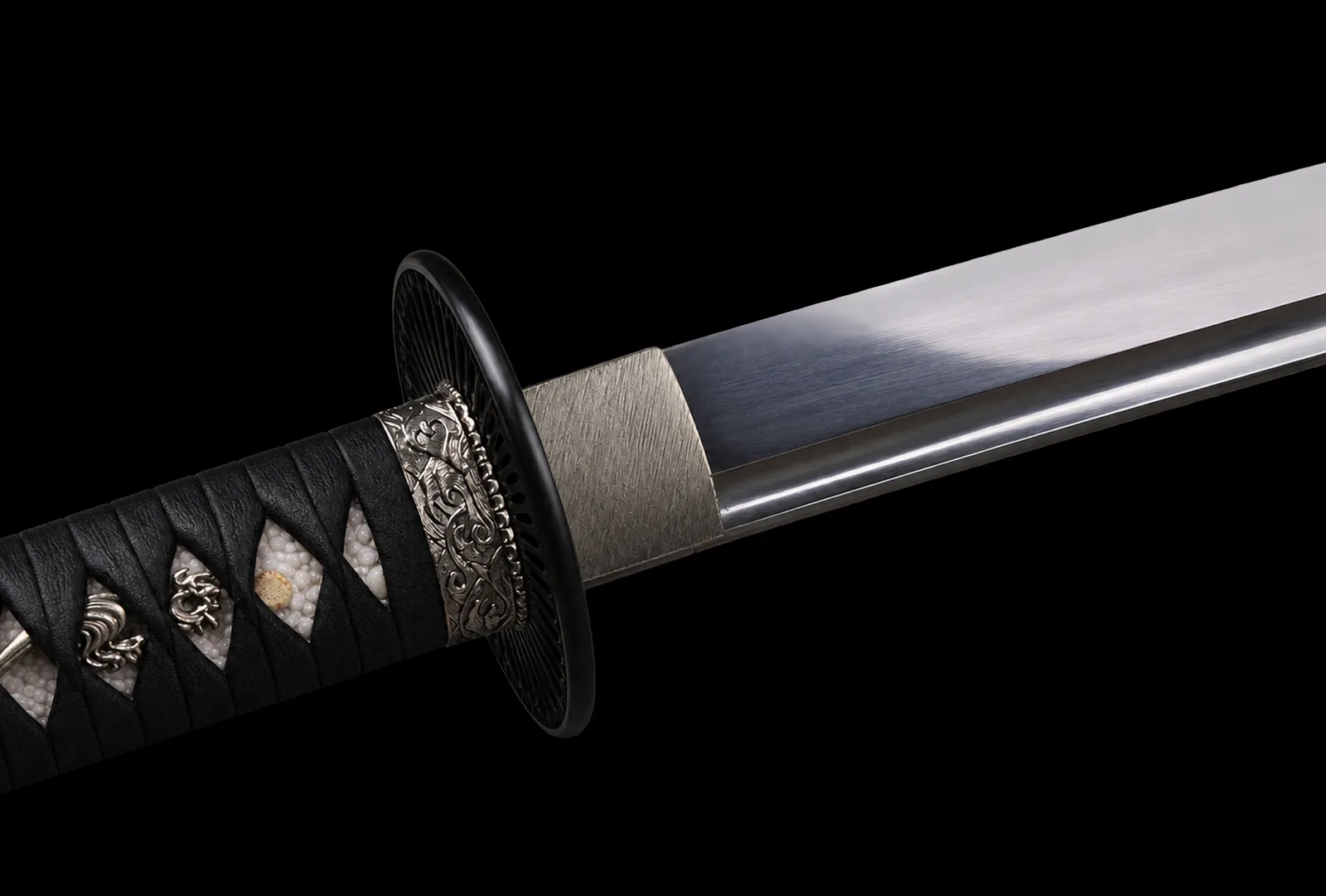
Polished 60Si2Mn katana blade with a cut groove beside the iron tsuba and metal habaki
The steel surface, blade groove and fittings in changing light.

03 / GEOMETRY AT THE TIP

A Real Line. A Defined Point.

Near the kissaki, the groove comes to a deliberate end. Beyond it, the true yokote marks a physical change in blade geometry: a defined boundary between the main blade and the point, rather than a purely cosmetic polish line.
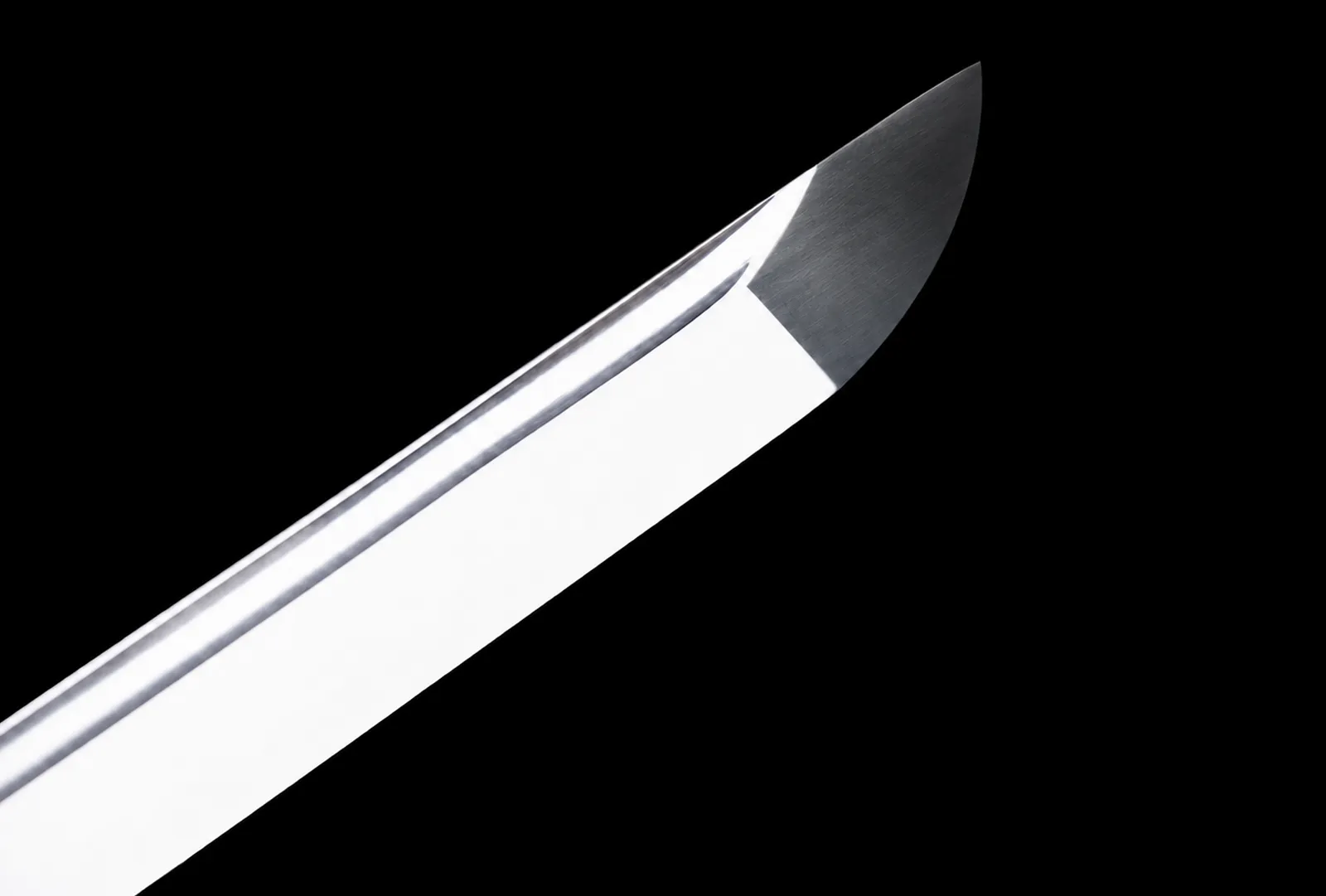
Katana kissaki detail displaying a true yokote and the termination of the cut blade groove
The defined yokote and groove termination at the polished blade tip.

From the leather-wrapped grip to the final line at the point, each detail gives the finished sword its own sense of form.
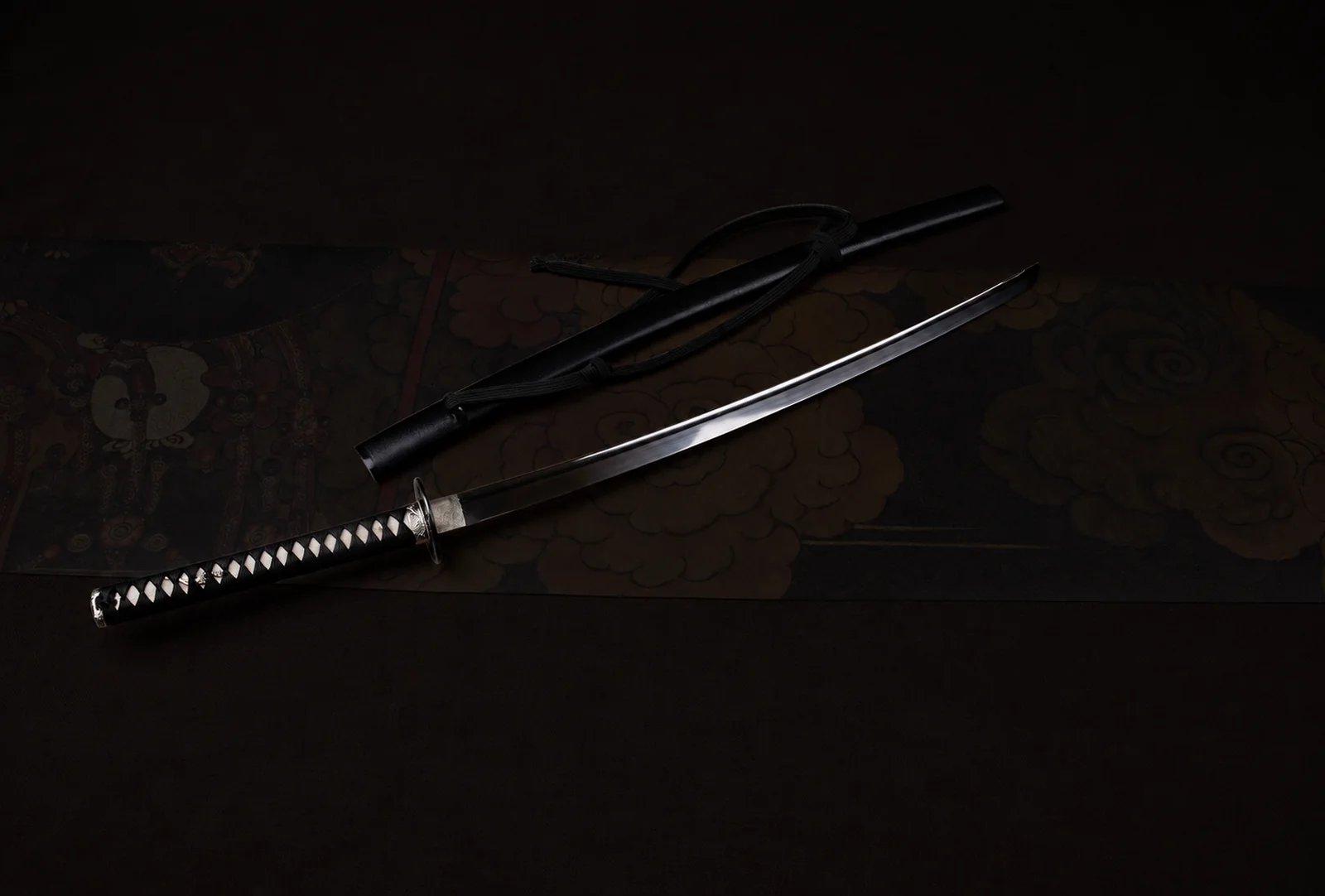
Manganese steel tameshigiri katana shown with its black saya against a dark patterned backdrop
The sword and its black saya, presented together.

03 / THE FINISHED ASSEMBLY

The Sword as a Whole.

A tameshigiri katana is more than its blade. The grip, guard and saya determine how the finished piece is held, drawn and carried.

This final study looks at those relationships through the completed sword: the continuous curve, the close-fitting mountings and the details that give the assembly its character.

01 / THE DRAWN PROFILE

One Continuous Line.

With the blade drawn, the relationship between its long curved profile and the compact handle becomes clear. The restrained dark fittings leave the eye free to follow the steel.
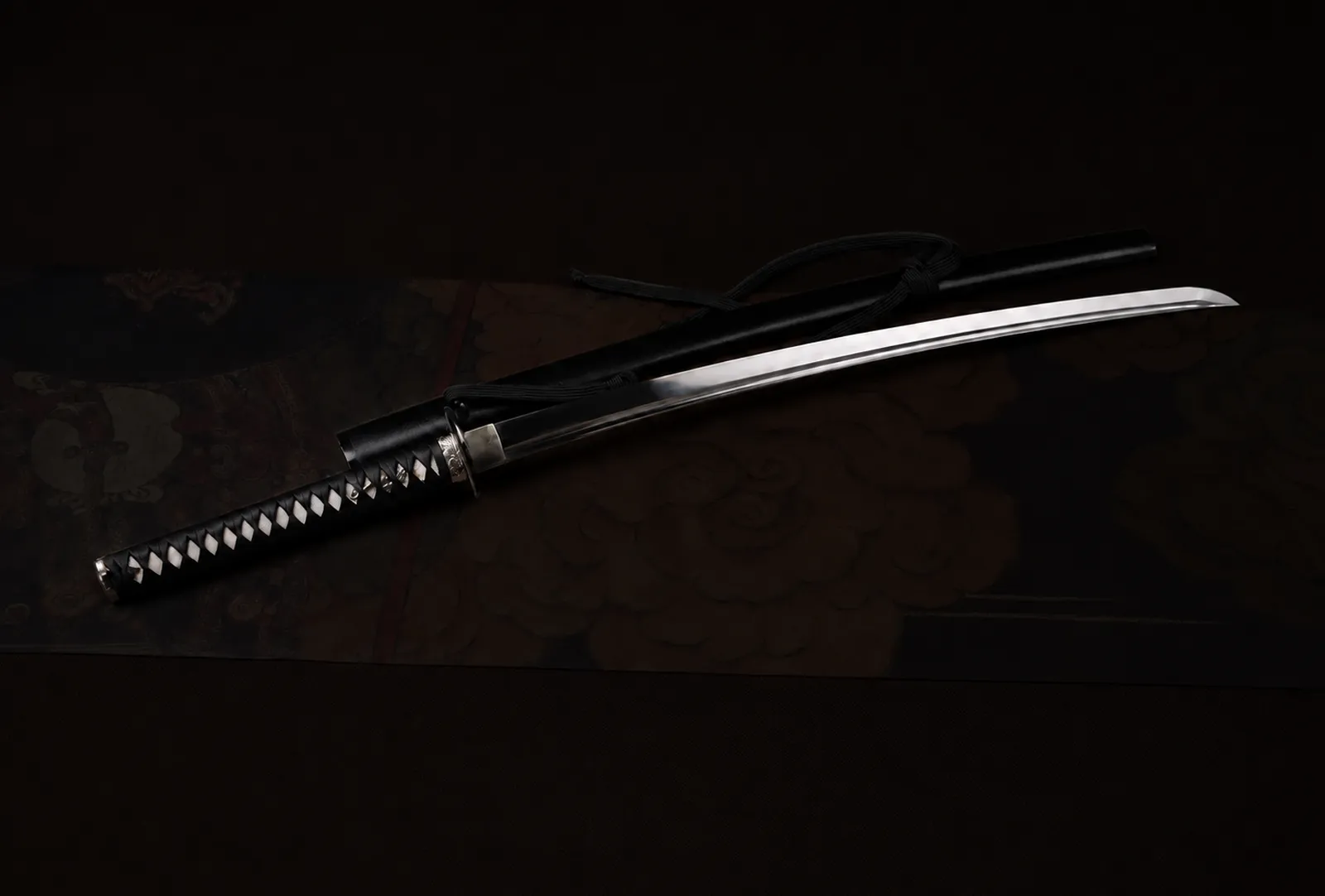
Unsheathed manganese steel tameshigiri katana showing the full curved blade and dark handle
A full view of the drawn blade and handle.

02 / THE GRIP

Shaped Around the Hand.

The handle has its own proportions, made to work with the fitted metal collars rather than selected as a generic replacement. Its black leather wrapping follows a regular diamond pattern over the underlying handle surface.

The result is a grip whose texture, shape and assembly are considered together.
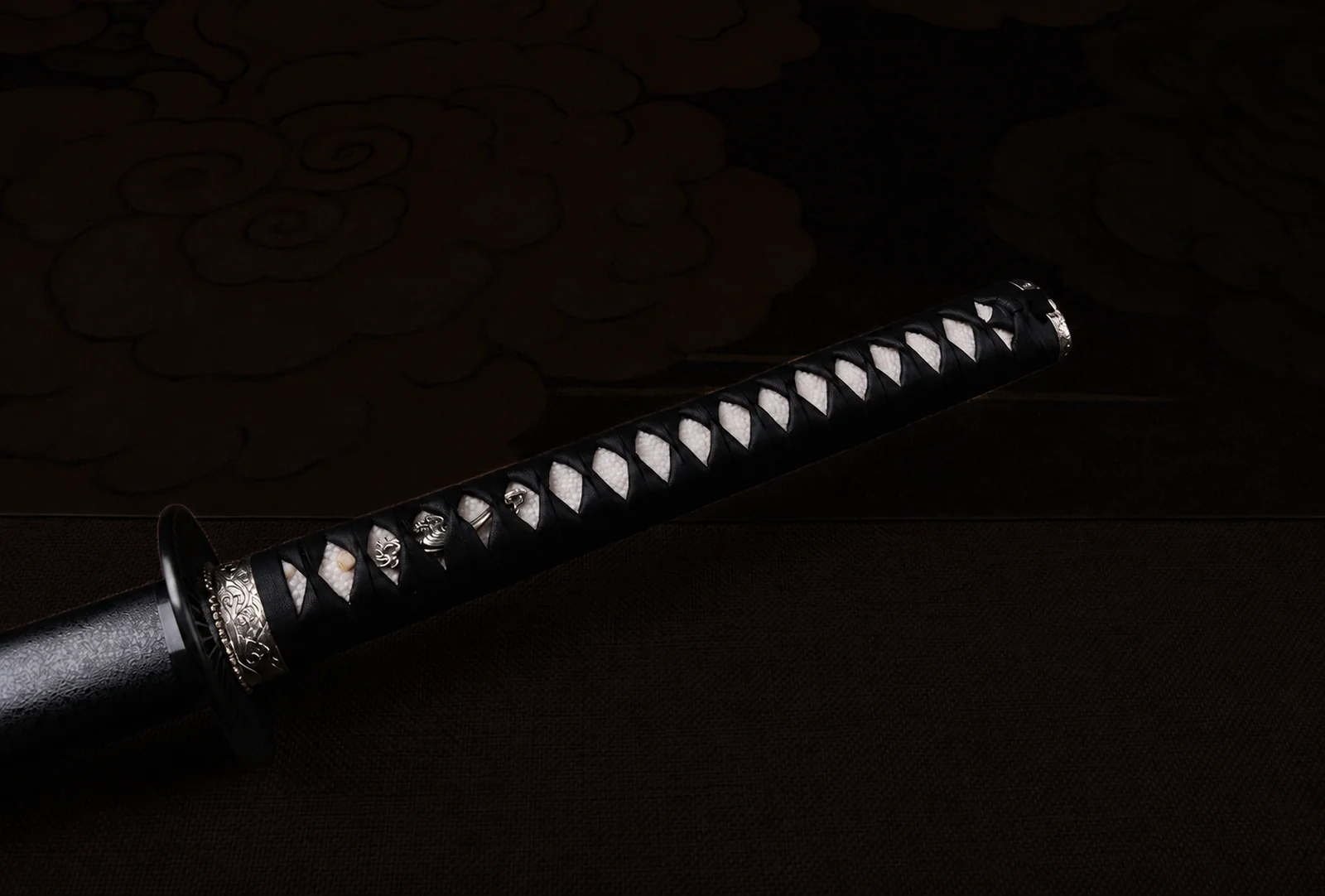
Angled view of the black leather-wrapped tameshigiri katana handle and iron guard
The leather-wrapped grip viewed from an angle.

03 / SMALL DETAILS, CLOSELY SEEN

Rhythm in the Wrap.

The leather diamonds create a steady rhythm along the grip. Between them, the metal menuki and the finished end of the handle provide quieter points of interest.
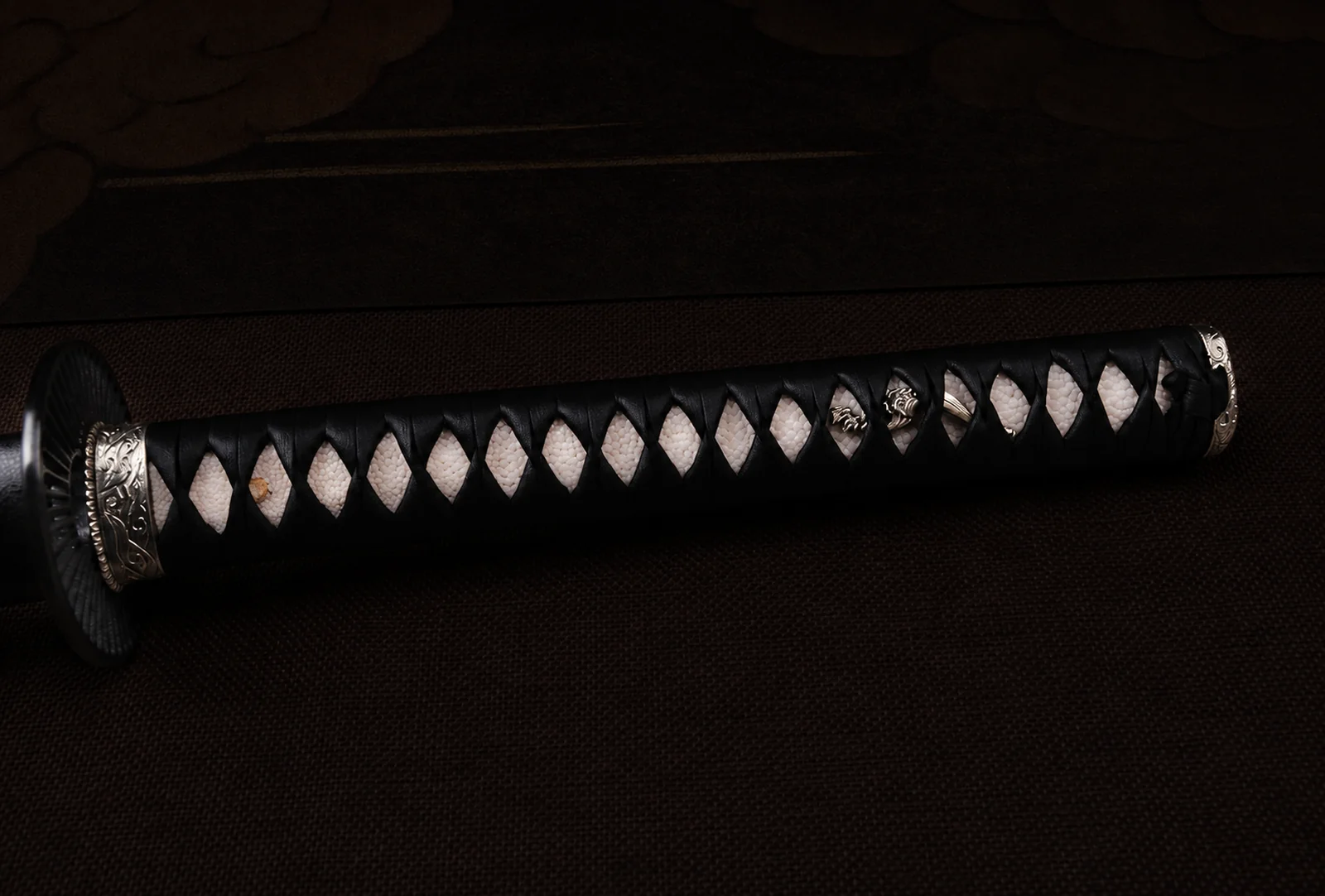
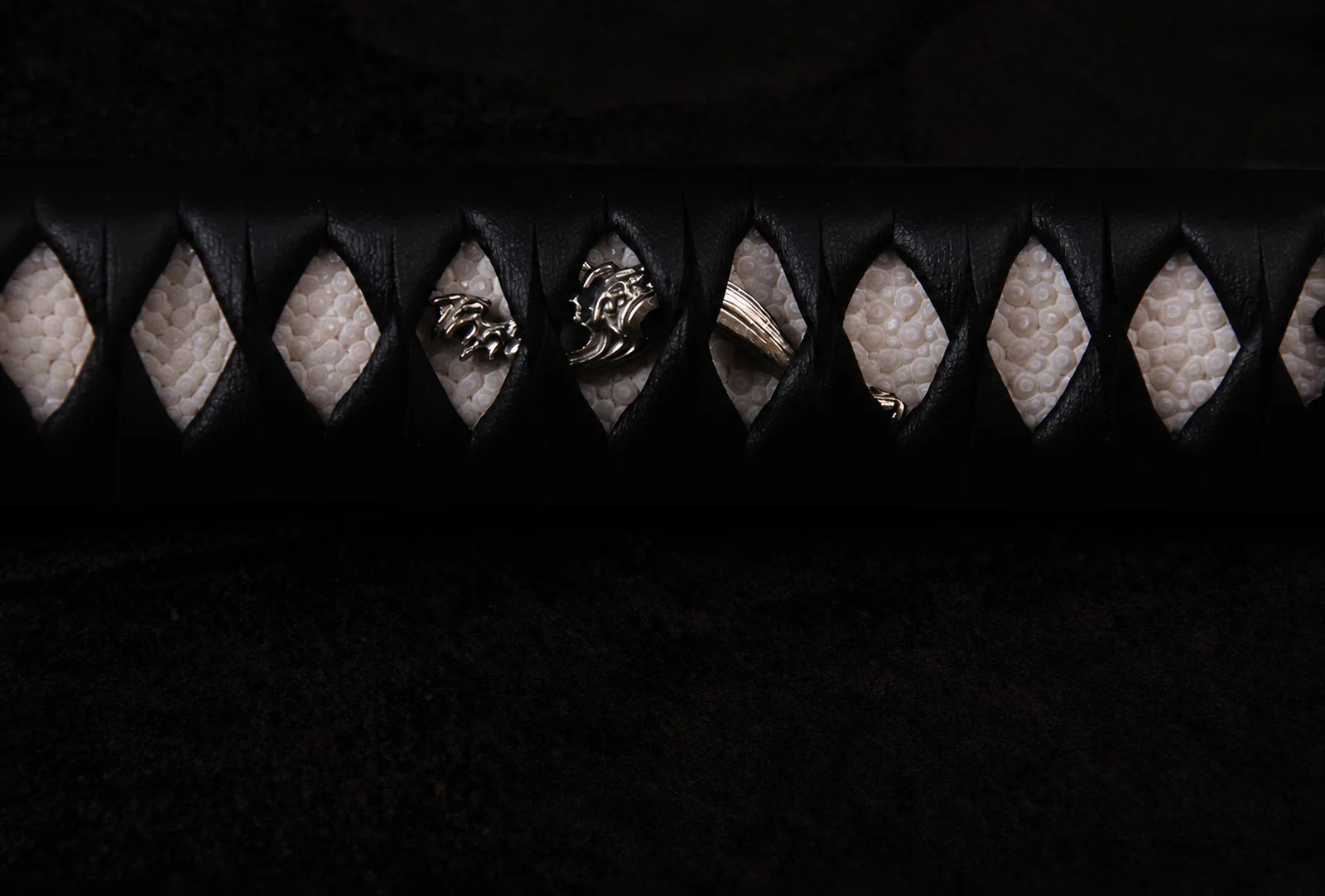
Side view of the tameshigiri katana handle with black leather diamond wrapping and pale inlays
The repeated diamond pattern running along the handle.
Close view of decorative metal menuki between the black leather wrapping of the katana grip
The menuki, seen between the leather folds.
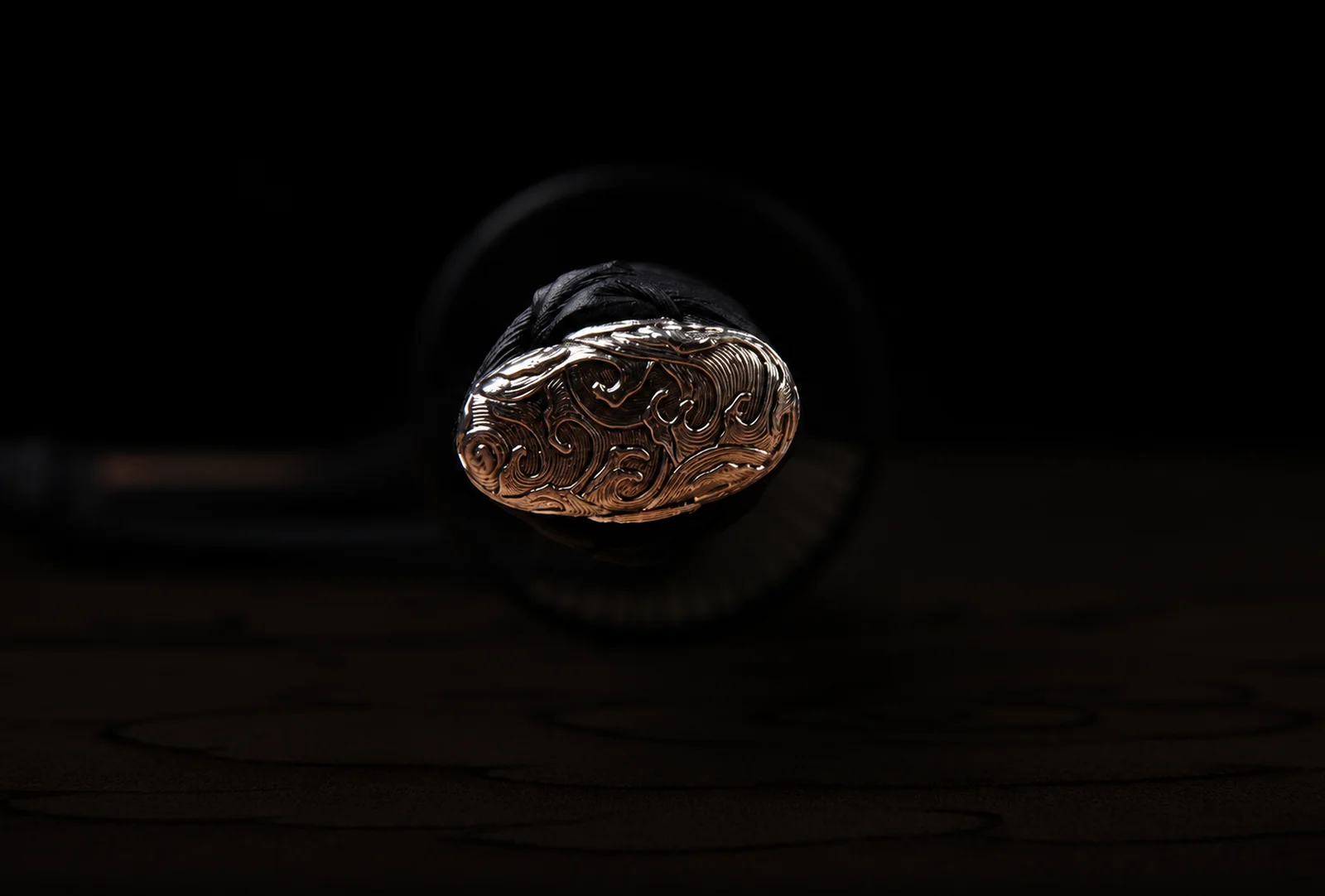
End-on view of the metal pommel at the end of the tameshigiri katana handle
The fitted metal end of the grip, viewed from behind.
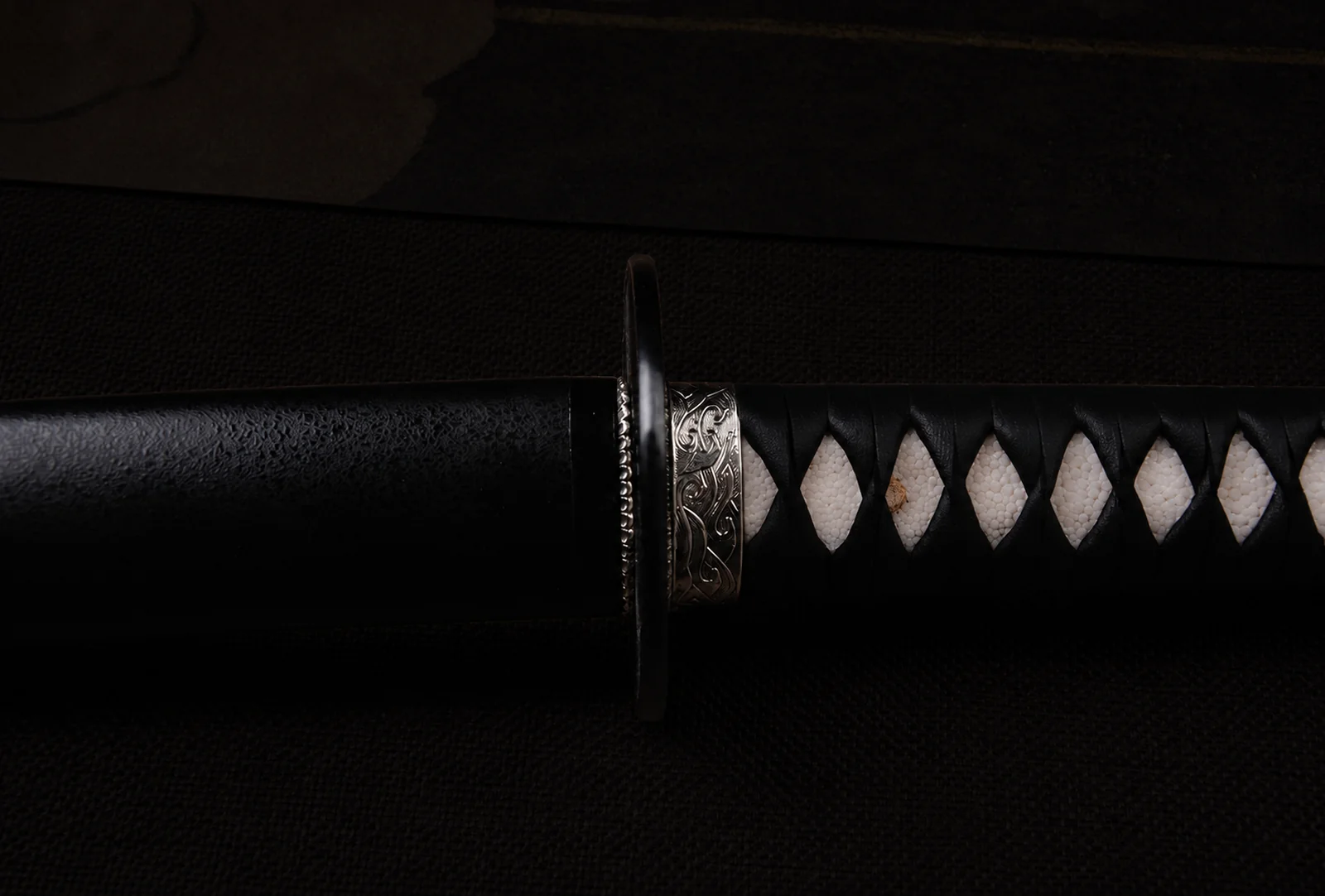
Close view of the katana guard, black saya opening and adjacent leather-wrapped handle
The guard and the fitted mouth of the black saya.

04 / THE SHEATH CONNECTION

Made to Meet.

The horn-fitted slim saya is made around the dimensions of this assembly. Its fit at the opening matters as much to the finished appearance as the lacquered surface or the metal guard.

This is why the original grip and saya are best understood as a matched set, rather than interchangeable accessories.

05 / THE IRON GUARD

Openwork, in Profile.

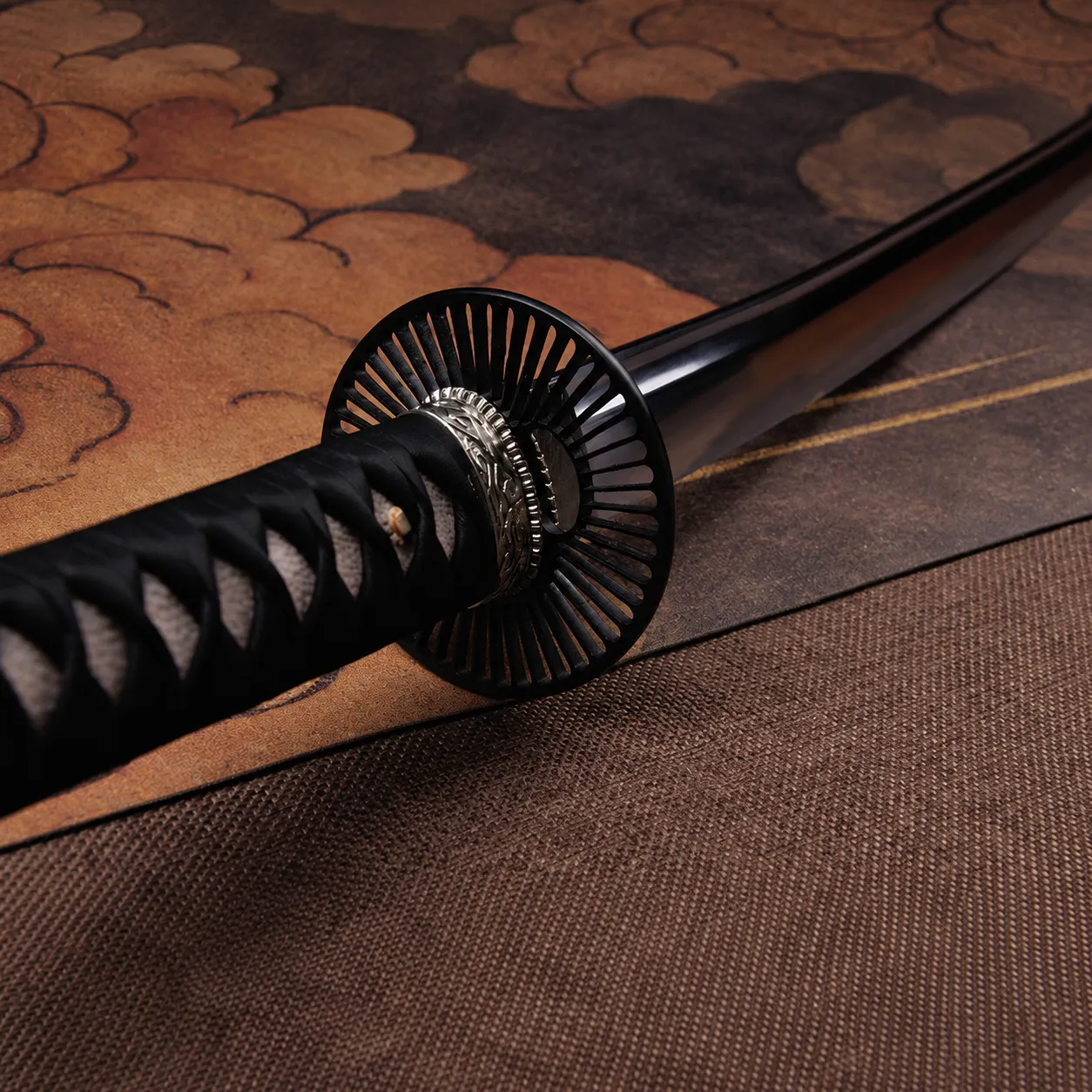
The wheel-openwork iron tsuba has a distinctive radiating silhouette. Against the leather grip and black saya, its fine spokes become the most visible ornamental detail.

The guard is a functional component, but its outline also changes the visual character of the finished katana.
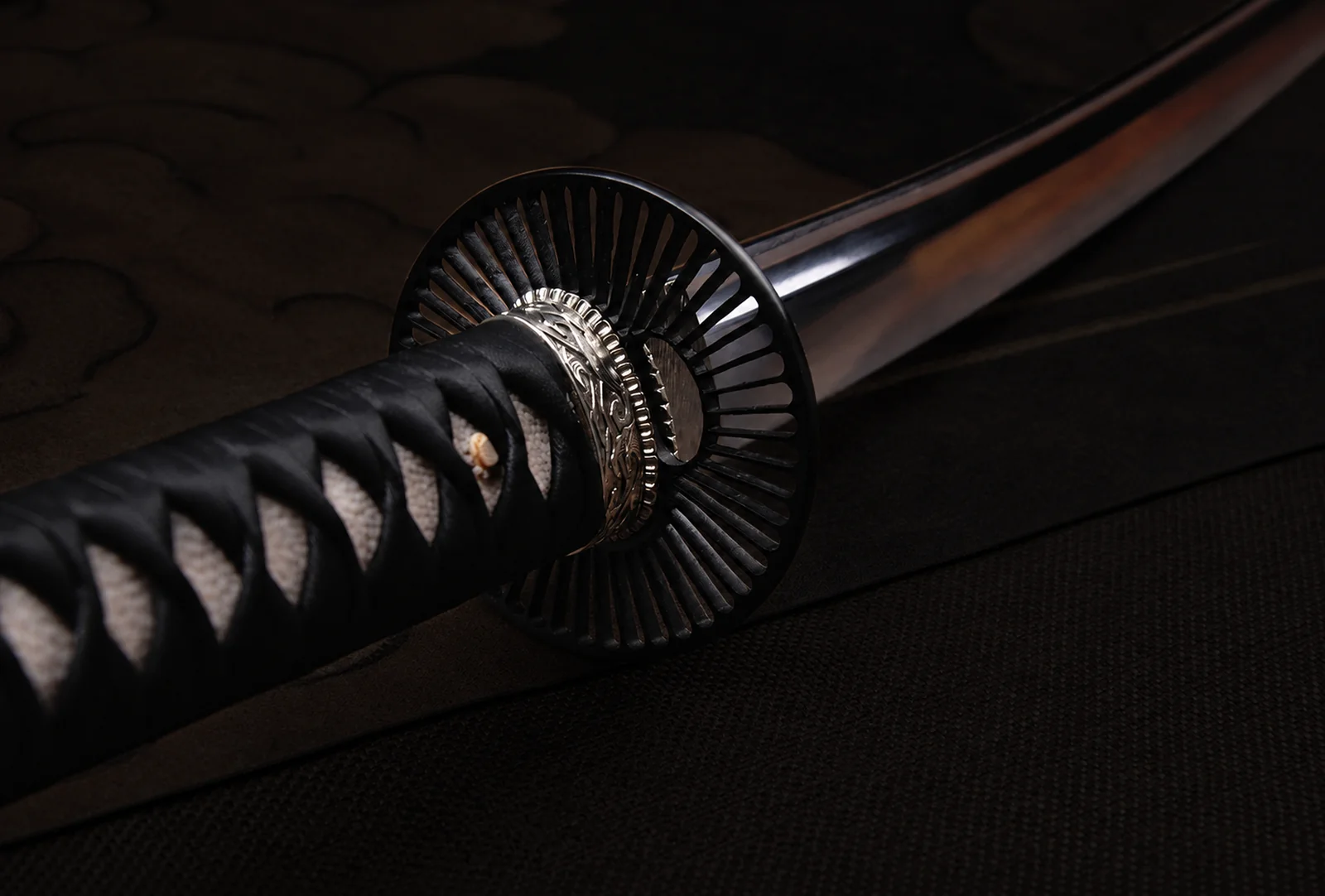
Wheel-openwork iron tsuba seen beside the black leather katana handle and dark saya
The radiating wheel-openwork guard seen from the front.
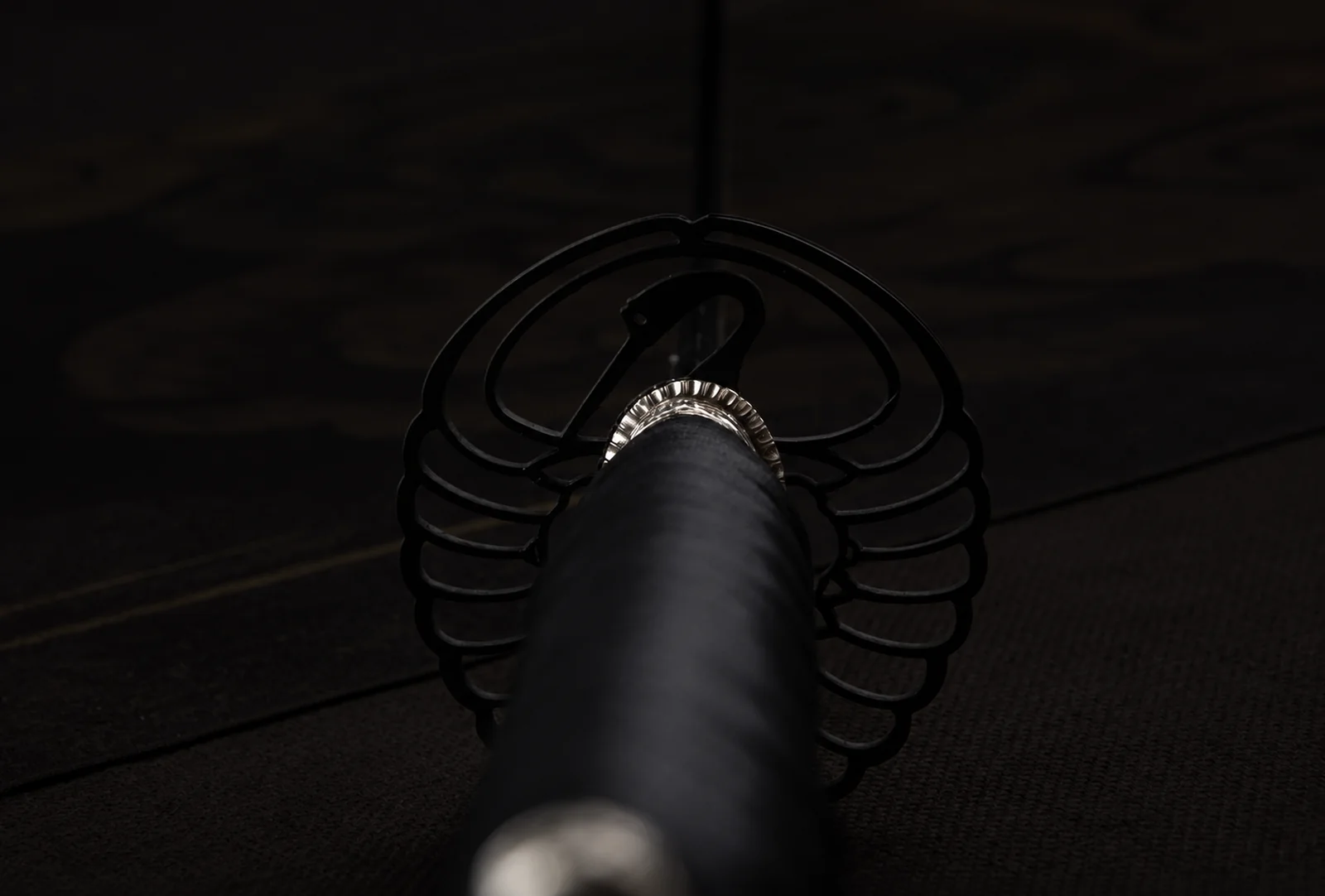
Alternative openwork iron tsuba on the tameshigiri katana, viewed along the handle toward the blade
Another available guard form, photographed along the handle.

06 / A CHOICE OF GUARD

A Change in Silhouette.

The katana is offered with two iron tsuba designs: Wheel Sukashi and Crane. Each creates a different outline around the same carefully considered blade-and-grip configuration.

The choice is made in the product options above; the fitted handle and saya remain central to the design.

07 / A FINAL VIEW OF THE STEEL

Seen Along the Blade.

Viewed almost along its length, the blade shows how the fittings give way to steel. It is a quieter perspective: less about a single finish or detail, more about the complete katana held in one line.
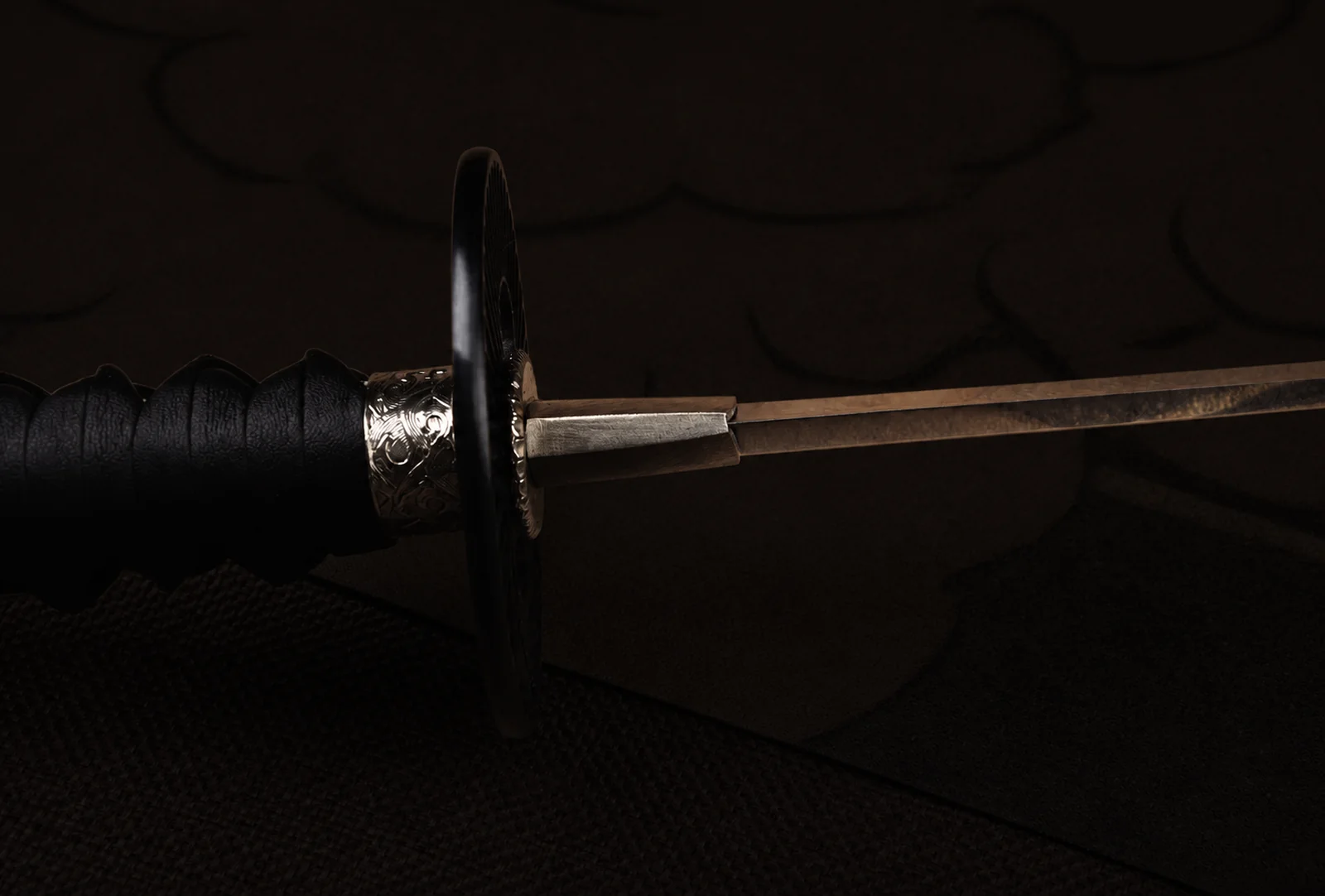
Lengthwise view of the tameshigiri katana blade from the dark grip past the iron guard
The blade viewed lengthwise, with the guard and grip receding behind it.

TAMESHIGIRI KATANA / THE FINISHED WORK

A balanced blade, a fitted handle and a saya made to meet it. The whole sword is the point.

Rezensionen

Es gibt noch keine Rezensionen.

Schreibe die erste Rezension für „Manganese Steel Tameshigiri Katana“

Deine E-Mail-Adresse wird nicht veröffentlicht. Erforderliche Felder sind mit * markiert