Beschreibung
STORY 01 / LINEAGE & FORM
An Old Silhouette. A New Mounting.
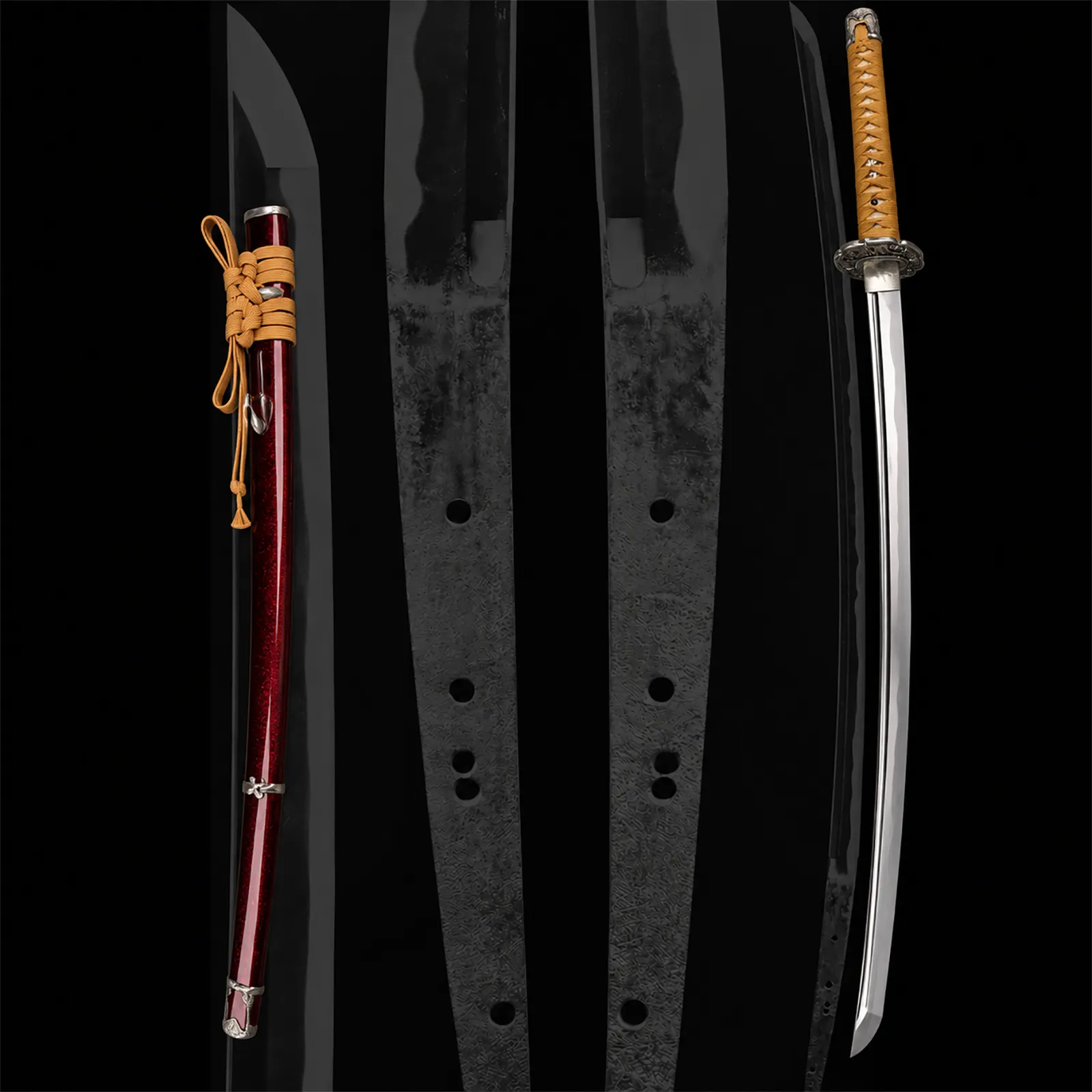
The blade takes its starting point from Kōsetsu Samonji— a historical form remembered for its commanding line. Around that outline, the Karakusa Handachi Katana develops an entirely different presence: curling vine motifs, formal metalwork, and the measured proportions of a handachi-style mounting.
KŌSETSU SAMONJI REFERENCE / 781 MM BLADE / KARAKUSA HANDACHI
THE BLADE REFERENCE
A Line Worth Following
This contemporary work follows the Kōsetsu Samonji-inspired blade form. Its nagasa is 781 mm, with a motohaba of 32 mm. Those two dimensions give the blade its scale without attempting to define every detail of the historical original.
The result is a long, deliberate silhouette: the steel establishes the character of the sword before the mounting gives it a voice of its own.
KARAKUSA / HANDACHI
The Vine and the Form
Karakusa describes the flowing vine-scroll pattern carried by the fittings. Handachi names a style of koshirae that brings elements of tachi metalwork into a katana-style mounting.
Together they create a distinct balance: intricate white-copper ornament against the quiet sweep of the blade, with the mounting treated as an essential part of the sword rather than an afterthought.
CRAFT IN THE FIT
Made for the Blade
The standard precision-CNC koshirae is carved to the blade’s measured dimensions for a close, careful fit. One-to-one handmade mounting is offered as a separate craftsmanship option, with greater scope for individual tailoring.
In either form, the intent remains the same: a coherent relationship between the blade, the fittings, and the saya. The next chapter moves closer to the karakusa metalwork itself.
NEXT / KARAKUSA FITTINGS — MOTIF, FINISH & HANDACHI DETAIL
STORY 02 / KARAKUSA & METALWORK
The Detail Is in the Mounting.
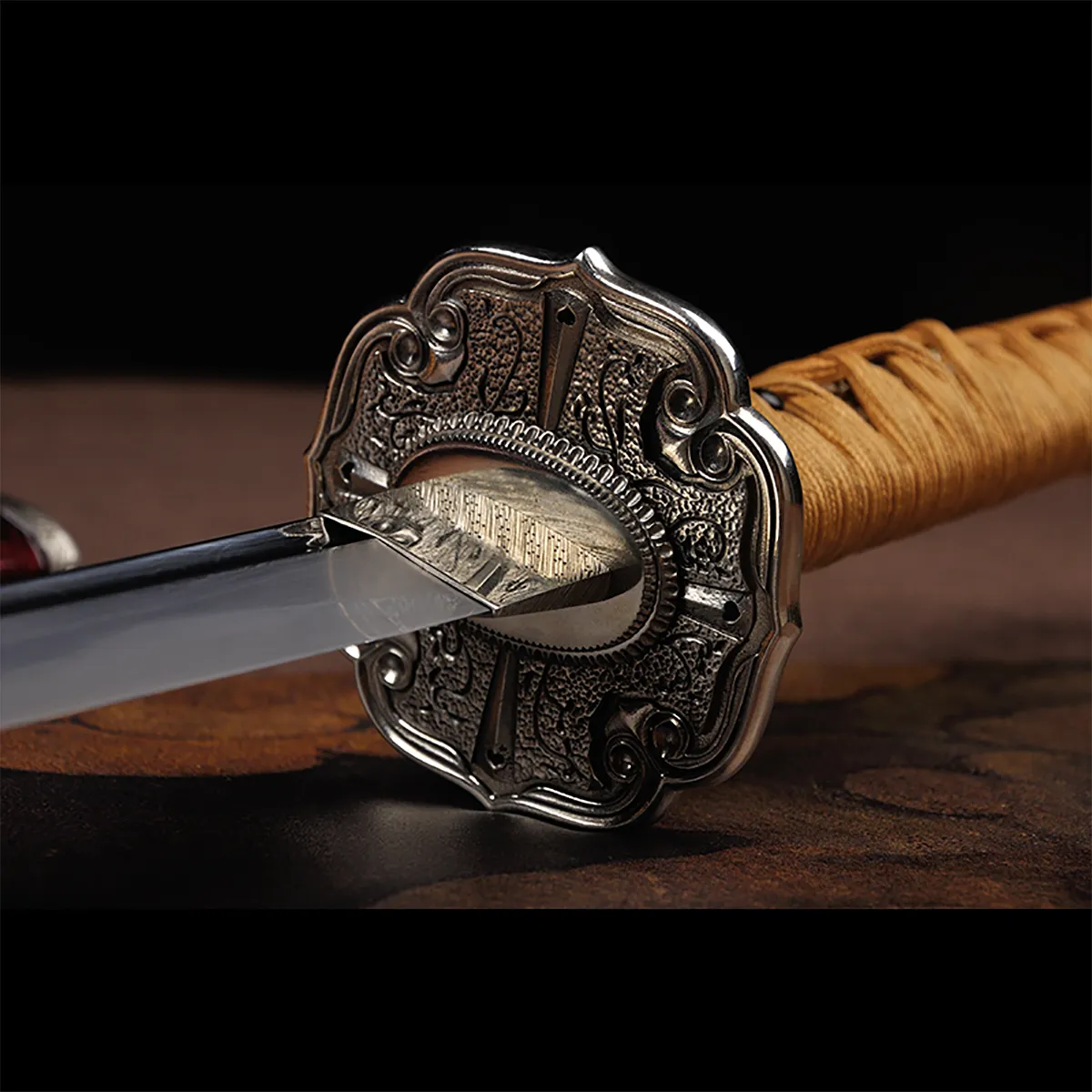
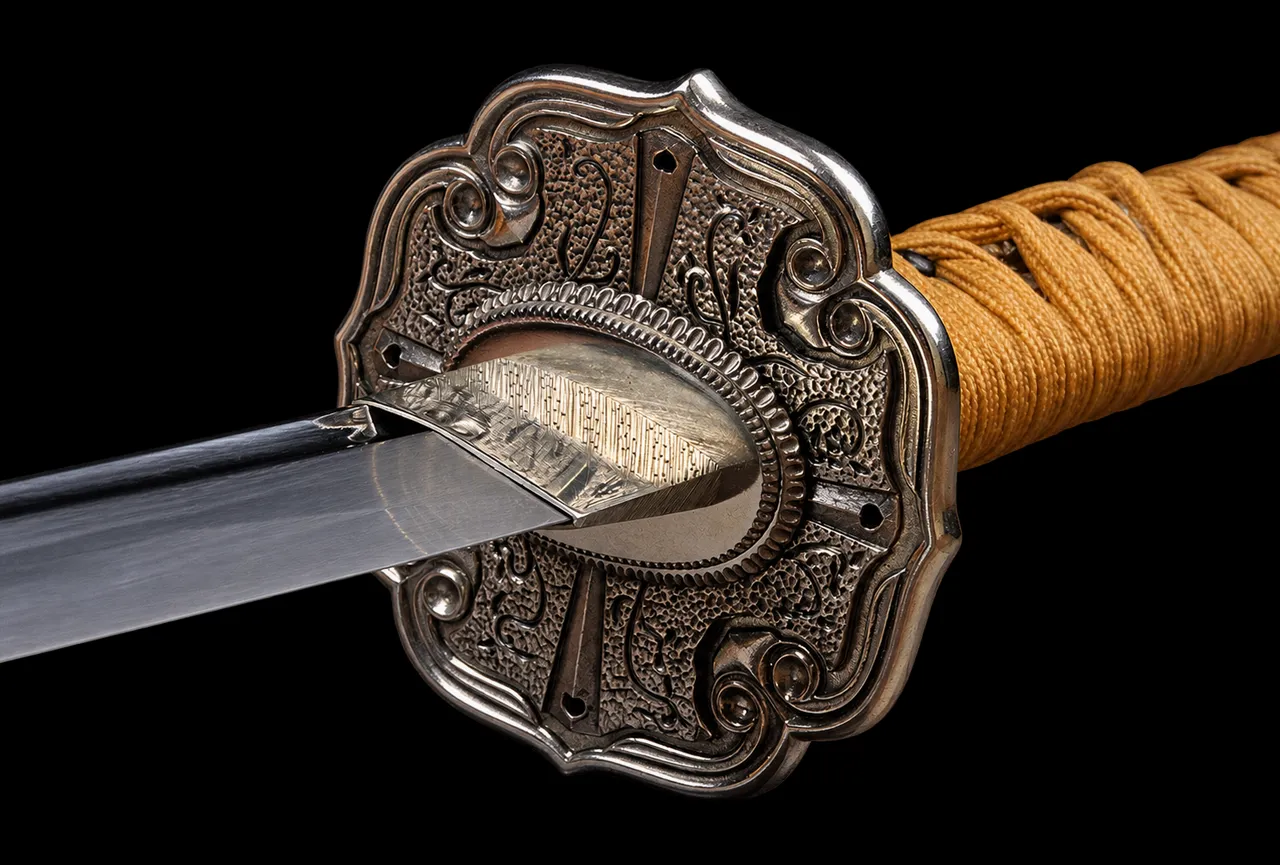
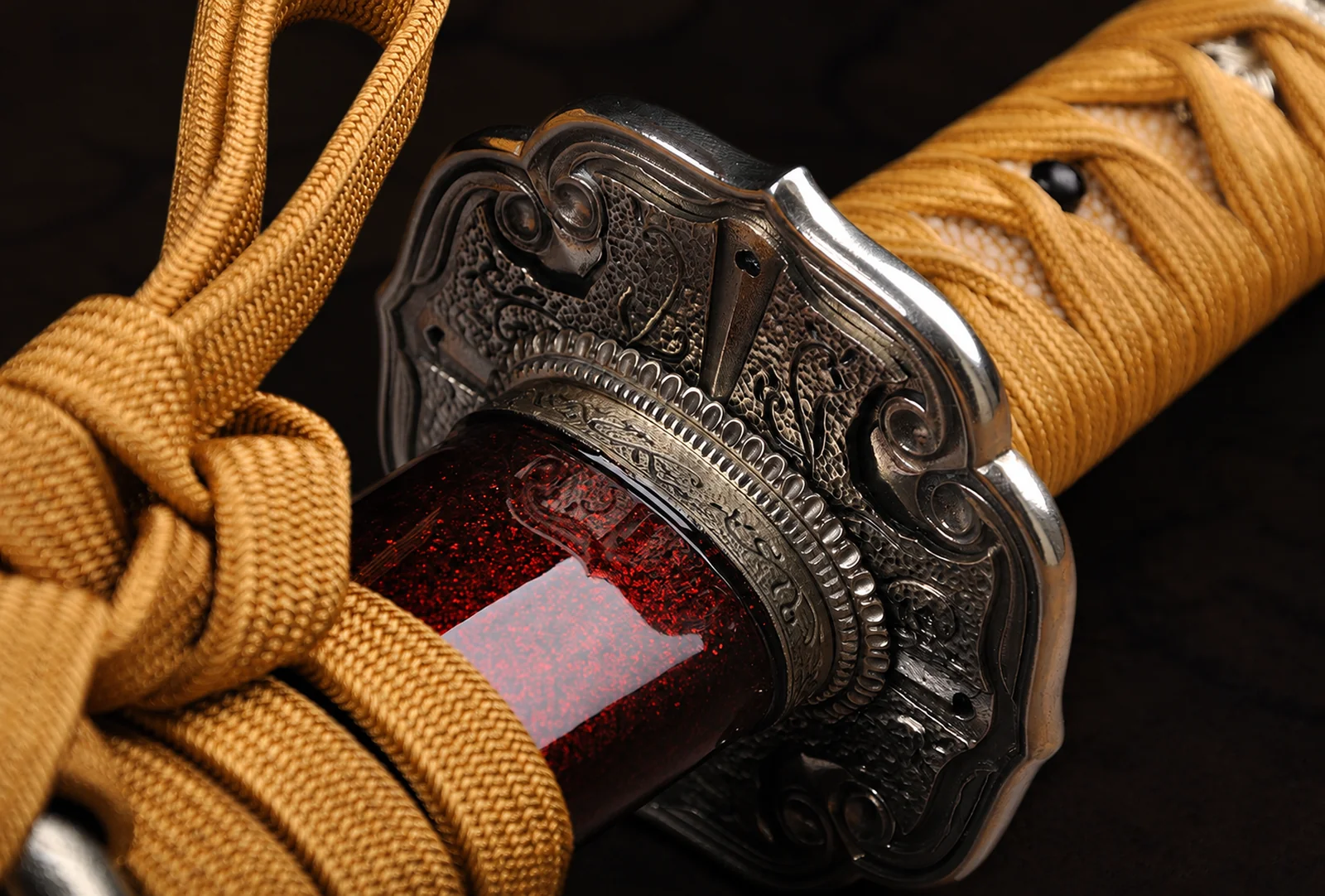
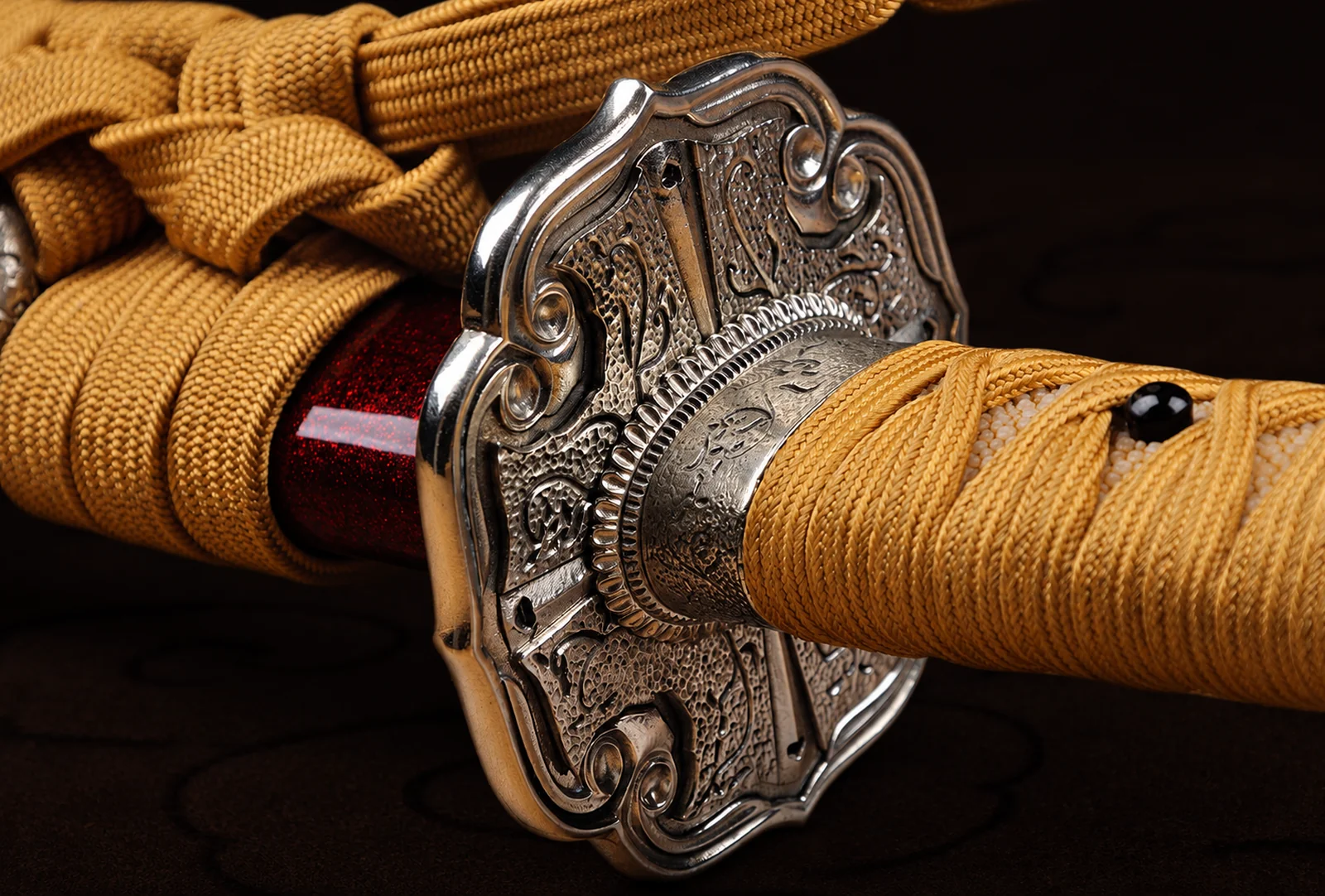
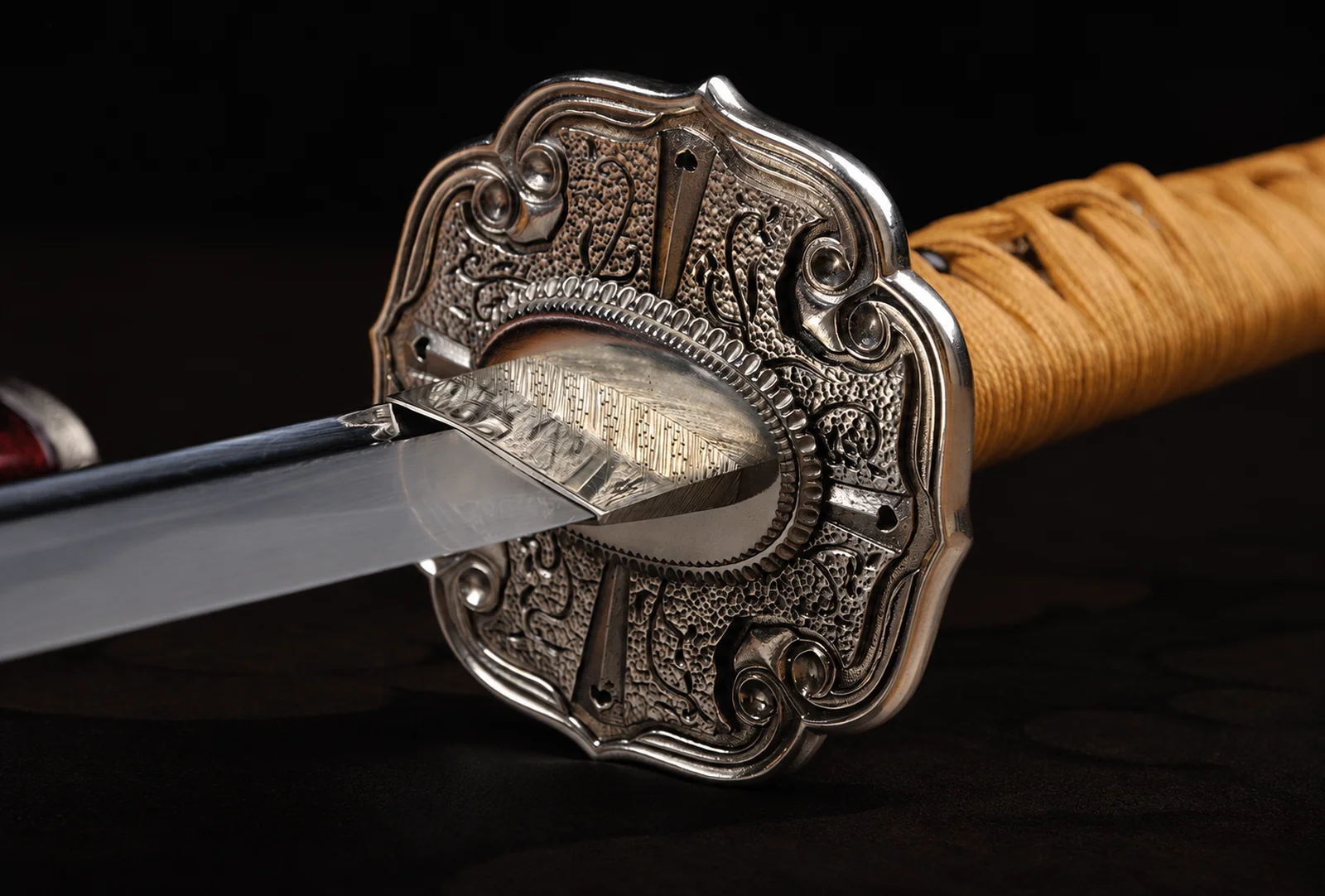
The curling karakusa motif comes into focus on the sculpted tsuba. Its white-copper fittings bring a deliberate sense of ornament to this handachi-style sword, without losing the measured lines of the mounting.
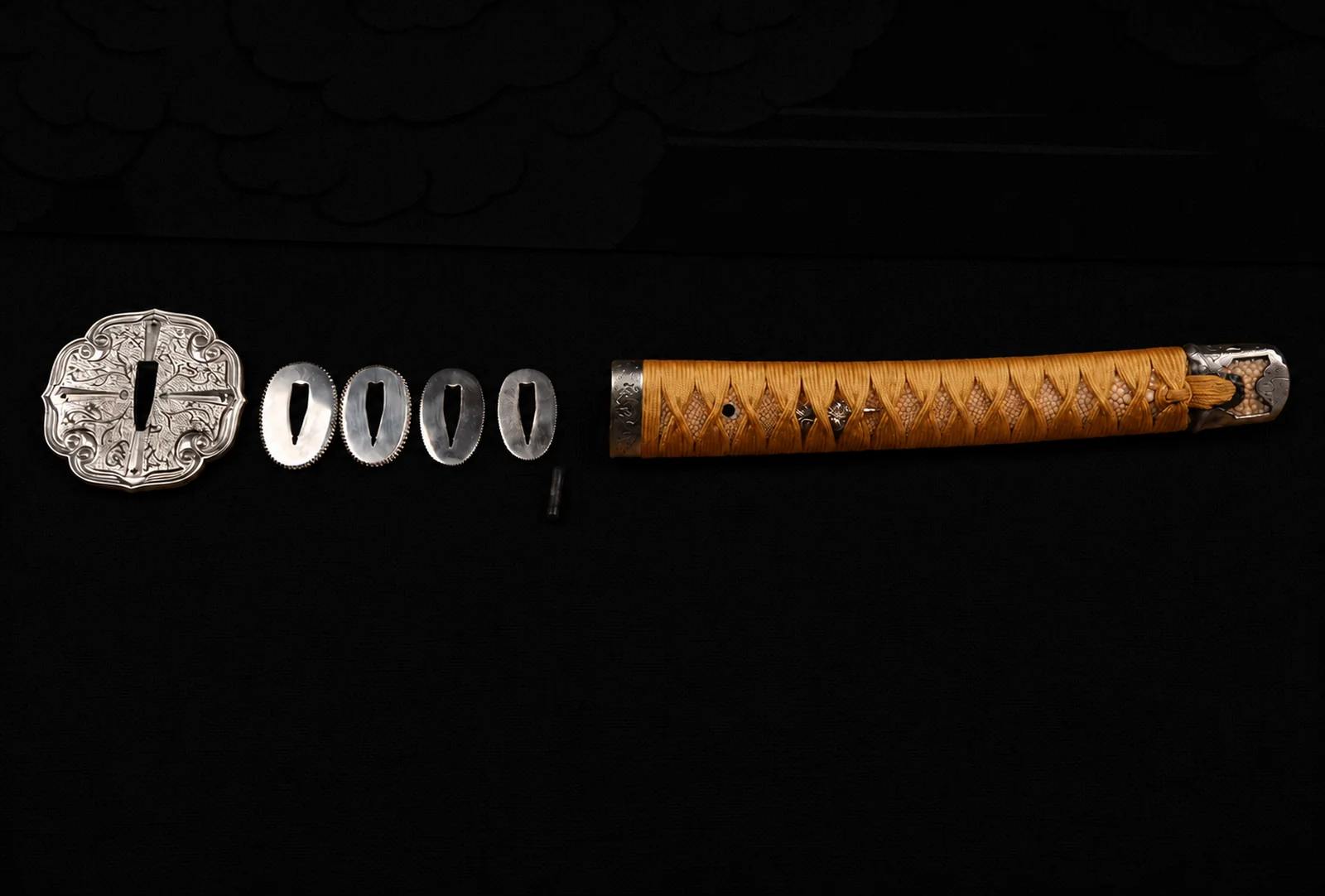
Matching seppa were made in slightly different sizes, allowing their edges to sit evenly around the guard and habaki. These small transitions are part of what makes the assembly feel complete.
01 / WRAP & STRUCTURE
The Rhythm of the Grip.
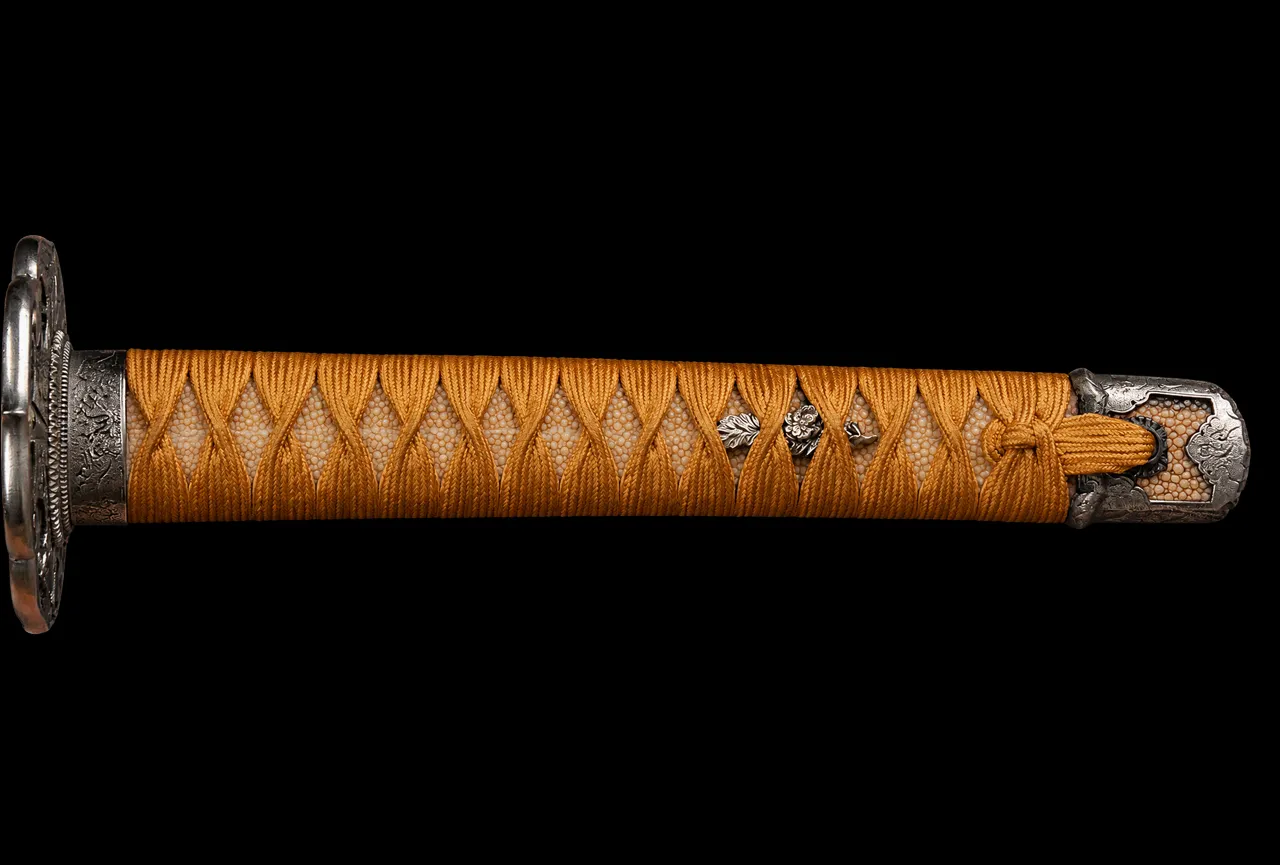
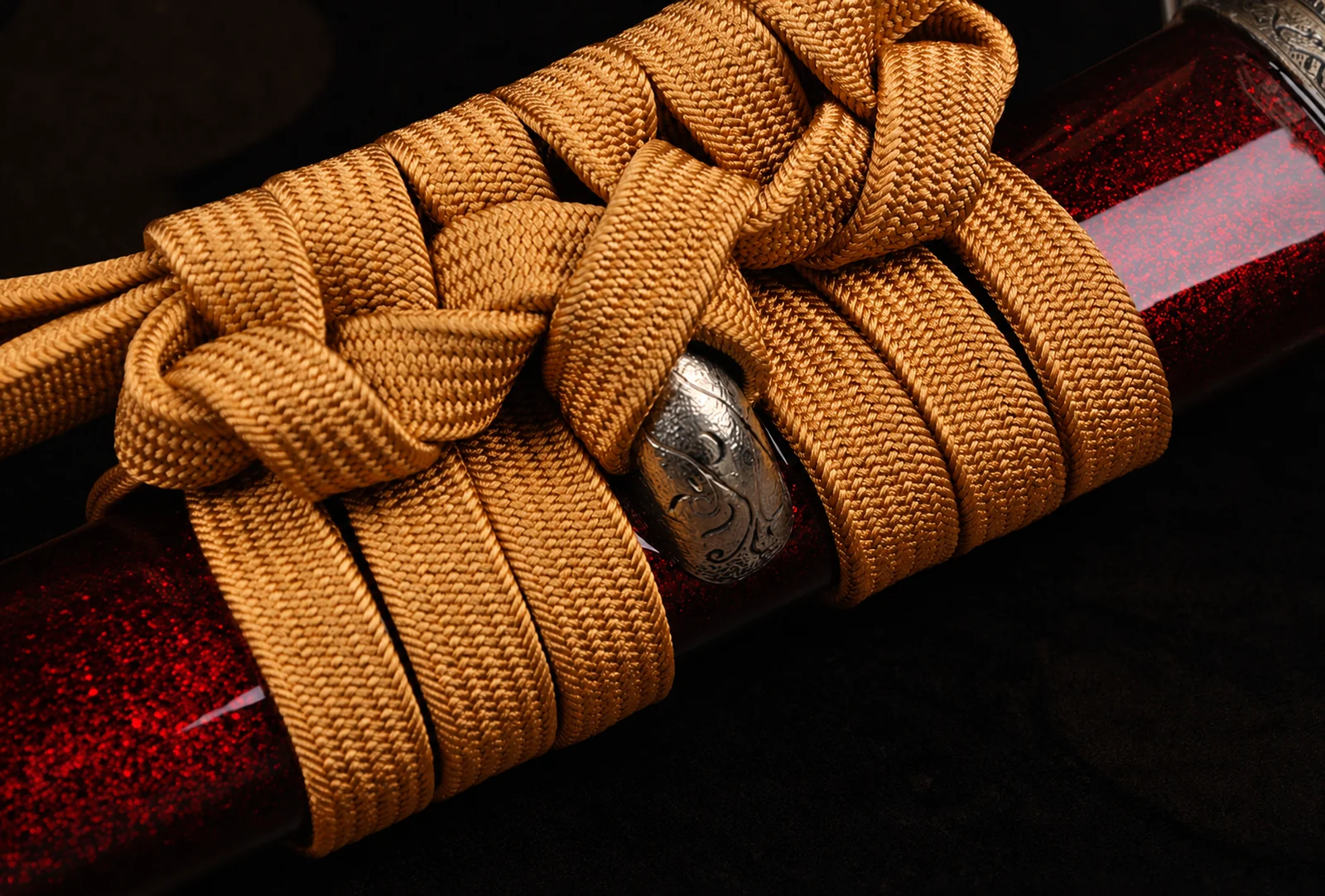
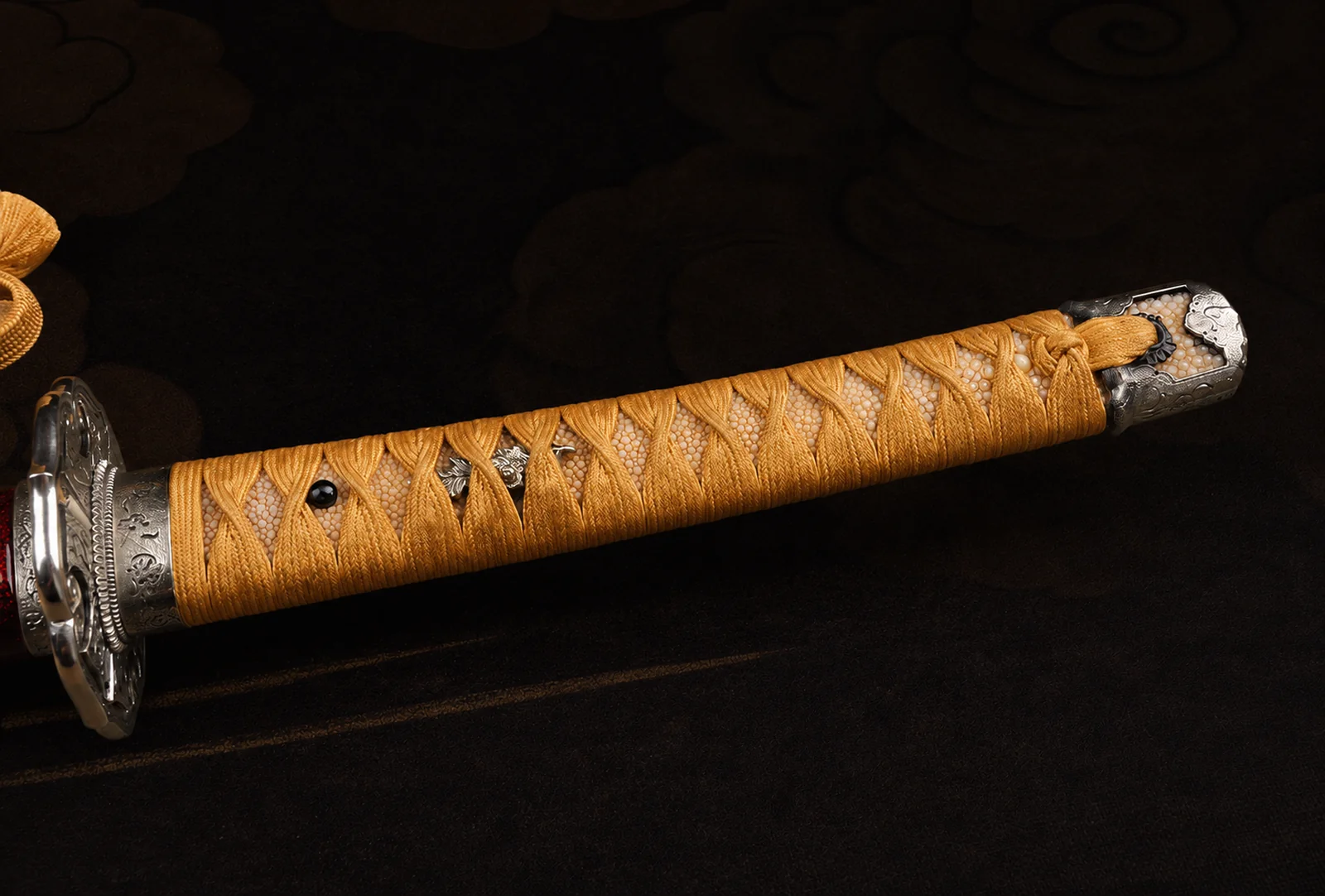
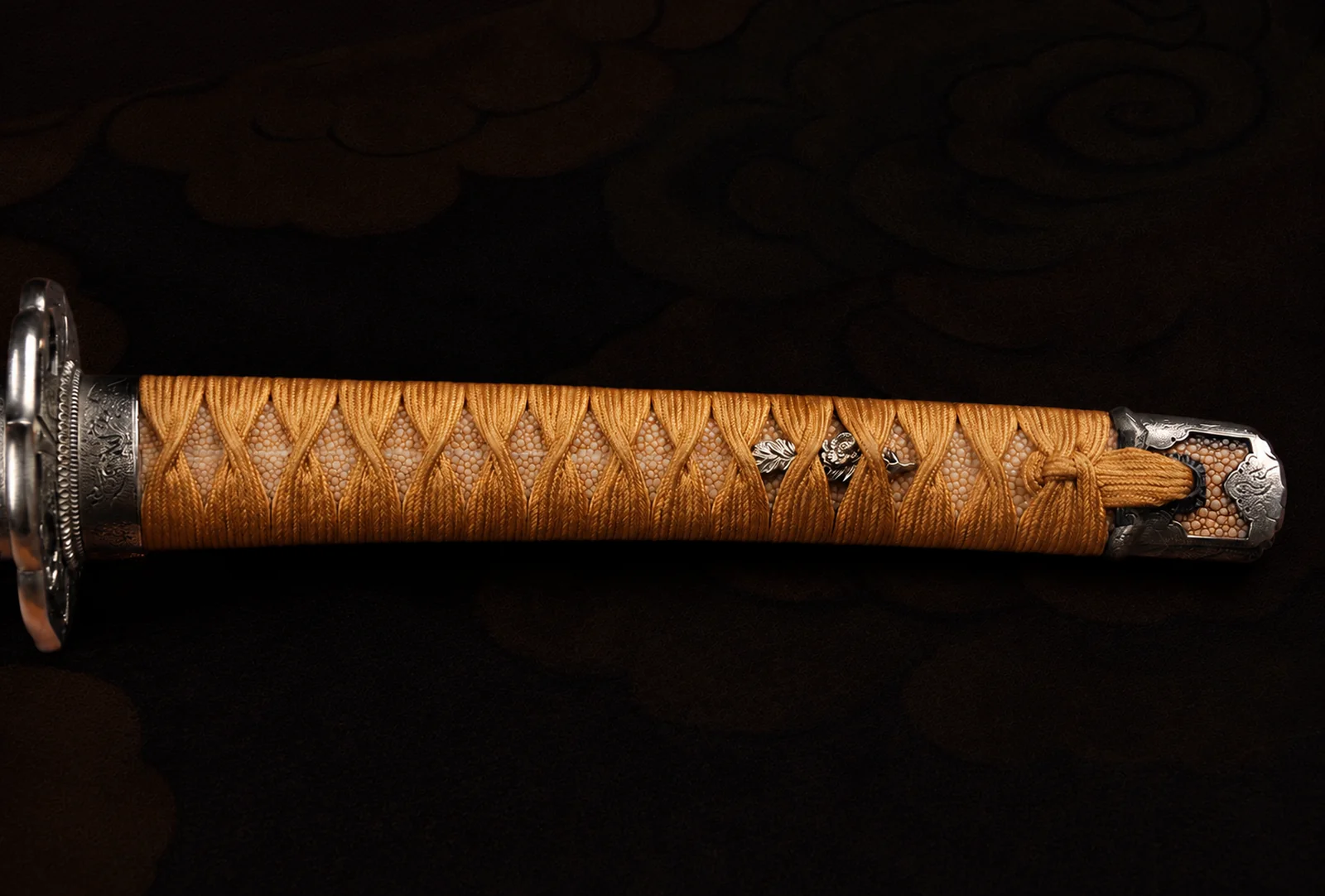
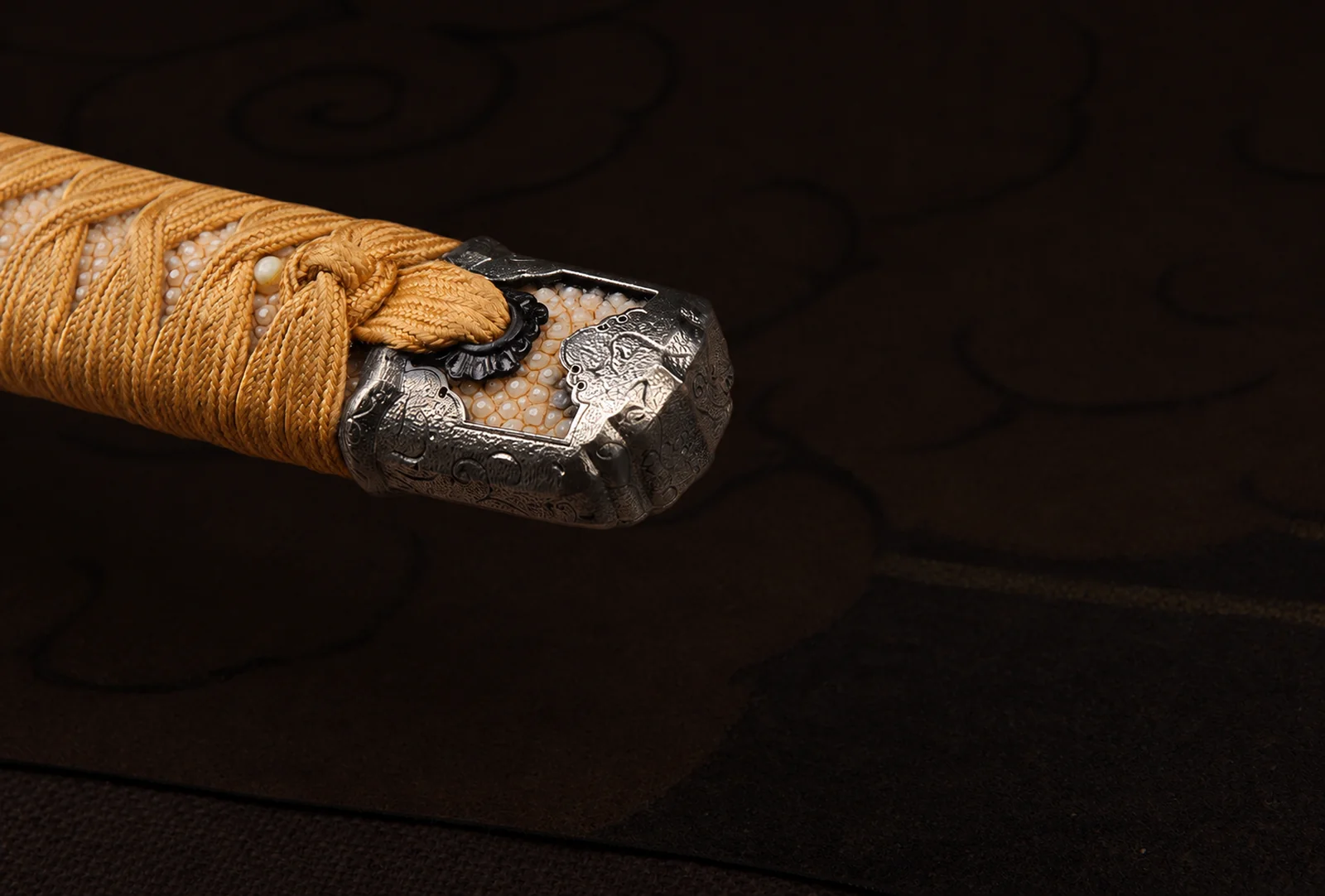
A sequence of tight diamonds shapes the tsukamaki. Between the crossings, the texture of samegawa and the small metal menuki become part of the design.
The photographed handle shows a premium silk wrap with full ray-skin covering. These details are available as a selected upgrade; the standard configuration has its own carefully fitted wrapping.
02 / LACQUER & TERMINAL FITTINGS
Red Beneath the Metal.
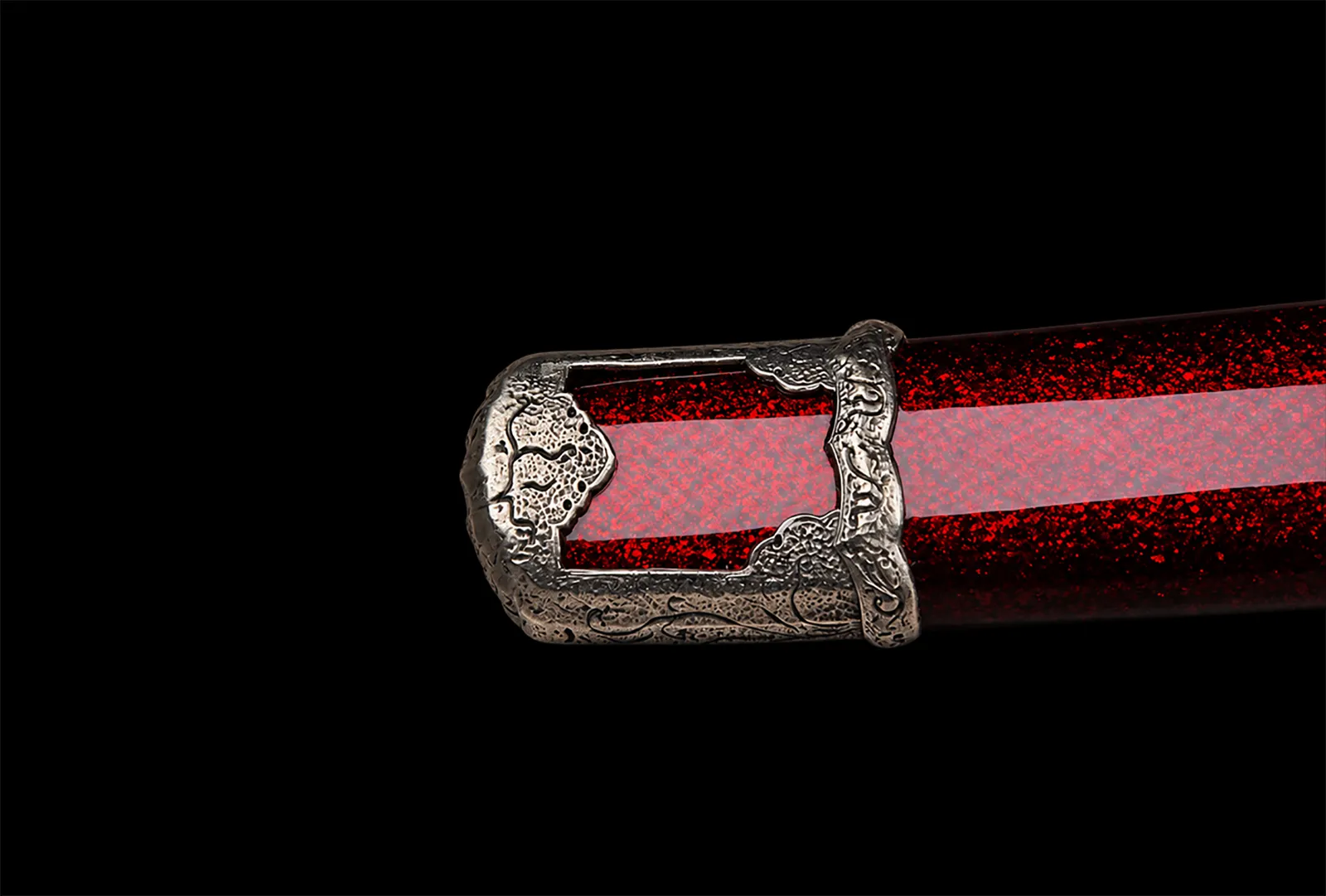
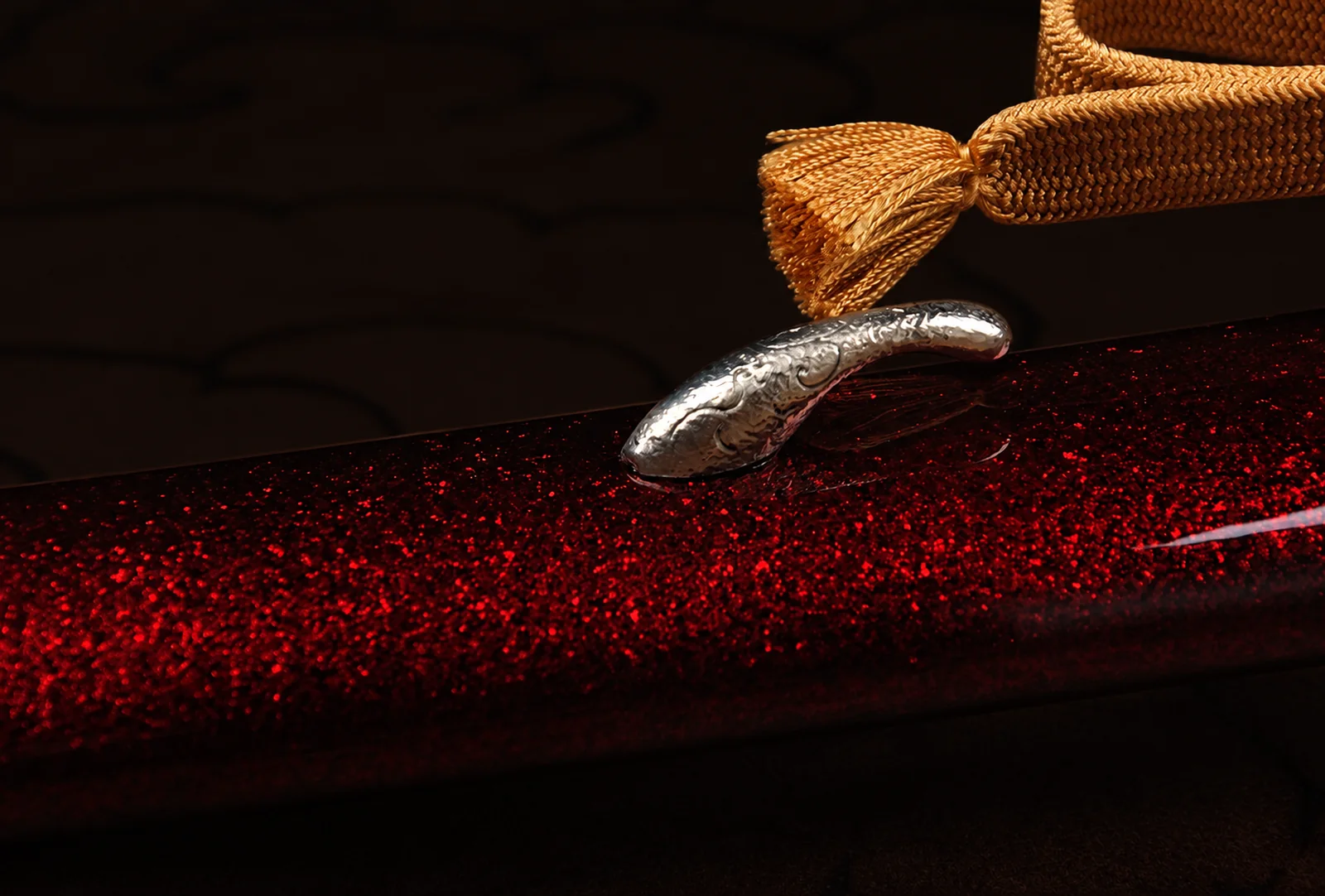
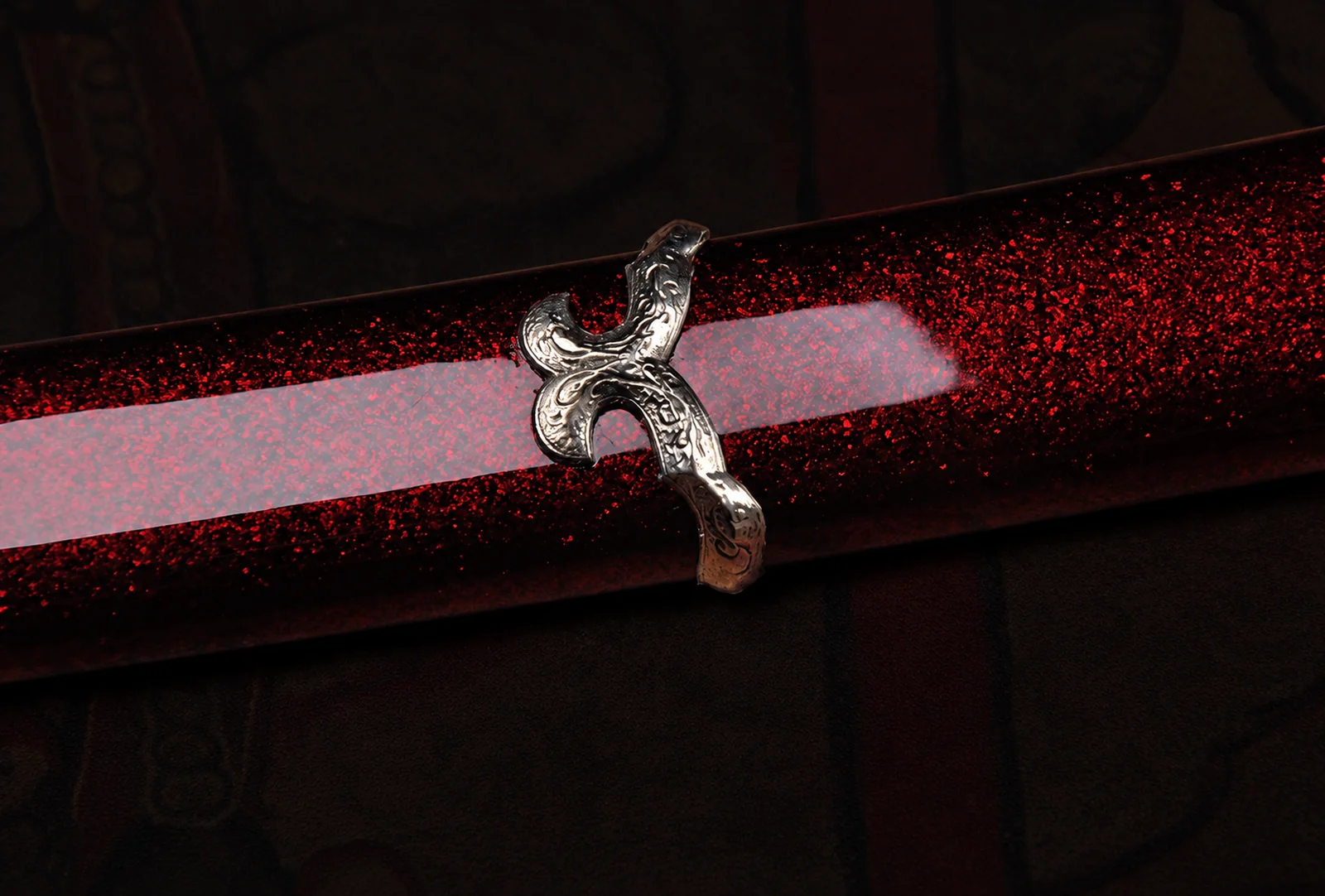
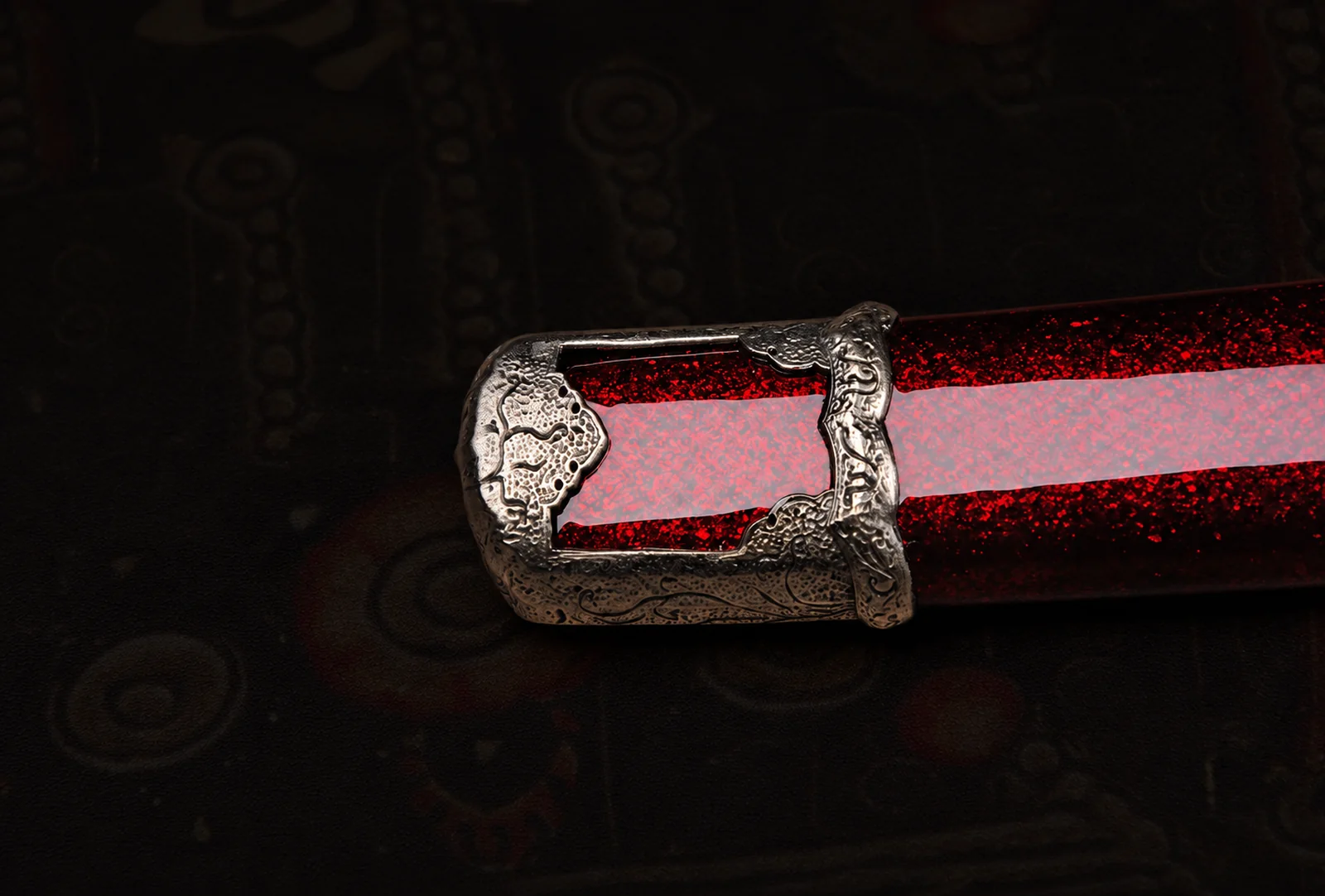
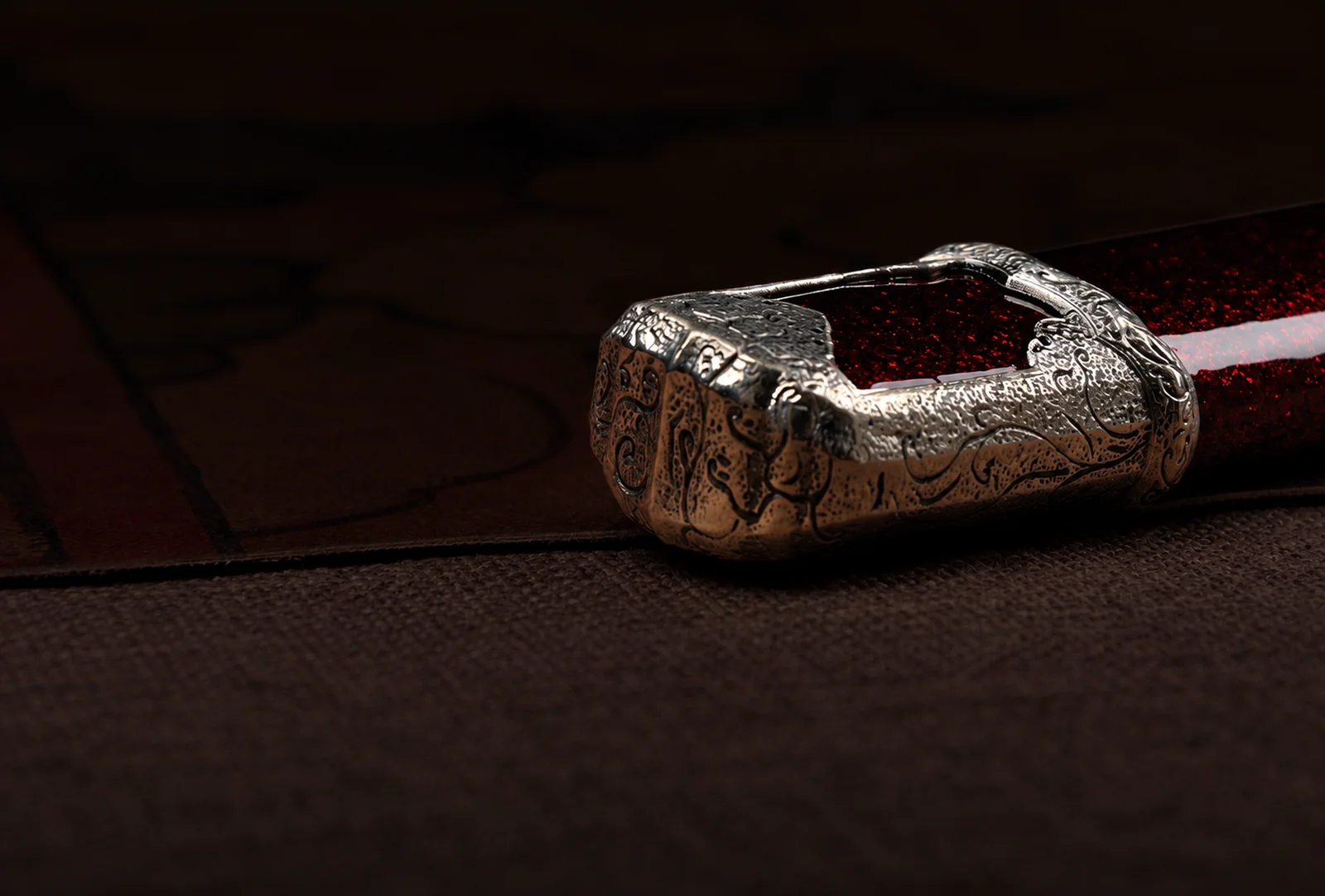
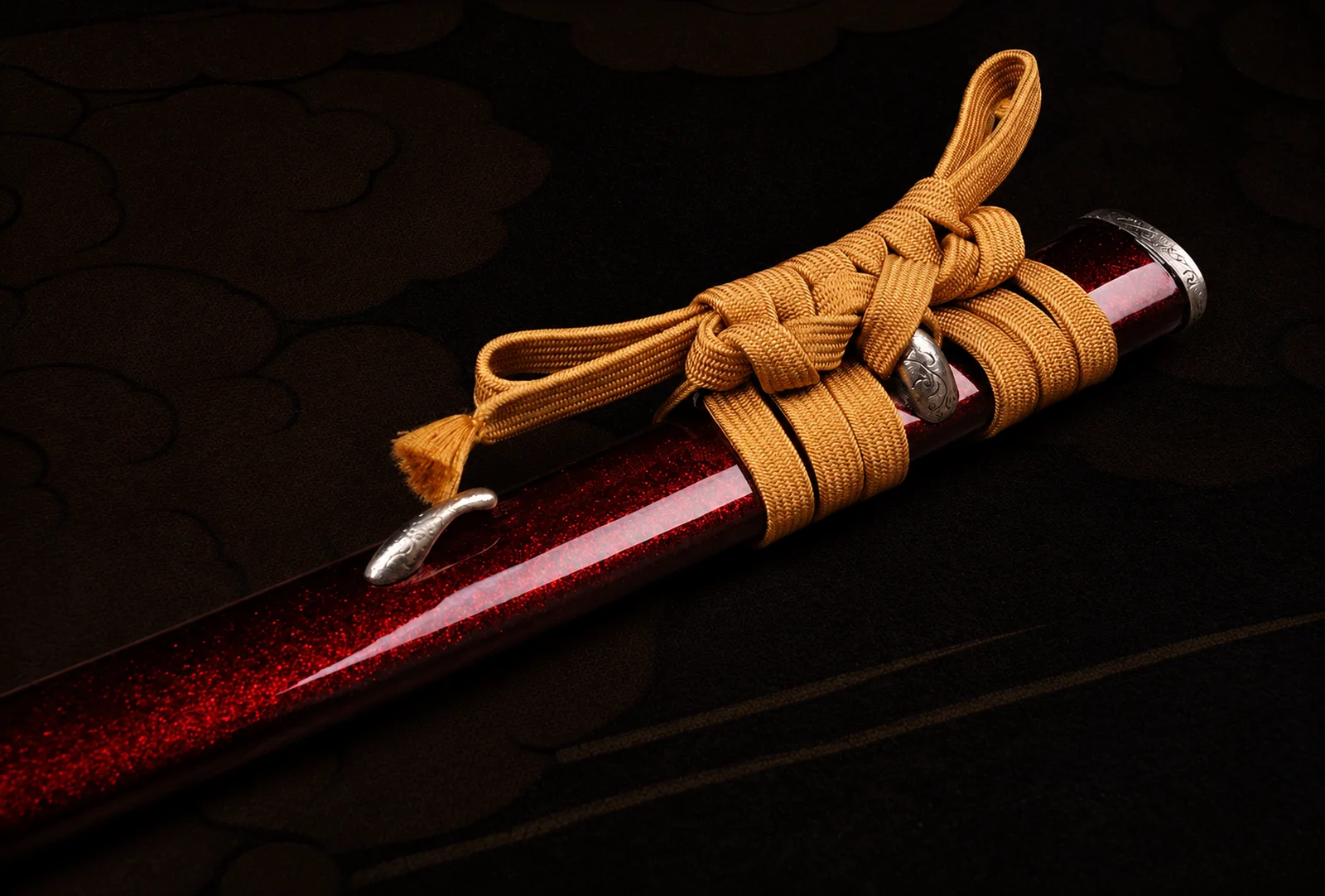
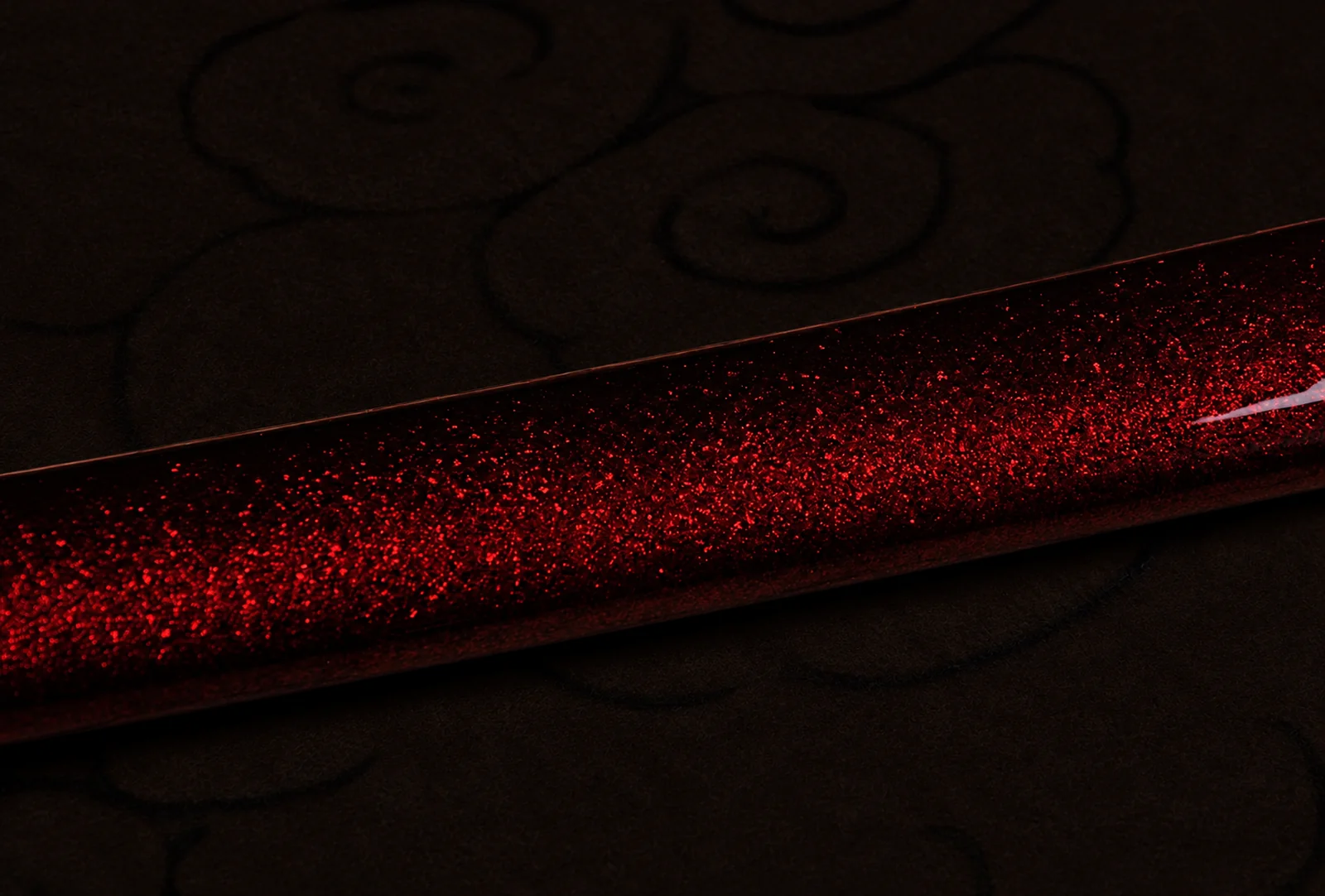
The deep red-gold, nashiji-style finish gives the saya a quiet depth against the silver-toned metal fittings. At the end of the scabbard, the ornamental kojiri carries the same decorative language as the rest of the mounting.
03 / THE STEEL SURFACE
Lines Beneath the Light.
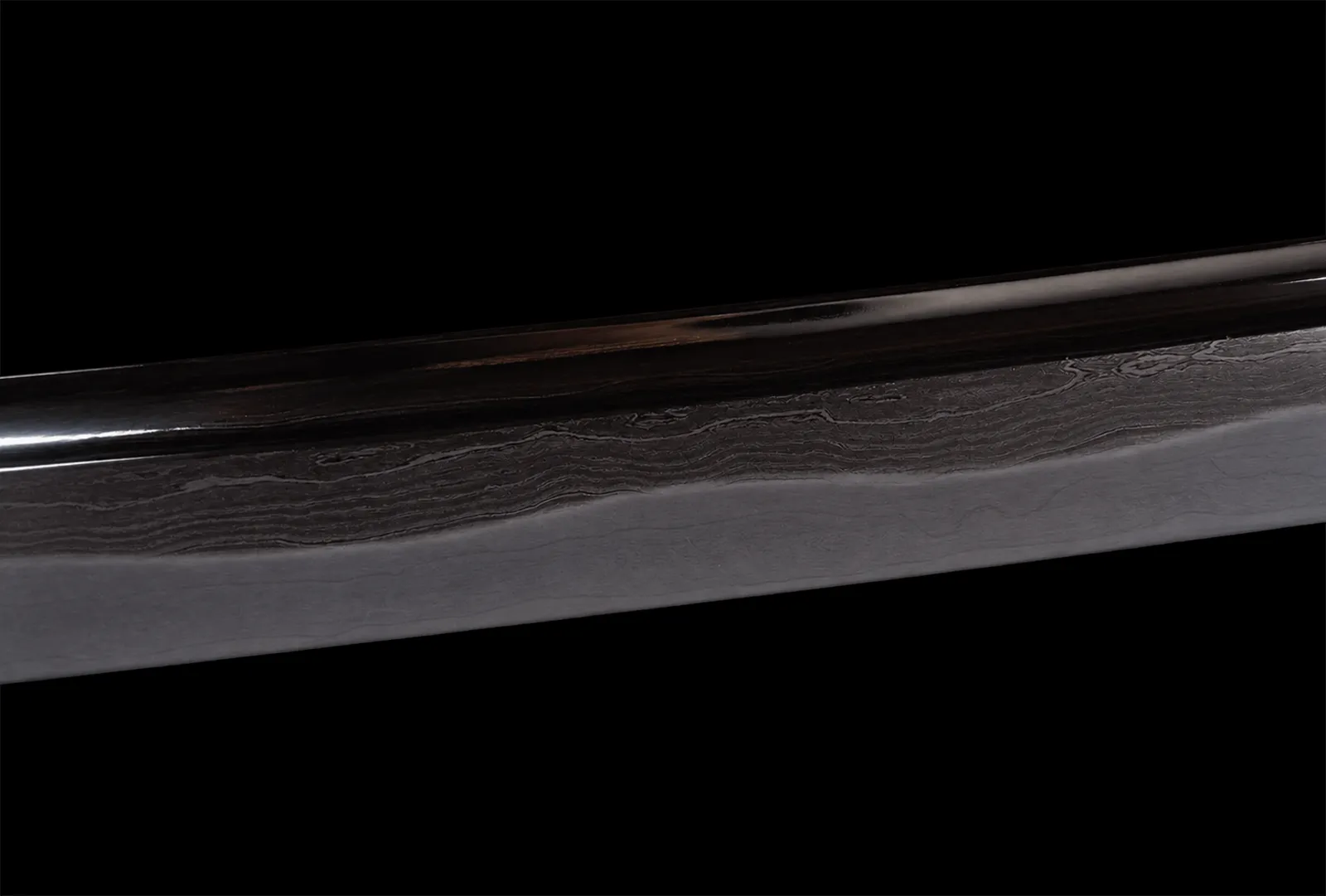
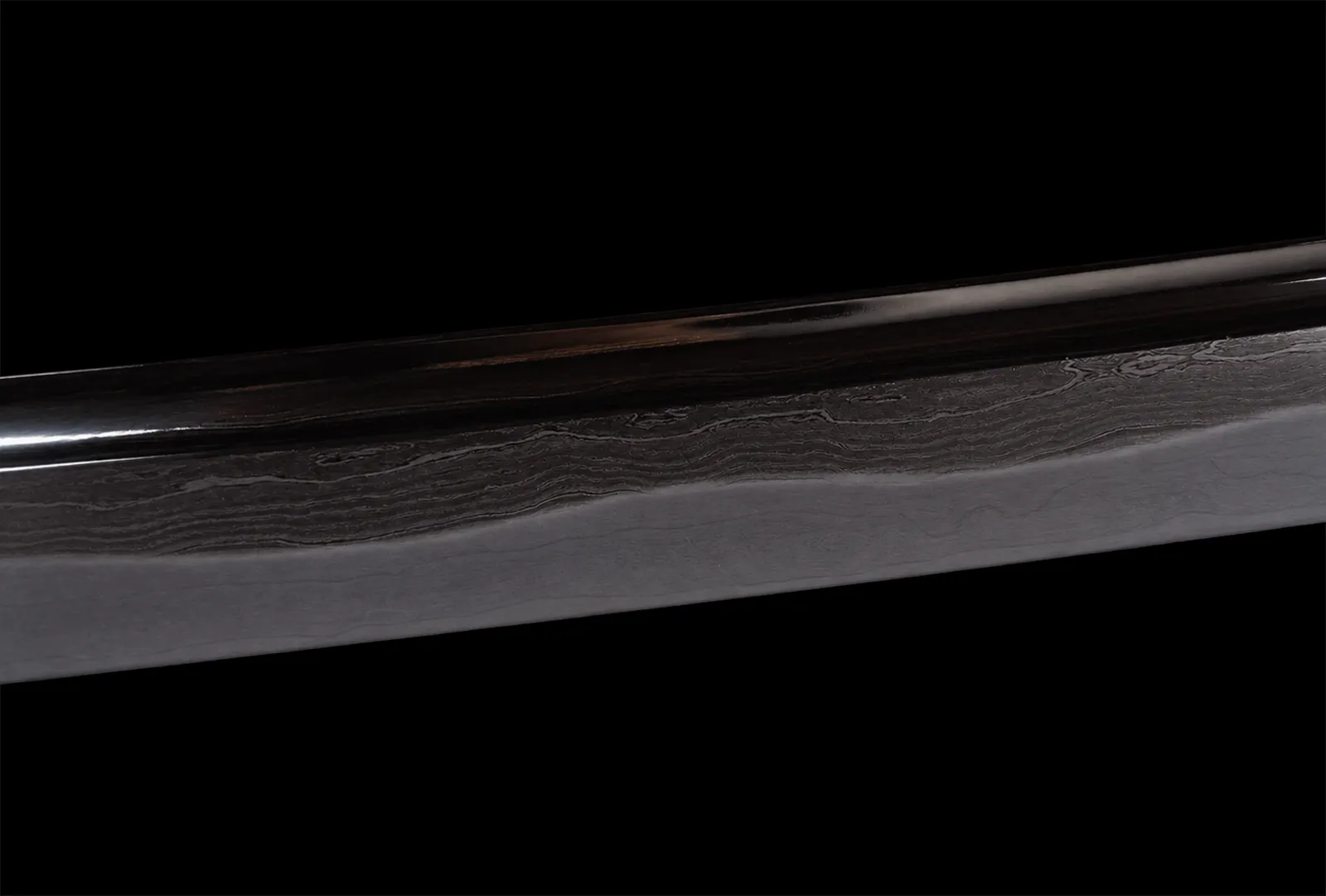
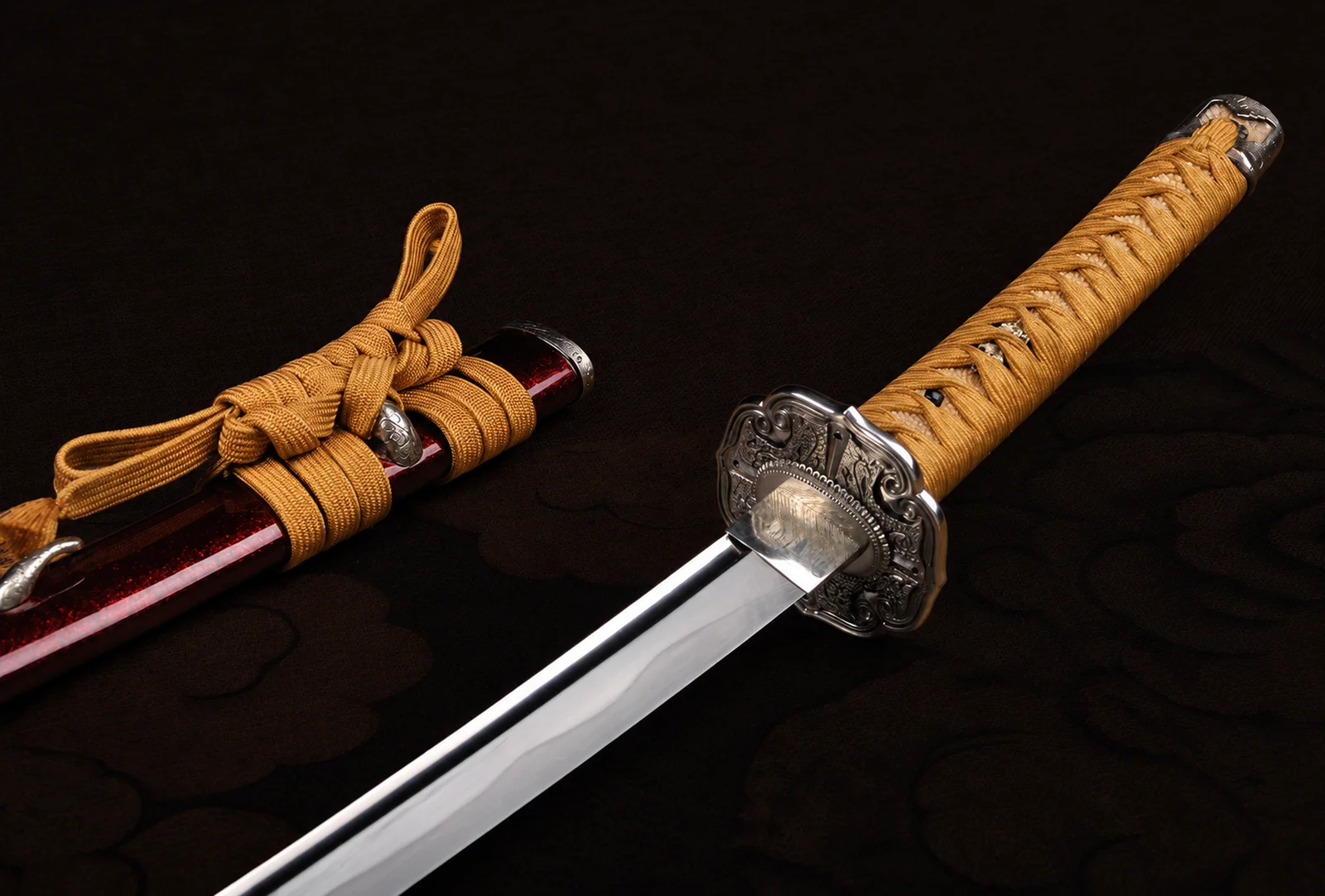
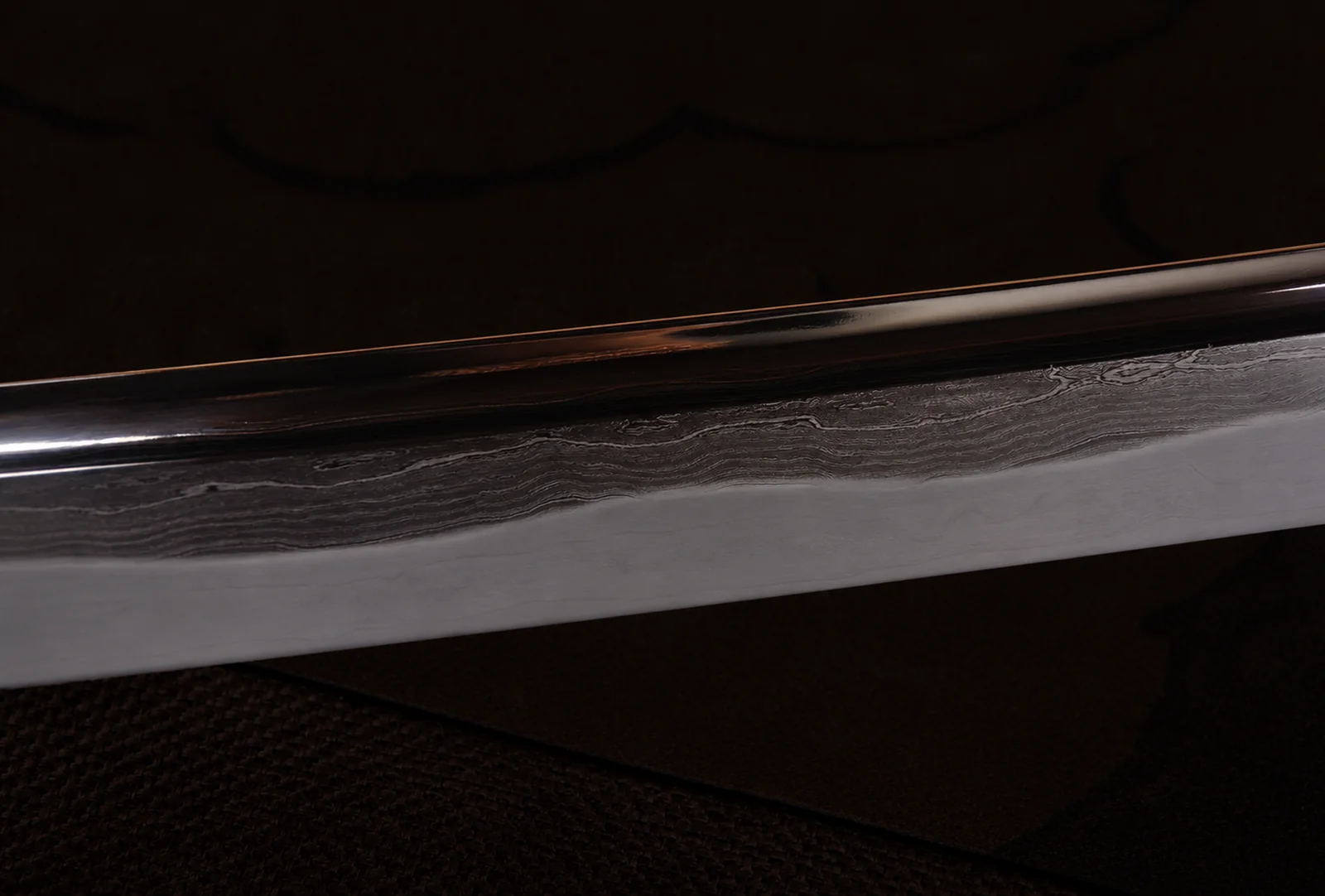
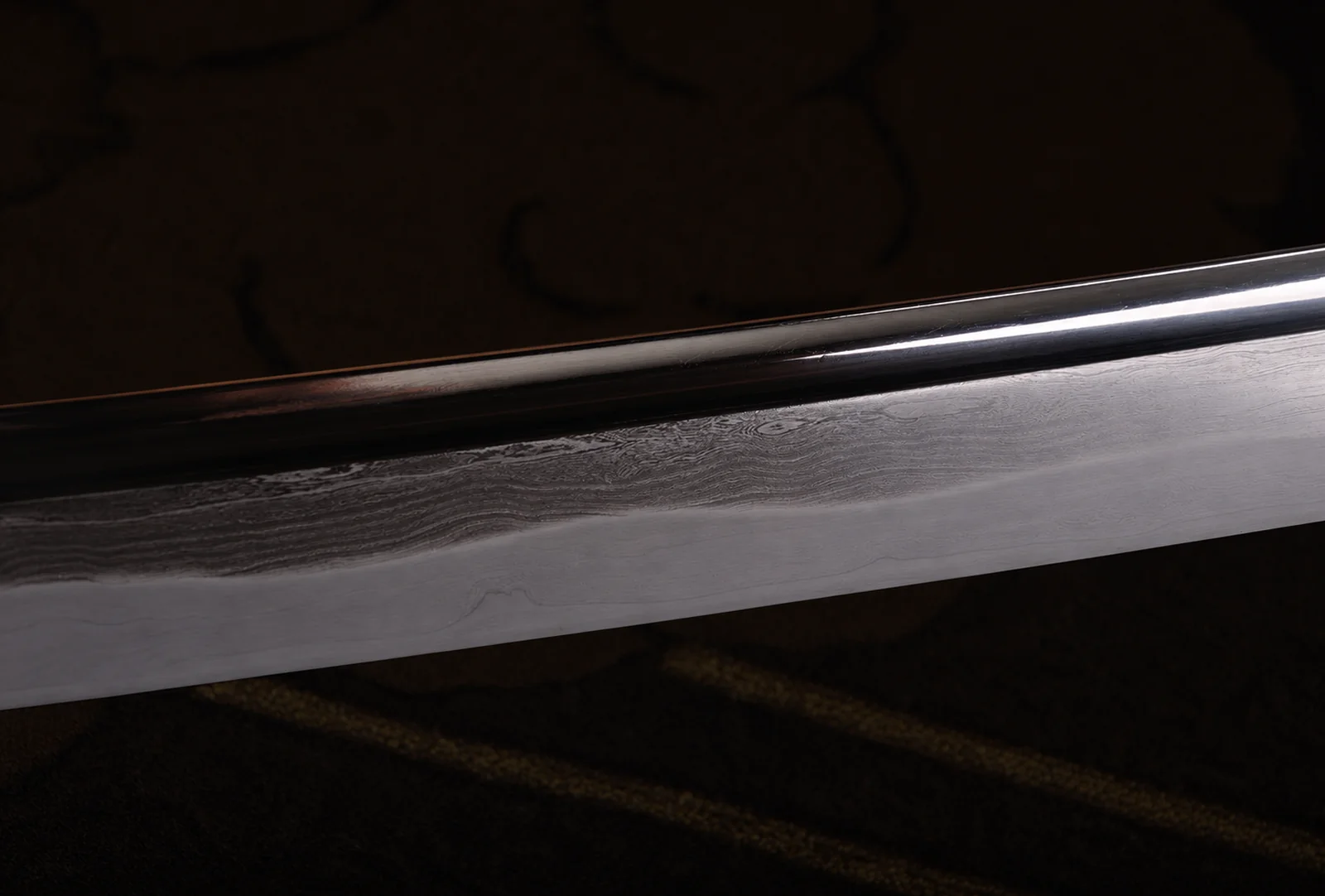
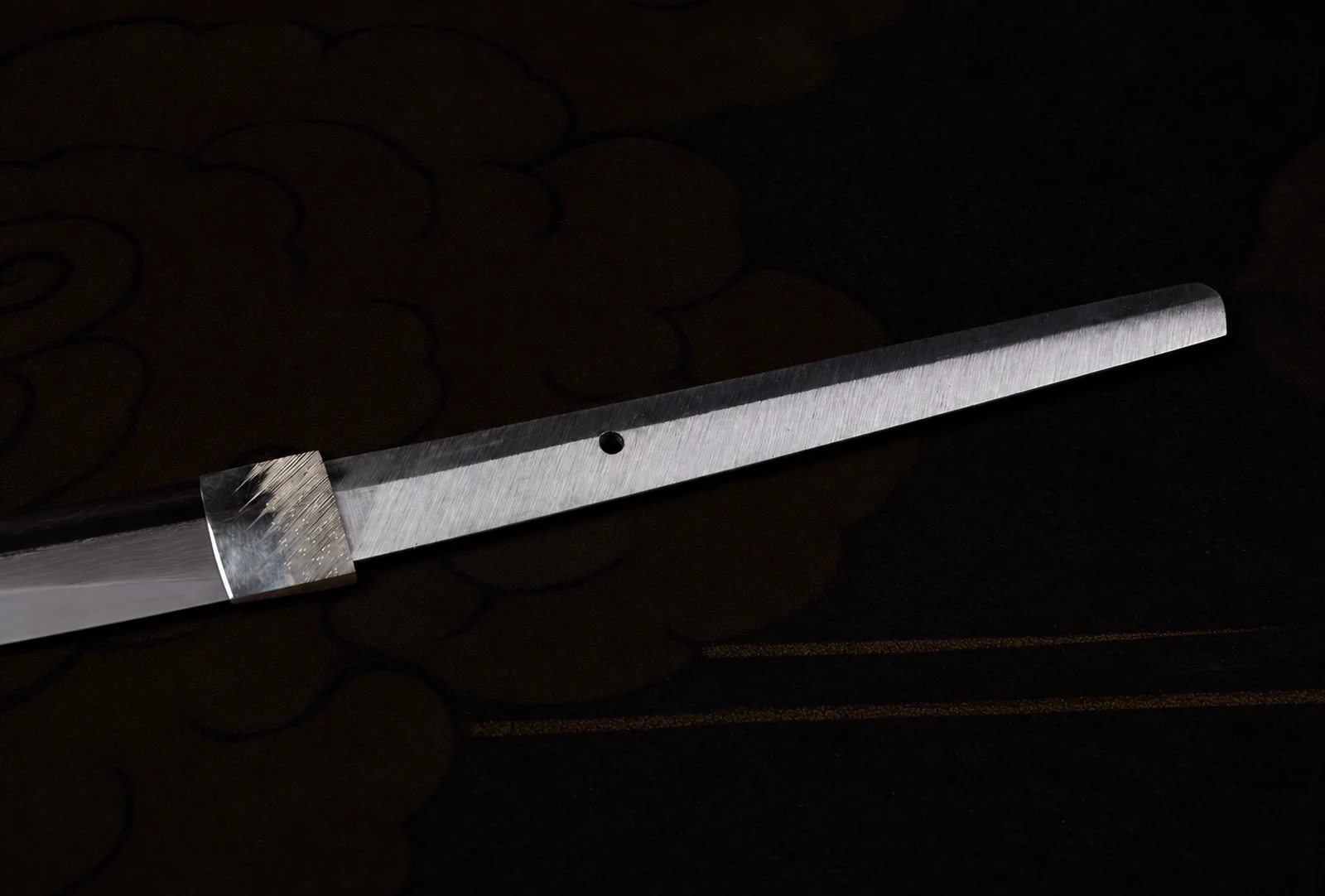
The blade is made with sanmai construction and finished with a fine white polish. In these two close views, subtle bands and shifting textures appear beside the cleaner plane of the cutting edge.
Across the blade, the fine surface lines shift with the light. The polish makes these subtle transitions visible while preserving the calm, defined appearance of the cutting edge.
04 / FINISH & REFLECTION
A Quieter Kind of Detail.
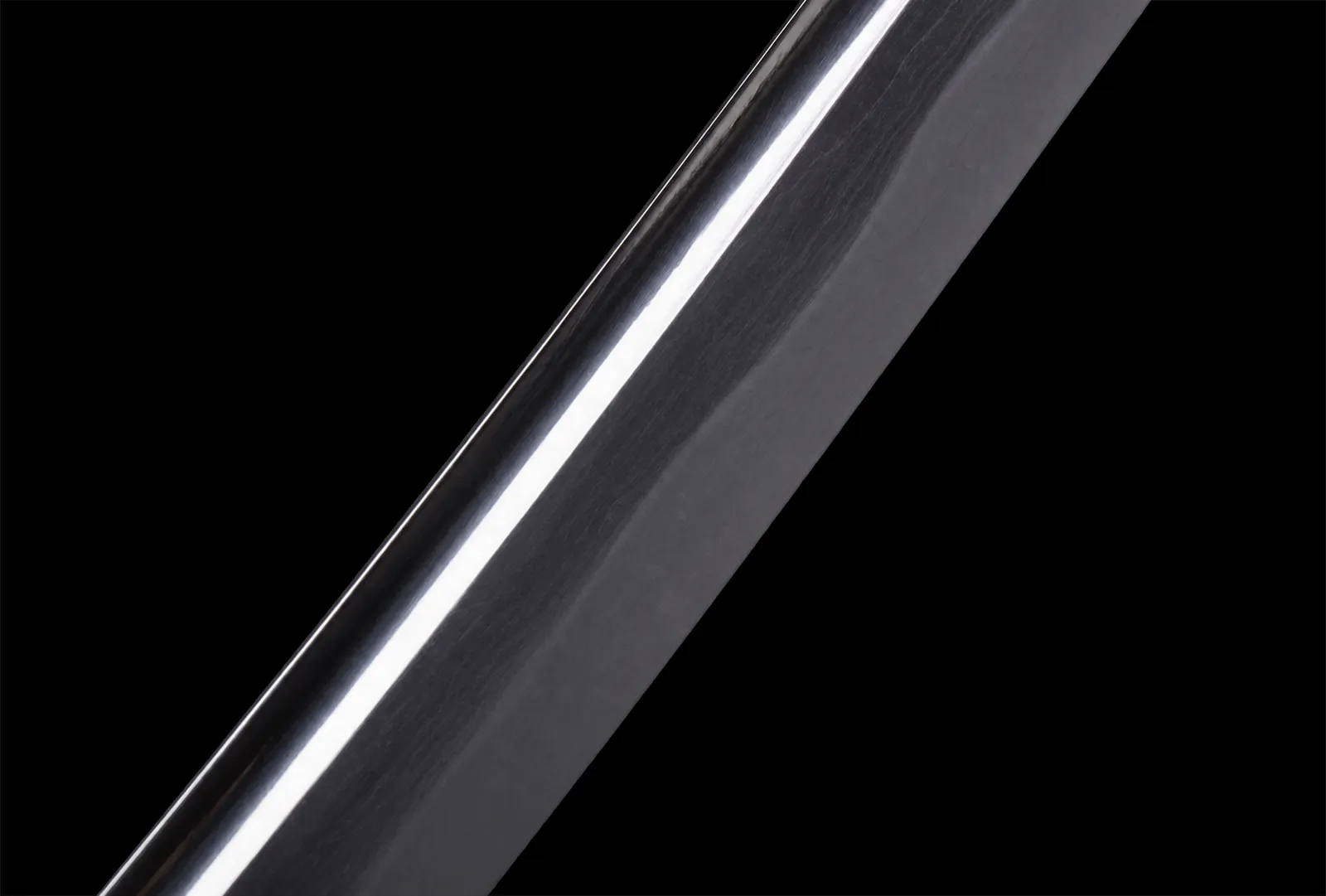
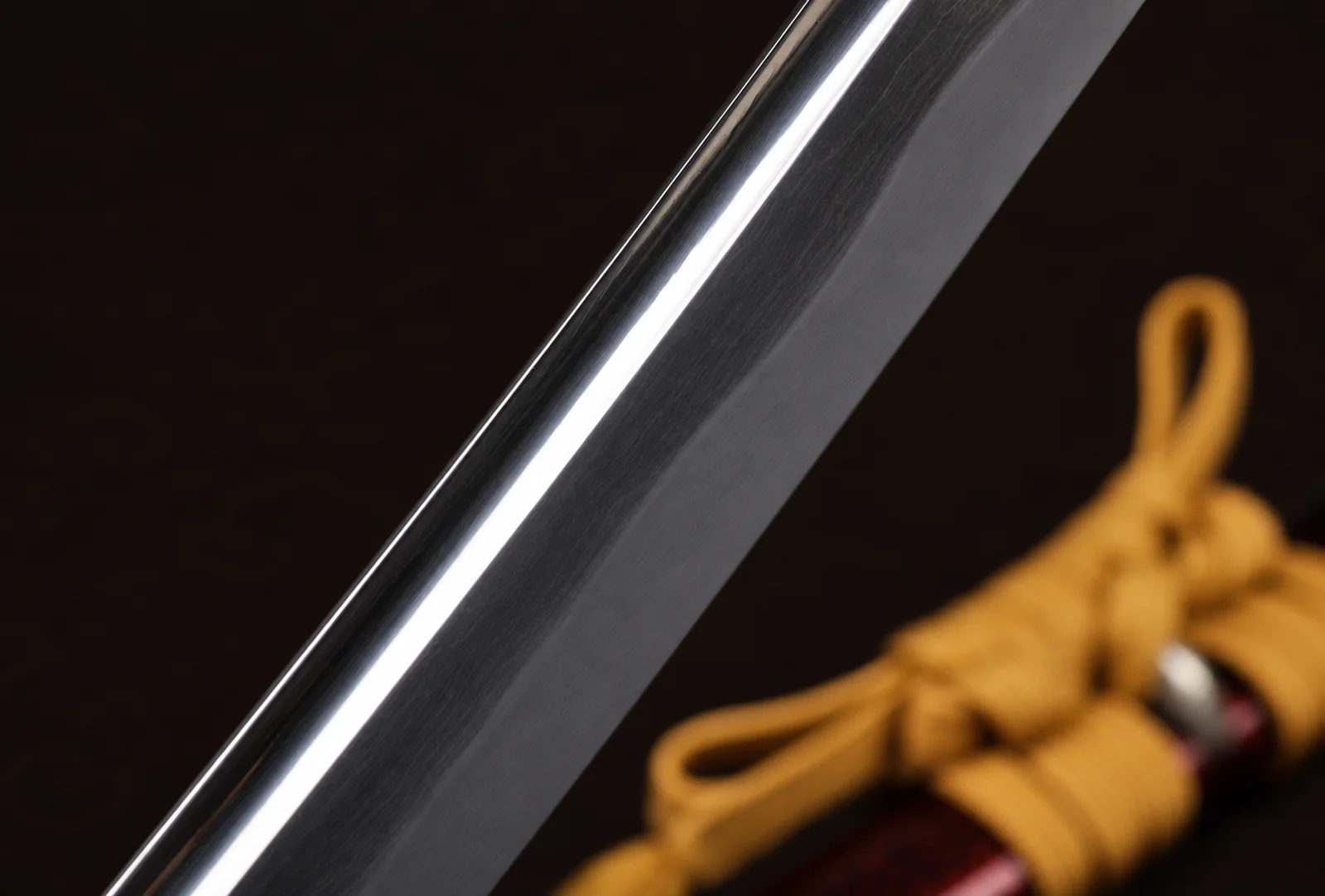
Here the blade's polished plane takes over from the decorated fittings. One narrow highlight follows the steel, revealing the controlled change between reflective surfaces and softer, satin-like areas.
From the ornate karakusa guard to the quiet finish of the blade, the design moves between intricacy and restraint.
The character of a handachi mounting lives in its smallest connections: the curve of a fitting, the rhythm of the wrap, and the measured line of the blade.
NEXT / THE FINISHED SWORD — PROPORTION & PRESENCE
STORY 03 / THE COMPLETE SWORD
A Sword, Seen in Full.
From the first line of the red saya to the sculpted karakusa fittings, this handachi mounting invites a slower look. The gallery moves through the complete sword, its surfaces and its smallest fittings.
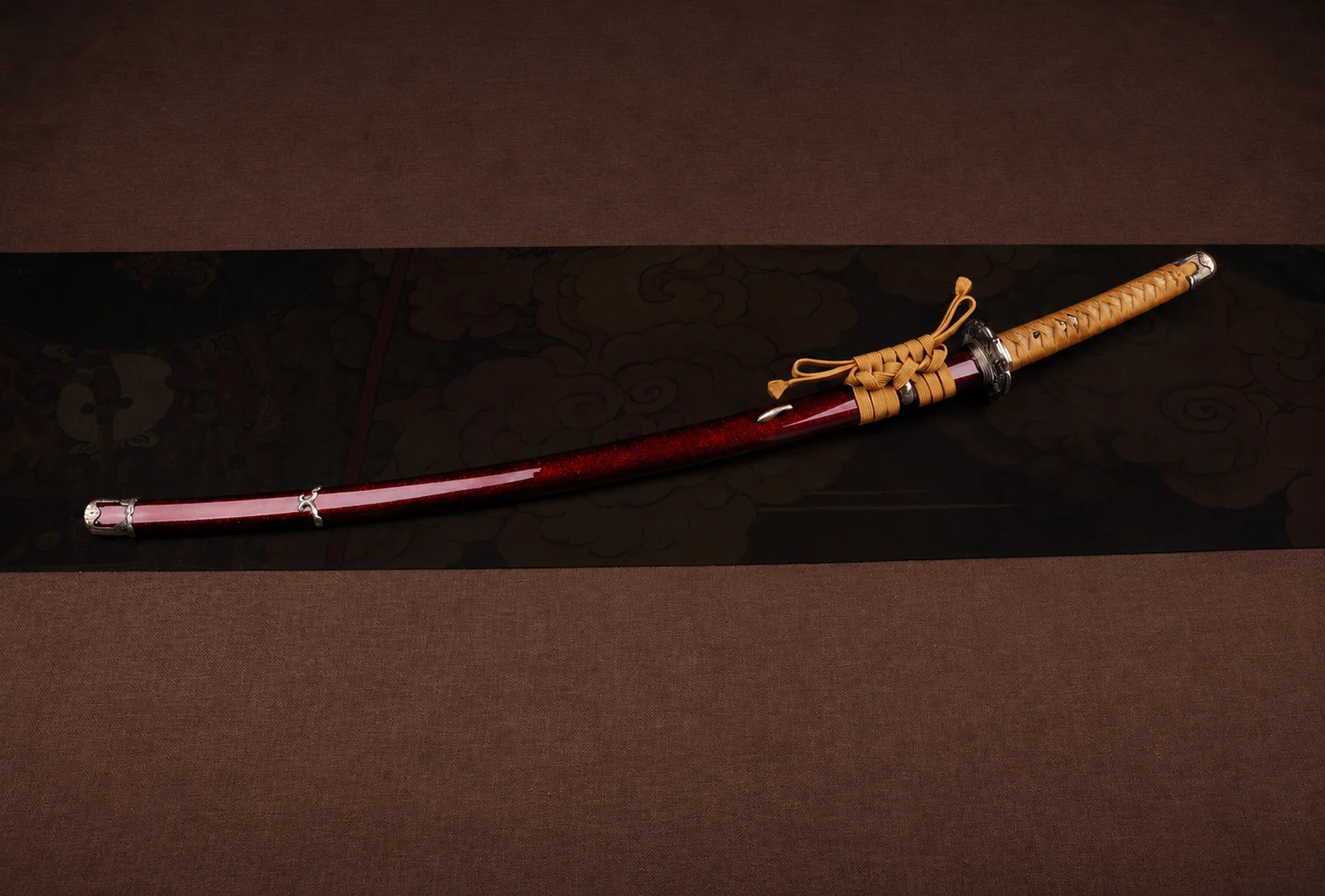
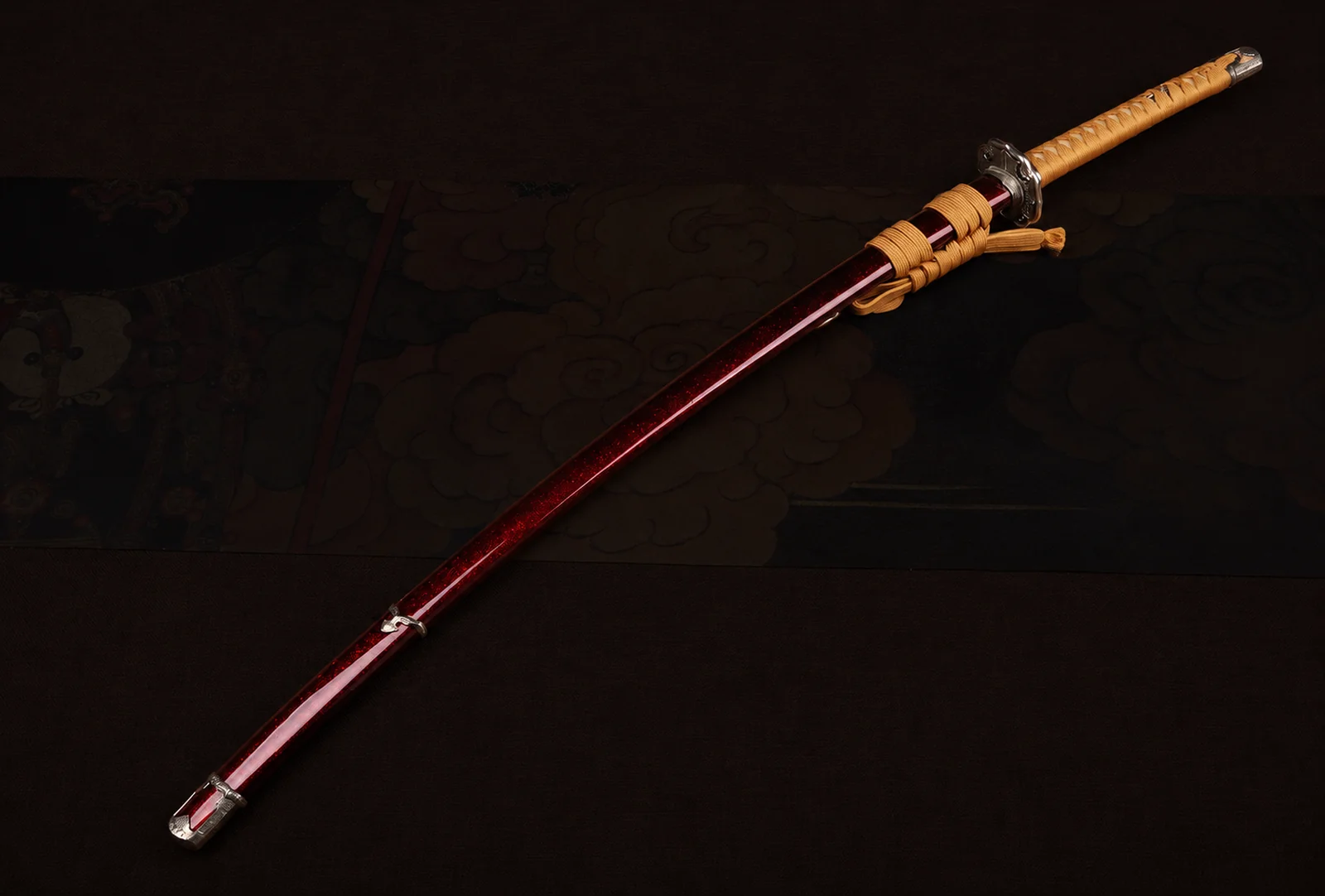
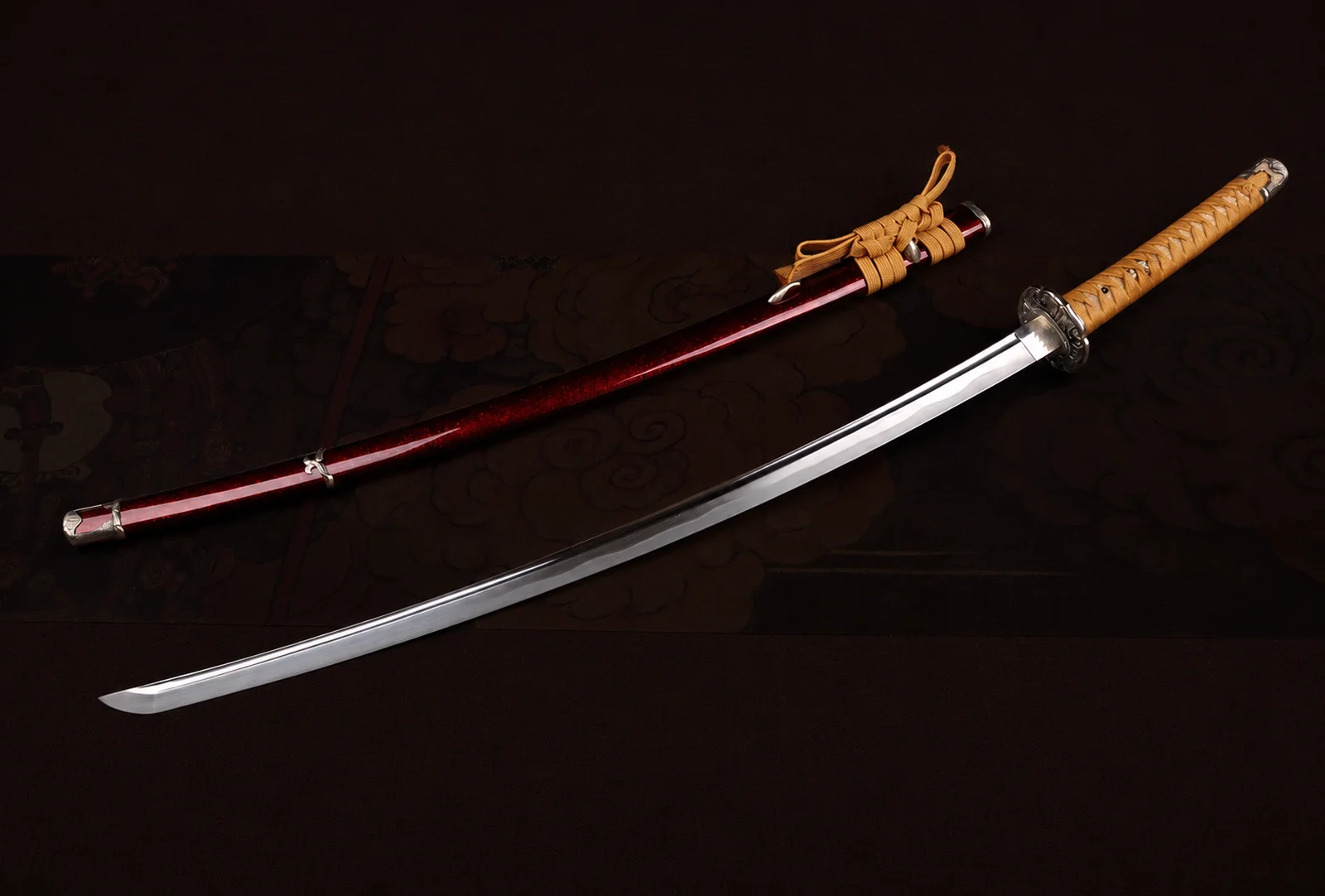
02 / THE HANDACHI MOUNTING
The Mounting at Close Range
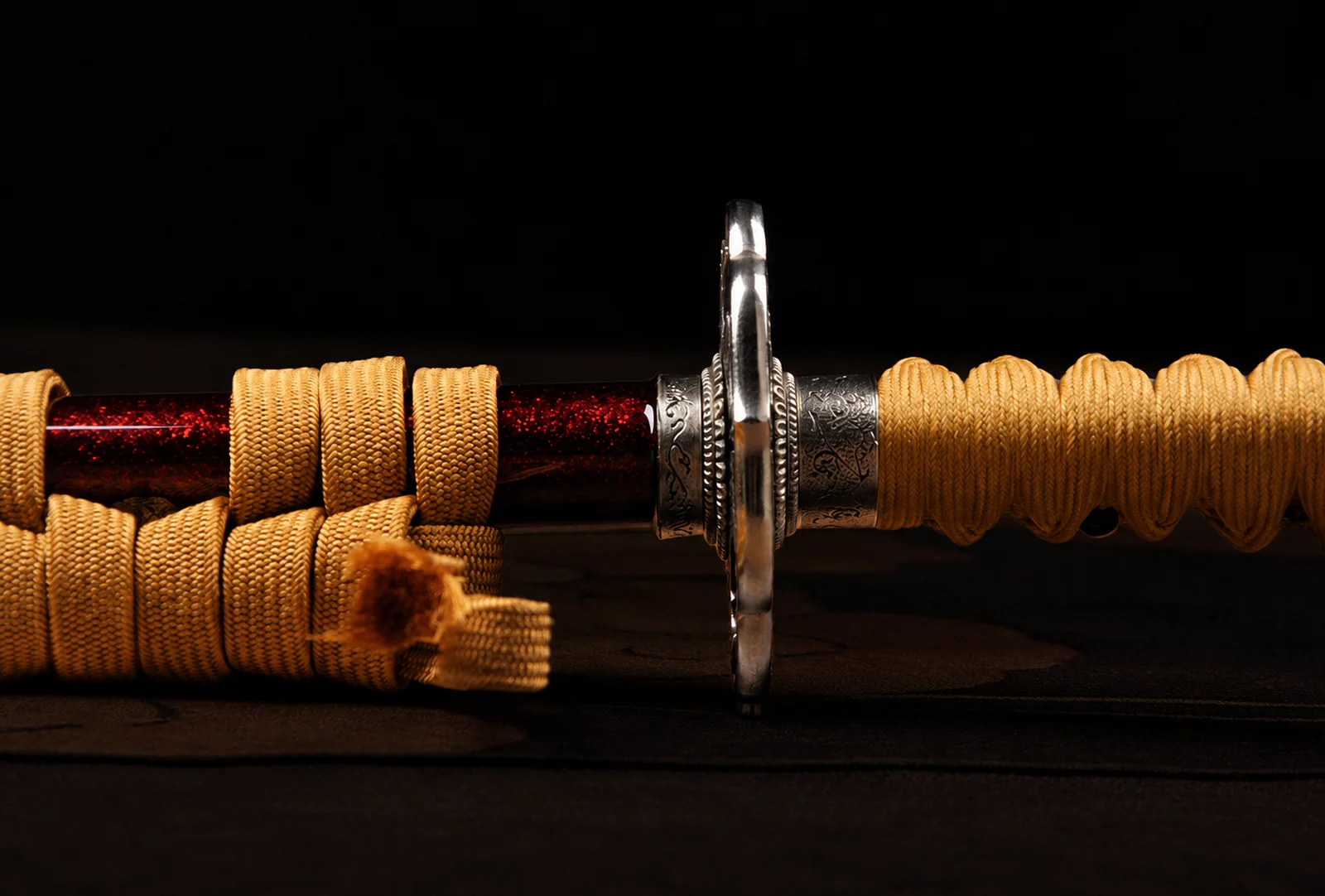
The cord, scabbard opening and decorated metal fittings each carry part of the koshirae design. Close views reveal how the repeated shapes move from the guard to the end of the saya.
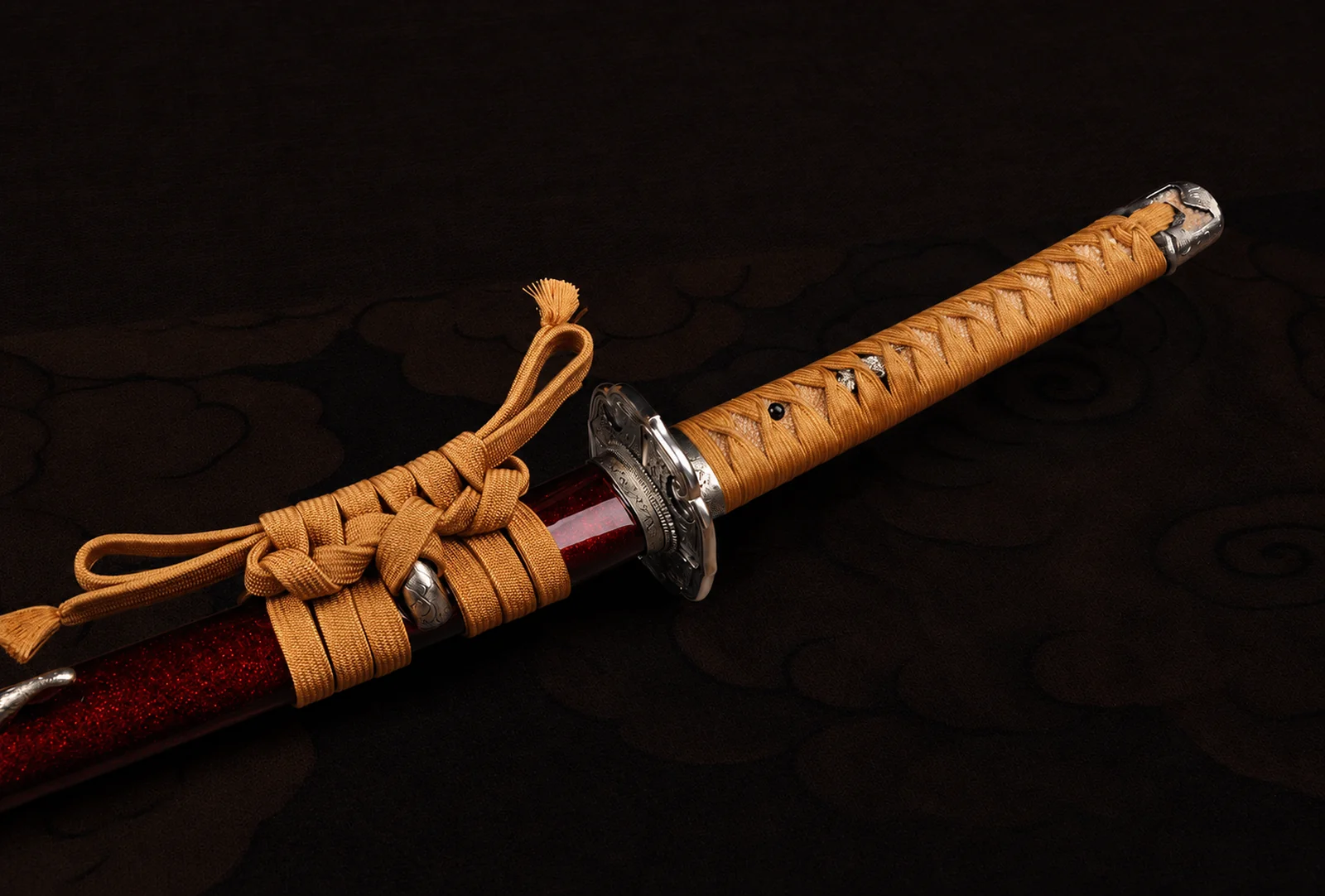
03 / THE HANDLE & FITTINGS
The Work of the Hand
The golden wrapping, textured samegawa and relief metalwork give the grip its own rhythm. These photographs show the detailed handle configuration pictured for this piece.
04 / THE BLADE
Steel in Changing Light
At the blade base, the habaki meets the tsuba. Farther along the steel, polished planes and fine surface lines become visible as the light changes.
05 / LACQUER & SAYA DETAILS
Red, Up Close
The red-gold nashiji-style finish has a different presence at close range. The saya mouth, tied cord and lacquer surface are presented as individual details rather than background to the blade.
06 / BENEATH THE MOUNTING
The Pieces Apart
A final look moves beyond the assembled silhouette. The exposed blade tang and the separated fittings make the relationship between the blade and the mounting easier to see.
END OF THE GALLERY
The full form is made of individual details. Seen together, they give the Karakusa Handachi Katana its character.
The photographs show a selected mounting configuration. Available finishes and craftsmanship upgrades can be chosen in the product options above.
Rezensionen
Es gibt noch keine Rezensionen.