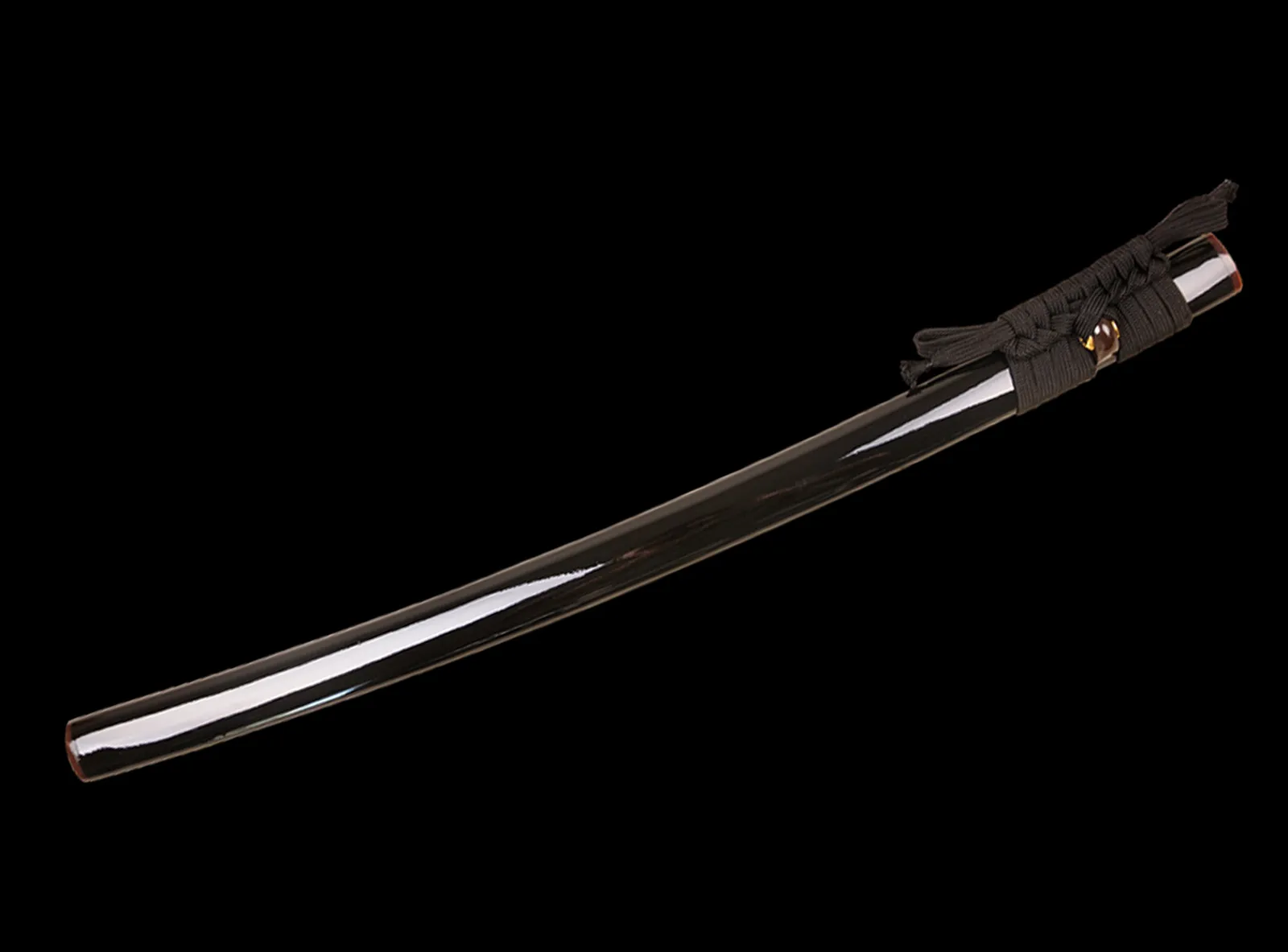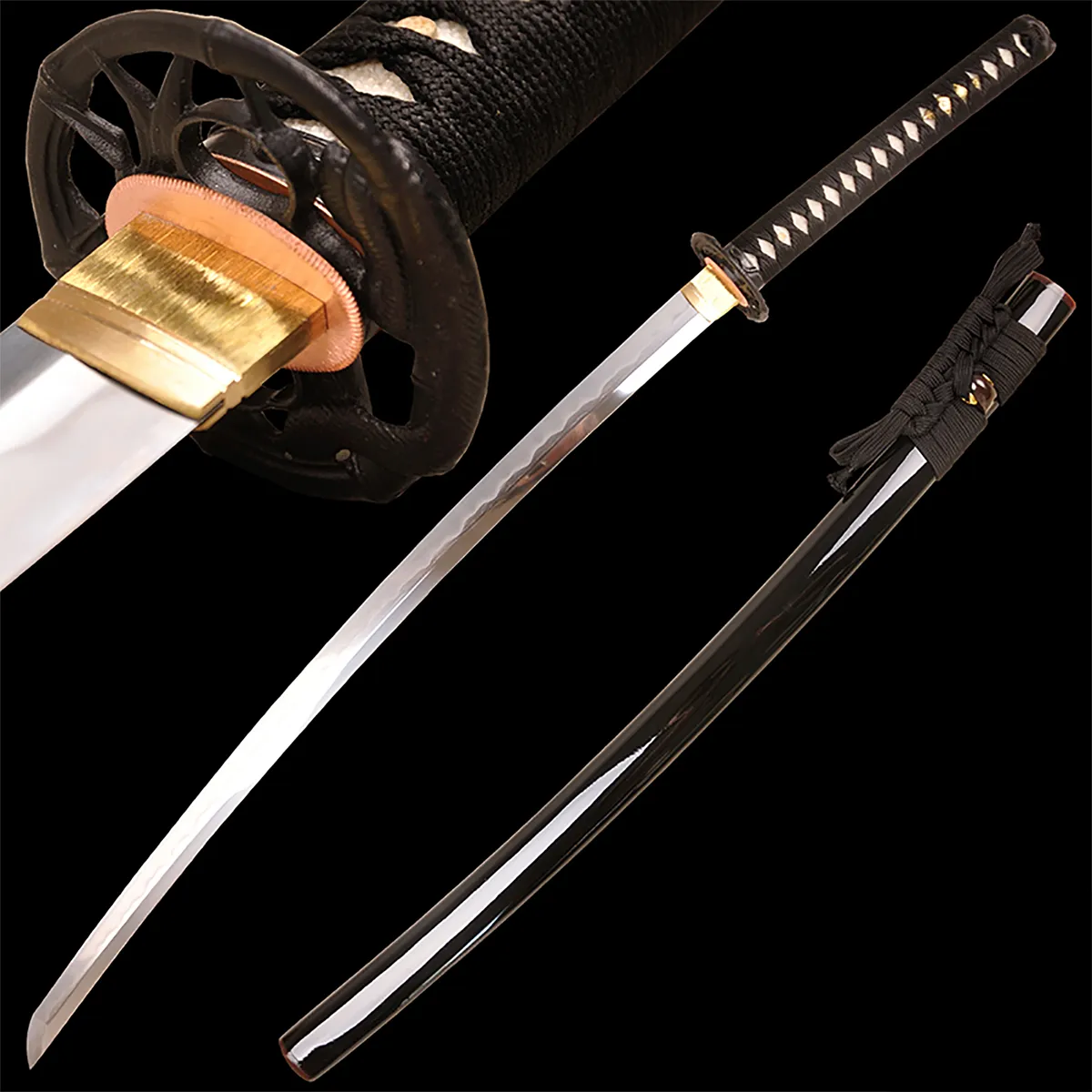
QUIET CRAFTSMANSHIP · LONGQUAN

Hada Sanmai Advanced-Polish Katana

¥2,123.00

CUSTOMIZE THIS KATANA
Each katana is configured individually.
Multiple katana purchases are placed as separate orders.

KATANA CUSTOMIZER

Customize Your Katana.

Choose from the configuration options available for this katana.

Technical Overview

Core specifications.

Nagasa
710 mm
Motohaba
32 mm
Motokasane
7 mm
Tsuka Length
250 mm
Overall Length
1010 mm
Weight without Saya
940 g
Weight with Saya
1190 g
Handmade product dimensions may vary slightly.
Blade & Craft

Blade craftsmanship.

Outer Steel
608 Patterned Steel (Further Folded)
Core Steel
T10 Carbon Steel
Construction
Sanmai Construction
Heat Treatment
Clay Tempering
Hamon
Clay-Tempered Hamon
Hamon Pattern
Gunome
Polish
Advanced Polish

Beschreibung

01 / BENEATH THE SURFACE

The Steel Beneath
the Surface.

Some blades reveal their character in a single glance. Others ask us to look closer. Beneath this katana’s polished surface, folded outer steel and a distinct core come together in a Sanmai construction.
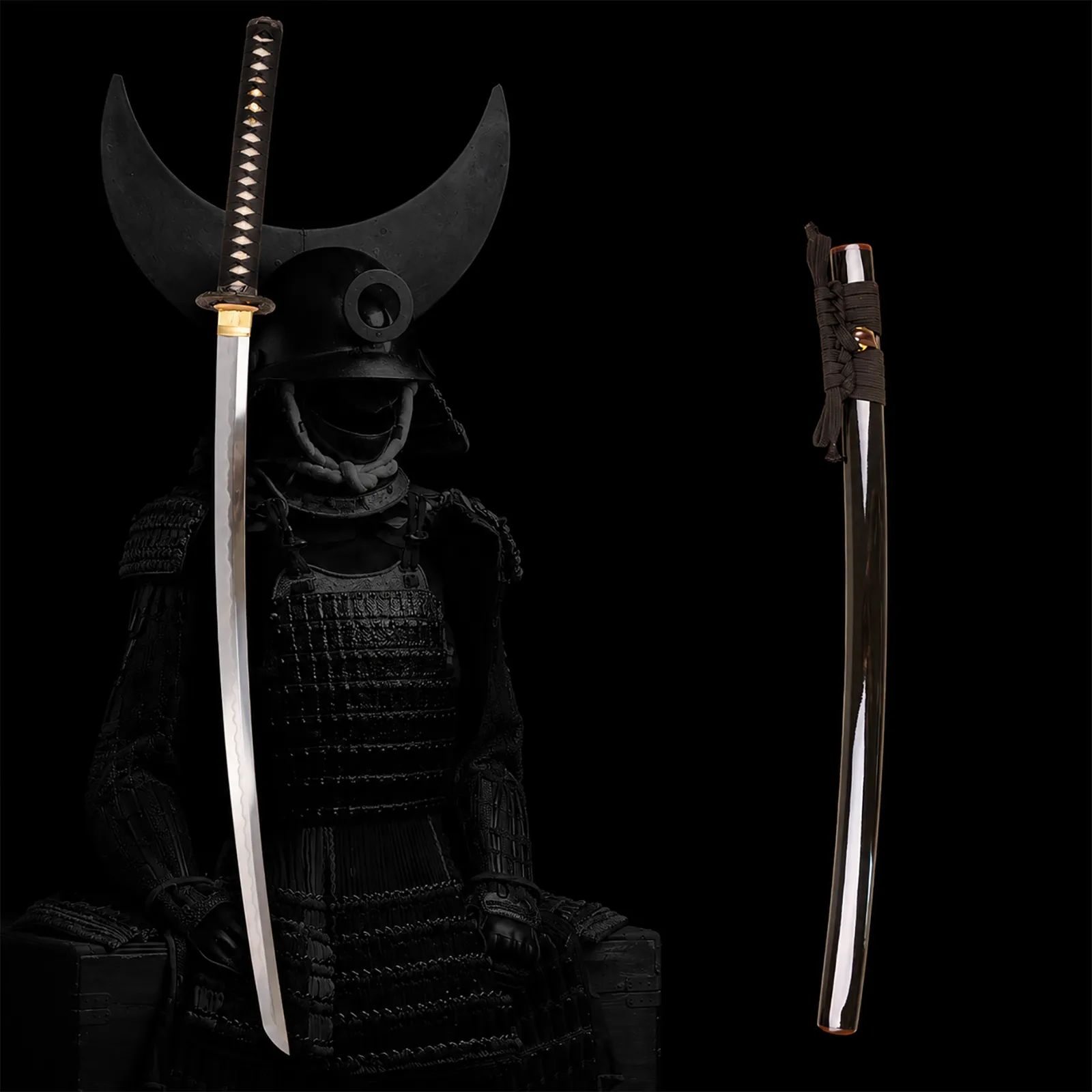
Sanmai katana displayed beside dark samurai armor with a polished blade, black wrapped handle and lacquered saya
A polished Sanmai katana and its dark lacquered saya, set against the quiet silhouette of samurai armor.

A STRUCTURE WITHIN

More Than the Surface Reveals.

The outer layers begin with 608 patterned steel, further folded to develop the material’s characteristic grain. A T10 carbon-steel core completes the composite Sanmai construction.

Clay tempering shapes a Gunome hamon along the blade. Its rounded rises belong to the hardened edge; they are distinct from the hada — the steel grain formed through the work of forging.

The workshop’s Advanced Polish brings these different qualities into view: the presence of the grain, the changing boundary of the hamon, and the contrast between polished planes. The result asks for attention, not spectacle.

TWO STORIES IN ONE BLADE

One story is held within the steel. Another is traced along its edge. Forging and tempering leave different marks — polishing lets us see them together.

THE QUIET REVELATION

The grain carries its history.
The edge holds its line.

A first impression of Sanmai steel — before the hada, Gunome pattern, and hand-finished details come into closer focus.

02 / THE FINER DETAILS

The Grain and
the Temper Line.

From the black-wrapped handle to the changing tones of the polished blade, this is a study of contrasts. Some marks belong to the steel itself. Others follow the edge where fire and cooling have left their trace.

DARK IRON / COPPER / GOLD

A Quiet Contrast.

A dark openwork tsuba, warm copper seppa, and a polished brass habaki meet at the base of the blade. The black silk-cotton tsukamaki opens in pale diamonds to reveal samegawa, punctuated by gold-toned menuki.

Hishigami paper supports help give definition to the wrapping. Beyond the handle, the horn-fitted lacquered saya carries a long dark reflection, paired with a subdued sageo.
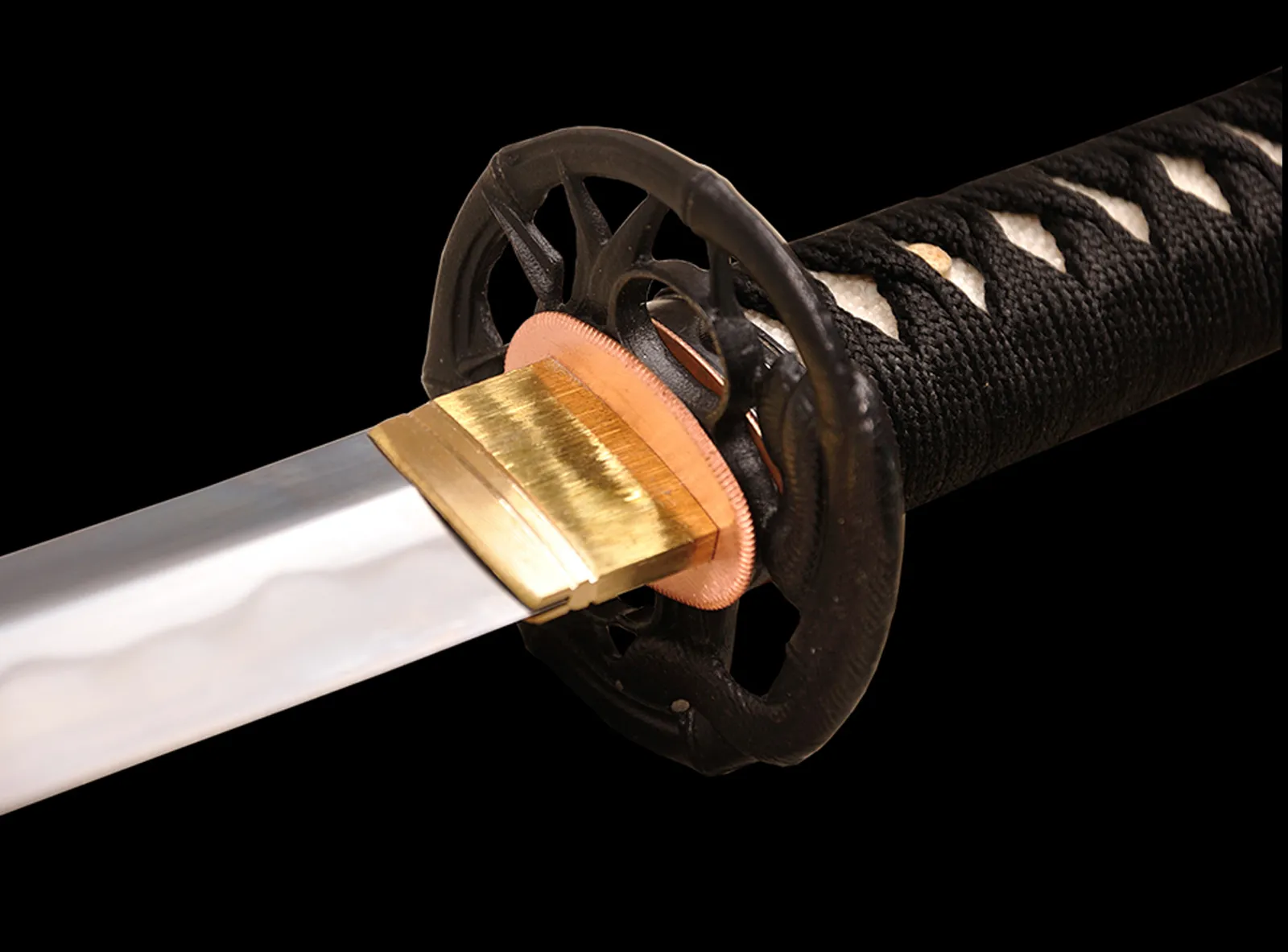
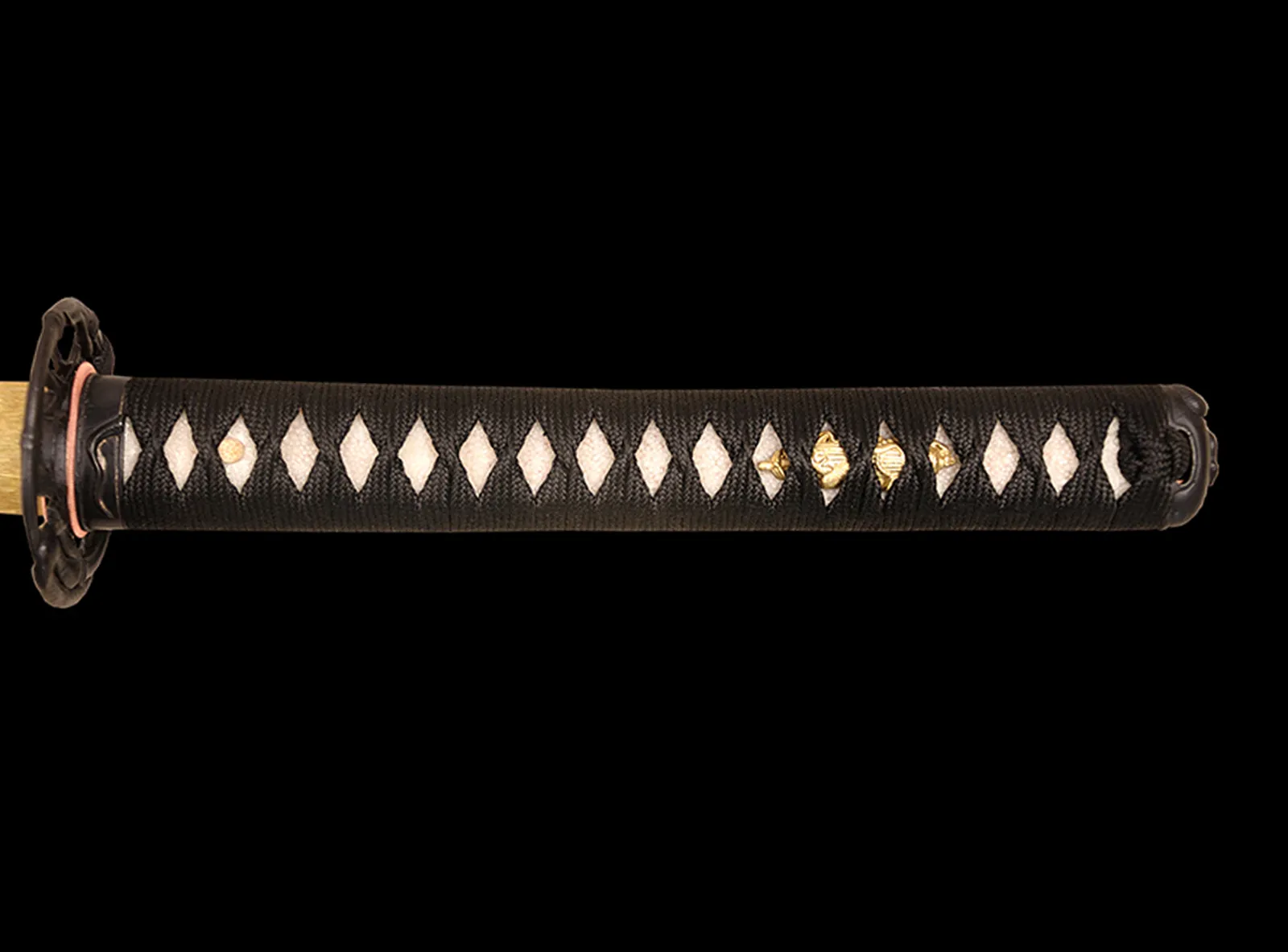
Close-up of openwork dark tsuba, copper seppa, polished brass habaki and black katana handle wrap
A dark tsuba beside copper seppa and a bright brass habaki.
Black diamond-pattern silk-cotton tsuka wrapping with white samegawa openings and gold menuki
Black tsukamaki, pale samegawa, and small gold-toned menuki within the grip.
Glossy black lacquered horn-fitted katana saya with dark sageo cord against a black background
The lacquered saya follows the blade's curve, accompanied by a dark sageo.

608 OUTER STEEL / T10 CORE / GUNOME

Two Marks of Making.

The outer layers are formed from further-folded 608 patterned steel, combining 60Mn and T8, around a T10 core in a Sanmai construction. The material's visible hada belongs to the folded steel.

Clay tempering gives the edge its rounded Gunome hamon — a separate line with its own rhythm. Advanced Polish makes the grain, the temper boundary, and the changing reflections of the blade easier to read together.
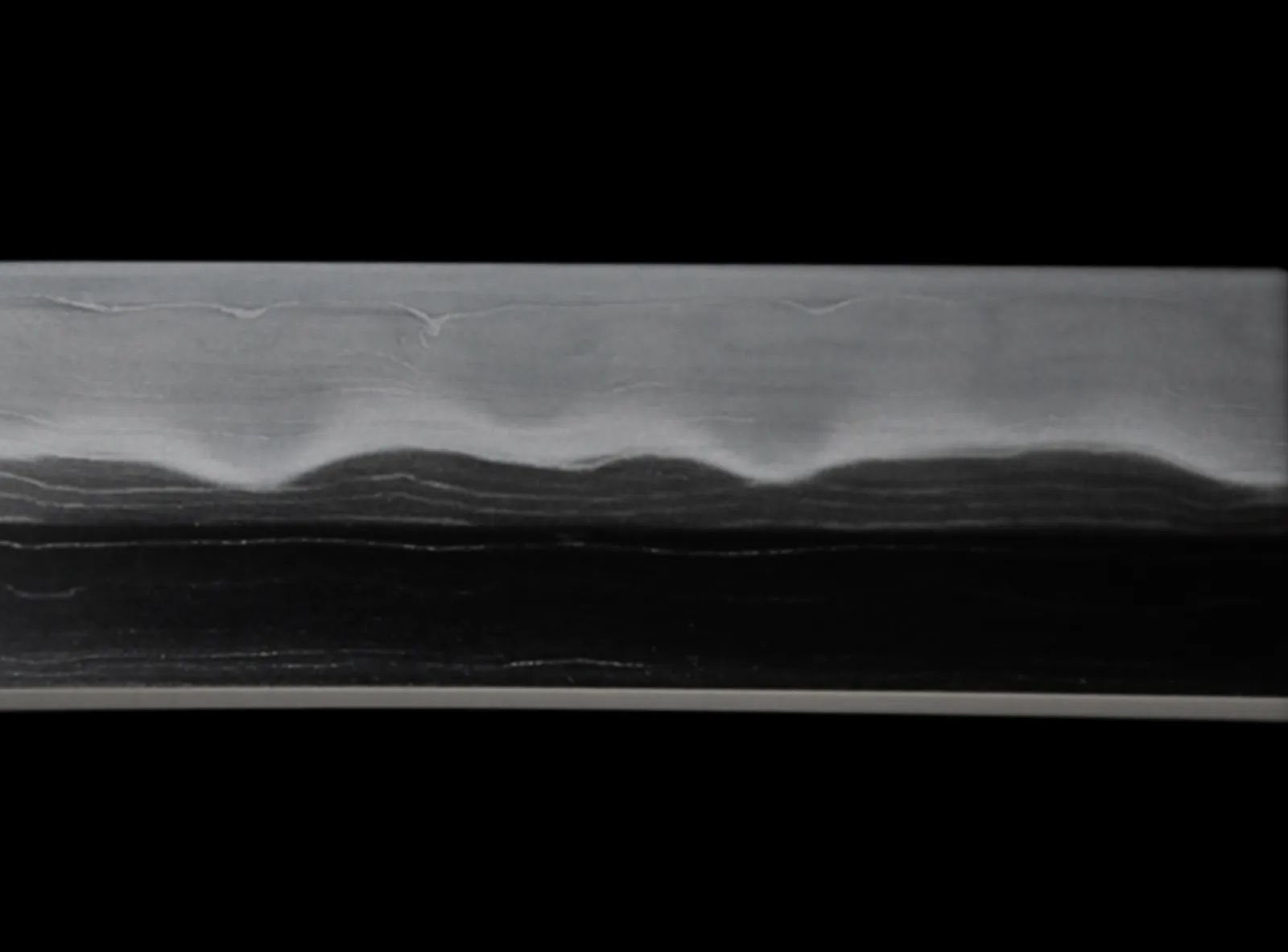
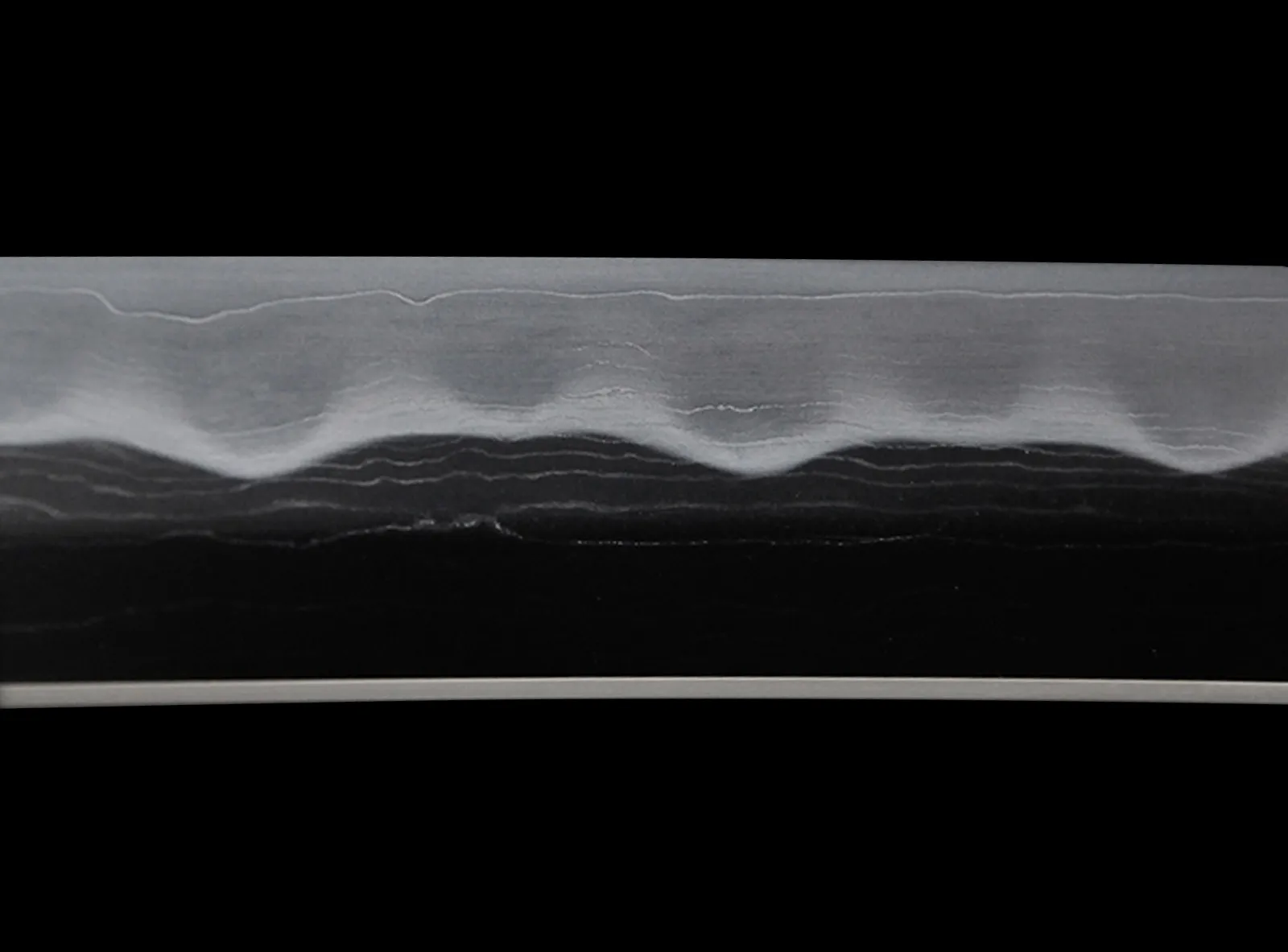
Horizontal close-up of Sanmai katana steel with a gently undulating Gunome hamon and layered dark grain
Study I — rounded passages of the Gunome hamon meet fine lines in the polished steel.
Close view of the wavy Gunome temper pattern beside layers of folded steel grain on the katana blade
Study II — the wave broadens and narrows, while layered hada follows another course.

NOT THE SAME LINE

The hamon traces the hardened edge. The hada reveals the character of the folded steel. They are born of different processes, yet the polish lets the eye move between them.
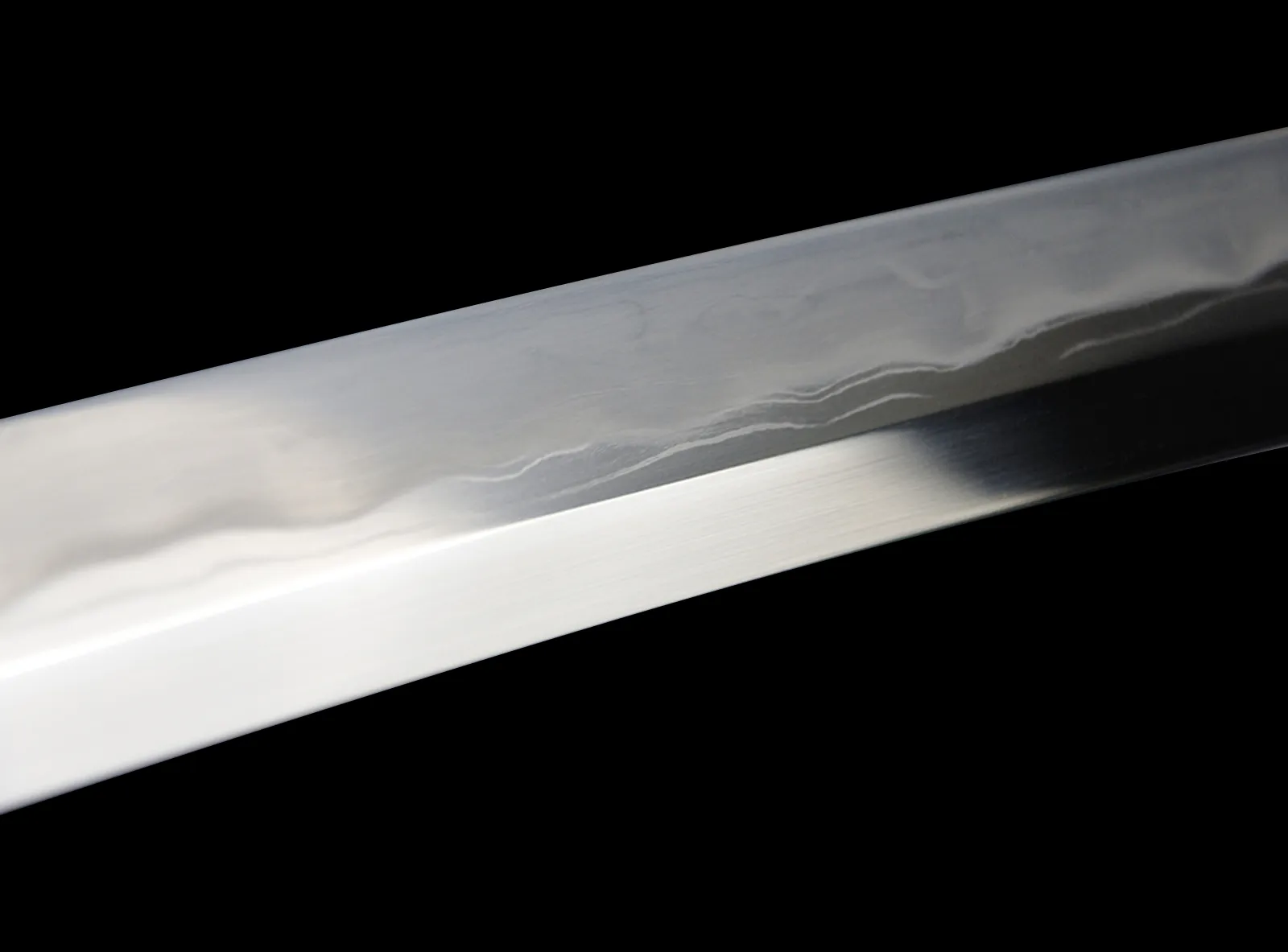
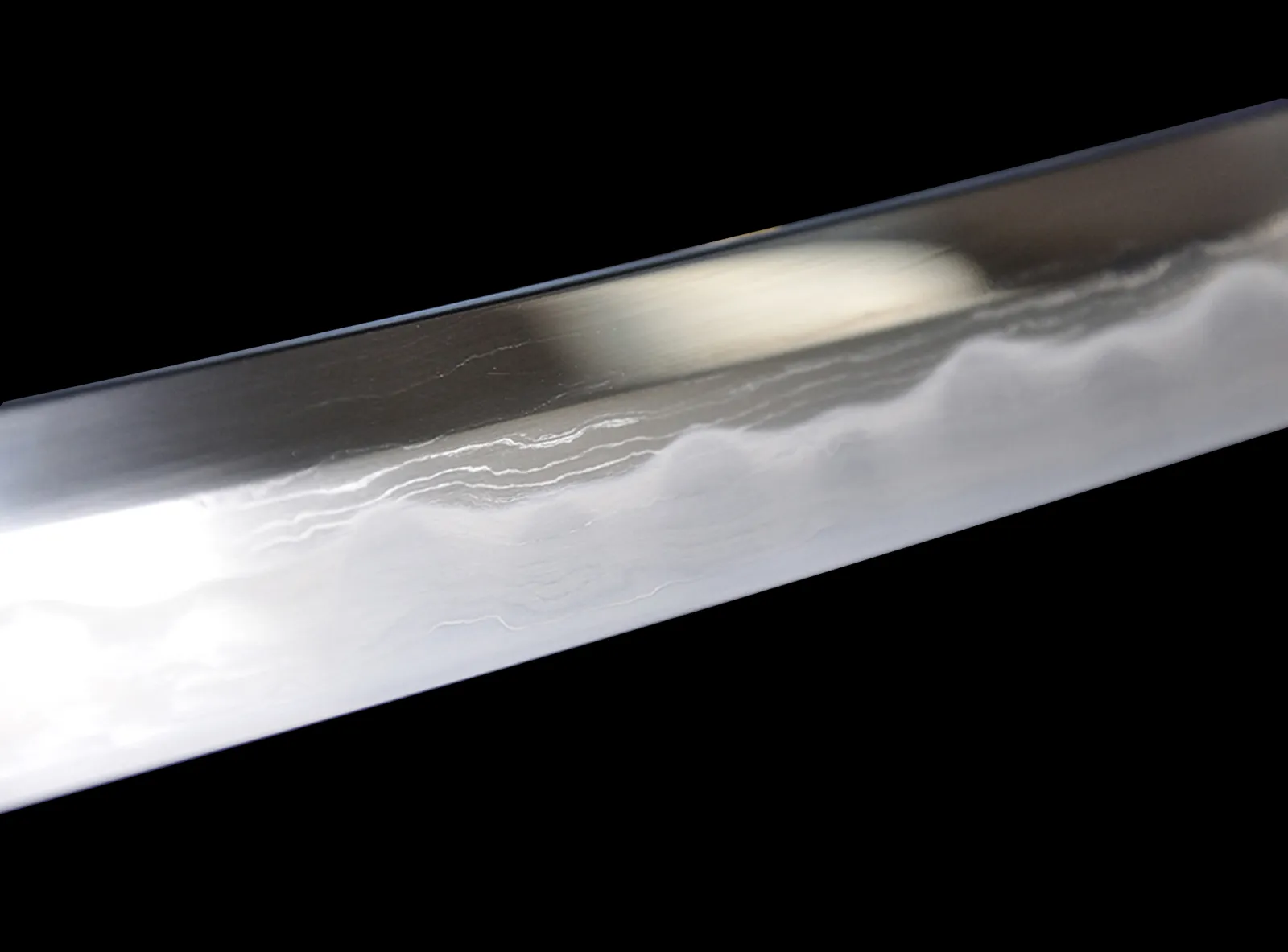
Diagonal close-up of the polished Sanmai blade showing fine steel texture and a flowing temper line
Study III — across the diagonal, polished planes shift from pale steel to darker reflection.
Close-up of polished Sanmai katana steel showing the hamon boundary and subtle patterned grain
Study IV — a final passage of grain, temper, and reflected light.

THE GRAIN AND THE EDGE

The grain holds the making.
The edge holds the fire.

03 / THE COLLECTOR'S GALLERY

Where the Light
Settles.

Across dark lacquer and polished steel, the same blade appears to change with the light. A quiet silhouette opens into small details — black wrapping, warm metal, and the flowing lines that make this work worth looking at twice.
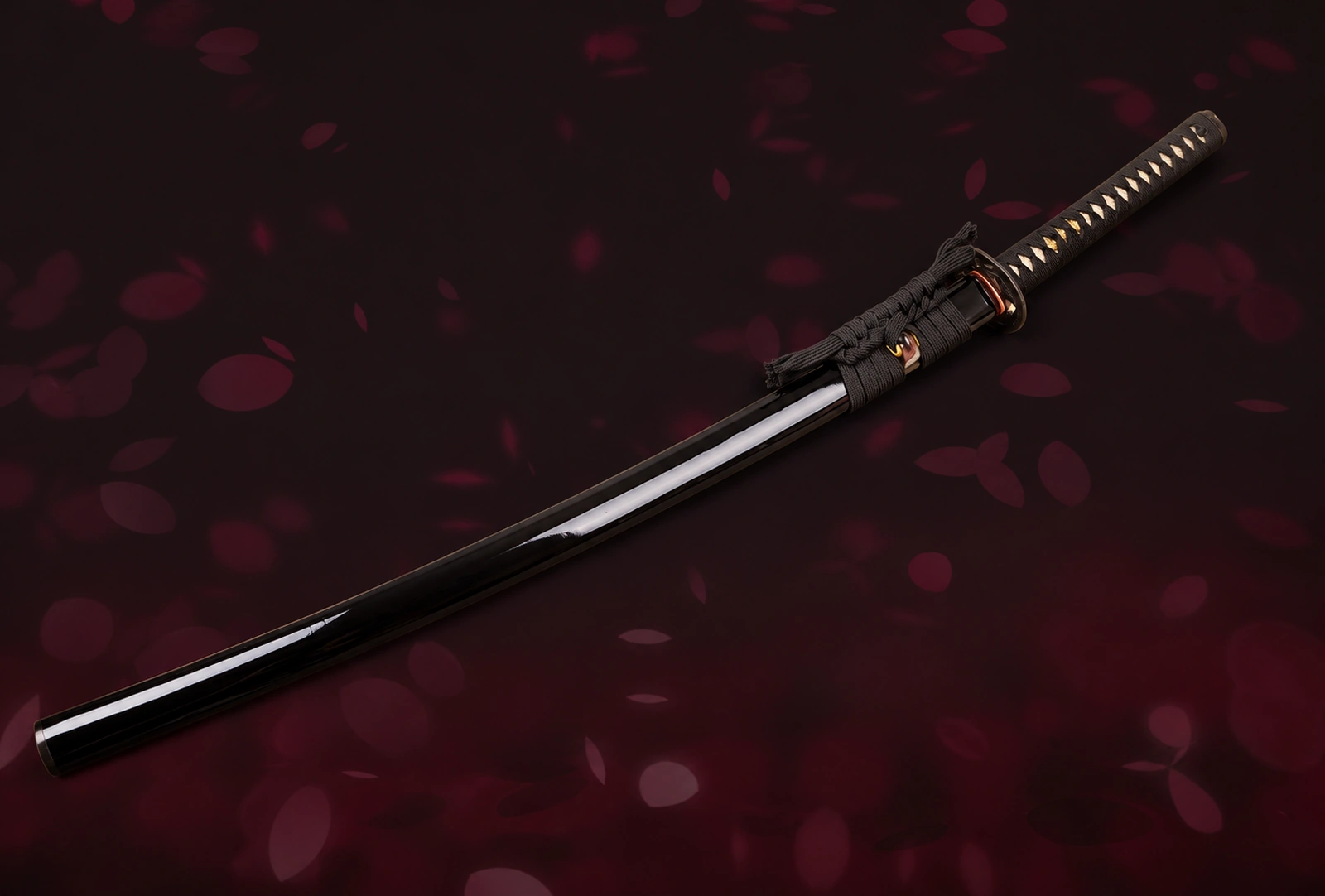
Complete black-sheathed Sanmai katana displayed diagonally among deep-red flower petals
First, the complete silhouette — dark lacquer, a measured curve, and red petals at rest.

BLACK LACQUER / RED PETALS

A Form in Stillness.

The long black saya and restrained handle wrapping establish the work’s presence before the steel is drawn. On the deep-red ground, the smallest reflections become part of the composition.
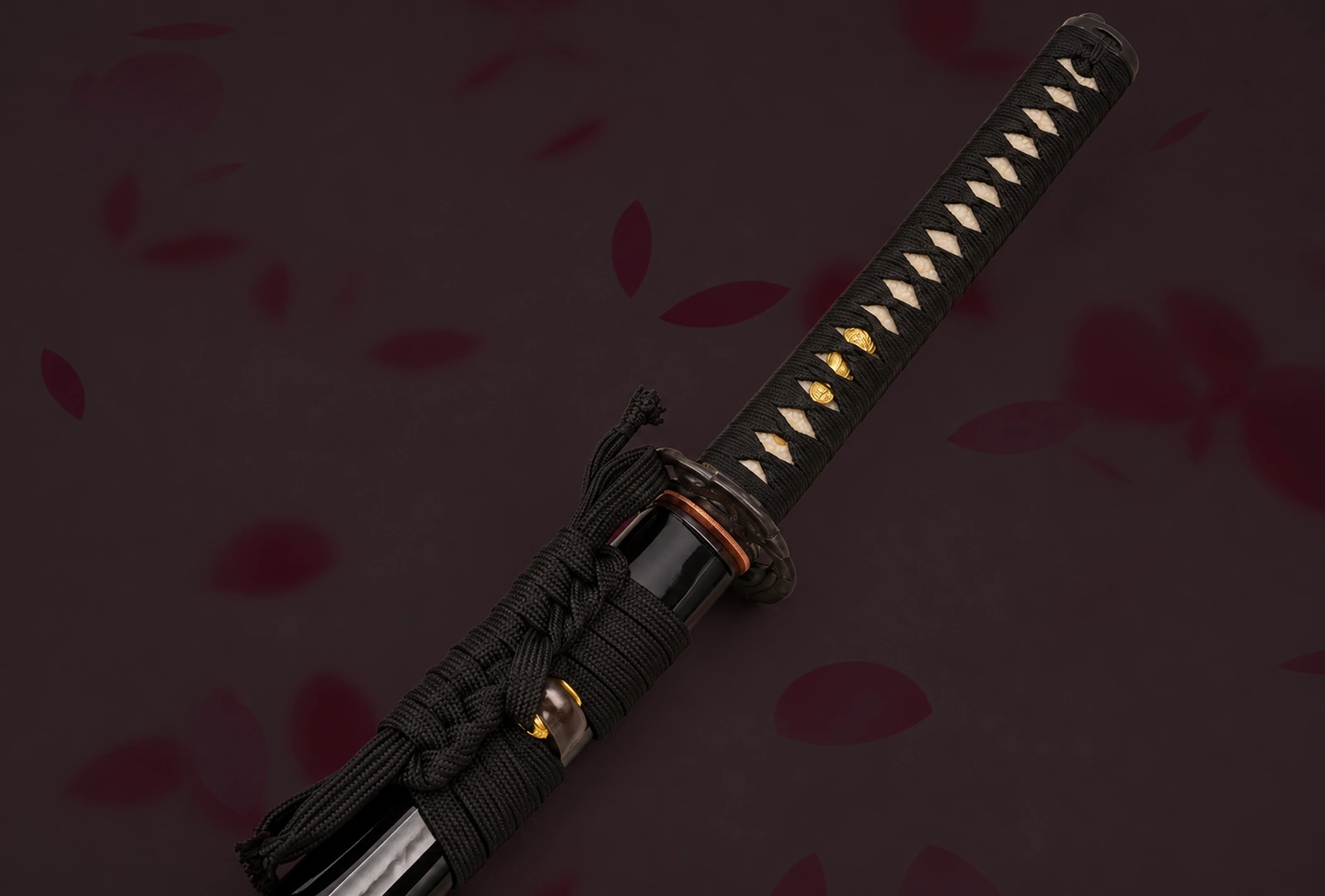
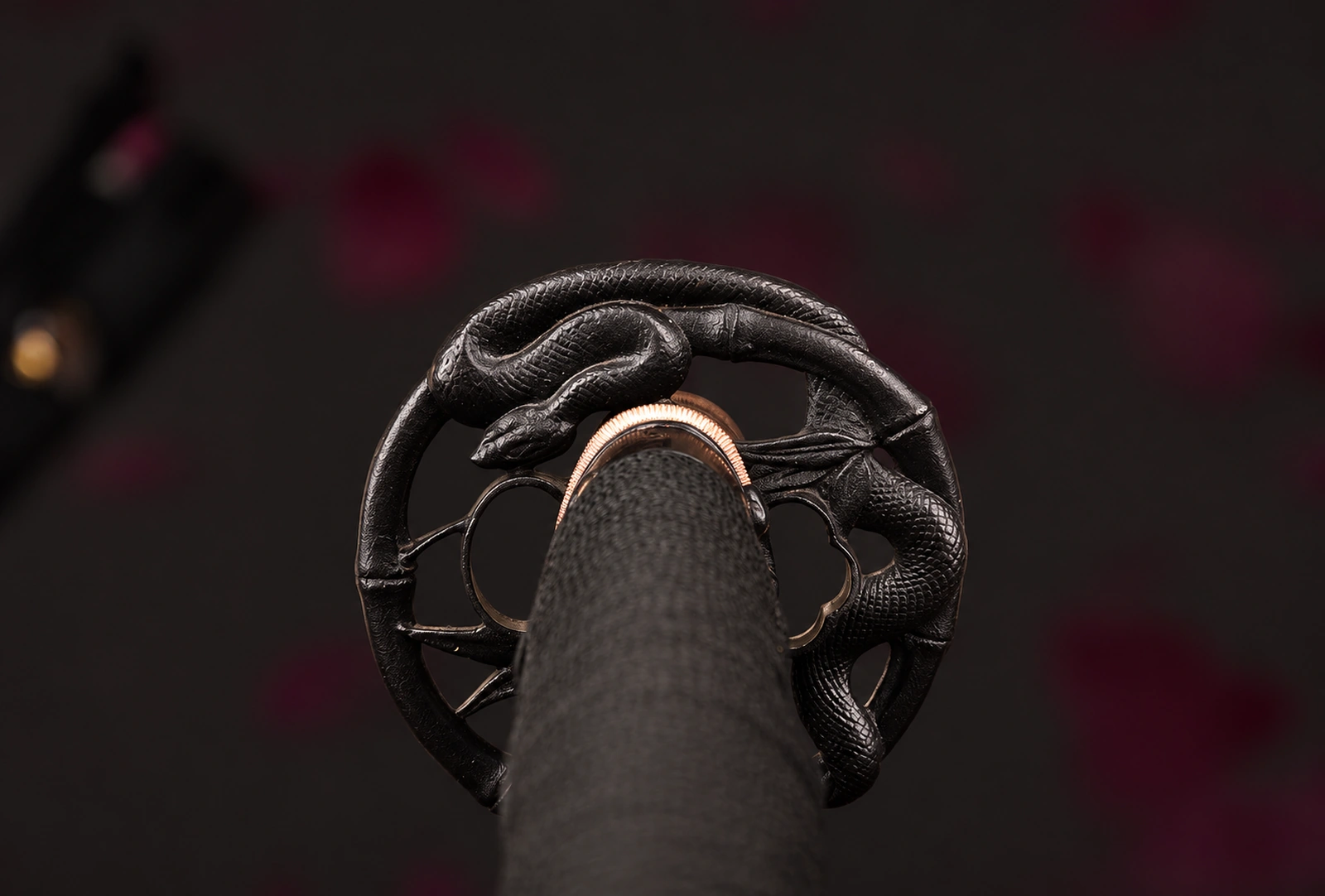
Angled close view of the black-wrapped katana handle and horn-fitted lacquered saya against red petals
A closer angle brings the dark tsukamaki and polished saya together.
Rear-facing detail of a dark openwork katana tsuba and black-wrapped handle against muted red petals
A study in shadow and negative space around the tsuba.

THE DRAWN BLADE

The Line Comes Forward.

With the blade revealed beside its scabbard, the composition shifts from lacquer to steel. The polished surface carries both the character of its folded outer layers and the changing boundary of the hamon.
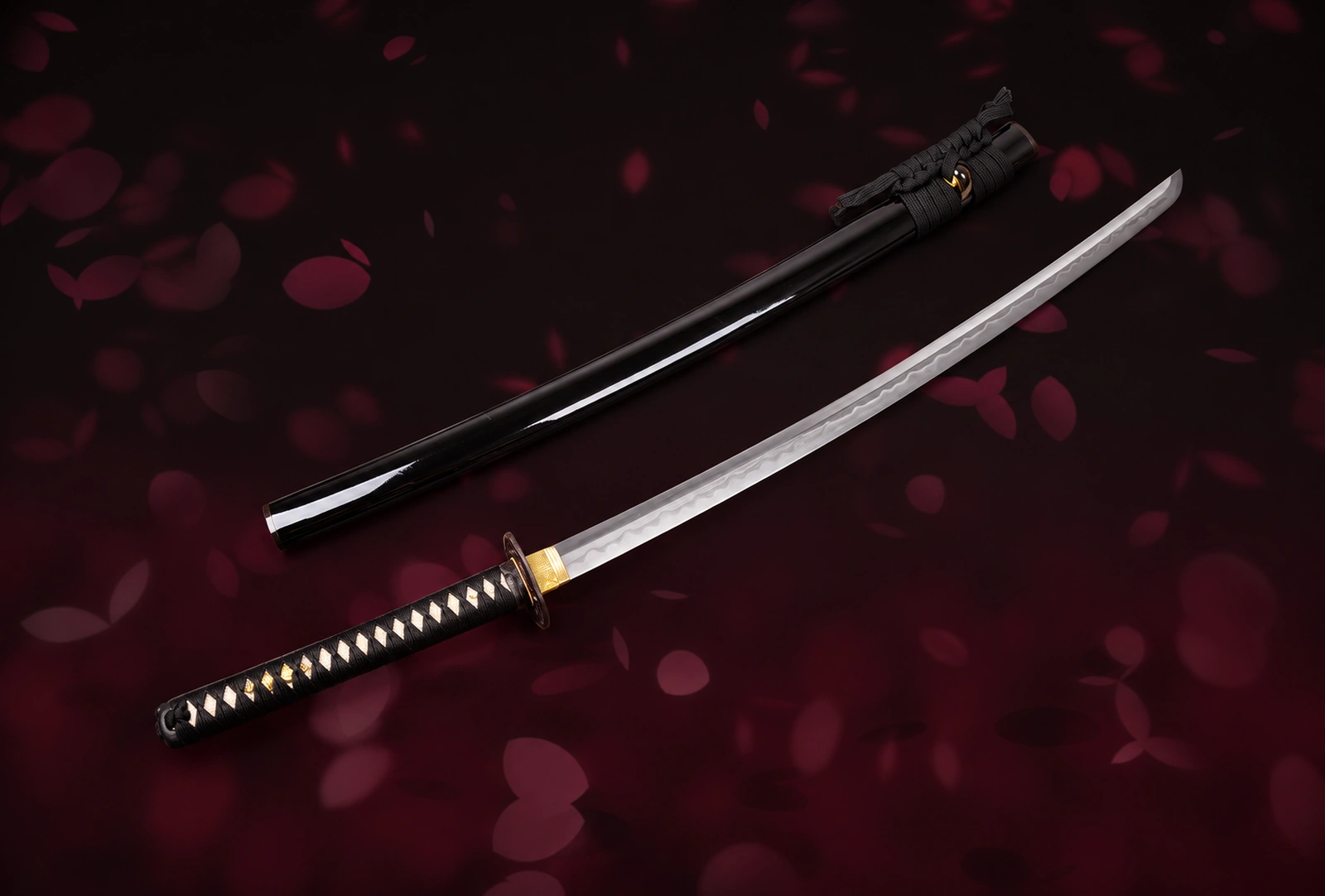
Unsheathed Sanmai katana placed alongside its black lacquered saya over dark crimson petals
Drawn steel and dark lacquer — two distinct surfaces in one portrait.

BLACK WRAPPING / WARM BRASS

The Details Between.

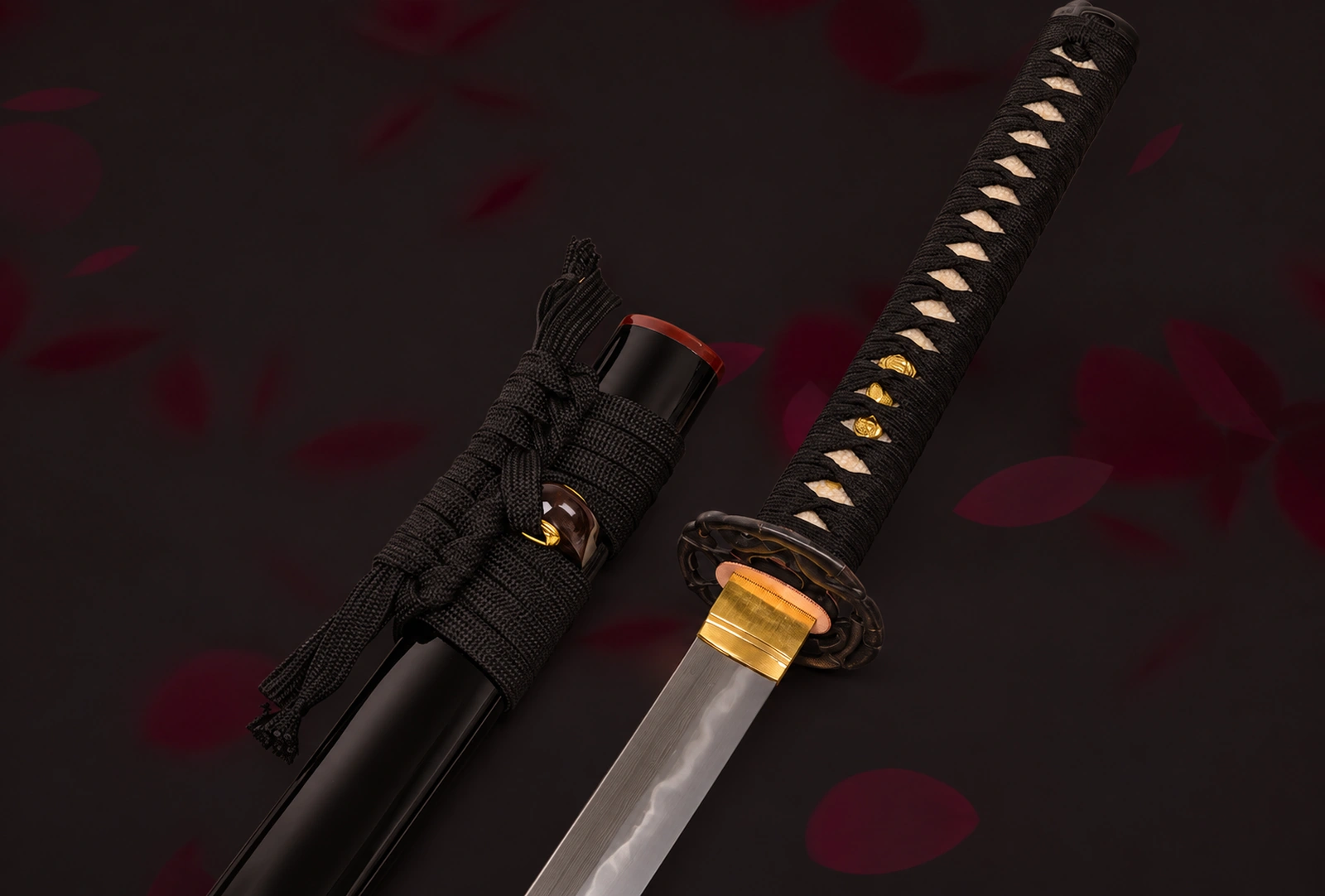
A dark tsuba, the warm face of the brass habaki, and the pale diamonds within the black tsukamaki break the silhouette into details. Nearby, the horn-fitted saya carries the reflection back into the dark.
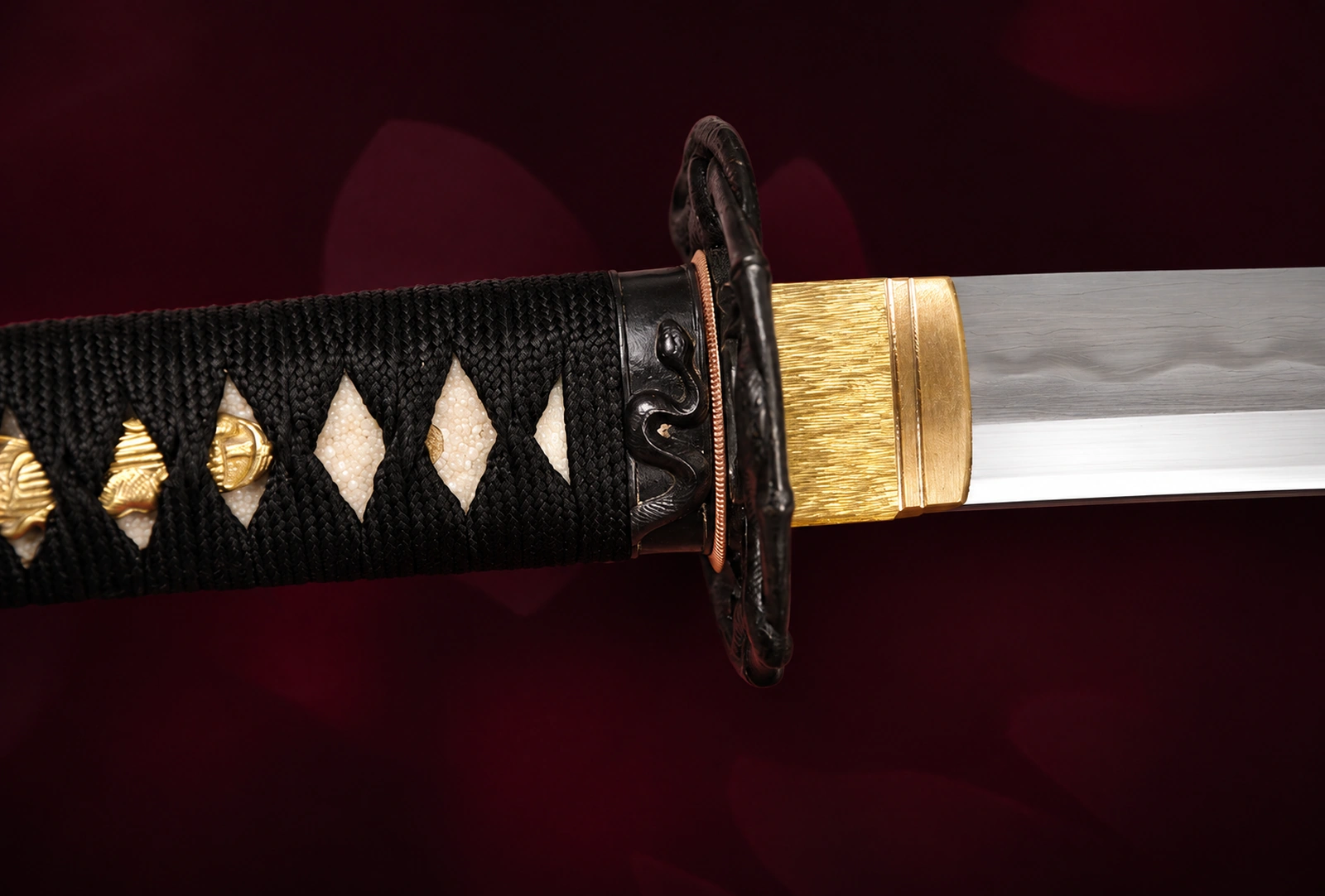
Macro photograph of black diamond-pattern katana tsuka wrapping, brass habaki and dark tsuba against a burgundy background
Black wrapping, pale openings, and the warm brass habaki.
Angled close photograph of the black-wrapped katana handle, brass fittings and glossy black saya on a red-petal backdrop
A second look at the meeting of tsukamaki, metal, and lacquer.

BENEATH THE REFLECTION

The form is quiet.
The steel keeps its own record.

608 PATTERNED STEEL / GUNOME

Grain, Temper, Light.

Further-folded 608 patterned steel surrounds a T10 core in Sanmai construction. Its visible hada belongs to the steel’s worked layers; the rounded Gunome hamon follows the separately hardened edge. Advanced Polish allows both to appear in changing light.
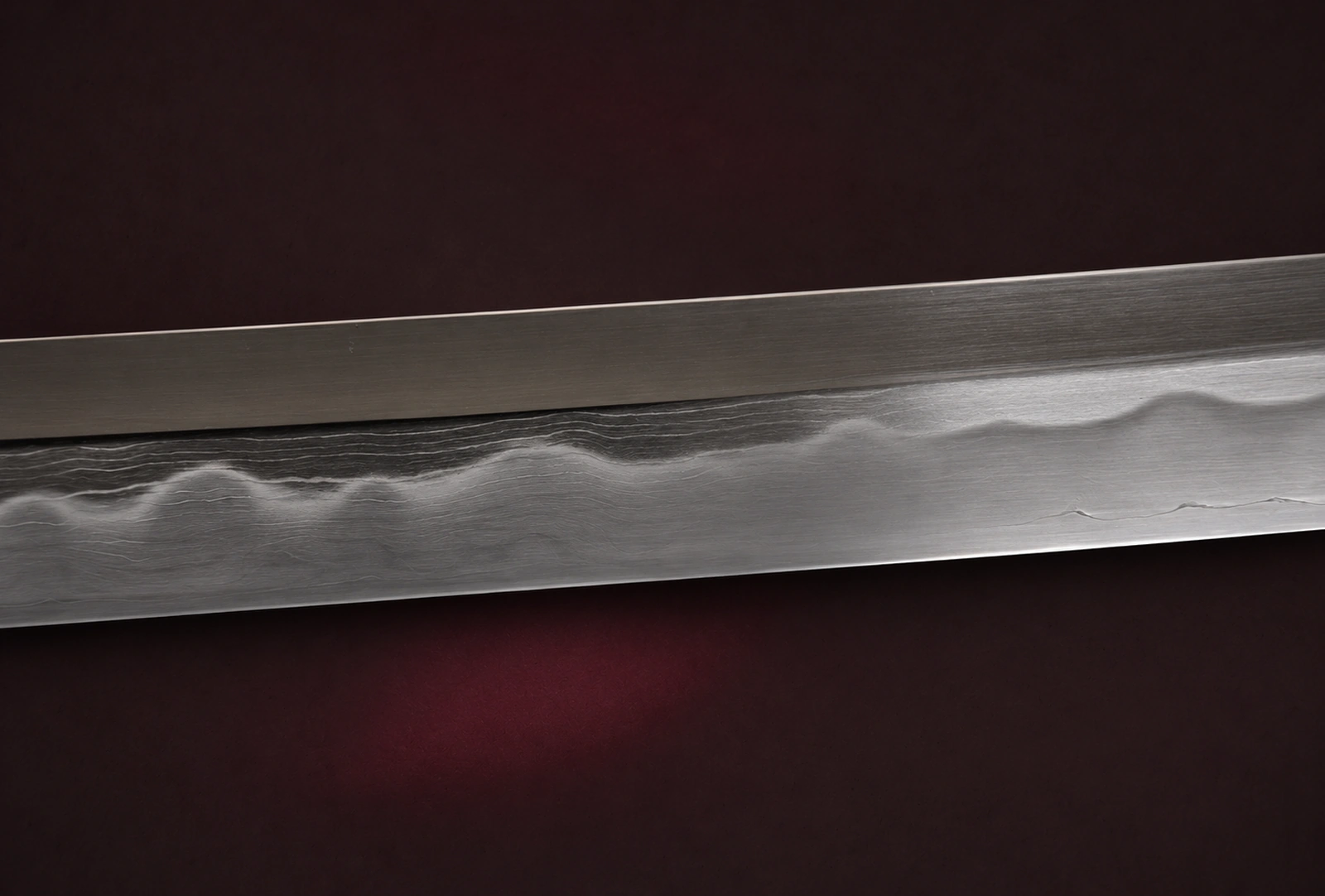
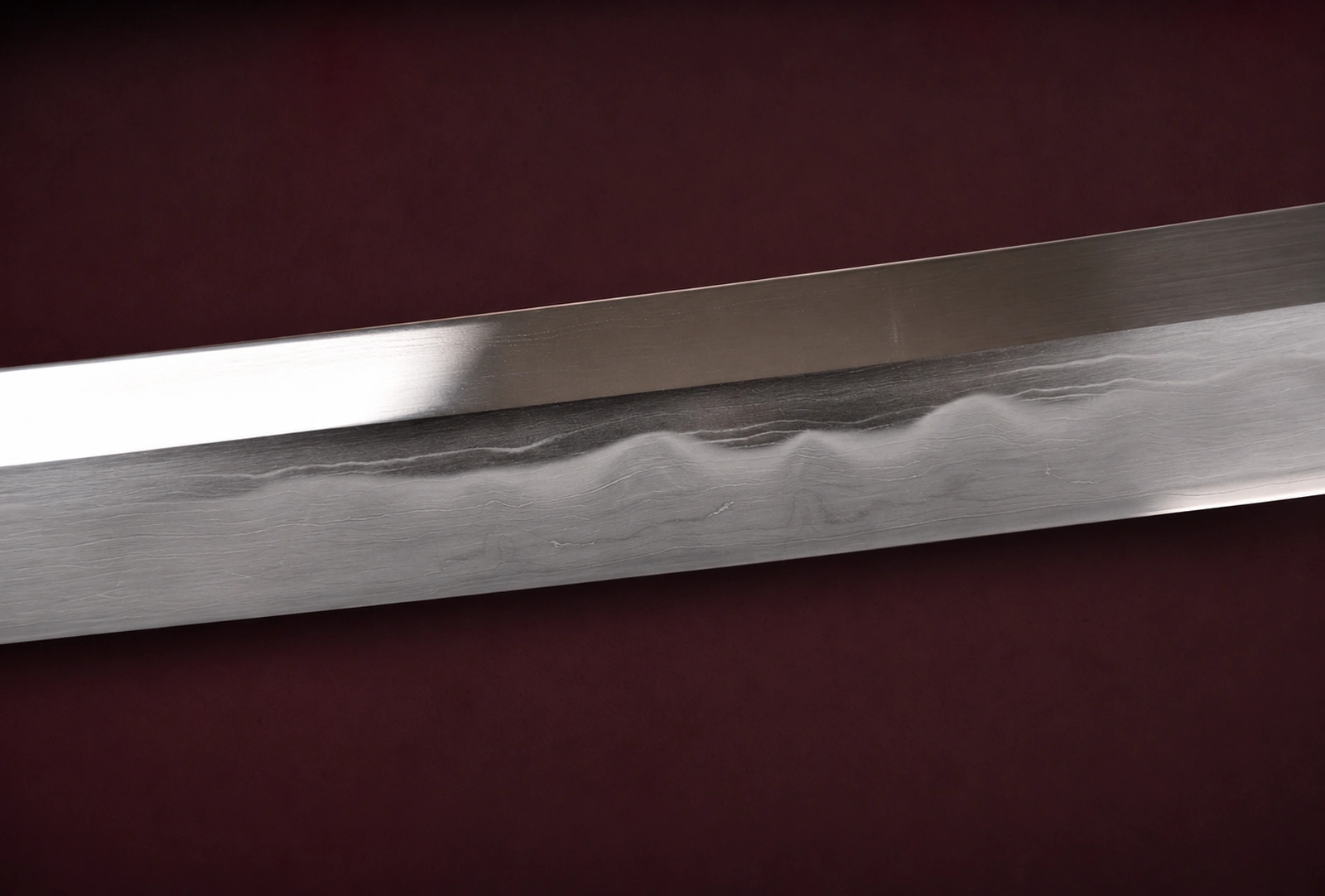
Horizontal close-up of the Sanmai katana showing an undulating Gunome hamon and fine layered steel grain
The first steel study — a flowing Gunome line beside the finer grain of the blade.
Close-up of the polished Sanmai katana blade showing subtle layered texture, reflective steel and a flowing temper boundary
The second steel study — the same surface changes as the reflection moves.

THE COMPLETE WORK

Returning to the Whole.

After the close studies of grain and temper, the full form takes its place again. Blade and saya answer each other in long dark curves, while the red petals pass quietly through the background.
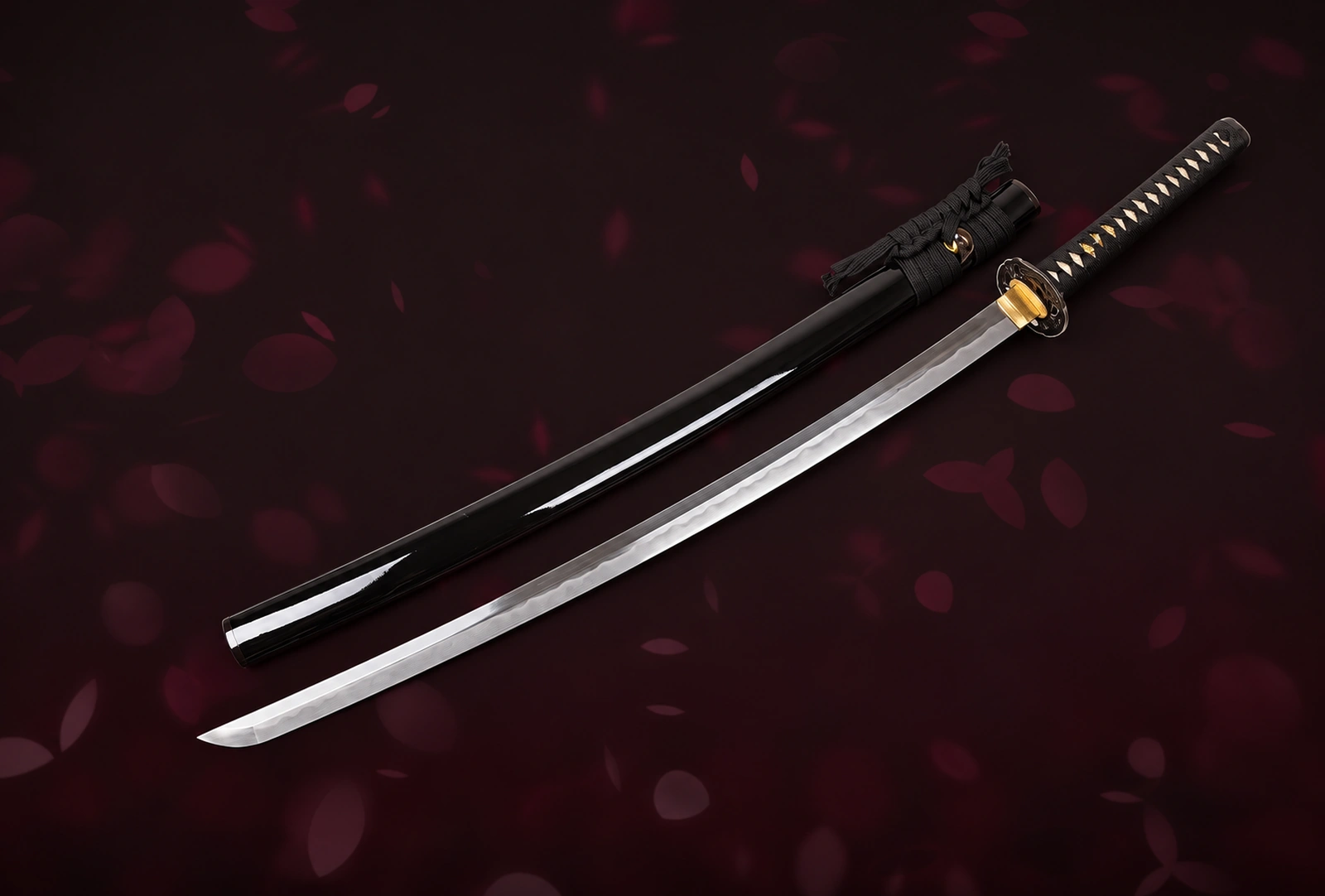
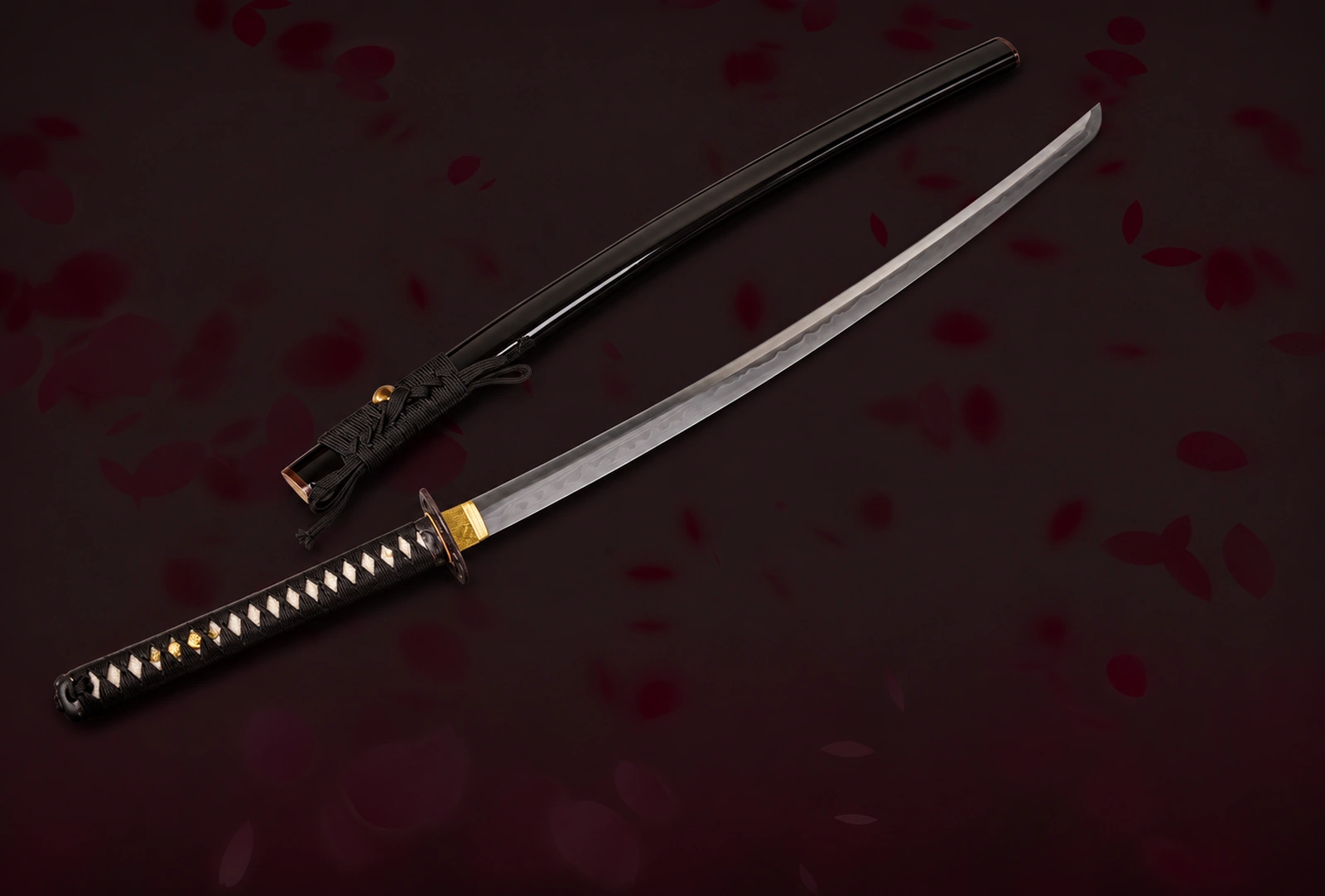
Full unsheathed Sanmai katana beside its black saya on a deep-red background scattered with petals
The full blade returns — its polished length set against the quiet depth of the saya.
Complete black-handled Sanmai katana and lacquered scabbard arranged diagonally across scattered crimson petals
One final portrait: the drawn sword, the lacquered scabbard, and the space between them.

THE COLLECTOR'S GALLERY

The petals settle.
The steel remembers.

Rezensionen

Es gibt noch keine Rezensionen.

Schreibe die erste Rezension für „Hada Sanmai Advanced-Polish Katana“

Deine E-Mail-Adresse wird nicht veröffentlicht. Erforderliche Felder sind mit * markiert