Beschreibung
01 / MATERIAL & TRADITION
Two Traditions. Two Paths to Steel.
Across China and Japan, swordmakers learned to transform iron into steel worth shaping by hand. Longquan's Caogang and Japan's Tamahagane belong to different traditions of smelting, refining and forging. Their differences are best understood through the work itself, not a claim of superiority.
LONGQUAN / JAPAN / THE CRAFT OF STEEL
THE MAKING OF STEEL
A Shared Purpose. Distinct Methods.
Both traditions begin with iron-bearing material and the judgment of experienced craftspeople. But a traditional Longquan refining route and the Japanese tatara process do not follow an identical path. The stages below describe established craft traditions, rather than a universal recipe for every blade.
CaogangThe Longquan tradition
Raw material
Longquan's swordmaking heritage draws on iron-bearing sands and local ironworking resources.
Smelting & refining
Historical Longquan accounts describe smelting iron into pig iron, followed by chao-gang refining: controlled oxidation removes excess carbon to produce workable steel.
Material judgment
The smith assesses the refined material and its suitability for forging. Carbon control and the quality of the resulting steel matter more than a name alone.
Forging
Repeated heating, hammering and, where appropriate, forge-welding transform prepared material into blade stock. Techniques vary with the workshop and the intended blade.
TamahaganeThe tatara tradition
Raw material
Iron sand and charcoal supply the material and fuel for traditional Japanese tatara smelting.
Direct smelting
A clay furnace produces a mixed mass of iron and steel known as kera, rather than following the same pig-iron decarburization route described above.
Breaking & selection
The cooled mass is broken apart. Pieces are examined and sorted by quality; selected swordmaking steel is called Tamahagane.
Forging
Selected pieces are consolidated by forge-welding and worked through repeated heating and folding. Swordsmiths then shape and harden the blade according to the intended construction.
BEYOND THE LABEL
Which Steel Is Better?
There is no single answer in the material name. Two blades described as Caogang or Tamahagane may differ in carbon distribution, inclusions, forging control and heat treatment. Those differences shape the finished result.
Historical lineage, visible hada, edge geometry and practical performance are also different ways to appreciate a sword. Each deserves its own examination. A name can explain a tradition; it cannot replace an assessment of the blade.
What materials were prepared, and how was the steel refined?
How carefully were the steel, blade geometry and hardening controlled?
What does the blade reveal in its surface, lines and overall execution?
THE WORK BEFORE US
A Blade with Its Own Character.
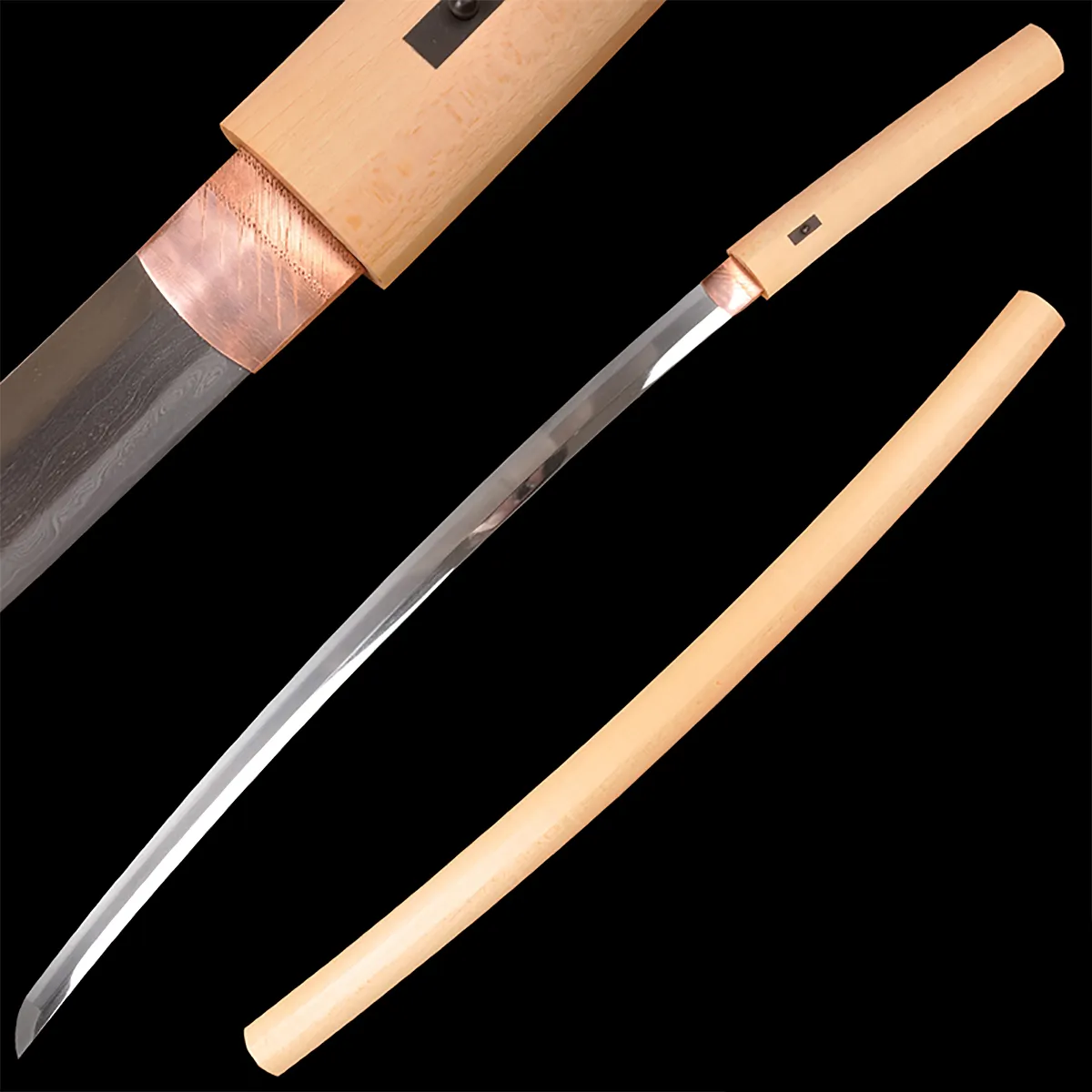
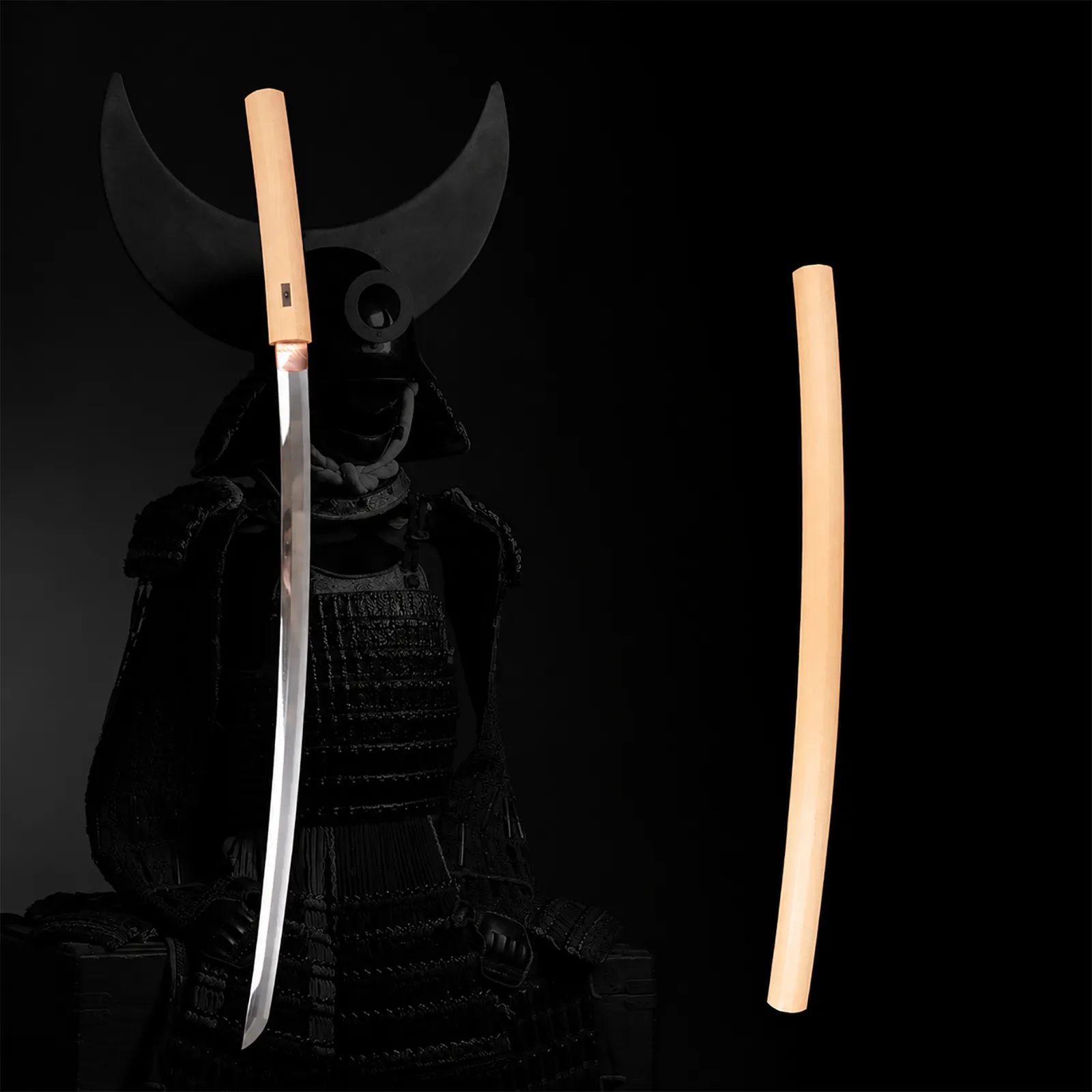
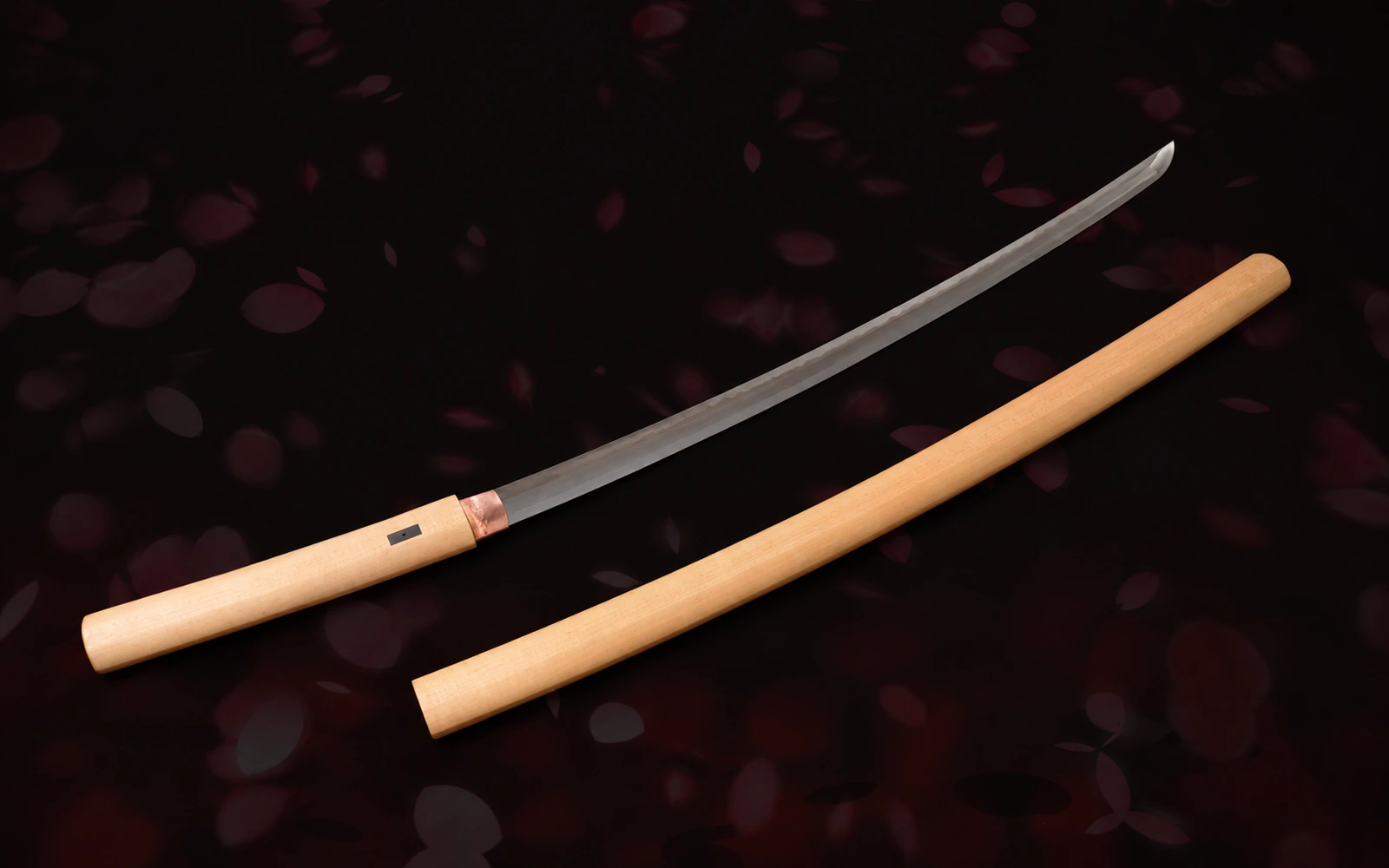
This katana is made from workshop-smelted Caogang steel, forged in Maru construction and finished with Shiage-togi. Its Suguha hamon and handmade Shirasaya place the emphasis on the blade's form and the precision of its finishing.
The following chapter moves from the history of steel to what the eye can actually study: the shinogi, the iron-gray blade surface, and the nuanced appearance of hadori polishing.
TWO TRADITIONS / ONE PRINCIPLE
Understand the steel through its making. Judge the blade through the work.
02 / WOOD, COPPER & THE BLADE
The Work Behind the Blade.
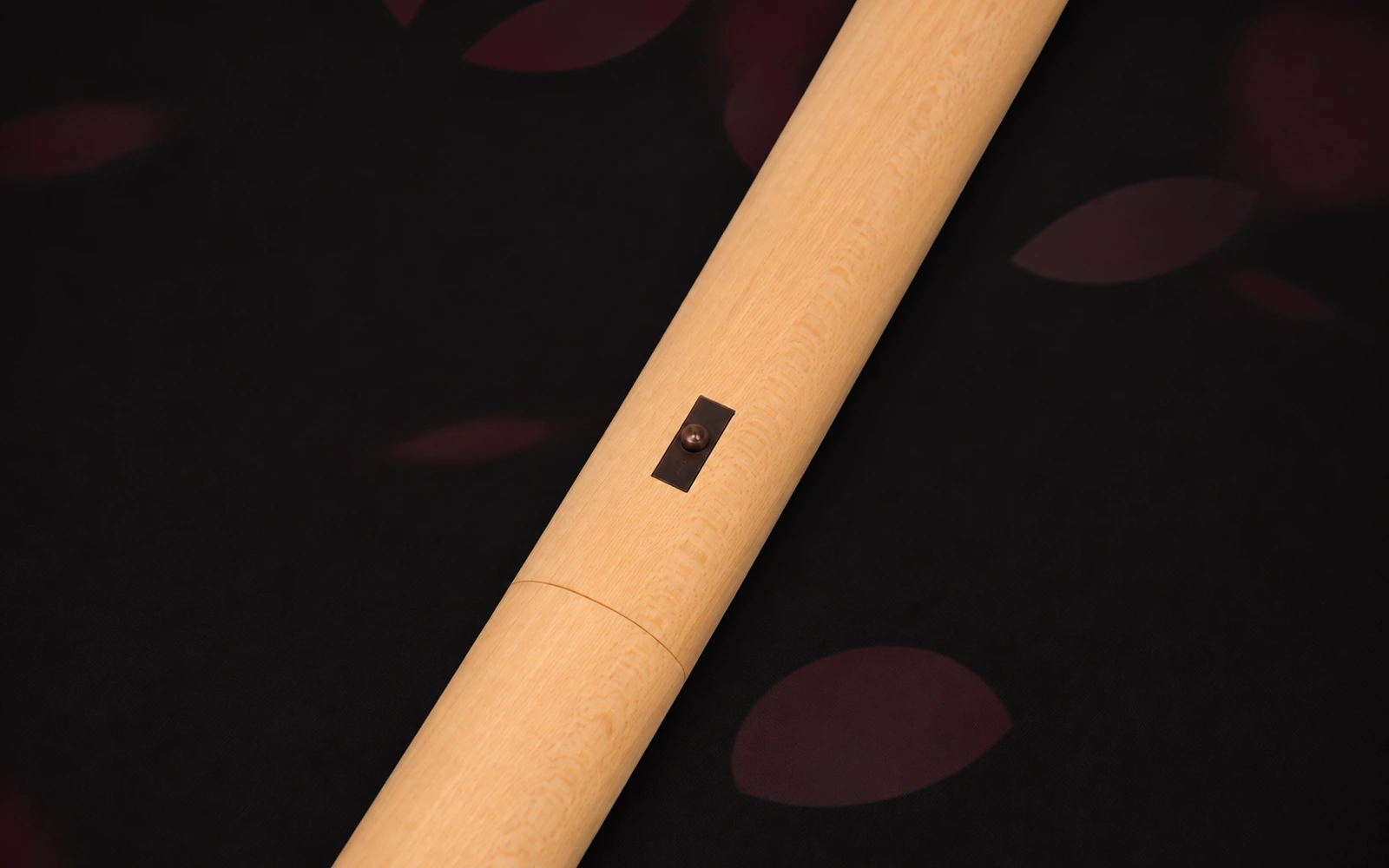
Before studying the polished steel, look closely at the work that holds it. This handmade shirasaya pairs pale wood with a crafted copper habaki, a horn mekugi, and an interior channel shaped for the blade.
COPPER / WOOD / FIT / STEEL
01 / THE VISIBLE FIT
Where Copper Meets Wood.
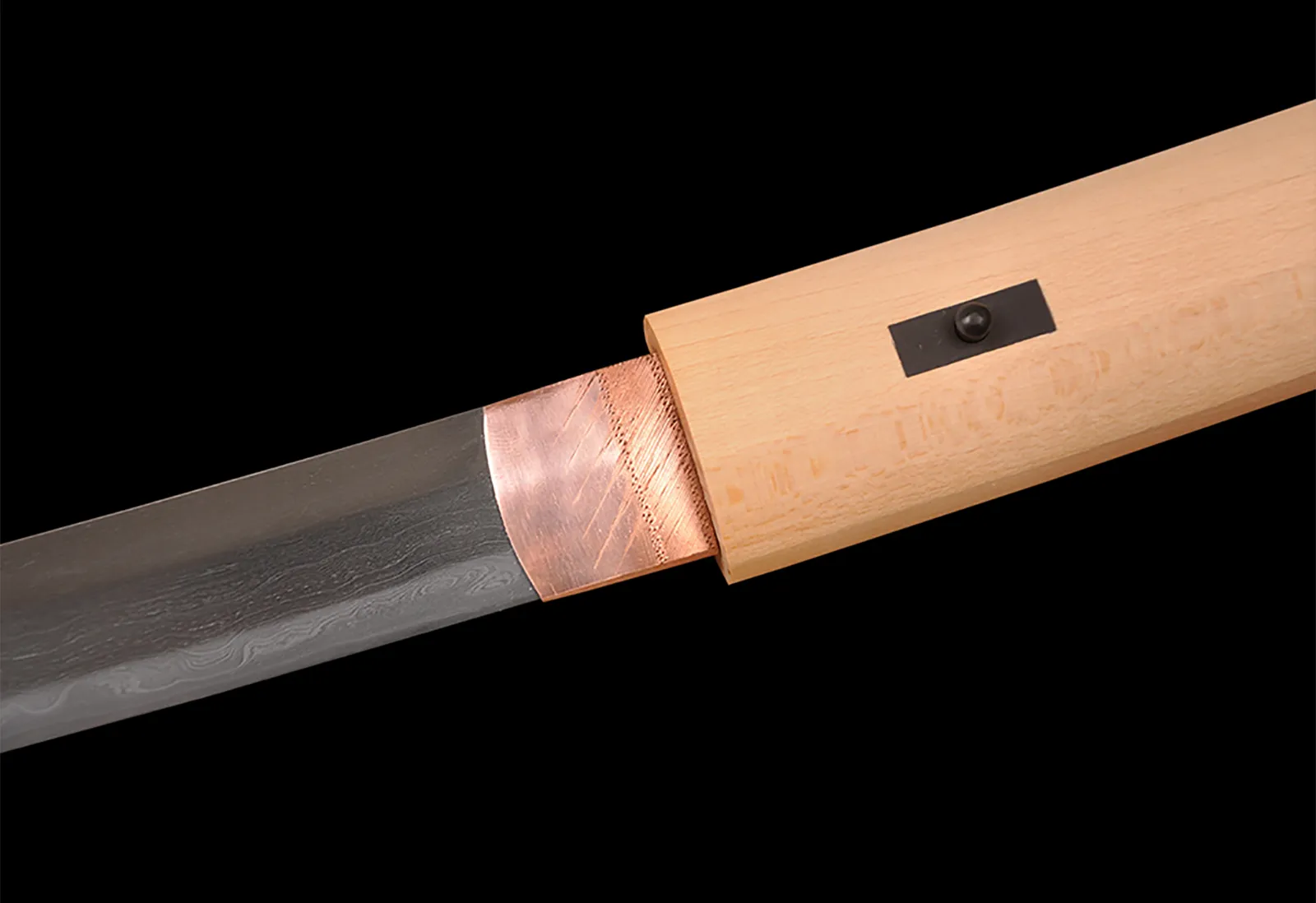
A handcrafted copper Yūjō-style habaki marks the transition between blade and wooden housing. Its warm metal surface stands in quiet contrast to the unadorned timber.
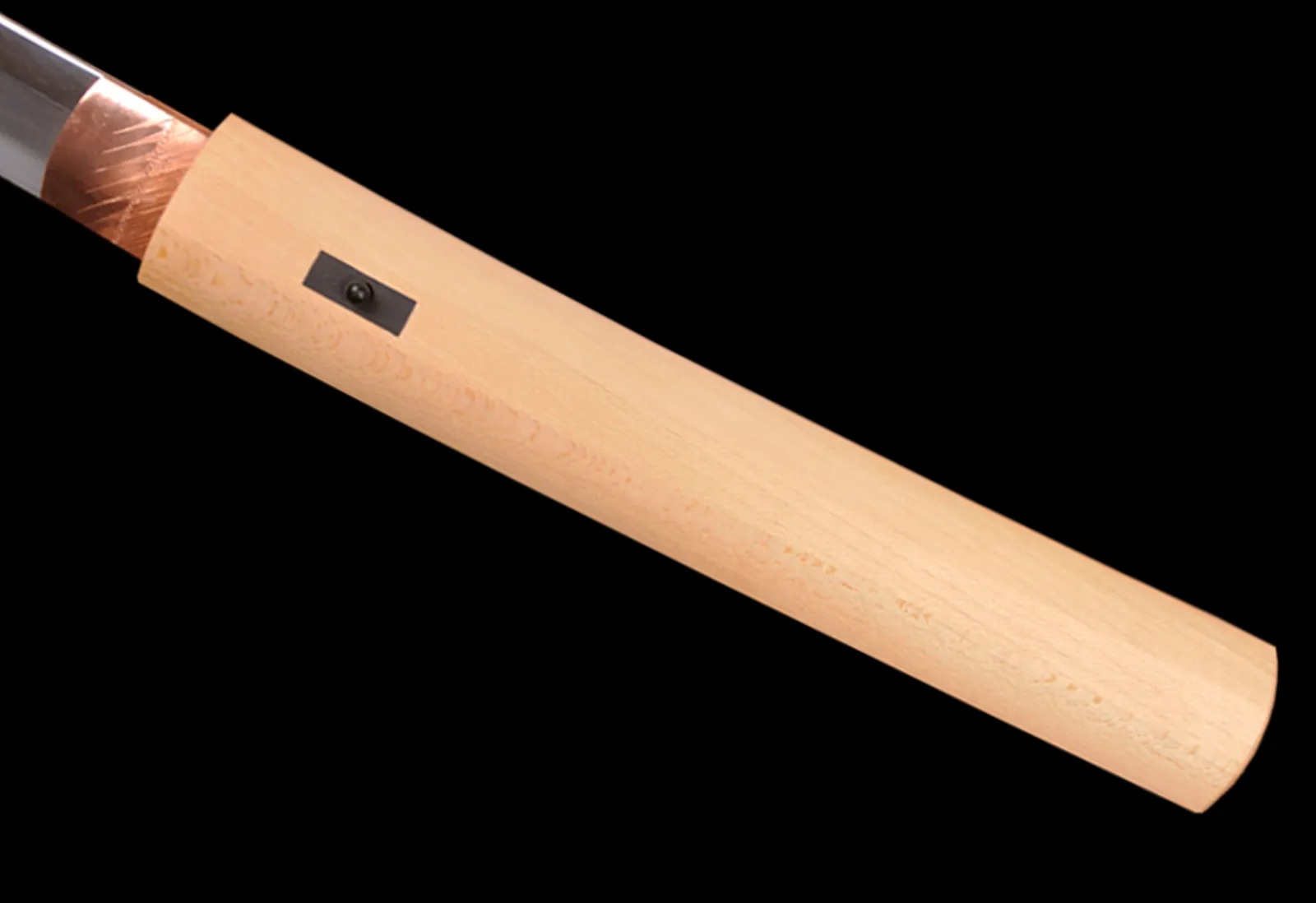
A dark, tapered horn mekugi secures the removable handle. Small and restrained in appearance, it remains part of the sword's working assembly.
02 / THE WORK INSIDE
Carved to Follow the Blade.
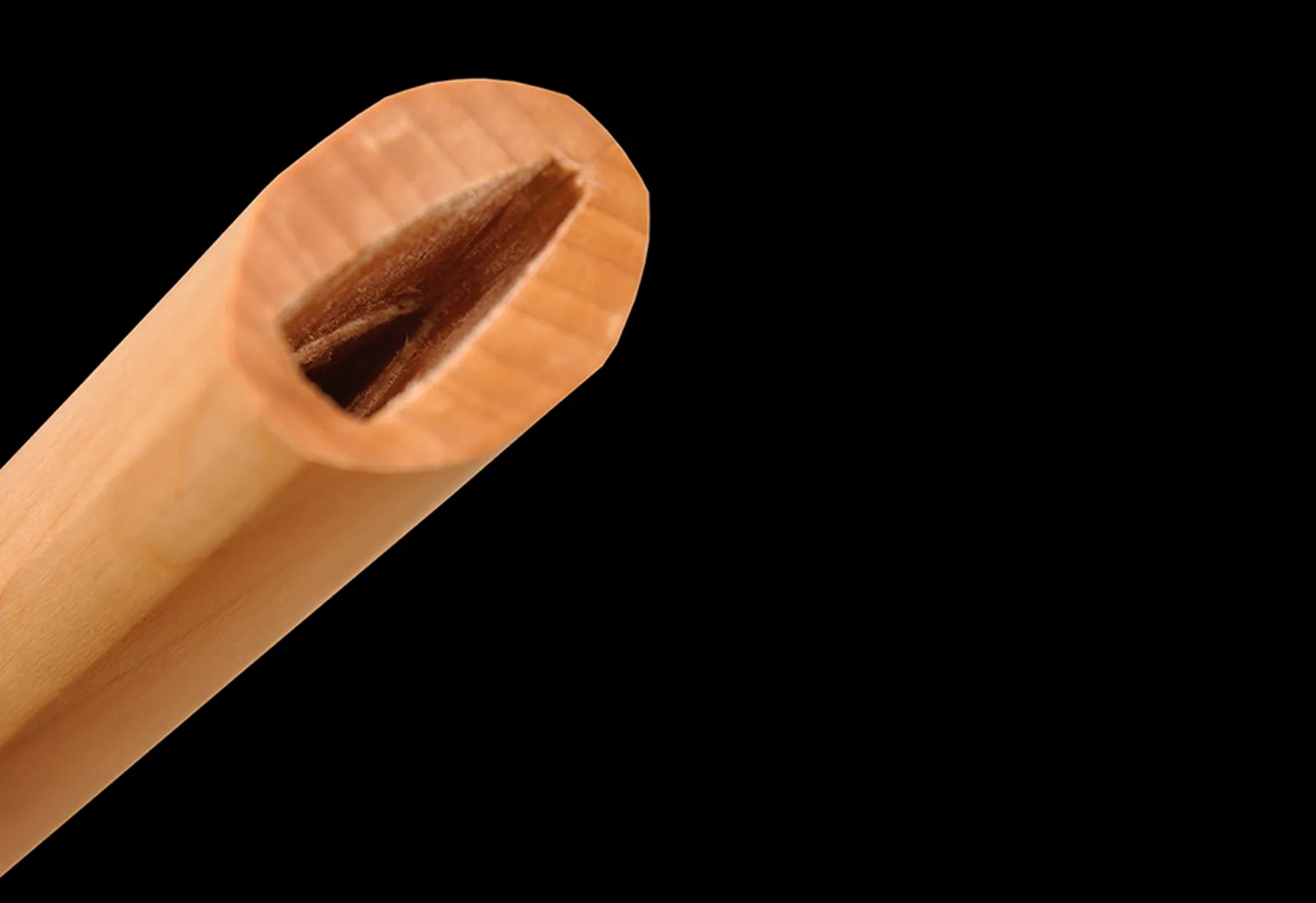
The plain outline of the shirasaya does not reveal how carefully its interior is made. The wooden cavity is carved by hand to follow the individual blade rather than relying on a generic hollow form.
That hidden craftsmanship is part of the character of this piece. When the sword is sheathed, the work of shaping the wood disappears from view.
03 / THE POLISHER'S DISCIPLINE
The Discipline of Shiage-togi.
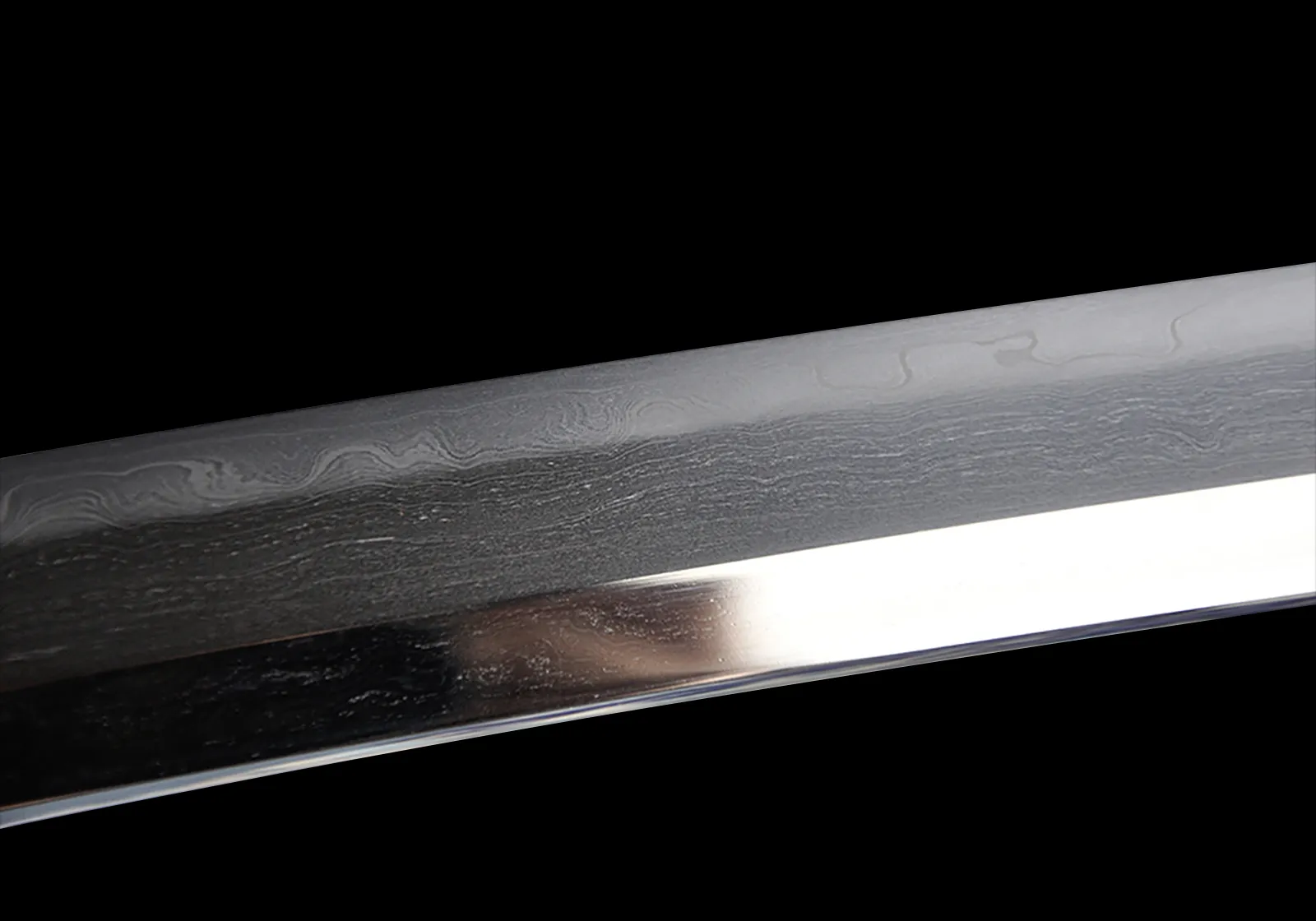
Now the attention returns to the blade. On this Caogang katana, Shiage-togi brings a defined ridge, an iron-gray surface, and a restrained presentation of the hardened edge into view.
The following studies move from the geometry of the shinogi to the grain of the steel and the subtle distinction between hada, hadori, and hamon.
04 / GEOMETRY BEFORE GLOSS
A Line That Must Remain Sharp.
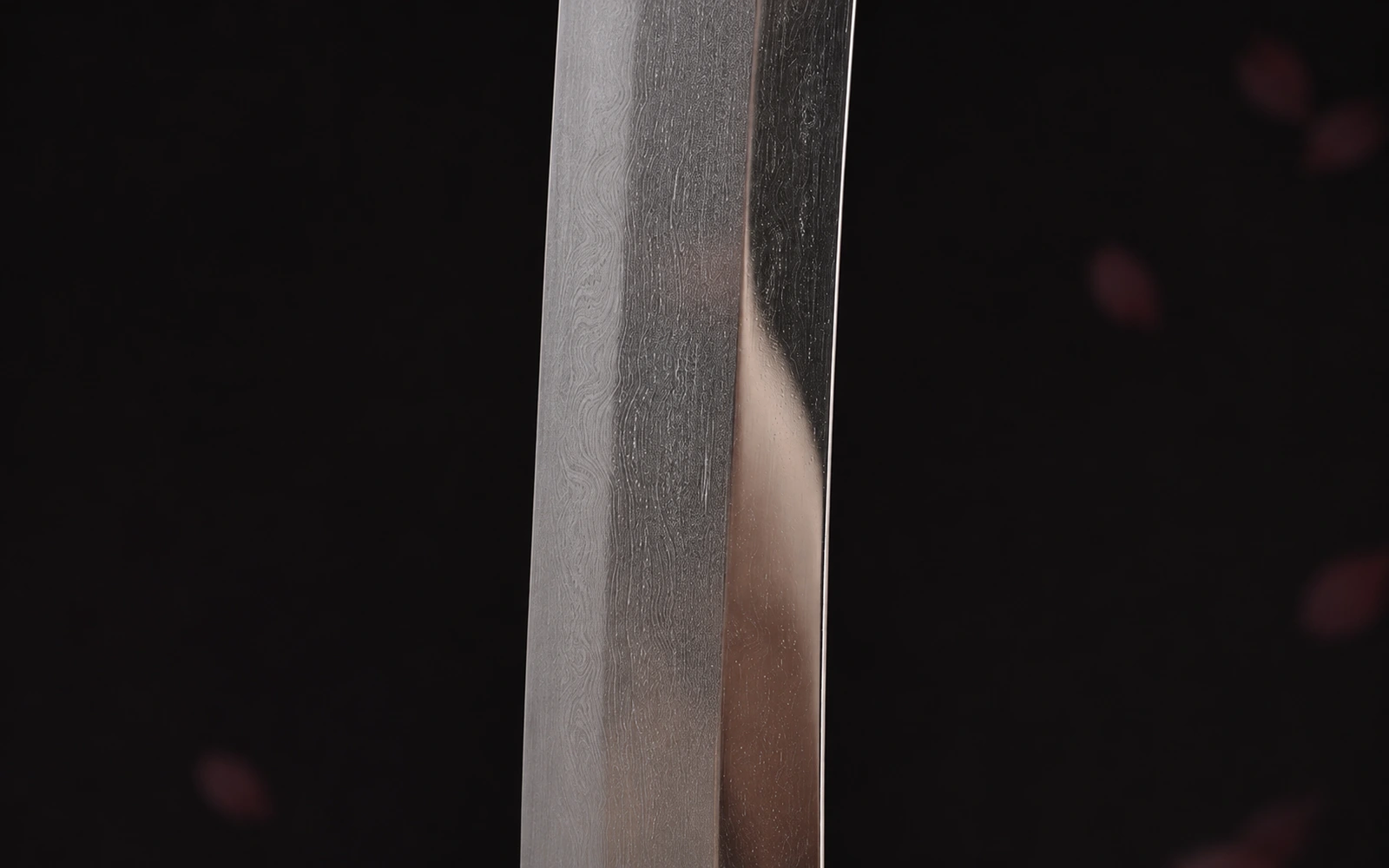
Fine polishing begins with sound geometry. In traditional sword finishing, Shitaji-togi establishes the blade's planes before the final Shiage-togi stages refine its appearance.
The shinogi should hold a clear, decisive boundary between the ji and the shinogi-ji. A bright surface alone cannot replace a well-resolved ridge.
05 / CHARACTER WITHIN THE STEEL
The Grain Beneath the Light.
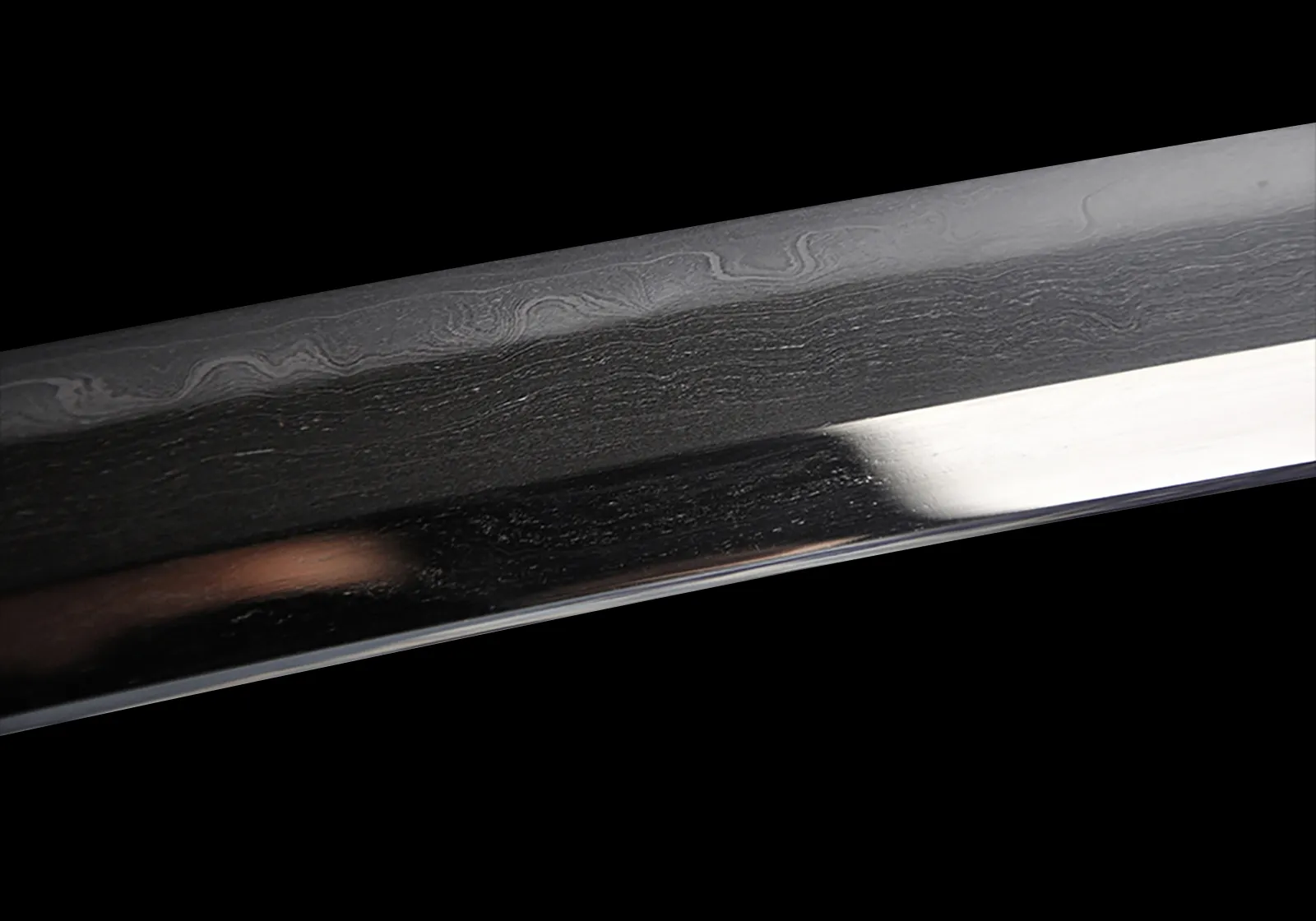
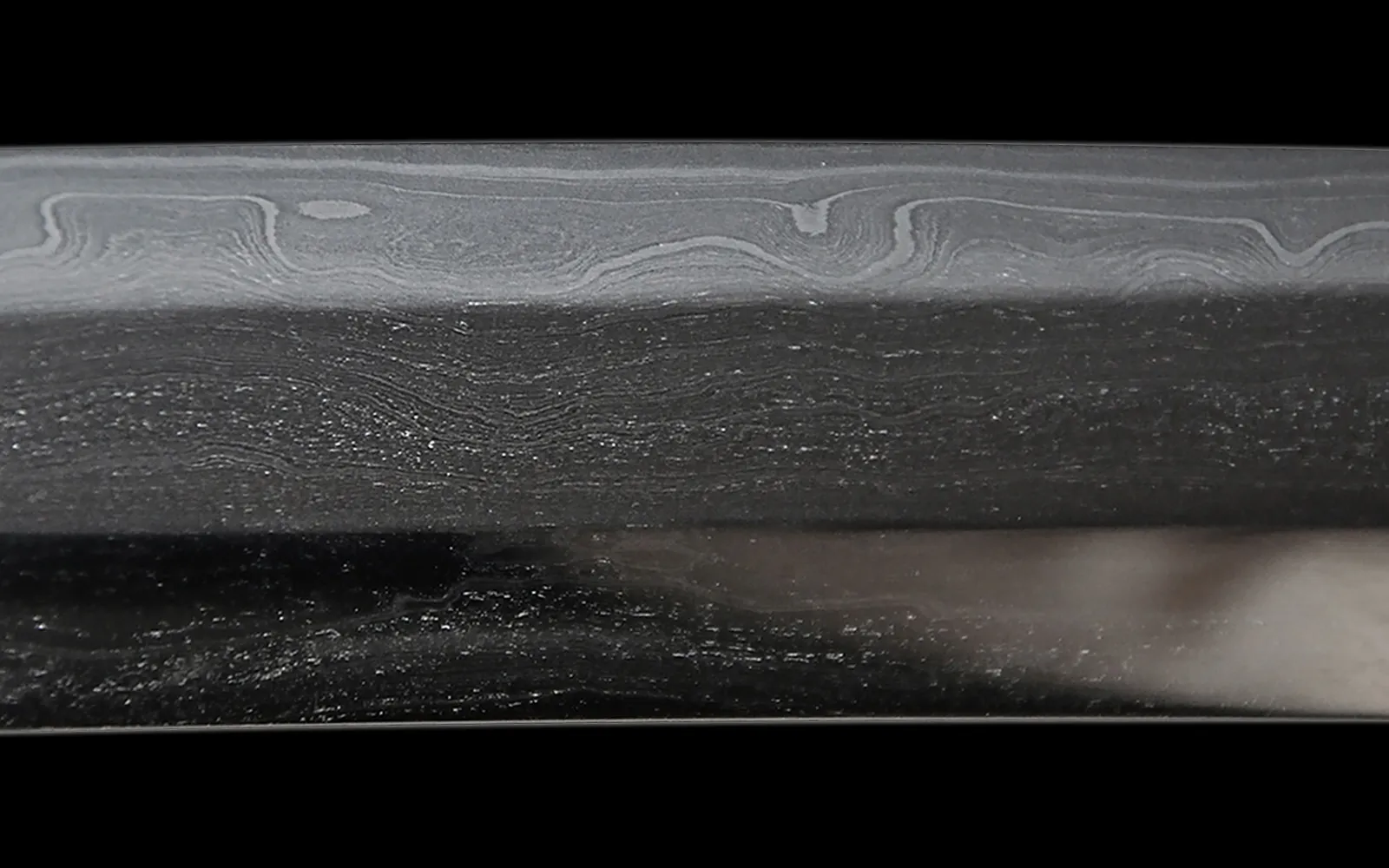
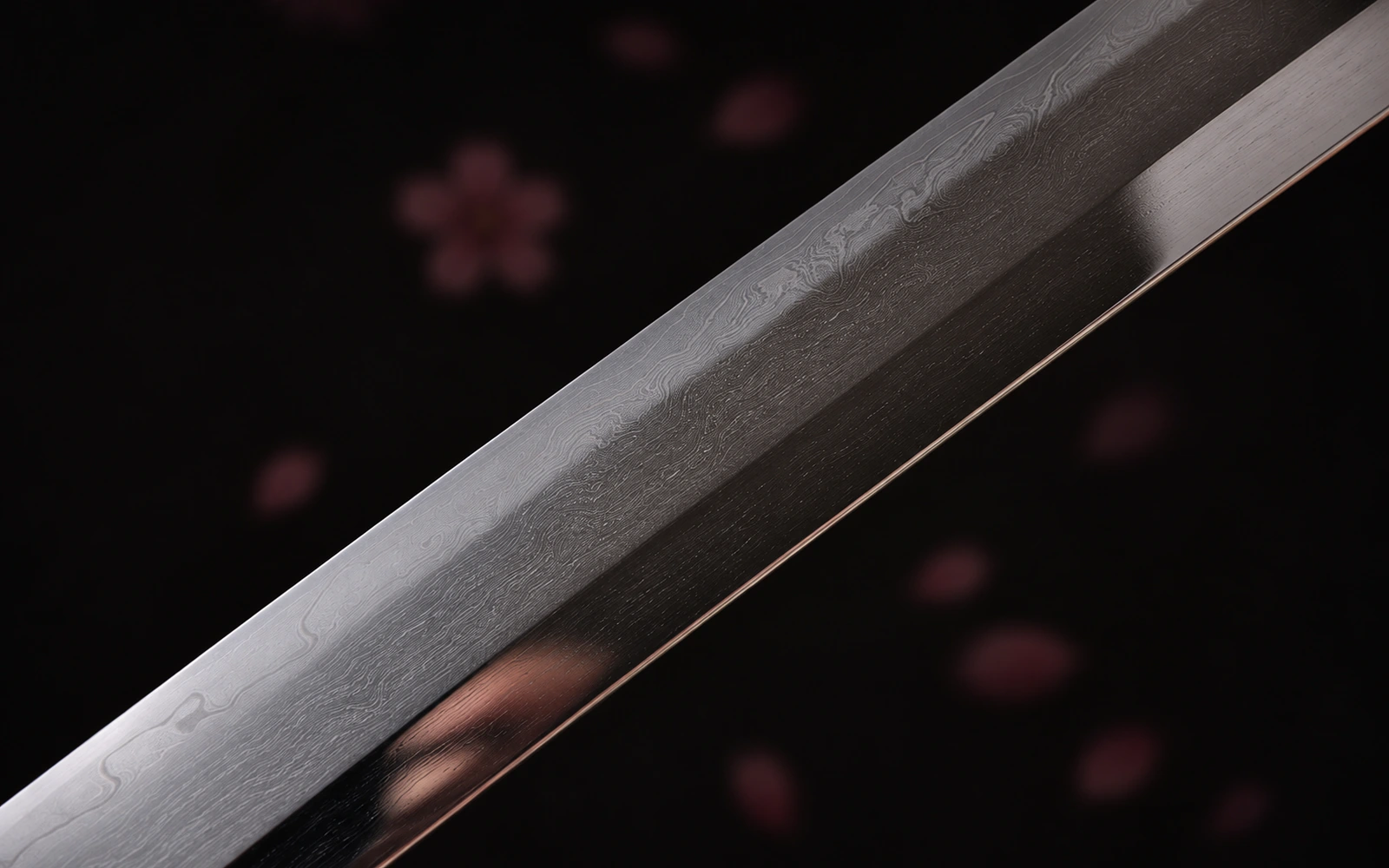
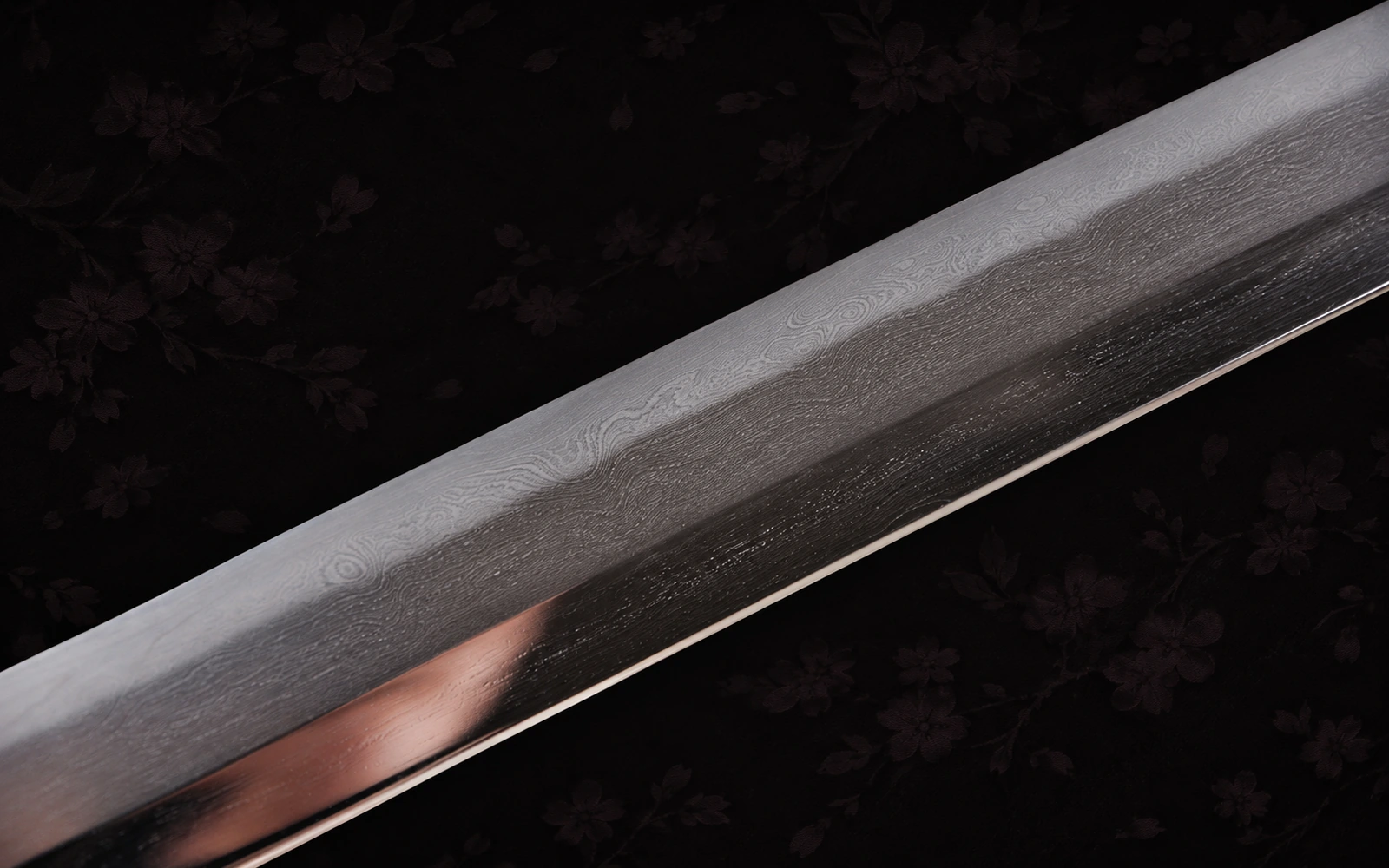
The finished surface reveals wandering bands and fine activity within the hada. Their appearance shifts as the light moves across the steel: distinct in one view, nearly lost in shadow in another.
This is a Maru-constructed blade. Its visible grain belongs to the steel's forged character; it should not be confused with the hamon, which is associated with differential hardening.
06 / THE RESTRAINT OF FINISHING
A Finish Without Excess.
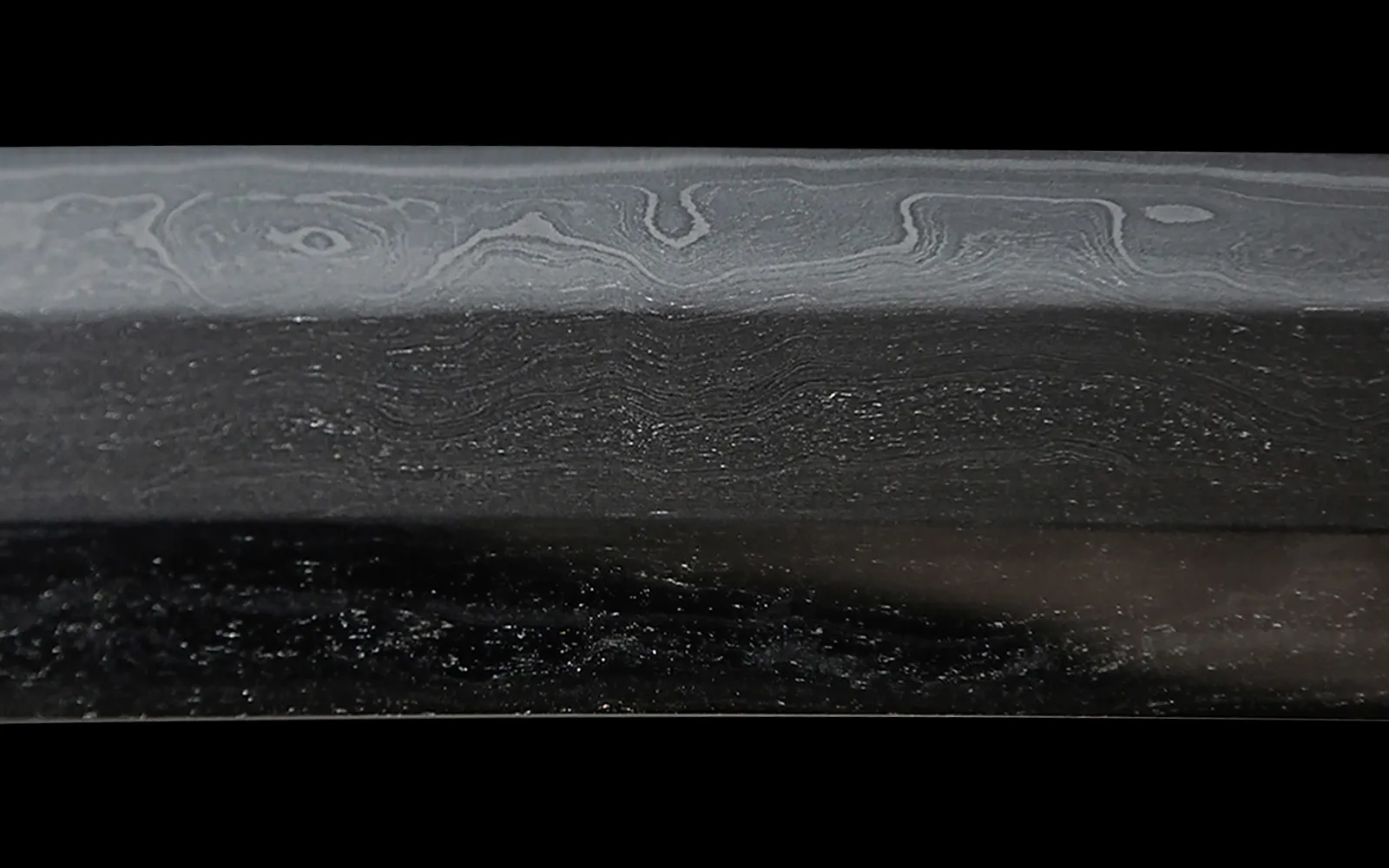
The ji retains a muted iron-gray tone, rather than appearing uniformly black. The hadori is natural and controlled, without the stark, chalk-white effect of an exaggerated finish.
On a Suguha blade, quiet continuity matters. The hamon and the grain remain distinct subjects of study: one reveals the hardening pattern; the other, the character of the steel itself.
03 / HANDMADE SHIRASAYA & COLLECTOR GALLERY
The Quiet Art of Shirasaya.
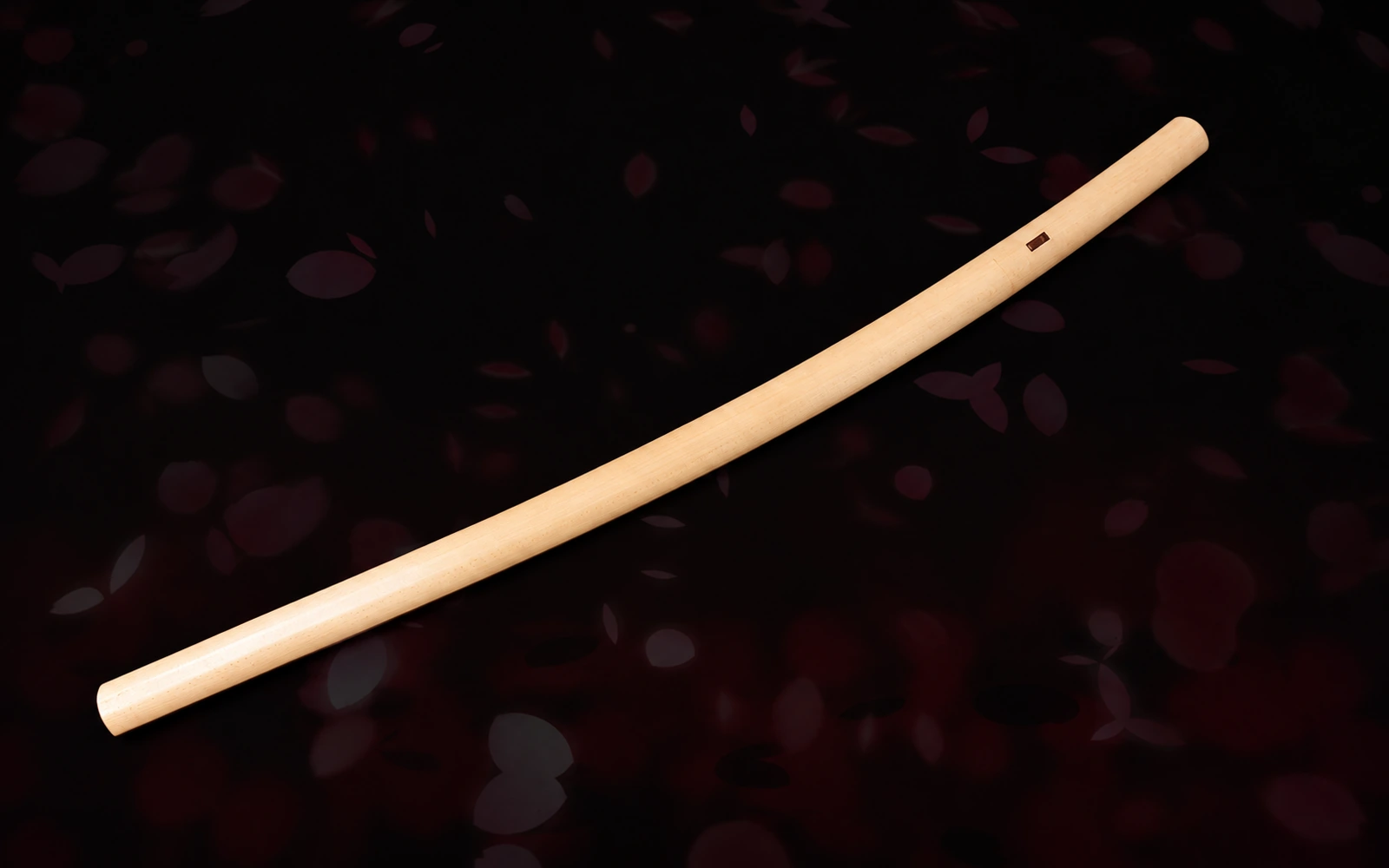
A blade shaped by fire and finished by hand finds a quieter form in wood. This Caogang katana is presented in a handmade shirasaya: pale timber, a restrained silhouette, and a fitted enclosure made for the blade it holds.
WOOD / FIT / THE FINISHED BLADE
01 / ONE BLADE, ONE WOODEN HOUSING
Made to Belong Together.
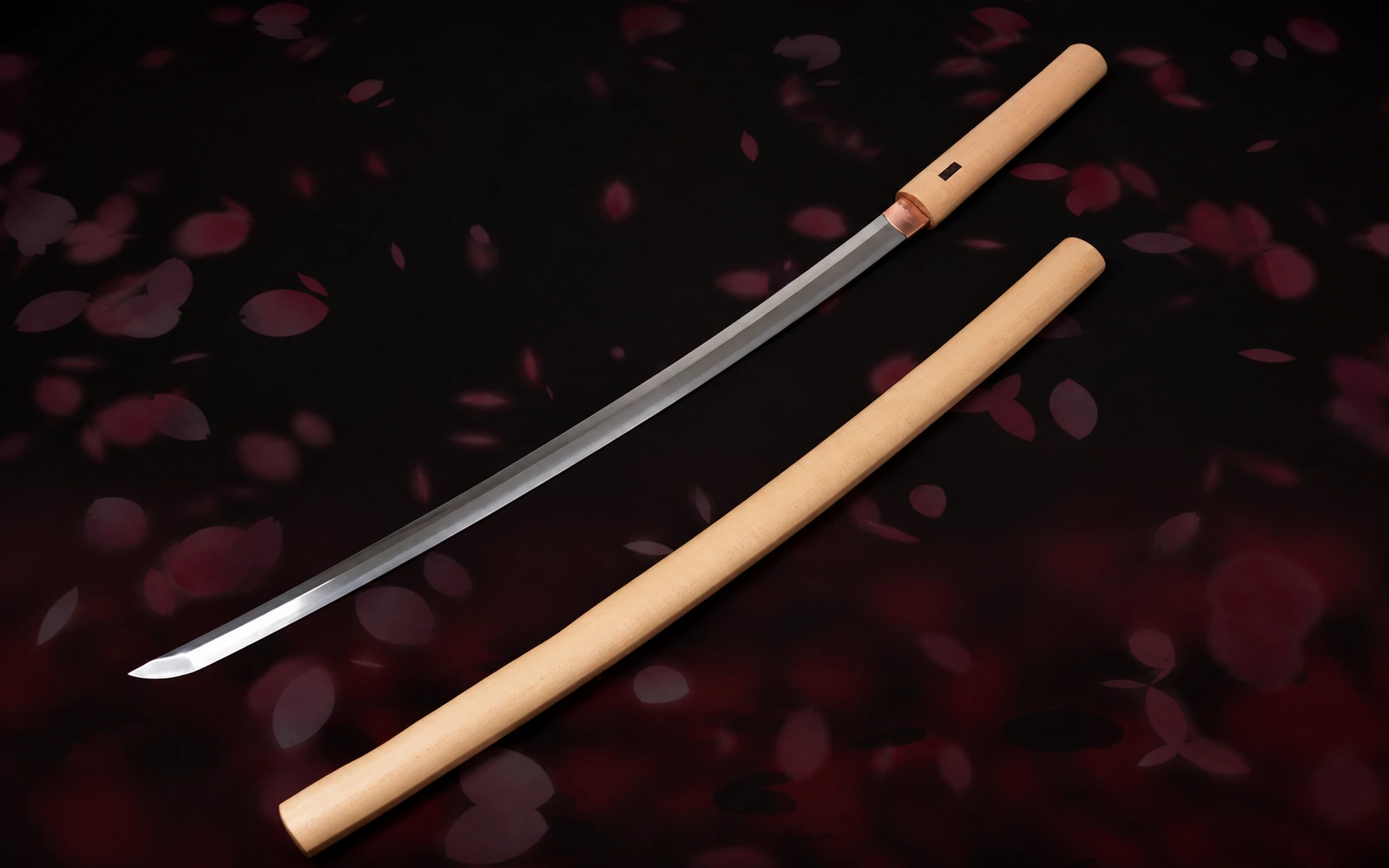
The drawn blade and its plain wooden housing are intentionally different in character. One reveals the work of steel and polish; the other lets the form rest without ornament.
02 / DETAILS OF THE FIT
The Work Hidden in Simplicity.
The simplicity of shirasaya asks for careful work inside. Its wooden channel is carved by hand to follow the form of the individual blade, rather than treated as a generic sleeve.
At the blade base sits a handcrafted copper Yūjō-style habaki. A discreet horn mekugi completes the removable handle assembly without interrupting the light wood's quiet appearance.
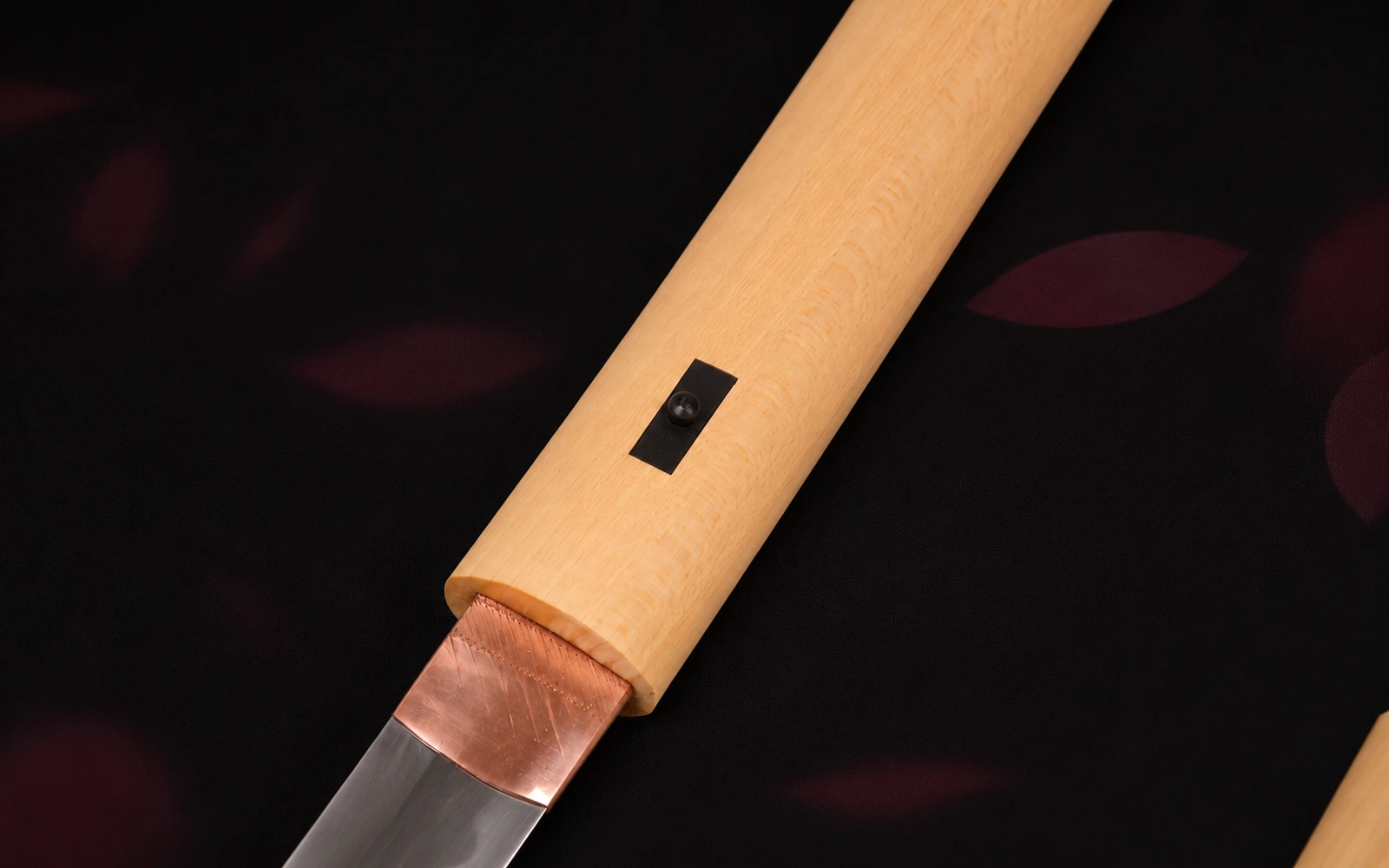
Hand-fitted details need not announce themselves. Their precision is felt in the relationship between wood, copper, and blade.
03 / THE CHARACTER BENEATH THE LIGHT
Steel, Seen Again.
These remaining views do not repeat the polisher's story. They simply allow the finished blade to be seen from changing angles: dark iron-gray steel, the subtle hada, and the restrained light of Shiage-togi.
04 / THE COMPLETE WORK
A Blade at Rest.
From the soft outline of the shirasaya to the clear planes of the polished steel, this is a complete work without an elaborate mounting. The restraint belongs to the piece.
Rezensionen
Es gibt noch keine Rezensionen.