The straight-line length of the blade measured from the mune-machi to the tip.
Why It Matters
Using nagasa provides a consistent blade-length reference across swords with different curvature and mounting styles.
The width of the blade near the machi.
Why It Matters
Width at the base provides a clear reference for the blade’s taper and overall proportions.
The thickness of the blade near its base.
Why It Matters
Base thickness helps describe the blade’s structural proportions when read together with width and taper.
T10 is a high-carbon tool-steel grade with a nominal carbon content close to 1%. Its performance in a blade depends on heat treatment, geometry, and finishing.
Why It Matters
Its relatively high carbon content makes T10 suitable for achieving a hard, wear-resistant cutting edge with appropriate heat treatment.
Clay Tempering is a common commercial English label for clay-assisted differential hardening. The traditional Japanese terminology distinguishes two related operations. Tsuchioki (土置き / つちおき) is the application of yakiba-tsuchi (焼刃土), a refractory clay-based coating, in varying thicknesses across the blade. Yaki-ire (焼入れ / やきいれ) is the subsequent heating and rapid quenching operation. Together, these operations help produce different hardening characteristics across the blade and contribute to the formation of a hamon (刃文). Here, Clay Tempering refers to the hardening method, not to the separate post-quench tempering process.
Why It Matters
During quenching, the thinly coated or exposed cutting edge usually cools more rapidly and can form hard, wear-resistant martensite. Thicker clay over the blade body and spine slows cooling, allowing comparatively softer, tougher structures to develop. This deliberate contrast gives the blade a hard edge with a more resilient body, while the transition creates the hamon revealed by polishing.
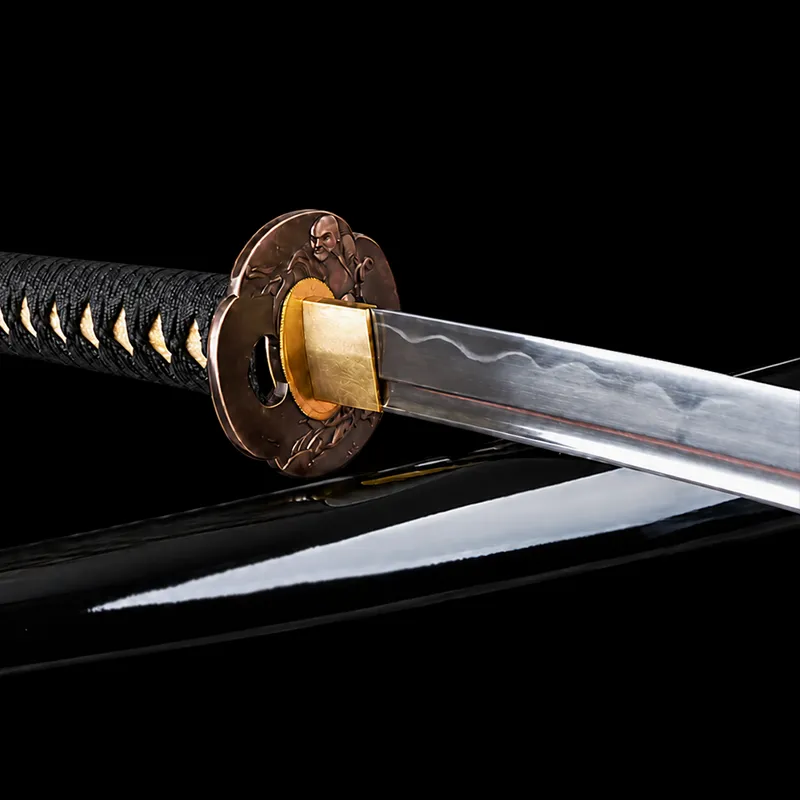
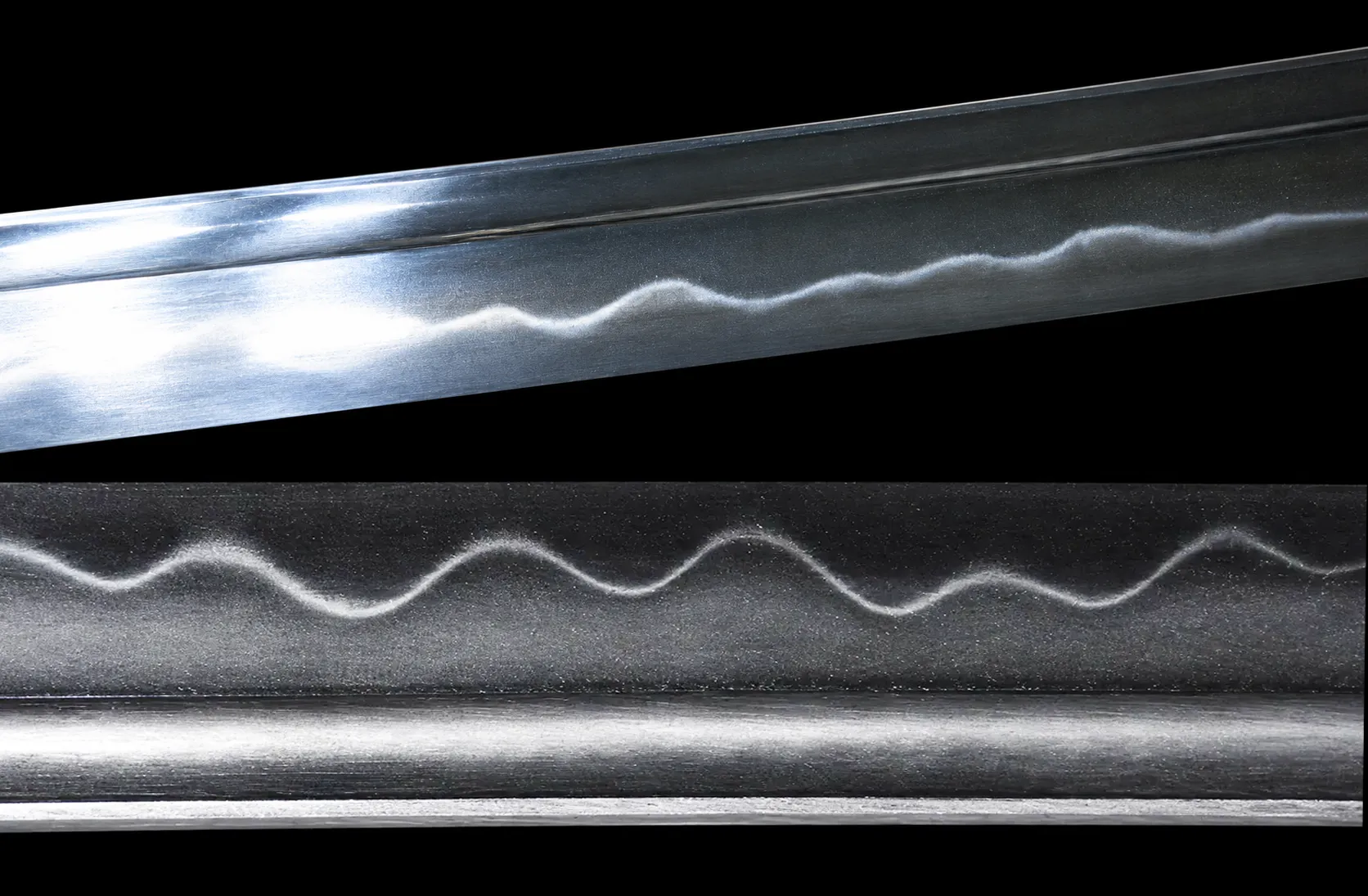
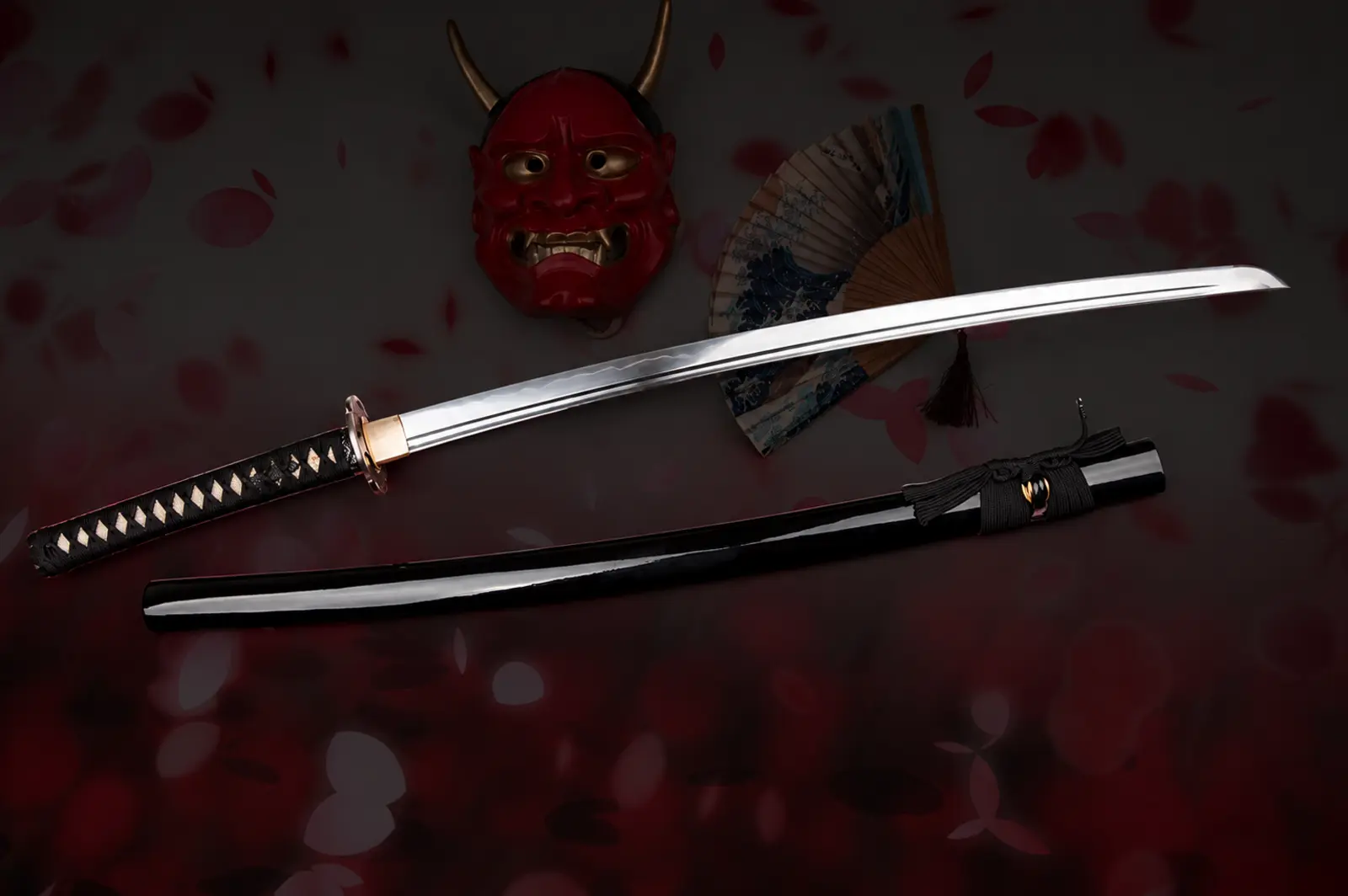
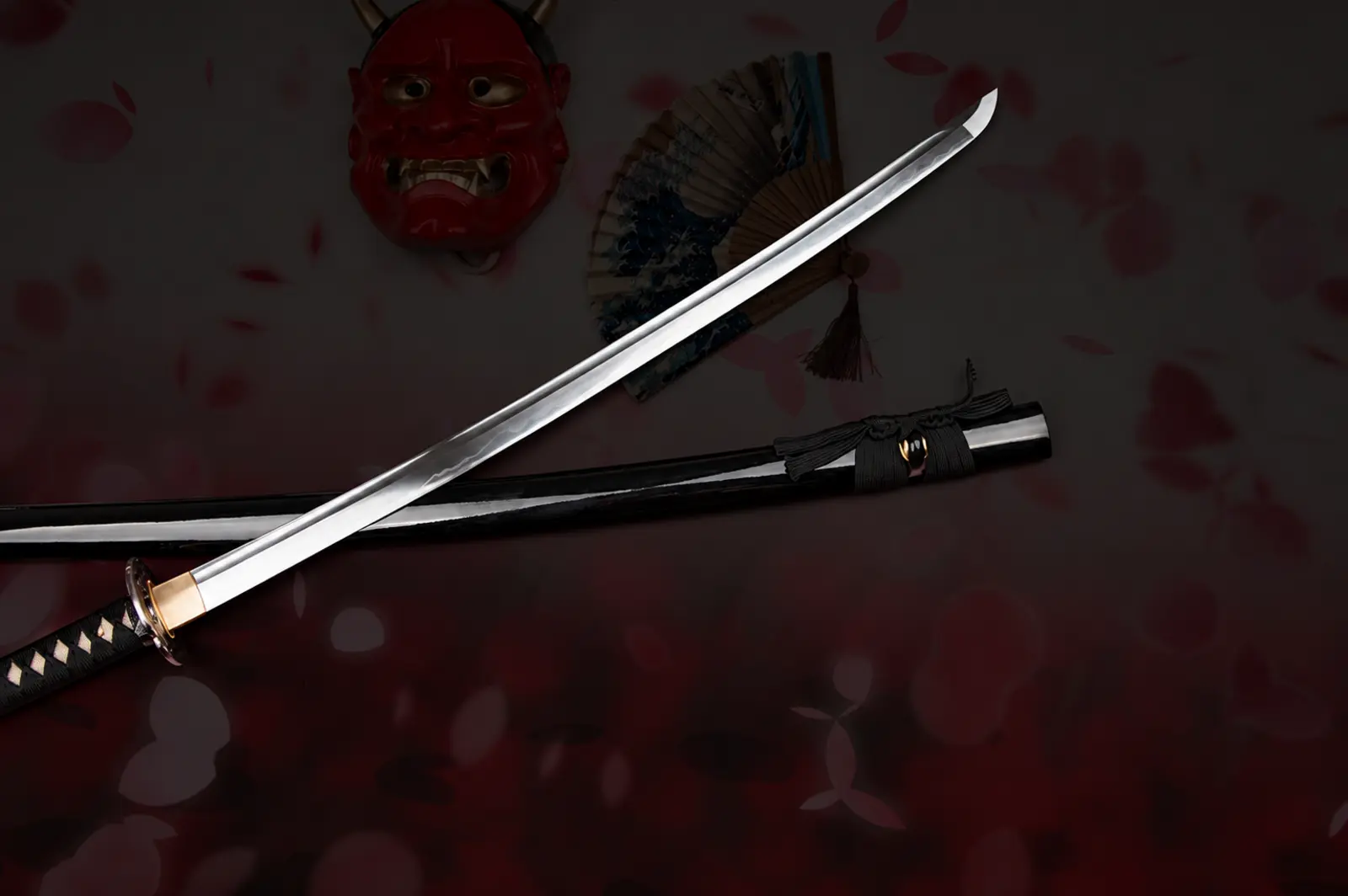
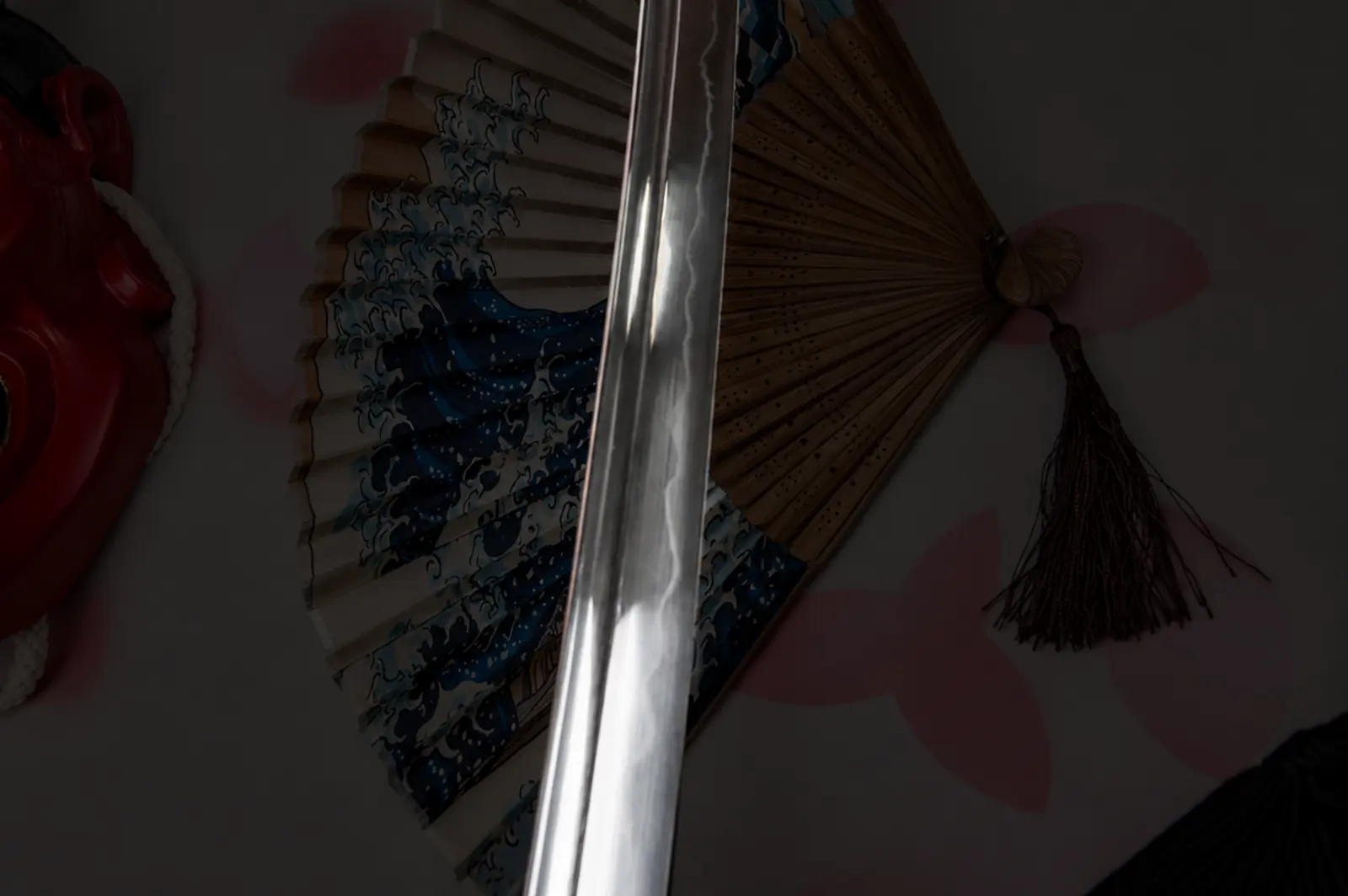
The visible pattern along the hardened edge, formed through differential hardening and revealed through polishing.
Why It Matters
The hamon makes the transition between differently hardened regions visible after polishing. It records the swordsmith’s clay application and quenching work while giving the cutting edge its distinctive line and activity.
Eight-Stage Polish is a modern blade-finishing sequence that uses eight progressive abrasive stages to refine the steel surface. In Japanese sword polishing, the traditional broad stages are Shitaji-togi (下地研ぎ / したじとぎ), which develops the underlying blade geometry, and Shiage-togi (仕上研ぎ / しあげとぎ), which completes the surface presentation. The eight-stage name describes a defined contemporary finishing sequence.
Why It Matters
Working through progressive abrasive stages reduces the marks left by earlier steps and produces a more controlled final surface. The process refines reflections and makes blade planes, ridges, and fine finishing details easier to see.
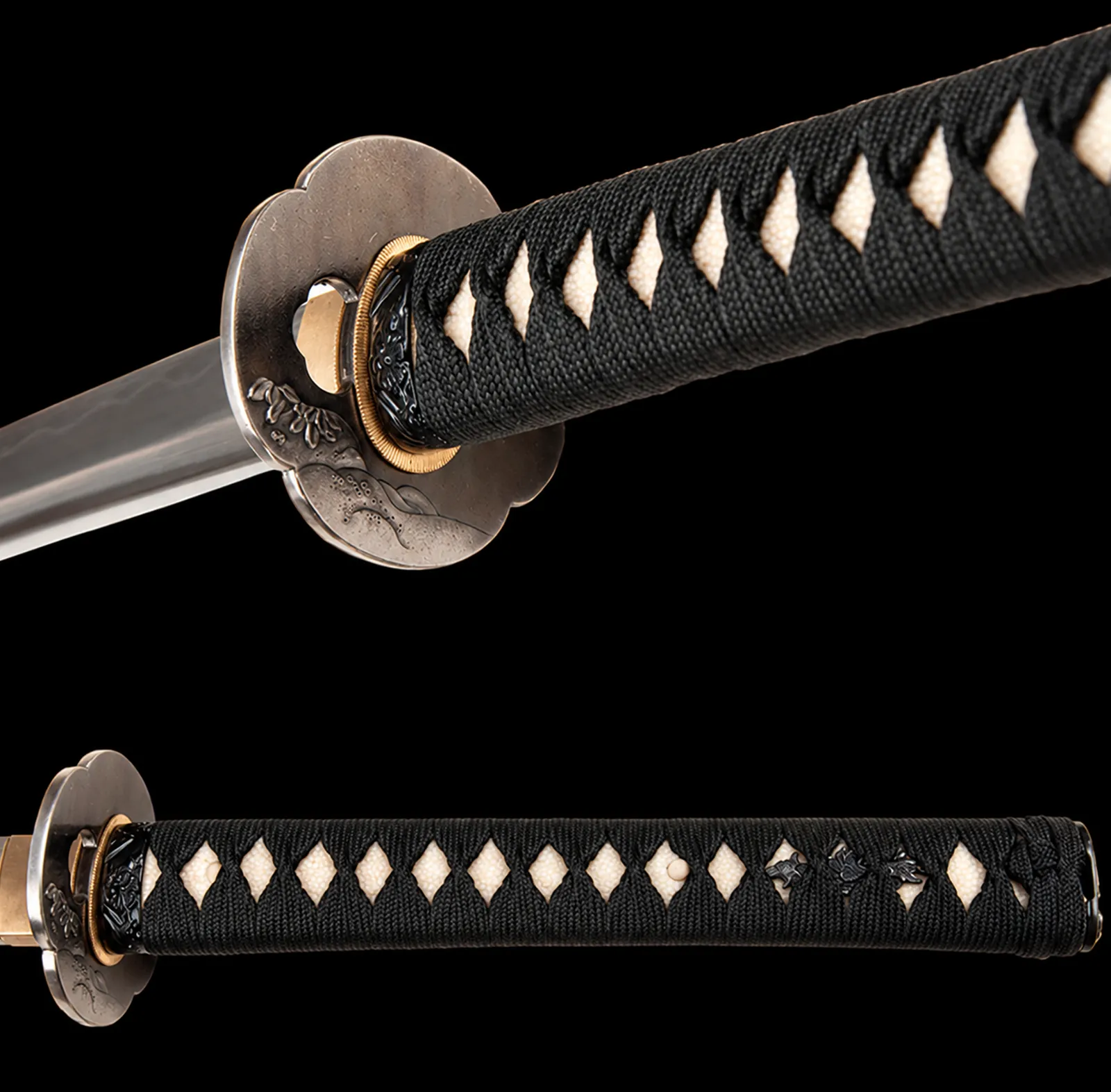
The complete handle or hilt assembly of a Japanese sword.
Why It Matters
The wooden core, ray-skin underlay, wrap, and fittings form a closely fitted handle assembly around the tang. Their fit and construction contribute to secure handling and the character of the completed mounting.
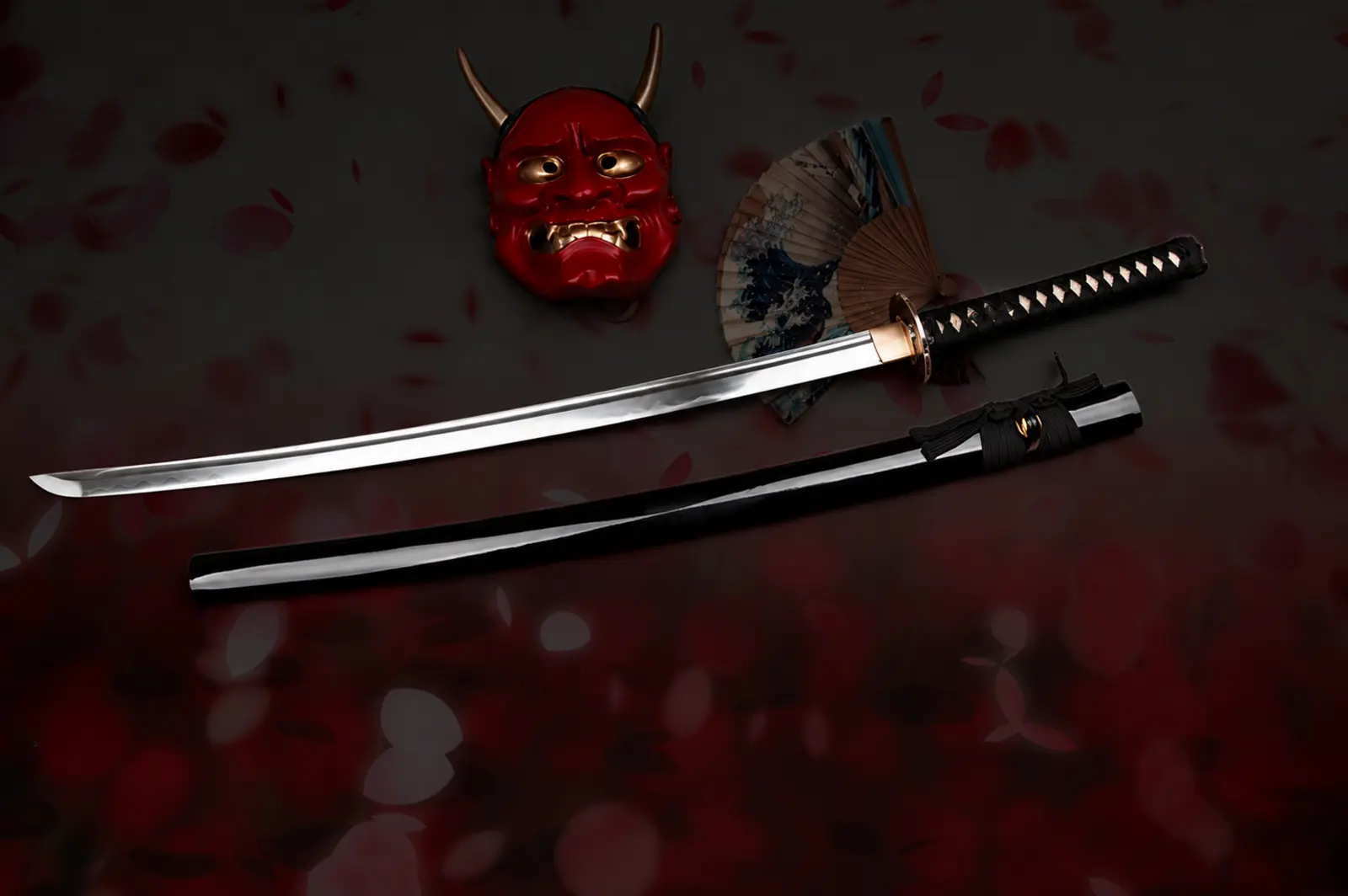
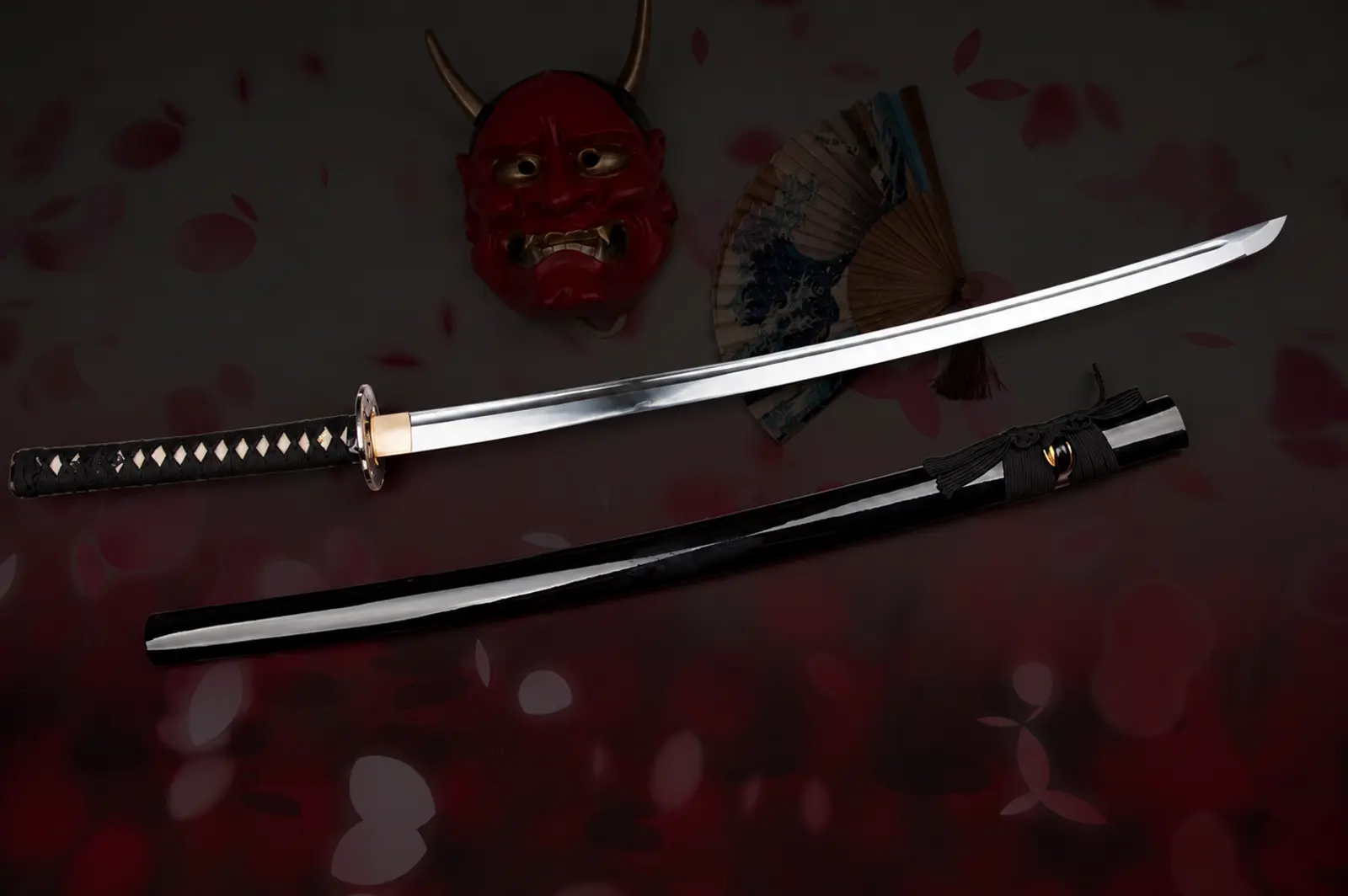
The classic Japanese sword blade form defined by a longitudinal shinogi ridge separating the main blade face from the shinogi-ji.
Why It Matters
The raised shinogi creates distinct blade planes and a characteristic combination of ridge, surface, and point geometry.
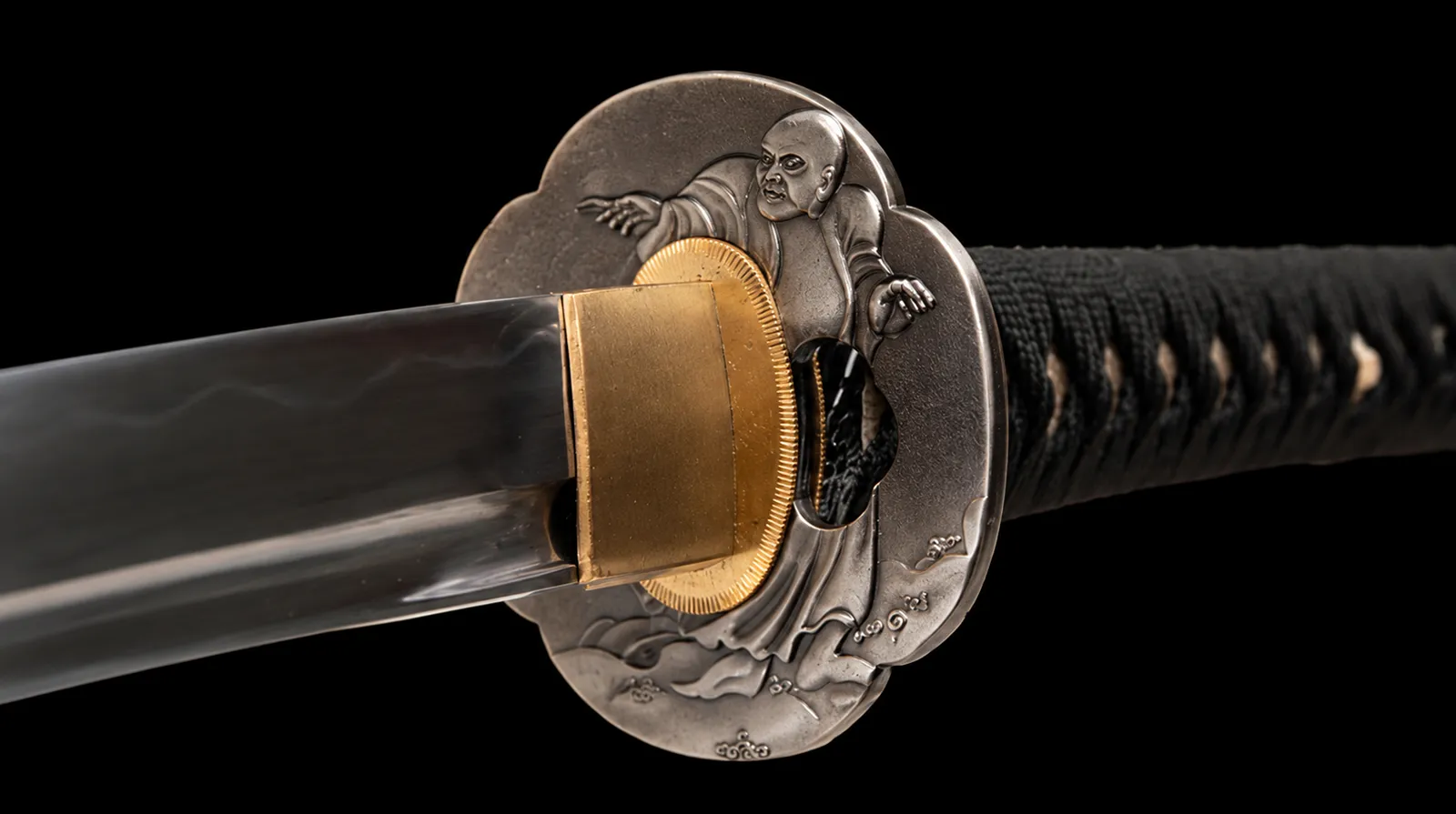
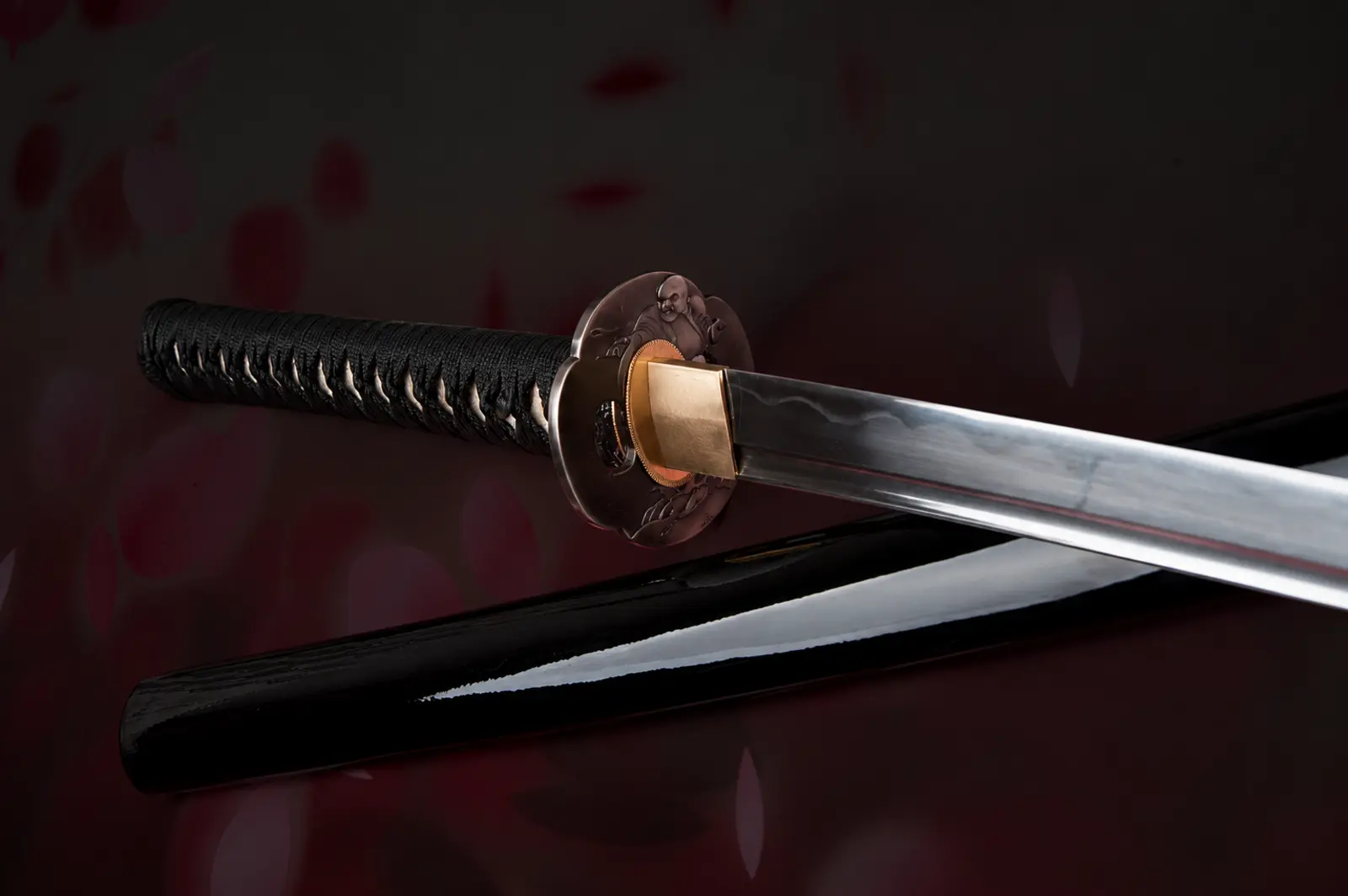
The guard positioned between the blade and tsuka.
Why It Matters
The tsuba separates the user’s hand from the blade and completes the handle-side mounting. Its shape, weight, and metalwork also contribute to the sword’s balance and visual character.
The fitted metal collar around the base of the blade immediately above the nakago.
Why It Matters
The fitted habaki seats against the koiguchi of the saya, helping hold the sheathed sword securely and maintain the intended relationship between blade and scabbard. Its precision is as important as its decorative finish.
The cord or braid used to wrap the tsuka.
Why It Matters
The fiber, weave, and tension of the wrapping affect grip feel and the stability of the handle covering. Its color and texture also play a major role in the character of the tsuka.
Ray skin traditionally used on a tsuka beneath the handle wrapping, and also used on some sword scabbards as a textured exterior covering.
Why It Matters
On a tsuka, the raised texture of the ray skin provides a grippy underlayer beneath the handle wrapping. When used on a saya, it creates a distinctive full-length textured exterior.
Yaki-ire is the heat-treatment stage in which a forged blade is heated to a suitable hardening temperature and rapidly cooled in a quenching medium. This changes the steel’s microstructure and can harden the blade. When paired with a selectively applied clay coating, it can produce differential hardening.
Why It Matters
Heating and rapid quenching transform the steel’s structure and establish the blade’s hardened regions. When the blade has been selectively coated with clay, this same hardening stage can produce a harder cutting edge and a comparatively tougher body.
Small decorative fittings traditionally positioned beneath the tsuka wrap.
Why It Matters
Menuki add sculptural detail beneath the wrap and contribute to the traditional visual character of the handle.
The metal collar fitted at the blade end of the tsuka.
Why It Matters
The collar reinforces and finishes the guard end of the handle while linking its visual design to the fittings.
The point section of the blade, typically separated from the main body by the yokote.
Why It Matters
The point’s length and contour affect its silhouette and how the polishing transitions into the tip.
The opening of the saya where the habaki seats when the blade is fully sheathed.
Why It Matters
A well-fitted saya mouth works with the habaki to seat the sheathed blade securely and protect the opening from wear.
The knob or fitting on the saya through which the sageo passes.
Why It Matters
Kurigata provides the attachment point that integrates the sageo with the scabbard.
The cord attached to the saya through the kurigata.
Why It Matters
The sageo can be used to secure the saya to the wearer’s belt and completes the scabbard’s mounting arrangement. Its weave and material also give the saya distinctive texture and color.
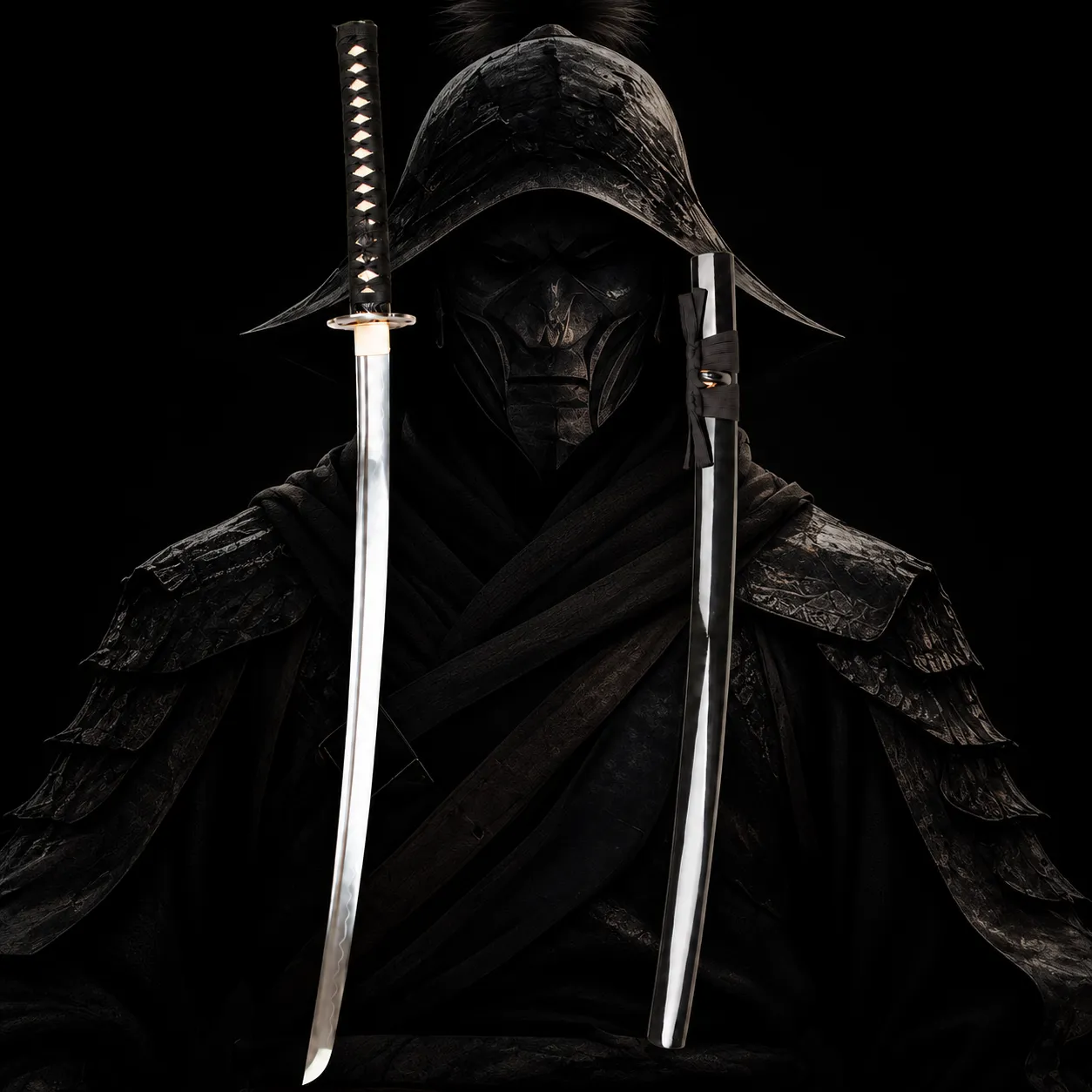
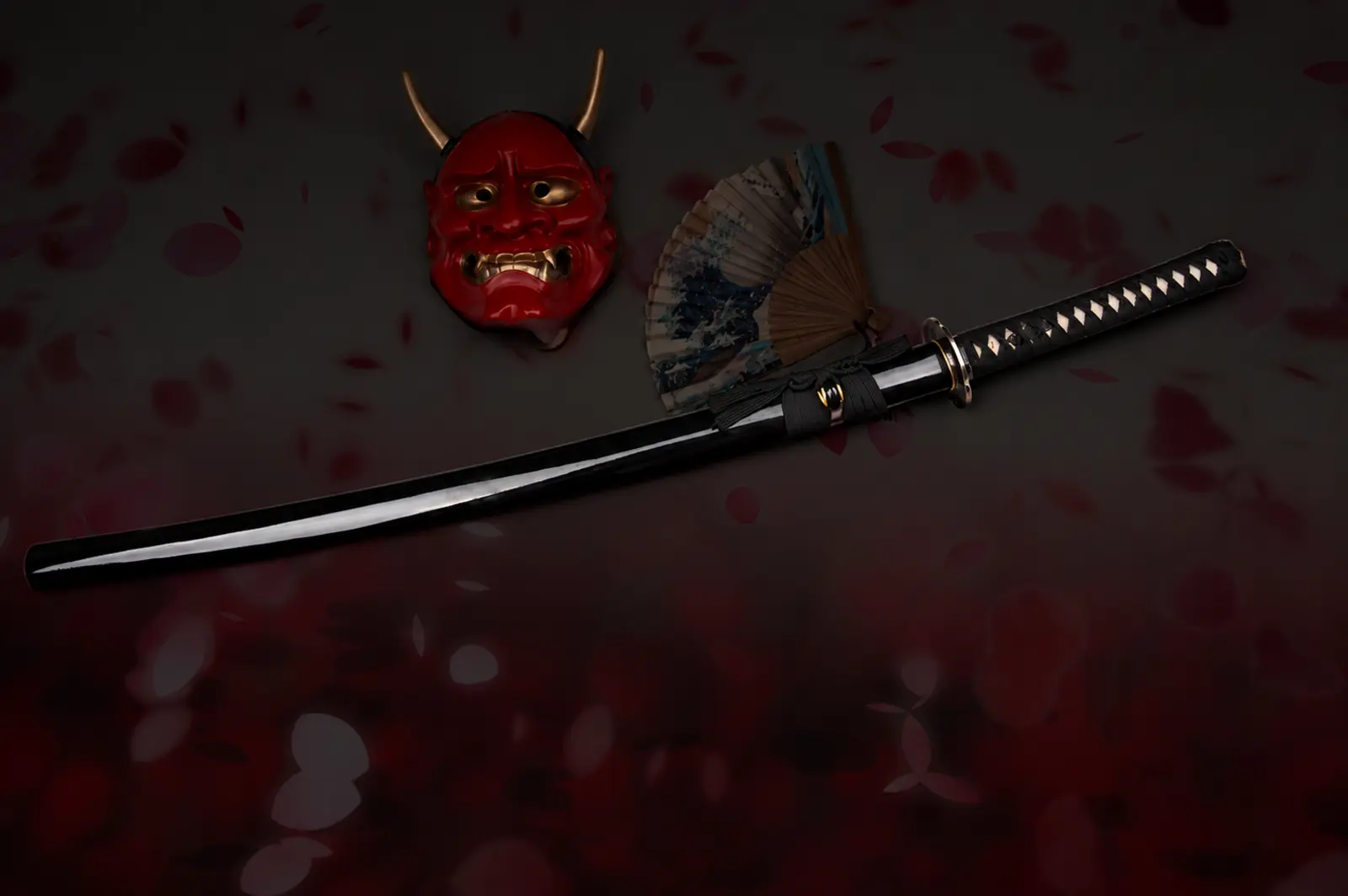
The fitted scabbard that houses and protects the blade.
Why It Matters
A closely fitted saya houses the blade and protects its polished surfaces when sheathed. The wooden core, mouth fitting, finish, and cord arrangement also shape the scabbard’s function and appearance.
The terminal end or end fitting of the saya.
Why It Matters
The end fitting protects the lower end of the scabbard and completes its mounted appearance.

Reviews
There are no reviews yet.