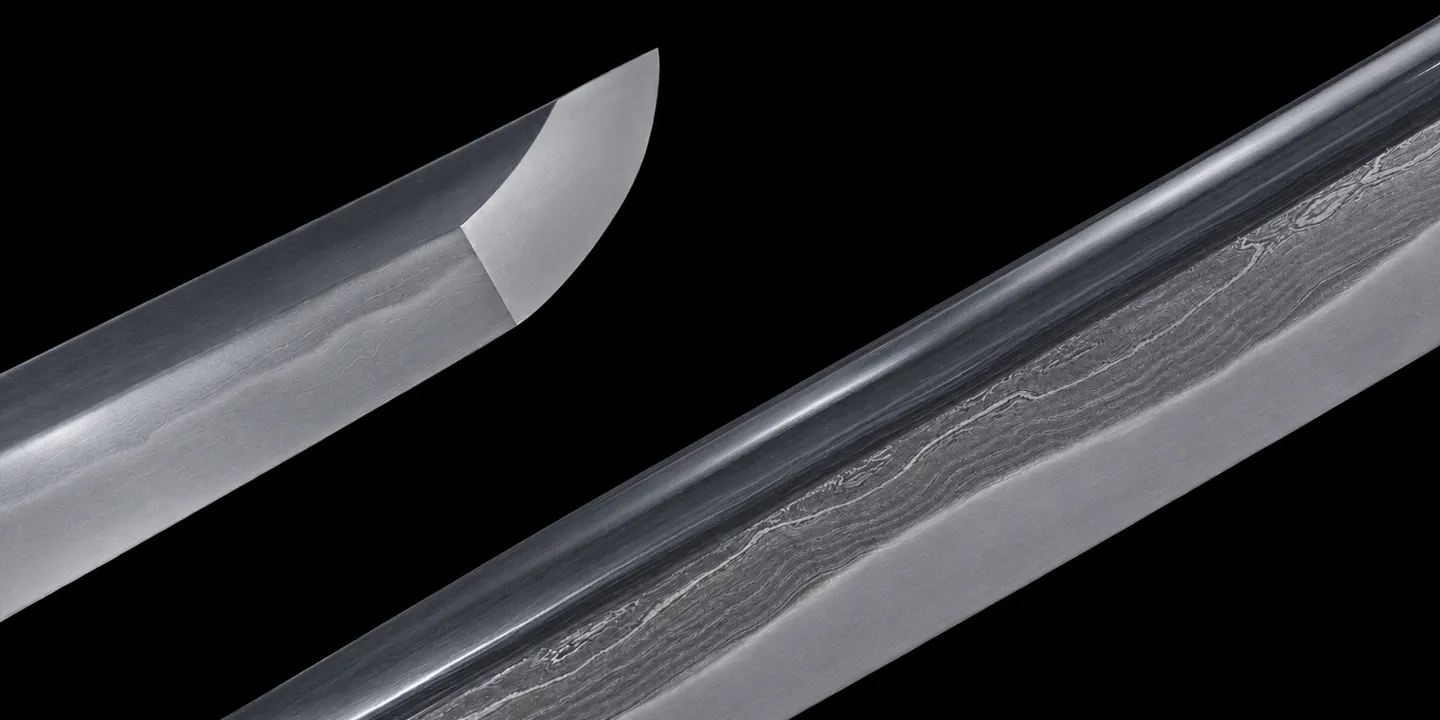
The point section of the blade, typically separated from the main body by the yokote.
Why It Matters
The point’s length and contour affect its silhouette and how the polishing transitions into the tip.
The transverse line separating the kissaki from the main body on blade forms that have a defined yokote.
Why It Matters
A defined yokote gives the kissaki a clear transition from the main blade and emphasizes the point’s three-dimensional form.
Tōshin (刀身 / とうしん) refers to the steel body of a Japanese sword, distinct from its handle, guard, other mountings and scabbard. It includes the exposed blade with its edge, spine and tip, as well as the tang (nakago) that extends into the handle.
Why It Matters
Distinguishing the blade from its mountings makes it easier to understand sword anatomy, blade geometry and how the steel body is connected to the handle.
The back or spine of the blade opposite the cutting edge.
Why It Matters
Spine shape and thickness help define cross-sectional geometry and contribute to the blade’s mass distribution.
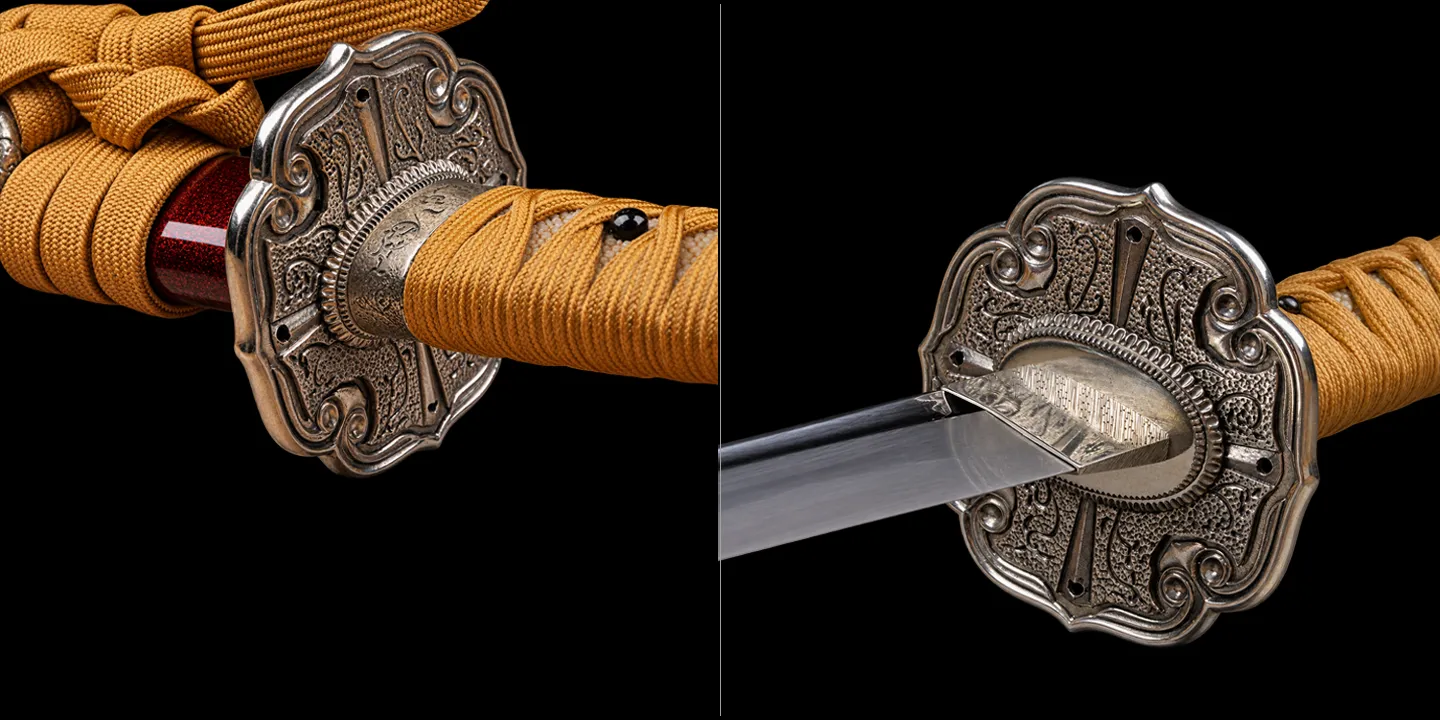
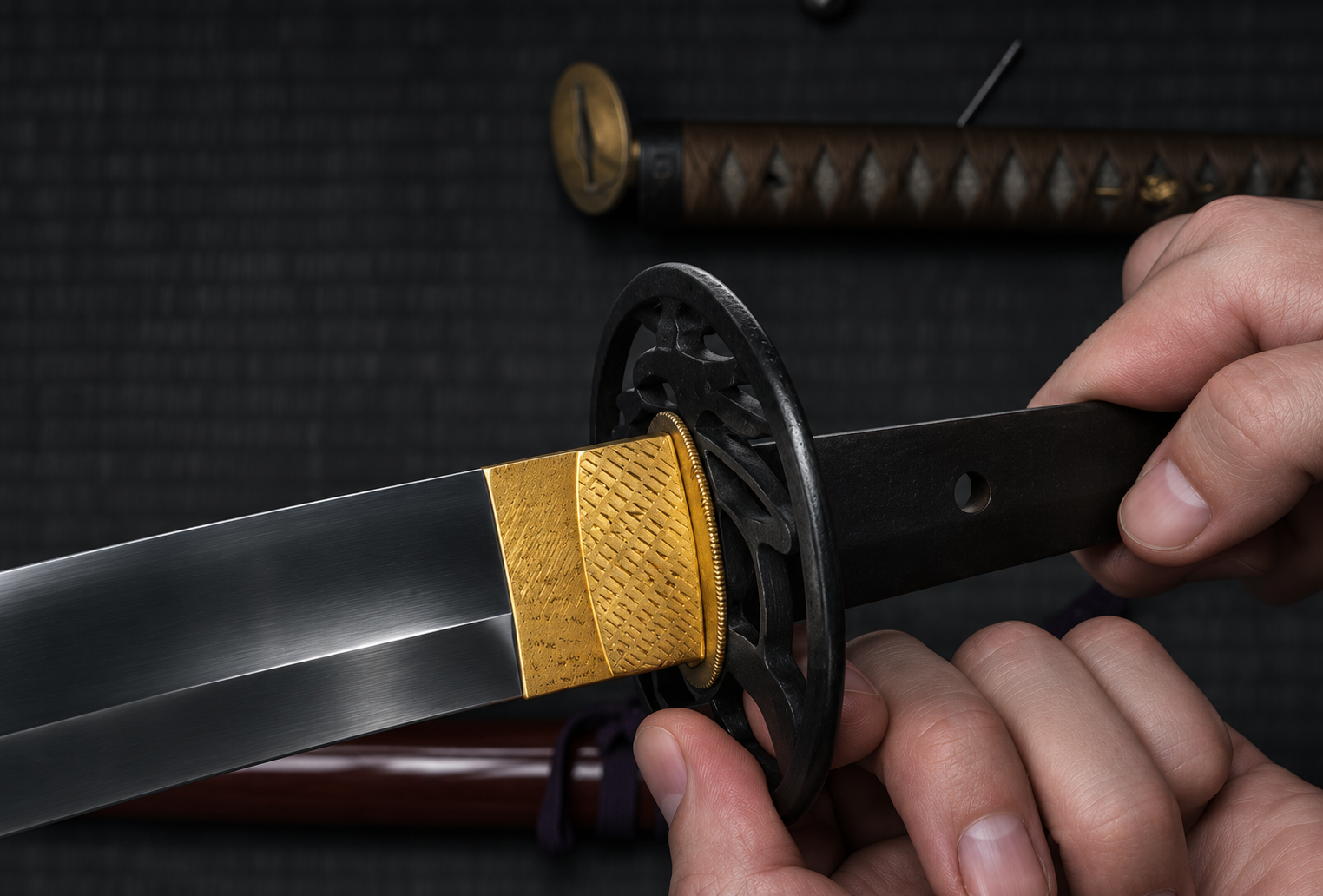
The fitted metal collar around the base of the blade immediately above the nakago.
Why It Matters
The fitted habaki seats against the koiguchi of the saya, helping hold the sheathed sword securely and maintain the intended relationship between blade and scabbard. Its precision is as important as its decorative finish.
The guard positioned between the blade and tsuka.
Why It Matters
The tsuba separates the user’s hand from the blade and completes the handle-side mounting. Its shape, weight, and metalwork also contribute to the sword’s balance and visual character.
The complete handle or hilt assembly of a Japanese sword.
Why It Matters
The wooden core, ray-skin underlay, wrap, and fittings form a closely fitted handle assembly around the tang. Their fit and construction contribute to secure handling and the character of the completed mounting.
The cord or braid used to wrap the tsuka.
Why It Matters
The fiber, weave, and tension of the wrapping affect grip feel and the stability of the handle covering. Its color and texture also play a major role in the character of the tsuka.
The fitting at the terminal end of the tsuka.
Why It Matters
The end fitting protects and finishes the tsuka and often completes a coordinated fuchi–kashira design.
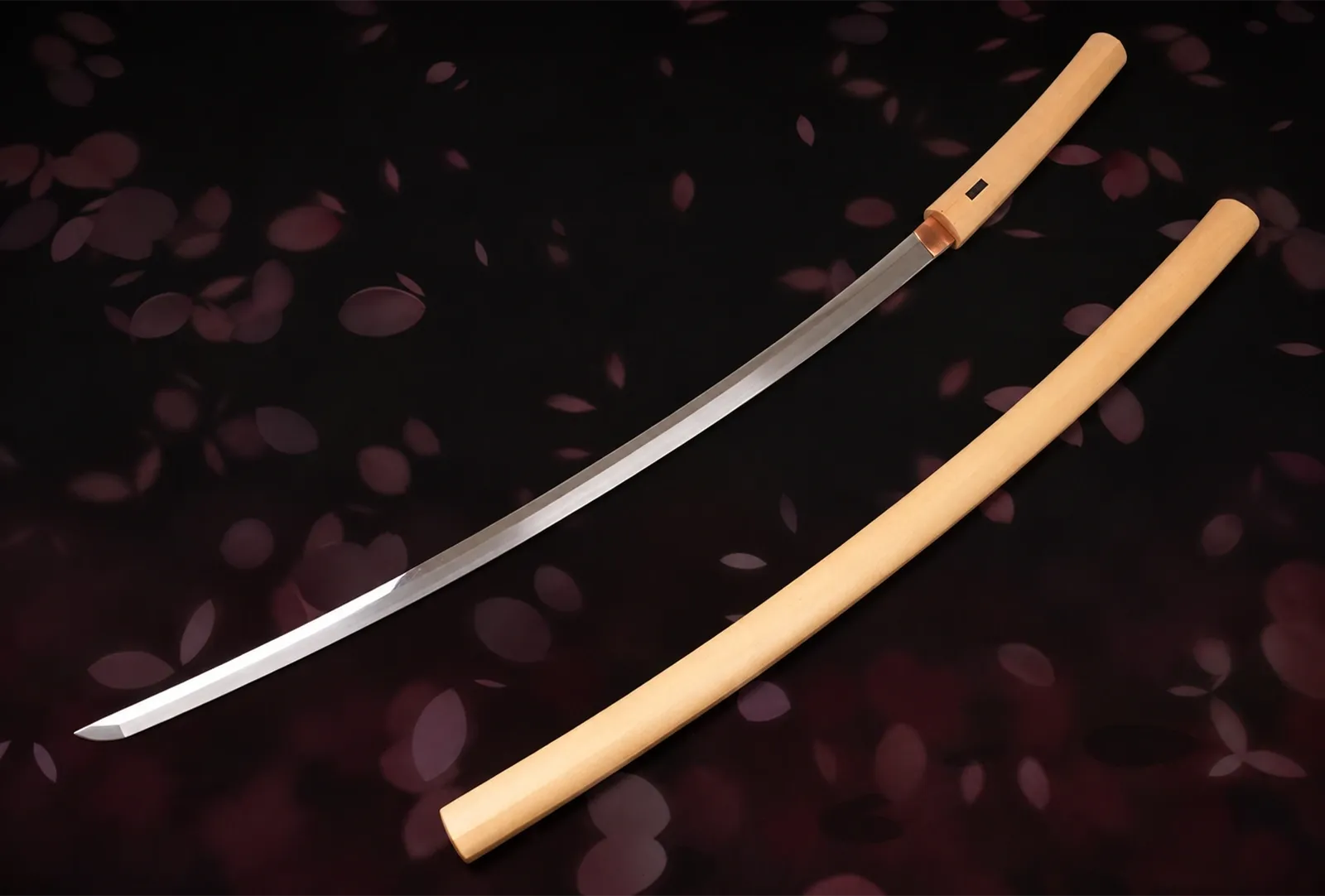
The fitted scabbard that houses and protects the blade.
Why It Matters
A closely fitted saya houses the blade and protects its polished surfaces when sheathed. The wooden core, mouth fitting, finish, and cord arrangement also shape the scabbard’s function and appearance.
The opening of the saya where the habaki seats when the blade is fully sheathed.
Why It Matters
A well-fitted saya mouth works with the habaki to seat the sheathed blade securely and protect the opening from wear.
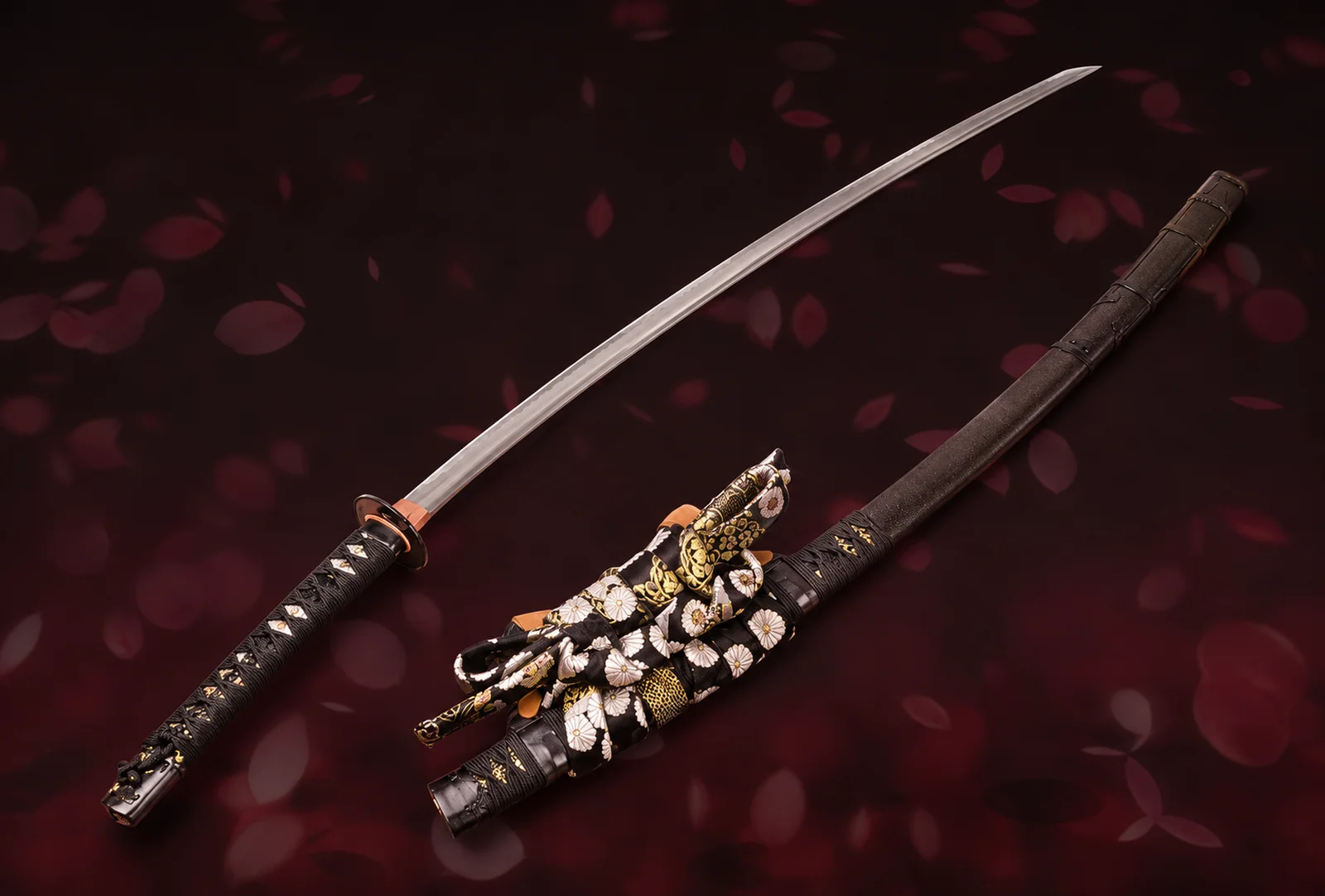
The cord attached to the saya through the kurigata.
Why It Matters
The sageo can be used to secure the saya to the wearer’s belt and completes the scabbard’s mounting arrangement. Its weave and material also give the saya distinctive texture and color.
The knob or fitting on the saya through which the sageo passes.
Why It Matters
Kurigata provides the attachment point that integrates the sageo with the scabbard.
The terminal end or end fitting of the saya.
Why It Matters
The end fitting protects the lower end of the scabbard and completes its mounted appearance.
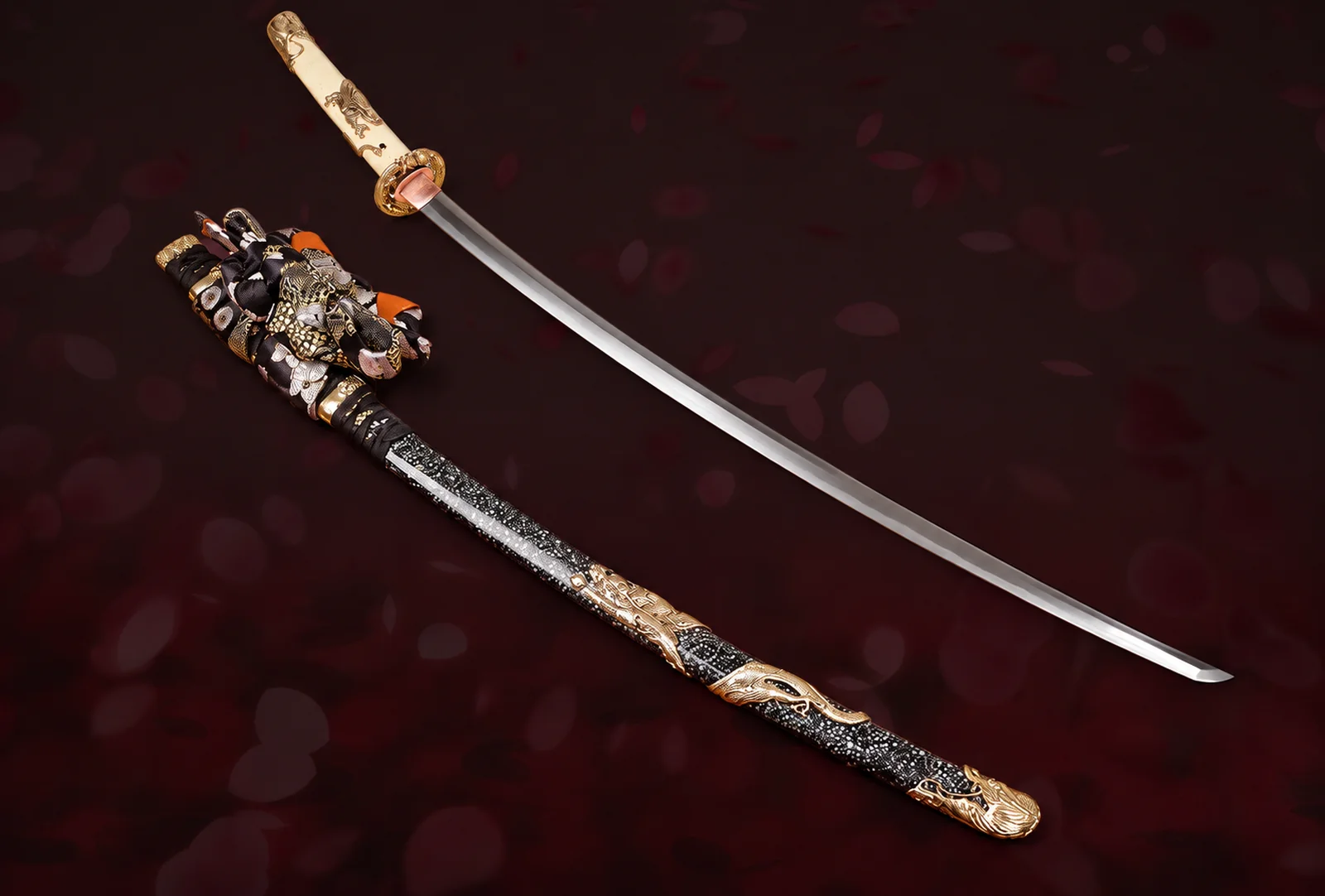
Semegane (責金 / せめがね) are metal bands fitted around the saya, particularly on tachi and handachi-style mountings. They help reinforce the scabbard and may also form part of its decorative metalwork. More than one band may be fitted along a single saya.
Why It Matters
These bands help explain the metal rings seen on certain scabbards: they combine reinforcement with the visual design of the saya, and are separate from the fittings that secure the sword guard and handle.
A general Japanese term for a groove cut into a blade.
Why It Matters
Knowing the shape and placement of a hi makes blade-groove designs easier to describe and compare accurately.
Maru construction describes a blade made as a single body of steel rather than a composite construction with separately assembled core and jacket steels, such as Kobuse or Sanmai. The term identifies the construction layout, not a particular steel alloy or polishing grade.
Why It Matters
This straightforward construction gives the blade a unified material structure and provides a clear alternative to multi-steel composite designs. The forging, heat treatment and polish still determine the finished blade's individual characteristics.
A composite construction in which harder outer steel is formed around a softer core steel.
Why It Matters
The harder outer steel provides edge hardness and wear resistance, while the tougher inner core helps absorb impact and resist brittle fracture. Together, they balance cutting performance with structural resilience.
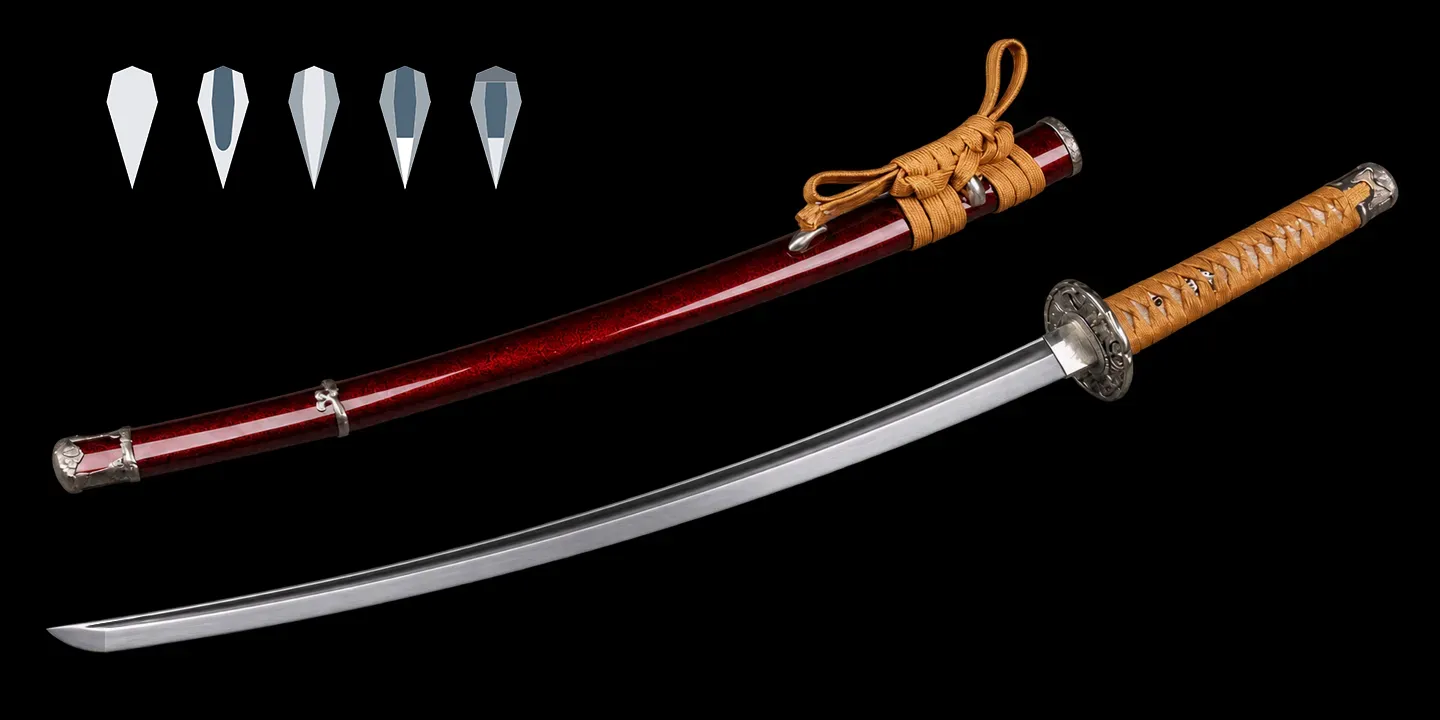
A three-part composite blade construction in which a central steel section is forge-welded between two outer side layers. In a common sword arrangement, the central section reaches the cutting edge.
Why It Matters
In a common Sanmai arrangement, the central steel extends to form the cutting edge while the two outer layers provide structural support. Combining these materials allows edge hardness and blade resilience to be designed into different parts of the cross-section.
A composite blade construction combining a softer central core, separate harder edge steel, and outer side steels.
Why It Matters
Unlike a common Sanmai arrangement, where the central steel reaches the cutting edge, Honsanmai uses a separate edge-steel section. This arrangement allows different steels to serve distinct roles within the blade.
A composite blade construction combining a softer central core with separate side steels, edge steel, and spine steel.
Why It Matters
Shihozume incorporates a separate spine-steel section in addition to the core, side, and edge steels. Its arrangement illustrates how different steel materials can be distributed across the blade cross-section.
The curved cutting-edge contour of the kissaki.
Why It Matters
Its curvature gives the kissaki a fuller or leaner contour and influences the finished appearance of the tip.
The longitudinal ridge separating the main blade face from the shinogi-ji.
Why It Matters
The ridge divides blade surfaces into distinct planes, influencing cross-sectional geometry and the play of reflected light.
The blade surface between the shinogi ridge and the mune.
Why It Matters
This upper blade surface helps define the blade’s facets, proportions, and reflective contrast.
The principal blade surface between the hamon area and the shinogi on a shinogi-zukuri blade.
Why It Matters
The ji is the primary viewing area for forged steel grain and subtle activity, making its polish central to the blade’s visual character.
The visible grain or surface pattern of blade steel produced through forging and repeated working of the material.
Why It Matters
Hada makes the worked, layered character of forged steel visible. Differences in the forging direction and material produce grain patterns that fine polishing brings into view, giving the blade a distinctive steel texture.
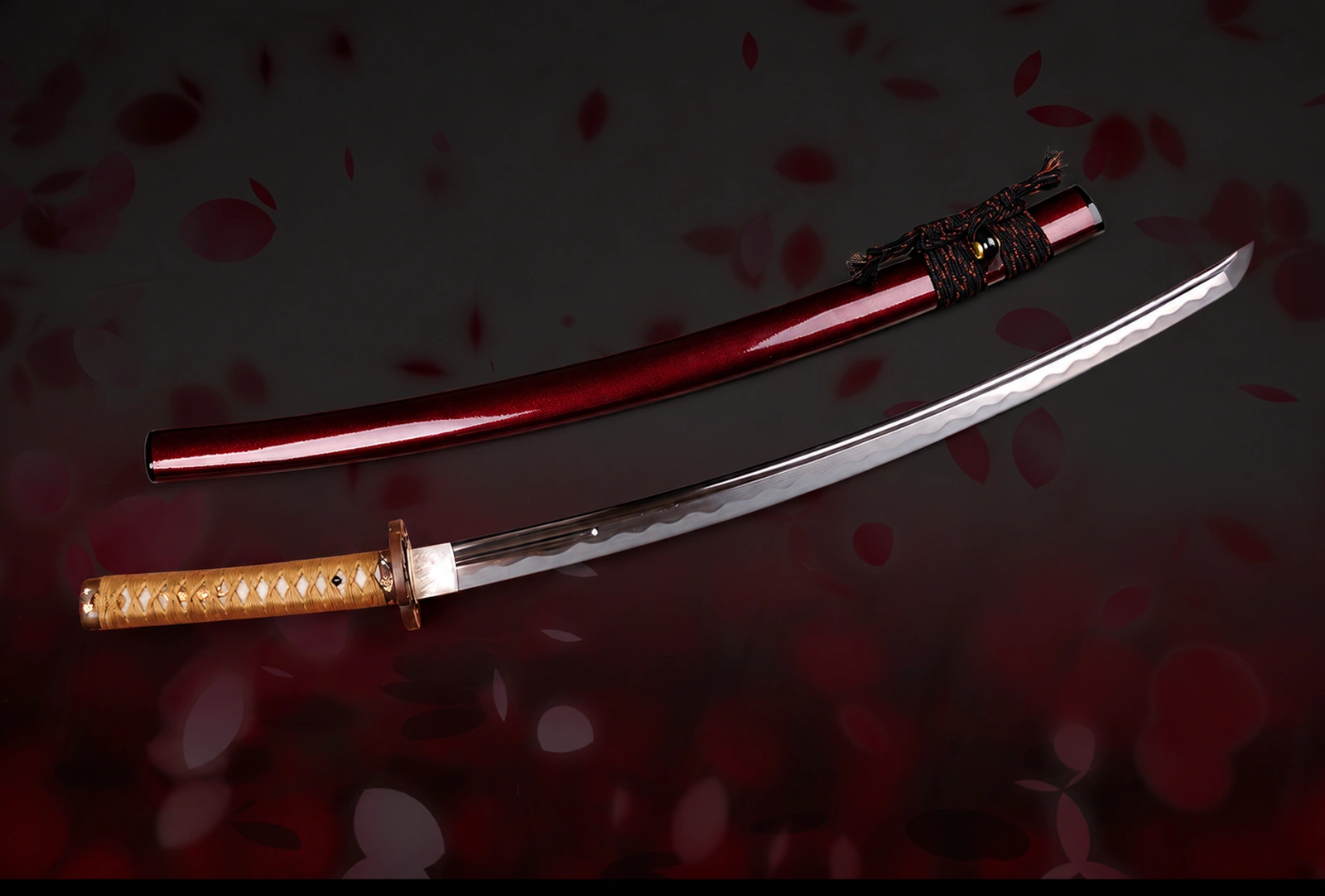
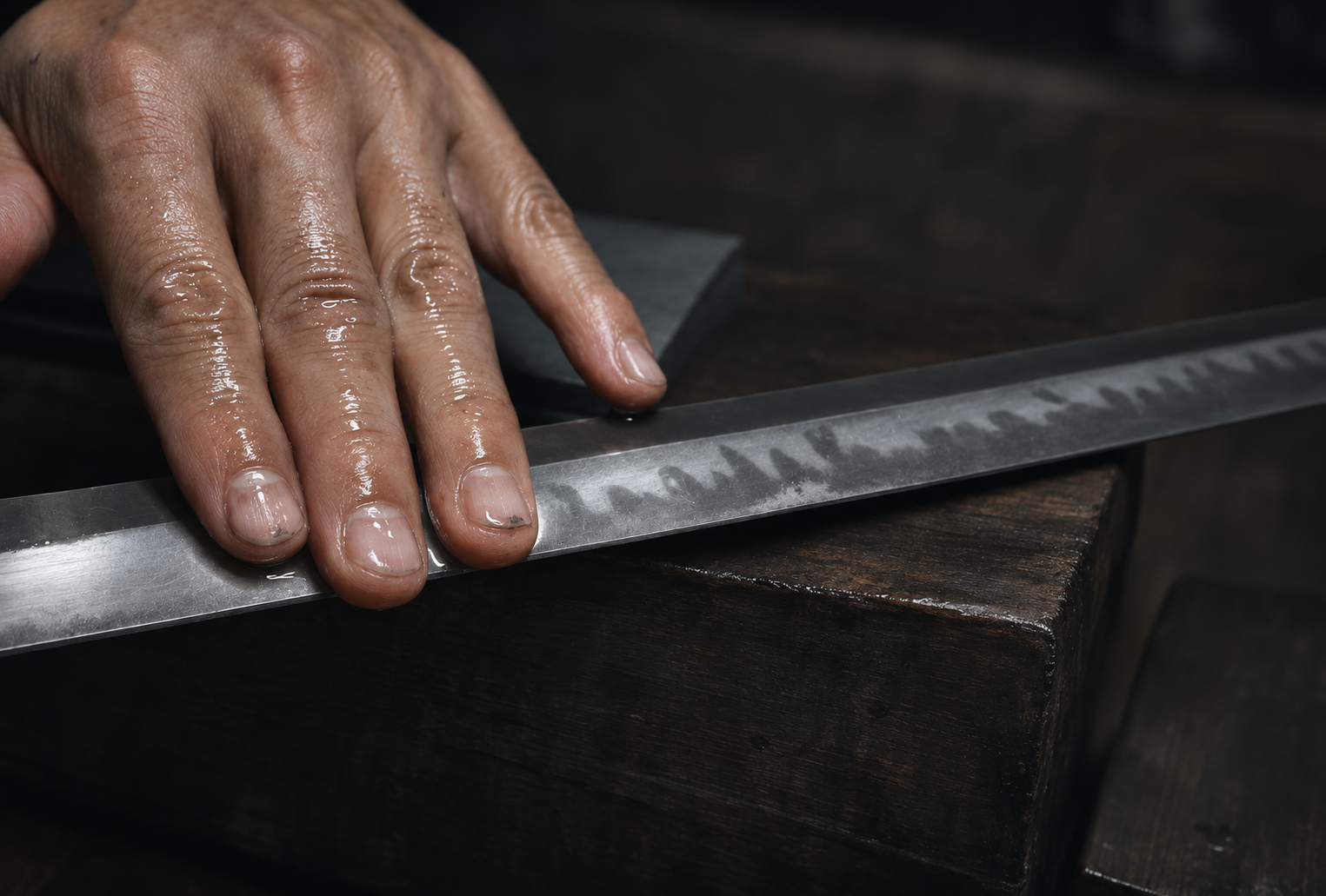
The visible pattern along the hardened edge, formed through differential hardening and revealed through polishing.
Why It Matters
The hamon makes the transition between differently hardened regions visible after polishing. It records the swordsmith’s clay application and quenching work while giving the cutting edge its distinctive line and activity.
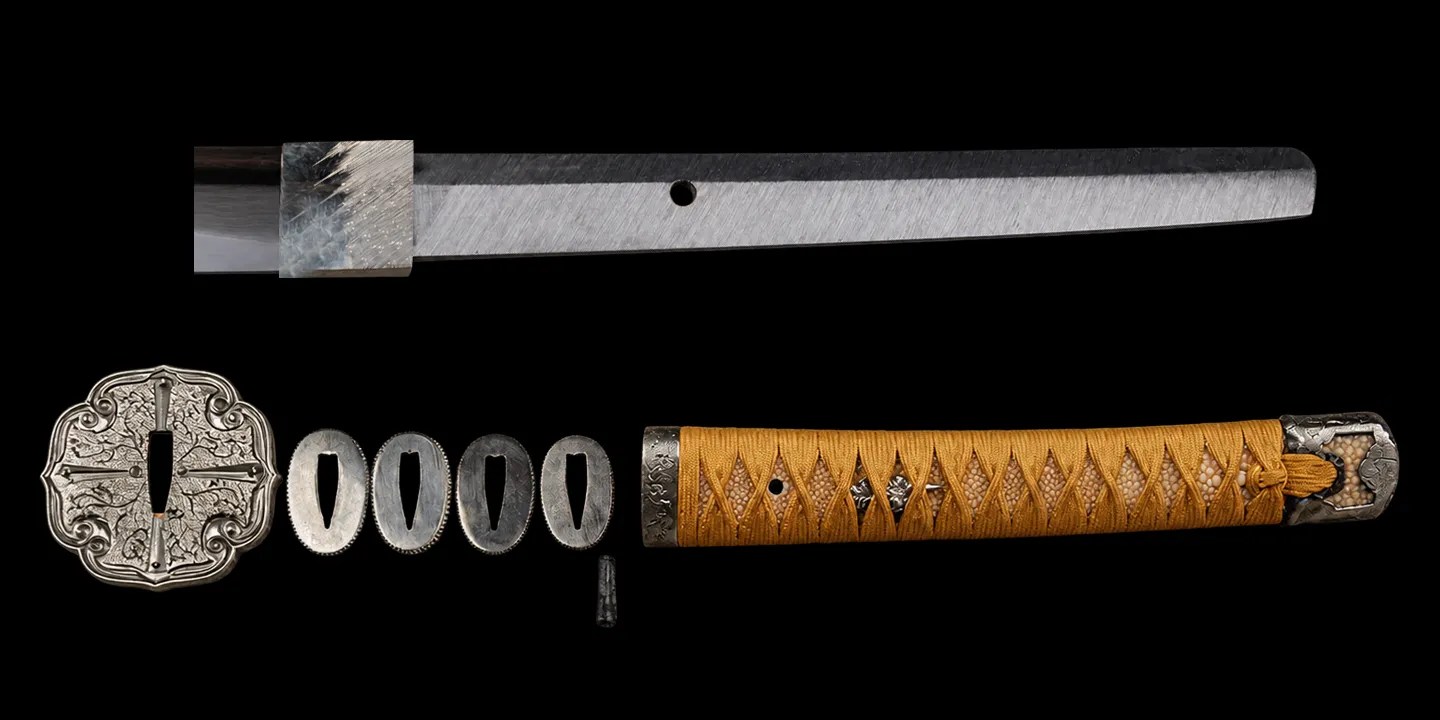
A thin spacer fitted around the tang, commonly positioned on either side of the tsuba.
Why It Matters
Properly fitted seppa help the tsuba and surrounding fittings seat firmly in the mounting.
The metal collar fitted at the blade end of the tsuka.
Why It Matters
The collar reinforces and finishes the guard end of the handle while linking its visual design to the fittings.
A peg passing through the tsuka and mekugi-ana to secure the handle assembly to the blade tang.
Why It Matters
Mekugi is a small but structurally important part of a removable traditional-style mounting.
The tang of the blade that extends into the tsuka.
Why It Matters
A properly fitted tang provides the core structural link between the blade and the mounted handle.
A hole through the nakago for the peg that secures the blade in the tsuka.
Why It Matters
Correct alignment of the peg hole with the tsuka allows the retaining peg to secure the blade assembly.
Yasurime are file marks deliberately worked into the surface of the nakago, the tang of a Japanese-style blade. Their direction and arrangement can vary. Basic Yasurime describes a simple file-mark finish, not a particular named pattern.
Why It Matters
The marks can help the tang grip the wooden handle and are also examined as one detail of traditional sword workmanship and attribution. The mekugi remains an important part of securing the assembly.
Ray skin traditionally used on a tsuka beneath the handle wrapping, and also used on some sword scabbards as a textured exterior covering.
Why It Matters
On a tsuka, the raised texture of the ray skin provides a grippy underlayer beneath the handle wrapping. When used on a saya, it creates a distinctive full-length textured exterior.
Small decorative fittings traditionally positioned beneath the tsuka wrap.
Why It Matters
Menuki add sculptural detail beneath the wrap and contribute to the traditional visual character of the handle.
Tenka Goken (天下五剣), or the Five Swords Under Heaven, is the collective name for five celebrated historic Japanese tachi: Mikazuki Munechika, Dōjigiri Yasutsuna, Ōdenta Mitsuyo, Onimaru Kunitsuna, and Juzumaru Tsunetsugu. Each blade is distinguished by its craftsmanship, history, and cultural legends.
Why It Matters
Together, these five names trace a remarkable journey through Japanese sword culture — from the crescent moon and heroic tales to protection and faith. The tradition also provides a meaningful framework for contemporary interpretations, which remain distinct from the historic originals.
Mikazuki Munechika is a celebrated historic Japanese tachi attributed to the swordsmith Sanjō Munechika and counted among the Tenka Goken. Its name, “Crescent Moon,” comes from small crescent-shaped markings in the hamon, where the beauty of the blade is reflected in a detail of the steel.
Why It Matters
The name evokes an image of moonlight held along a tempered edge. It helps collectors understand the historic blade that inspires modern interpretations, while appreciating each contemporary sword as a work in its own right.
Dōjigiri Yasutsuna is a renowned historic Japanese tachi associated with the swordsmith Yasutsuna and counted among the Tenka Goken. Its name is bound to the legend in which Minamoto no Yorimitsu defeats the fearsome Shuten Dōji — a tale remembered through generations of Japanese folklore.
Why It Matters
Dōjigiri stands where fine swordmaking and an enduring heroic legend meet. For collectors, the name recalls courage, craftsmanship, and the distinction between a historic blade and a modern tribute inspired by it.
Ōdenta Mitsuyo is a celebrated historic Japanese tachi associated with the swordsmith Mitsuyo of the Miike tradition and counted among the Tenka Goken. Preserved by the Maeda family, it is also linked to a traditional tale in which the sword’s presence helps a gravely ill daughter recover.
Why It Matters
Beyond its place in sword history, Ōdenta carries a gentler image: a blade remembered for the hope of protection. Its heritage lends meaning to contemporary works that honor its name without claiming to reproduce the historic original.
Onimaru Kunitsuna is a historic Japanese tachi traditionally associated with the swordsmith Kunitsuna and counted among the Tenka Goken. In an old legend, the sword moves of its own accord and strikes a demon-shaped ornament, ending the nightmares of a Hōjō ruler. The tale is the source of its name, Onimaru, or “Demon Cutter.”
Why It Matters
The name holds a contrast between darkness and protection: a quiet blade at the heart of a supernatural story. It gives collectors cultural context for a modern Onimaru-inspired sword, separate from the historic original.
Juzumaru Tsunetsugu is a celebrated historic Japanese tachi attributed to the swordsmith Tsunetsugu and counted among the Tenka Goken. Tradition associates it with the Buddhist monk Nichiren, who is said to have placed prayer beads (juzu) around its hilt. Those beads gave the sword its name, Juzumaru.
Why It Matters
Where other famous swords are remembered through tales of warriors or demons, Juzumaru evokes a quieter strength: faith, devotion, and contemplation. Its story completes the historic group of five, even when a modern interpretation has not yet joined a collection.
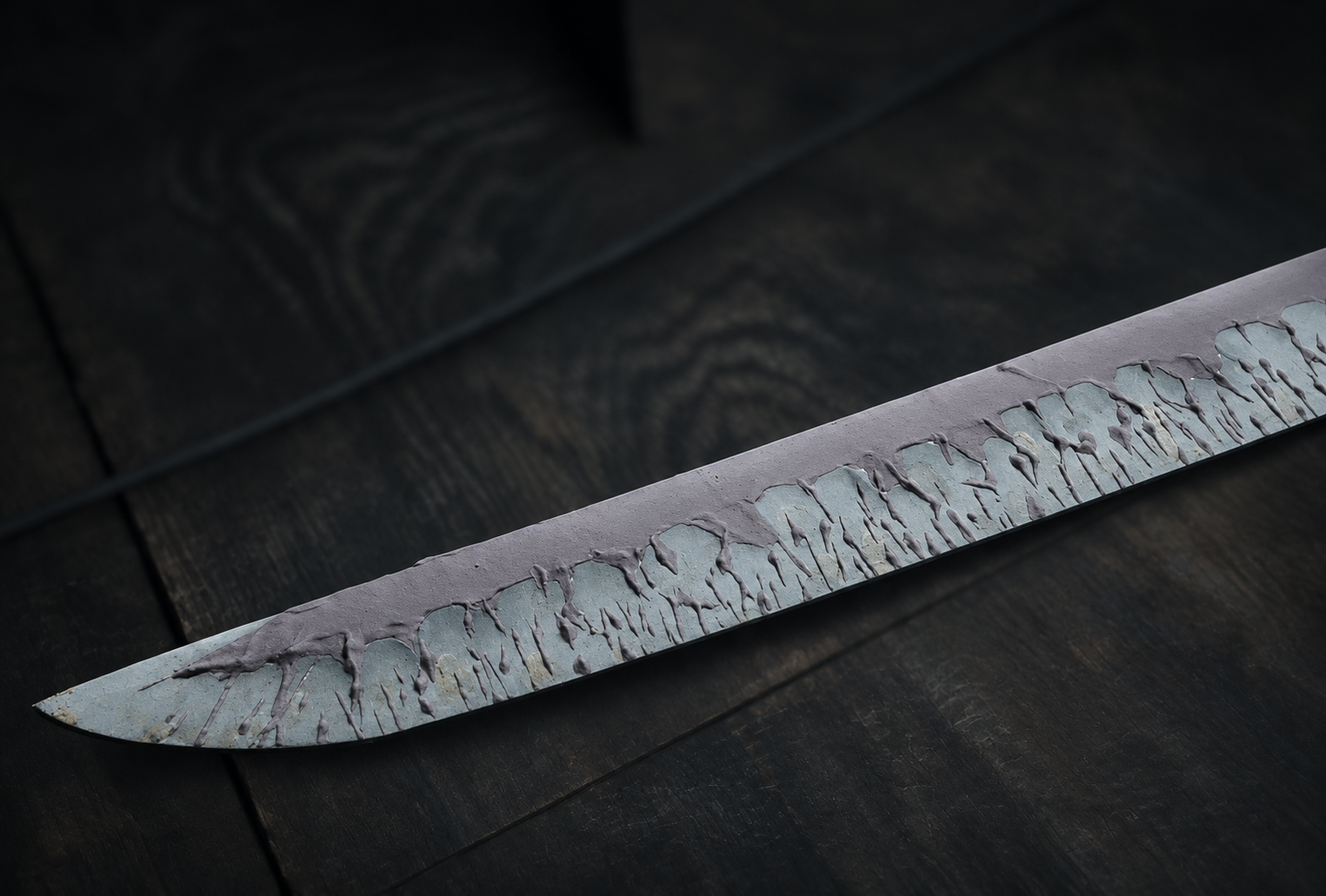
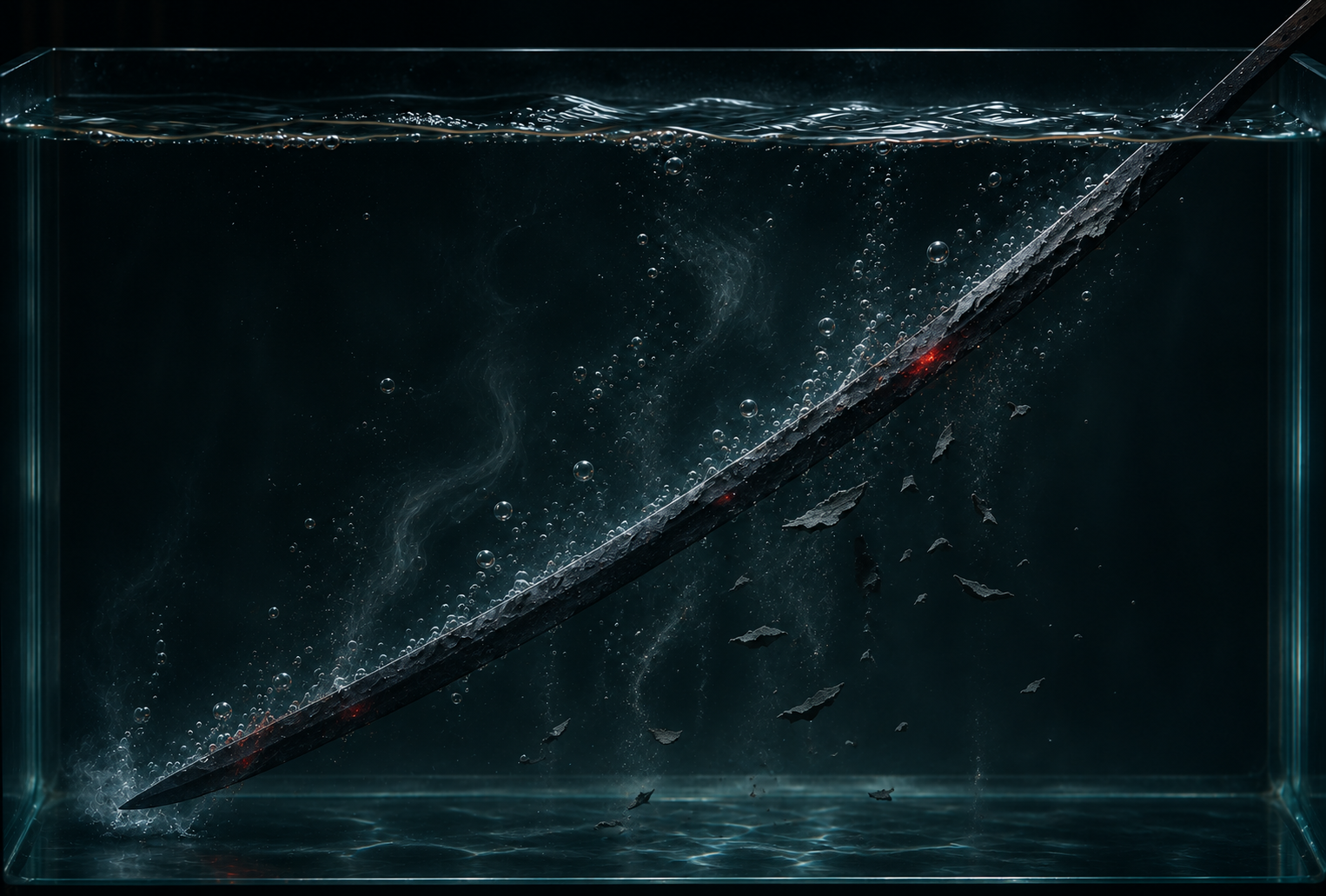
Clay Tempering is a common commercial English label for clay-assisted differential hardening. The traditional Japanese terminology distinguishes two related operations. Tsuchioki (土置き / つちおき) is the application of yakiba-tsuchi (焼刃土), a refractory clay-based coating, in varying thicknesses across the blade. Yaki-ire (焼入れ / やきいれ) is the subsequent heating and rapid quenching operation. Together, these operations help produce different hardening characteristics across the blade and contribute to the formation of a hamon (刃文). Here, Clay Tempering refers to the hardening method, not to the separate post-quench tempering process.
Why It Matters
During quenching, the thinly coated or exposed cutting edge usually cools more rapidly and can form hard, wear-resistant martensite. Thicker clay over the blade body and spine slows cooling, allowing comparatively softer, tougher structures to develop. This deliberate contrast gives the blade a hard edge with a more resilient body, while the transition creates the hamon revealed by polishing.