Description
STORY 01 / HISTORY & FORM
The Crescent Moon
Among Japan’s Tenka Goken, the Five Great Swords, Mikazuki Munechika is a celebrated Heian-period tachi signed Sanjō. Its elegant curvature and fine crescent-shaped activity along the blade give this historic sword its unmistakable identity.
SANJŌ MUNECHIKA / HEIAN PERIOD / HISTORICAL BLADE 80.0 CM
THE HISTORICAL SWORD
A Name Found in the Hamon
The name Mikazuki means “crescent moon.” On the original blade, delicate uchinoke form small moon-like curves near the hamon. These distinctive details gave the sword its celebrated name.
The historic tachi is a Japanese National Treasure in the Tokyo National Museum collection. Its beauty lies not only in its reputation, but in the close attention its surface rewards.
THE HEIAN-PERIOD PROFILE
A Curve with Its Own Rhythm
The original blade measures 800 mm, with 27 mm of curvature. Its sugata shows a pronounced sweep near the base that becomes gentler toward the tip, a graceful profile characteristic of early Japanese tachi.
This balance of length, curvature, and restraint is central to the appeal of Mikazuki Munechika. It is the starting point for the form of the modern work shown here.
THE MODERN WORK
A Historic Form, Revisited
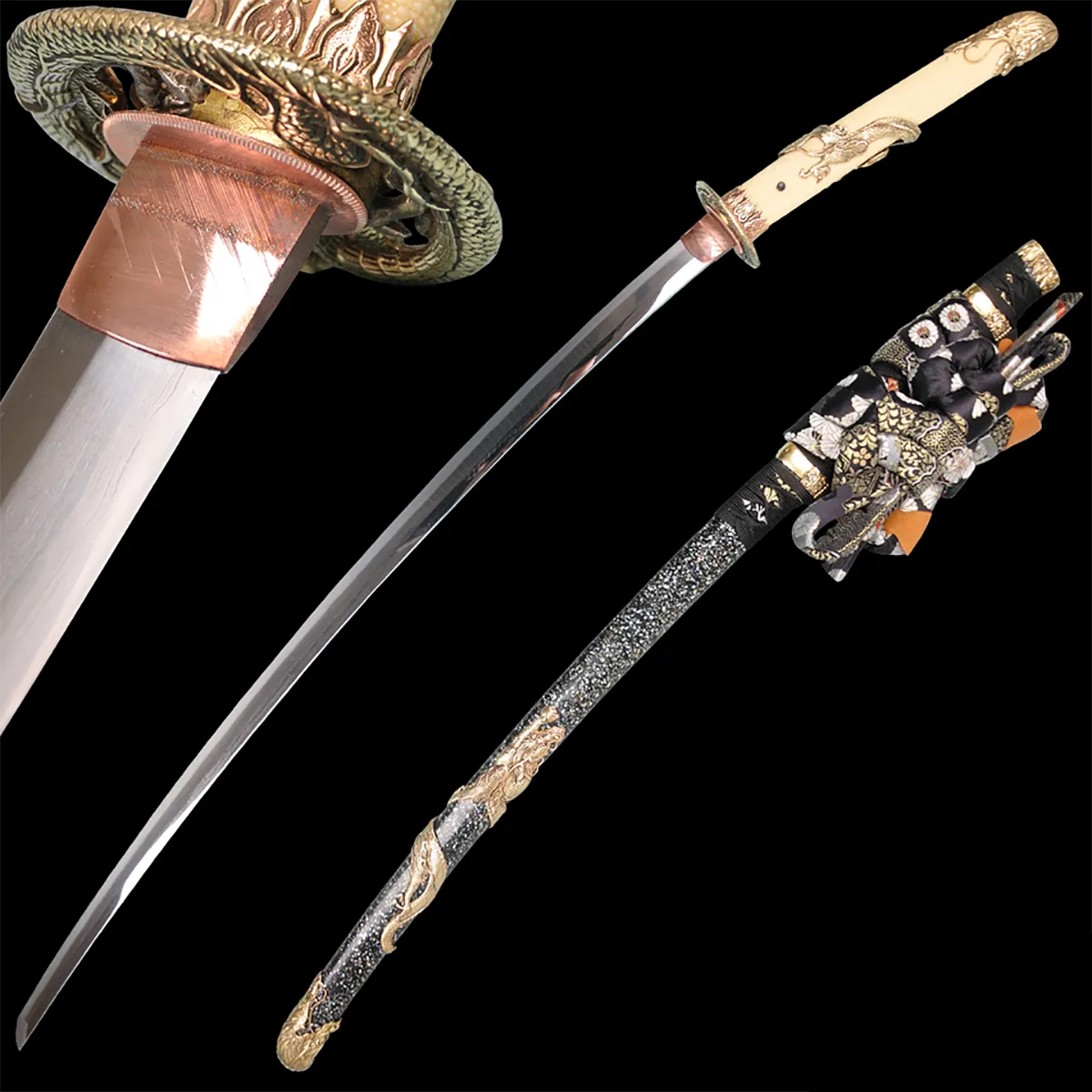
Our Mikazuki Munechika-inspired tachi carries an 800 mm nagasa, keeping the long, flowing proportions at the heart of the design. Its dragon-themed koshirae and dark raden saya give the finished work a distinct visual character of its own.
The blade’s construction, steel, and final polish are explored in the next chapter.
NEXT / BLADE CRAFTSMANSHIP — SANMAI, WORKSHOP-SMELTED STEEL & SHIAGE-TOGI
STORY 02 / STEEL & POLISH
Steel, Structure, Finish.
This 800 mm tachi blade brings together workshop-smelted steel, Sanmai construction, clay tempering, and a specialist Shiage-togi finish.
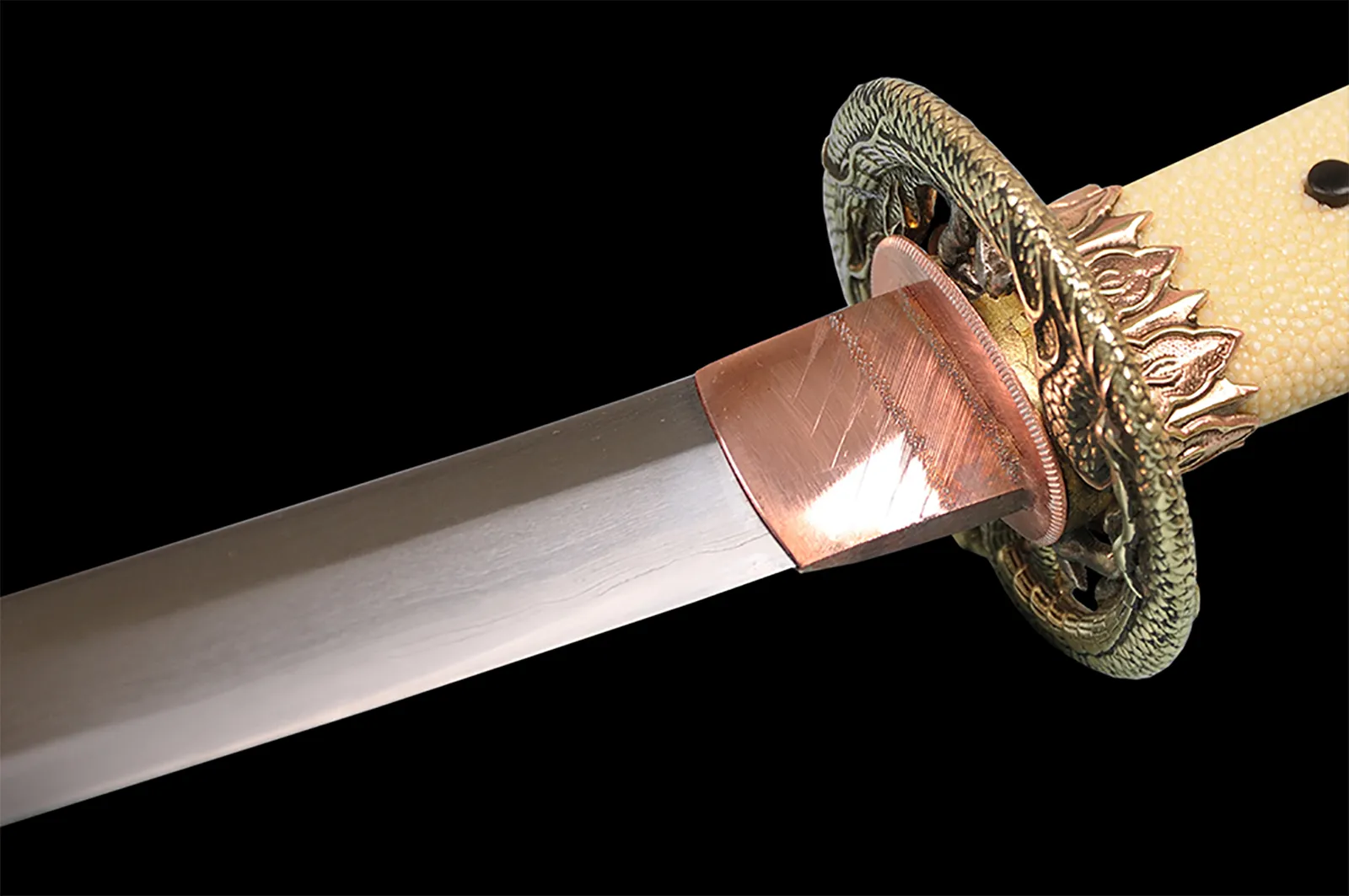
At the base of the blade, the hand-worked copper habaki meets the polished steel and the dragon-themed fittings. It is a useful place to begin looking closely: construction and mounting must come together without compromising the finished blade.
01 / BLADE CONSTRUCTION
Sanmai. Two Faces, One Core.
In Sanmai, a central core is joined between outer steel sections. For this sword, both the outer steel and core steel are workshop-smelted. The three-part assembly gives the blade its internal structure before shaping, heat treatment, and polishing.
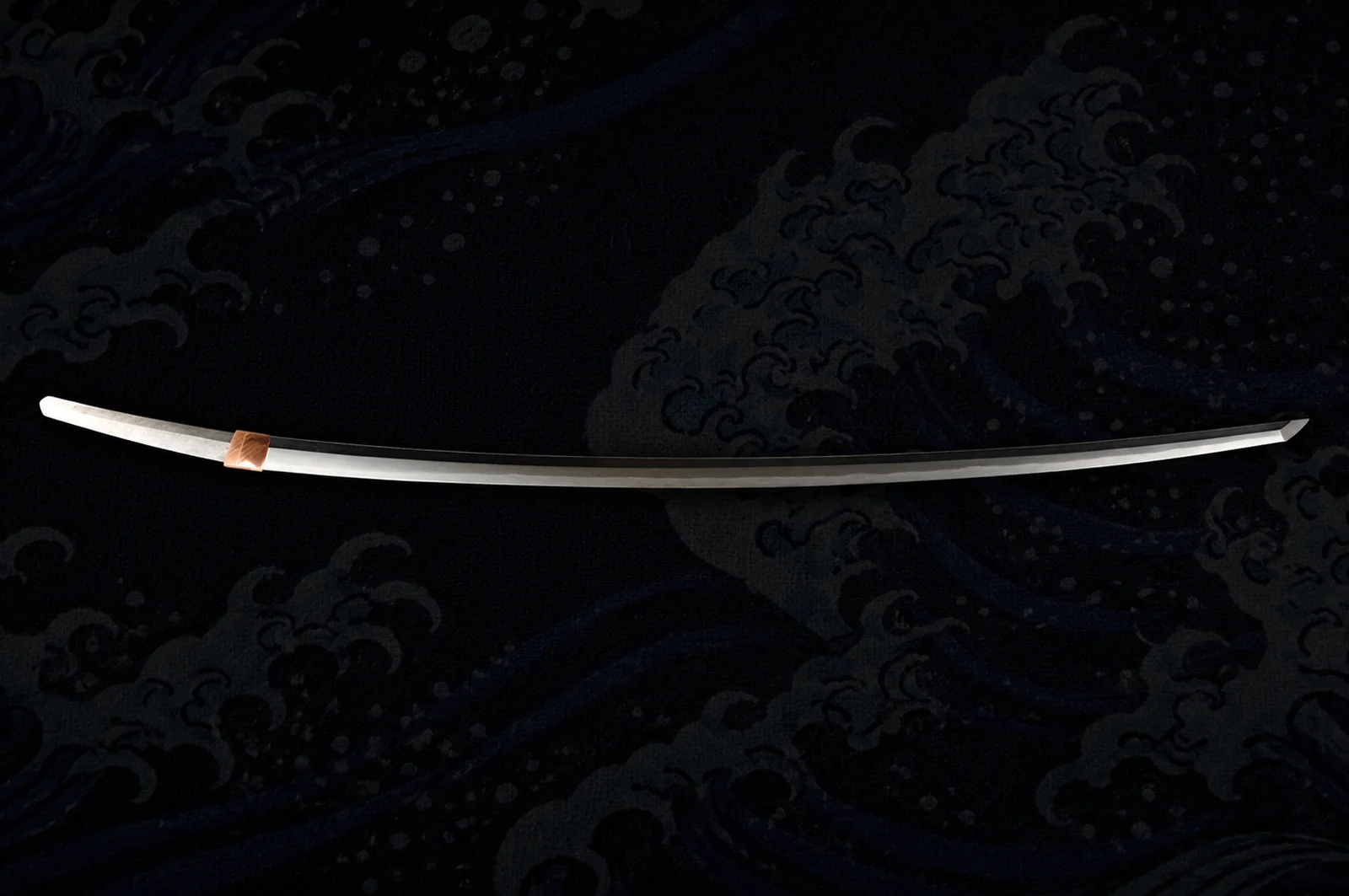
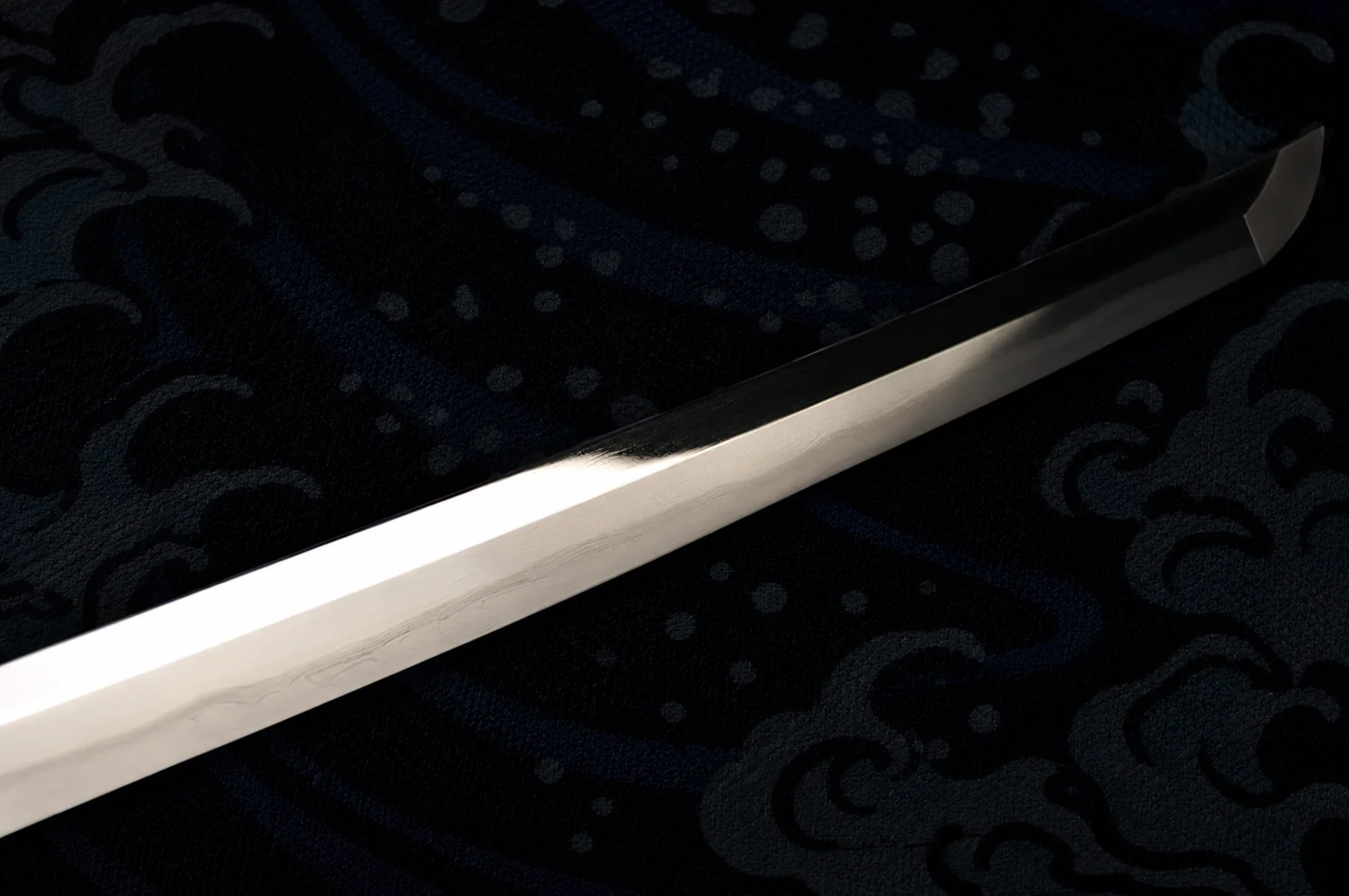
The completed blade measures 800 mm in length. Its continuous curve and slender profile are best appreciated across the whole length, before moving in to the close studies of the steel surface.
02 / READING THE STEEL
A Surface That Holds Detail.
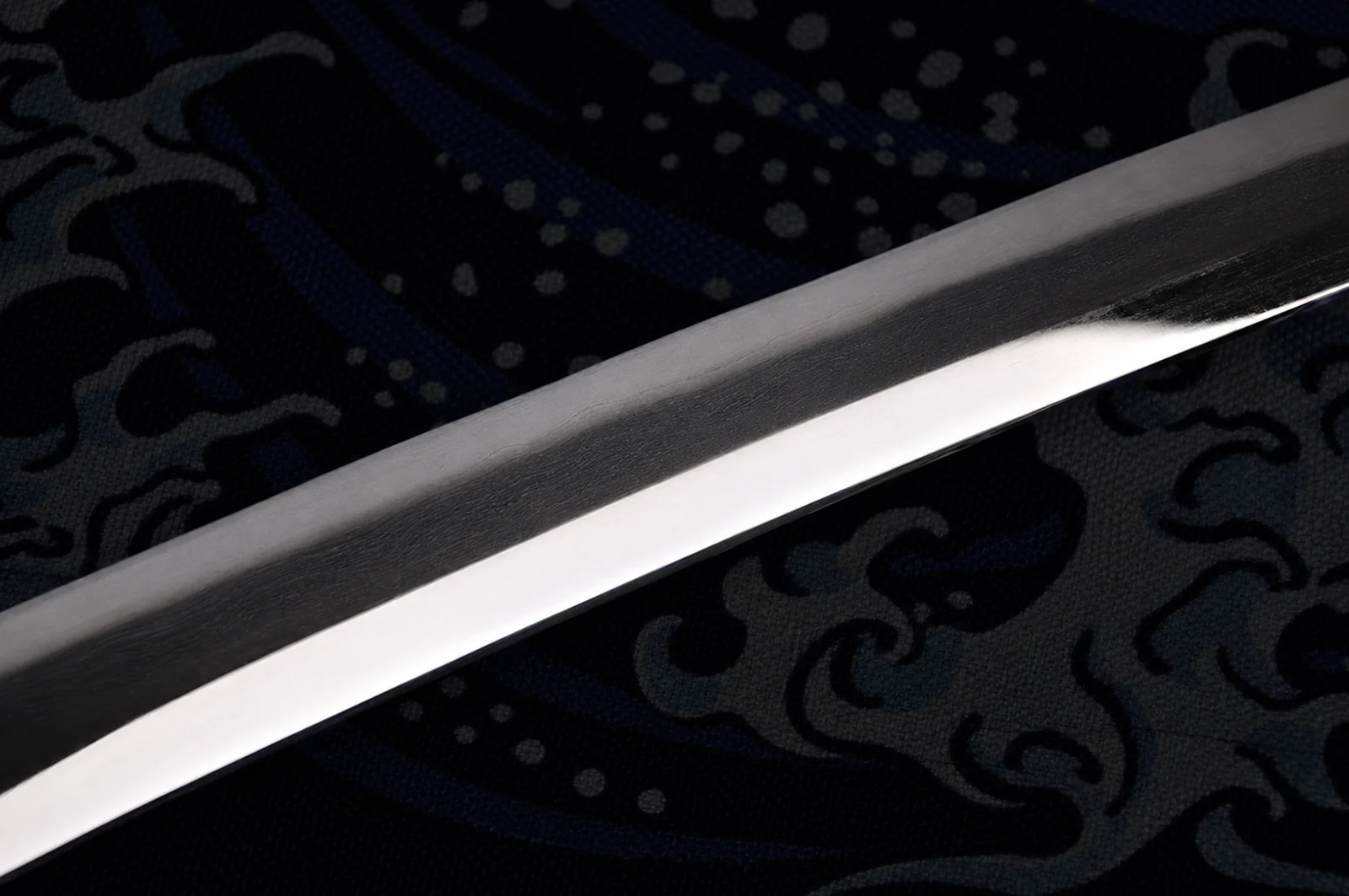
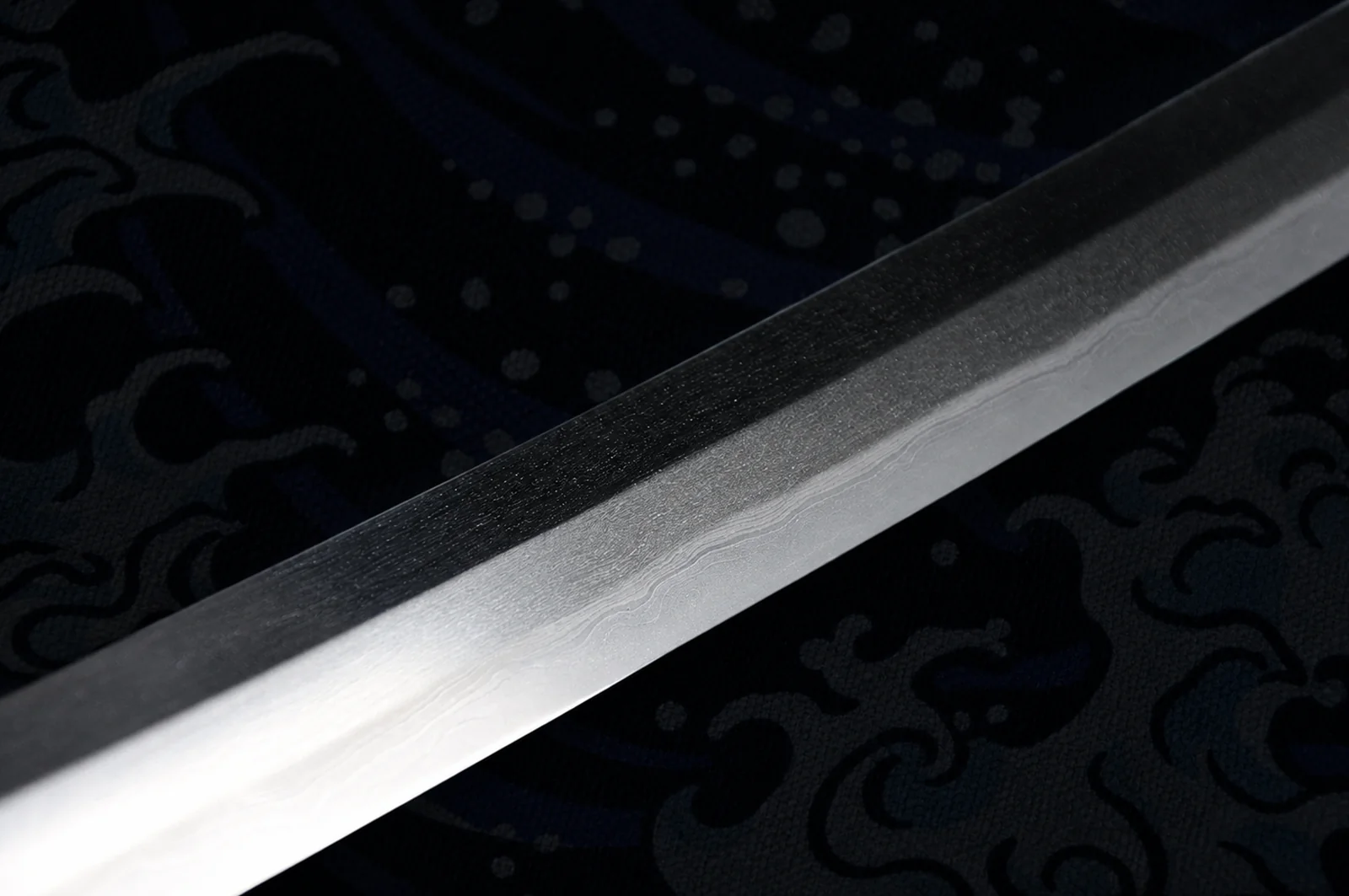
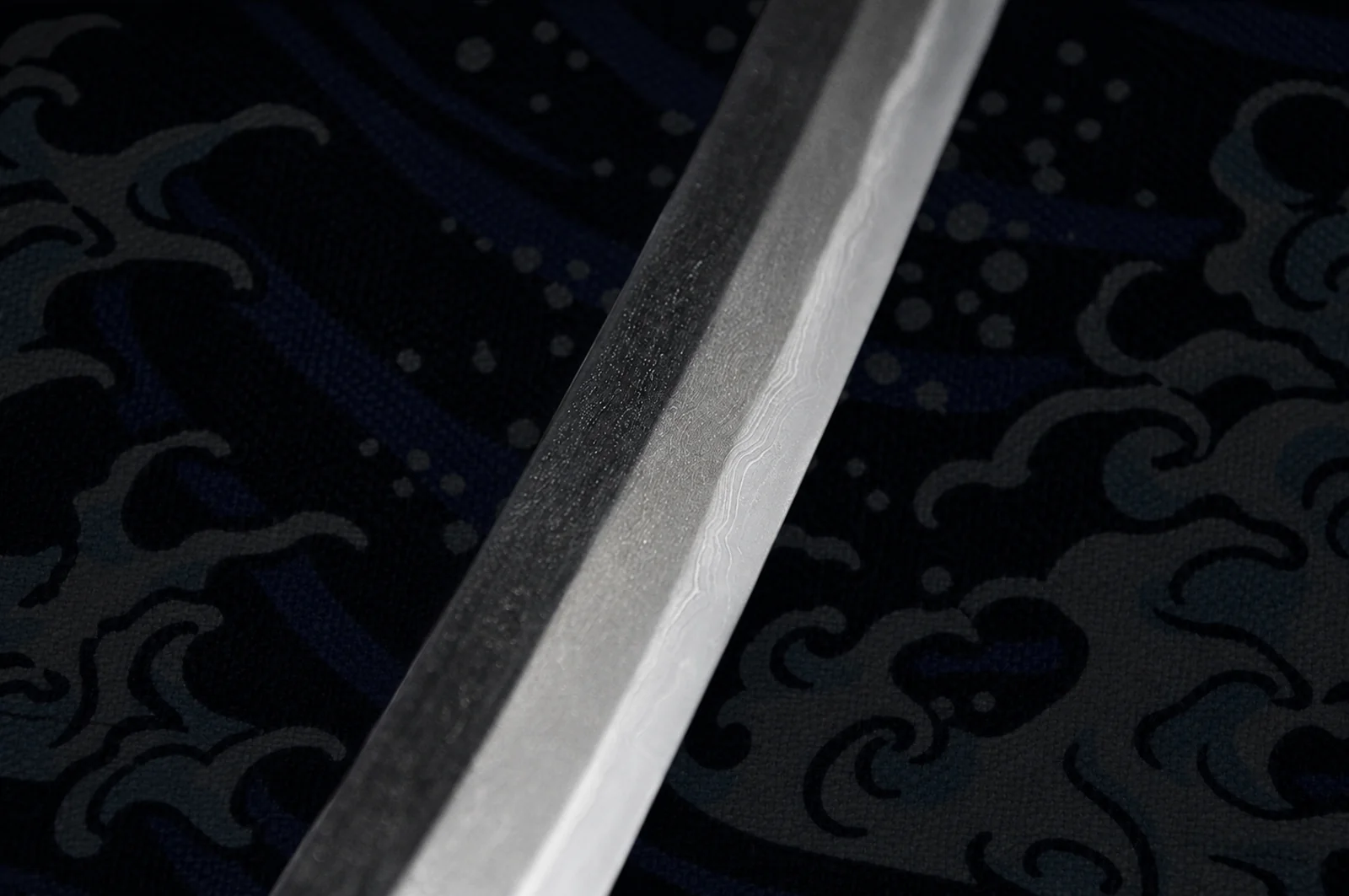
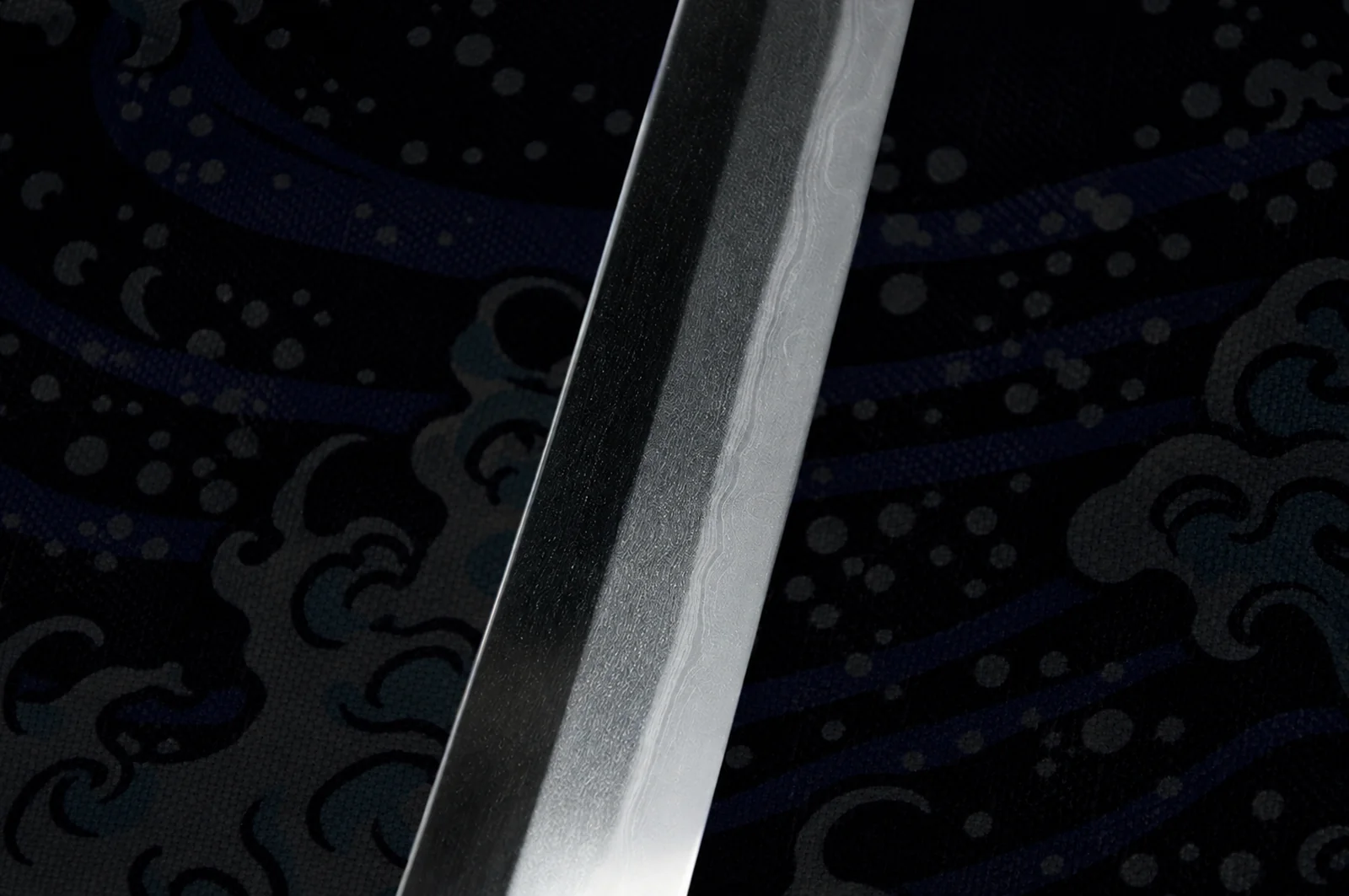
A fine polish does not simply make the steel brighter. It reveals the relationship between the broad blade face, the ridge, and the hardened edge. On this sword, the steel has a quiet texture that appears and recedes as the viewing angle changes.
The close views show how a slight change in angle separates the reflected light from the grain and the geometry of the steel.
03 / HEAT TREATMENT
Clay Tempering and the Hamon.
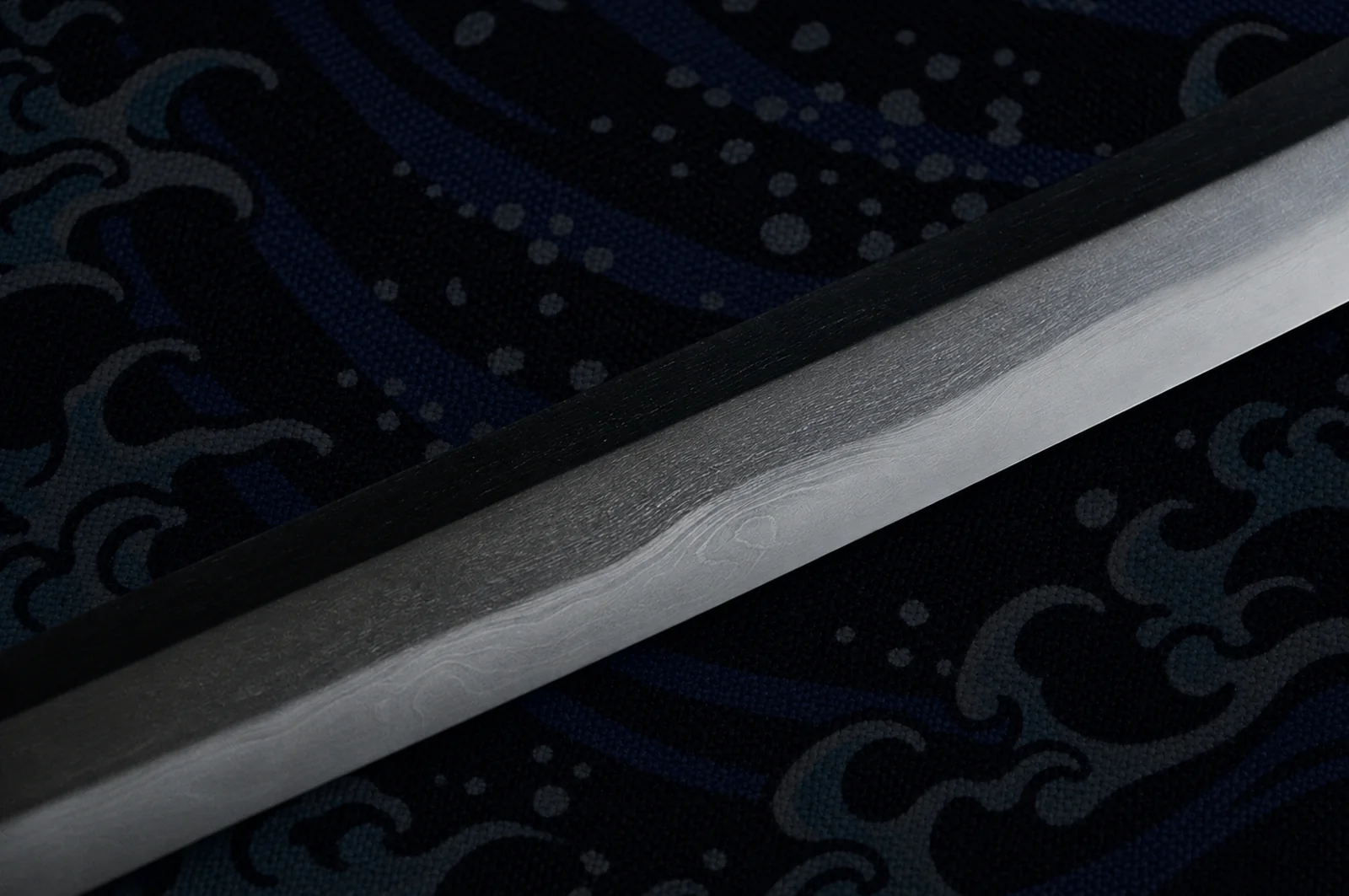
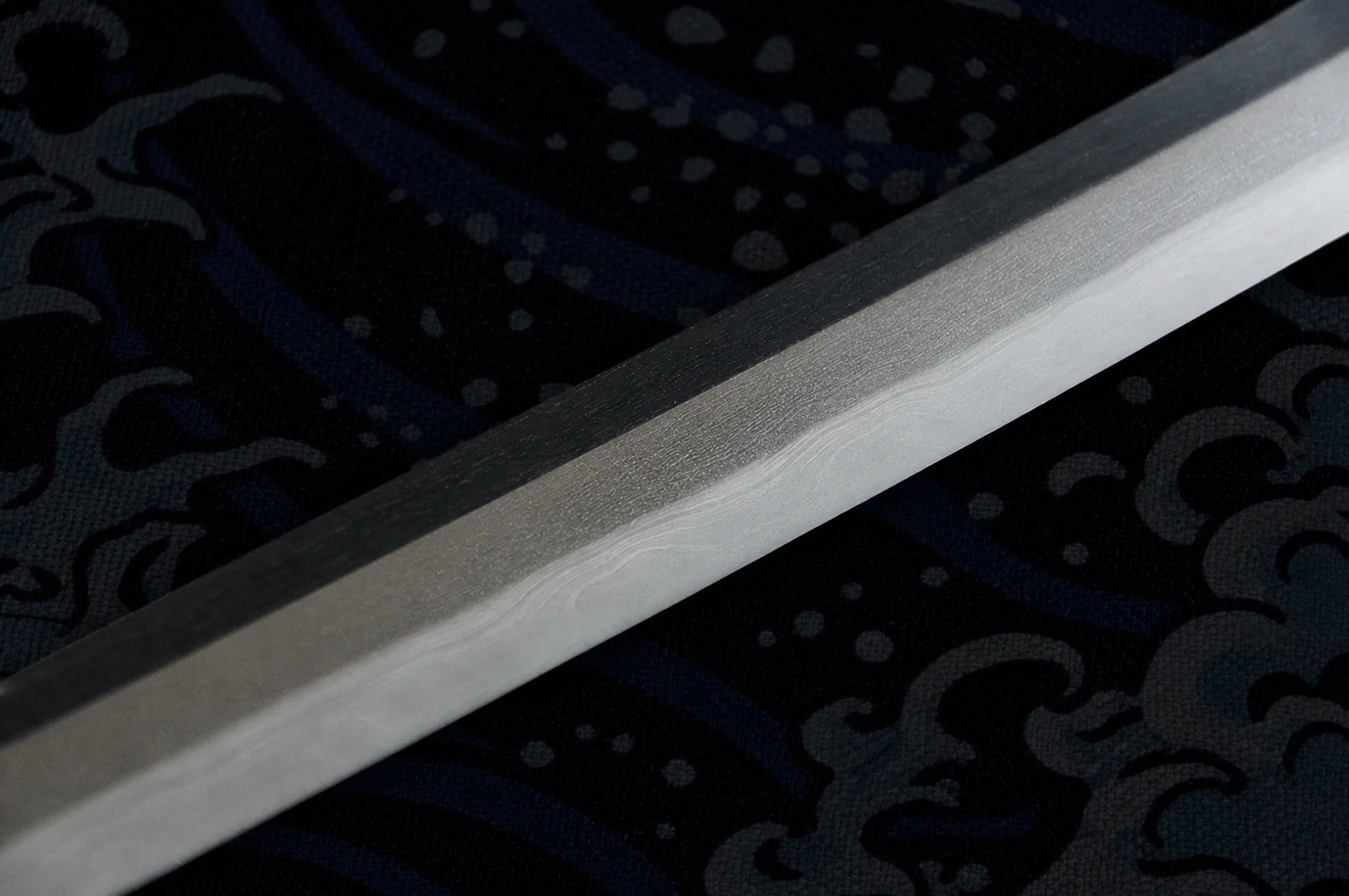
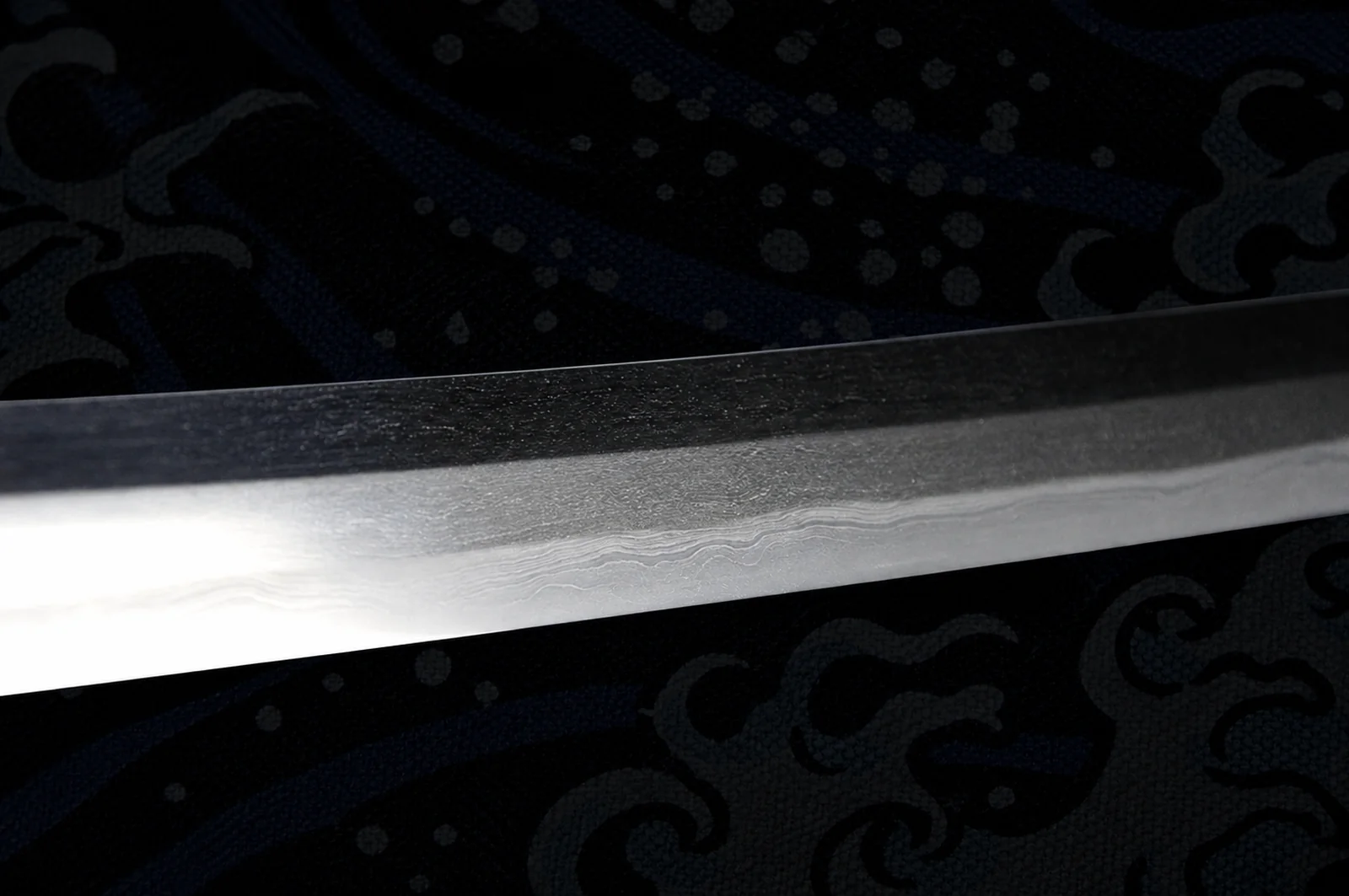
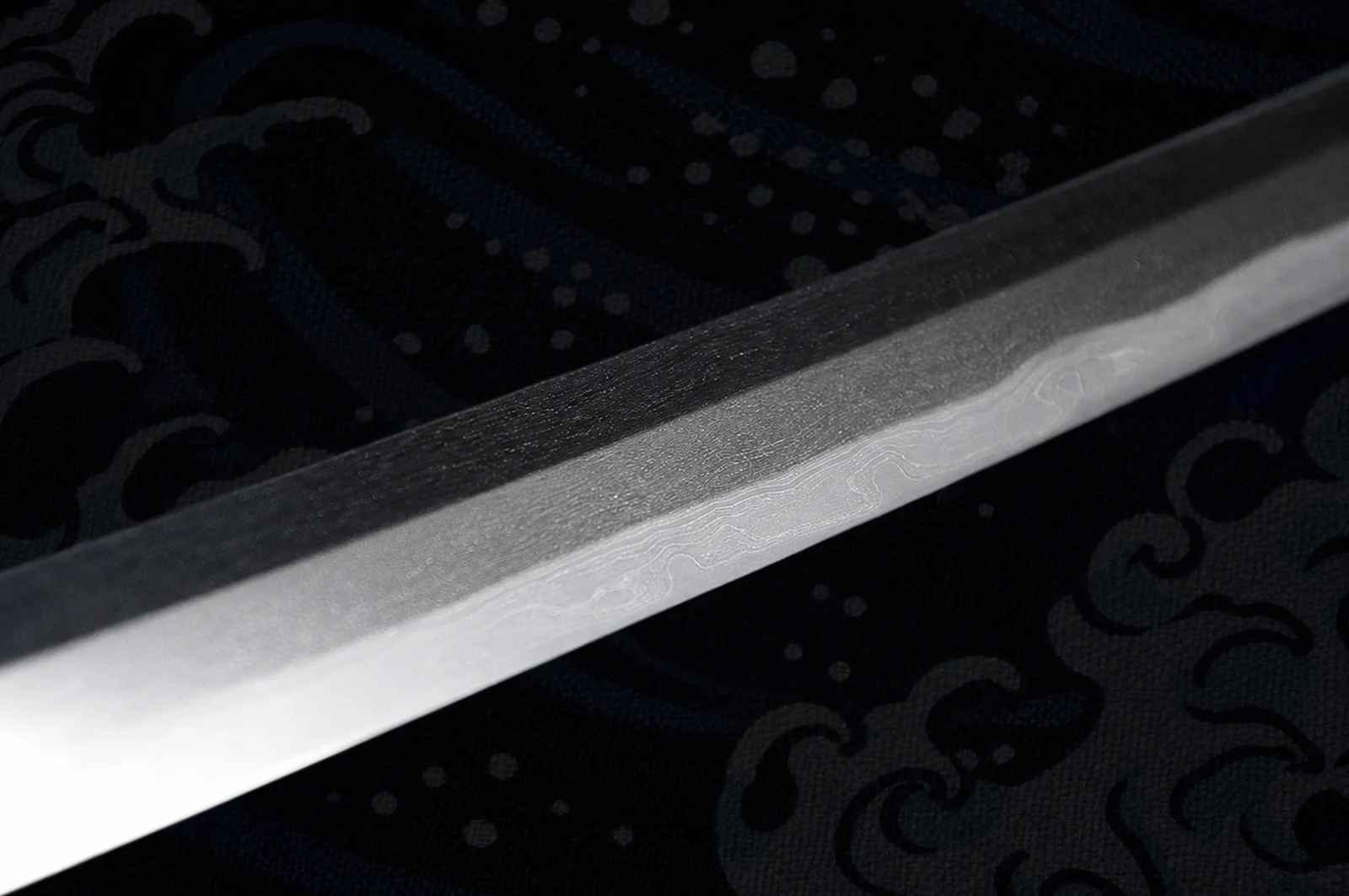
The blade was clay tempered, and its hamon is a result of that hardening process. The polished surface makes the change across the hardened boundary visible while keeping the shape of the blade legible.
The hardened line follows the length of the blade. Across these close views, the contrast of the polished steel shifts with the light, revealing fine changes near the edge.
04 / FINAL POLISH
Shiage-togi, Finished with Care.
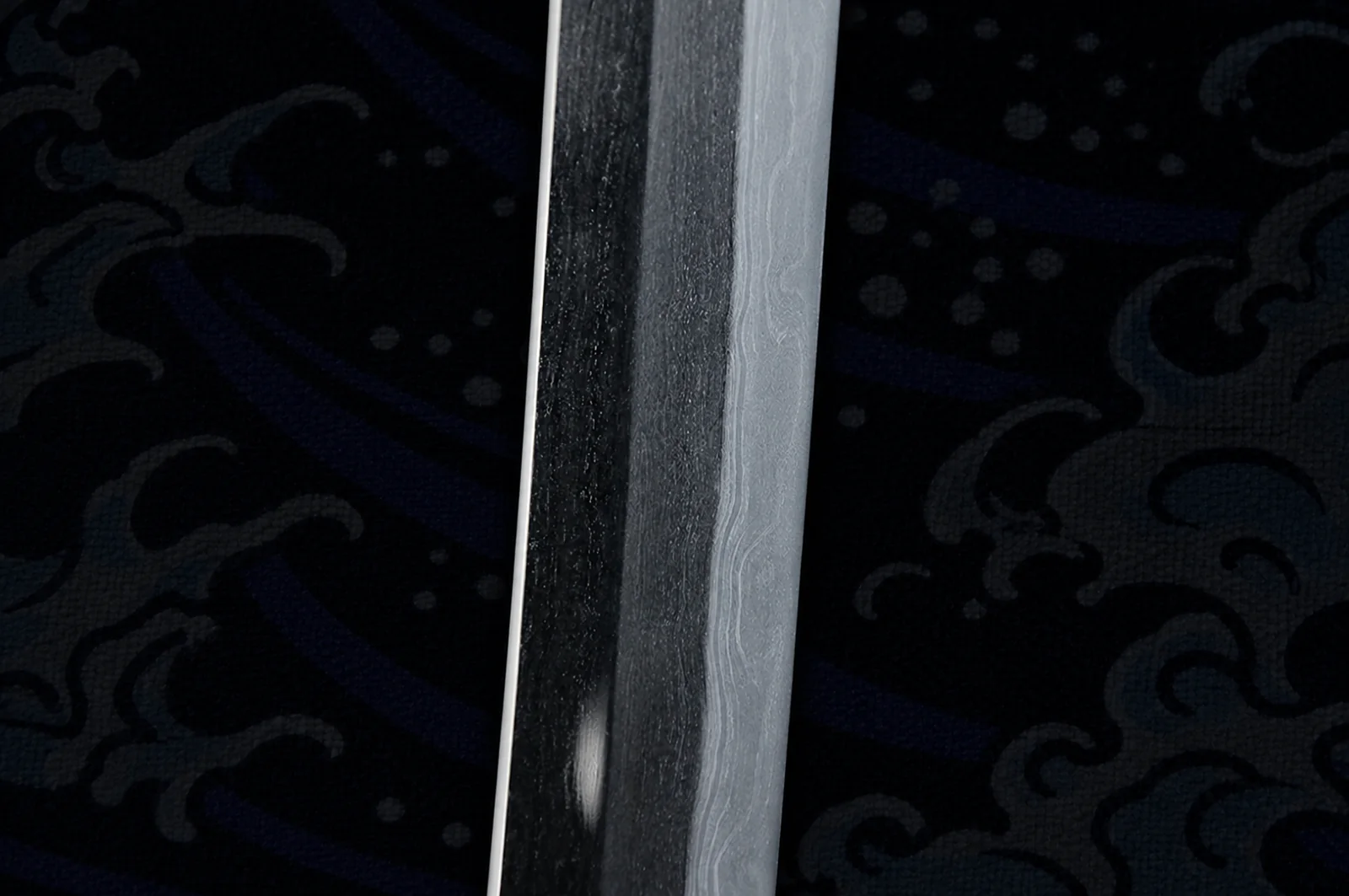
The blade received Shiage-togi from a specialist polisher. Its crisp ridge, natural steel texture, and controlled contrast are the qualities to look for. Light travels along the blade ridge, while the steel texture and hardened boundary remain distinct.
As described in the workshop video, the sword was first test-fitted before the final polishing stage. The fittings were then removed so the blade could be finished with less risk of assembly scratches. This sequence protects the work invested in the finished surface.
NEXT / THE FINISHED KOSHIRAE
Beyond the Blade.
Once the blade is understood on its own, the complete tachi comes back into view. Its dragon-themed fittings and dark raden saya give the sword a contrasting character: intricate ornament surrounding a carefully finished blade.
The next Story looks at the mounting, mother-of-pearl work, and the details that complete this piece.
The Dragon Koshirae.
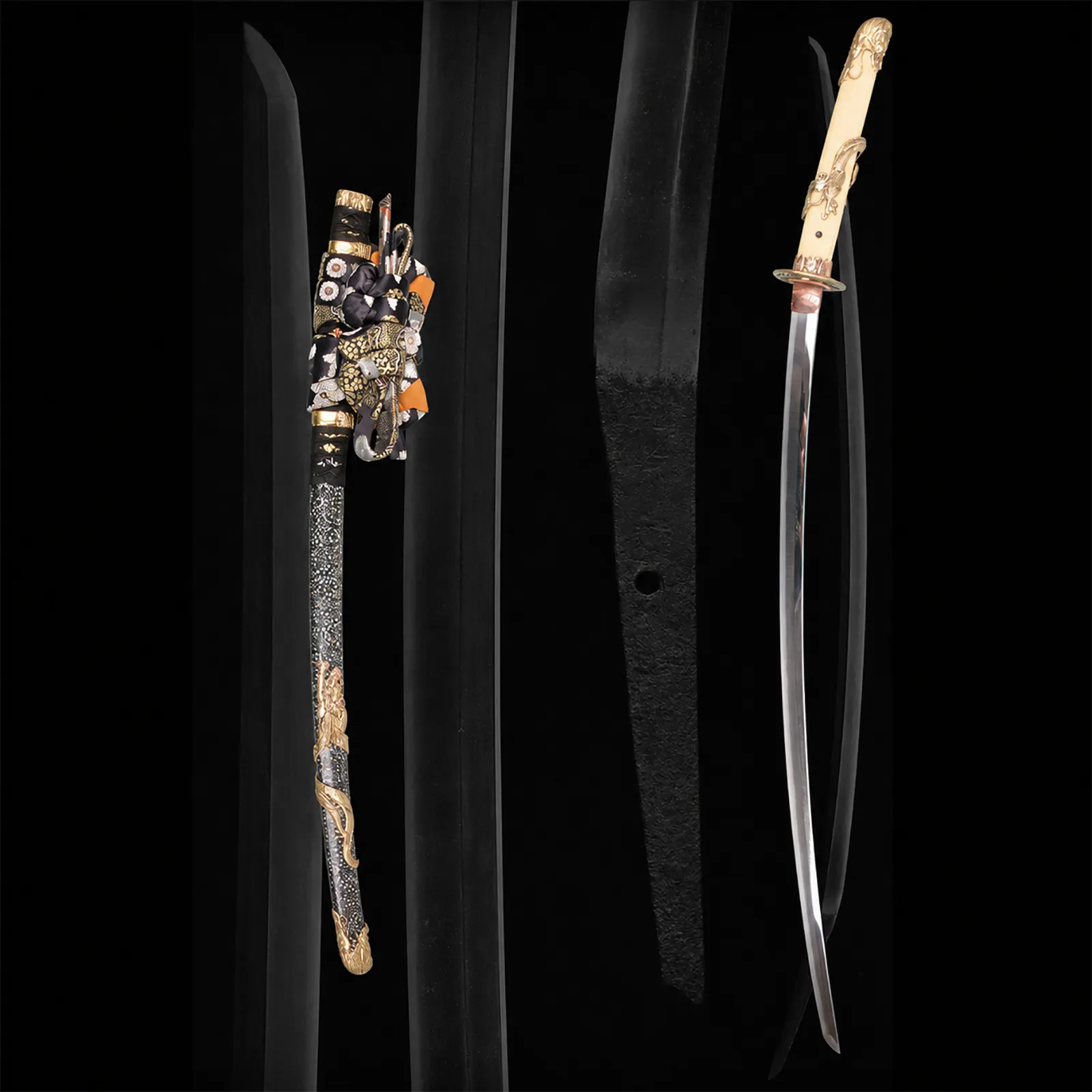
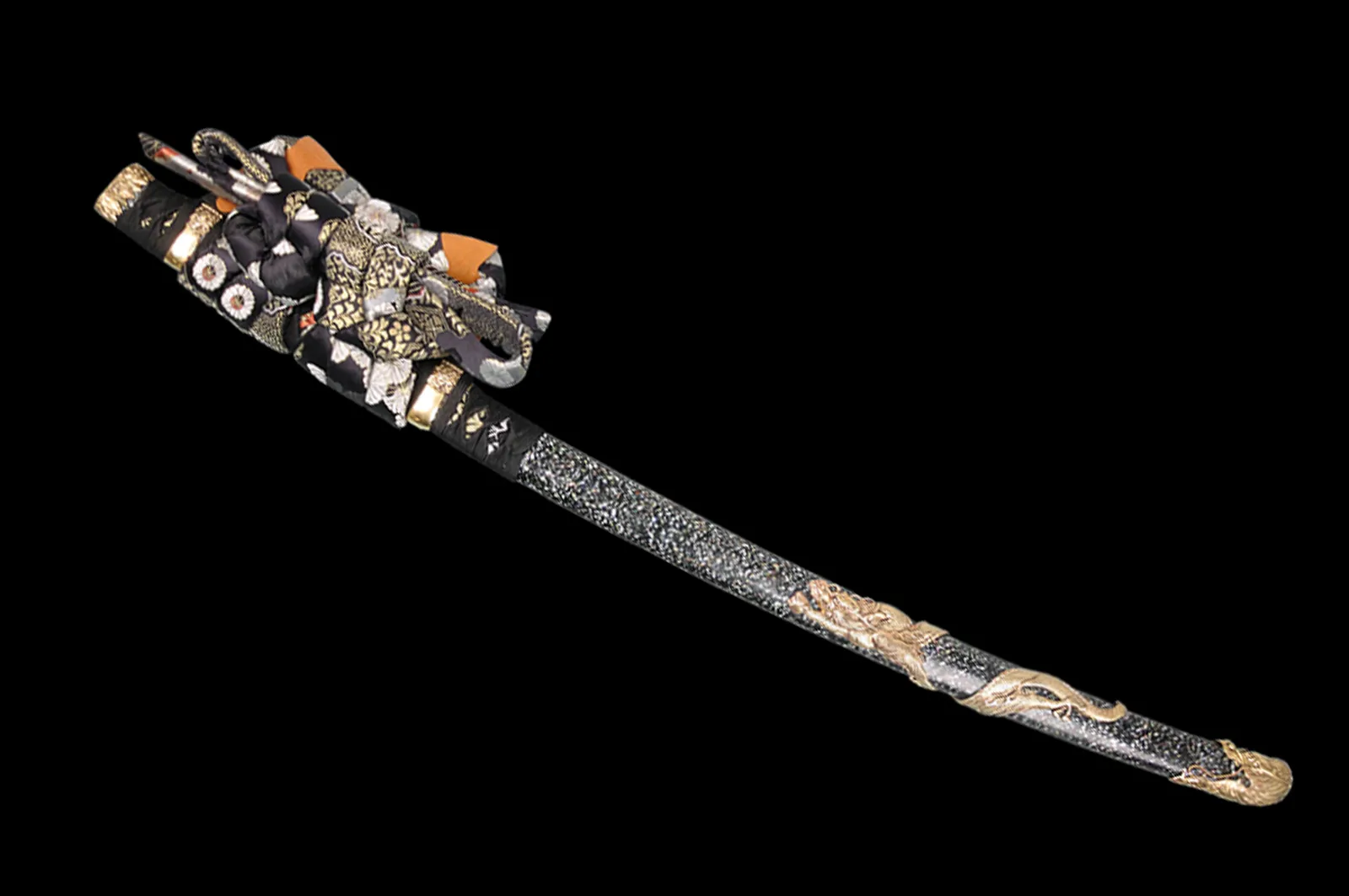
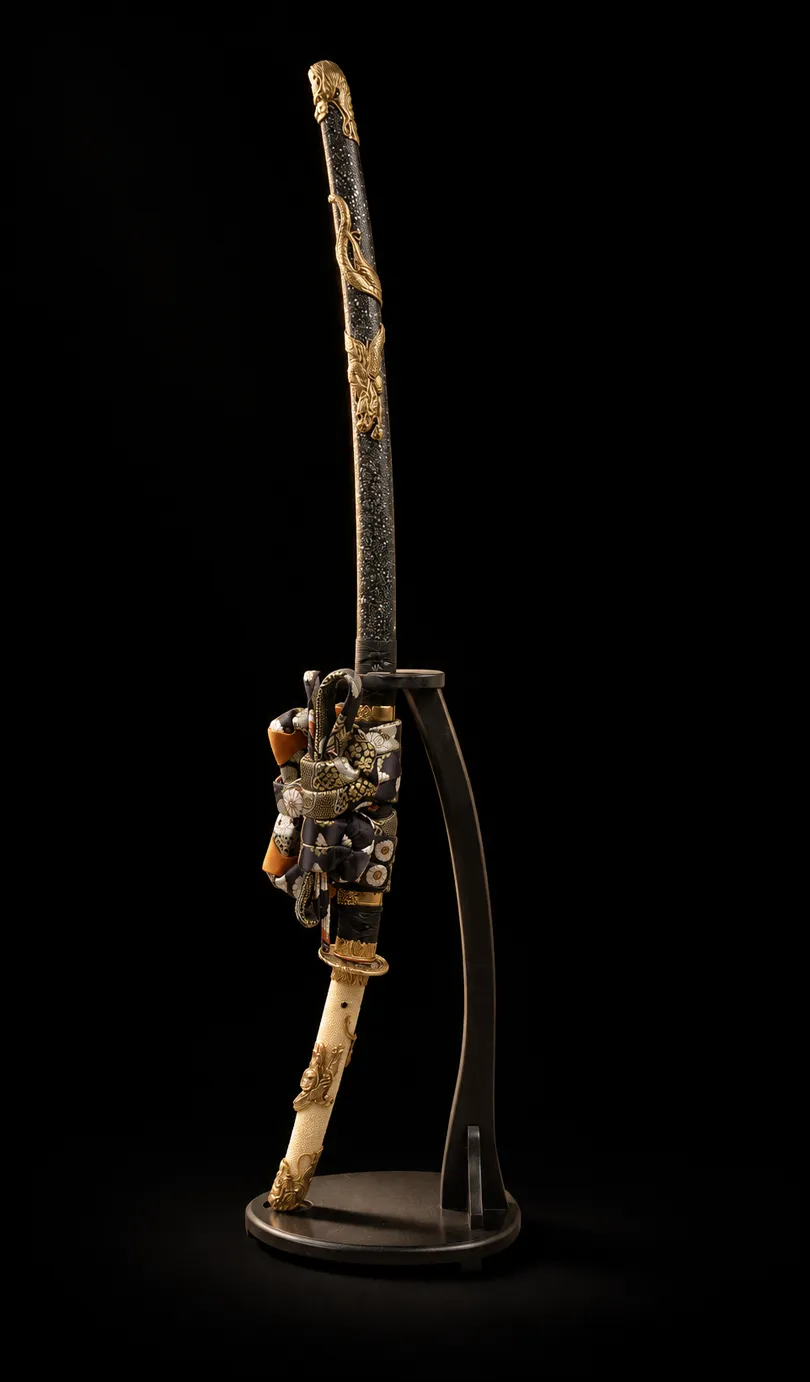
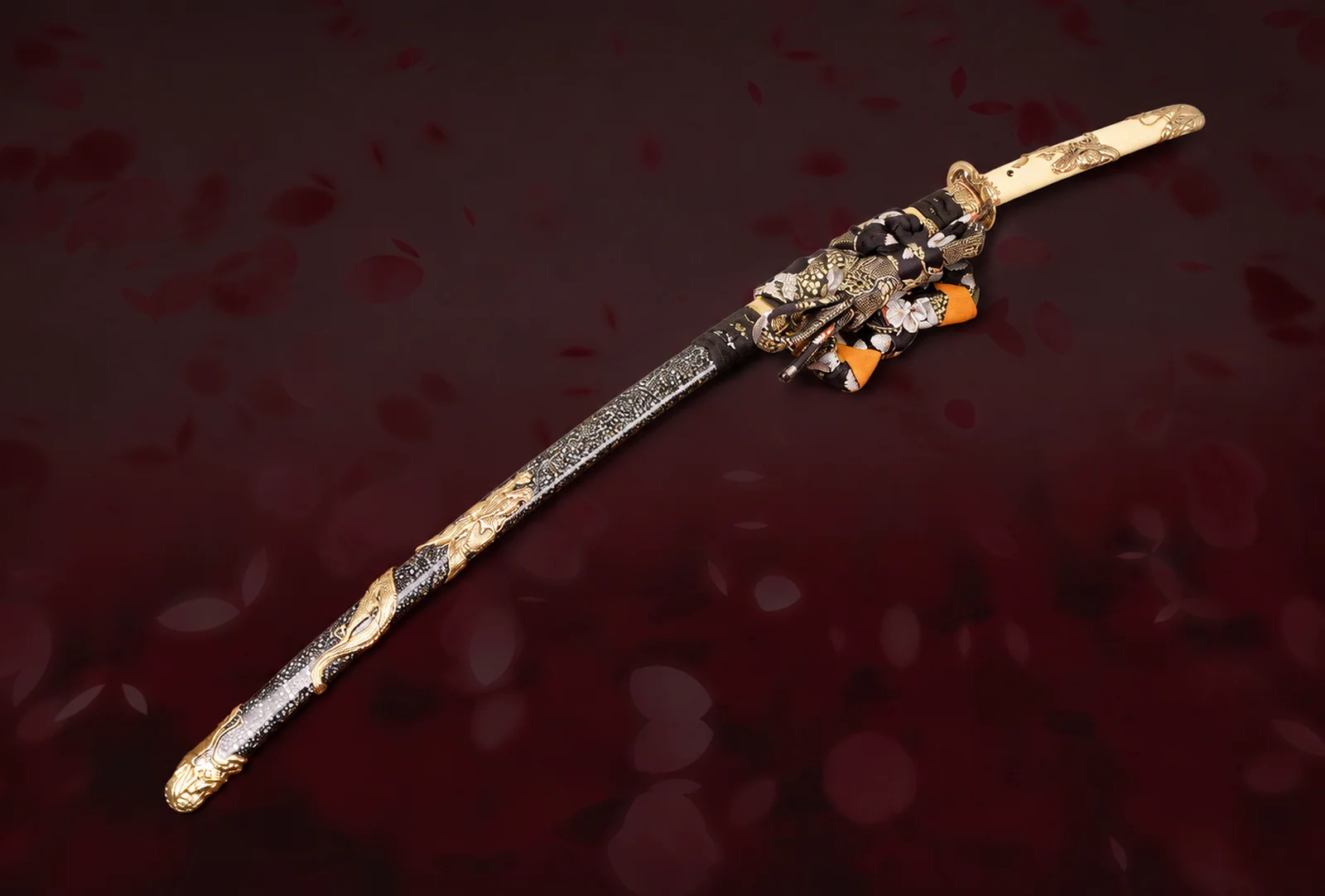
A tachi reveals its character long before the blade is drawn. Here, a pale handle, richly worked dragon fittings, dark mother-of-pearl inlay, and the descending line of the saya form one composed silhouette.
Set upright, the entire mounting can be read at once: the weight of the ornament, the quiet curve of the sheath, and the cords that belong to the traditional tachi style of display and wear.
One Line, Many Details.
The long black sheath gives the elaborate fittings room to breathe. Across its surface, the luminous inlay and raised dragon details create changes in texture without interrupting the overall curve.
The Detail at the Hilt.
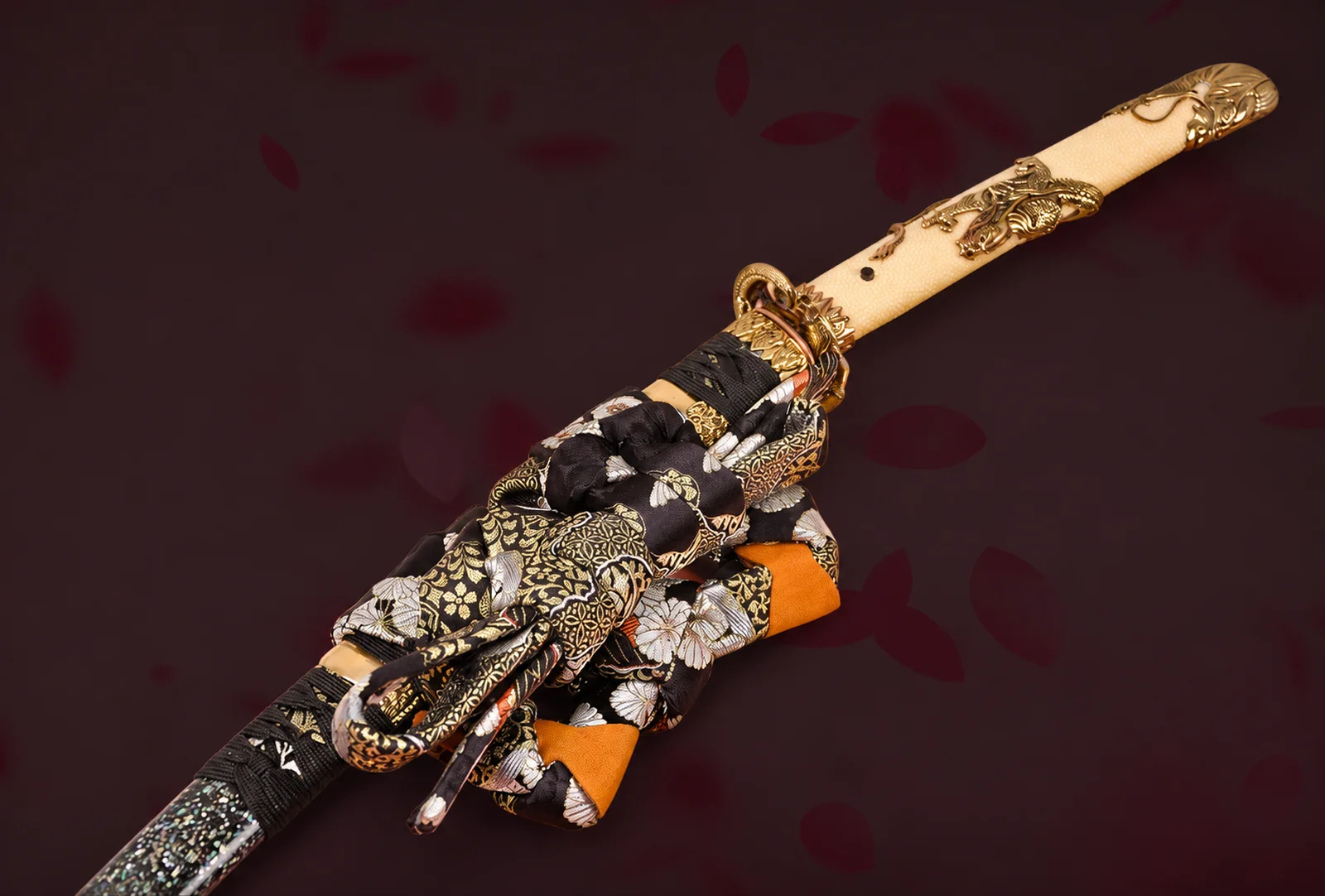
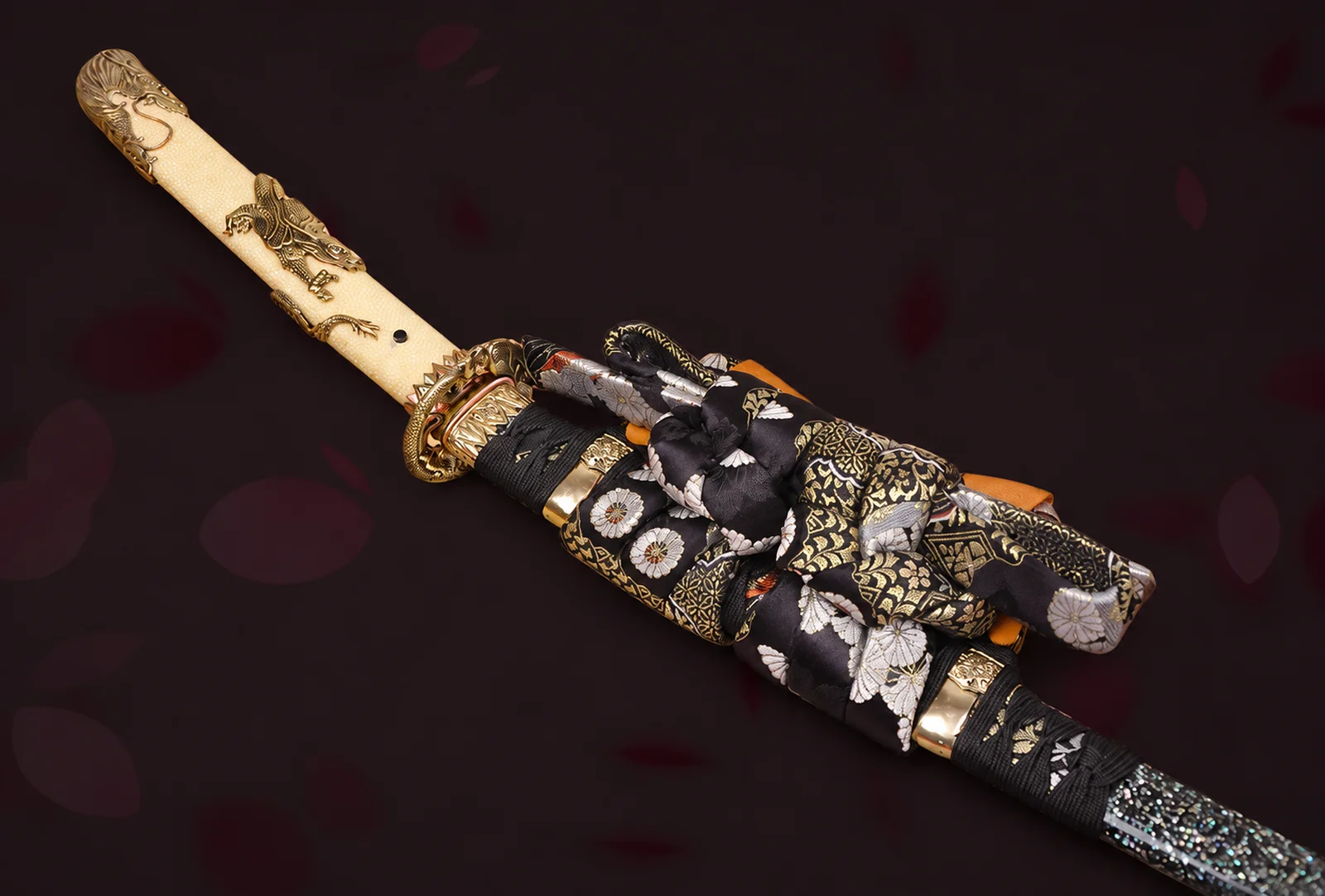
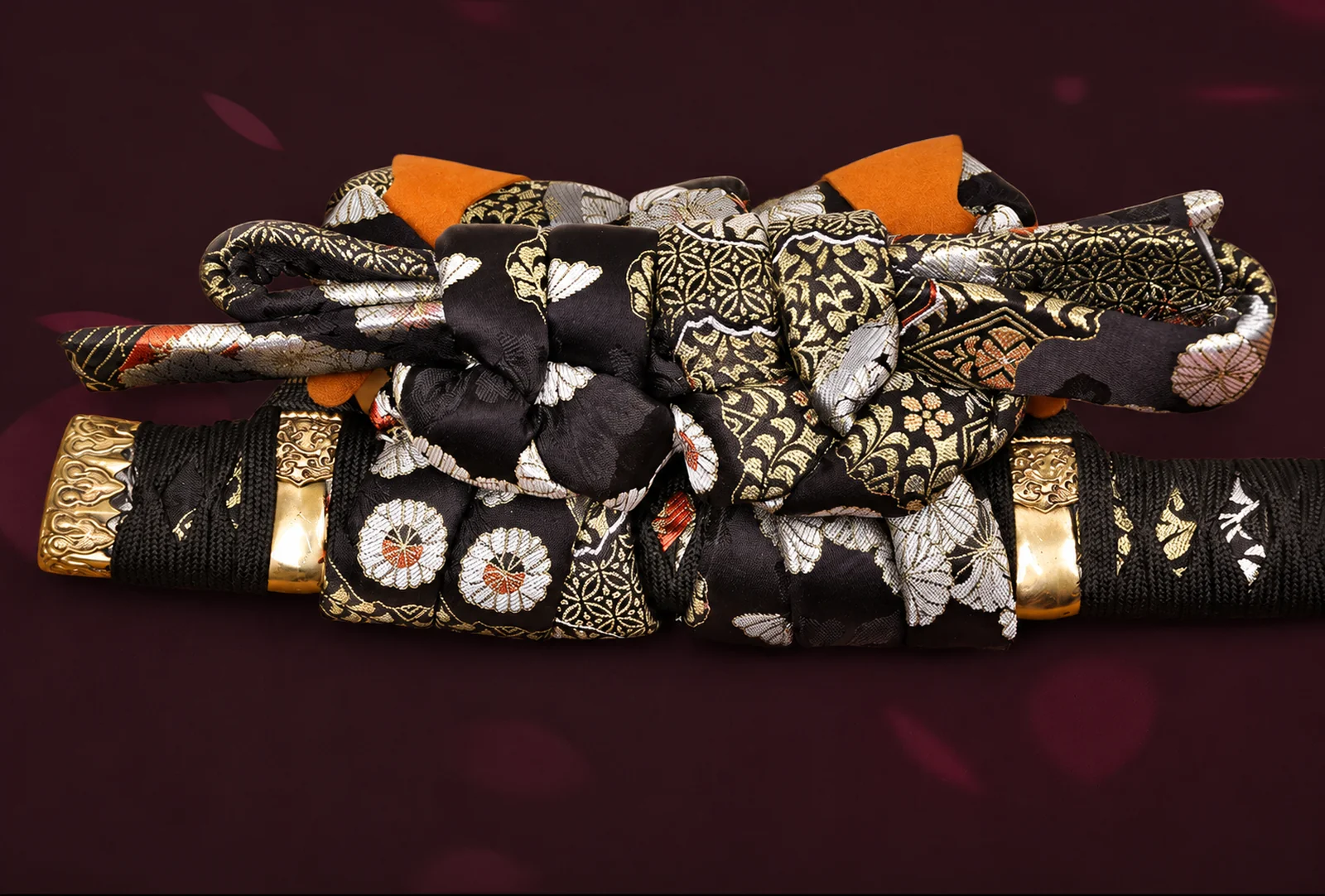
The decorated hilt is a meeting point of materials and forms: the ivory-toned handle, shaped metal ornaments, and the substantial tied cords. Together they give this tachi its unmistakable presence.
The cordwork is deliberately firm. Its structure holds the arrangement in place and remains part of the visual identity of the mounting.
Warm Metal, Dark Sheath.
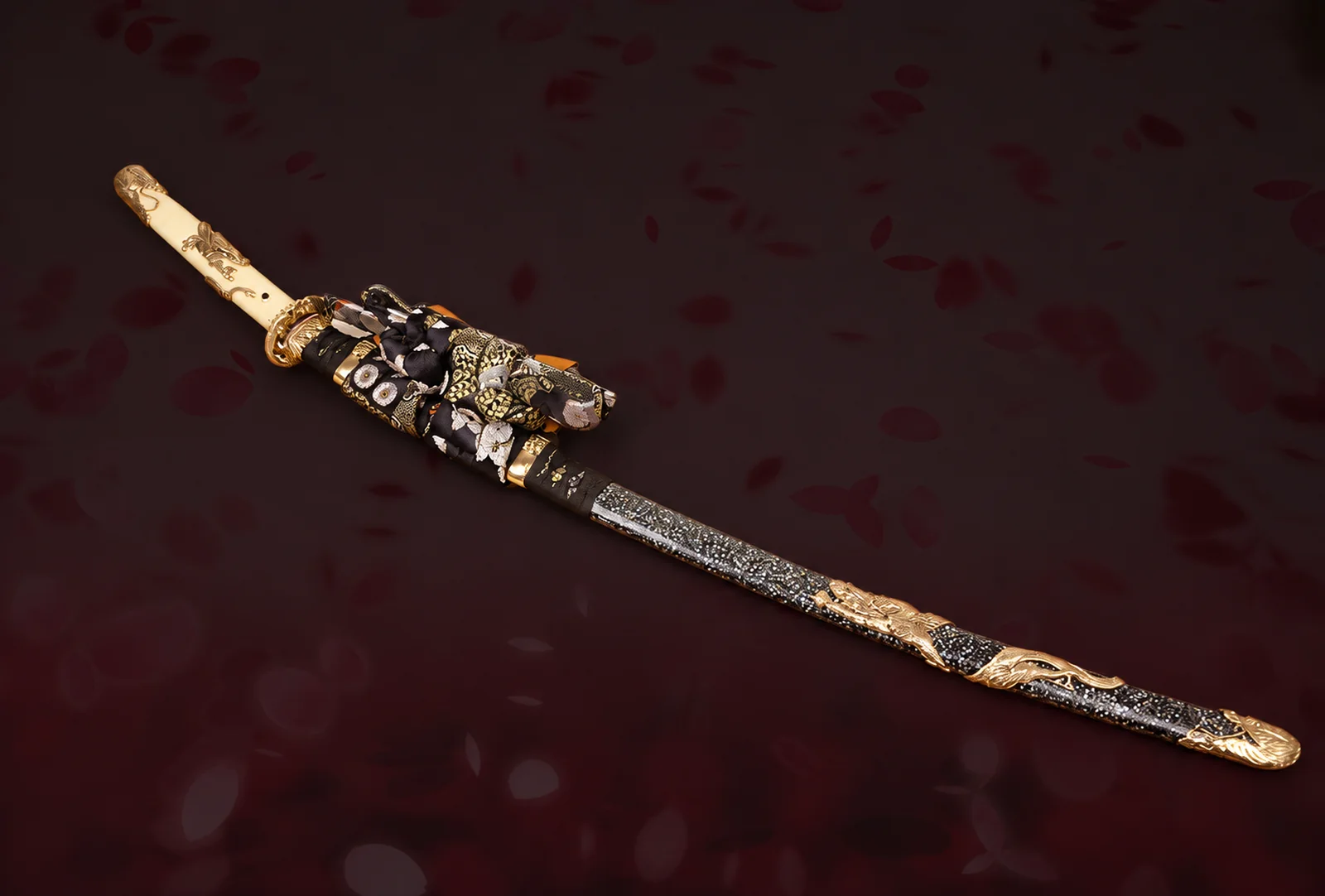
The decorative fittings are brass, with a warm natural-metal appearance rather than a uniform painted finish. Against the black sheath, their relief and polished highlights become especially clear.
The design is intricate, but it is the contrast between restrained black and bright metal that gives each detail its place.
Dragonwork in Close View.
Seen up close, the dragon-themed fittings are built from overlapping forms, contrasting textures, and small areas of reflected light. The ornament becomes more legible as the view moves from the complete tachi to its individual components.
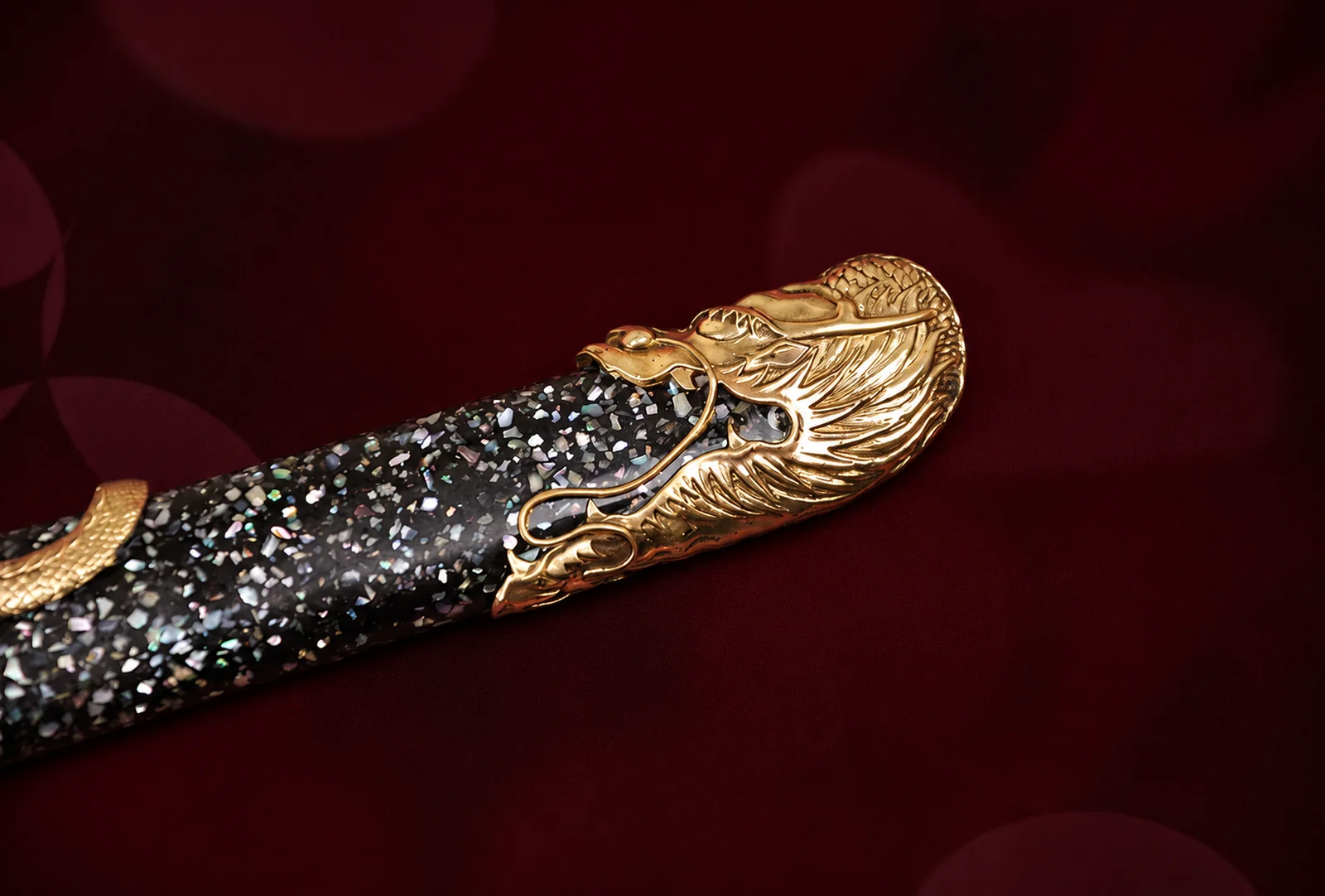
Light Across the Inlay.
The black saya carries raden—mother-of-pearl inlay that catches light in countless small flashes. Its irregular shimmer contrasts with the more sculptural metalwork at the end of the sheath.
These are details that reward a close view, then disappear into a single dark surface when the sword is seen from a distance.
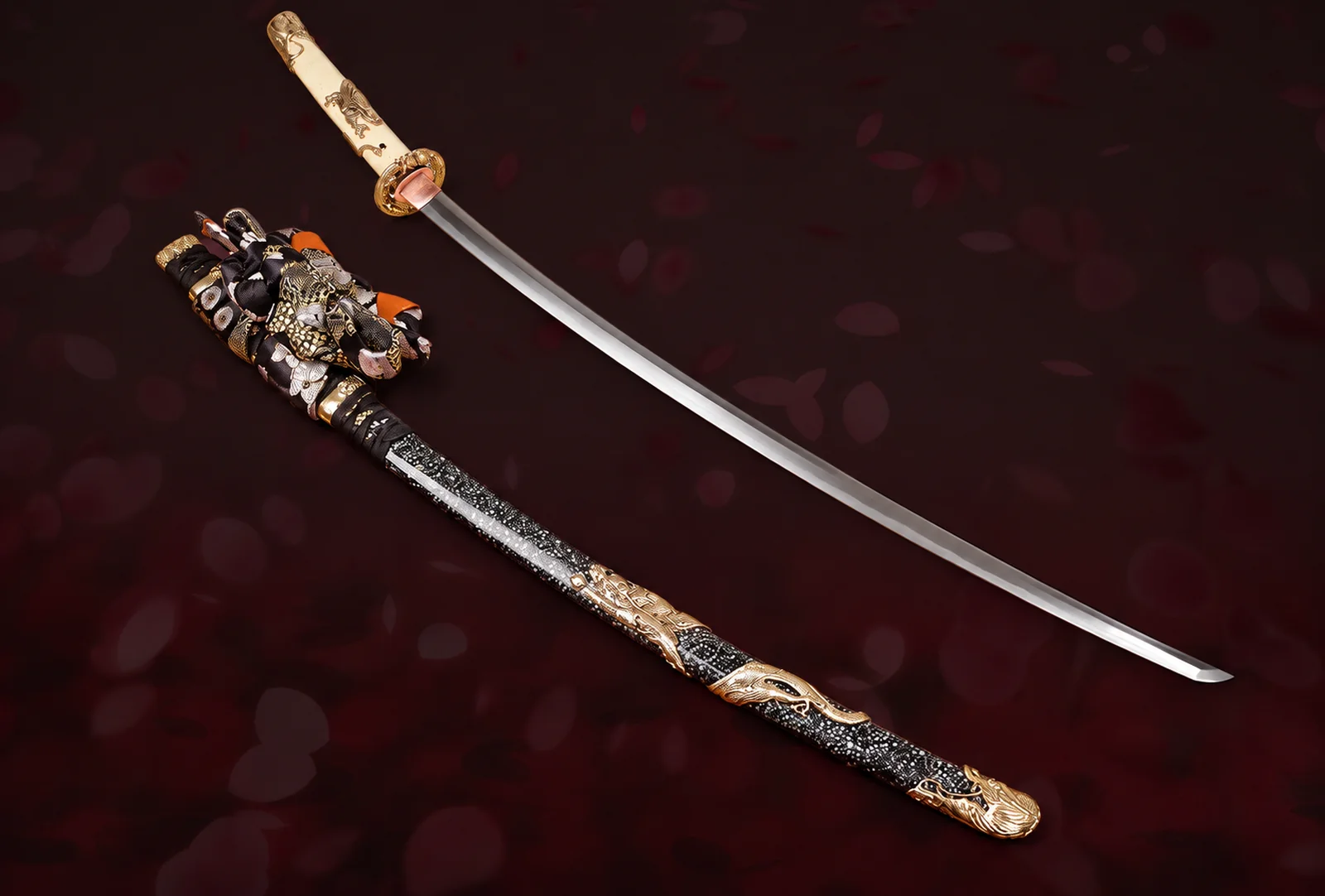
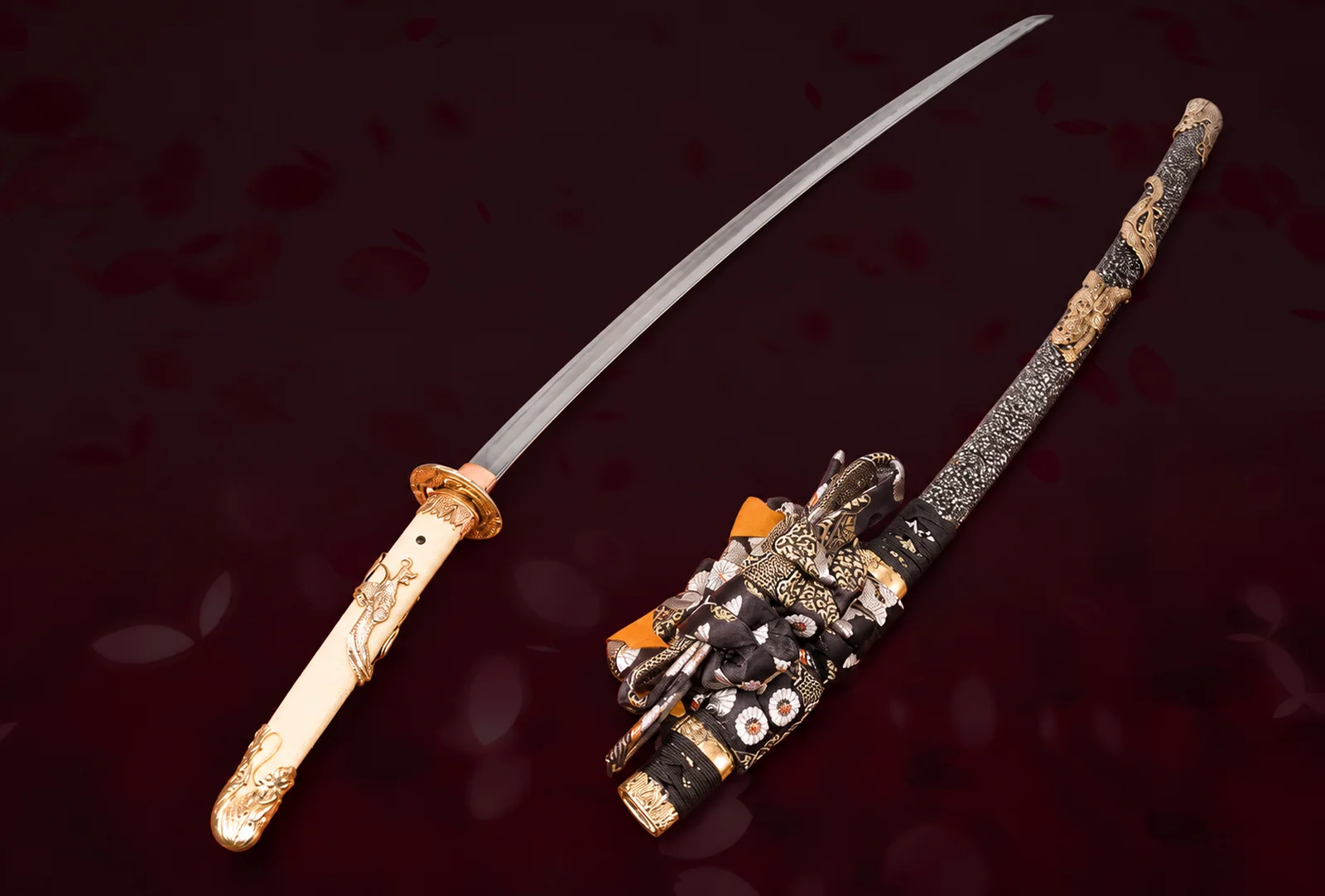
Two Forms of the Same Tachi.
With the blade drawn, the simplicity of polished steel answers the richly patterned sheath. The two belong together, yet each has a different visual rhythm: long, clean lines on one side; closely worked ornament on the other.
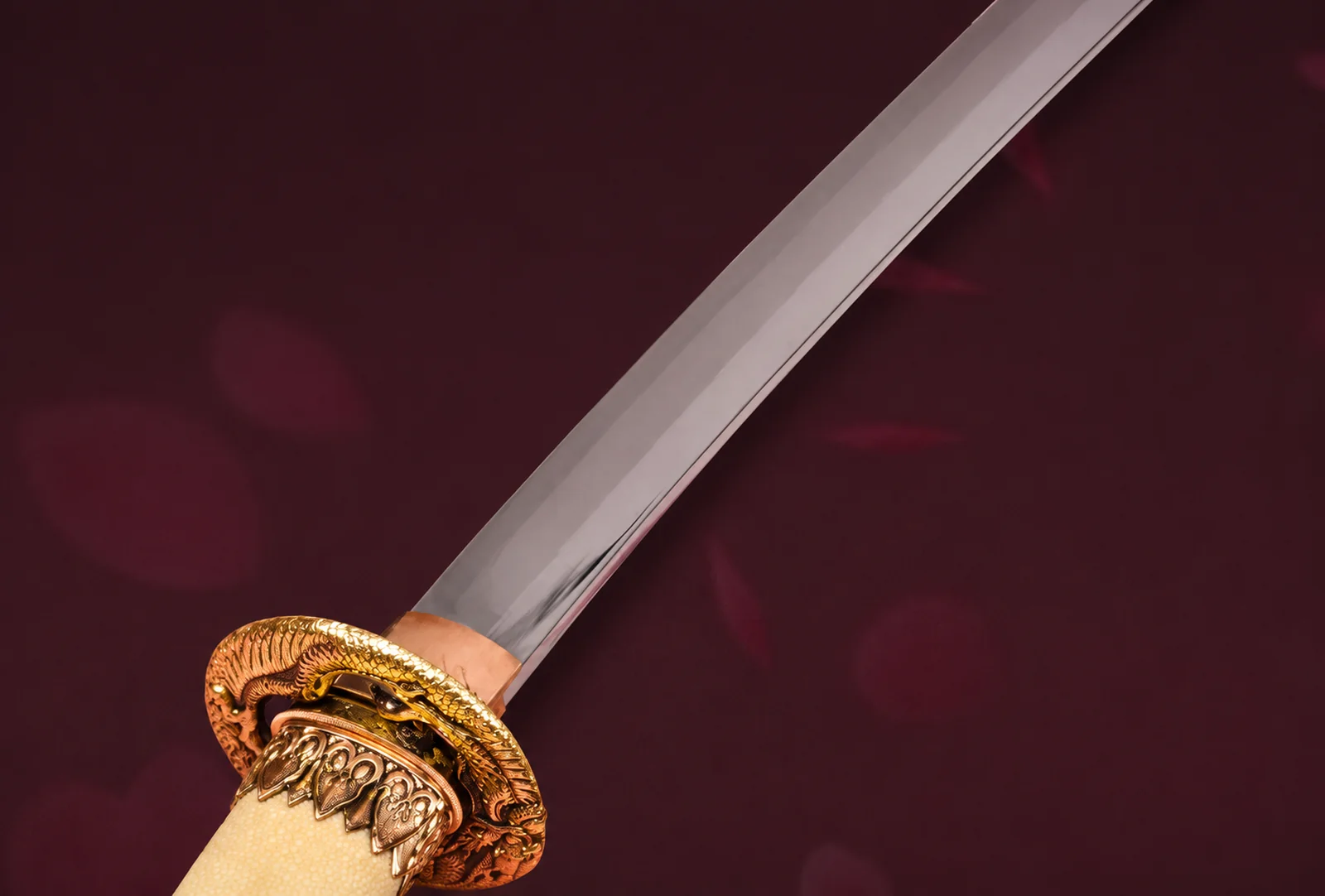
The Transition at the Blade.
The meeting of blade, copper habaki, and ornate guard is a particularly revealing detail. The smooth planes of steel sit immediately beside the worked surfaces of the mounting.
Nothing needs to compete for attention: the materials are different enough to be appreciated together.
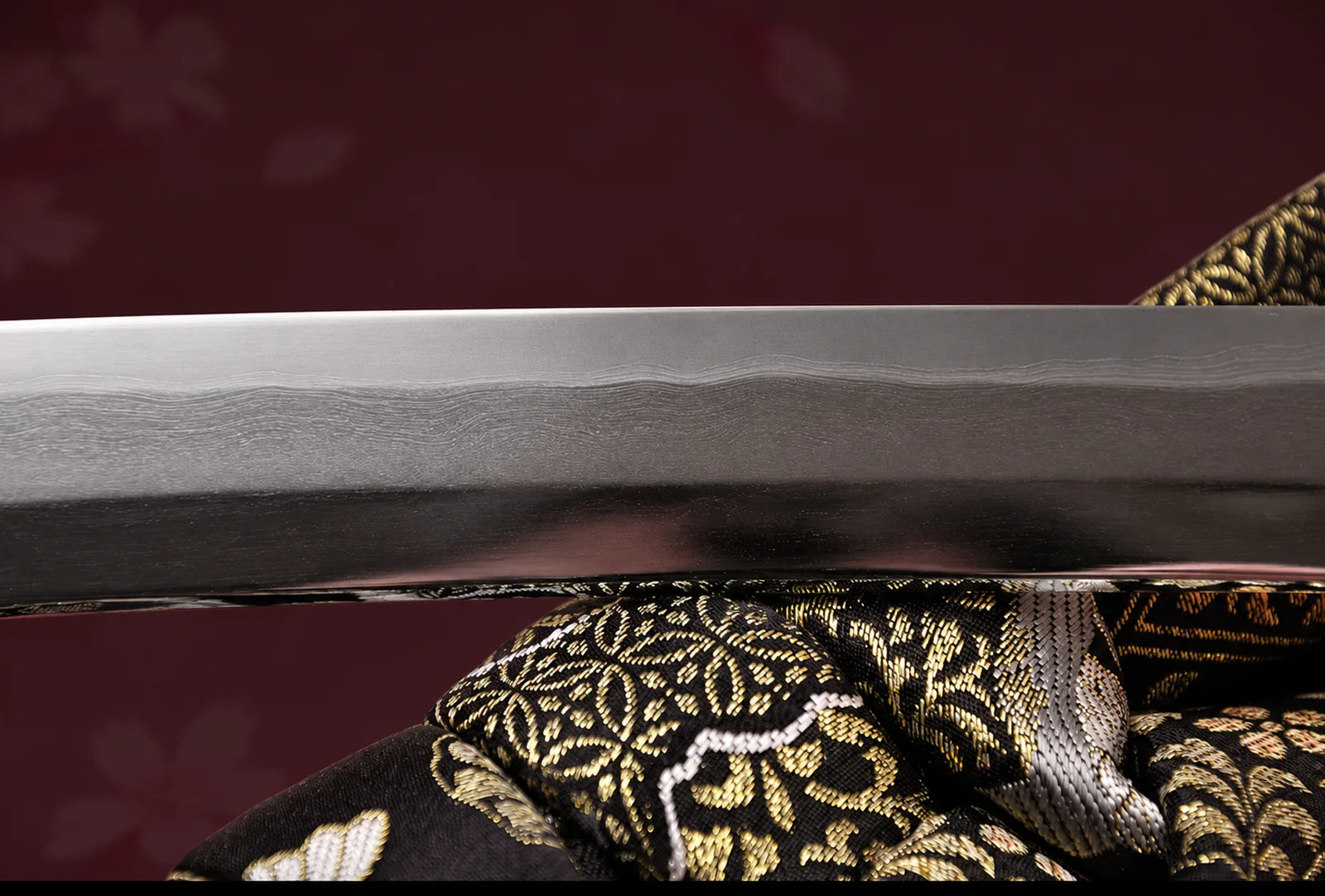
A Detail Worth Returning To.
The hand-finished copper habaki provides a warm contrast to the blade. Behind it, the dragon-themed guard and adjacent brass fittings bring the eye back to the craftsmanship of the mounting.
This is the same tachi seen from only a few inches away—where the whole composition resolves into individual surfaces and edges.
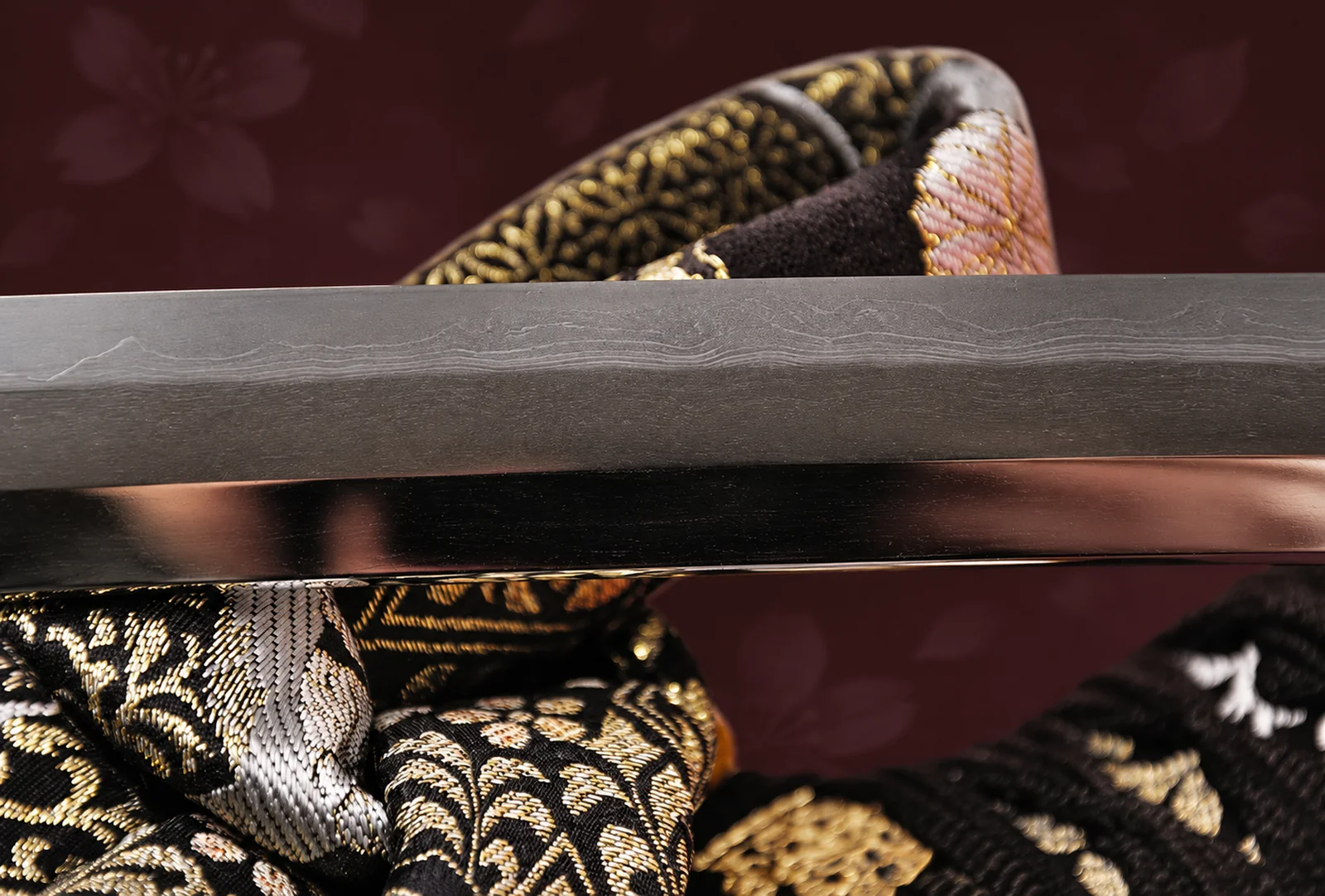
The Complete Presence.
The finished sword is best understood in more than one view. Its curve, dark raden sheath, pale hilt, and ornate cordwork come together differently as the angle changes.
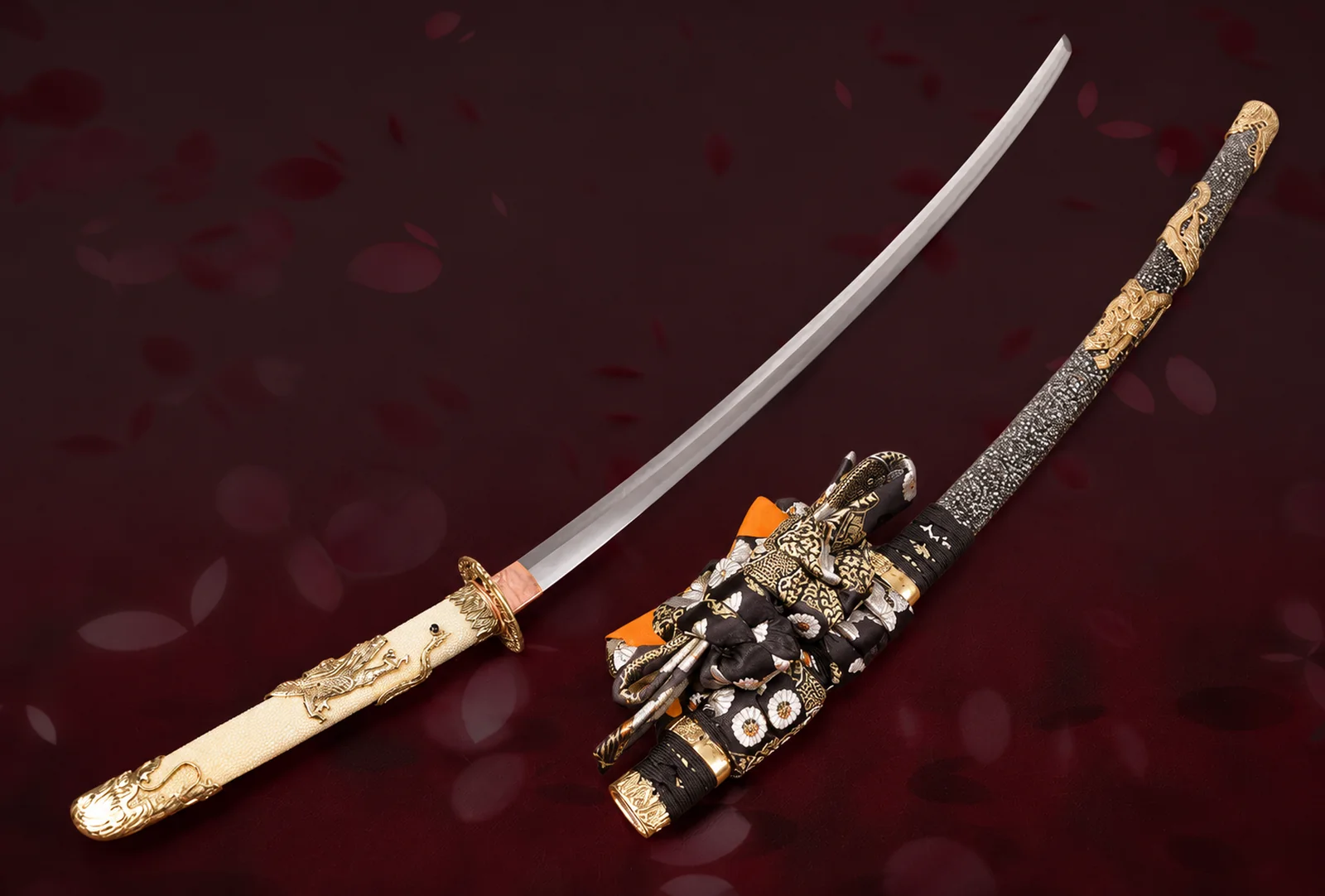
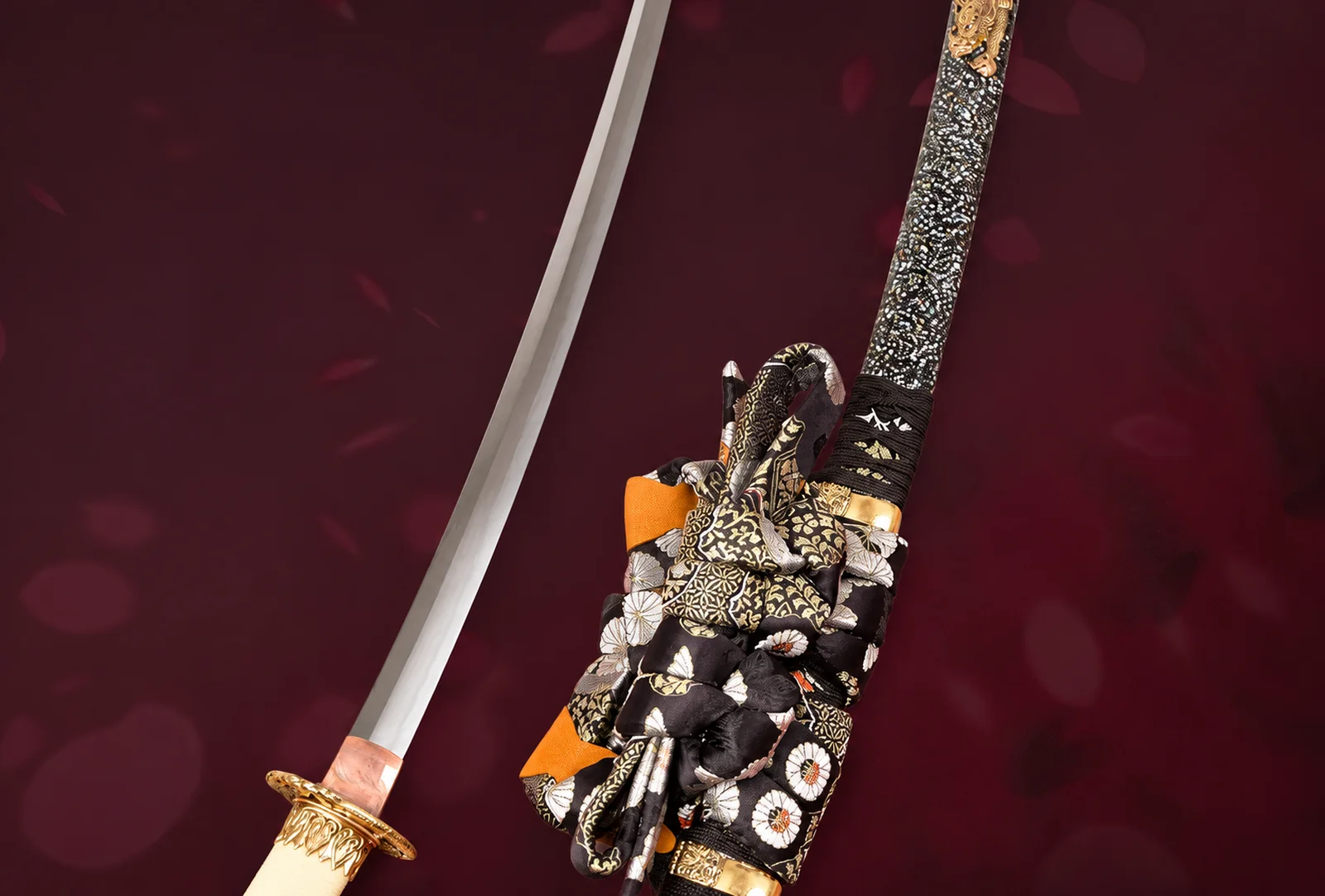
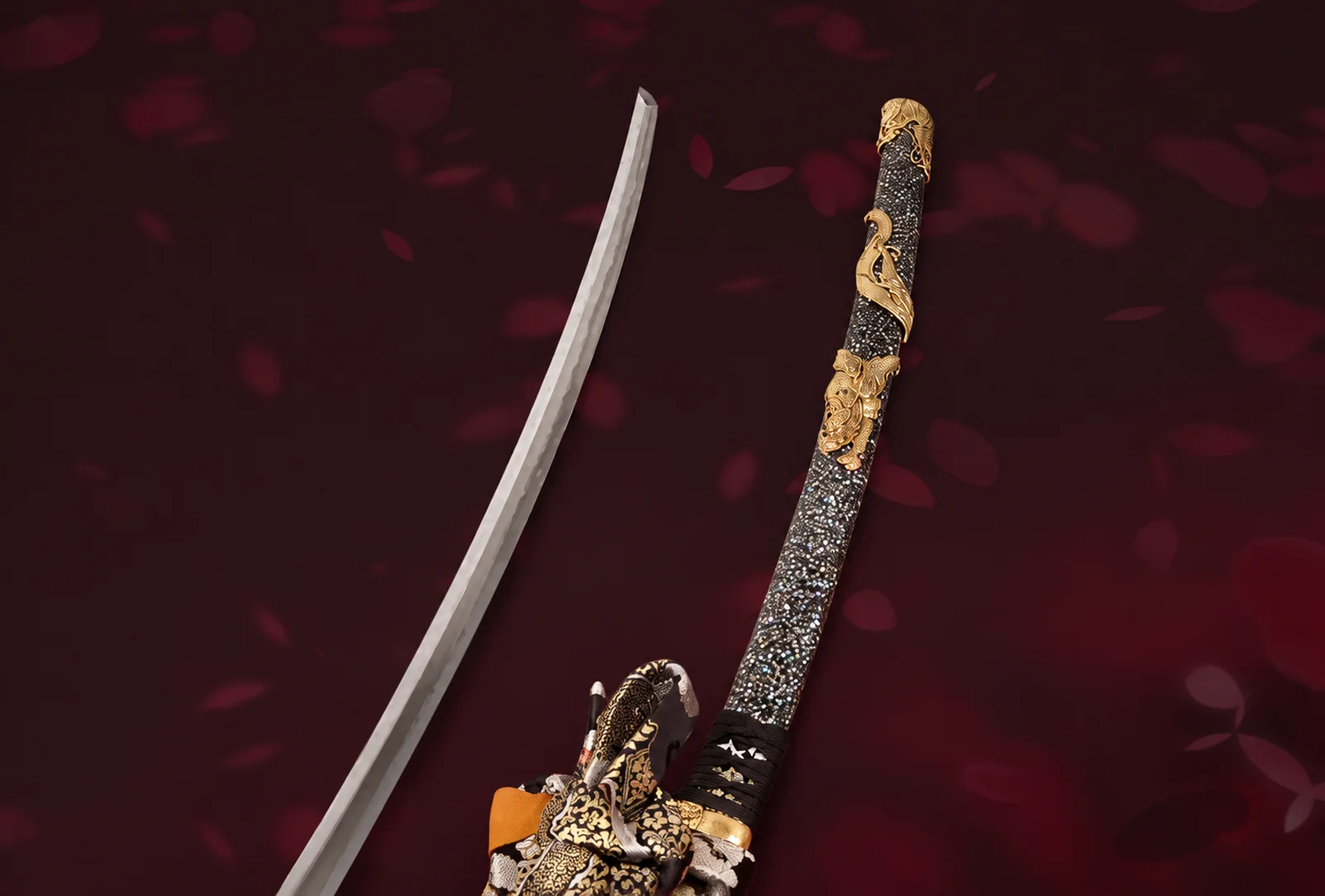
A long blade, an elaborate dragon mounting, and a black sheath alive with mother-of-pearl light: different forms of craft brought into one finished tachi.
Reviews
There are no reviews yet.