PART I / FOUNDATION & TRADITION
The craft beneath the wrap.
Tsukamaki is more than the visible pattern of a sword handle. The underlying wooden form, rayskin, choice of braid and character of the folds all contribute to the finished appearance. In a custom wrapping project, these elements are considered together rather than as isolated decorative choices.
01 / THE WOODEN FOUNDATION
The form beneath the surface.
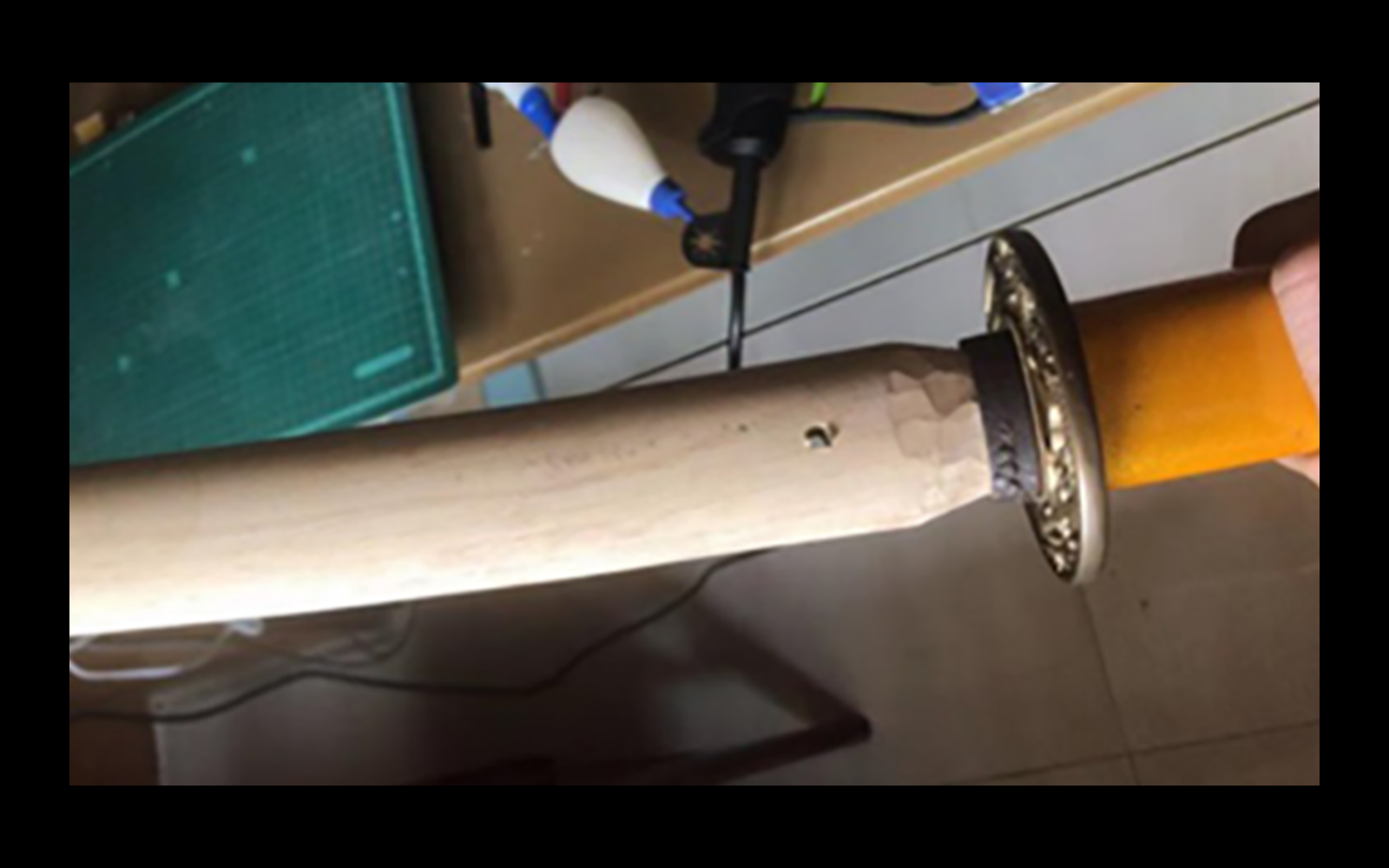
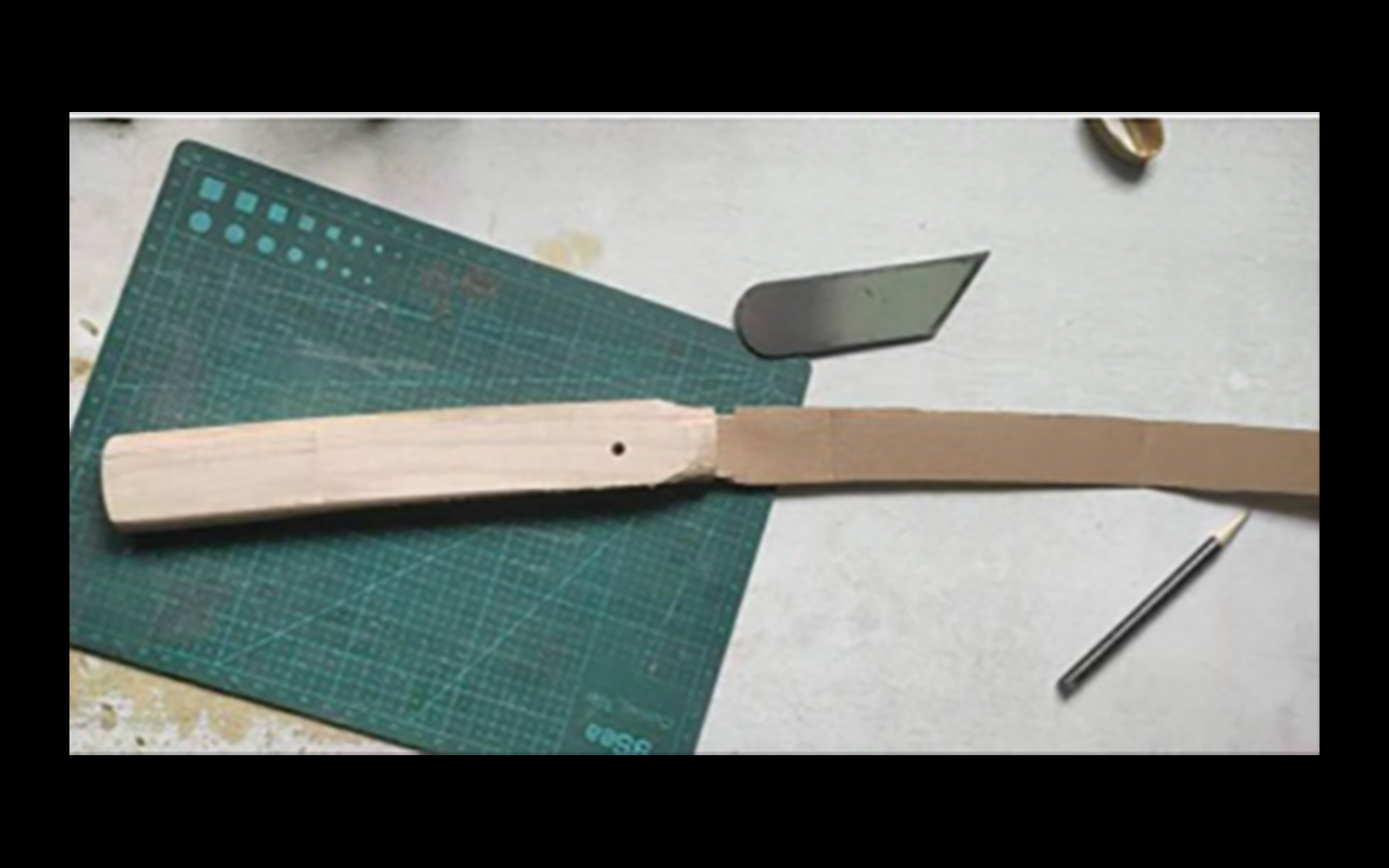
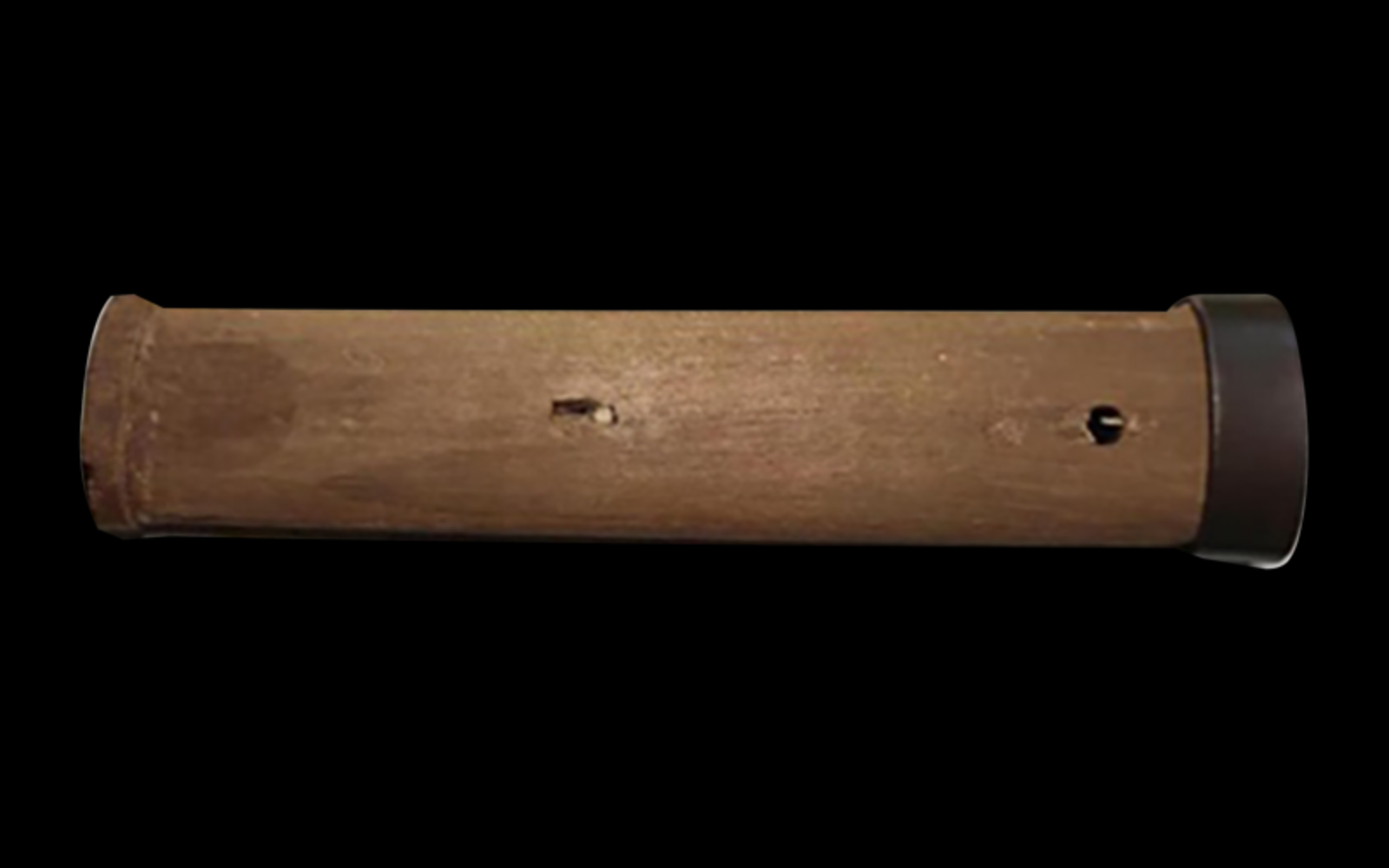
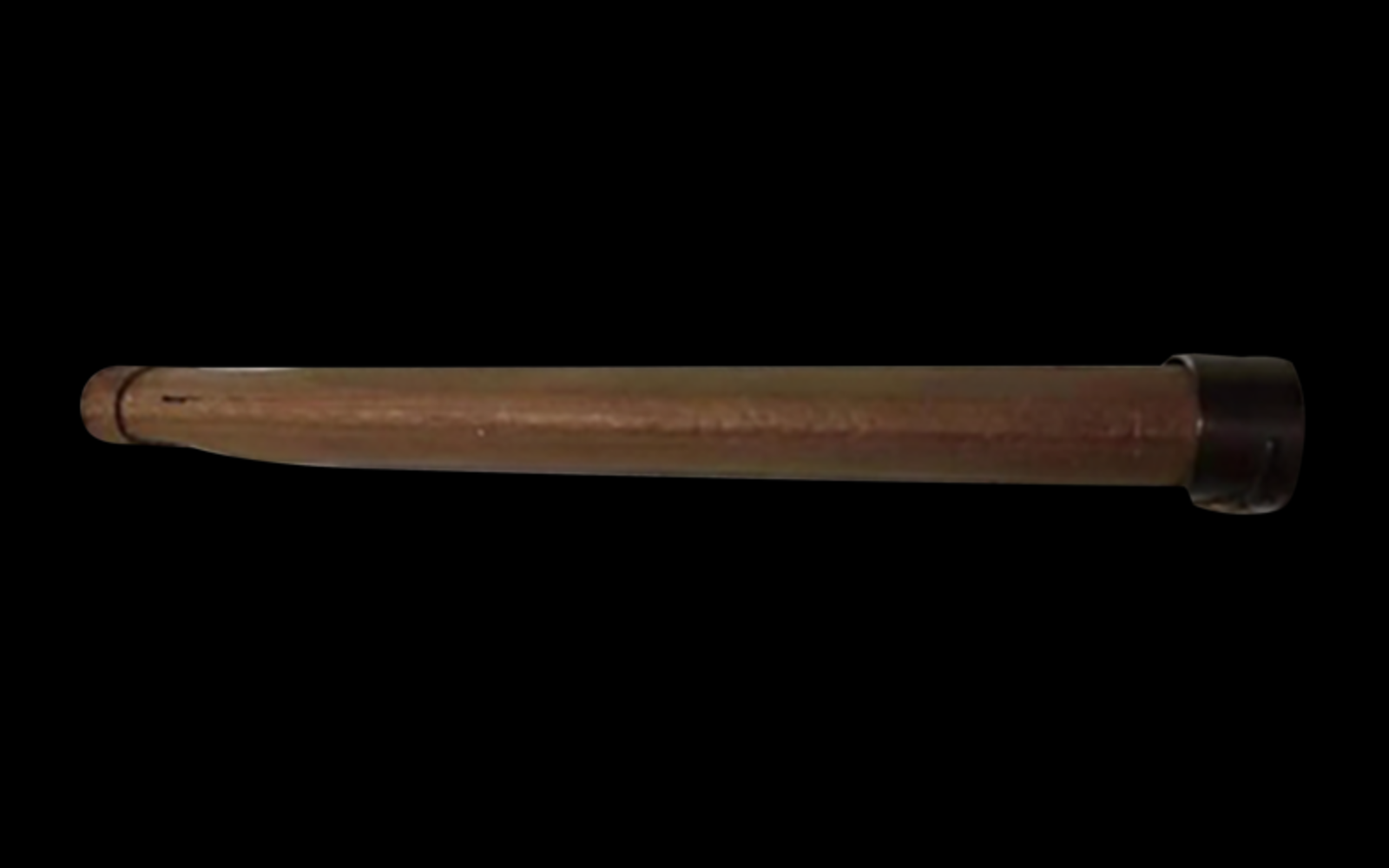
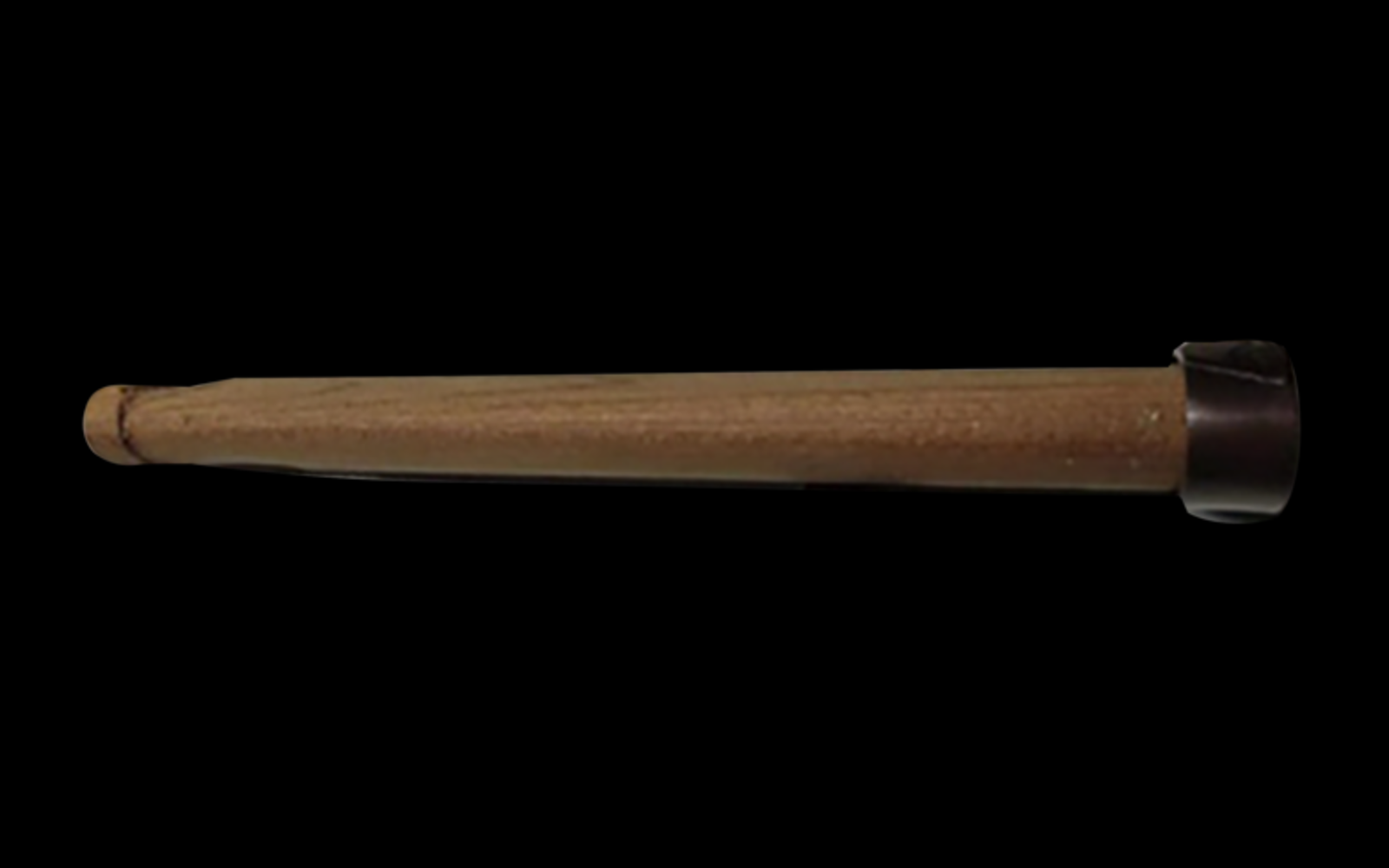
The tsuka-shitaji is the wooden foundation beneath the finished handle wrap. Its overall profile and relationship to the blade's nakago (tang), collar and end fitting define the form of the finished handle. The workbench examples show an unfinished wooden foundation and a full-scale paper blade profile used as a visual reference for the overall silhouette. Custom tsukamaki is available as a separate workshop service as well as part of a new WKatana mounting.
WORKSHOP SERVICE / PROJECT REFERENCES
A custom wrap without shipping the blade.
For a standalone tsukamaki project, we review the existing detached handle or non-blade reference materials before confirming the scope of work. A full-scale paper blade profile provides a visual reference for the relationship between the handle and the blade. The paper profile is not a substitute for a physical tang reference.
OPTION A
Existing handle
Send the detached original handle and a full-scale paper blade profile.
OPTION B
Solid tang replica
Provide a full-scale resin tang replica, a full-scale paper blade profile and the relevant fittings.
OPTION C
Combined references
Provide the detached original handle, the full-scale resin tang replica, the paper blade profile and the relevant fittings.
Replicas should be made of resin or another durable solid material. Fragile plaster molds are not accepted. The accuracy of the supplied replica, including its dimensions and the position of the mekugi-ana, remains the customer's responsibility.
Please contact us to confirm your project and the reference materials before dispatch. Do not send an actual blade or a complete sword.
A considered handle profile.
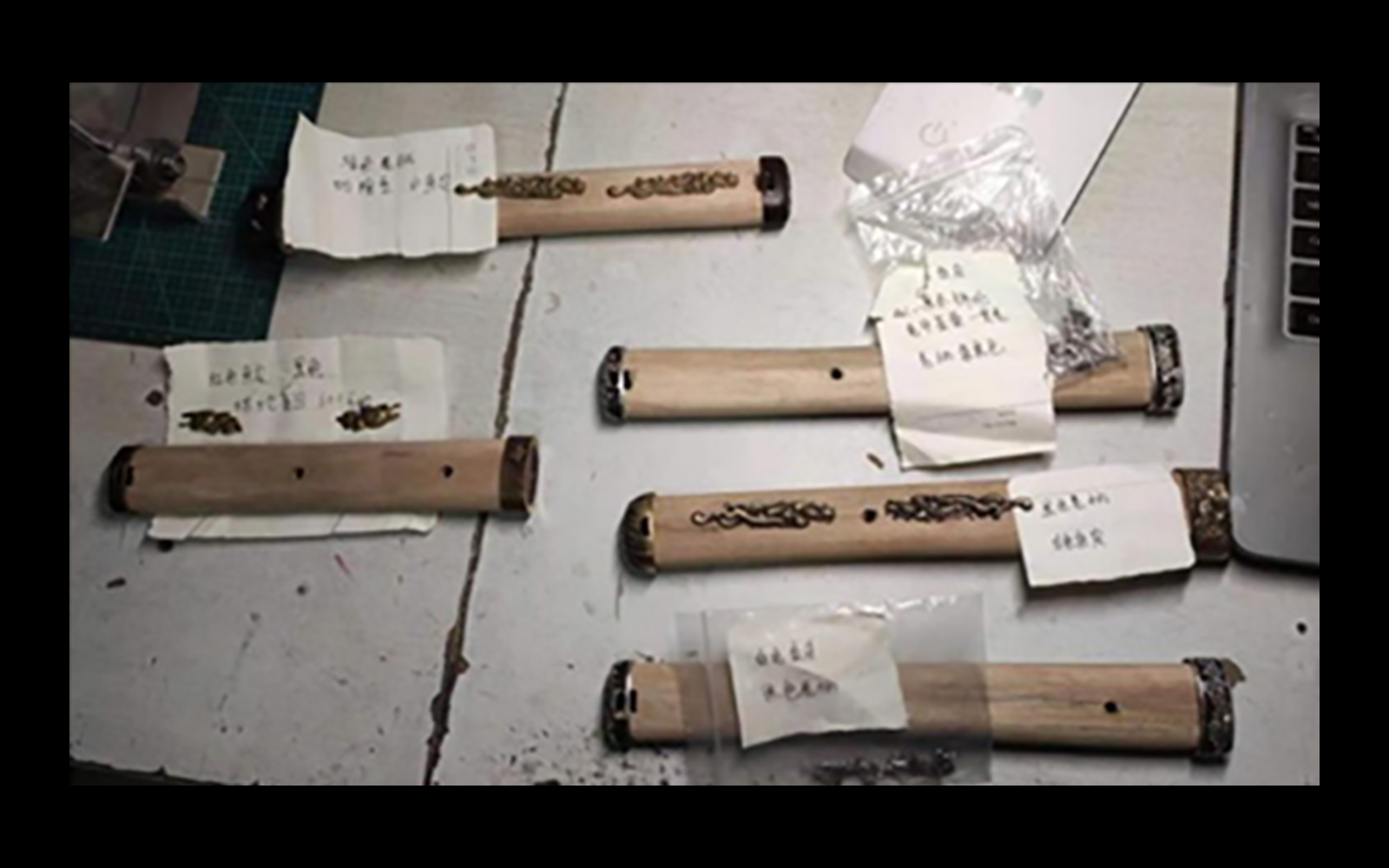
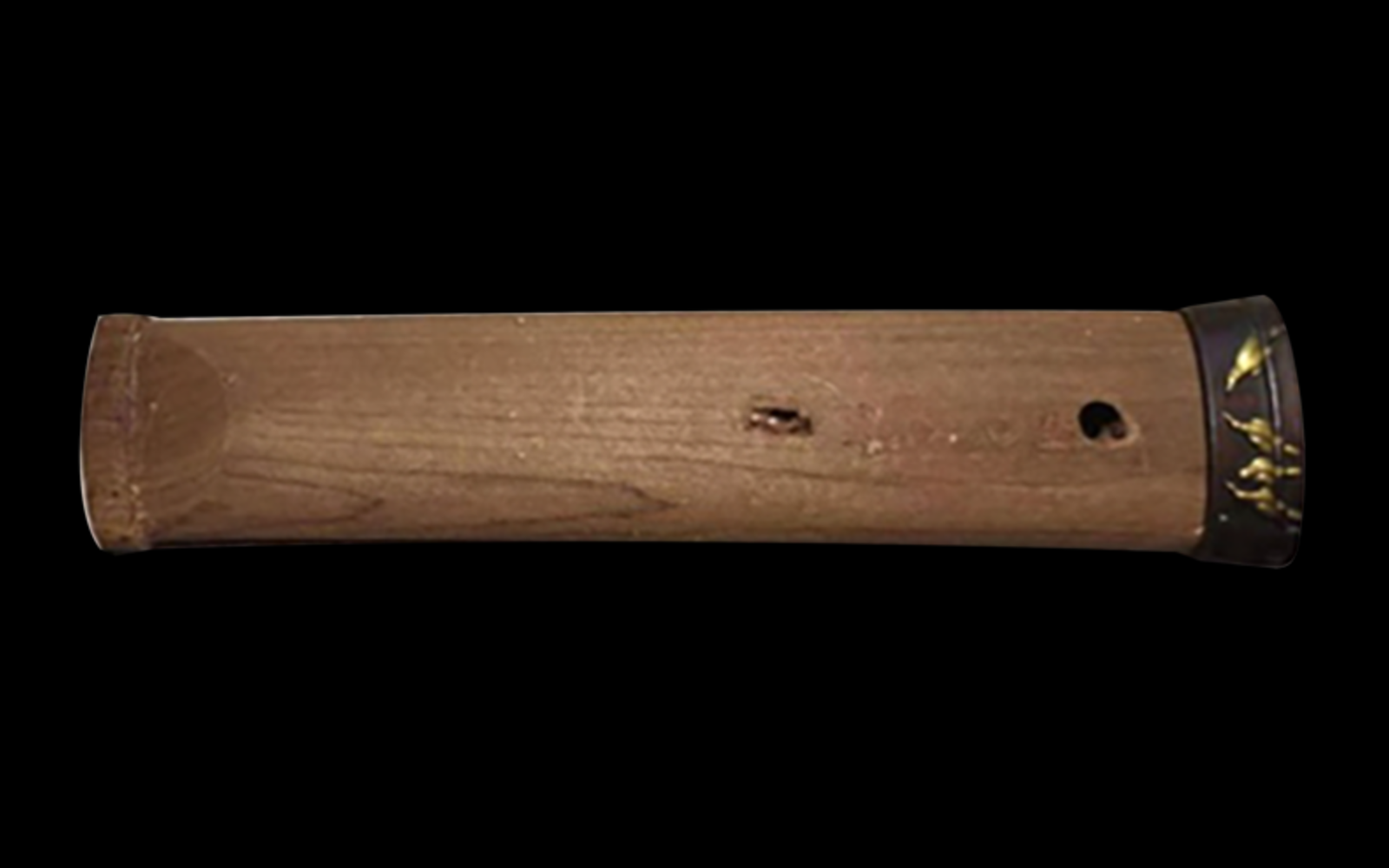
The foundation can be based on an existing wooden blank or an individually made core. The examples show the importance of the overall contour and the visual relationship between the fuchi and kashira. The wooden foundation is distinct from the decorative wrapping that follows.
02 / SAMEGAWA
The texture beneath the braid.
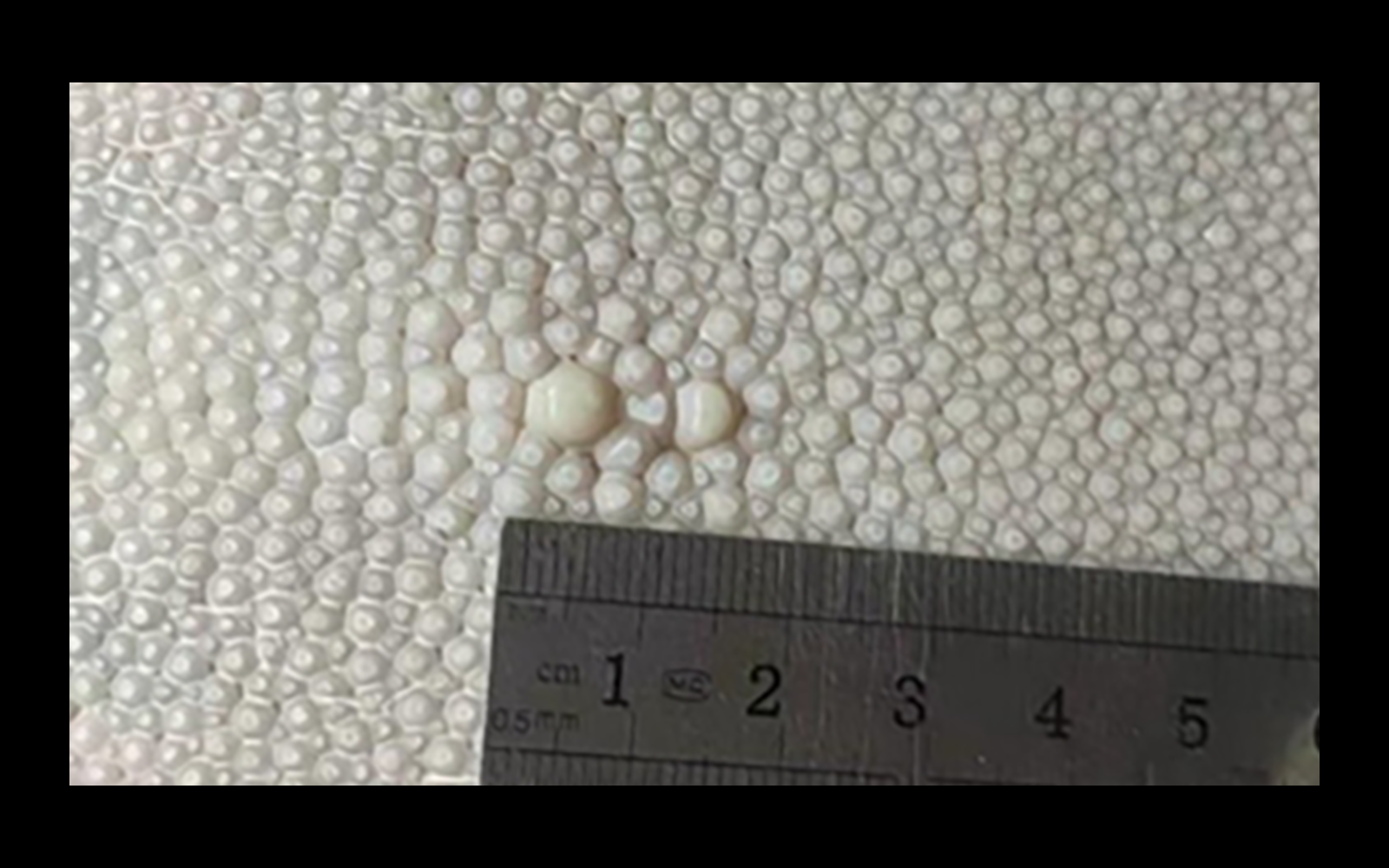
Samegawa is the rayskin covering visible through the openings of many traditional handle wraps. Its natural nodules vary in size, with some areas displaying particularly prominent grains.
Two approaches are commonly distinguished: inset rayskin panels and a full rayskin covering around the wooden foundation. Full coverings may include a prominent central nodule or use a more uniform area of skin. Each gives a different visual character to the exposed texture.
03 / TRADITIONAL WRAPPING STYLES
A language of folds.
Traditional tsunegumi-ito is a braided handle cord associated with a range of wrapping styles. More elaborate decorative patterns may use jabara-ito, a distinct cord construction explored in the next part of this guide.
Hira-maki
Flat crossings with comparatively little raised relief.
Katatsumami-maki
A mixed crossover style combining pinched and twisted folds.
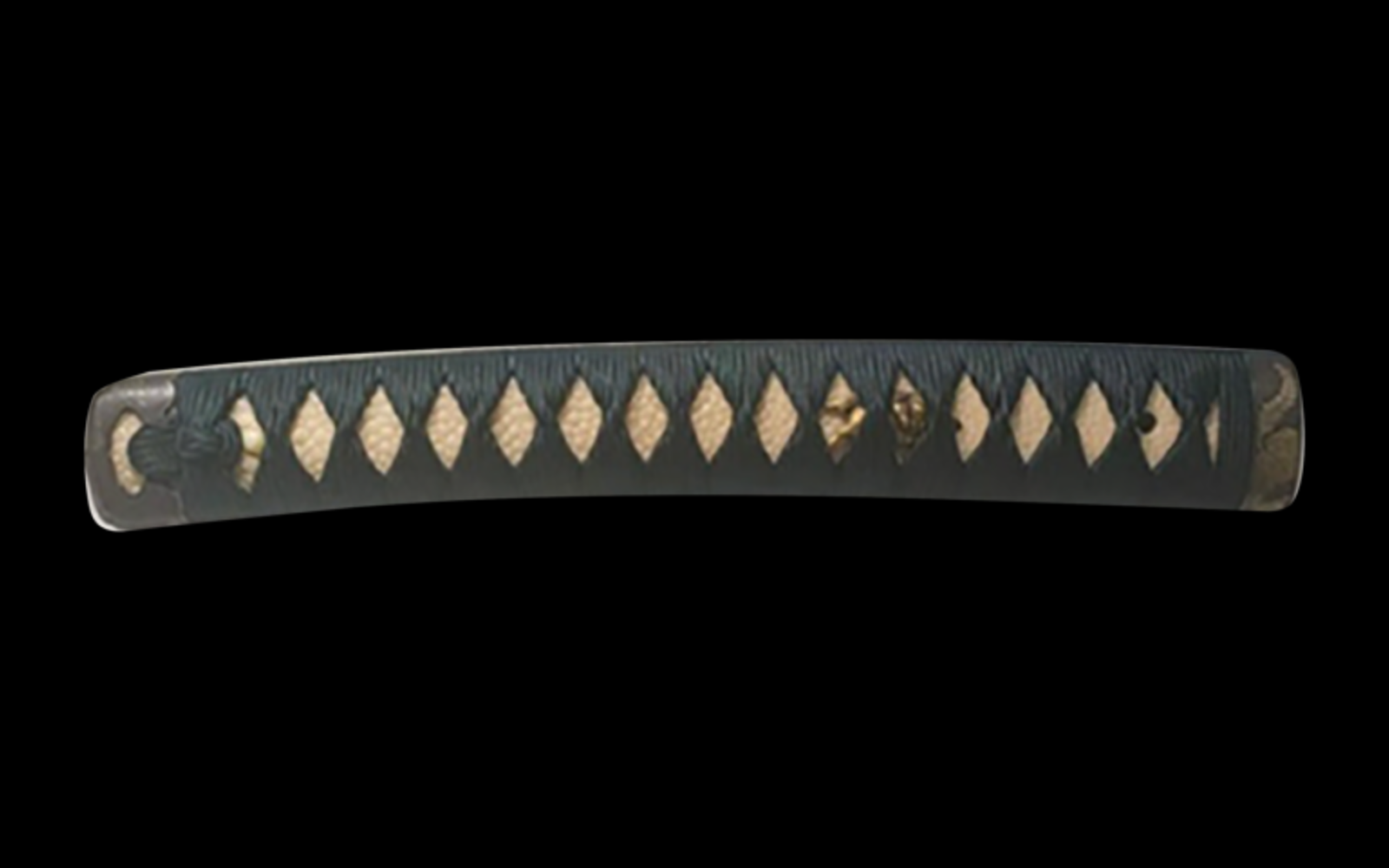
Morohineri-maki
Both crossing strands display twisted folds, giving the wrap its characteristic crossover pattern.
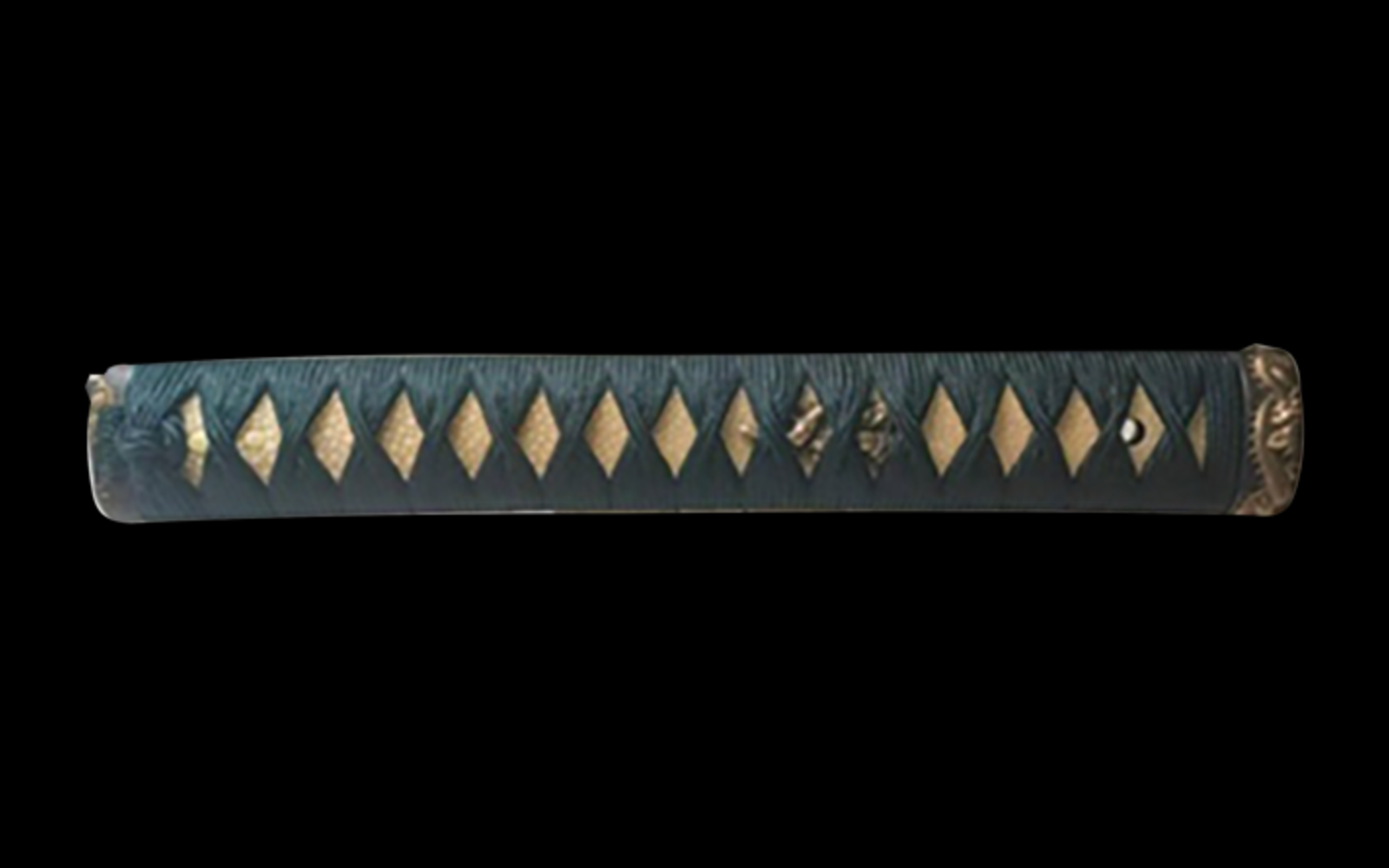
Morotsumami-maki
Both crossing strands feature pinched folds, producing a distinct sculptural rhythm around the exposed rayskin and menuki ornaments.
04 / TSUKA-ITO MATERIALS
Color, texture and character.
The tsuka-ito is the cord that forms the visible wrap. Synthetic handle cords and genuine silk tsuka-ito offer different surface textures and color appearances. The character of the braid and the wrapping style are separate choices from the fiber itself.
For standalone wrapping projects and new WKatana custom mountings, the material and pattern are considered in relation to the overall design. Specific combinations depend on the individual project.
PART II / JABARA-ITO & DECORATIVE PATTERNS
The art of Jabara-ito.
From the texture of each fine cord to the rhythm of the finished pattern, jabara-ito brings another dimension to the decorative language of traditional handle wrapping.
05 / JABARA-ITO
A different character of cord.
Unlike the familiar flat braid known as tsunegumi-ito, jabara-ito is distinguished by the texture of its fine cords. Their alternating visual grain recalls the pattern of a snake's underside, from which the Japanese name derives.
Jabara-ito describes the construction of the cord rather than its fiber. Traditional examples use silk, while modern examples may use nylon. The material, color and decorative pattern each contribute to the appearance of the finished handle.
TRADITIONAL MATERIAL
Silk Jabara-ito
Silk offers a soft texture, a supple feel and moisture absorbency. Its fine surface may be more susceptible to fuzzing and wear over time.
MODERN MATERIAL
Nylon Jabara-ito
Nylon offers a more resilient surface and a pronounced sheen, with a firmer feel and lower moisture absorbency than silk.
Single-color and two-tone arrangements create different visual effects. The examples below illustrate wrapping patterns rather than a fixed list of fiber or color combinations.
06 / DECORATIVE WRAPPING STYLES
Six expressions of the braid.
Explore six distinctive patterns presented in a consistent visual layout, from contrasting interwoven motifs to more intricate decorative crossings. The photographs reveal the character of the individual cords and the visual differences between these styles.
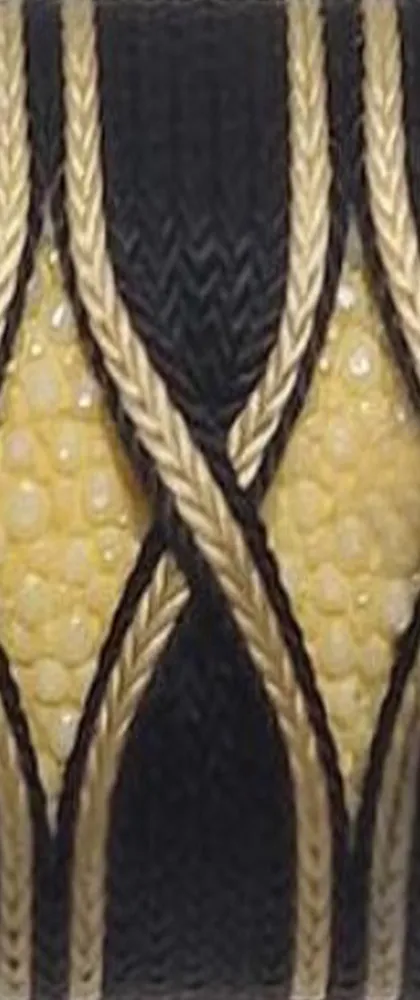
Kumiage-maki
Interwoven wrap
Contrasting cords form a layered pattern around the open areas of the handle.
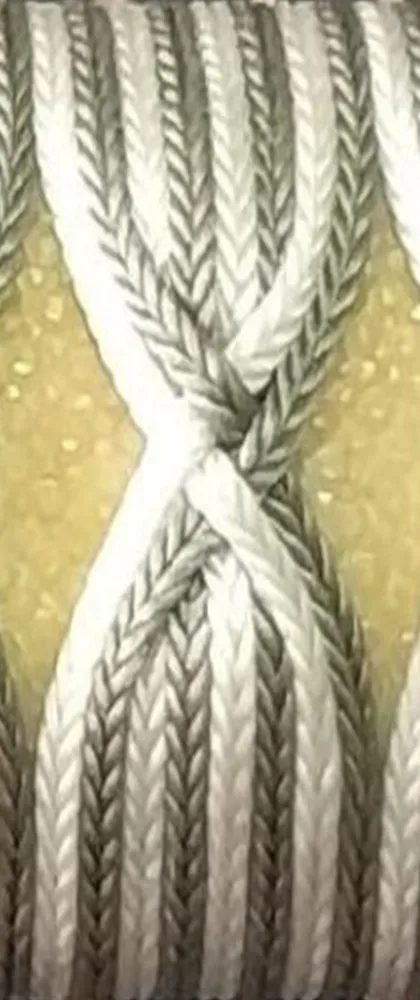
Ajiro Kumiage-maki
Basket-weave pattern
Fine cords cross in a pattern reminiscent of traditional basketry.
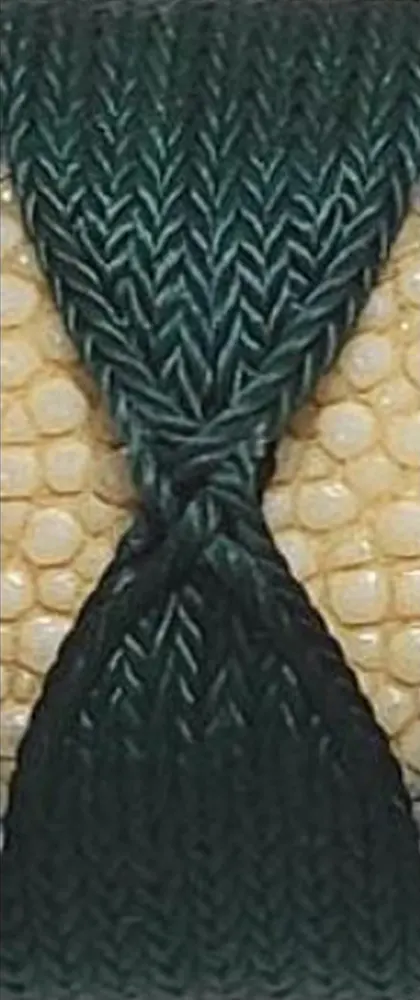
Hishime Kumiage-maki
Diamond-pattern wrap
An interwoven surface with a distinctive diamond motif.
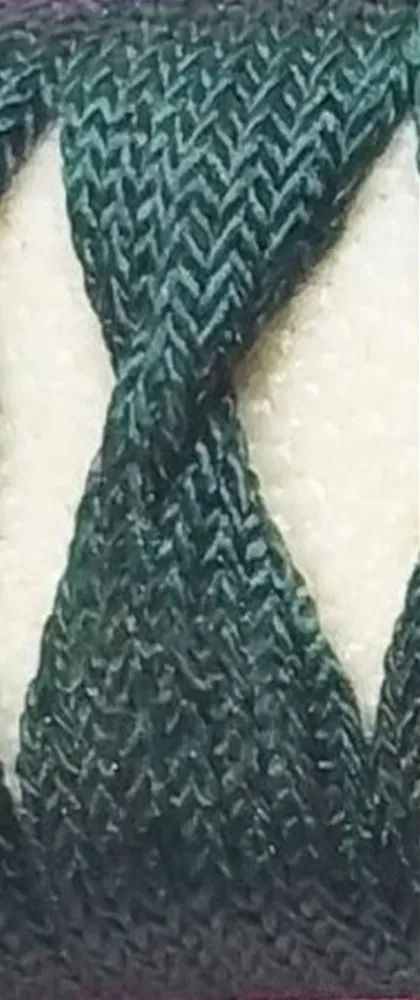
Morohineri-maki
Double-twist wrap
Paired twisted crossings create a different visual rhythm within the jabara-ito examples.
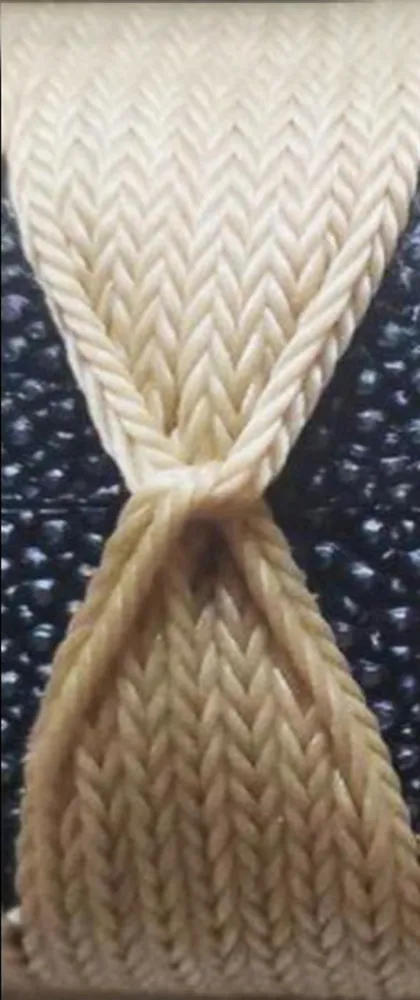
Karami Kumiage-maki
Entwined wrap
An interlaced arrangement with an entwined cord motif at the crossing.
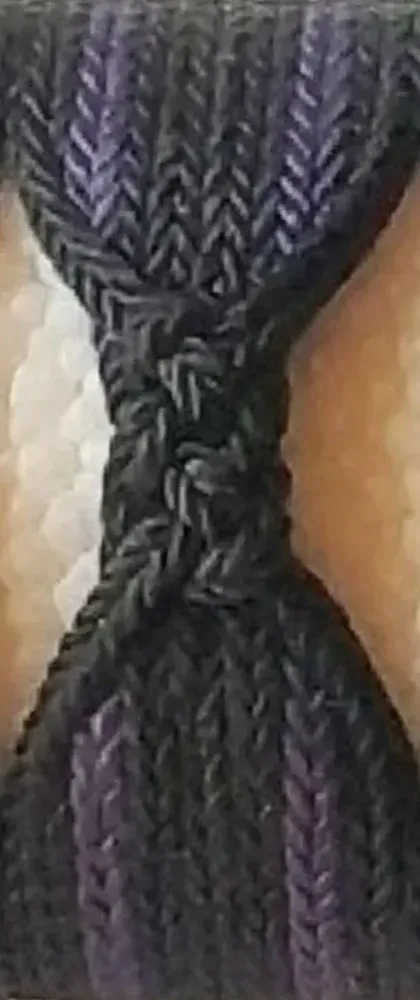
Kikkō Hishi Aoi-musubi Kumiage-maki
Tortoiseshell and aoi-knot pattern
A decorative design combining tortoiseshell-like diamond motifs with aoi knots.
The decorative repertoire also includes Ikkan-maki, including examples with a checkered central pattern. Its appearance is introduced separately in the following collection of works.
PART III / SELECTED CRAFTSMANSHIP
Patterns in finished form.
Explore finished examples of decorative handle wrapping through their color, texture and details. Each composition has its own character, from the rhythm of interwoven cords to the relationship between the wrap and its ornaments.
07 / INTERWOVEN WRAP
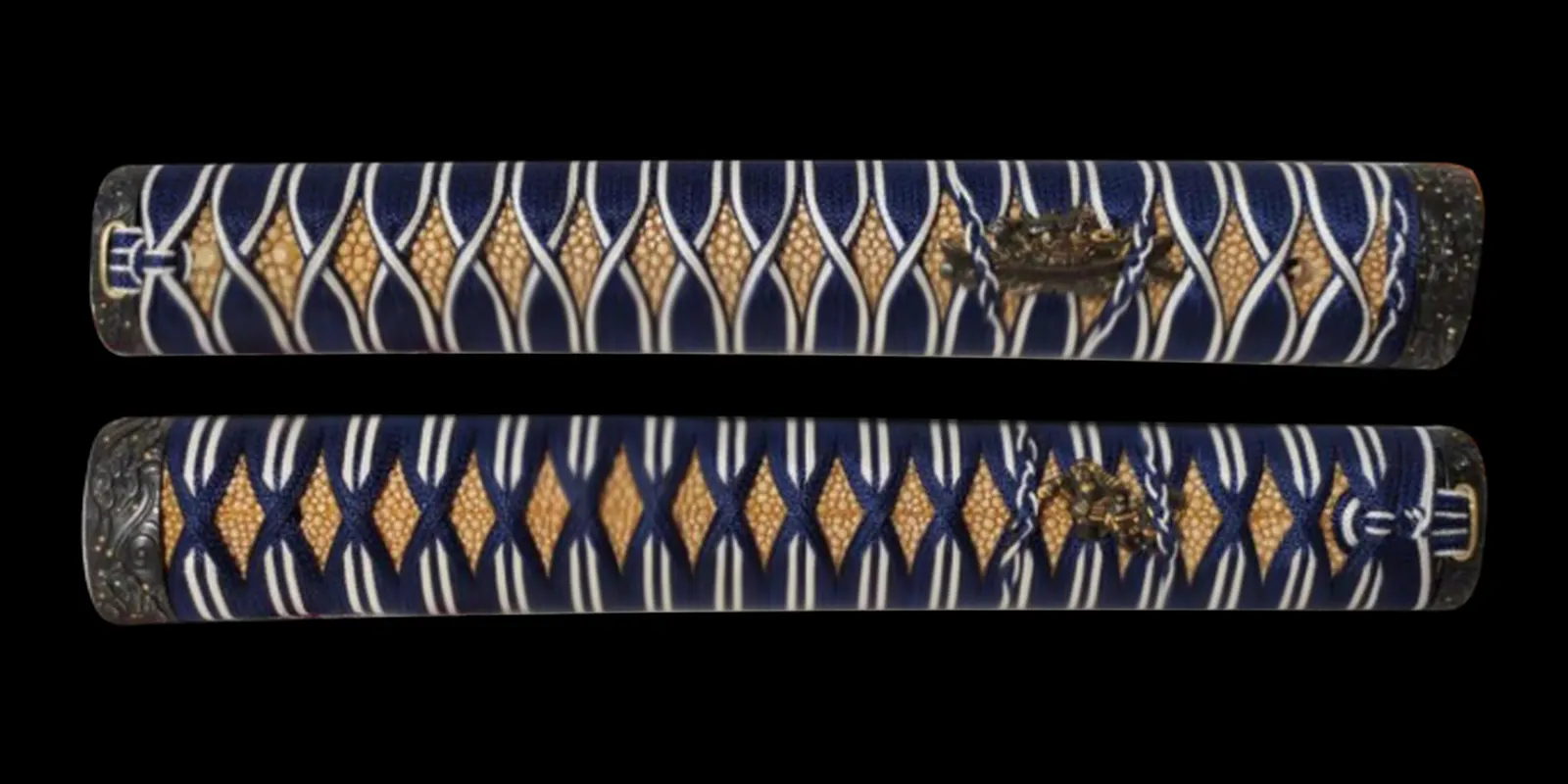
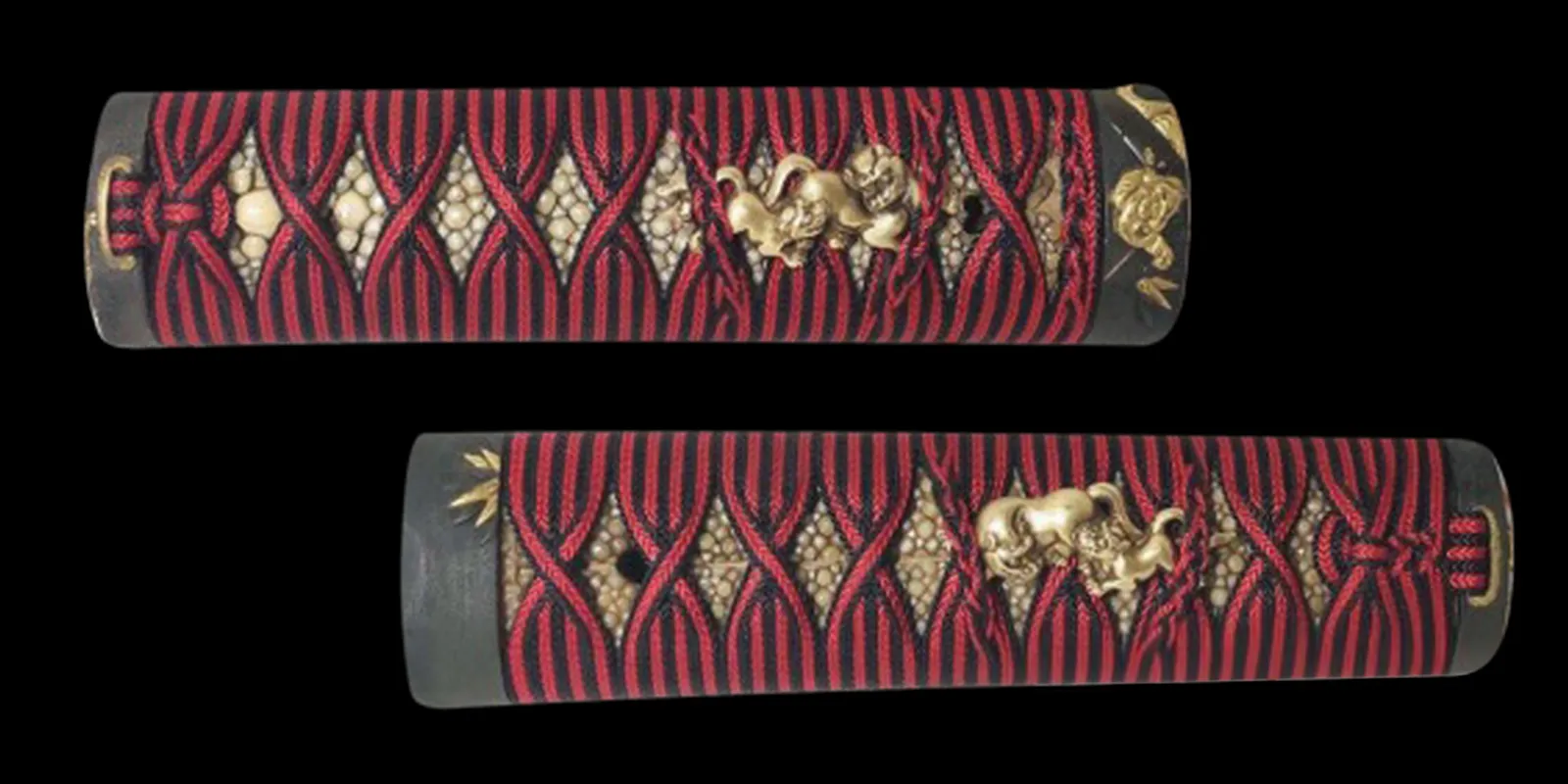
Kumiage-maki
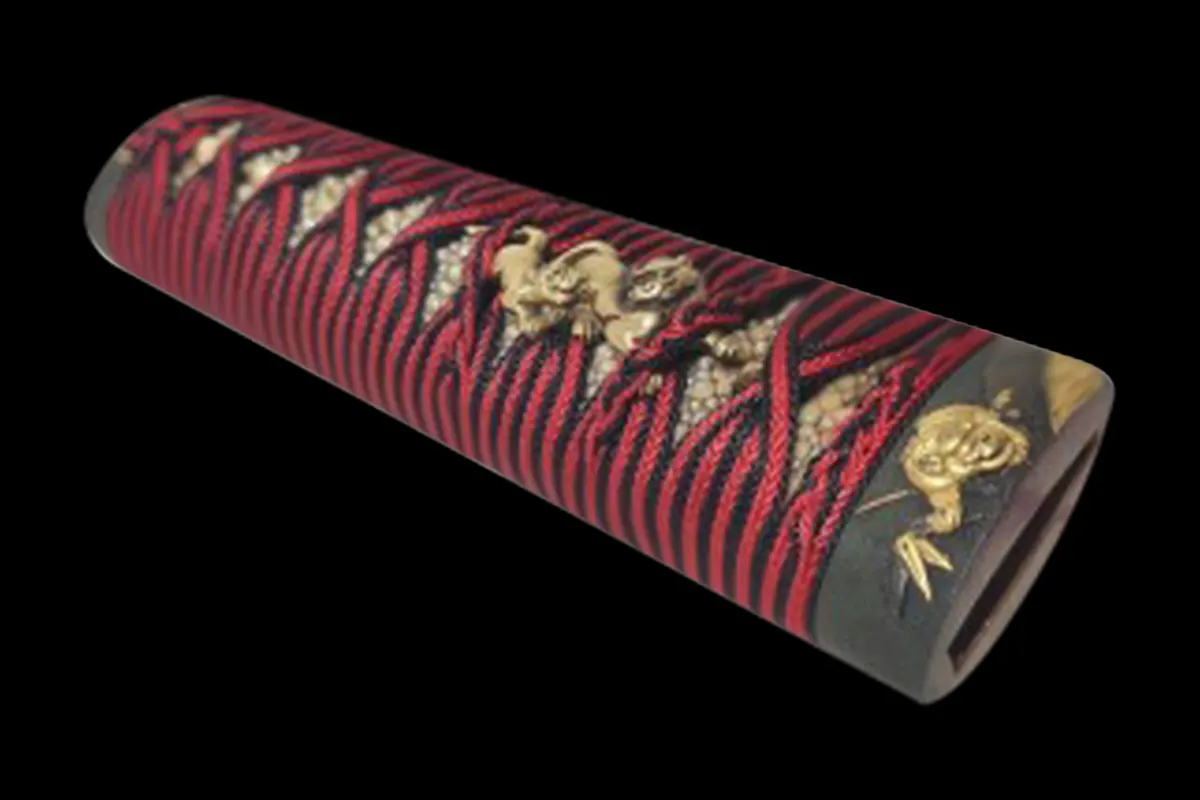
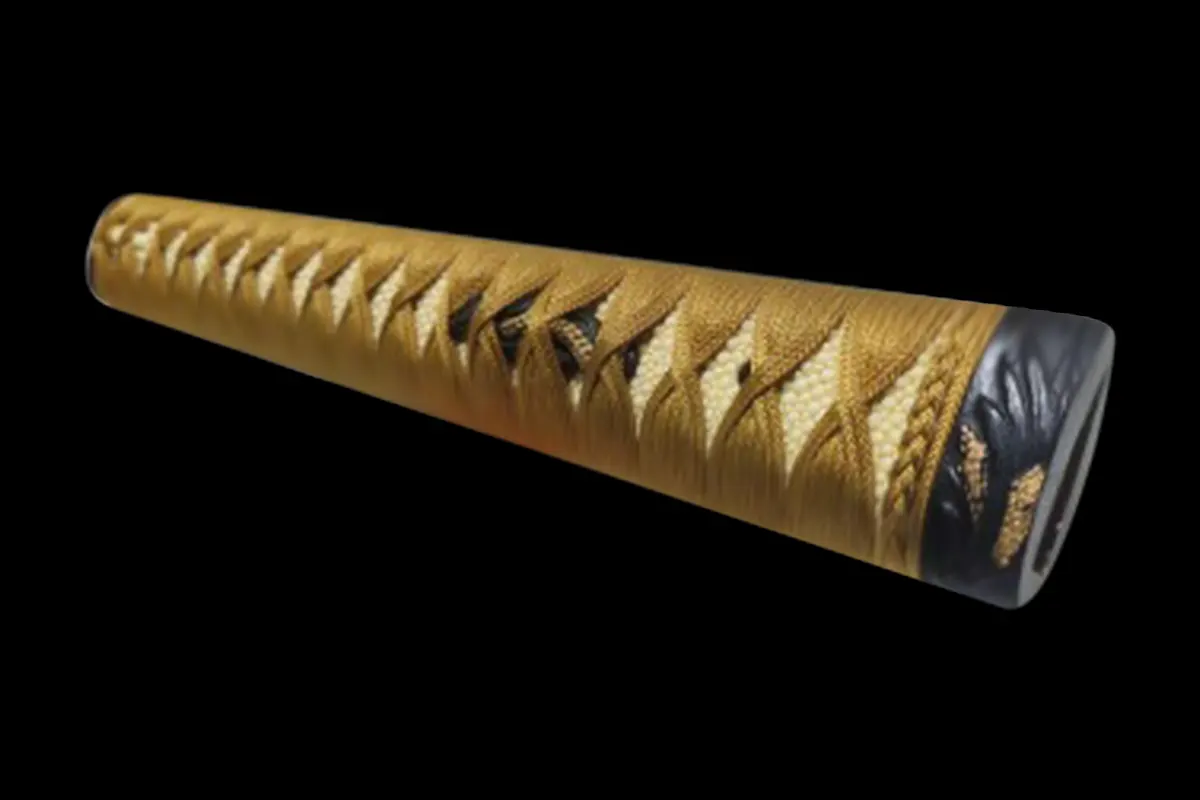
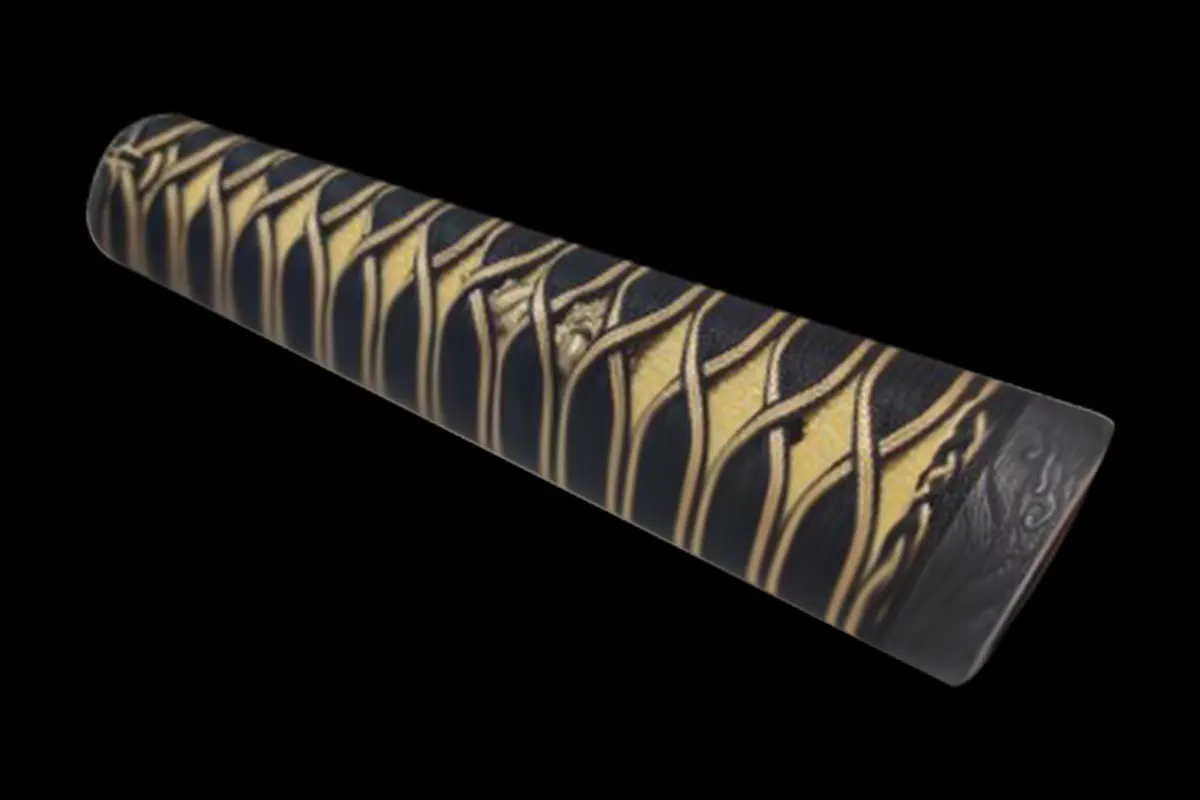
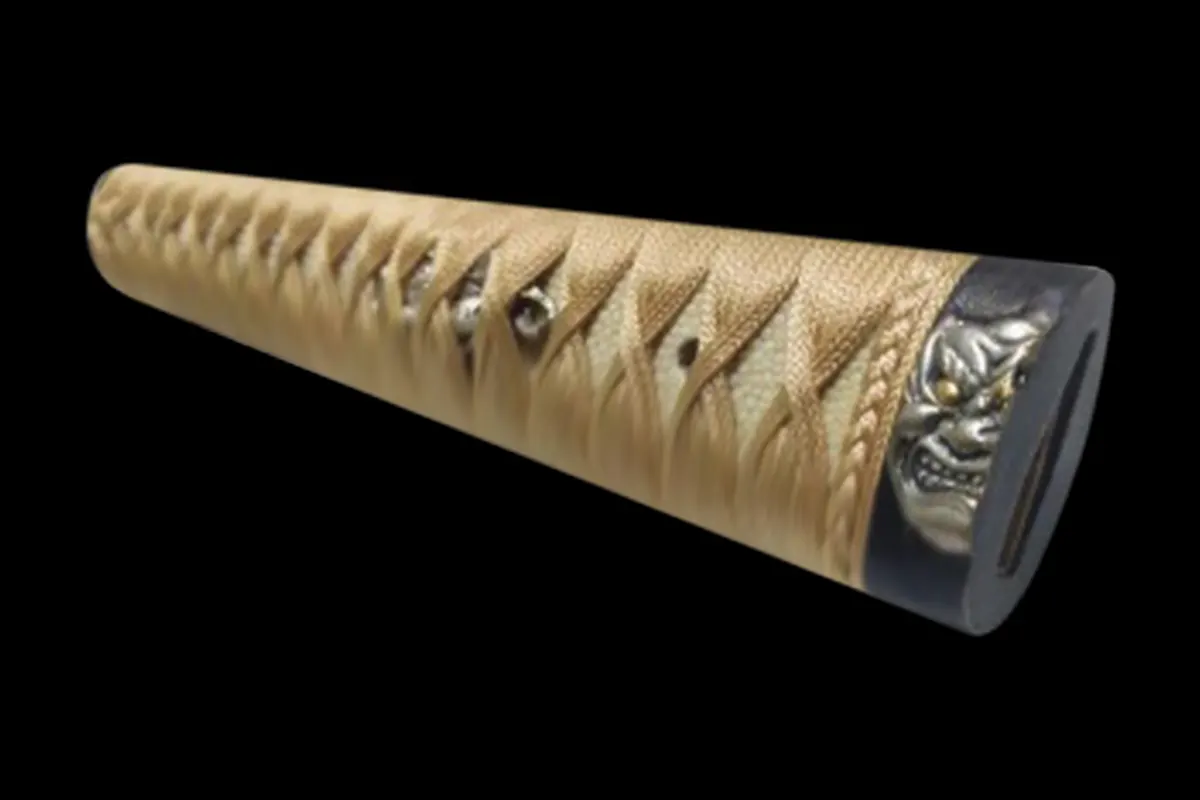
The examples bring out the visual rhythm of interwoven cords, from single-color arrangements to contrasting two-tone designs. The paired views reveal how the pattern continues around the handle and how decorative fittings complement the composition.
08 / BASKET-WEAVE PATTERN
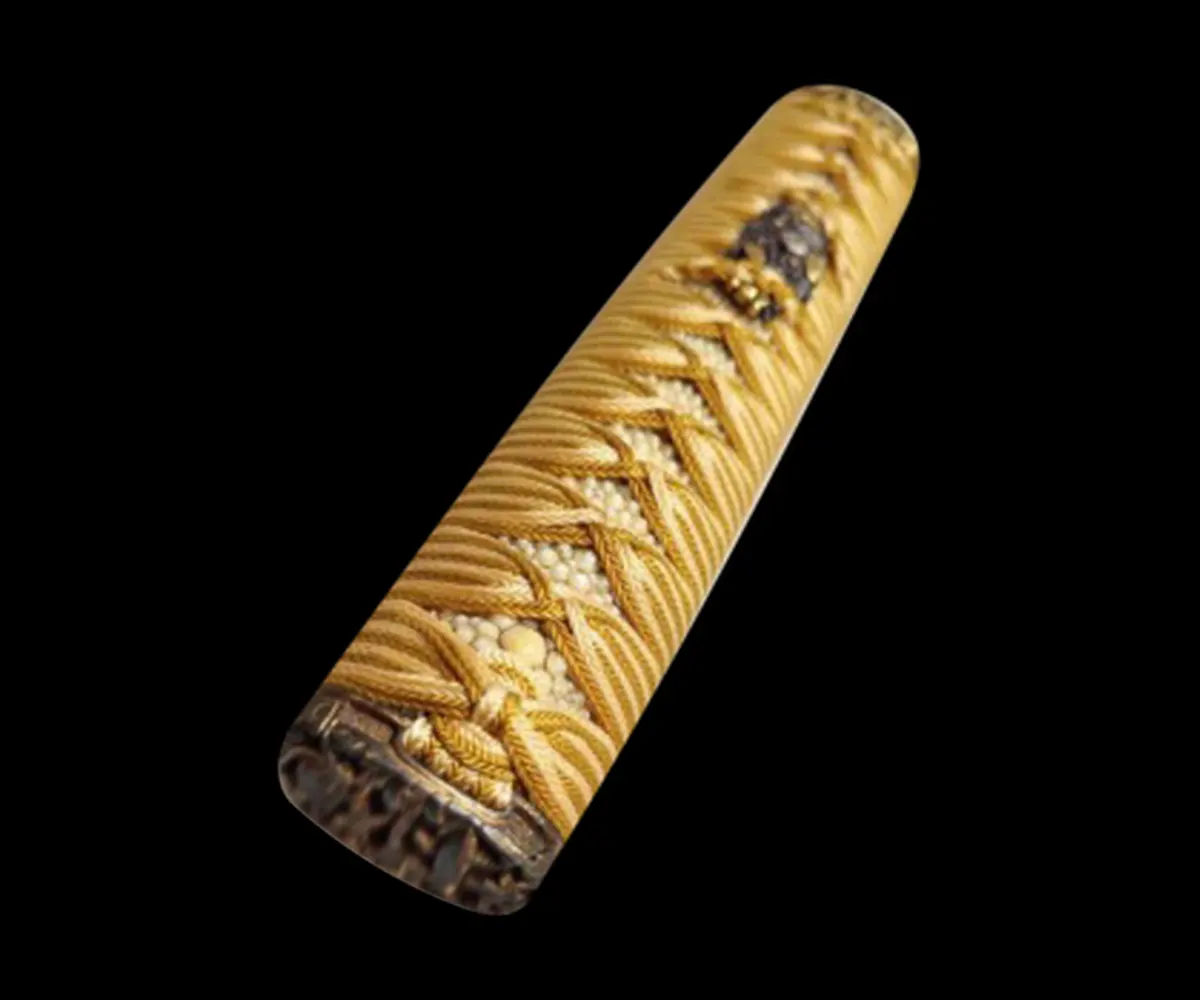
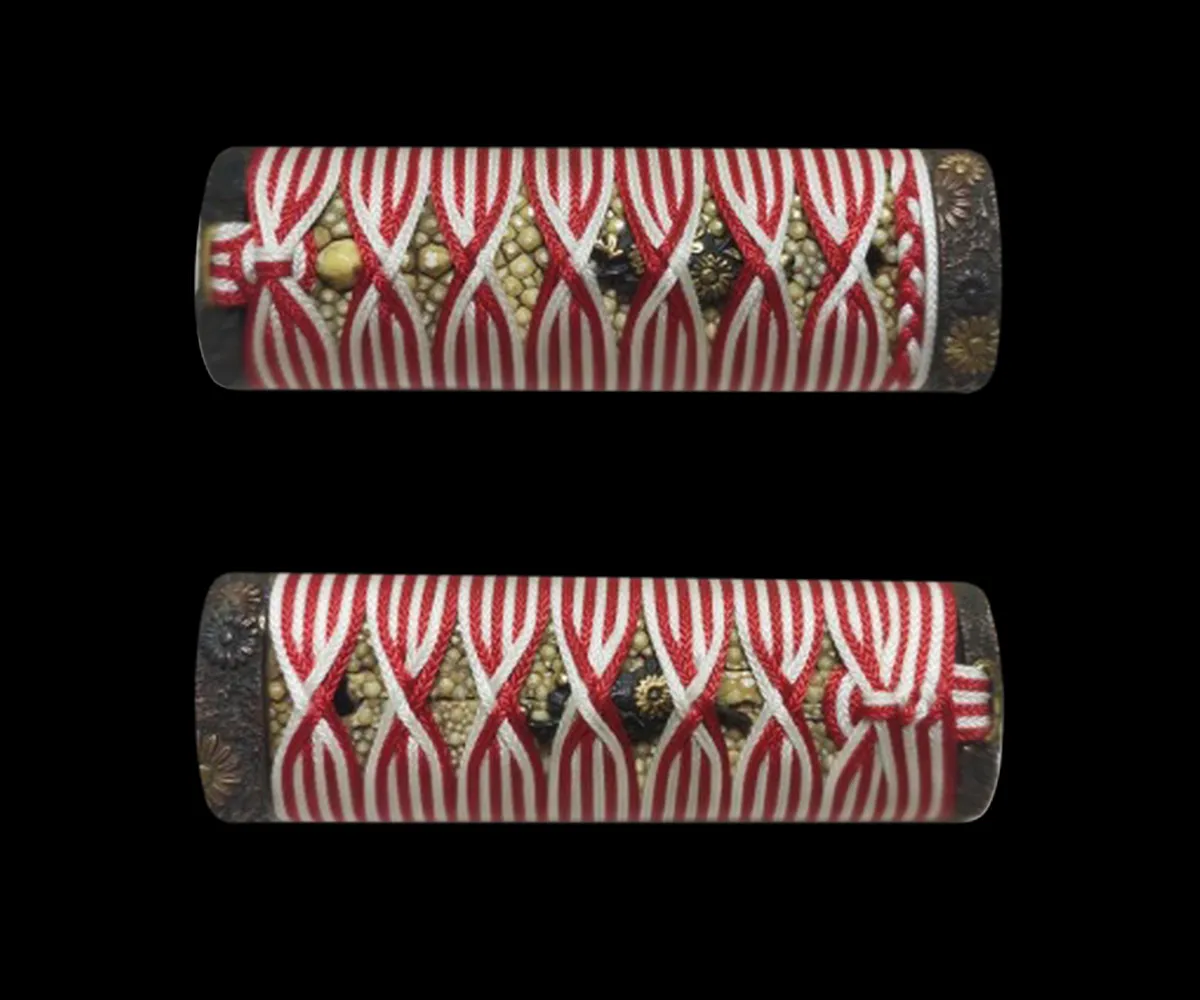
Ajiro Kumiage-maki
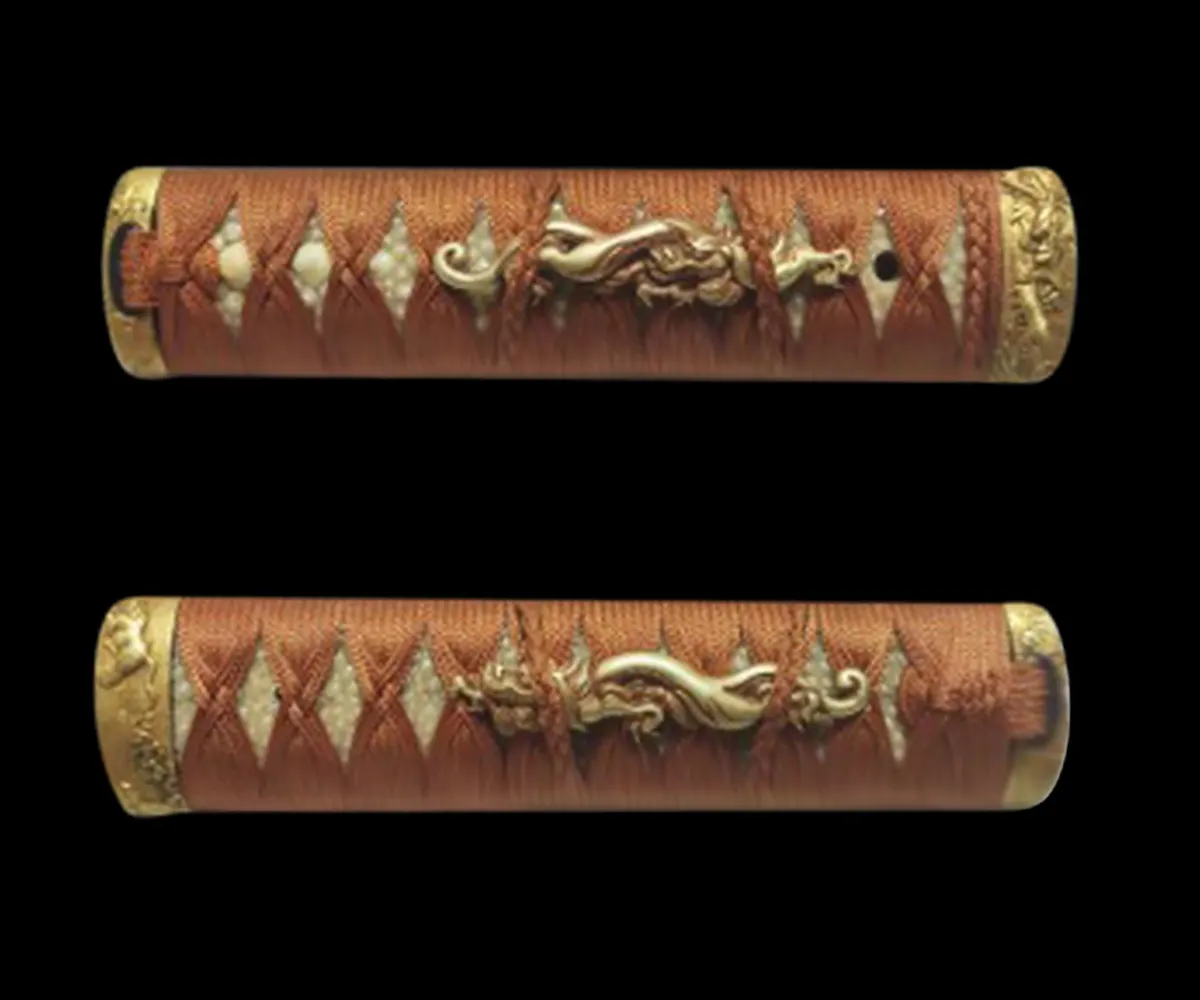
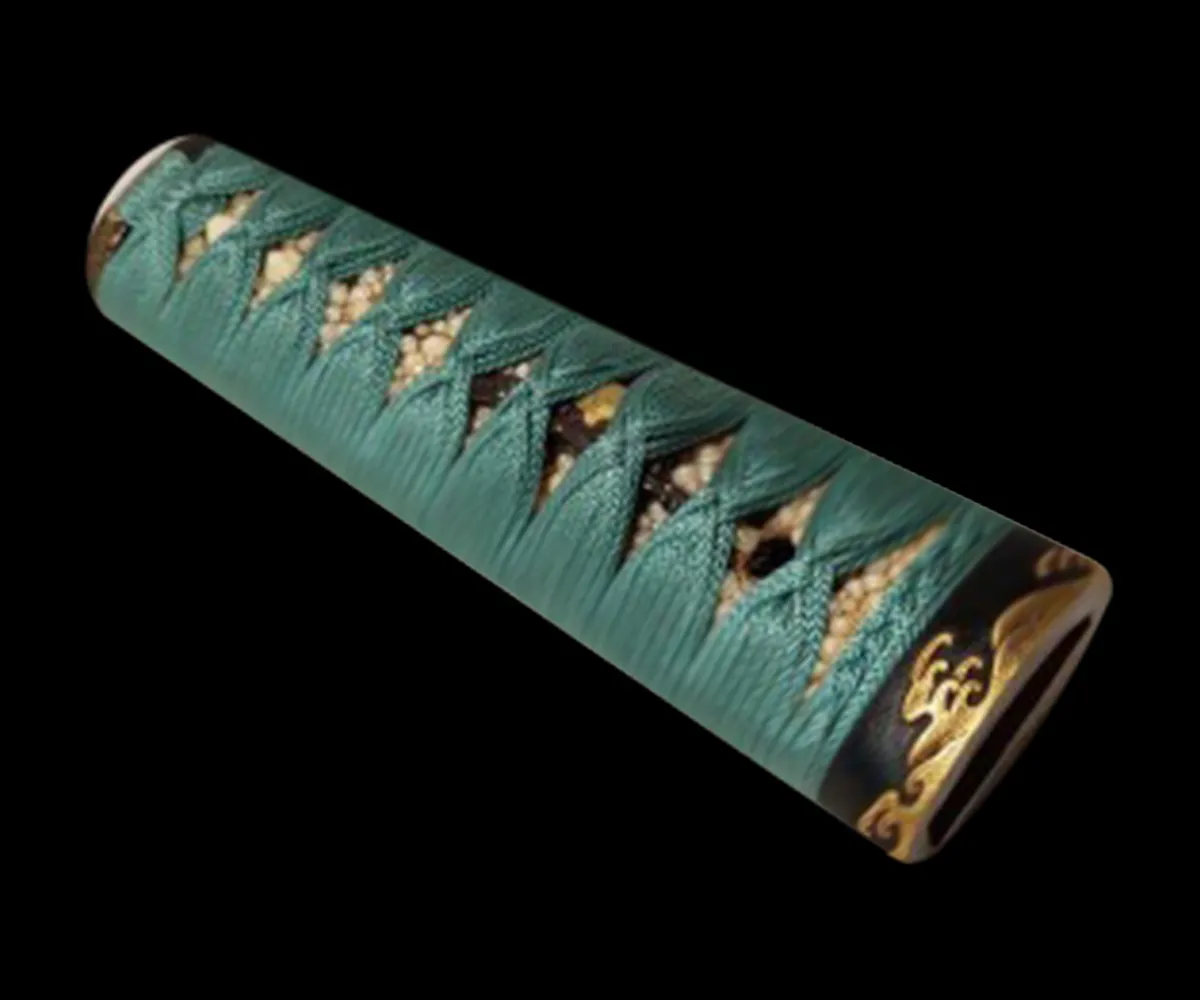
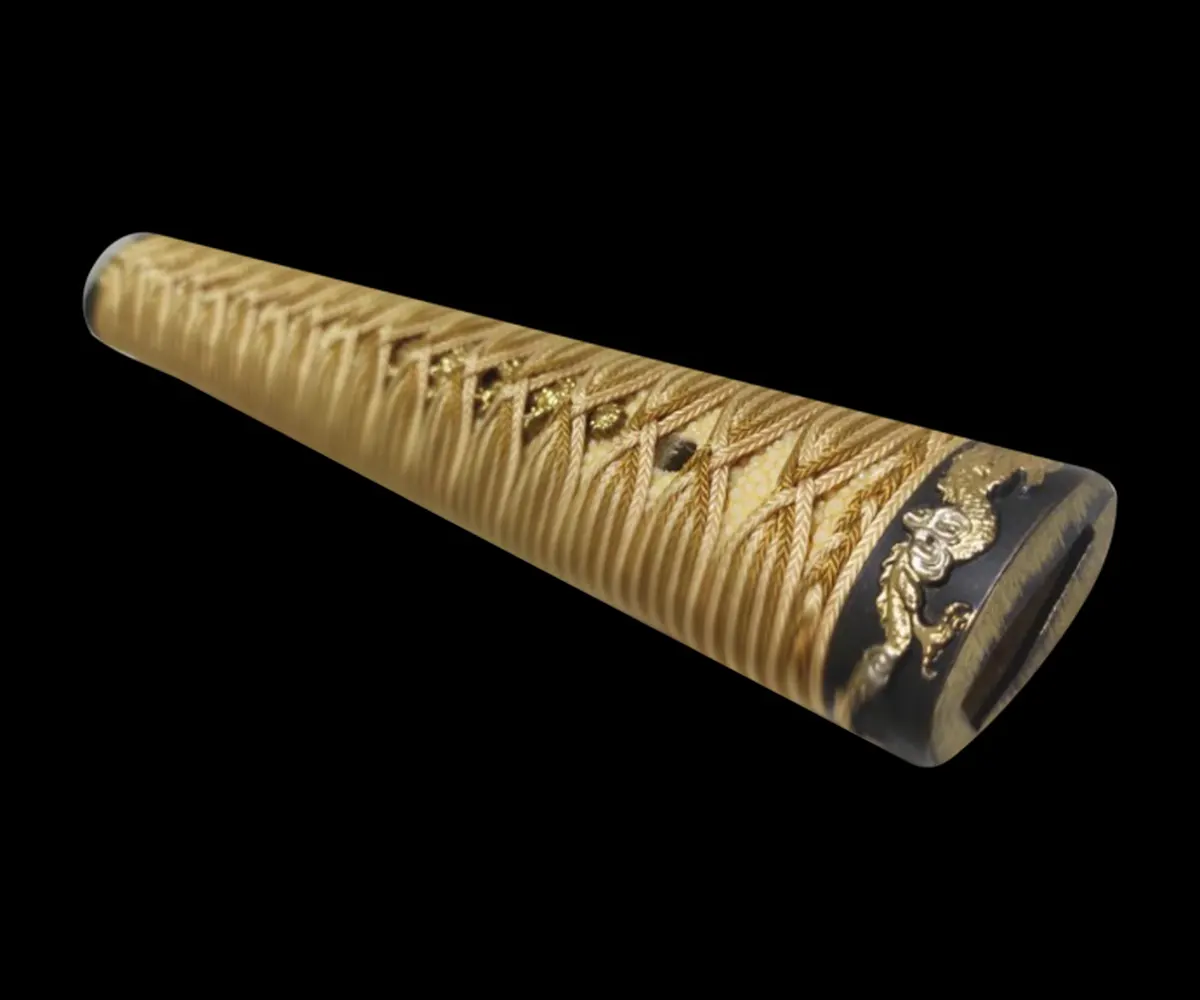
The basketry-inspired character of ajiro is visible in the repeating intersections of the fine cords. Contrasting colors emphasize the individual strands, while more restrained tones draw attention to the texture and silhouette.
09 / DIAMOND-PATTERN WRAP
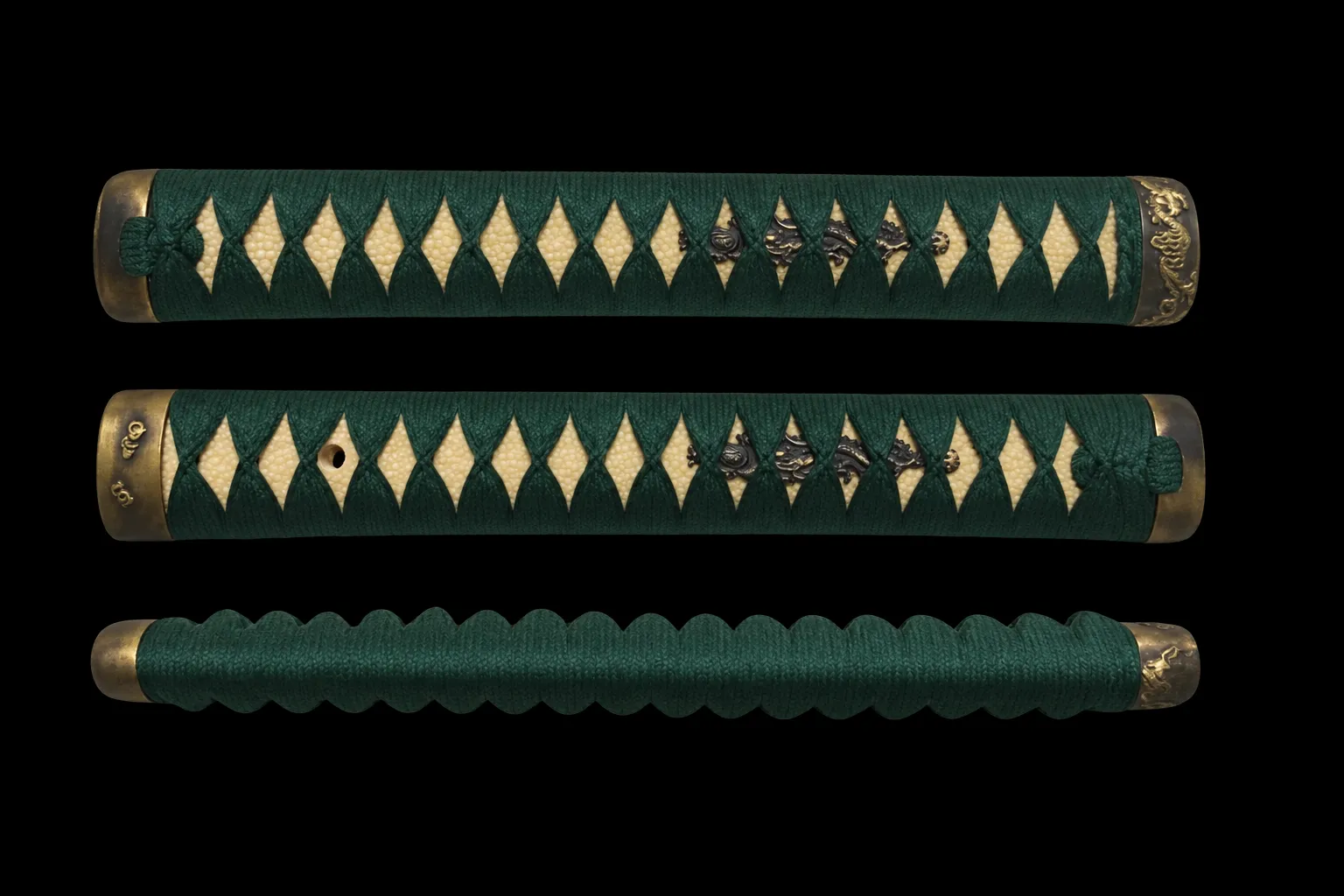
Hishime Kumiage-maki
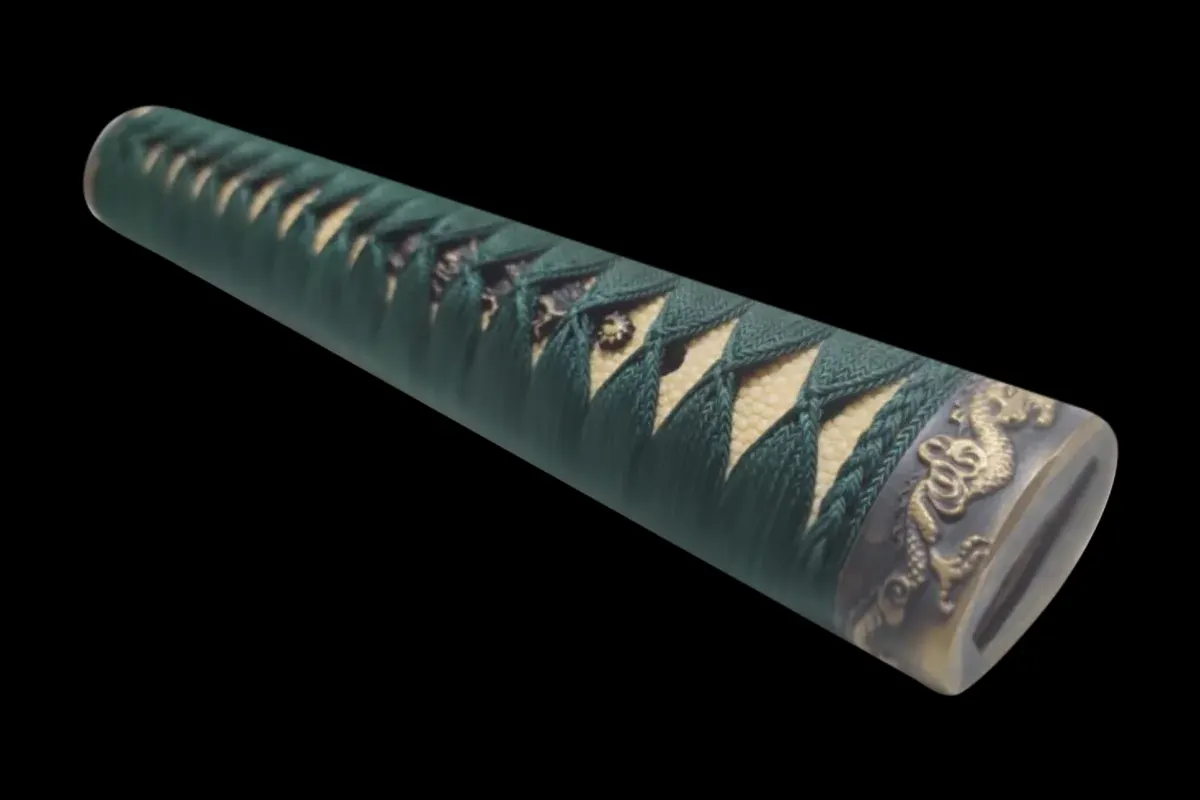
A deep green example highlights the repeating diamond openings and the contrast between the dark cord and pale rayskin. The three-view photograph shows the two faces and the side profile, while the angled view reveals the surface texture.
10 / ENTWINED WRAP
Karami Kumiage-maki
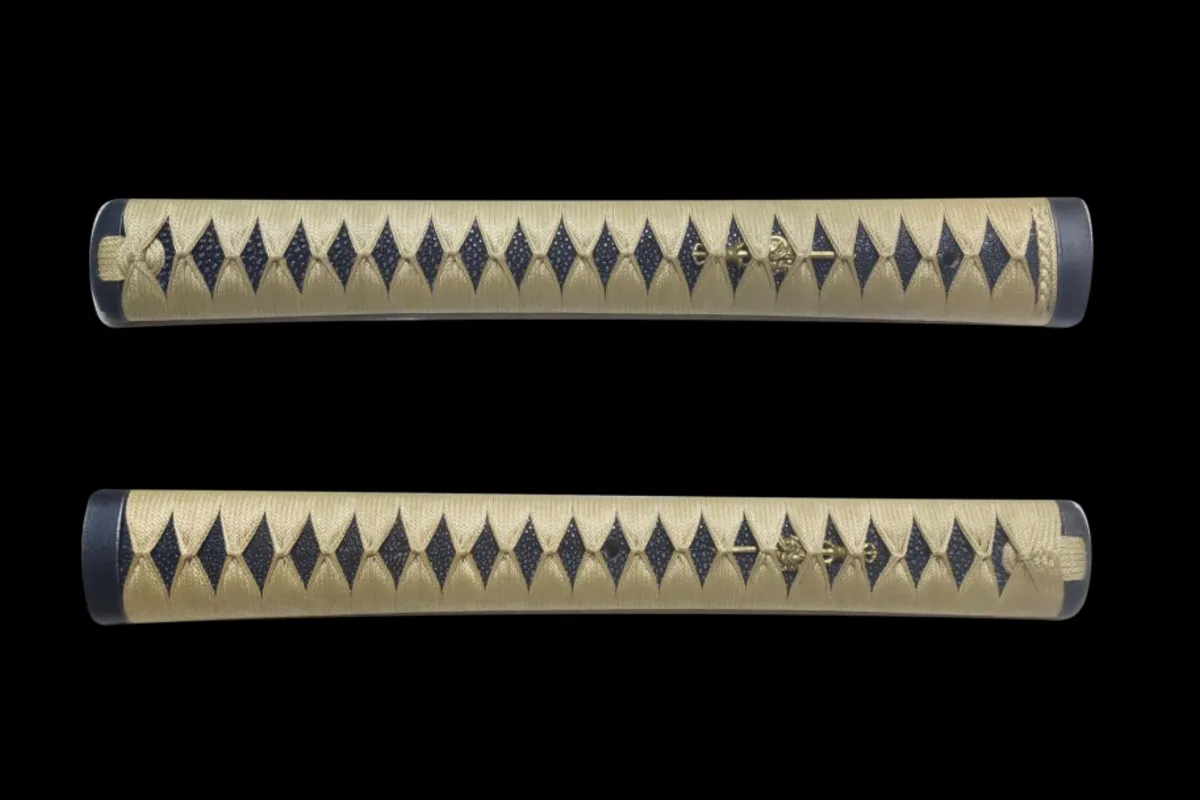
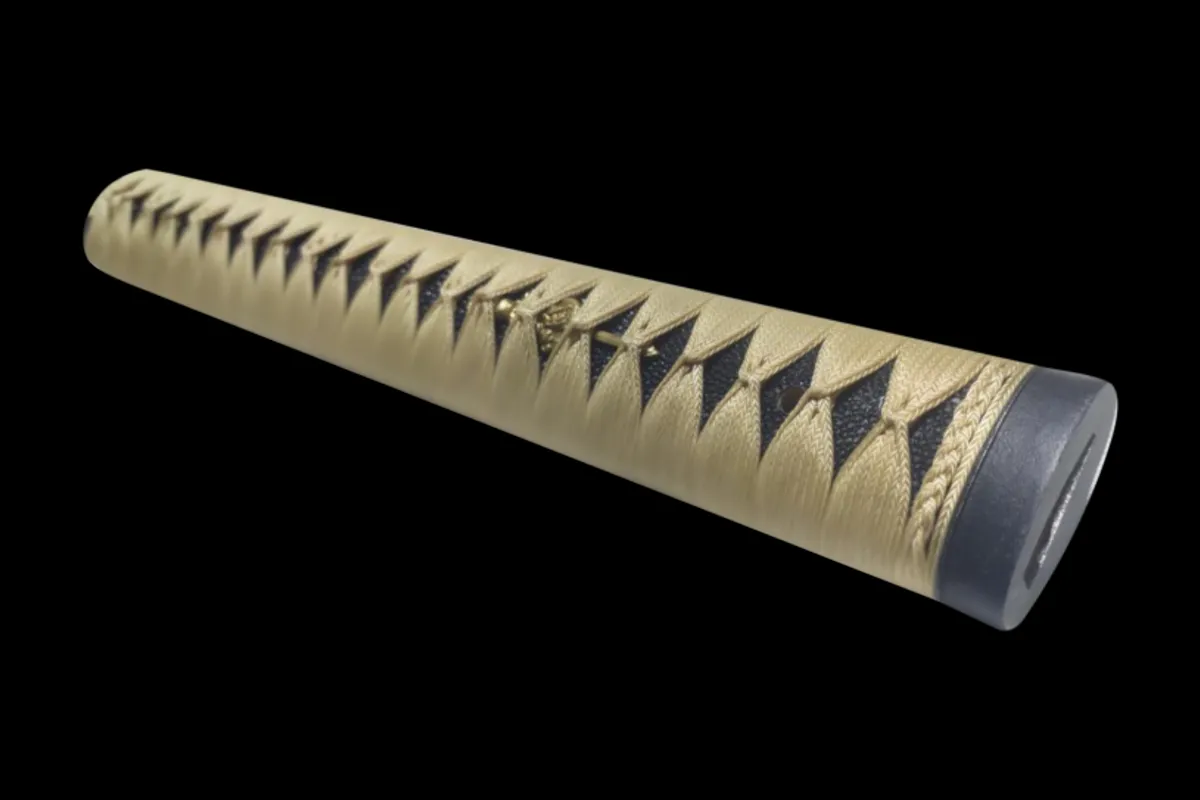
In this pale gold example, the narrow intersections and dark rayskin create a regular sequence of contrasting diamond shapes. The two-sided and angled views show the distinctive entwined appearance of the cord.
11 / TORTOISESHELL AND AOI-KNOT WRAP
Kikkō Hishi Aoi-musubi Kumiage-maki
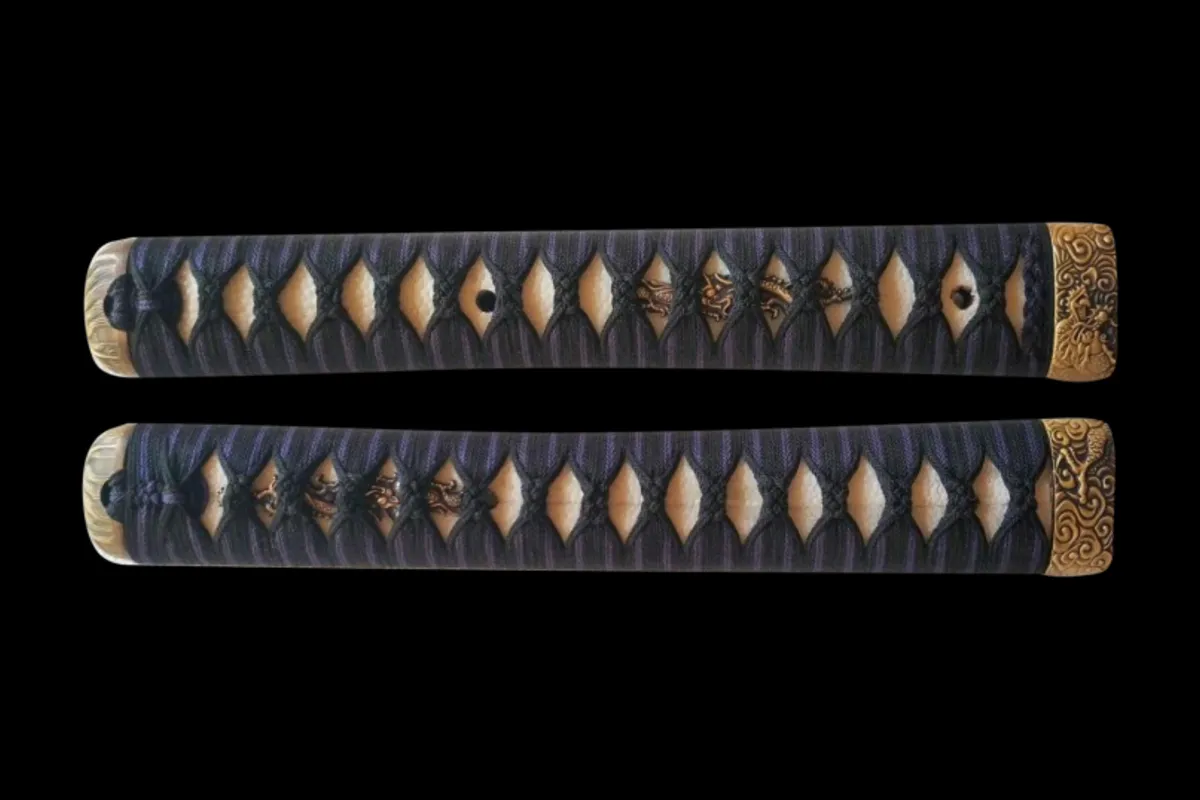
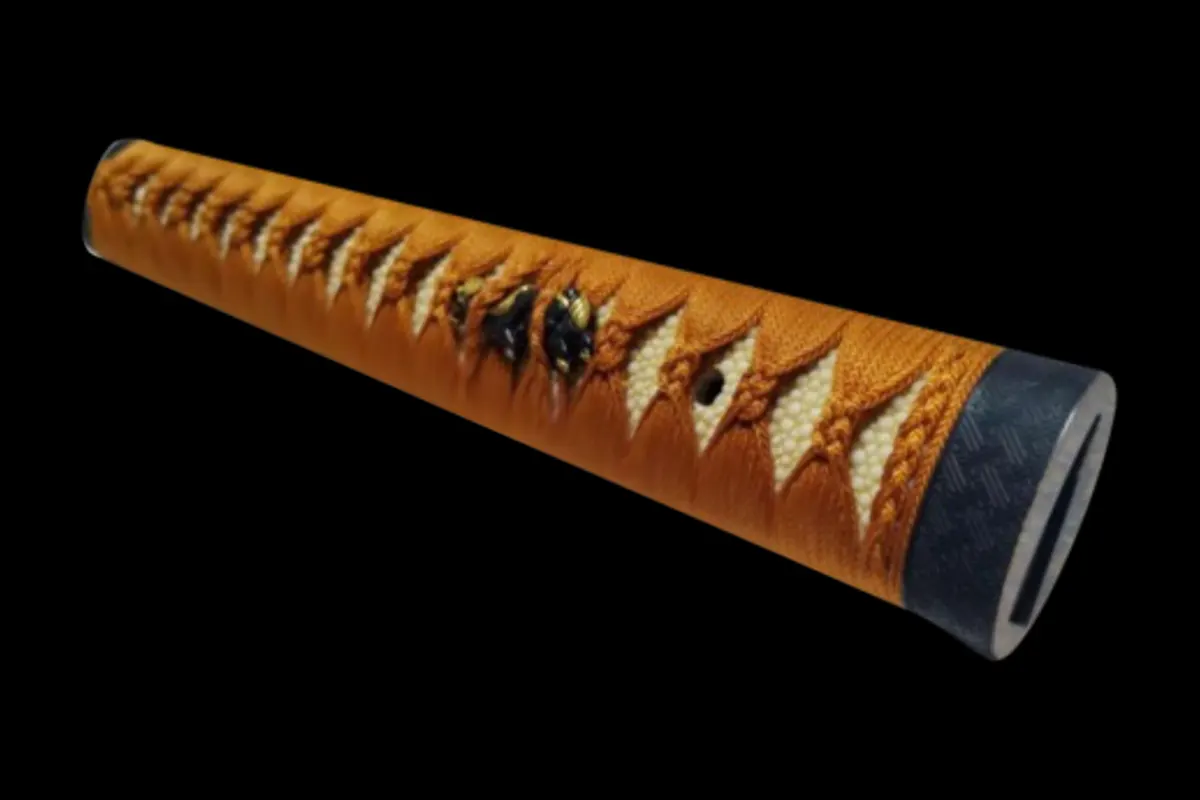
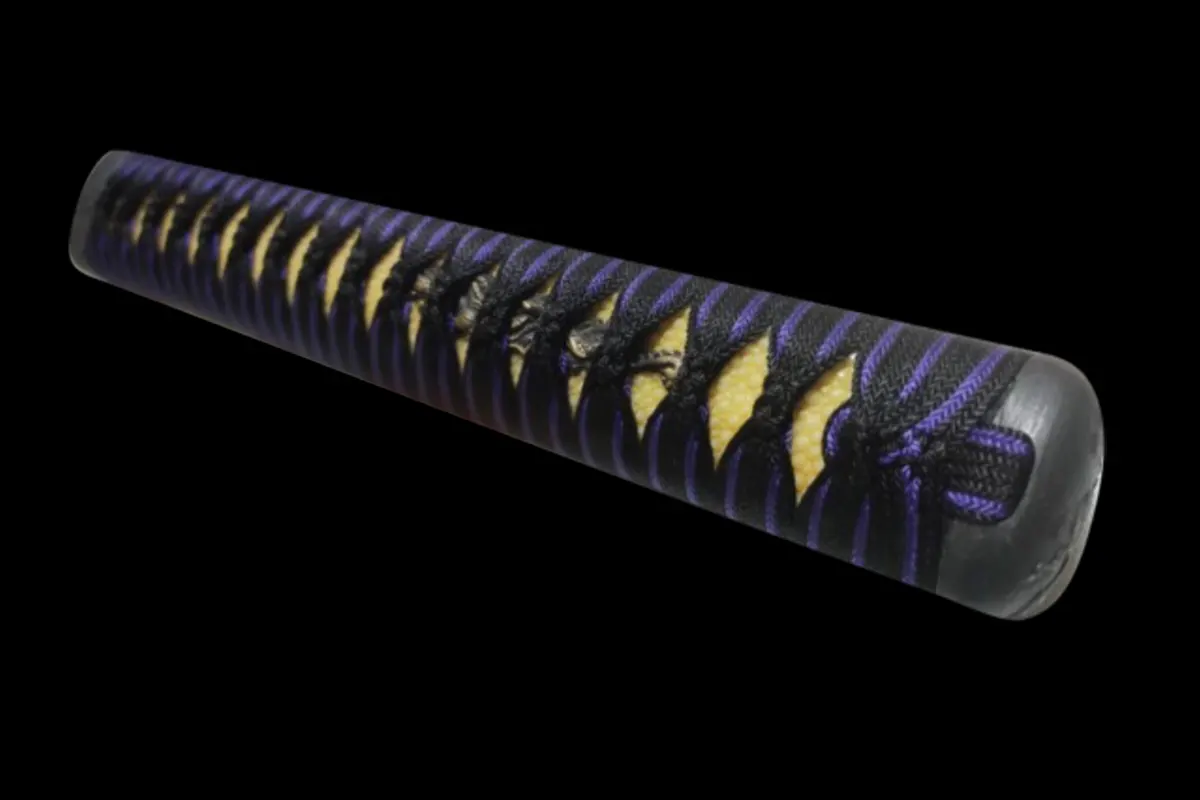
This distinctive decorative pattern combines tortoiseshell-like motifs and aoi-knot forms. The full Japanese name was proposed in a 1992 study by handle-wrap specialist Shūshi Mitani. The contemporary examples below illustrate dark, orange-gold and black-and-purple interpretations of the pattern.
12 / CHECKERED-PATTERN VARIANT
Ikkan-maki
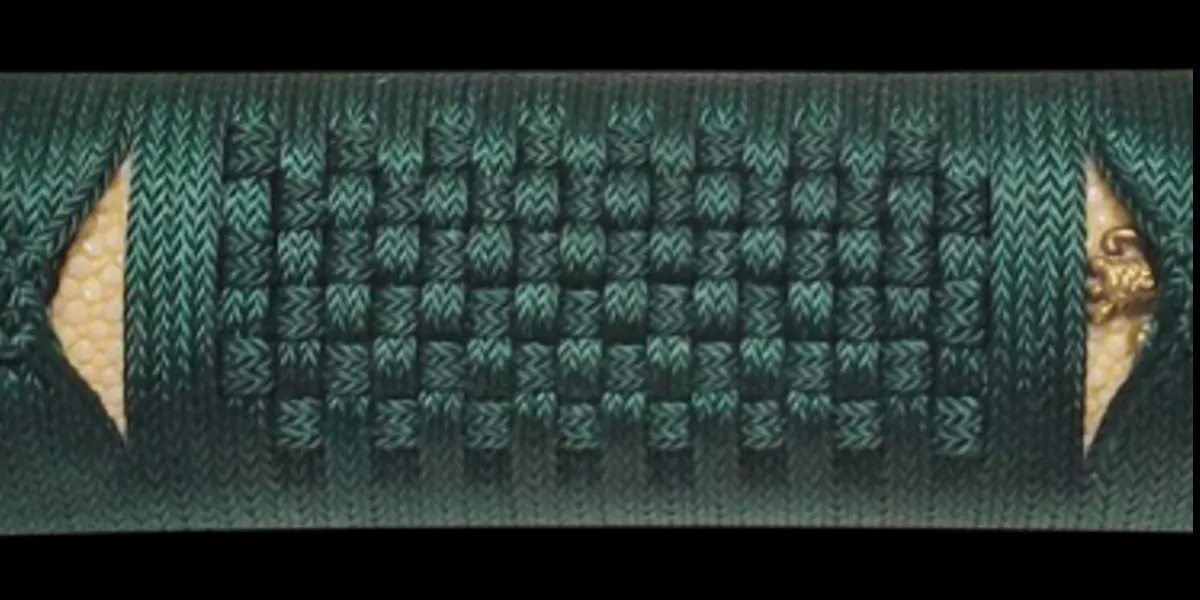
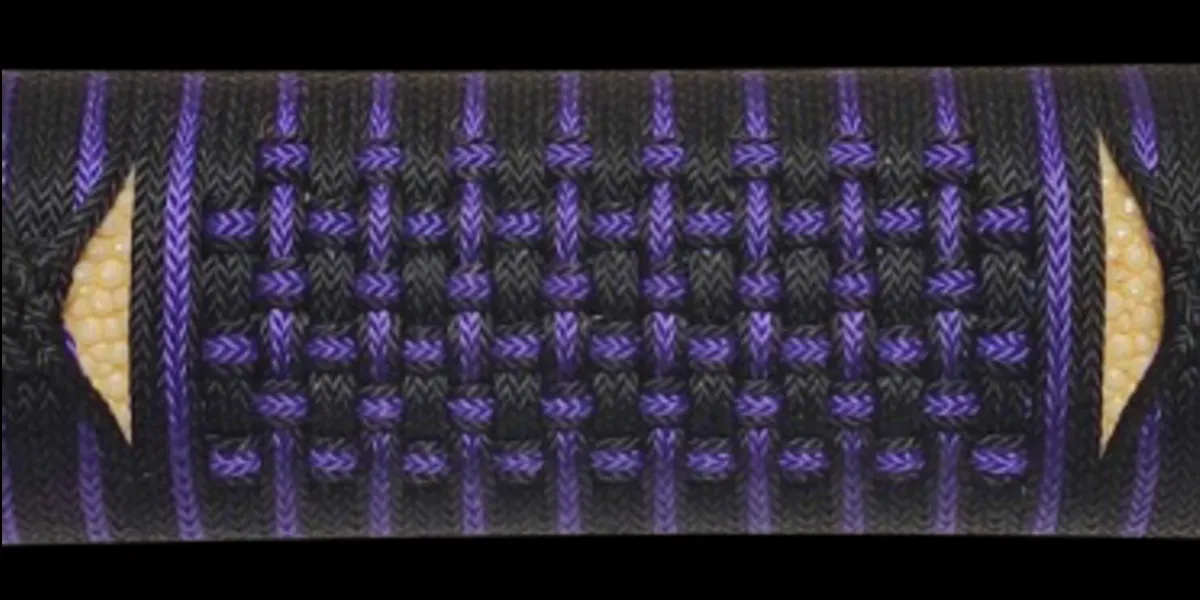
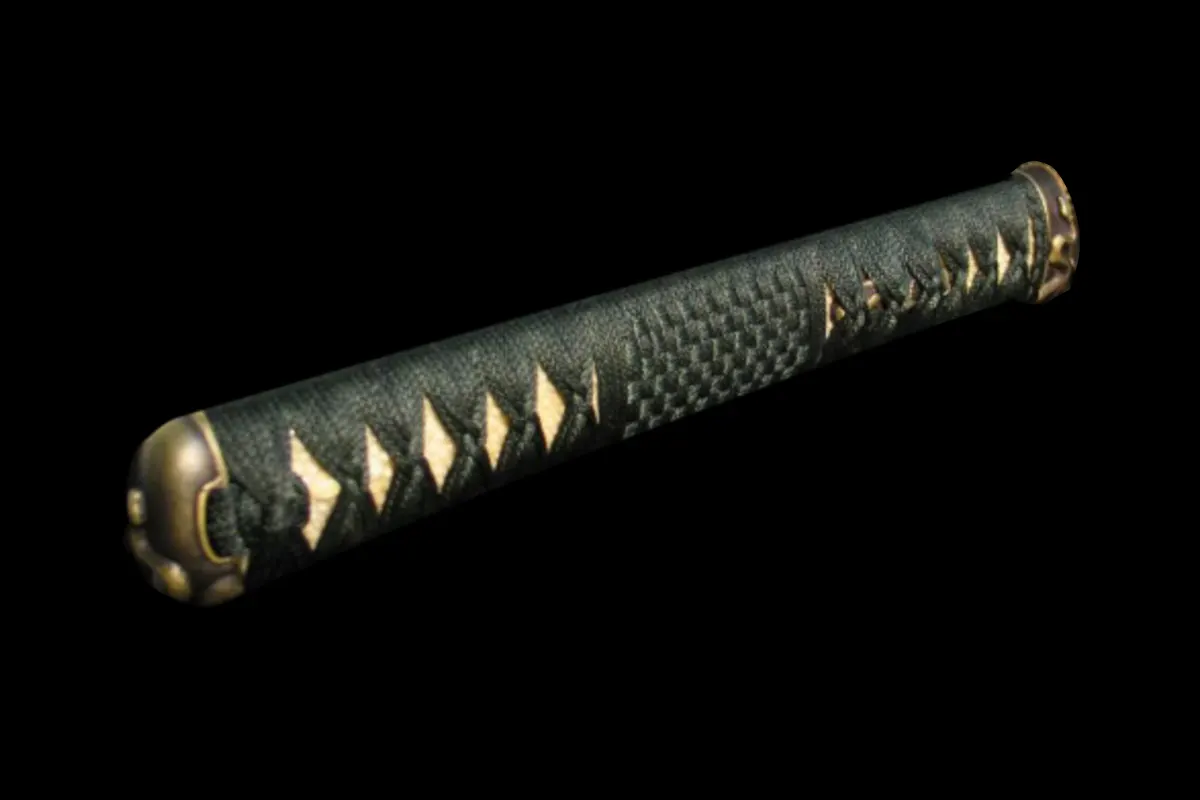
These examples of Ikkan-maki feature a checkered woven panel on one face and a simpler diagonal cord arrangement on the reverse, complemented by decorative menuki. The extended woven area provides a visual contrast to the diamond openings near the ends. The checkered panel is a feature of these examples, rather than a requirement of every Ikkan-maki.
13 / DECORATIVE DETAILS
Menuki placement and securing methods.
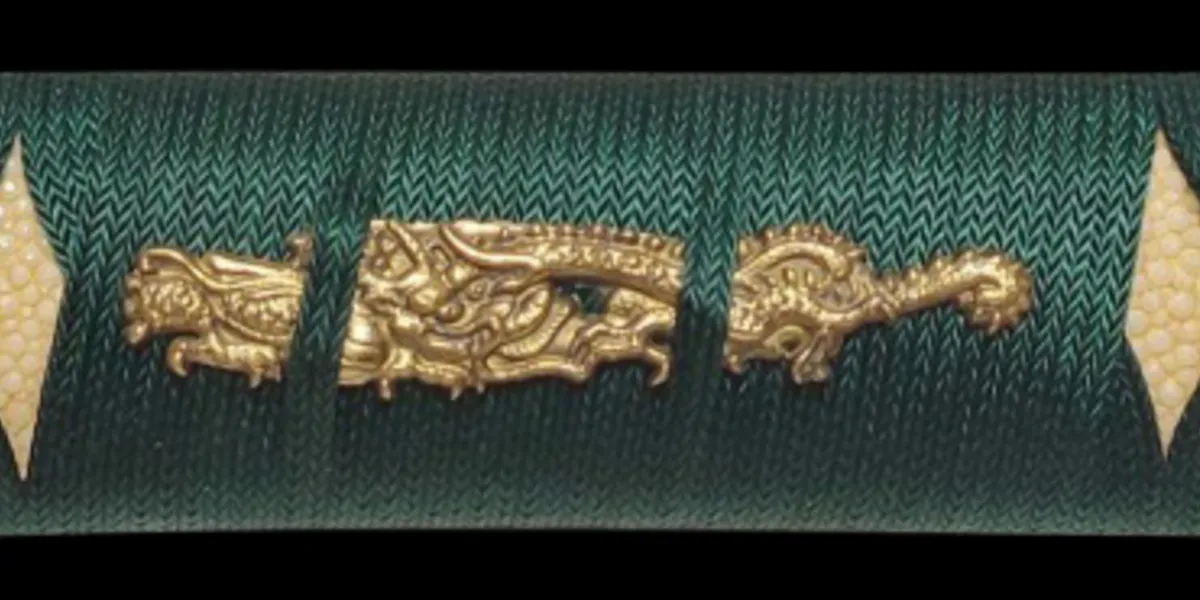
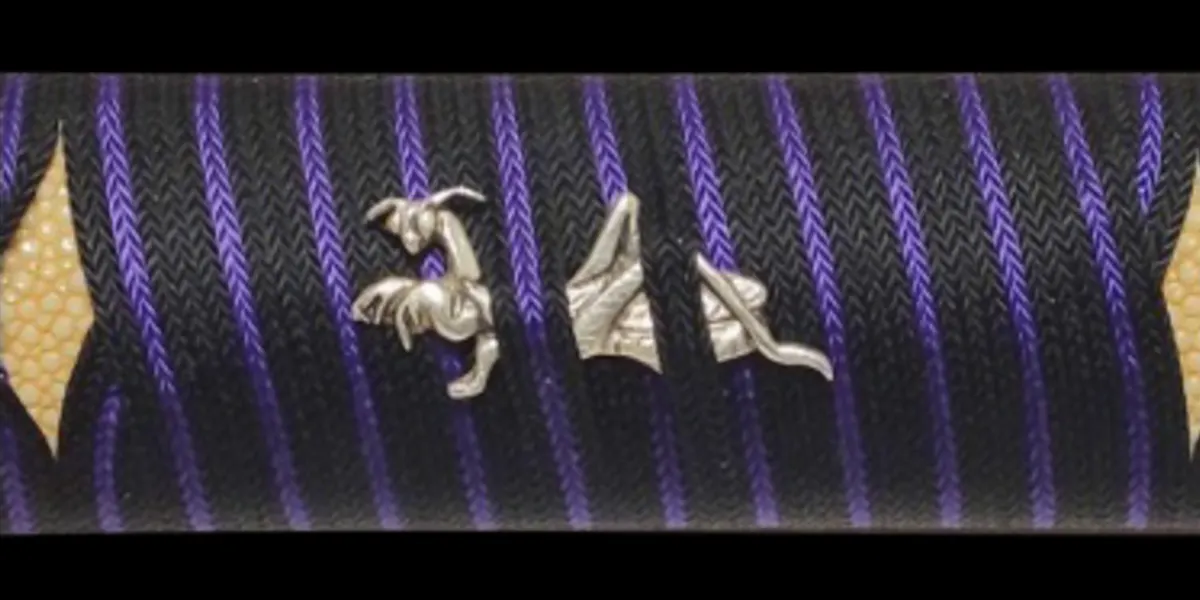
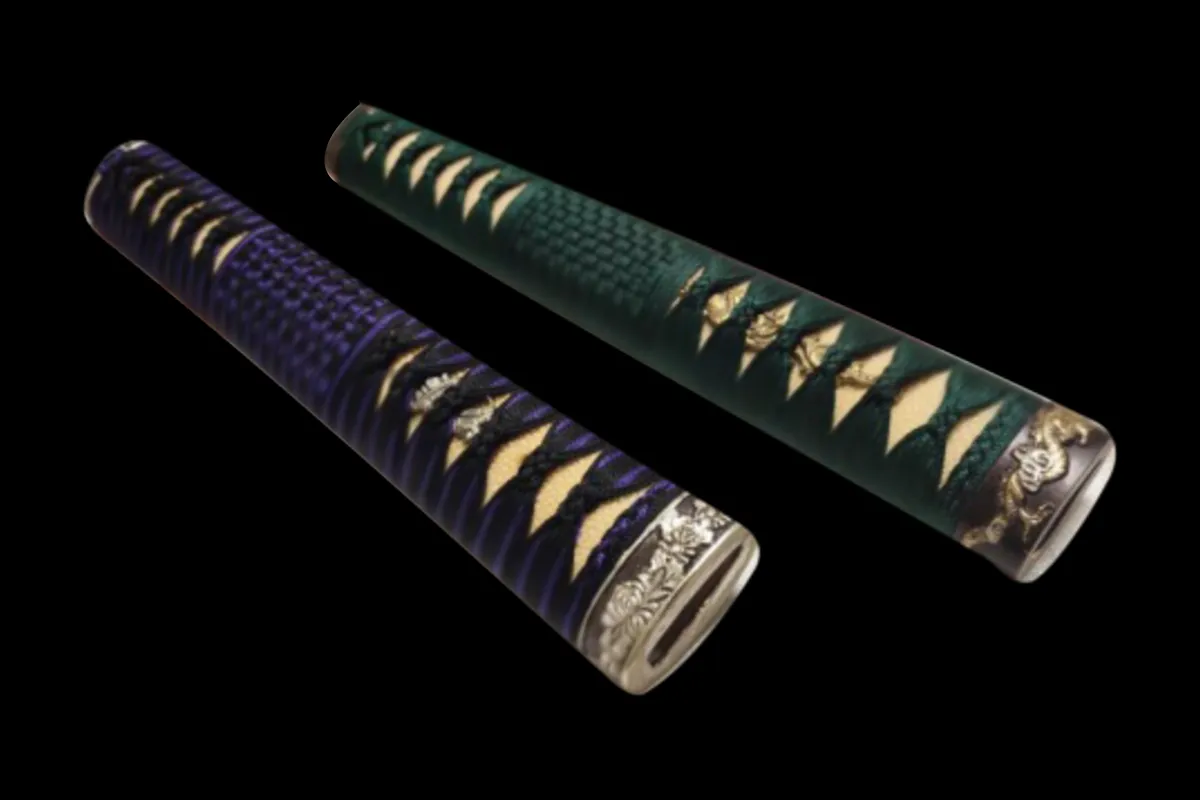
The appearance of menuki varies with the wrapping arrangement. These three examples illustrate the decorative relationship between the ornaments and jabara-ito, from partially concealed ornaments to more prominently exposed motifs.
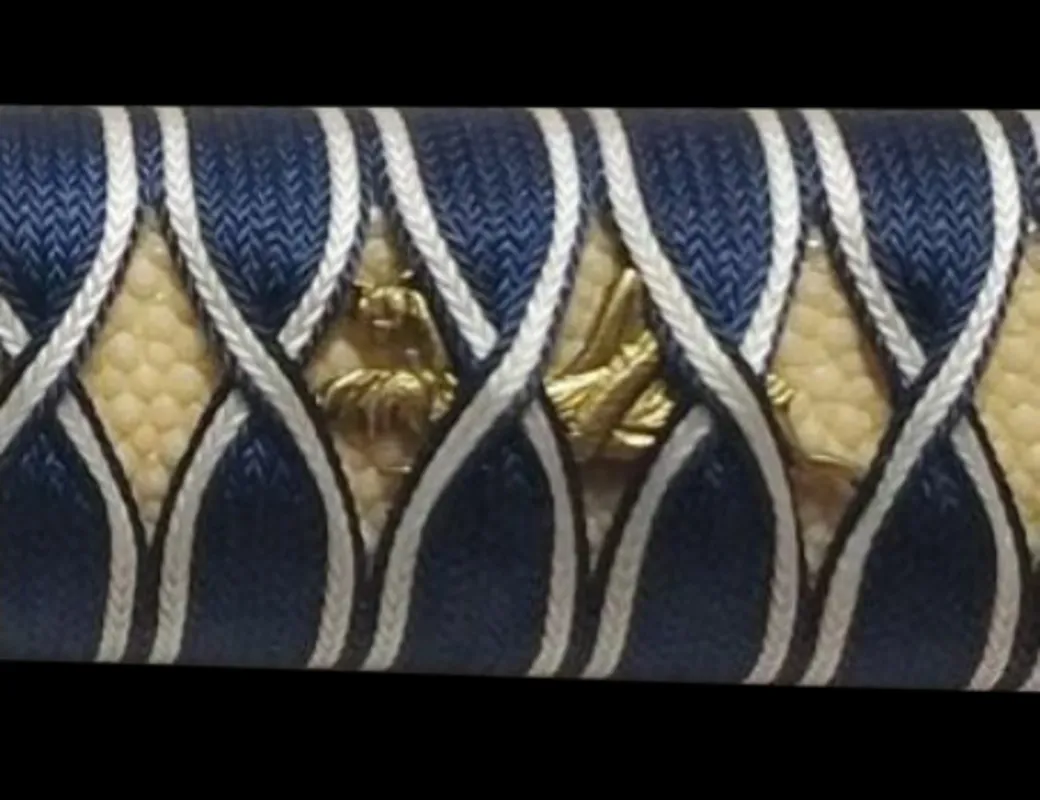
Blue and white cords frame the partly concealed gold-tone ornament.
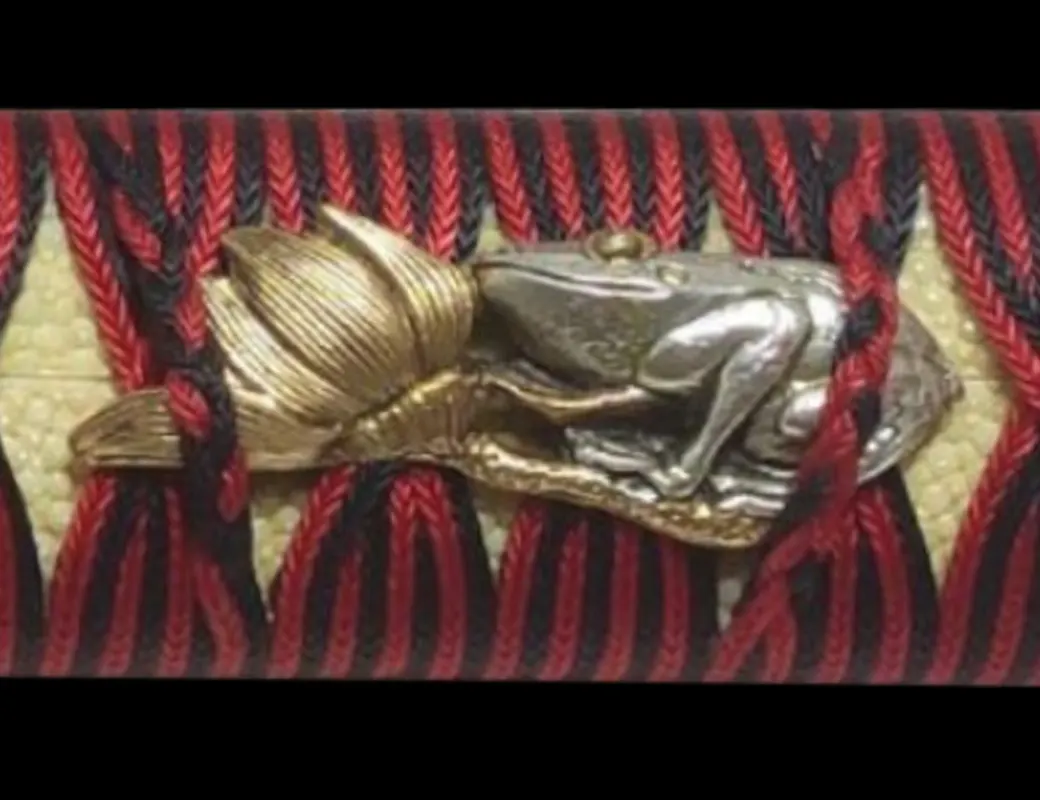
A prominent two-tone ornament contrasts with the red and black braided pattern.
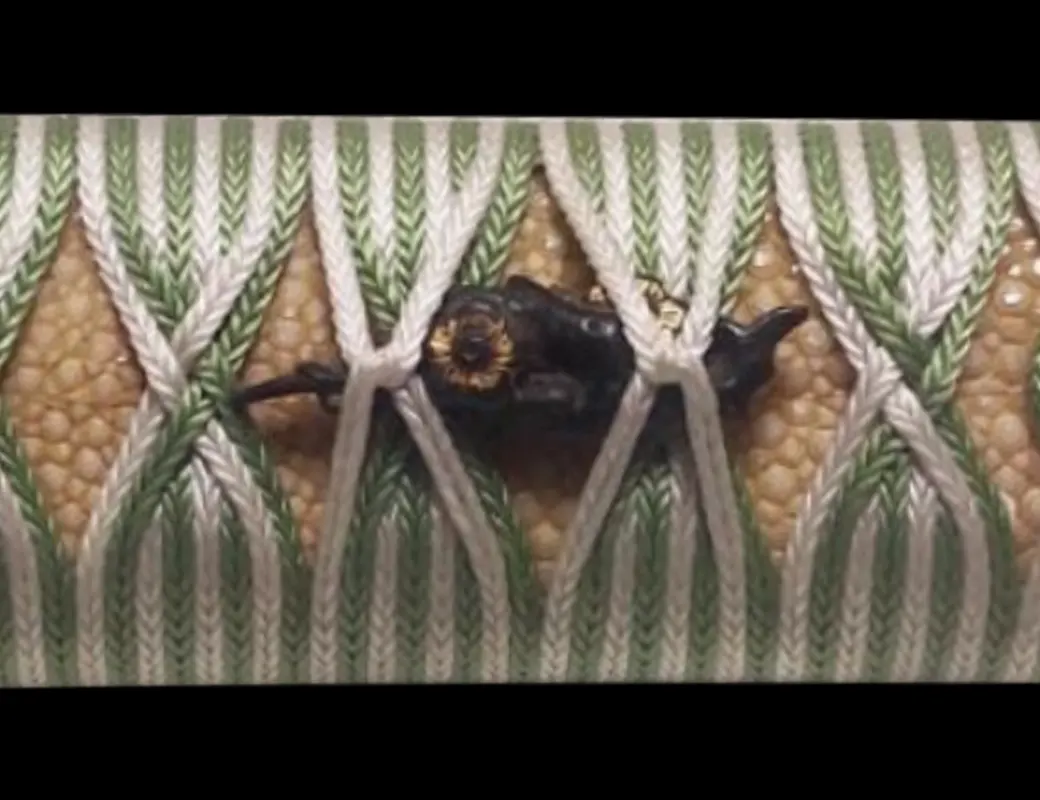
The dark ornament is framed by the interlaced green and white cords.