Description
01 / THE ART OF INTERPRETATION
The Discipline of Utsushi.
To study a celebrated blade is to look beyond its name. This contemporary utsushi takes Dōjigiri Yasutsuna as its historical point of reference, following the quiet presence of a classical tachi while allowing the workmanship of a newly made sword to speak in its own voice.
A HISTORICAL REFERENCE / A CONTEMPORARY WORK
THE MEANING OF UTSUSHI
To Study, Not Simply Repeat.
In Japanese swordmaking, utsushi describes a work made in conscious reference to an earlier blade. The term can encompass close reproduction as well as thoughtful interpretation. Its substance lies in the attention given to sugata — the relationship between the blade's overall form, curvature, proportions and visual balance.
The aim here is not to present an old sword anew, but to carry a historic design into a contemporary work. A recognizable silhouette begins the conversation; the decisions made in forging, hardening and polishing give the finished blade its individual character.
A historical form to examine and understand.
Proportion, steel and finish considered together.
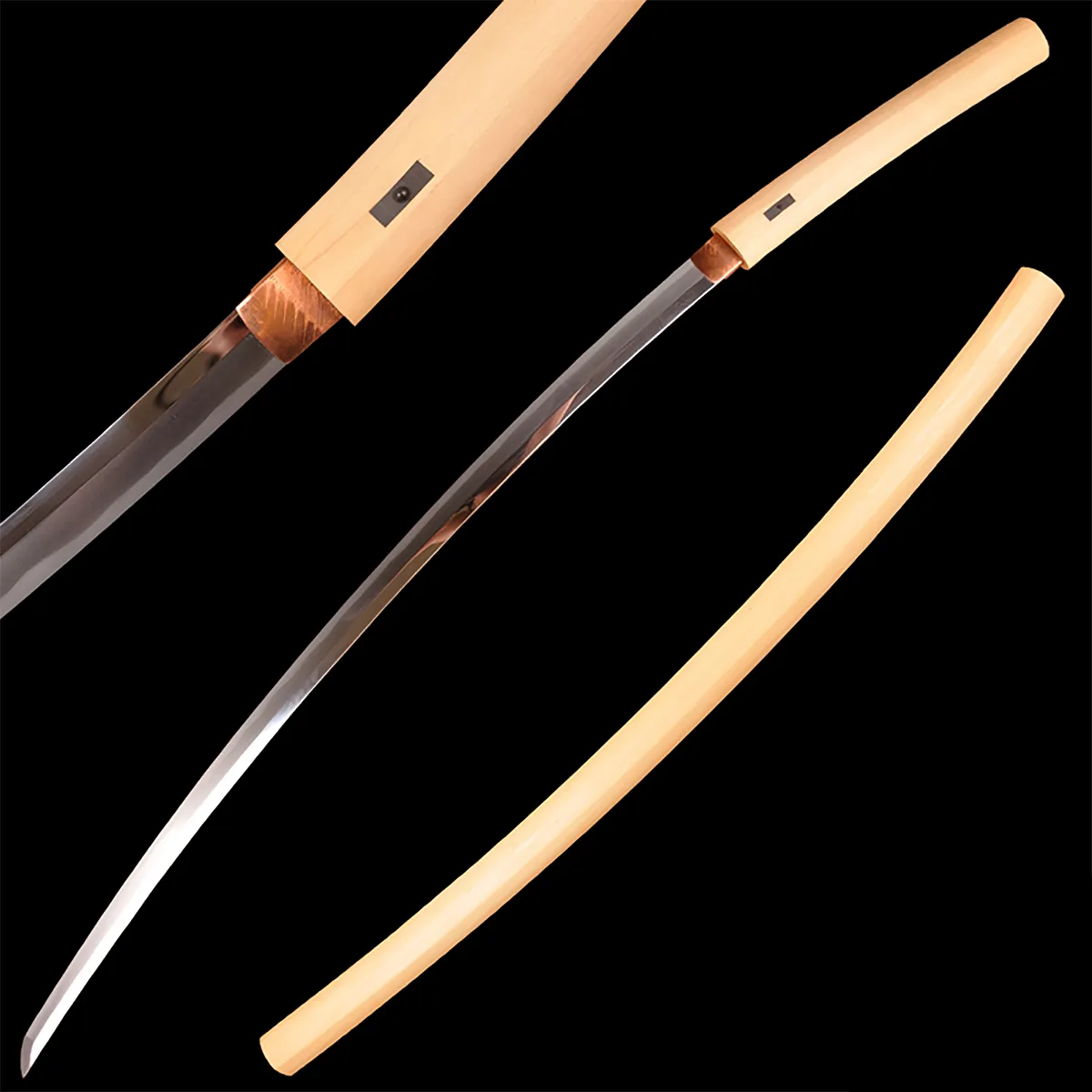
An unadorned setting that returns attention to the blade.
THE SHAPE BEFORE THE ORNAMENT
Following a Famous Curve.
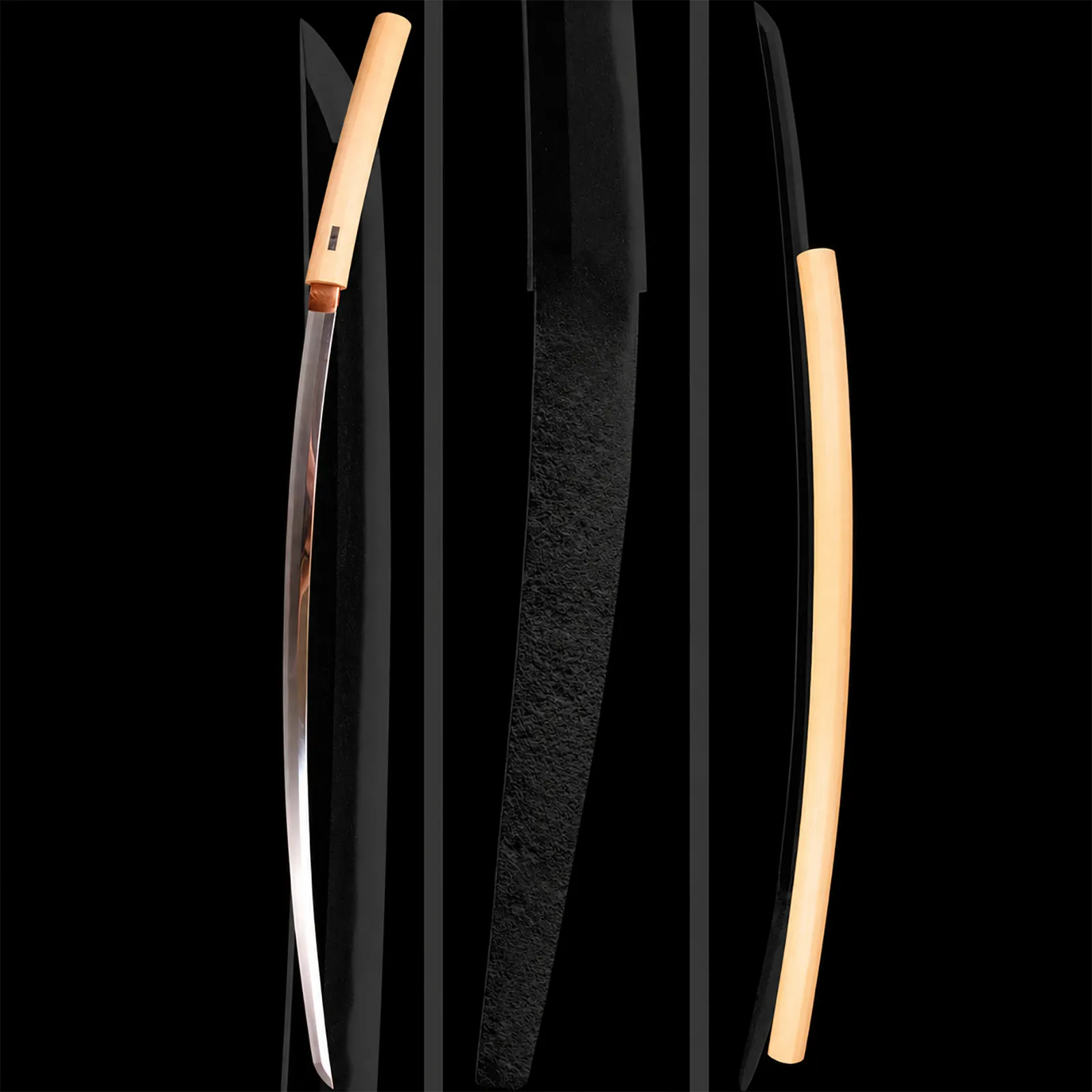
The historic Dōjigiri Yasutsuna, a National Treasure held by the Tokyo National Museum, is admired for the long, poised silhouette of its tachi blade. The dialogue between length and curvature is as important to its presence as the fame of its name.
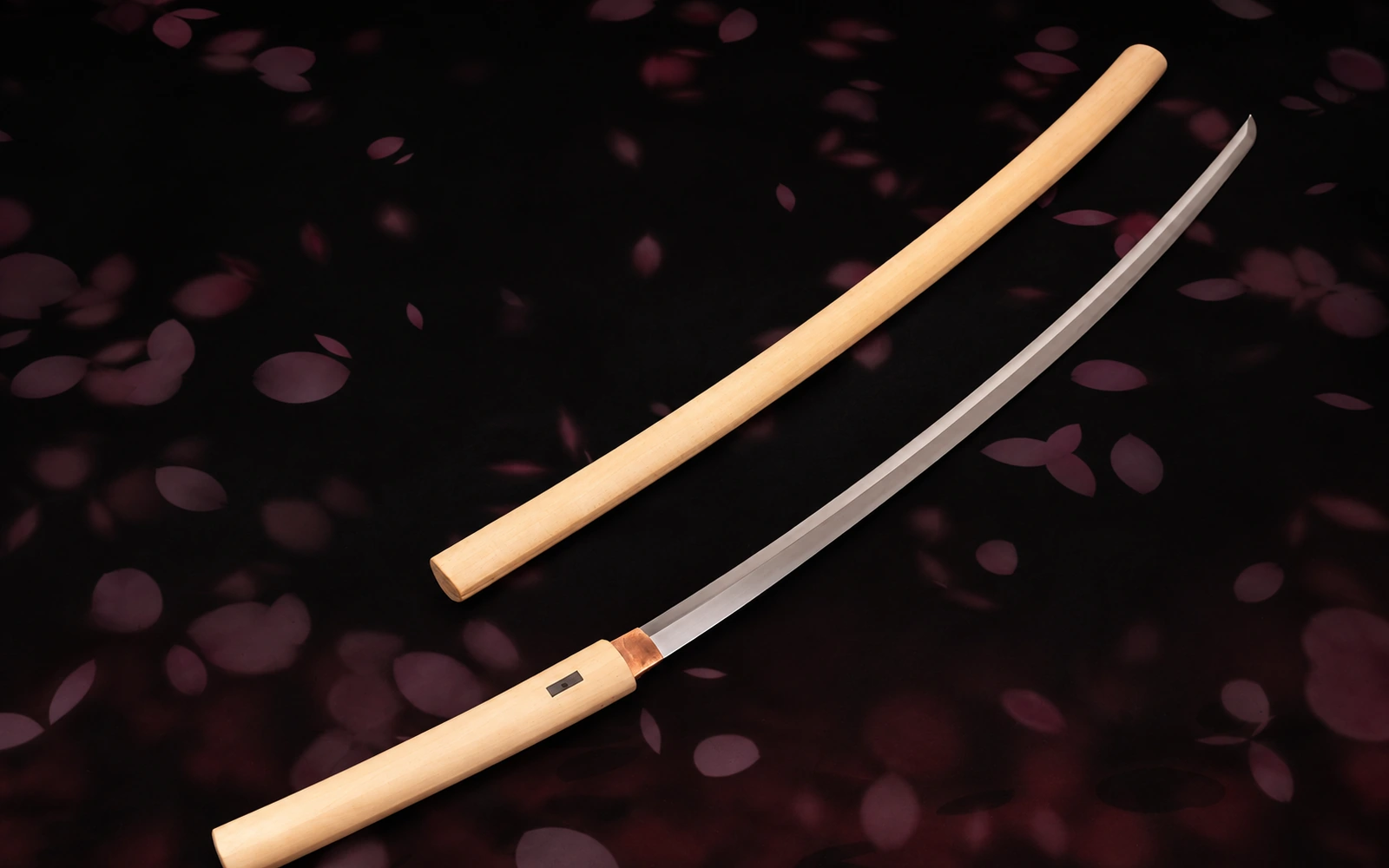
With an 800 mm nagasa, this interpretation gives the blade an extended, flowing profile. The line toward the kissaki is allowed to remain the central visual element, rather than being overshadowed by ornament.
A CONSIDERED INTERPRETATION
The Form, and the Choice.
The historical blade is known for a subtly irregular hamon. This contemporary work takes a different path with Suguha, a restrained straight-patterned temper line that follows the sword's own edge. It is an interpretation informed by the original, rather than a claim that every feature is identical.
Workshop-smelted steel in Maru construction gives this blade its material foundation. The fine surface grain and Shiage-togi finish belong to the individual execution of this work — details explored more closely in the next chapter.
A QUIETER PRESENTATION
Nothing to Distract the Eye.
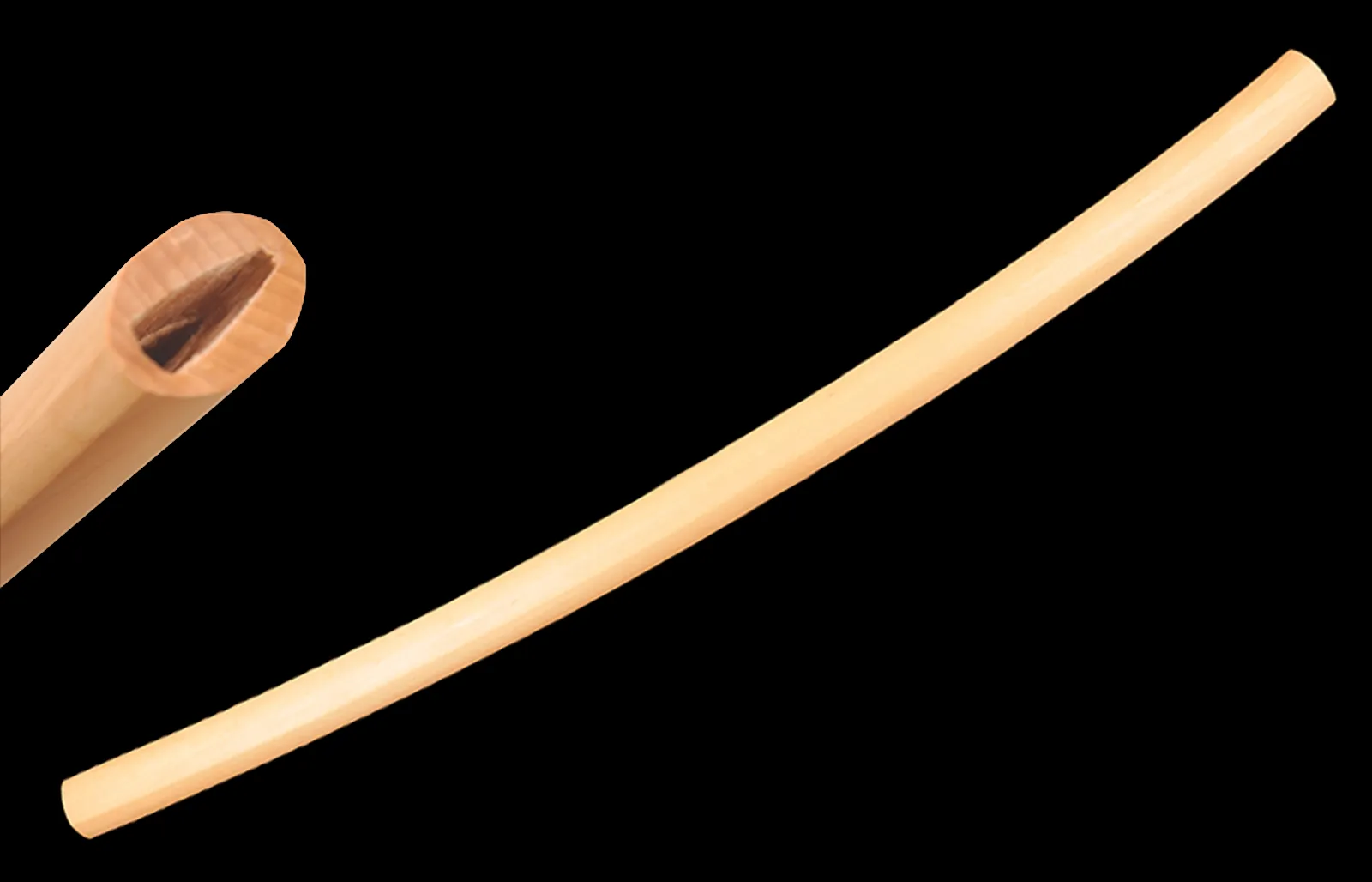
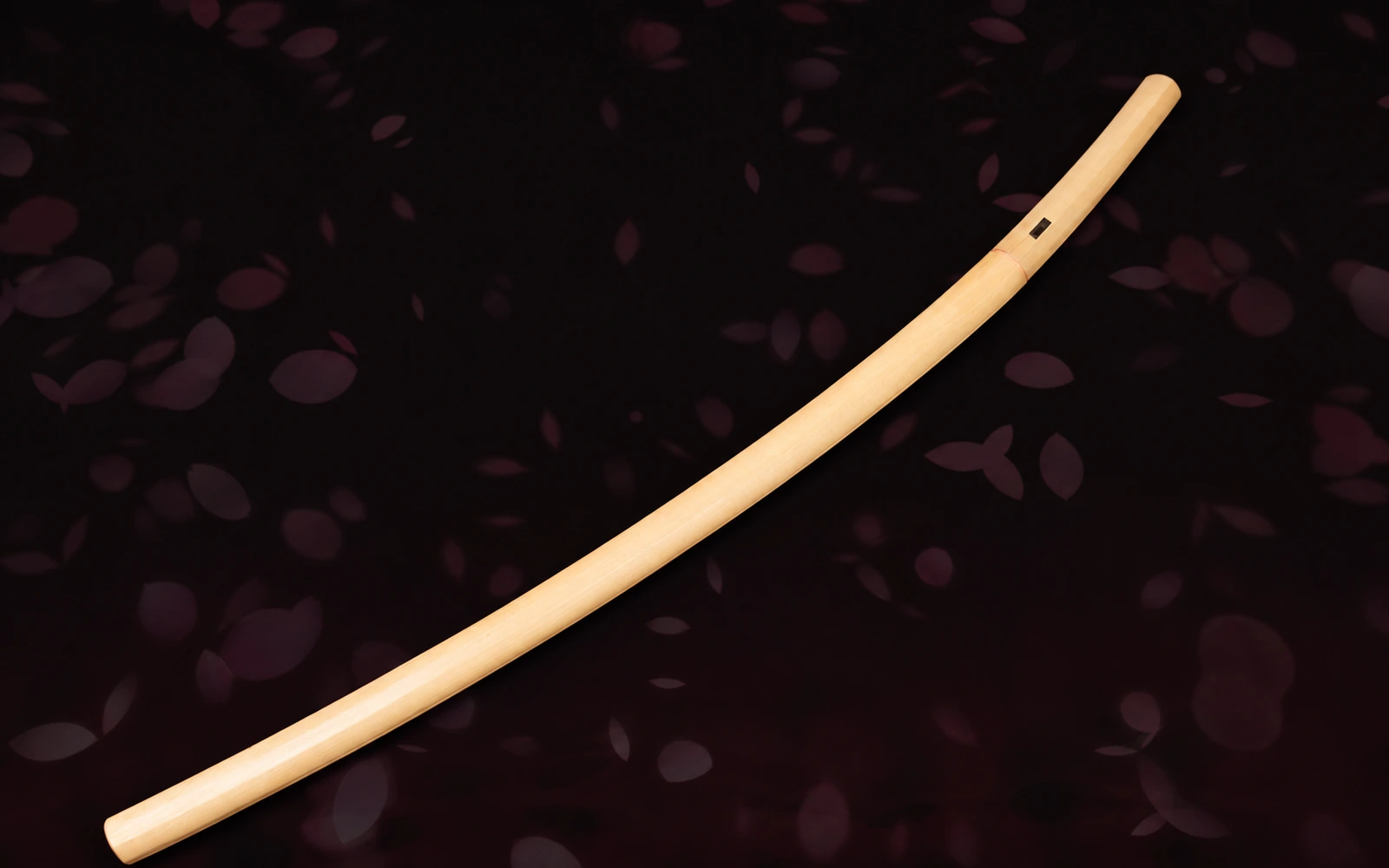
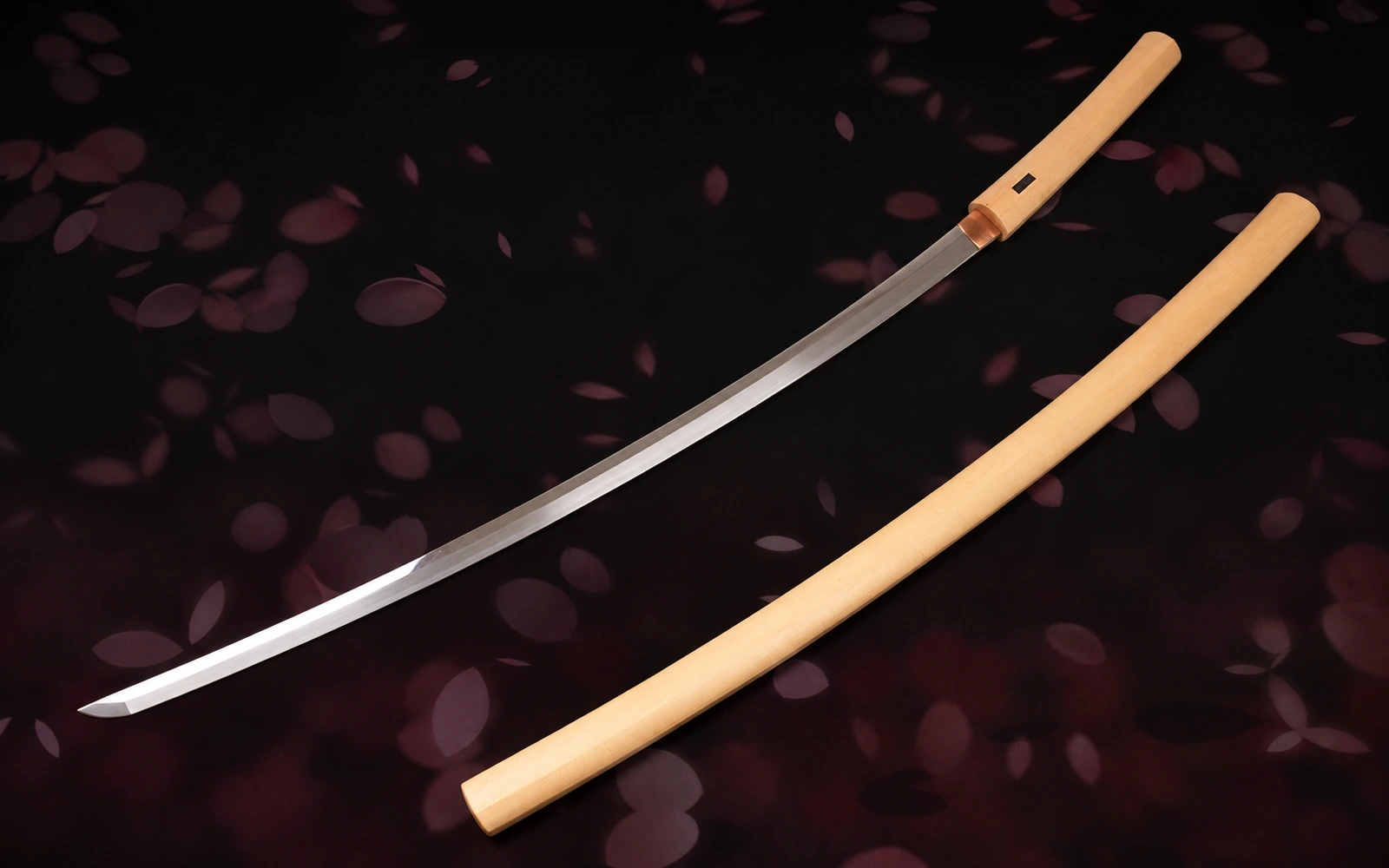
A traditional koshirae can frame a sword through metalwork, color and ornament. Here, handmade Shirasaya takes a quieter approach. Plain, light-toned wood stands beside the polished blade, giving the curve and surface finish space to be seen.
The mounting is not simply a decorative alternative. Made to accompany this blade, the wooden housing gives the work a composed, deliberate presentation — one that suits the reflective character of an utsushi devoted to form and craftsmanship.
FROM REFERENCE TO WORKMANSHIP
A historic sword can guide the eye. What endures in a newly made work is the care given to every line, every surface, and every fitting.
02 / THE WORK BEHIND THE FORM
The Quiet Precision of Shirasaya.
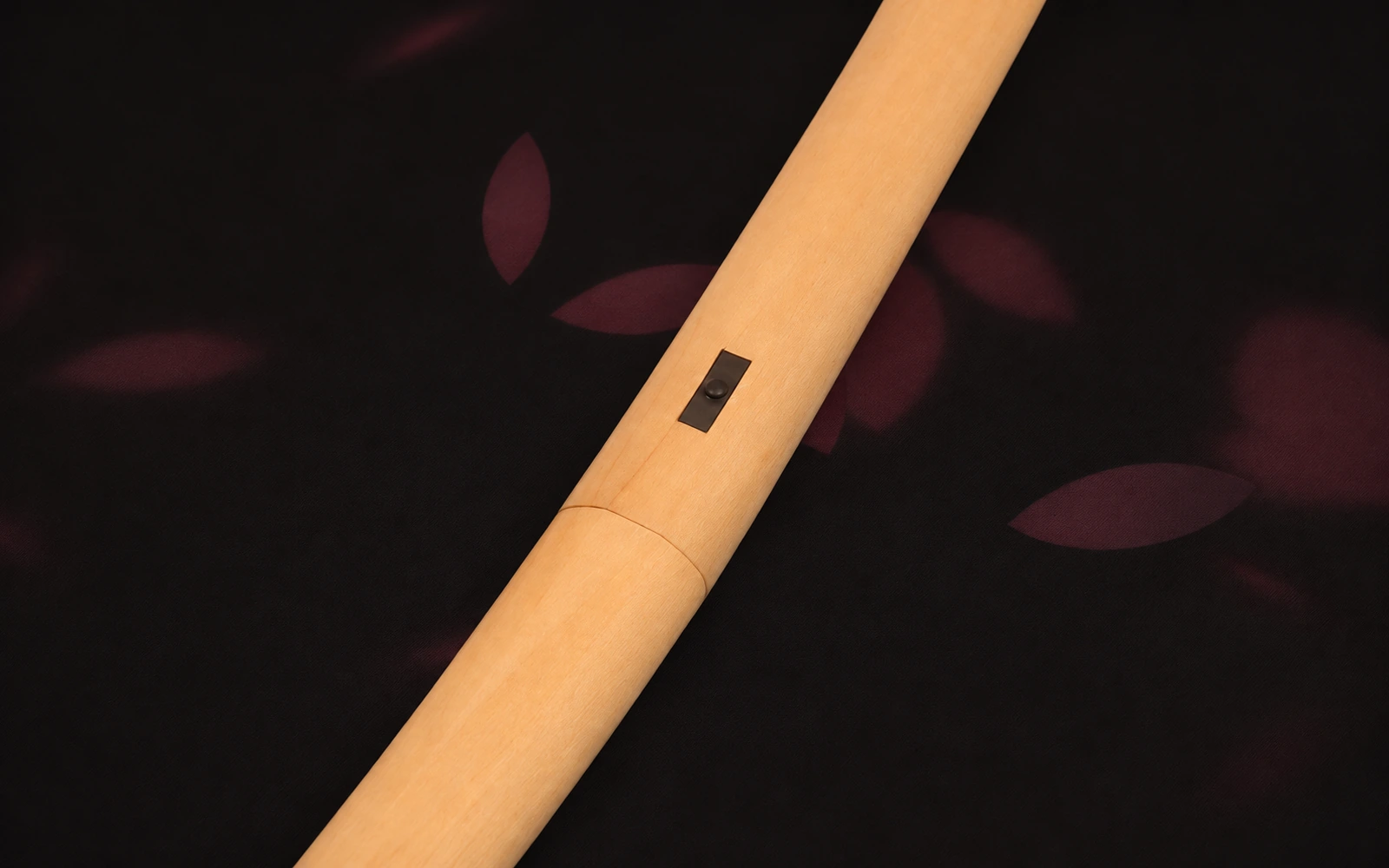
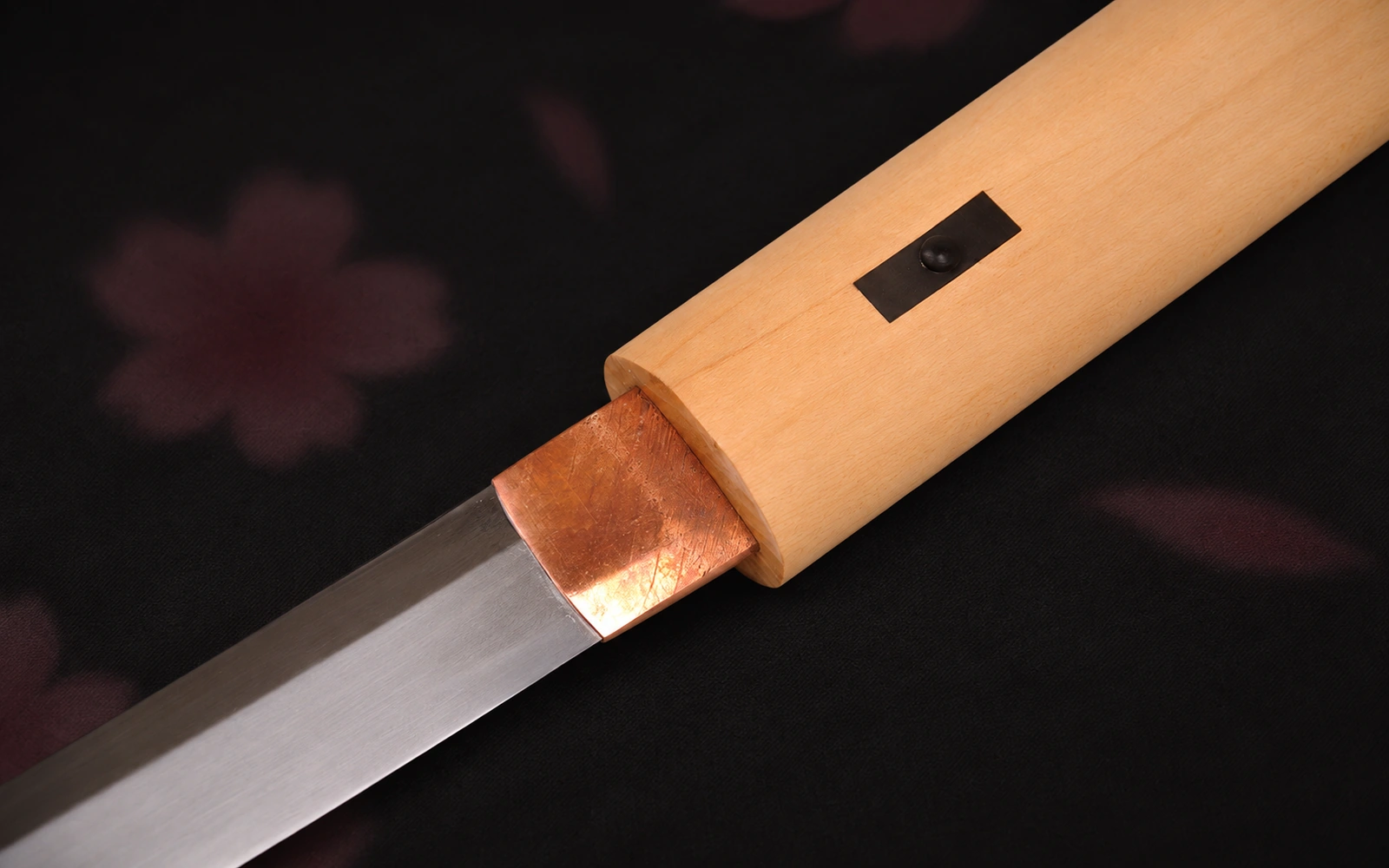
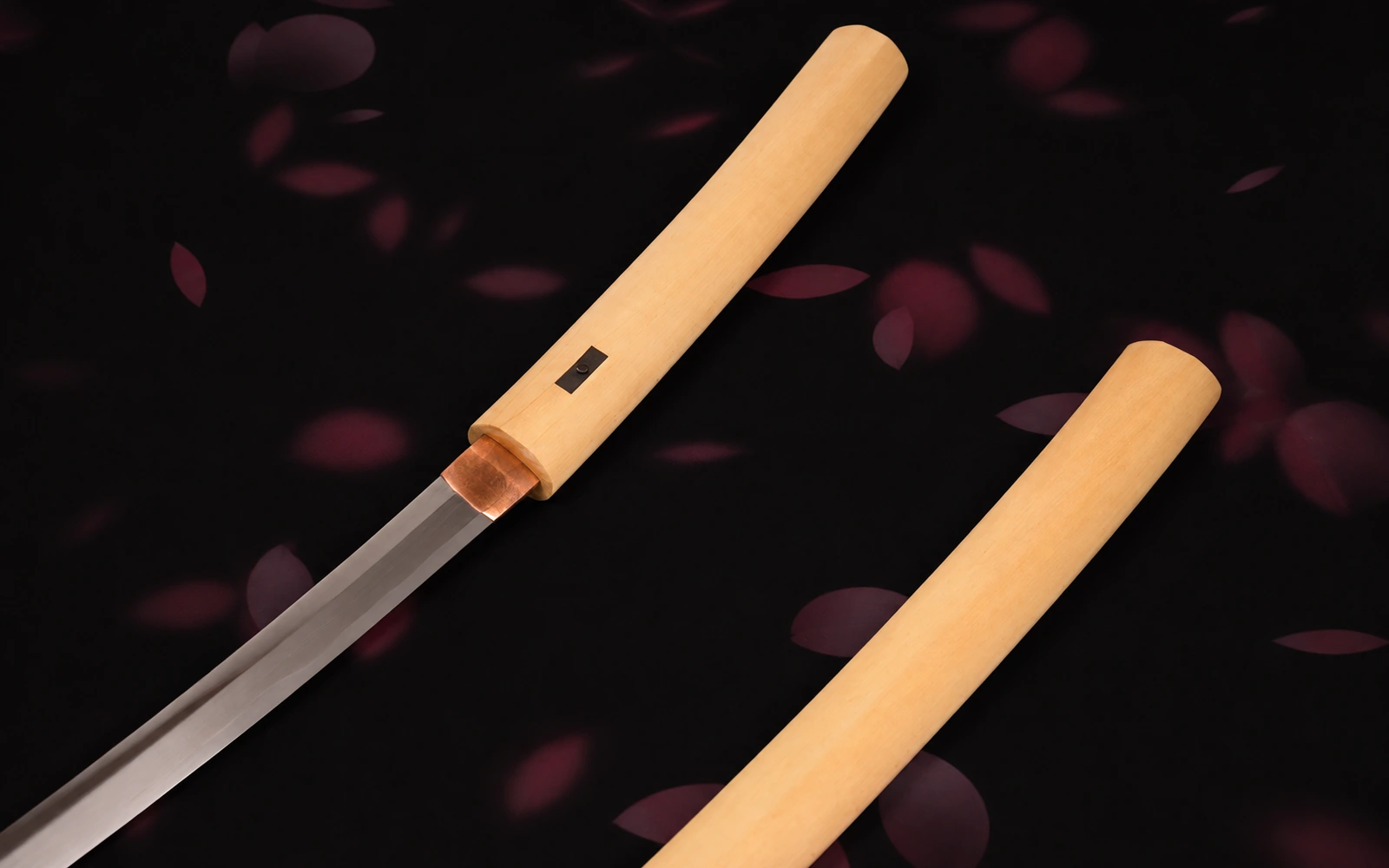
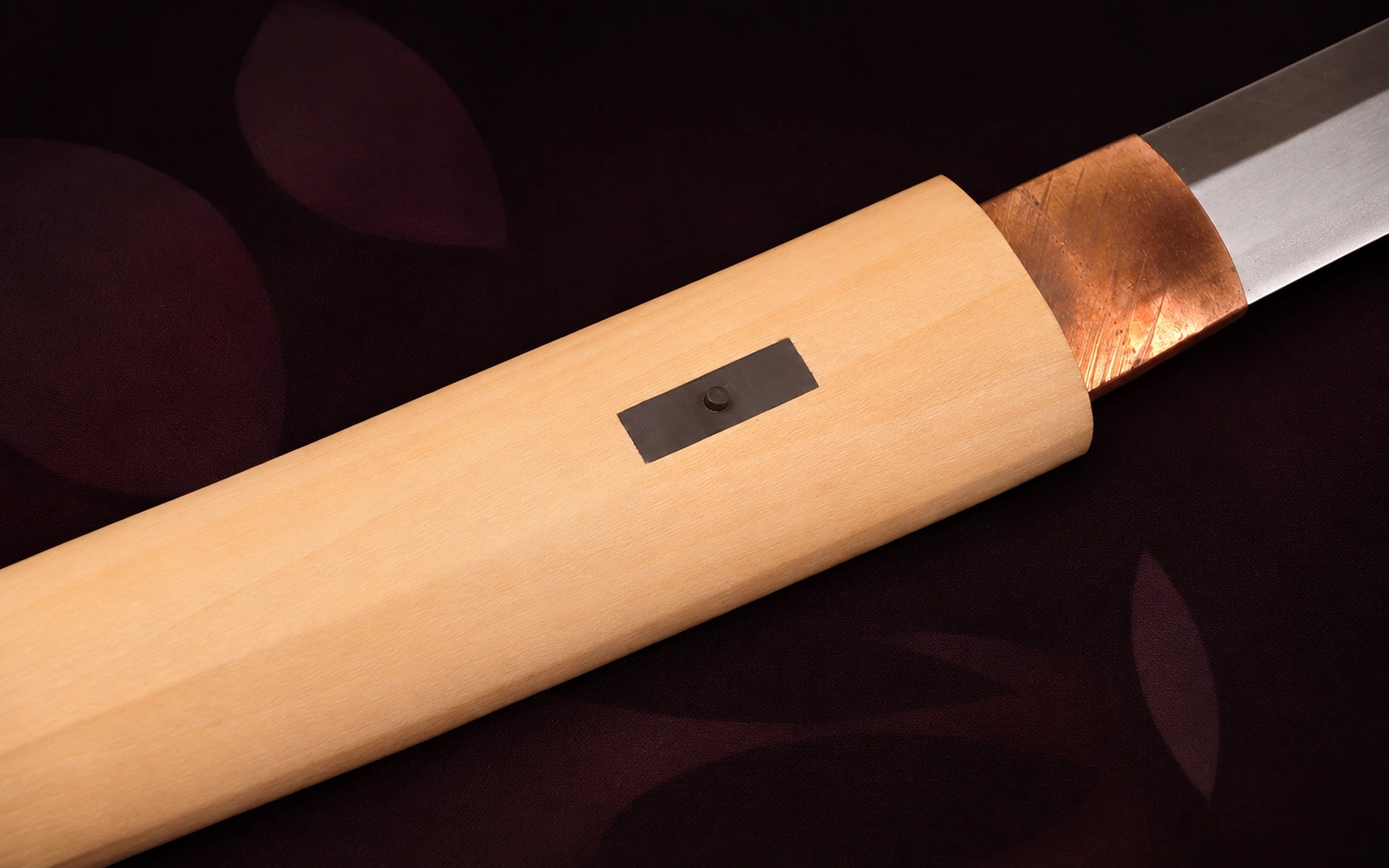
The restraint of a handmade shirasaya brings the smallest details into focus. A closely fitted copper habaki, a dark horn mekugi, and wood shaped around an individual blade speak of care that is not immediately visible.
WOOD / COPPER / FORM / POLISH
01 / THE VISIBLE CONNECTION
Where Steel Meets Wood.
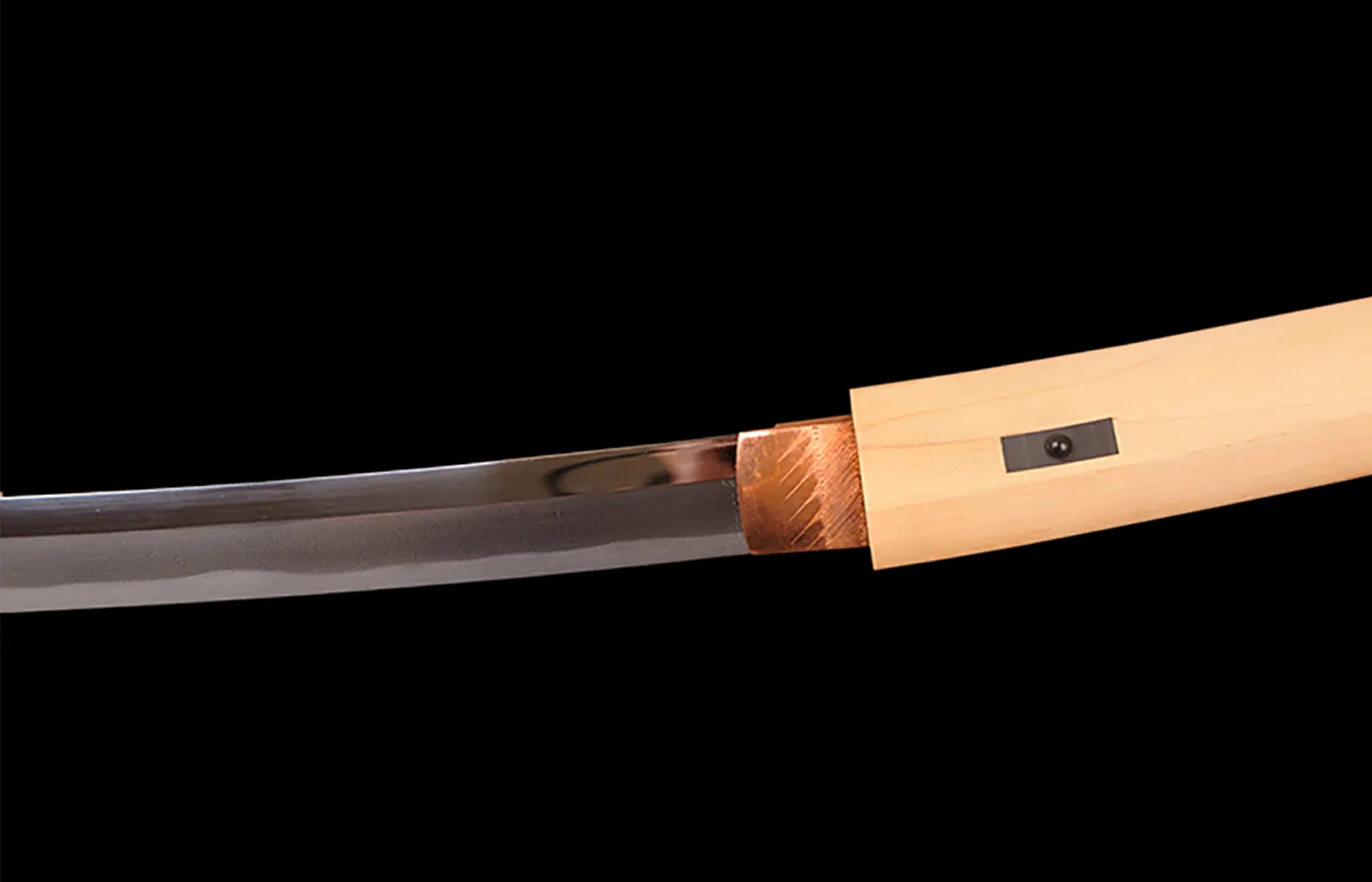
The handcrafted copper habaki forms a deliberate transition between polished steel and pale wood. Its surface carries the marks of hand finishing rather than decorative excess.
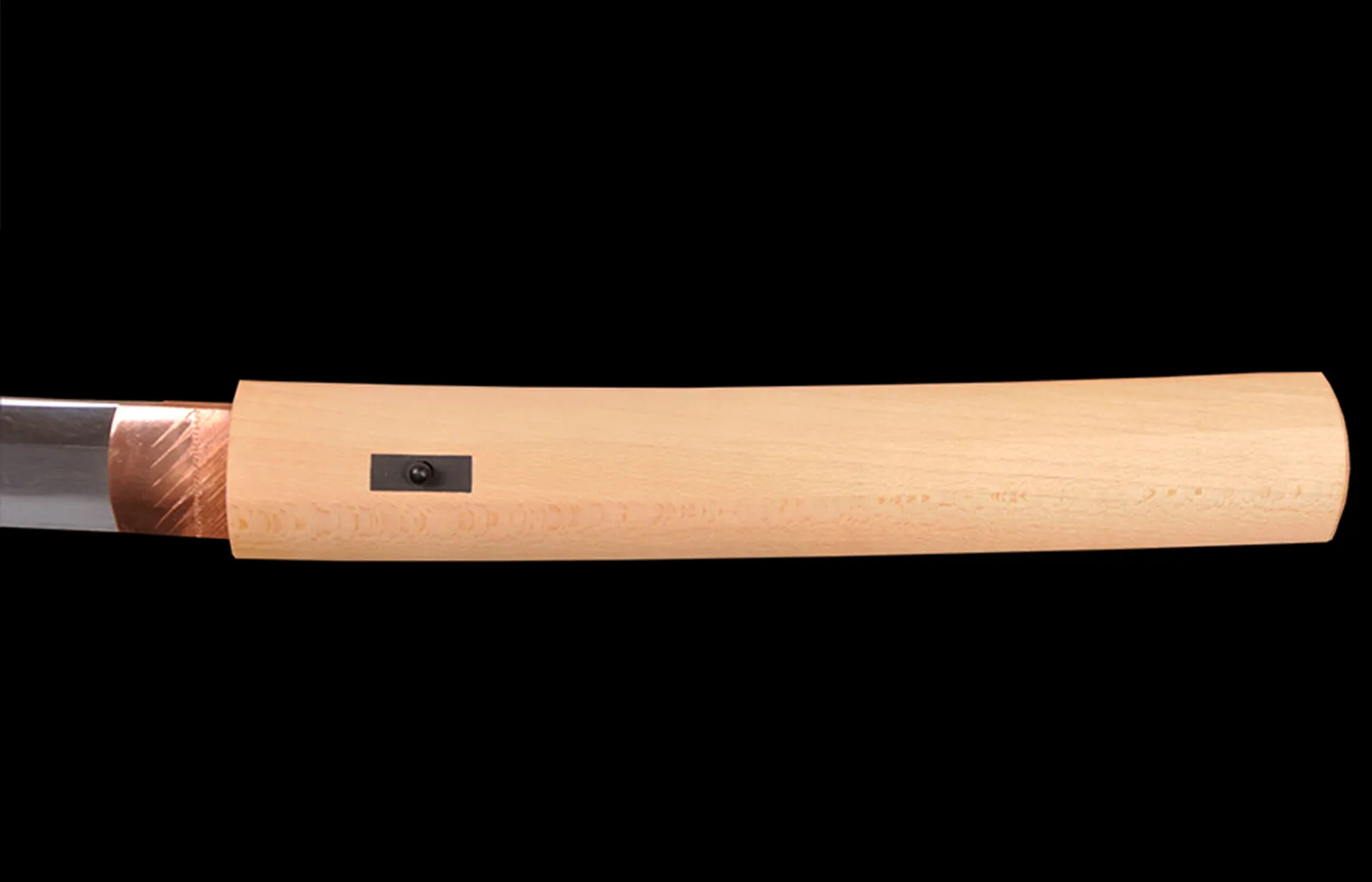
Set into the handle, the tapered horn mekugi serves as the retaining peg. The materials are quiet, but the fit and alignment are essential to the character of the assembled work.
02 / THE FIT THAT DISAPPEARS
Carved for This Blade.
The most demanding part of a handmade shirasaya is not necessarily seen from the outside. Its opening is shaped around the actual habaki, so the blade and wooden housing meet with a considered fit.
The maker's account places special emphasis on this work at the mouth of the saya. It is an exacting task: the plain exterior conceals the care invested in the surfaces within.
03 / THE FORM UNDER STUDY
The Curve as a Reference.
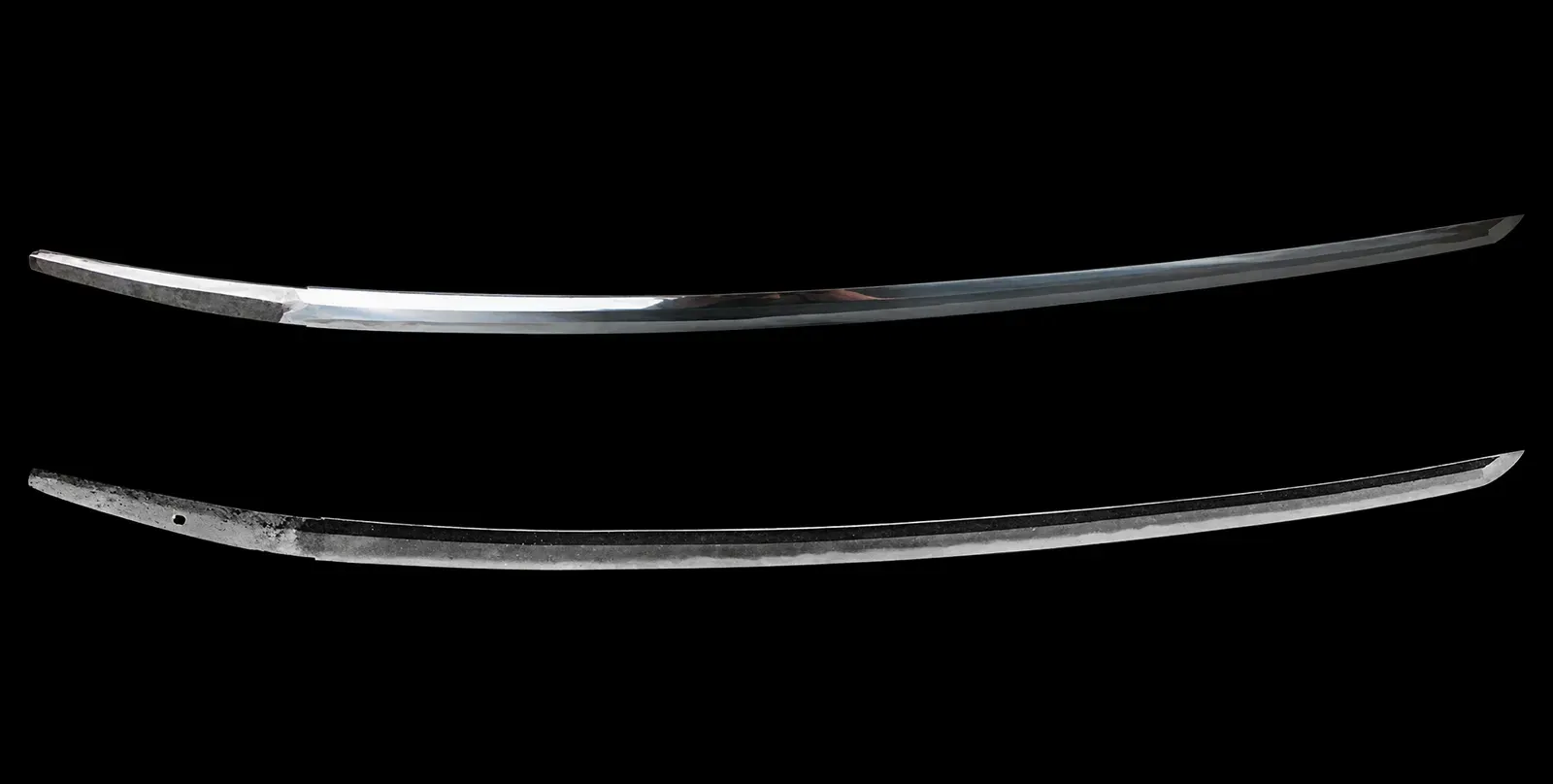
The reference to Dōjigiri Yasutsuna is most immediately visible in the blade's long, flowing silhouette. Seen together, the contemporary utsushi and the historic blade invite a closer look at the way curvature and taper shape the whole.
This is a comparison of form, not a claim of exact dimensional identity. The historical reference informs the design; the newly made blade retains its own recorded proportions and execution.
04 / THE POLISHER'S DISCIPLINE
A Line Kept Clear.
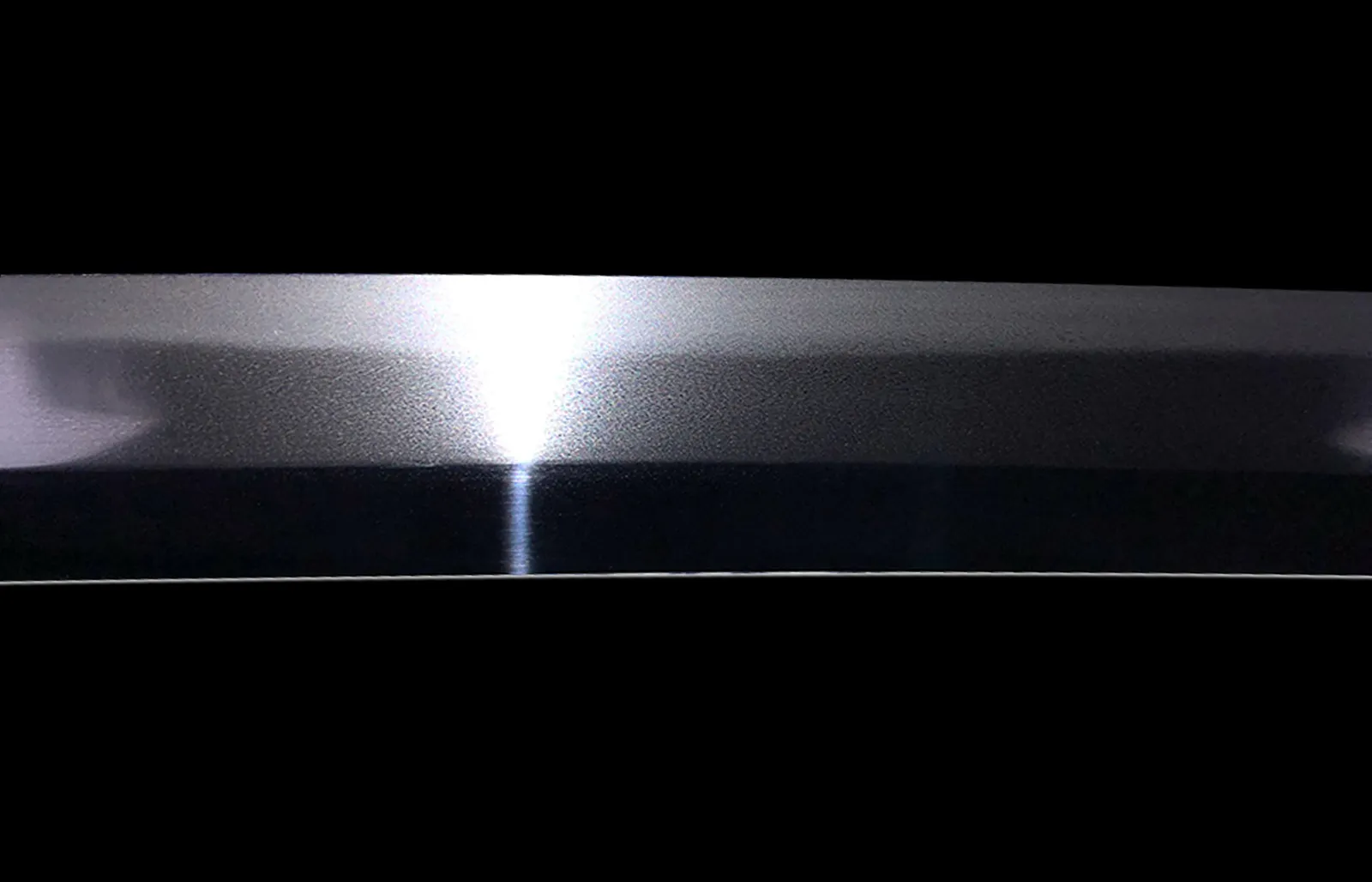
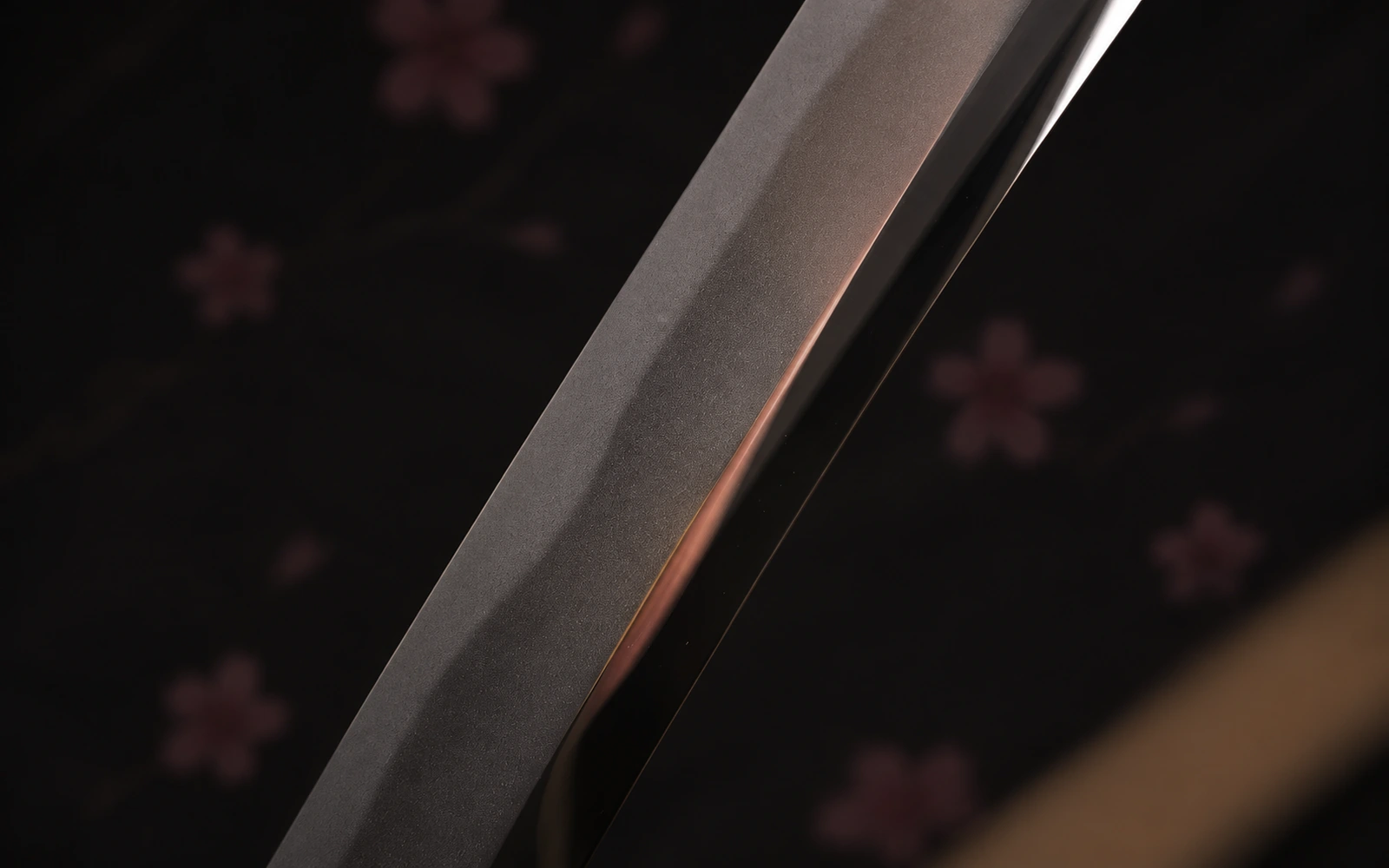
Shiage-togi is more than brightness on a blade. The maker draws attention to a crisp shinogi, carefully finished shinogi-ji, and the treatment of the mune. The polish must reveal the geometry rather than soften it.
The workshop-smelted steel has a fine surface grain described as reminiscent of Konuka-hada. This is a description of visual texture, not a claim that the steel belongs to a particular historical Japanese school.
05 / READING THE FINISH
What the Light Reveals.
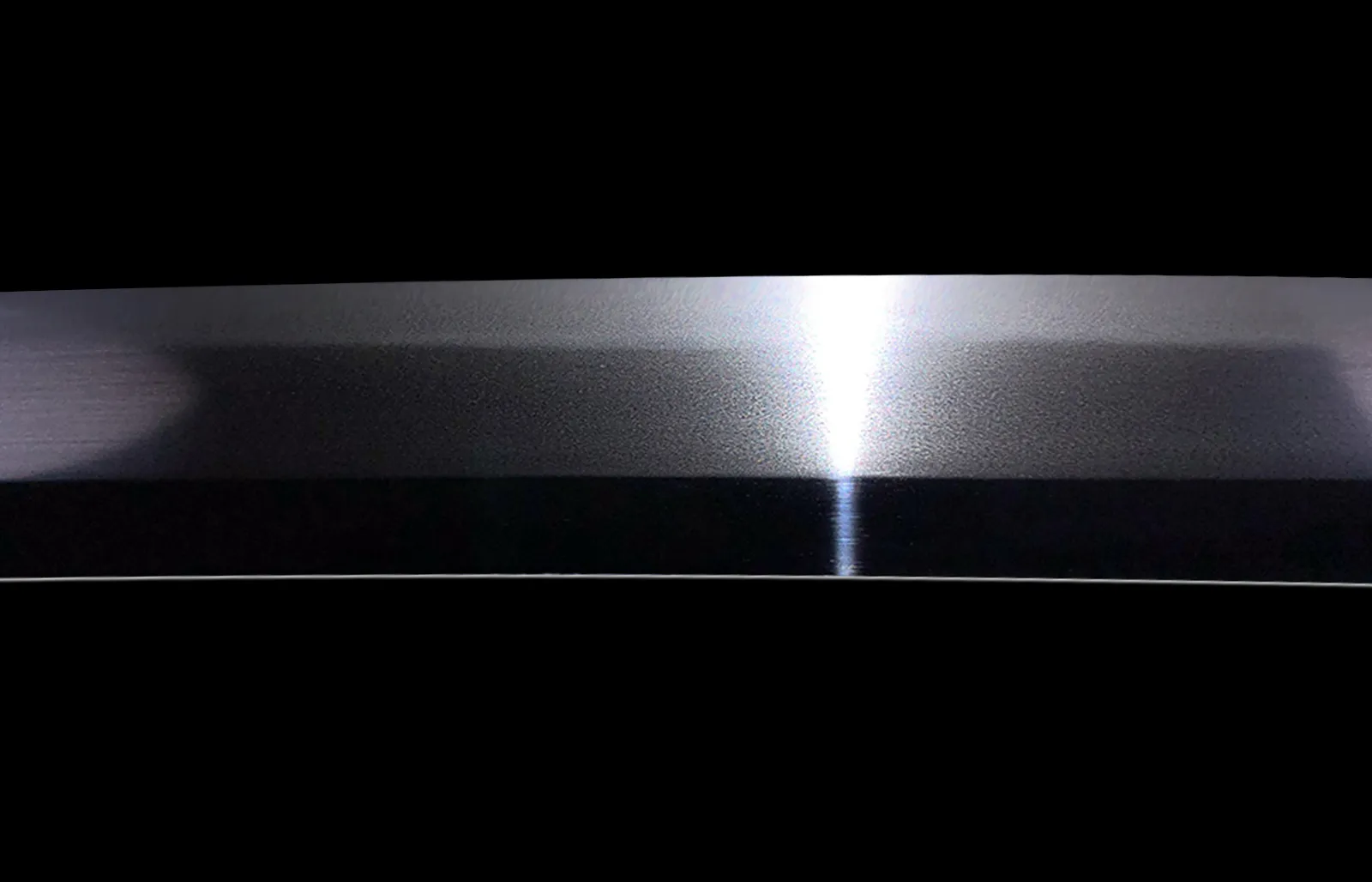
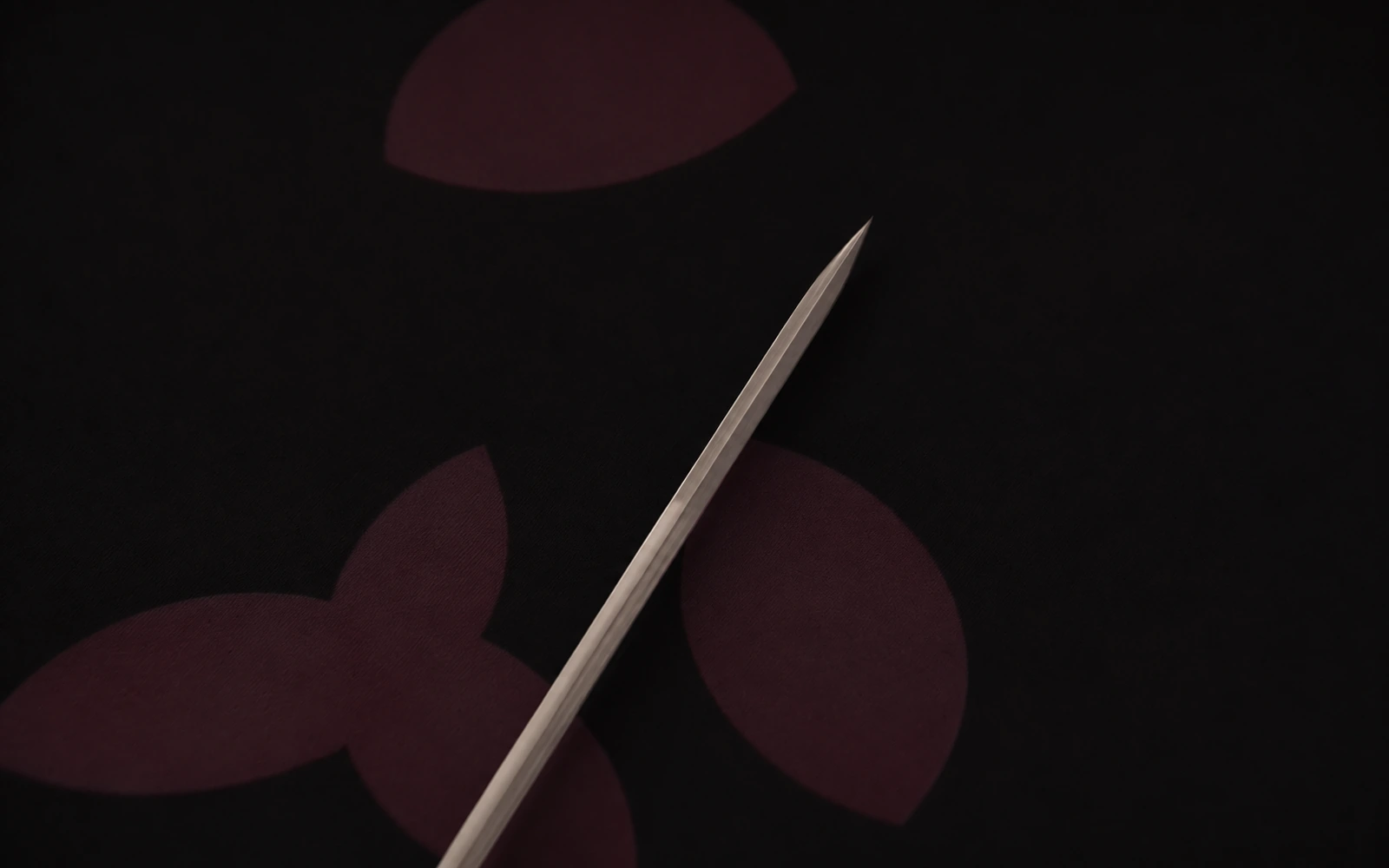
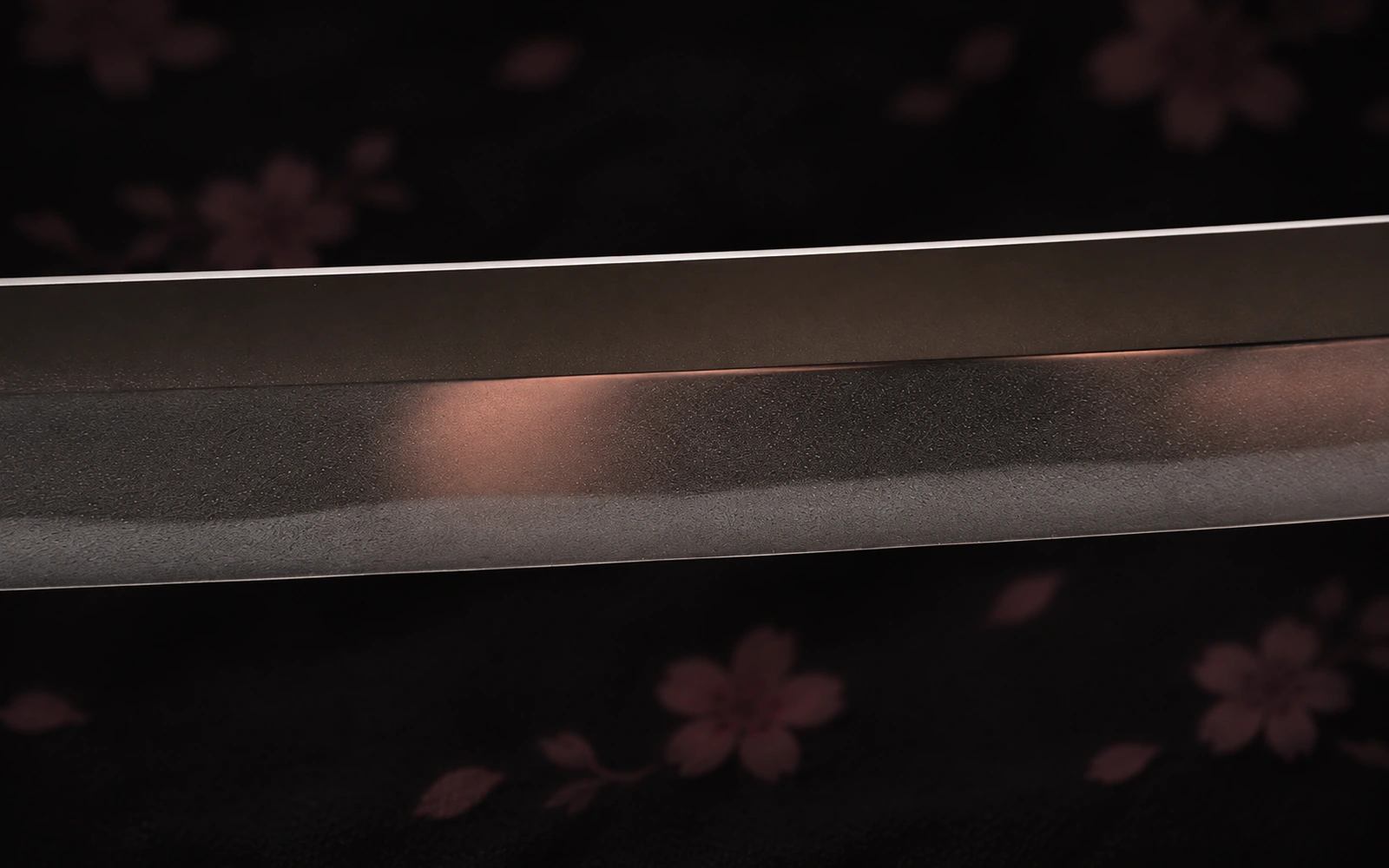
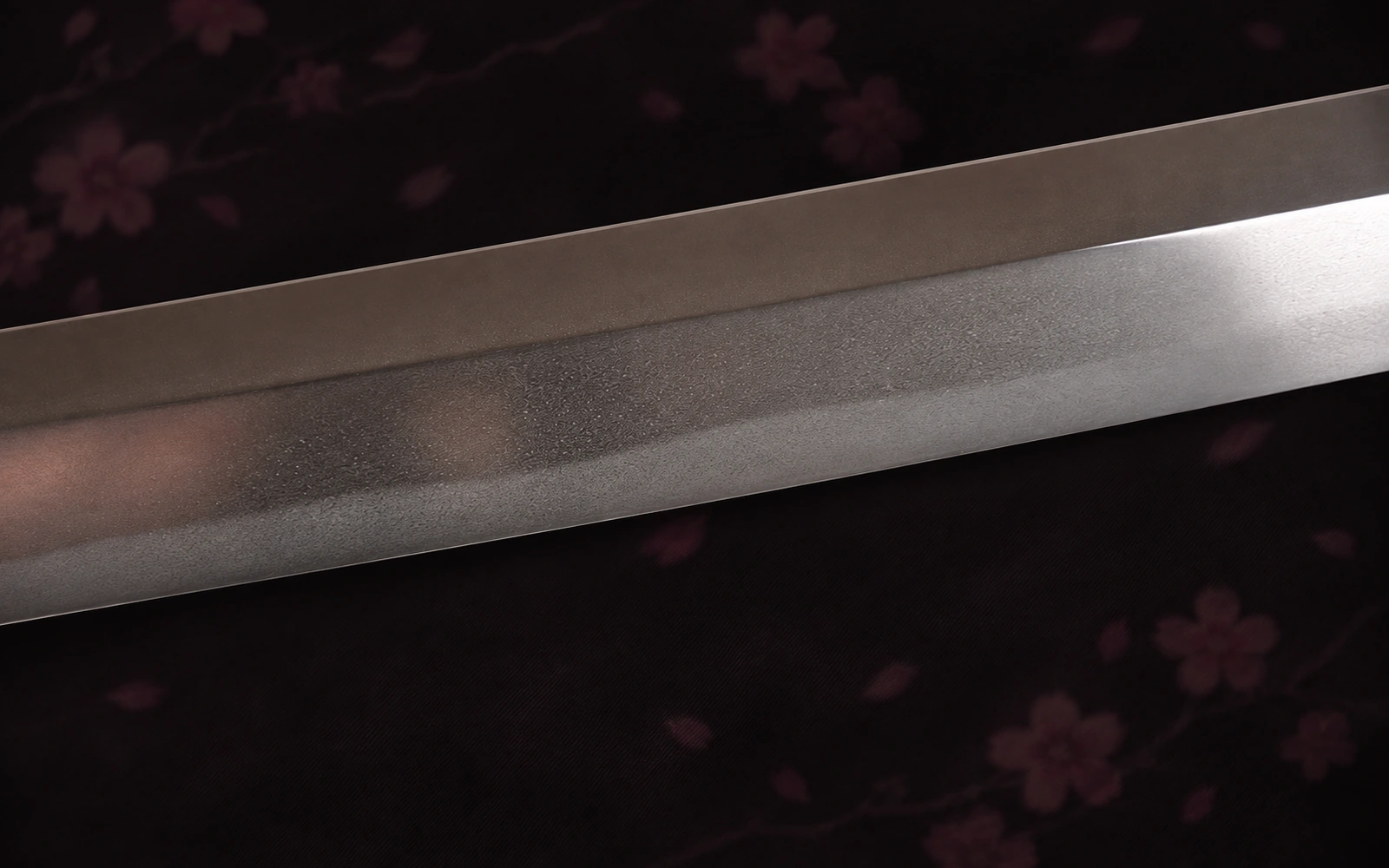
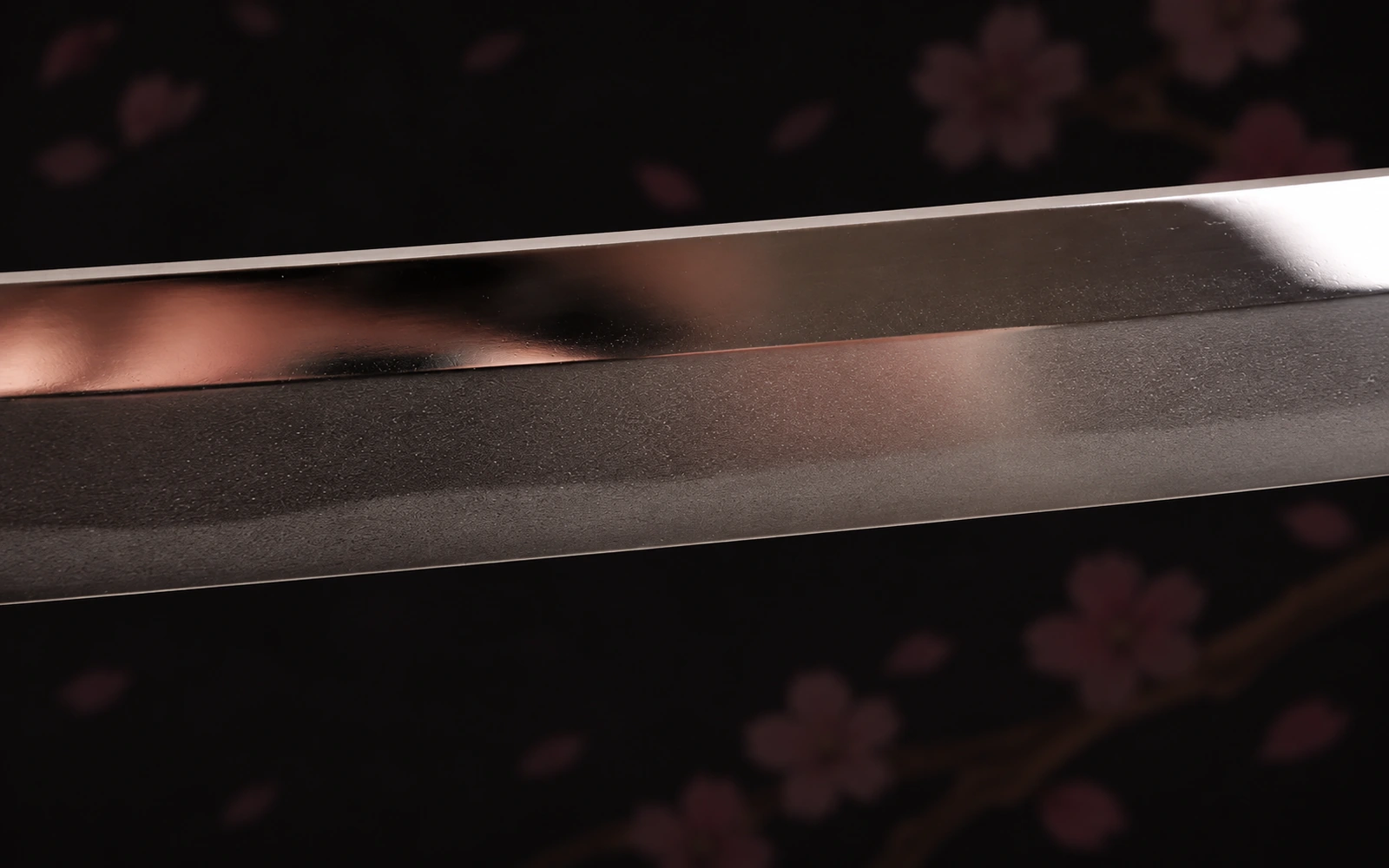
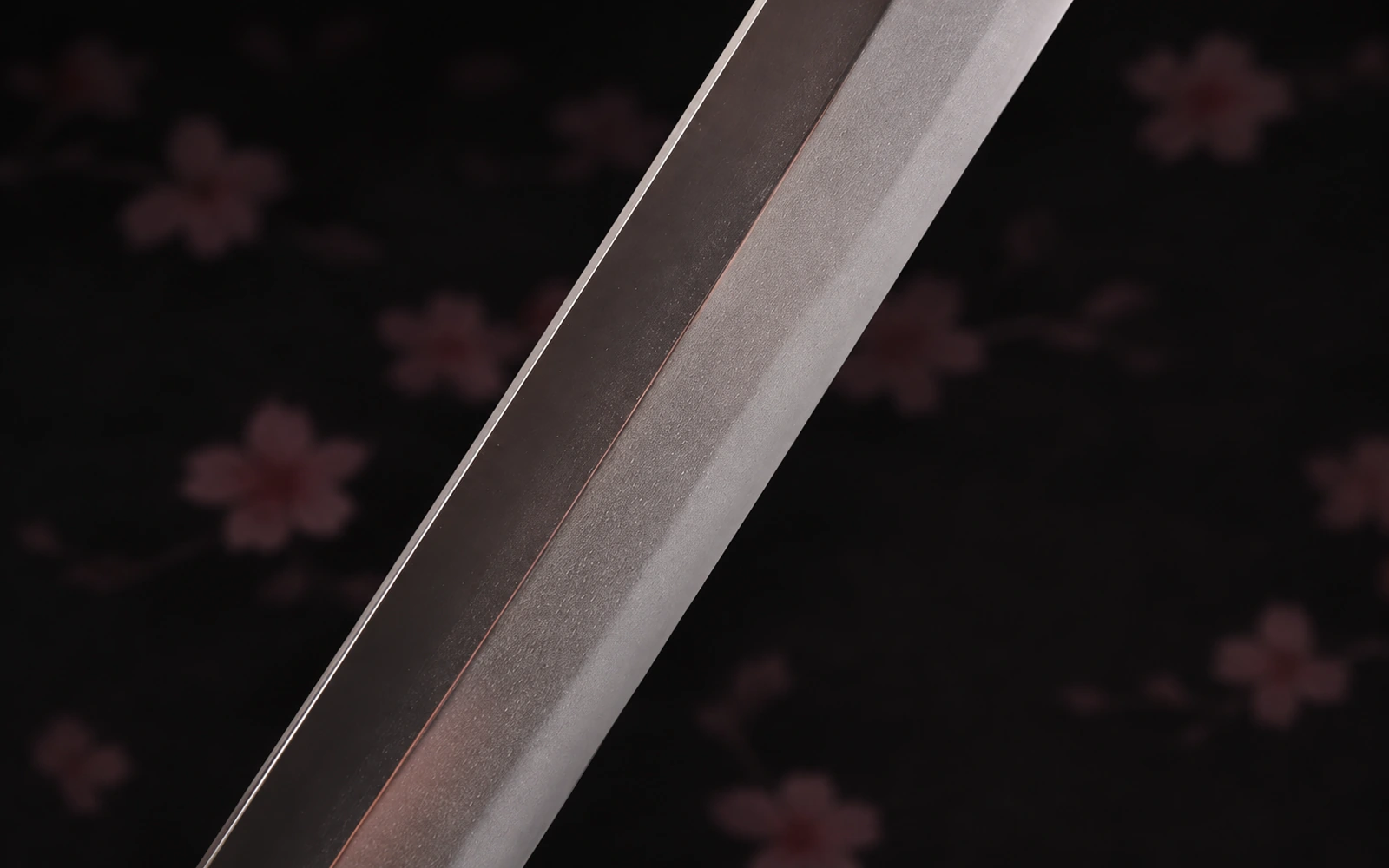
As light passes across the steel, the surface shifts between muted gray and a controlled reflection. The restrained finish gives the eye time to study the transitions between planes.
The bright line at the lower edge in these photographs is an edge highlight, not a depiction of the hamon. This distinction matters when appreciating a polished sword: reflection, steel grain, and the hardened pattern are different features.
03 / COLLECTOR GALLERY
Thirteen Views. One Interpretation.
A contemporary utsushi of Dōjigiri Yasutsuna, presented without elaborate fittings. Thirteen views move from the curved silhouette of the handmade shirasaya to the last reflection on the blade.
WOOD / FORM / COPPER / REFLECTION
01 / THE WHOLE SILHOUETTE
The Form, Before the Detail.
Before the polish or the fitting is studied up close, there is the shape itself. The wooden housing follows a long, measured curve; the drawn blade brings its own line into view. Neither needs ornament to command attention.
02 / THE QUIET DETAILS
Wood, Copper, and Stillness.
The warm tone of the copper habaki interrupts the pale wood only briefly. A dark horn mekugi and closely fitted joinery keep the mounting restrained. Here, small details are part of the whole rather than decoration added afterward.
The form has already been established. The remaining views ask only that we look closer.
03 / STEEL UNDER CHANGING LIGHT
The Last Reflections.
The Shiage-togi finish is best experienced in changing light. Across these close studies, the reflective planes appear, recede, and reveal glimpses of the steel's fine hada. Changing reflections trace the finished planes, while the Suguha hamon remains a separate feature of the blade.
Reviews
There are no reviews yet.