Description
A Historic Form. A Modern Interpretation.
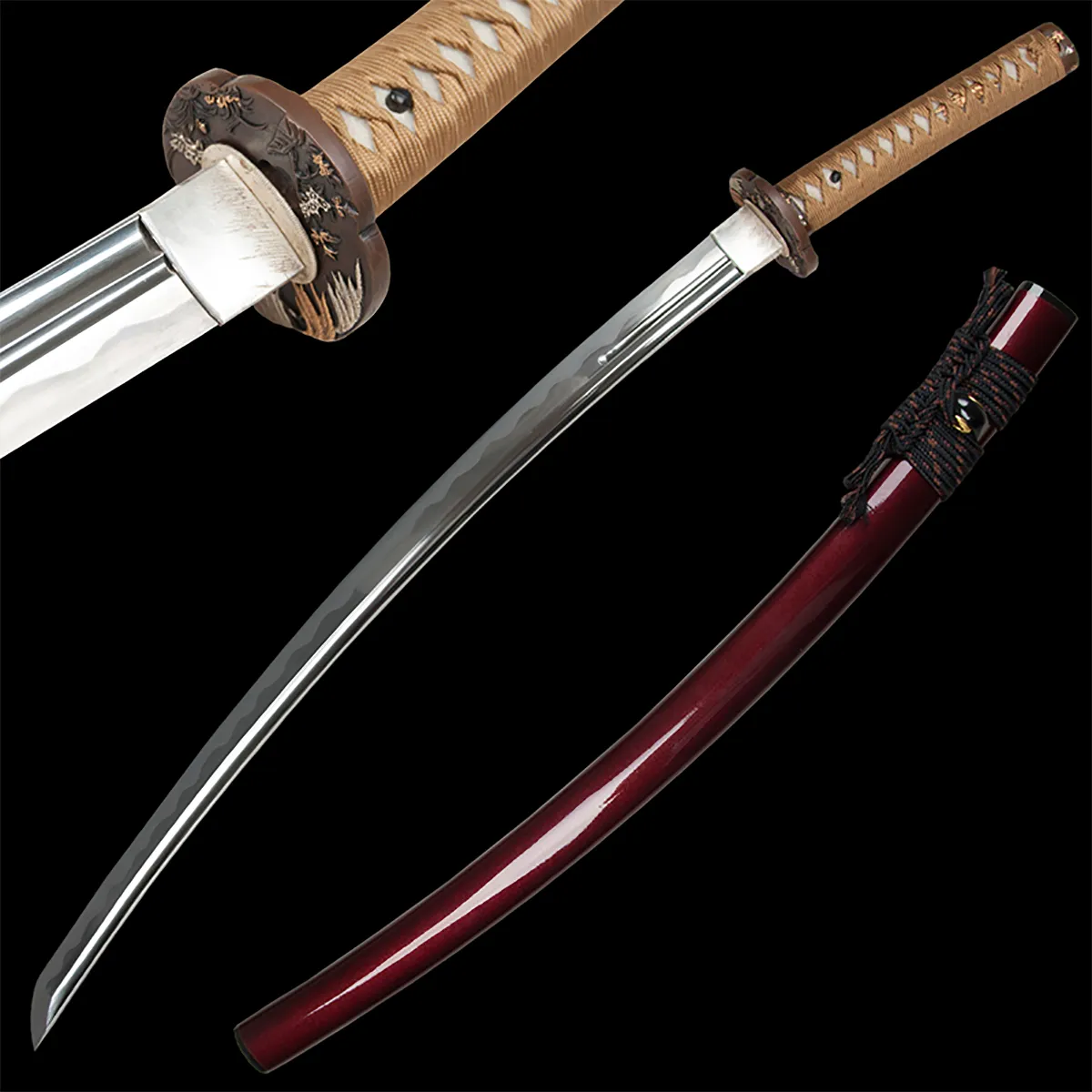
Inspired by the celebrated Ōdenta Mitsuyo, this katana draws upon the distinctive silhouette of a historic Japanese blade. Its flowing curvature, refined kissaki, and blade proportions reflect a careful study of the original sword's form.
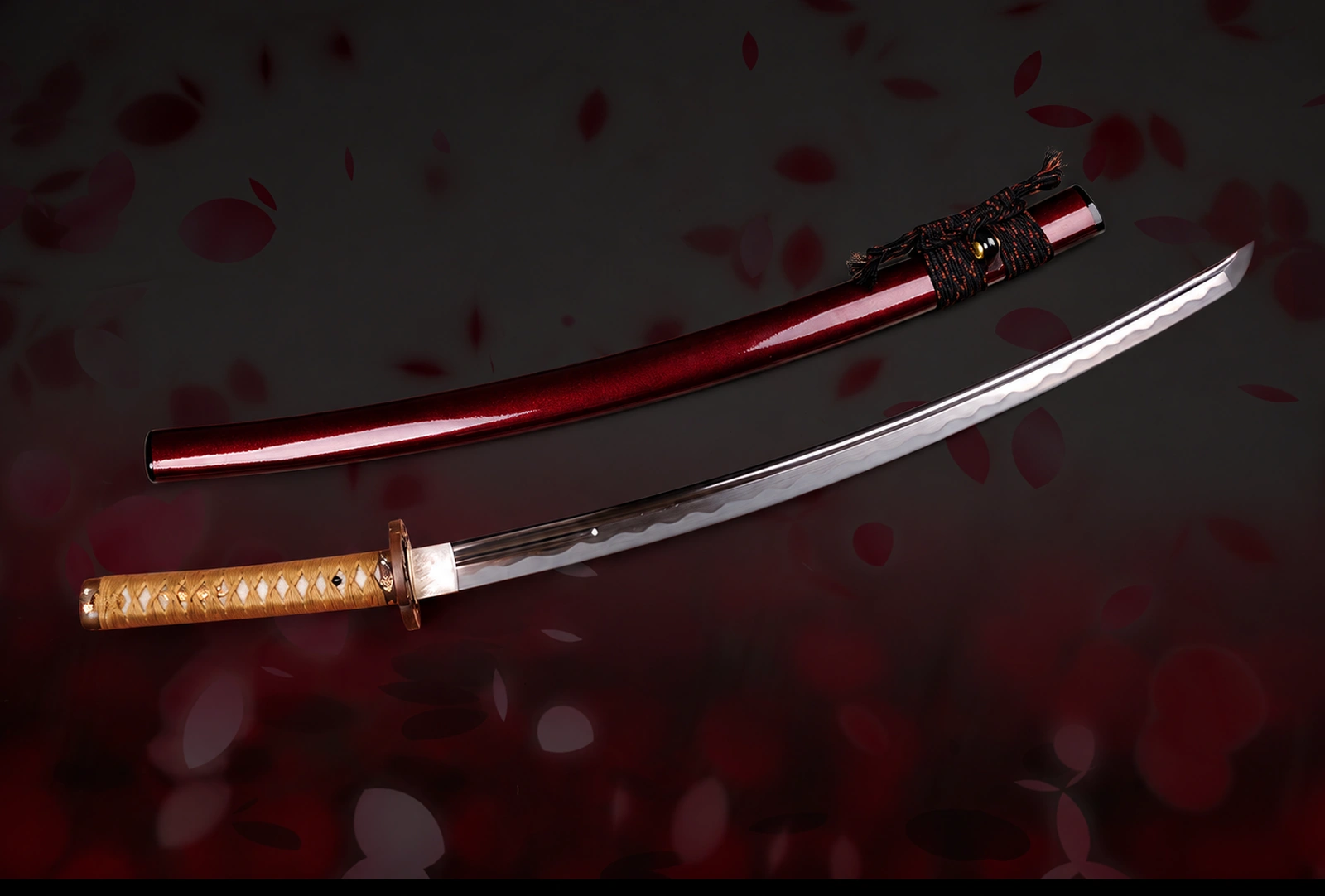
Beneath this classical outline lies a Kobuse construction, combining folded T10 outer steel with a manganese-steel core. Clay tempering produces a Gunome hamon, while an Advanced Polish brings out the contrast between the blade's polished surfaces and its hardened edge.
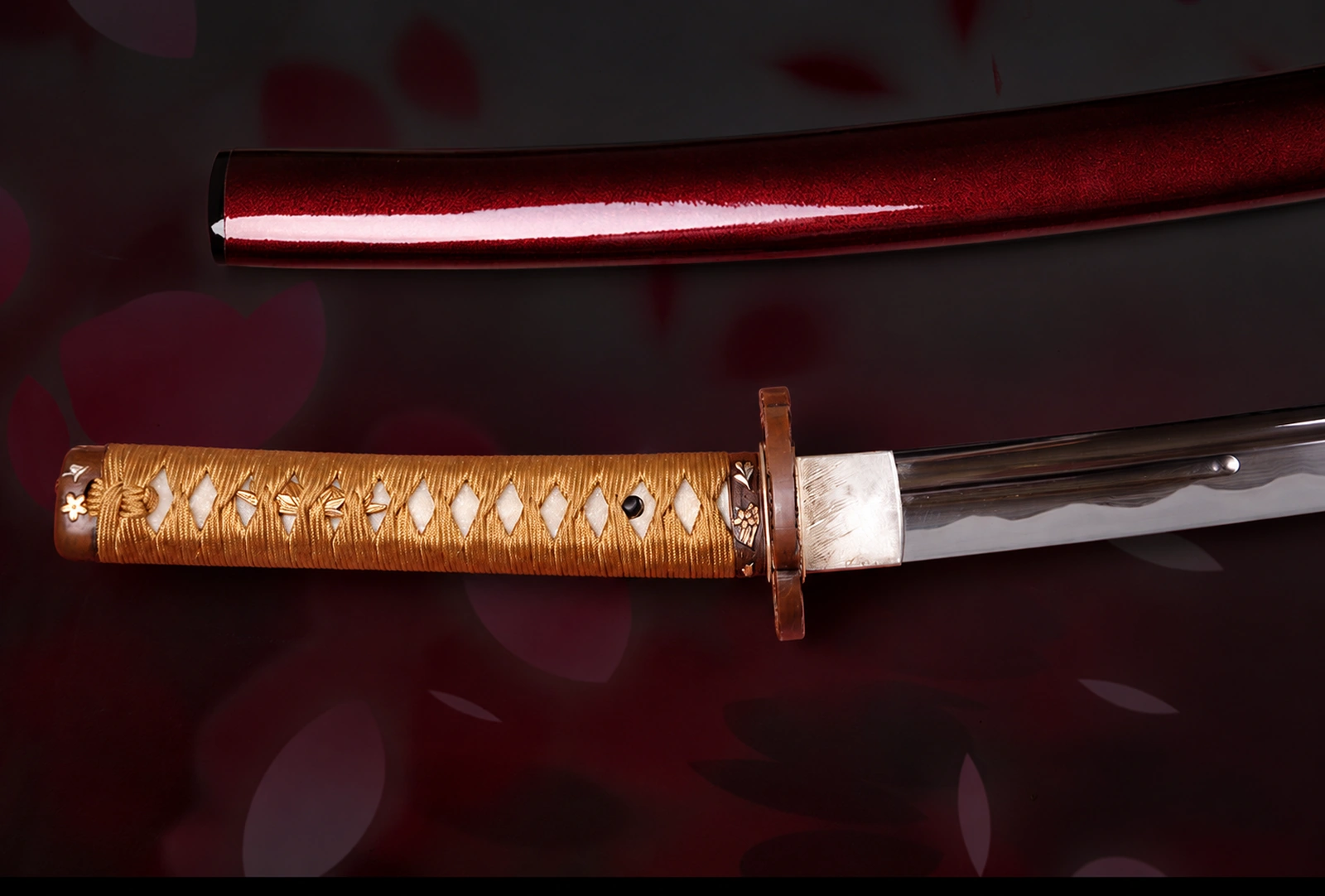
The mounting combines ornate gilt brass fittings with a deep red lacquered saya and black horn details. A handcrafted copper habaki and hand-finished Yasurime reflect the attention given to the blade's assembly and finishing.
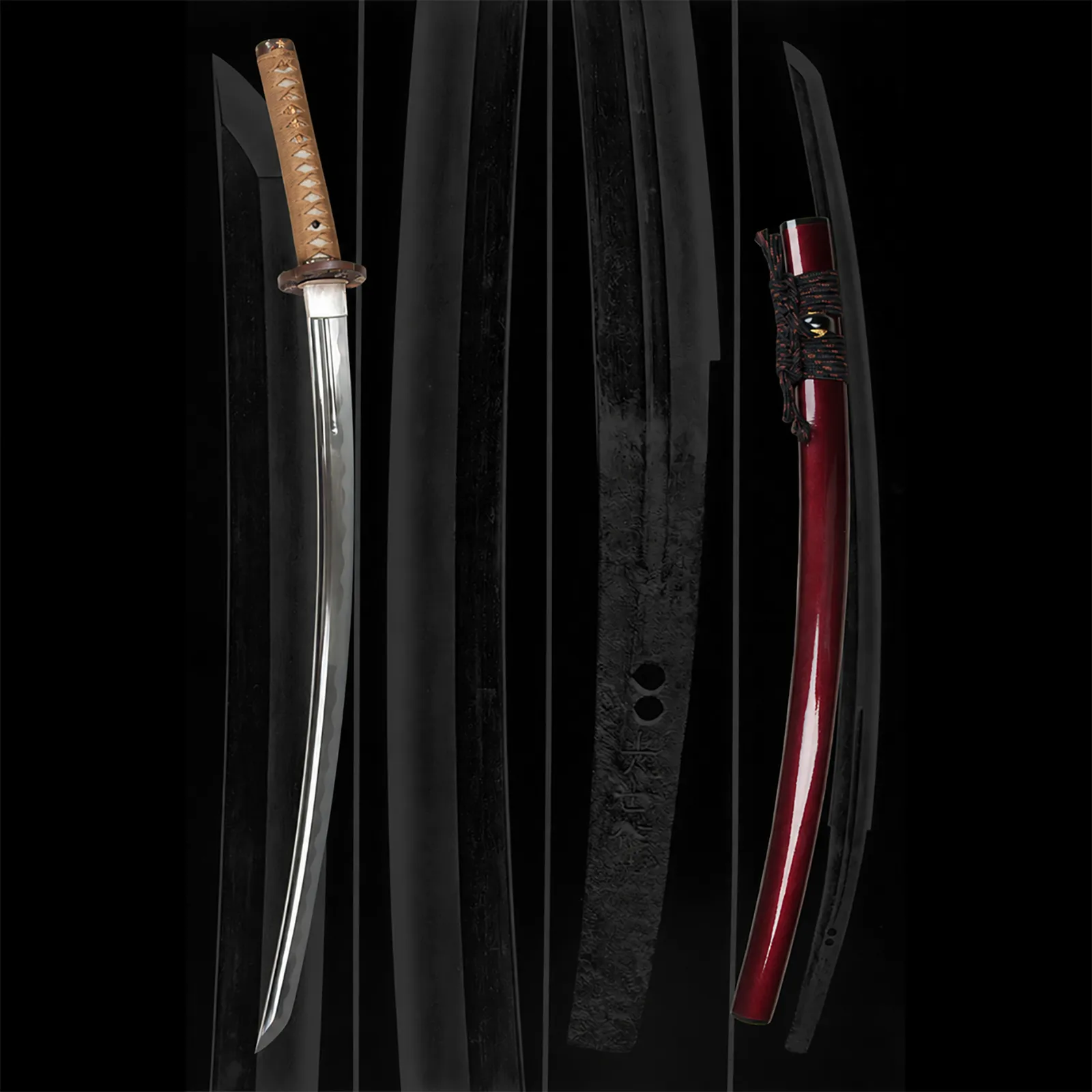
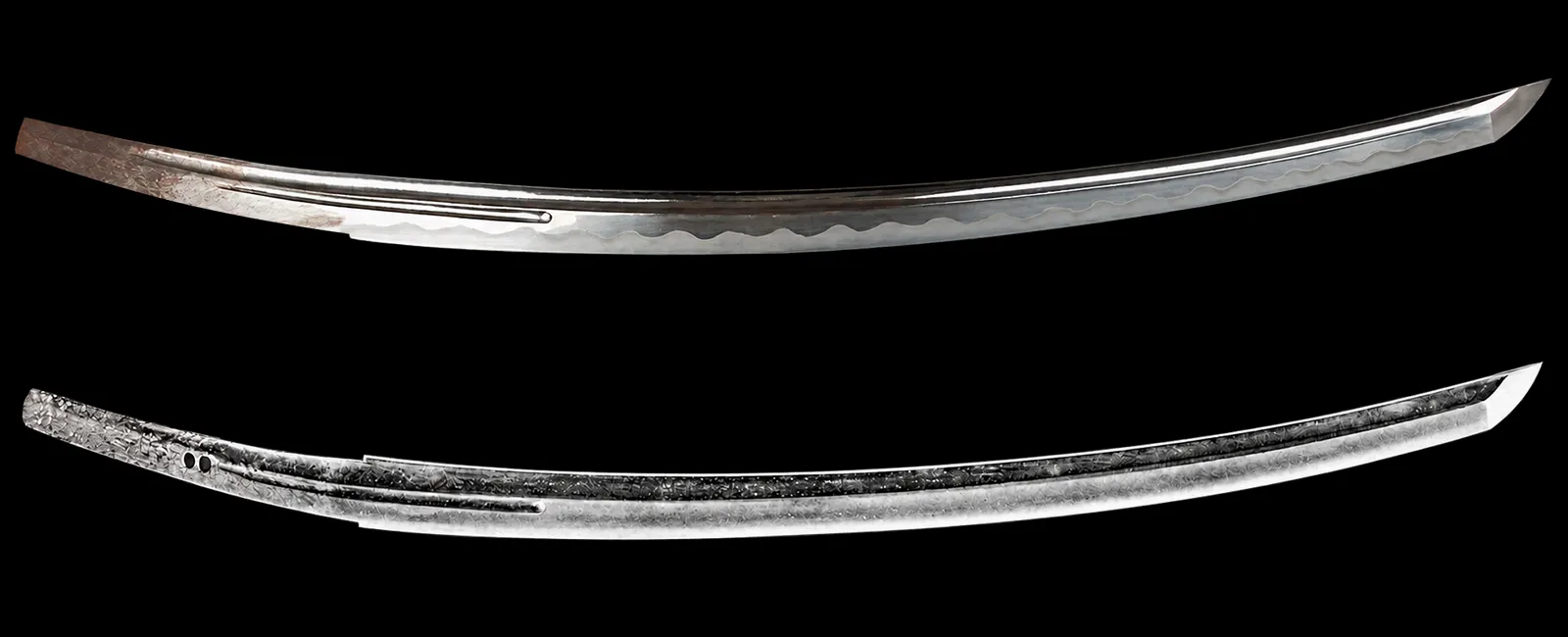
The reference profiles highlight the relationship between the Ōdenta Mitsuyo's historic blade geometry and this contemporary interpretation, with particular attention to curvature, proportions, and overall form.
Lines of Steel. Details of Craft.
From the distinctive grooves of the blade to its sculpted metal fittings and carefully finished mountings, this interpretation of the historic Ōdenta Mitsuyo brings together traditional sword geometry and considered craftsmanship.
A Groove Beside the Groove.
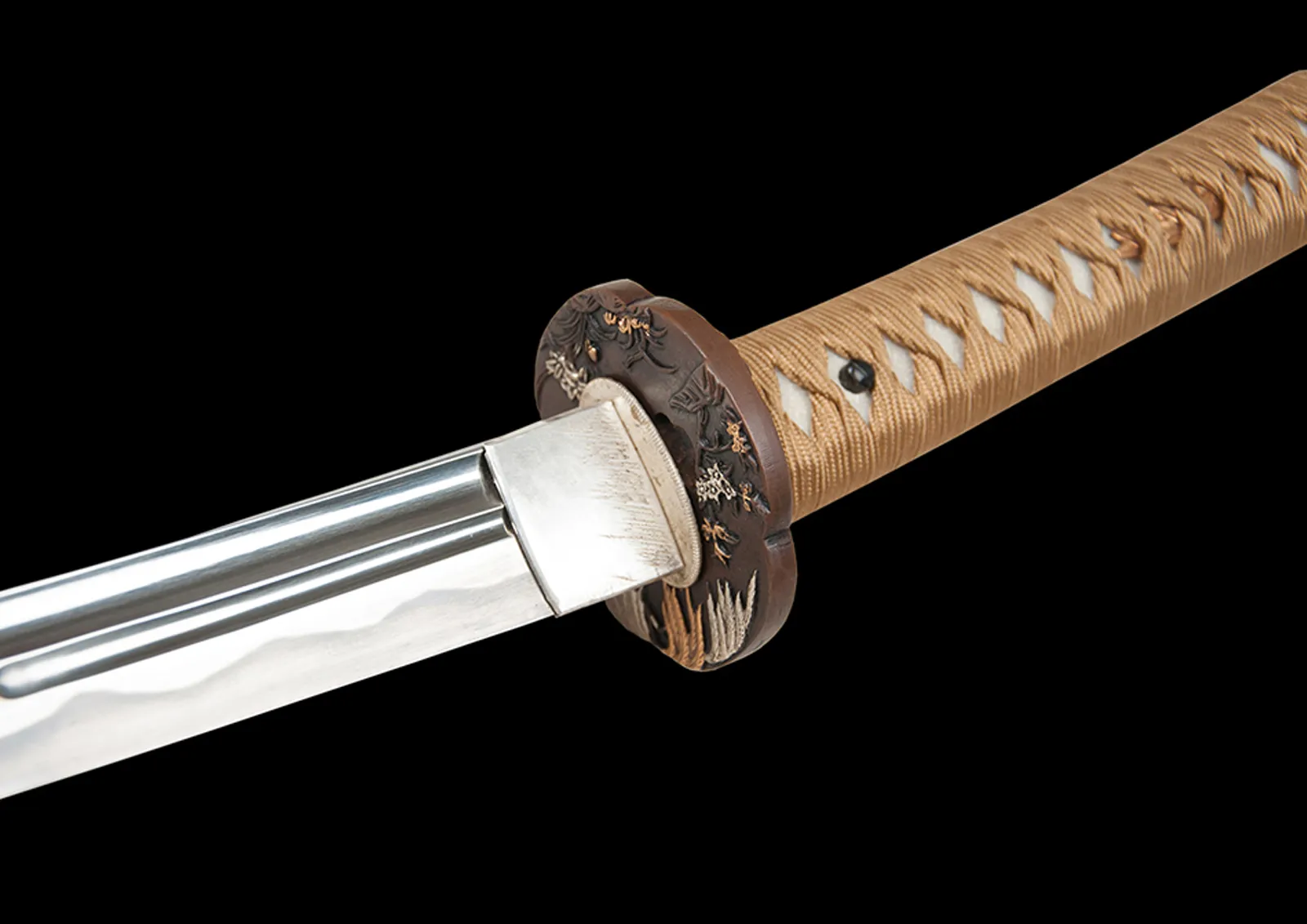
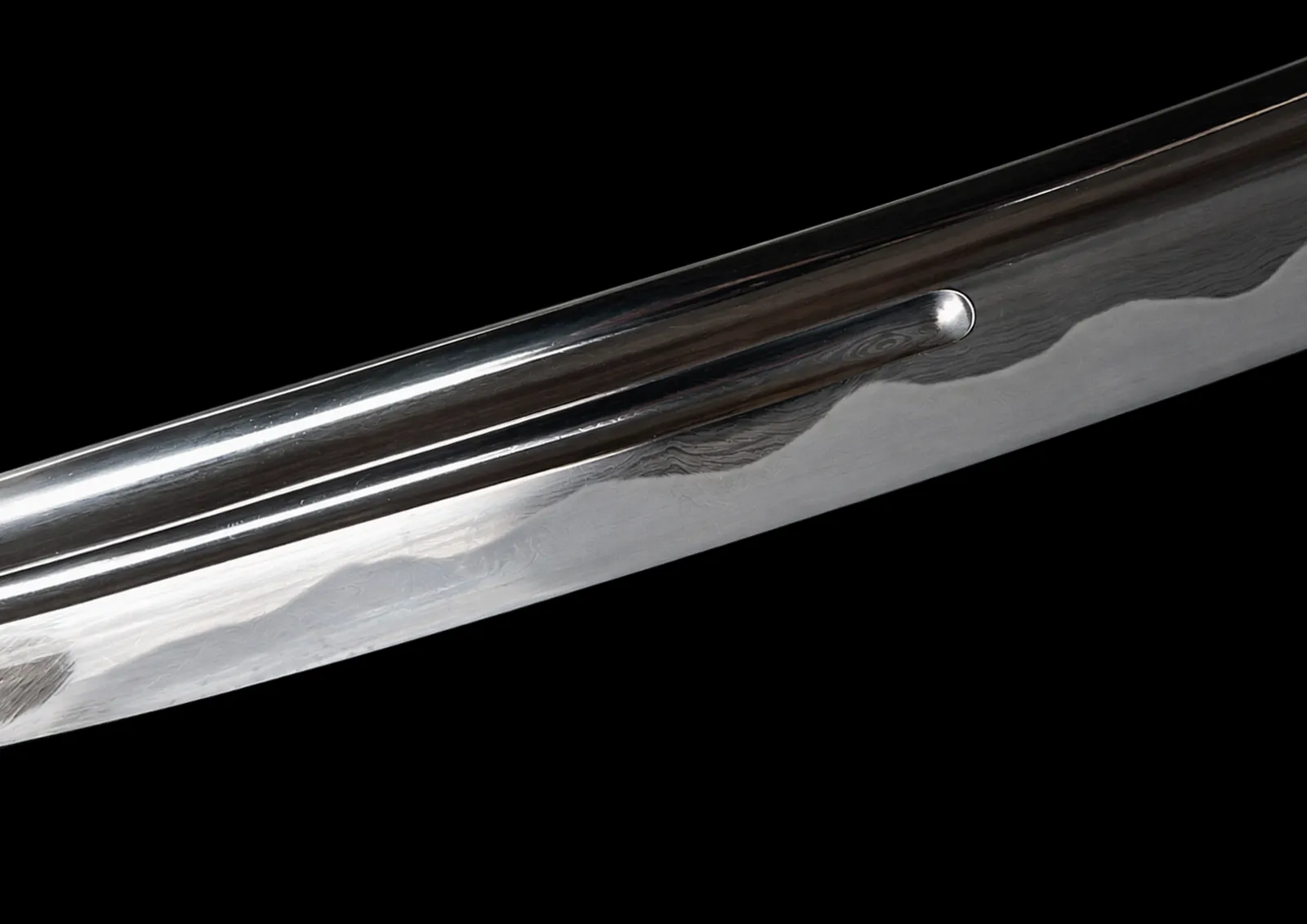
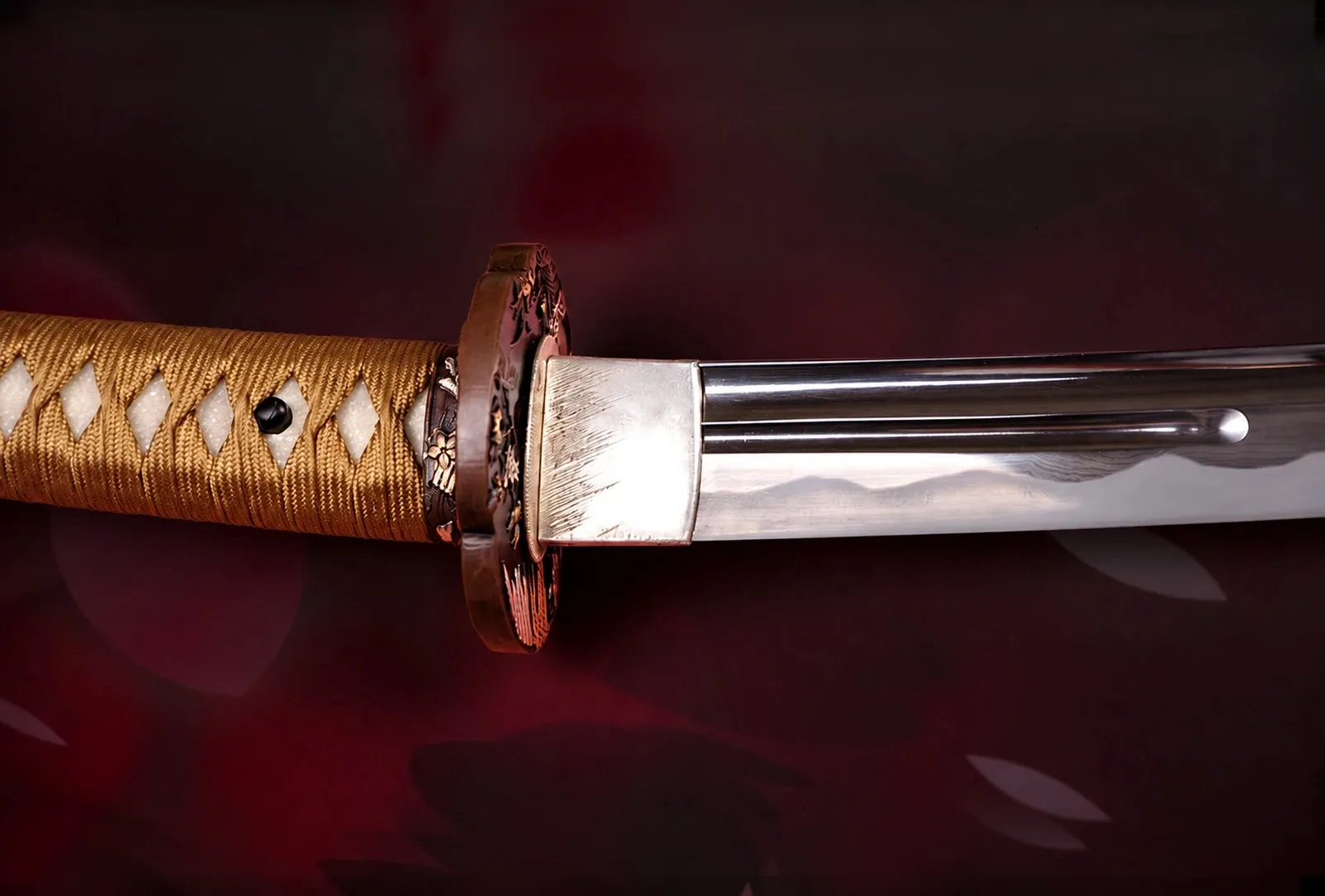
The blade features a broad Bō-hi accompanied by a finer parallel groove, known as Soe-bi. Together, these recessed lines create a distinctive rhythm along the blade, accentuating its curvature and the contrasting reflections of the polished steel.
Geometry in Reflection.
Viewed from another angle, the two grooves catch the light in parallel, drawing the eye along the curvature of the polished blade. The ornate tsuba and fitted habaki complete the transition from sculpted metalwork to steel.
Tradition in Every Detail.
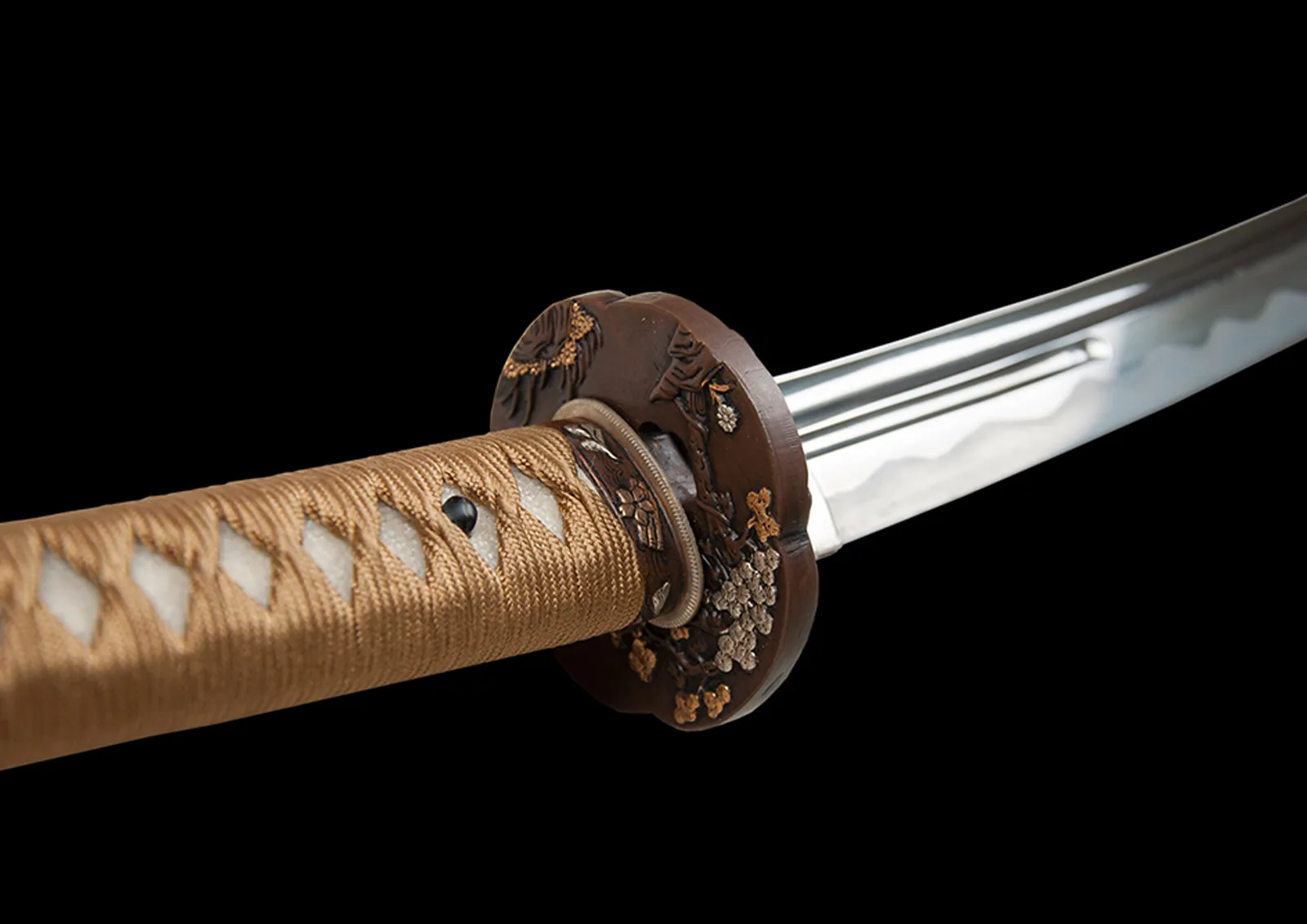
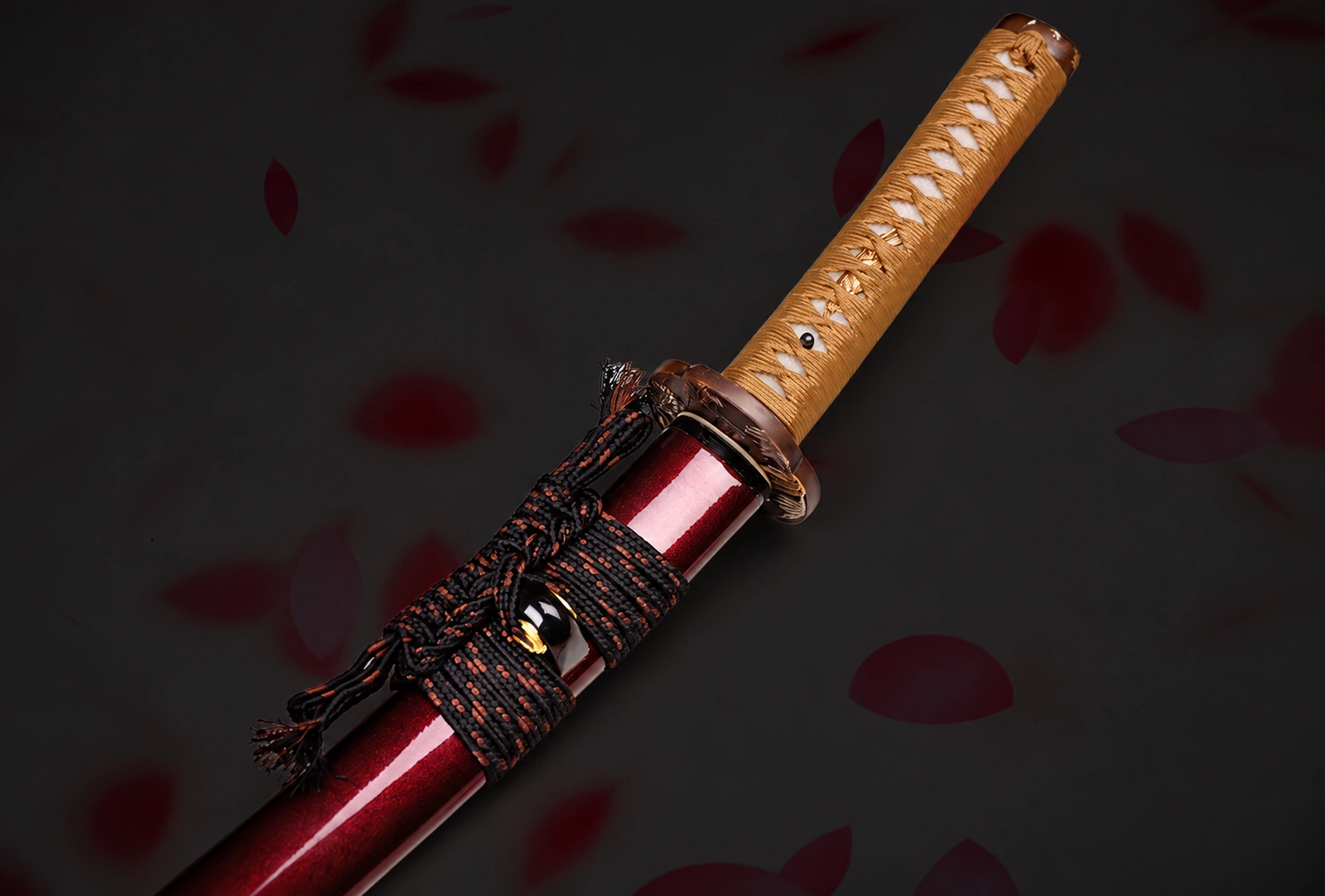
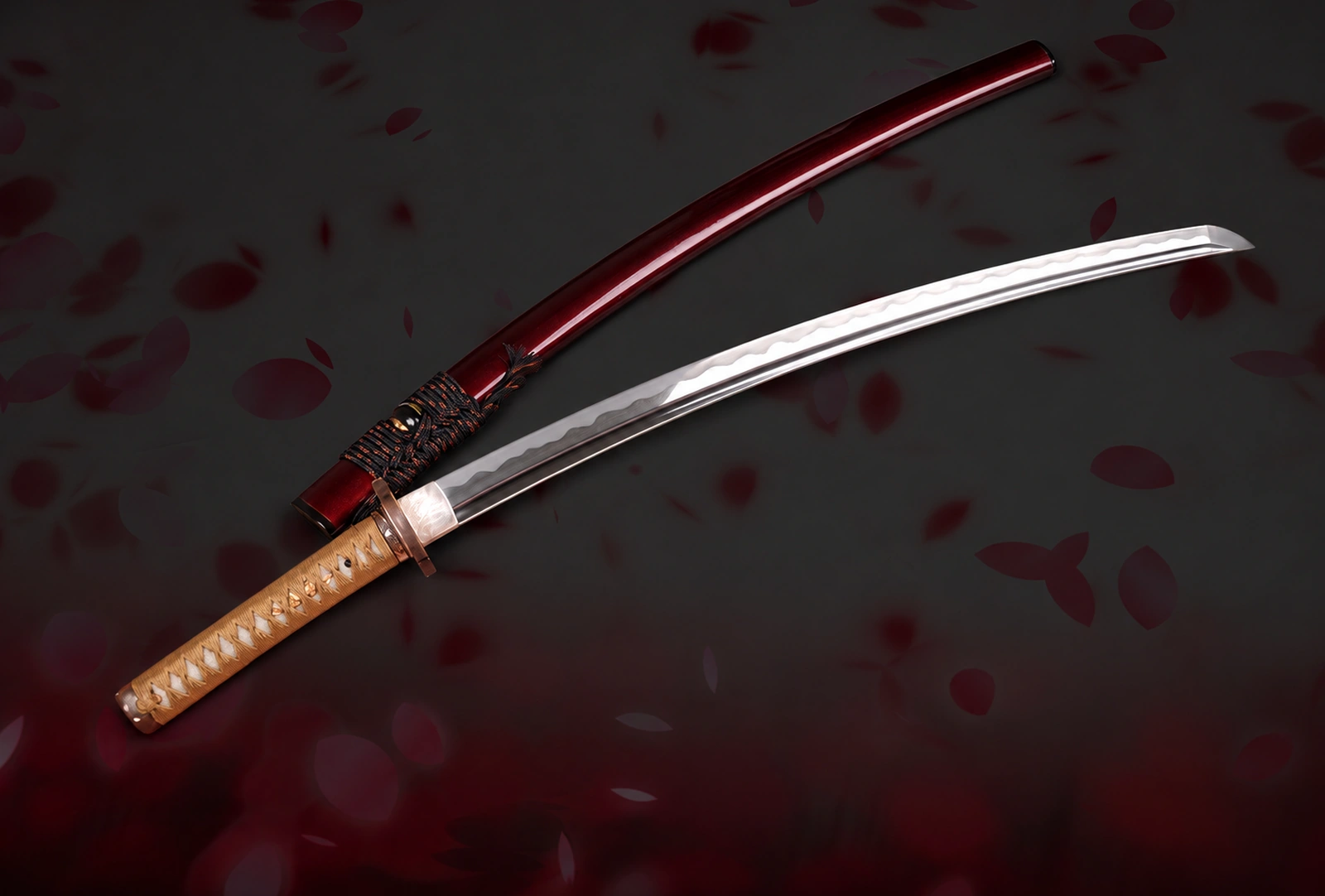
The warm tones of the handle wrapping complement the sculpted metal fittings, while the deep red lacquered saya introduces a restrained contrast. Together, they complete the historic-inspired character of the finished katana.
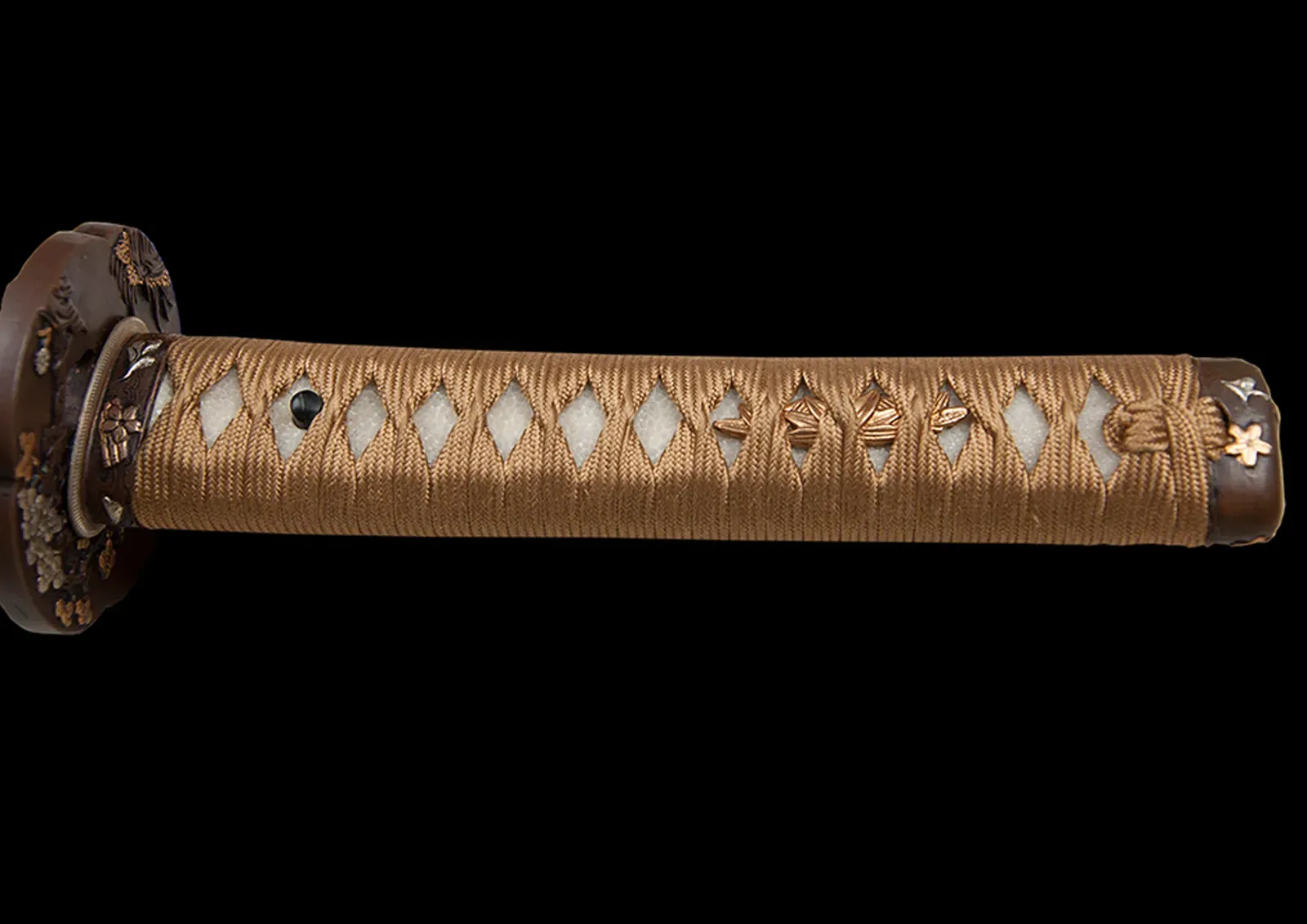
A Carefully Shaped Wrap.
The traditional tsuka-ito wrapping forms a sequence of defined diamond-shaped openings, revealing the white rayskin beneath. Decorative menuki and coordinated metal fittings lend warmth and character to the handle.
Choose the Japanese Silk Tsuka-Ito version for imported Japanese silk wrapping with Hishigami paper shaping, providing a structured diamond pattern and a refined wrapped feel. A domestic tsuka-ito configuration is also available.
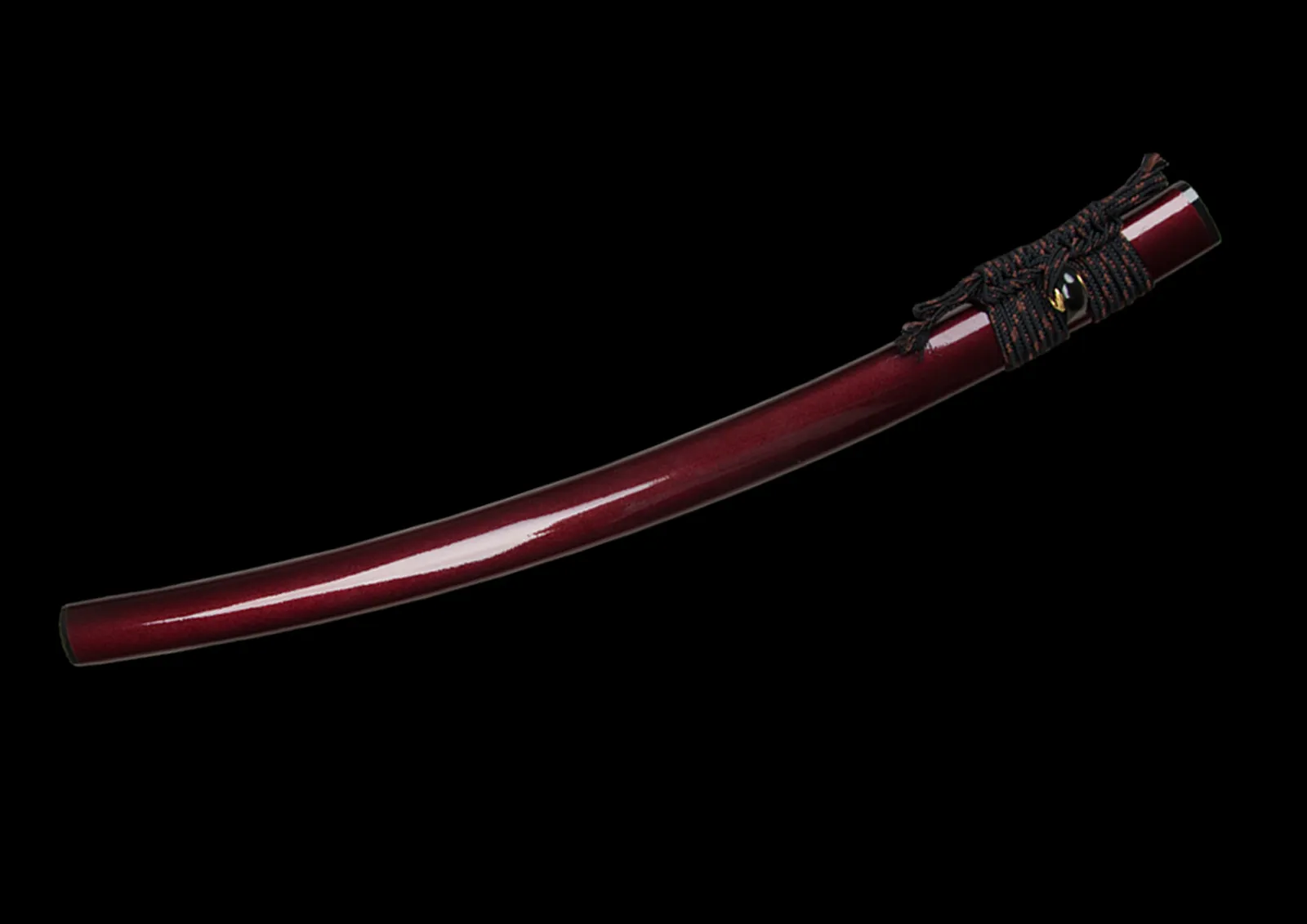
Deep Red. Black Horn.
The deep red lacquered saya is crafted from Qingpi wood, with a smooth finish that follows the blade's flowing curvature. Black buffalo horn is used for the koiguchi, kurigata, and kojiri, bringing durable natural material details to the lacquered wooden scabbard.
Lacquered Qingpi Wood · Black Buffalo Horn · Textured Sageo
Form, Line & Light.
A closer study of the Ōdenta Mitsuyo-inspired blade, from its historic silhouette to the subtle details revealed through steel, curvature, and polish. Each view presents a different aspect of the blade's character.
An Echo of a Historic Blade.
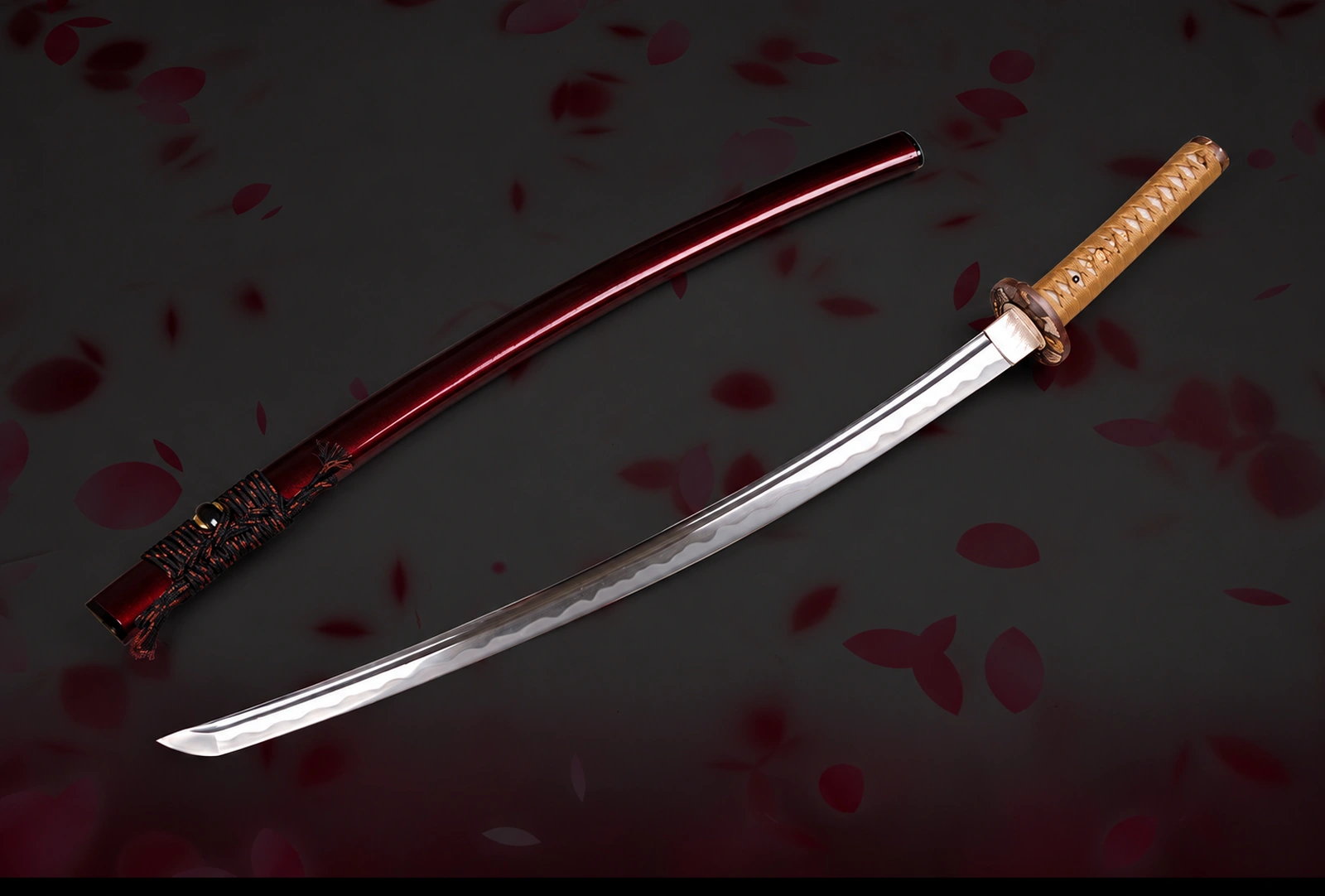
The replica is presented alongside a reference image of the historic Ōdenta Mitsuyo. Its sweeping curvature, elongated profile, and distinctive blade geometry form the inspiration for this contemporary interpretation.
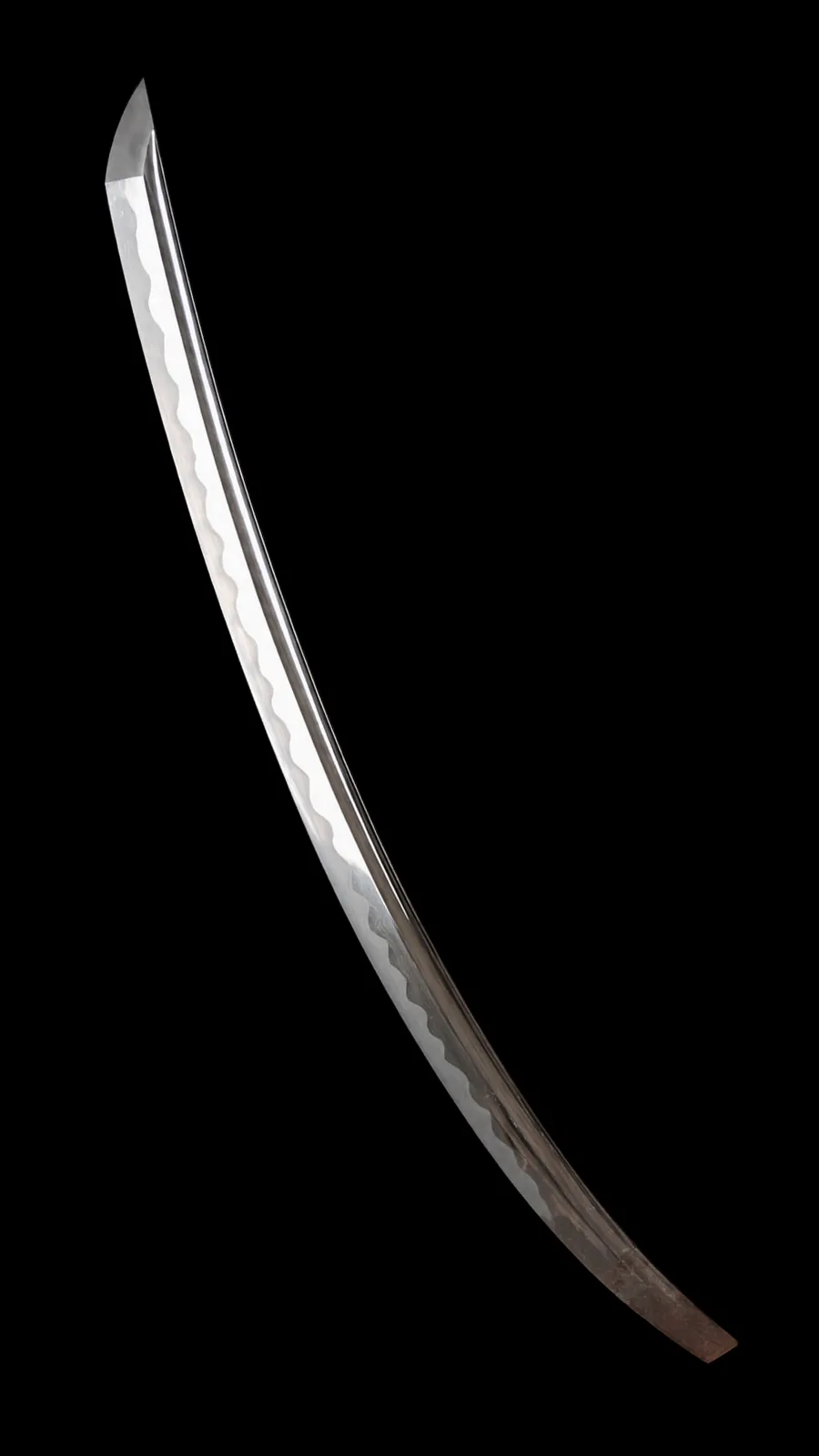
The Shape of a Historic Blade.
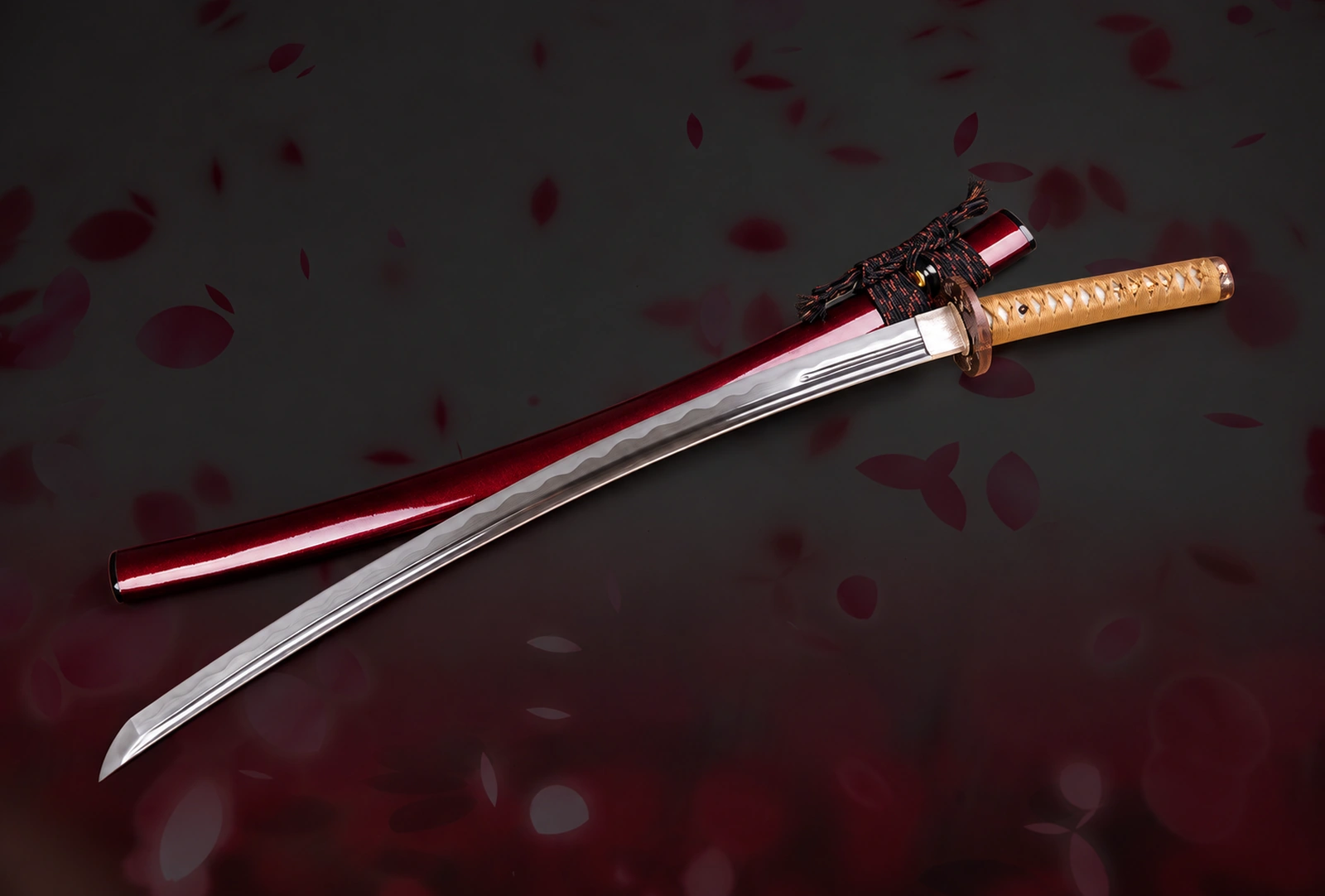
A graceful curvature carries the eye from the base of the blade toward its carefully defined kissaki. The flowing profile reflects the distinctive character of the Ōdenta Mitsuyo design.
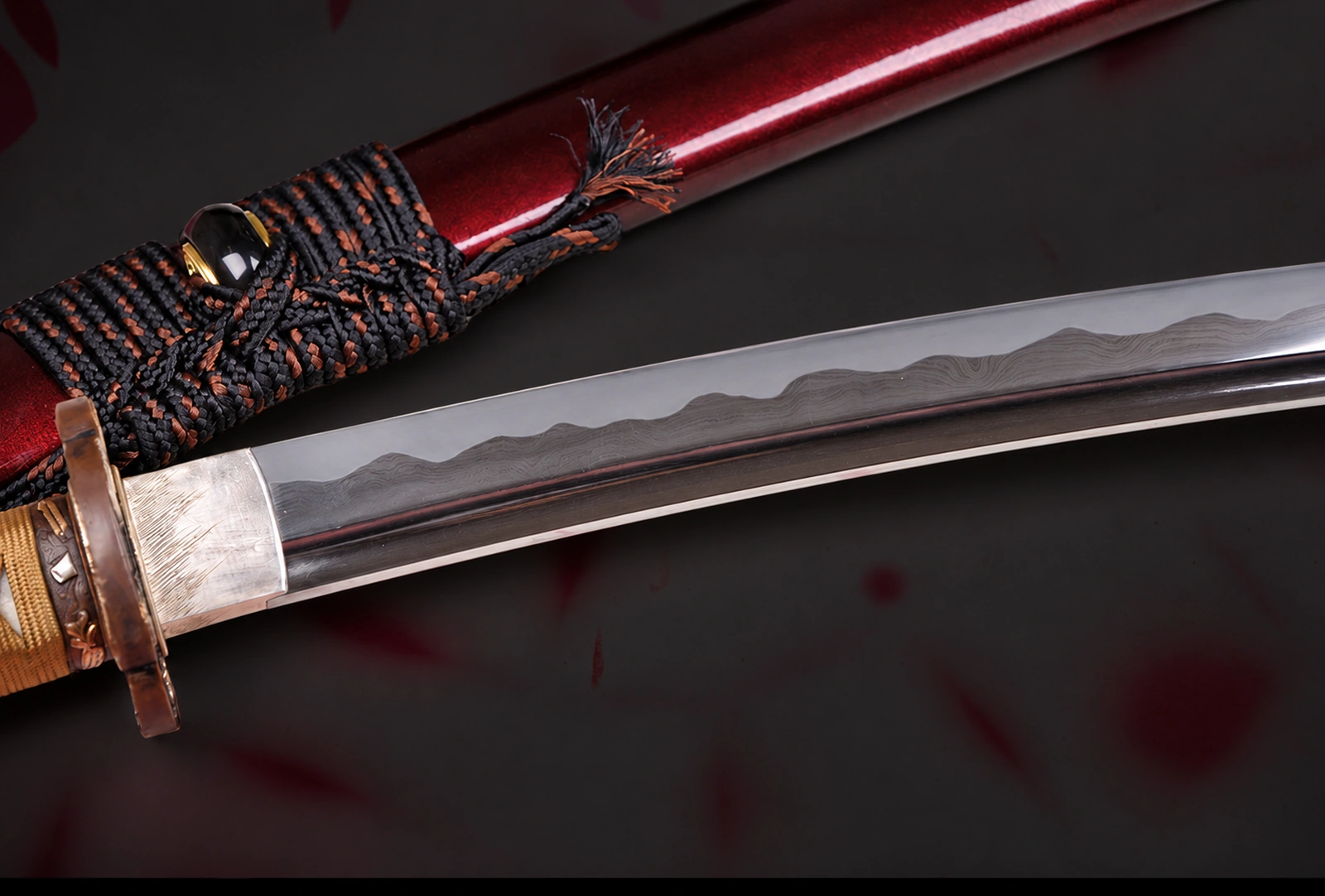
An Advanced Polish reveals the changing surfaces of the steel, bringing together bright reflections, subdued textures, and a clearly visible Gunome hamon.
Grooves in the Light.
Parallel lines of the Bō-hi and Soe-bi guide reflections across the polished surface. Beneath them, the steel reveals subtle layered patterns and the flowing outline of the hamon.
The Hamon Revealed.
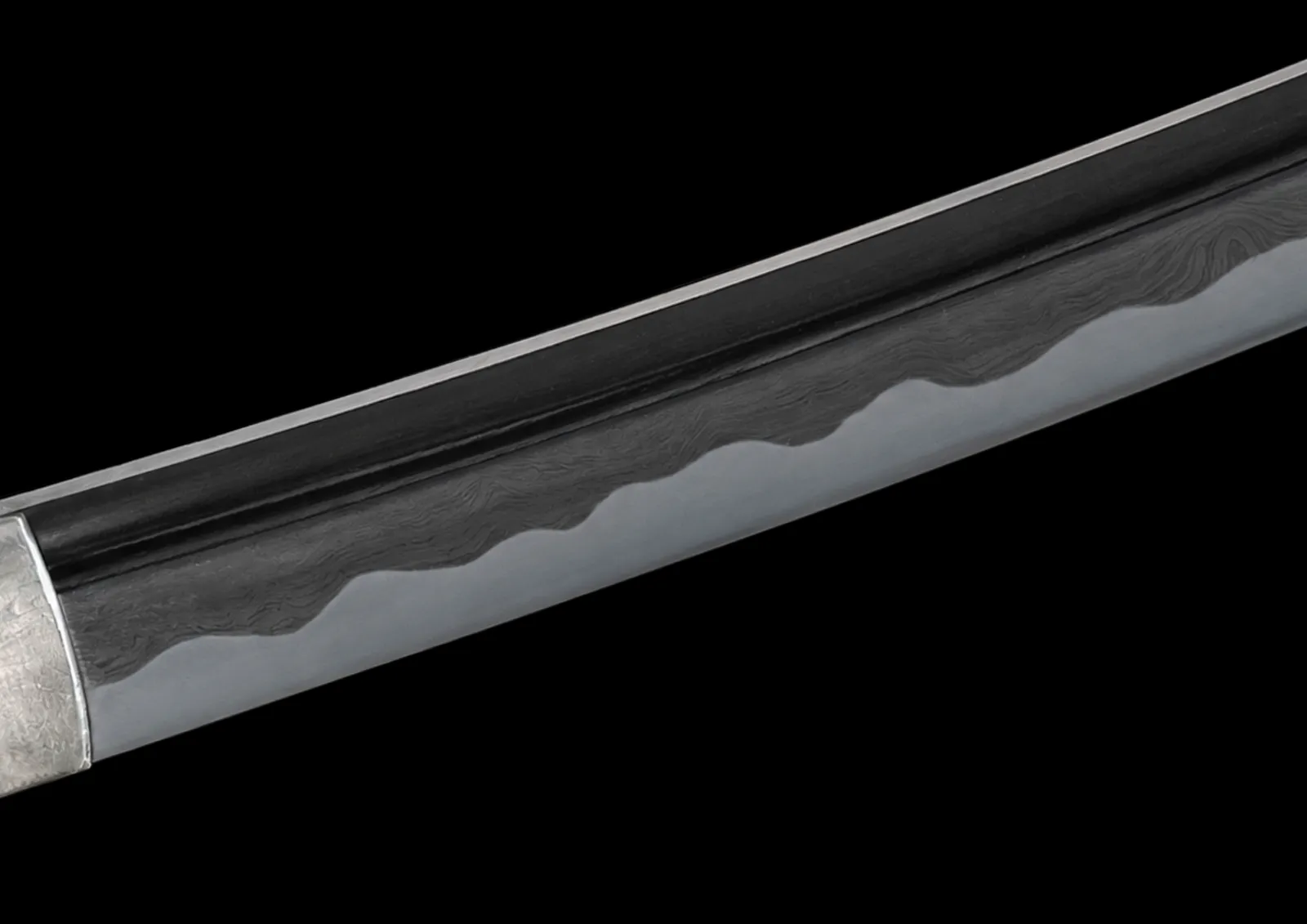
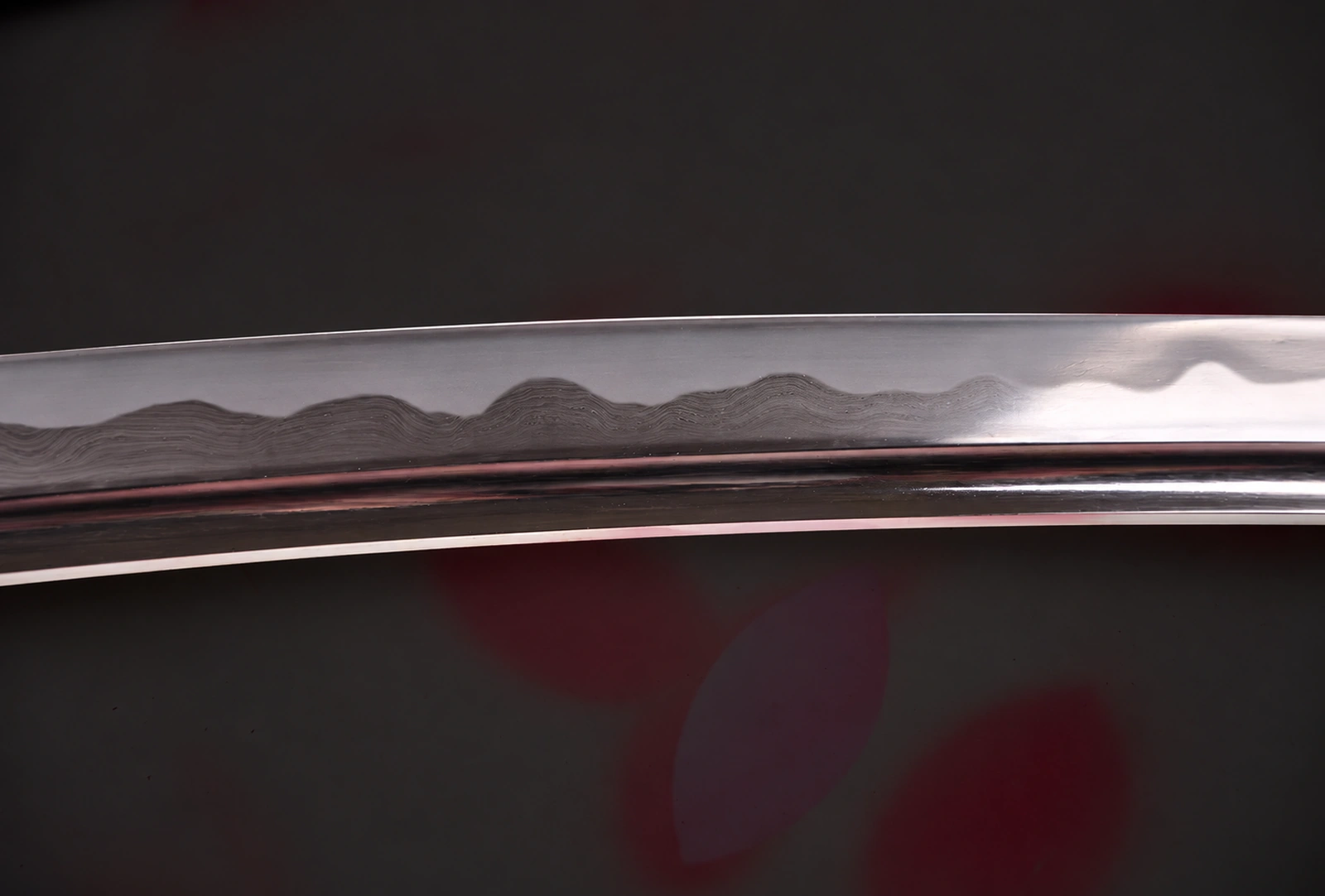
From the opposite face, the Gunome hamon creates a rhythmic boundary along the blade. Fine steel grain and the contrast of the polished surfaces become visible as light moves across the edge.
Crimson & Steel.
A photographic portrait of the Ōdenta Mitsuyo-inspired katana. Polished steel, warm-toned fittings, and a deep crimson saya come together in a series of studies that reveal the character of the blade and its mountings.
Steel Beneath the Light.
A closer view reveals the flowing Gunome hamon and fine patterns within the folded steel. Reflections across the polished surface bring depth to the blade's layered appearance.
A Pattern Revealed by Polish.
The Advanced Polish reveals a rhythm of light and shadow across the steel. The undulating hamon and delicate layered grain create a distinctive surface character.
Reviews
There are no reviews yet.