QUIET CRAFTSMANSHIP · LONGQUAN

Choji-Midare Japanese-Polished Wakizashi

¥2,125.00

WORKSHOP NOTES

Hello everyone, I'm Lao Yan from ZYSWORD.

Today I'm showing our Chōji-hamon wakizashi.

Apart from the Ukiyo series, this is one of my personal favorites.

The fittings shown here aren't the standard configuration. The customer chose them.

The blade took longer than expected, so I included a complimentary upgrade with hishigami paper under the handle wrap.

The highlight of this sword is its beautiful clay-tempered hamon and the clear steel grain revealed by polishing.

I'll move the camera closer so you can see these details.

At the time of filming, we were only making the wakizashi. The heat treatment required very precise temperature control.

The longer katana blades had been cracking during hardening.

Back then, I hoped we'd be able to offer a full-length version in the future.

Let's take a close look at the blade under normal lighting.

Even in ordinary light, the hamon is clearly visible.

The overall polish looks clear and smooth, with a soft luster.

As I turn the blade, the hamon becomes even easier to see.

The clay-tempered pattern really is the highlight of this sword.

This particular order also has an upgraded saya, customer-selected fittings, and hishigami paper under the handle wrap.

Even under normal lighting, the blade has a striking appearance.

Now I'll switch to stronger lighting so we can see the finer details.

The brighter light is a bit harsh, but it helps reveal the blade's surface.

Let's look closer. If clay tempering is a sword's main feature, the results need to be convincing.

Now let's move closer to the pear-skin-like steel surface texture.

The pattern has a lively, irregular flow. It doesn't look stiff or mechanical.

Here you can clearly see fine ko-nie particles along the hamon.

Some of these particles form streaks known as sunagashi.

On the other side, there are also dense clusters of fine ko-nie.

They're the tiny bright dots near the hamon.

The overall effect is remarkably vivid.

This combination of hamon and polishing was still quite uncommon in Longquan.

That's why I like this sword so much. I even made one to display in my study.

Look again at how clear the steel grain appears.

I'll switch back to normal lighting now.

One more thing about the fine details shown here, such as the sunagashi near the hamon.

I deliberately didn't list those details as guaranteed features on the product page.

I can't make sure every blade will show the same nie particles, although the overall finish will be there.

I haven't deliberately retouched or recolored the photos on my original product page. I want buyers to see what they'll get.

If an individual blade turns out even better, consider that a pleasant surprise.

To be clear, I can't guarantee nie on every blade, but I can guarantee at least the appearance shown in the product description.

I also hope to add longer videos for more of our sword models.

That's all for today. Thanks for watching, and goodbye.

Technical Overview

Core specifications.

Nagasa
500 mm
Motohaba
32 mm
Motokasane
7 mm
Tsuka Length
200 mm
Overall Length
730 mm
Weight without Saya
721 g
Weight with Saya
880 g
Handmade product dimensions may vary slightly.
Blade & Craft

Blade craftsmanship.

Blade Material
Proprietary Steel Formula
Heat Treatment
Clay Tempering
Hamon
Clay-Tempered Hamon
Hamon Pattern
Chōji-midare
Polish
Japanese-Style Polish

Description

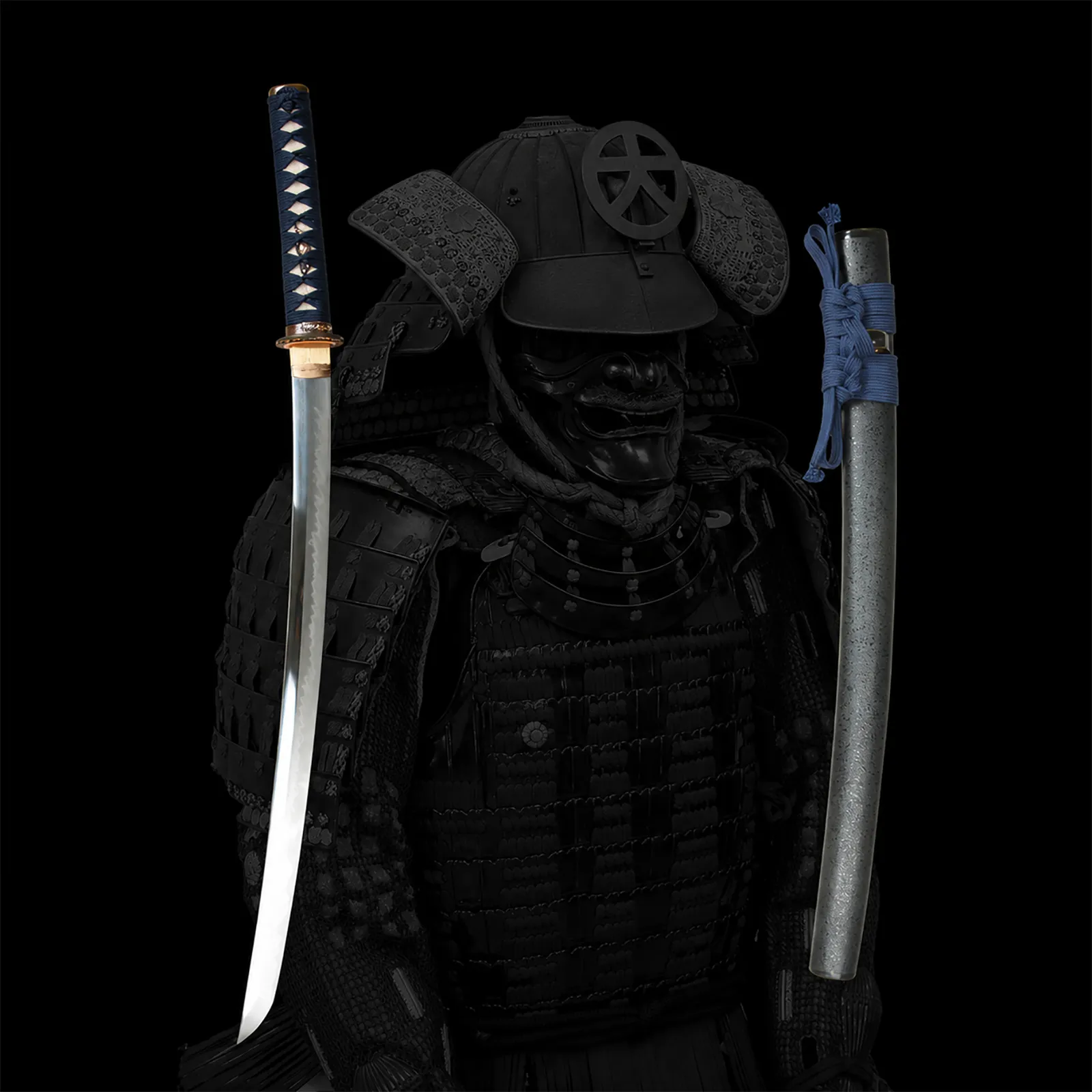
Chōji-midare Wakizashi displayed with traditional black samurai armor, a blue-wrapped handle, and a textured gray saya against a dark background.
01 / THE WAKIZASHI

A Short Blade. A Lasting Presence.

Against the shadow of samurai armor, the Chōji-midare Wakizashi reveals its distinctive character through a compact blade, deep-blue handle wrapping, and a textured gray saya. Its restrained appearance draws attention to the proportions and details of the sword itself.

Beyond its form, the blade features differential clay hardening and Japanese-style polishing, revealing the flowing character of its hamon. Subtle variations in the hardening pattern give each finished blade its own individual expression.

02 / THE CRAFT

Details Beneath the Surface.

The Chōji-midare Wakizashi brings together traditional sword fittings, a deep-blue handle wrapping, and a distinctive gray scabbard. Beyond these details, its character emerges through differential clay hardening and the subtle contrasts of Japanese-style polishing.
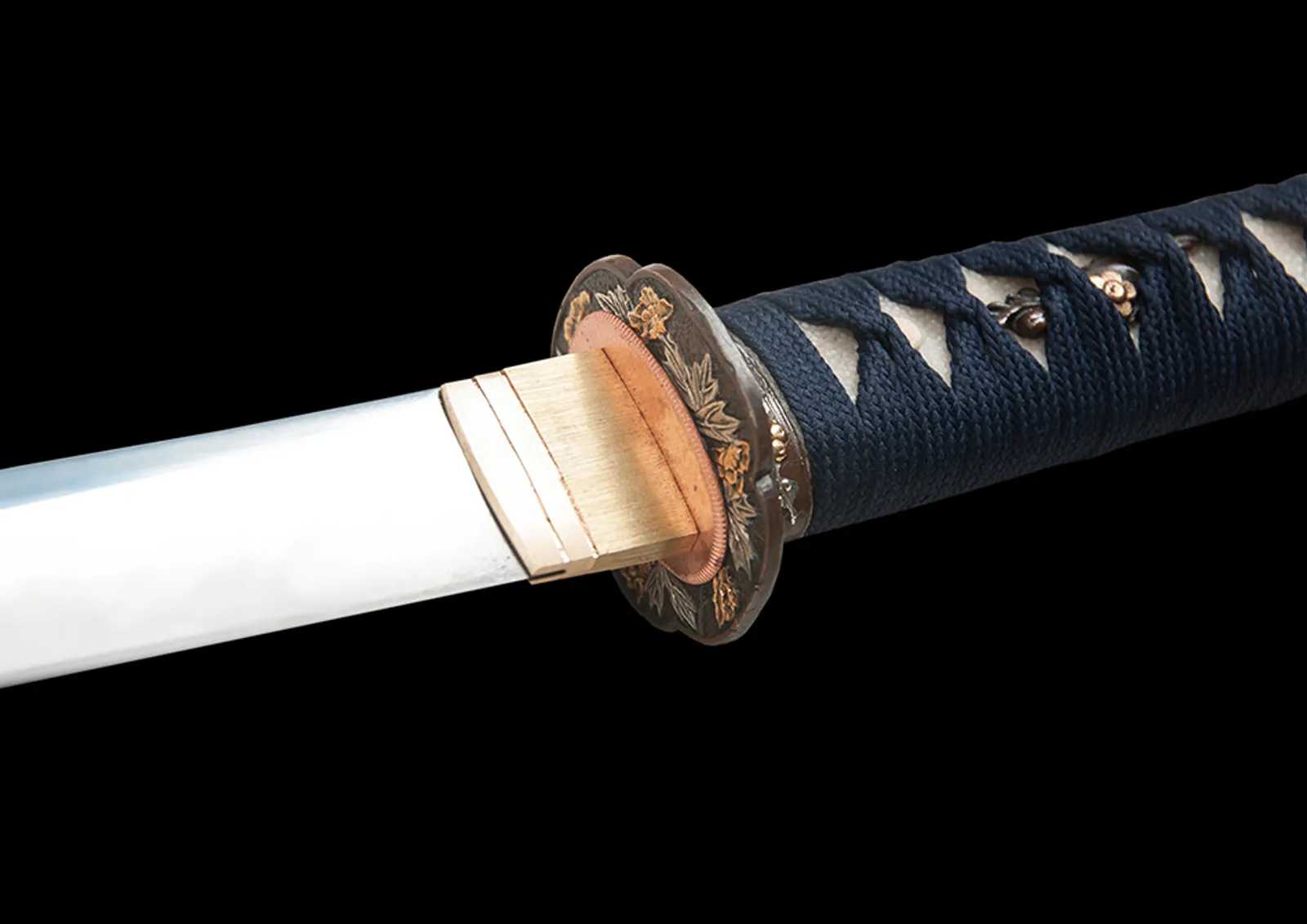
Chōji-midare Wakizashi close-up showing the decorated tsuba, brass habaki and deep-blue handle wrapping.
THE FITTINGS

An Ornate Touch.

The decorated tsuba features warm metallic detailing that contrasts with the deep-blue handle wrapping. A brass habaki completes the transition between the blade and its traditional fittings.
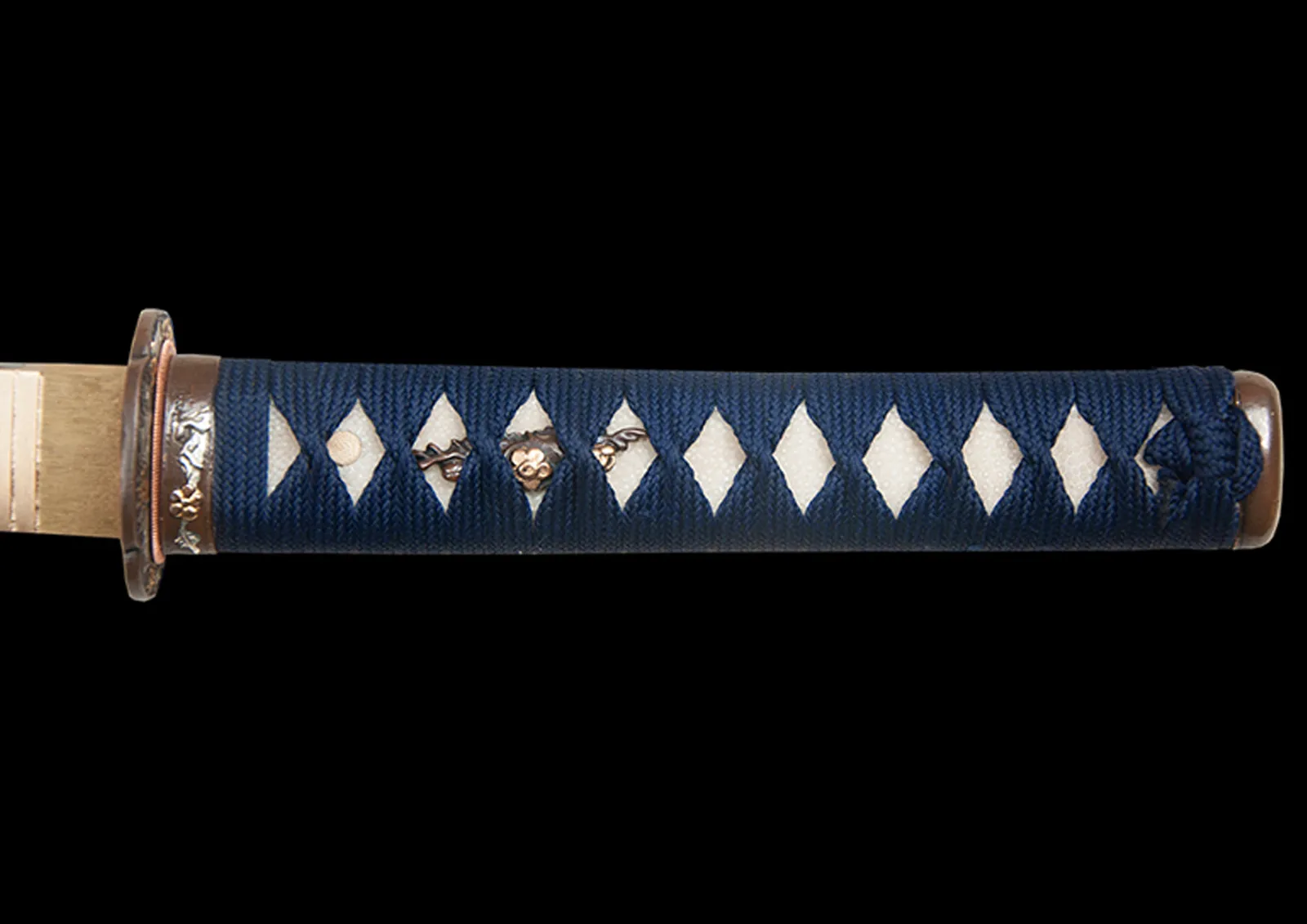
Deep-blue tsuka-ito wrapping on the Chōji-midare Wakizashi with diamond openings, pale rayskin and decorative menuki.
THE HANDLE

A Study in Blue.

Deep-blue tsuka-ito follows a traditional diamond wrapping pattern, revealing pale samegawa beneath. Decorative menuki introduce small metallic accents within the repeating rhythm of the grip.

THE SCABBARD

Texture in the Quiet.

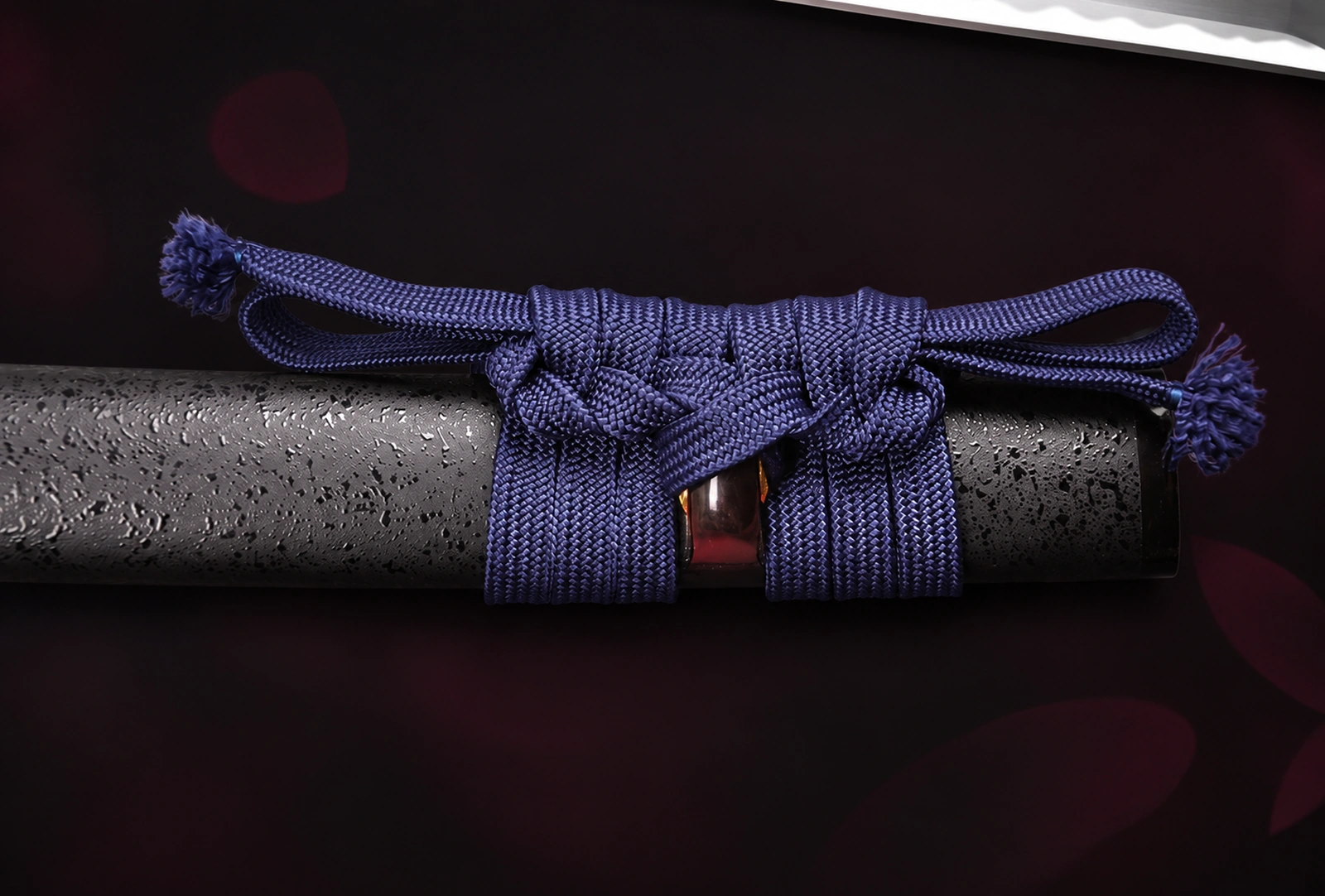
The gray saya carries a subtly speckled surface, paired with a deep-blue sageo. Its restrained texture complements the handle wrapping and gives this wakizashi a cohesive, understated appearance.
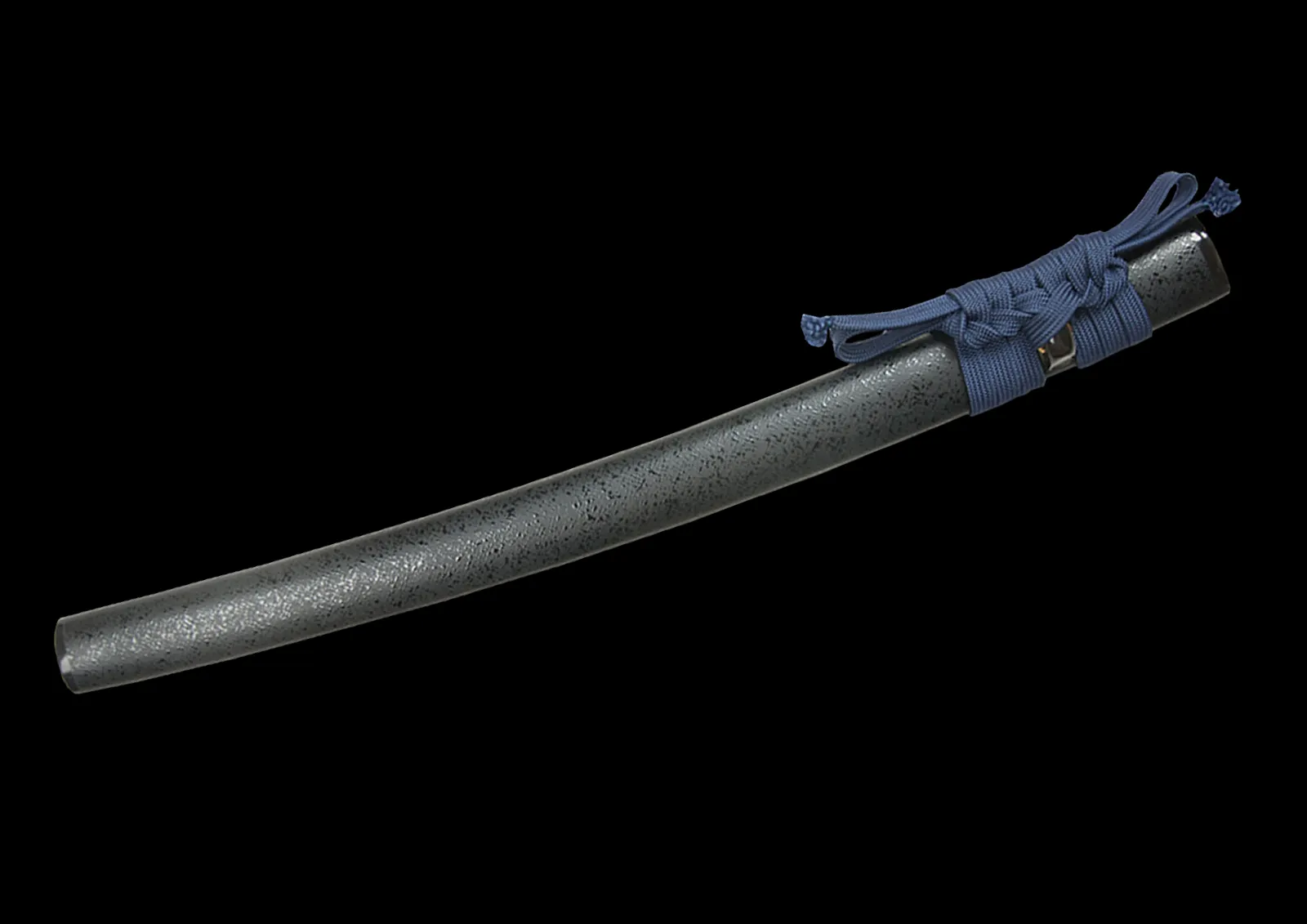
Speckled gray saya of the Chōji-midare Wakizashi with a deep-blue sageo tied near the scabbard opening.
03 / JAPANESE-STYLE POLISHING

Where Light Meets Steel.

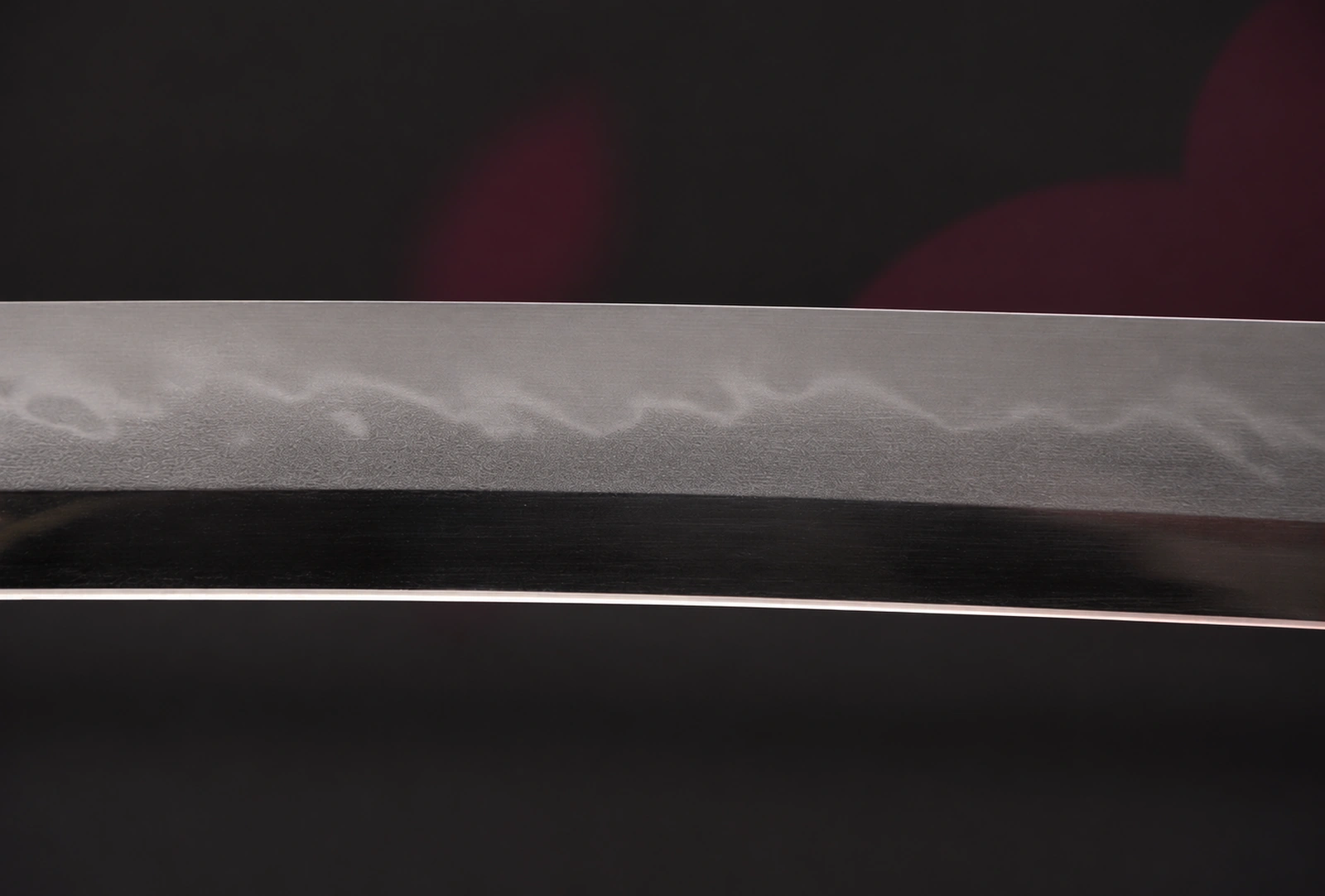
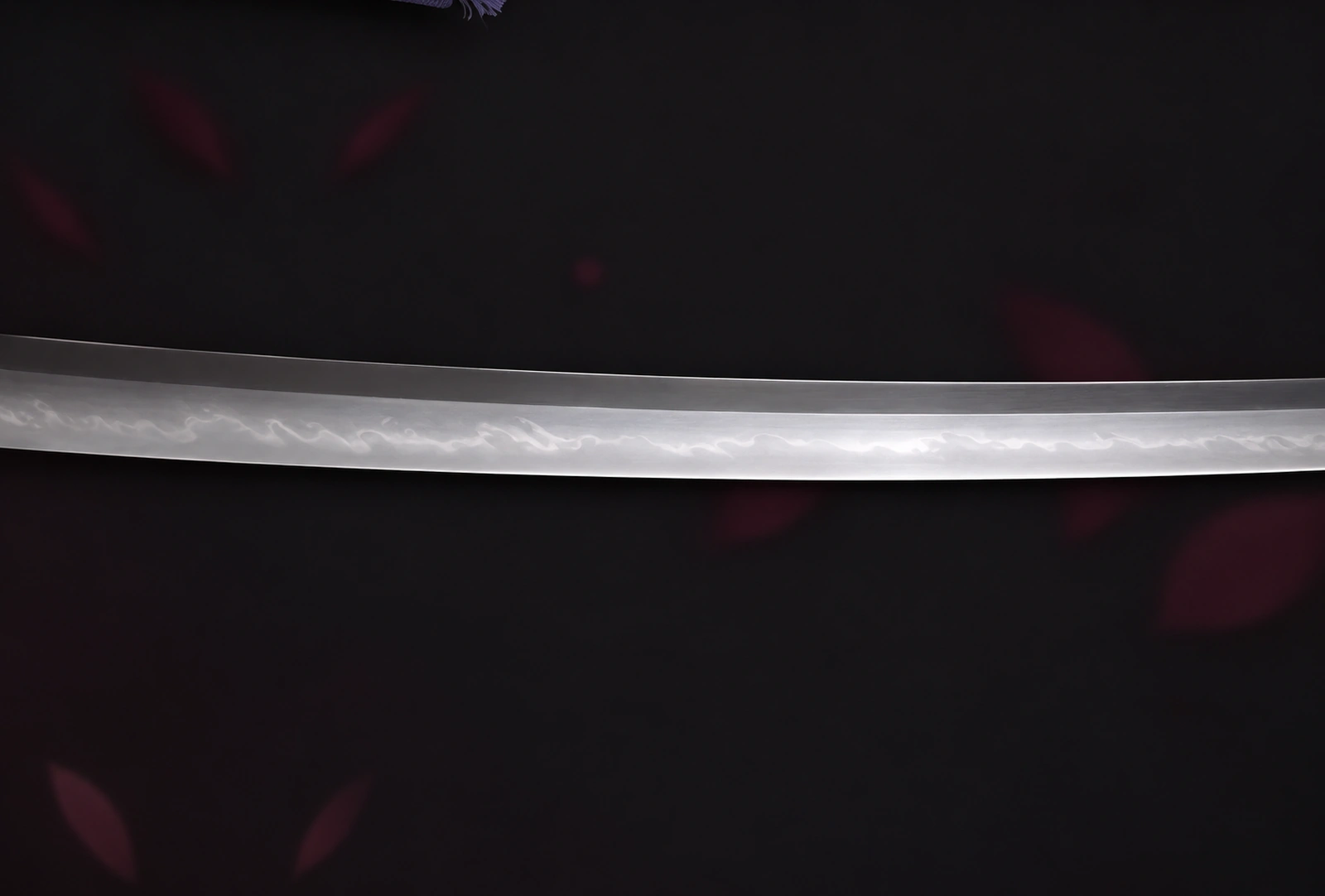
Japanese-style polishing brings out the contrast between the bright cutting-edge region and the subdued gray surface of the blade. The finish reveals subtle jihada and the layered visual character of the hamon formed through differential hardening.
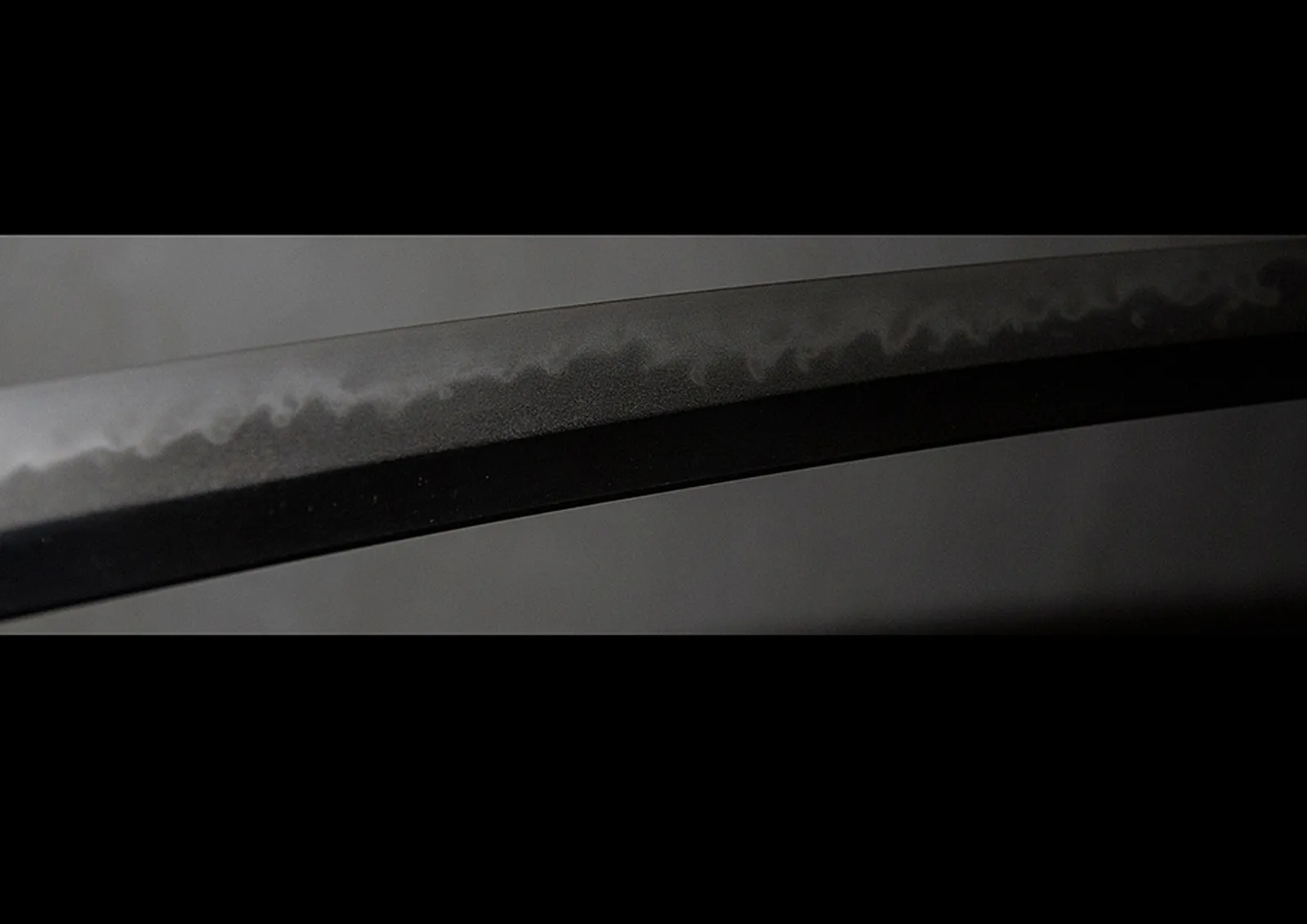
Chōji-midare Wakizashi blade close-up showing Japanese-style polishing, contrasting steel tones and an irregular clay-tempered hamon.
Japanese-style polishing reveals contrasting tones between the cutting edge and blade surface.

The transition from the brighter edge to the darker steel surface brings the hardened pattern into view. Rather than relying on a decorative surface line, the blade displays a hamon developed through differential clay hardening.

THE BLADE TIP

The Pattern Continues.

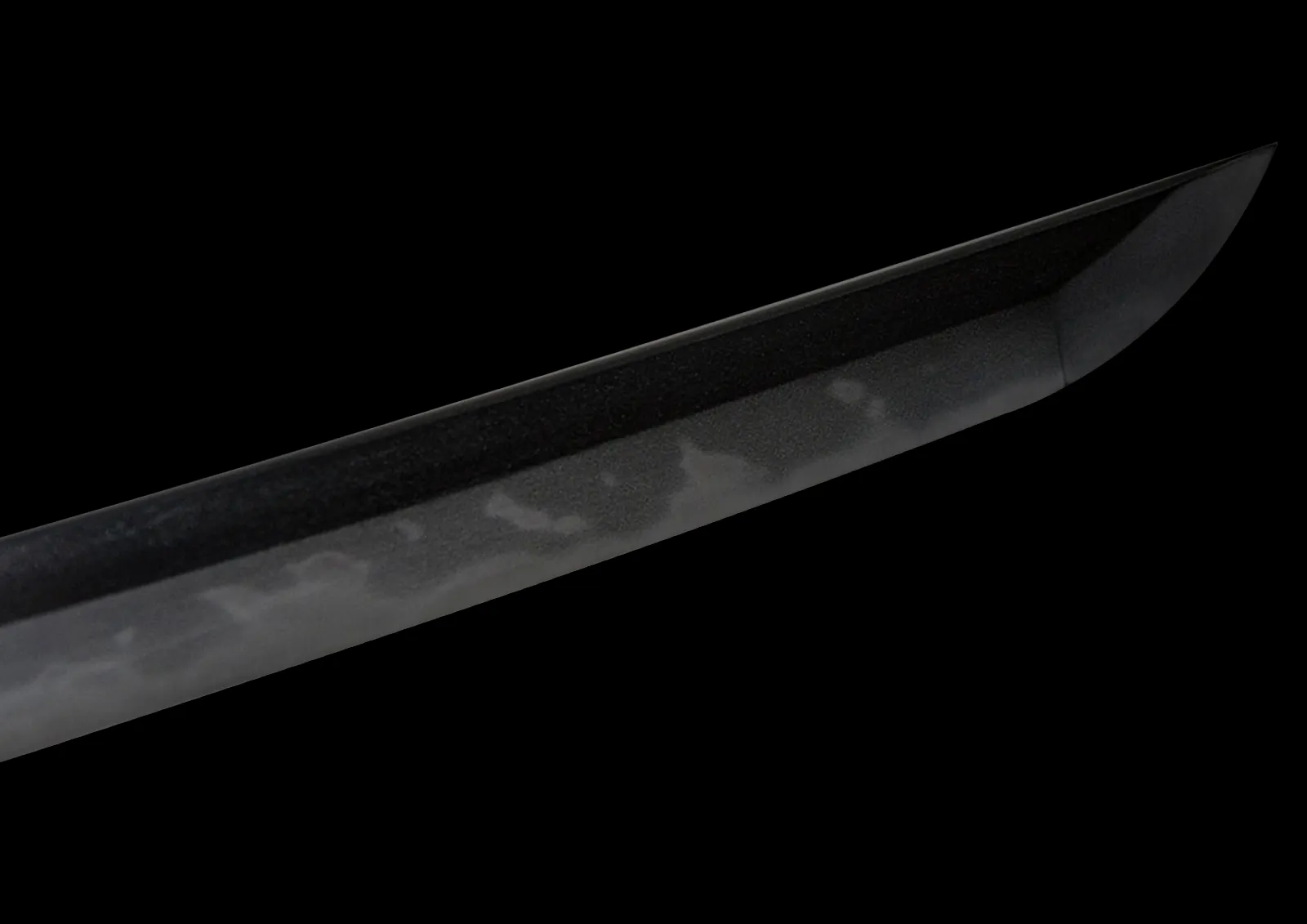
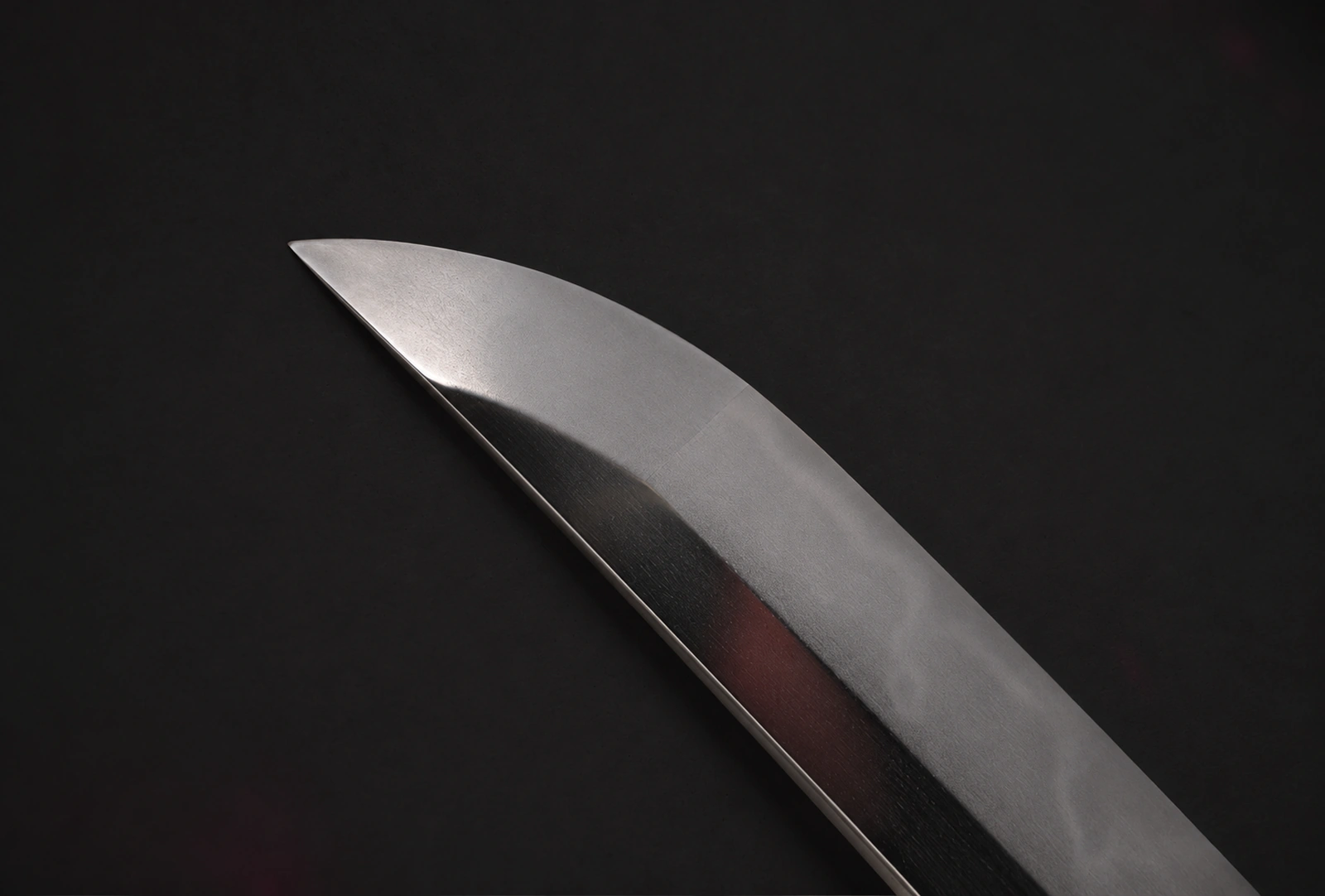
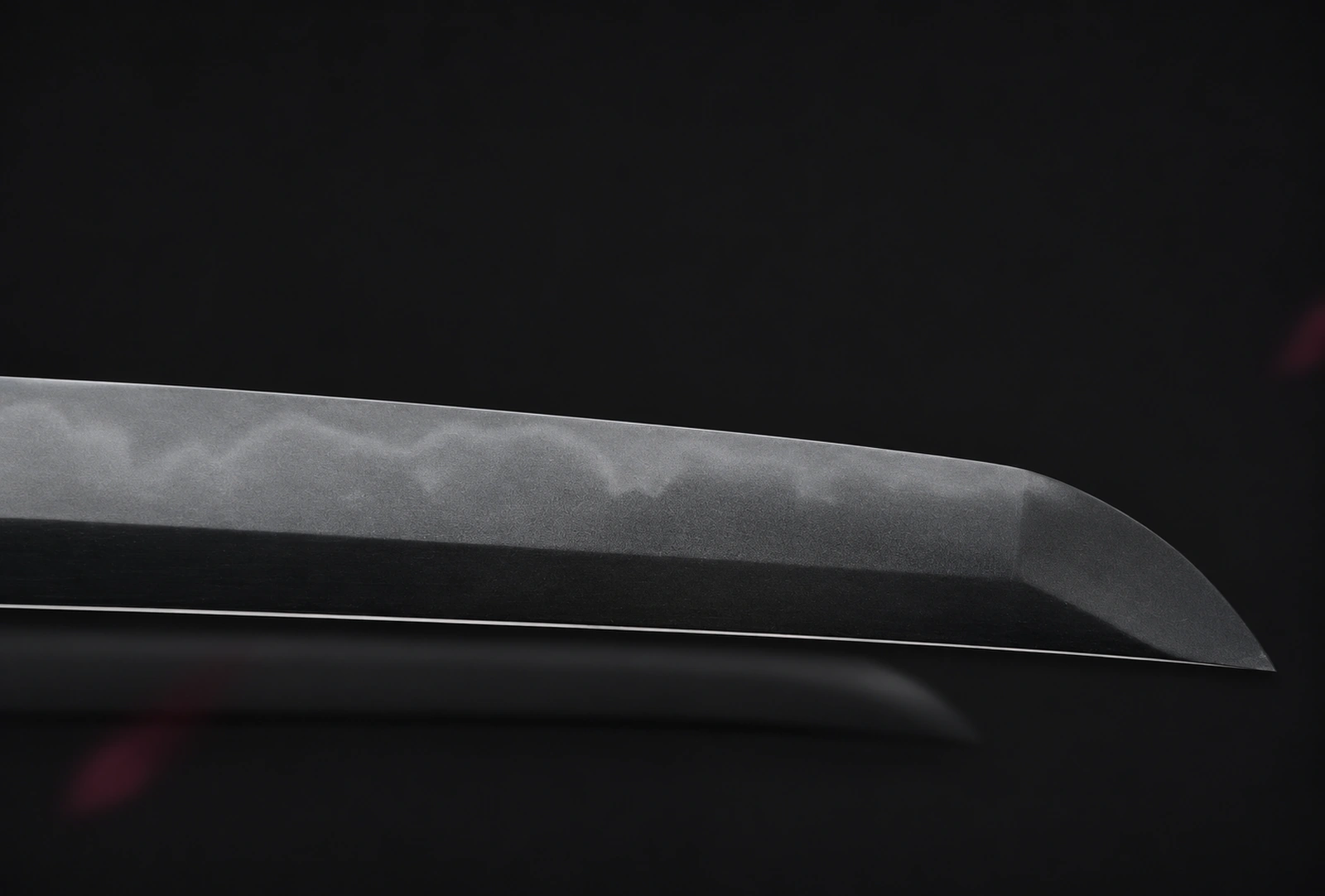
Chōji-midare Wakizashi blade tip showing the irregular hamon approaching the kissaki.
The flowing hardening pattern extends toward the kissaki.

As the blade approaches the kissaki, the changing steel tones reveal another perspective on the hardening pattern. The irregular boundary is an important part of the blade's visual character.

04 / THE HAMON

The Character of Chōji-midare.

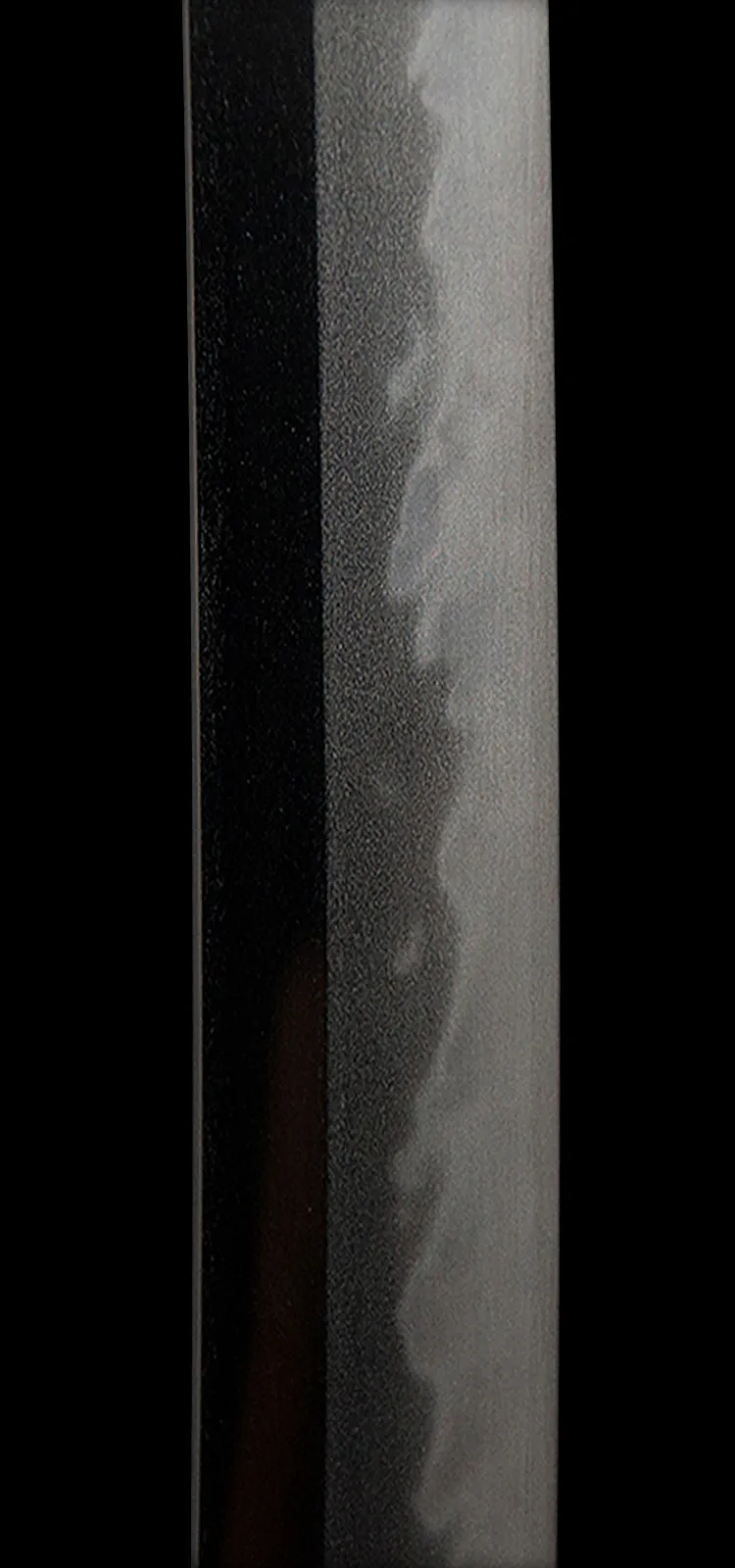
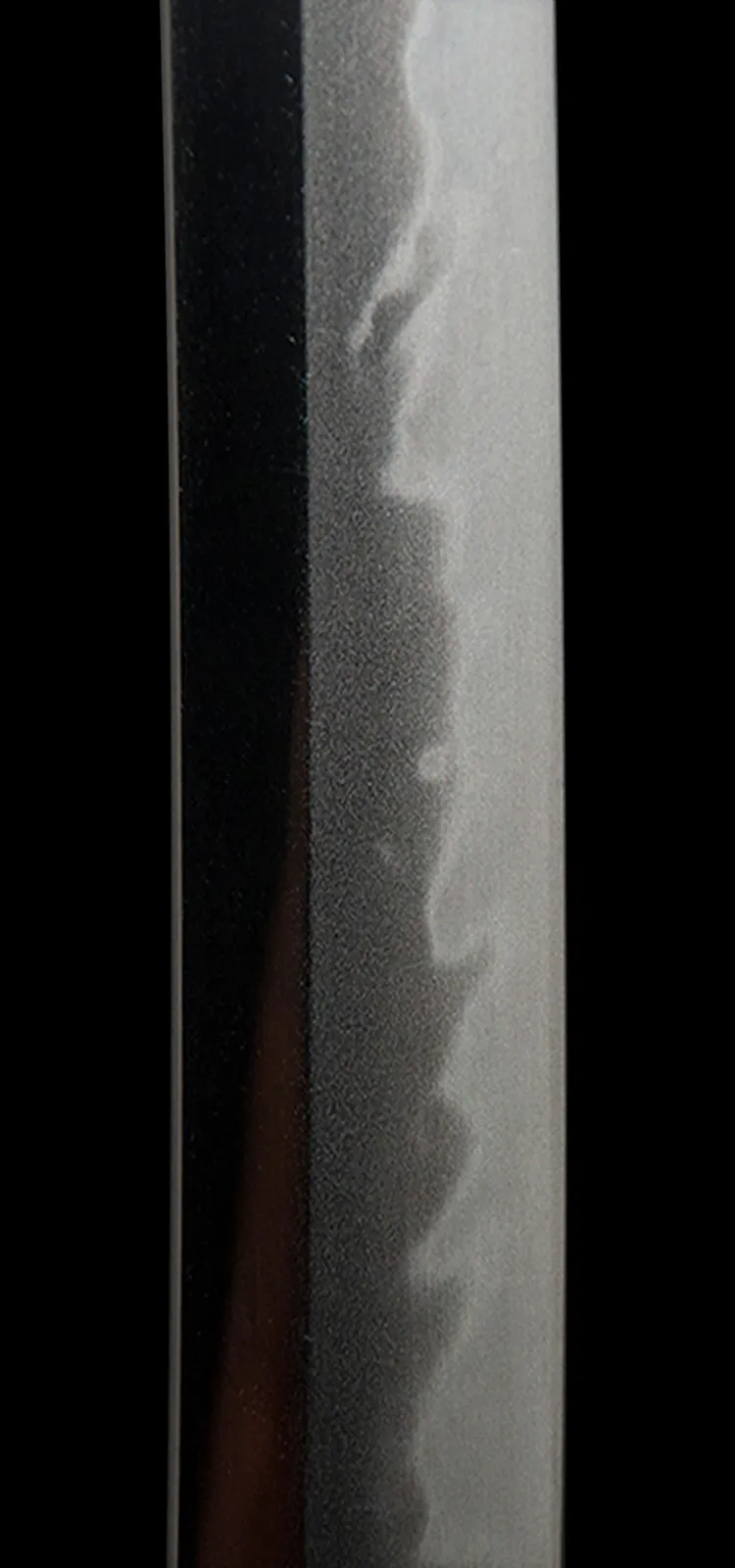
Chōji-midare is a traditional hamon pattern characterized by irregular, clove-bud-like formations along the hardened edge. Its alternating rises and recesses create a distinctive rhythm across the blade.

Although the overall character remains recognizable, the precise shape of the hardening boundary differs from blade to blade. These close-up photographs reveal individual sections of the naturally varied pattern.
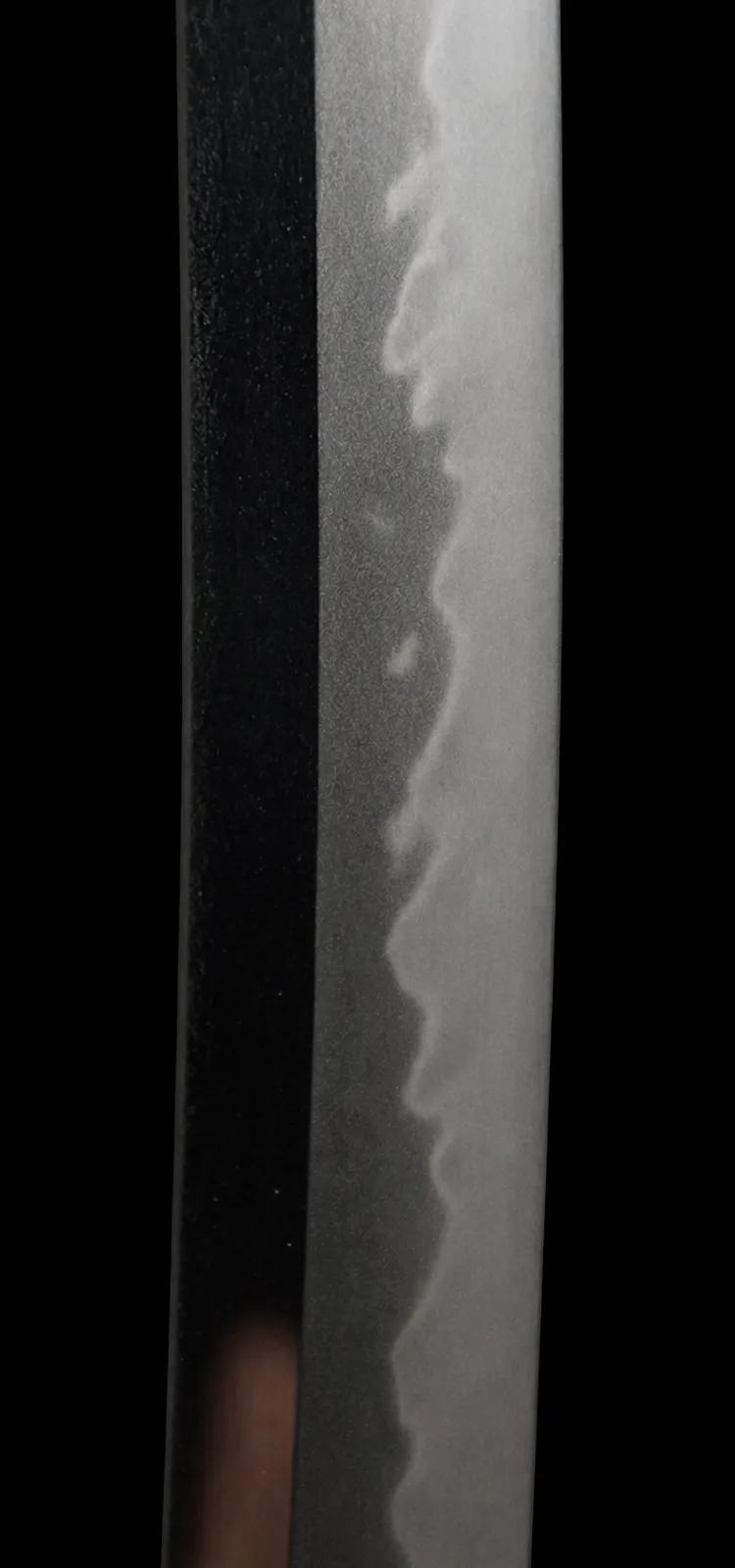
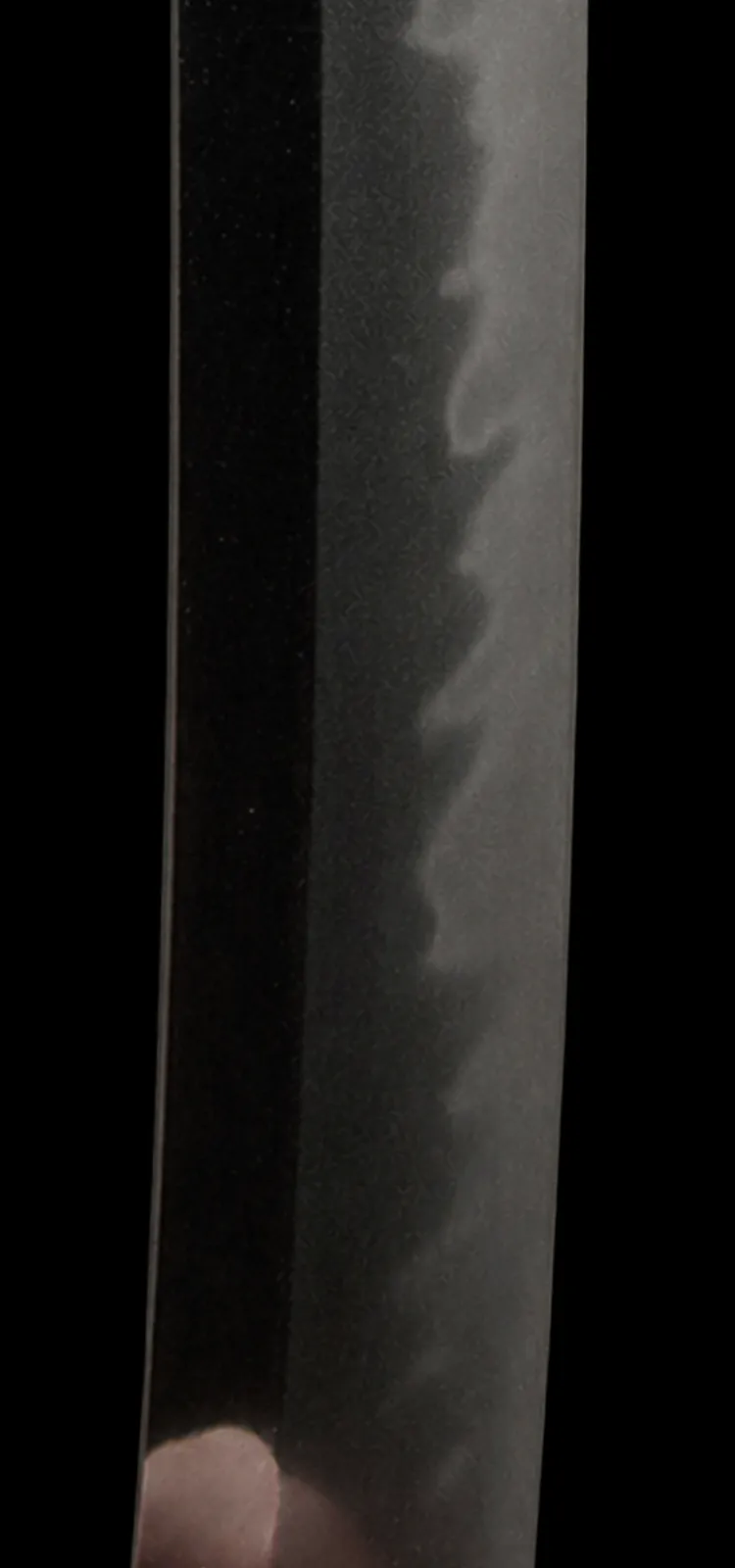
Vertical close-up of the Chōji-midare Wakizashi showing irregular cloud-like formations along its clay-tempered hamon.
Chōji-midare hamon — Detail 01
Second vertical blade close-up showing the flowing and irregular hardening boundary of the Chōji-midare Wakizashi.
Chōji-midare hamon — Detail 02
Third vertical detail of the Chōji-midare Wakizashi blade, highlighting variations in the clay-tempered hamon.
Chōji-midare hamon — Detail 03
Fourth vertical close-up of the Chōji-midare Wakizashi, showing the naturally uneven hamon against contrasting steel tones.
Chōji-midare hamon — Detail 04
THE INDIVIDUAL CHARACTER OF STEEL

No Two Patterns Are Exactly Alike.

Differential hardening produces subtle variations in the shape and activity of each blade's hamon. On some blades, fine ko-nie particles and sunagashi activity may also become visible under suitable lighting.

The precise distribution and density of these fine details naturally vary. Rather than following an identical arrangement, each finished blade develops its own individual character.

03 / SAKURA GALLERY

Steel Beneath the Falling Petals.

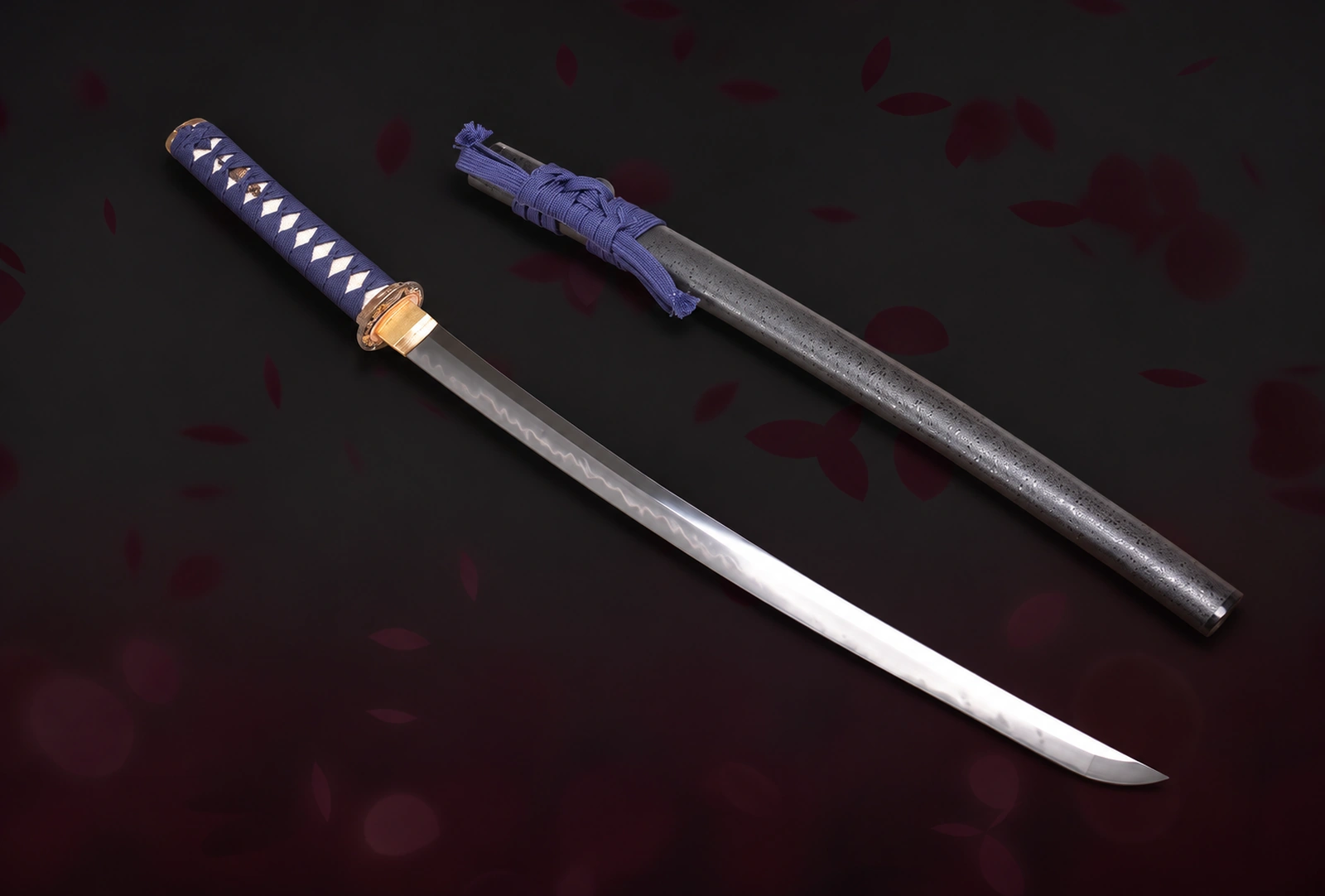
Set against a dark, petal-strewn backdrop, the Chōji-midare wakizashi brings together deep-blue wrapping, a subtly textured gray saya, and the quiet brilliance of polished steel. These portraits offer a closer look at the complete composition and the details that make it distinctive.
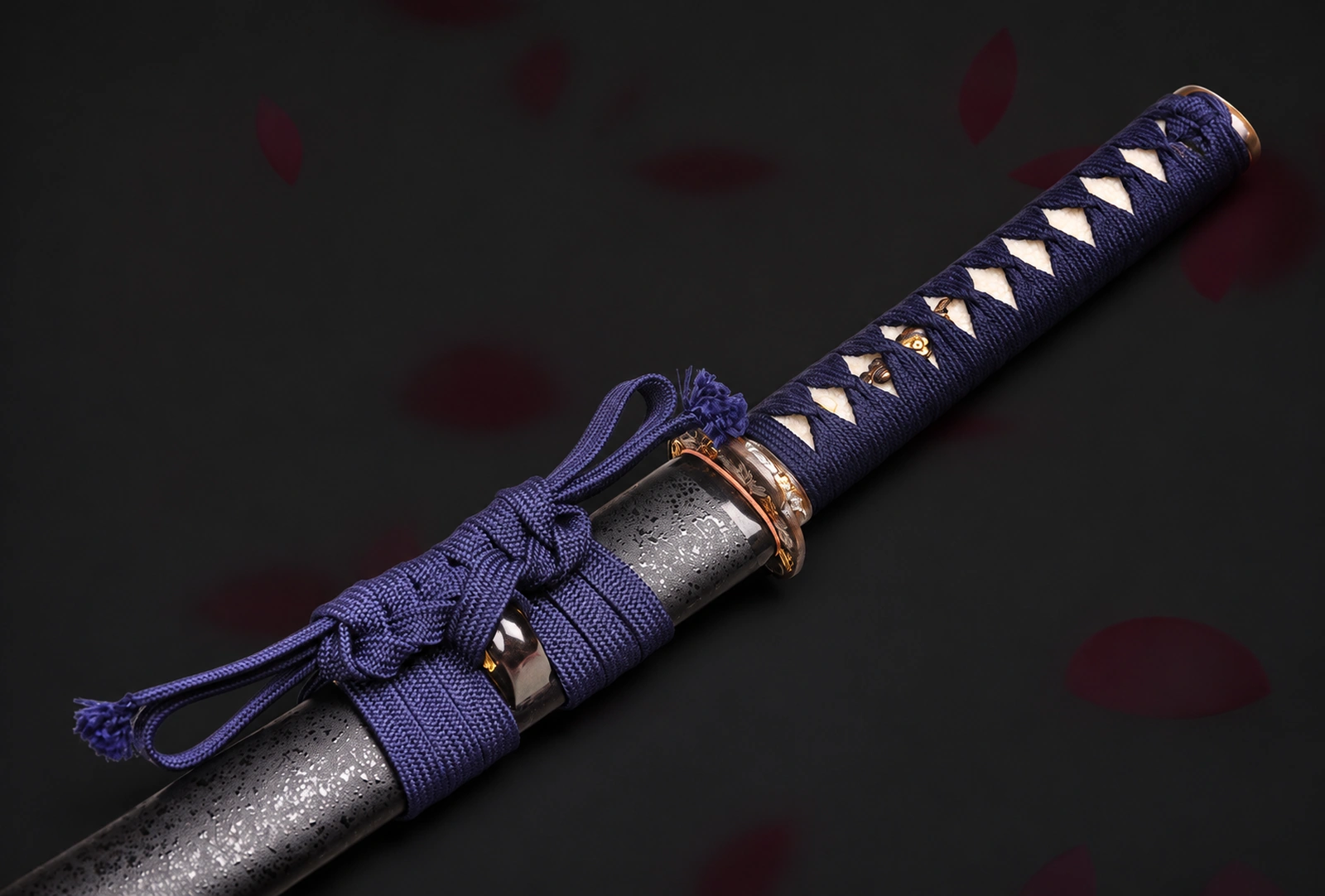
Chōji-midare wakizashi sheathed, with deep-blue handle wrapping and gray saya against a dark petal-strewn backdrop.
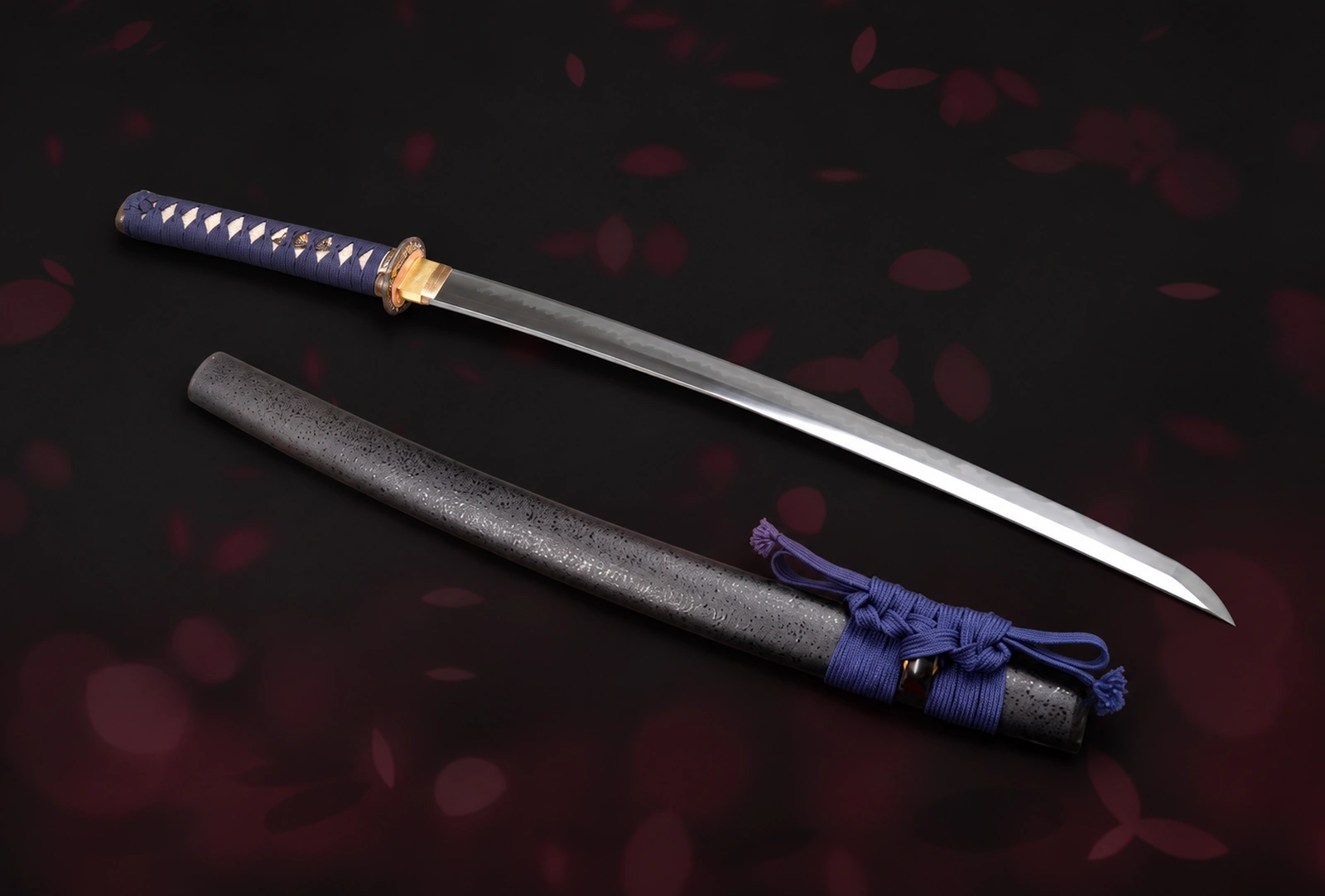
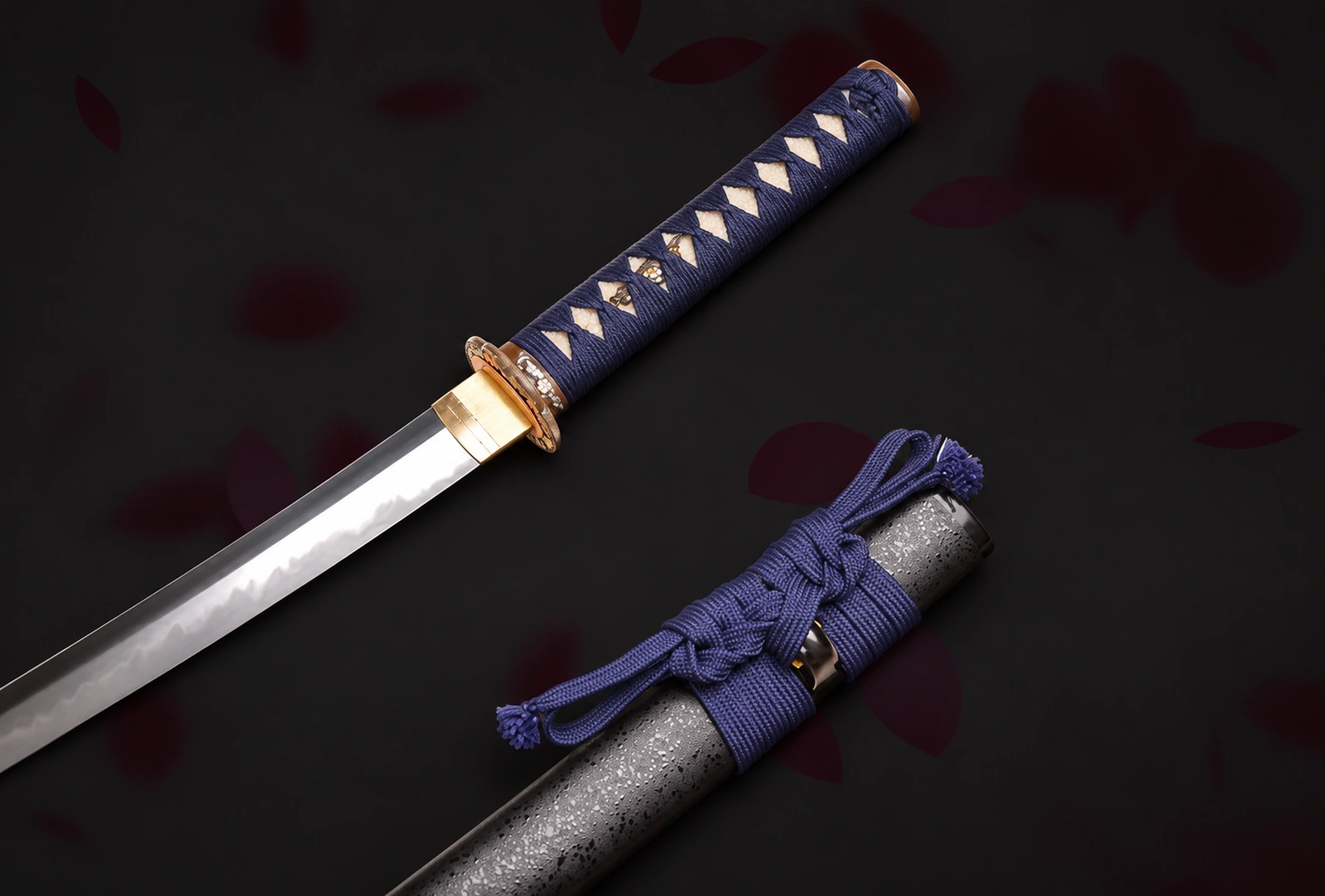
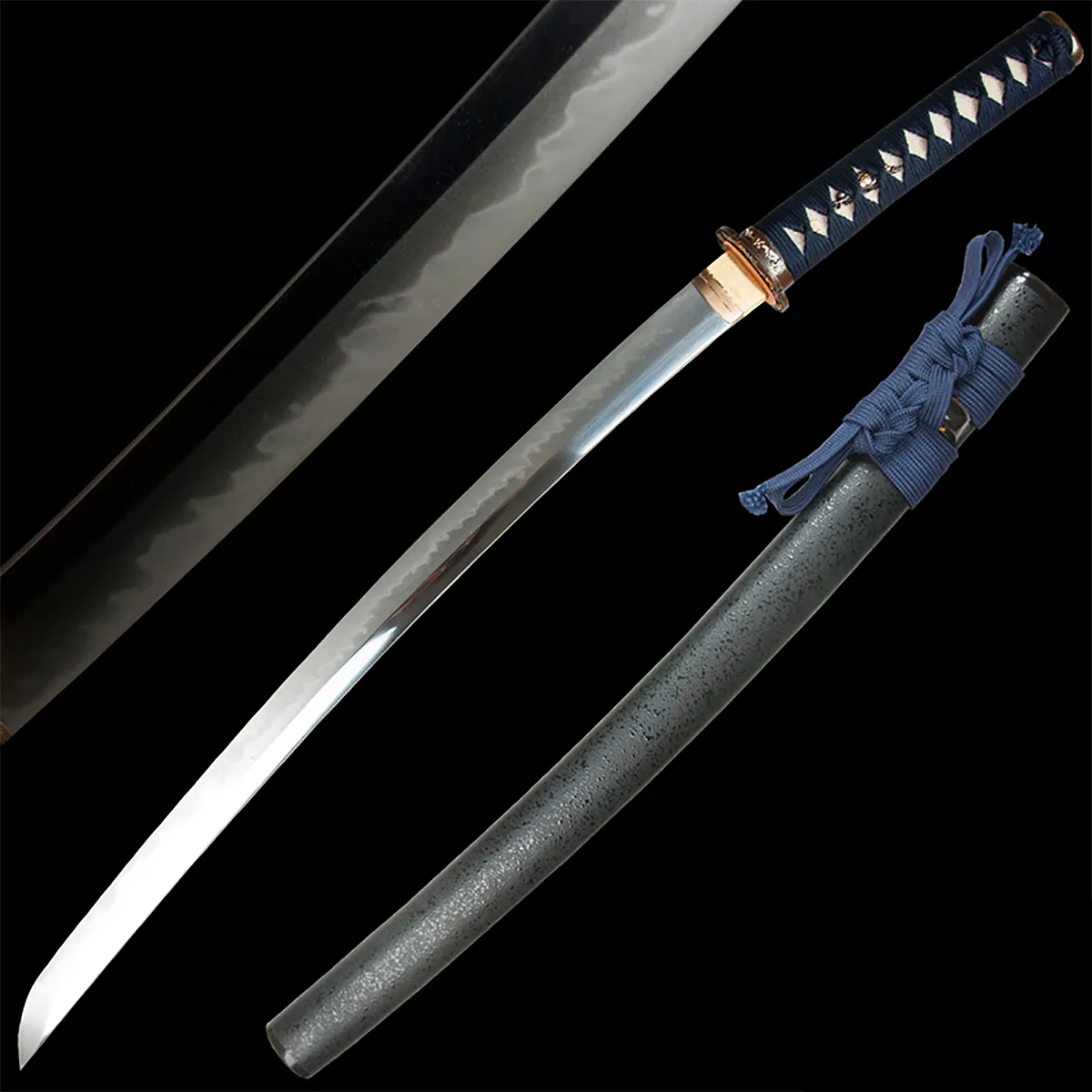
Unsheathed Chōji-midare wakizashi displayed diagonally alongside its gray scabbard on a dark floral background.
The full blade and its scabbard, shown together.
Chōji-midare wakizashi and gray saya arranged across a dark background scattered with muted petals.
Close-up of the textured gray saya and blue sageo tying on the Chōji-midare wakizashi.
Blue sageo against the textured gray saya.
Close-up of the Chōji-midare wakizashi with blue handle wrapping, mounted blade and gray scabbard.
The handle and blade seen together.

04 / THE HAMON IN CLOSE FOCUS

A Pattern That Moves with Light.

The gently changing outline of the Chōji-midare hamon becomes more apparent as the light moves across the blade. Japanese-style polishing reveals a contrast between the brighter edge region and the more subdued steel surface, allowing the hardening pattern to take center stage.
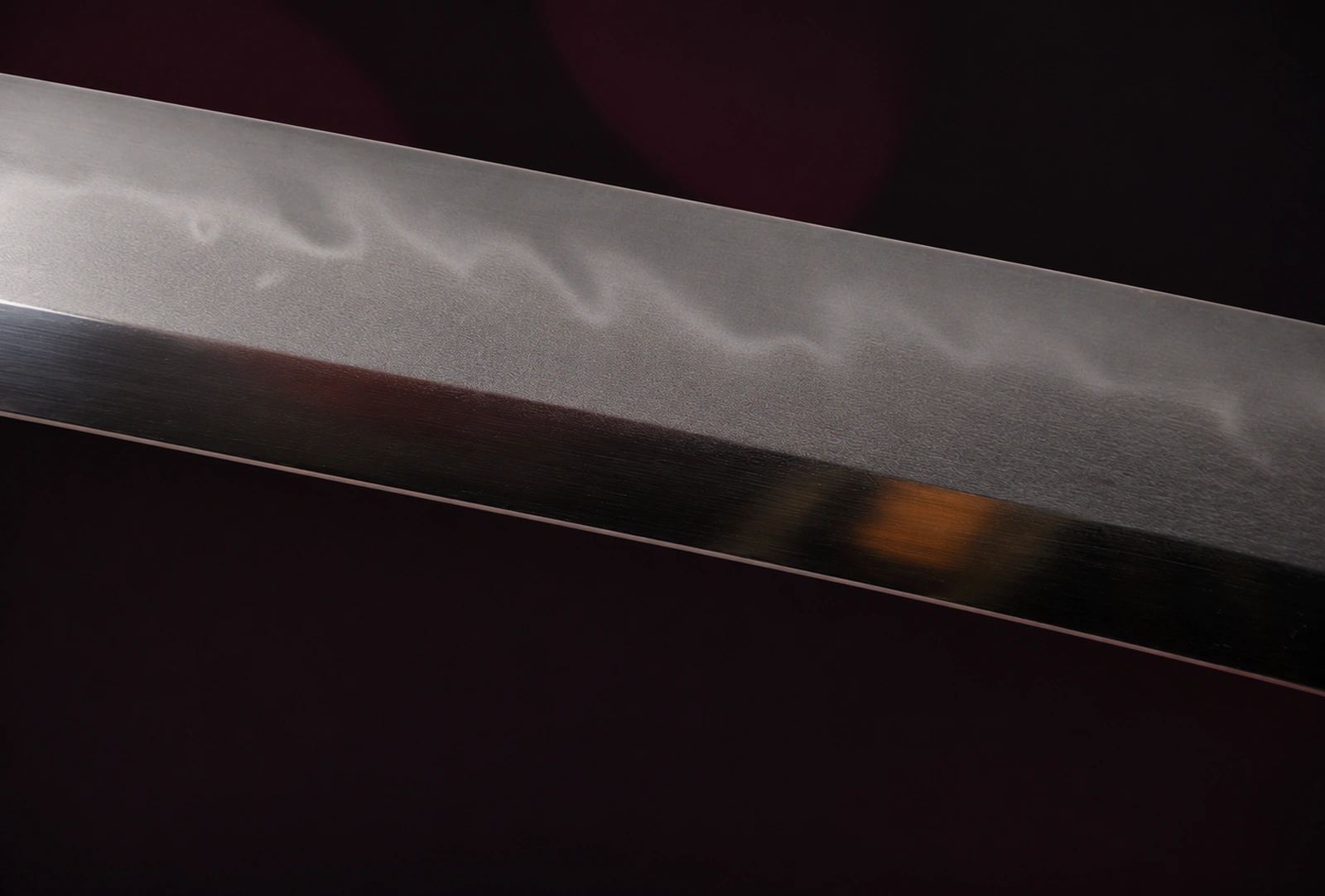
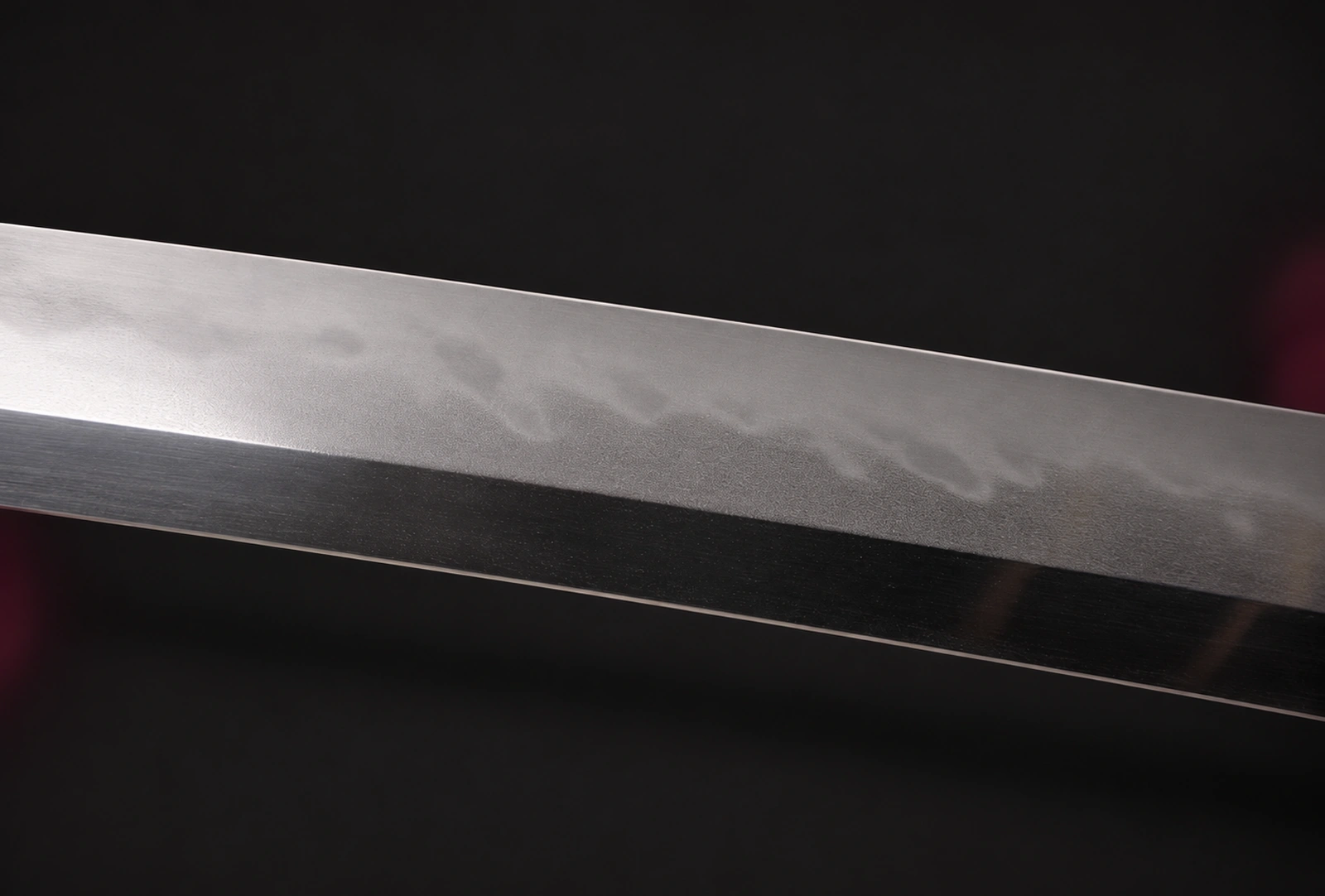
High-resolution Chōji-midare wakizashi blade close-up showing its wavy hamon and contrasting polished steel regions.
Second close-up of the Chōji-midare wakizashi hamon, showing variations along the hardening boundary.
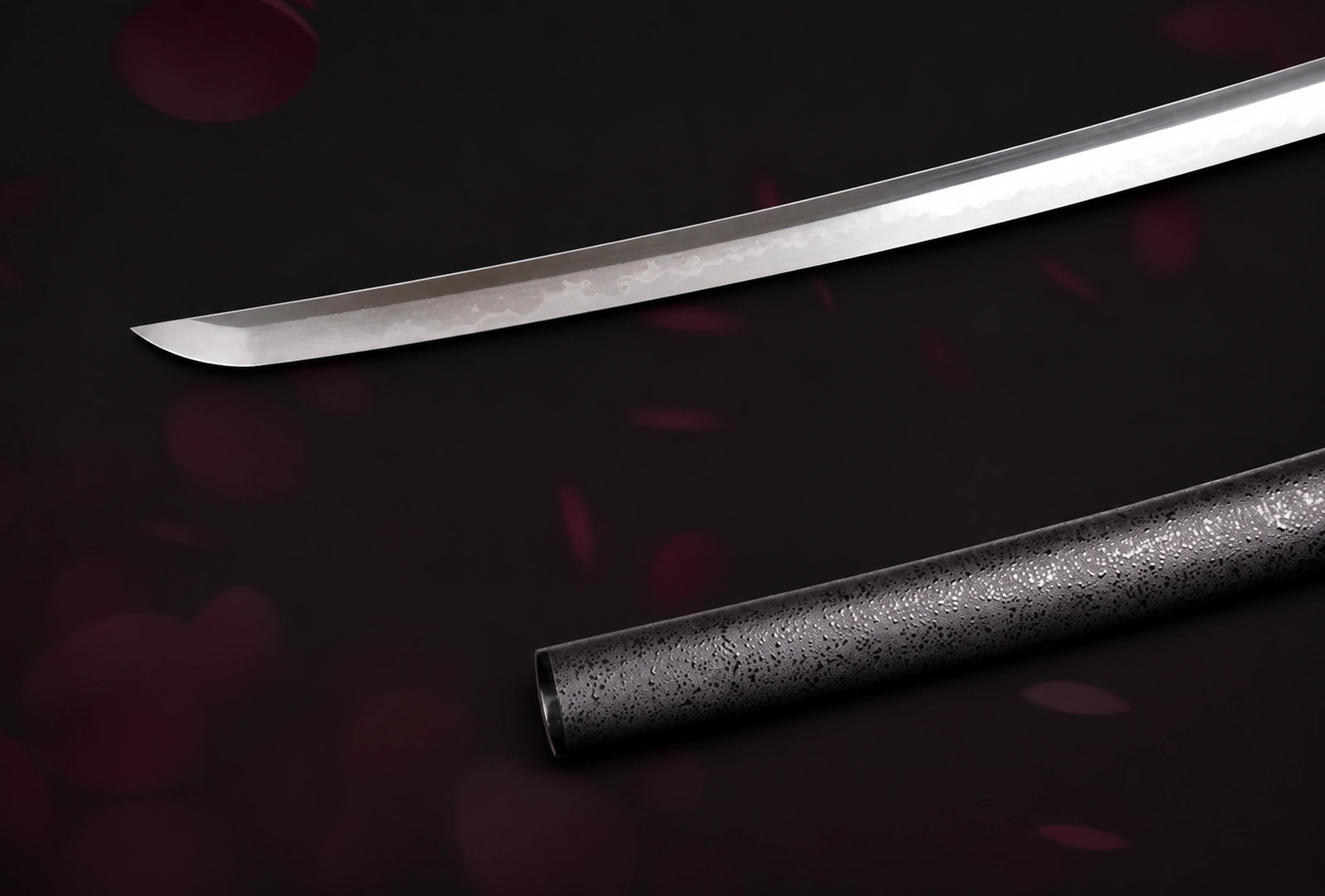
Close-up of the Chōji-midare wakizashi kissaki, showing the blade tip and the polished edge region.
The kissaki, where the blade's lines meet at the tip.
Detailed view of the Chōji-midare wakizashi blade surface and irregular hamon under directional light.

05 / THE COMPLETE PORTRAIT

Balance in Every View.

Seen as a whole, the shorter wakizashi form brings the polished blade, deep-blue fittings, and understated scabbard into balance. The close views that follow return to the blade itself, where the natural variation of the hamon gives each section its own expression.
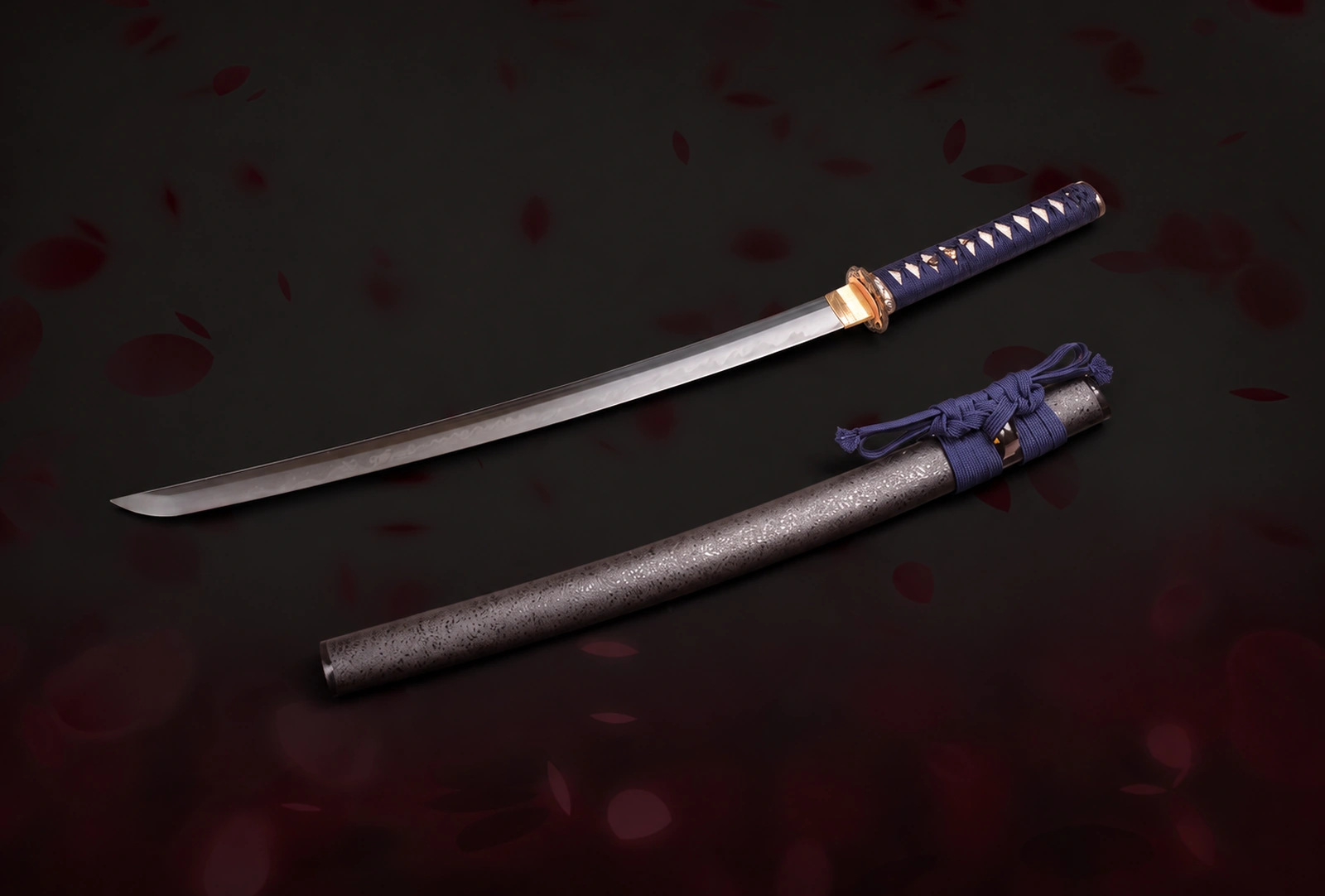
Chōji-midare wakizashi shown unsheathed alongside its textured gray saya against a dark sakura-petal background.
Side-by-side view of the polished Chōji-midare wakizashi blade and textured gray scabbard.
Detailed photograph of the Chōji-midare wakizashi blade showing the polished edge and changing hamon.
Hamon detail — a flowing section of the hardened boundary.
Close-up of the Chōji-midare wakizashi blade near its tip, showing the polished steel and irregular hamon pattern.
Hamon detail — the pattern approaching the blade tip.

The shape and fine details of a clay-tempered hamon vary naturally between individual blades. These photographs illustrate the character of the design rather than an identical pattern on every finished piece.

Reviews

There are no reviews yet.

Be the first to review “Choji-Midare Japanese-Polished Wakizashi”

Your email address will not be published. Required fields are marked *