QUIET CRAFTSMANSHIP · LONGQUAN

Custom-Series Sanmai Advanced-Polish Katana Blade

¥5,293.00

PRODUCT OPTIONS

Configure this sword.

Choose the product-specific options below.

CUSTOMIZE THIS KATANA
Each katana is configured individually.
Multiple katana purchases are placed as separate orders.

KATANA CUSTOMIZER

Customize Your Katana.

Choose from the configuration options available for this katana.

WORKSHOP NOTES

Hello, everyone. I'm Lao Yan from Zheyan Swords.

Today I'd like to show you the blade in front of me.

This is a sanmai blade.

You can clearly see the lamination line. The outer steel is 608 patterned steel, folded again.

After polishing, its hada appears relatively fine.

The core is 1095 carbon steel. The main point here is that this blade received shiage-togi polishing.

Let's take a look at the result.

With this fine polish, the hadori looks...

Compared with a three-tone polish,

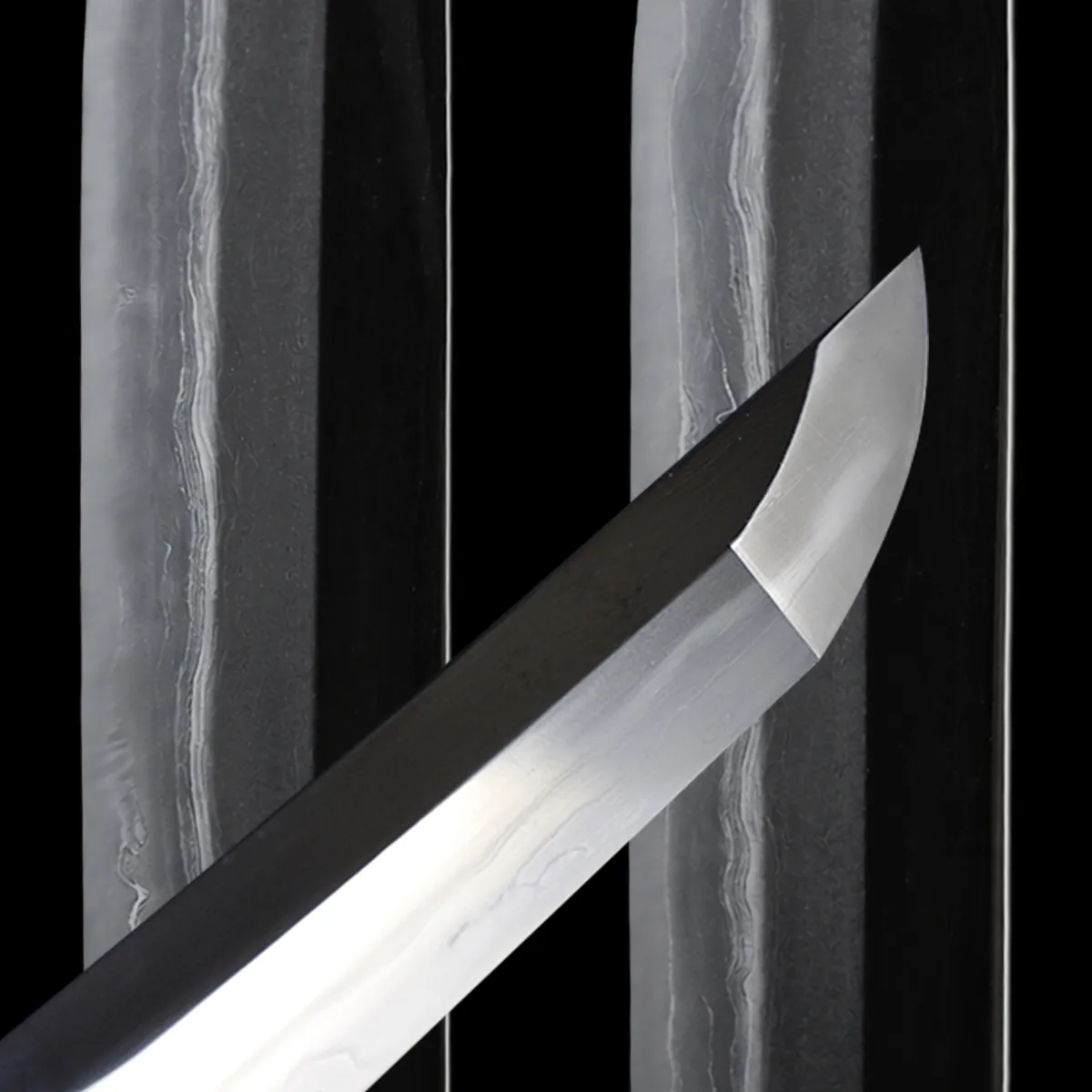
...much more natural, and the shinogi ridge is exceptionally crisp.

You can see it clearly here: the shinogi is sharply defined, and the shinogi-ji has no visible scratches.

The mirror-like reflection is extremely strong.

There isn't much more to add about the finishing. We also did the yasurime by hand.

And we made a handcrafted copper Yūjō-style habaki.

The hand-fitted habaki has just the right fit: easy to remove, yet very snug when seated.

You do get what you pay for.

Sanmai construction and shiage-togi polishing.

The finish looks very smooth and lustrous.

For someone with a comfortable budget who wants...

...a laminated blade with shiage-togi, this is what I'd recommend. The hada looks quite good after polishing.

You can hardly make out the original texture of the 608 steel.

Visually, you could almost mistake it for workshop-smelted steel.

The texture really is quite fine.

You can barely see any trace of the original 608 steel pattern now.

And overall...

...the surface looks very smooth. All these details will be attended to.

There are a few oily marks I haven't wiped off yet.

They can be cleaned with high-strength alcohol or lacquer thinner. I applied petroleum jelly earlier.

Petroleum jelly can leave marks on the blade that are difficult to wipe away.

Someone asked me recently what works well for rust prevention.

If you only have a few blades, you can use WD-40. But if you have a lot of swords...

...I'd suggest industrial thin-film rust-preventive oil. A five-liter container is fairly inexpensive.

Then use a small brush to apply a thin layer to the blade.

This blade is going to receive a shirasaya, so there isn't much to show of the exterior mountings yet.

There's not much else to say about a standard shirasaya; it's a simple, plain design.

This sanmai blade has been given shiage-togi polishing.

I just wanted to give you a brief introduction and show you the result.

That's all for now. Thank you for watching. Goodbye, everyone.

Technical Overview

Core specifications.

Nagasa
710 mm
Motohaba
32 mm
Motokasane
7 mm
Tsuka Length
260 mm
Weight without Saya
865 g
Reference dimensions are shown. Made-to-order blade length is customizable from 680 to 750 mm; blade width and curvature can also be specified.
Blade & Craft

Blade craftsmanship.

Outer Steel
608 Patterned Steel (Further Folded)
Core Steel
1095 Carbon Steel
Construction
Sanmai Construction
Heat Treatment
Clay Tempering
Hamon
Clay-Tempered Hamon
Polish
Shiage-togi
Hardness
56 HRC

Description

01 / THE FORGING IDEA

The Art of Sanmai.

A blade conceived in layers, not as a single, uniform piece of steel. This custom-series katana brings together further-folded 608 patterned steel and a 1095 carbon-steel core through Sanmai construction — an approach that gives the steel a structure of its own, before the final shape is ever revealed.

LAYERED CONSTRUCTION / INDIVIDUALLY MADE
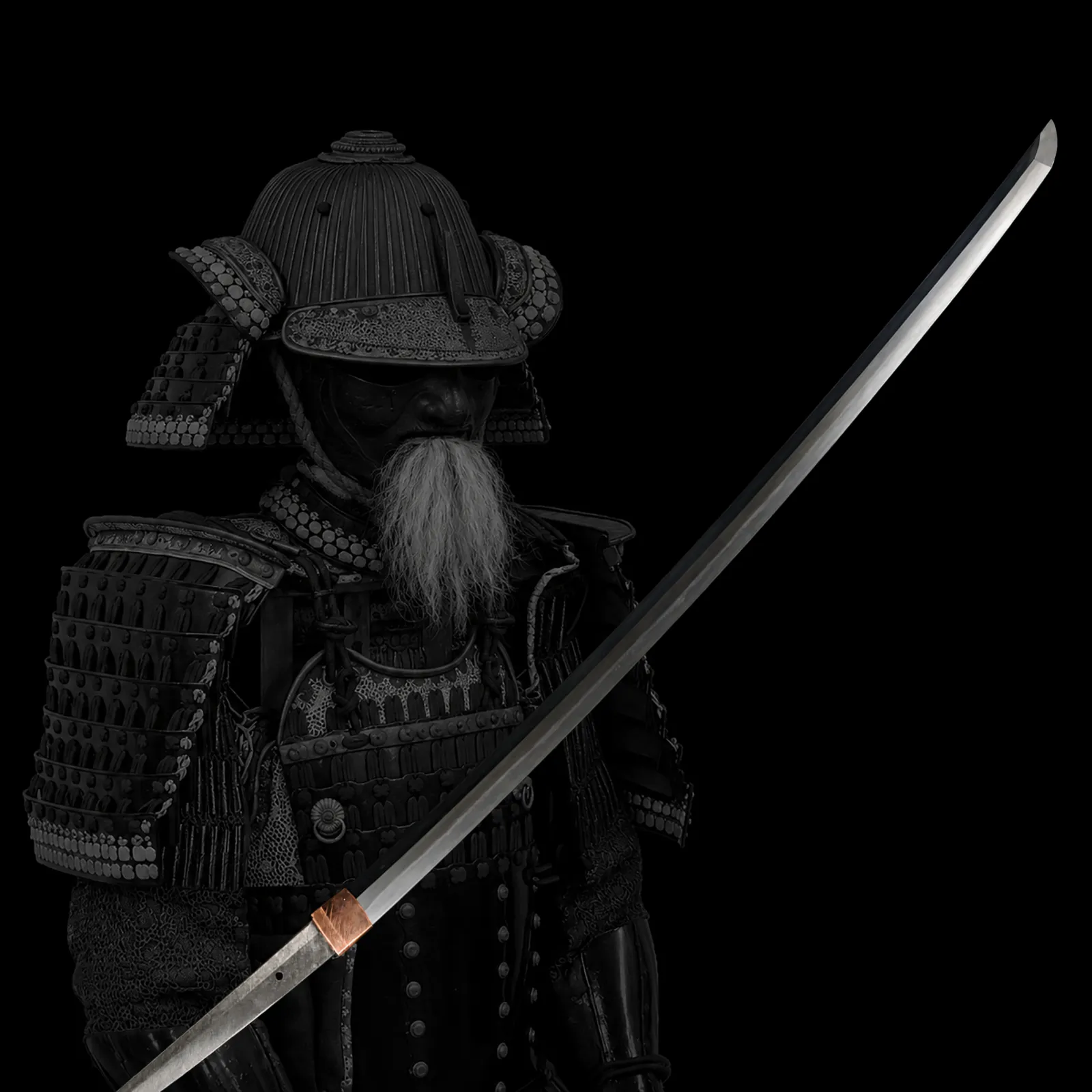
Custom-series sanmai katana blade displayed diagonally in front of a dark samurai armor figure, highlighting its polished surface and copper habaki.
A contemporary katana presented against the quiet silhouette of samurai armor.

THE STRUCTURE

Three Pieces. One Blade.

In Sanmai construction, different steels are brought together to form a composite blade. Here, further-folded 608 patterned steel forms the outer layers, while 1095 carbon steel is used at the core.

The result is a deliberate arrangement of materials: the patterned outer steel and the high-carbon core each remain part of the blade's identity. Its appearance begins with that internal construction, long before polishing brings the surface into focus.

OUTER STEEL 608 Patterned Steel

Further-folded for a finer visible grain.

CORE STEEL 1095 Carbon Steel

The specified high-carbon core material.

FORGING STRUCTURE Sanmai

A three-part laminated blade construction.

THE CHARACTER OF STEEL

Quiet Depth in the Grain.

Additional folding gives the 608 outer steel a particularly fine, restrained hada. Rather than an exaggerated pattern, the blade rewards a closer look: subtle lines emerge and disappear as the light crosses its surface.

With Shiage-togi finishing, that texture is presented alongside the geometry of the blade — the defined shinogi, the reflective surfaces, and the careful transitions between them. The finer polishing details are explored in the next chapter.

INDIVIDUAL SPECIFICATION

Shaped to Your Measure.

This is an individually made katana rather than a fixed, mass-produced specification. The reference blade has a 710 mm nagasa, while made-to-order blade lengths can be specified from 680 to 750 mm. Blade width and curvature may also be discussed as part of the intended form.

The hamon is a further expression of that choice: select the restrained straight line of Suguha or the rounded movement of Gunome. Every decision belongs to the character of the finished blade.

BEYOND THE FIRST IMPRESSION

The construction defines what lies within. The final polish reveals what the eye can discover — one deliberate surface, one line, one detail at a time.

02 / THE CLOSE STUDY

The Character of Steel.

A blade changes when seen from inches away. Lines that seemed almost invisible begin to separate; dark steel takes on depth; the polish reveals the discipline of the surfaces beneath it. This is where the character of the Sanmai blade becomes visible.
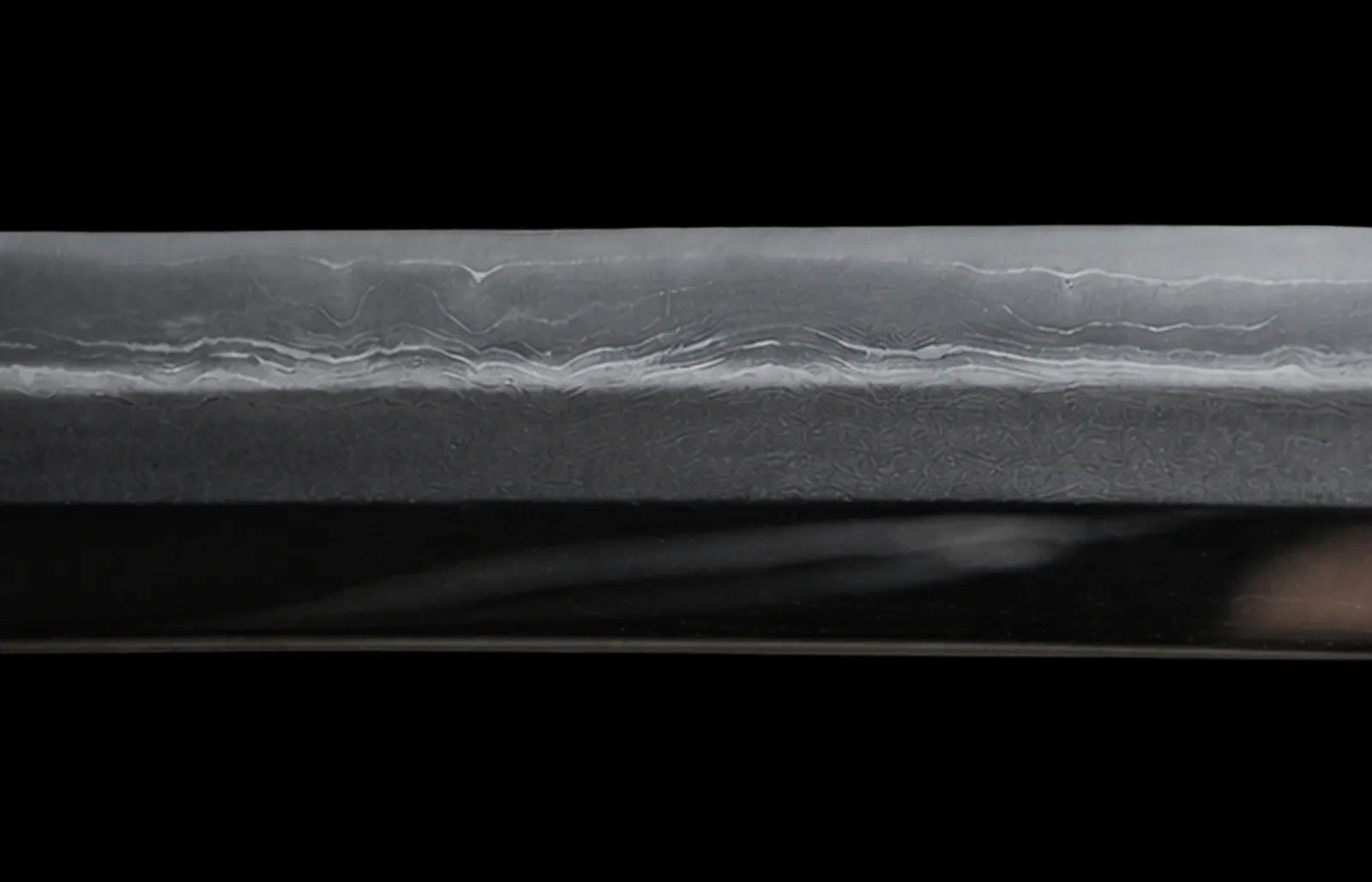
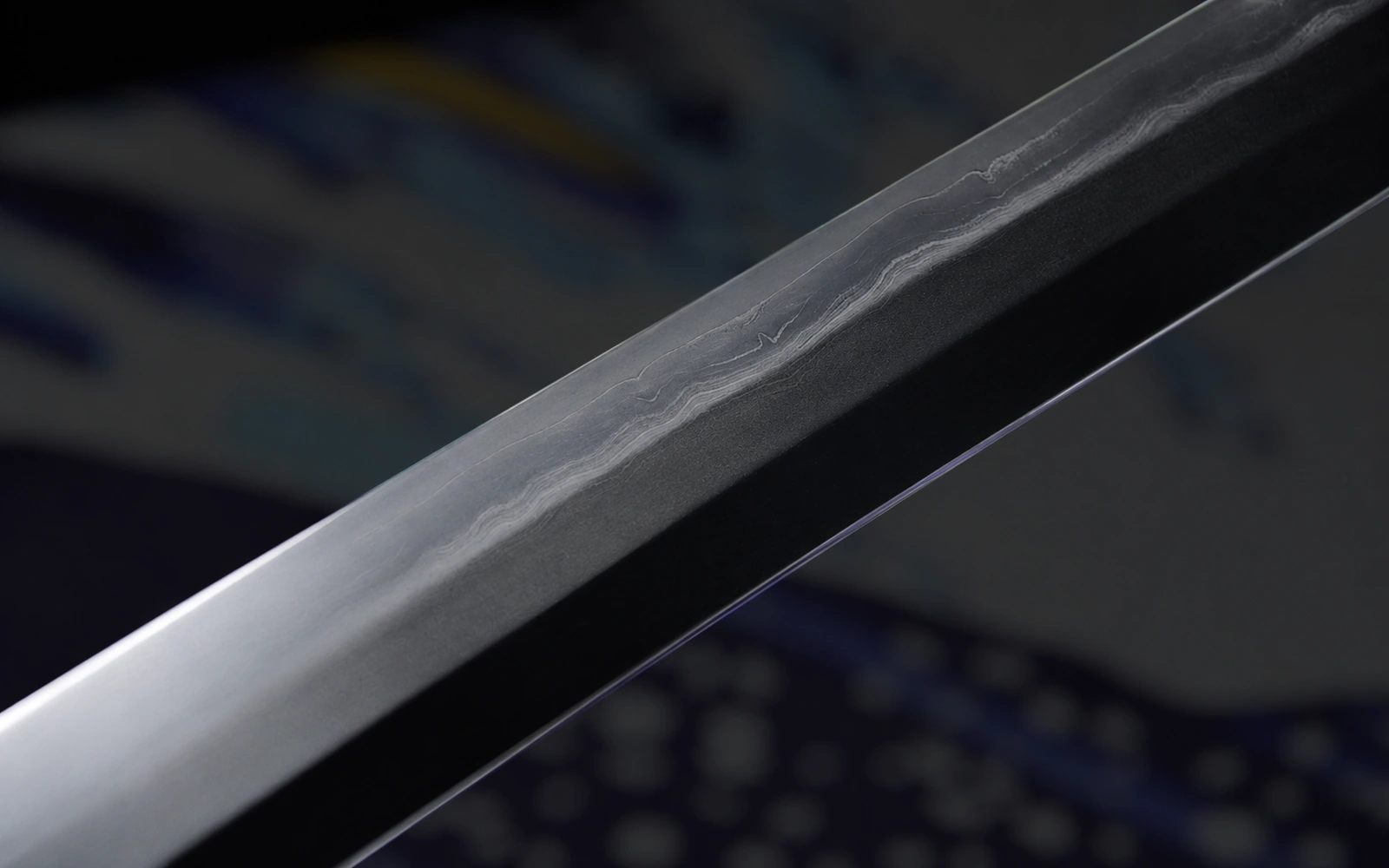
Close-up of a custom-series Sanmai katana blade with fine flowing layered steel lines and a dark polished region.
A quiet first look at the delicate layered grain in the finished outer steel.

FOLDED STEEL / SURFACE GRAIN

A Grain That Rewards Patience.

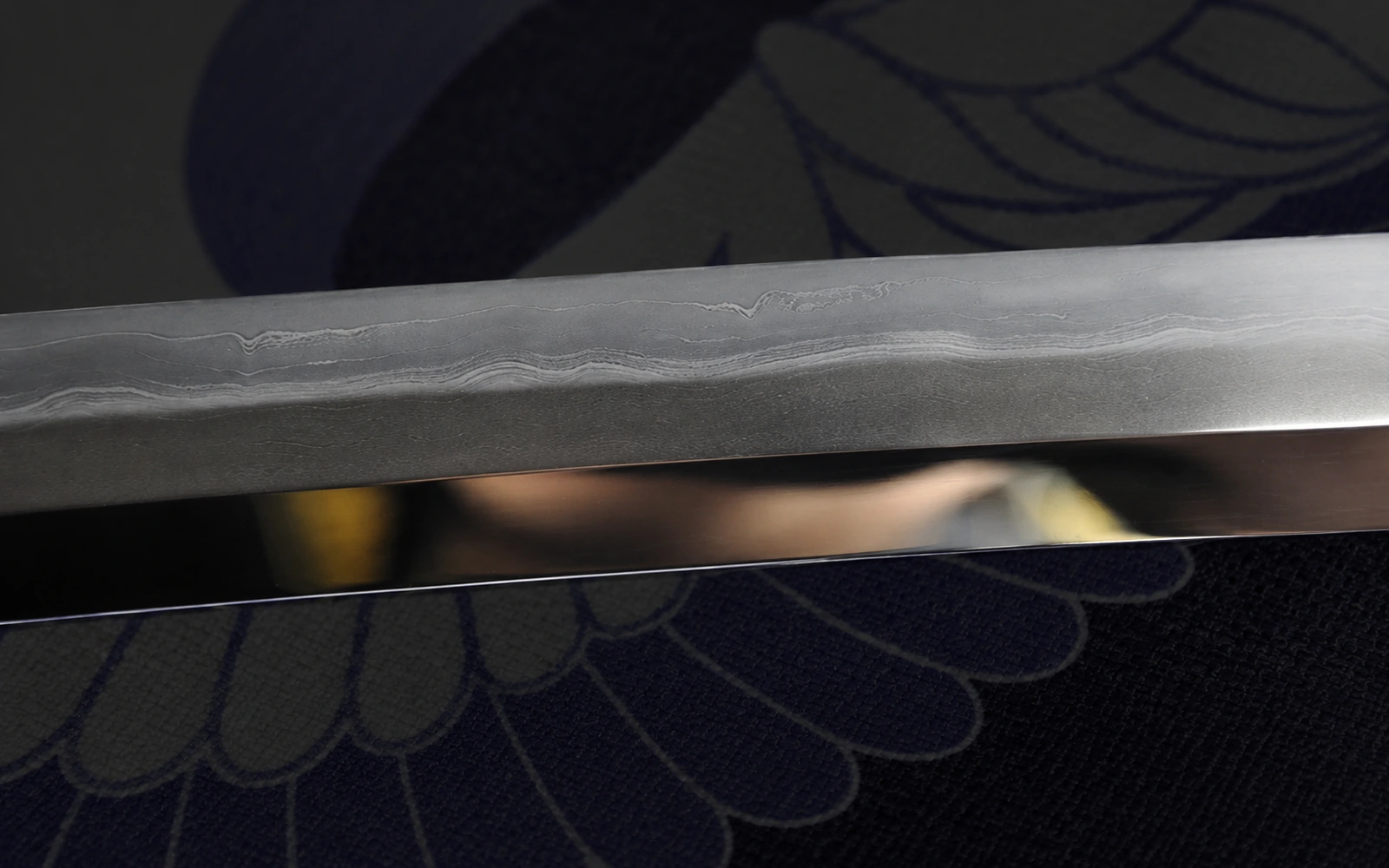
The outer layers begin as 608 patterned steel and are folded further to produce a finer-looking surface. Up close, the hada appears as narrow, wandering lines rather than a bold, repetitive pattern.

These visible layers belong to the steel's forged surface character. They should not be confused with the hamon, which relates to hardening, or the hadori, which is part of the visual presentation created by polishing.
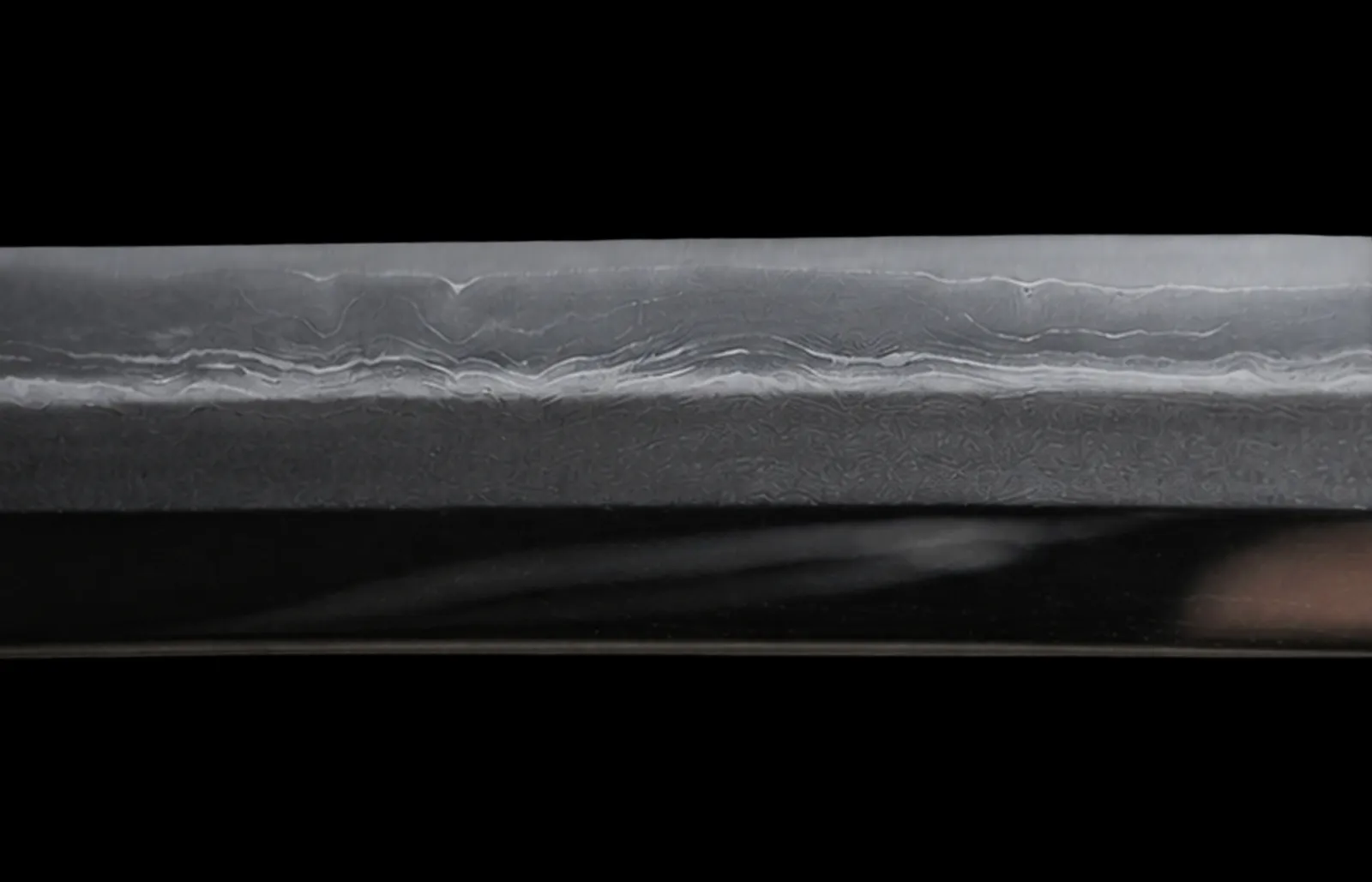
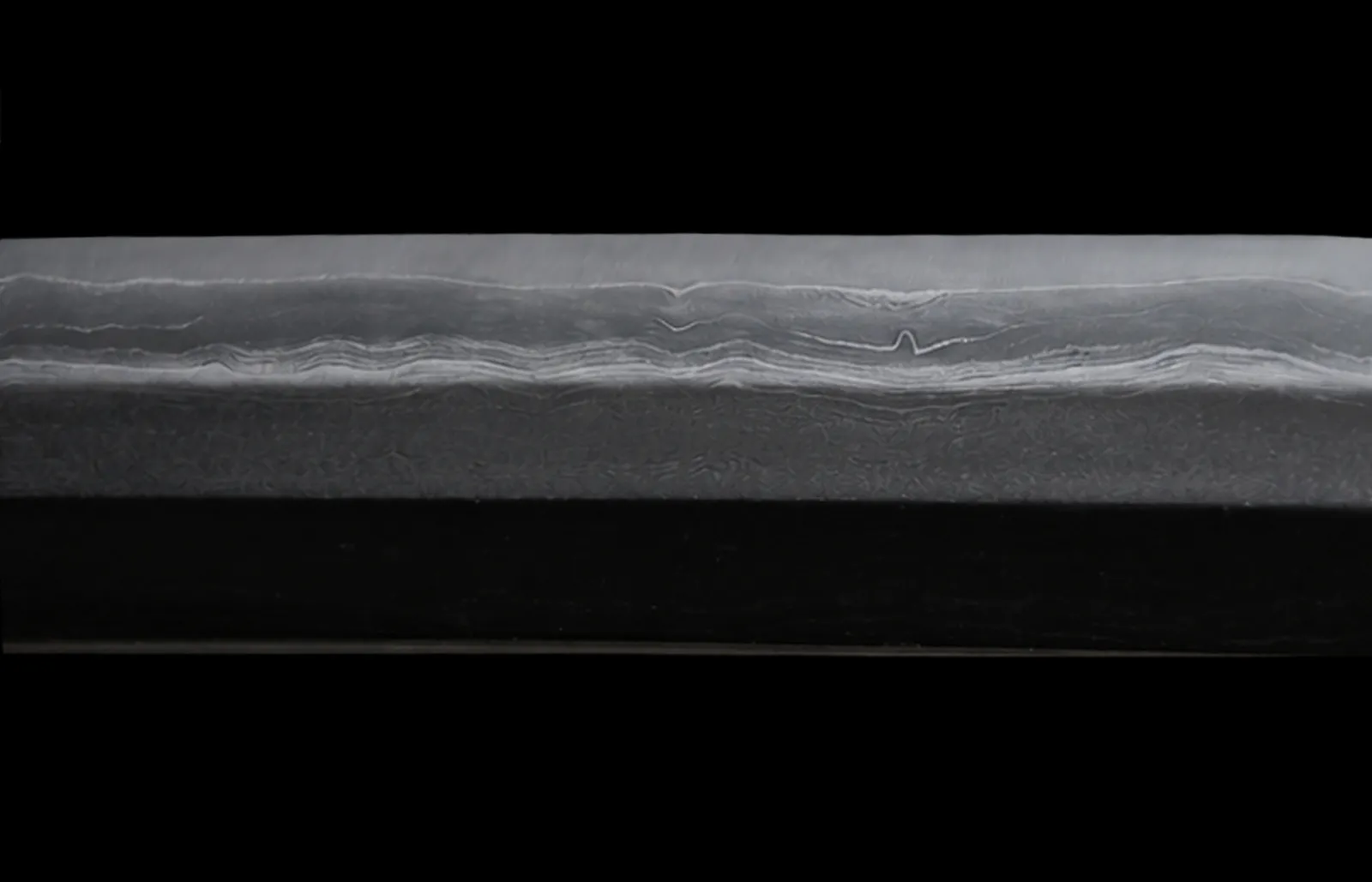
Macro photograph of fine layered steel grain across the surface of a Sanmai katana blade.
Fine hada, seen where the lines gather and diverge.
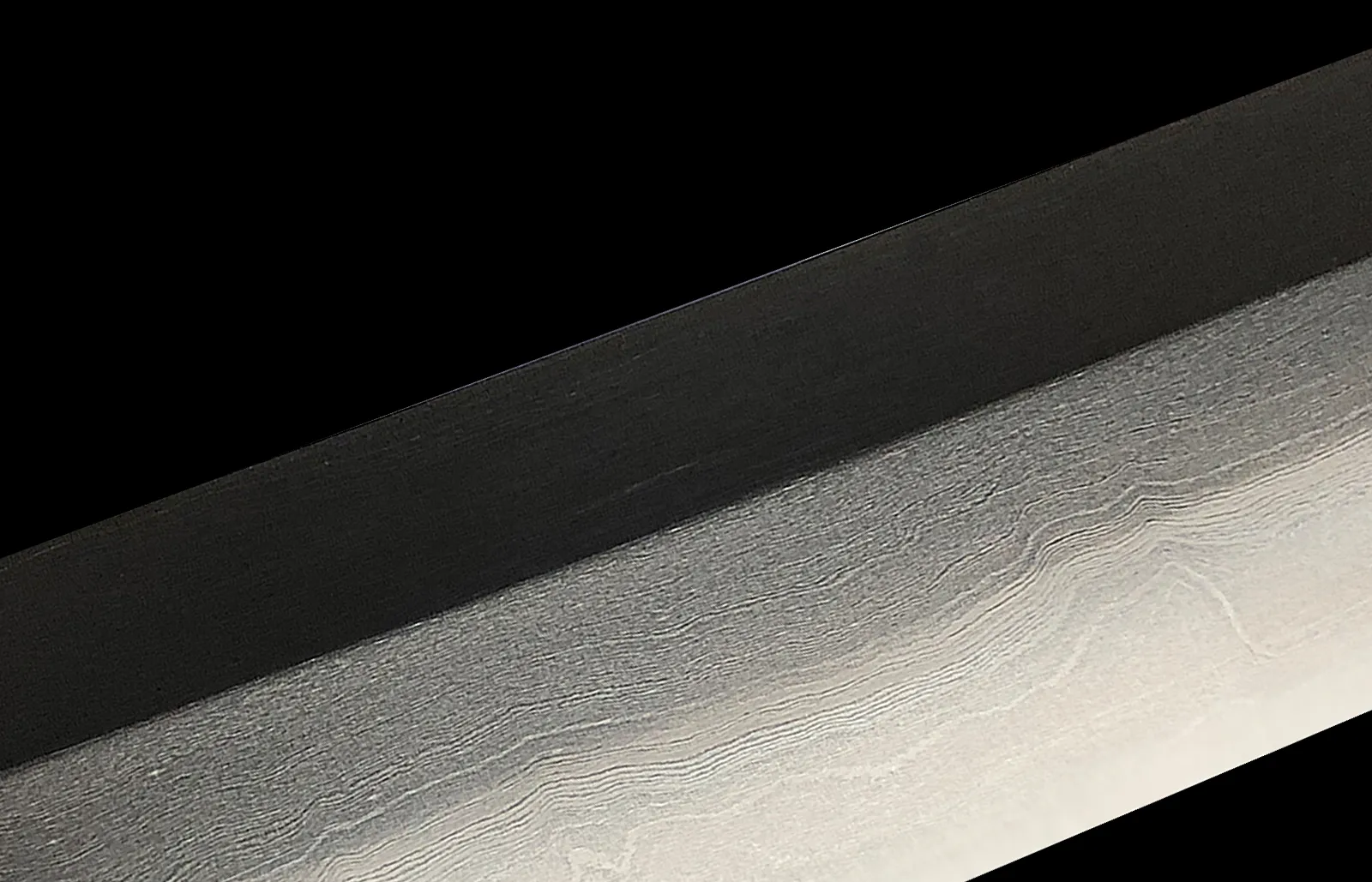
Close-up of a layered steel pattern extending across the surface of a polished Sanmai katana blade.
A second view of the same restrained, flowing steel texture.

GEOMETRY / LIGHT / FINISH

The Refinement of Shiage-togi.

The final Shiage-togi finish brings a quieter, more precise reading of the blade. The shinogi remains clearly defined, while the shinogi-ji takes on a distinct reflective character.

The finer hada is revealed without dominating the steel. Light moves from darker areas toward the polished edge, making the relationship between surface texture, geometry and finishing easier to appreciate.
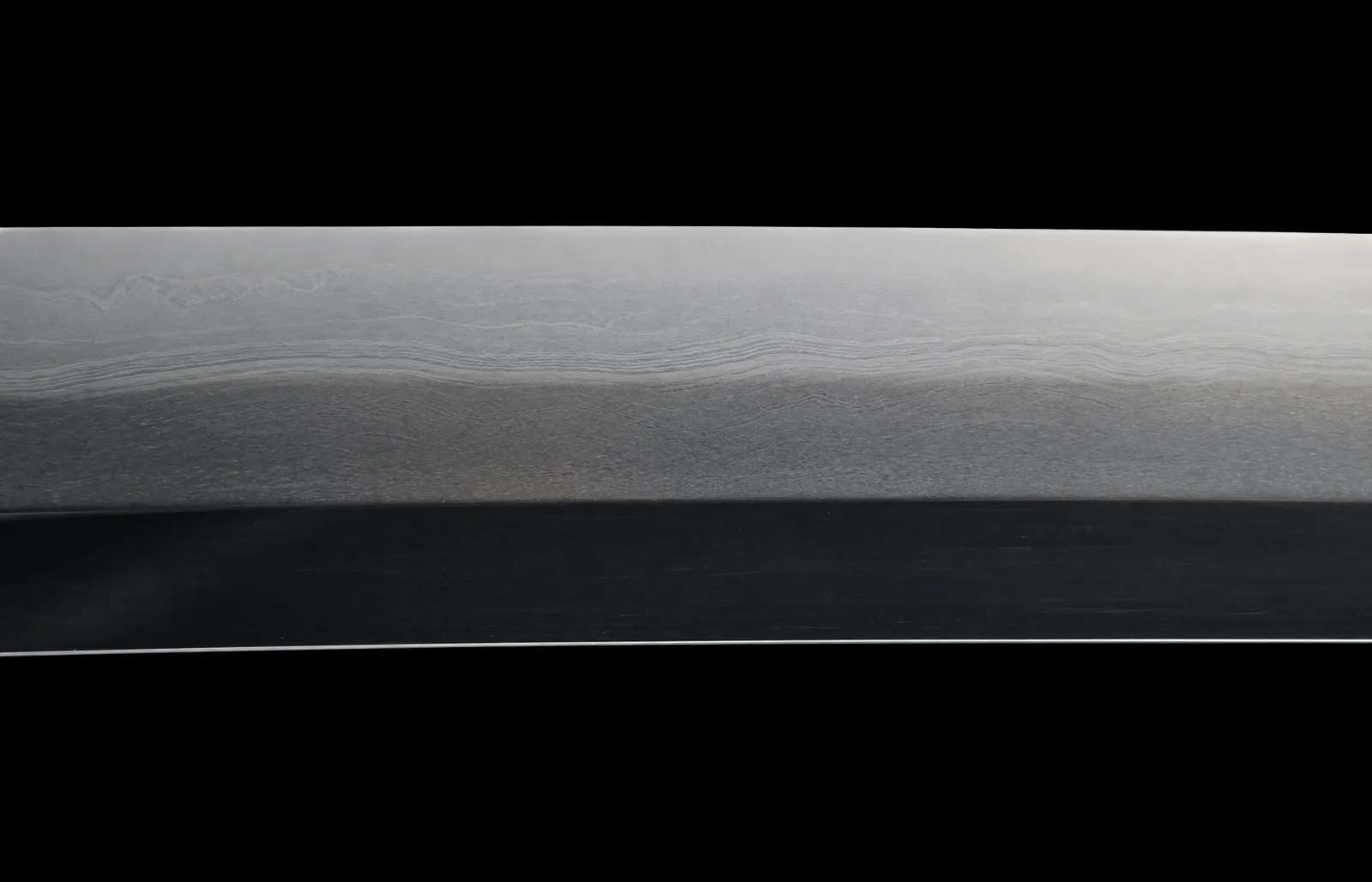
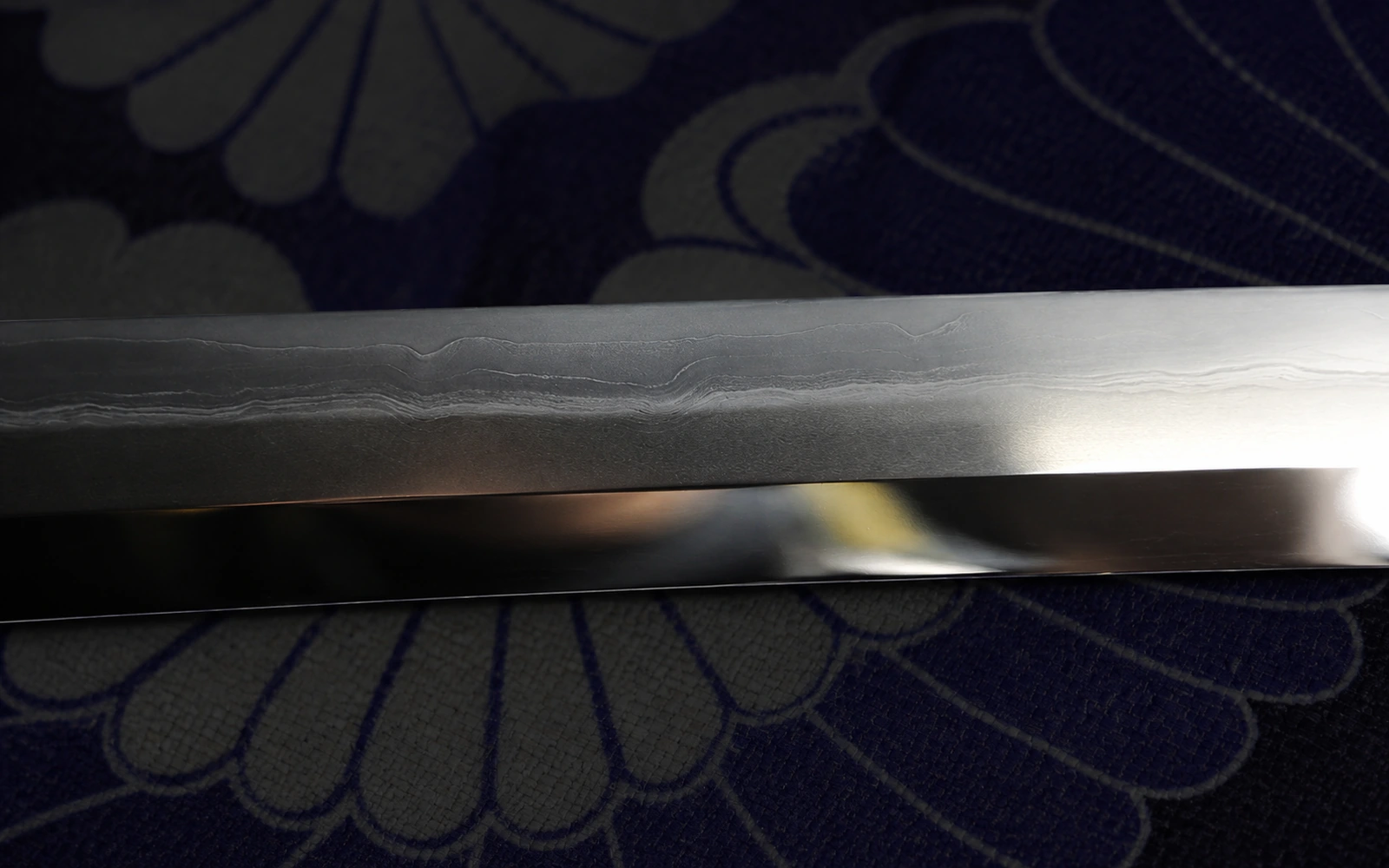
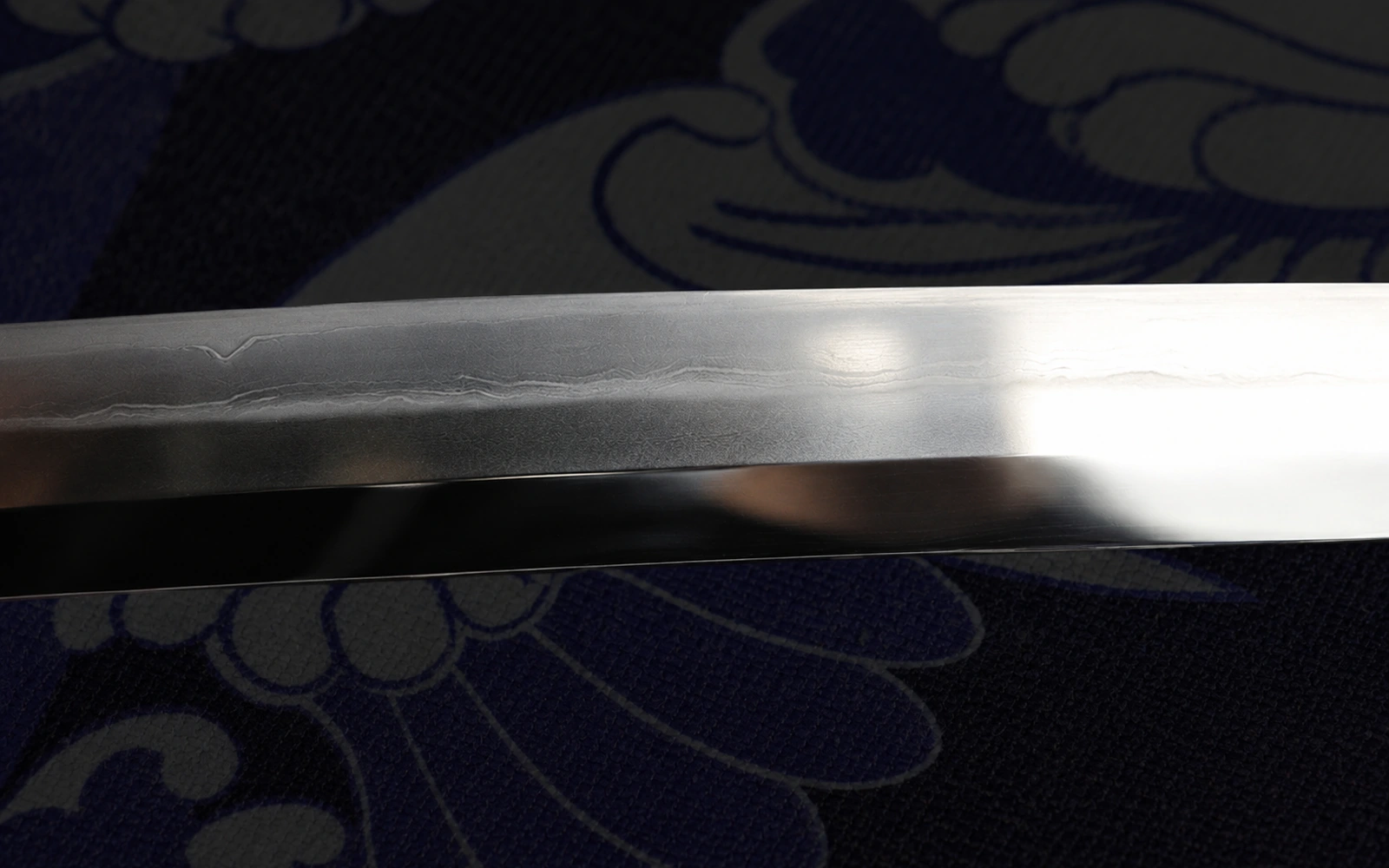
Horizontal close-up of softly defined layered steel lines and subtle tonal transitions on a polished Sanmai katana blade.
An understated surface; the layered lines emerge through a softer reflection.

THE QUIETER VIEW

Not every detail asks to be seen at once.

In diffuse light, the steel becomes almost still. Under a different angle, its fine surface lines return. This quiet variation is part of the appeal of close blade study.

THE LAST REFLECTION

A Finish That Holds the Light.

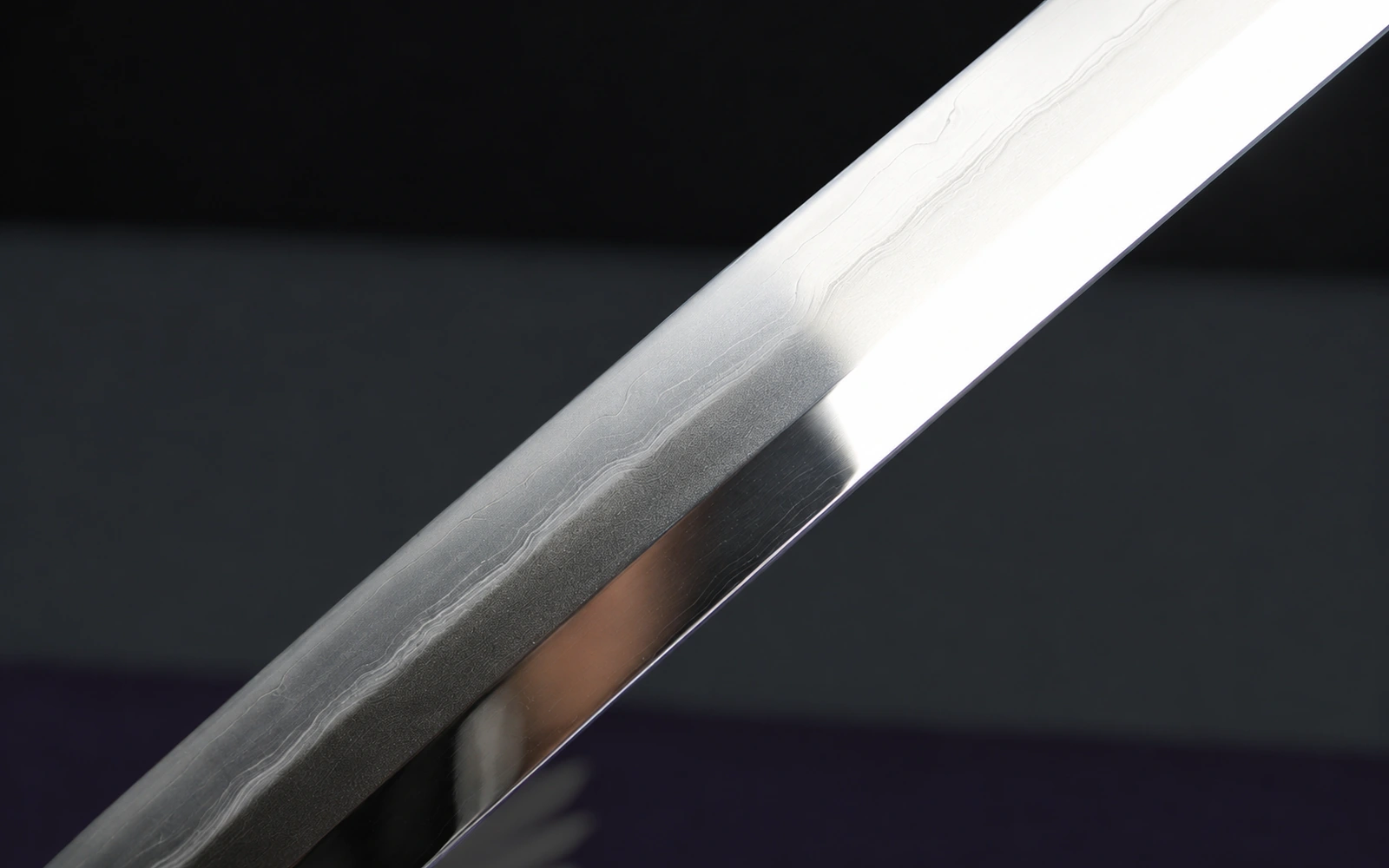
From one viewing angle to another, the blade moves between bright reflection and fine, nearly hidden grain. The finish does not erase the steel's character; it gives that character room to appear.
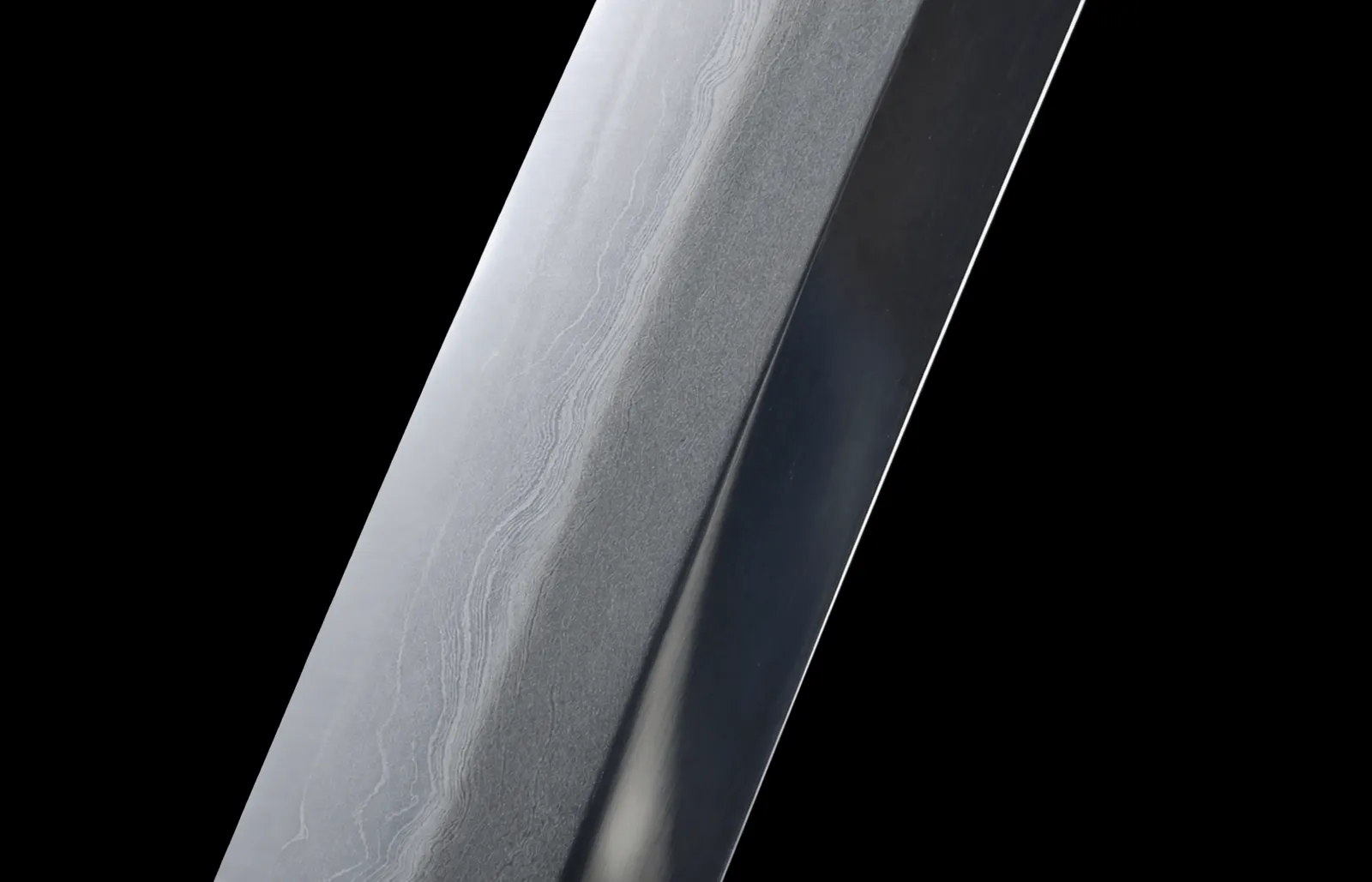
Diagonal view of a Shiage-togi polished Sanmai katana blade showing a reflective steel surface and faint flowing grain.
The final view: polished steel, subdued grain, and a line of reflected light.

FROM THE BLADE TO THE COMPLETE WORK

A layered structure. A considered finish. A blade whose details become more compelling the longer they are observed.

03 / COLLECTOR GALLERY

Eight Views. One Blade.

From the whole silhouette to the smallest reflection, these eight views explore the character of a custom-series Sanmai blade. A considered Shiage-togi finish gives its layered surface a quiet depth.
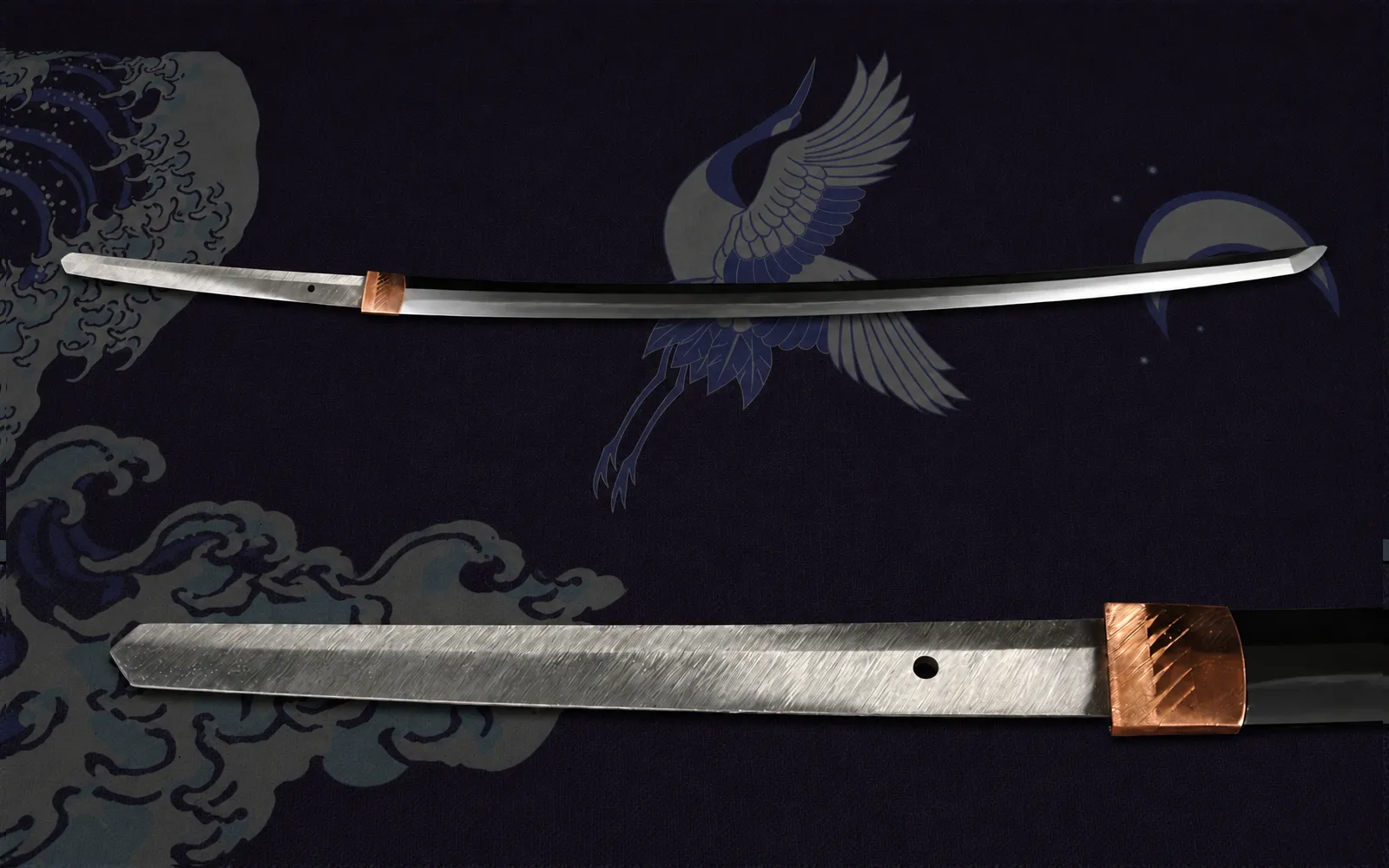
Composite photograph of a custom-series Sanmai katana blade showing its curved profile and tang against a dark Japanese pattern.
The blade in profile, with the finished outline and tang shown together.
Diagonal close-up of a polished Sanmai katana blade, with fine steel surface lines against a dark patterned background.
The steel catches a narrow line of reflected light.
Bright reflected light across a Shiage-togi finished Sanmai katana blade in a close-up photograph.
A brighter view of the polished blade plane.
Horizontal close-up of a Sanmai katana blade with subdued layered steel texture and soft reflections.
The surface grain becomes visible in a quieter reflection.
Close-up of a fine-polished Sanmai katana showing subtle steel grain and changing light across the blade.
Small changes in tone follow the polished surface.

STEEL / FINISH / LIGHT

Light Along the Steel.

The closer the view, the less the blade needs to announce itself. Reflections shift across the polished steel, allowing its fine hada and carefully finished geometry to come forward without distraction.
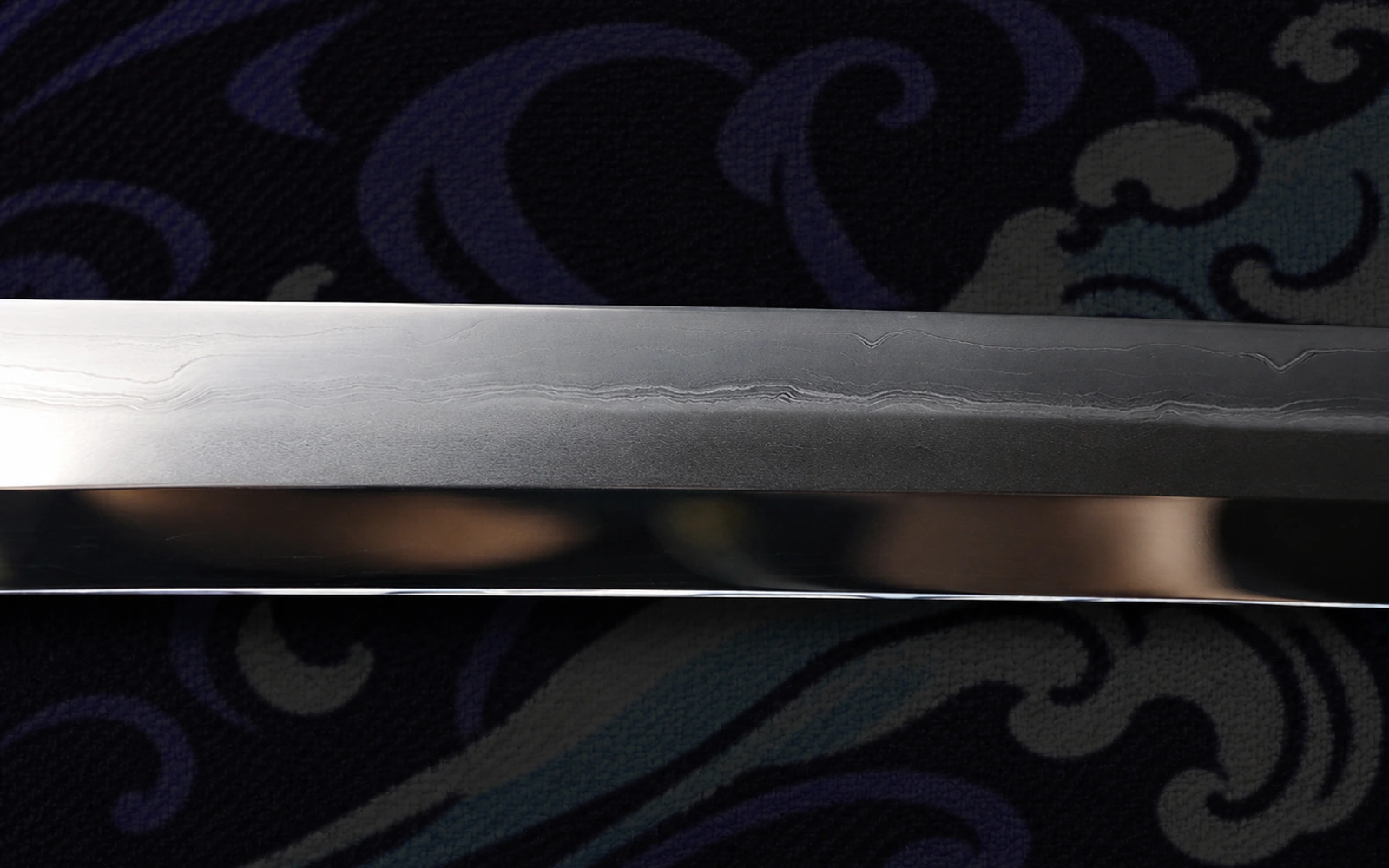
Horizontal macro view of flowing steel grain on a fine-polished Sanmai katana blade against a dark background.
Layered lines appear, then recede with the light.
Macro view of a polished Sanmai katana blade showing soft reflections and subtle changes in the steel surface.
A final study of the blade’s reflective surfaces.
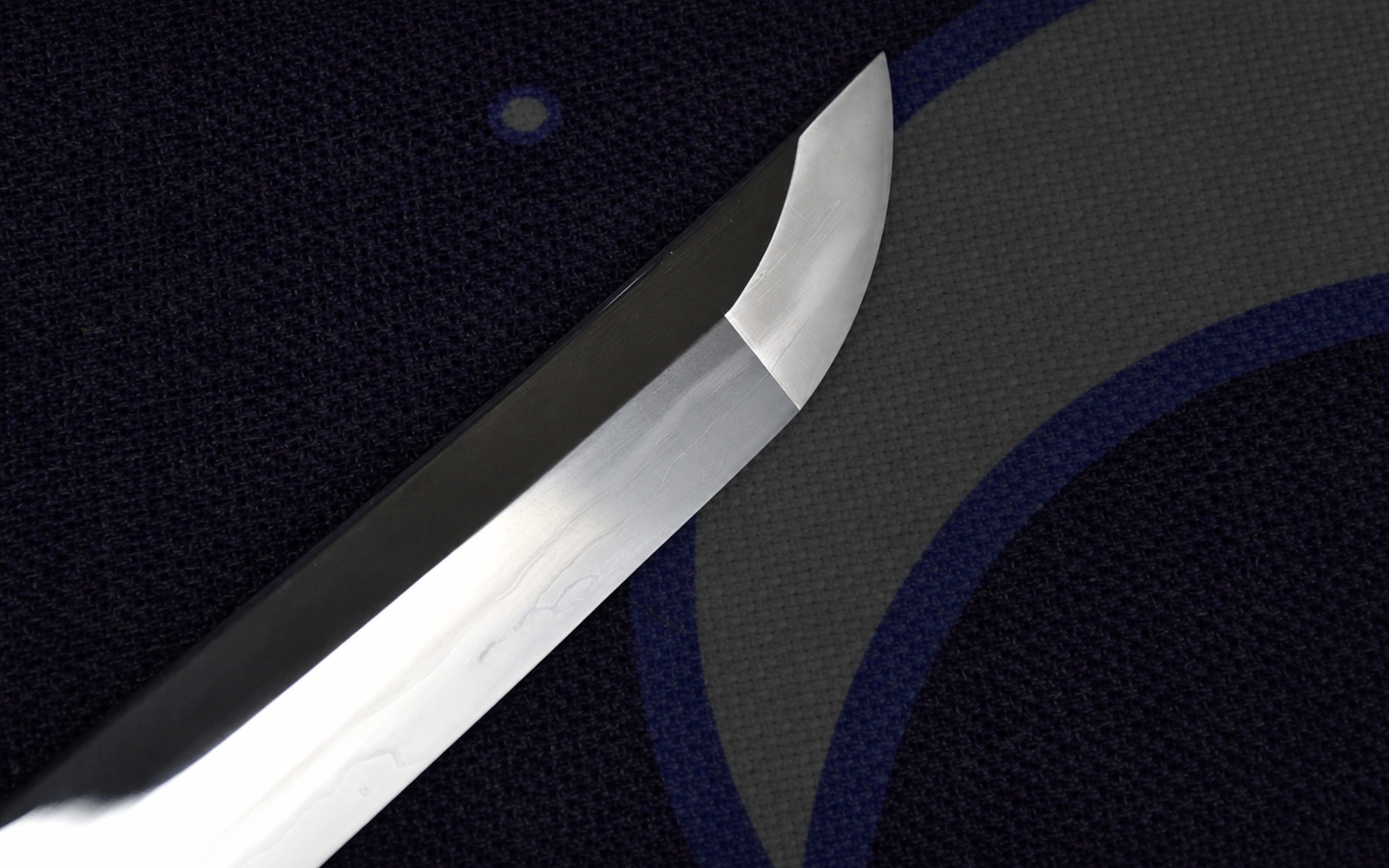
Angled close-up of the Sanmai katana kissaki, showing the polished point and blade geometry against a dark Japanese patterned background.
The kissaki completes the sequence.

YOUR KATANA / YOUR CHOICE

The Blade. Your Mounting.

A refined blade is only the beginning. The standard mounting provides a complete starting point; the available koshirae choices let you shape the finished character of your katana through the Customizer.

Continue with the available mounting options and make this katana your own.

CUSTOMIZE THIS KATANA

MASTER WORKSHOP

Beyond the Standard Mounting.

Discover dedicated workshop collections beyond the standard component selection. Each collection opens separately from the katana Customizer.

WKATANA CRAFT / CHARACTER / INDIVIDUALITY

Reviews

There are no reviews yet.

Be the first to review “Custom-Series Sanmai Advanced-Polish Katana Blade”

Your email address will not be published. Required fields are marked *