QUIET CRAFTSMANSHIP · LONGQUAN

Dojigiri Yasutsuna Replica Tachi — Version B

¥7,950.00

WORKSHOP NOTES

Hello, everyone. Lao Yan here. Somehow...

I just realized it has been two months since I posted a new video. There are plenty of reasons.

I won’t make excuses. Let’s just say I’ve been lazy. Anyway, today we have...

...a tachi with Kobuse construction, modeled on the dimensions of Dojigiri Yasutsuna.

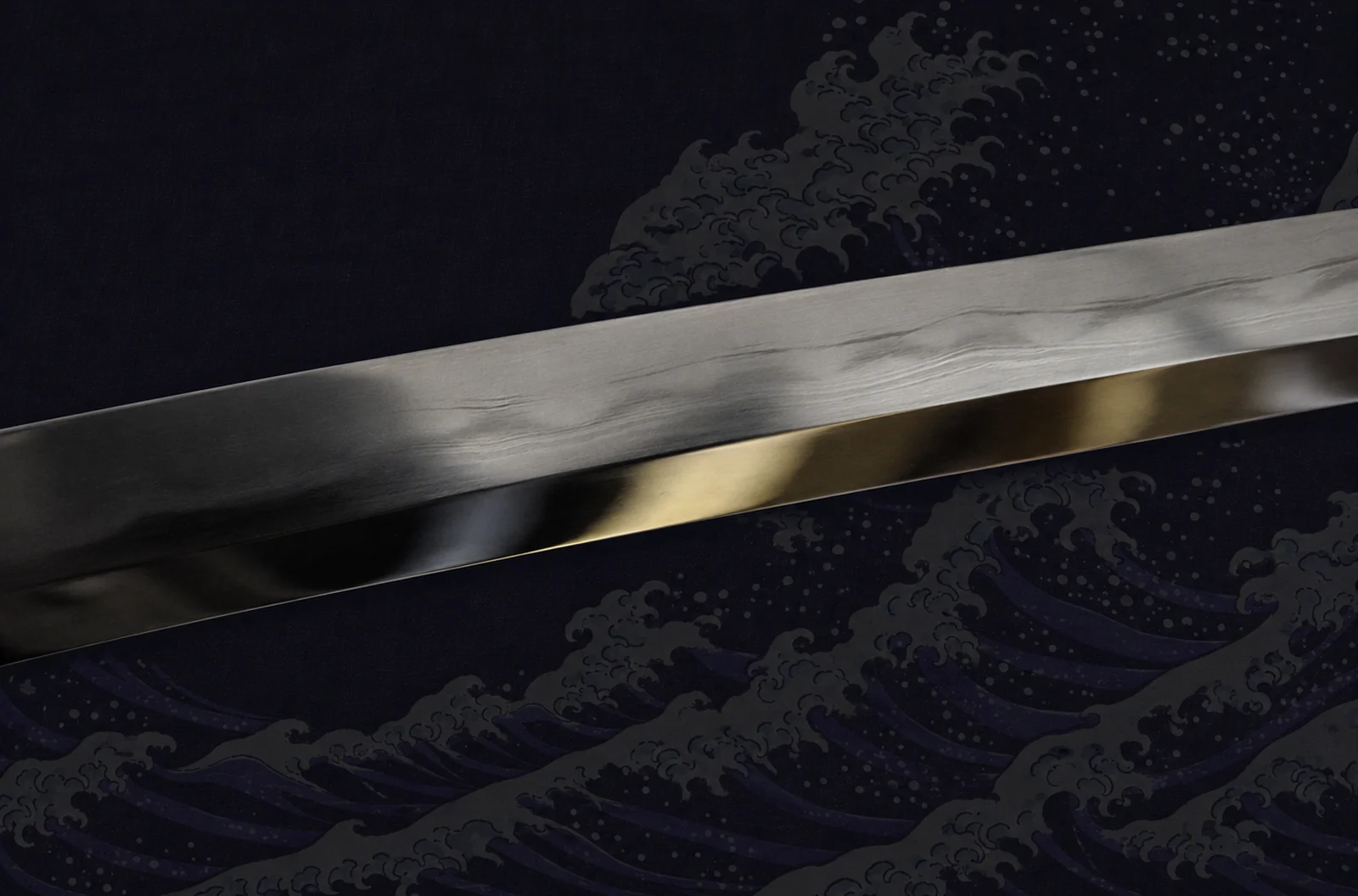
That means a jacketed-steel tachi. Regular viewers will probably recognize the polish before I even say it.

When the shinogi ridge is this straight and sharply defined, you know it has...

...Shiage-togi polishing. Kobuse construction, a Gunome hamon, and a handmade...

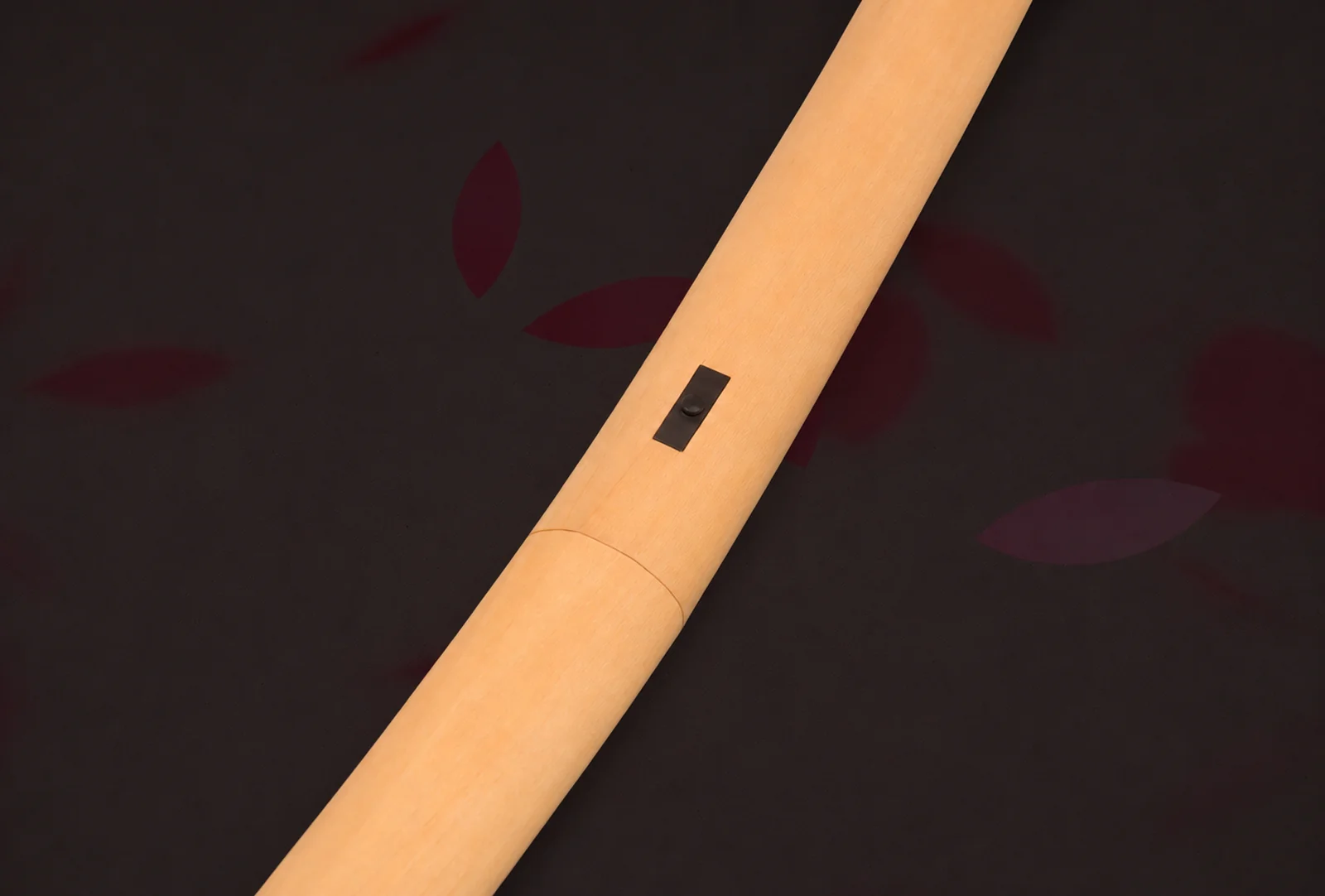
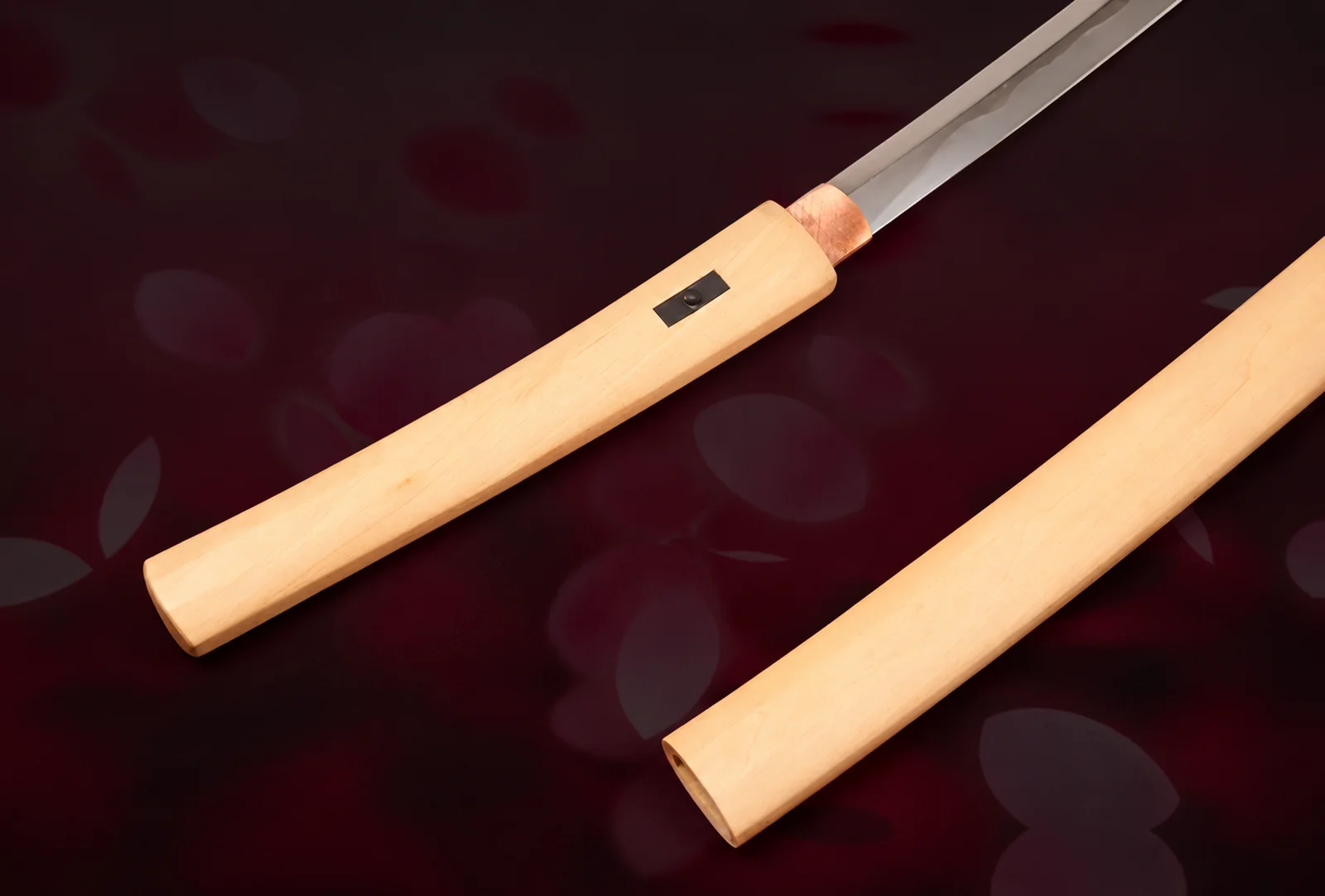
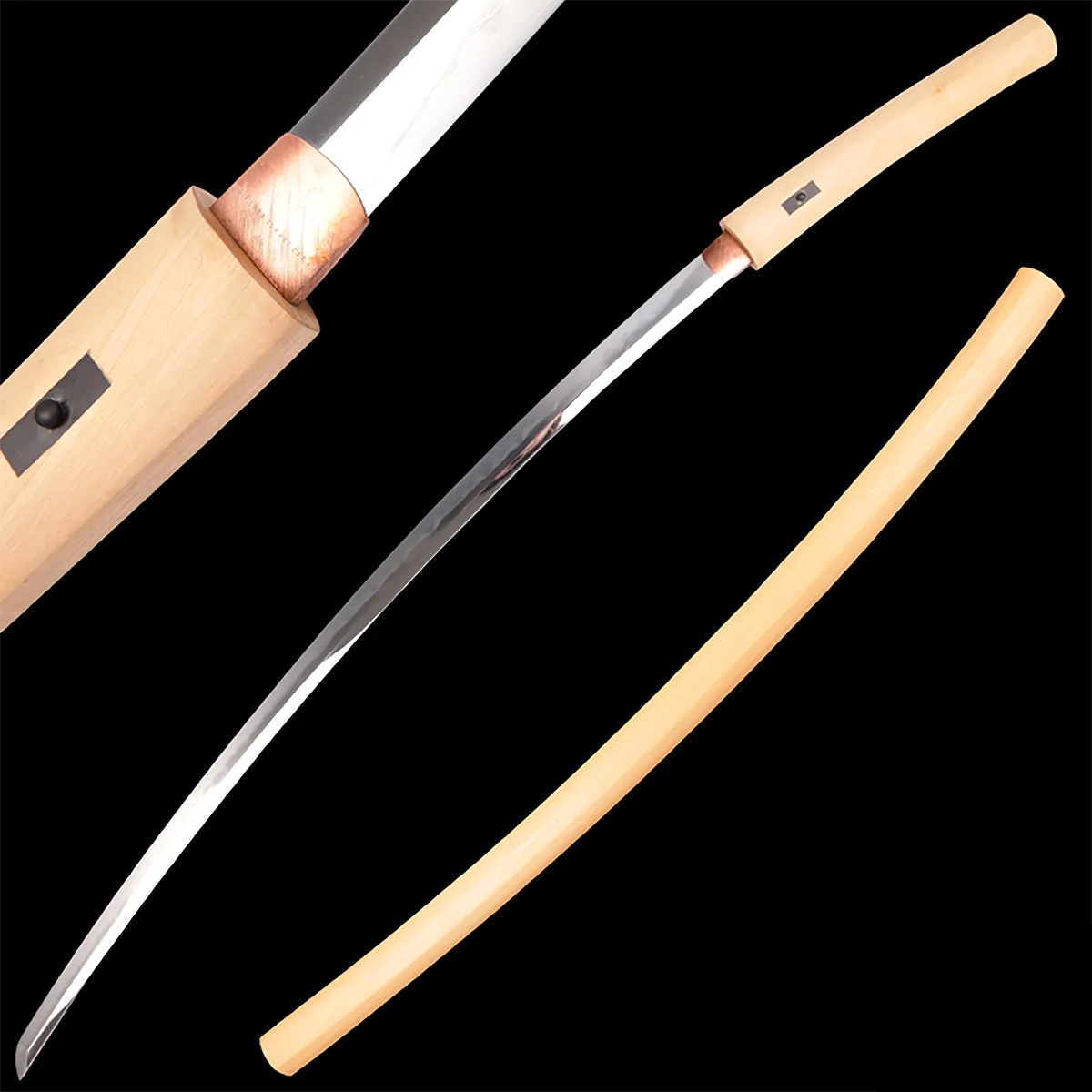
...wooden shirasaya, with a handmade copper habaki. Now, about this wooden mounting...

Some mass-produced versions look quite similar on the outside, but...

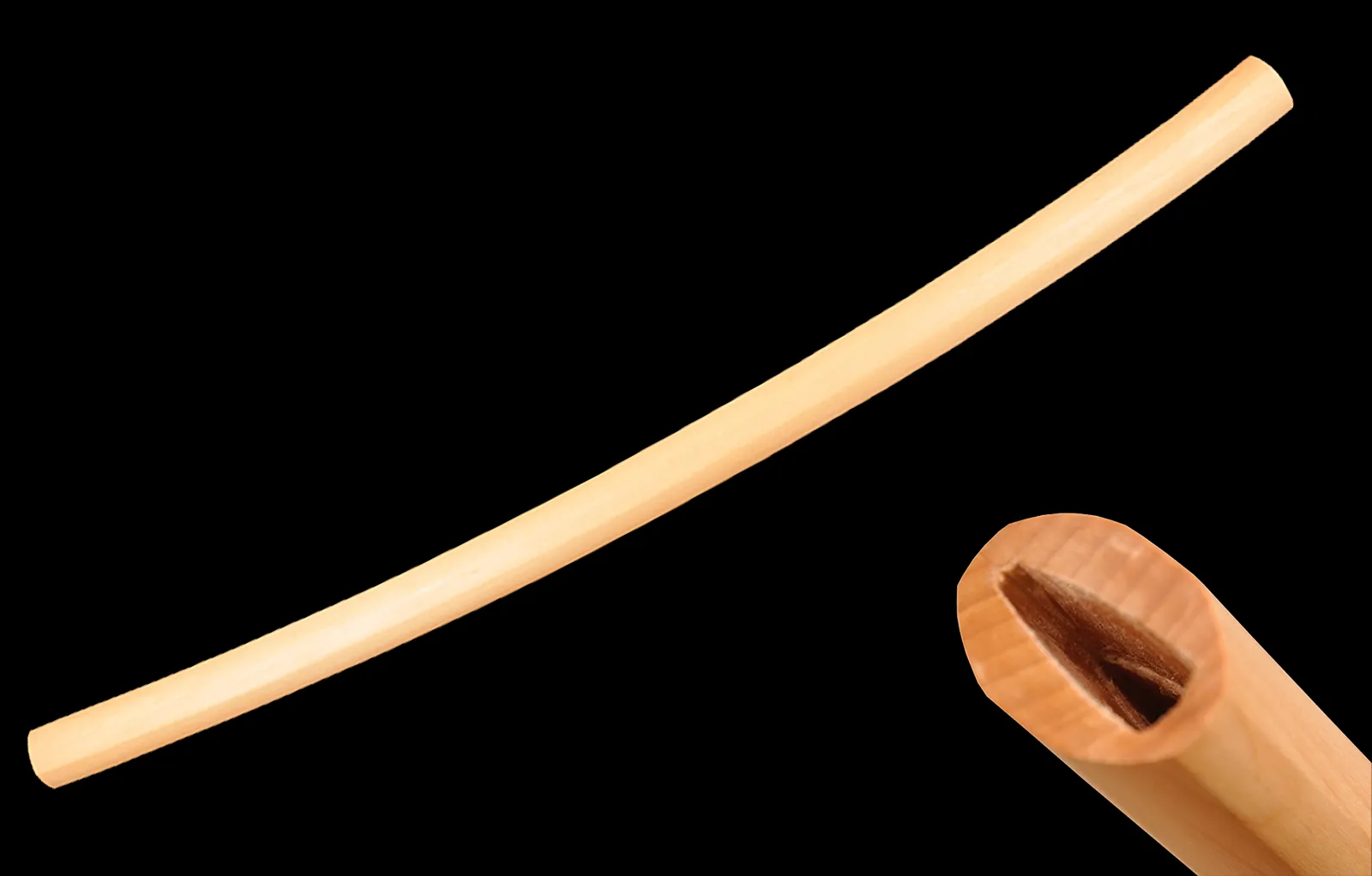
...look inside the mouth of the saya. The interior is carved to match the blade’s shape.

Even the recess for the habaki is fitted closely. Compared with an off-the-shelf scabbard...

...this is less likely to damage the blade’s polish and gives it better protection.

You do get what you pay for. Even this wooden mounting with a few horn fittings...

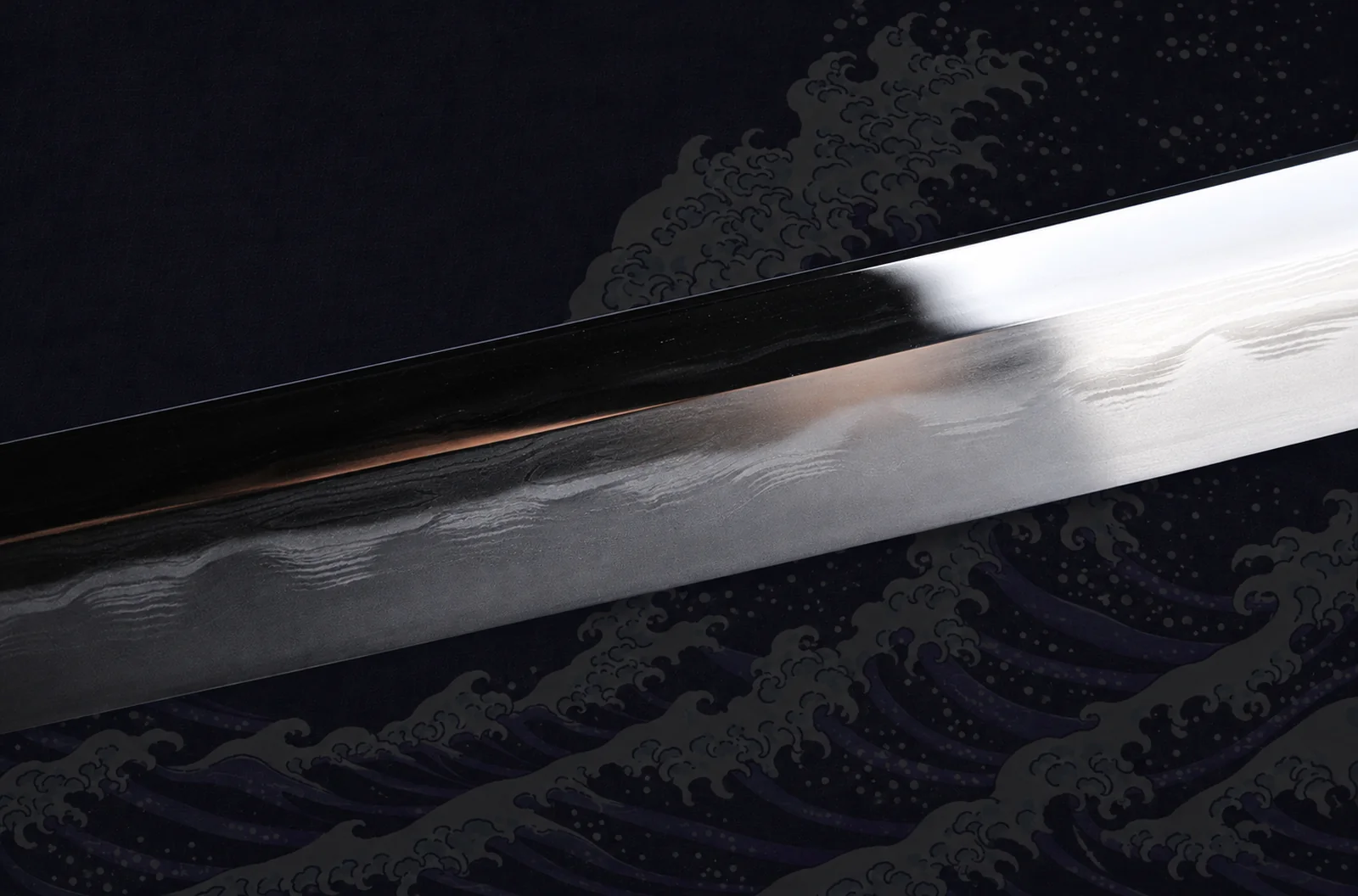
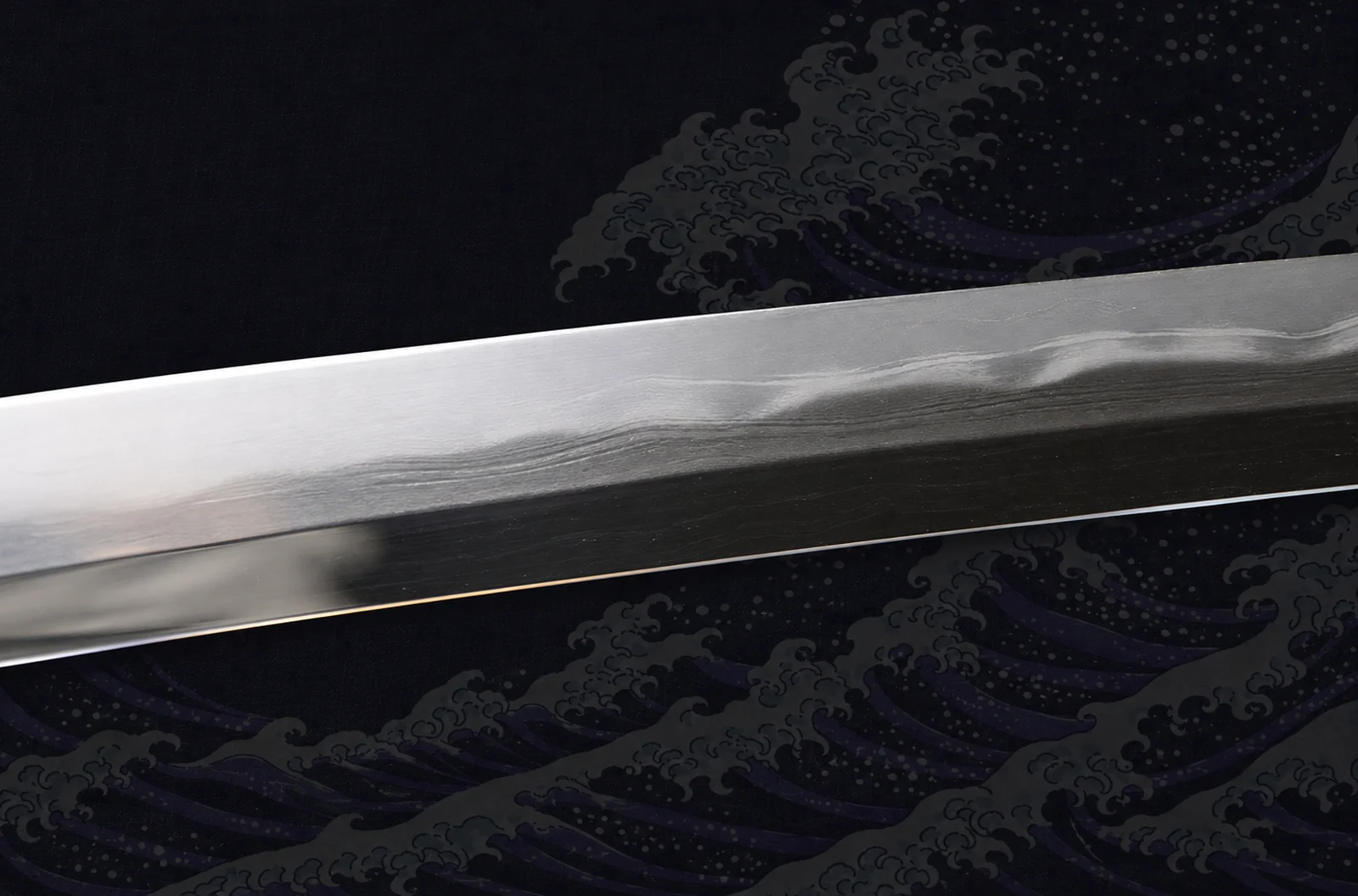
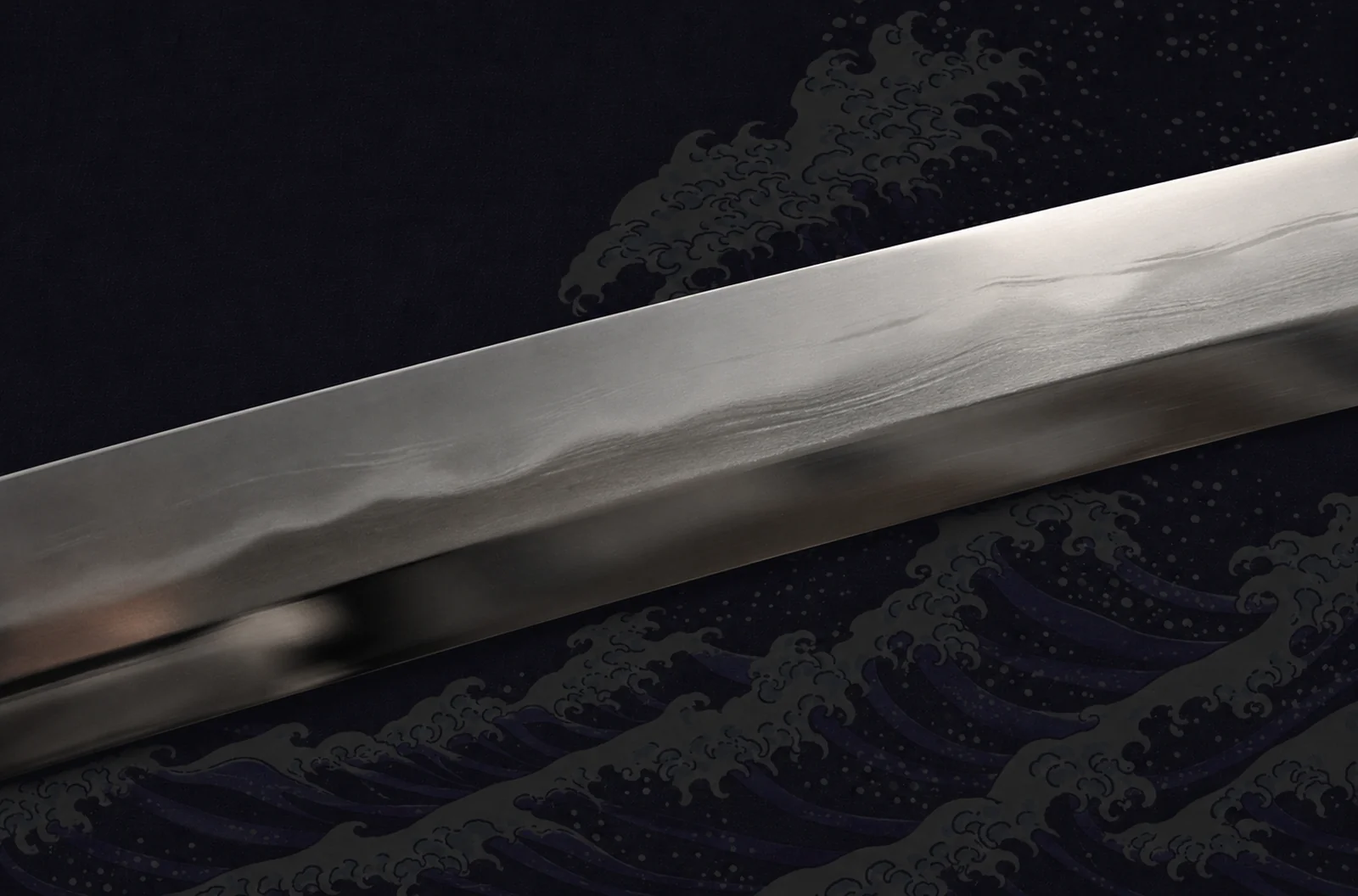
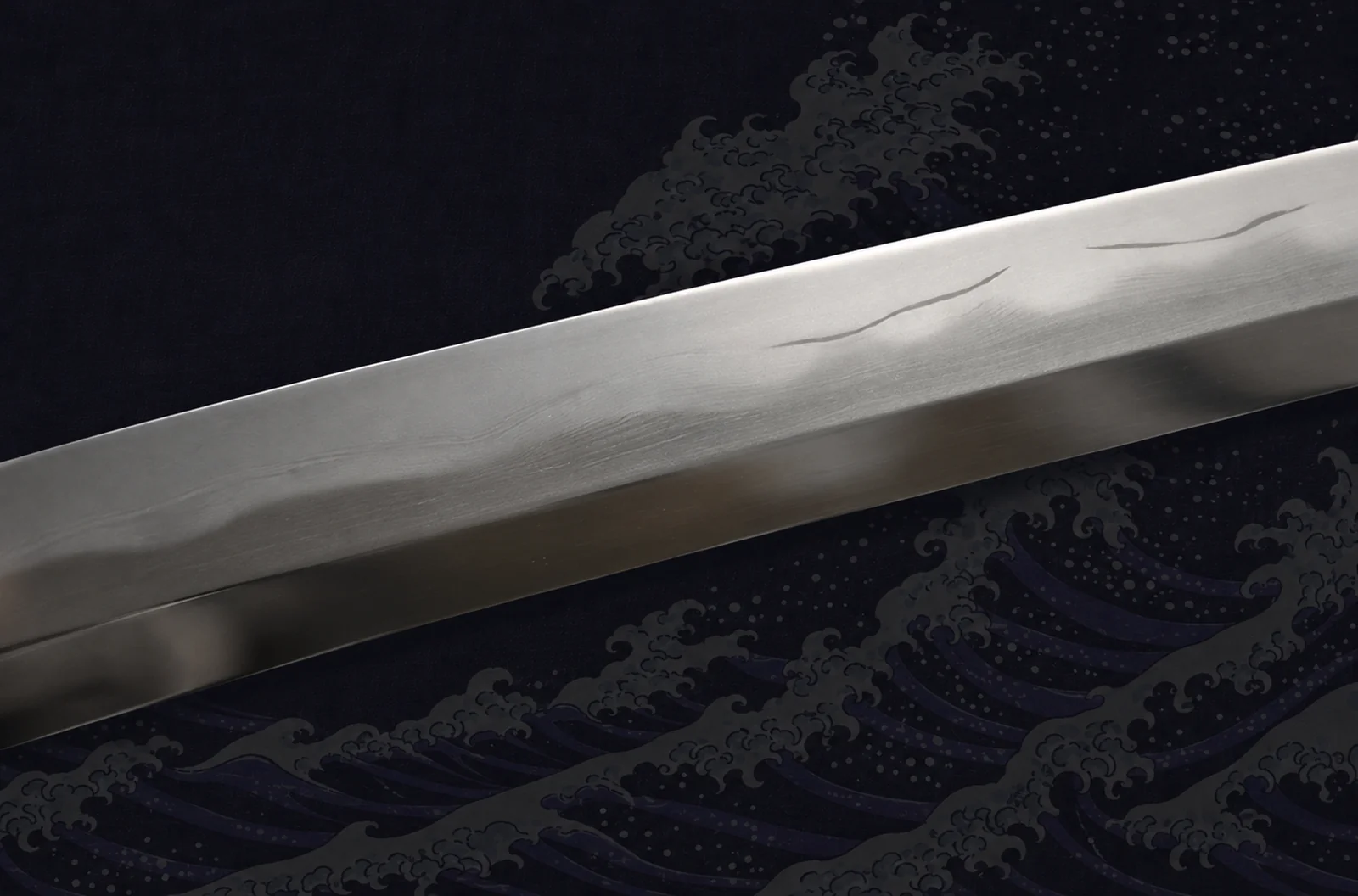
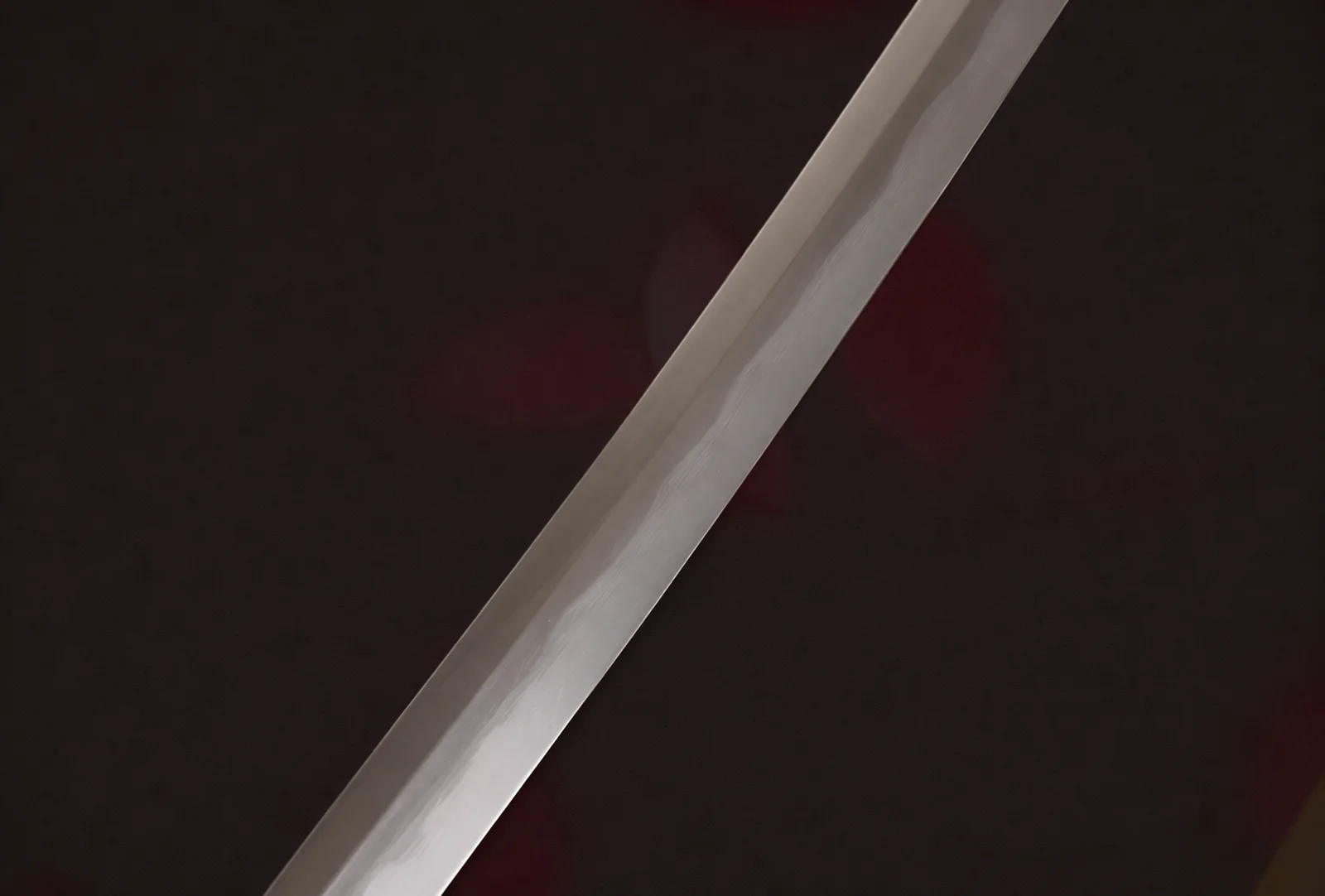
...costs over 1,000 yuan, which is quite a lot. Now, take a look at the Shiage-togi finish.

This is how the surface looks after polishing.

We redid the foundation polishing before the final finish, so the hadori...

...looks more natural, rather than having the hard edges of a tape-masked finish.

And that includes the back of the blade...

...the spine has also been carefully burnished.

But there is a trade-off. If you are careless when drawing or sheathing the blade...

...the area around the ridge—let me put the sword down first—

...the polished shinogi-ji can pick up a great many scratches very easily.

If you are completely new to swords, even if your budget is generous...

...I would not recommend starting with a Shiage-togi blade. Without careful handling and storage...

...the finish may look badly scratched in a month or two, or even after a week or two. It is very delicate.

That is a quick look at this sword: a tachi...

...made to Dojigiri Yasutsuna’s dimensions, with Kobuse construction and handmade shirasaya.

I will not take it apart today. For blades with this level of polish...

...I also normally finish the nakago by hand. Thank you...

...for watching. I will be posting videos more often from now on.

That is all for today. Thanks again for watching. Goodbye!

Technical Overview

Core specifications.

Nagasa
800 mm
Motohaba
28 mm
Motokasane
7 mm
Tsuka Length
250 mm
Overall Length
1120 mm
Weight without Saya
910 g
Weight with Saya
1050 g
Handmade product dimensions may vary slightly.
Blade & Craft

Blade craftsmanship.

Outer Steel
Folded T10 Carbon Steel
Core Steel
Manganese Steel
Construction
Kobuse Construction
Heat Treatment
Clay Tempering
Hamon
Clay-Tempered Hamon
Hamon Pattern
Gunome
Polish
Shiage-togi

Description

STORY 01 / HISTORY & FORM

Dōjigiri Yasutsuna

Dōjigiri Yasutsuna is a celebrated Heian-period tachi by Yasutsuna of Hōki Province. Its long, deeply curved profile is among the best-known examples of the early Japanese sword. That historic form provides the reference for this shirasaya-mounted tachi.

HŌKI YASUTSUNA / HEIAN PERIOD / HISTORICAL BLADE 80.0 CM
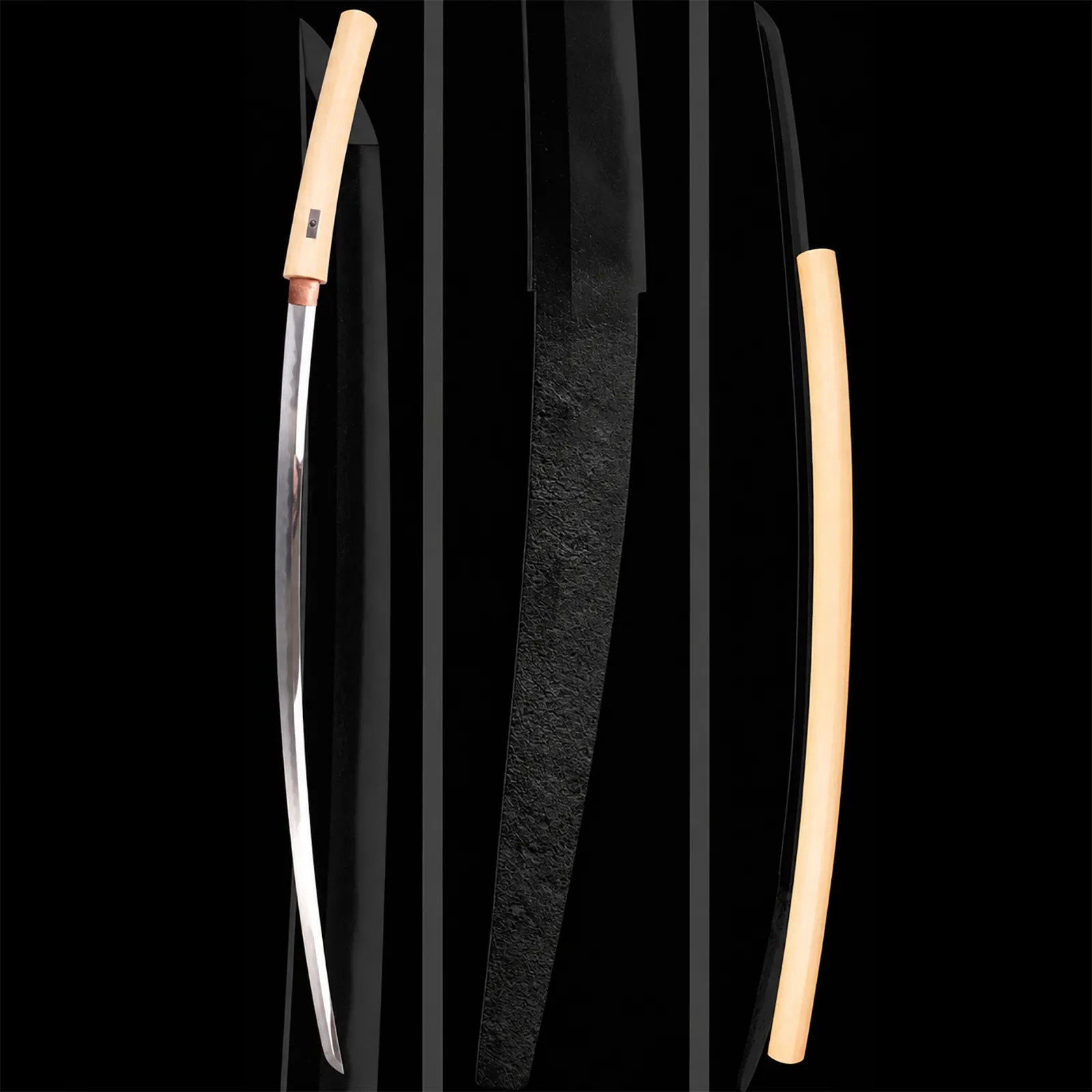
Dojigiri Yasutsuna replica tachi in handmade shirasaya, shown with the blade silhouette, natural wooden hilt, wooden scabbard, and tang-profile imagery on black.
The sword in shirasaya, with the blade silhouette and tang profile.

THE HISTORICAL SWORD

A Name from Legend

One of Japan’s Tenka Goken, or Five Swords Under Heaven, Dōjigiri takes its name from the legend of Minamoto no Yorimitsu and Shuten-dōji on Mount Ōe. The story was recorded in the Edo-period Kyōhō Meibutsuchō.

The sword later belonged to Toyotomi Hideyoshi and the Tokugawa family. Today, it is a Japanese National Treasure in the Tokyo National Museum collection.

THE TACHI PROFILE

The Shape of the Blade

The historical tachi measures 800 mm in blade length, with 27 mm of curvature. Its pronounced curve near the base is an important feature of its sugata.

This work has an 800 mm nagasa. Its design follows the long sweep of the tachi, from the nakago through the body of the blade to the point.

THE WOODEN MOUNTING

Shirasaya, Fitted by Hand

The handmade shirasaya has a natural wood hilt and scabbard. Its interior is carved to follow the blade, including the recess for the copper habaki at the mouth of the saya. The plain wood finish keeps attention on the blade’s profile and polished surface.

NEXT / BLADE CRAFTSMANSHIP — KOBUSE, HEAT TREATMENT & POLISH

STORY 02 / THE MAKING

Steel, Temper & Shirasaya

The blade uses Kobuse construction: an outer jacket of folded T10 carbon steel surrounding a manganese-steel core. Clay tempering gives the edge its Gunome hamon, while Shiage-togi polishing brings the blade's surface and geometry into focus.

Here, the finish is best seen at close range: along the hardened edge, through the shifting reflections, and at the crisp transition between polished planes.
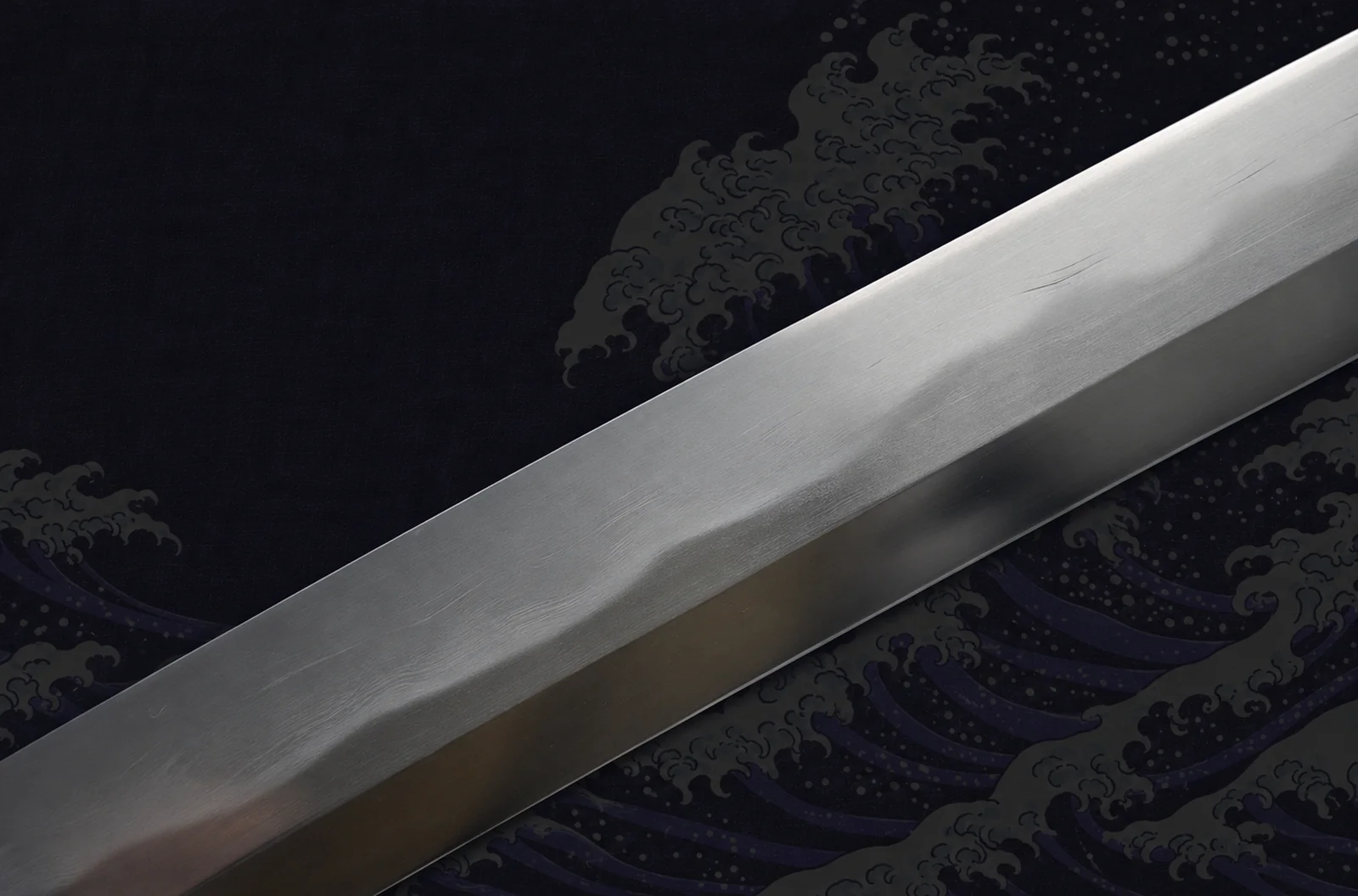
Close-up of the Dōjigiri Yasutsuna tachi blade under angled light, showing its reflective polished surface and changing steel tones.
The surface of the finished blade under angled light.

THE HARDENED EDGE

Gunome, Seen Along the Blade

The hamon follows a rounded, undulating line. Its appearance changes with the angle of light, revealing different parts of the edge and the polished steel around it.
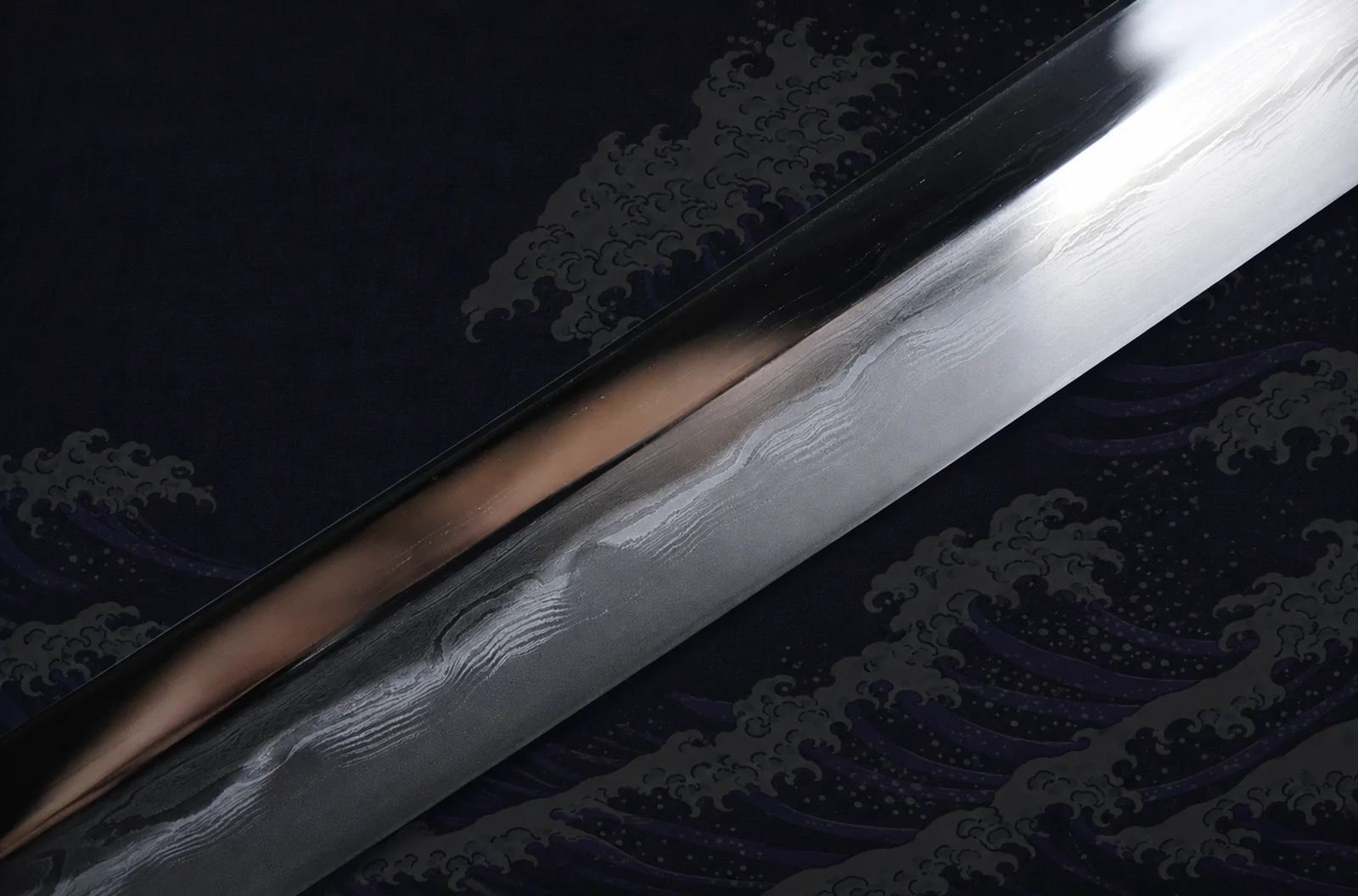
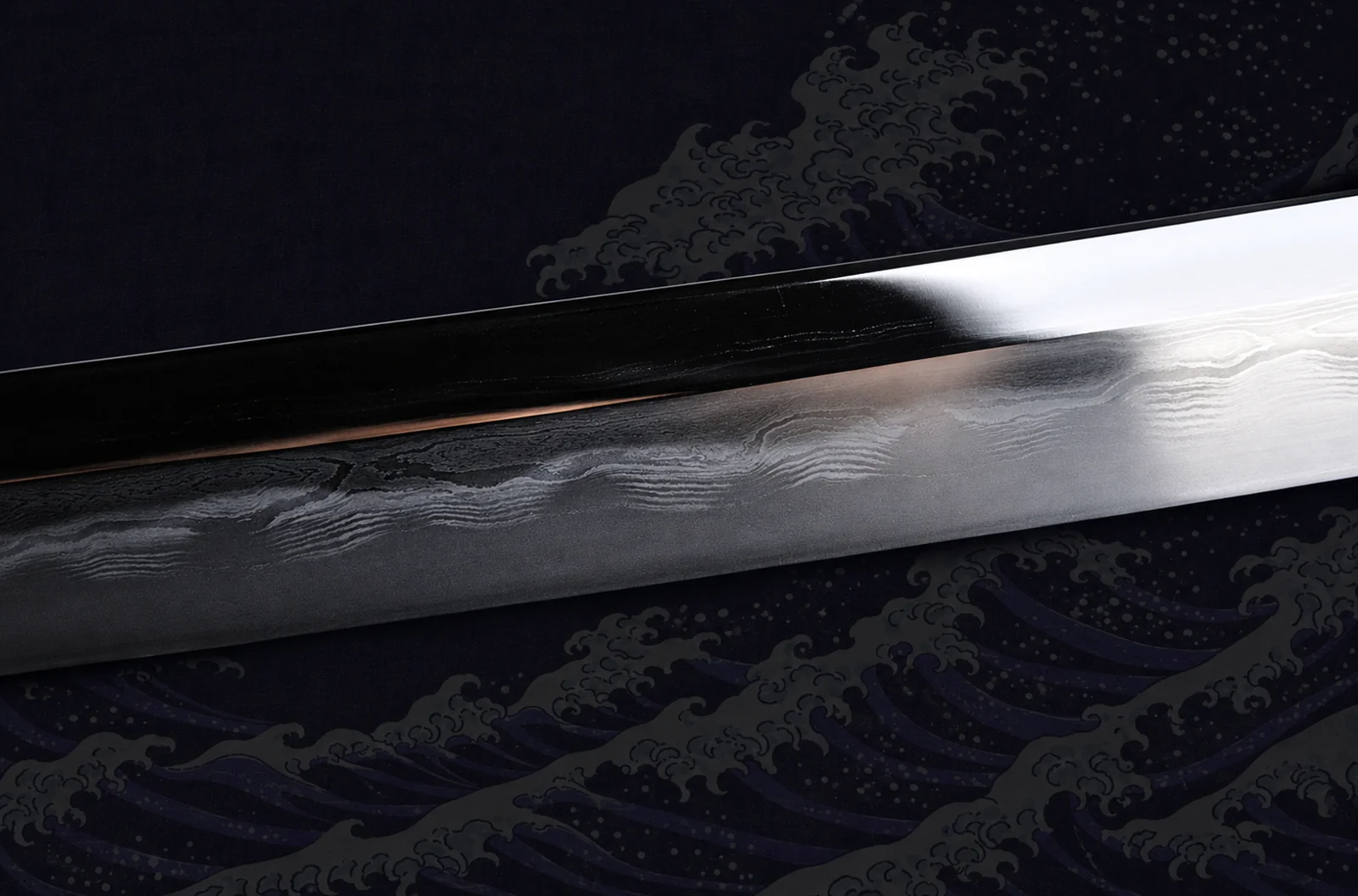
Angled photograph of the Dōjigiri Yasutsuna replica tachi blade showing a wavy temper line and reflective cutting edge.
The hamon running beside the polished cutting edge.
Close study of the Dōjigiri Yasutsuna blade showing rounded gunome tempering features beneath the polished surface.
An undulating section of the temper line.
Polished blade close-up highlighting the softened wave shapes of the gunome hamon and a dark reflective ridge.
Changing reflections across the hardened edge.

THE FINISH

Shiage-togi & Blade Geometry

The final polish defines the shinogi line, refines the surface and makes the blade's hardened edge easier to examine. The result is a clear distinction between the blade's planes without losing the natural variation of the steel.
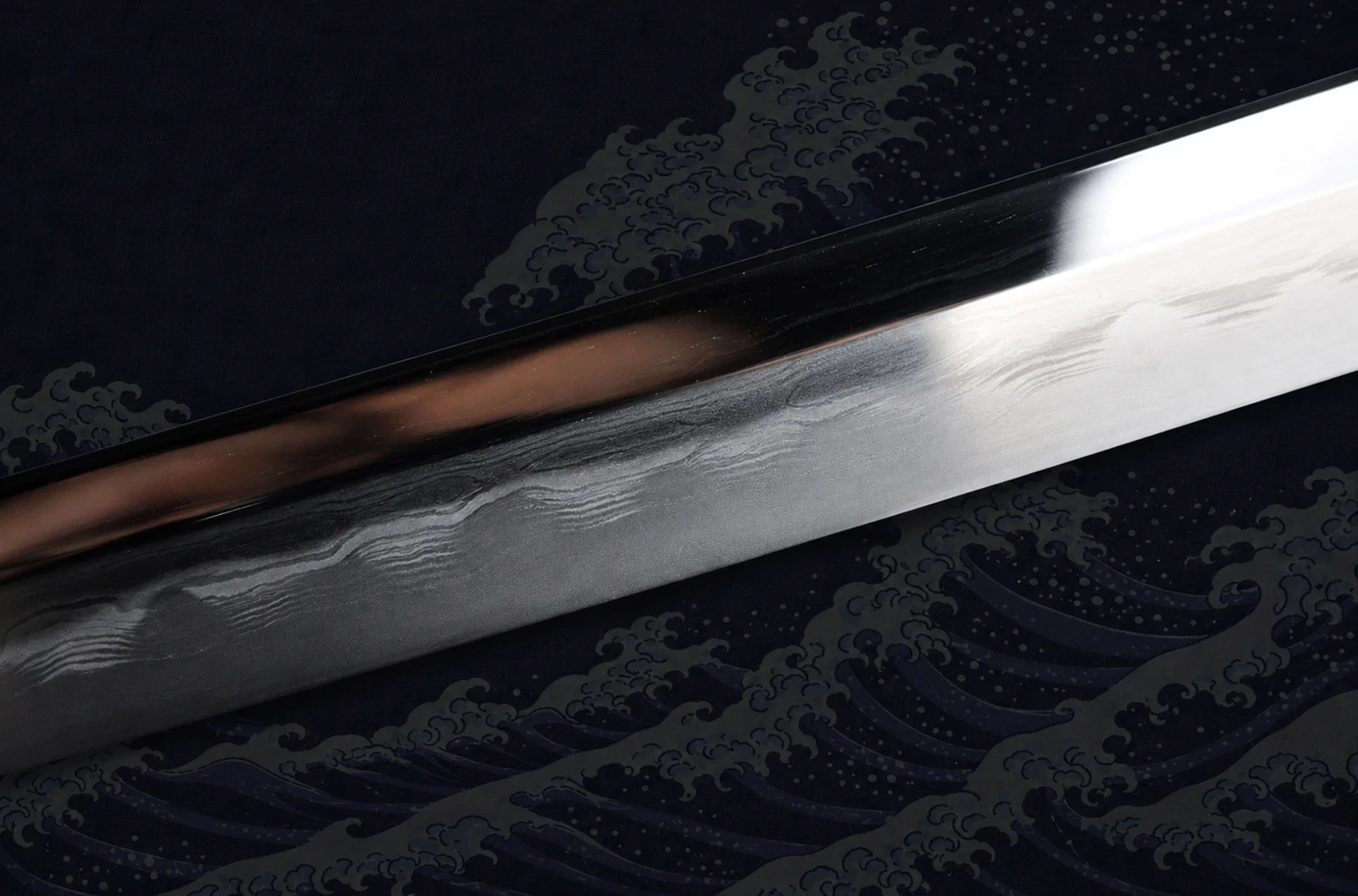
Broad close-up of the Dōjigiri Yasutsuna tachi blade showing the polished bevel, reflected light and visible wavy hamon.
Polished planes, edge reflection and temper line.

FORM & PROPORTION

A Study of the Tachi Silhouette

Viewed together, the contemporary blade and its historical reference draw attention to the long curve, the taper toward the tip and the overall sugata.
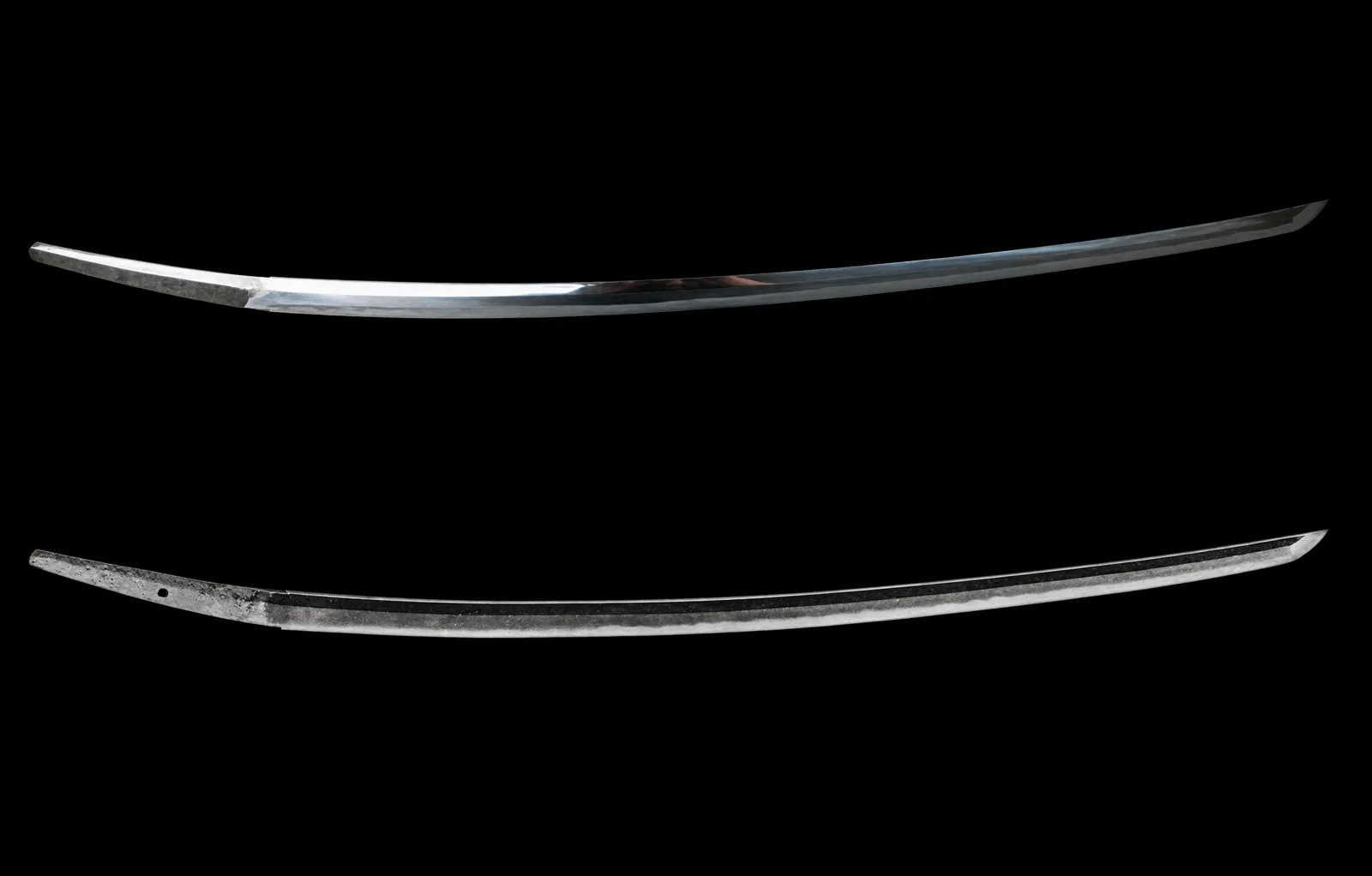
Blade profile comparison with the Dōjigiri Yasutsuna contemporary utsushi above and the historical sword reference below against black.
Above: contemporary utsushi. Below: historical blade reference.

THE WOODEN MOUNTING

A Shirasaya Made to Fit

The plain wooden mounting is shaped around the blade. At the opening, the hand-worked copper habaki meets the timber cleanly; the saya interior follows the blade's profile.
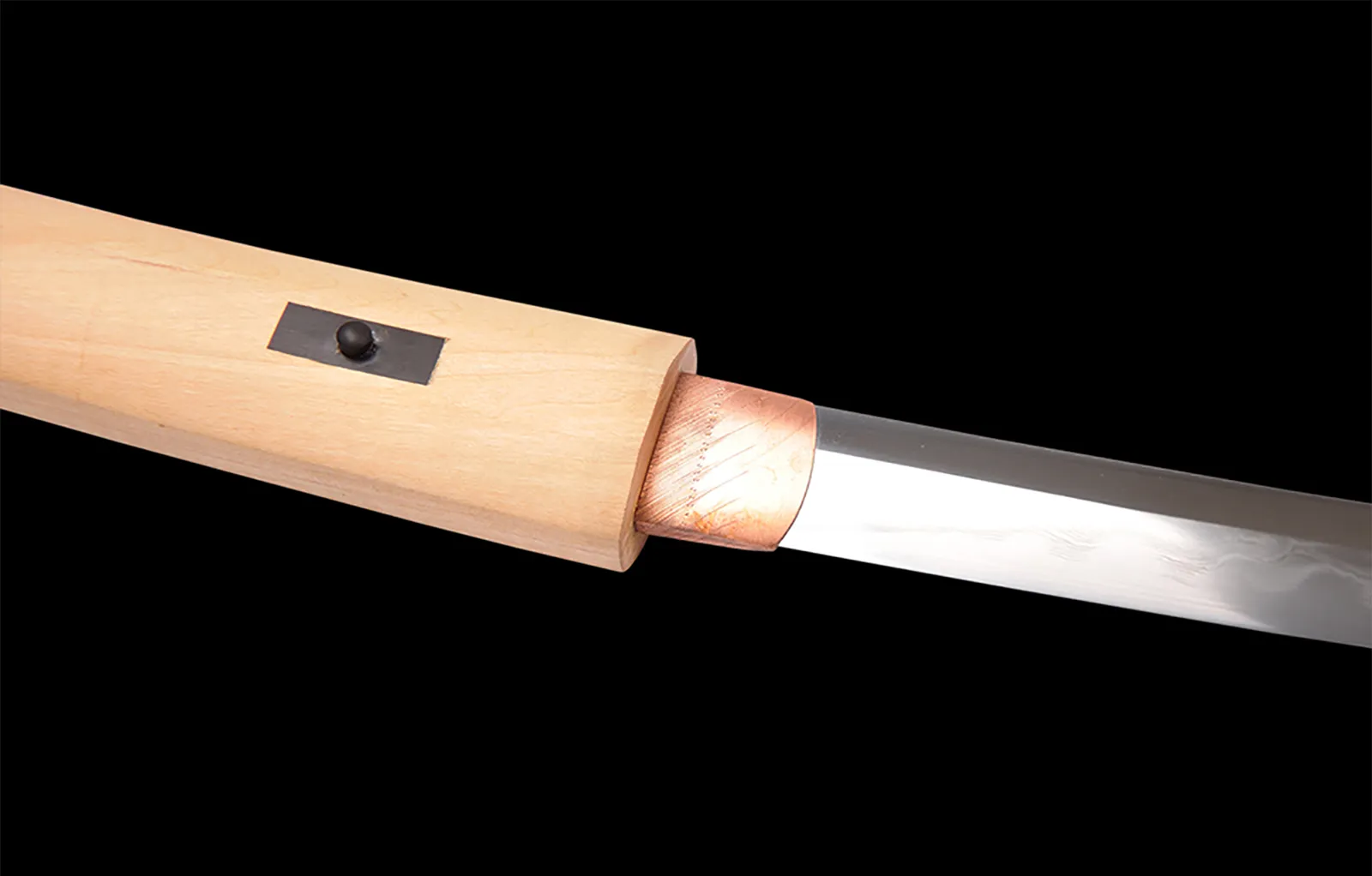
Dōjigiri Yasutsuna shirasaya wooden hilt and polished blade joined by a hand-finished copper habaki, with the mekugi visible.
Copper habaki fitted at the wooden mounting.

THE FIT

Wood, Copper & the Blade

The shirasaya has no decorative guard or wrapped handle. The visible workmanship is in the shaped wood, the alignment of its parts and the precise meeting of the copper habaki with the scabbard opening.
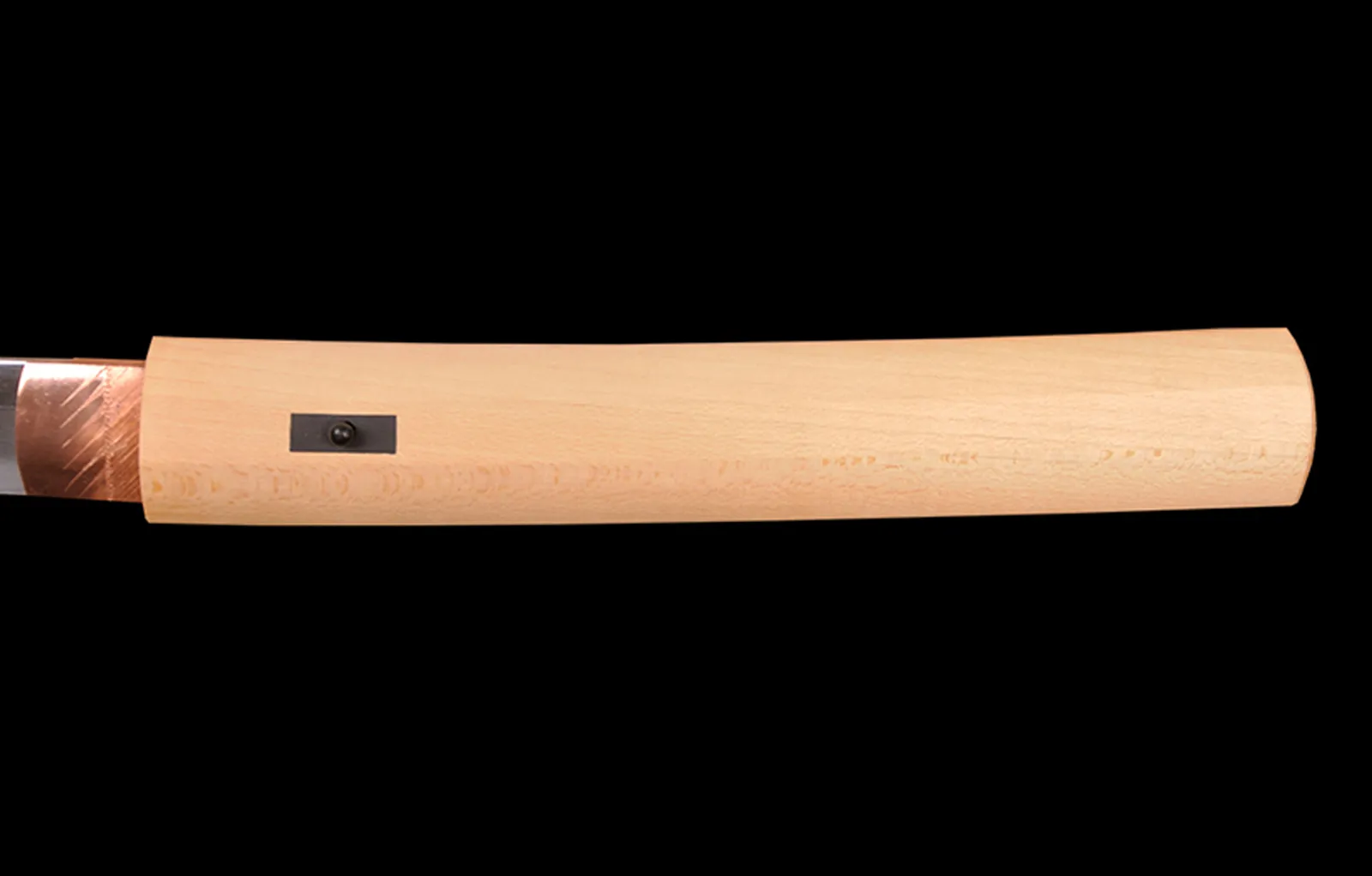
Side view of the Dōjigiri Yasutsuna natural wood shirasaya hilt showing smooth pale grain, a dark mekugi fitting and the copper habaki at the end.
The clean wooden hilt and fitted mekugi.
Full wooden shirasaya scabbard for Dōjigiri Yasutsuna alongside a close-up showing the opening and carved inner channel.
The curved saya with a closer look inside its mouth.

BLADE STUDIES

The Finish in Different Light

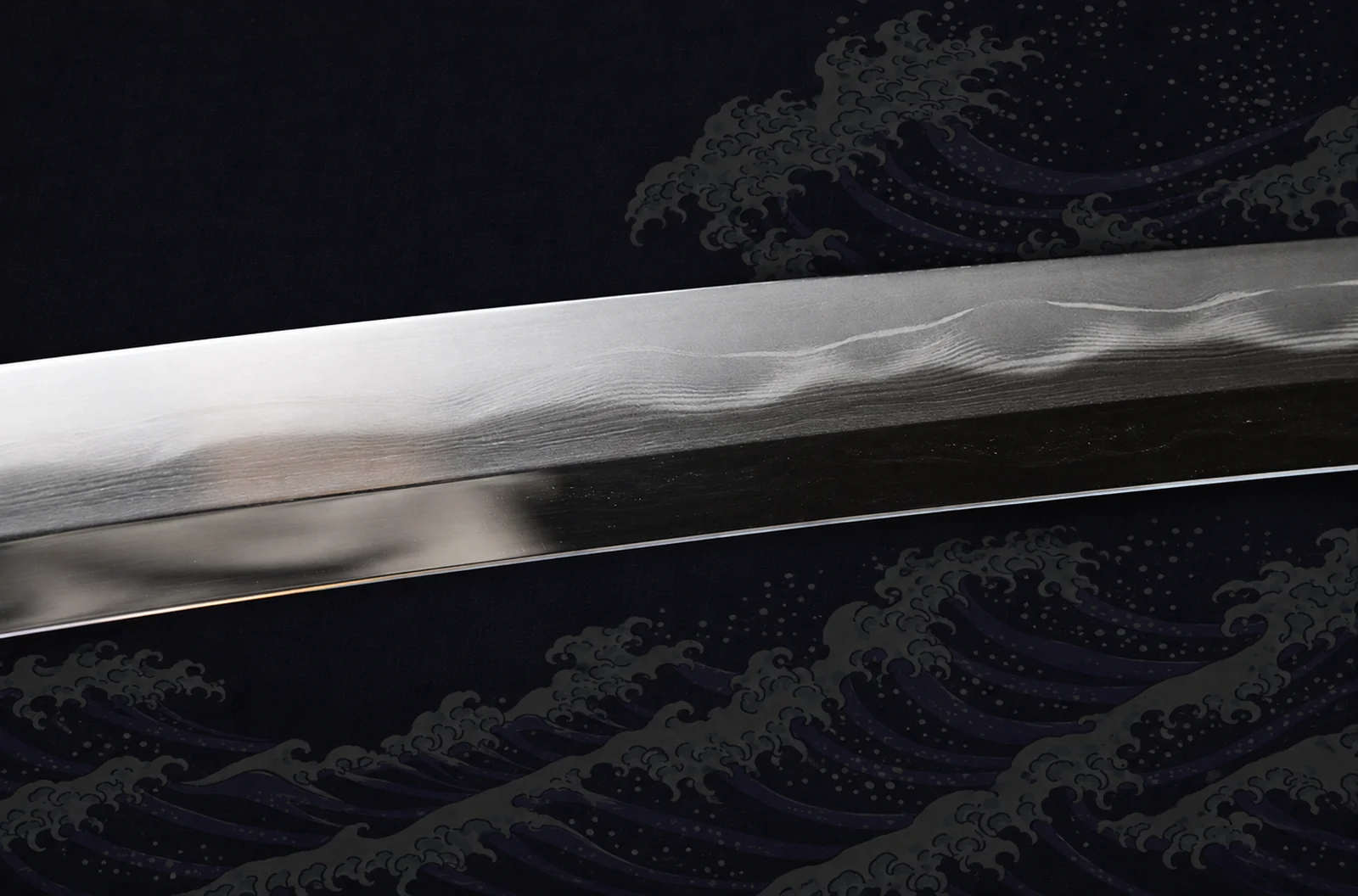
A series of close views records the same finished steel from several angles. The hamon and polish remain constant; reflected light changes what comes forward in each photograph.
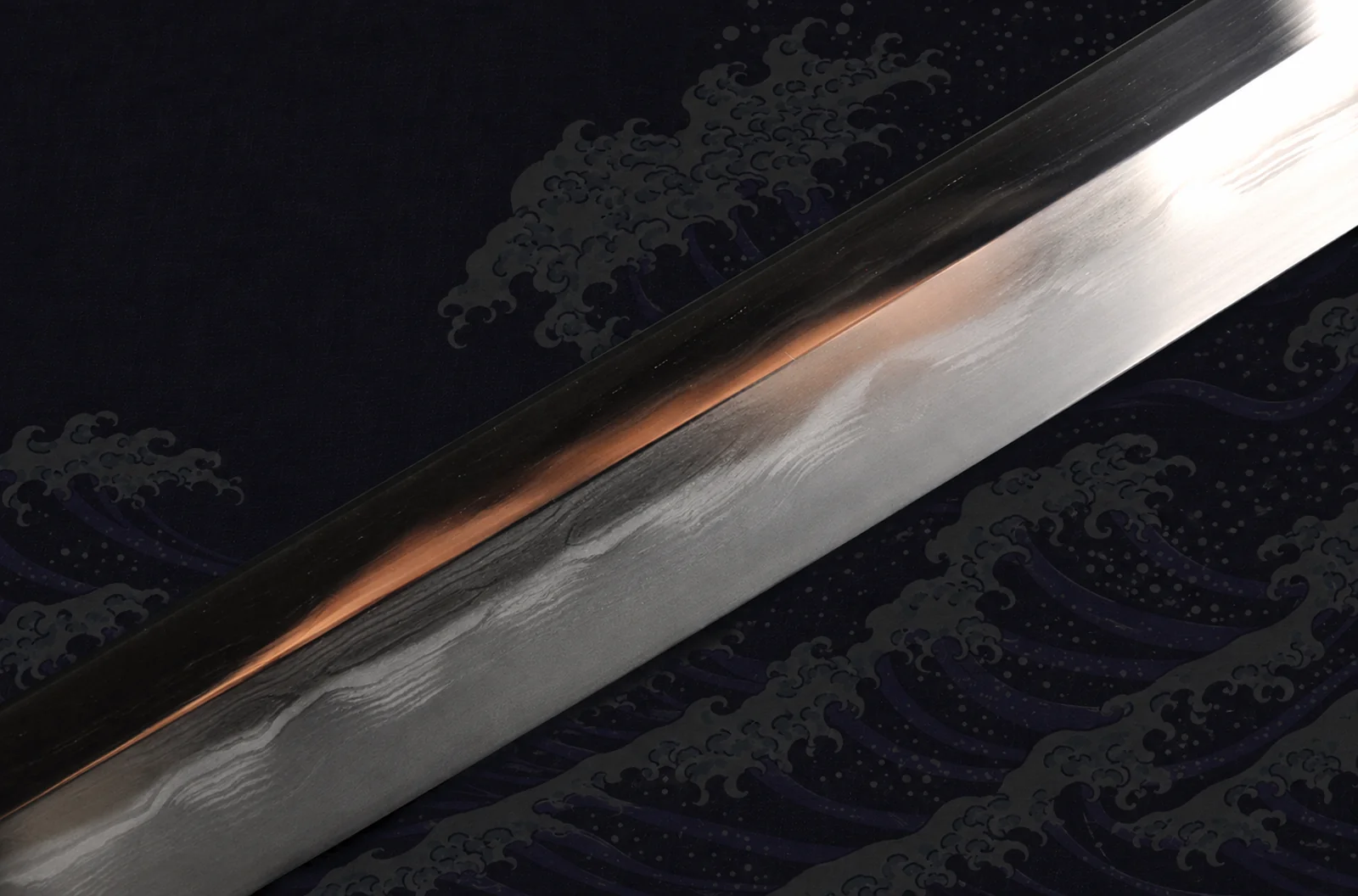
Large close-up of the Dōjigiri Yasutsuna blade with a smooth polished bevel and dark reflections following the temper line.
Long reflections following the blade's polished surface.
Lateral blade detail showing the Dōjigiri Yasutsuna tachi's wavy temper boundary across the polished steel.
The temper line in low, grazing light.
Another close-up angle of the Dōjigiri Yasutsuna polished blade emphasizing its bright edge and textured hamon.
The visible edge under a different reflection.
Wide close photograph of the Dōjigiri Yasutsuna tachi blade showing reflective steel and waves of the hardened edge.
A continuous view across the polished steel.
Detail of the Dōjigiri Yasutsuna blade showing the separation between a reflective polished area and a subdued steel surface.
Contrast between the blade's finished surfaces.
Final close-up of the Dōjigiri Yasutsuna tachi blade with the gunome hamon visible through shifting reflections.
A final view of the gunome pattern and polished edge.

NEXT / THE COMPLETE SWORD — COLLECTOR GALLERY

STORY 03 / COLLECTOR GALLERY

The Sword in Shirasaya

The Dōjigiri Yasutsuna tachi is presented in a handmade wooden shirasaya. A pale wood hilt and saya frame the long, polished blade, without the fittings and wrap of a conventional mounted sword.

Complete views and close studies of the wood, copper habaki, blade profile and finished steel.
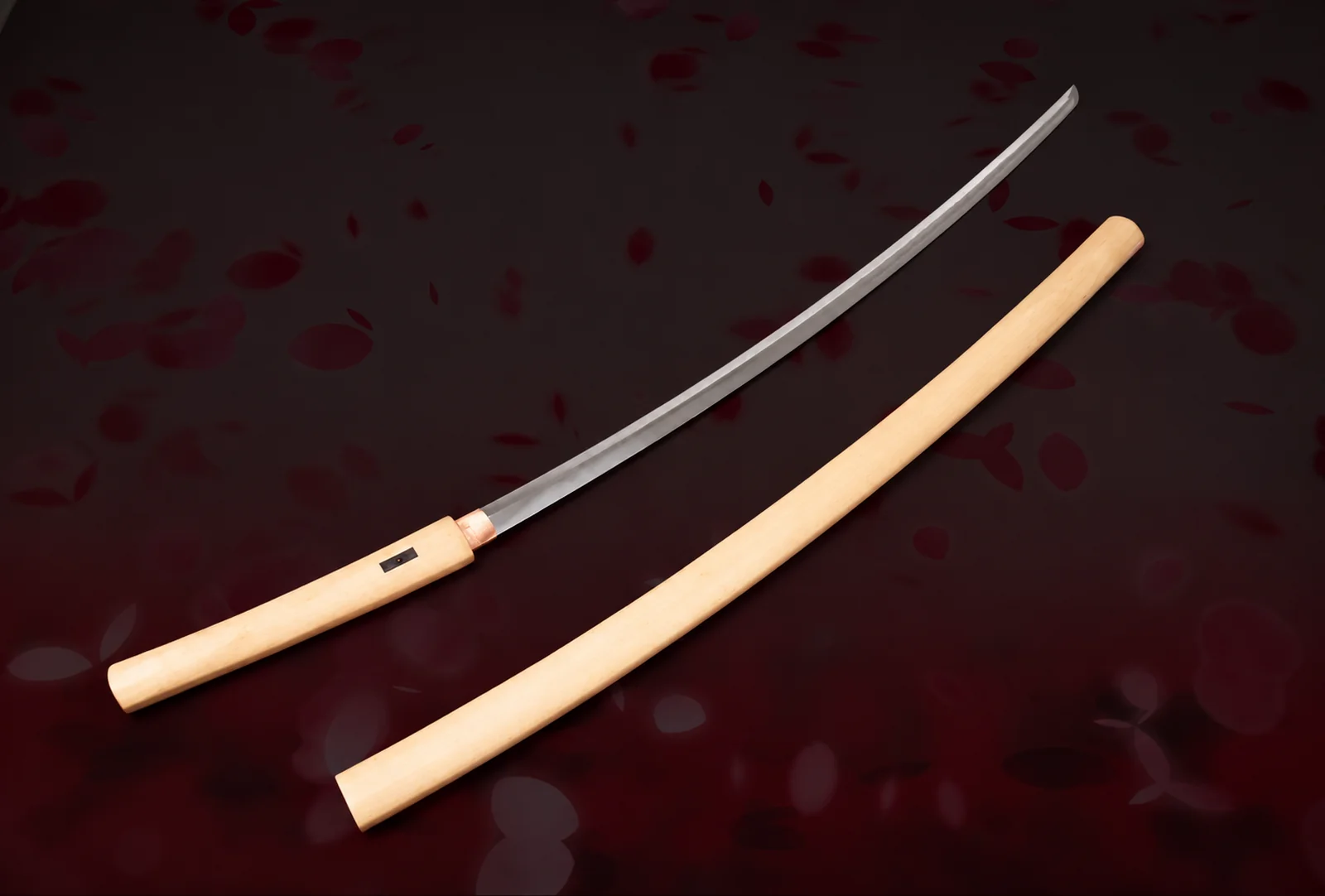
Dōjigiri Yasutsuna replica tachi displayed unsheathed alongside its pale wooden shirasaya on a deep burgundy background.
The complete tachi shown beside its wooden scabbard.

THE WOODEN MOUNTING

The Shape of the Shirasaya

With the blade enclosed, the shirasaya follows a single curved outline. The uninterrupted pale wood makes the length and sweep of the tachi especially easy to see.
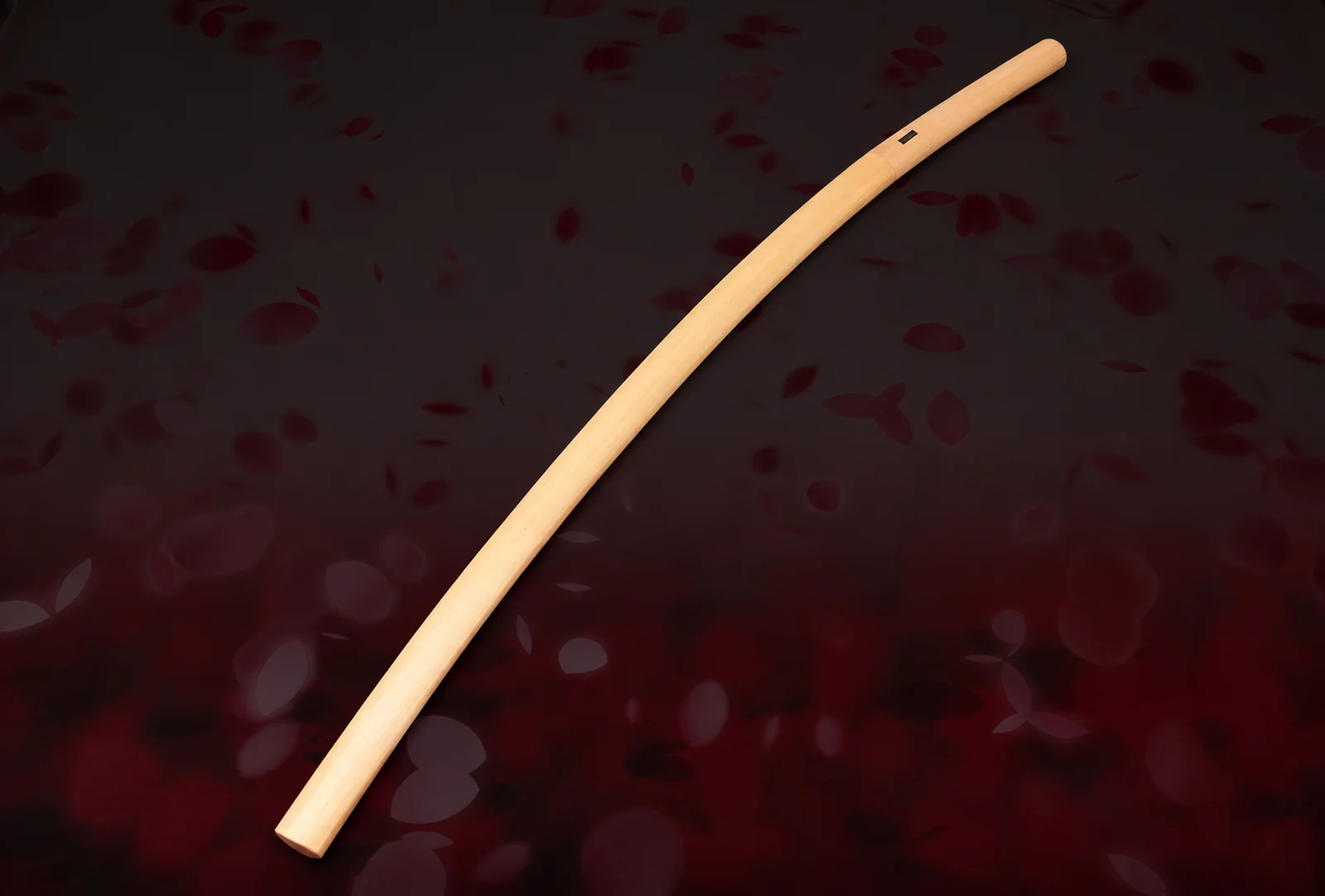
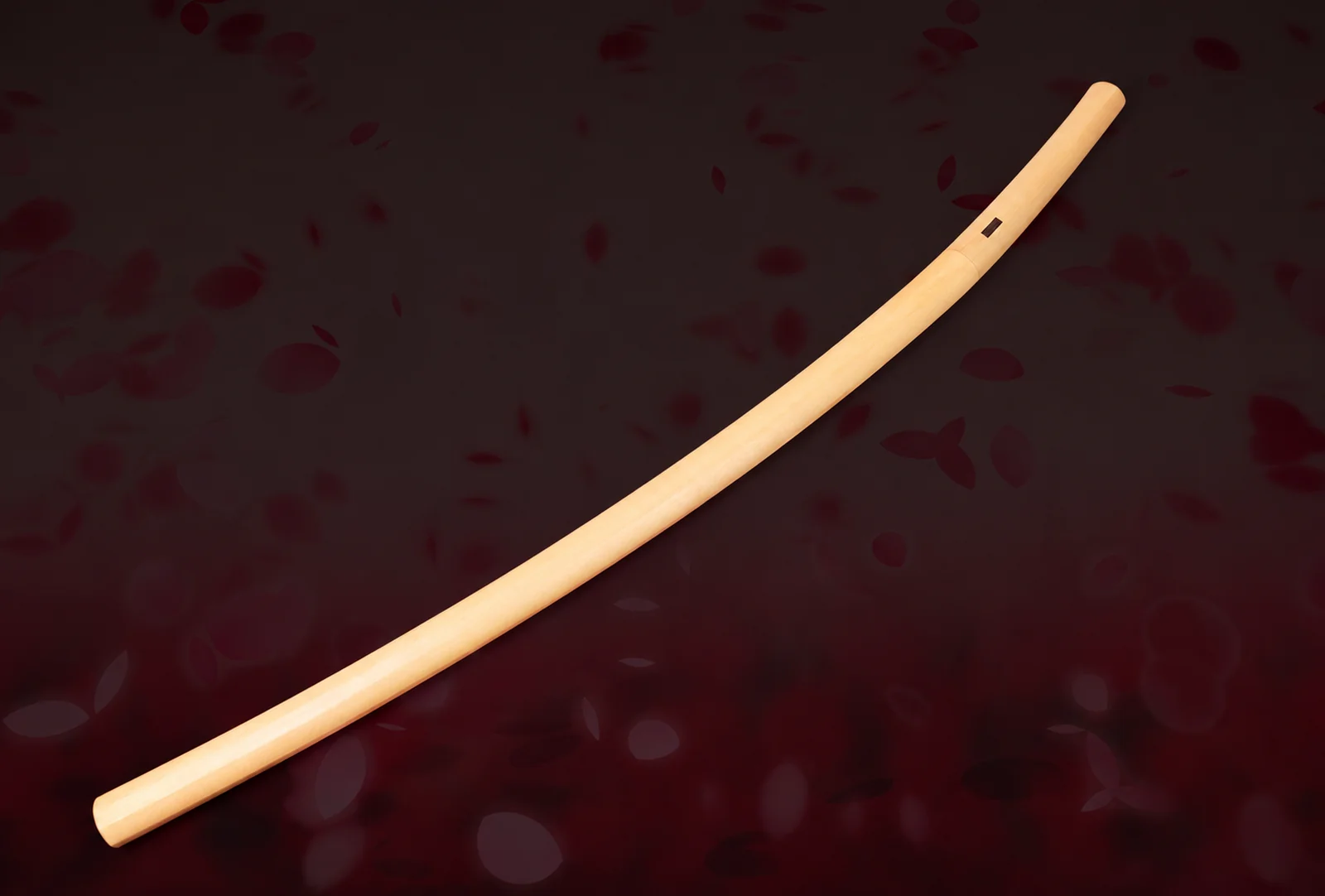
Long side view of the Dōjigiri Yasutsuna tachi in its plain pale wooden shirasaya, revealing the mounting's continuous curvature.
The continuous curve of the fully enclosed sword.
Full-length pale wooden shirasaya scabbard for the Dōjigiri Yasutsuna tachi arranged diagonally on a burgundy background.
A separate view of the long wooden saya.

NATURAL WOOD

A Plain, Hand-Fitted Finish

The light-colored wood is left visually simple, with fine grain visible across its surface. The profile is shaped to follow the tachi rather than draw attention to decorative hardware.
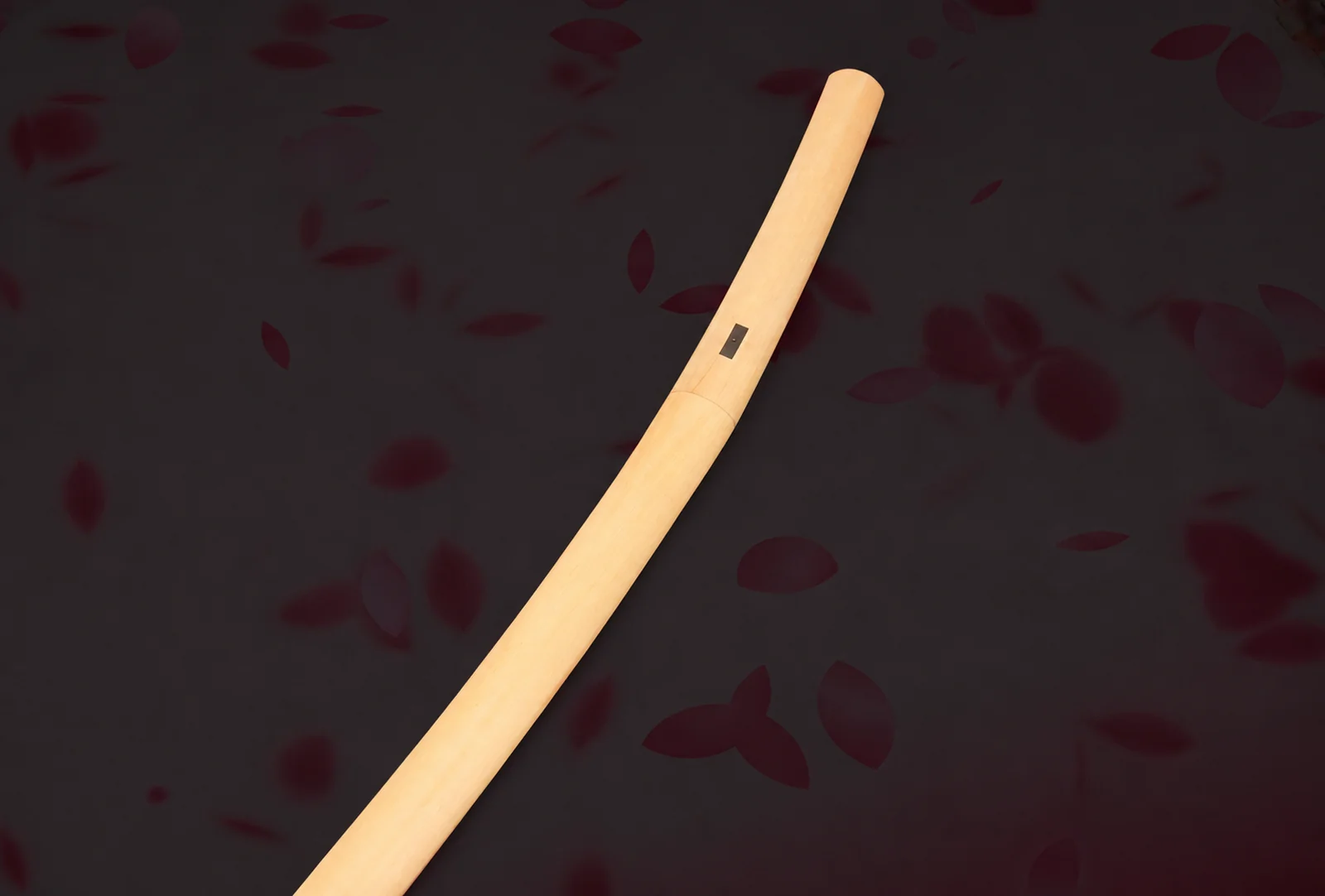
The Dōjigiri Yasutsuna sword enclosed in its handmade shirasaya, showing the full pale-wood mounting against a dark red backdrop.
The tachi fully enclosed in its wooden mounting.

JOINERY & FIT

Wood Meets Copper

At the mouth of the wooden mounting, the copper habaki sits against the blade. The straight wood edges, warm copper surface and polished steel give this small junction its distinct appearance.

The simple tsuka is retained by a mekugi, visible in the hilt detail.
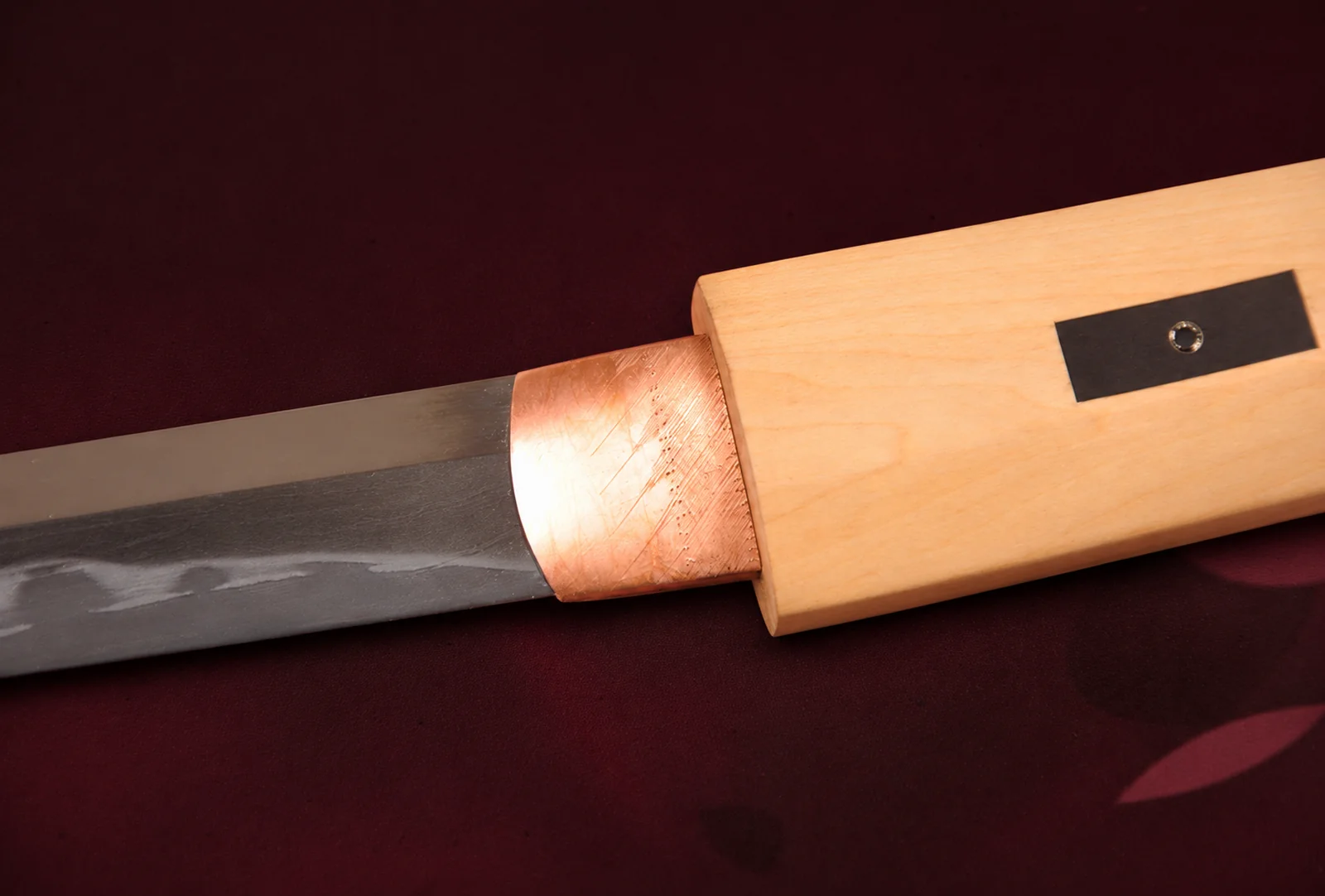
Close-up of the Dōjigiri Yasutsuna blade entering a plain wooden shirasaya hilt, showing the copper habaki and dark mekugi fitting.
Copper habaki, polished blade and plain wooden hilt.
Detail of the pale wooden shirasaya hilt for the Dōjigiri Yasutsuna tachi, showing its smooth grain and plain mounting.
The wooden hilt and its surface grain.
Close-up composition of the matching pale wood shirasaya components and fitted ends of the Dōjigiri Yasutsuna tachi.
Matching wooden components seen at close range.

THE BLADE

Polish, Hamon & Line

The 800 mm nagasa is finished with Shiage-togi polishing. These close views show the blade under different reflections, bringing its surface finish and Gunome hamon into view.
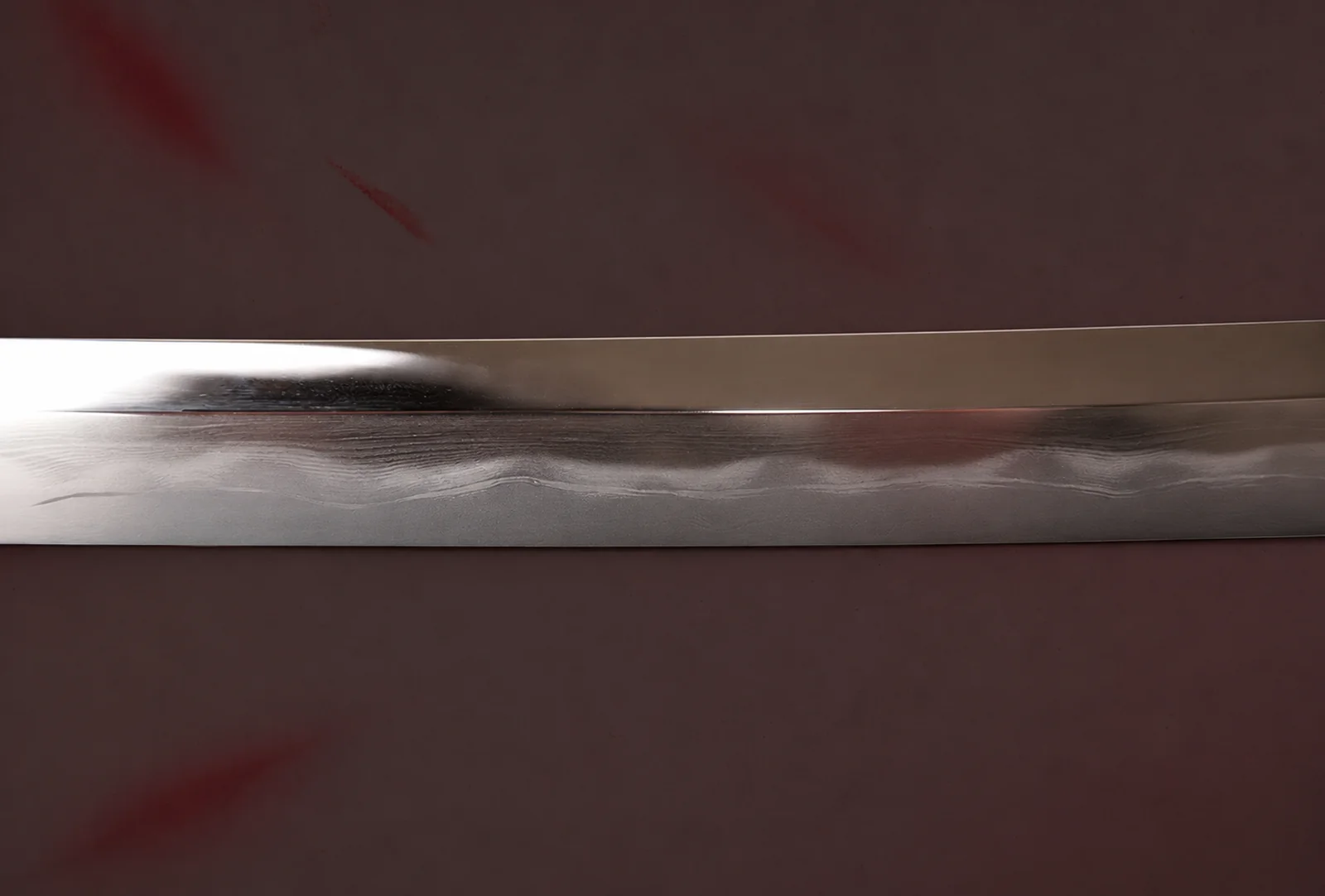
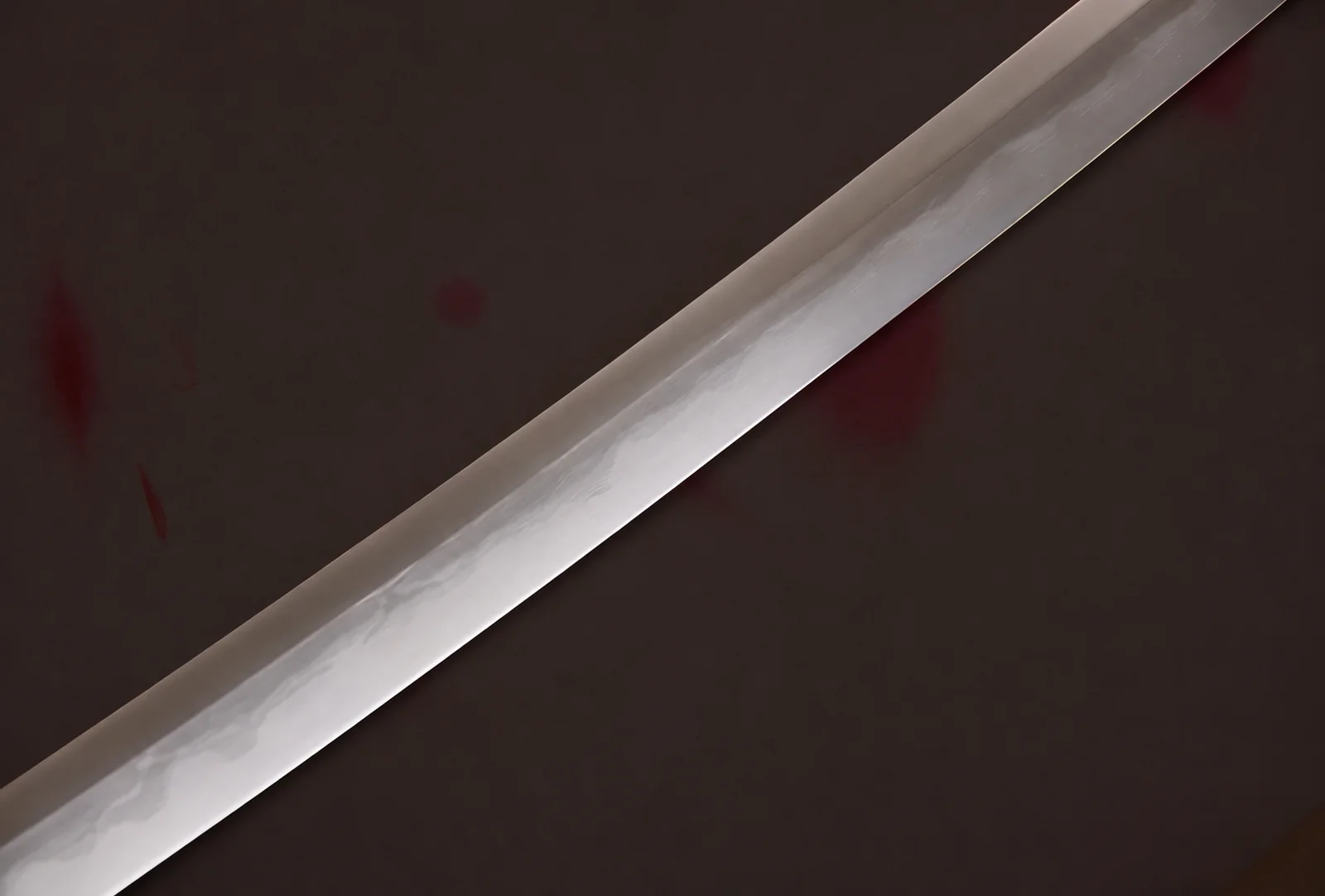
Wide close view of the polished Dōjigiri Yasutsuna blade with its subtle wavy hamon and reflected light across the steel.
Blade surface and temper line seen in reflected light.
Angled close-up of the Dōjigiri Yasutsuna polished blade showing a bright reflective edge and subdued steel surface.
The contrast between the polished blade surfaces.
Close-up of the Dōjigiri Yasutsuna blade near the tip, showing the polished surface and gradual taper toward the kissaki.
A closer look toward the blade's point.

COMPLETE VIEWS

Blade & Shirasaya Together

The final compositions bring the blade and wooden mounting back together. Shown side by side, the long cutting edge, curved scabbard and copper fitting can be viewed as one complete set.
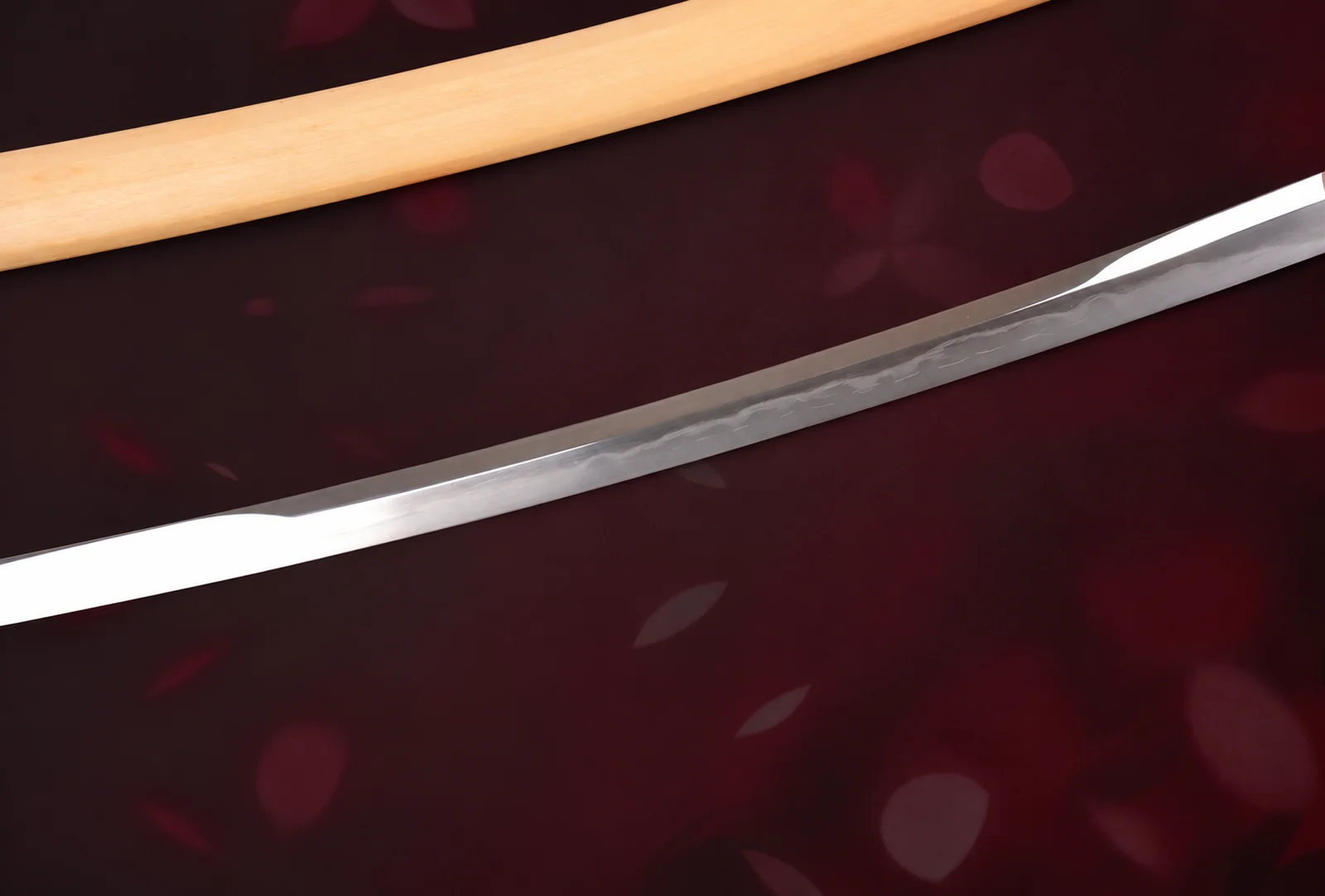
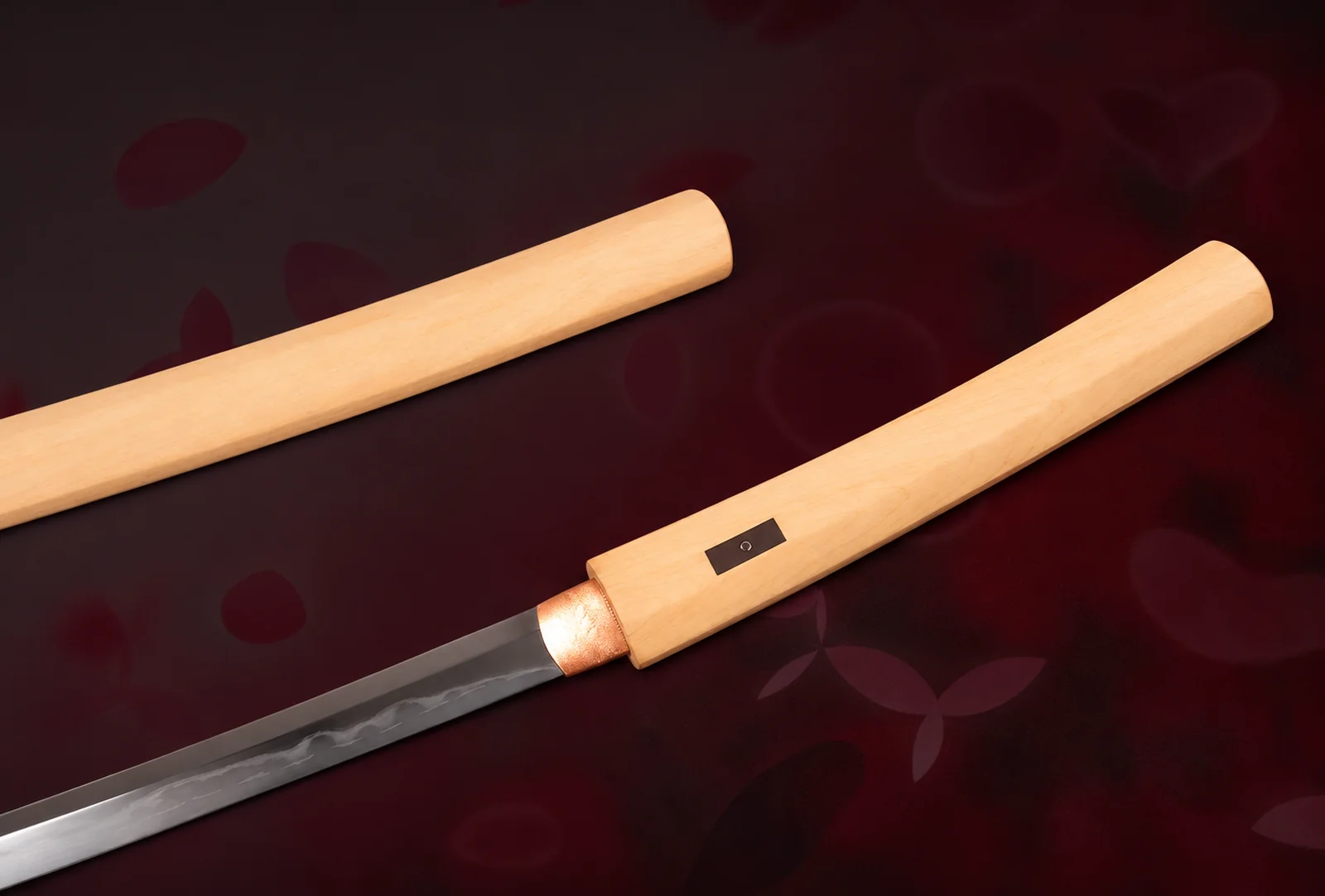
The polished Dōjigiri Yasutsuna tachi blade shown diagonally alongside its pale wooden shirasaya on a burgundy background.
The unsheathed blade and curved wooden saya.
Arrangement of the Dōjigiri Yasutsuna tachi blade and natural wood shirasaya pieces showing the plain wooden handle and scabbard.
The blade and wooden mounting shown separately.

THE WHOLE FORM

A Tachi in Two States

In the shirasaya, the sword reads as a pale, continuous curve. Unsheathed, its polished blade and long silhouette become the focus. Both views belong to the same handmade work.
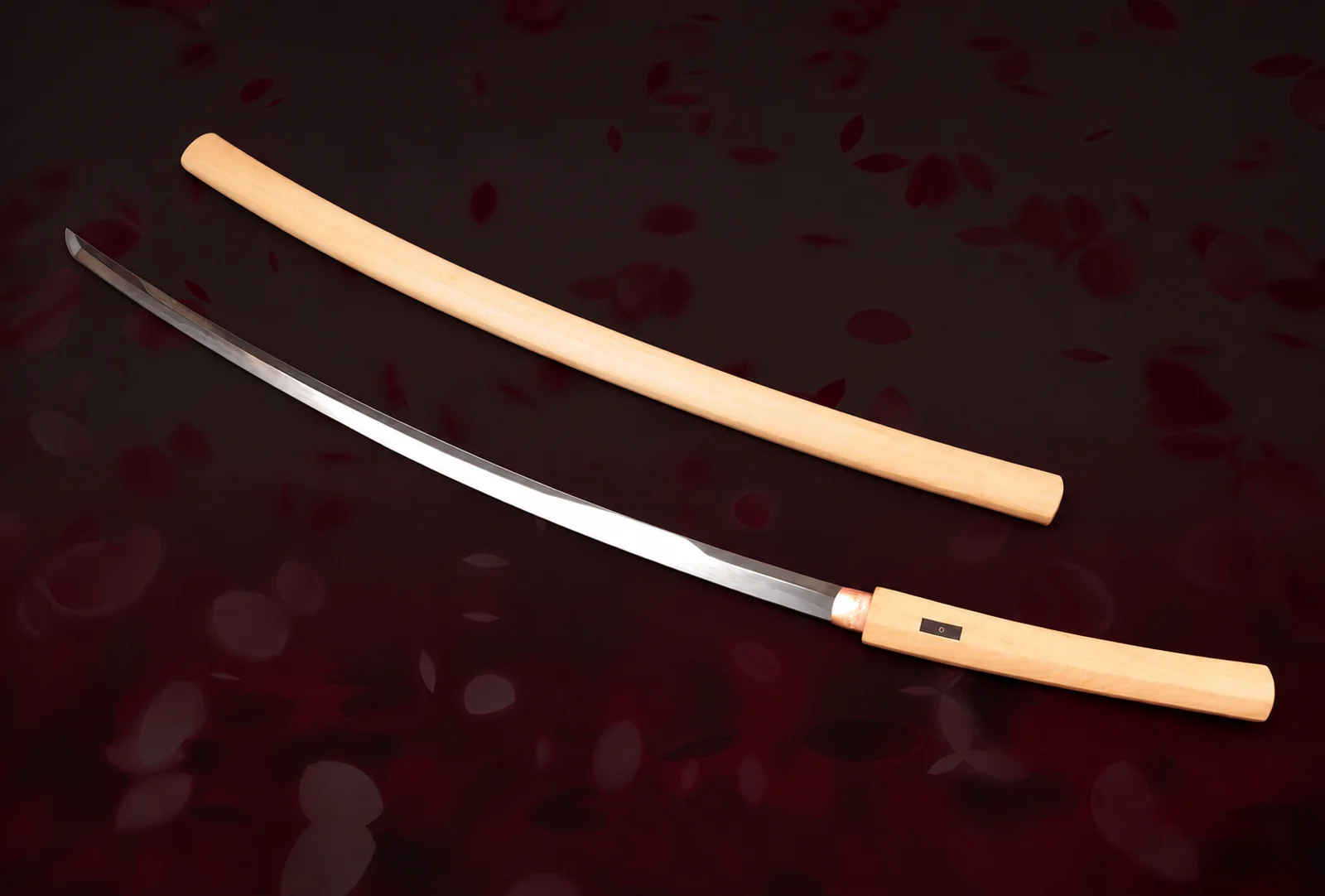
Full-length Dōjigiri Yasutsuna replica tachi unsheathed with its matching plain wooden shirasaya arranged on a dark red background.
The complete sword and shirasaya in the final composition.

Reviews

There are no reviews yet.

Be the first to review “Dojigiri Yasutsuna Replica Tachi — Version B”

Your email address will not be published. Required fields are marked *