Description
01 / THE TENSHŌ SPIRIT
The Strength of Restraint.
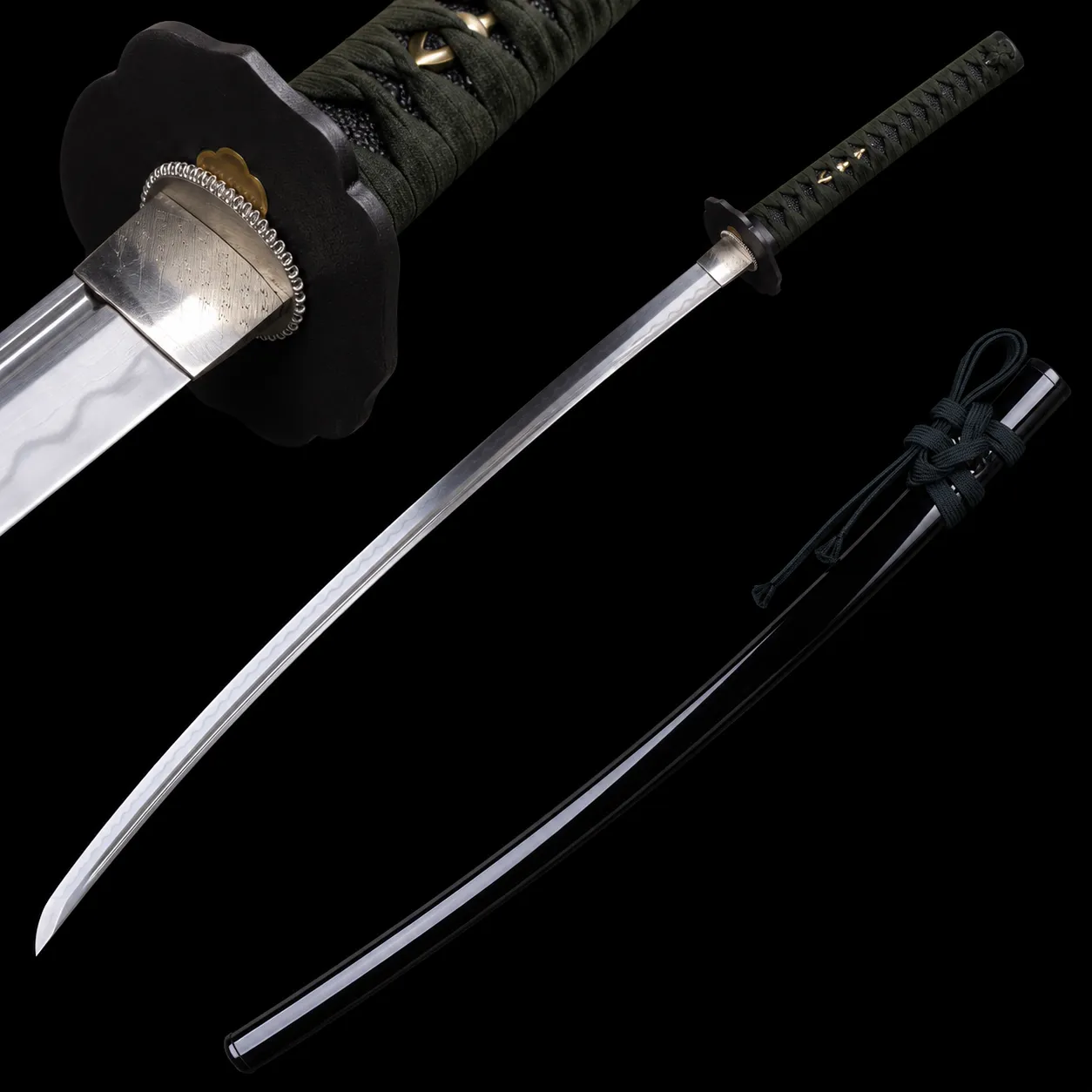
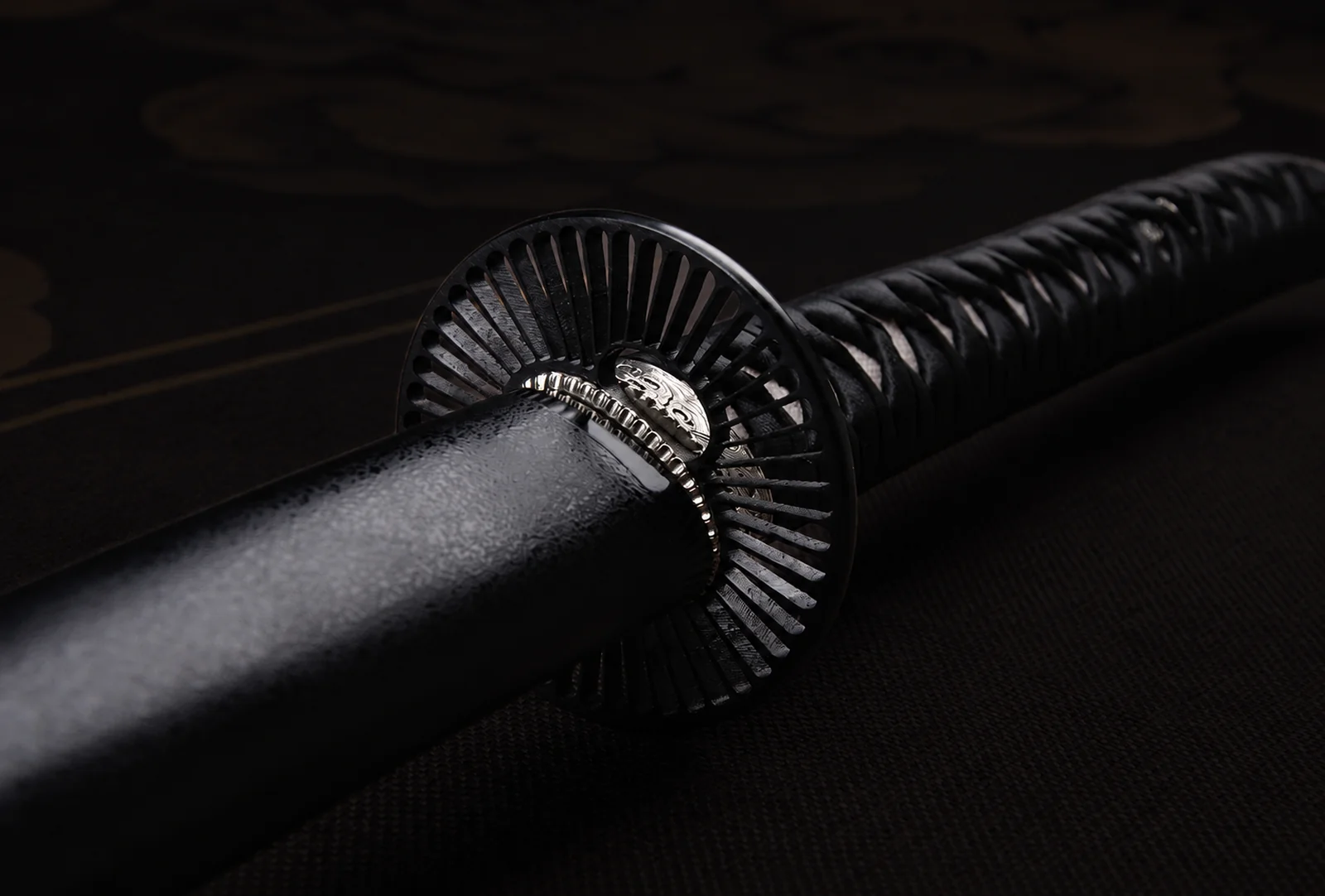
The Tenshō Koshirae Katana takes its direction from the understated language of traditional Japanese sword koshirae. Dark surfaces, measured proportions, and quiet detailing bring the mounted sword into focus without demanding attention.
TENSHŌ KOSHIRAE / SHAPE / COMPOSURE
THE CHARACTER OF THE MOUNTING
Presence Without Excess.
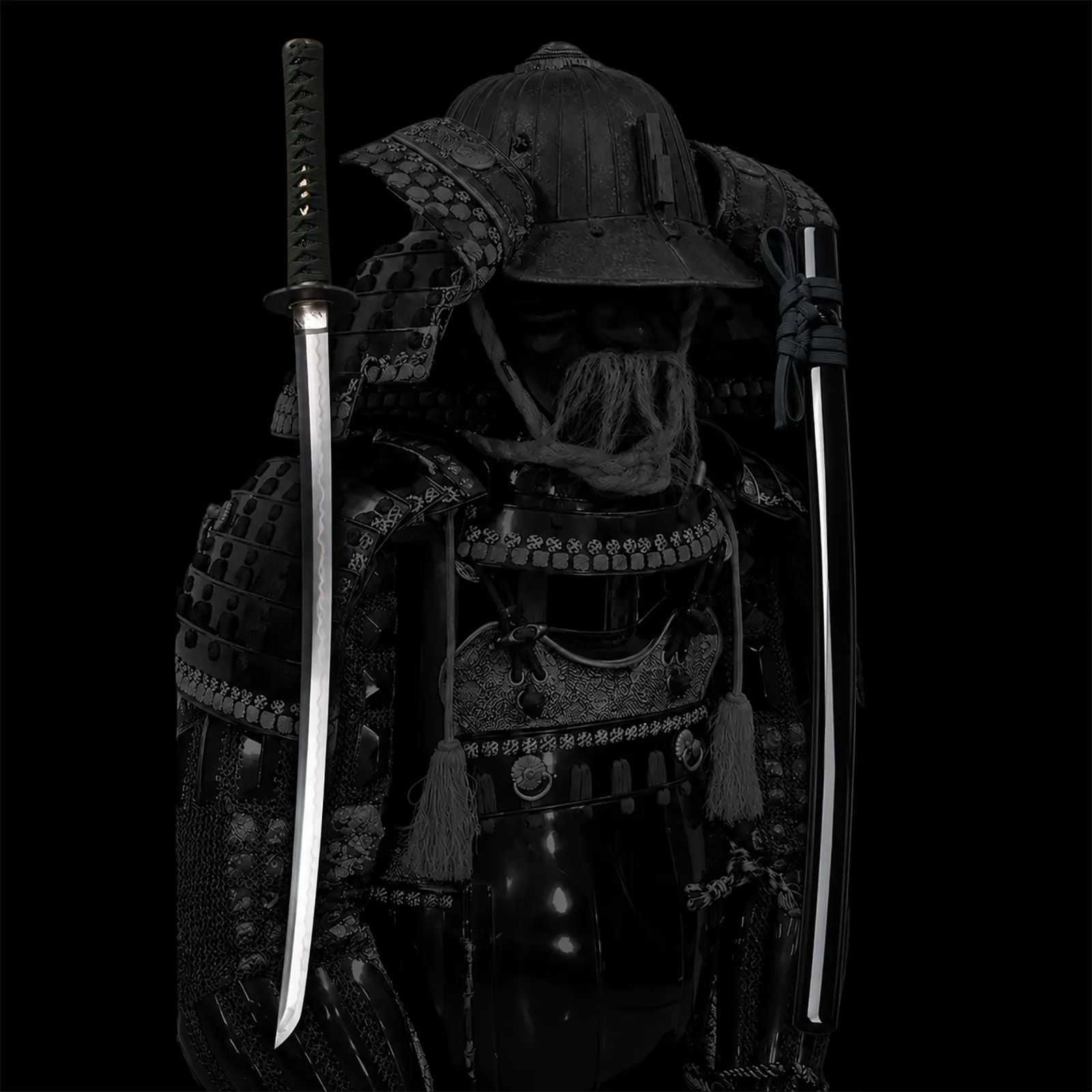
What defines this interpretation is the relationship between its parts. The blade, the wrapped tsuka, and the black saya form a single, continuous composition. Nothing needs to compete for the eye.
The restrained palette allows the outline of the sword to remain clear. Subtle contrasts in the fittings and polished steel become more apparent the longer the piece is observed. It is an aesthetic of patience rather than display.
01 / FORM
A Considered Silhouette
The long blade and compact dark fittings create an assured, balanced visual line.
02 / SURFACE
Black in Different Textures
Gloss, matte metal, and woven material give the dark mounting its quiet depth.
03 / DETAIL
The Value of Closer Looking
The character of the sword emerges in the transitions between its individual parts.
BEYOND THE FIRST IMPRESSION
The mounting establishes the mood. The blade beneath it reveals another layer of the work — in its construction, finish, and carefully formed edge.
02 / BENEATH THE MOUNTING
The Blade & Its Craft.
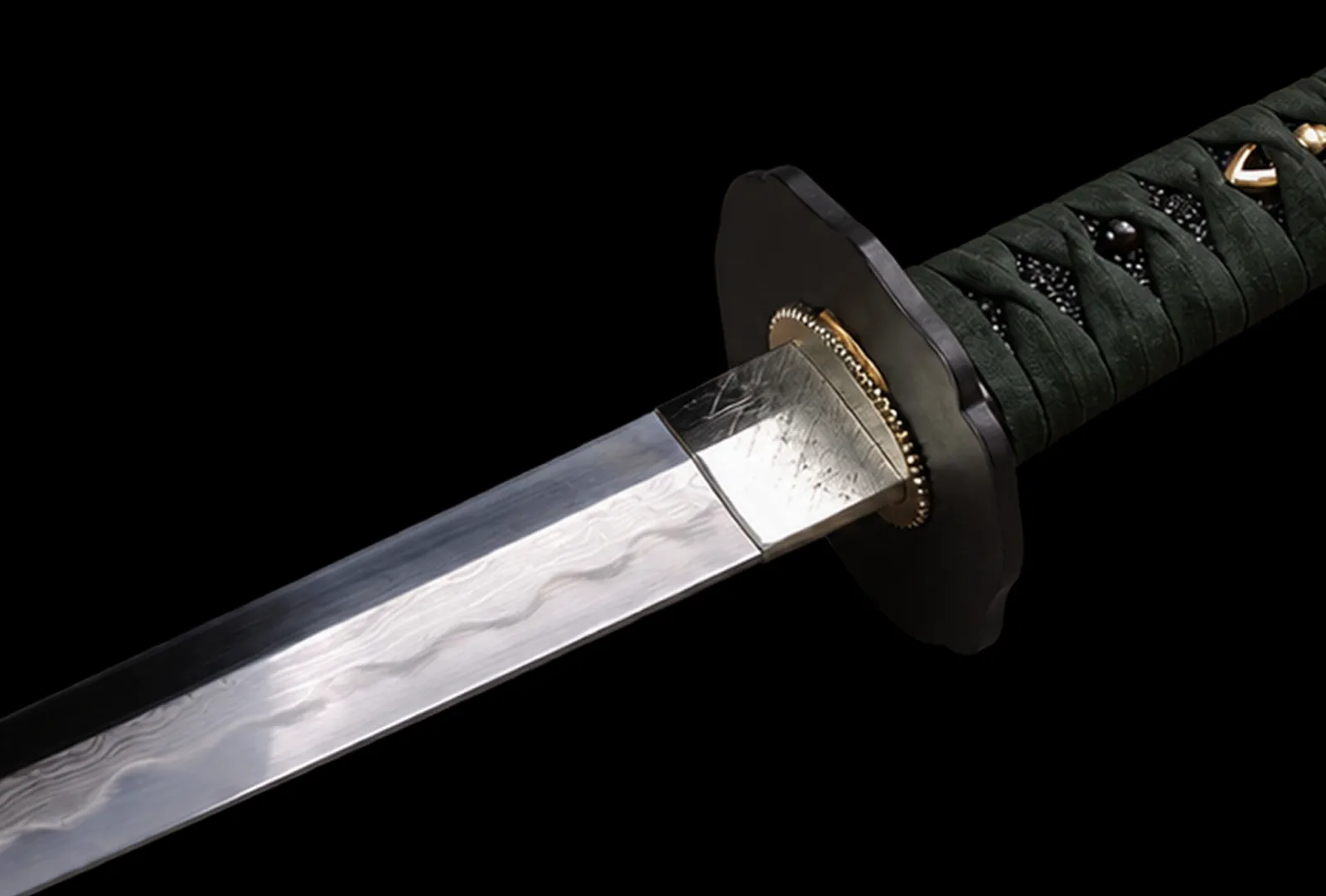
Beneath the quiet lines of the Tenshō mounting lies a blade made with Kobuse construction. Its 750 mm length and 31 mm width at the base establish the proportions, while the polished steel reveals the details that give this blade its character.
CONSTRUCTION / POLISH / THE FINISHED LINE
THE BLADE'S STRUCTURE
Strength Within the Form.
Kobuse is a jacket-and-core method of blade construction. The outer steel surrounds an inner core, giving the blade a layered structure beneath its finished surface.
That structure belongs to the work even where it cannot be seen. What appears to the eye is the carefully shaped blade: the transition from collar to edge, the long surface of the steel, and the line carried toward the tip.
LIGHT ALONG THE STEEL
Where the Surface Comes Alive.
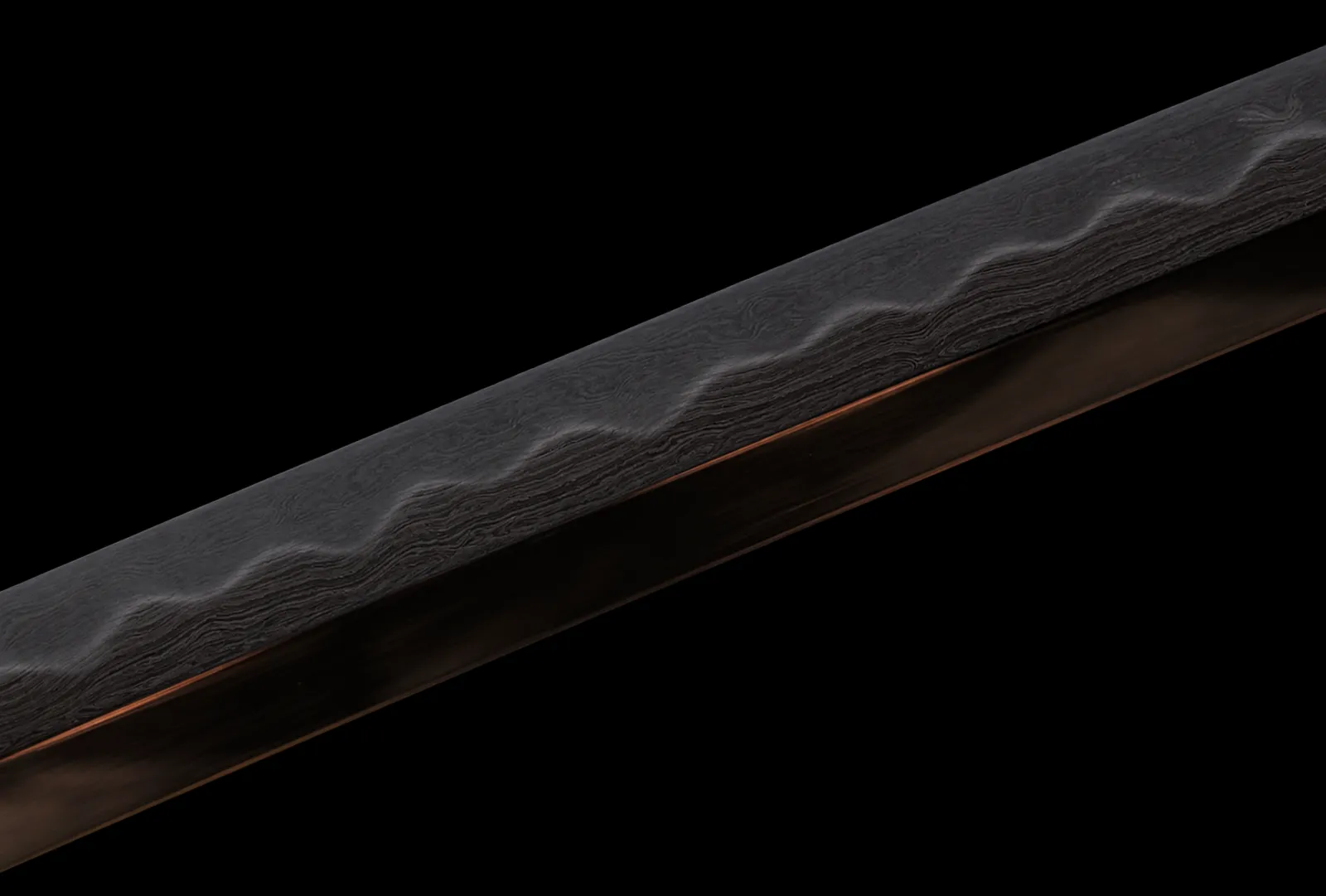
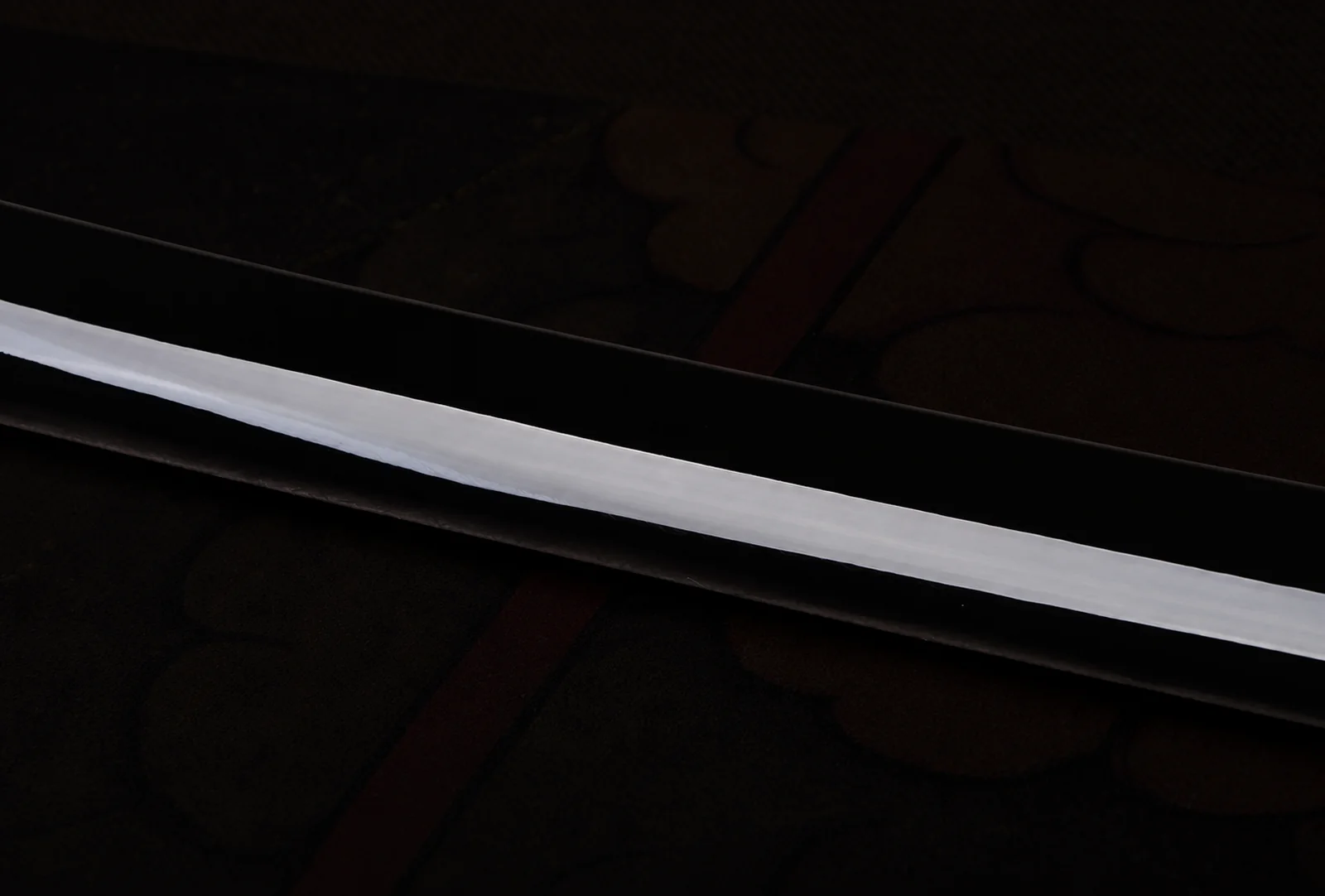
Fine White Polish brings definition to the blade's planes and changing reflections. A visible hamon runs along the steel, shifting in appearance as the light moves across it.
A CHOICE OF HAMON
Three Expressions of the Edge.
The blade can be ordered with one of three hamon patterns. Each choice gives the finished edge a different visual rhythm.
CRAFT BEYOND THE VISIBLE BLADE
Attention Beneath the Handle.
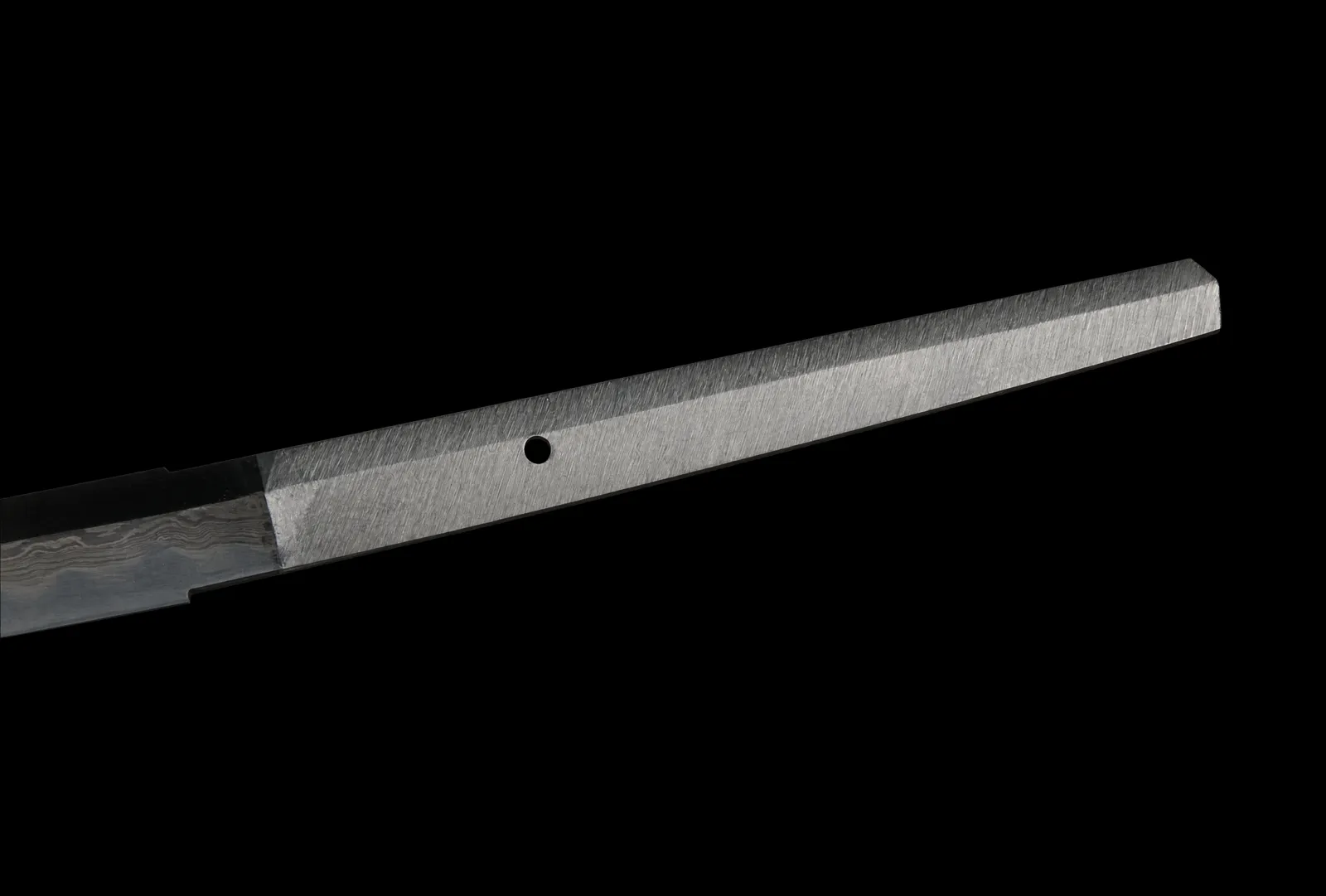
The nakago carries hand-filed yasurime — ordered marks that remain beneath the finished handle. The mekugi-ana is the hole for the retaining peg that helps secure the assembled handle.
This concealed part of the blade receives its own care. Its cleanly worked surface completes the story of a sword whose details matter both outside and within the mounting.
FROM BLADE TO MOUNTING
The blade establishes the structure. The final act of craftsmanship is to bring the handle, fittings, and scabbard together with a fit that feels as deliberate as it looks.
03 / THE ART OF FIT
Precision in Every Fitting.
The character of a Tenshō-inspired koshirae is found in its restraint. The dark fittings, closely wrapped handle, and quiet black scabbard form a single composition — one that rewards attention to how the parts meet.
TENSHO KOSHIRAE / MOUNTING & ASSEMBLY
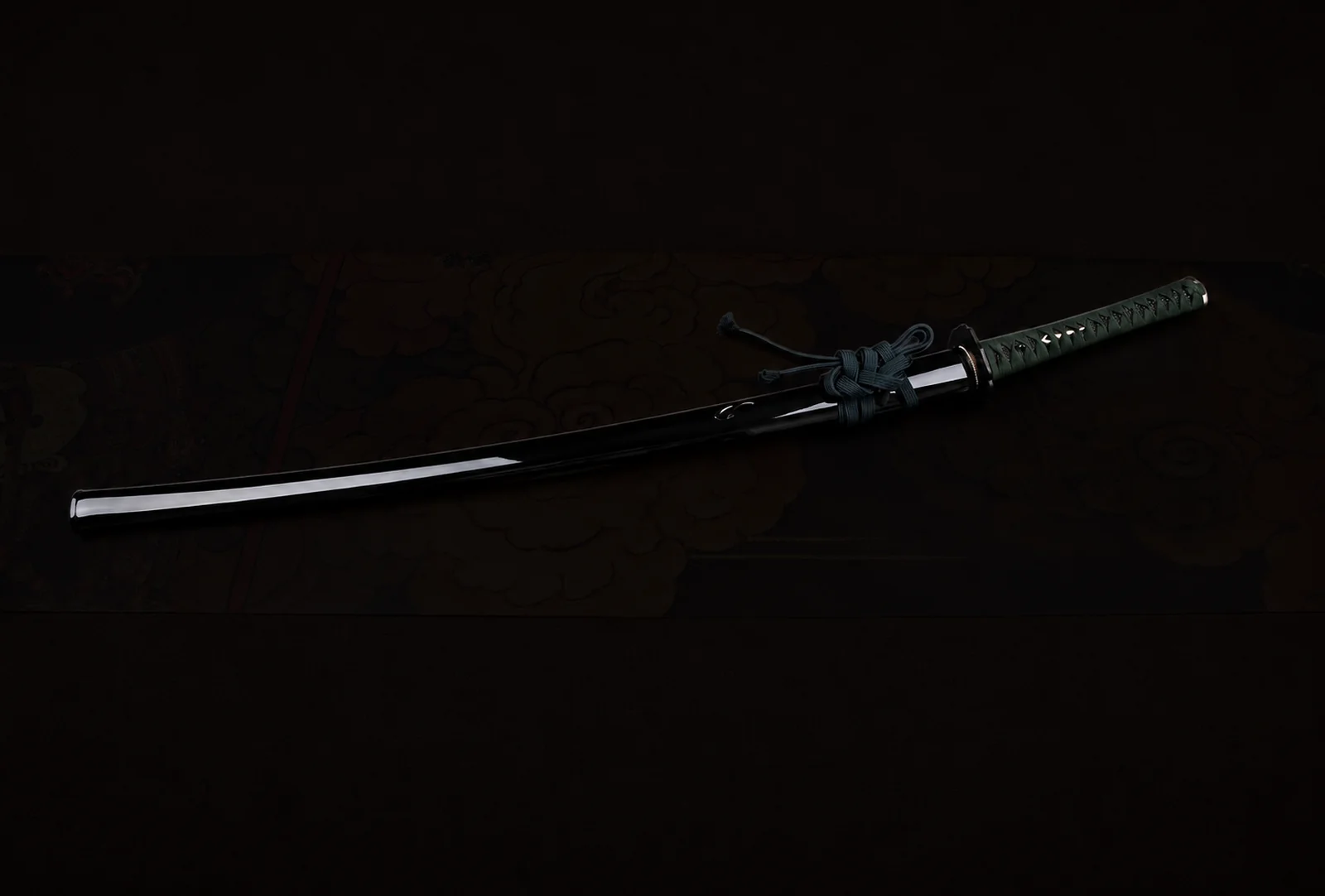
The Whole Before the Details.
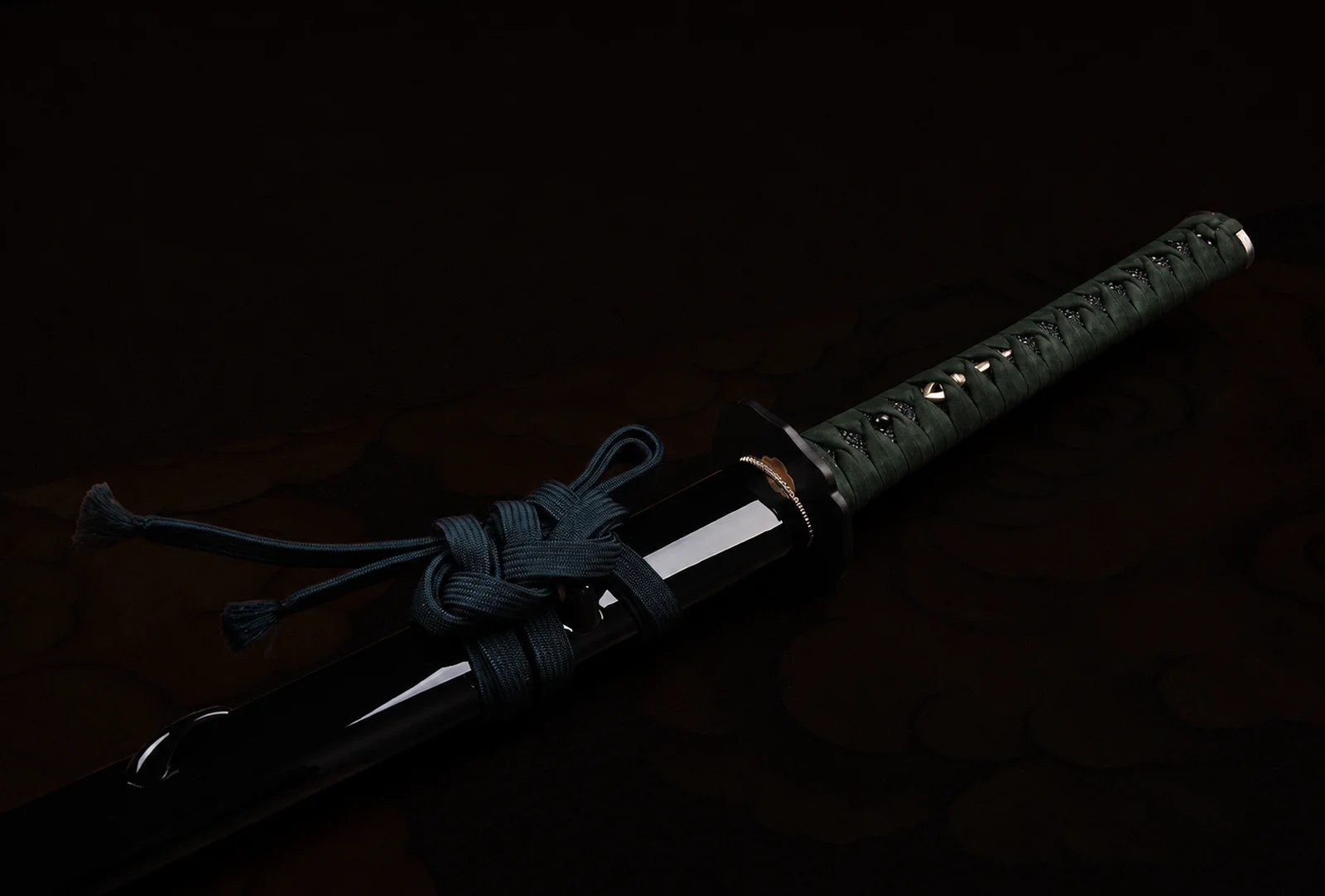
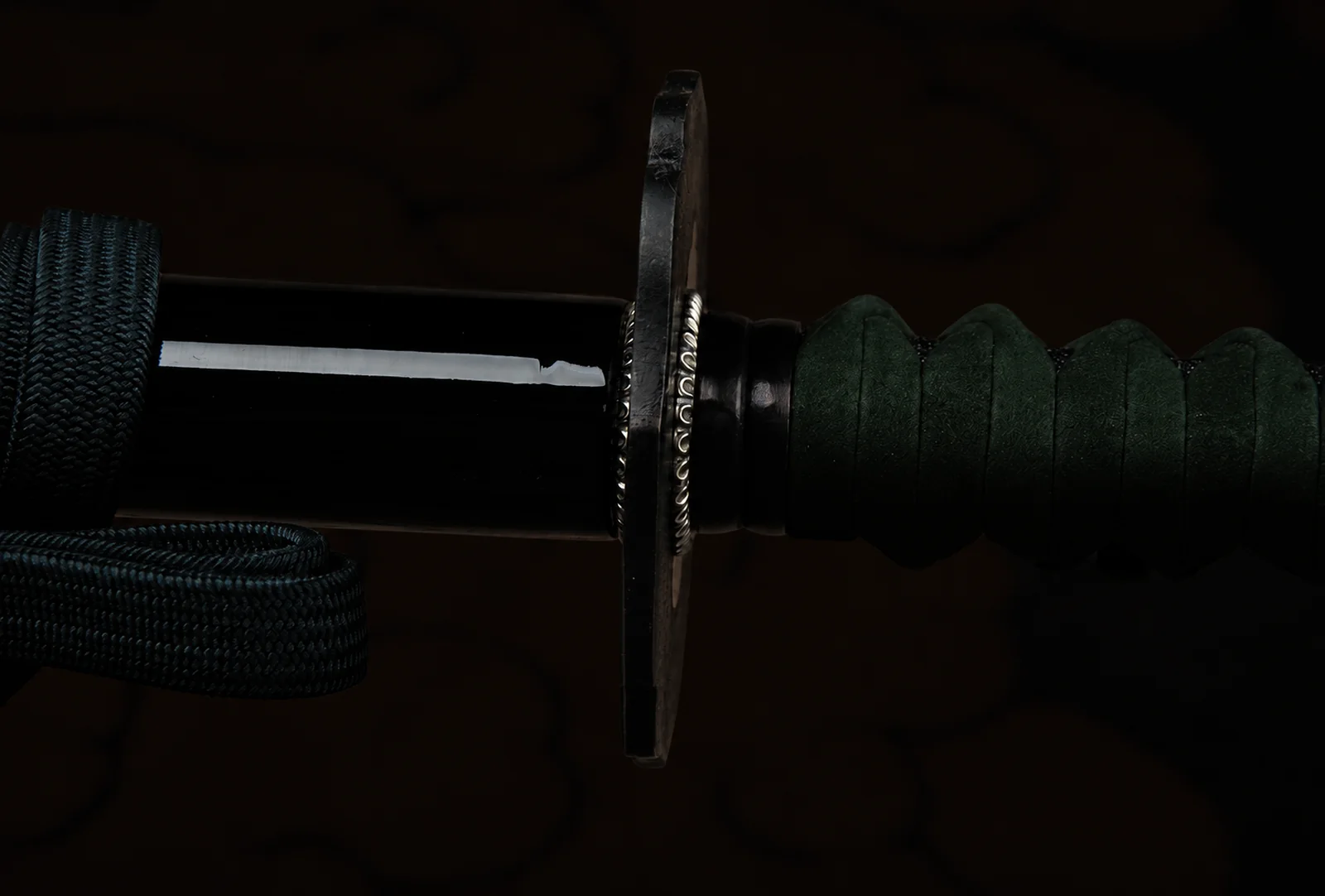
A measured silhouette makes every junction more visible. The transition from the tsuka to the guard, the line of the saya, and the placement of the braided cord are treated as parts of the same design.
01 / CNC
Precision from the Beginning.
The standard CNC-carved koshirae is already a carefully made mounting, modeled and machined to the blade's dimensions for refined fit and assembly.
02 / HANDWORK
One-to-One Handcrafted Koshirae.
The optional handcrafted mounting offers another level of individual fitting and finishing, without diminishing the quality of the CNC version.
03 / FEATURED
The Complete Display Configuration.
The featured presentation brings together handcrafted koshirae, an additional handmade shirasaya, premium handle work, and an engraved habaki.
CHAPTER I / THE HANDLE
A Wrap Made to Be Seen Up Close.
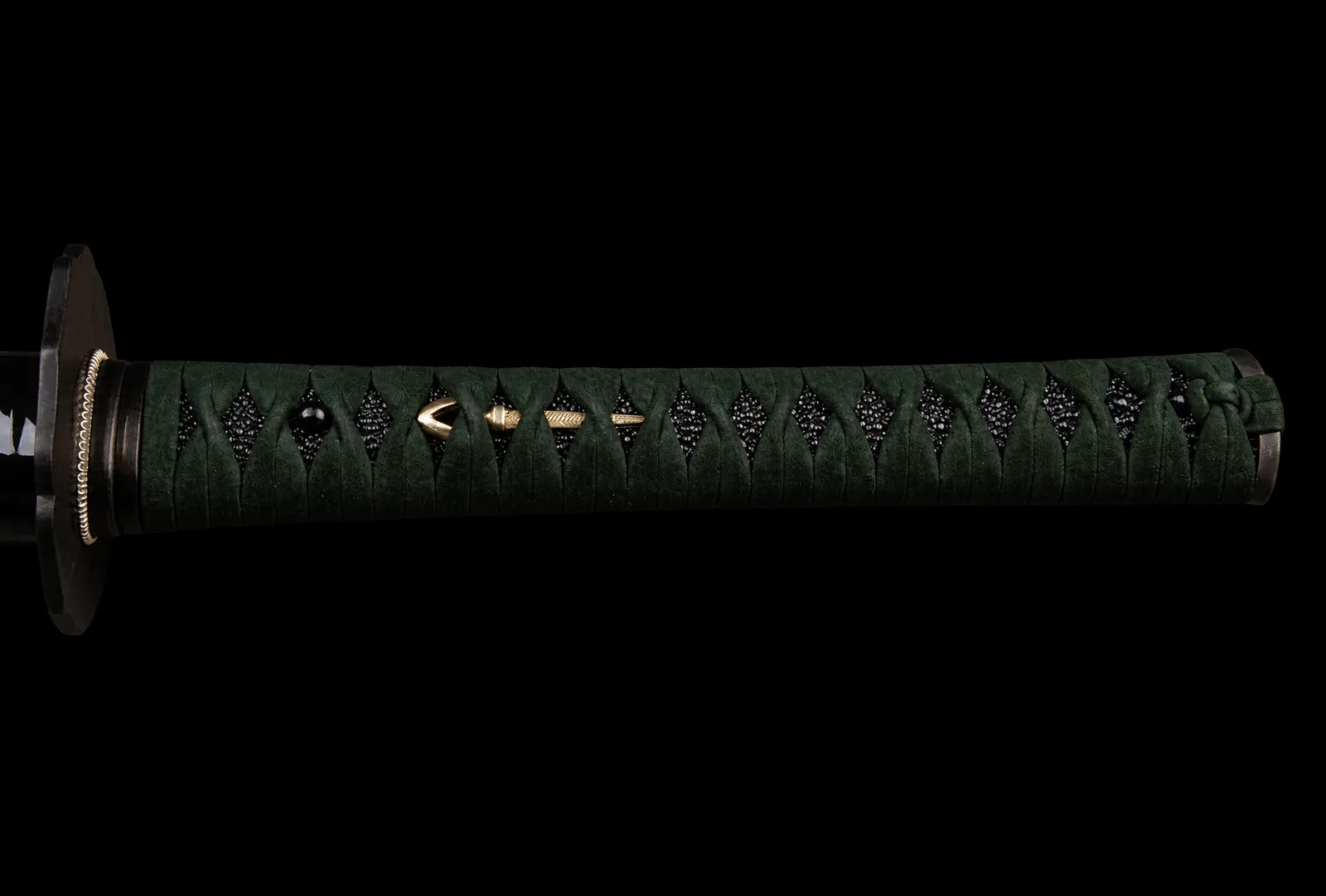
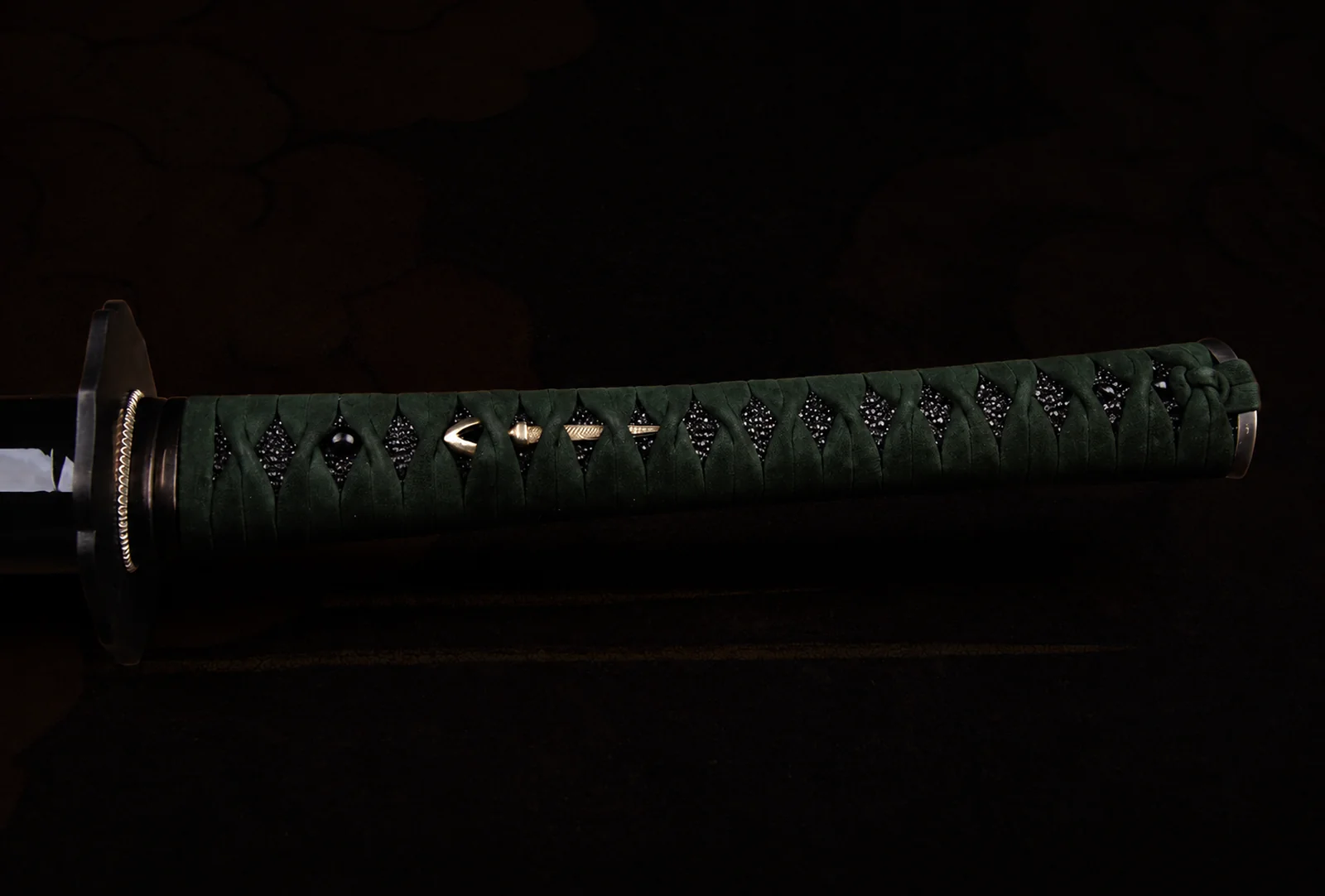
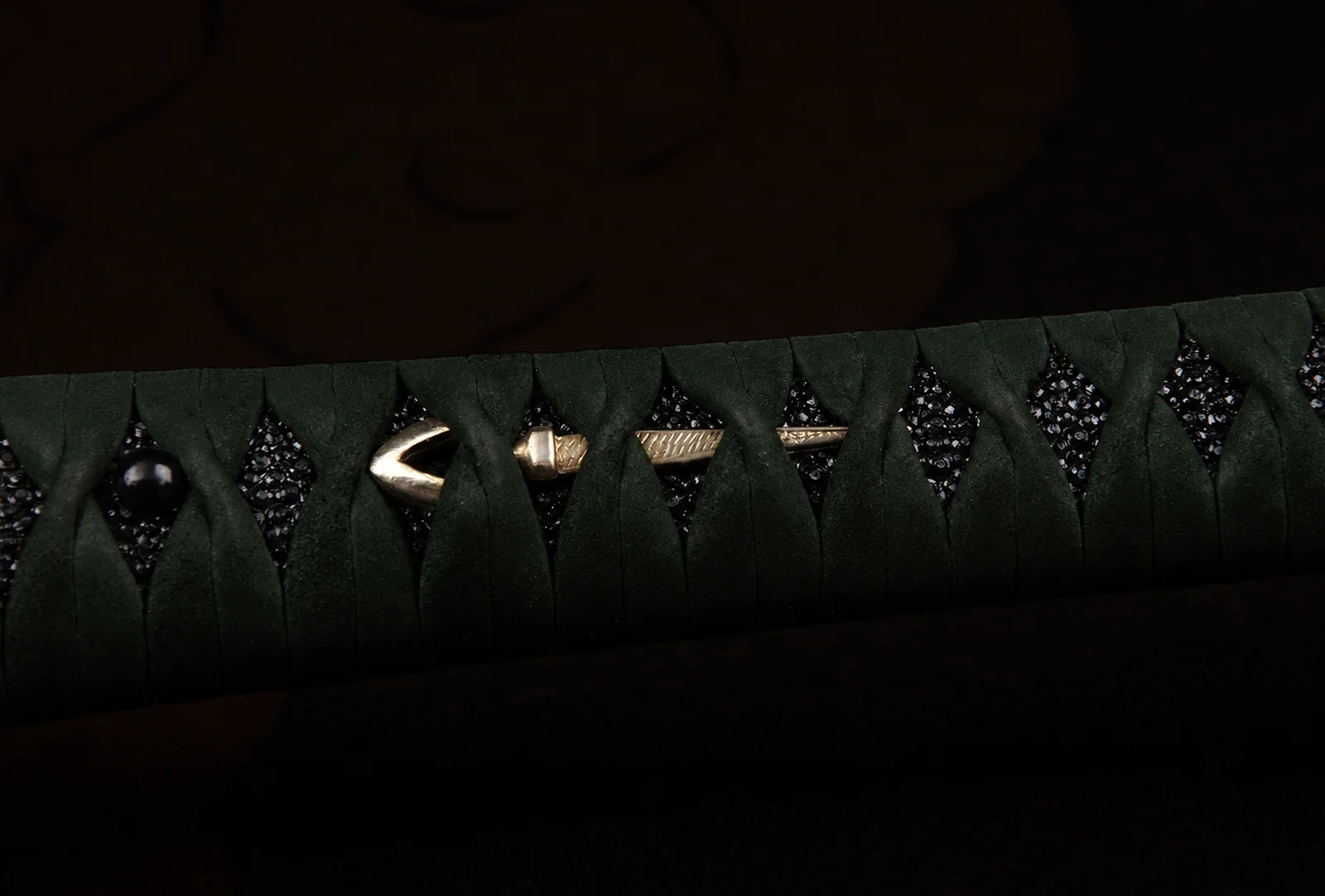
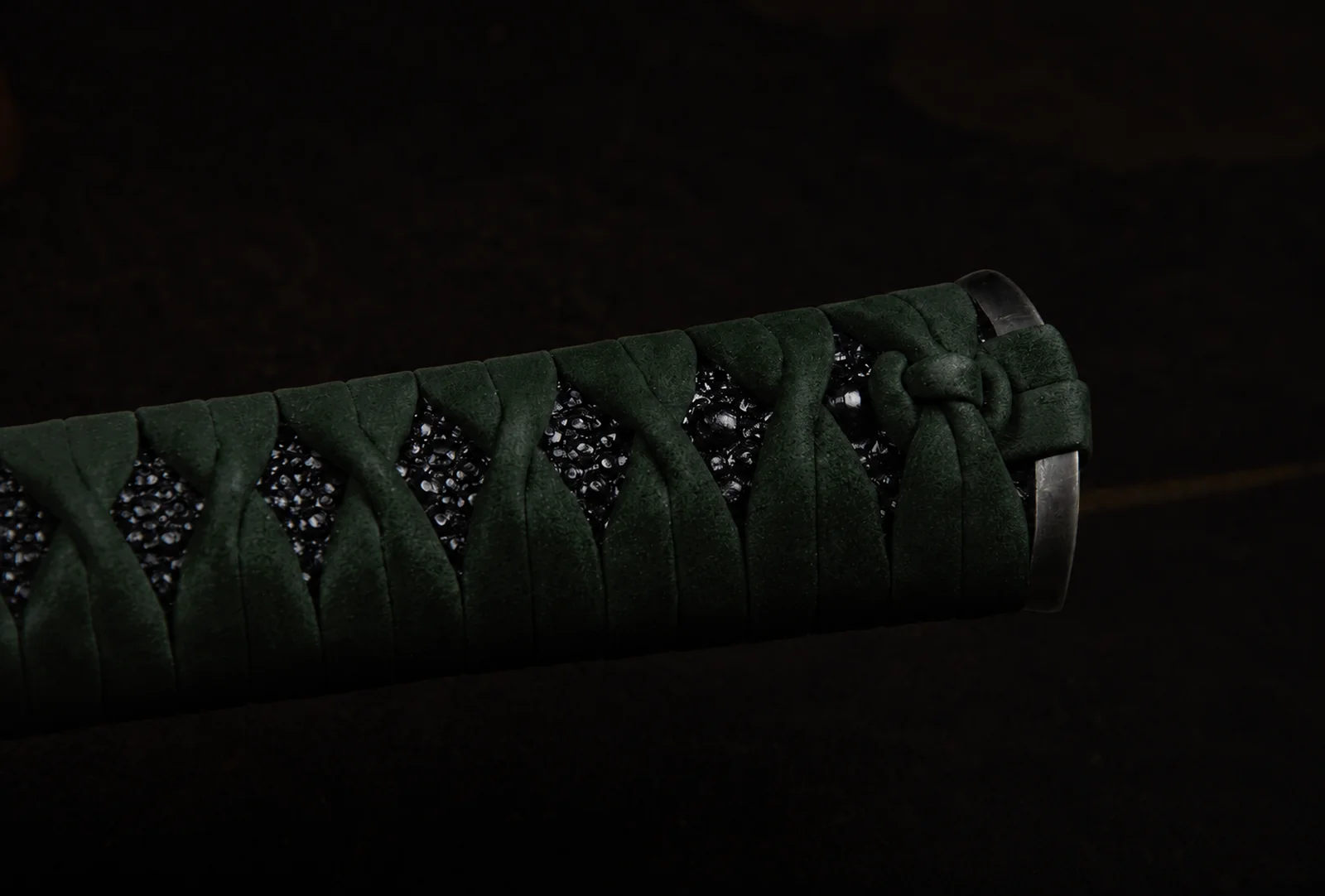
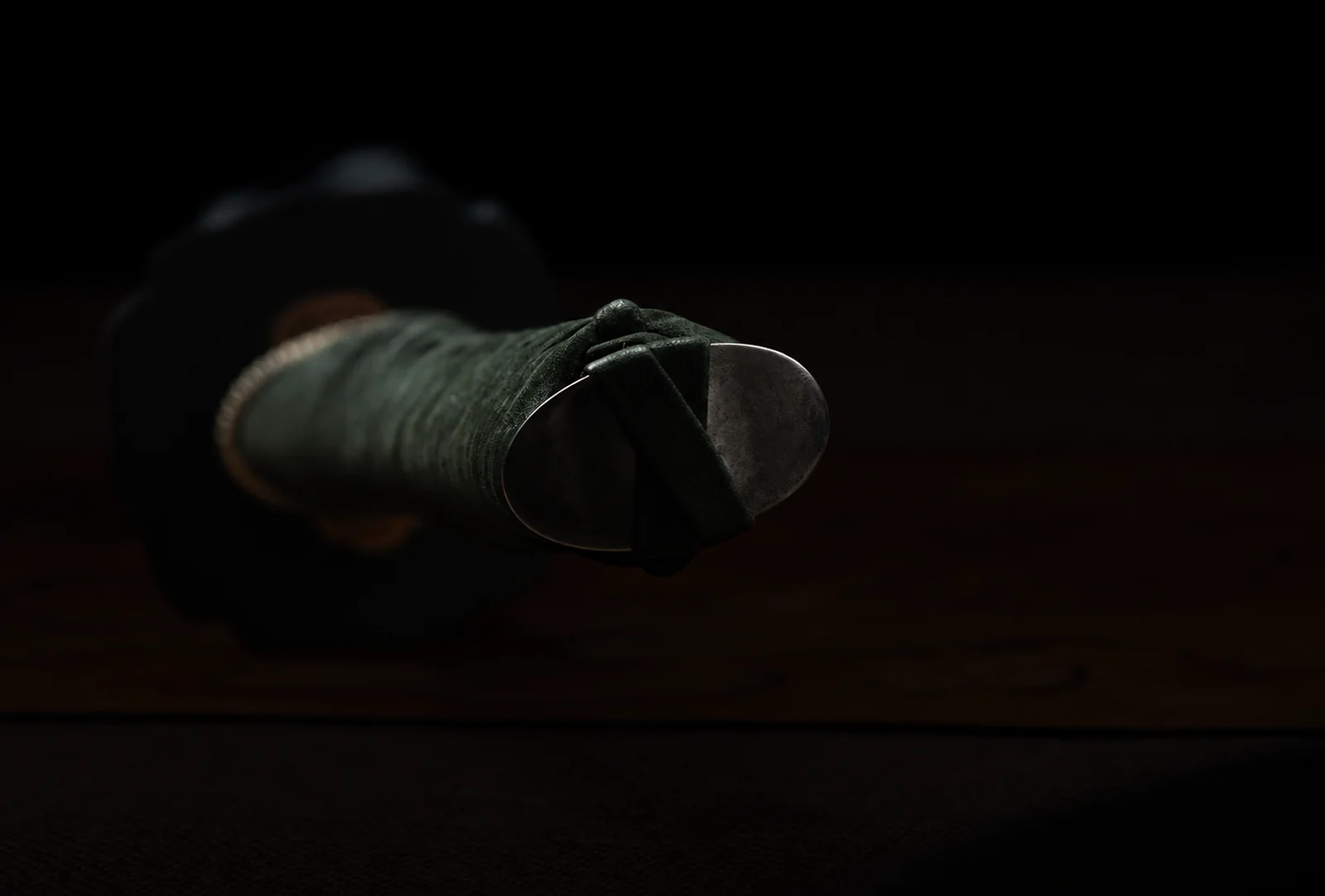
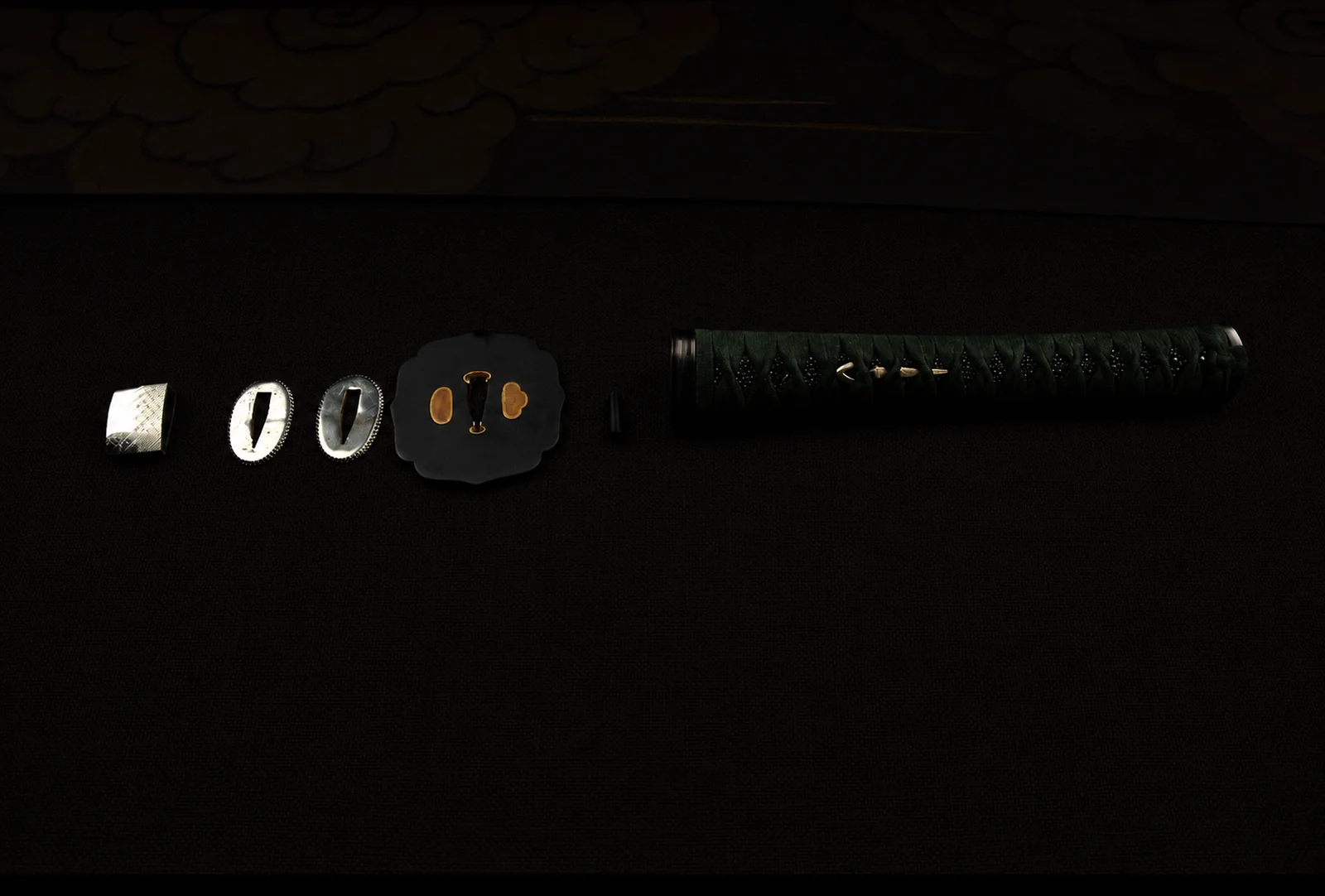
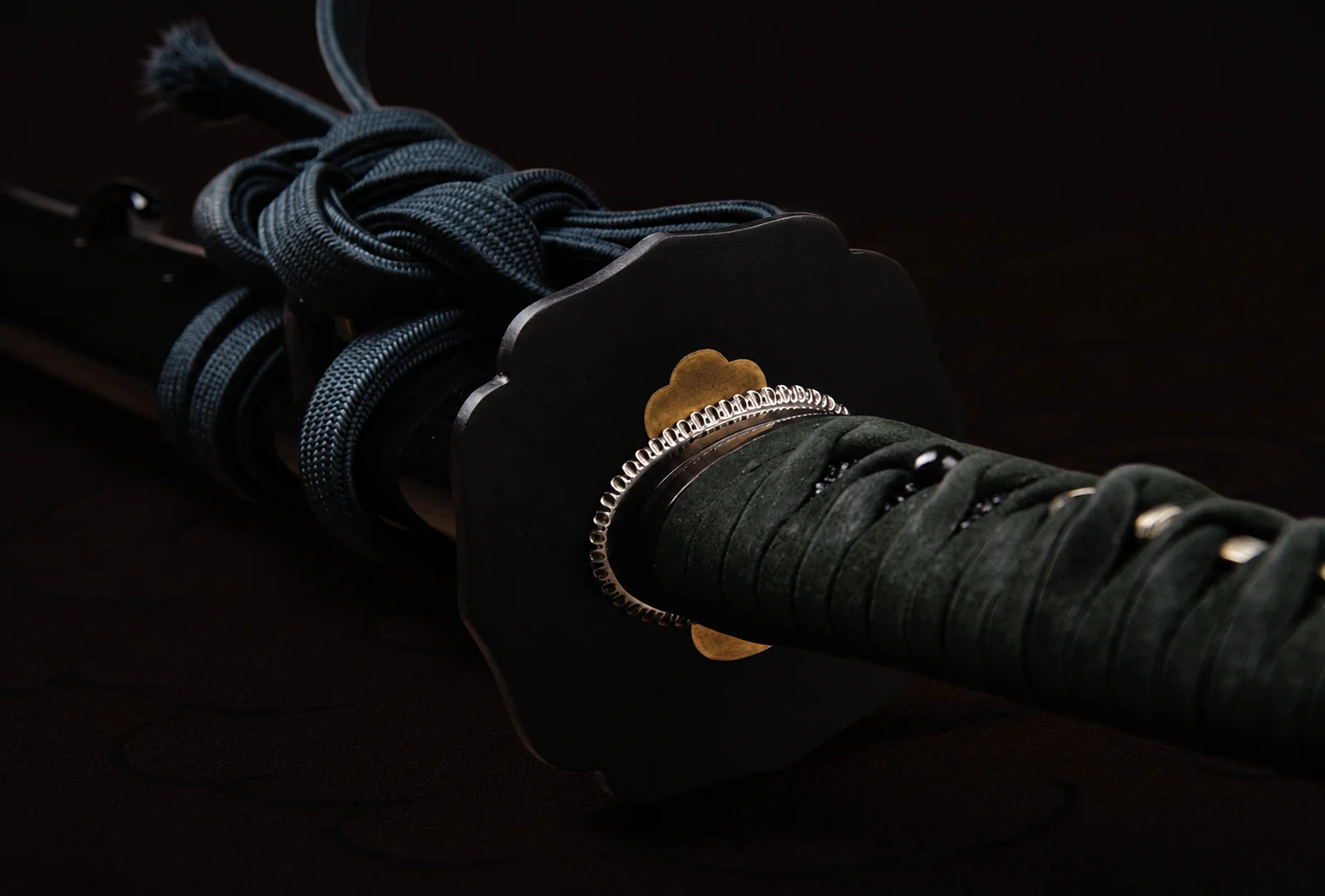
The featured tsuka uses full-wrap samegawa with pronounced nodules, a carefully prepared handle core, and a premium Morozumaki-style handle wrap. Dark green leather cord crosses the textured surface; small menuki emerge between the folds.
The appeal is in the regularity of the wrap and the restrained contrast between deep green, dark grain, and touches of warm metal.
CHAPTER II / METAL & ASSEMBLY
Where the Parts Meet.
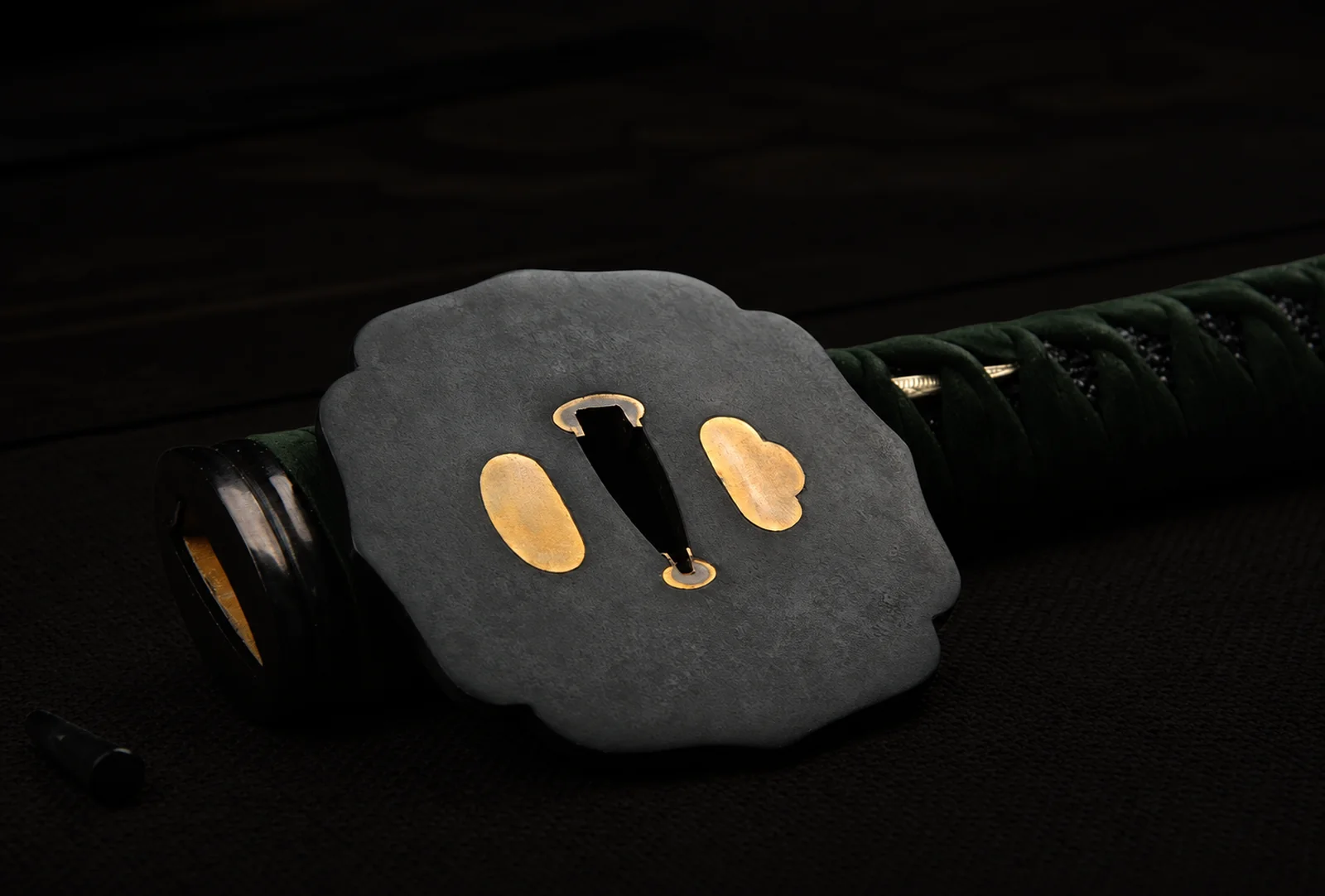
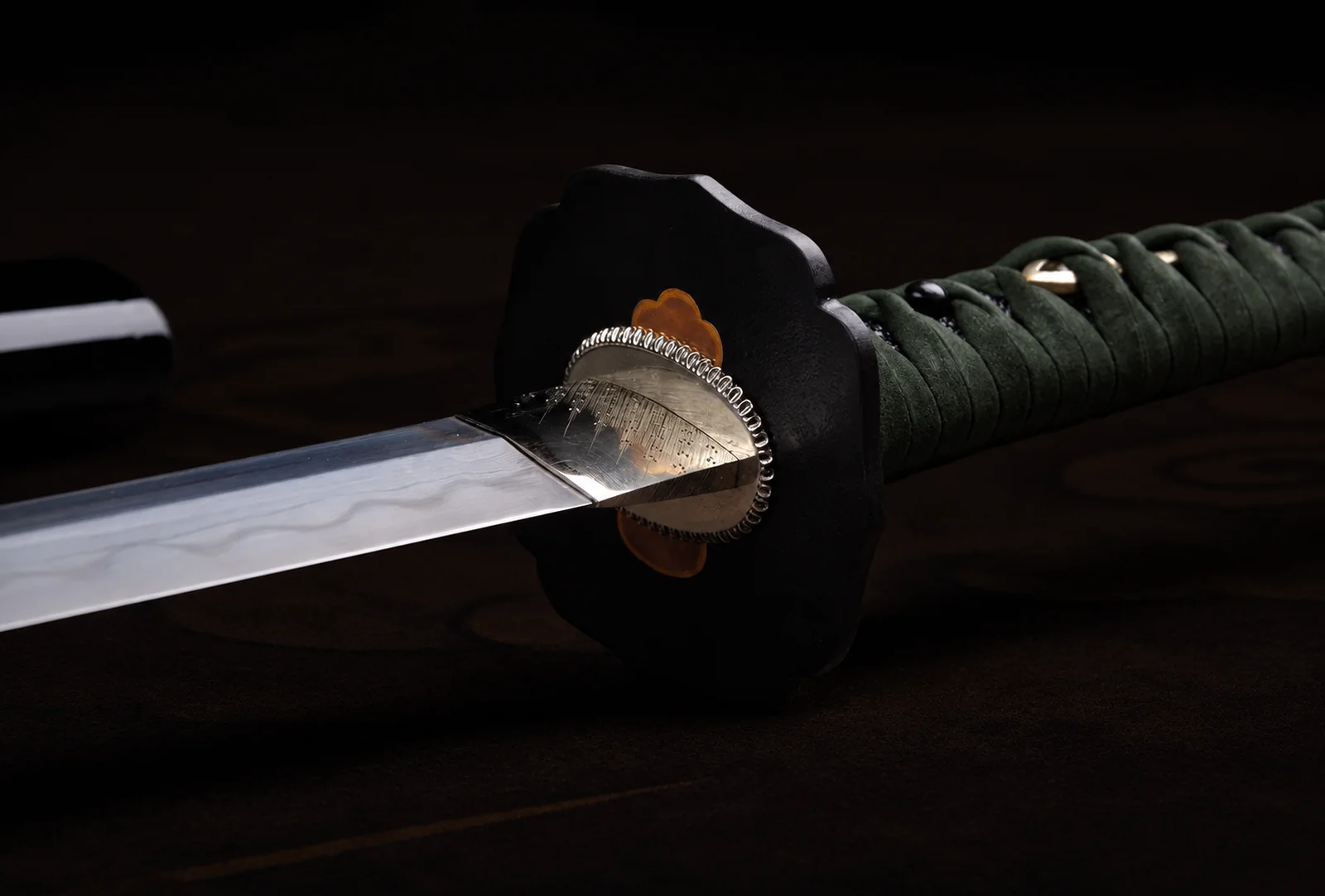
The iron tsuba, metal fittings, blade collar, and seppa provide the transitions between blade and handle. The restrained finish makes small differences in surface texture, alignment, and fit easier to appreciate.
In the workshop demonstration, the two seppa are matched to their respective positions rather than treated as interchangeable spacers. That small detail reveals how closely the mounting is adjusted as an assembly.
A FINER TOUCH
On the featured configuration, the handcrafted habaki can be finished with a mirrored surface and an engraved Yūjō-pattern detail — a small, deliberate contrast against the darker mountings.
CHAPTER III / THE BLACK SAYA
The Quiet Precision of a Scabbard.
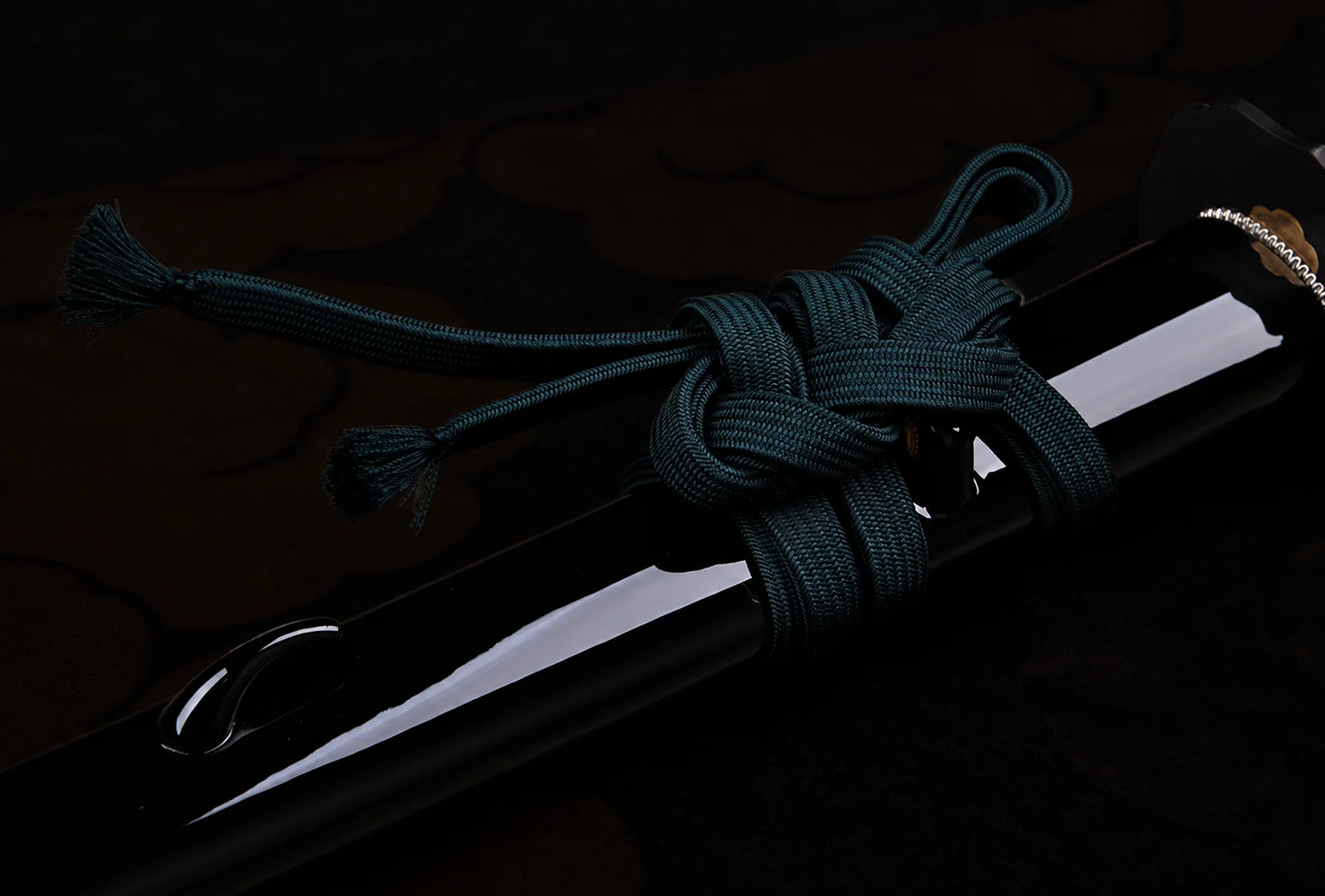
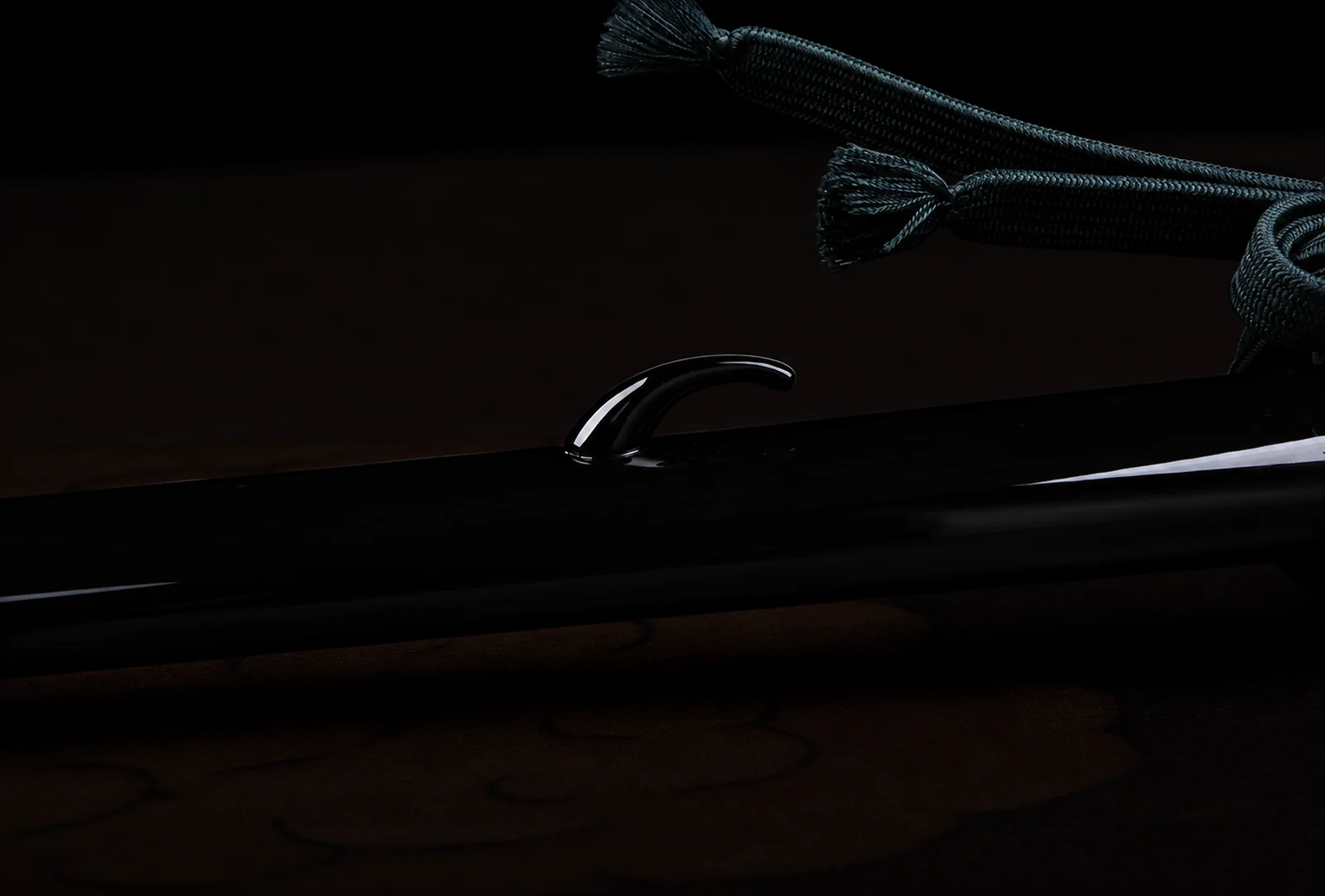
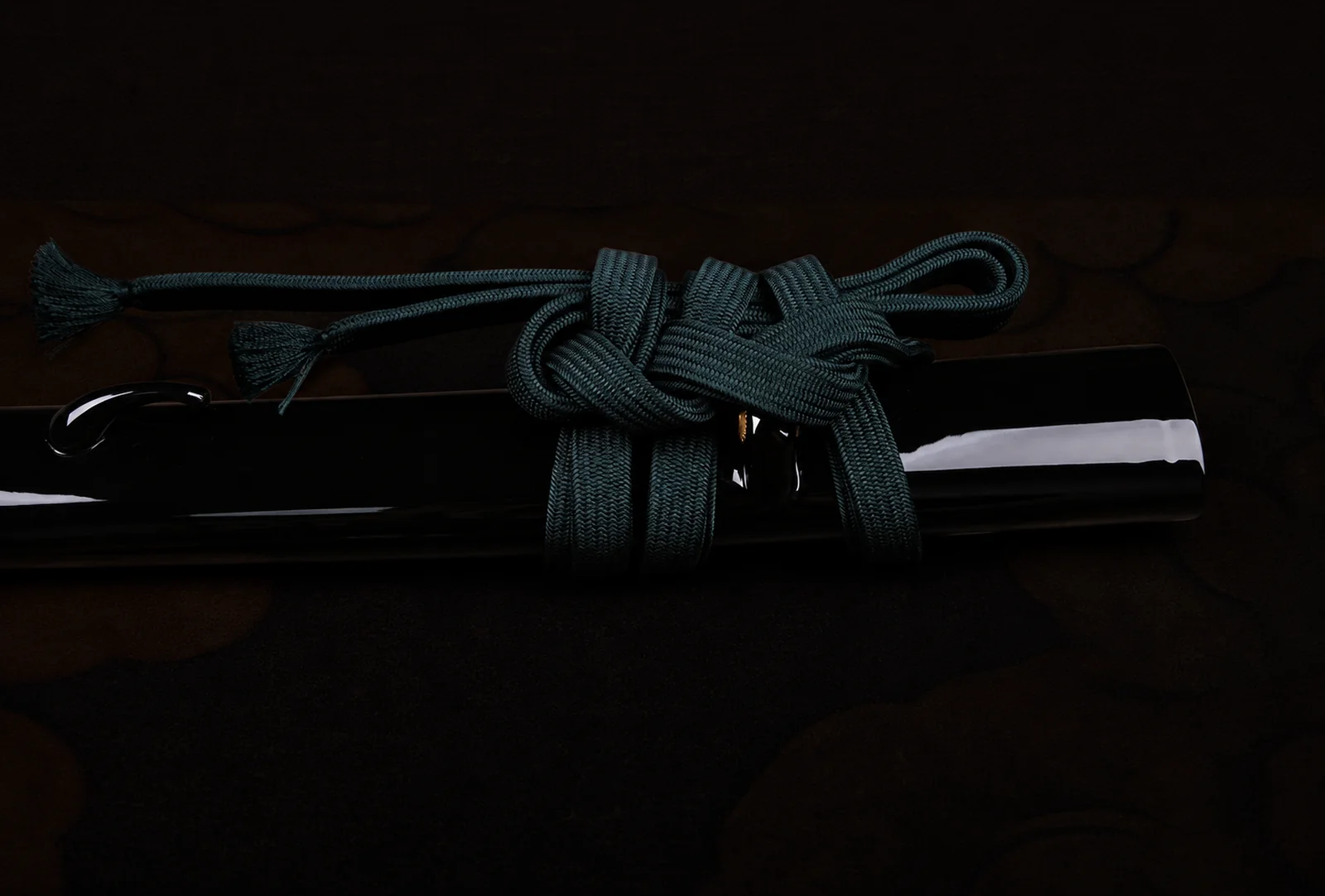
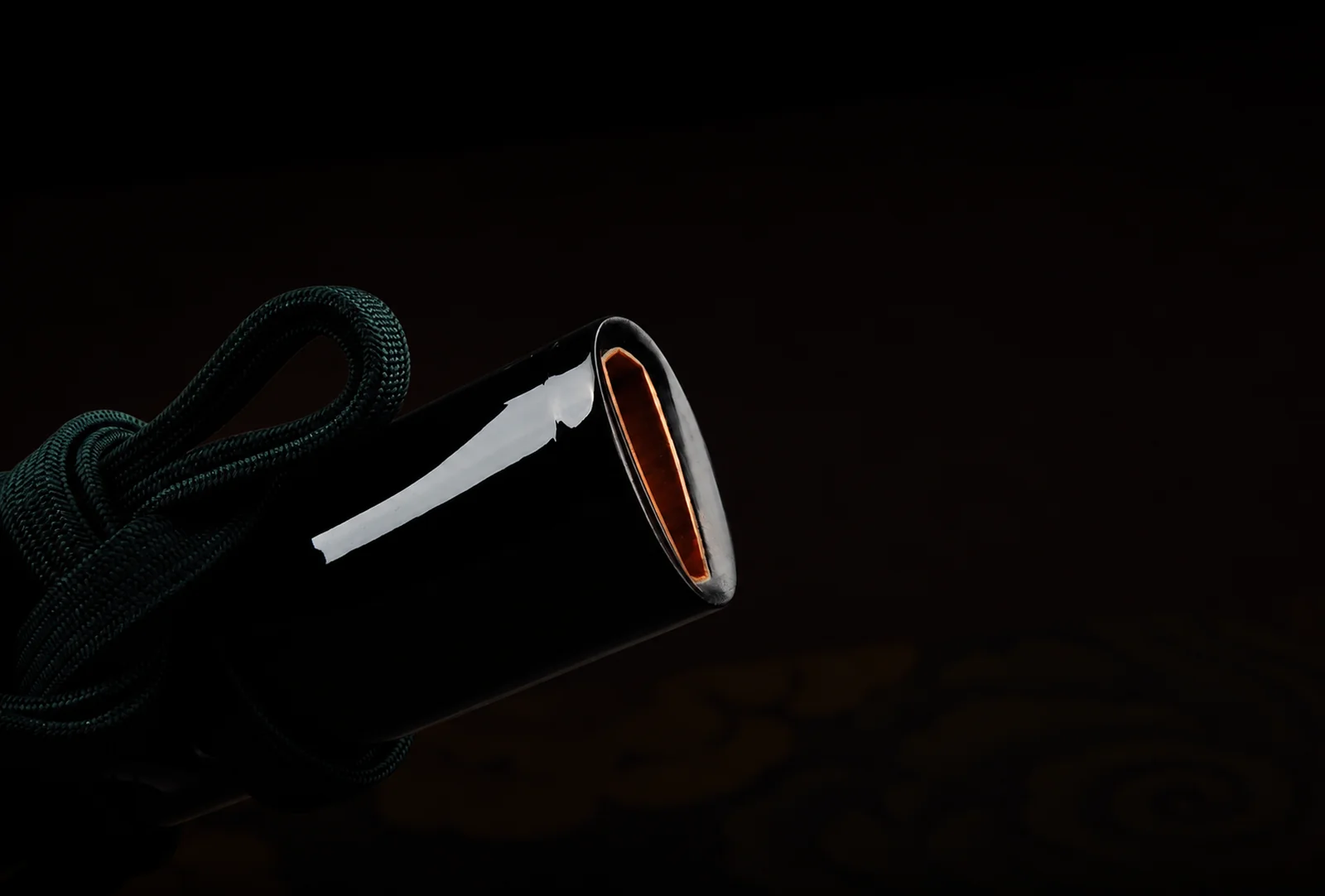
The black lacquer-style saya is intentionally understated. Its finish, the kurigata, the neatly arranged sageo, and the opening at the koiguchi are each part of the visual and practical relationship between scabbard and sword.
A precise draw and return depend on the fit inside, not simply on the gloss outside. This is the central idea behind both the fine CNC version and the optional one-to-one handcrafted mounting.
CHAPTER IV / THE ADDITIONAL SHIRASAYA
A Second Form for the Same Blade.
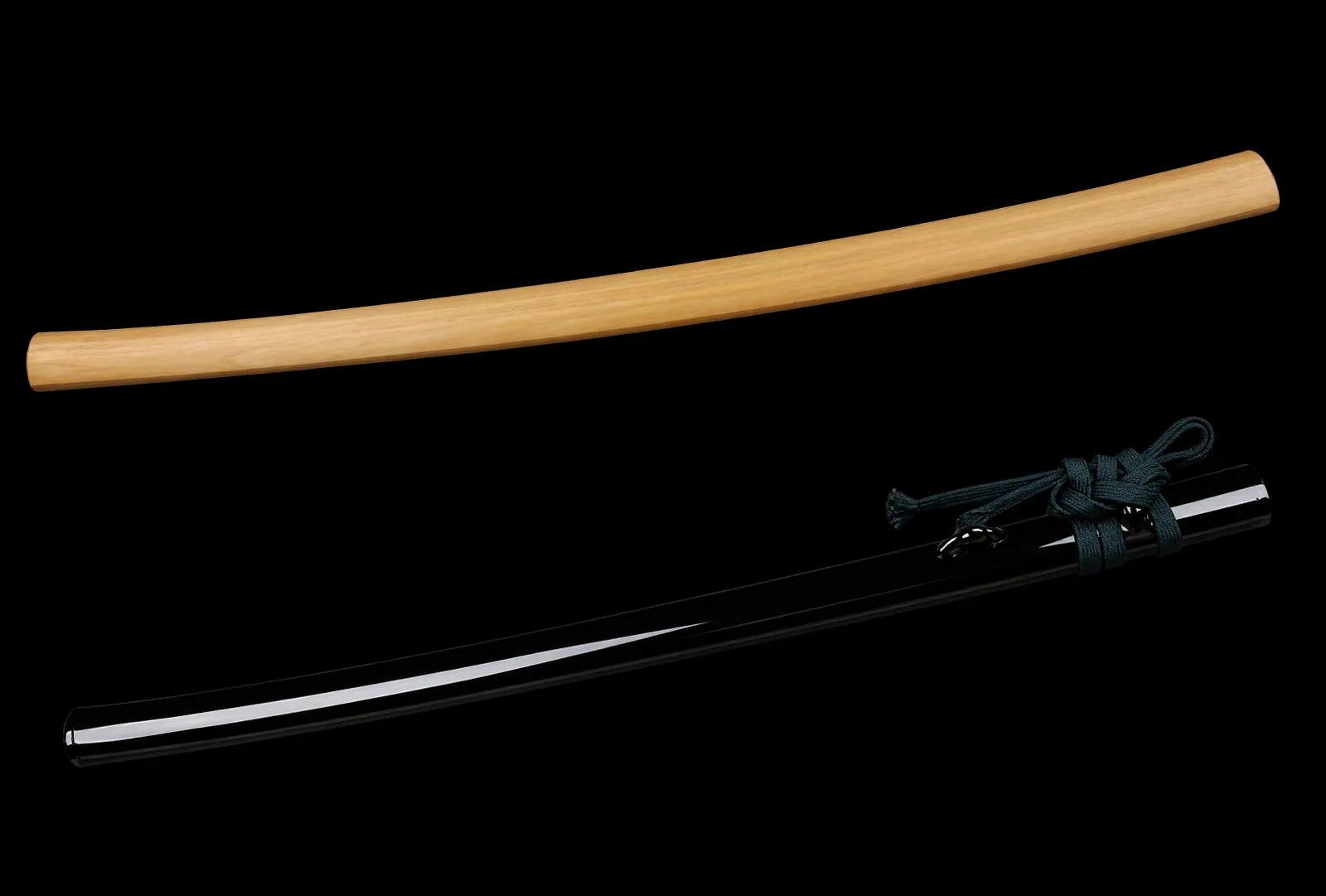
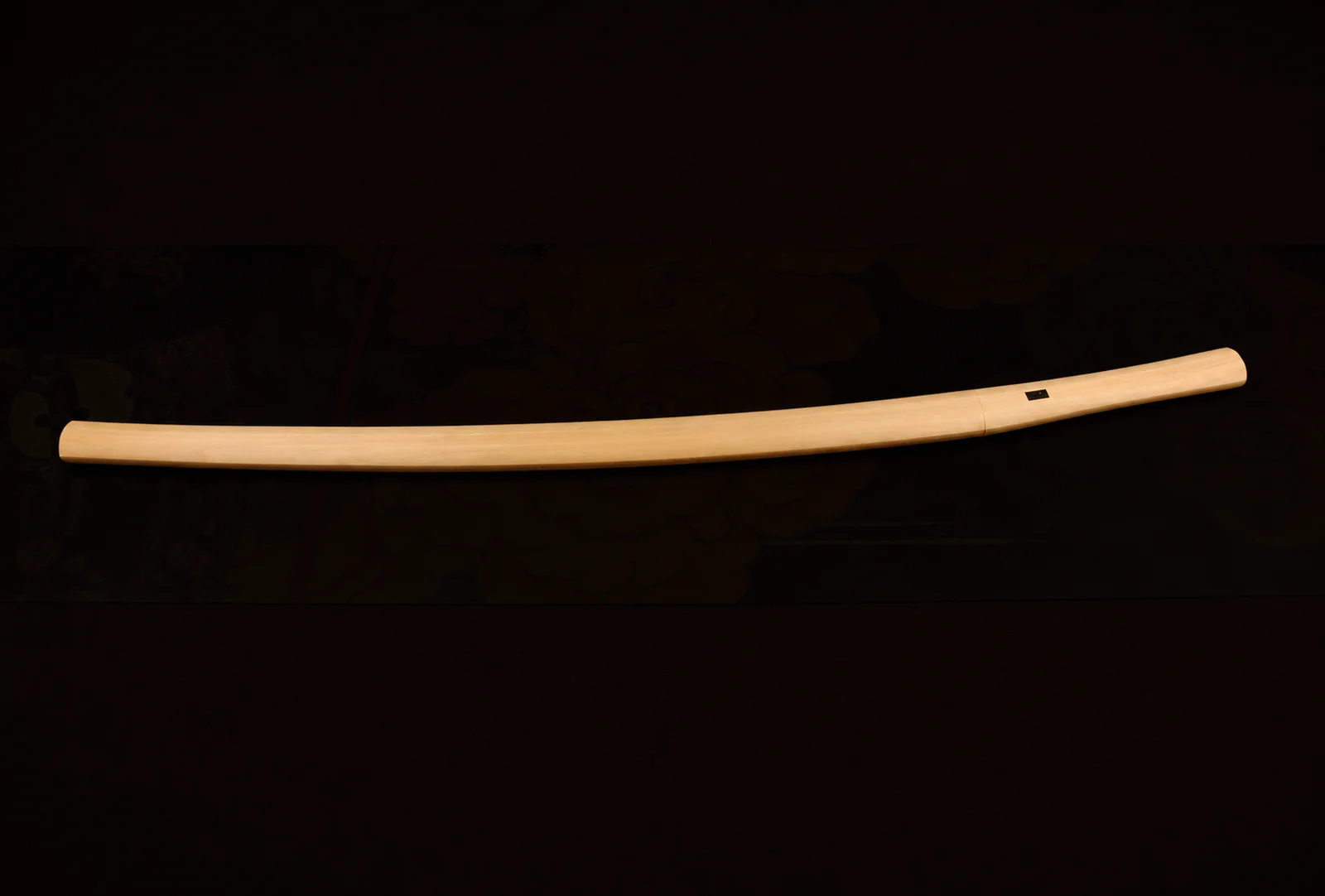
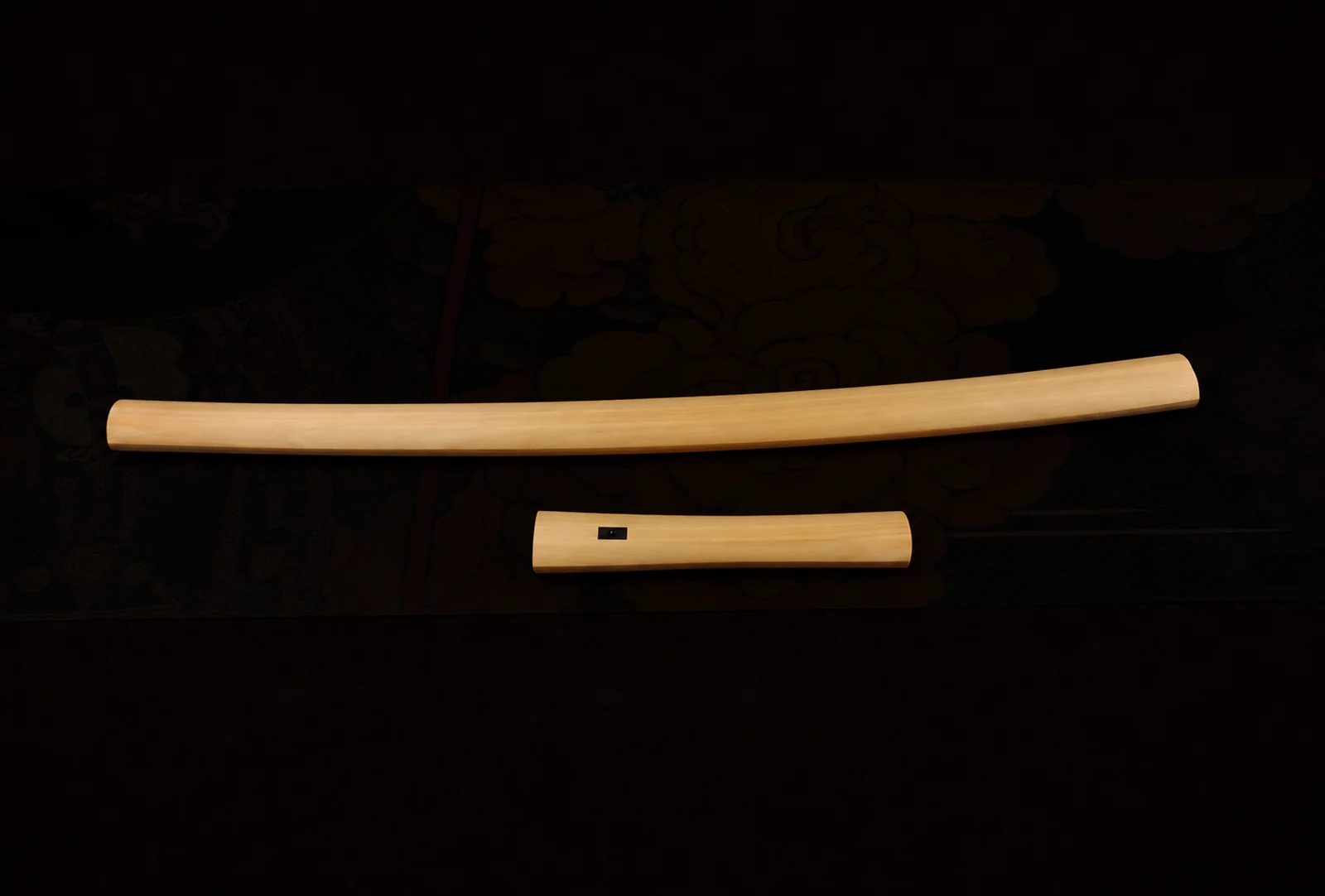
The featured full-upgrade configuration includes an additional handmade shirasaya. Its natural wood and unadorned outline stand apart from the dark mounted saya: two distinct expressions, each with a purpose in the presentation of the blade.
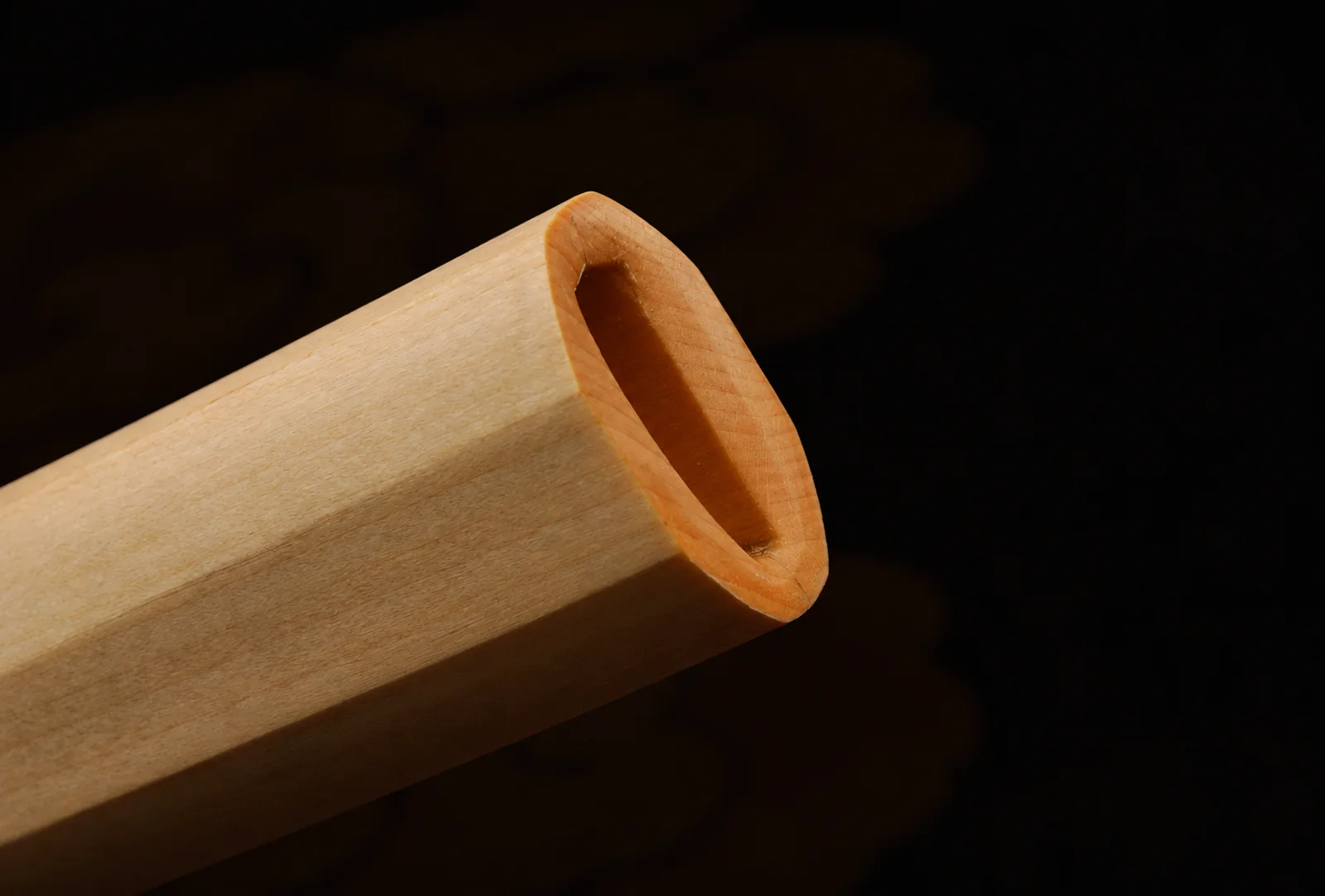
The finished wooden surfaces and mouth detail place the emphasis on proportion and fitting rather than external ornament. The handmade shirasaya is an extra selection, not a standard inclusion with the base configuration.
Reviews
There are no reviews yet.