Description
02 / CRAFT IN THE DETAILS
Steel, Wrap & the Line at the Point.
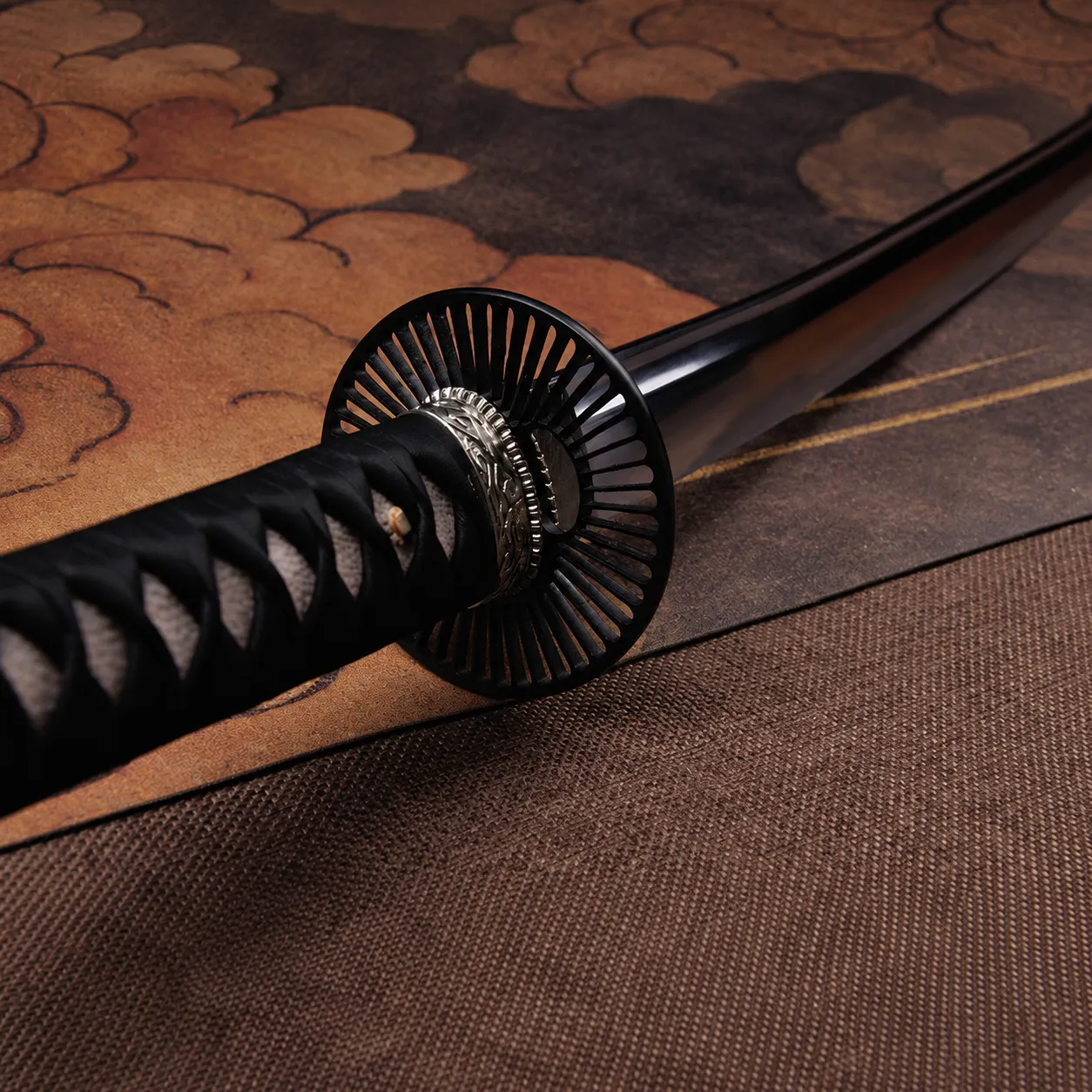
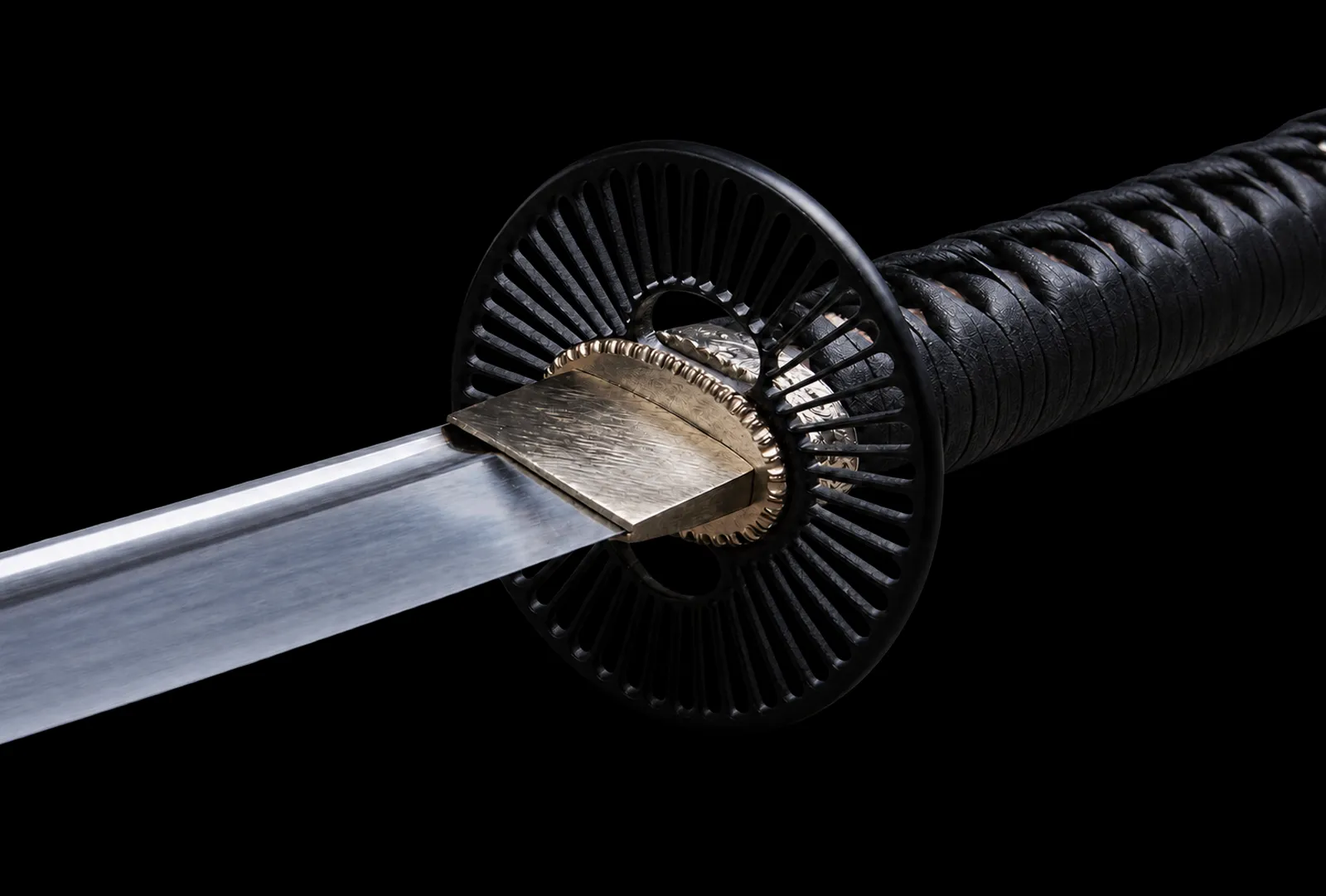
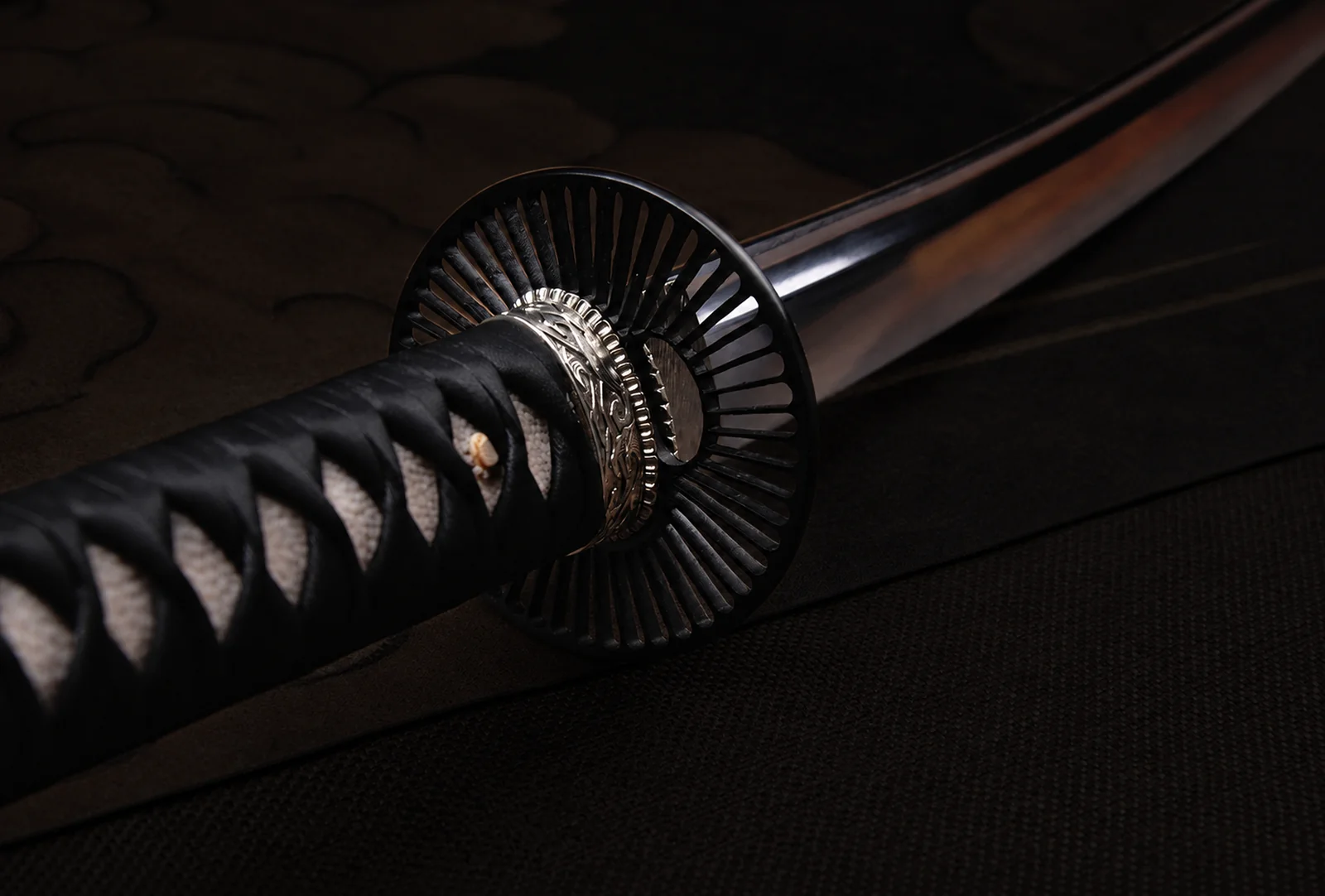
The character of this tameshigiri katana comes into focus where the blade meets the handle. A wheel-openwork iron tsuba, shaped metal habaki and dark leather wrapping bring the assembly together.
These are close, practical details: a guard with a clear open pattern, a fitted transition at the blade, and a grip made with the hand in mind.
01 / THE GRIP
The Pattern Beneath the Wrap.
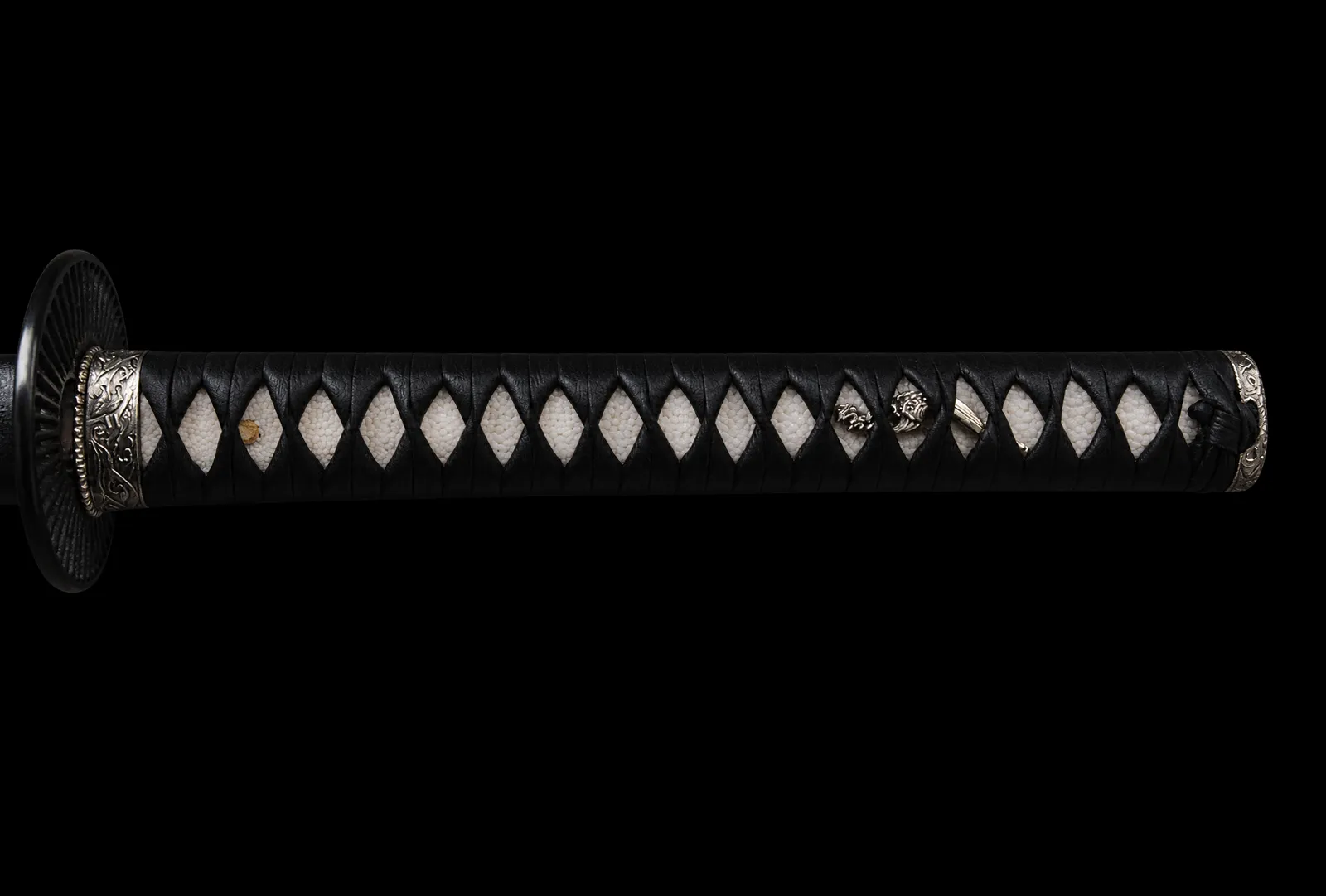
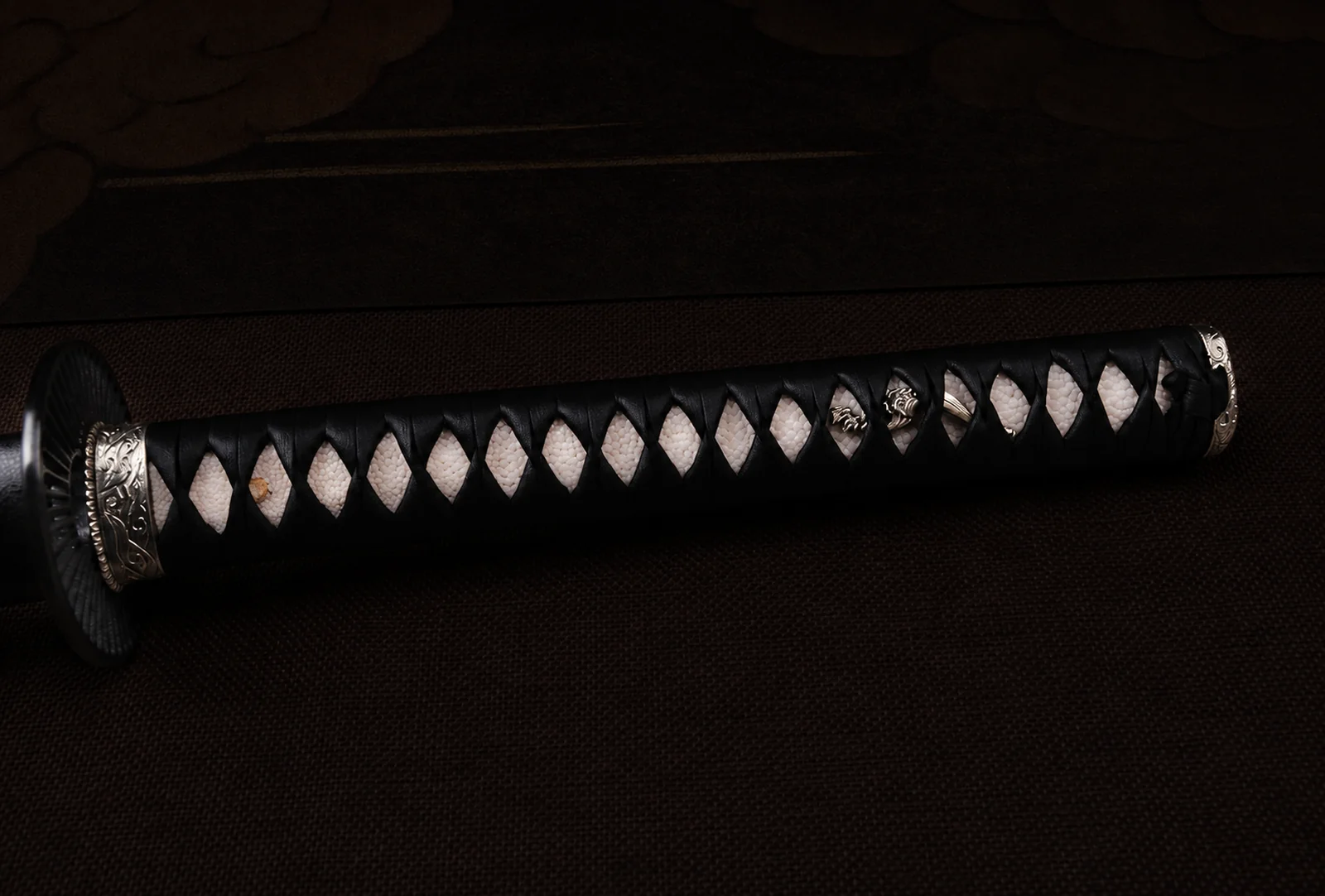
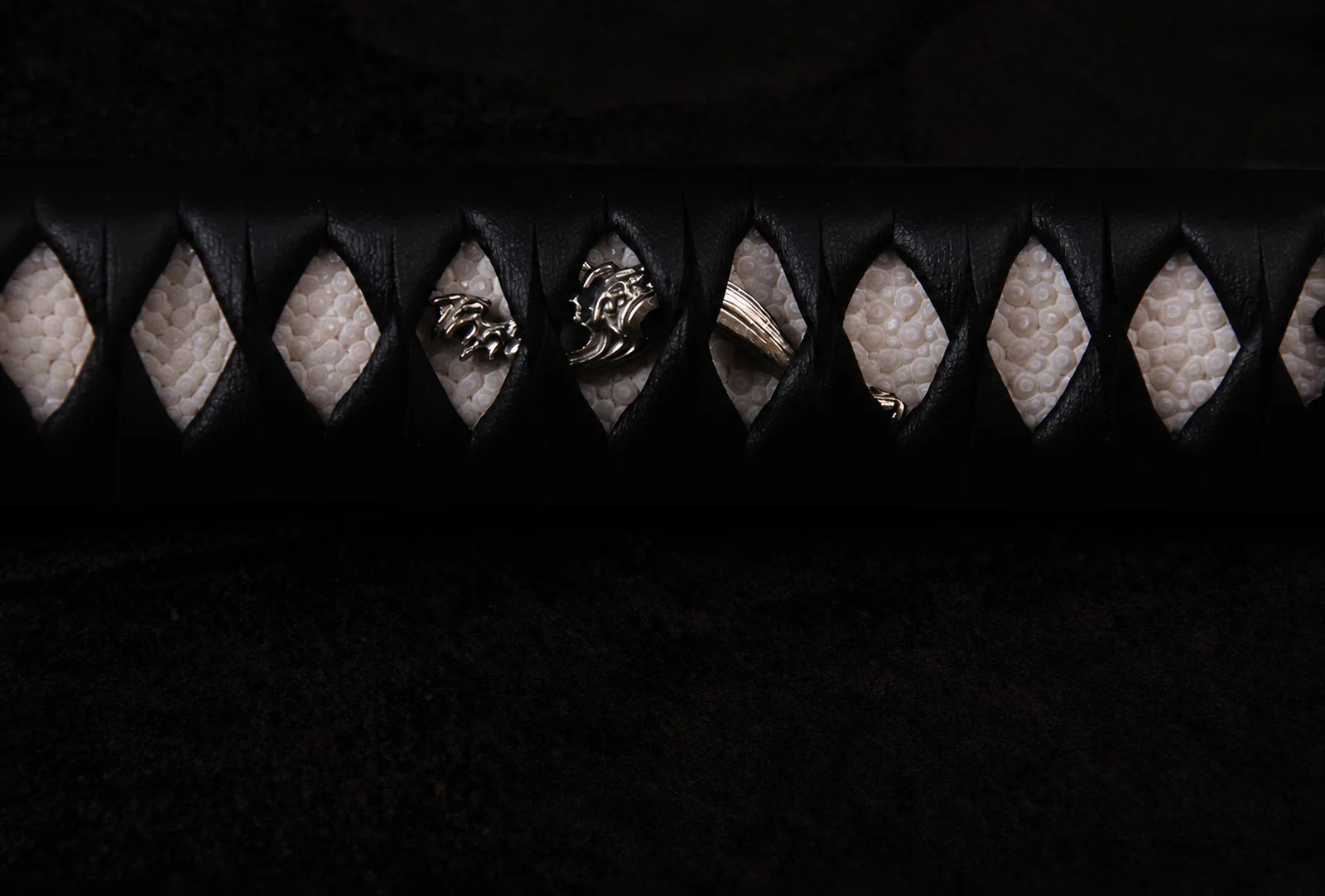
Black leather crosses over pale samegawa in an even sequence of diamonds. Metal menuki appear between the folds, while hishigami support the geometry of the wrapping. The detail is designed to be seen up close, but felt in the hand.
02 / BLADE & SURFACE
Light Along the Steel.
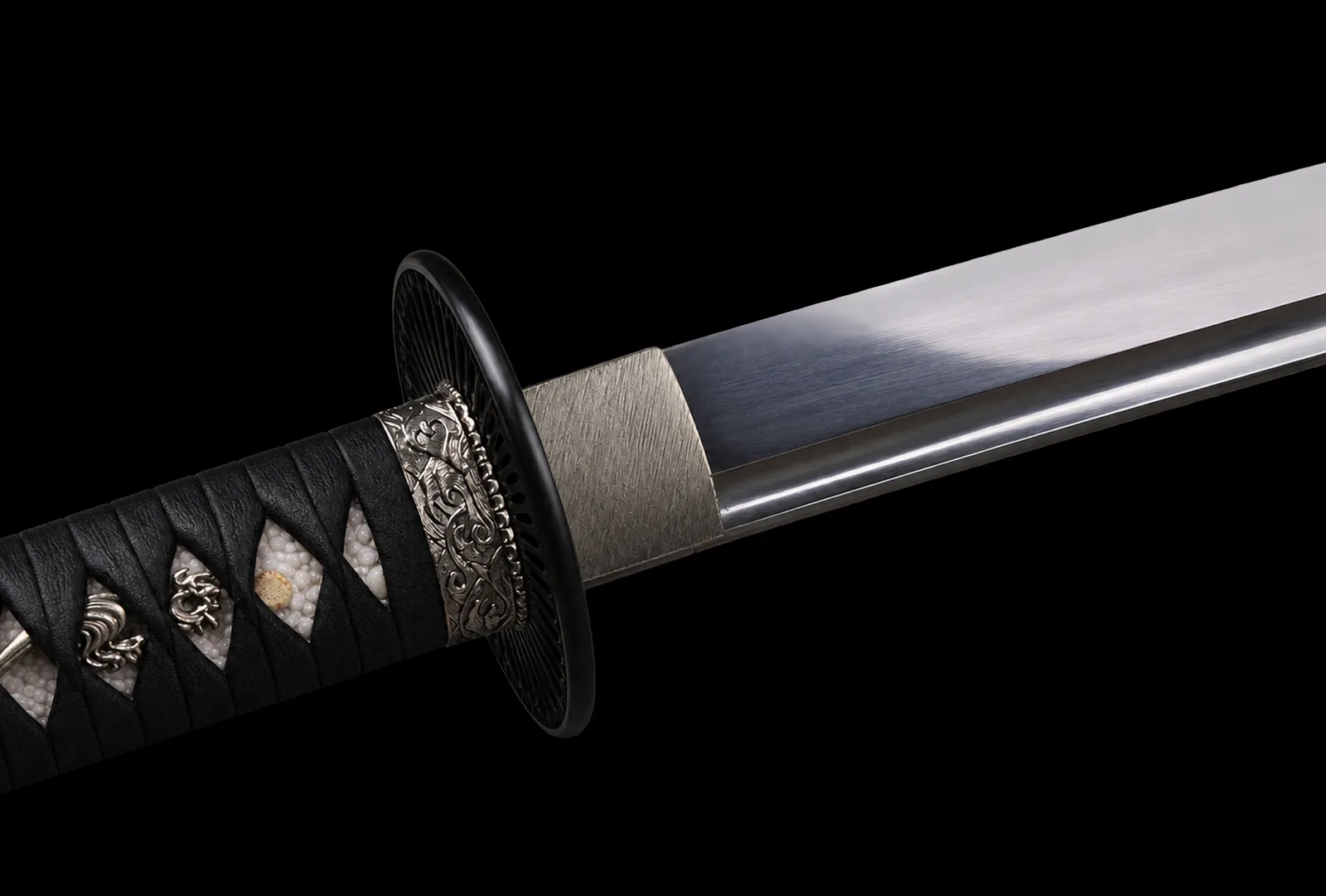
The 60Si2Mn spring-steel blade is oil quenched and finished with a semi-hand mirror polish. The polished planes catch light differently, revealing the transition between the broad blade face and the cut blade groove.
The groove is part of the blade's actual geometry, not a line added to its surface. In this view, its reflective edge draws the eye forward from the guard.
03 / GEOMETRY AT THE TIP
A Real Line. A Defined Point.
Near the kissaki, the groove comes to a deliberate end. Beyond it, the true yokote marks a physical change in blade geometry: a defined boundary between the main blade and the point, rather than a purely cosmetic polish line.
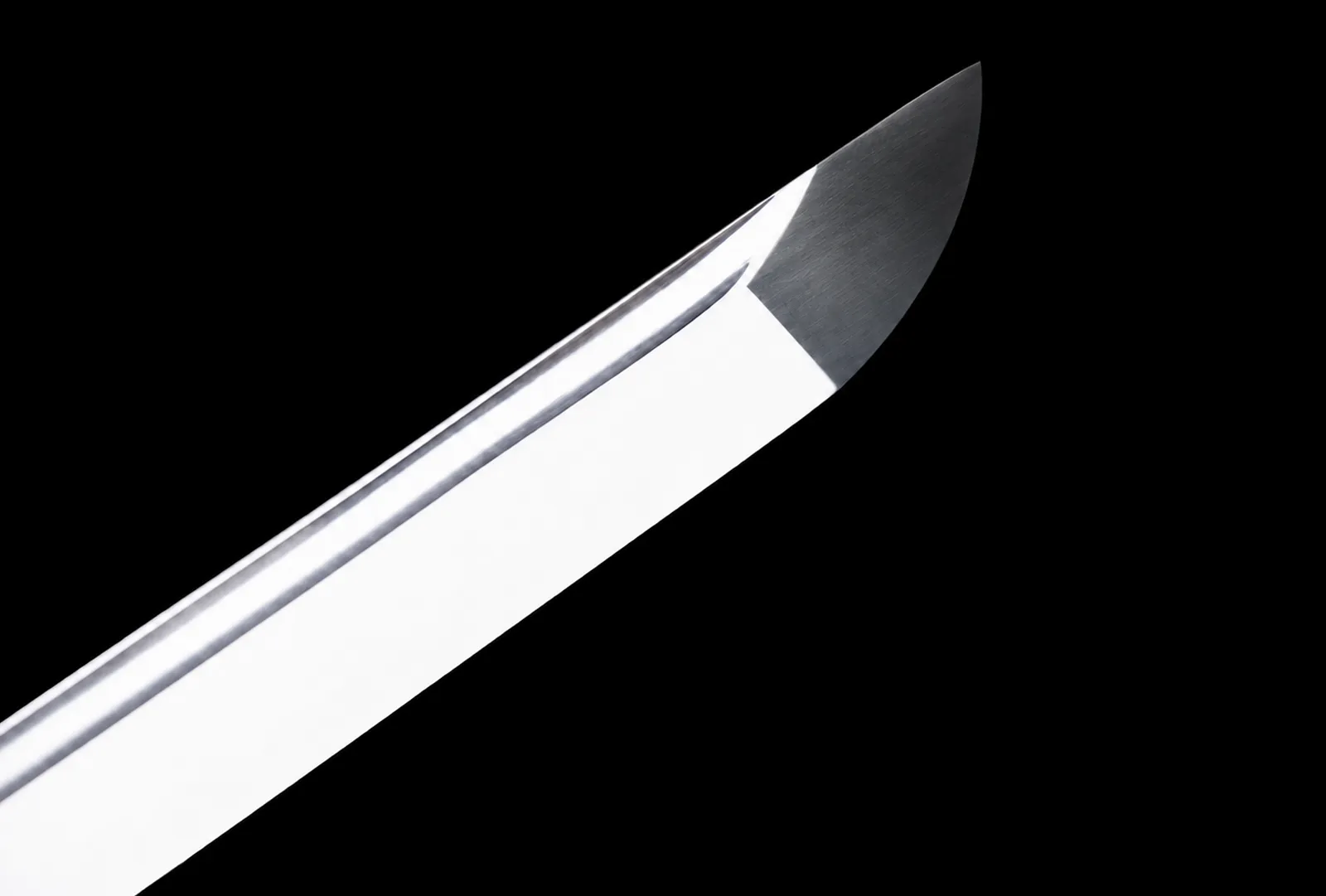
From the leather-wrapped grip to the final line at the point, each detail gives the finished sword its own sense of form.
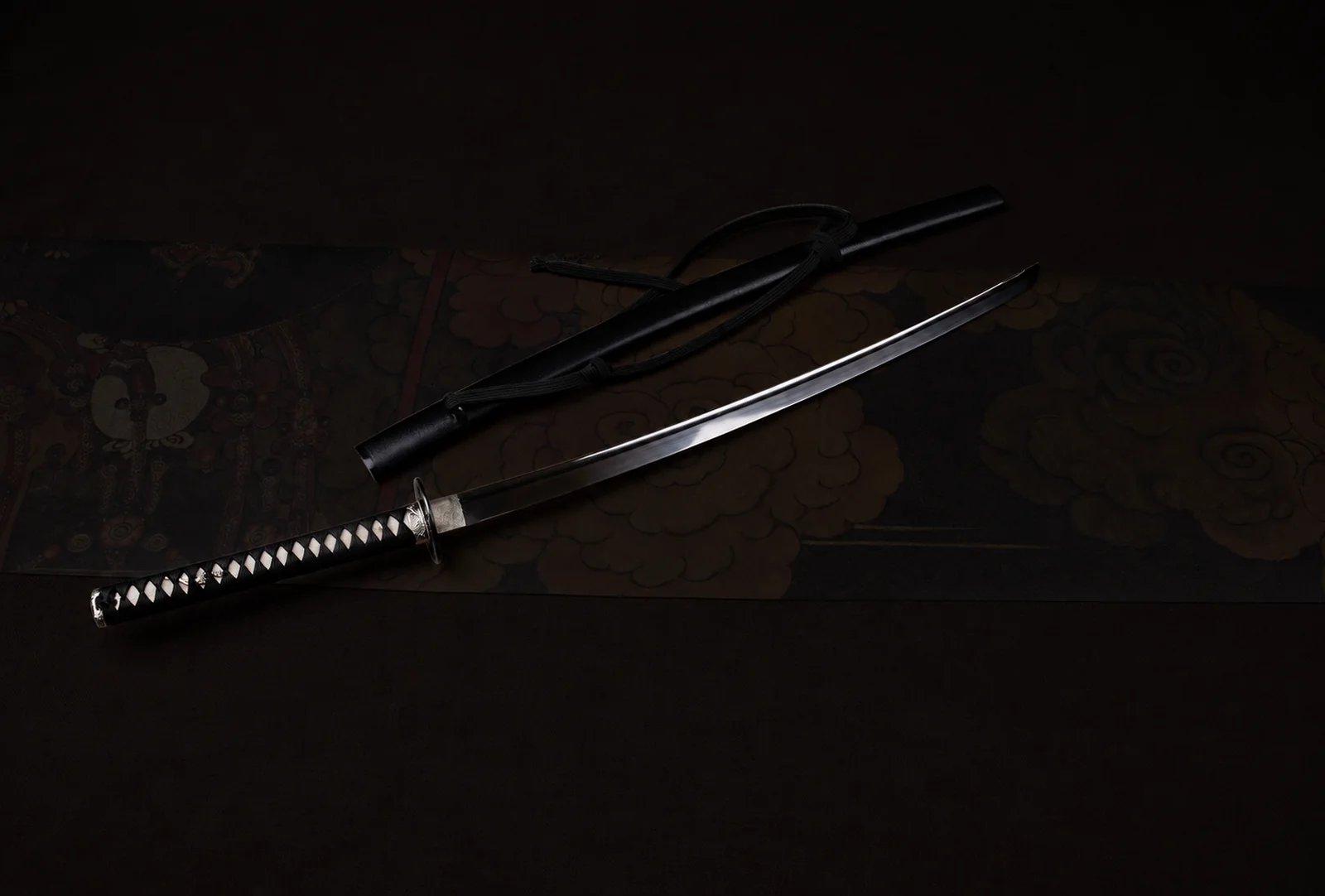
03 / THE FINISHED ASSEMBLY
The Sword as a Whole.
A tameshigiri katana is more than its blade. The grip, guard and saya determine how the finished piece is held, drawn and carried.
This final study looks at those relationships through the completed sword: the continuous curve, the close-fitting mountings and the details that give the assembly its character.
01 / THE DRAWN PROFILE
One Continuous Line.
With the blade drawn, the relationship between its long curved profile and the compact handle becomes clear. The restrained dark fittings leave the eye free to follow the steel.
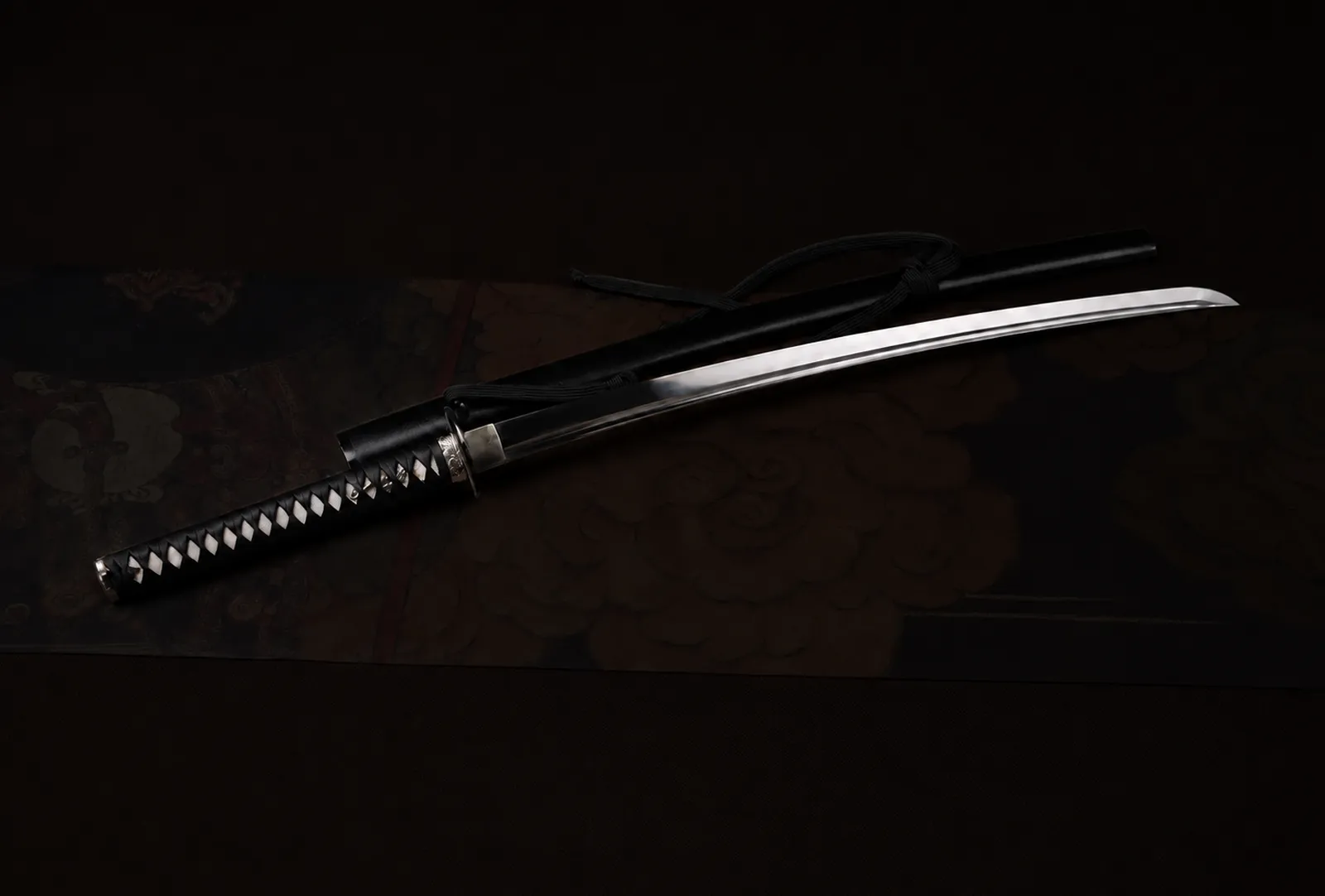
02 / THE GRIP
Shaped Around the Hand.
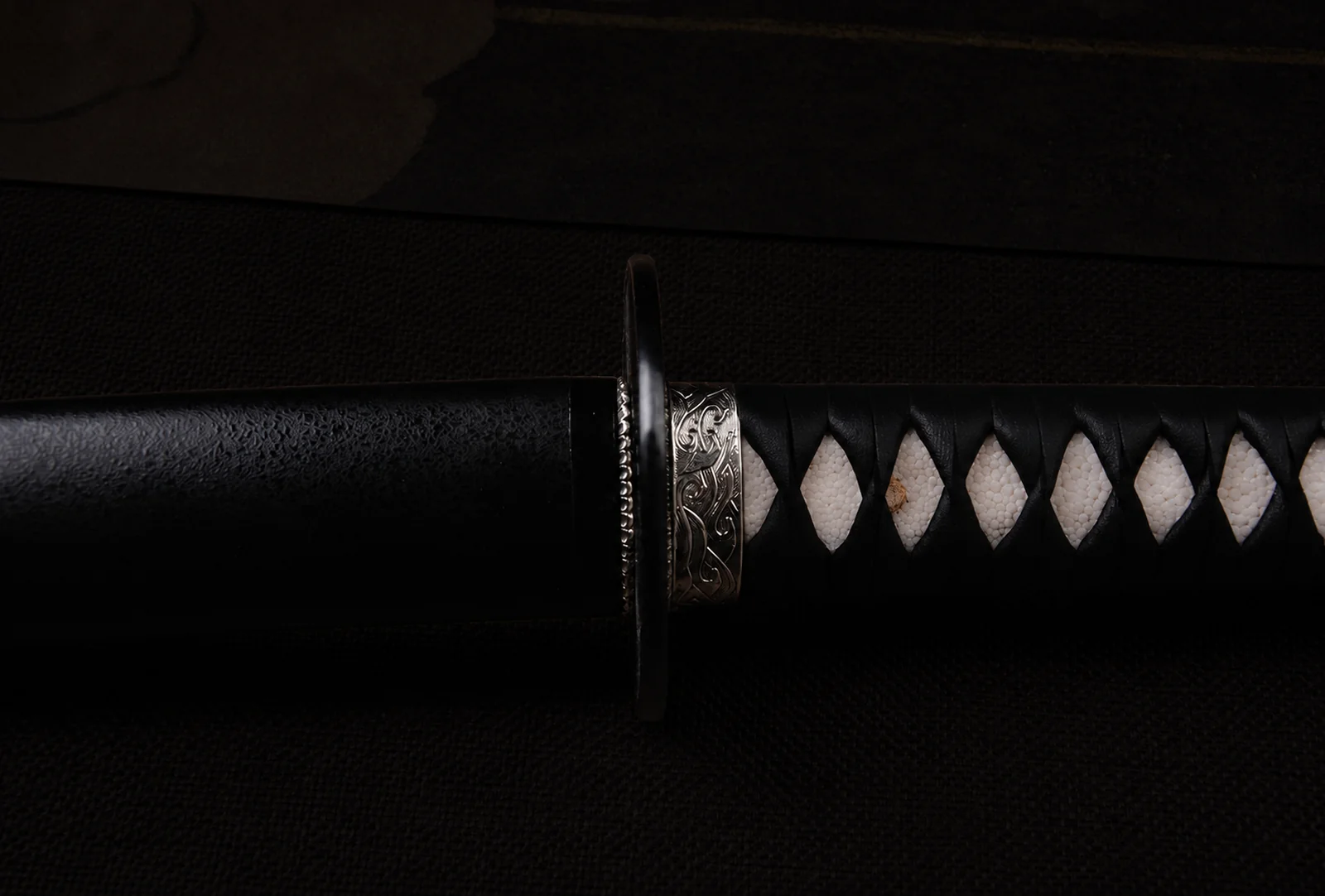
The handle has its own proportions, made to work with the fitted metal collars rather than selected as a generic replacement. Its black leather wrapping follows a regular diamond pattern over the underlying handle surface.
The result is a grip whose texture, shape and assembly are considered together.
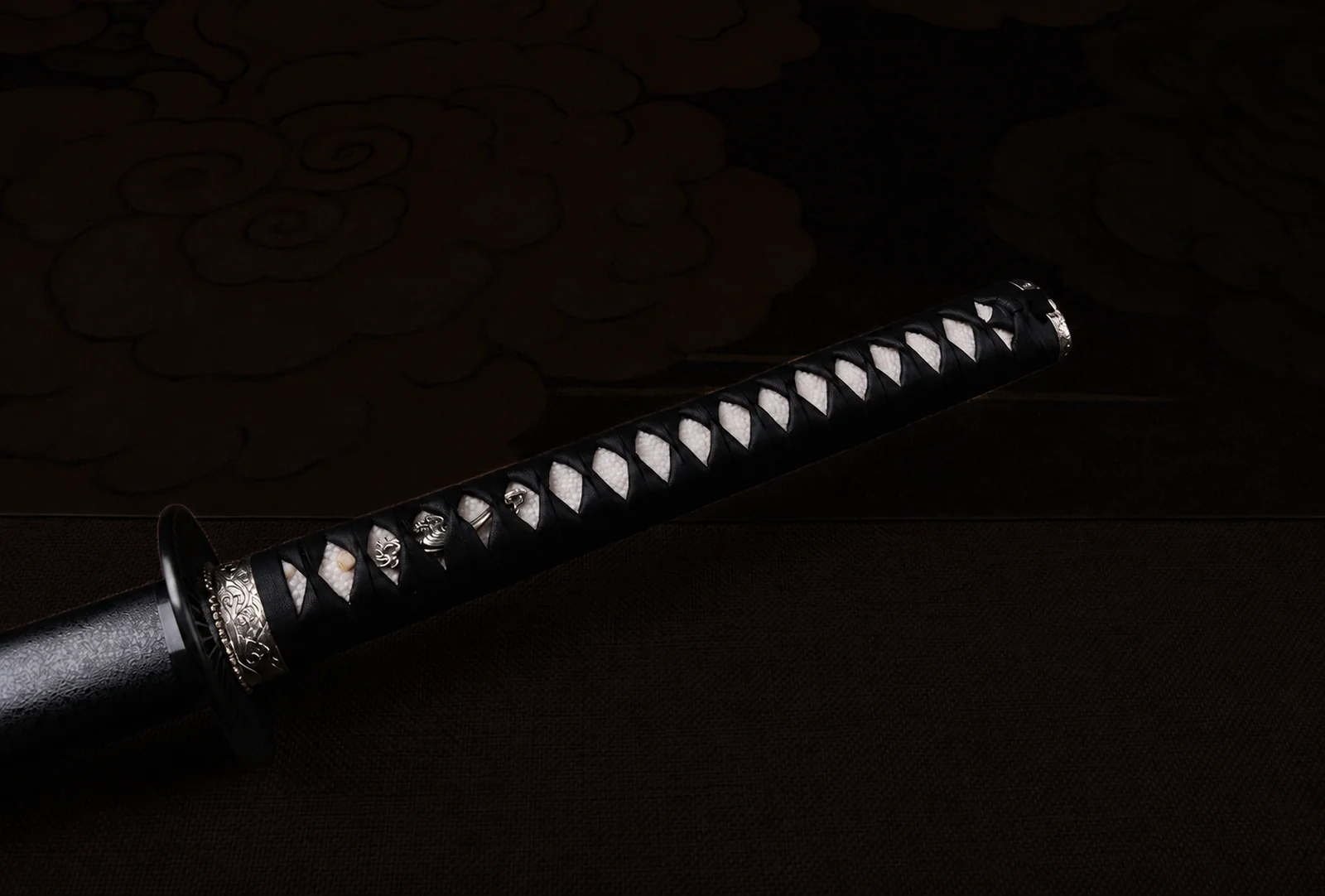
03 / SMALL DETAILS, CLOSELY SEEN
Rhythm in the Wrap.
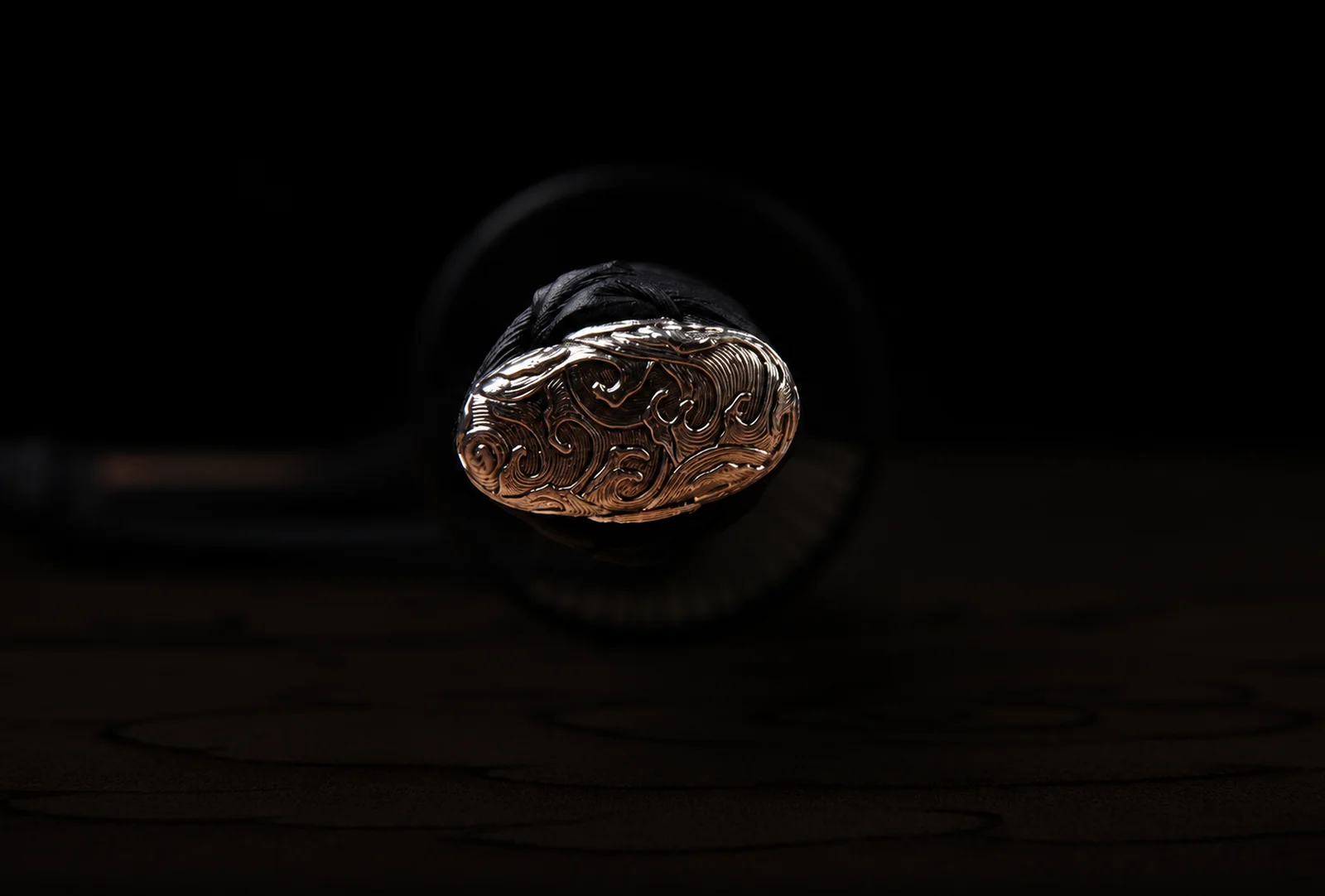
The leather diamonds create a steady rhythm along the grip. Between them, the metal menuki and the finished end of the handle provide quieter points of interest.
04 / THE SHEATH CONNECTION
Made to Meet.
The horn-fitted slim saya is made around the dimensions of this assembly. Its fit at the opening matters as much to the finished appearance as the lacquered surface or the metal guard.
This is why the original grip and saya are best understood as a matched set, rather than interchangeable accessories.
05 / THE IRON GUARD
Openwork, in Profile.
The wheel-openwork iron tsuba has a distinctive radiating silhouette. Against the leather grip and black saya, its fine spokes become the most visible ornamental detail.
The guard is a functional component, but its outline also changes the visual character of the finished katana.
06 / A CHOICE OF GUARD
A Change in Silhouette.
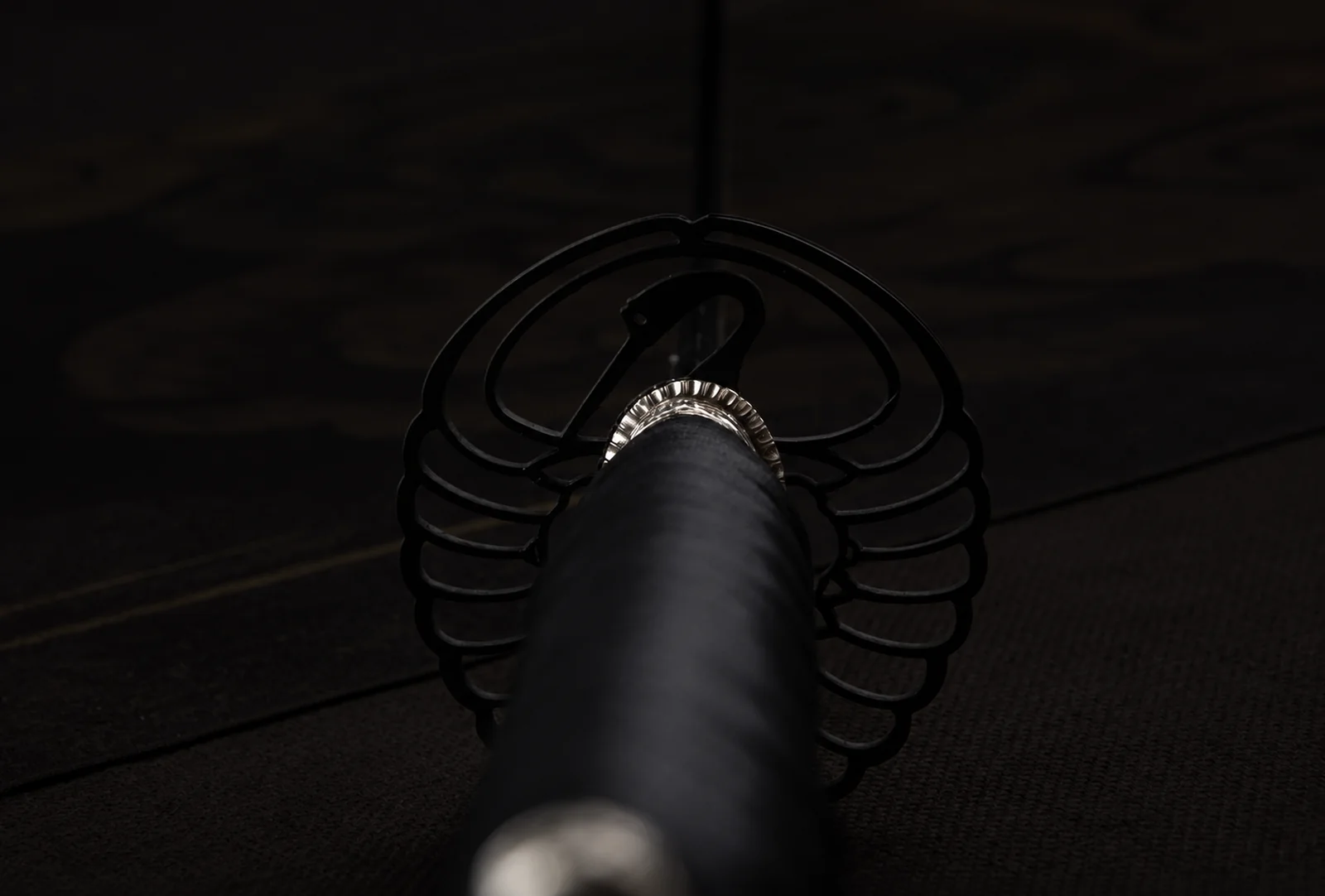
The katana is offered with two iron tsuba designs: Wheel Sukashi and Crane. Each creates a different outline around the same carefully considered blade-and-grip configuration.
The choice is made in the product options above; the fitted handle and saya remain central to the design.
07 / A FINAL VIEW OF THE STEEL
Seen Along the Blade.
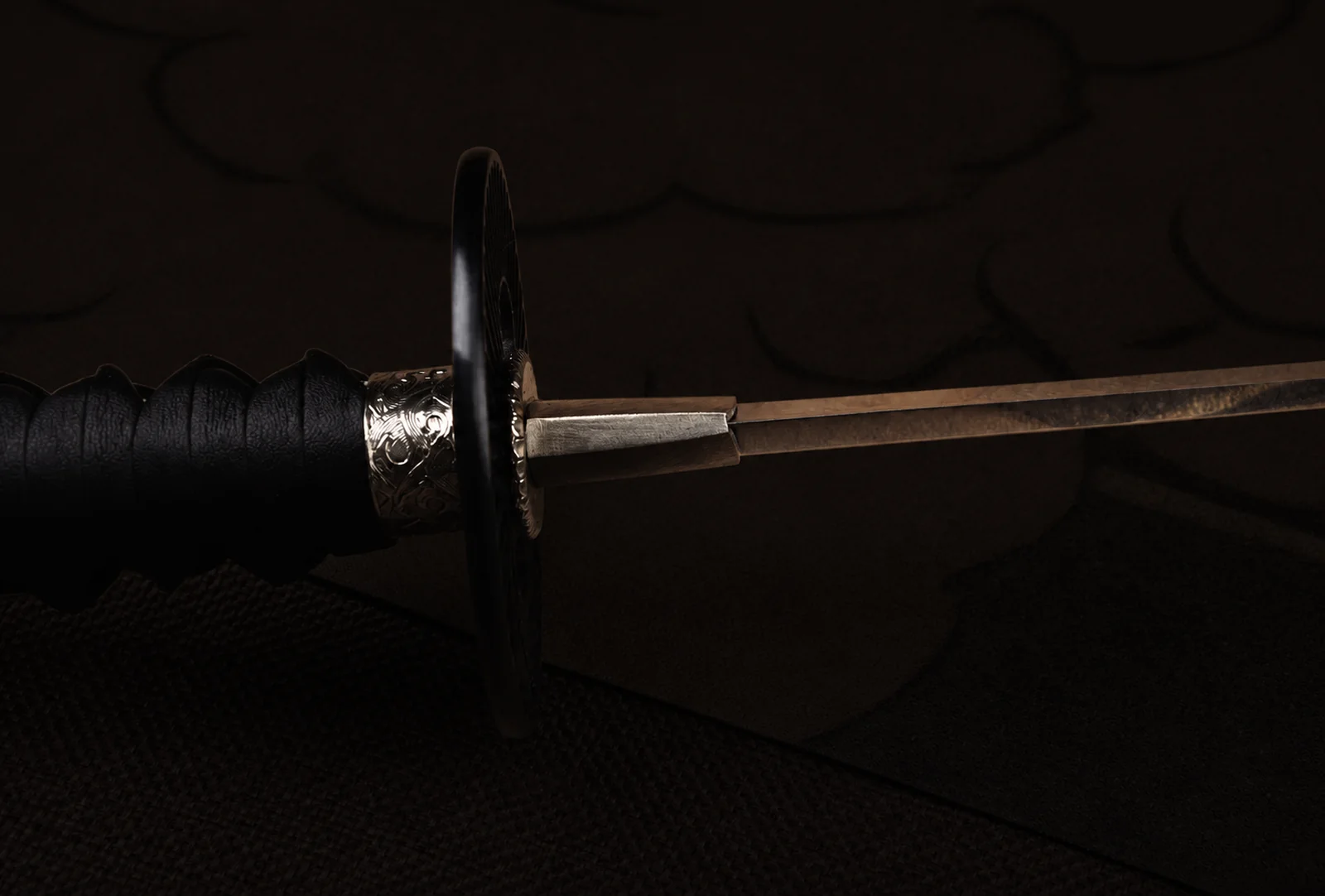
Viewed almost along its length, the blade shows how the fittings give way to steel. It is a quieter perspective: less about a single finish or detail, more about the complete katana held in one line.
TAMESHIGIRI KATANA / THE FINISHED WORK
A balanced blade, a fitted handle and a saya made to meet it. The whole sword is the point.
Reviews
There are no reviews yet.