QUIET CRAFTSMANSHIP · LONGQUAN

Dojigiri Yasutsuna Replica Tachi — Workshop-Smeltered Steel

¥9,893.00

WORKSHOP NOTES

Hello, everyone.

I’m Lao Yan.

For today’s workshop update, I’m showing you this Dōjigiri Yasutsuna replica, which has taken eight or nine months to complete.

Before shipping it to the customer,

I wanted to record one more video of the finished sword.

This blade is made from workshop-smelted steel and finished with shiage-togi polishing.

It shows a fine, konuka-like hada and a straight suguha hamon.

I’ve shown this blade before.

It appeared in one of my earlier videos about this Dōjigiri replica blade.

That video covered the blade in detail. Today, I’m filming it again now that the sword has been mounted.

As I mentioned earlier, the customer originally planned to have a handcrafted shirasaya made.

A tachi mounting was not part of the original plan.

But he later purchased an authentic Japanese sword already fitted with a shirasaya.

So he no longer needed another shirasaya, and we finished this one with a more standard tachi koshirae for shipping.

Tachi mountings made in Longquan still have their familiar limitations.

They are not especially refined; some details look rather soft.

There is not much fine detail to discuss. To improve the appearance, the fittings would need additional hand-finishing.

That would bring out the details. And then,

with gilding and silver-toned finishing, the overall appearance could be much better.

There is not much else to add about the blade’s configuration: workshop-smelted steel and shiage-togi.

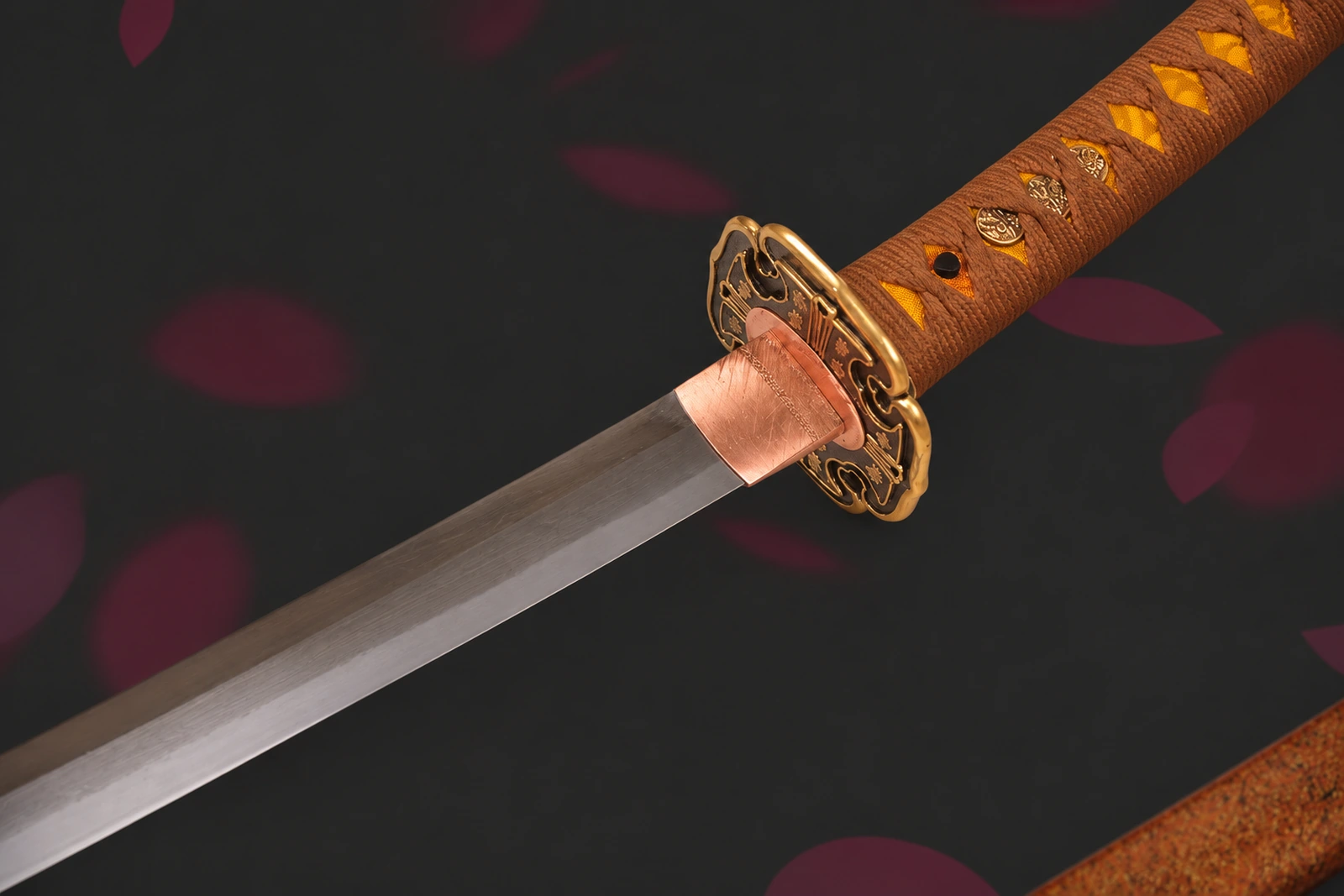
We made a handcrafted copper Yūjō-style habaki.

Yūjō refers to the decorative pattern of file marks on the habaki.

The habaki on this sword

has a sloped, contoured form rather than a flat profile like many mass-produced habaki from Longquan.

It was originally intended for a handcrafted shirasaya, where it could have fitted very closely.

Switching to a tachi koshirae made the fitting work considerably harder.

We had to put a great deal of effort into assembling it.

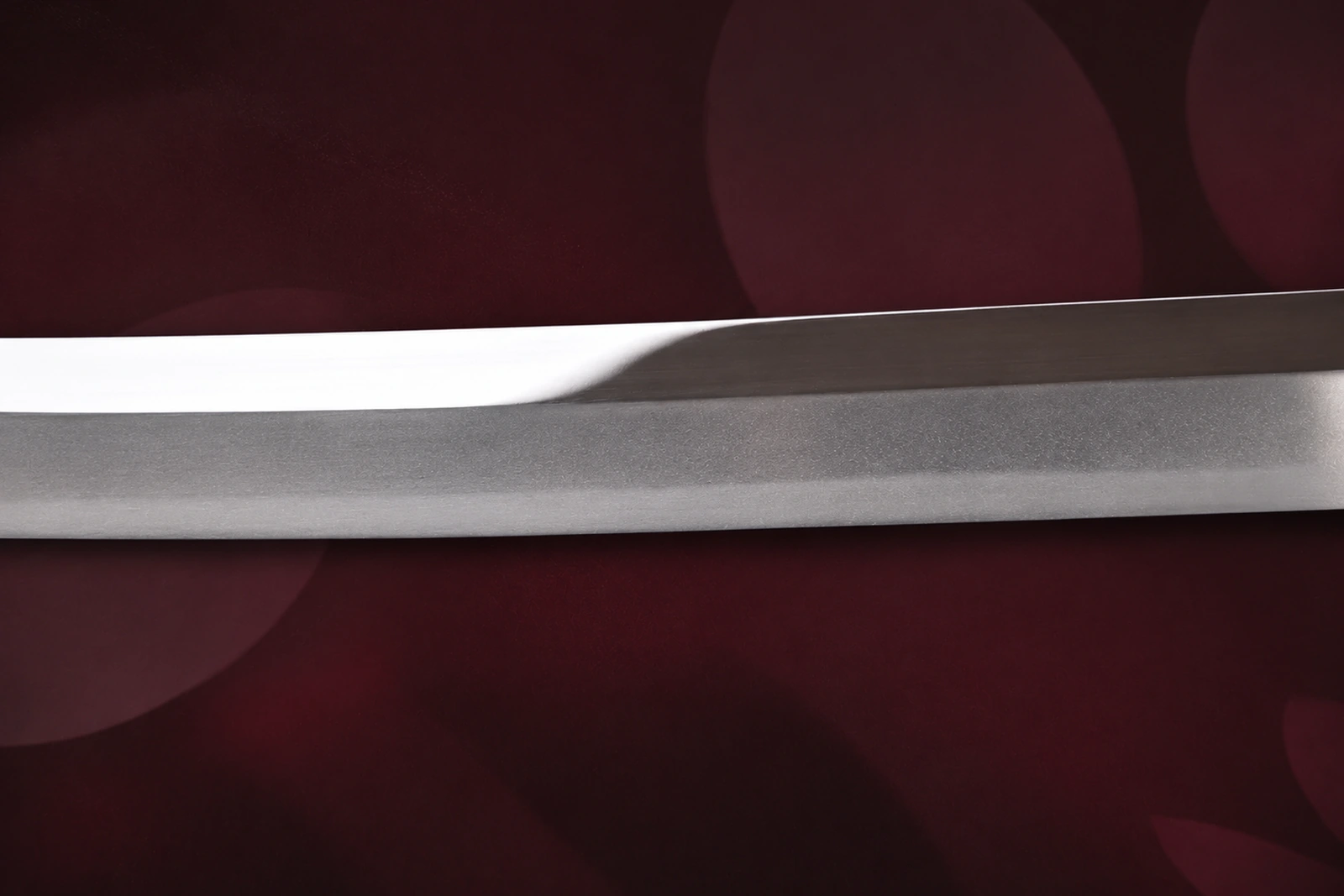
You really can see the difference in professional polishing, especially in the sharp, well-defined shinogi line.

We describe that shinogi line as straight and crisp, with none of the softened or blurred appearance.

That shows the foundation polishing was carried out thoroughly.

You can see how the hada has been revealed, along with the hadori finish.

I’m not sure whether the camera captures it clearly.

The color of the steel is also something I personally like.

Just looking at it feels quite pleasing.

The steel has a beautiful tone, and the blade looks smooth and lustrous.

When it comes to polishing a sword,

even without discussing every detail, the result should at least be pleasing and comfortable to look at.

Here you can see the crisp definition much more clearly.

The result is quite good. I still find myself

thinking this blade deserved a handcrafted shirasaya; it would have given the whole piece a stronger sense of refinement.

Even with mass-produced tachi fittings,

some hand-finishing would make the mountings feel much better.

We did not use genuine silk. Genuine silk would have given the wrapping a finer texture.

As for the interior details, there is not much to add: Nishijin-ori textiles, Nishijin-ori.

That is essentially it.

A workshop-smelted, maru-forged tachi, finished with shiage-togi polishing.

There is not much more to say.

In short, this is a gracefully shaped tachi, created as a one-to-one replica using reference measurements of Dōjigiri Yasutsuna.

Thank you for watching. Goodbye, everyone.

Technical Overview

Core specifications.

Nagasa
800 mm
Sori
27 mm
Motohaba
29 mm
Sakihaba
19 mm
Motokasane
7 mm
Tsuka Length
250 mm
Overall Length
1120 mm
Weight without Saya
1015 g
Weight with Saya
1310 g
Handmade product dimensions may vary slightly.
Blade & Craft

Blade craftsmanship.

Construction
Maru Construction
Blade Material
Workshop-Smeltered Steel
Heat Treatment
Clay Tempering
Hamon
Clay-Tempered Hamon
Hamon Pattern
Suguha
Polish
Shiage-togi

Beschreibung

01 / HISTORICAL INSPIRATION

A Tachi Remembered.

A contemporary interpretation of Dōjigiri Yasutsuna, one of Japan's most celebrated historical swords. This reproduction draws its presence from the long, measured curve of a classical tachi — a form whose quiet balance remains compelling centuries later.
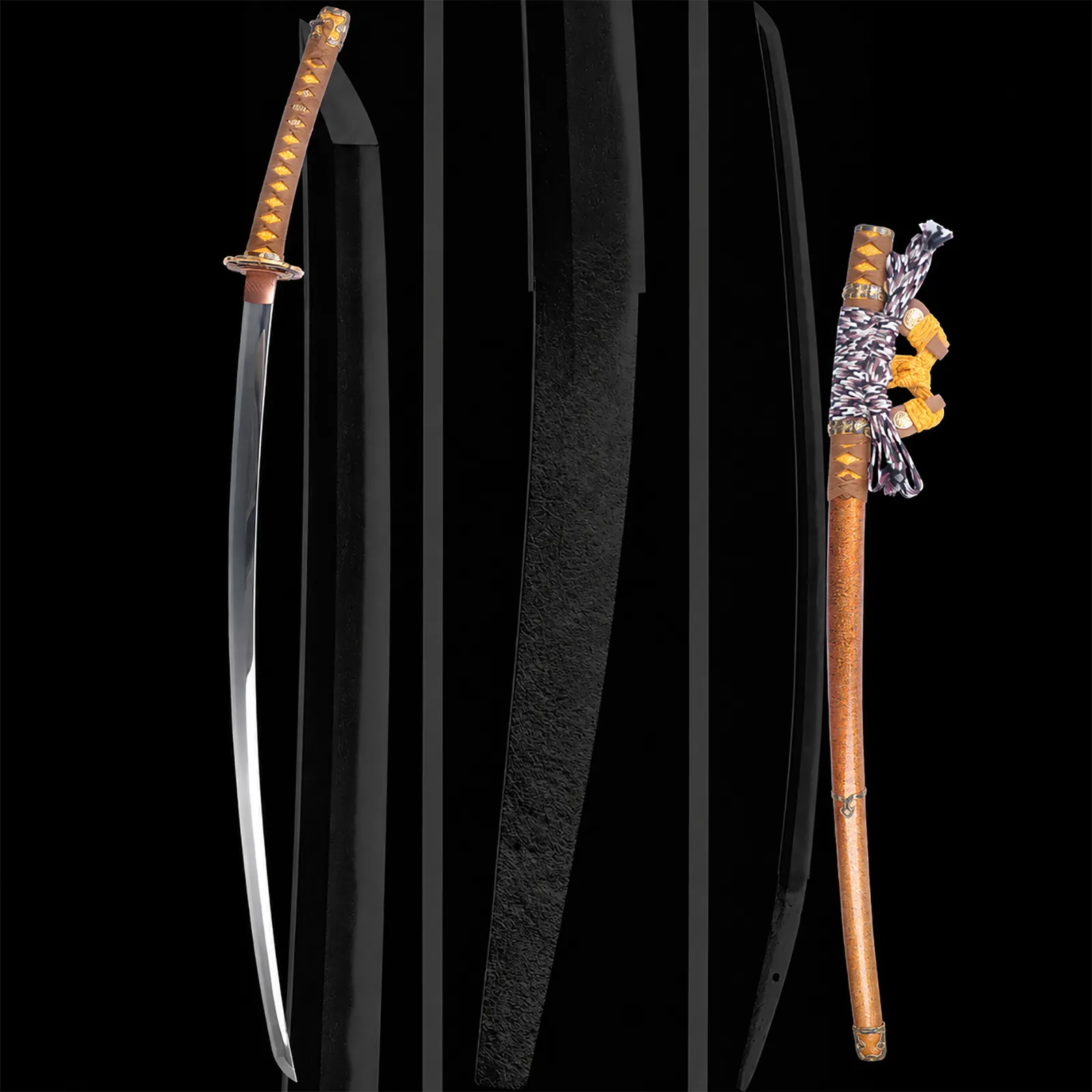
HISTORICAL TACHI REPRODUCTION
Composite view of the Dojigiri Yasutsuna replica tachi showing the mounted sword, brown saya, and close-up blade surface against a black background.
The complete tachi silhouette, blade surface, and traditional mountings.

THE HISTORICAL NAME

A Sword Beyond Its Legend.

The historical Dōjigiri Yasutsuna is a celebrated work associated with the Heian-period swordsmith Yasutsuna, and is counted among Japan's Five Great Swords. The original is preserved as a National Treasure in the Tokyo National Museum.

Its name lives in the legend of Shuten Dōji. Beyond that story, the blade is admired for the enduring character of its form — the relationship between length, curvature, and the elegant sugata of a historic tachi.

THE REPRODUCTION

A Form Worth Following.

This reproduction follows the historical sword's overall design language: its sweeping blade profile, considered curvature, and the proportions leading toward the kissaki. The intention is to preserve the recognizable presence of the original tachi in a newly made work.

With an 800 mm nagasa and 27 mm sori, this reproduction places the blade's long, flowing silhouette at the center of the composition.

BLADE LENGTH / NAGASA 800 mm
CURVATURE / SORI 27 mm
BASE WIDTH / MOTOHABA 29 mm
TIP WIDTH / SAKIHABA 19 mm

THE COMPLETE WORK

Presented as a complete tachi, This reproduction pairs its curved blade with a warm-toned saya and traditional koshirae. The blade and its established mountings form a single, considered composition.

02 / BLADE & CRAFT

The Steel, Revealed.

The presence of this tachi begins with its blade: workshop-smelted steel, Maru construction, and the patient work of hardening and polishing. Each stage brings another quality of the steel into view.
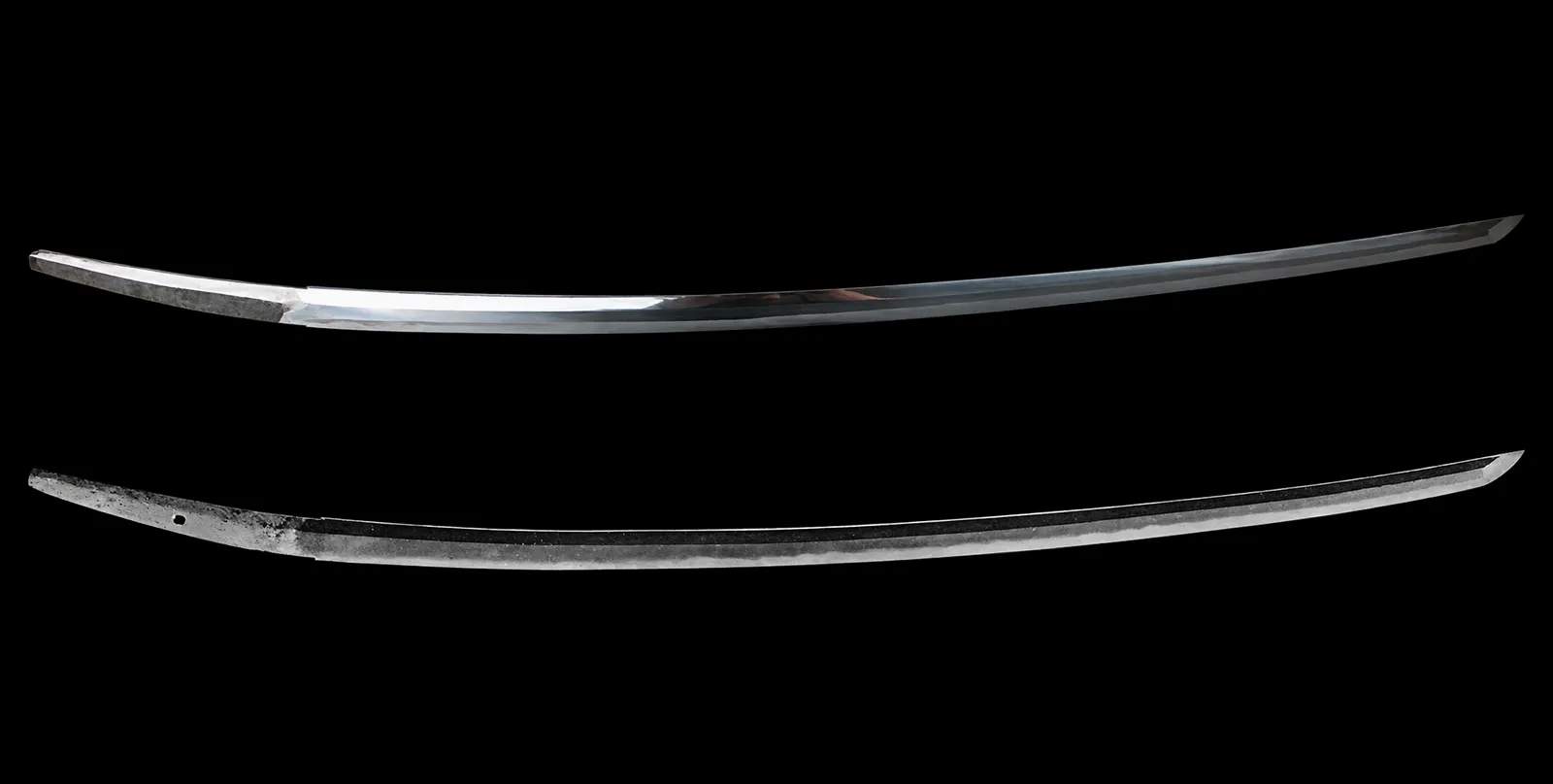
Comparison of the Dōjigiri Yasutsuna reproduction blade above a reference image of the historical original, highlighting their curved profiles.
Above: the contemporary reproduction. Below: a historical reference view of the original blade. A study in silhouette and curvature rather than a claim of identical workmanship.

MATERIAL / STRUCTURE / GRAIN

A Body of Forged Steel.

The blade is forged from workshop-smelted steel in a Maru construction. Rather than a core-and-jacket arrangement, this approach forms the blade as a single forged body.

Across the finished surface, the hada is fine and restrained, with a texture reminiscent of Konuka-hada. Its subtle character becomes more apparent in changing light, without overwhelming the blade's overall shape.

GEOMETRY / REFLECTION / FINISH

The Refinement of Shiage-togi.

Careful foundation work establishes the geometry before the fine finish. The blade's shinogi retains a crisp, well-defined line rather than softening into the surrounding surfaces.

Through Shiage-togi, the blade reveals naturally expressed hada, refined tonal character in its jigane, and subtle changes of reflected light. The flowing hadori brings visual movement to the polished surface without replacing the underlying hamon.
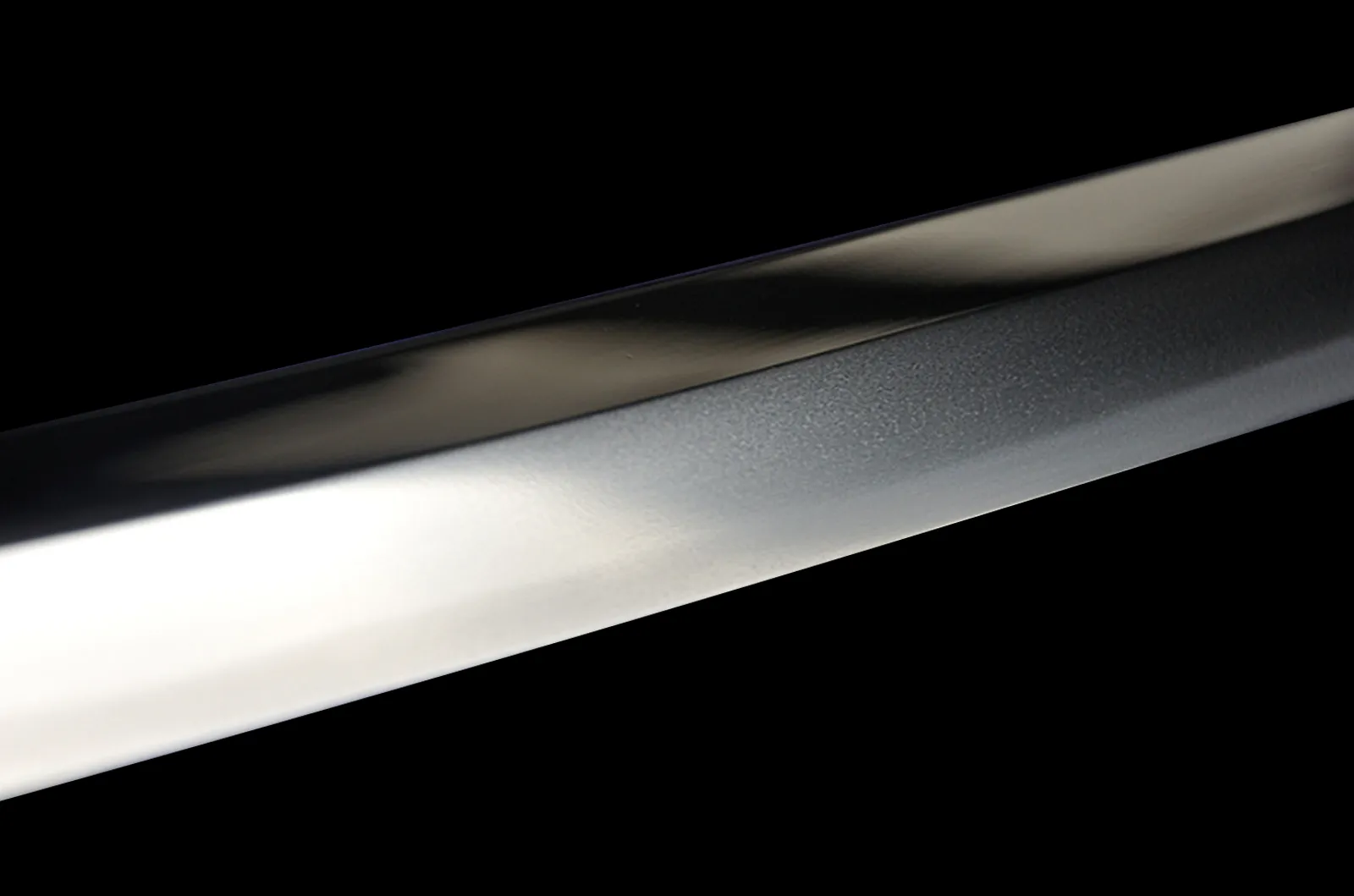
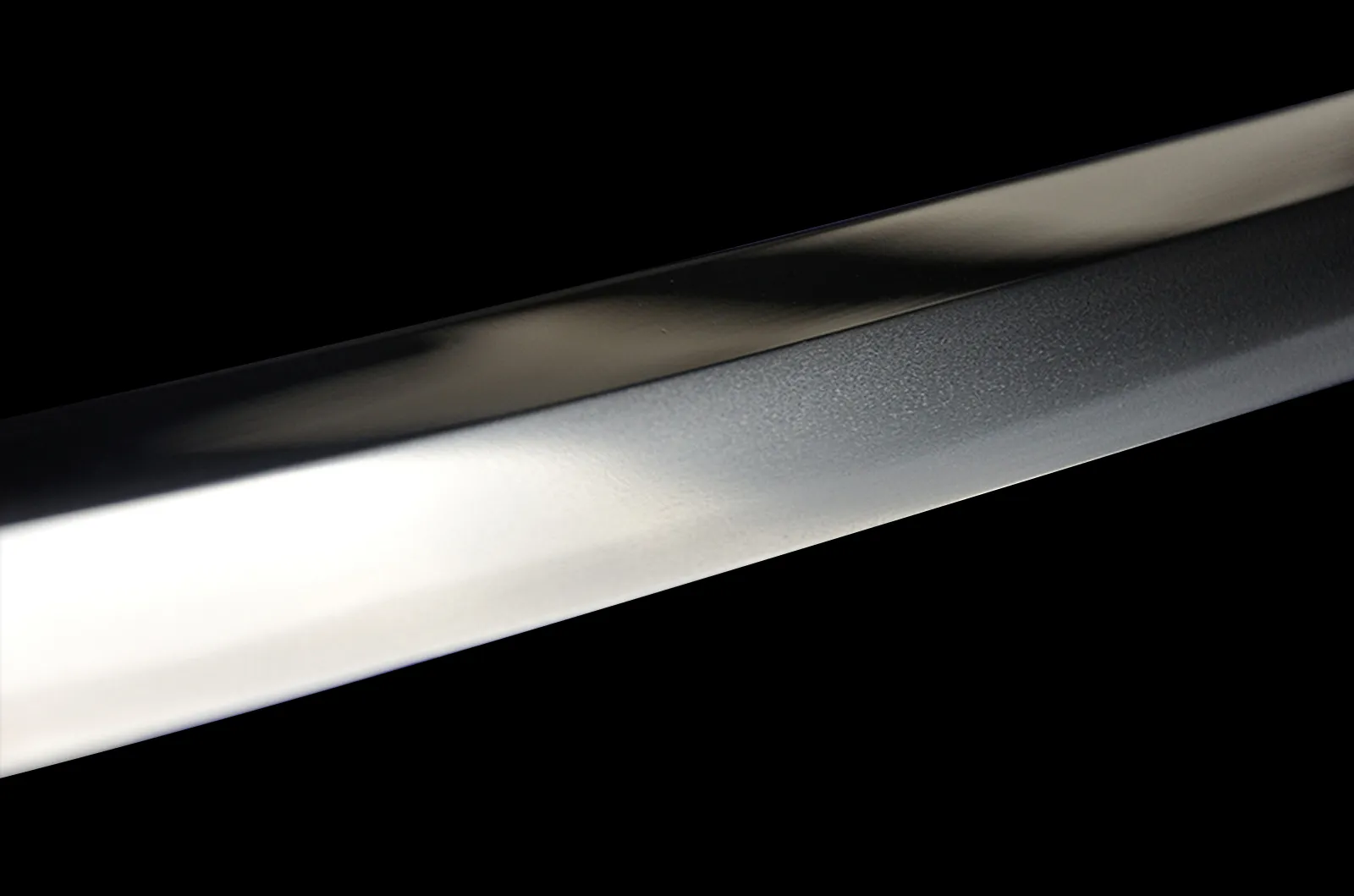
Close-up of the Dōjigiri Yasutsuna reproduction blade showing finely polished steel, a defined ridge and smooth shifts of reflected light.
A crisp shinogi and carefully controlled reflections across the polished surface.
Macro photograph of the Dōjigiri Yasutsuna reproduction showing a fine steel surface texture and gradations of light along the polished blade.
Fine surface texture and restrained tonal variation emerge as the light moves across the steel.
I

Shitaji-togi

Foundation work that gives definition to the blade's geometry.

II

Shiage-togi

Fine finishing that reveals the surface and its play of light.

III

Hadori

A visual treatment of the hardened-edge area in the polished finish.

THE HARDENED EDGE

The Discipline
of a Straight Line.

Clay tempering gives rise to the hardened-edge hamon. This reproduction is classified as Suguha. Its generally straight, restrained line nevertheless has subtle natural variations, visible as the light passes over the blade.
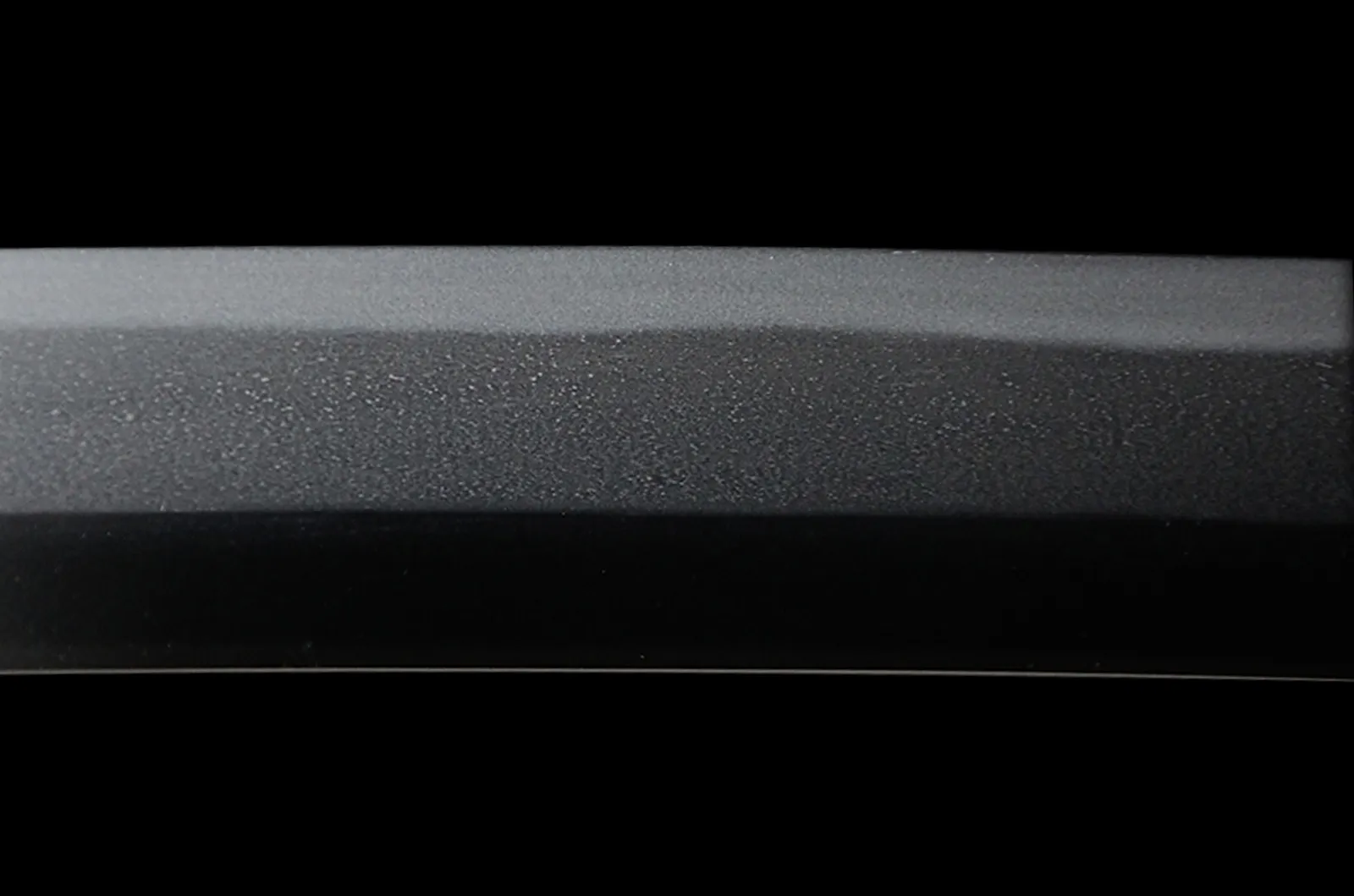
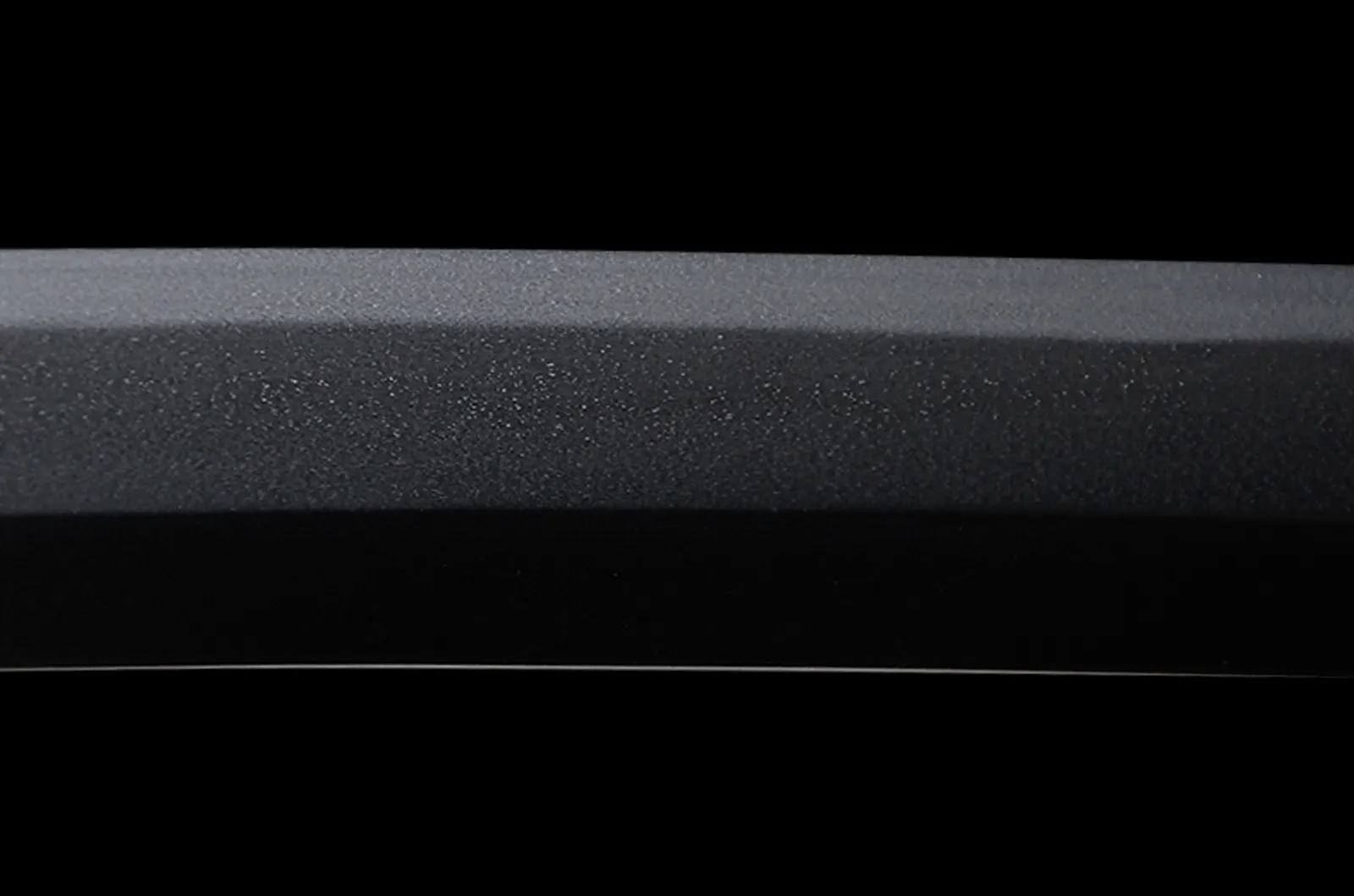
Close-up of the Dōjigiri Yasutsuna reproduction blade showing a restrained Suguha-style hardened-edge line with subtle natural undulations.
The understated Suguha line follows the blade with slight natural movement.
Macro detail of the Dōjigiri Yasutsuna replica's gently undulating Suguha hamon, visually recalling the historical blade's Ko-midare character.
A closer view of the fine changes along the hardened-edge region.
SUGUHA / STRAIGHT HAMON

The historical Dōjigiri Yasutsuna is associated with Ko-midare, a finely irregular hamon. This reproduction retains its Suguha classification while the line's slight variations offer a subtle visual echo of the original. The two patterns are not presented as identical.

THE COMPLETE MOUNTING

Craft Beyond the Blade.

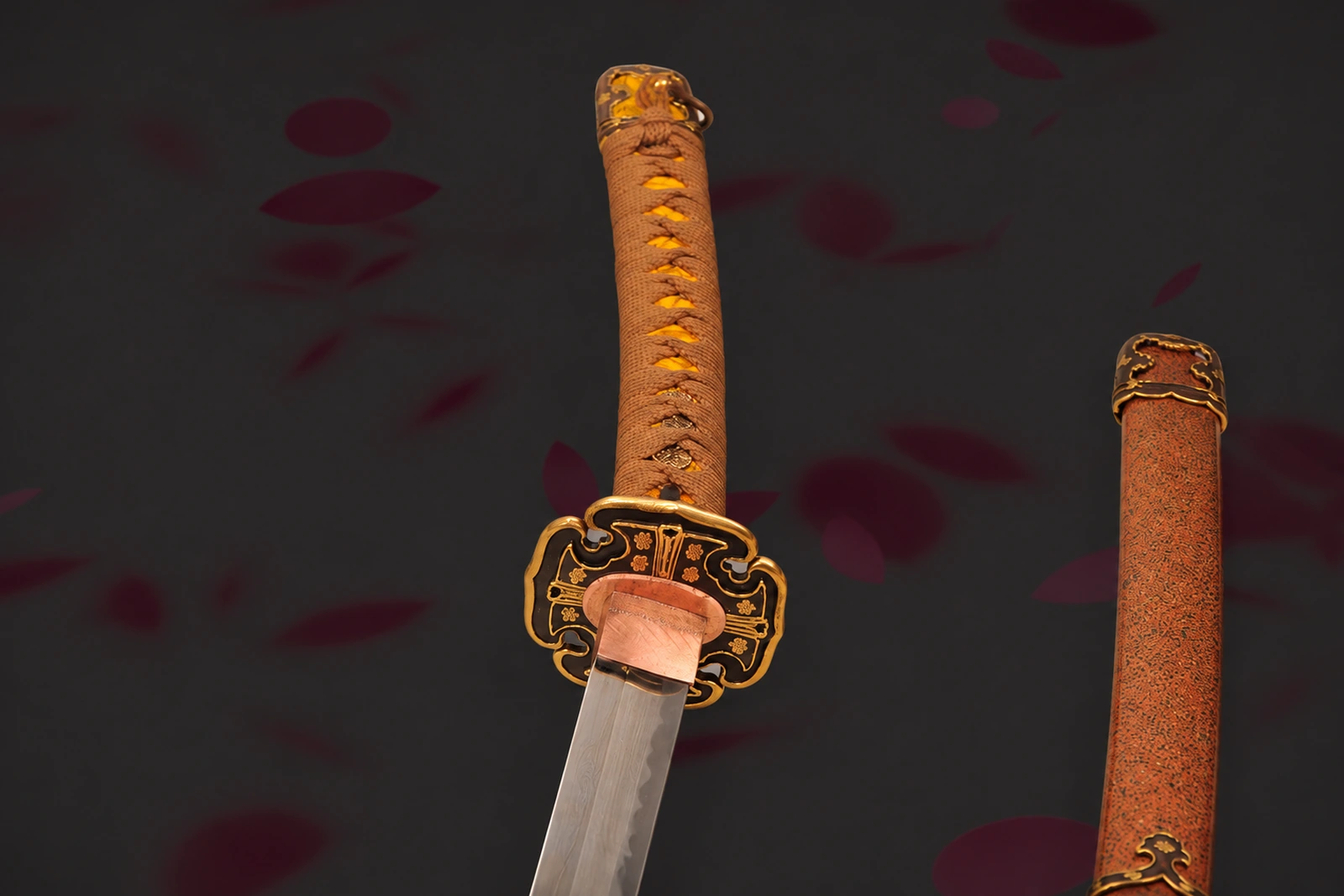
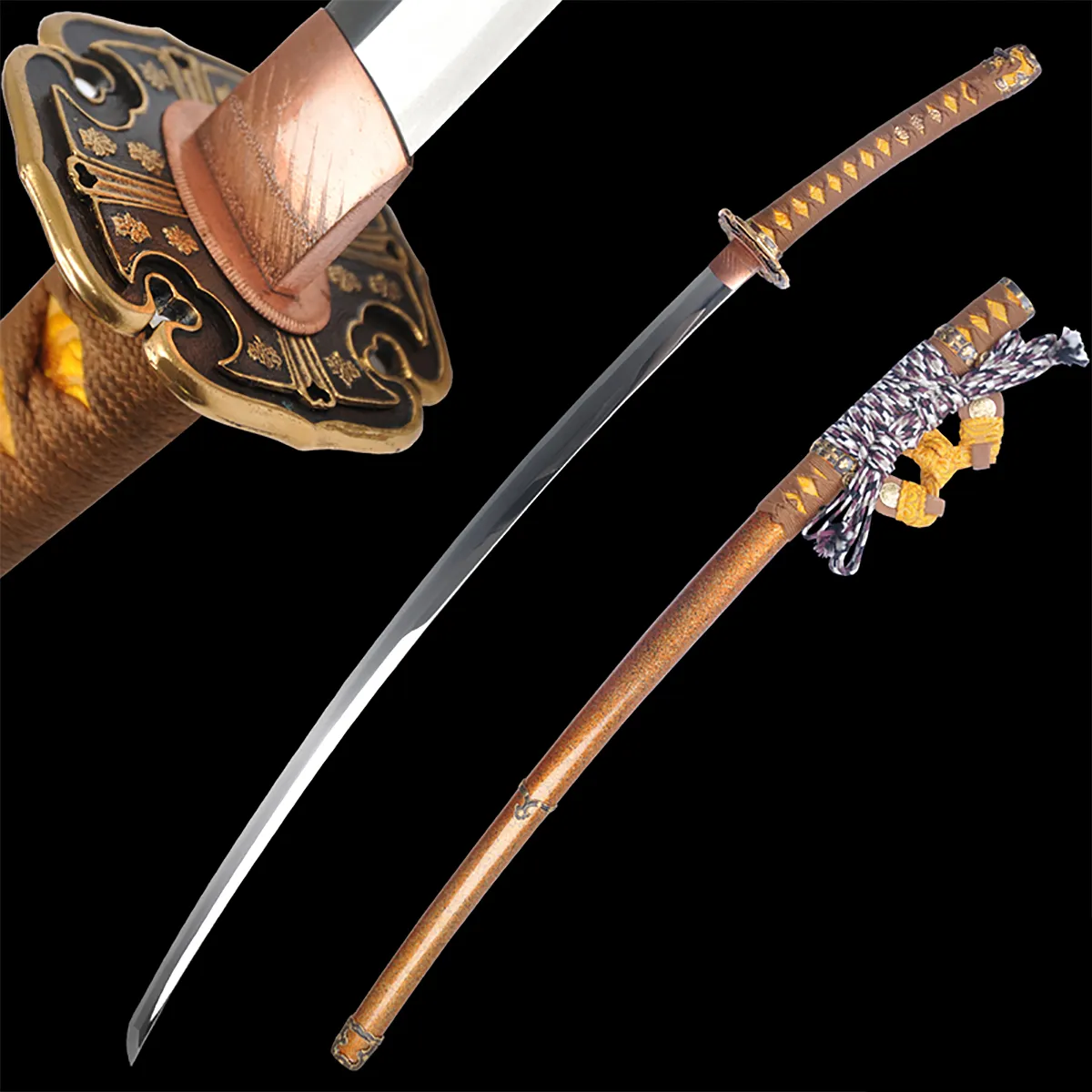
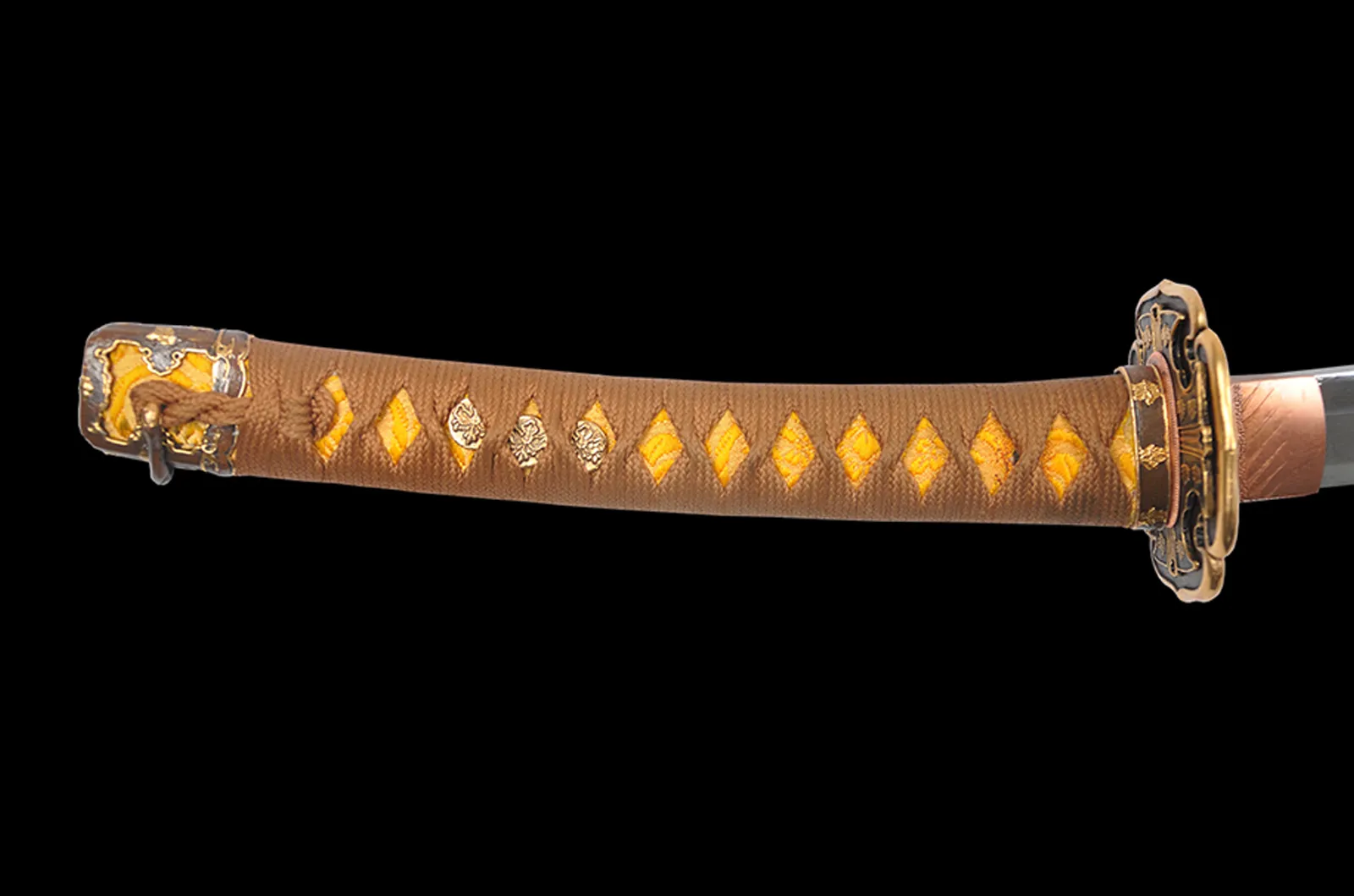
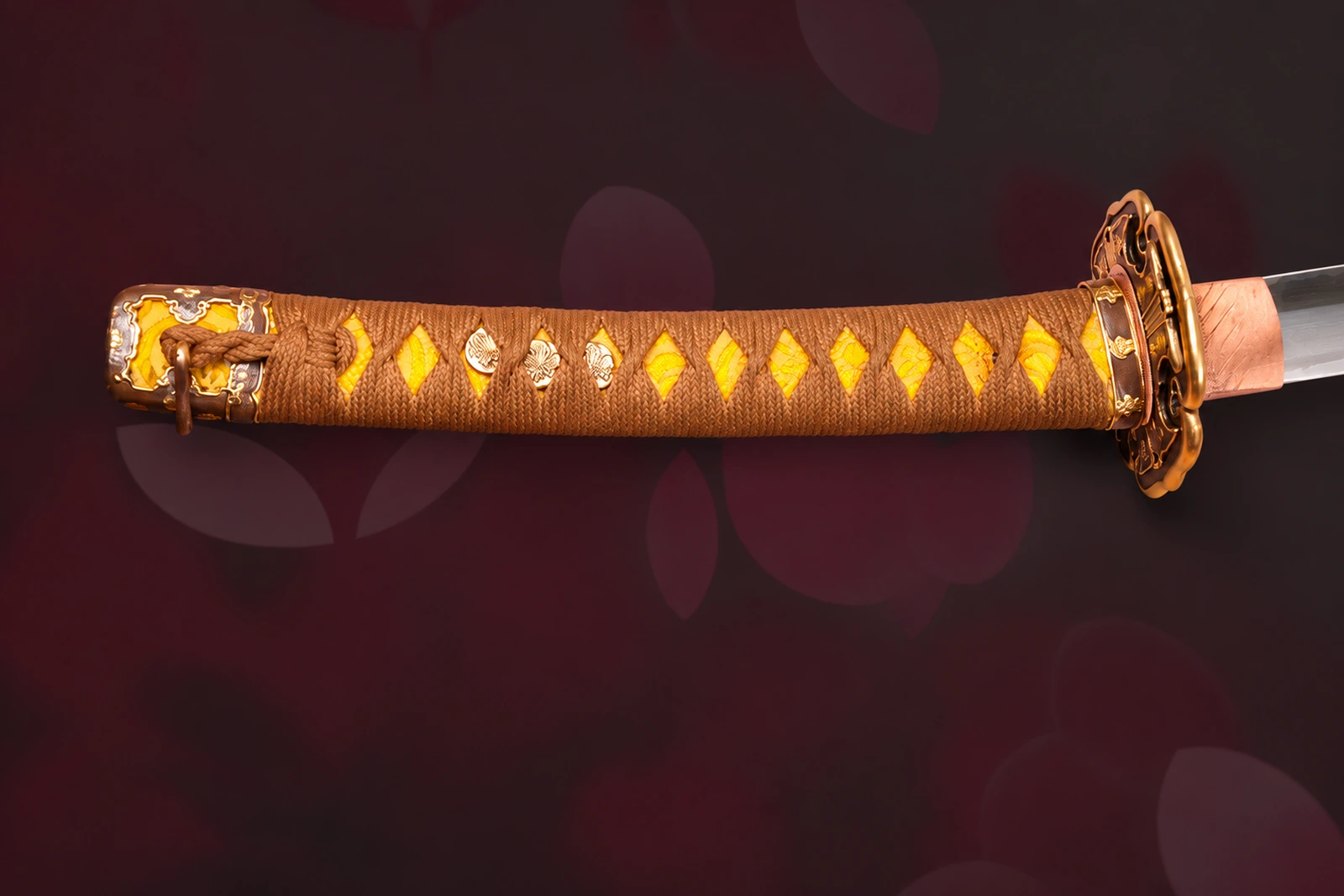
The completed koshirae brings together an ornamented tsuba, gilt-brass fittings, and a handcrafted copper Yūjō-style habaki. In the slightly curved tsuka, silk-cotton tsukamaki is supported with hishigami paper, while Nishijin-ori textile is used within the handle.

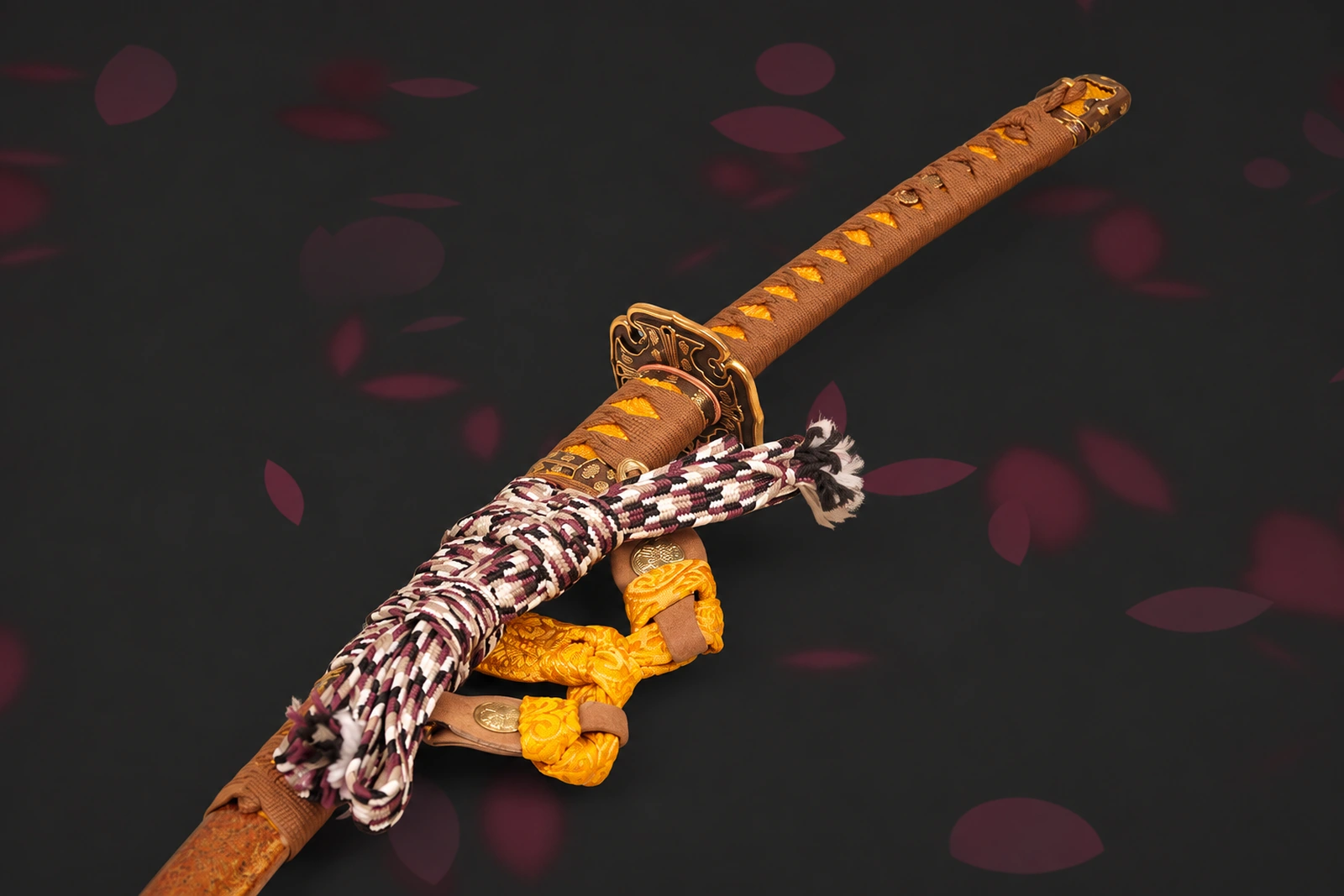
The wood saya carries a warm gold Nashiji-style finish, an interpretation of the traditional pear-skin effect. The tachi-o incorporates Nishijin-ori textile, while the watari-maki is wrapped in silk-cotton with a Nishijin-ori lining. Together these details define the work as a complete, fixed traditional tachi mounting.
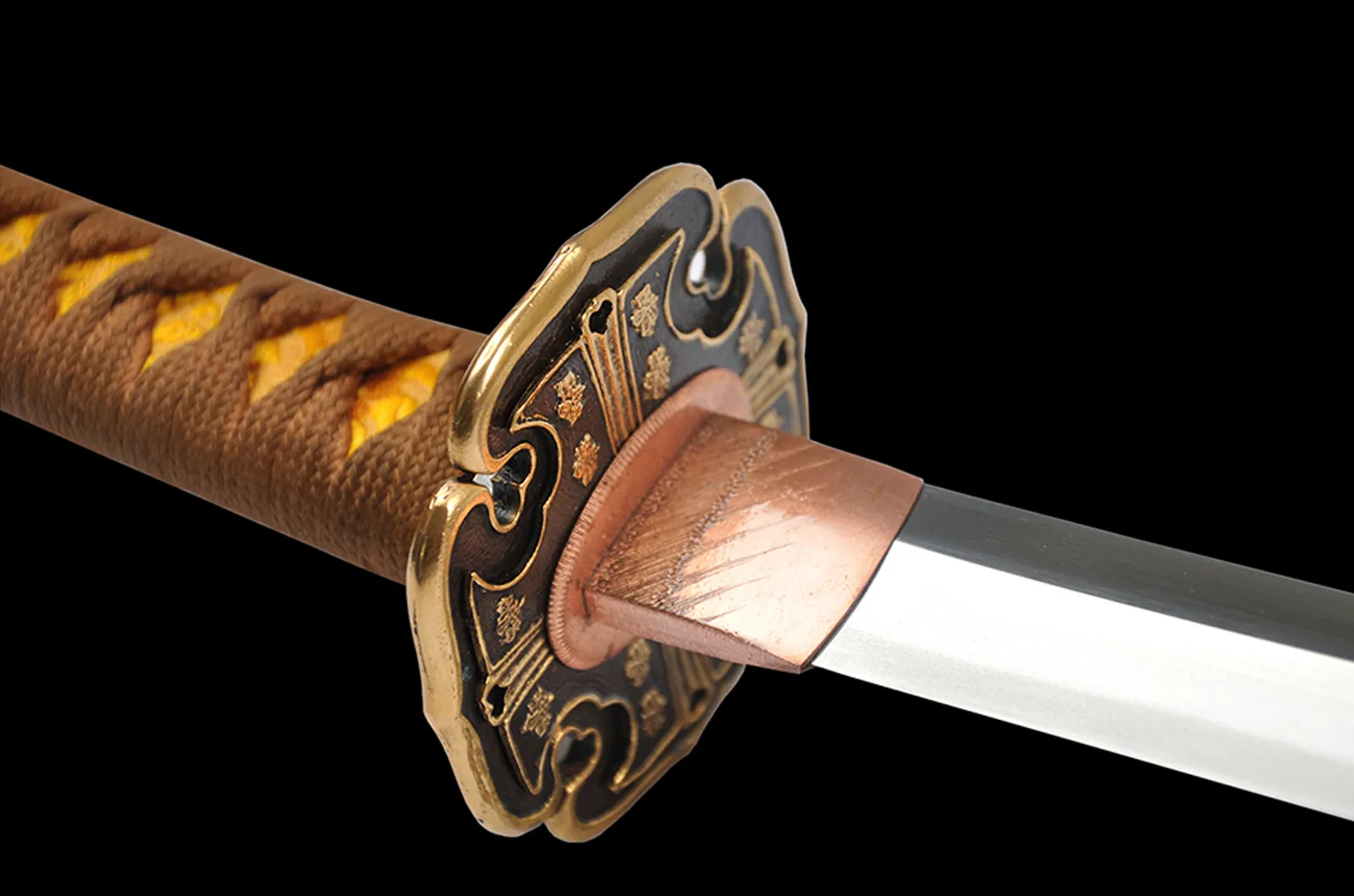
Ornate black-and-gold tsuba and handcrafted copper habaki on the Dōjigiri Yasutsuna replica tachi, beside the wrapped handle and polished blade.
The decorated tsuba and copper Yūjō-style habaki at the base of the blade.
Full close-up of the slightly curved Dōjigiri Yasutsuna replica tachi handle with brown silk-cotton wrapping, diamond-shaped openings and decorative mountings.
A subtly curved tsuka, with silk-cotton wrapping arranged over hishigami supports.
01

Copper Habaki

Handworked copper with Yūjō-style surface decoration.

02

Gilt-Brass Fittings

Warm-toned decoration across the tachi mounting.

03

Nashiji-Style Saya

A wood scabbard with a gold-toned decorative surface.

04

Traditional Textile Details

Silk-cotton wrapping, hishigami support, and traditional Nishijin-ori lining.

SAYA / TEXTILE / FINISH

The Art of Traditional Tachi Mountings.
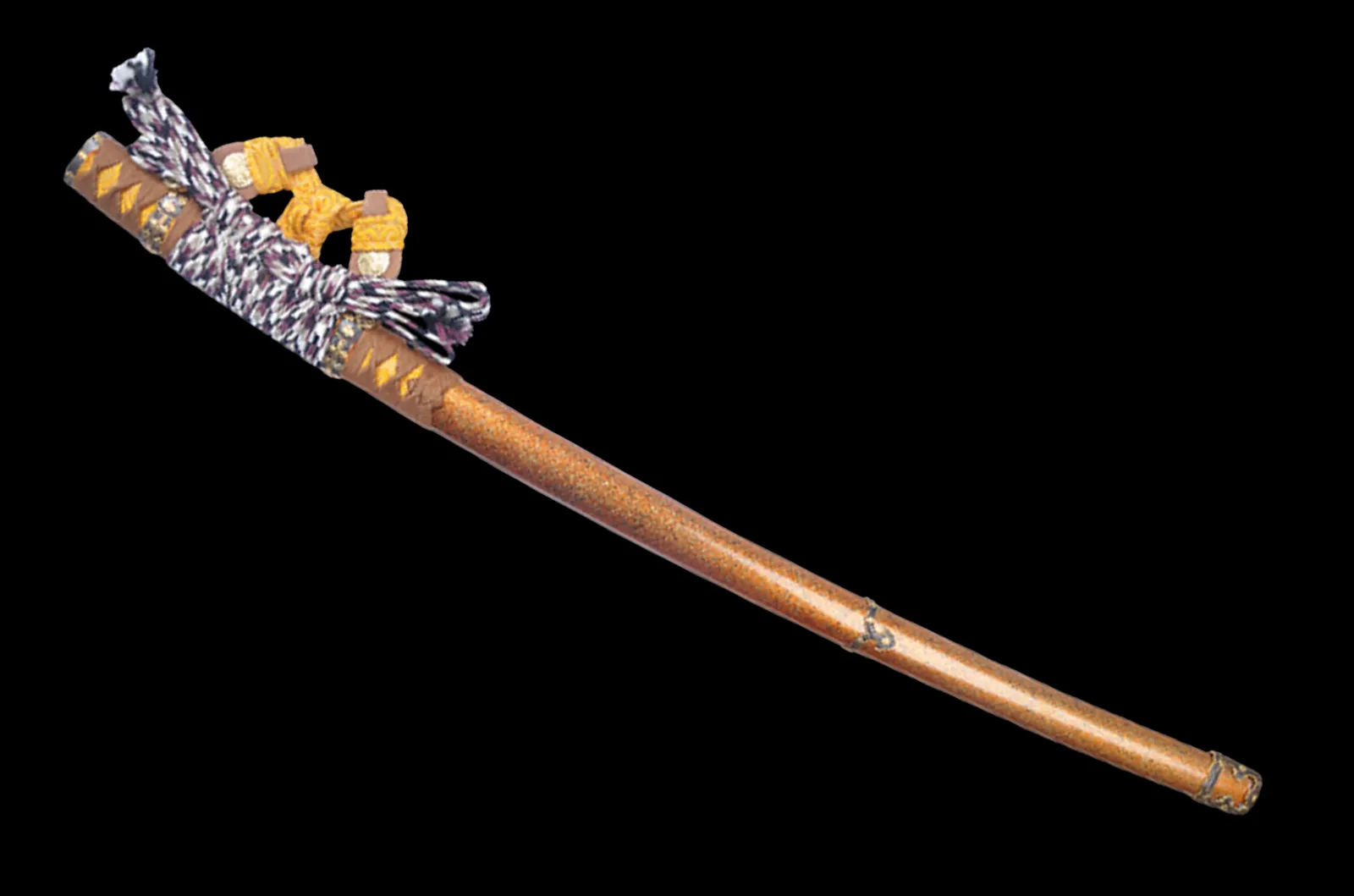
Complete Dōjigiri Yasutsuna replica tachi scabbard with gold Nashiji-style finish, ornate fittings, woven tachi-o cord and silk-cotton watari-maki.
Gold Nashiji-style saya, woven tachi-o, and the wrapped watari-maki section.

THE FINISHED WORK

Forging, hardening, polishing, and mounting come together in a complete tachi — a work appreciated as much for its measured details as for its unmistakable silhouette.

03 / COLLECTOR GALLERY

The Complete Portrait.

Beyond the forged blade lies the presence of a complete tachi: its long curve, warm brown saya, carefully composed fittings, and traditional woven cords. Seen together, these elements give the finished work its distinctive character.

A FINISHED SWORD / ONE CONSIDERED COMPOSITION
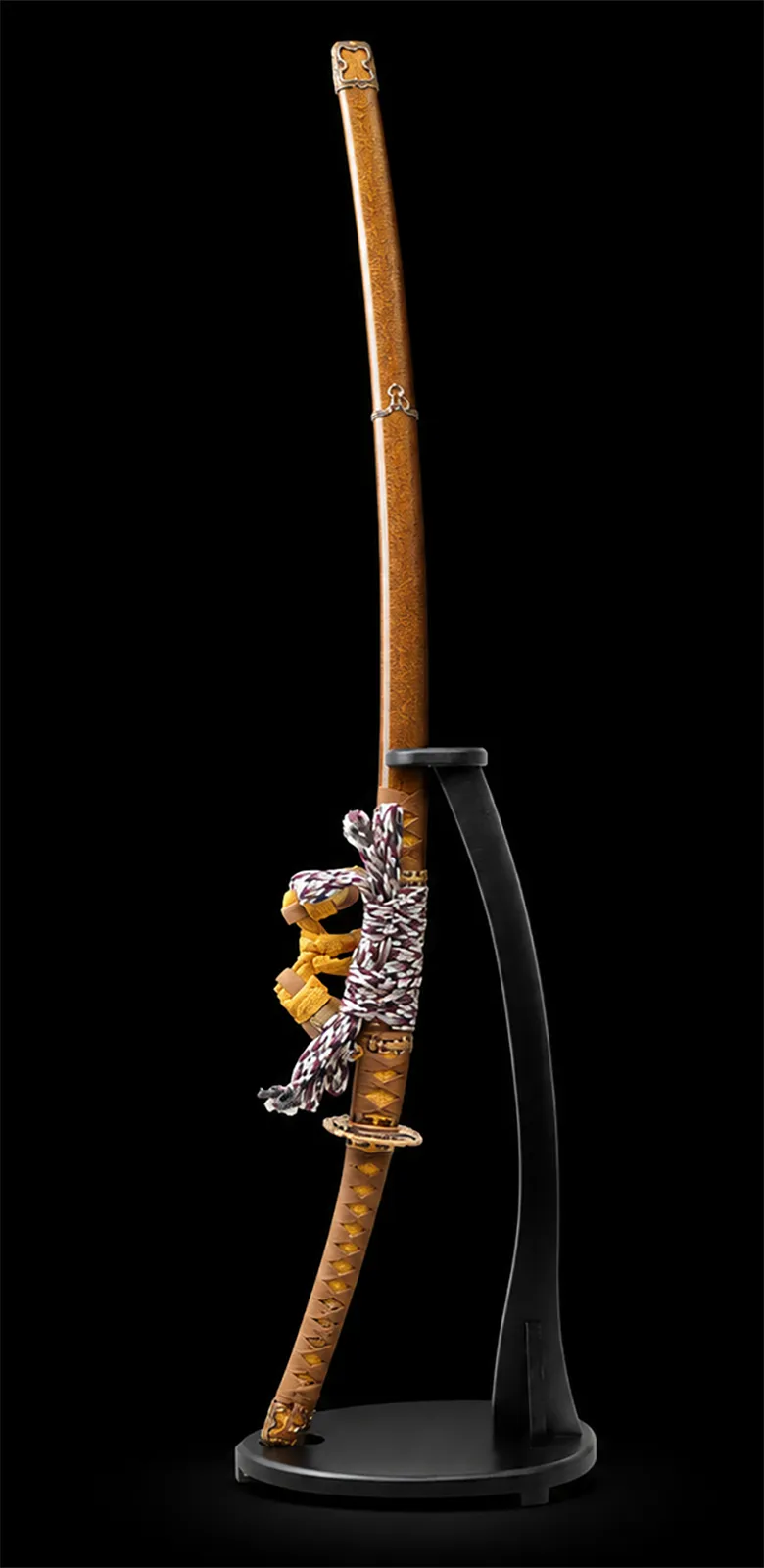
Dōjigiri Yasutsuna replica tachi displayed vertically on a black sword stand with its warm brown saya and decorative tachi cords.
The complete sword in its traditional mounting, presented vertically.

THE FINISHED SILHOUETTE

A Form Seen in Full.

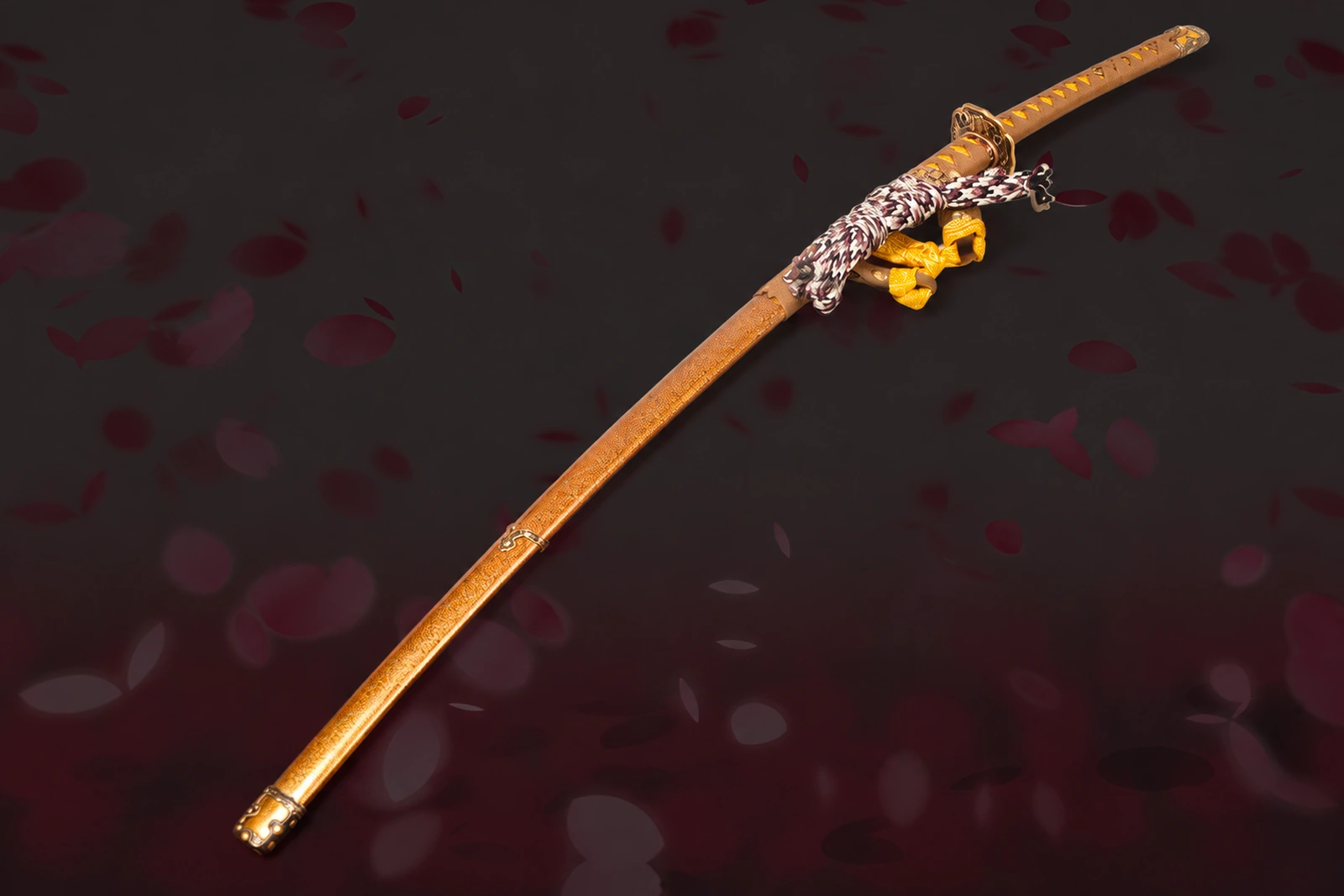
The drawn blade and the sheathed sword offer two views of the same form. One follows the sweep of polished steel; the other returns to the gentle line of its wooden saya.
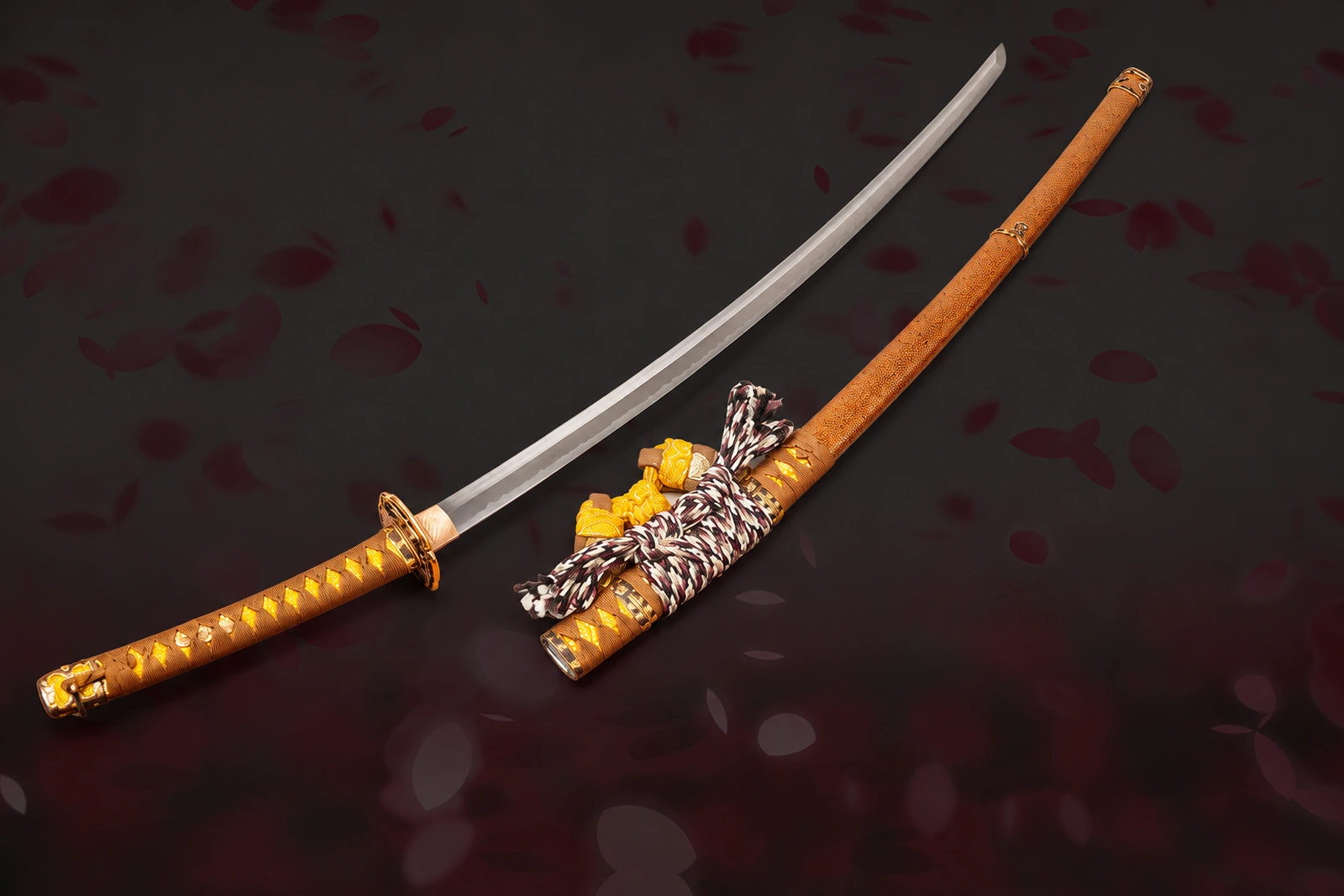
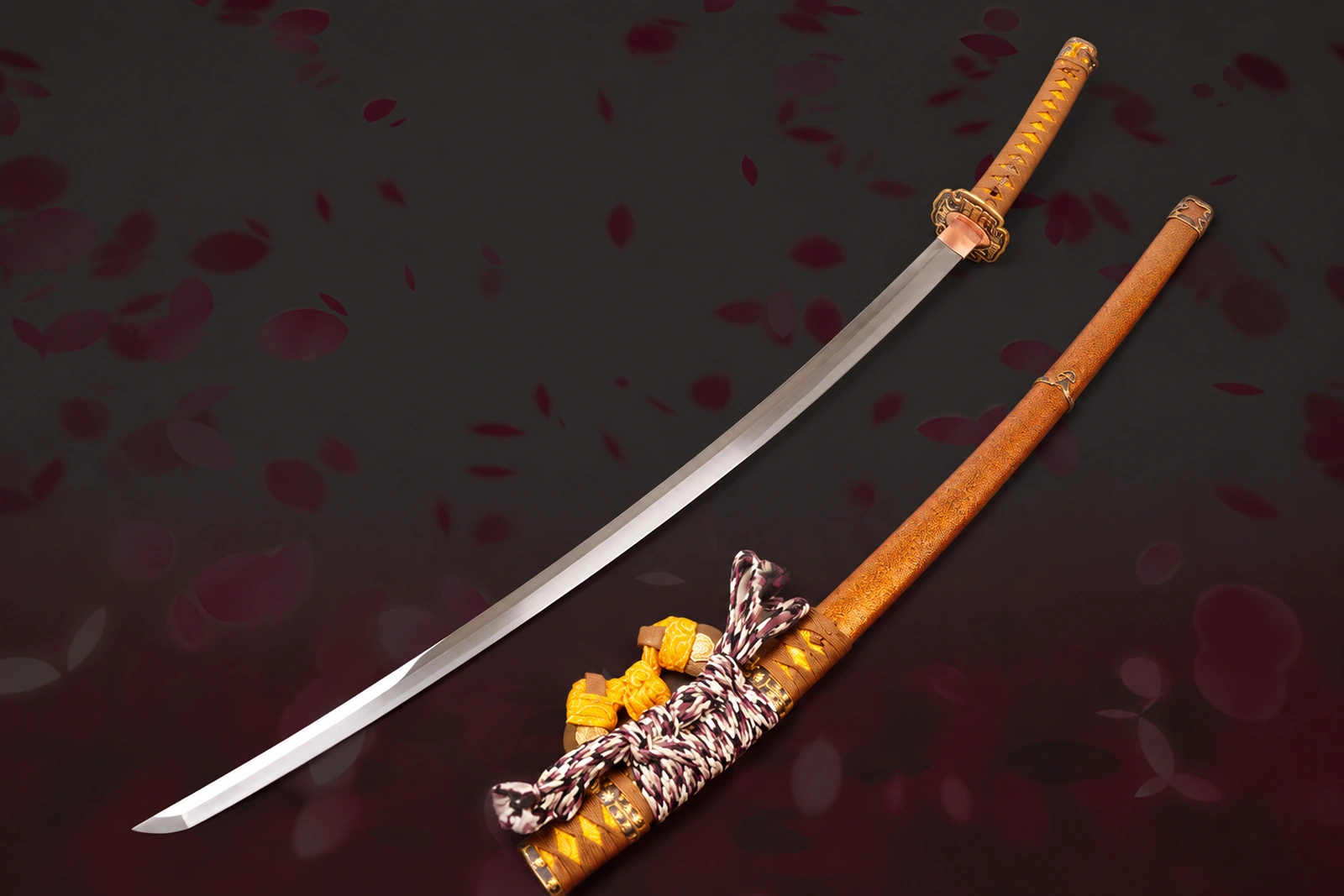
Unsheathed Dōjigiri Yasutsuna replica tachi arranged diagonally beside its long brown saya on a dark petal background.
The unsheathed blade and its saya, viewed as a complete composition.
Complete sheathed Dōjigiri Yasutsuna replica tachi displayed diagonally, with a warm brown saya against a dark red petal background.
A full-length portrait of the sheathed tachi.
Close-up of the tachi scabbard mouth and brown-wrapped handle with patterned woven cords and decorative fittings.
The woven cords and ornamented fittings near the saya opening.
Full-length unsheathed tachi blade displayed diagonally with the decorated brown saya and braided cords.
The blade and scabbard, reunited in a sweeping diagonal view.

CLOSER TO THE MOUNTING

The Details That Remain.

Seen at close range, the koshirae reveals its own rhythm: warm wrapping, dark ornament, copper tones, and small accents that contrast with the brightness of the blade.
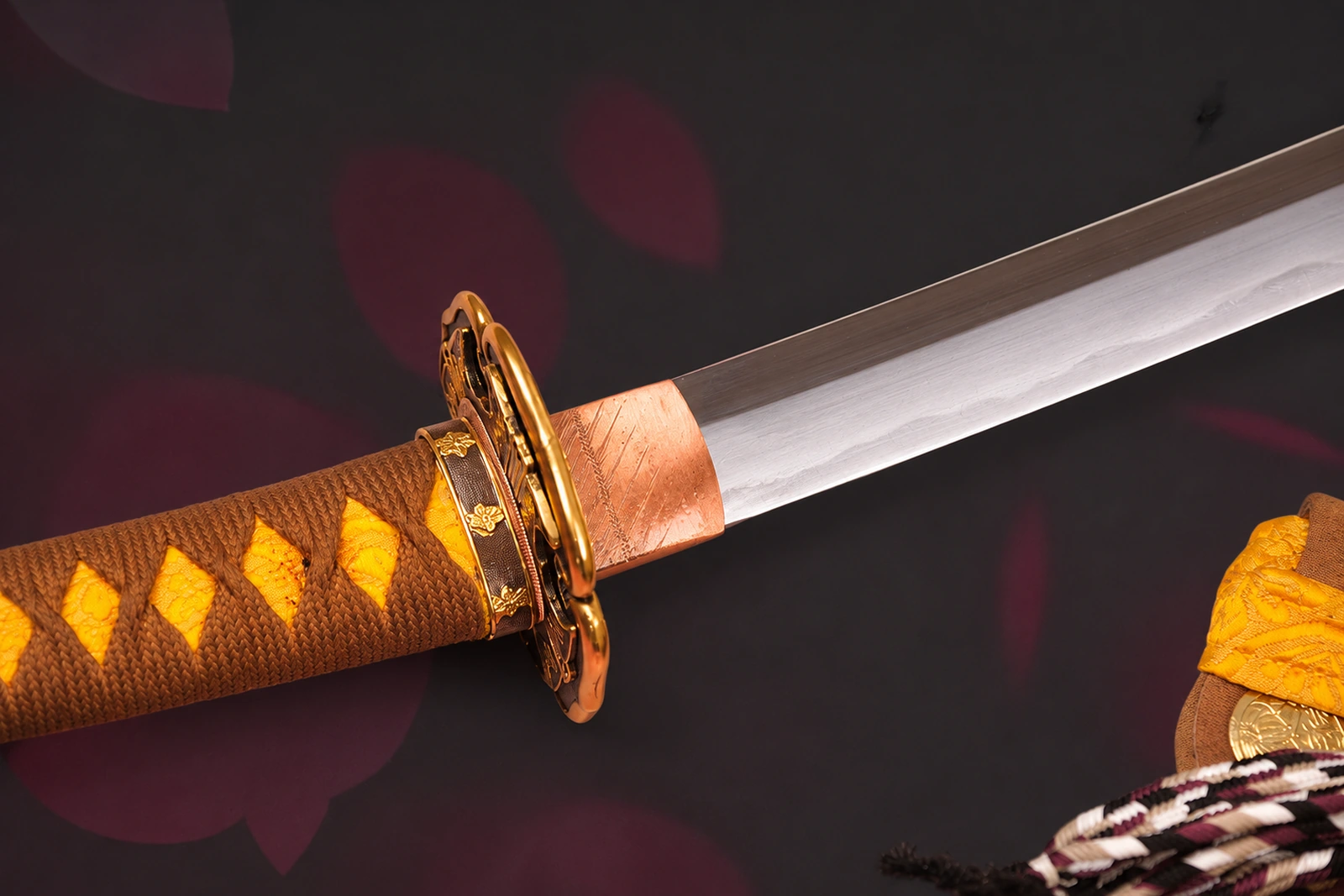
Close-up of the brown diamond-wrapped tsuka, ornate black and gilt-colored tsuba, and copper habaki of the replica tachi.
The decorated tsuba and copper habaki at the blade base.
Horizontal view of the brown tsuka wrapping with golden diamond-shaped openings and ornate traditional tachi fittings.
The brown-wrapped handle and its repeating diamond pattern.
Front-facing detail of the replica tachi handle and ornate guard beside the upright brown saya on a dark background.
A frontal study of the mounted handle beside the saya.
Angled detail showing the brown-wrapped tachi handle, ornate guard, copper habaki and polished blade.
The guard, copper blade collar, and the beginning of the polished steel.

STEEL / LINE / REFLECTION

The Last Reflections.

The final views turn toward the blade itself. Different angles of light reveal the clean polished edge, the quieter steel beside it, and the subtle movement along the hamon.
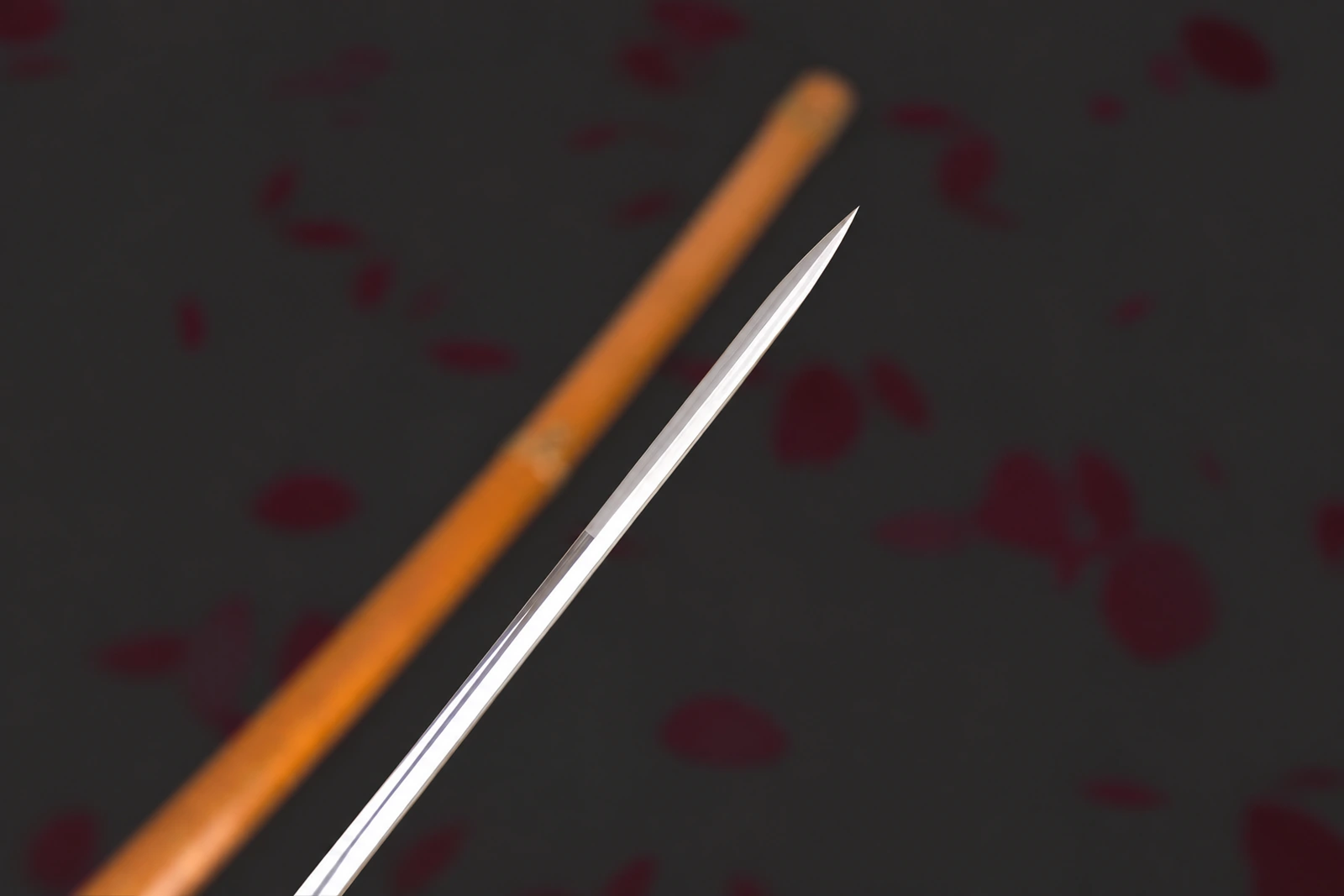
Diagonal study of the polished tachi blade beside its brown wooden saya, set against a dark red-petal background.
The long blade and its saya, reduced to line, curve, and light.
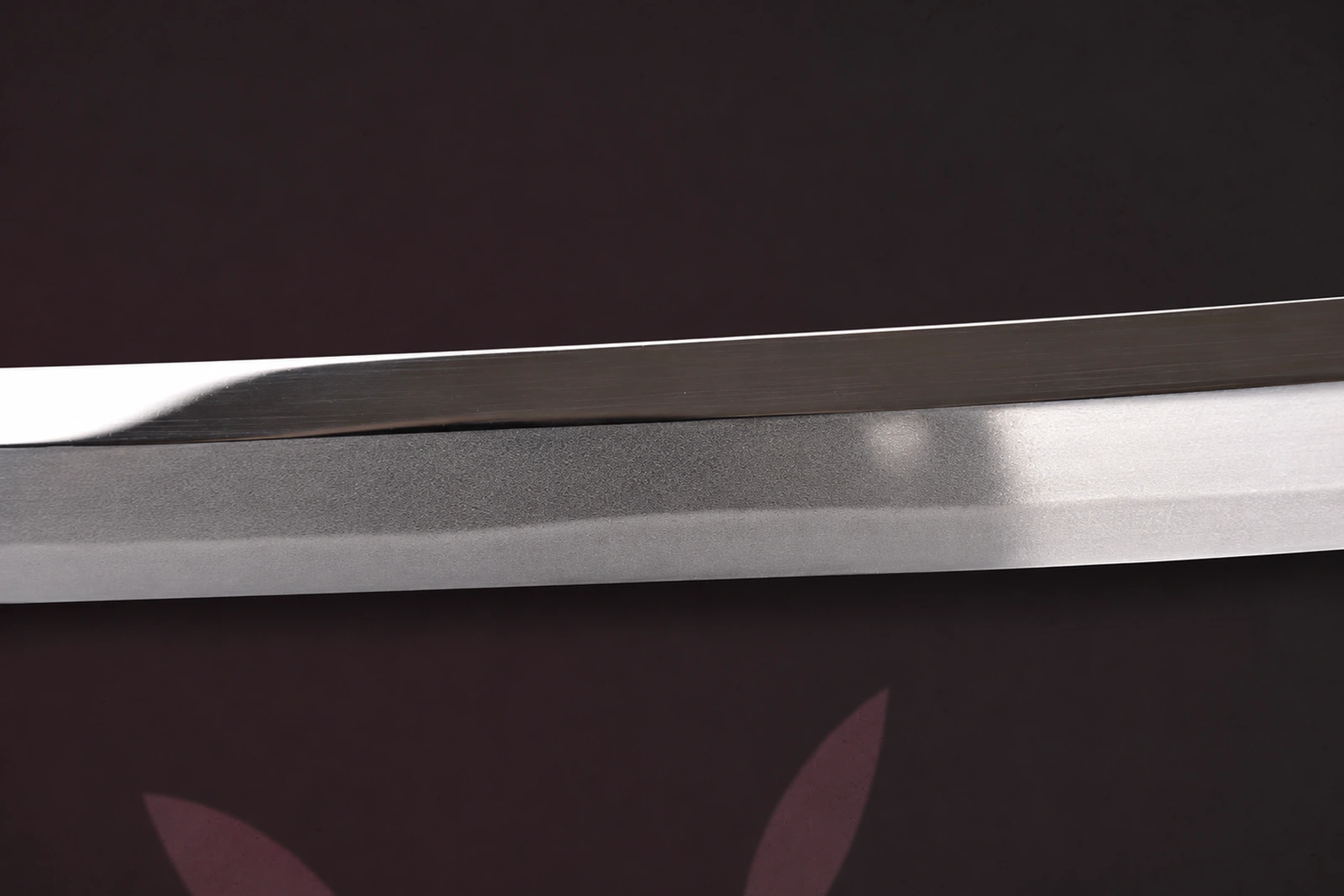
Macro detail of the polished tachi blade showing subtle variation along the hardened edge against a deep red background.
A close study of the polished edge and the darker steel above it.
Second macro view of the tachi blade showing the bright polished edge and darker steel surface against dark red petals.
A second reflection across the blade, showing its quiet surface contrast.

THE COMPLETE WORK

A remembered form, newly made — presented as one complete tachi.

WKATANA

Rezensionen

Es gibt noch keine Rezensionen.

Schreibe die erste Rezension für „Dojigiri Yasutsuna Replica Tachi — Workshop-Smeltered Steel“

Deine E-Mail-Adresse wird nicht veröffentlicht. Erforderliche Felder sind mit * markiert