Description
01 / HISTORICAL INSPIRATION
A Tachi Remembered.
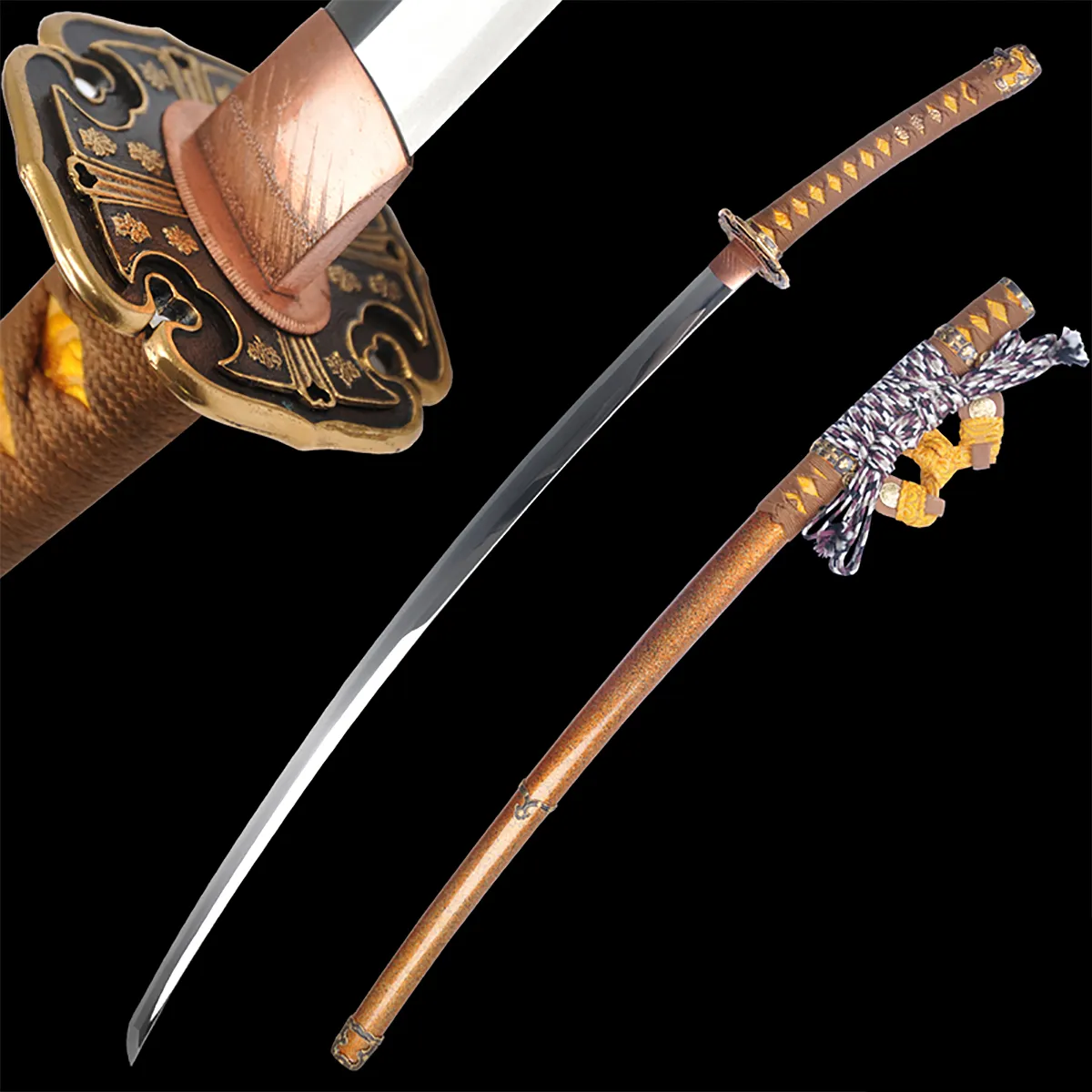
A contemporary interpretation of Dōjigiri Yasutsuna, one of Japan's most celebrated historical swords. This reproduction draws its presence from the long, measured curve of a classical tachi — a form whose quiet balance remains compelling centuries later.
THE HISTORICAL NAME
A Sword Beyond Its Legend.
The historical Dōjigiri Yasutsuna is a celebrated work associated with the Heian-period swordsmith Yasutsuna, and is counted among Japan's Five Great Swords. The original is preserved as a National Treasure in the Tokyo National Museum.
Its name lives in the legend of Shuten Dōji. Beyond that story, the blade is admired for the enduring character of its form — the relationship between length, curvature, and the elegant sugata of a historic tachi.
THE REPRODUCTION
A Form Worth Following.
This reproduction follows the historical sword's overall design language: its sweeping blade profile, considered curvature, and the proportions leading toward the kissaki. The intention is to preserve the recognizable presence of the original tachi in a newly made work.
With an 800 mm nagasa and 27 mm sori, this reproduction places the blade's long, flowing silhouette at the center of the composition.
THE COMPLETE WORK
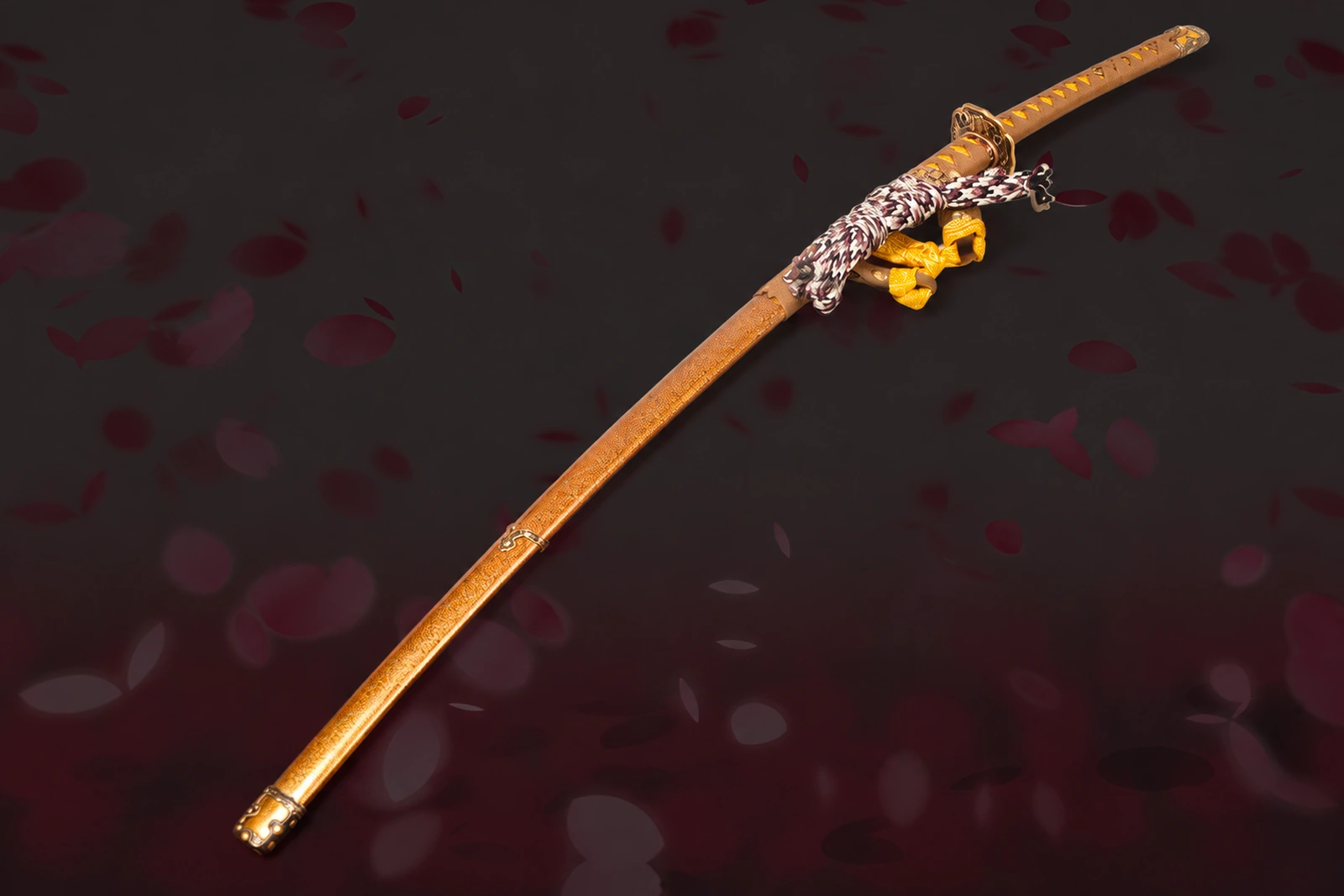
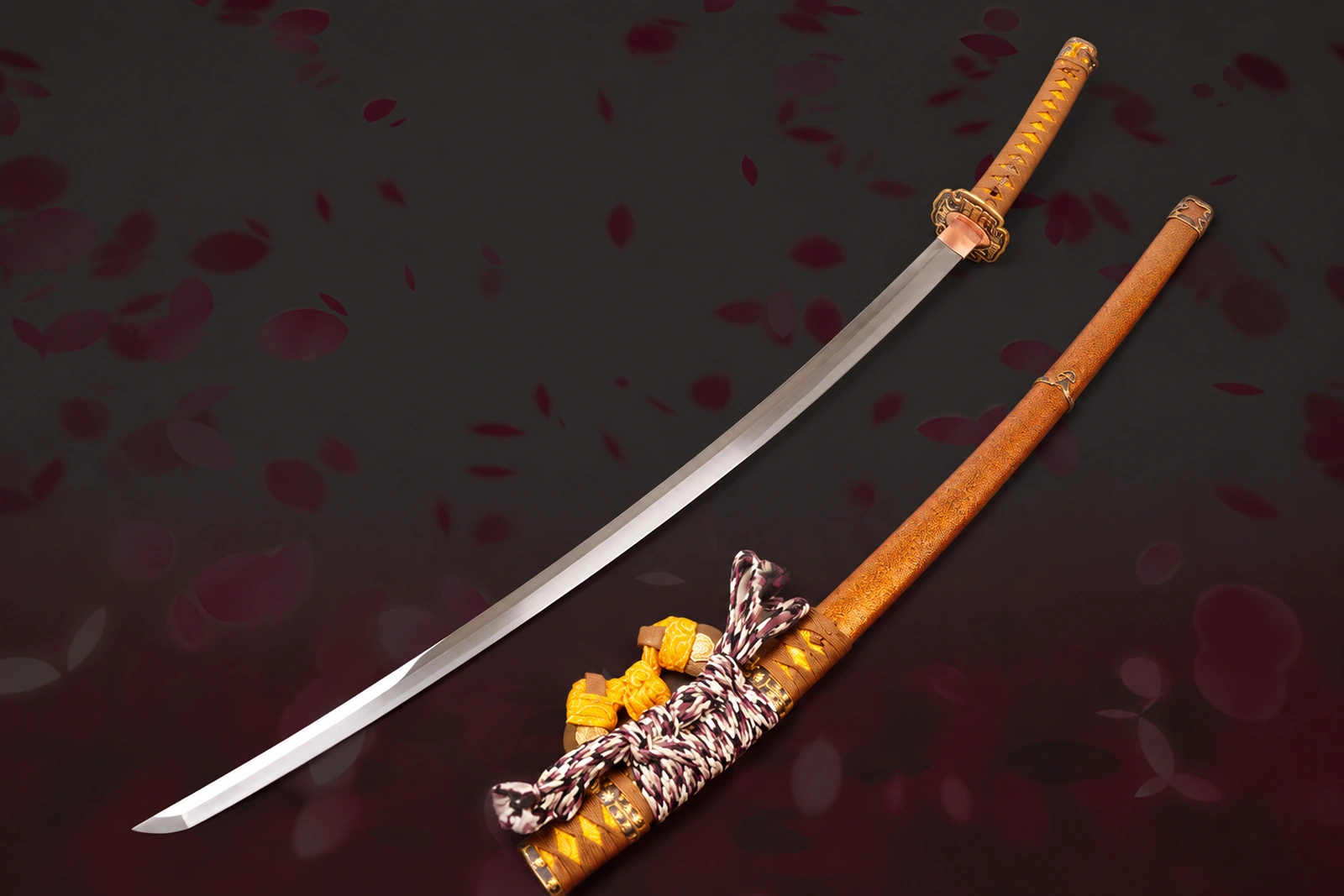
Presented as a complete tachi, This reproduction pairs its curved blade with a warm-toned saya and traditional koshirae. The blade and its established mountings form a single, considered composition.
02 / BLADE & CRAFT
The Steel, Revealed.
The presence of this tachi begins with its blade: workshop-smelted steel, Maru construction, and the patient work of hardening and polishing. Each stage brings another quality of the steel into view.
MATERIAL / STRUCTURE / GRAIN
A Body of Forged Steel.
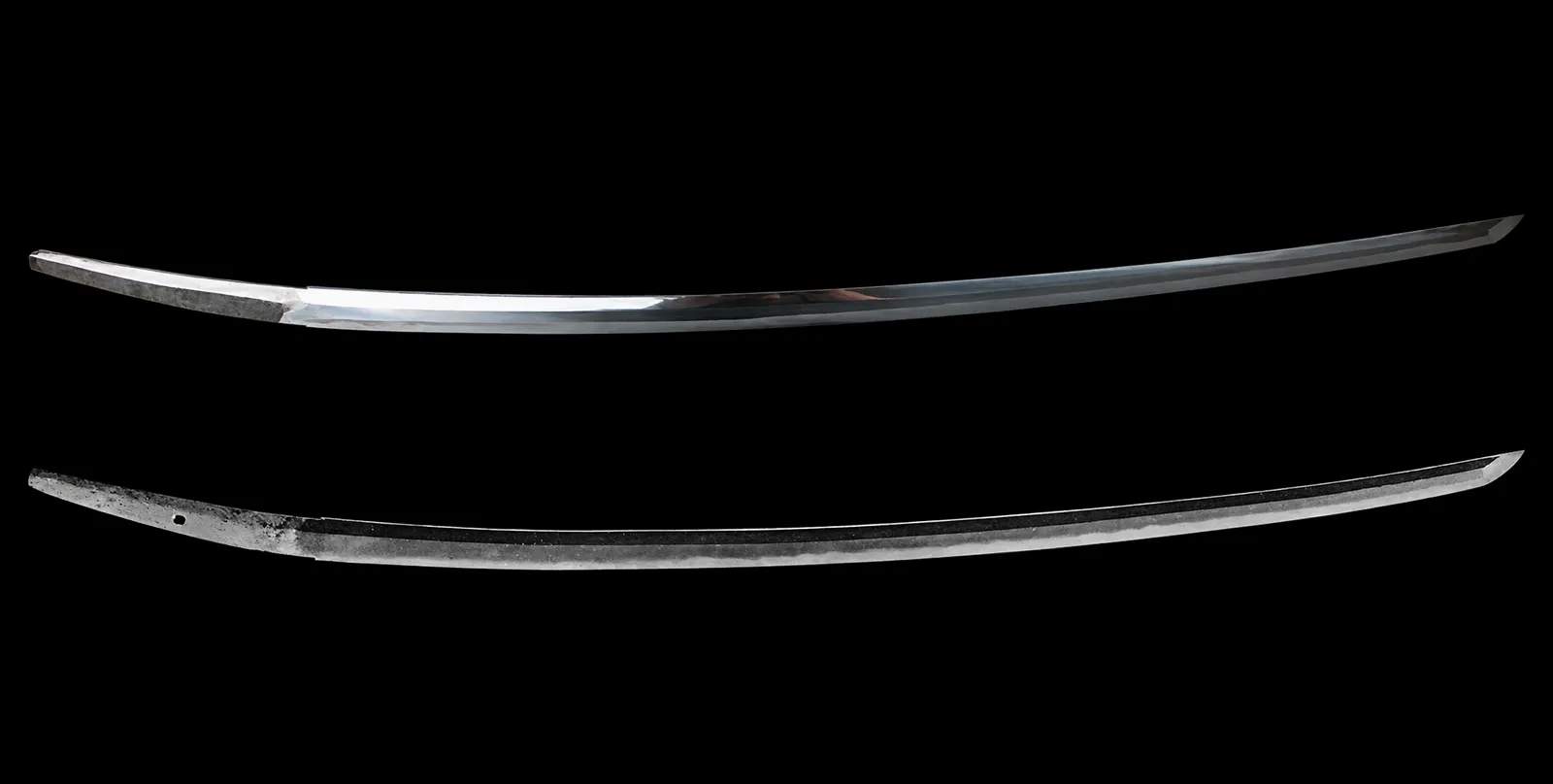
The blade is forged from workshop-smelted steel in a Maru construction. Rather than a core-and-jacket arrangement, this approach forms the blade as a single forged body.
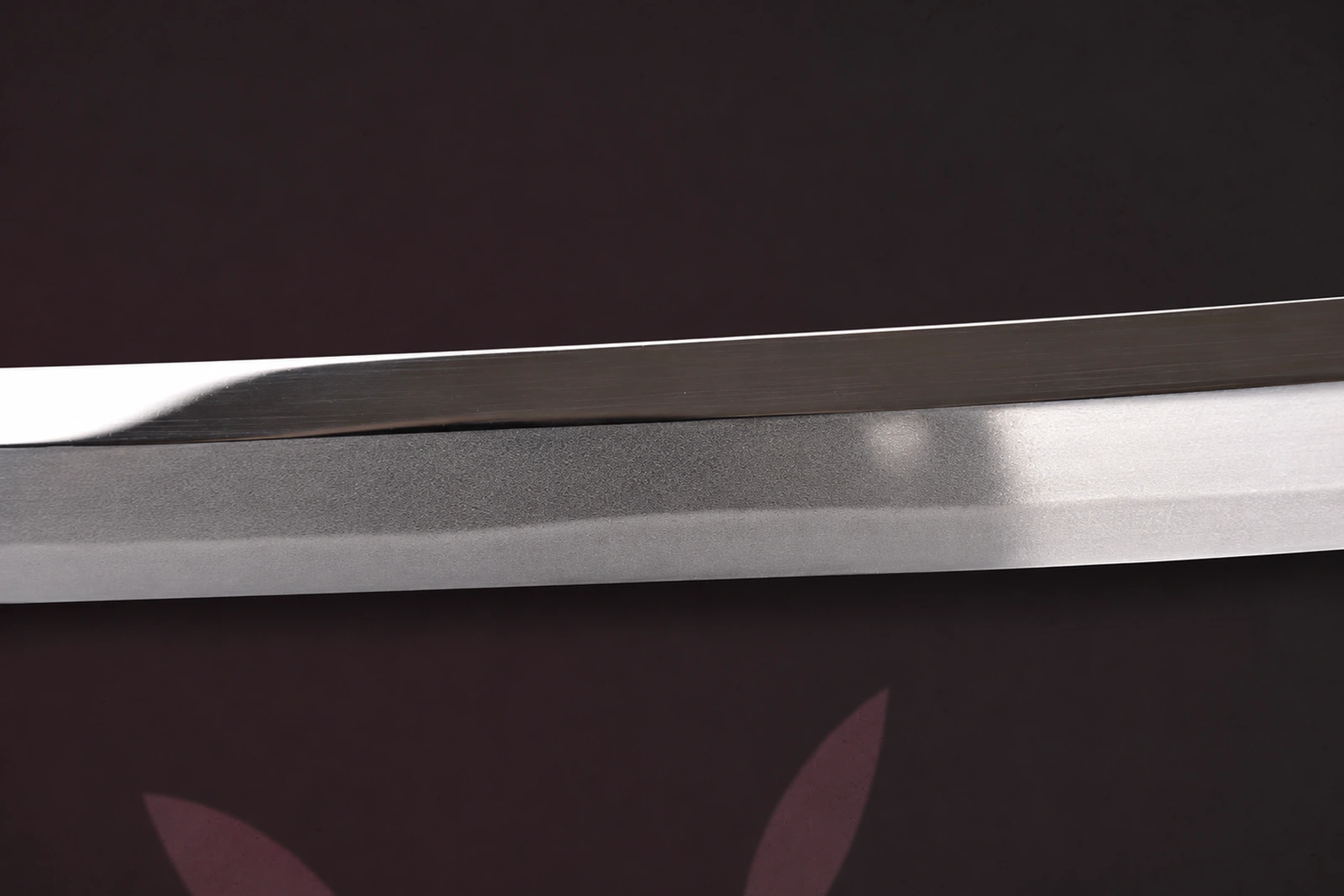
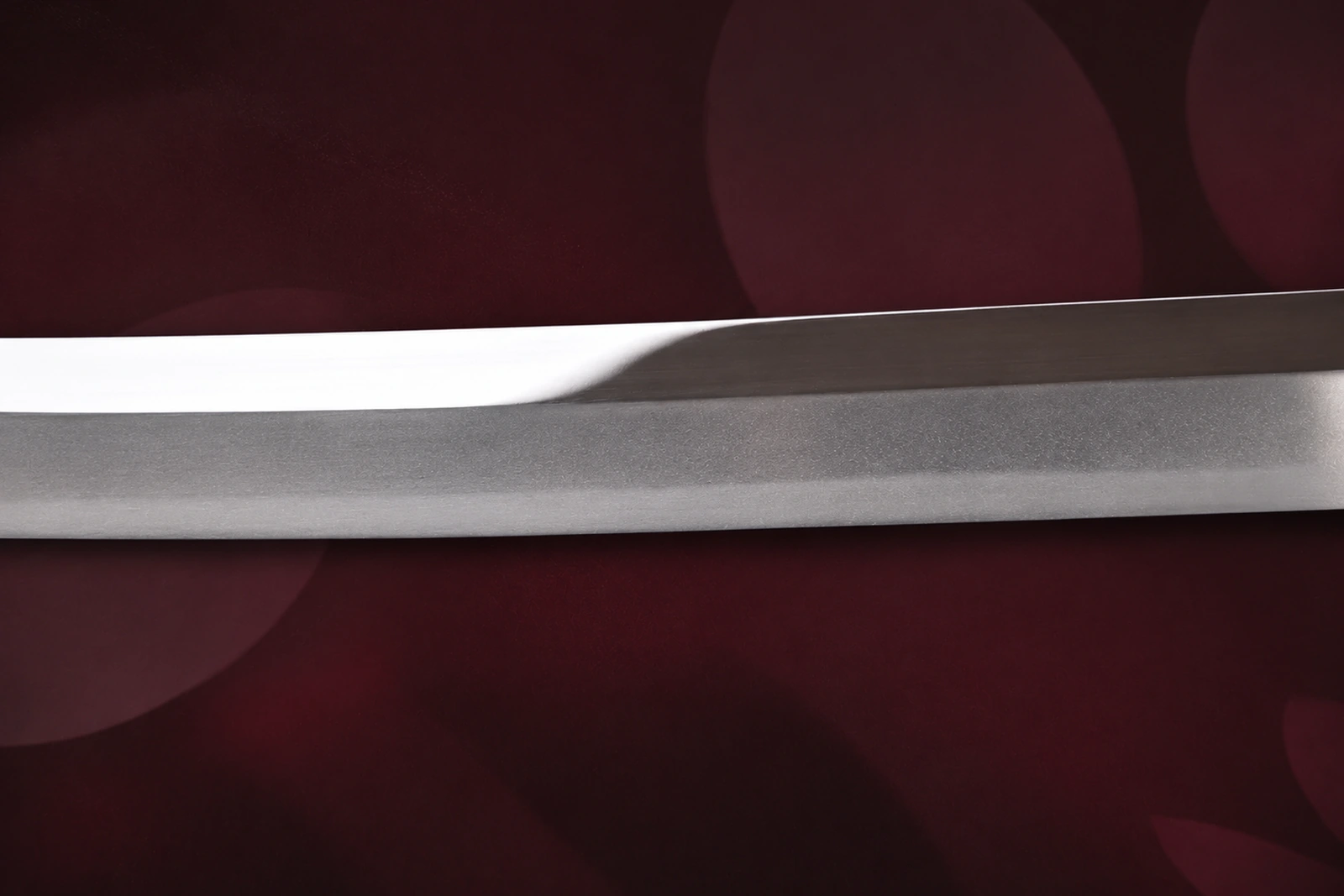
Across the finished surface, the hada is fine and restrained, with a texture reminiscent of Konuka-hada. Its subtle character becomes more apparent in changing light, without overwhelming the blade's overall shape.
GEOMETRY / REFLECTION / FINISH
The Refinement of Shiage-togi.
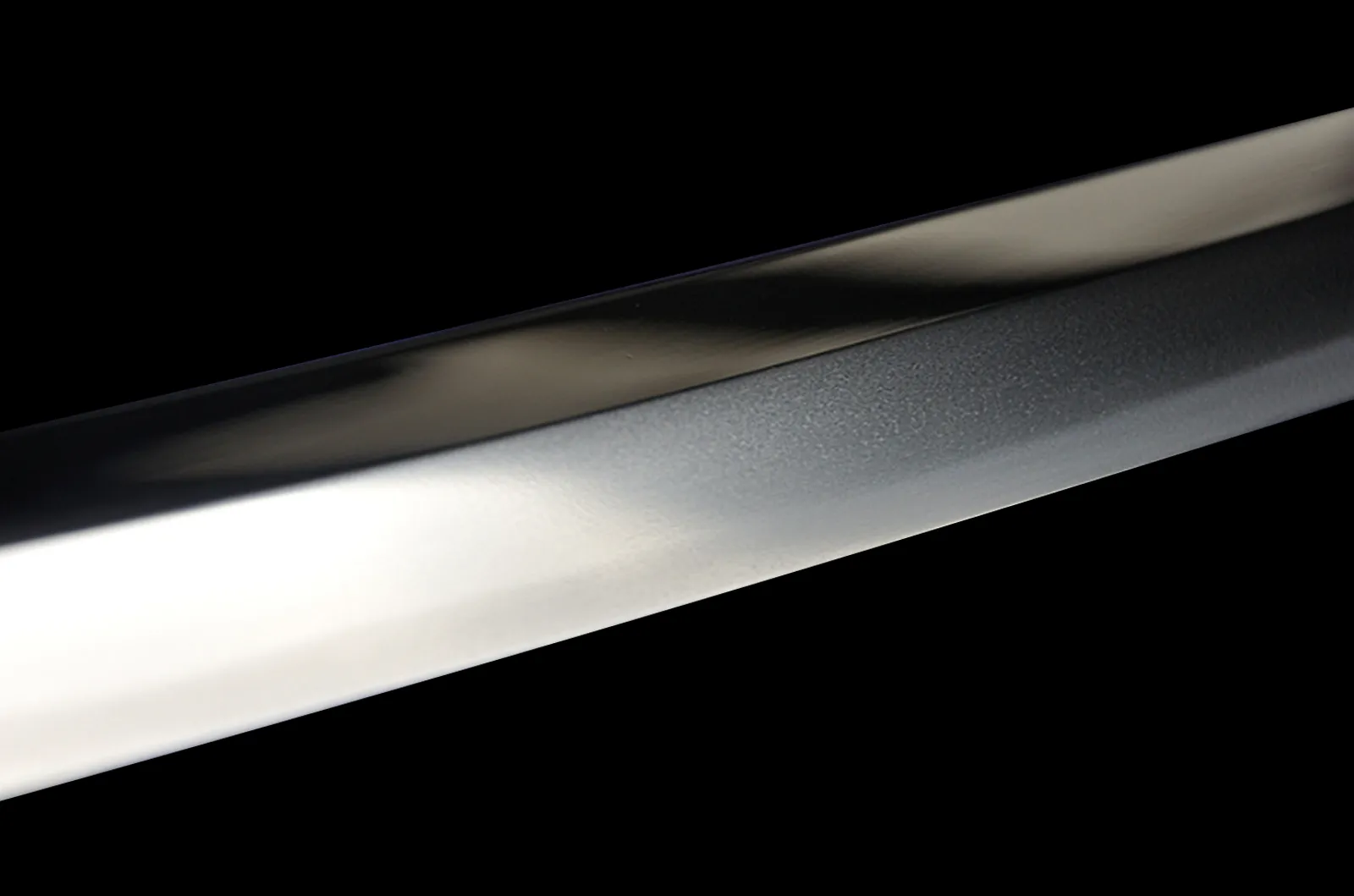
Careful foundation work establishes the geometry before the fine finish. The blade's shinogi retains a crisp, well-defined line rather than softening into the surrounding surfaces.
Through Shiage-togi, the blade reveals naturally expressed hada, refined tonal character in its jigane, and subtle changes of reflected light. The flowing hadori brings visual movement to the polished surface without replacing the underlying hamon.
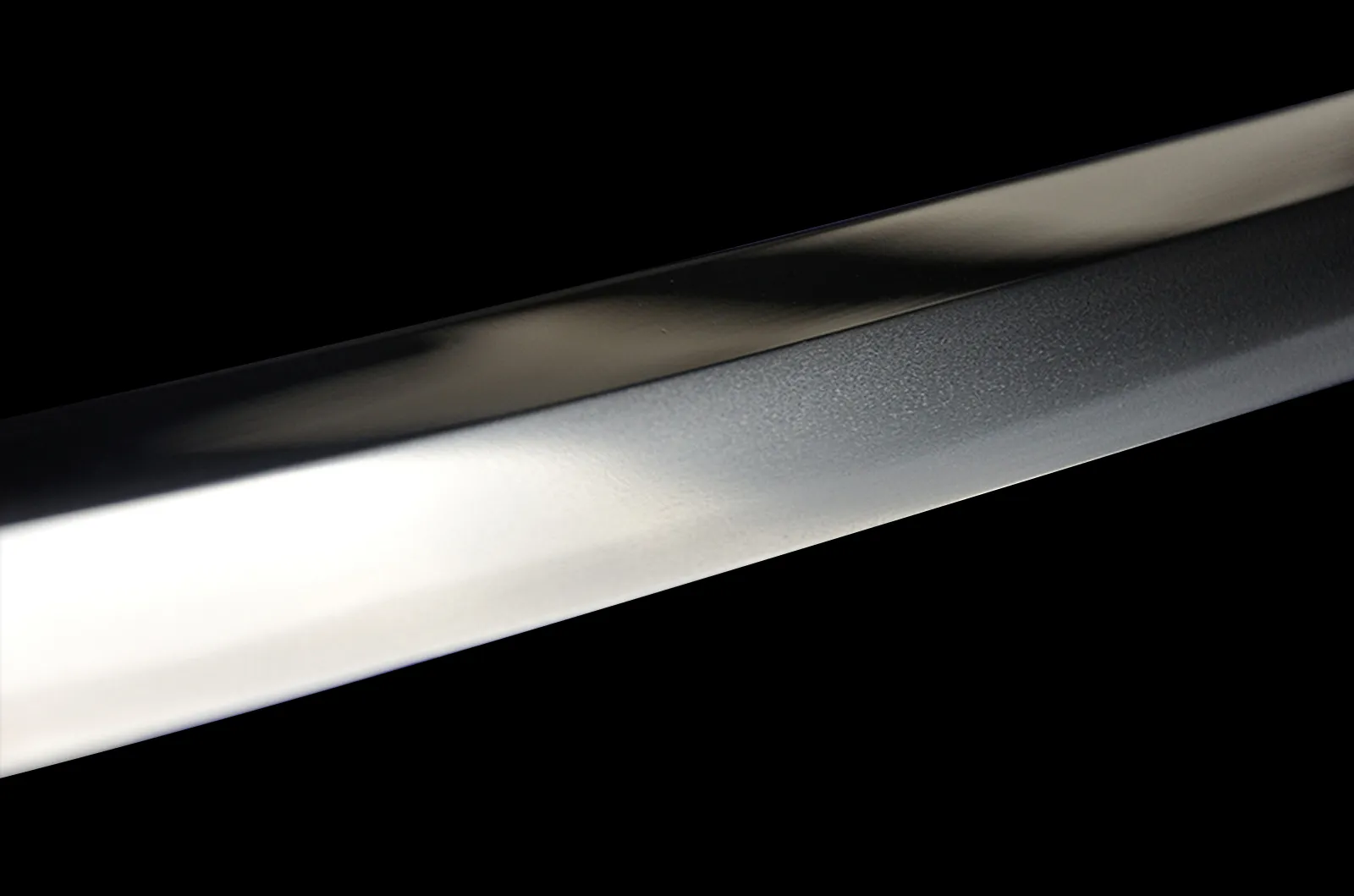
Shitaji-togi
Foundation work that gives definition to the blade's geometry.
Shiage-togi
Fine finishing that reveals the surface and its play of light.
Hadori
A visual treatment of the hardened-edge area in the polished finish.
THE HARDENED EDGE
The Discipline
of a Straight Line.
Clay tempering gives rise to the hardened-edge hamon. This reproduction is classified as Suguha. Its generally straight, restrained line nevertheless has subtle natural variations, visible as the light passes over the blade.
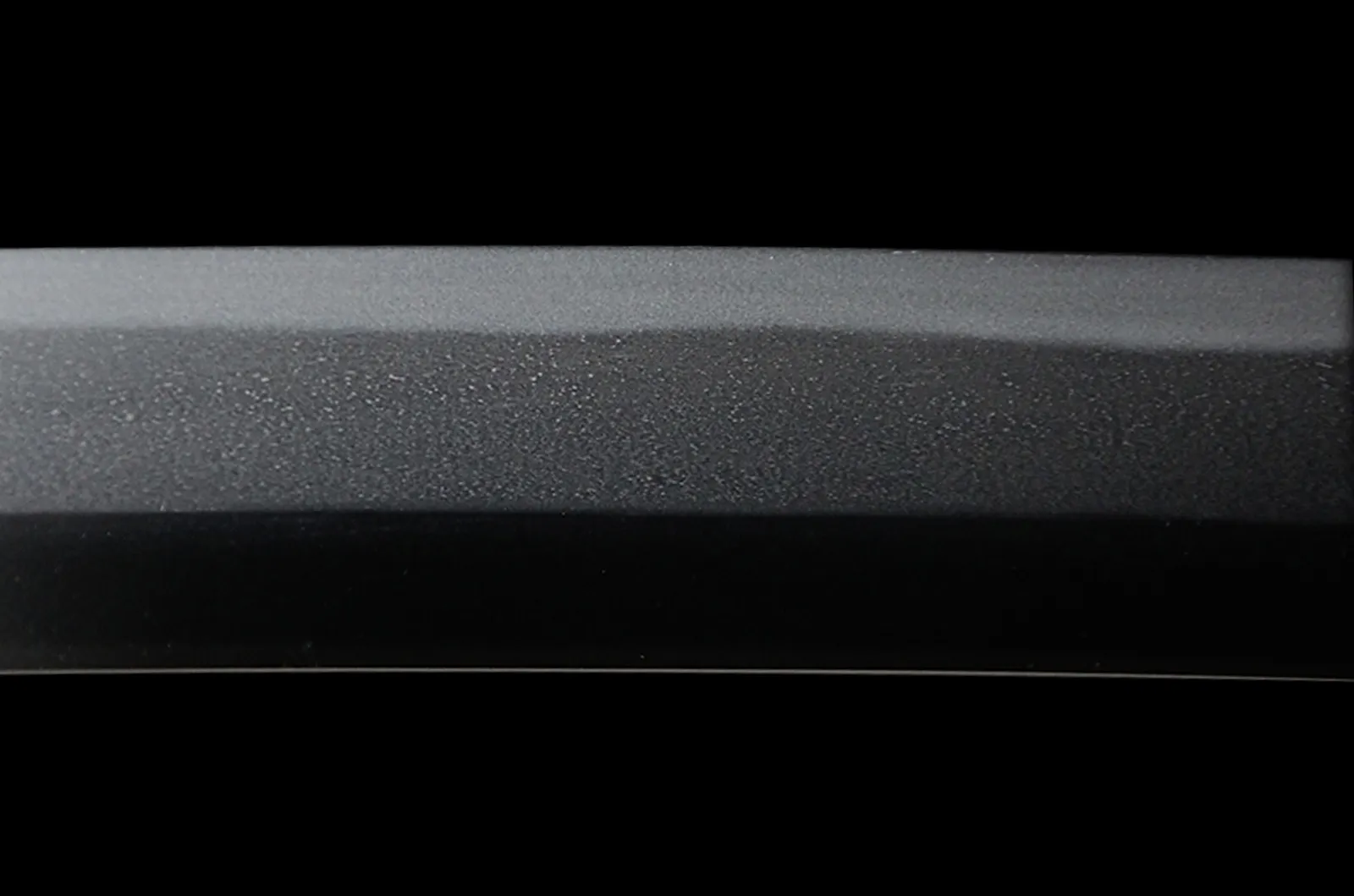
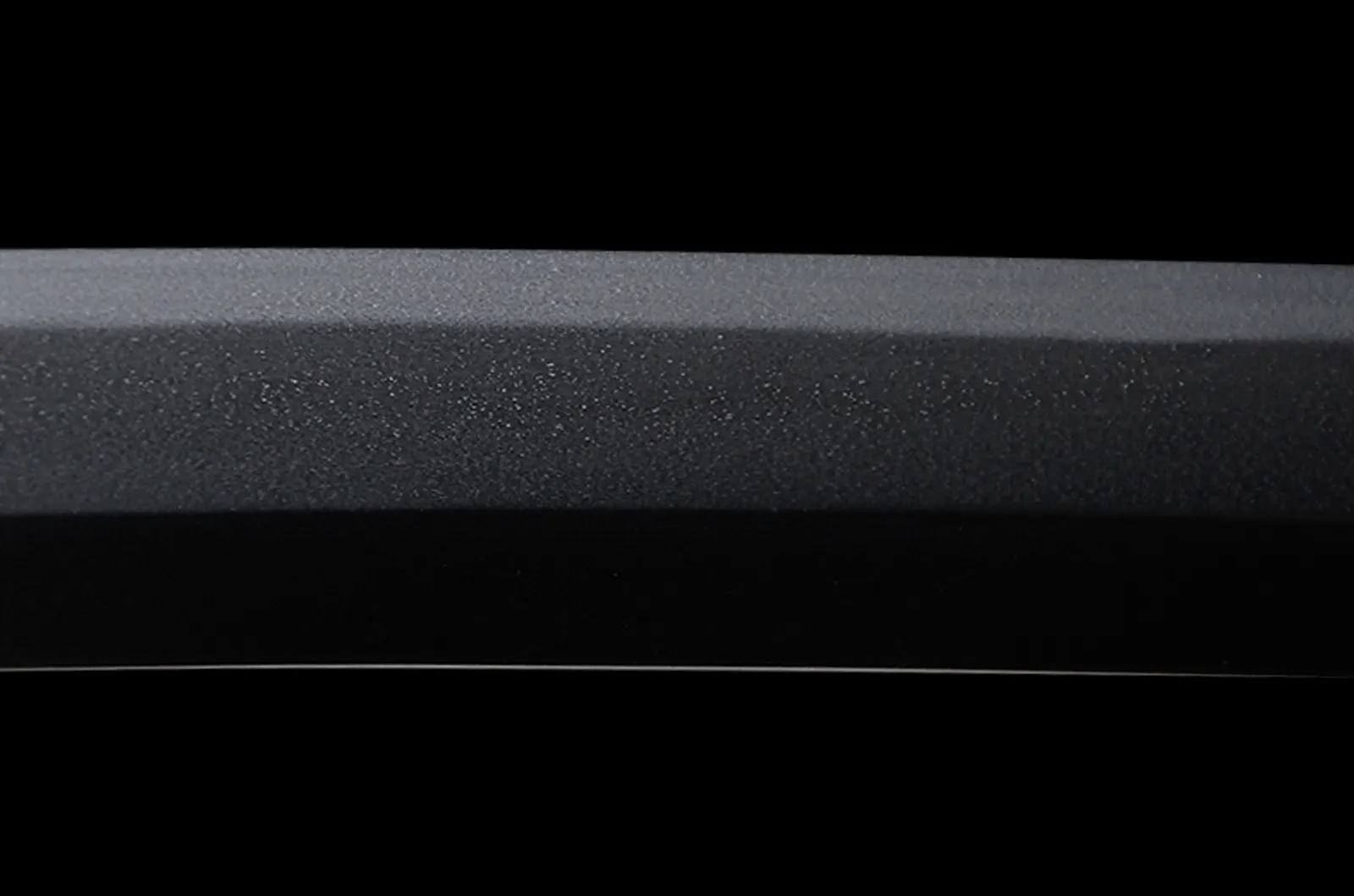
The historical Dōjigiri Yasutsuna is associated with Ko-midare, a finely irregular hamon. This reproduction retains its Suguha classification while the line's slight variations offer a subtle visual echo of the original. The two patterns are not presented as identical.
THE COMPLETE MOUNTING
Craft Beyond the Blade.
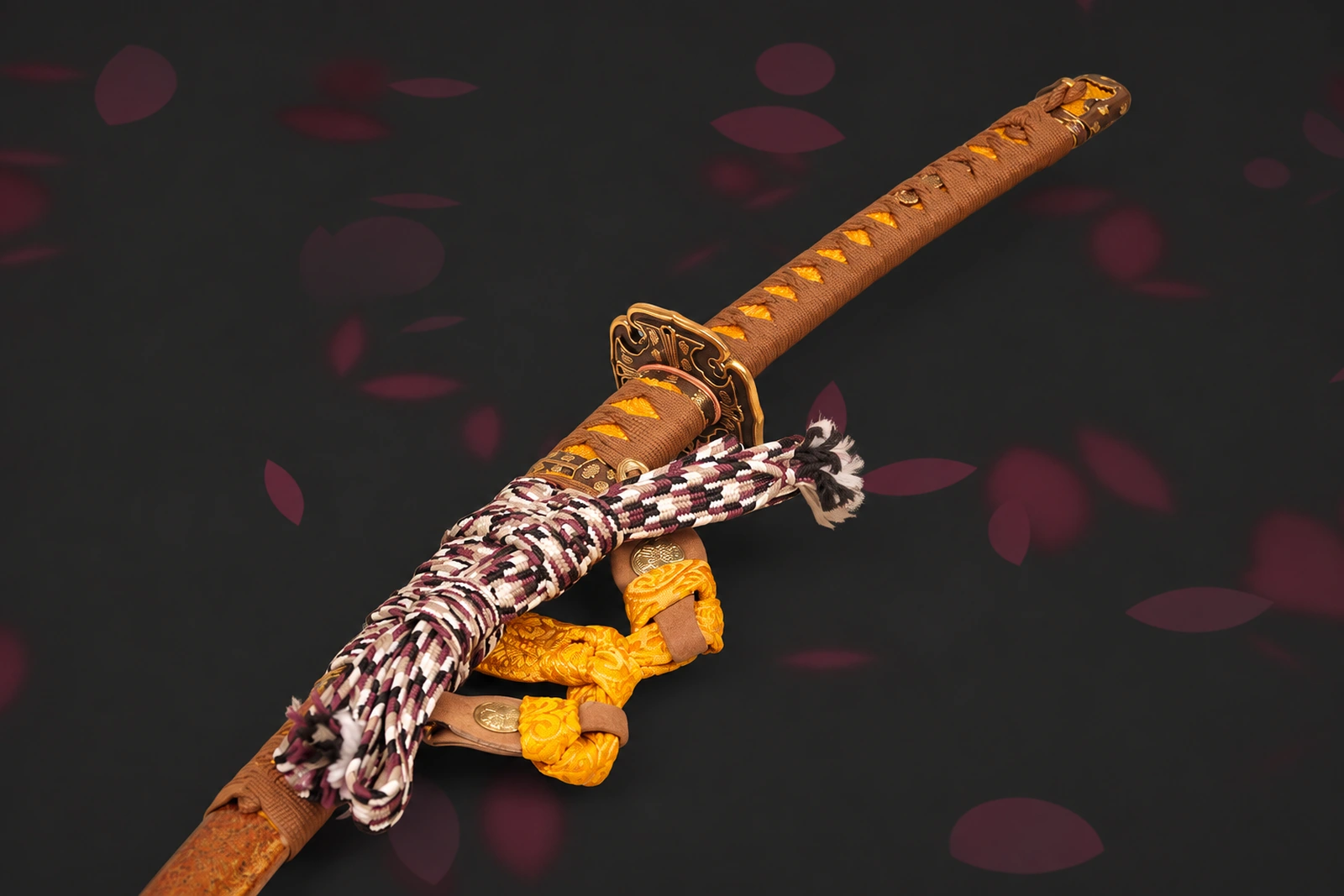
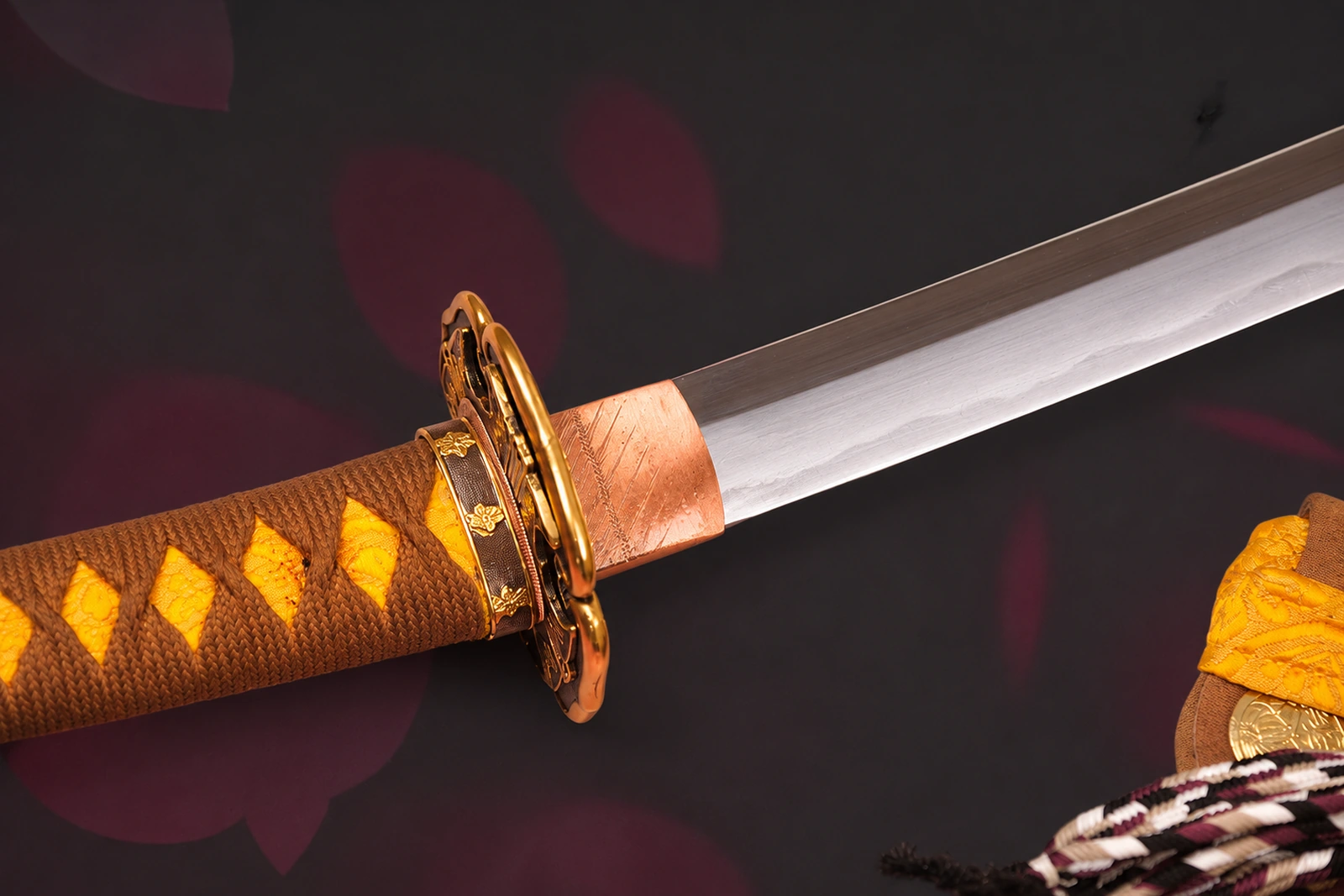
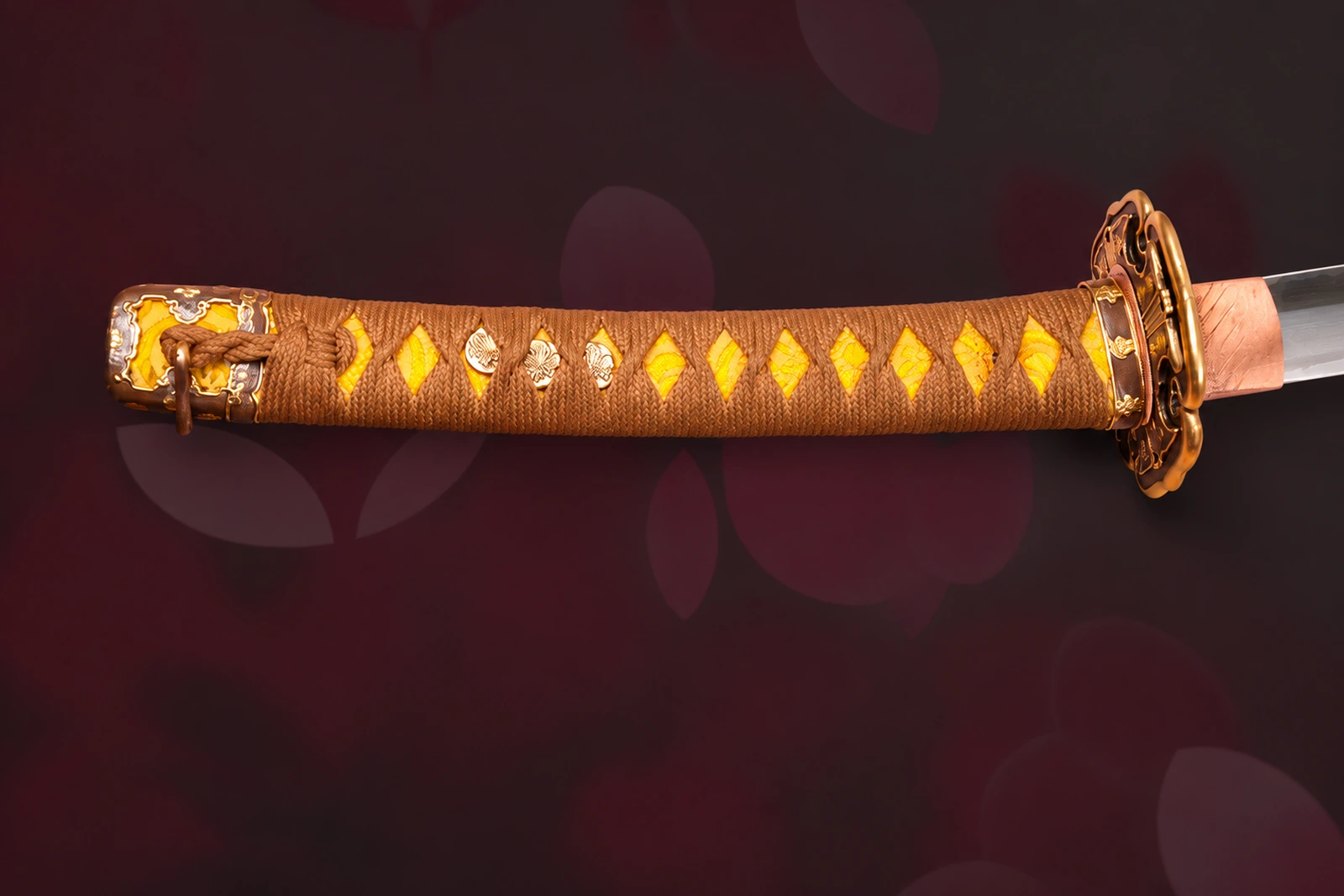
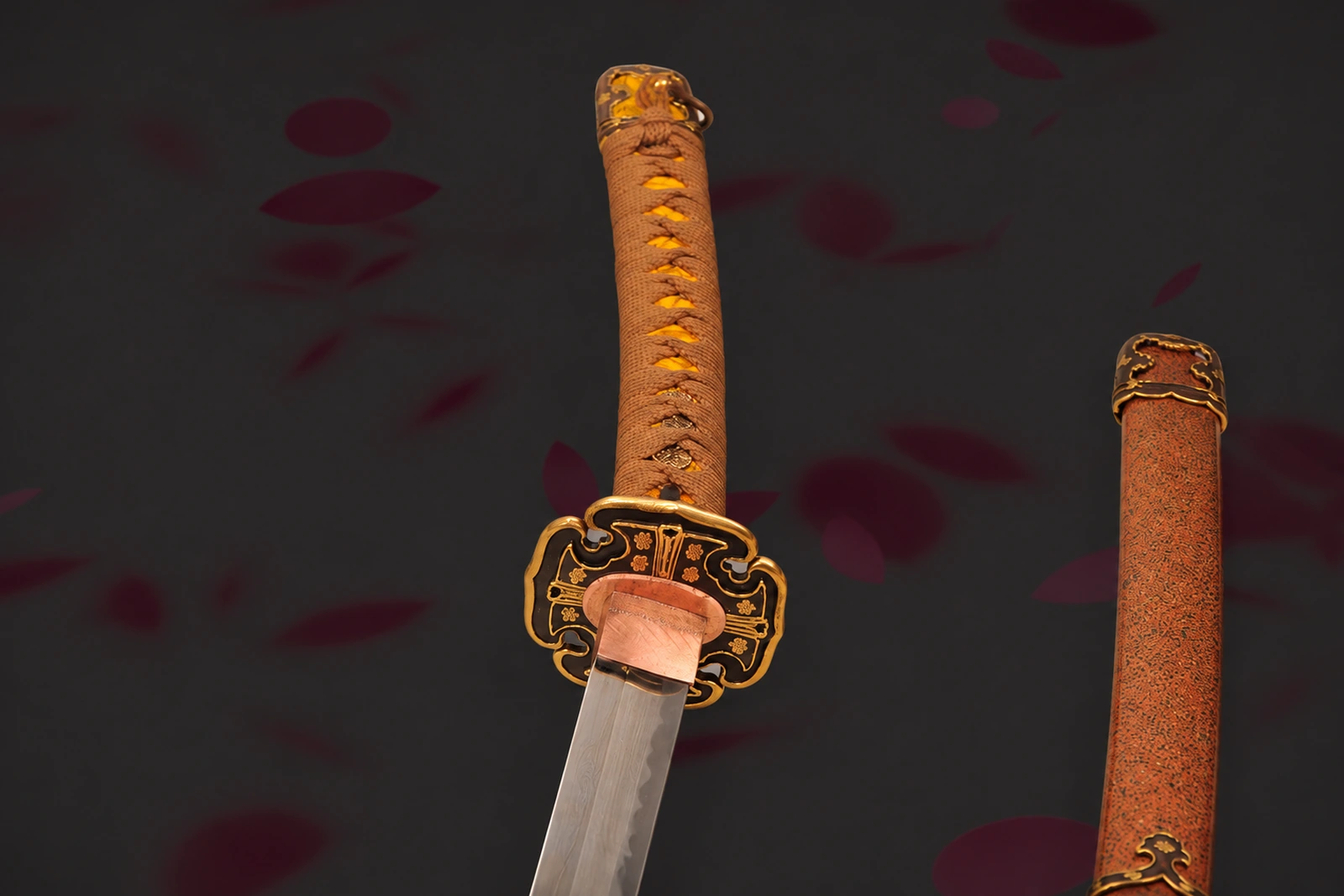
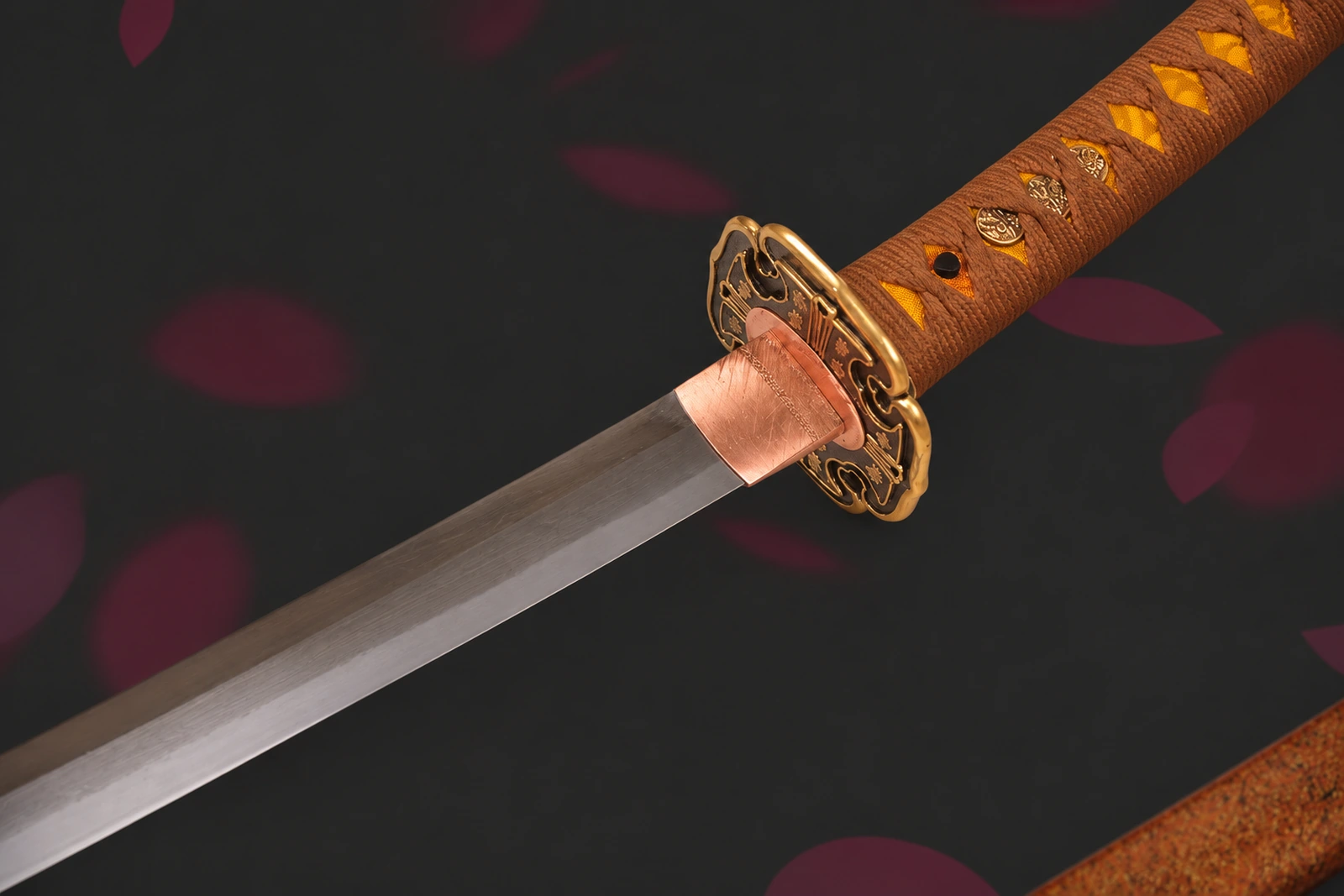
The completed koshirae brings together an ornamented tsuba, gilt-brass fittings, and a handcrafted copper Yūjō-style habaki. In the slightly curved tsuka, silk-cotton tsukamaki is supported with hishigami paper, while Nishijin-ori textile is used within the handle.
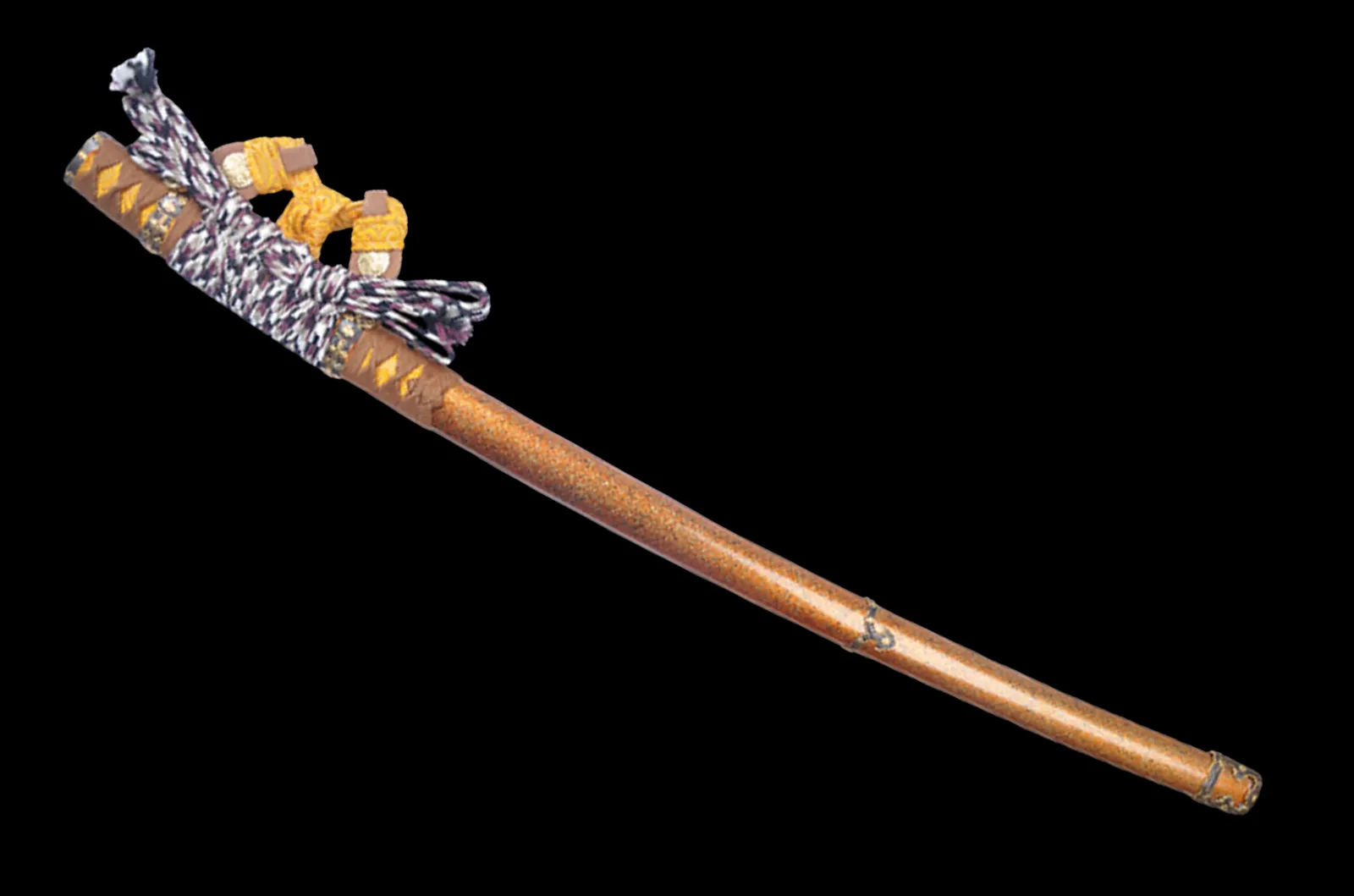
The wood saya carries a warm gold Nashiji-style finish, an interpretation of the traditional pear-skin effect. The tachi-o incorporates Nishijin-ori textile, while the watari-maki is wrapped in silk-cotton with a Nishijin-ori lining. Together these details define the work as a complete, fixed traditional tachi mounting.
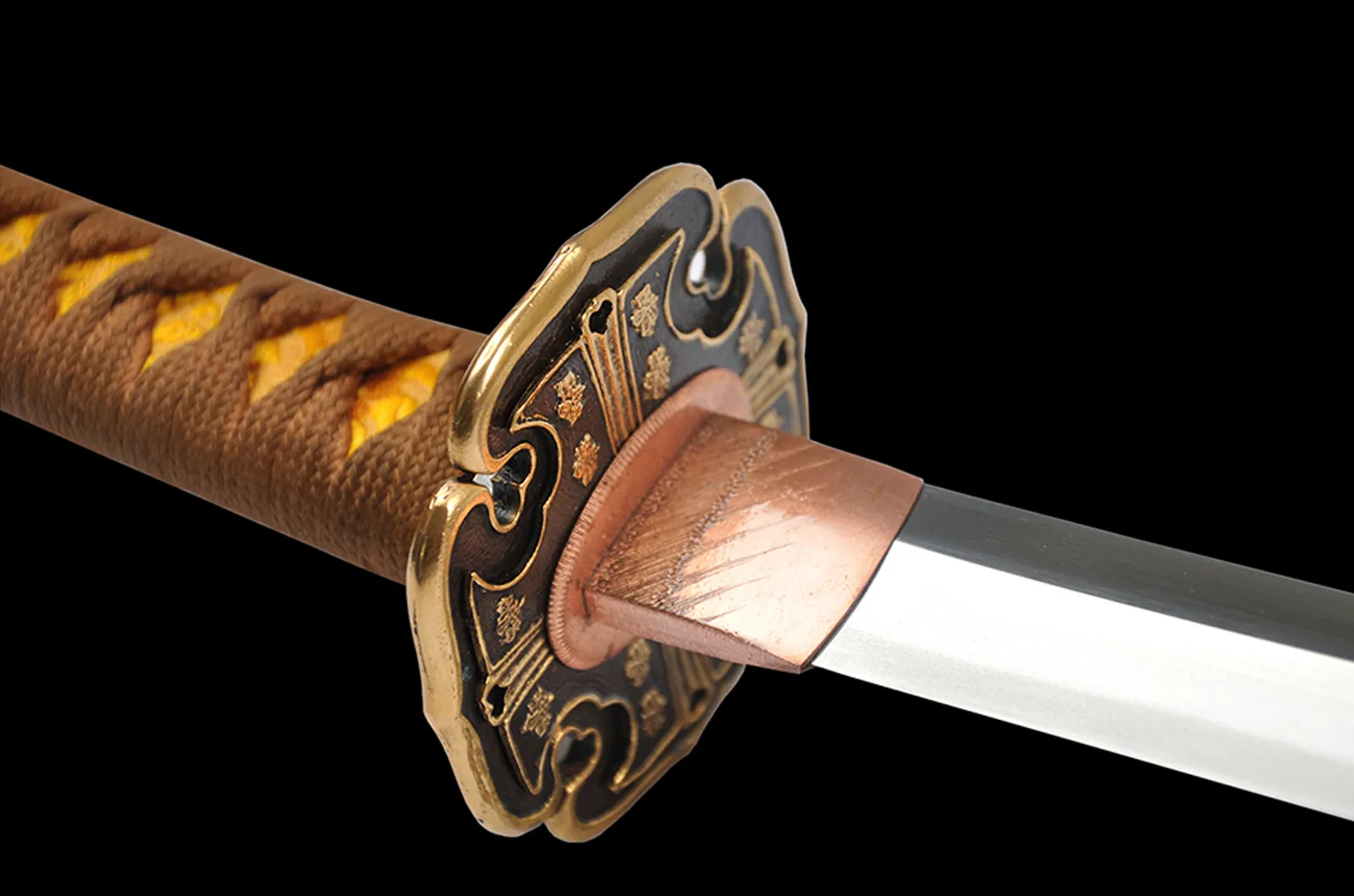
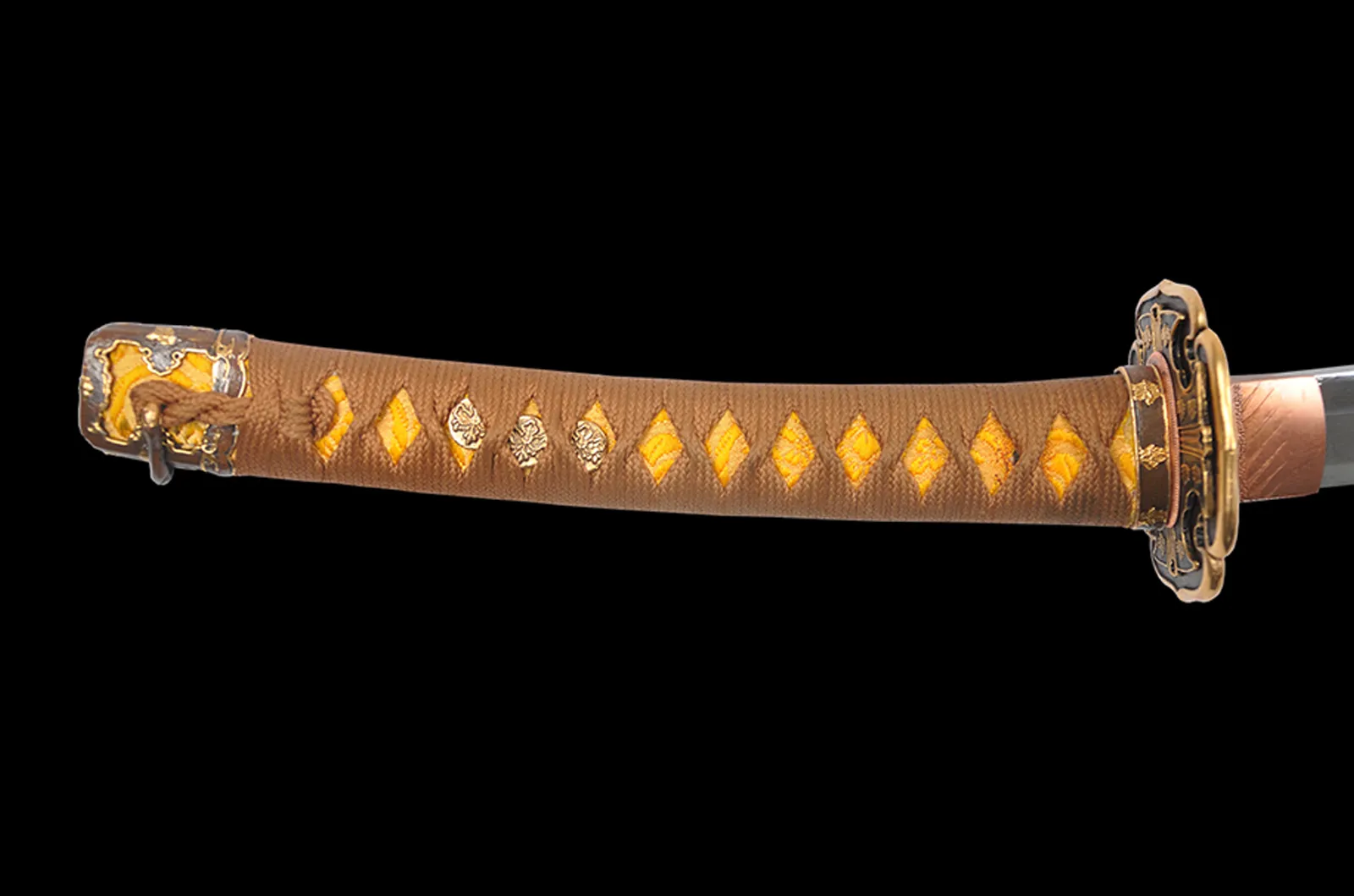
Copper Habaki
Handworked copper with Yūjō-style surface decoration.
Gilt-Brass Fittings
Warm-toned decoration across the tachi mounting.
Nashiji-Style Saya
A wood scabbard with a gold-toned decorative surface.
Traditional Textile Details
Silk-cotton wrapping, hishigami support, and traditional Nishijin-ori lining.
SAYA / TEXTILE / FINISH
The Art of Traditional Tachi Mountings.
THE FINISHED WORK
Forging, hardening, polishing, and mounting come together in a complete tachi — a work appreciated as much for its measured details as for its unmistakable silhouette.
03 / COLLECTOR GALLERY
The Complete Portrait.
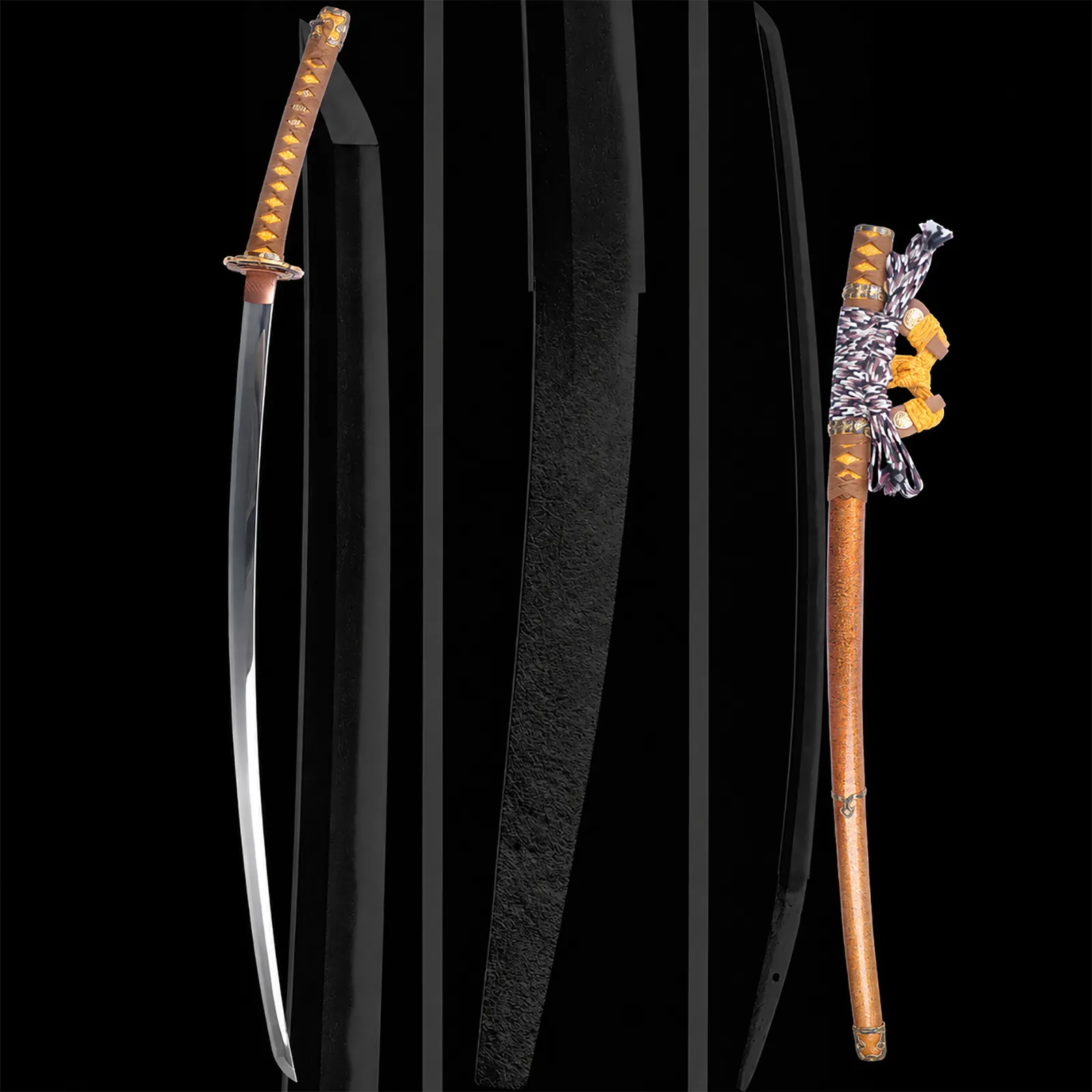
Beyond the forged blade lies the presence of a complete tachi: its long curve, warm brown saya, carefully composed fittings, and traditional woven cords. Seen together, these elements give the finished work its distinctive character.
A FINISHED SWORD / ONE CONSIDERED COMPOSITION
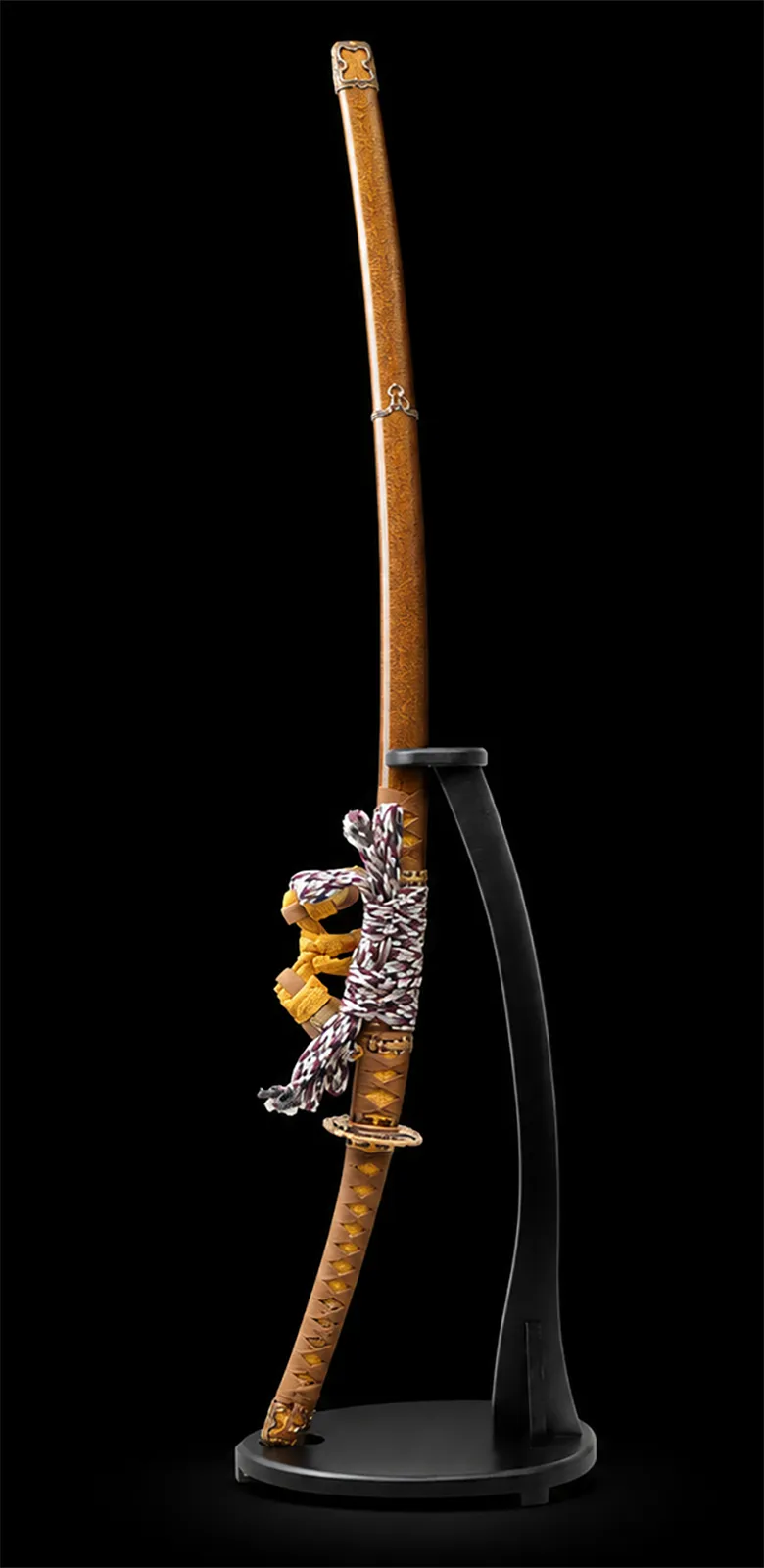
THE FINISHED SILHOUETTE
A Form Seen in Full.
The drawn blade and the sheathed sword offer two views of the same form. One follows the sweep of polished steel; the other returns to the gentle line of its wooden saya.
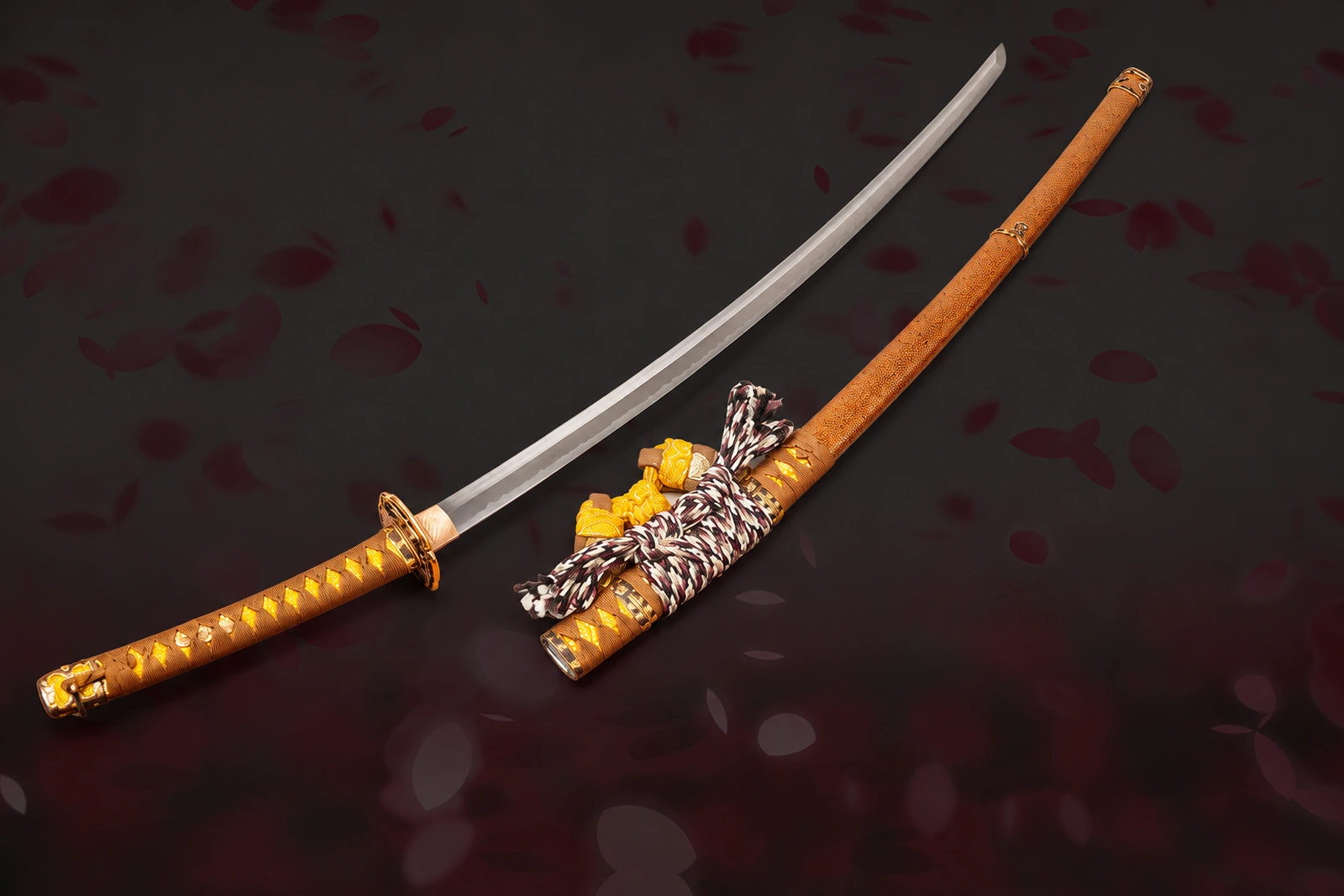
CLOSER TO THE MOUNTING
The Details That Remain.
Seen at close range, the koshirae reveals its own rhythm: warm wrapping, dark ornament, copper tones, and small accents that contrast with the brightness of the blade.
STEEL / LINE / REFLECTION
The Last Reflections.
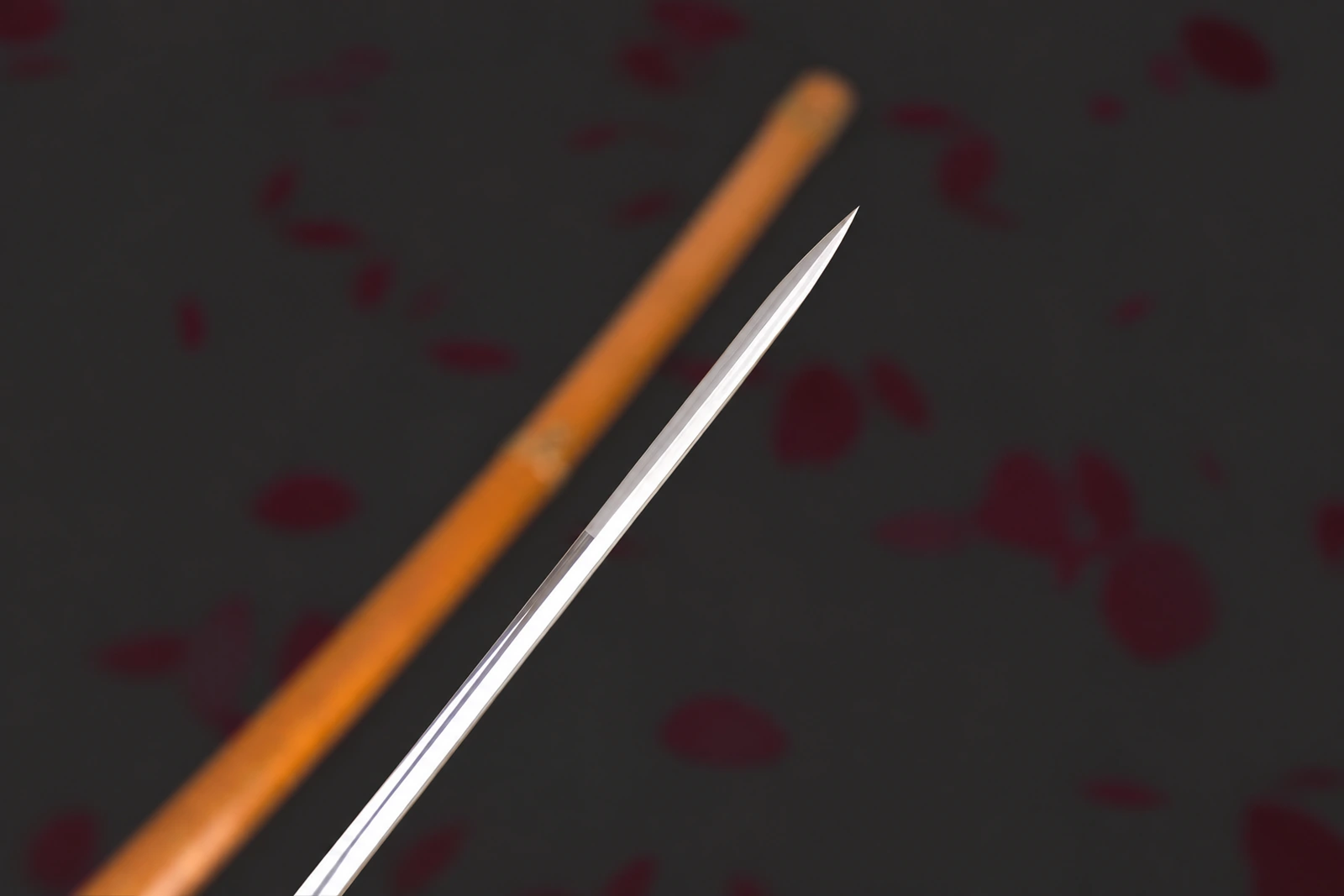
The final views turn toward the blade itself. Different angles of light reveal the clean polished edge, the quieter steel beside it, and the subtle movement along the hamon.
Reviews
There are no reviews yet.