Beschreibung
Layered Steel. Singular Purpose.
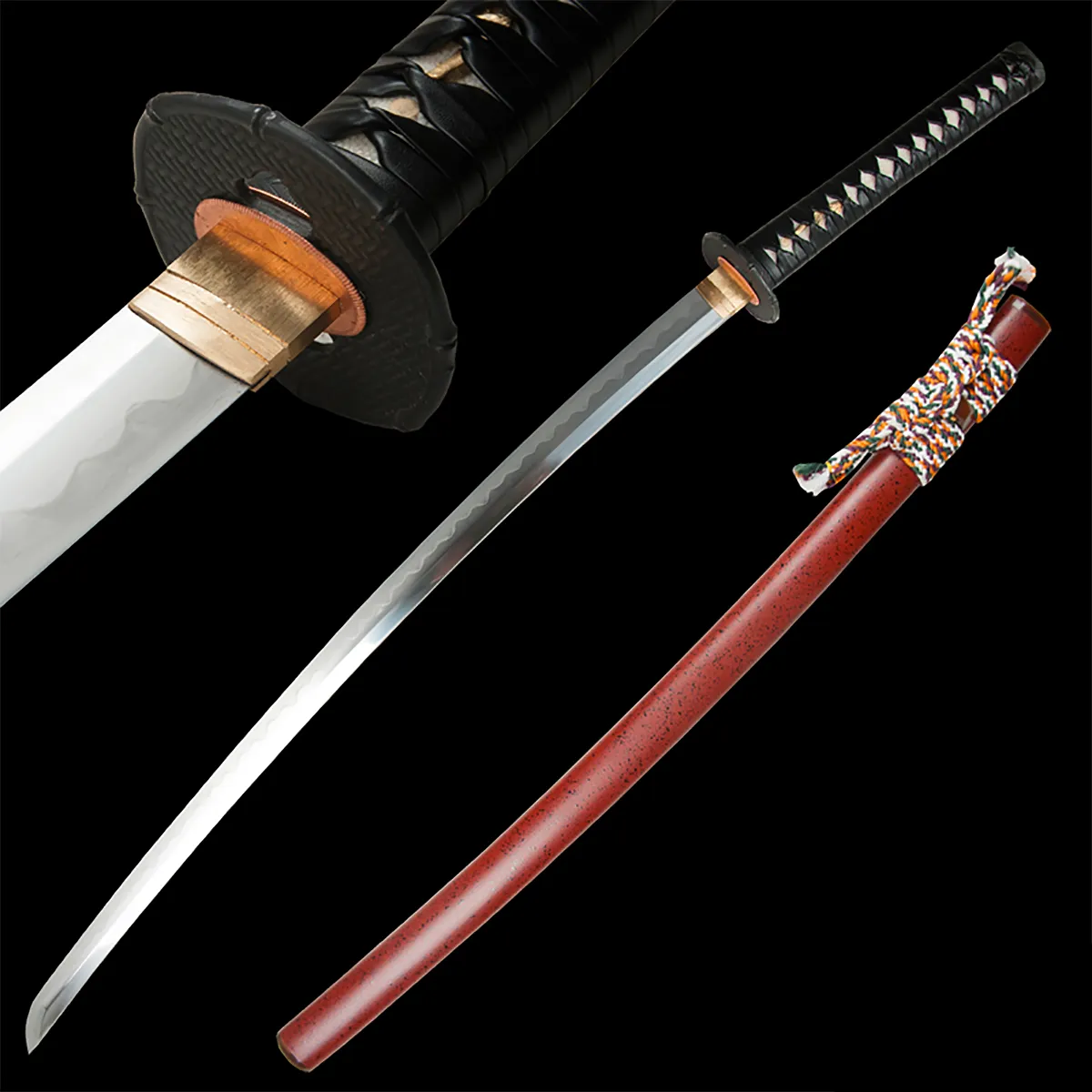
The character of this katana begins beneath its polished surface. Its blade is built using Sanmai Construction, bringing together carefully prepared outer steel and a distinct inner core in a traditional composite blade structure.
The outer layers are made from 608 Patterned Steel, further folded to refine the appearance of the steel's layered texture. Within this construction lies a core of T10 Carbon Steel, forming the central component of the three-layer assembly.
By combining these materials within a single blade, the construction brings together the characteristics of its outer and inner steels. The result reflects a deliberate approach to blade making, in which material selection, forging structure, and subsequent heat treatment are considered as parts of the same craft.
A blade defined not only by what is visible, but by the structure forged within.
02 / CRAFTSMANSHIP IN DETAIL
The Character of the Details.
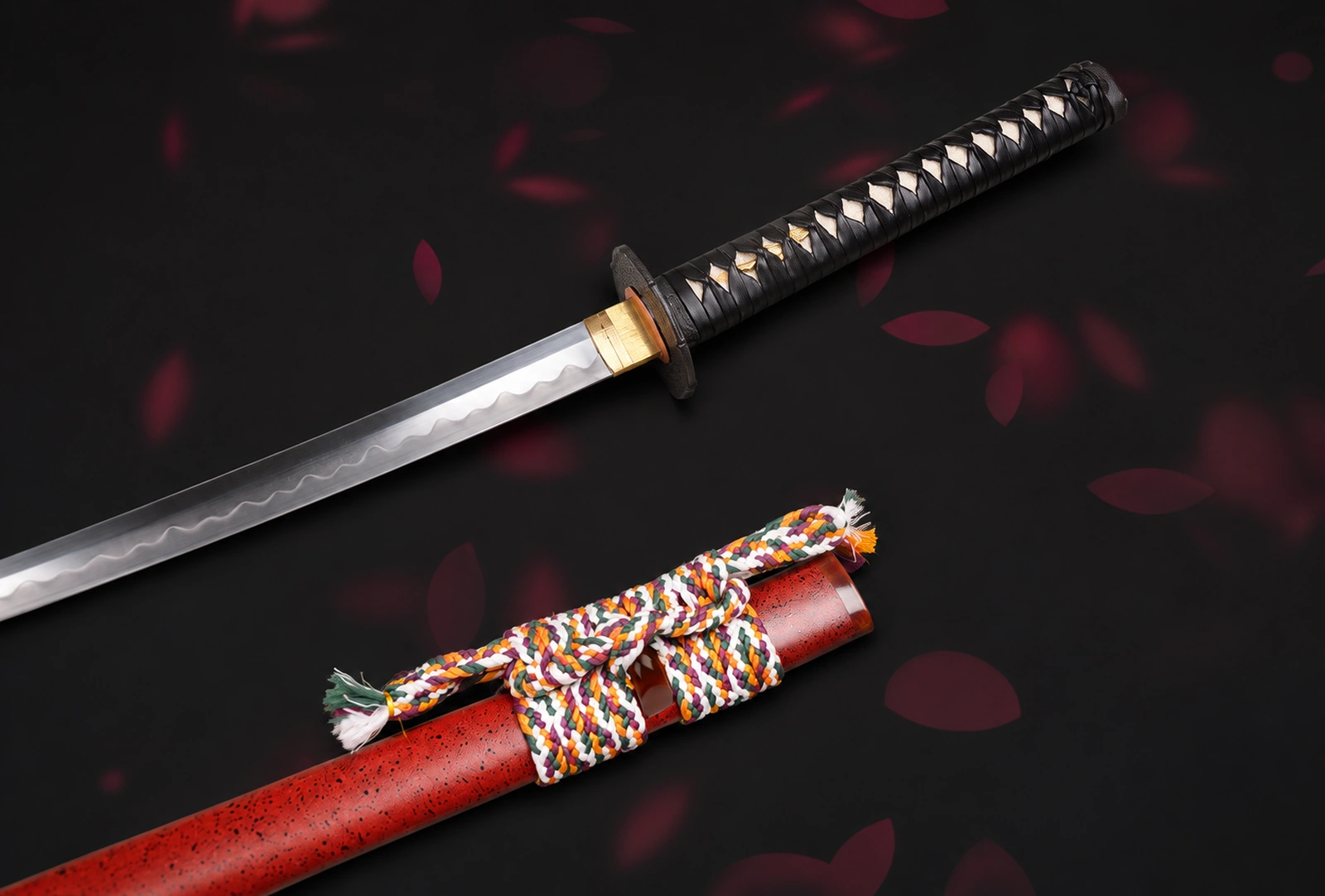
Beyond the construction of its blade, this katana reveals its character through the materials and workmanship of its fittings. Textured iron, black leather, natural rayskin, and a richly finished scabbard create a distinctive interpretation of traditional Japanese sword mountings.
THE IRON FITTINGS
Iron, Copper and Brass.
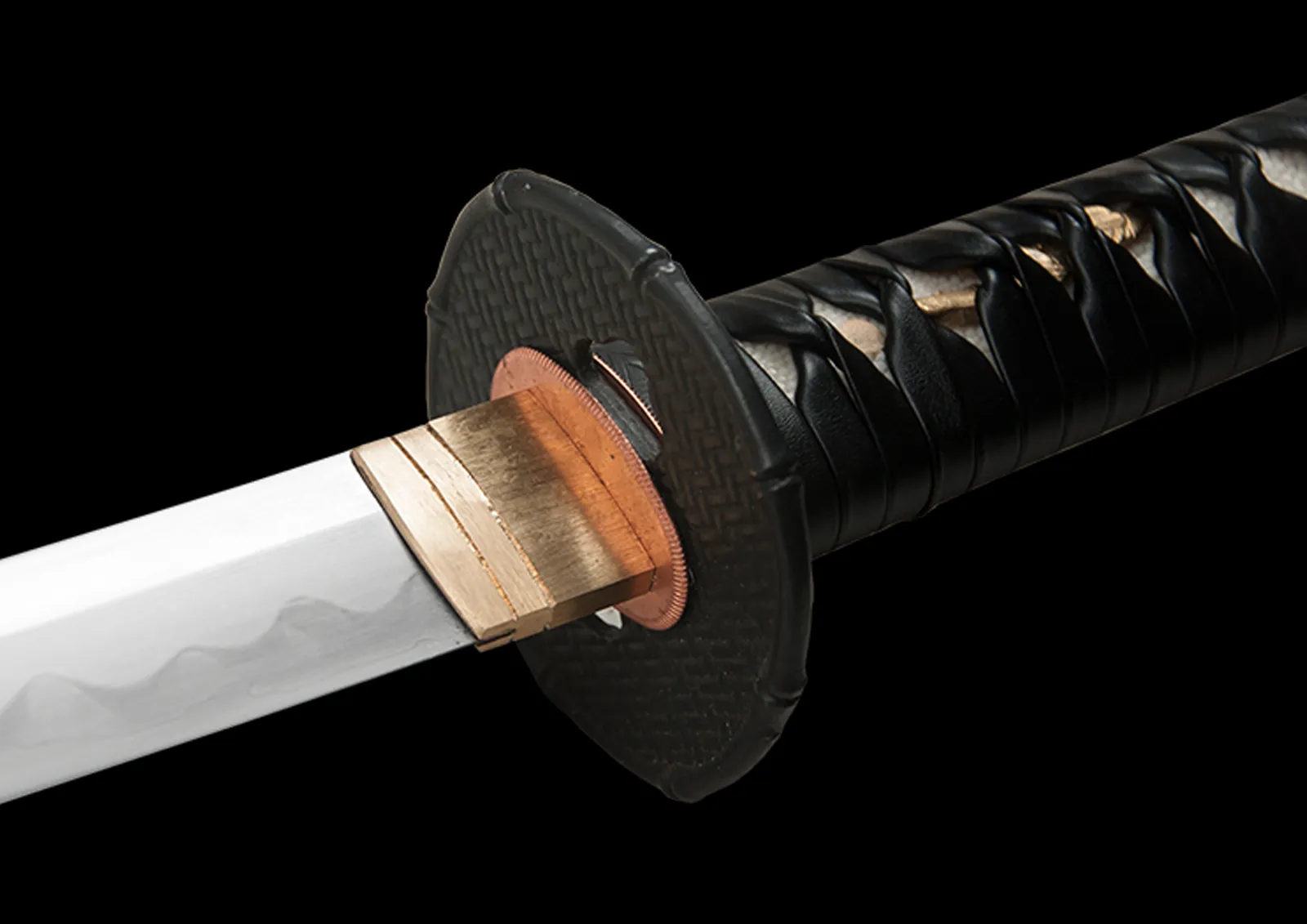
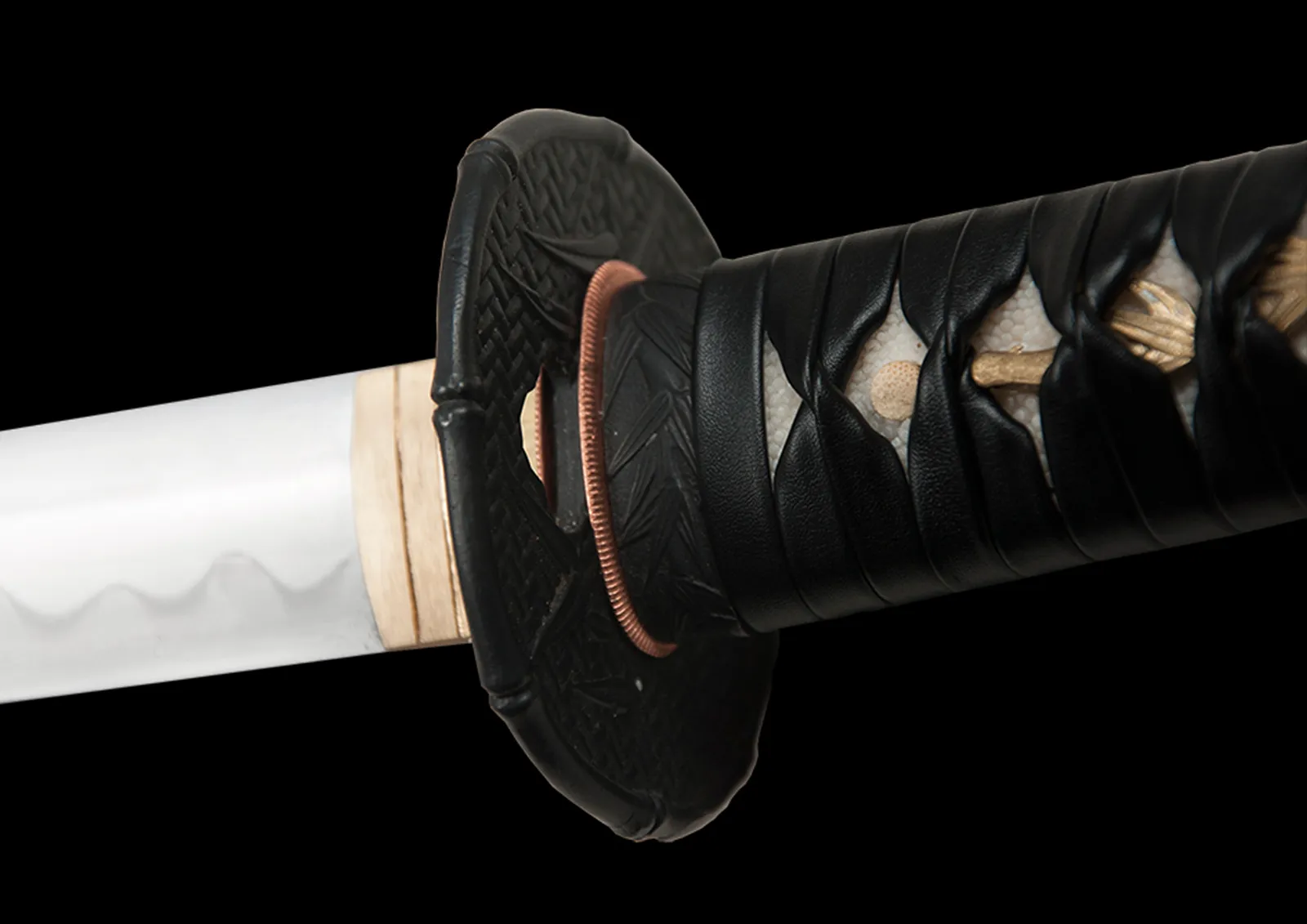
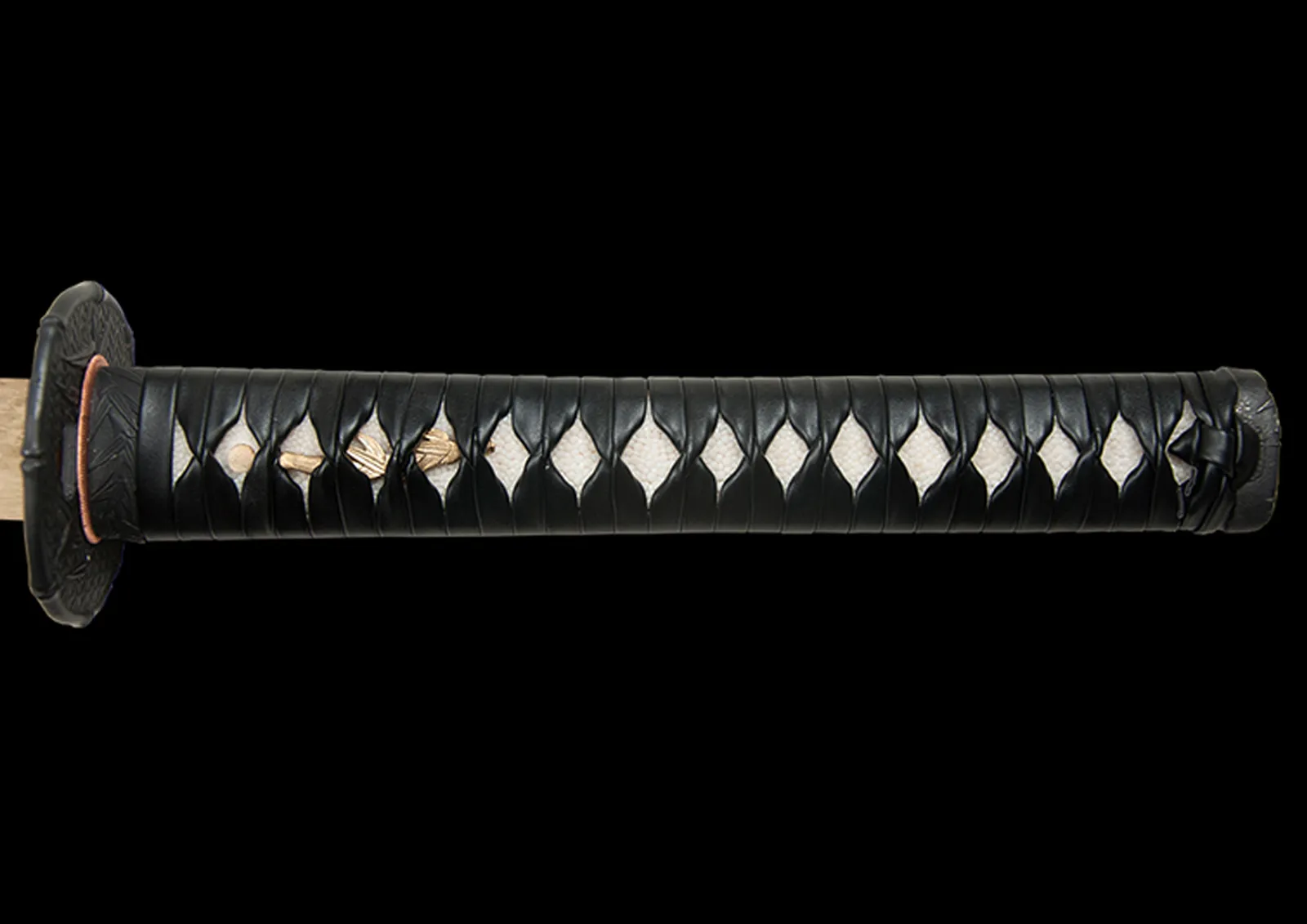
An openwork iron tsuba anchors the dark fittings. The reverse reveals the textured iron fuchi, while copper seppa and a brass habaki introduce warmer tones around the blade. Decorative brass menuki appear through the handle wrapping.
THE HANDLE
Leather Over Rayskin.
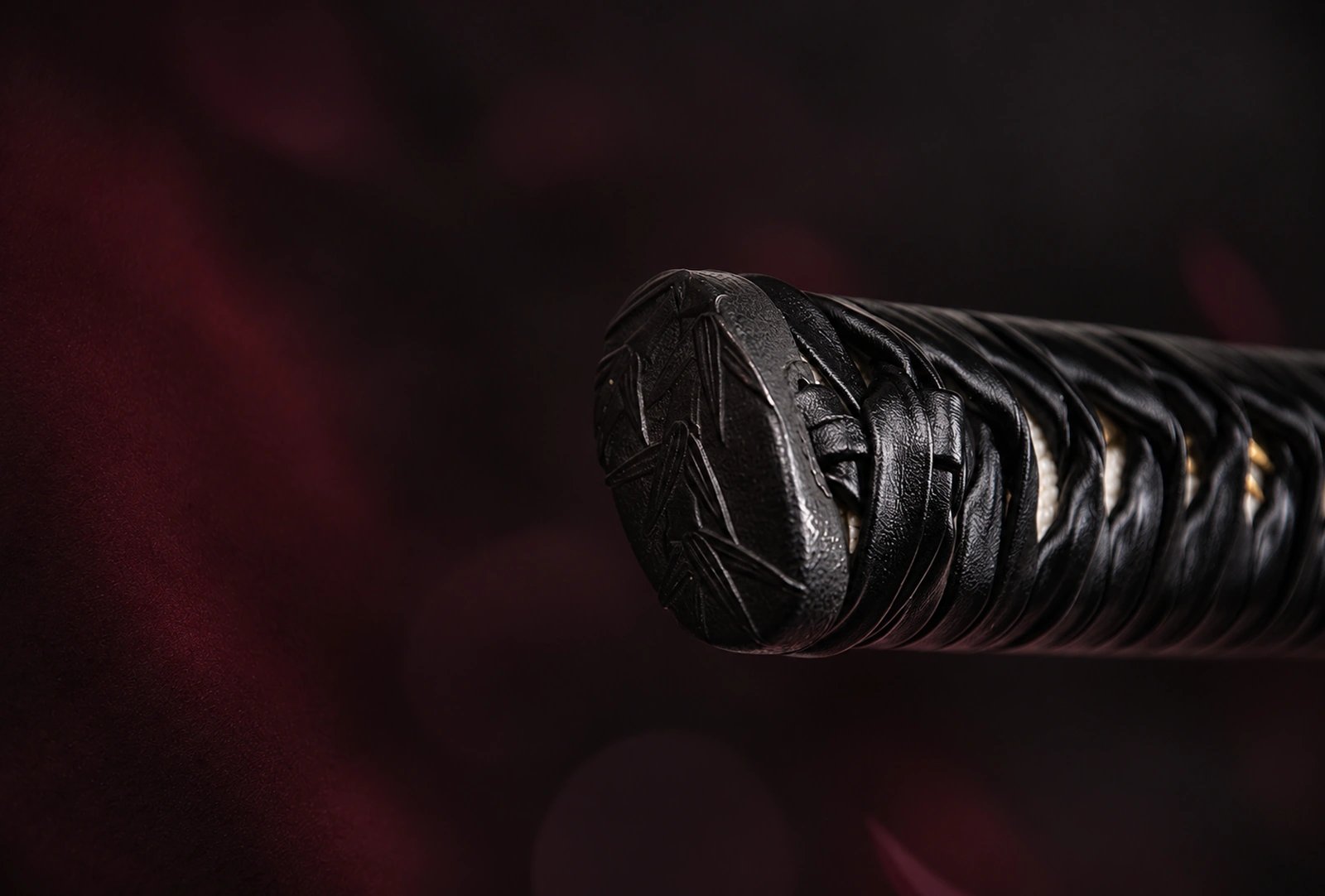
The handle is wrapped in black cowhide leather tsuka-ito, forming a distinctive variation on traditional Japanese sword wrapping. Beneath it lies genuine samegawa, visible through the repeating diamond openings. The pale rayskin and small metallic ornaments provide a restrained contrast with the leather.
THE SAYA
Color Beneath the Quiet.
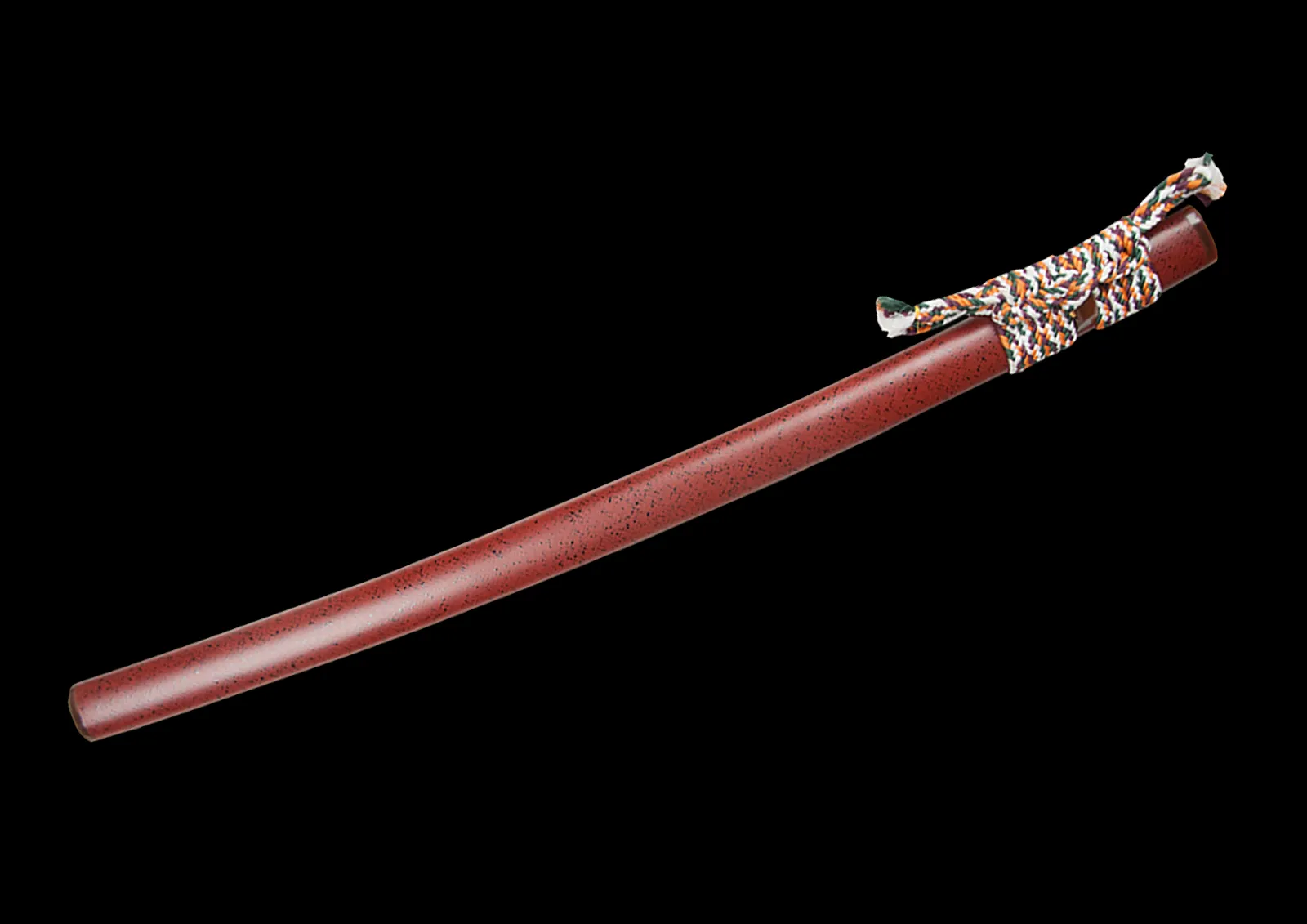
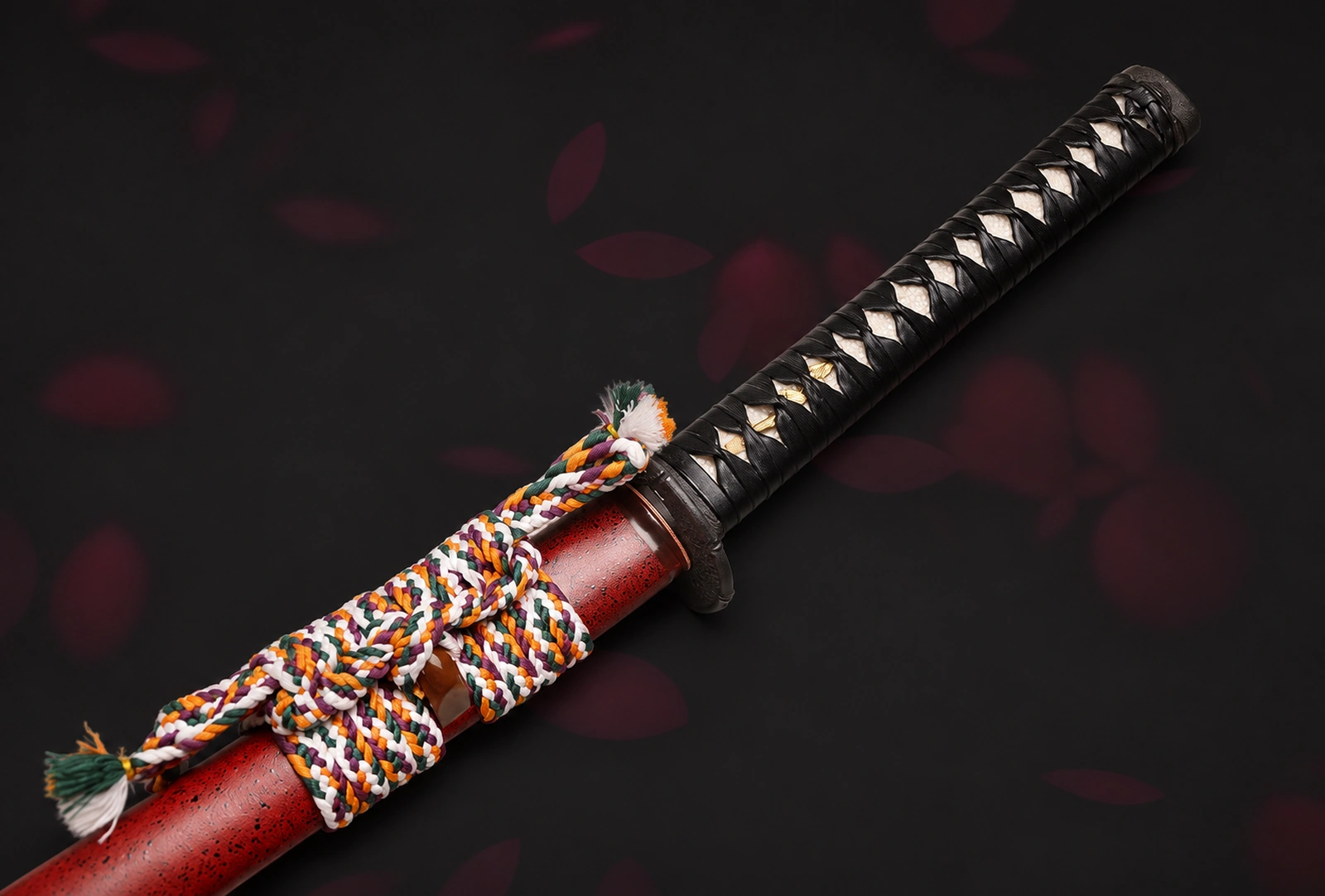
The reddish-brown saya adds warmth to the otherwise dark mountings. Its Qingpi wood body has a finely speckled finish, with horn components and a vividly colored braided cord bringing together wood, horn, and textile in one composition.
THE BRAIDED CORD
A Rhythm of Color.
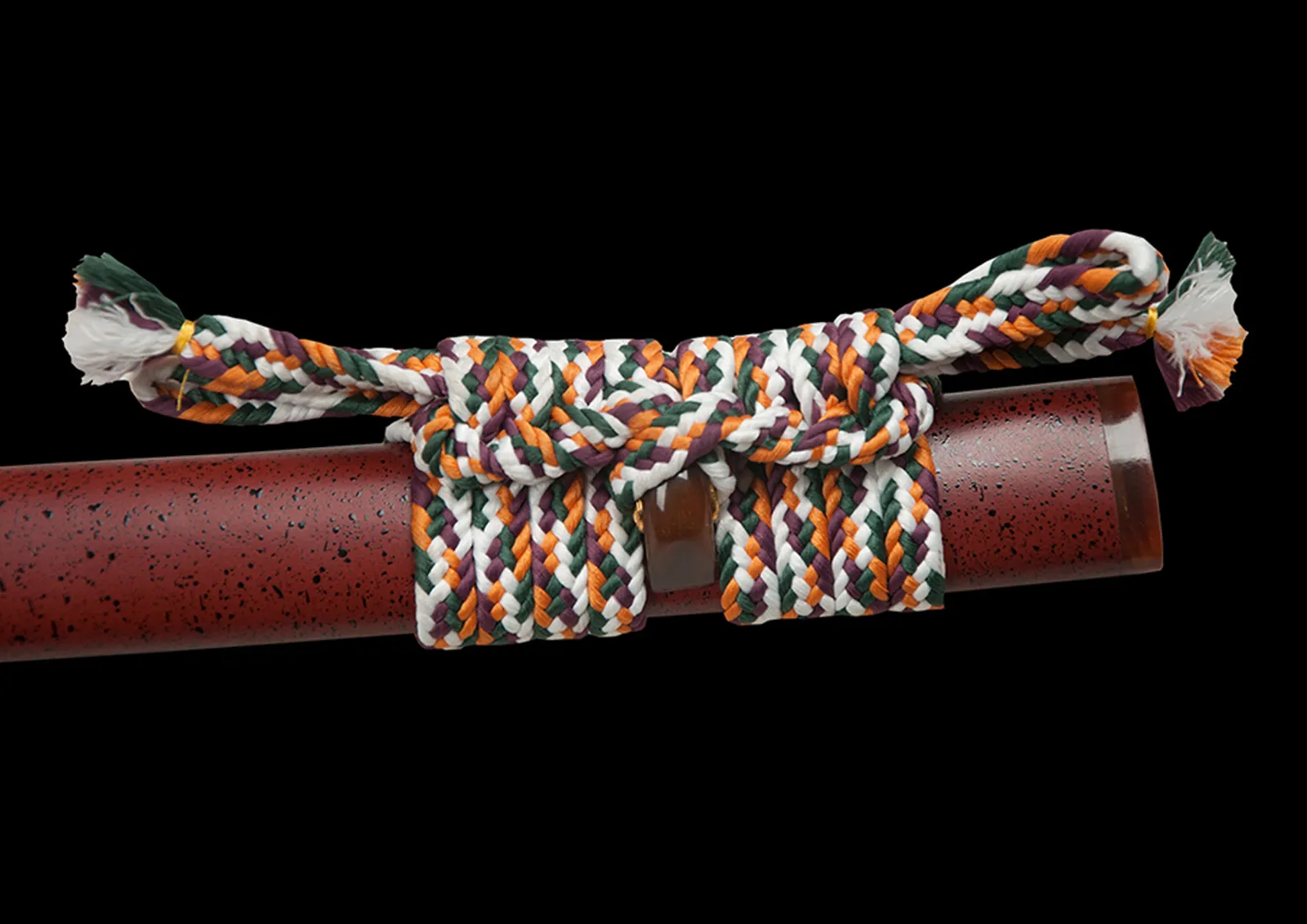
A thick, multicolored sageo is arranged in an elaborate shigeuchi-style braid. The kurigata provides the attachment point, while horn details around the koiguchi complete the traditional scabbard presentation.
STEEL / FIRE / POLISH
The Flow of Gunome.
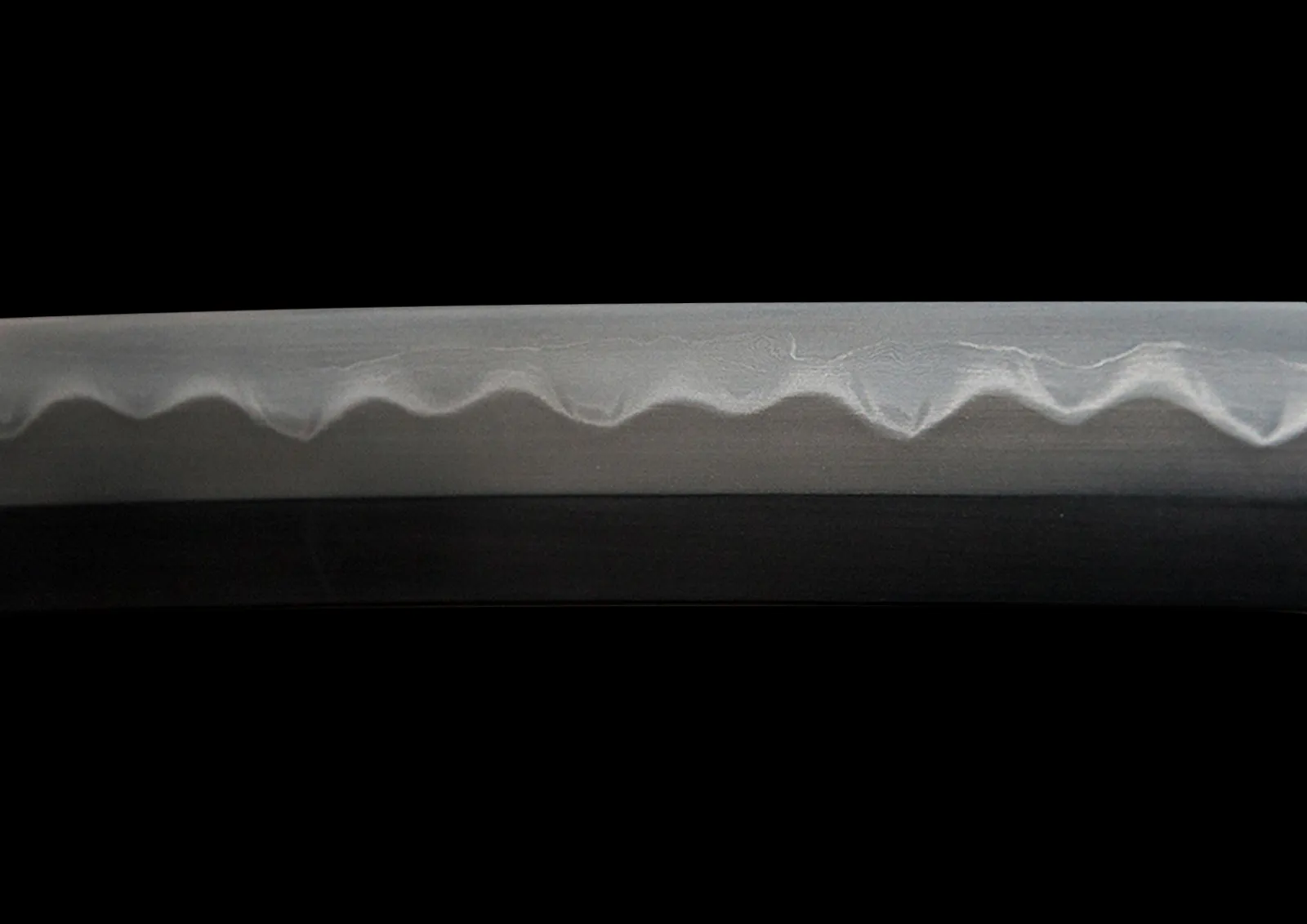
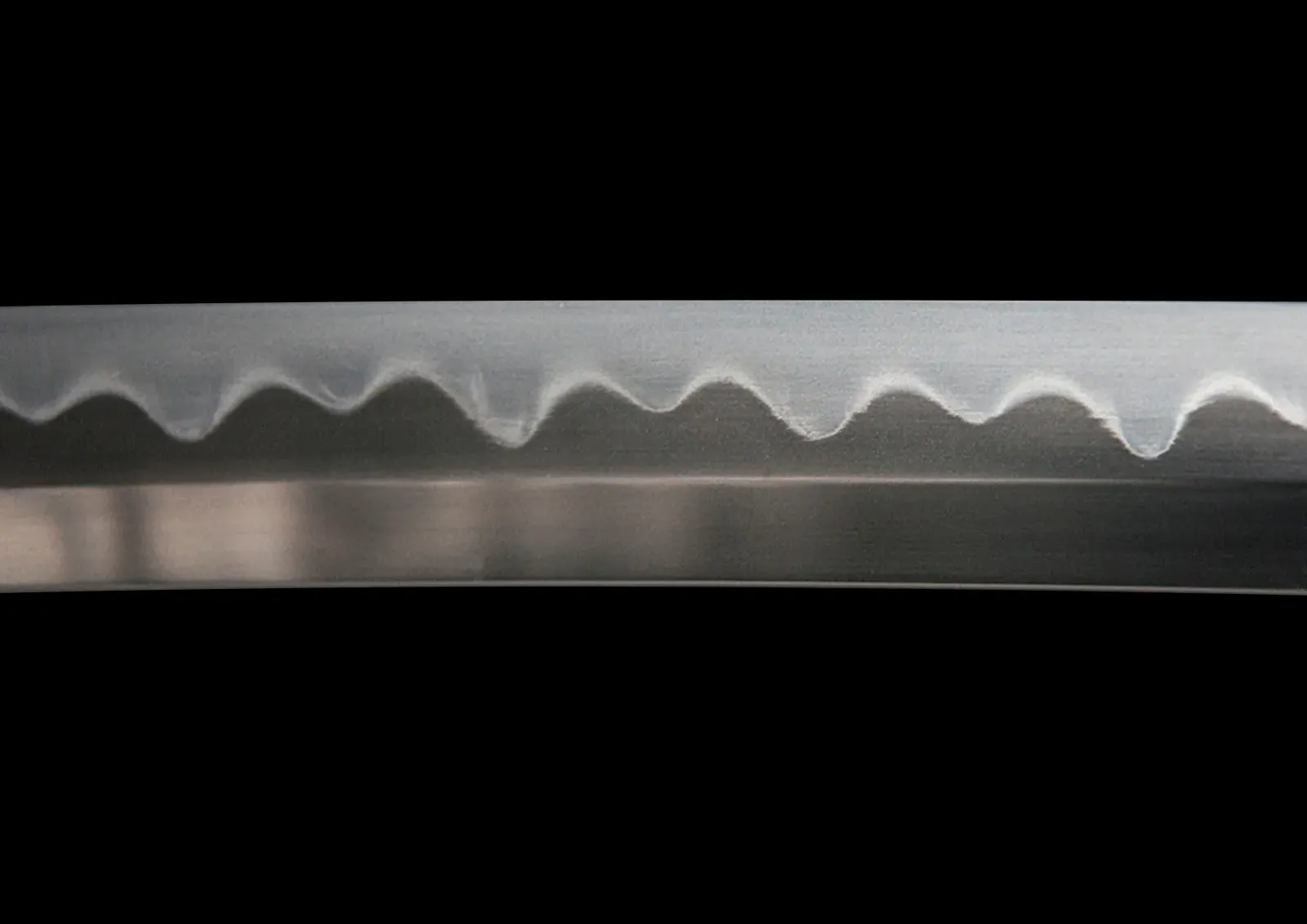
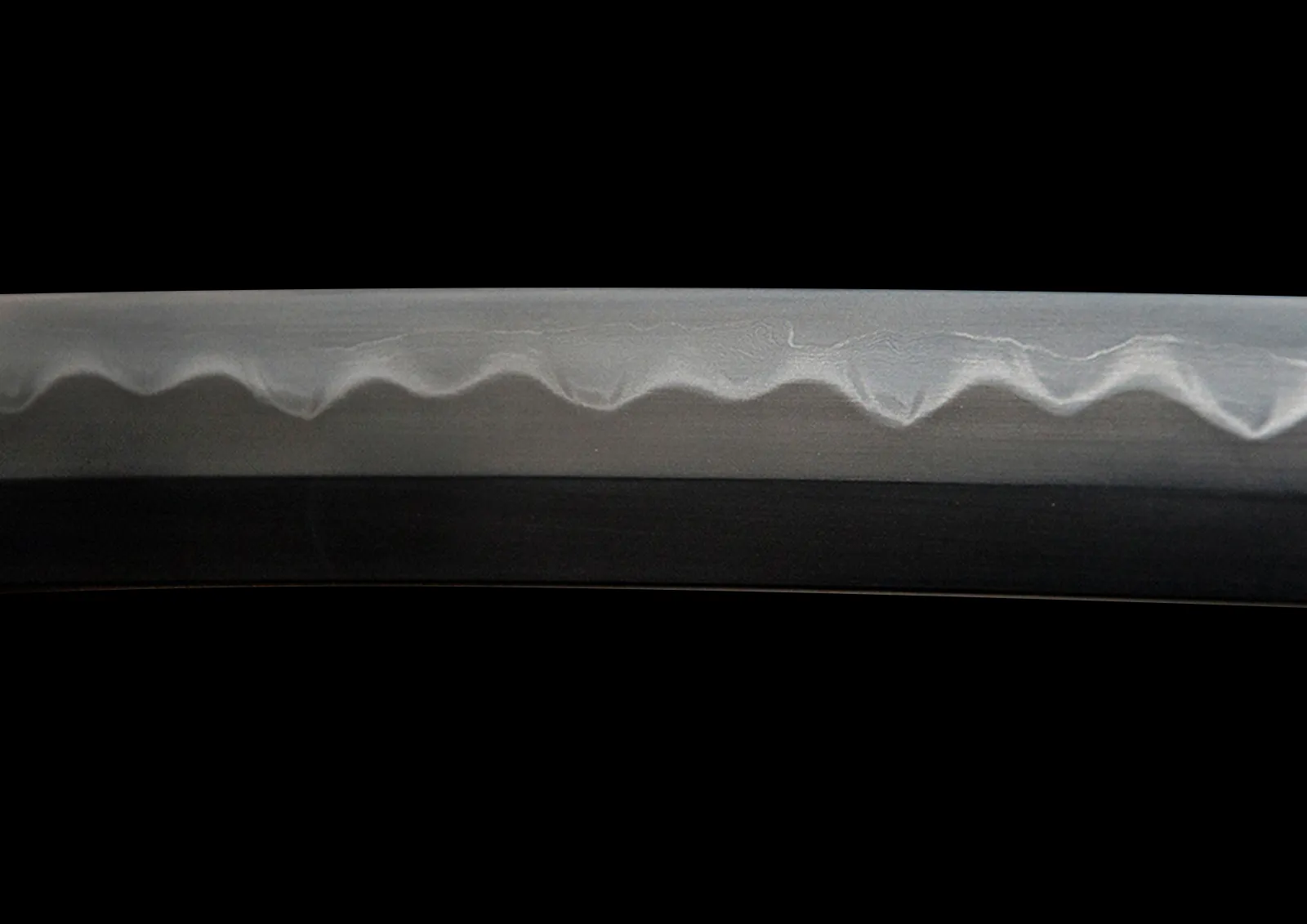
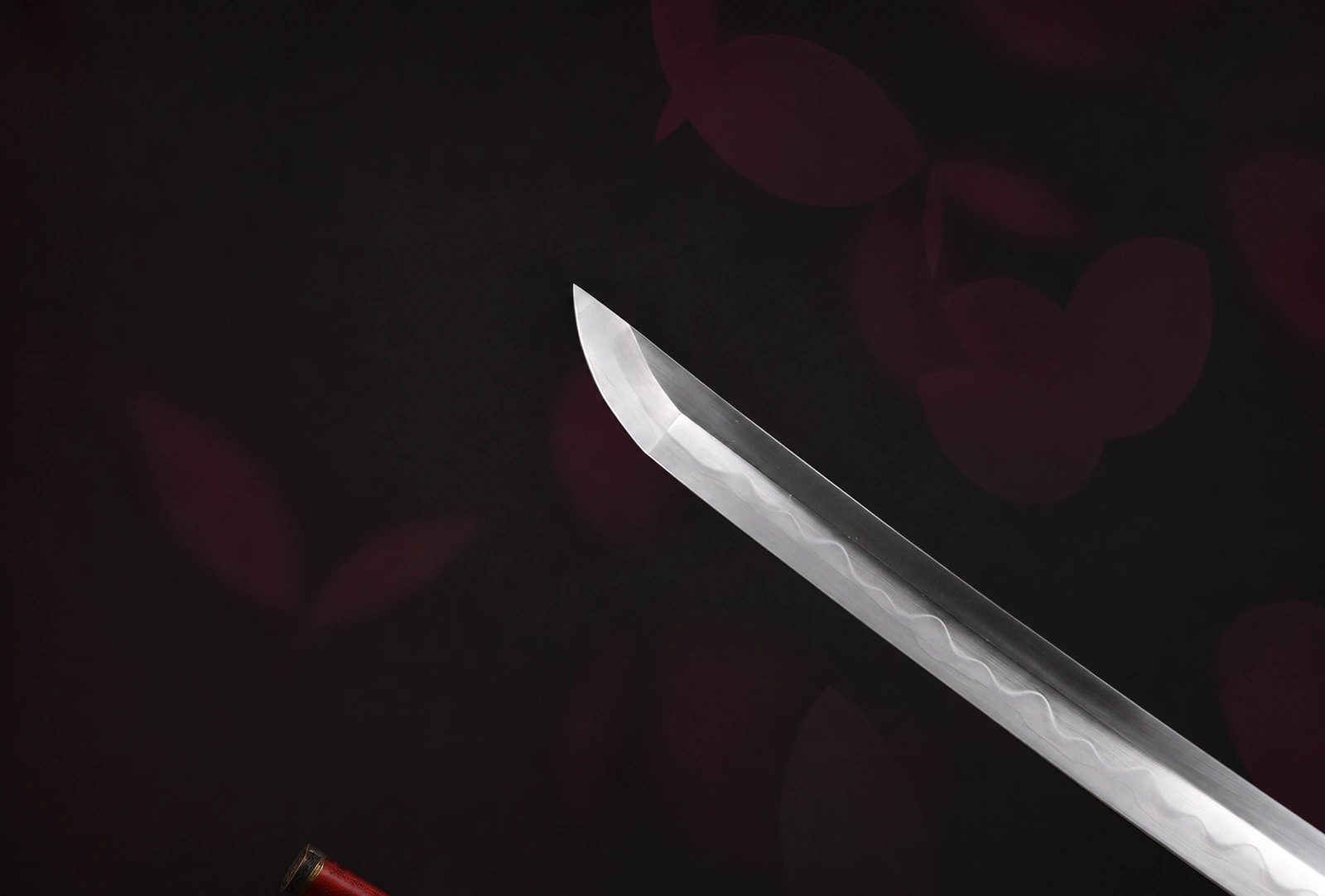
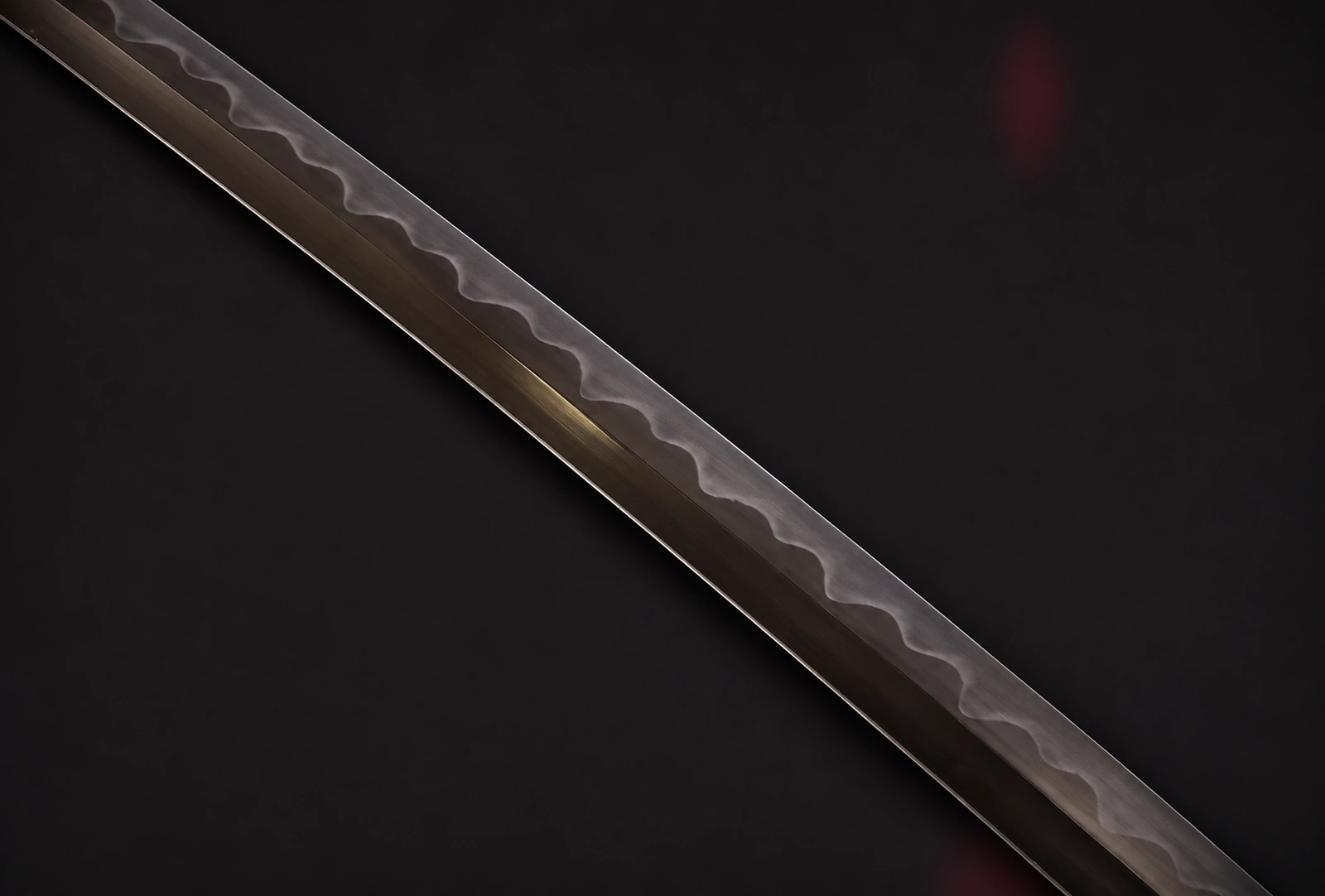
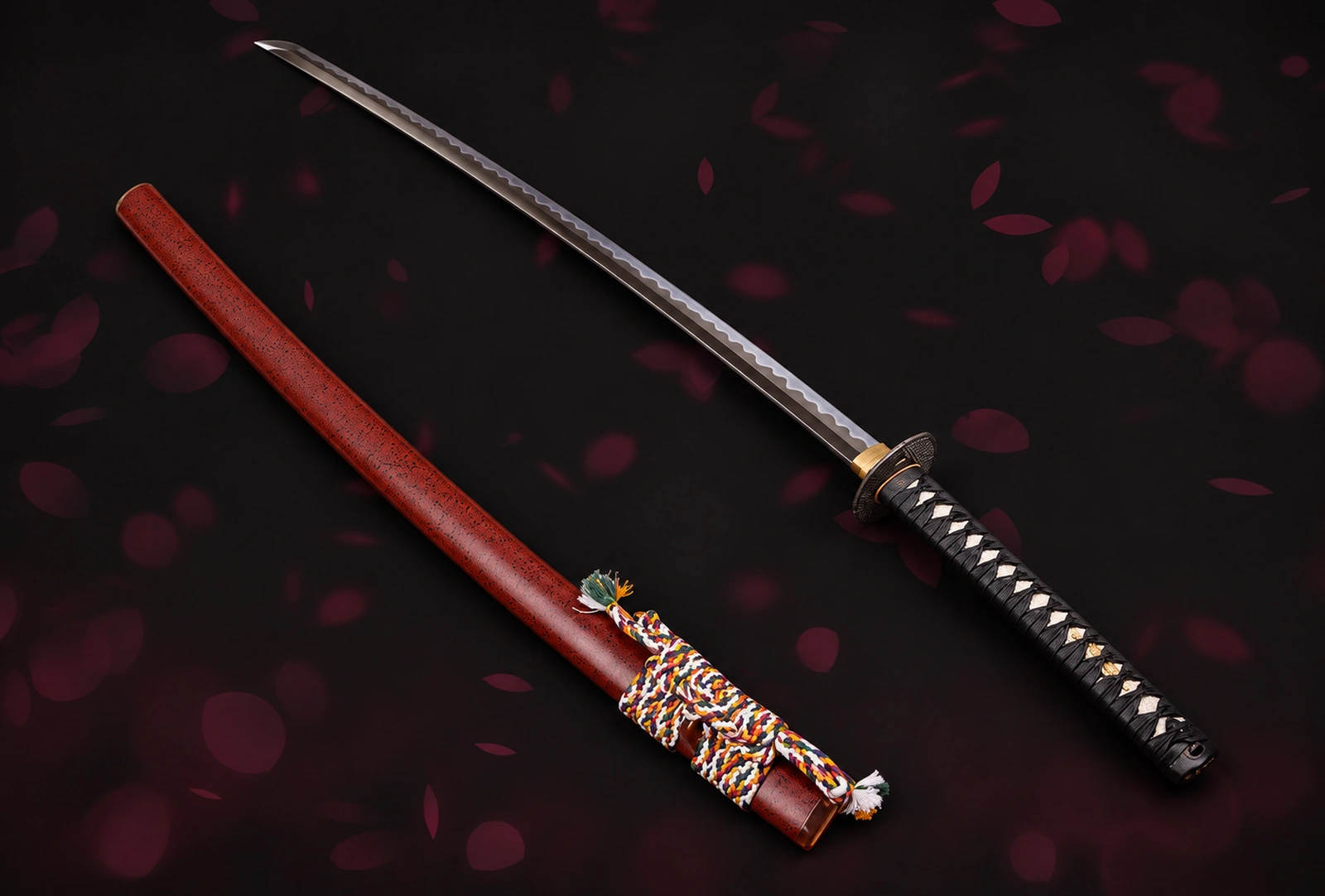
The flowing Gunome pattern is a form of hamon produced through differential clay hardening. Rounded rises follow the cutting edge. Japanese-style polishing reveals the visual contrast between the bright edge region, the subdued gray blade surface, and the more reflective shinogi.
03 / THE COMPLETE PORTRAIT
Composed in Contrast.
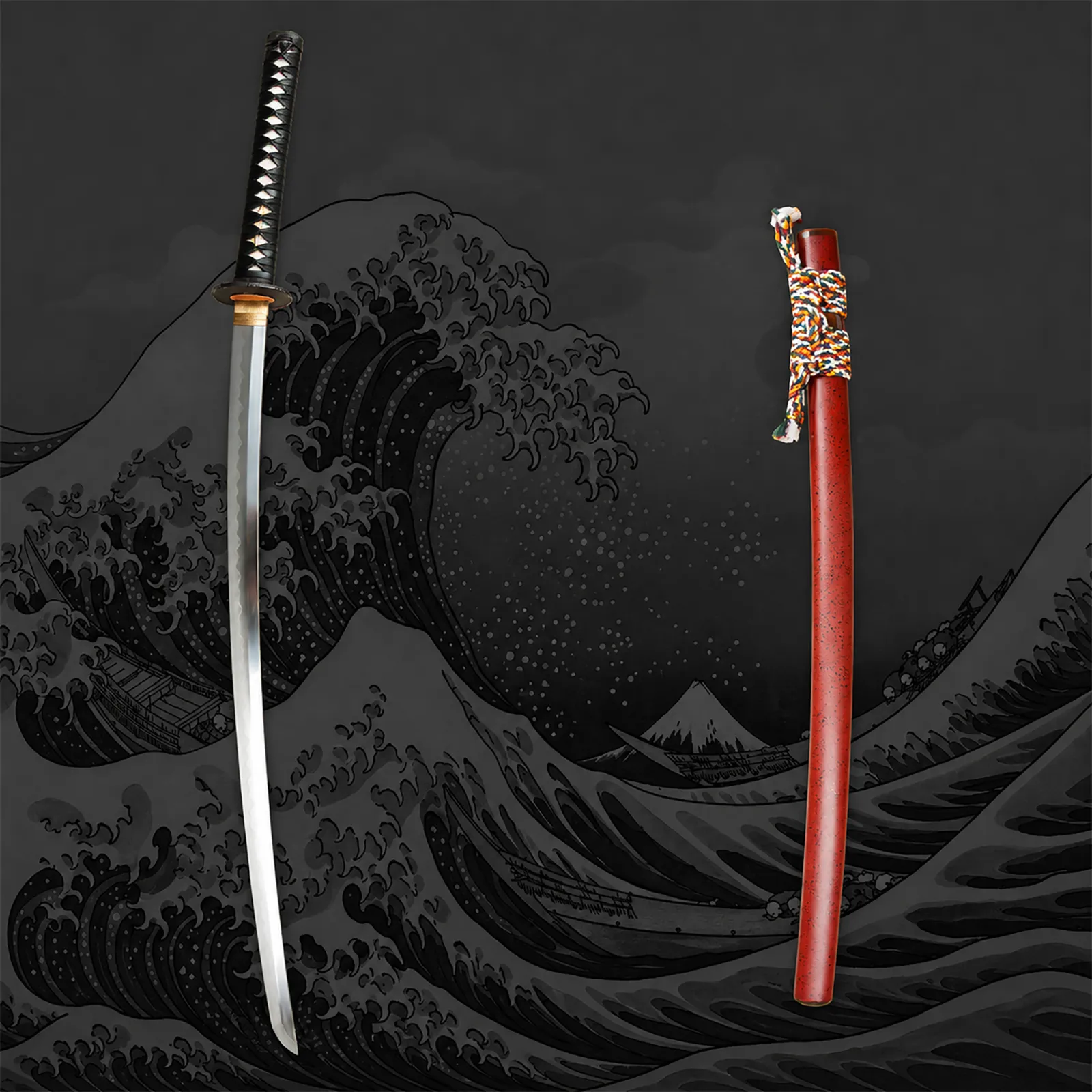
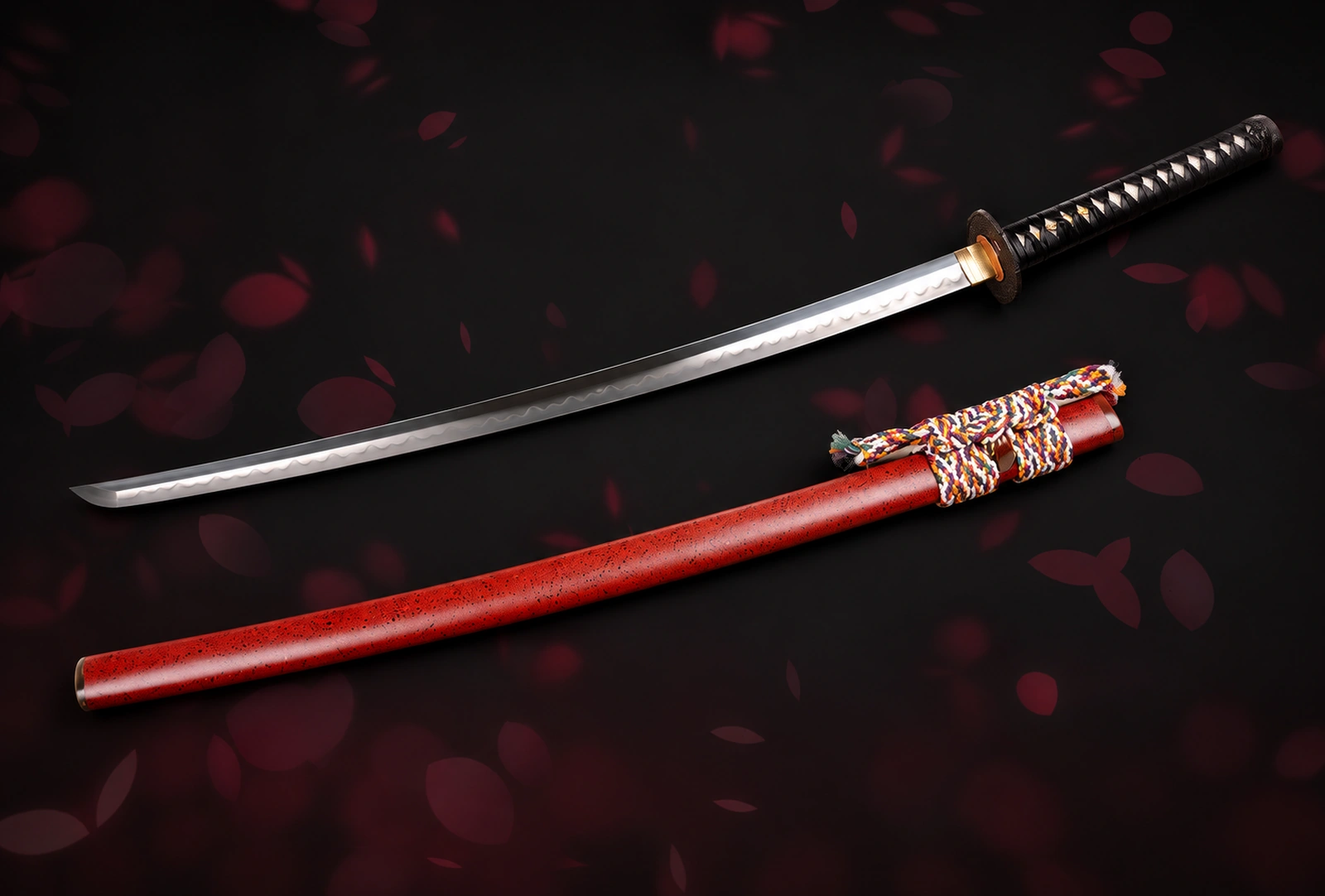
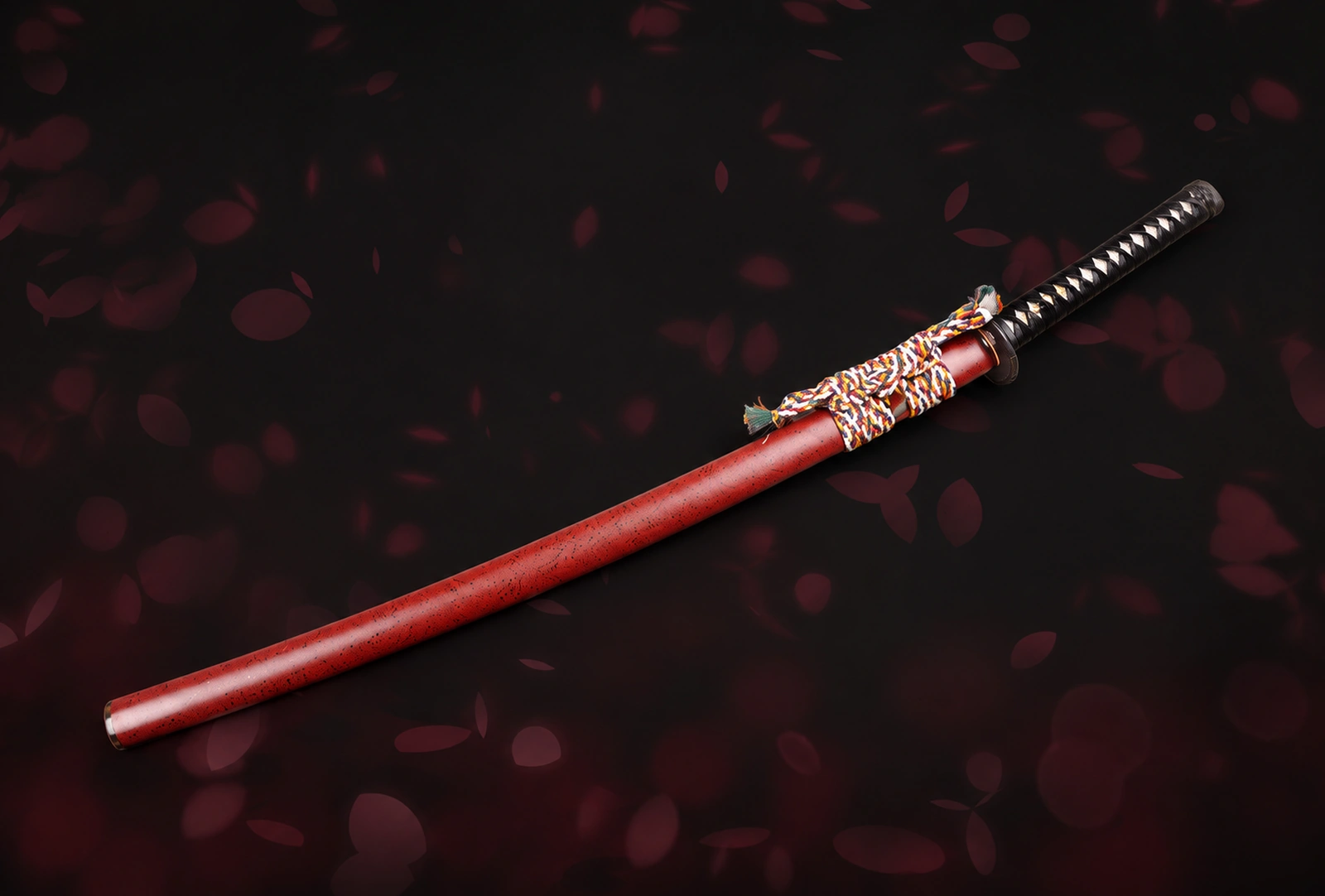
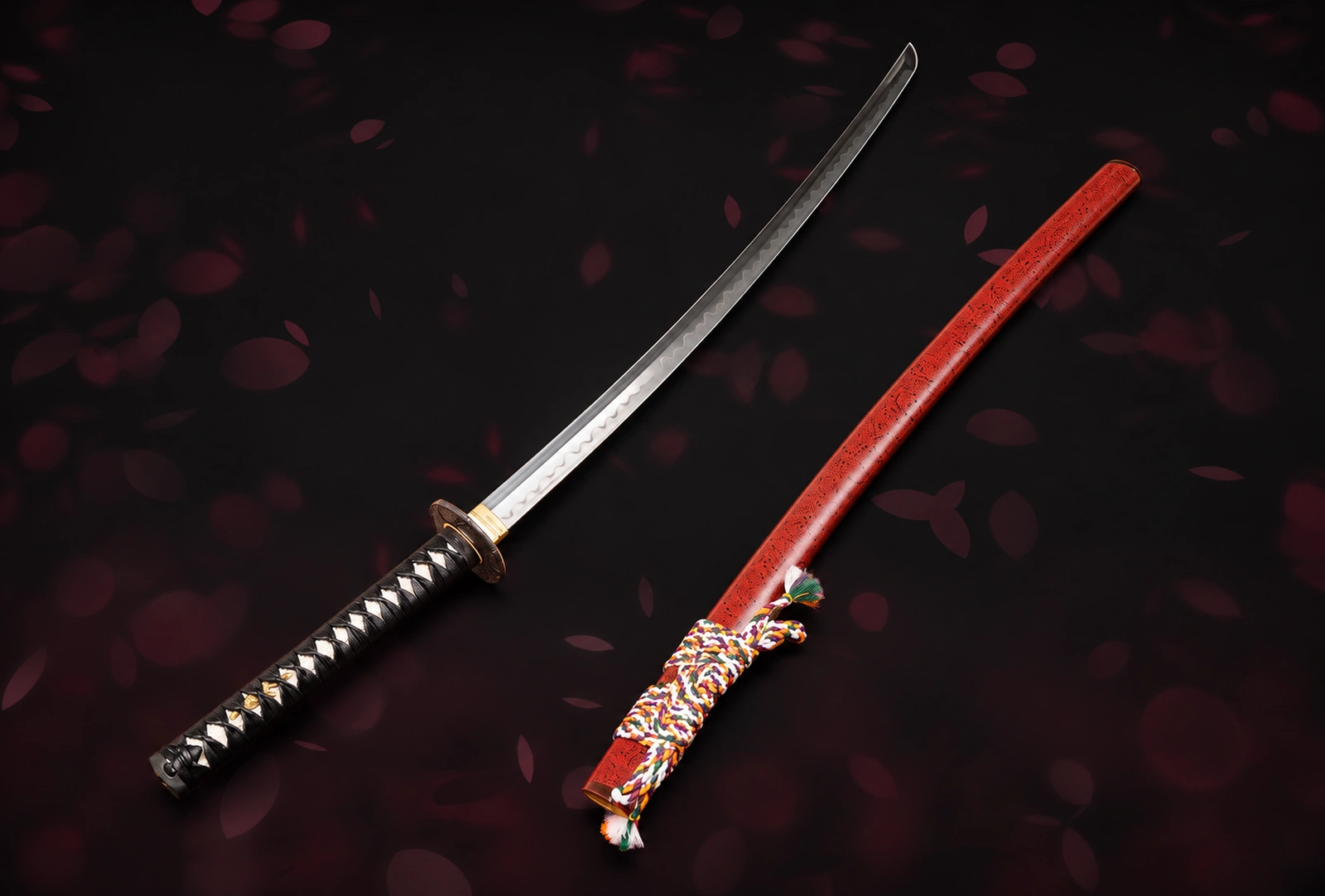
Seen in full, the Iron-Fitted Sanmai Katana brings together a dark wrapped handle, a polished curved blade, and the warm reddish-brown of its saya. The quiet black-and-red palette of the photographs lets those details stand on their own.
04 / THE DRAWN BLADE
A Line of Polished Steel.
With the blade out of its scabbard, the curvature becomes the central feature. The long diagonal views reveal its proportions; closer photographs move toward the tip and the changing reflections of the polished surface.
05 / FINAL PORTRAIT
The Last Details.
The finishing images return to the sword's tsuka and saya. Textured black fittings, leather wrapping, and the multicolored cord provide a close-range counterpoint to the long, bright line of the blade.
Rezensionen
Es gibt noch keine Rezensionen.