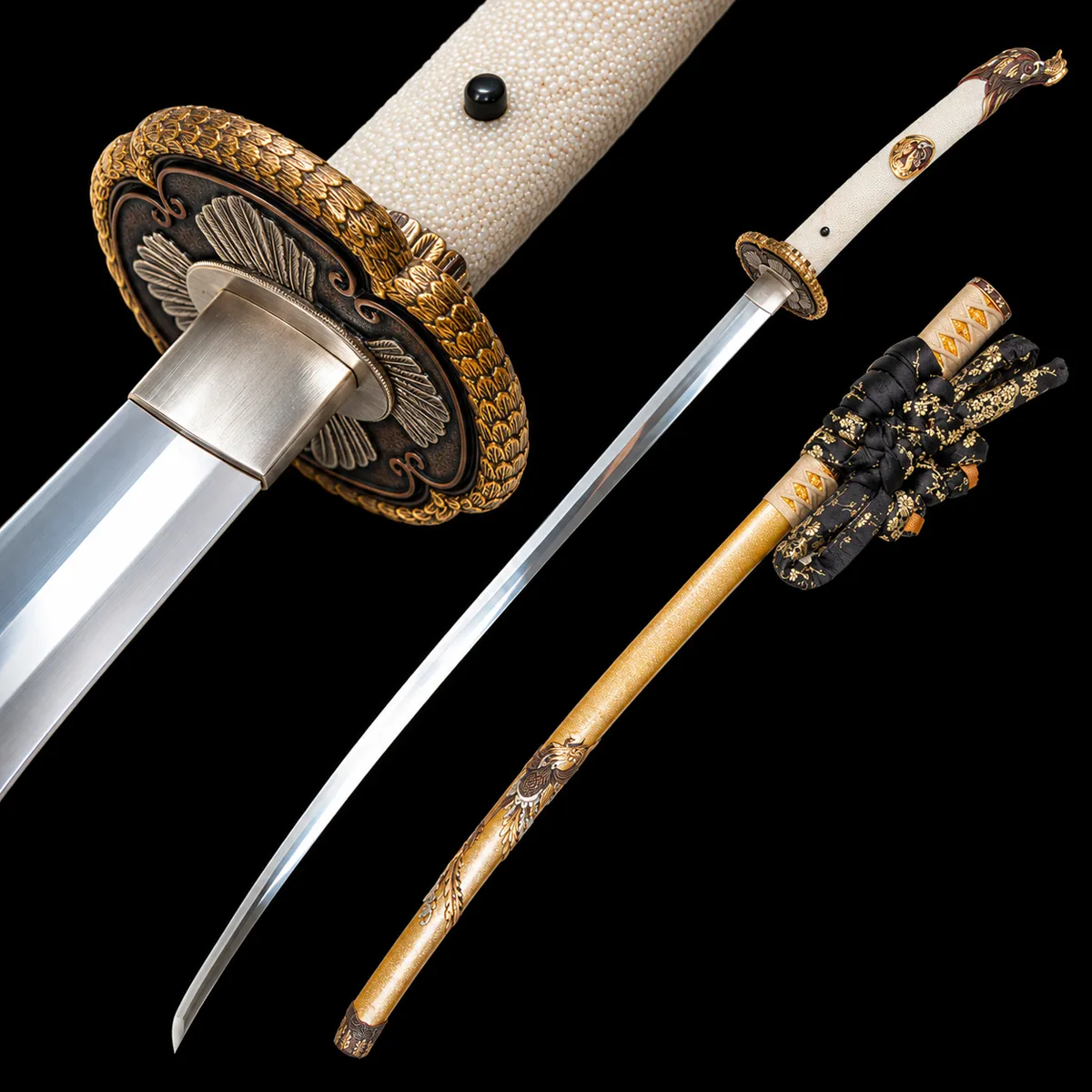
Description
01 / UKIYO — THE PASSING WORLD
The World Passes.
The Moon Remains.
There is a particular beauty in things that do not stay: the turning seasons, falling blossoms, and moonlight passing over a quiet landscape. Ukiyo begins with that feeling.
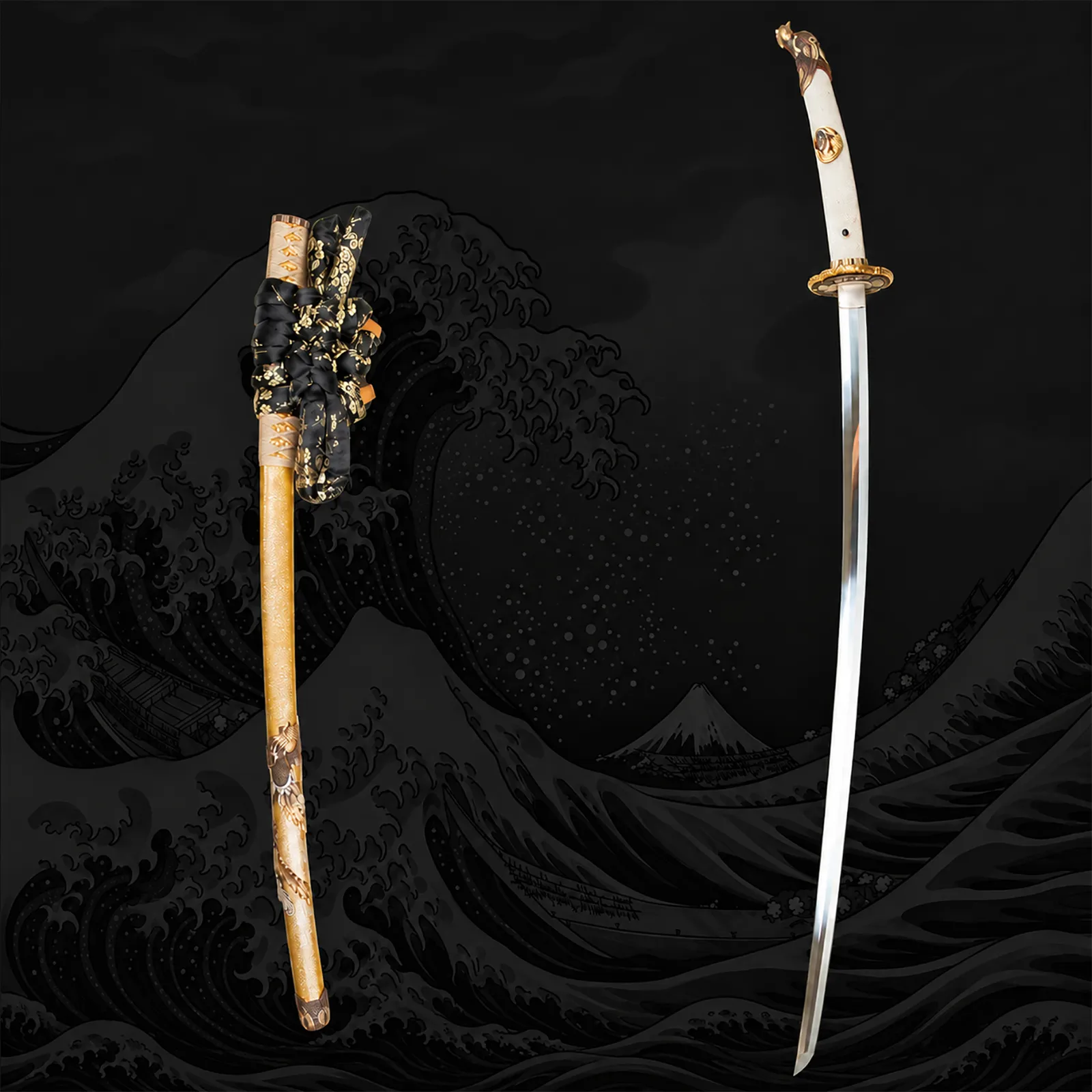
A NAME CARRIED THROUGH TIME
A Crescent in the History of the Sword.
The historic Mikazuki Munechika dates to Japan’s Heian period. Traditionally attributed to the swordsmith Sanjō Munechika, this celebrated tachi is counted among the Tenka Goken — the Five Great Swords of Japan.
Its name, Mikazuki — “crescent moon” — comes from the delicate crescent-shaped activity visible along the original blade’s tempered edge. The historical sword is now preserved in the Tokyo National Museum.
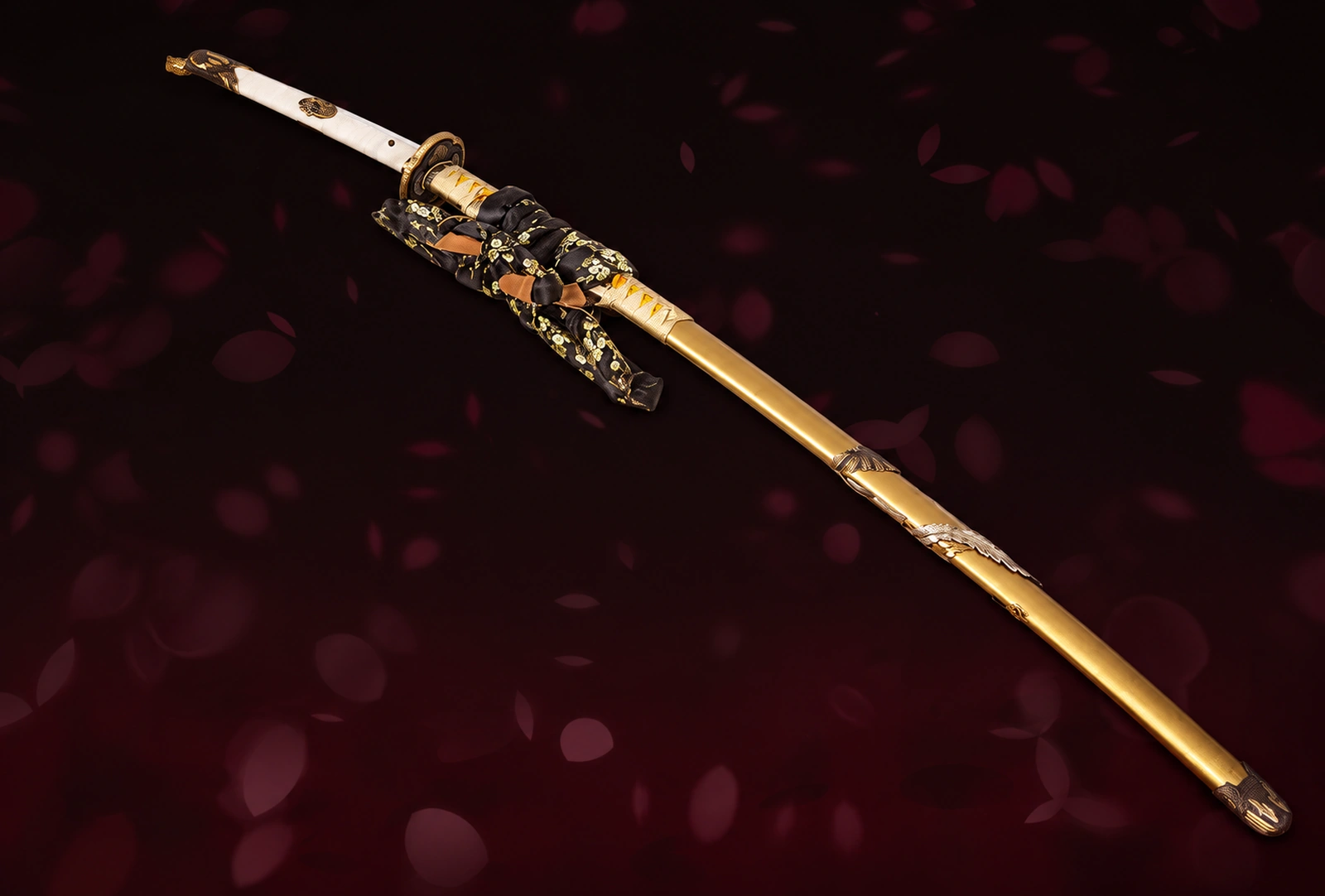
That legacy becomes the starting point for a modern interpretation. The curved silhouette, luminous white samegawa, and elaborate Phoenix koshirae bring together the presence of a tachi and the visual richness of its mountings.
02 / THE SHAPE OF STEEL
A Line Kept
Through Time.
The presence of a tachi begins with its silhouette. In Ukiyo, the long sweep of the blade, its quiet edge and its carefully finished point carry the inspiration of Mikazuki Munechika into a contemporary work.
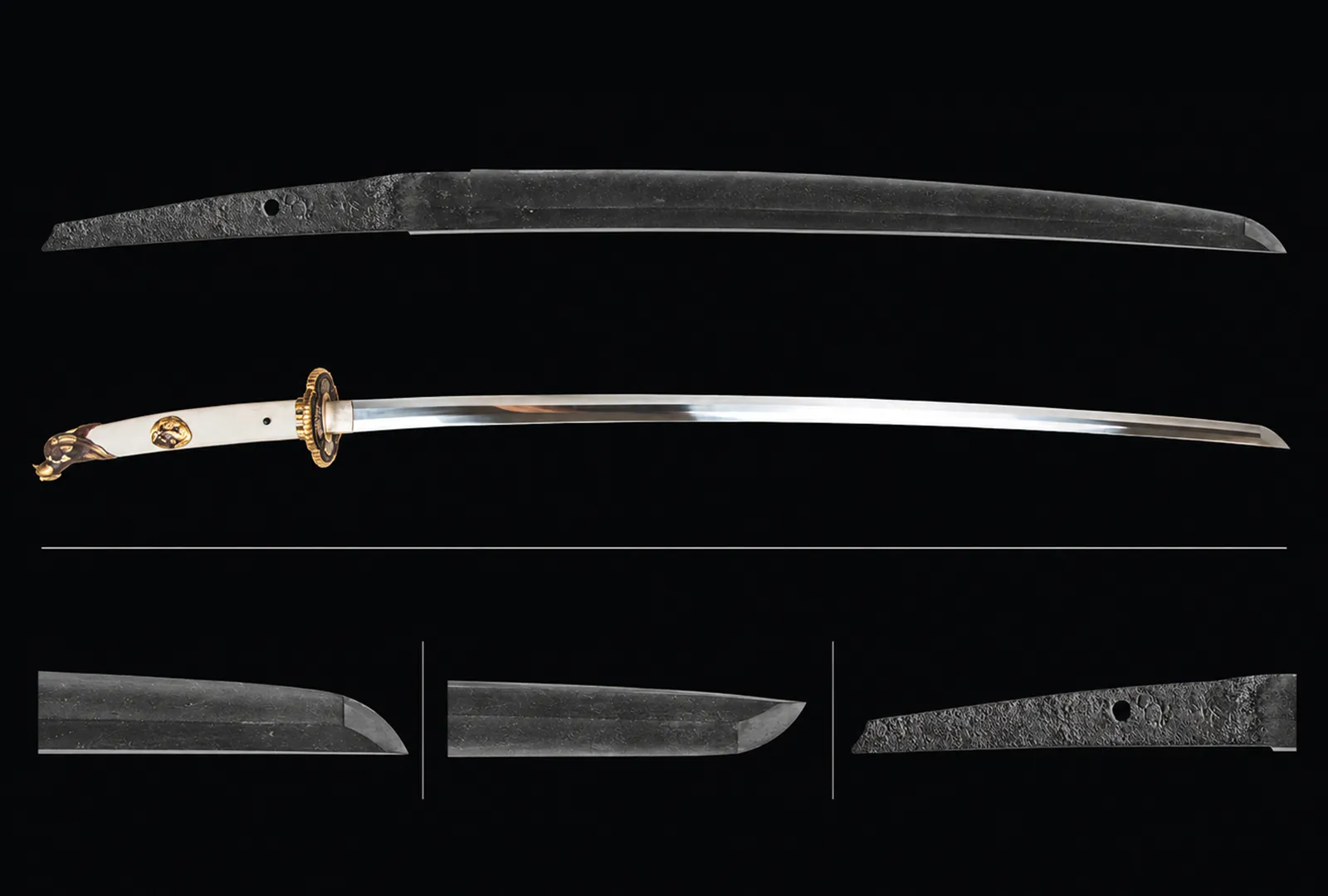
THE GEOMETRY OF MIKAZUKI
The Original Line. The Living Form.
Placed beside the historical blade, the Ukiyo reproduction reveals the defining rhythm of the form: a long, restrained curve flowing toward a compact kissaki. The exposed nakago and original blade-tip studies invite a closer reading of that geometry.
PROPORTION & CURVATURE
An 800 mm blade length gives the silhouette its reach. The 28 mm sori lends it the characteristic rise and sweep of a tachi, with the point completing the line rather than interrupting it.
STEEL / FIRE / THE HARDENED EDGE
The Quiet Strength of a Straight Line.
The blade is formed from T10 carbon steel in a single-steel construction, then clay tempered. Along the cutting edge, a Suguha hamon follows an almost straight course — measured and understated.
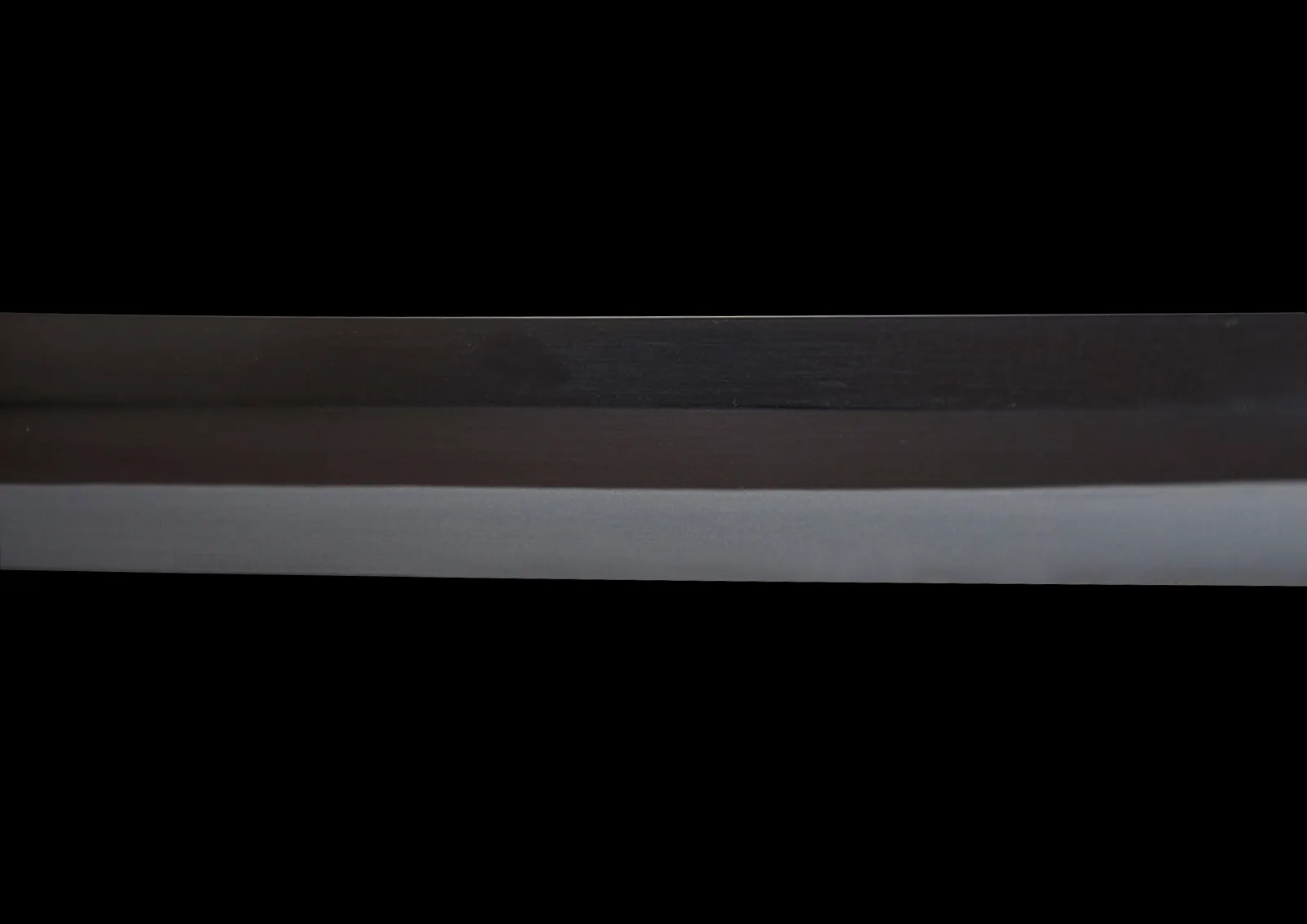
JAPANESE-STYLE POLISH
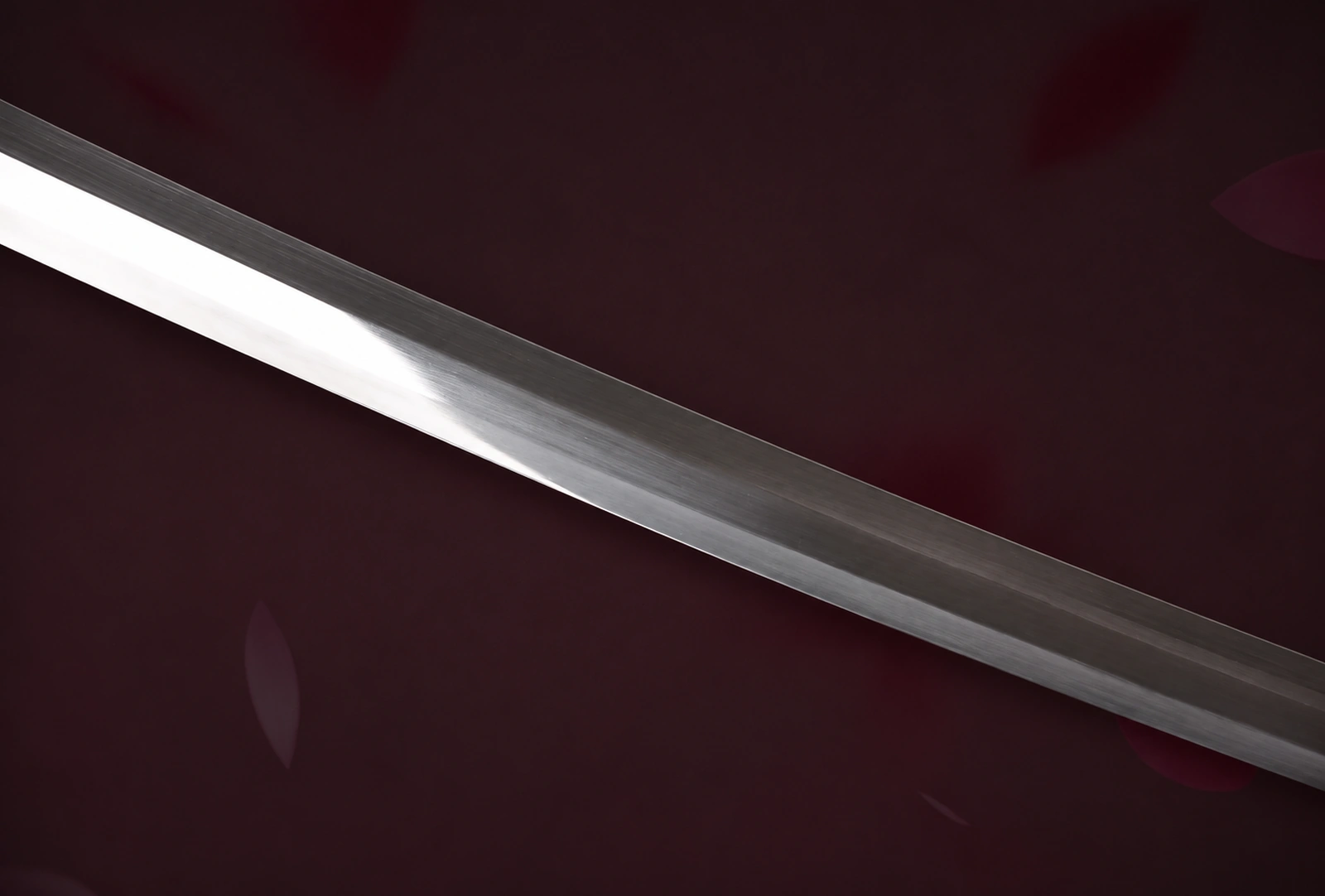
Light moves across the blade in different tones. The edge is bright; the body of the steel remains quietly grey.
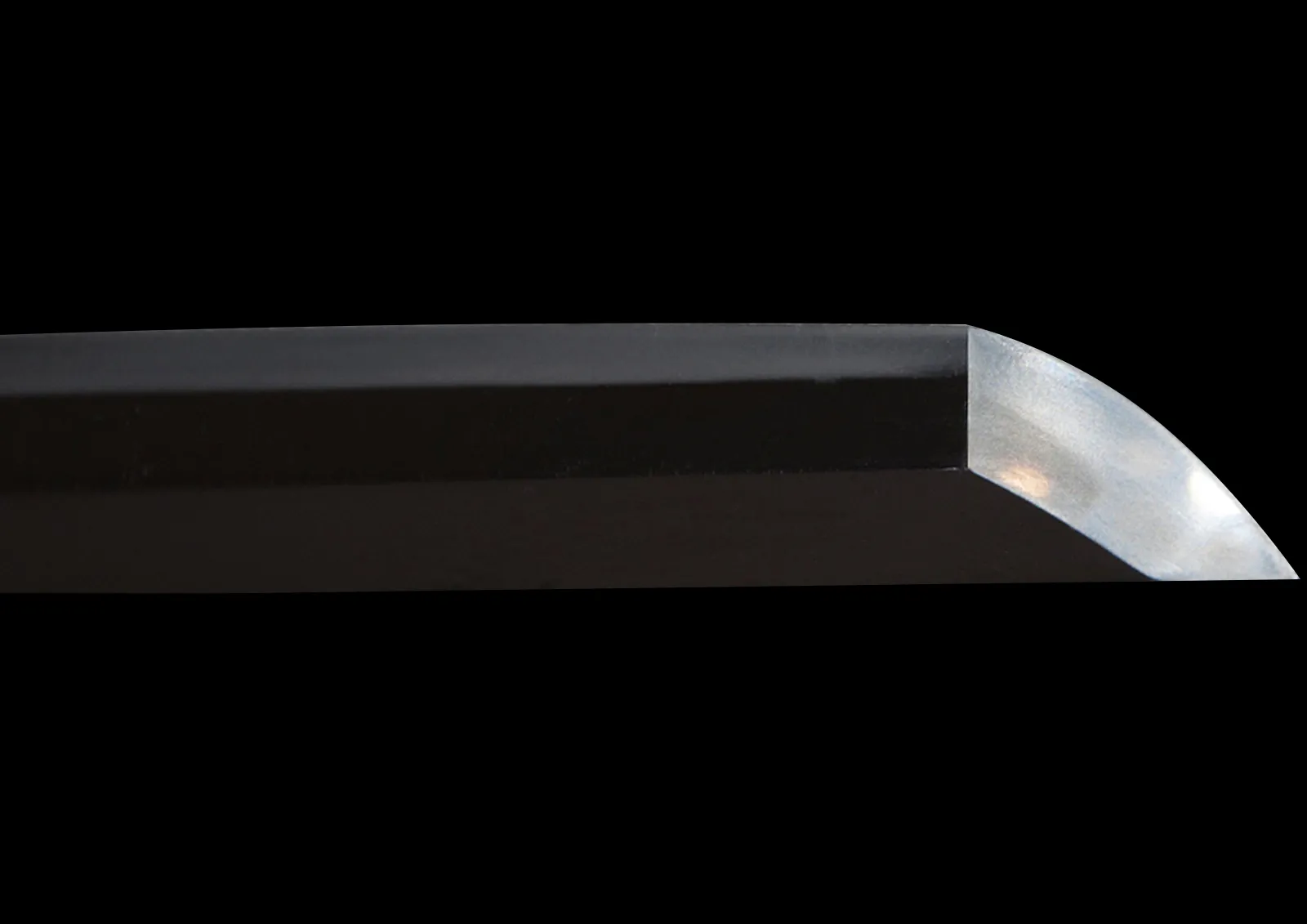
THE POINT & ITS GEOMETRY
A Clear Change of Plane.
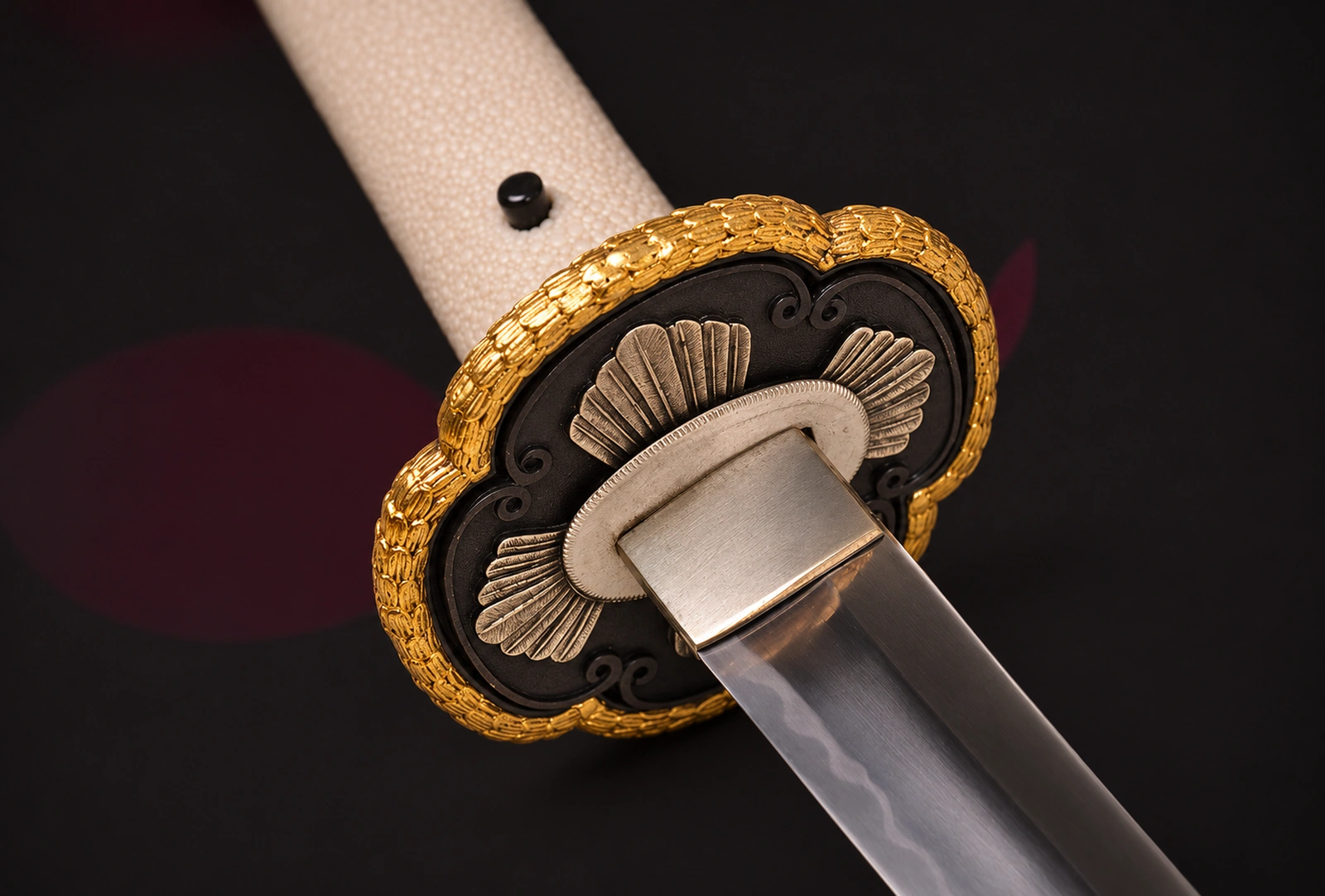
At the yokote, the main blade transitions into the kissaki. Here, a true geometric boundary meets a separately defined polished point — a small detail that gives the finish its precision.
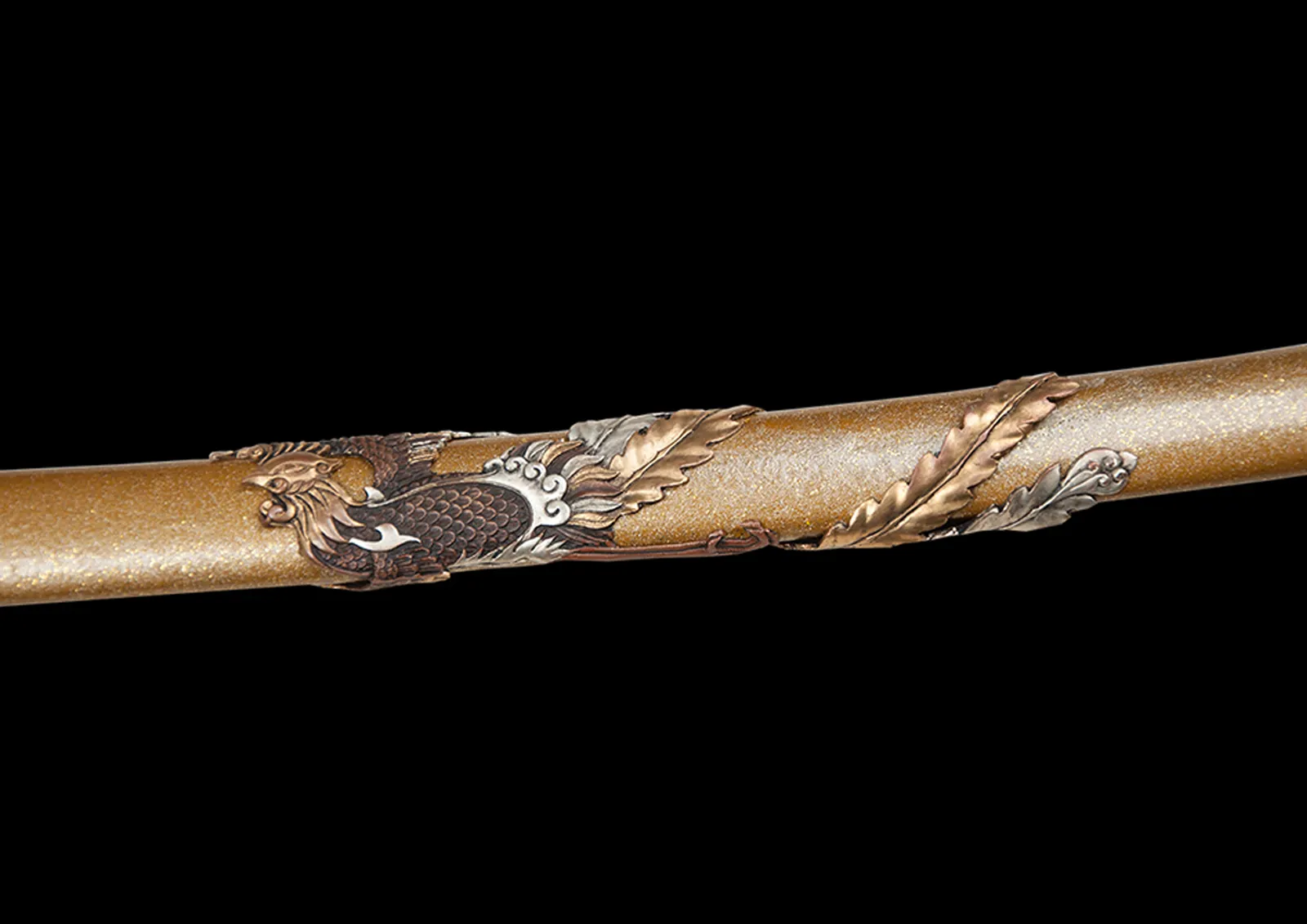
THE PHOENIX MOUNTINGS
Ornament with a Purpose.
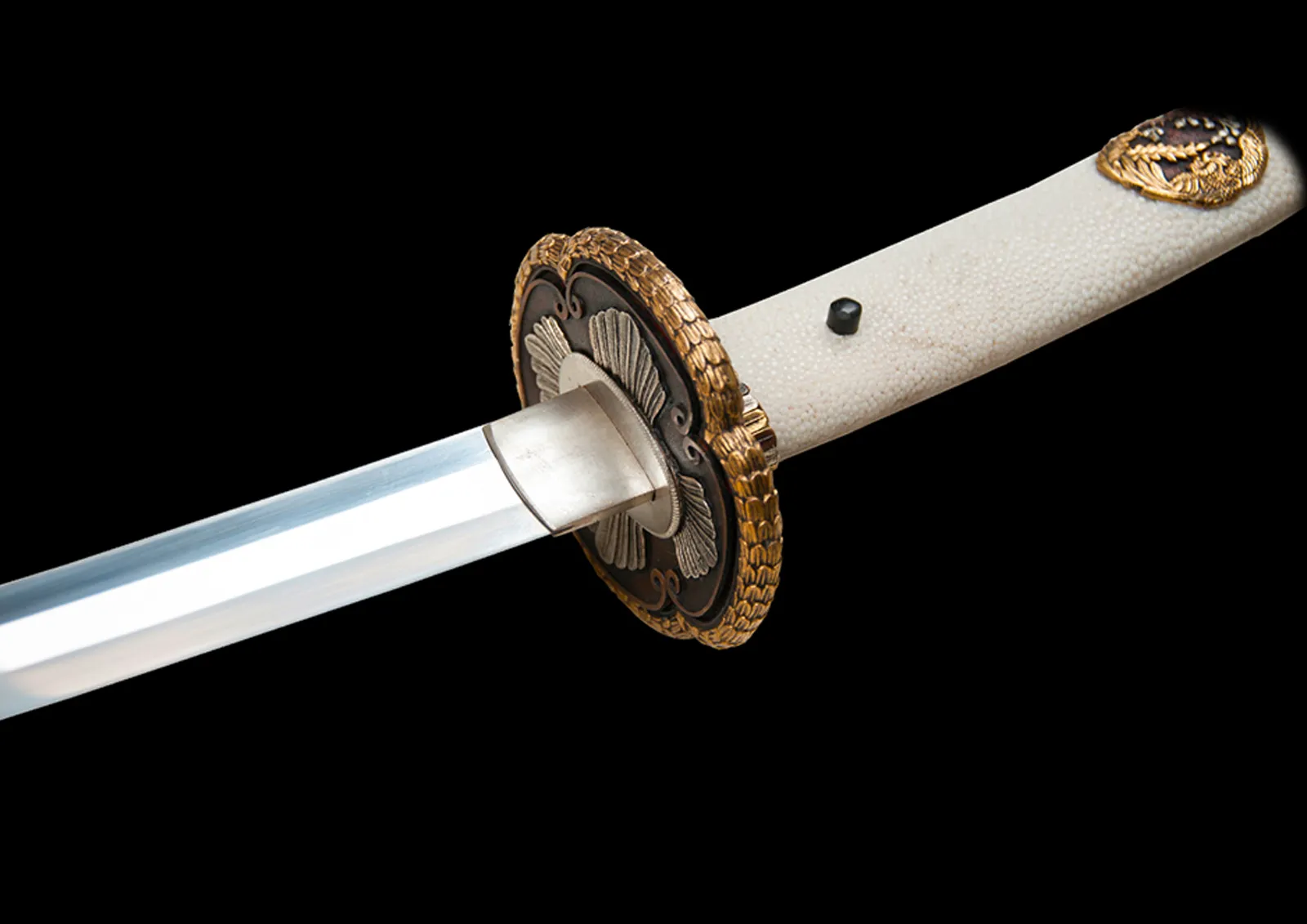
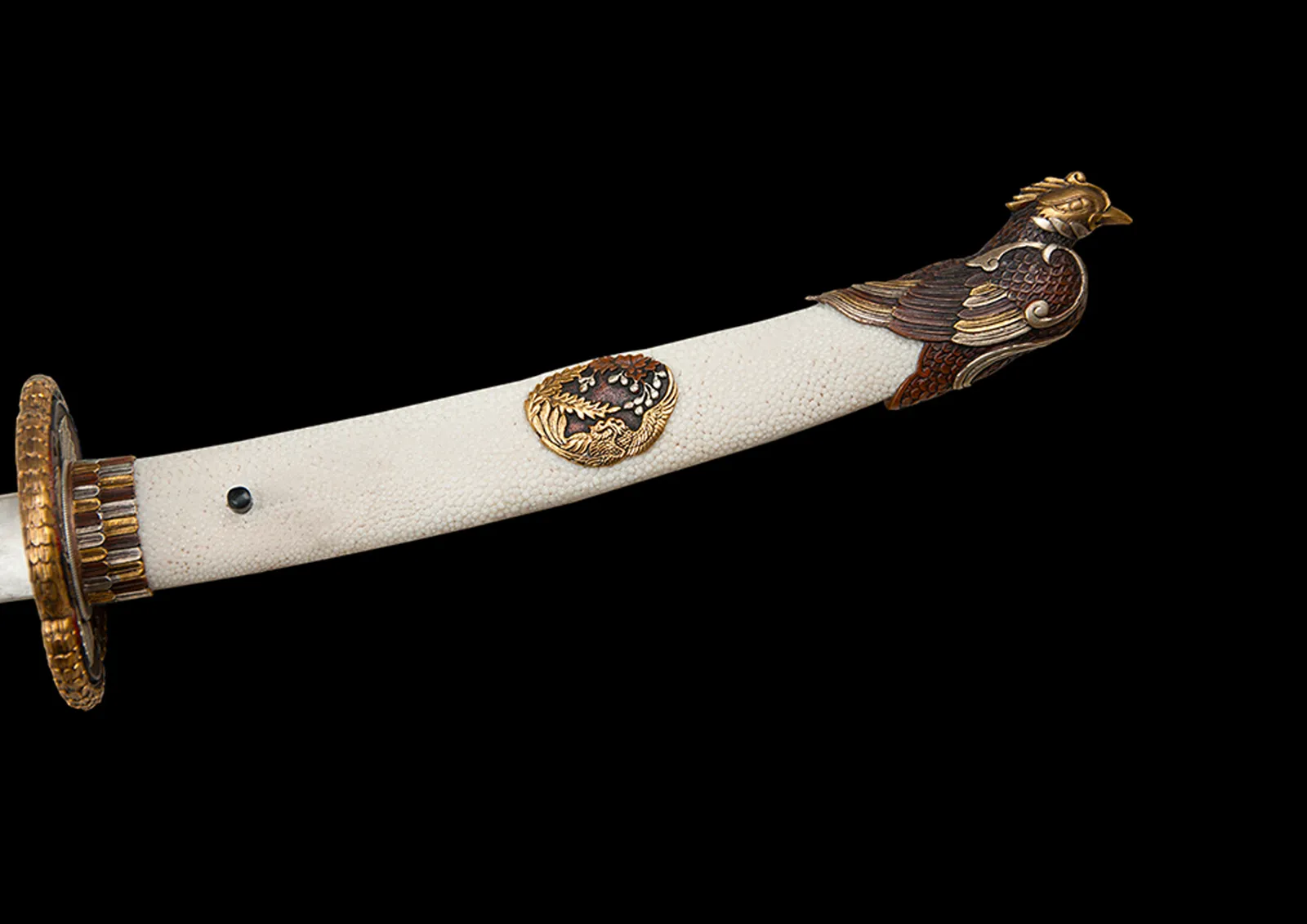
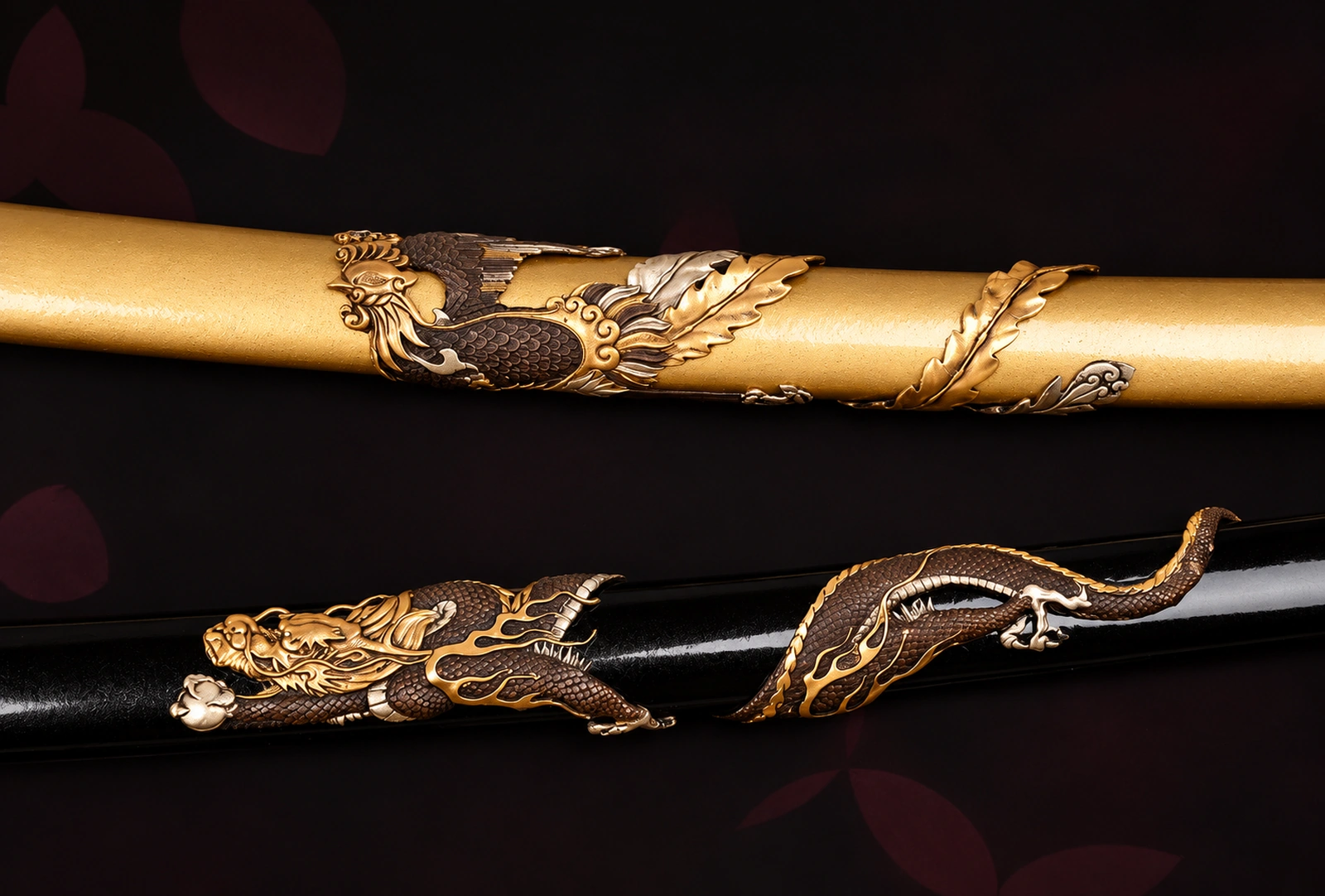
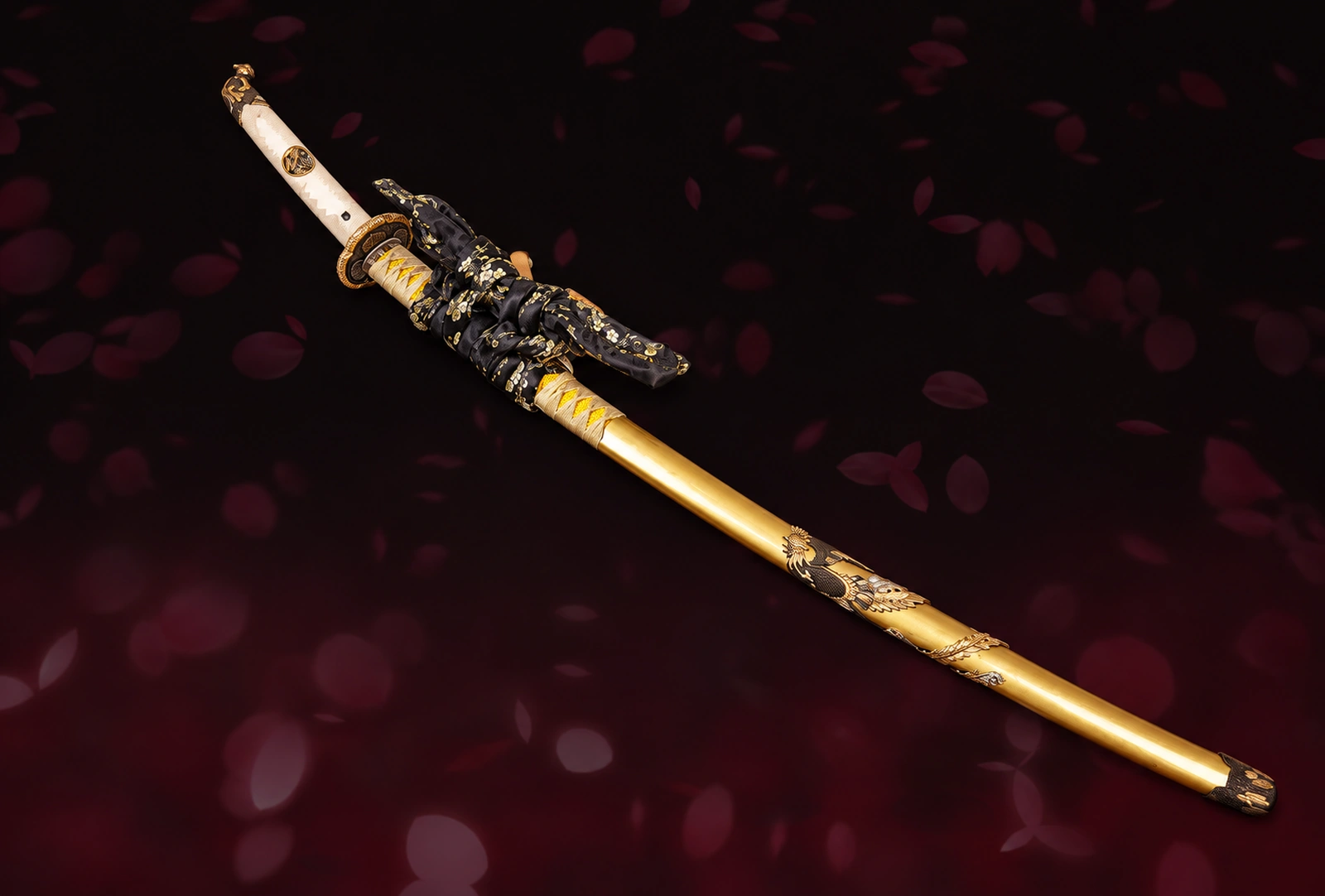
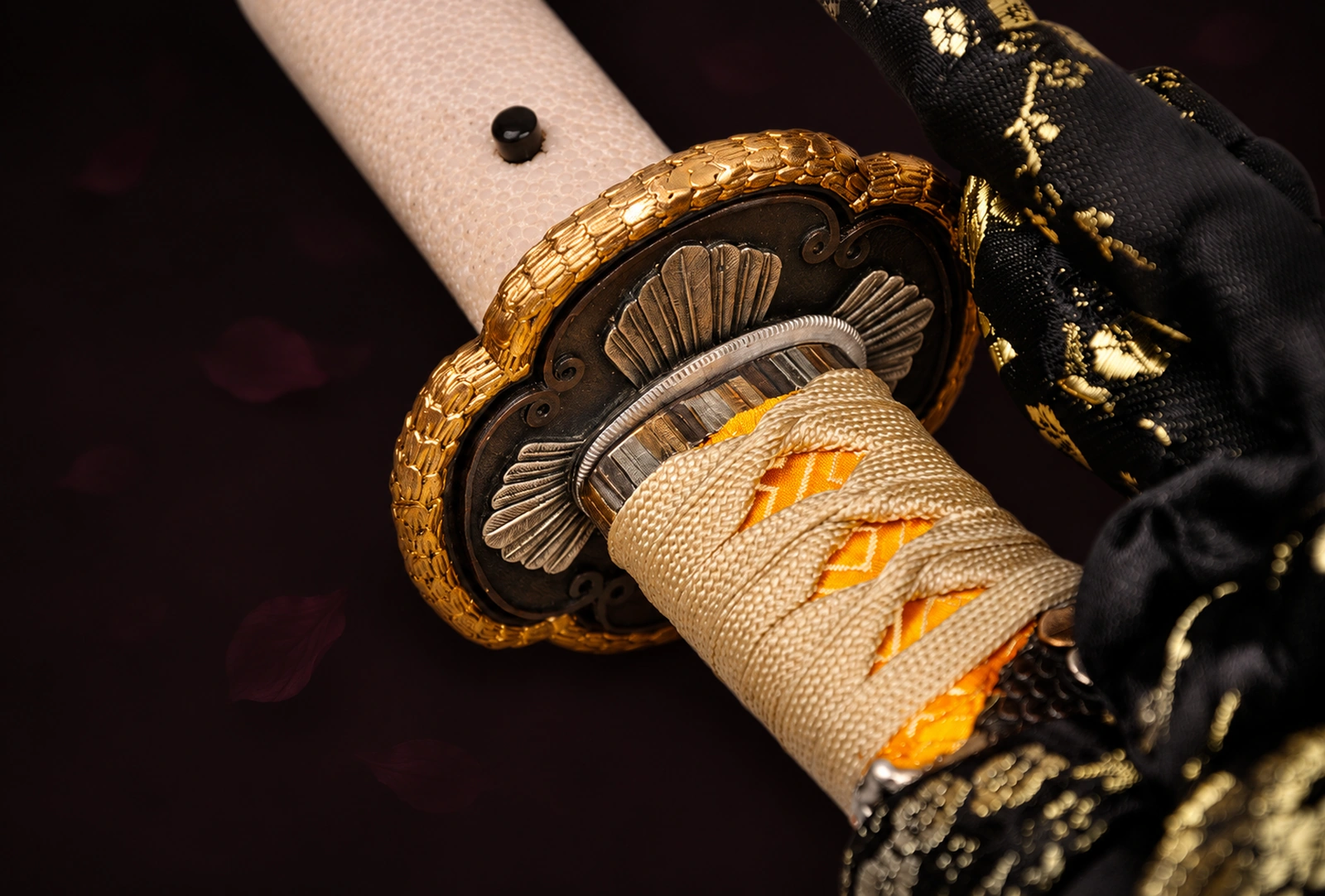
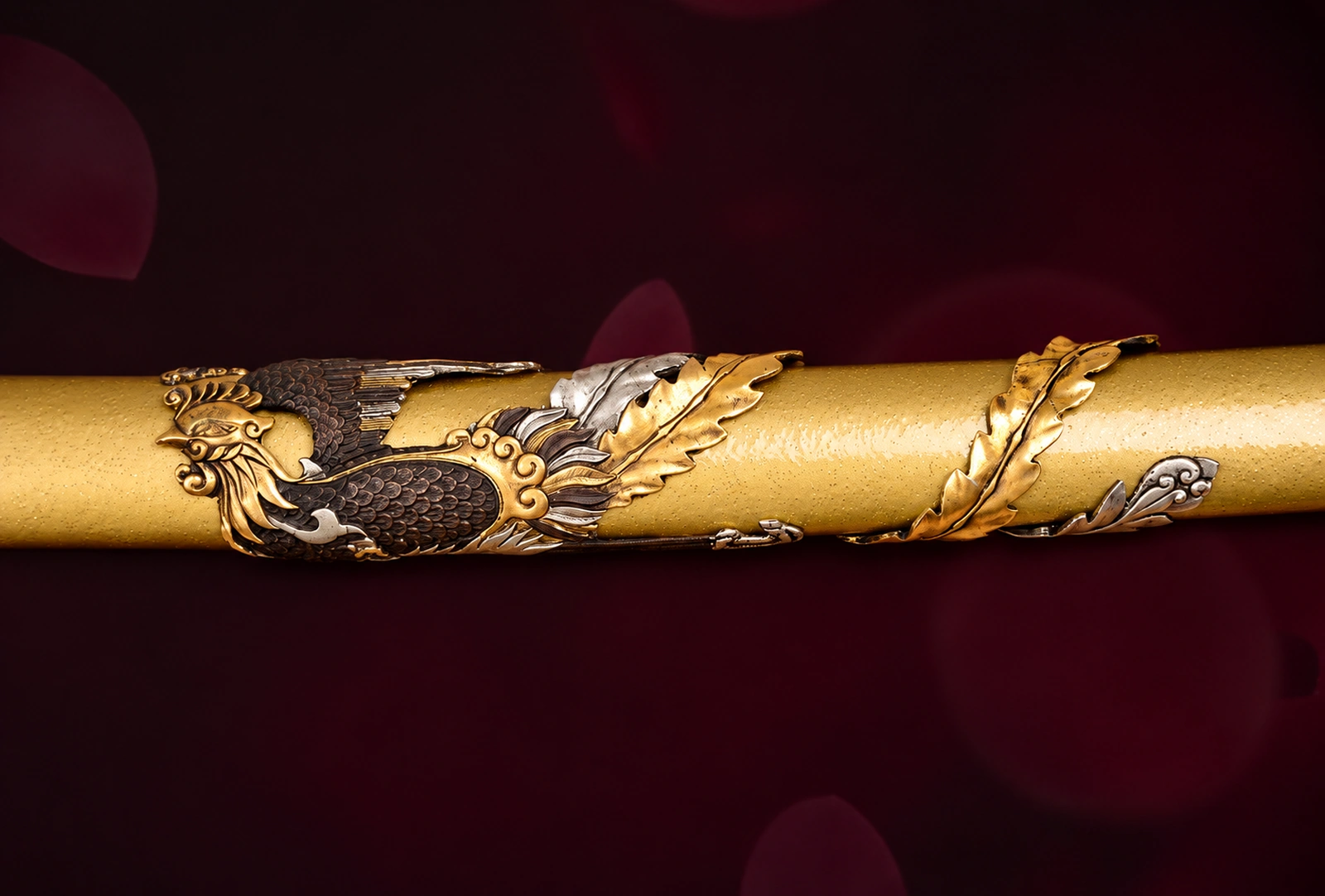
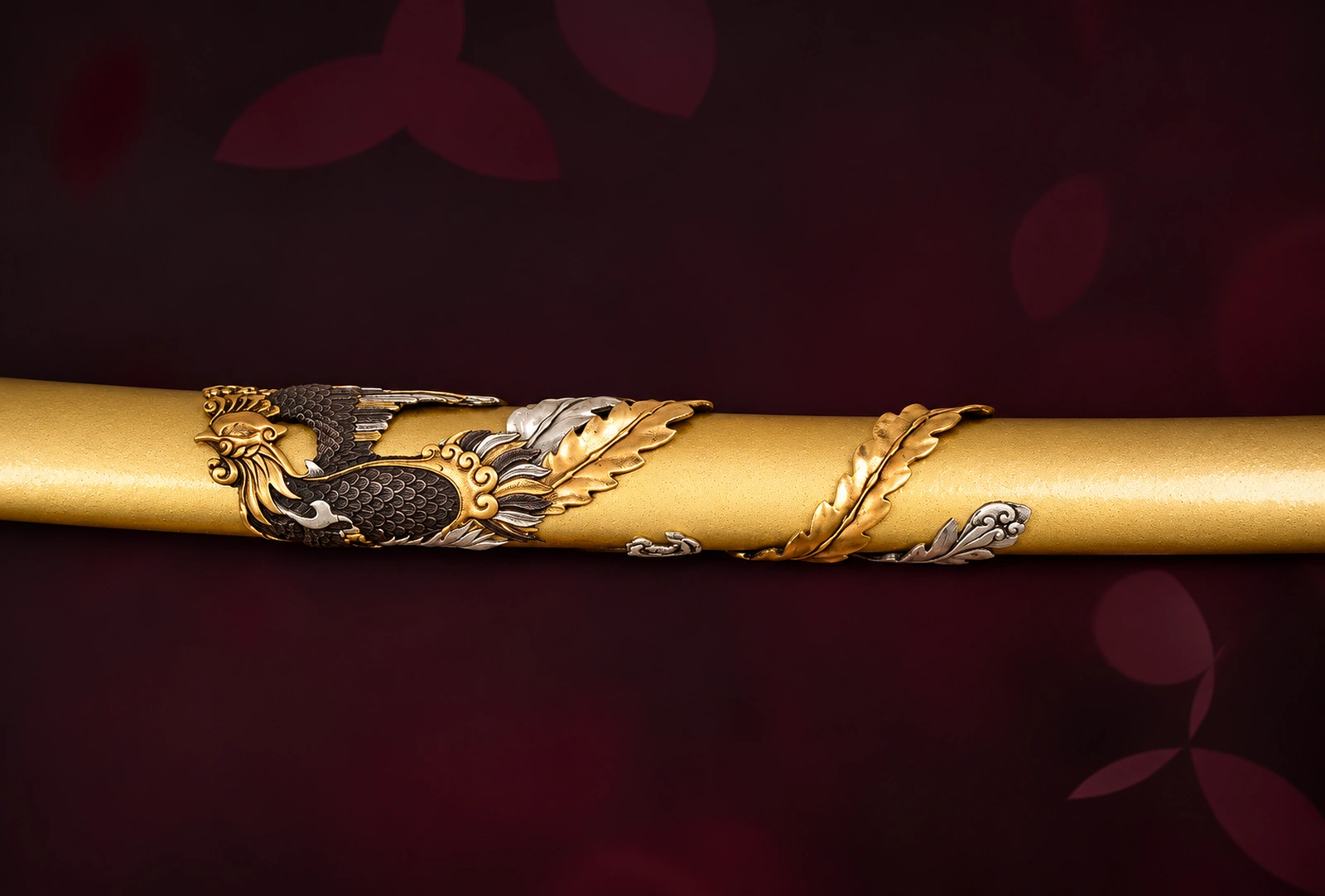
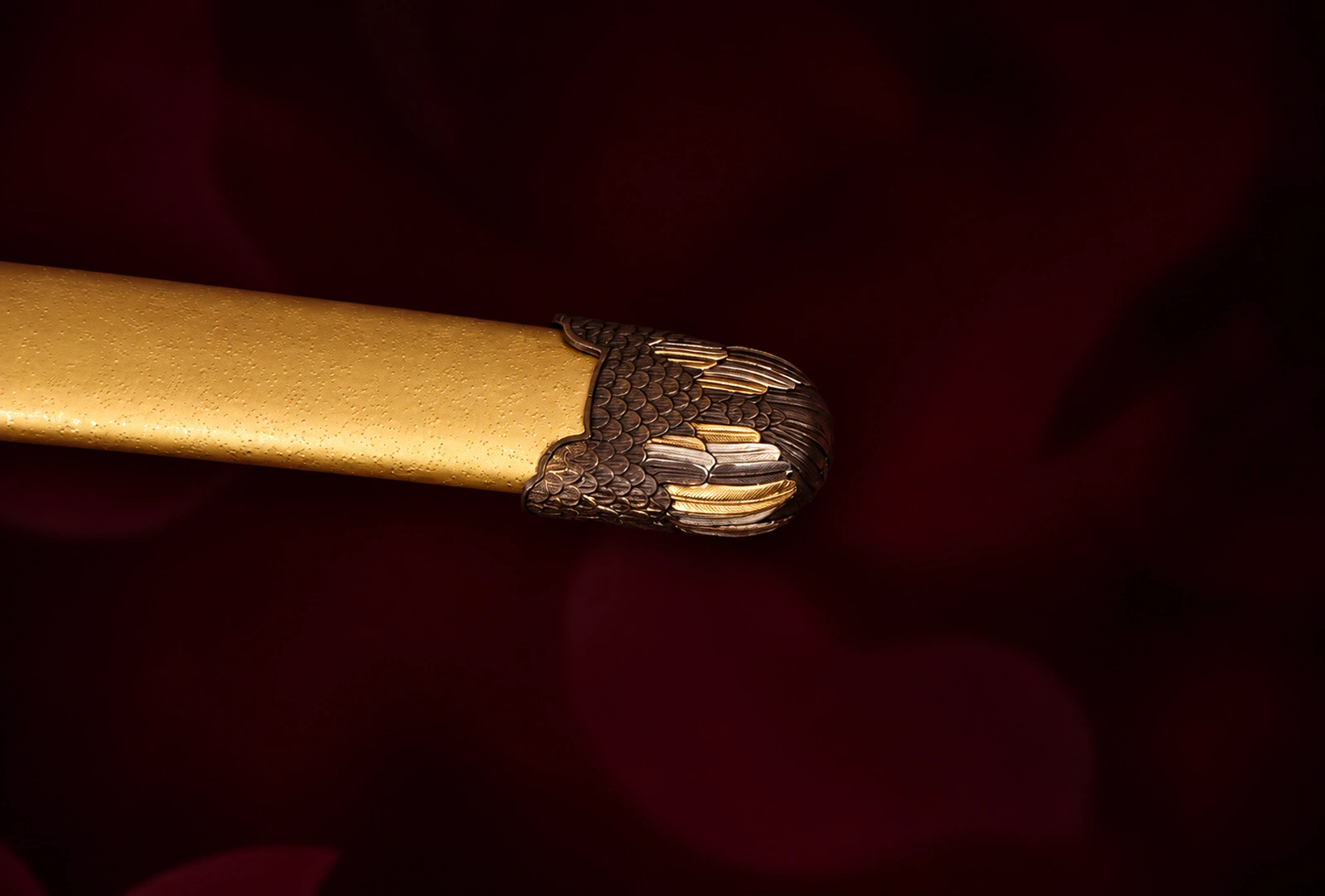
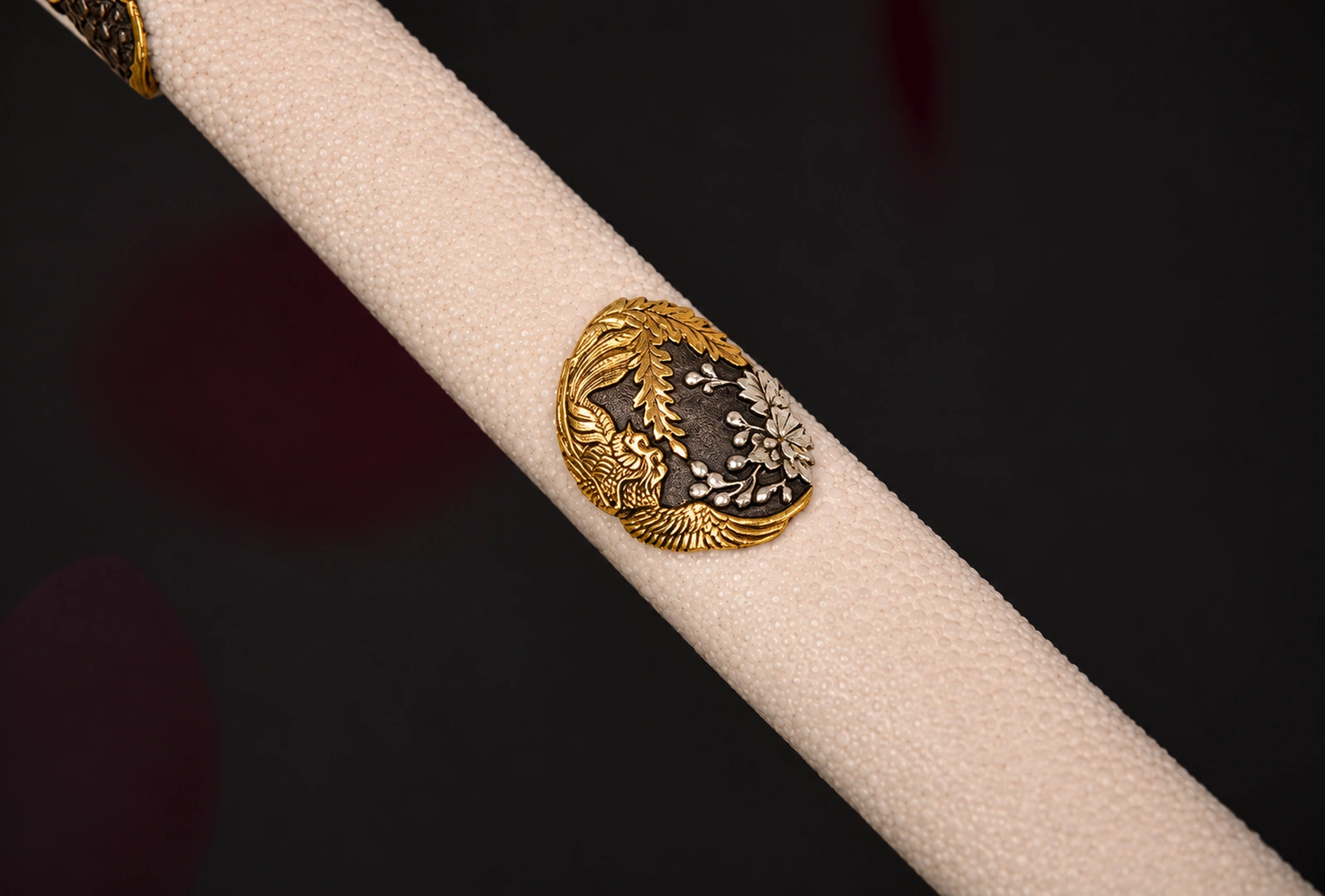
The Phoenix koshirae brings warmth to the blade's cool silver line. Gilded tones, dark metal relief and full-wrap white samegawa make the mounting a deliberate part of the sword's character.
03 / THE COLLECTOR'S GALLERY
Two Forms.
The Same Quiet Presence.
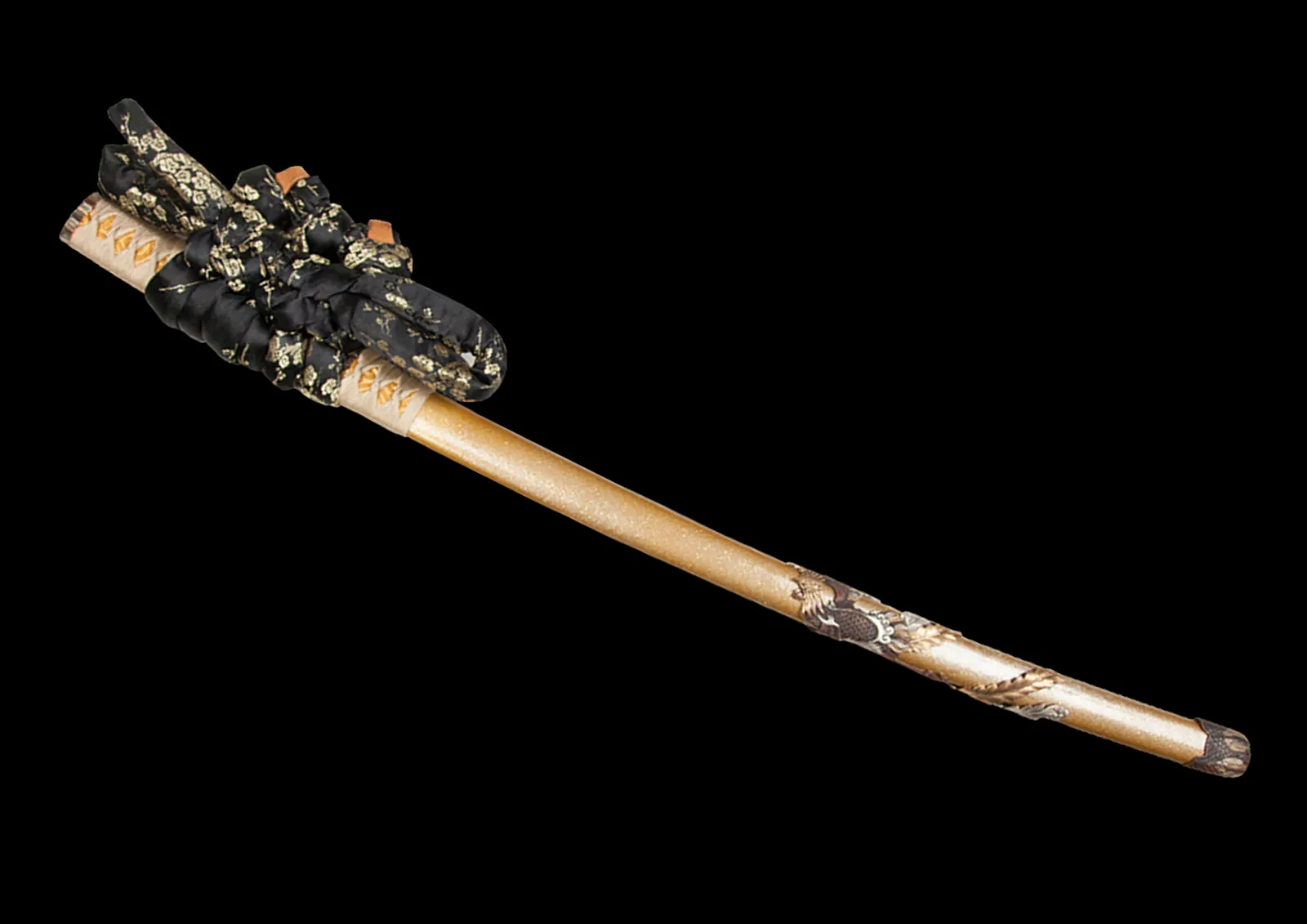
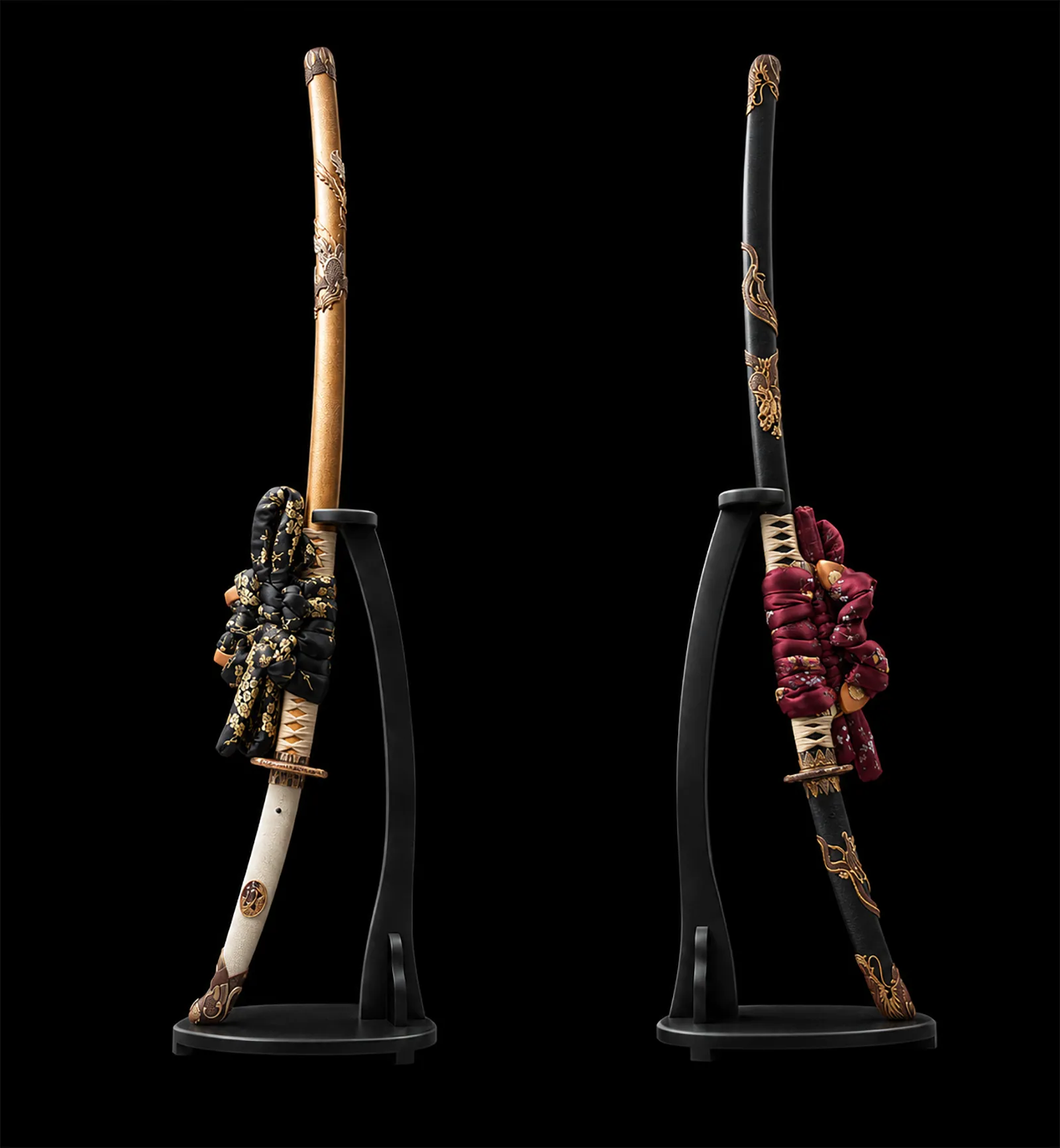
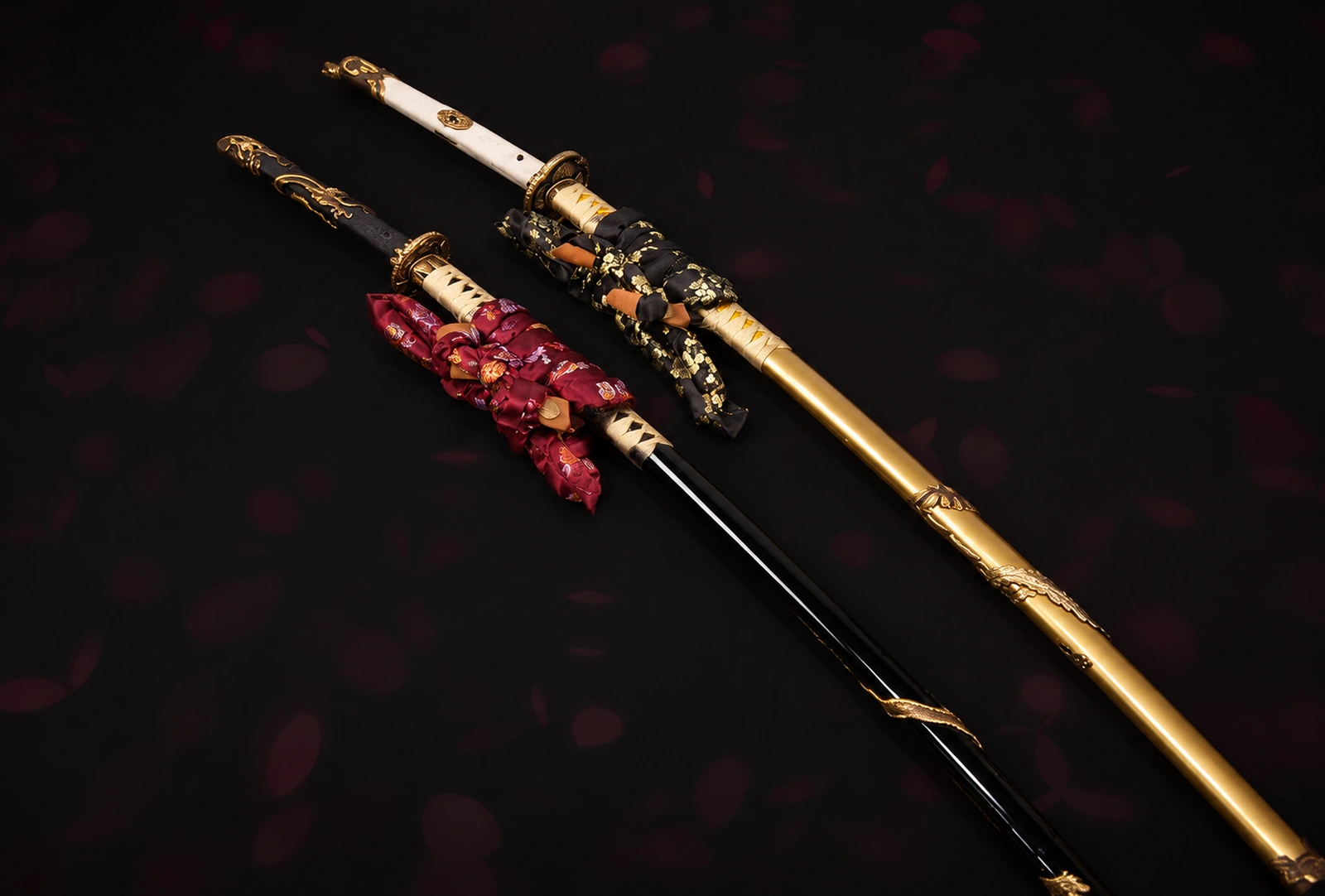
Ukiyo is presented in two distinct koshirae: Phoenix, luminous in gold and black; and Dragon, defined by dark lacquer and crimson accents. Together, they reveal two visual characters around the graceful silhouette of a tachi.
THE TWO MOUNTINGS
In Contrast. In Conversation.
The warm gold of the Phoenix saya and the darker Dragon mountings carry different rhythms. Red petals fall across both — a restrained backdrop to let the shapes and surface details speak.
BEYOND THE MOUNTINGS
Ornament changes the atmosphere.
The polished edge holds the eye.
THE DRAGON KOSHIRAE
A Darker Expression.
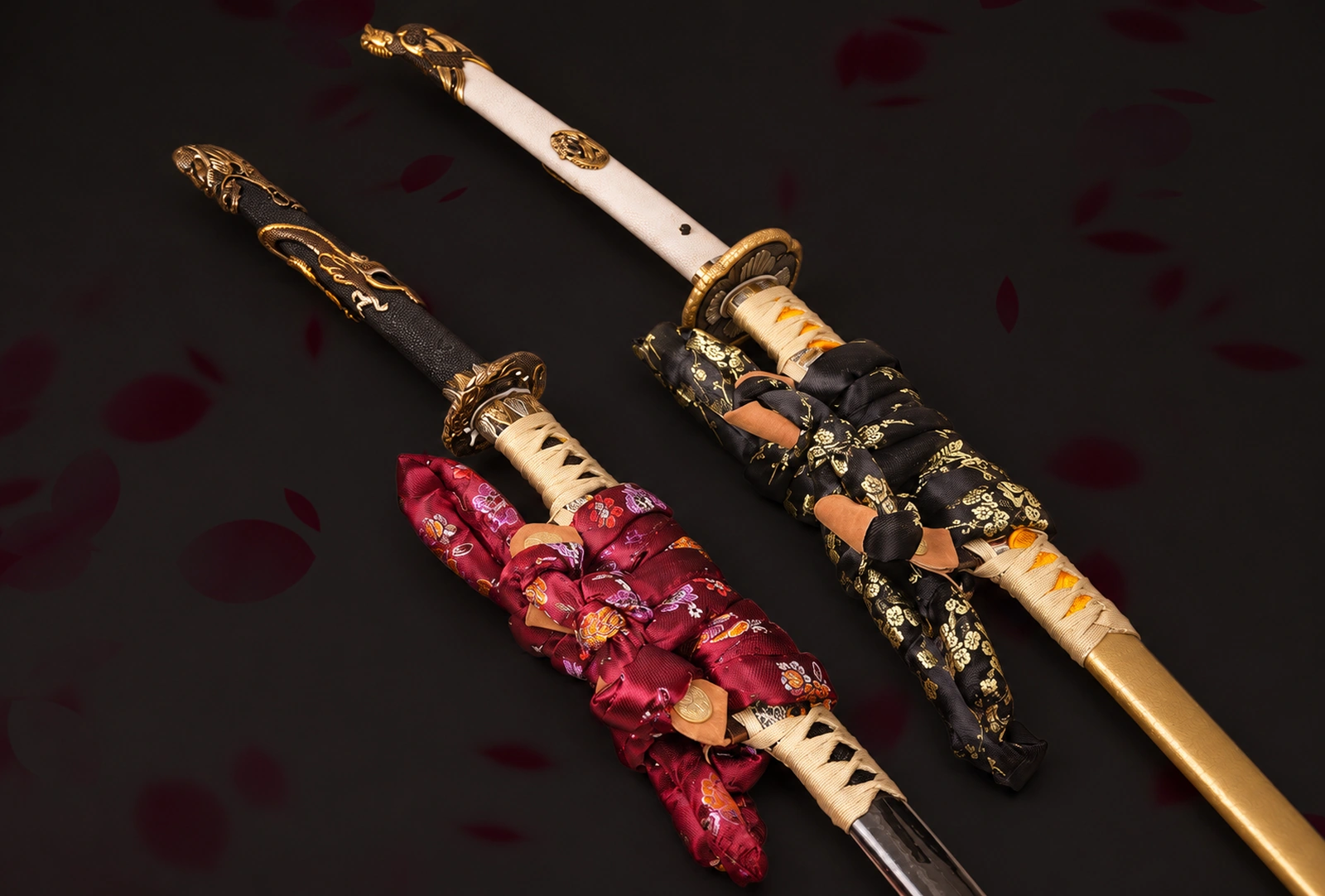
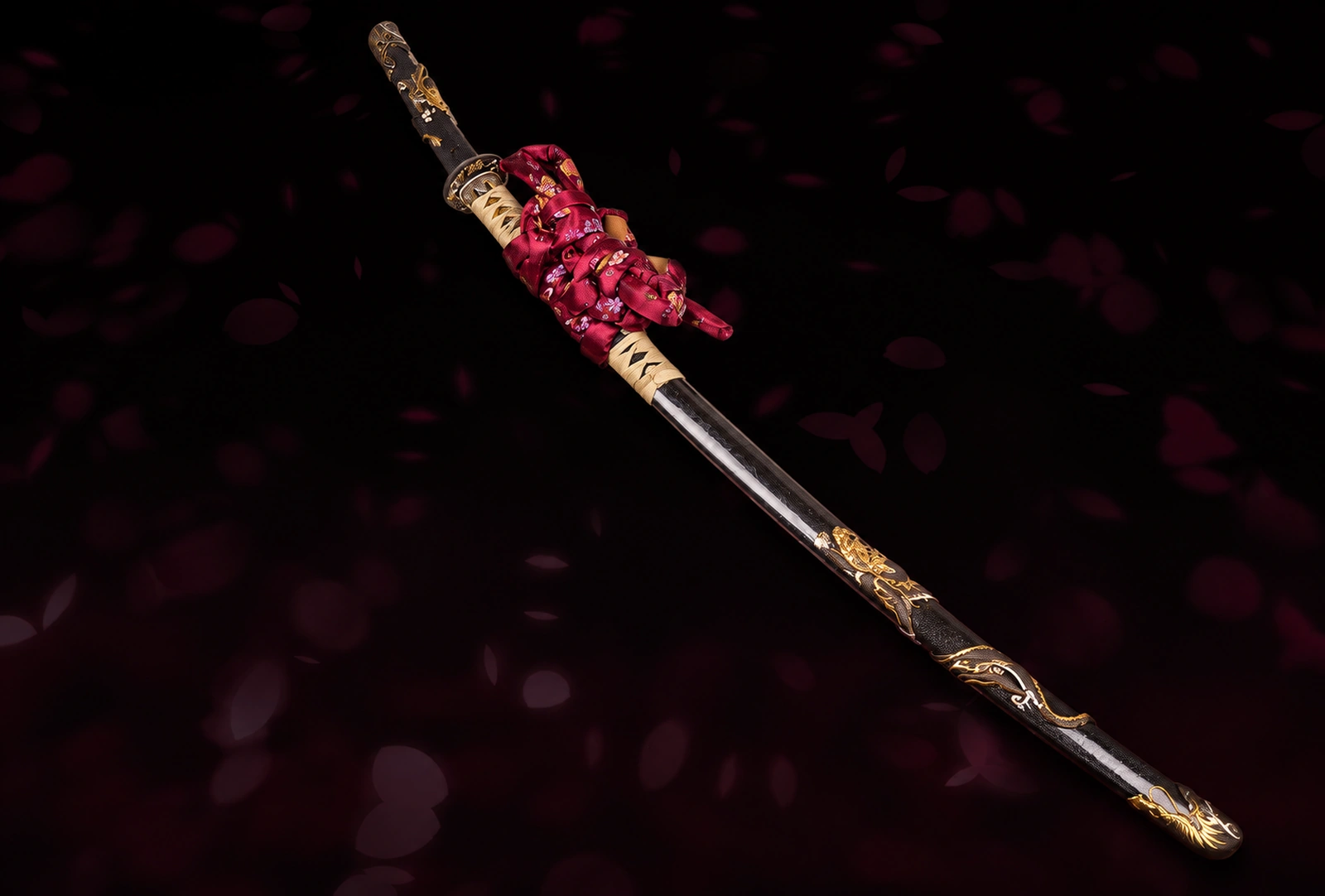
In the Dragon koshirae, dark lacquer draws the eye along the saya. Rich crimson fabric and gold-toned ornament give the composition its contrast — vivid details held within a quiet silhouette.
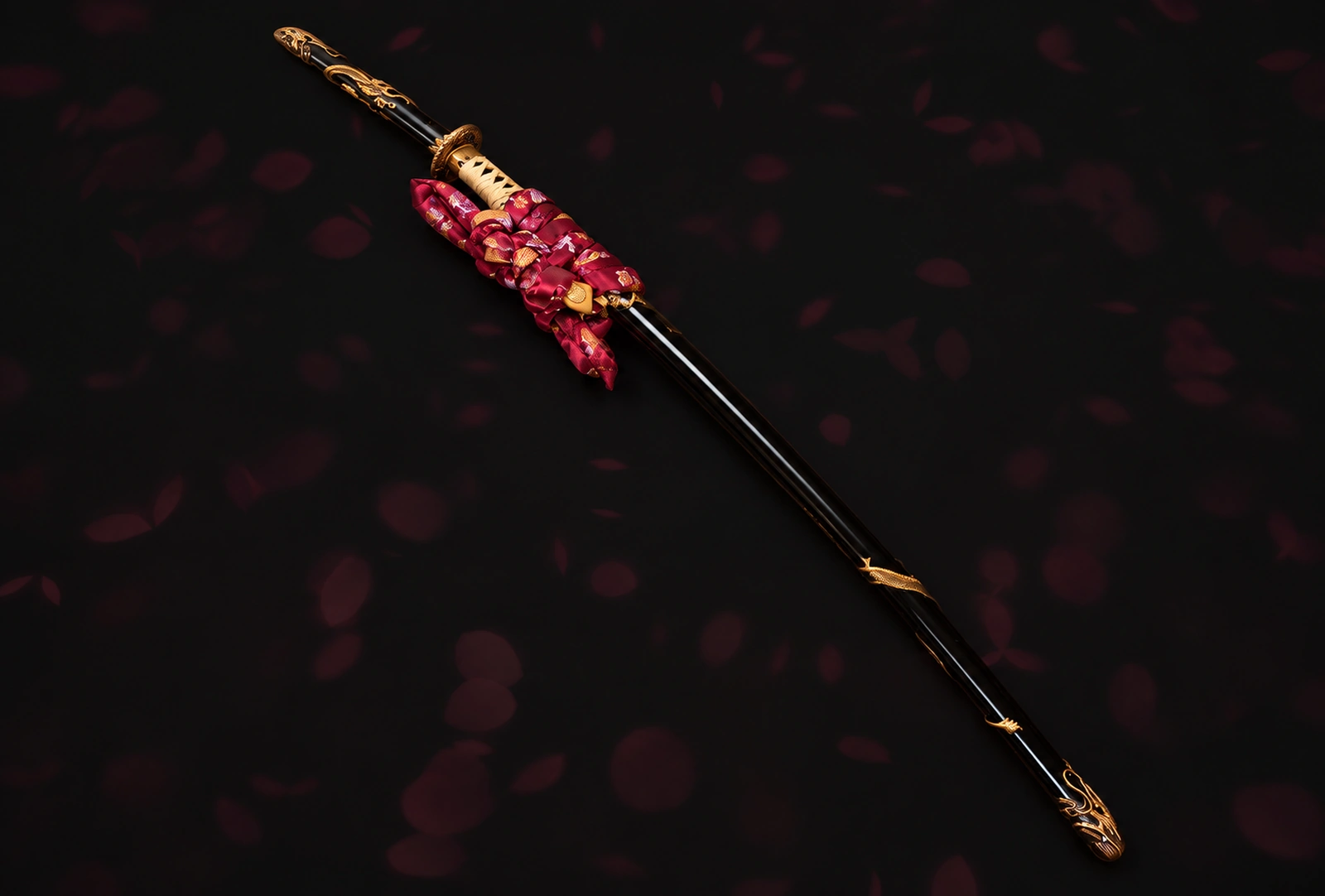
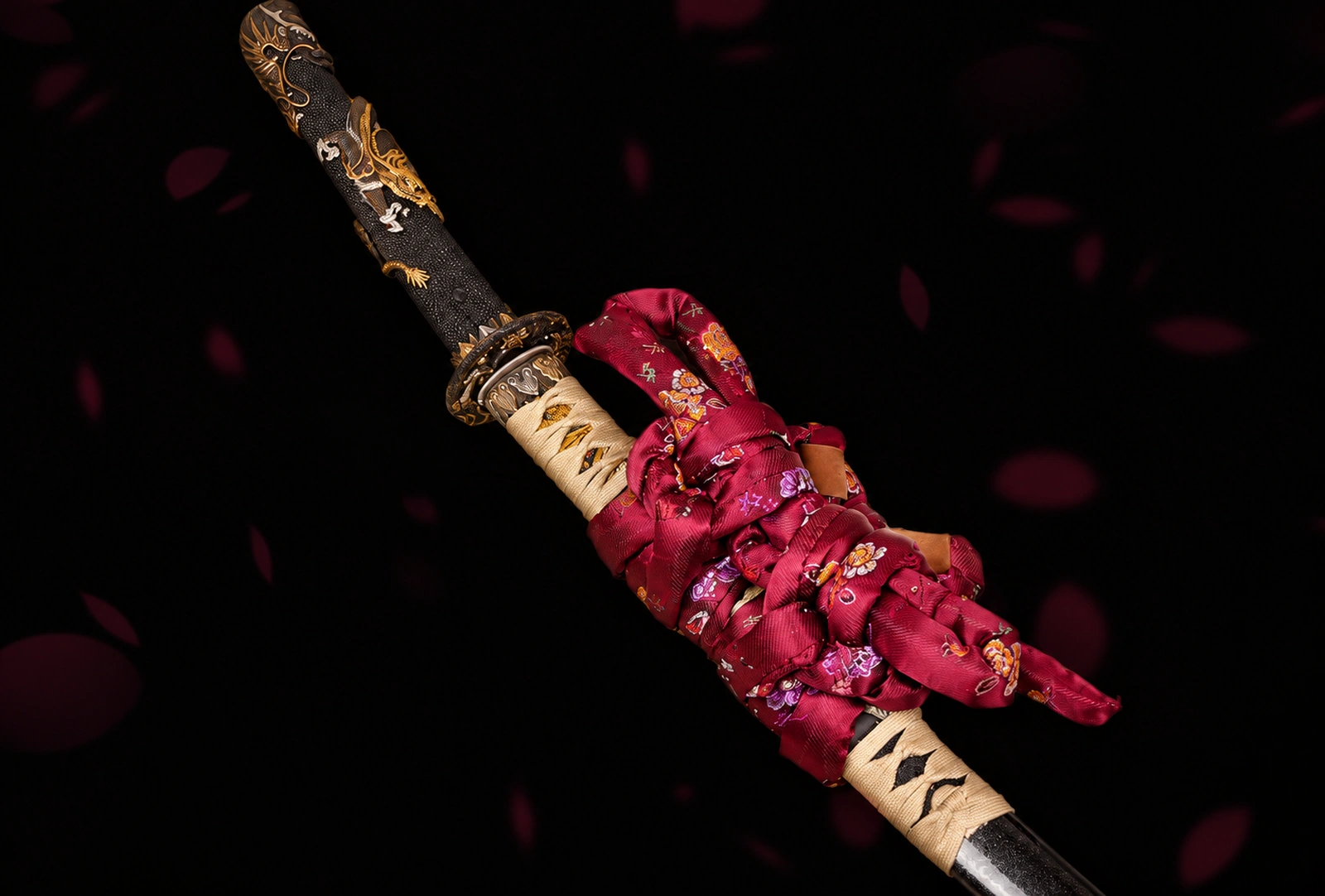
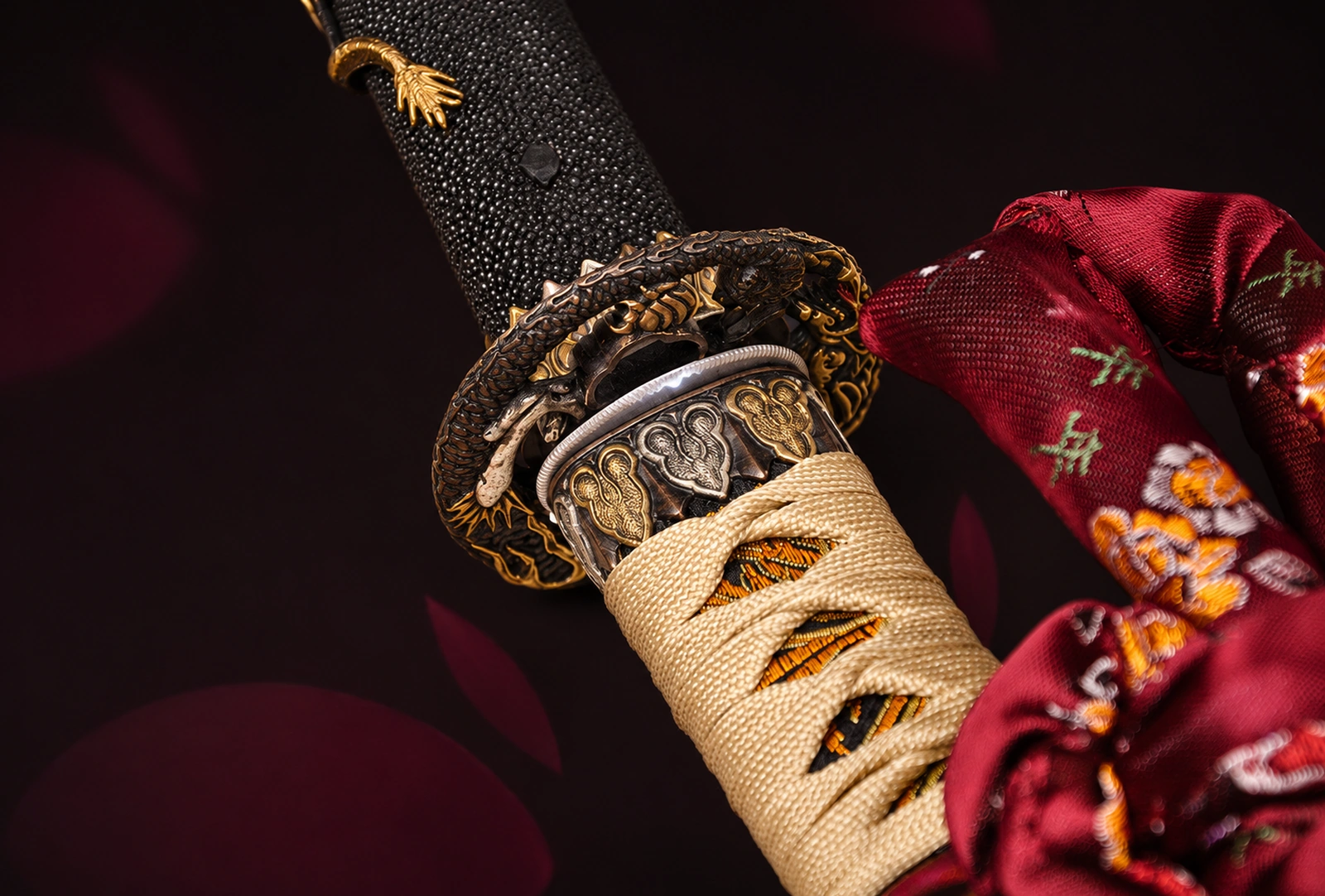
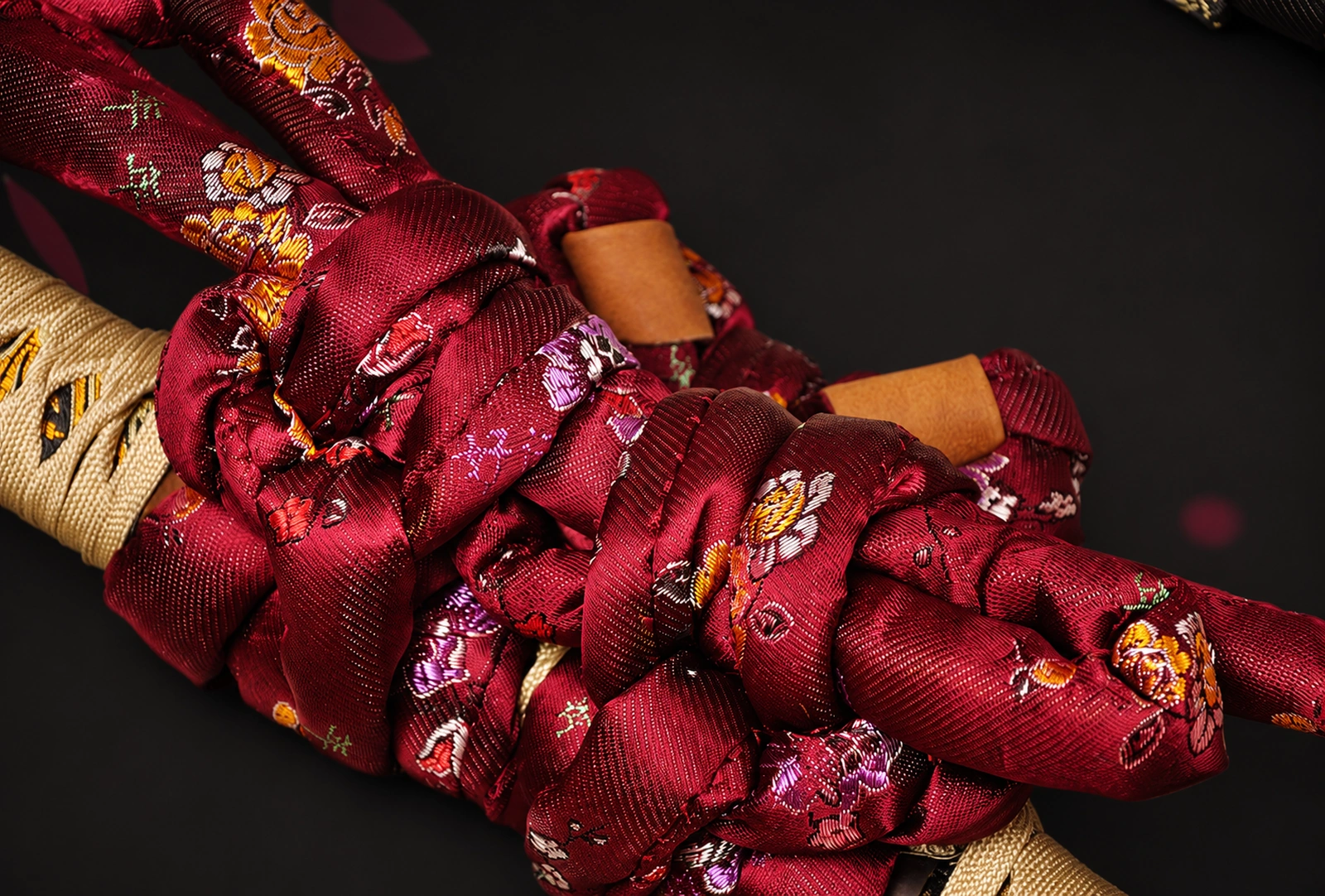
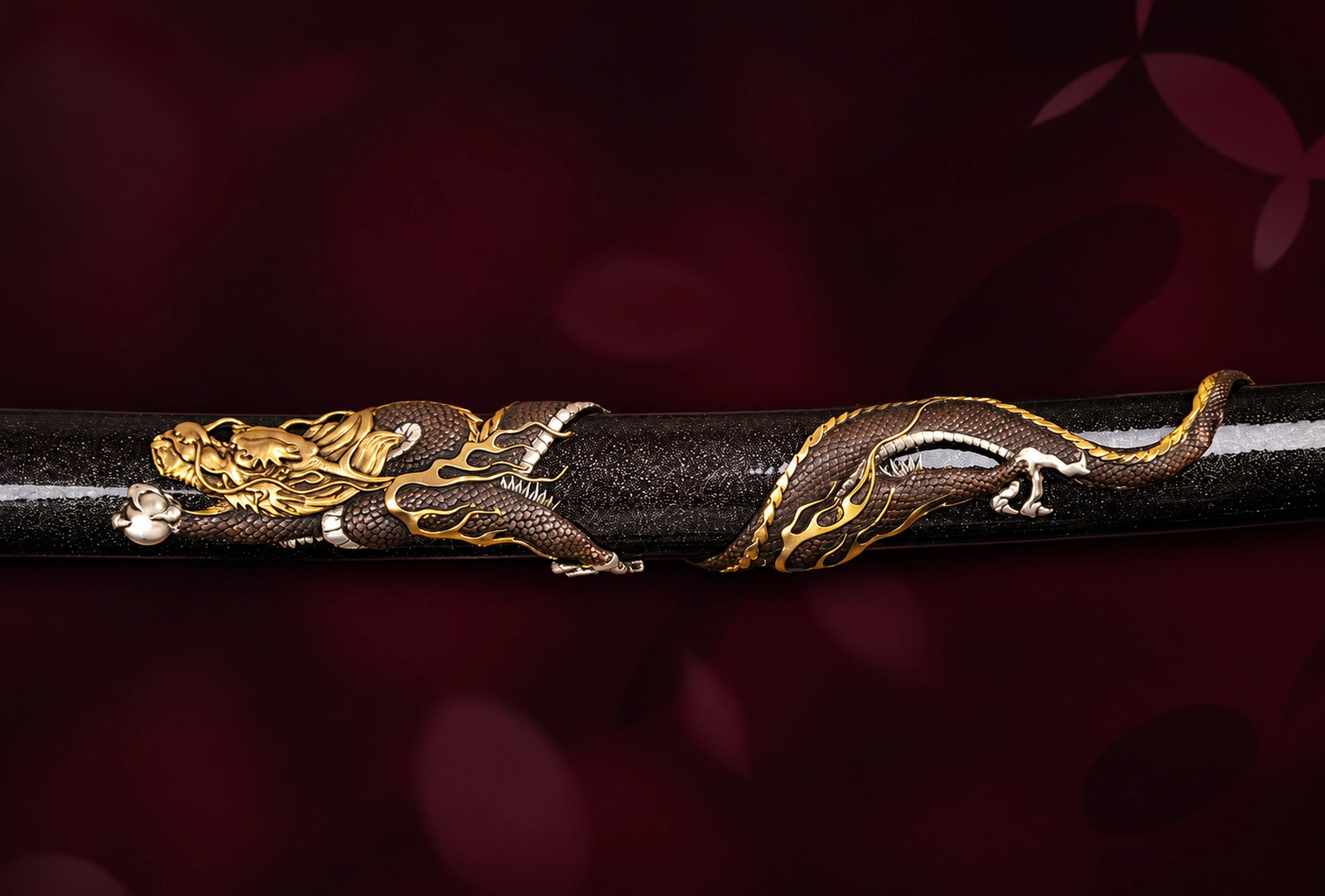
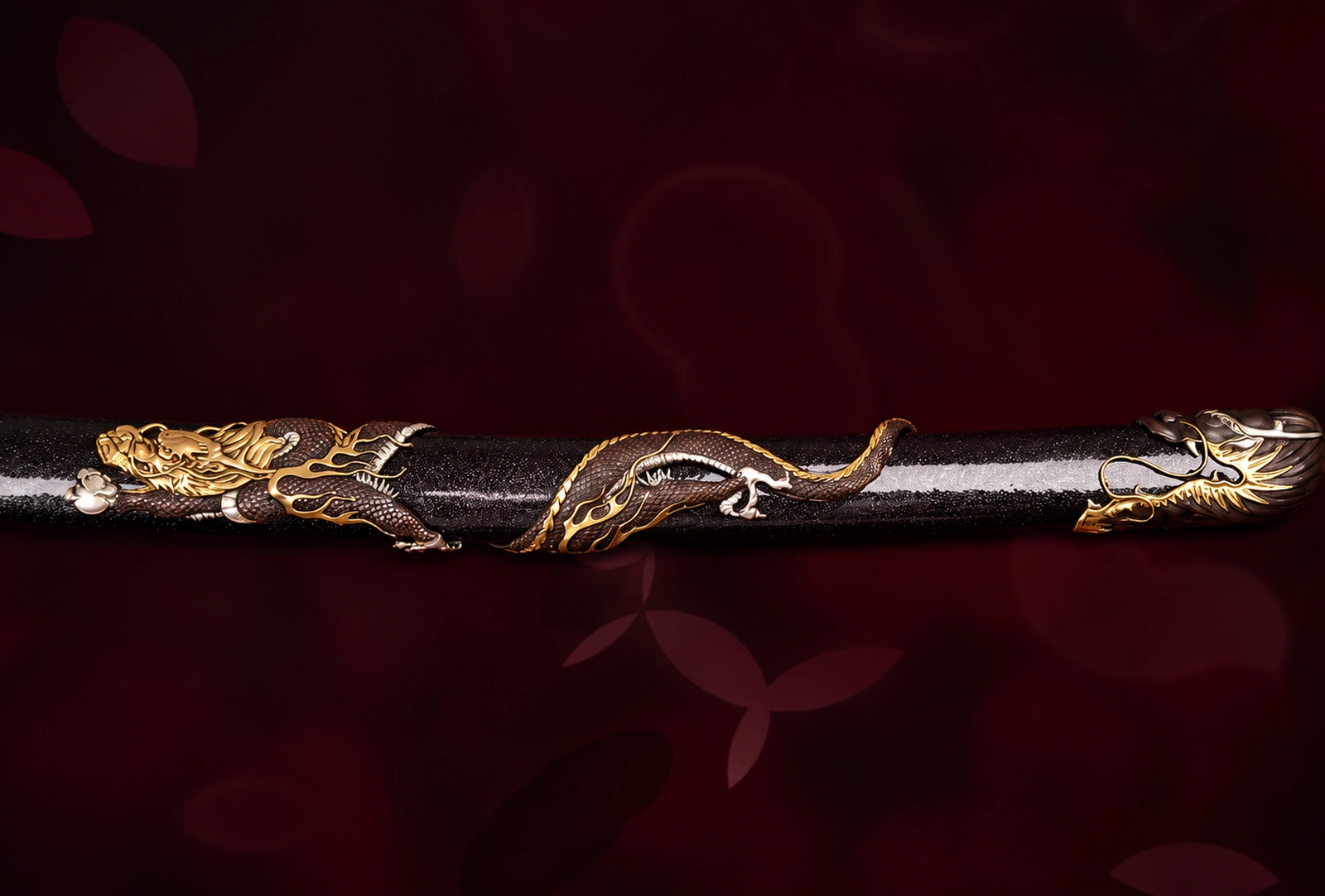
Crimson against shadow.
Gold against the dark.
THE PHOENIX KOSHIRAE
The Warmth of Gold.
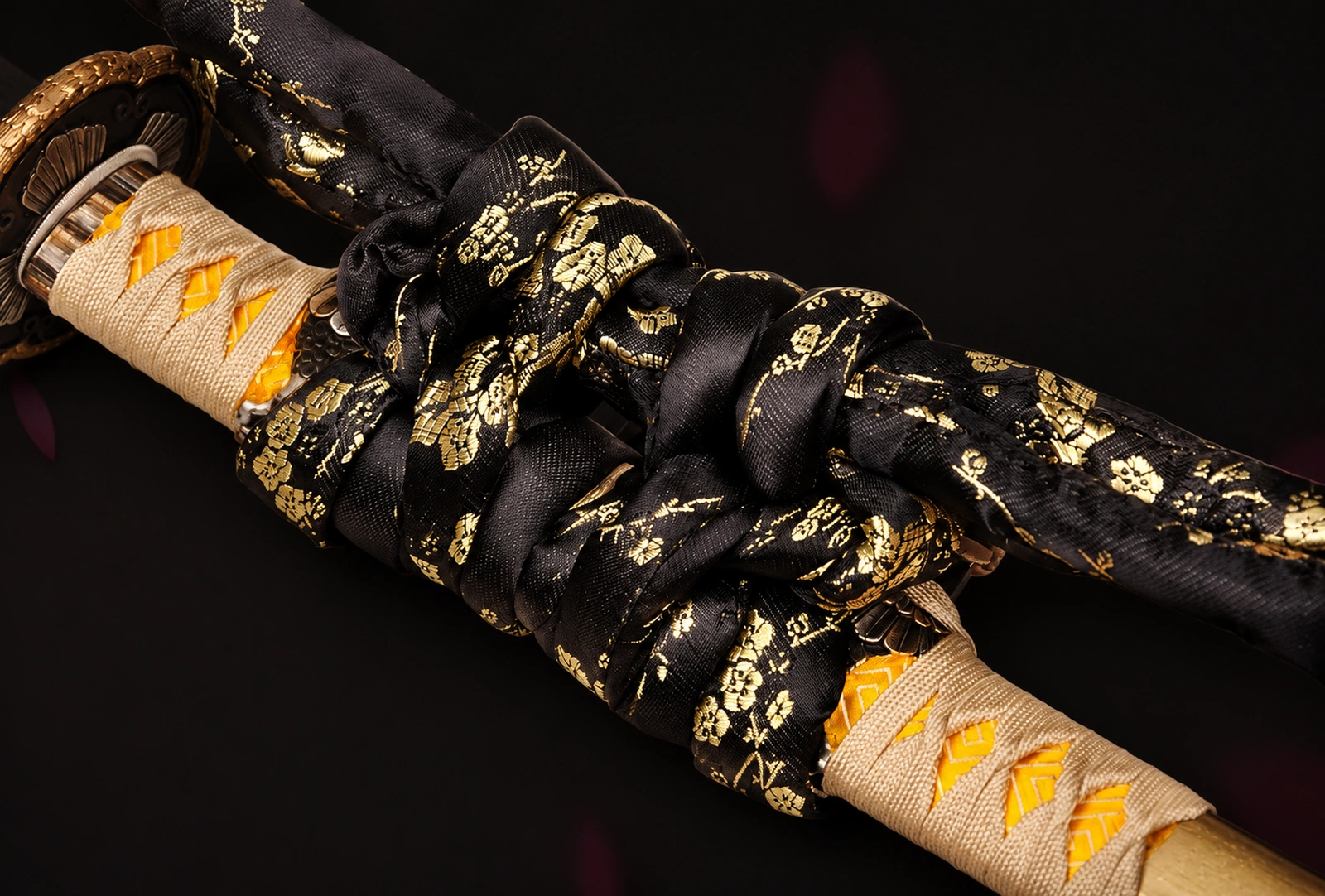
The Phoenix koshirae returns to gold, ivory-white samegawa and an elaborate black-and-gold sageo. Close views of its fittings and surface decoration reveal how much of the design lives in small details.
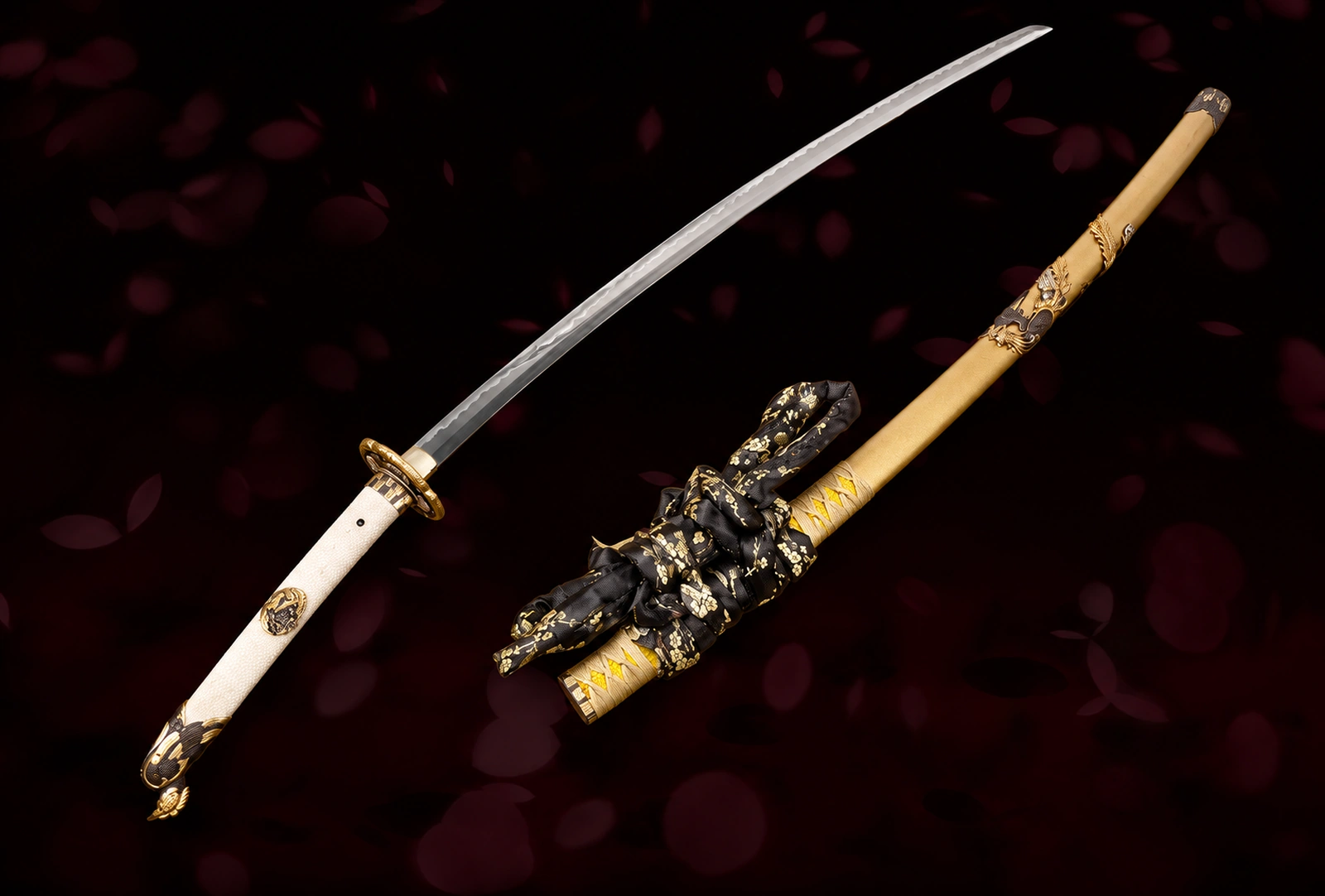
THE FINAL PORTRAIT
One last view draws the blade and the Phoenix mountings into the same frame — the silver curve answering the warmth of gold.
Reviews
There are no reviews yet.