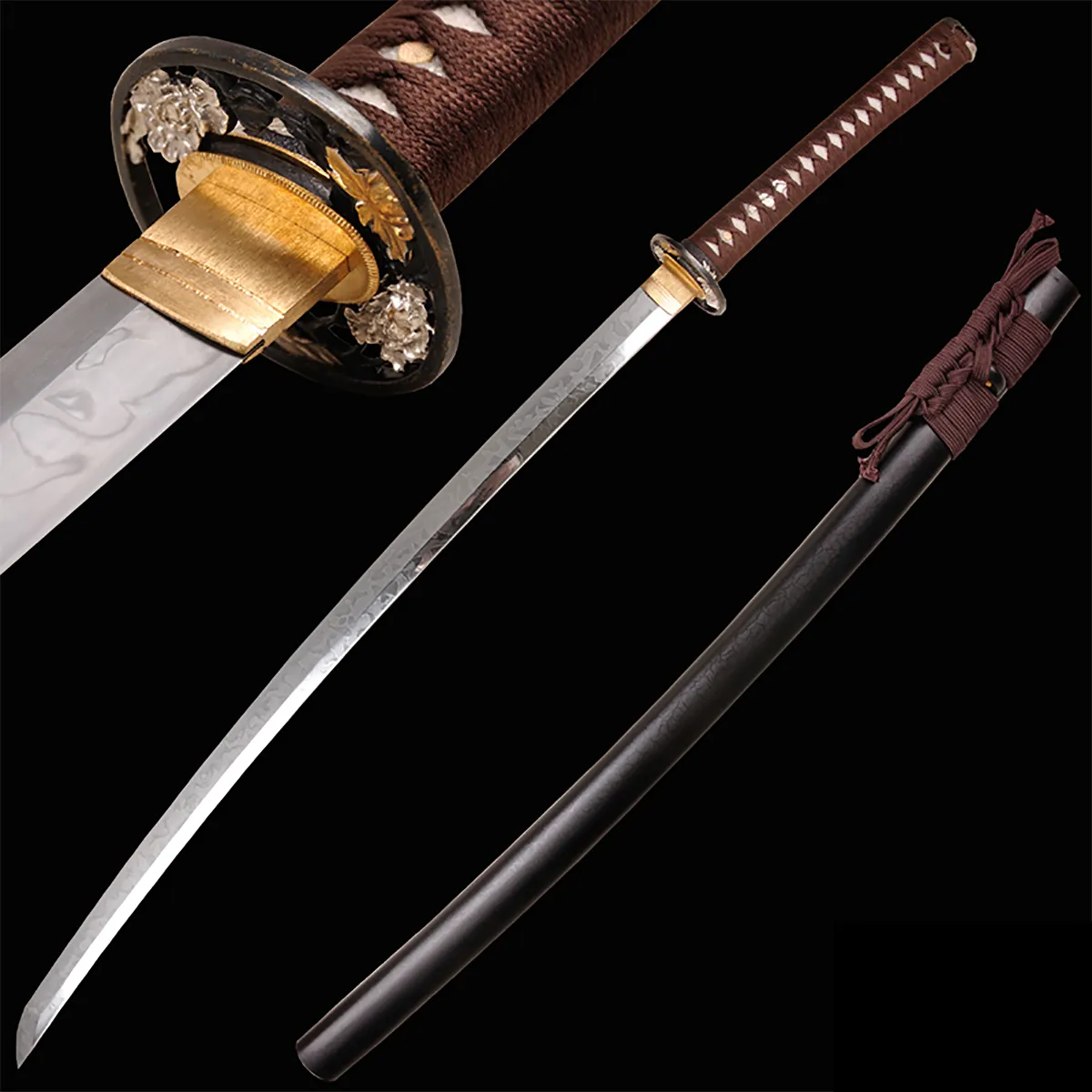
Description
01 / THE ART OF FIRE AND CLAY
Where Fire
Finds Its Form.
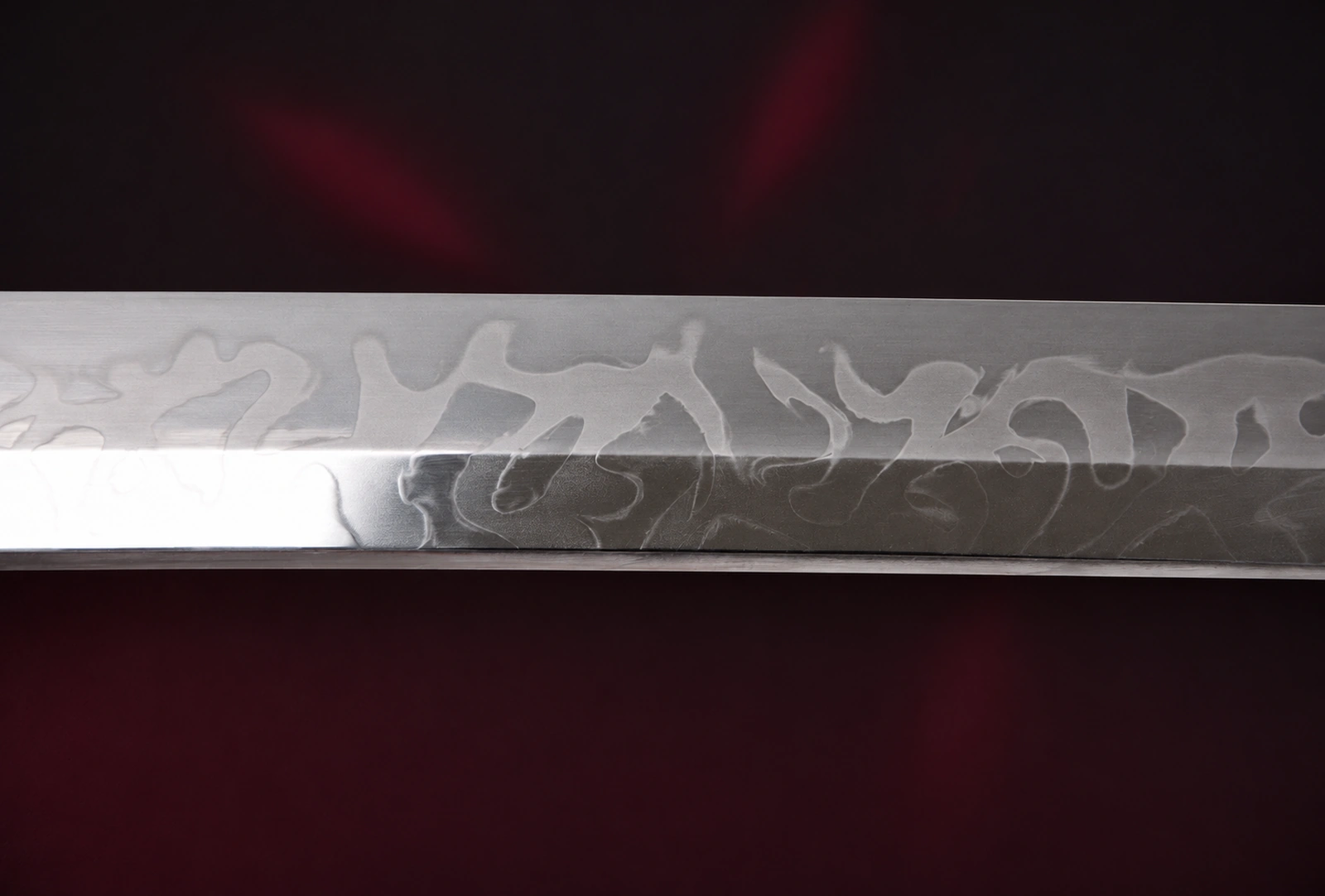
The beauty of this blade is not confined to its edge. In Hitatsura, hardened patterns move across the surface of the steel — a restless expression shaped by clay, heat, and the moment of quenching.
BEYOND THE CUTTING EDGE
A Pattern That Refuses to Stand Still.
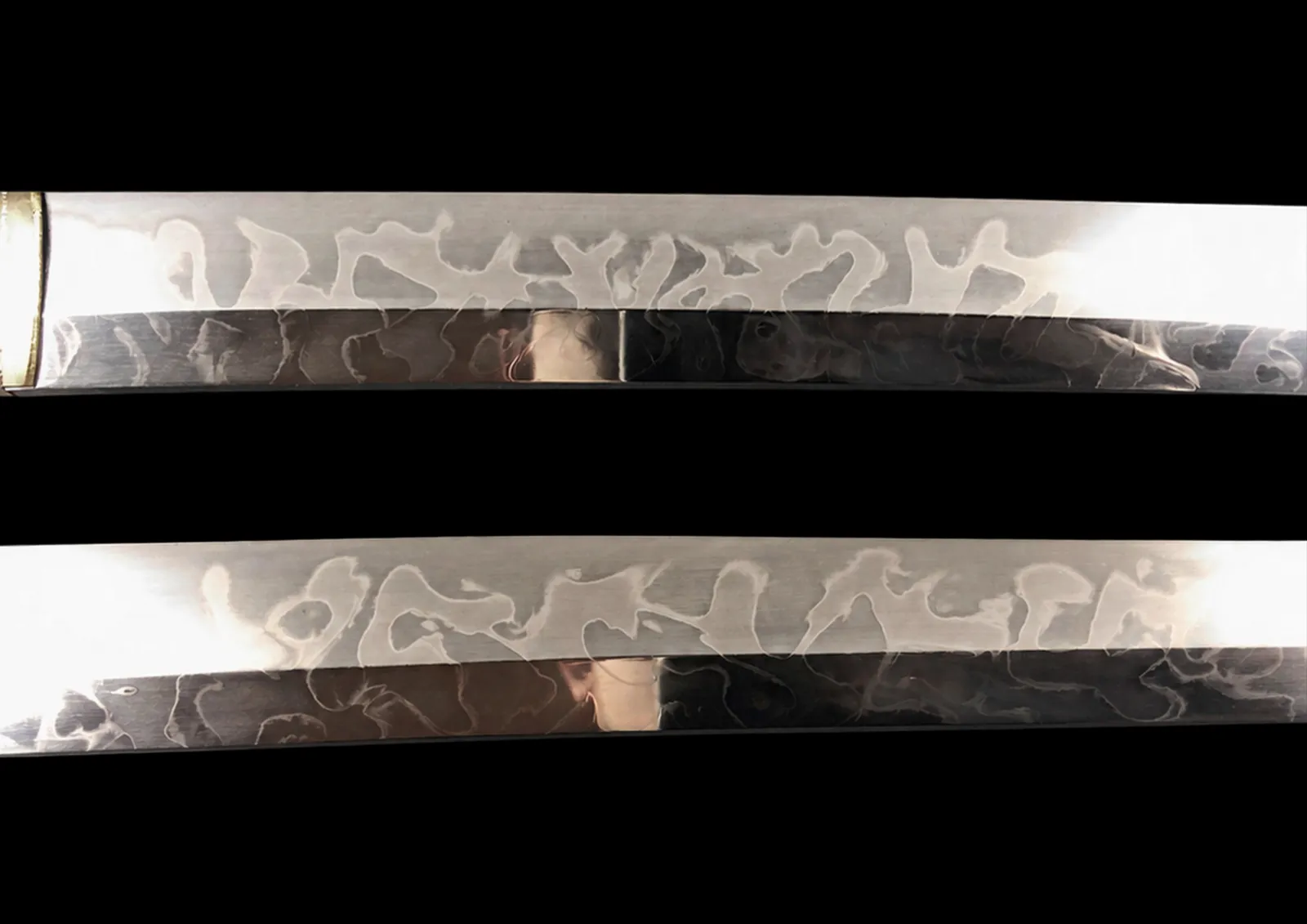
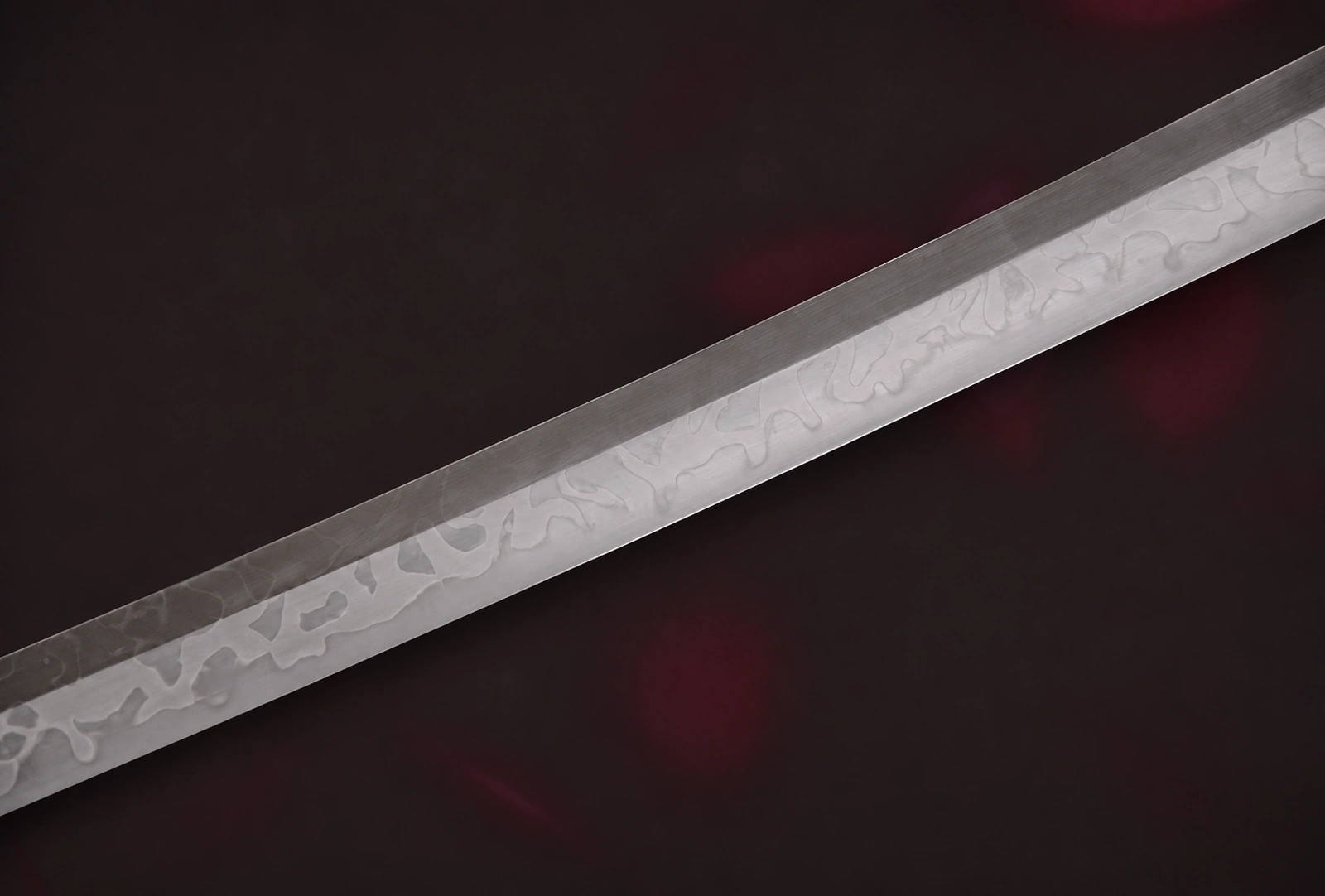
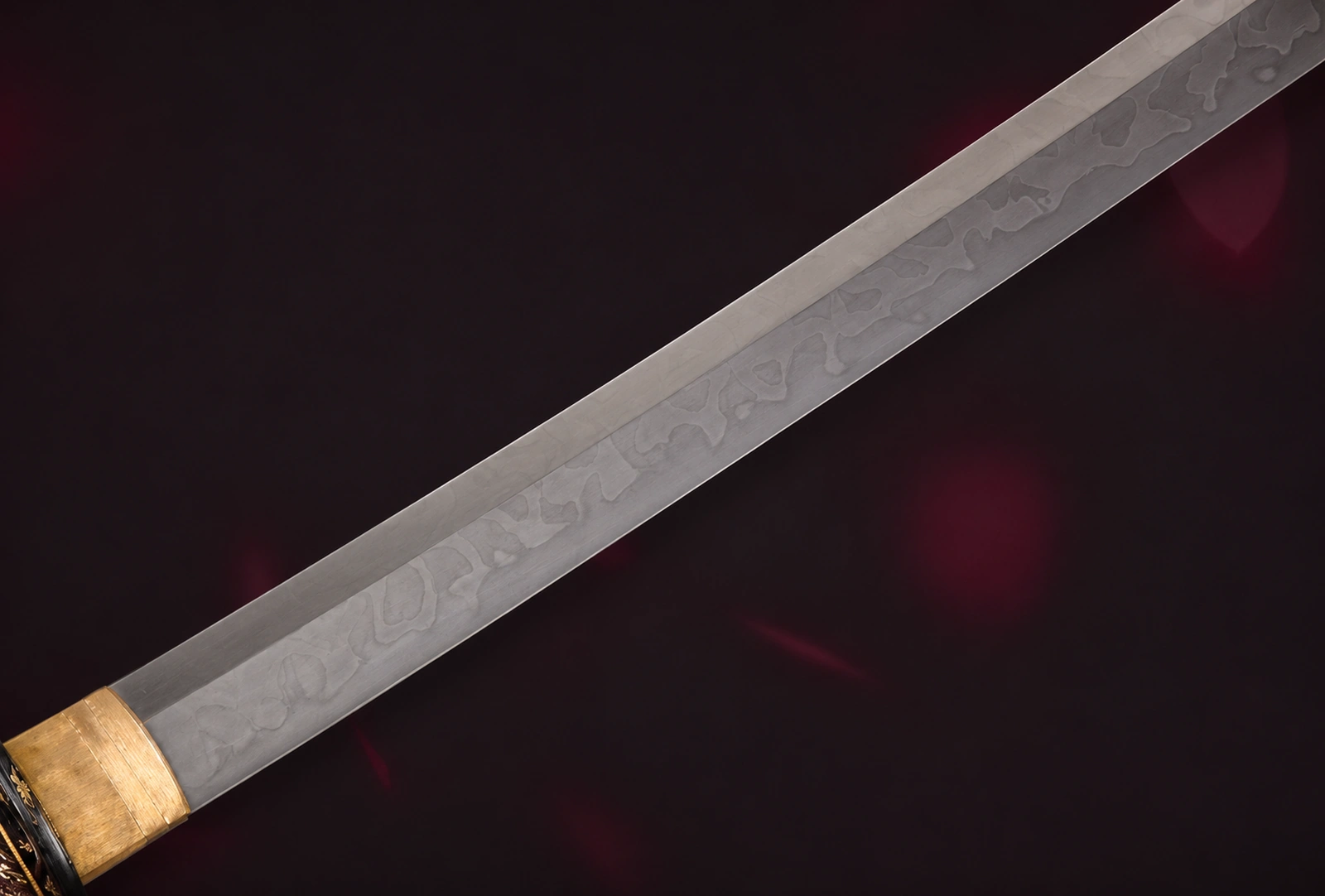
A conventional hamon draws attention to the boundary near the cutting edge. Hitatsura carries that visual activity farther, allowing irregular hardened areas to appear across the flat of the blade.
Its formation begins before the blade is quenched. Clay is placed upon the blade; heat and quenching then bring out a complex hardening pattern. The placement is intentional, but the finished expression belongs to the interaction of material, temperature, and craft.
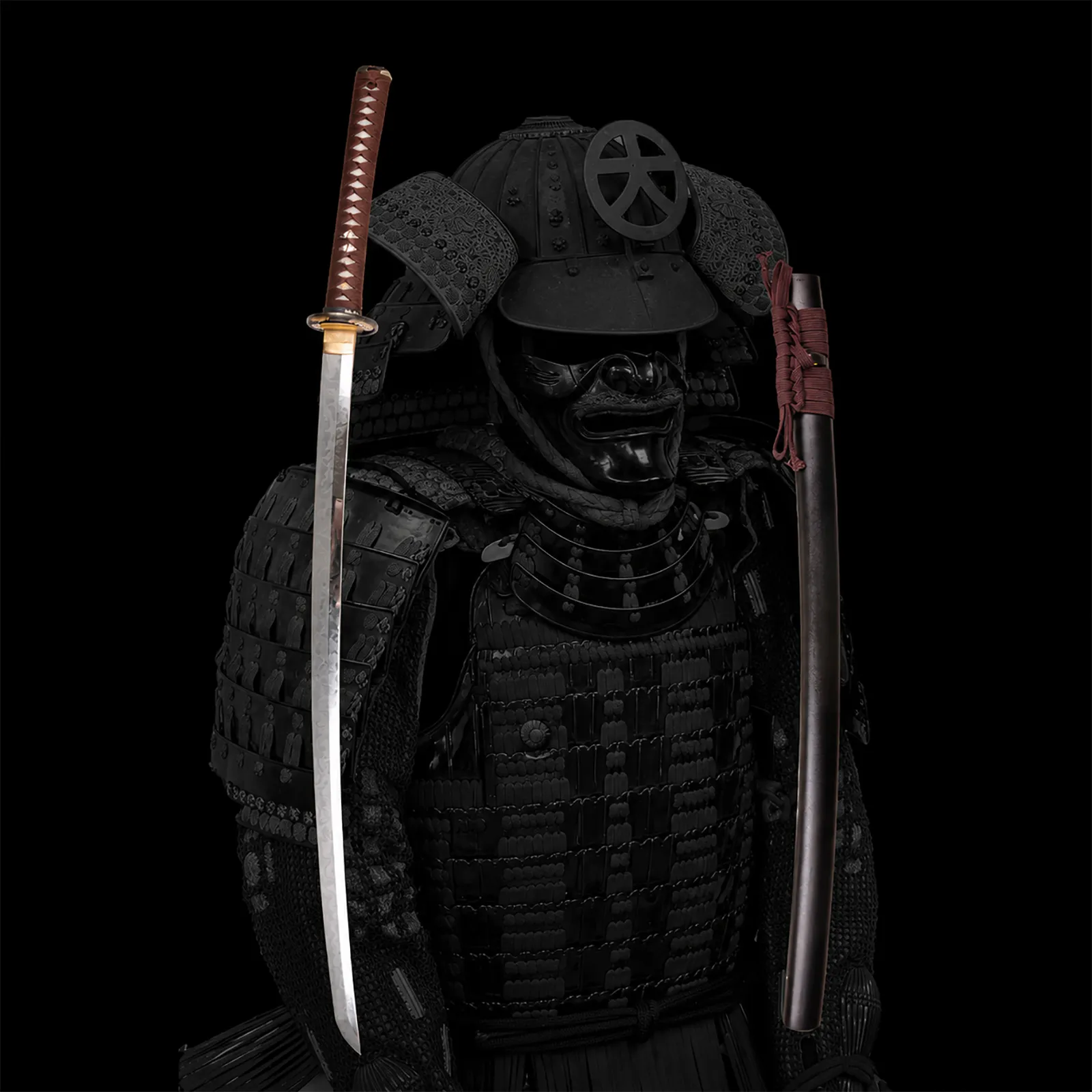
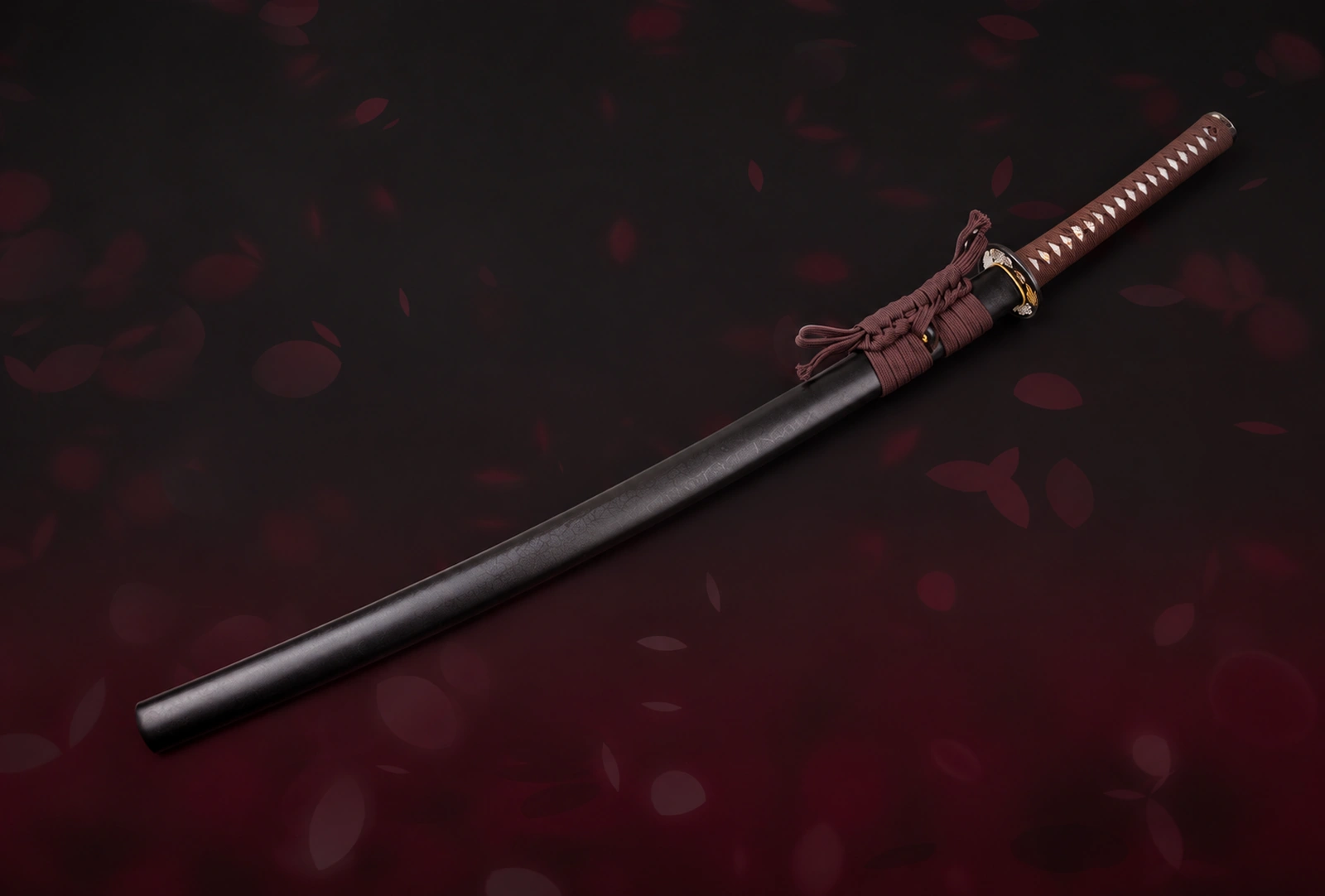
The T10 steel becomes a surface of contrast and movement. The subdued brown handle and dark scabbard frame the blade without competing with it. The eye returns, again and again, to the changing lines in the steel.
THE CHARACTER OF HITATSURA
The pattern is designed through discipline, then revealed through fire. What appears fluid and spontaneous is inseparable from a demanding act of control.
02 / THE PATTERN BEYOND THE EDGE
An Unquiet Line
in Steel.
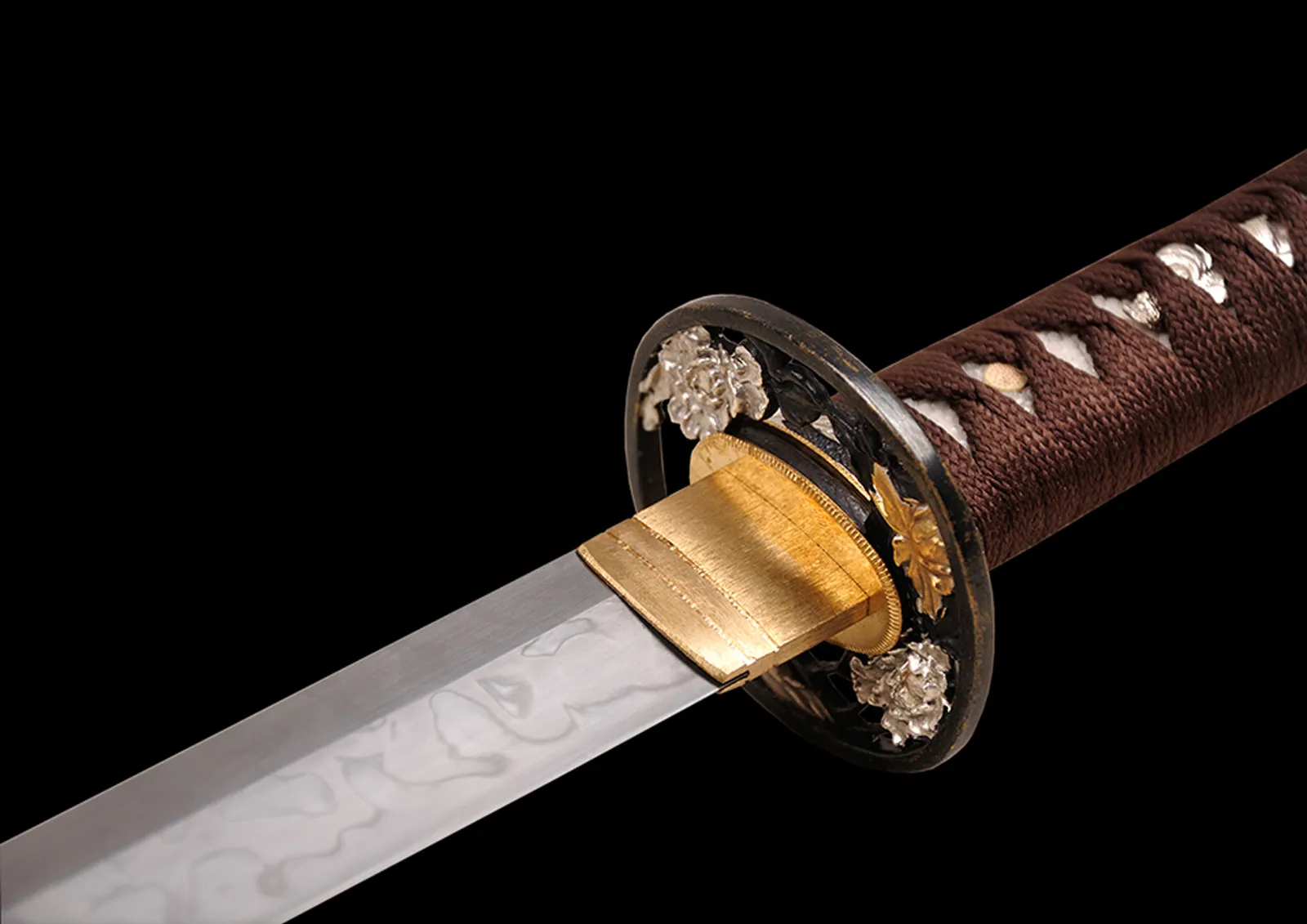
The character of this katana comes into focus at close range. Its T10 blade is clay tempered in the Hitatsura style, where the hamon takes on a complex, wandering form across the surface of the steel.
STEEL / CLAY / HARDENING
Not Along the Edge Alone.
A familiar hamon follows the boundary near the cutting edge. In Hitatsura, the visible hardening activity spreads farther into the blade, creating open shapes, enclosed islands and irregular paths that change from one section to the next.
The blade begins as T10 carbon steel in a full-steel, single-piece construction. Clay application and quenching shape the hardening pattern; careful finishing brings its tonal differences into view.
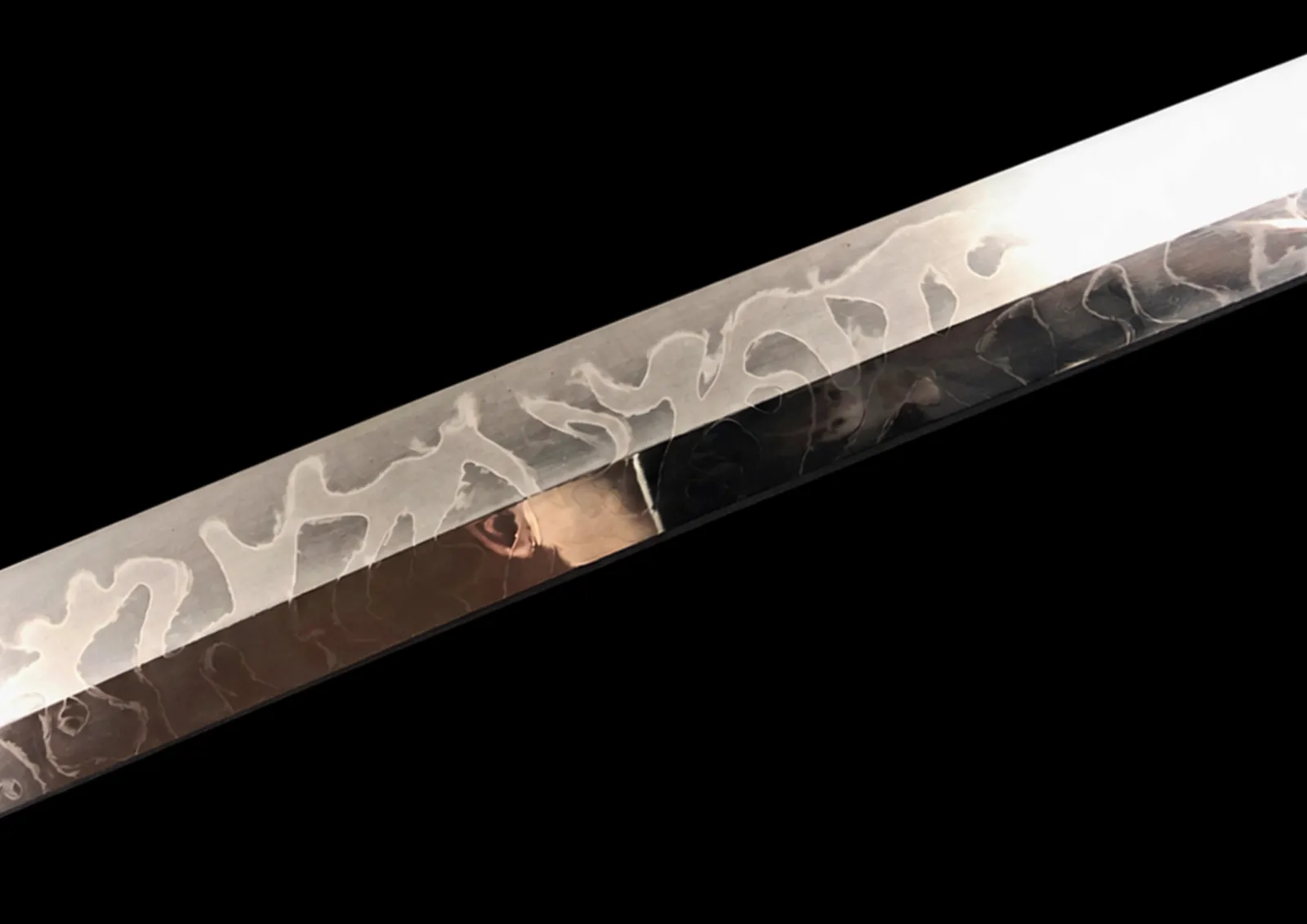
THE SURFACE REVEALED
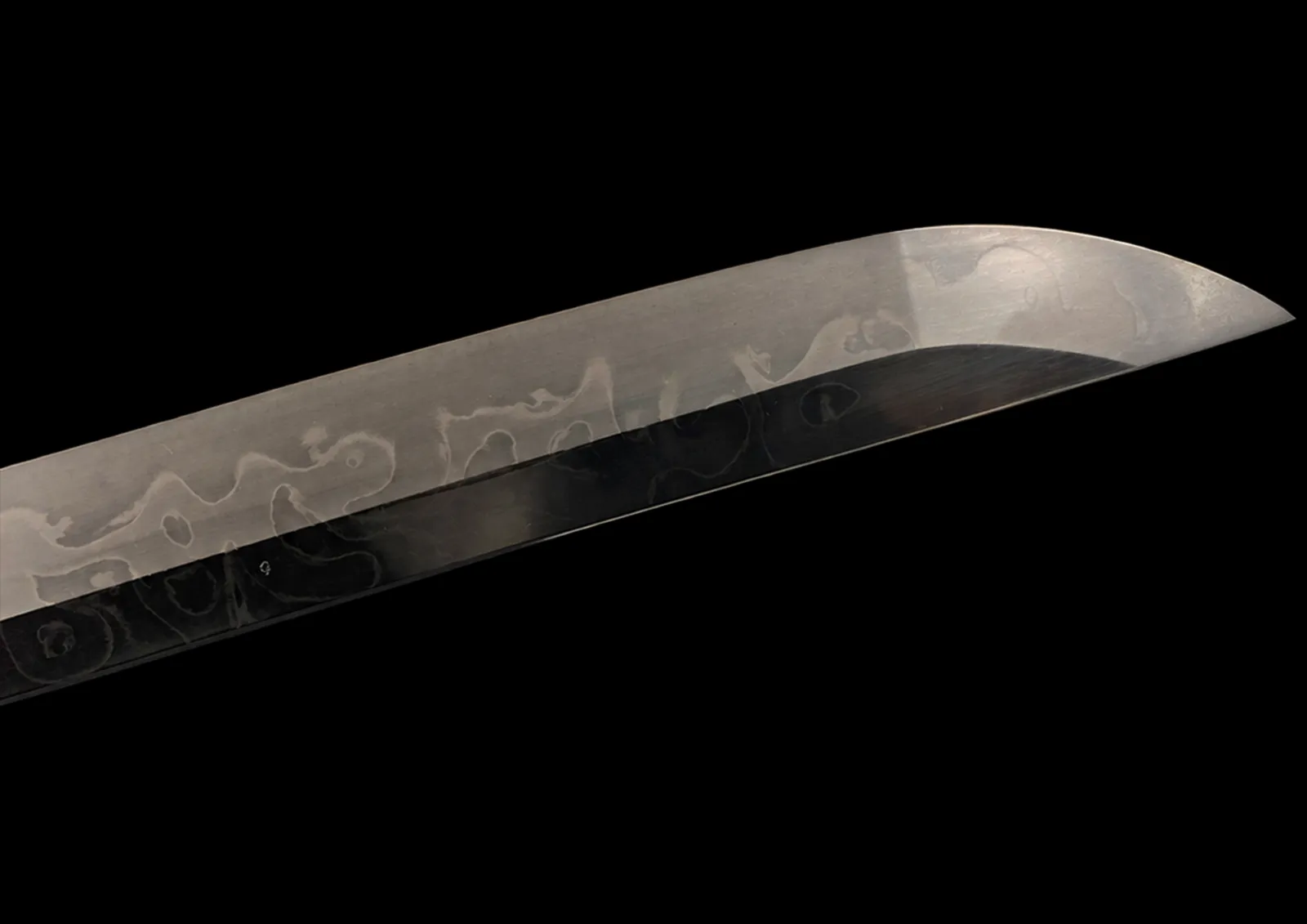
Across the polished steel, the hardened areas catch light in shifting tones. What first appears like a single flowing line resolves into a landscape of separate, connected forms.
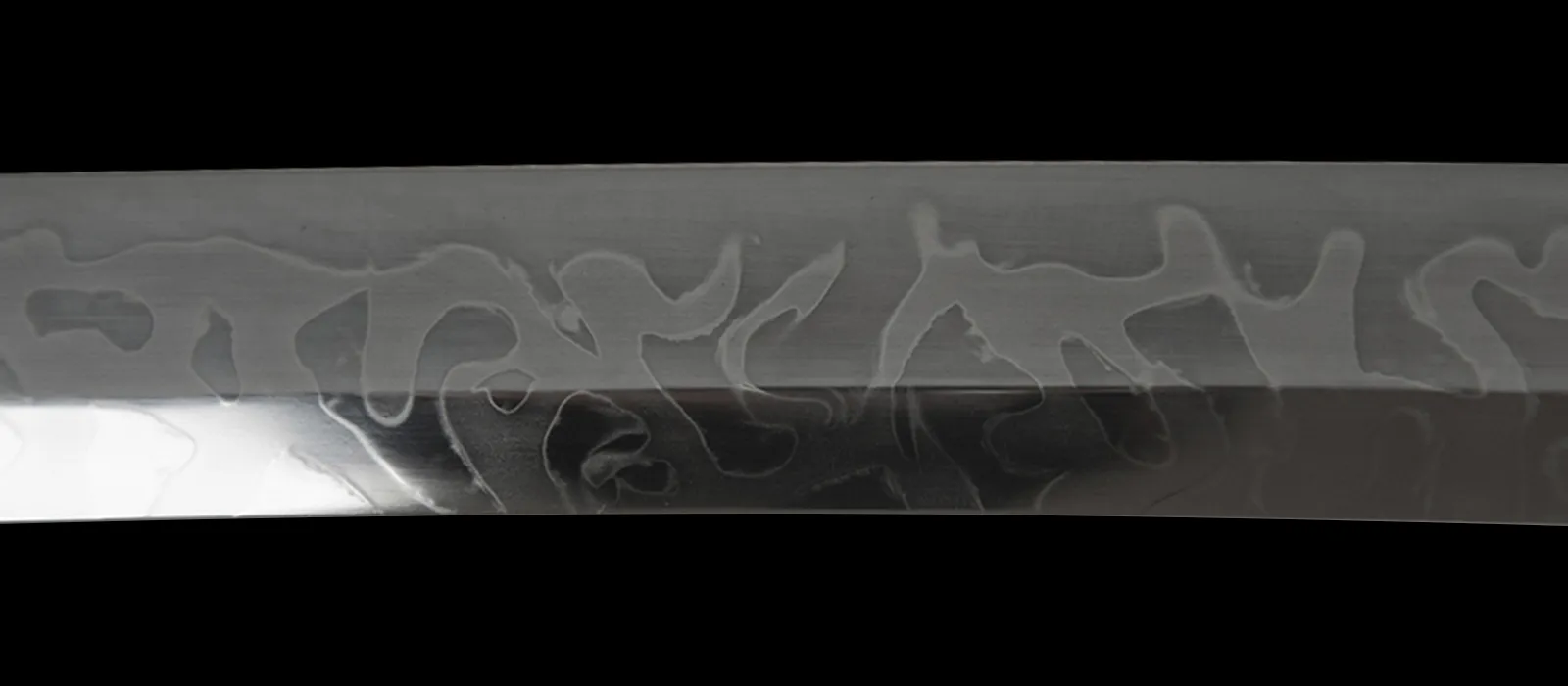
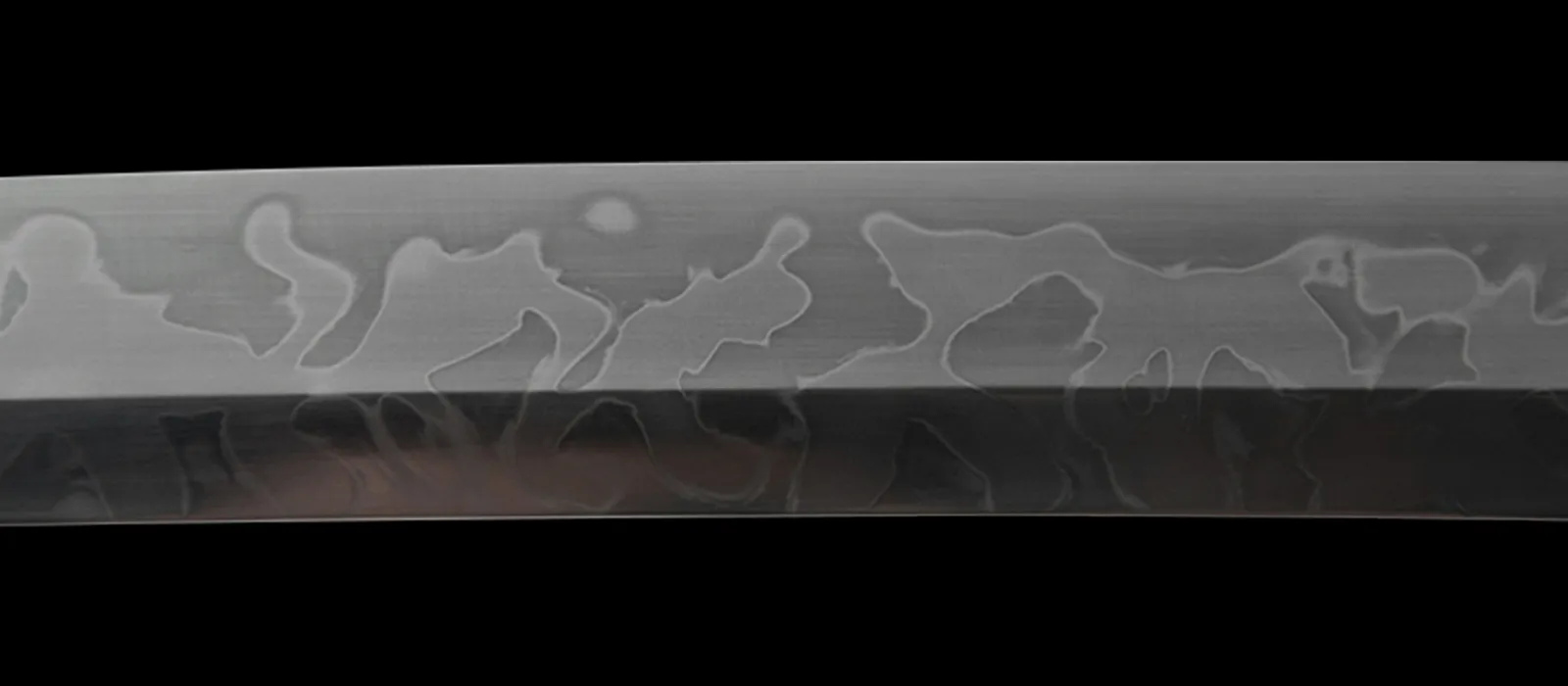
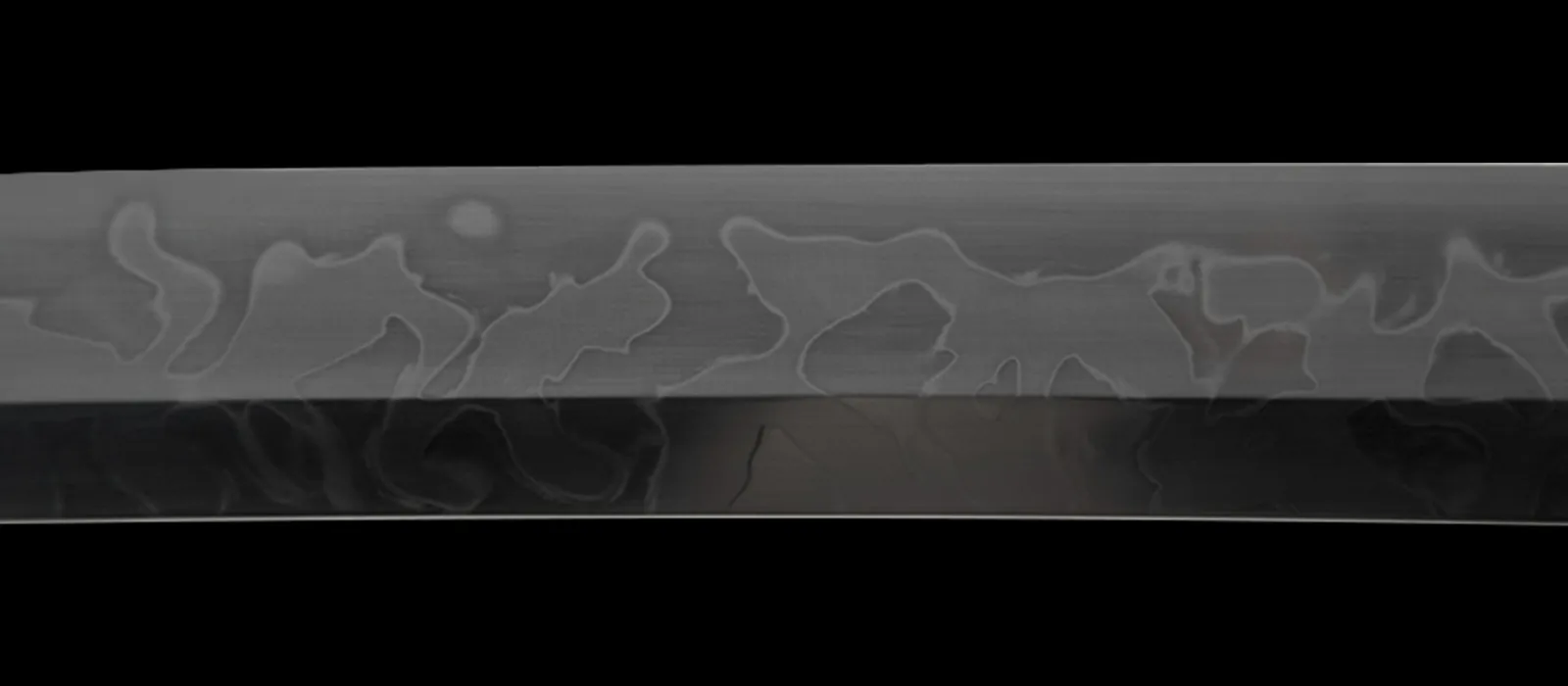
THREE STUDIES / ONE HARDENING STYLE
A Pattern That Keeps Changing.
Viewed section by section, the Hitatsura pattern refuses a simple repetition. Some areas gather in rounded shapes; others stretch into narrow, branching contours. The eye follows the transitions along the blade.
MOUNTINGS / A QUIETER COUNTERPOINT
The Frame Around the Fire.
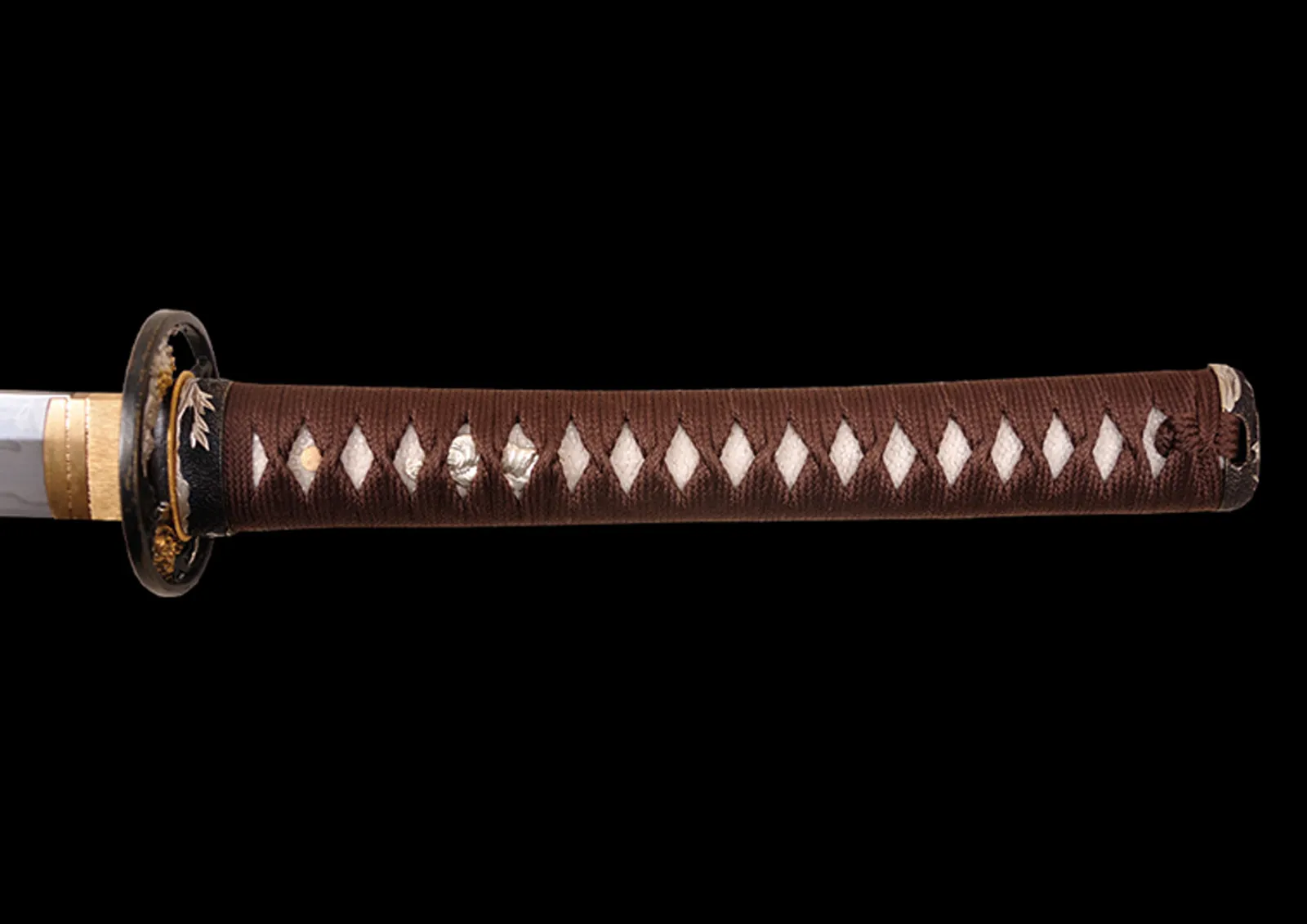
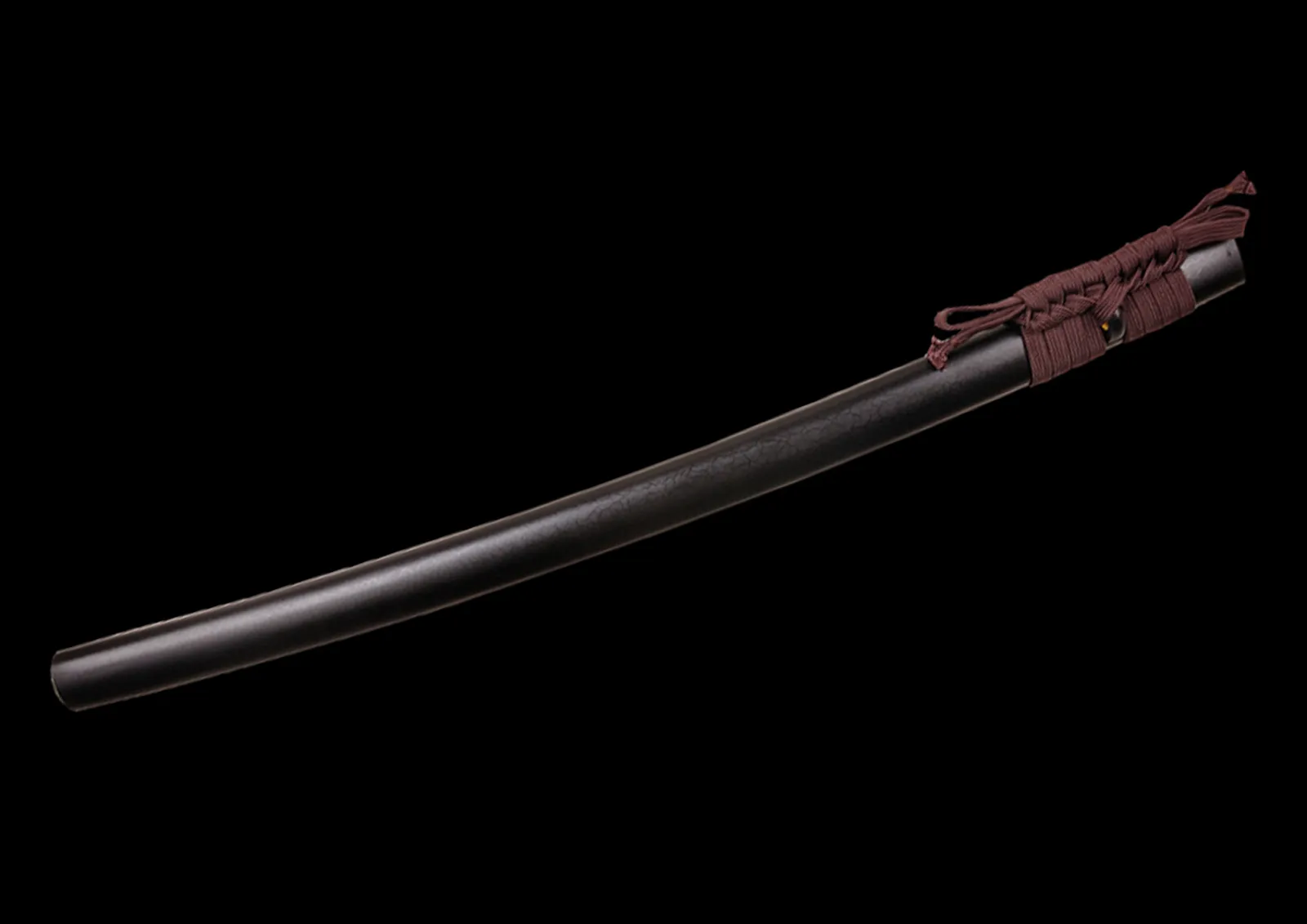
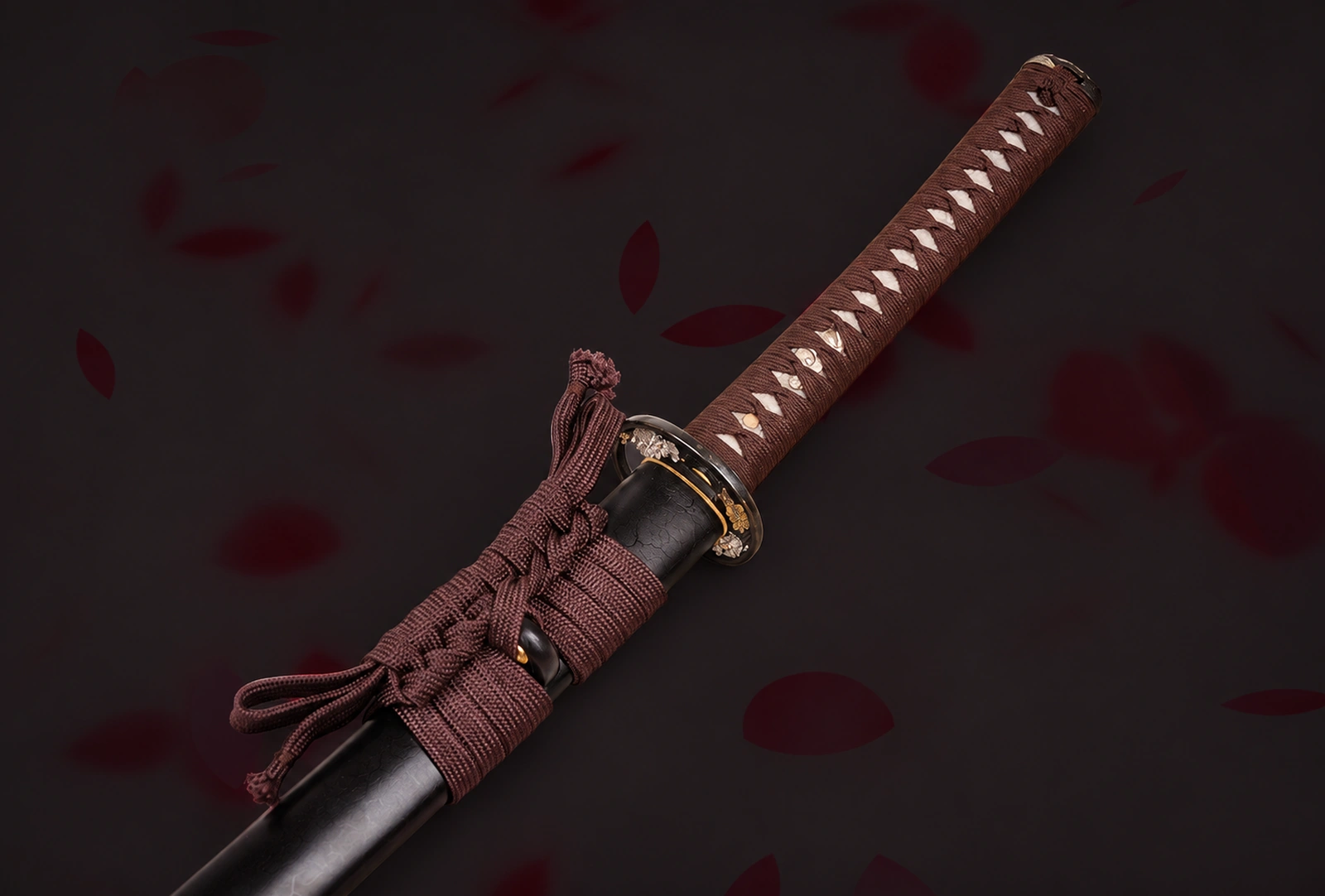
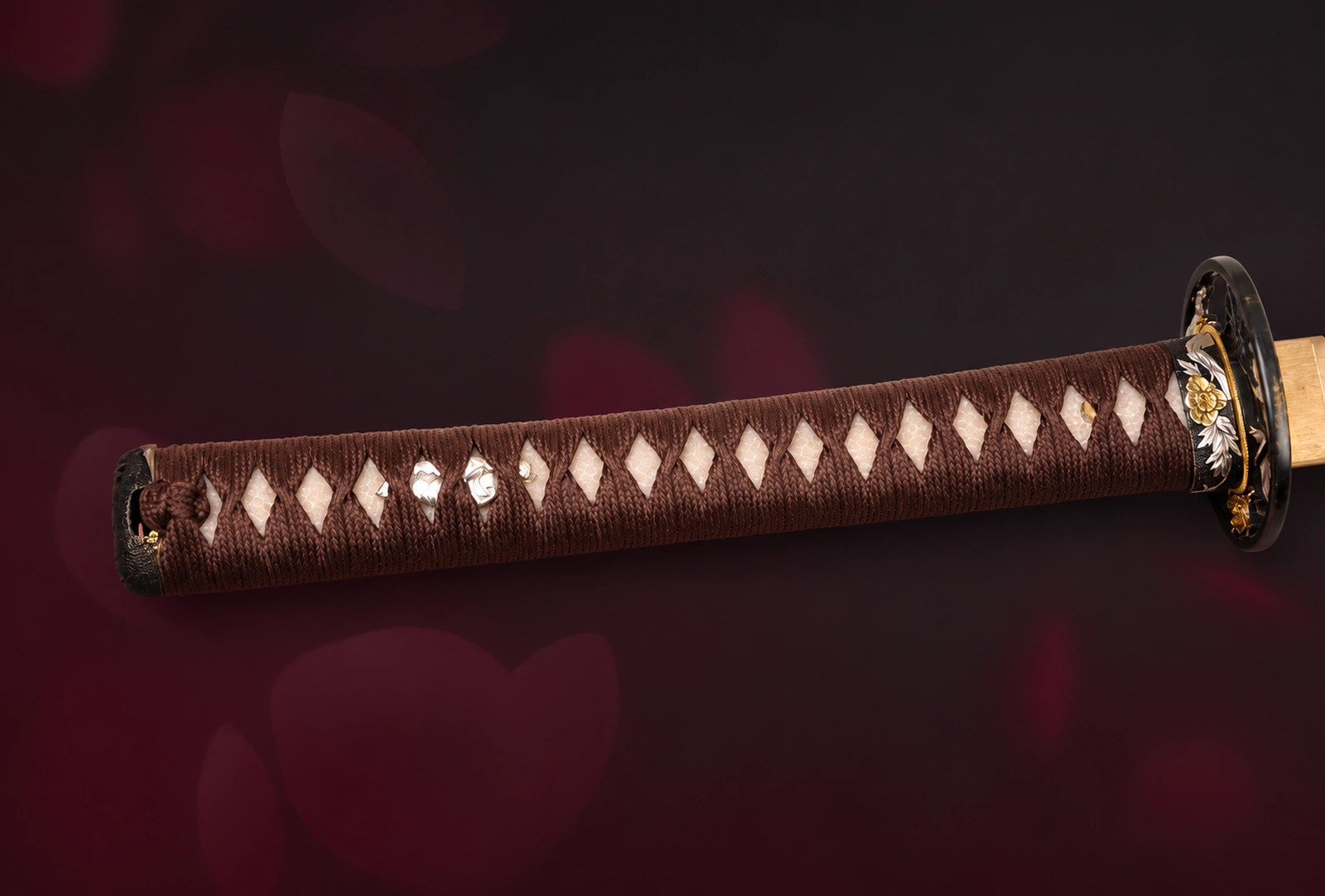
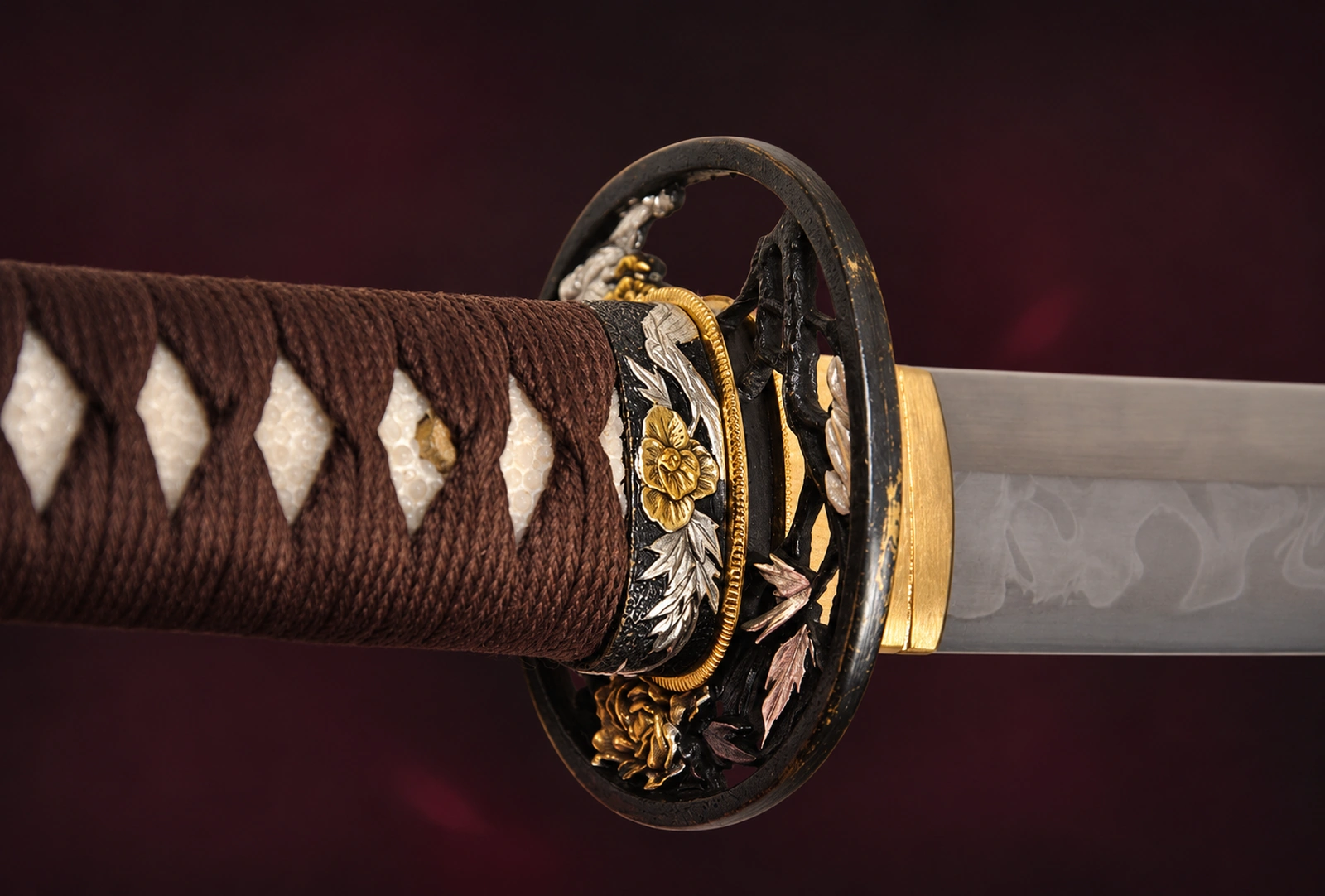
The mountings keep their own presence understated: warm metal around the guard, a dark-brown traditional diamond-pattern handle wrap, and a near-black wooden saya with a leather-like textured finish. Against these restrained surfaces, the patterned steel remains the centre of attention.
03 / THE COLLECTOR'S GALLERY
A Quiet Form.
A Wild Pattern.
Beyond the study of steel and fire, this piece comes together as a complete katana. A dark saya, a warm brown handle, and a blade marked by Hitatsura — each detail finds its place against the falling red petals.
THE BLADE REVEALED
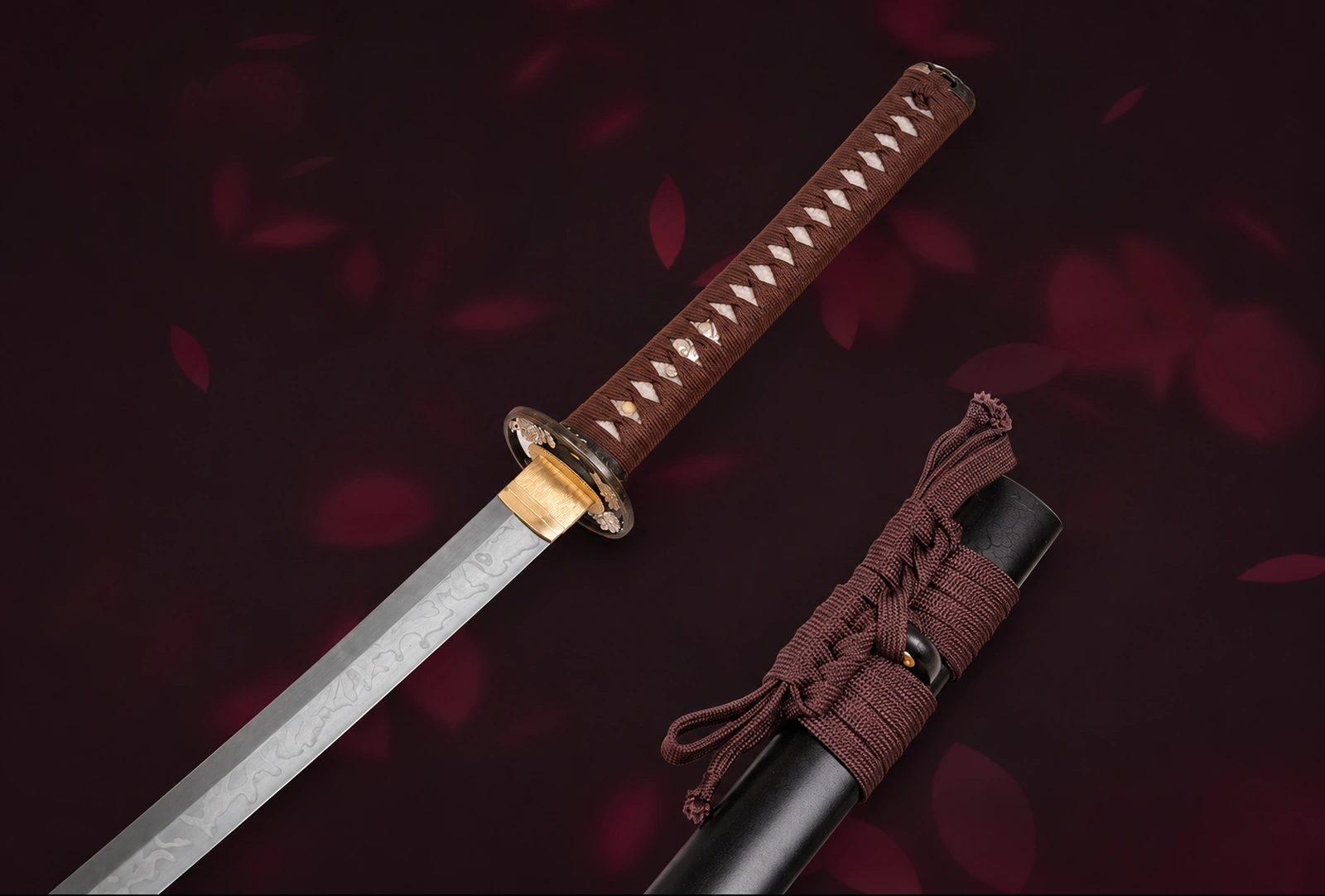
The Shape Beneath the Shadow.
Drawn from its saya, the katana changes character. The pale line of the polished blade meets the quieter tones of the mountings, revealing the sweep of the steel from handle to tip.
WHERE LIGHT MEETS STEEL
At a distance, a silhouette.
Up close, a landscape of fire.
HITATSURA / A CLOSER VIEW
The Surface Never Stands Still.
The Hitatsura hamon is the centre of this work. Across changing angles, its irregular hardened forms move beyond the cutting edge and into the broader field of the blade.
THE QUIETER DETAILS
A Frame for the Fire.
The restrained brown tsukamaki and dark metal tsuba bring the eye back to the hand and the fitting of the sword. Their muted tones make room for the energy of the blade.
Reviews
There are no reviews yet.