QUIET CRAFTSMANSHIP · LONGQUAN

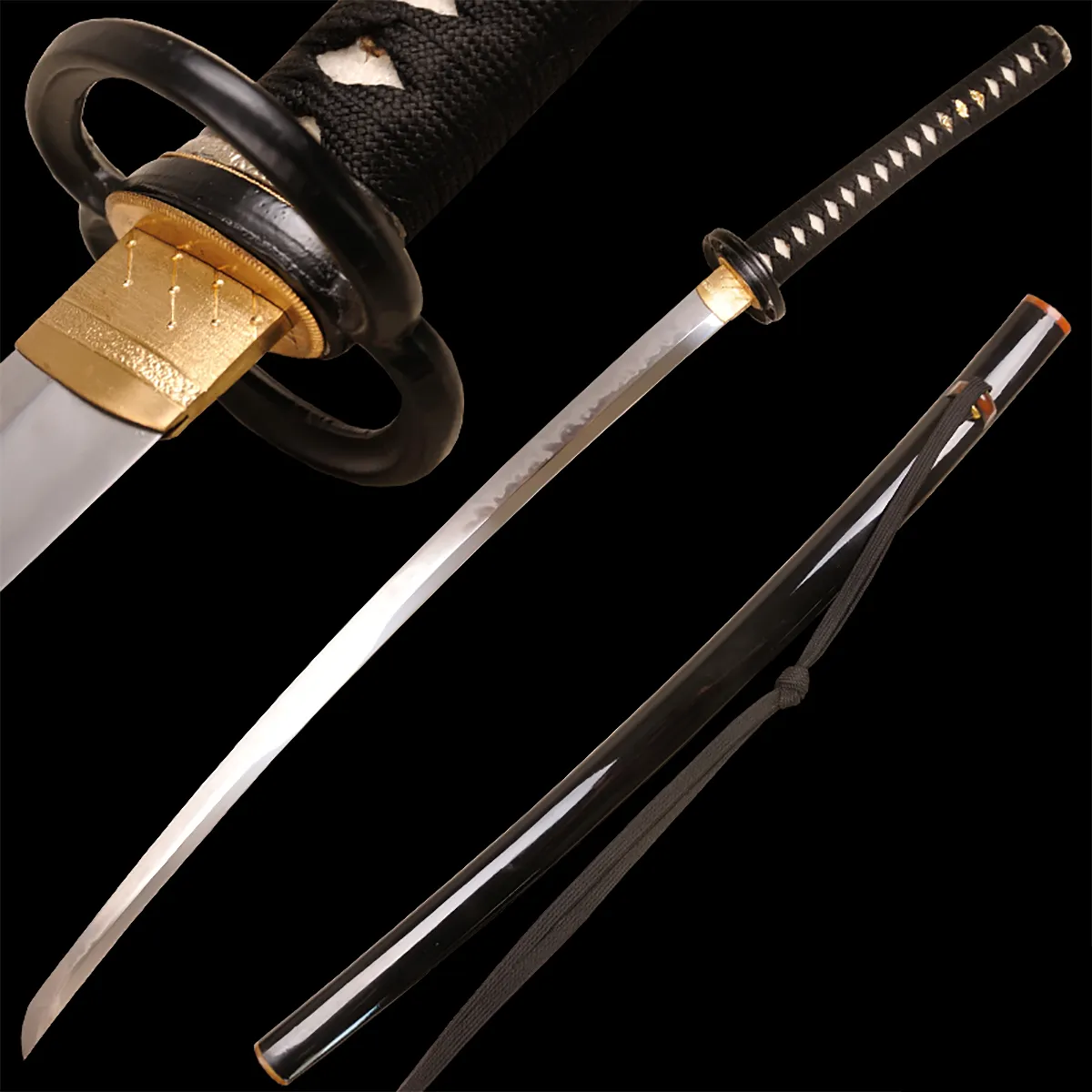
Full-Steel Choji-Midare Katana

¥2,223.00

CUSTOMIZE THIS KATANA
Each katana is configured individually.
Multiple katana purchases are placed as separate orders.

KATANA CUSTOMIZER

Customize Your Katana.

Choose from the configuration options available for this katana.

WORKSHOP NOTES

This is a full-steel katana featuring a chōji-midare hamon.

The blade has a single-steel construction and a polished finish.

The real focus of this sword is its distinctive hamon.

The irregular temper pattern flows in a lively, sweeping rhythm.

The mountings can be chosen in dark metal or gilt brass.

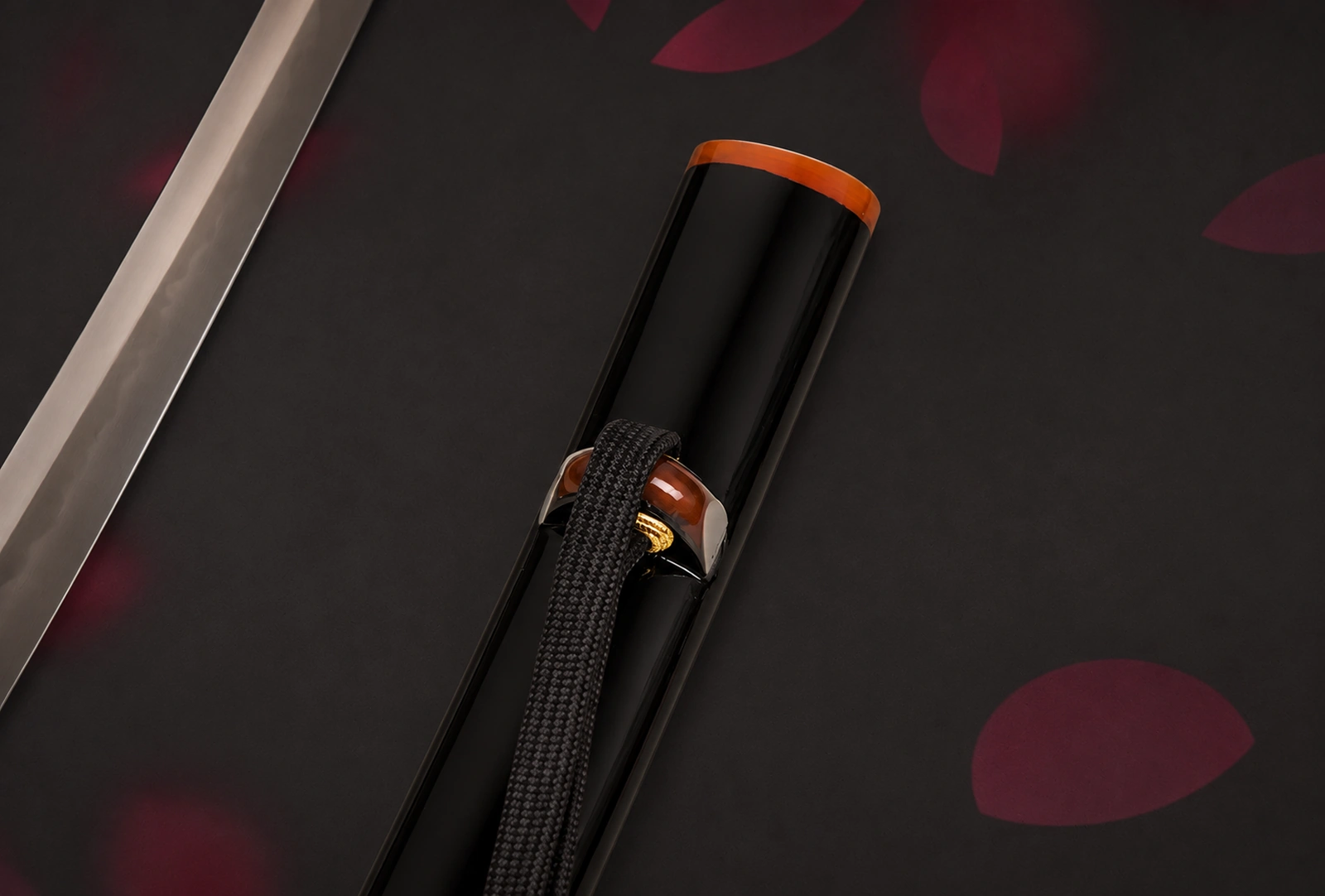
Horn-fitted saya, with a paper-padded grip.

As the blade turns, the movement of the hamon becomes easier to see.

Each blade follows a similar chōji-style pattern, but its exact form is individual.

Two finished blades will not have precisely the same hamon.

A wider hardened area may leave some scope for reshaping and repolishing after edge damage.

Some blades may show fine nie activity along the hardened area.

That detail varies from blade to blade and cannot be guaranteed on every sword.

The flowing hamon remains this blade’s defining visual feature.

The lively temper pattern is complemented by a carefully polished surface.

For those drawn to irregular hamon, this is a sword worth a closer look.

In short, a full-steel katana distinguished by its chōji-midare hamon.

Technical Overview

Core specifications.

Nagasa
710 mm
Motohaba
32 mm
Motokasane
7 mm
Tsuka Length
250 mm
Overall Length
1010 mm
Weight without Saya
940 g
Weight with Saya
1190 g
Handmade product dimensions may vary slightly.
Blade & Craft

Blade craftsmanship.

Construction
Maru Construction
Blade Material
Workshop Steel — Grade Undisclosed
Heat Treatment
Clay Tempering
Hamon
Clay-Tempered Hamon
Hamon Pattern
Chōji-midare
Polish
Japanese-Style Polish

Description

01 / THE RHYTHM OF THE HAMON

A Line That
Never Repeats.

Under still light, a chōji-midare hamon rises and recedes along the polished edge. Its changing contours suggest movement — a line shaped by craft, yet never identical from one blade to the next.
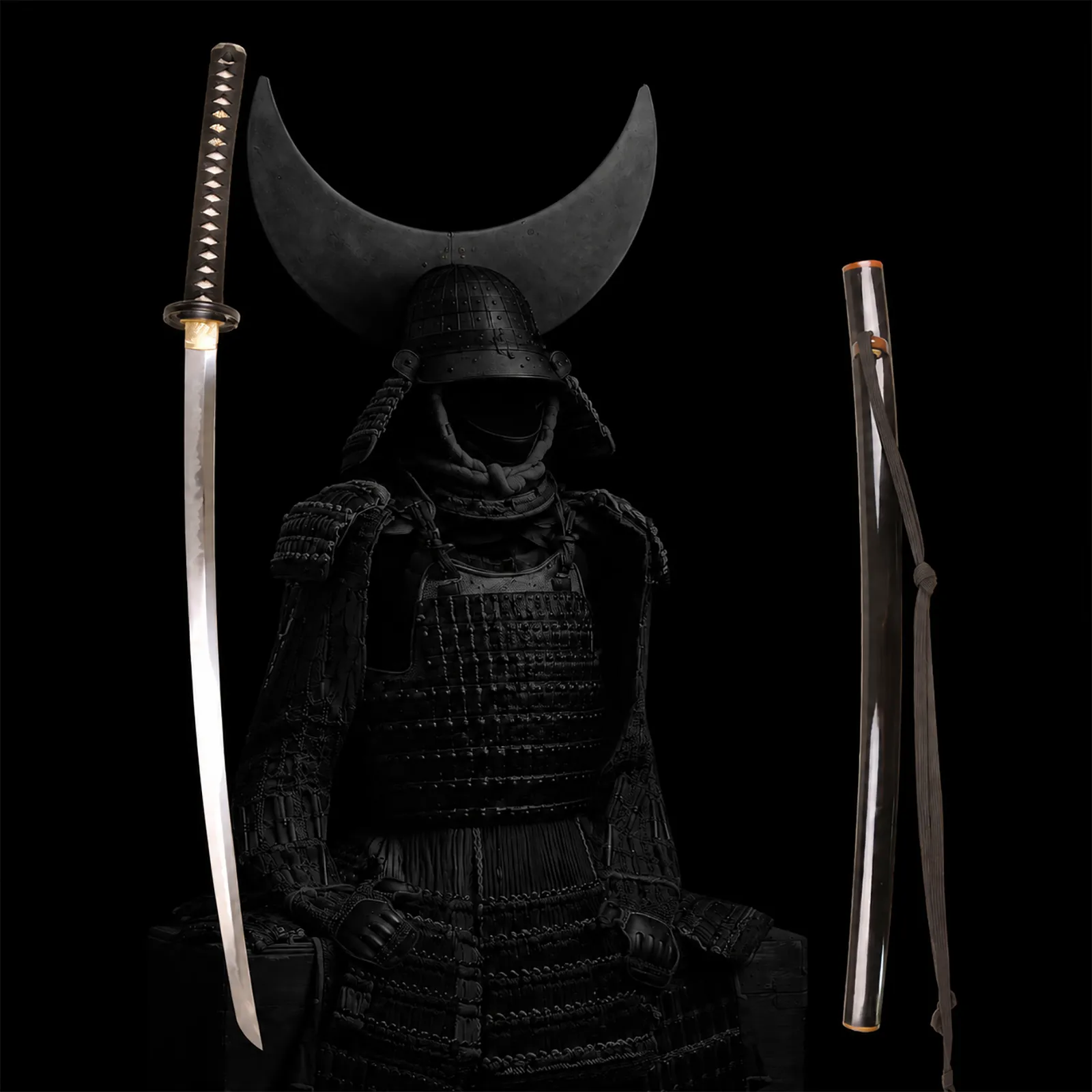
Chōji-midare katana with a polished blade and black wrapped handle beside dark samurai armor and a matching lacquered saya
A chōji-midare hamon, black mountings, and a horn-fitted saya against the quiet silhouette of samurai armor.

THE TEMPER LINE

Movement Held in Steel.

The blade follows a single-steel Maru construction. Clay tempering brings forward a chōji-midare hamon, with irregular rises and sweeping turns that lend the cutting edge its distinctive character.

The pattern belongs to a recognizable tradition, but its precise course is individual. Some crests gather closely; others open into broader curves. Japanese-style polishing allows these transitions to emerge in the reflected light.

Black tsukamaki and dark fittings keep the silhouette restrained. Beside the drawn blade, the lacquered, horn-fitted saya holds a thin reflection. Nothing competes with the changing line in the steel.

A FORM, NEVER A COPY

The work is deliberate. The final line is individual. What heat leaves in steel can be studied, but never repeated in precisely the same way.

AFTER THE QUENCH

The steel comes to rest.
Its line keeps moving.

A first encounter with the chōji-midare hamon — before the blade’s tempering, finish, and details come into closer view.

02 / A CLOSER READING

What Fire
Leaves Behind.

At a distance, the blade is a single bright line. Up close, the temper pattern rises and recedes in unexpected rhythms. The mountings offer a quieter counterpoint: dark steel, black lacquer, and measured touches of brass.

BLACK STEEL / BRASS / LACQUER

A Study in Restraint.

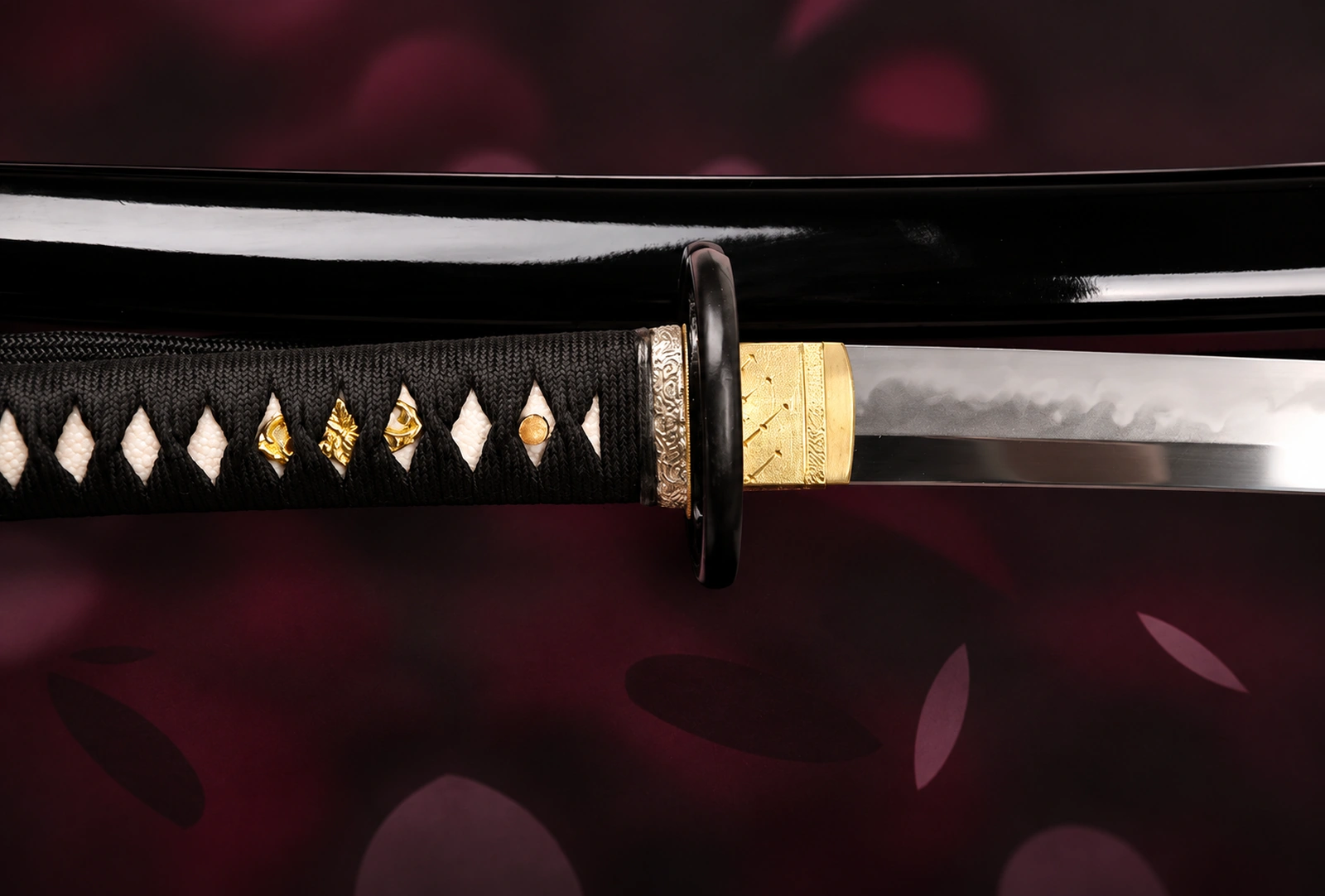
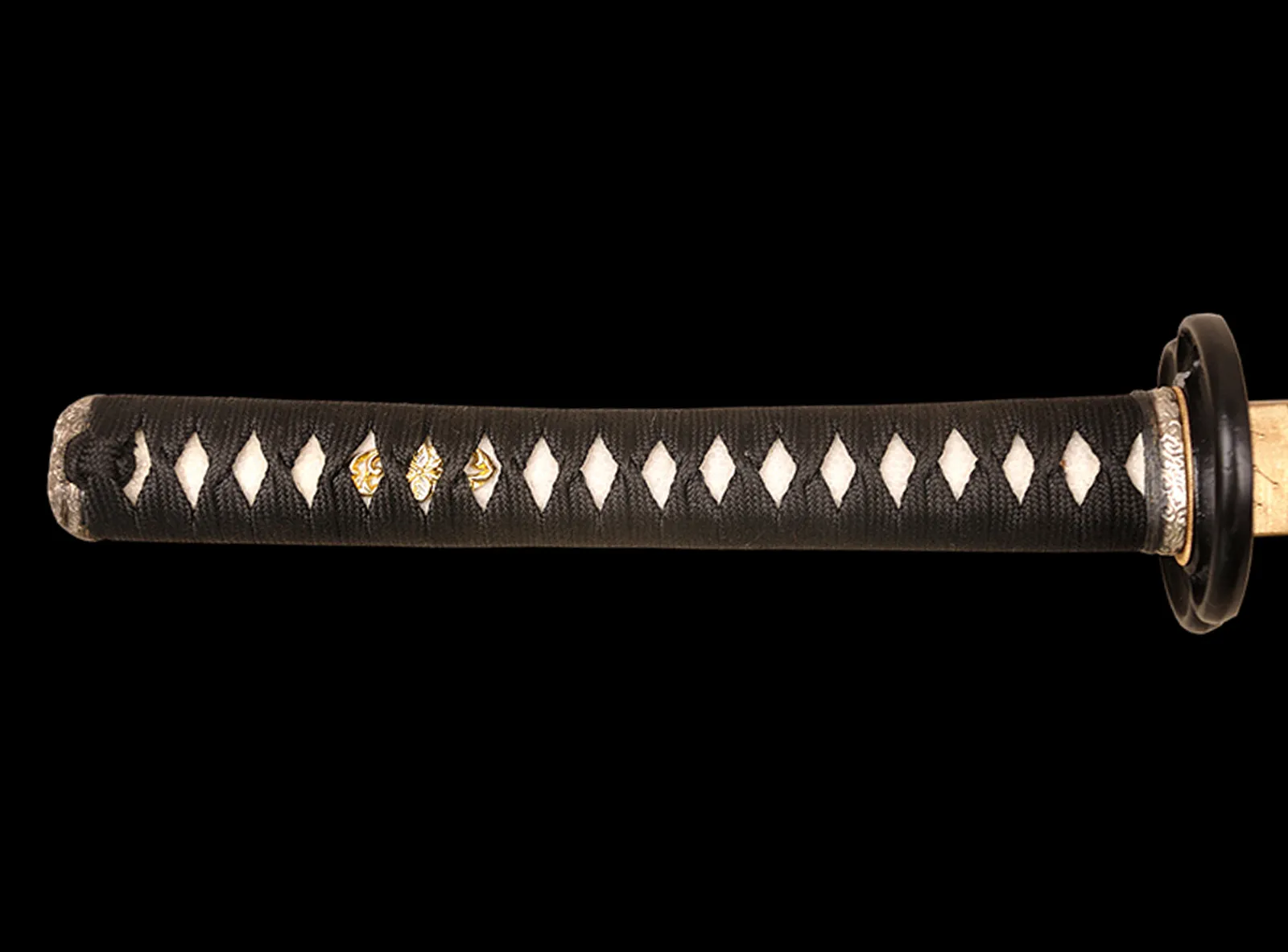
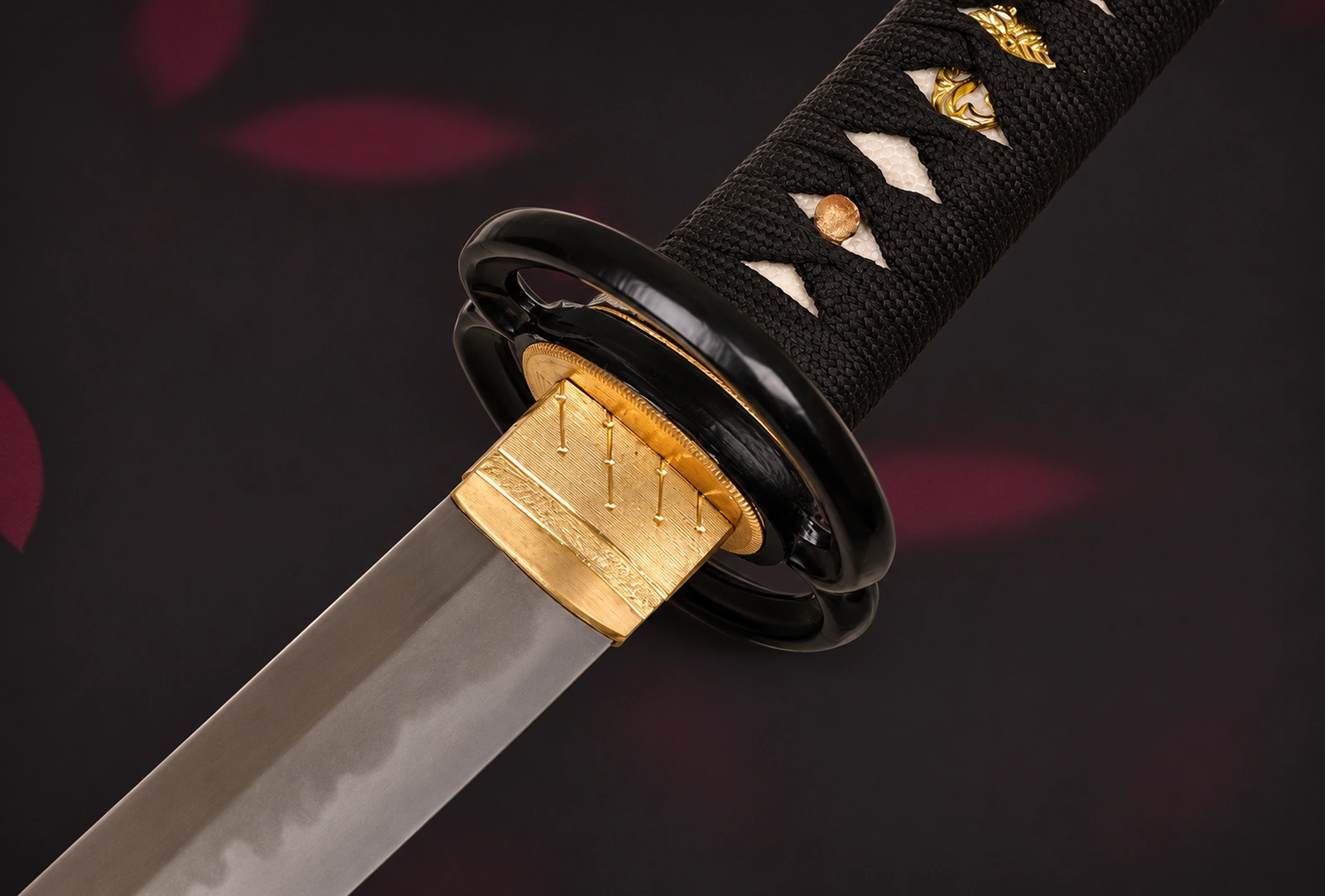
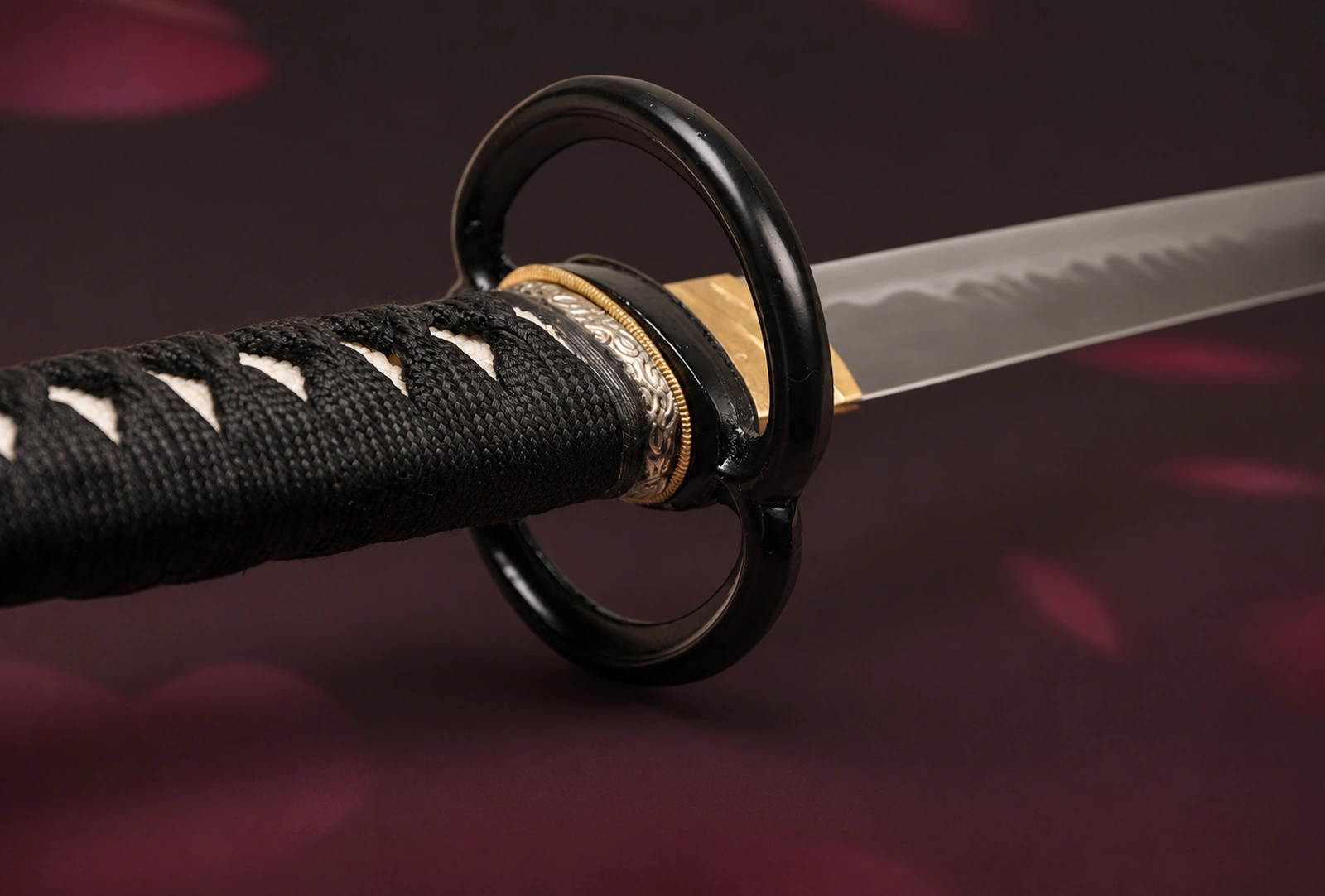
The blackened steel tsuba frames a warm brass habaki. Along the handle, black diamond-pattern tsukamaki opens onto white samegawa and small brass menuki. The details are distinct, yet none asks to stand apart from the blade.

The silk-cotton wrapping is formed over hishigami paper supports, preserving the definition of the diamonds and the feel of the grip.
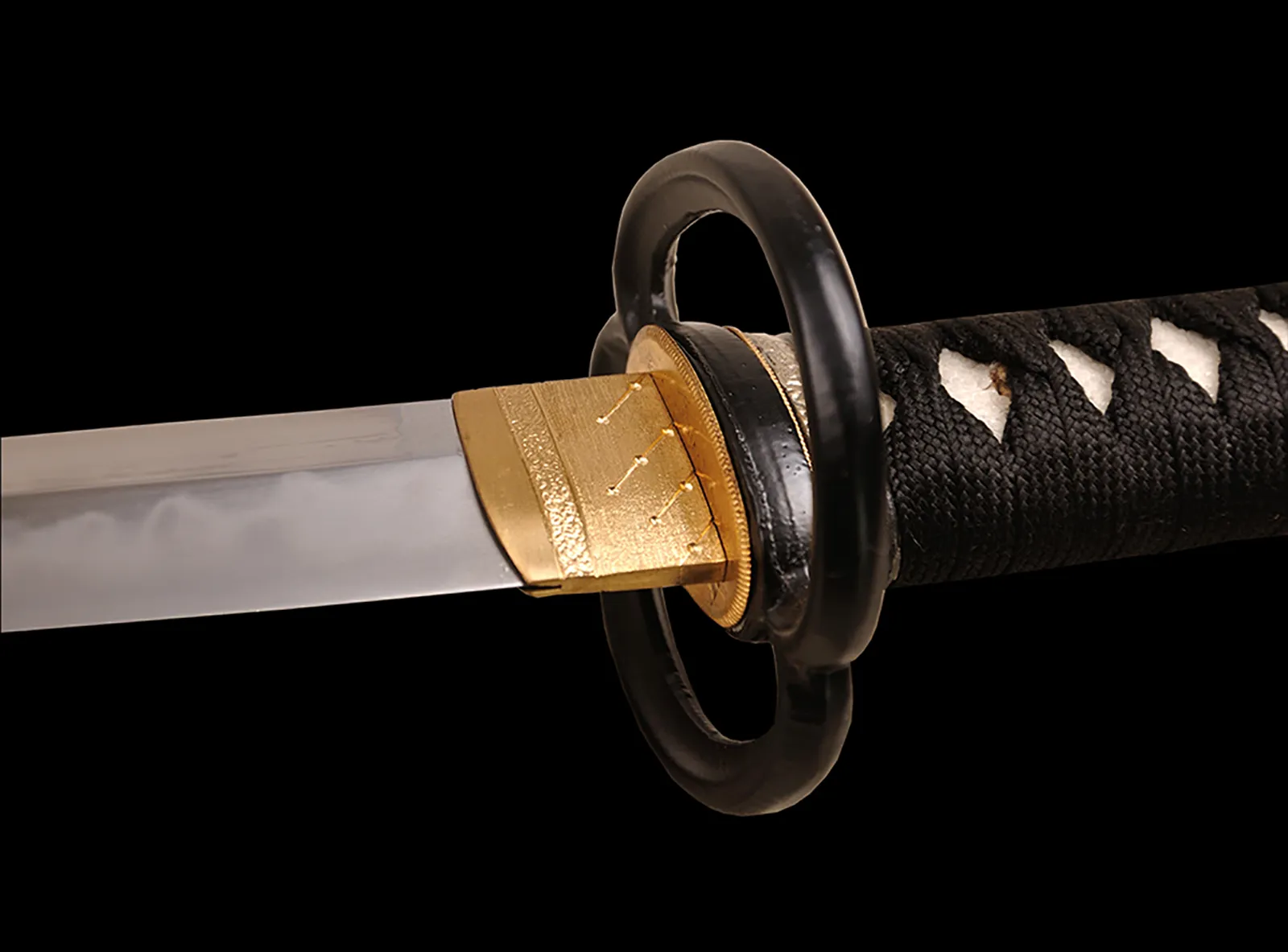
Close-up of black steel tsuba, brass habaki and seppa, black tsuka wrap and polished katana blade
A dark tsuba, fitted seppa, and brass habaki — restraint at the threshold of the blade.
Black diamond-pattern tsuka-ito with white rayskin openings and small gold-colored menuki
Black tsukamaki, white samegawa, and brass menuki held within the pattern of the grip.
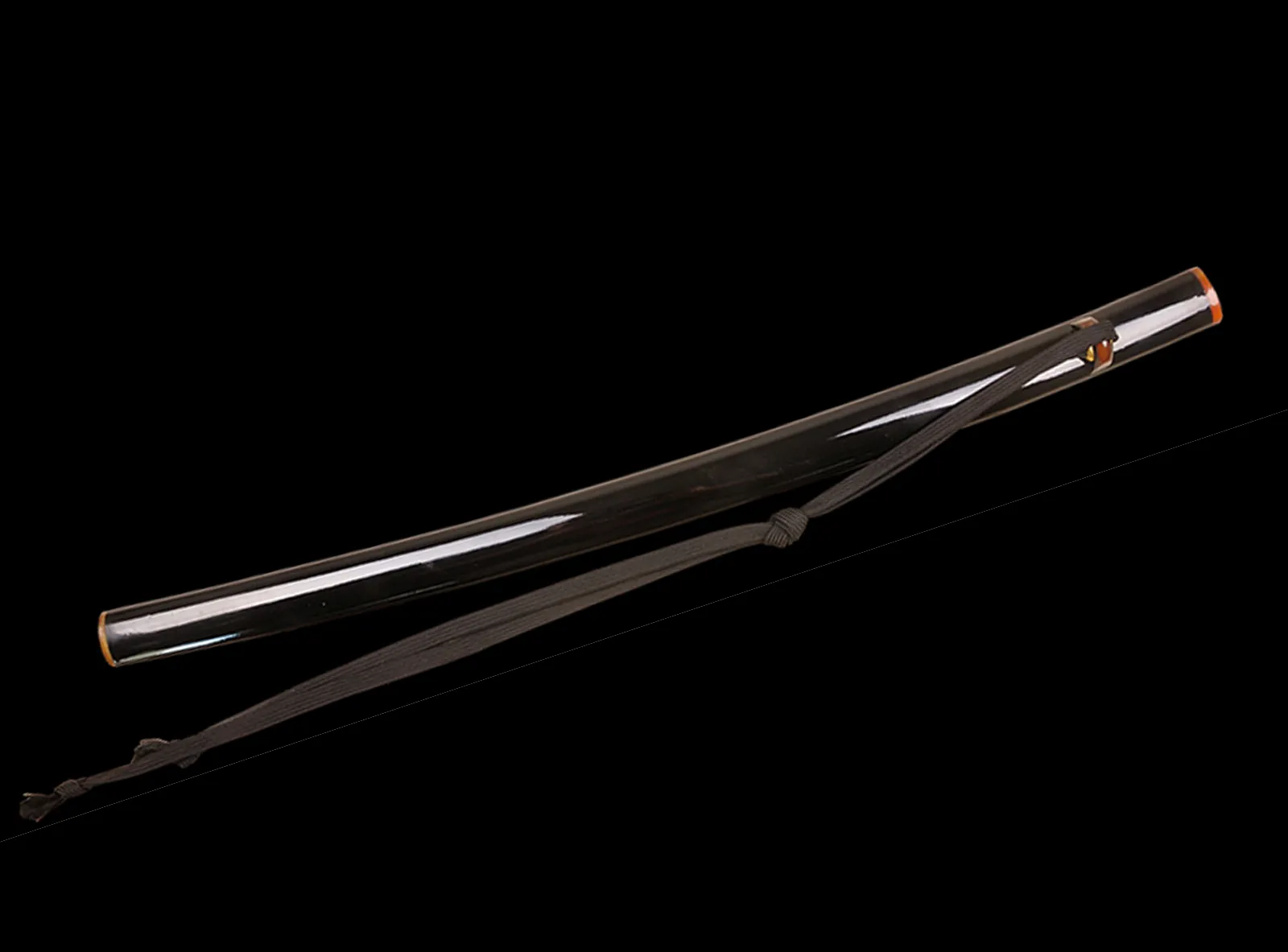
Black lacquered horn-fitted saya shown with a dark sageo cord against a black background
A horn-fitted lacquered saya, its curved reflection accompanied by a dark sageo.

CLAY TEMPERING / CHŌJI-MIDARE

The Shape of the Quench.

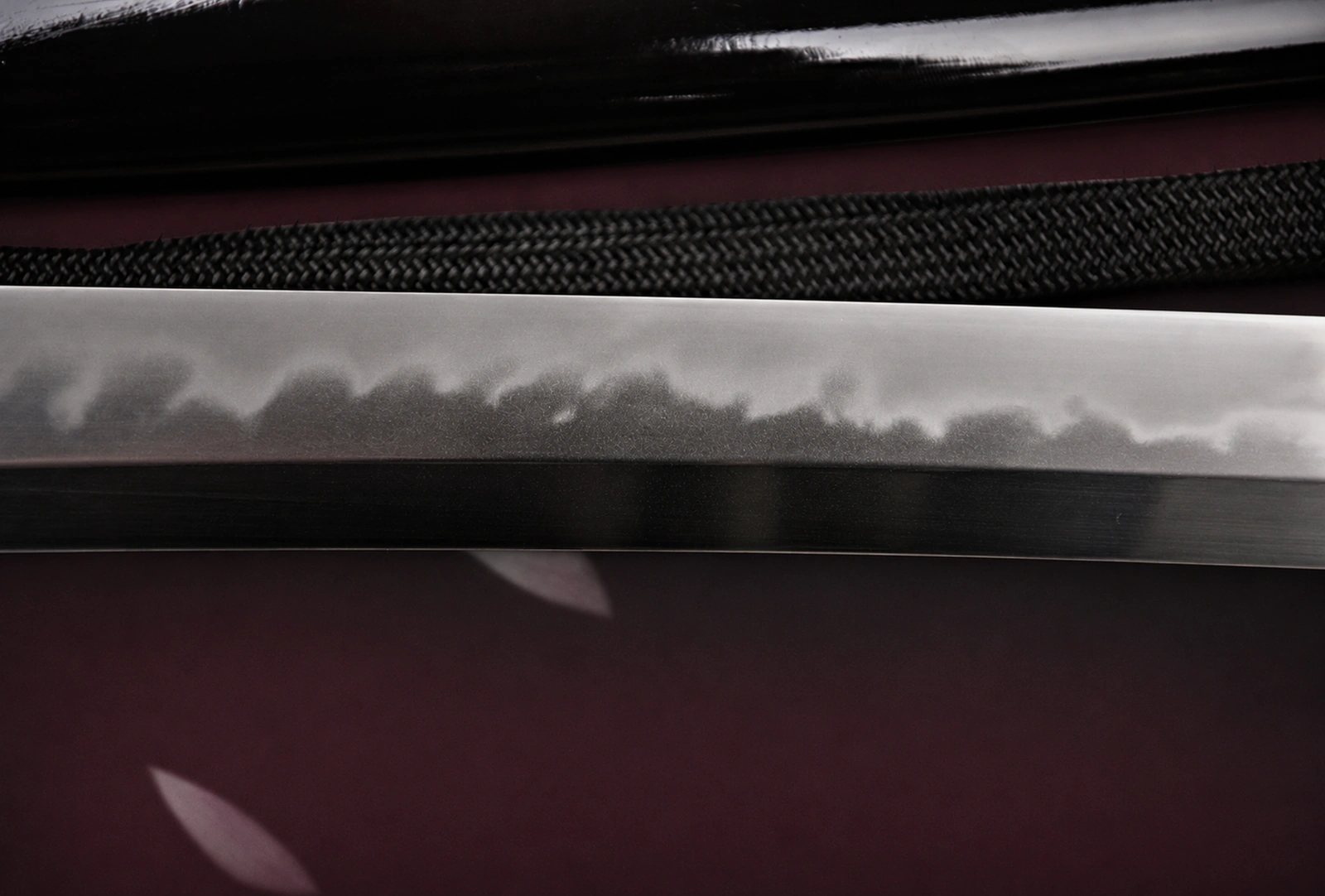
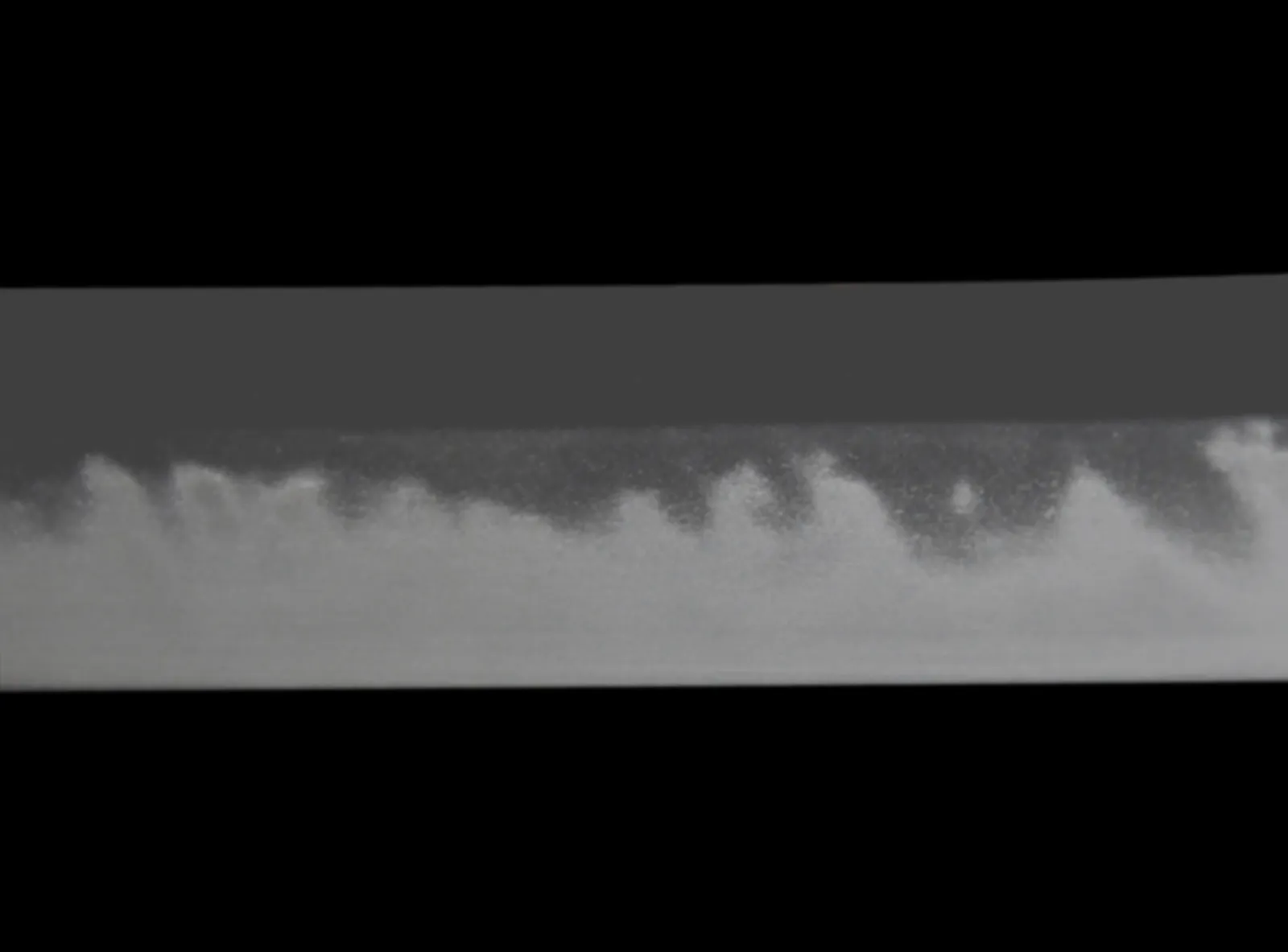
A single-steel Maru blade receives clay tempering. Along its edge, the Chōji-midare hamon forms a lively sequence of rising, clove-like shapes rather than a uniform wave.

Japanese-style polishing makes the boundary legible in changing light. The broad and narrow passages can be studied, but their exact course belongs to this individual blade.
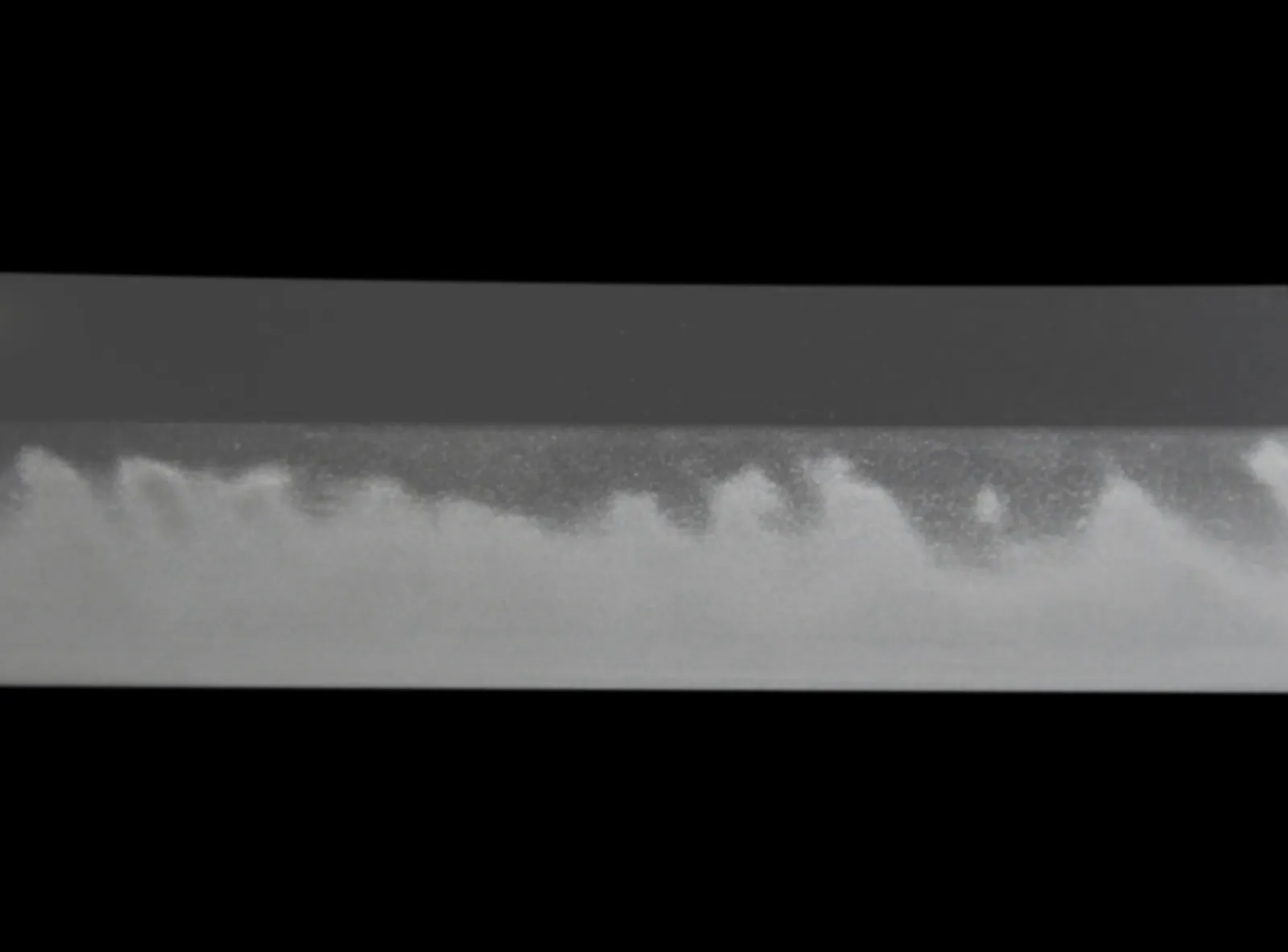
Horizontal blade close-up showing a bright irregular Choji-midare hamon below a darker polished steel surface
Study I — the hamon rises into closely gathered crests along the polished edge.
Close study of clove-shaped Choji-midare temper figures along the silver and dark steel boundary
Study II — neighboring peaks differ in height, spacing, and softness of outline.

THE LINE IS NOT A STENCIL

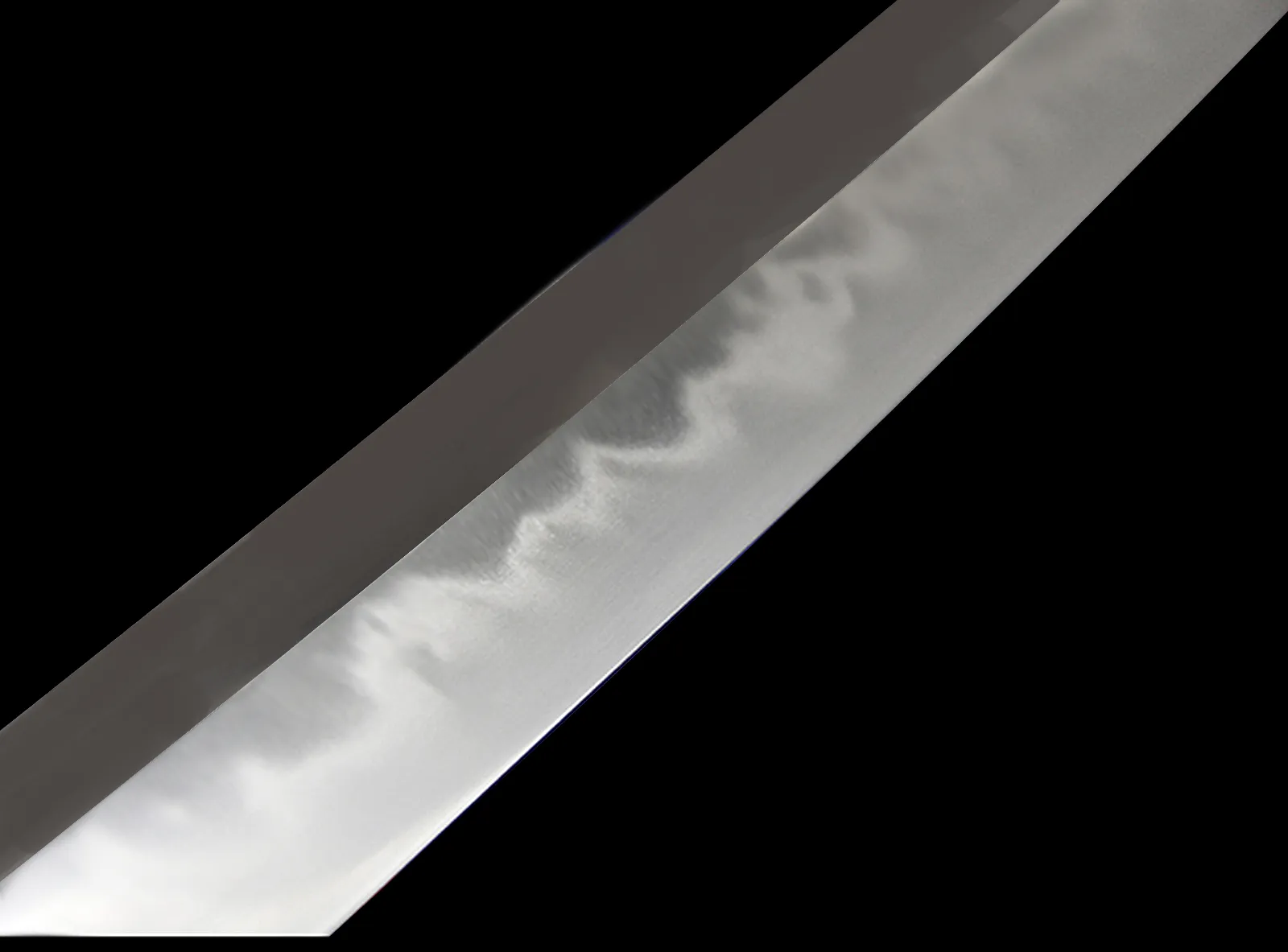
The Chōji-midare pattern has a recognizable character, but not a fixed outline. Its small changes in rhythm are part of what makes the hardened edge worth looking at closely.
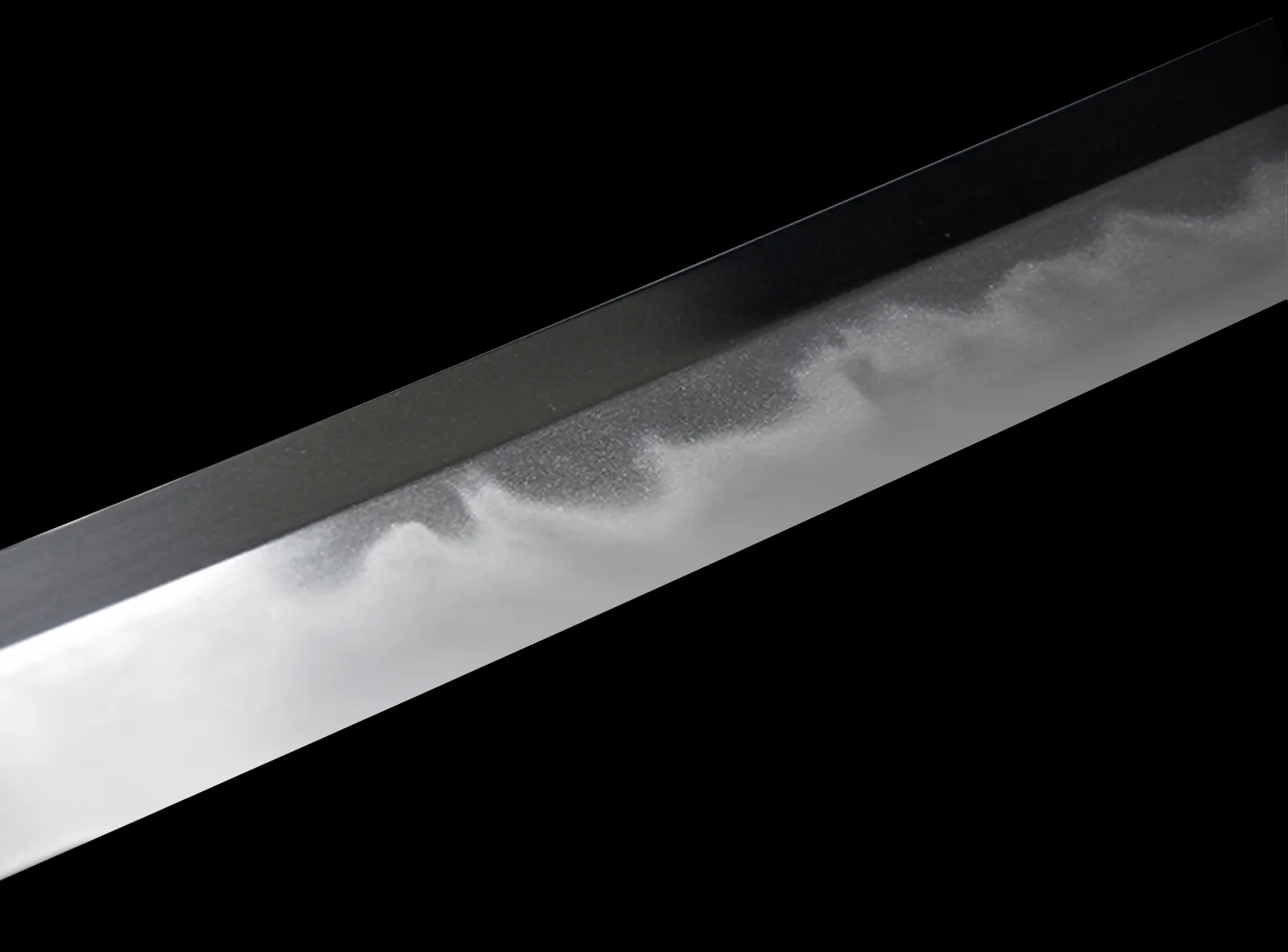
Diagonal view of a polished katana blade with an irregular clove-shaped Choji-midare temper line
Study III — the diagonal view follows a longer sweep of the hamon.
Diagonal blade close-up showing pronounced Choji-midare crests and the contrast between hardened edge and darker steel
Study IV — taller crests emerge, then fall away into a quieter stretch of steel.

A LINE HELD IN STEEL

Fire draws the boundary.
Light lets us follow it.

03 / THE COLLECTOR'S GALLERY

What the Eye Returns To.

A black silhouette, a little warm brass, and the brief passage of red petals. Seen as a whole, this katana holds a reserved elegance. Seen closely, the changing temper line gives the eye a reason to stay.
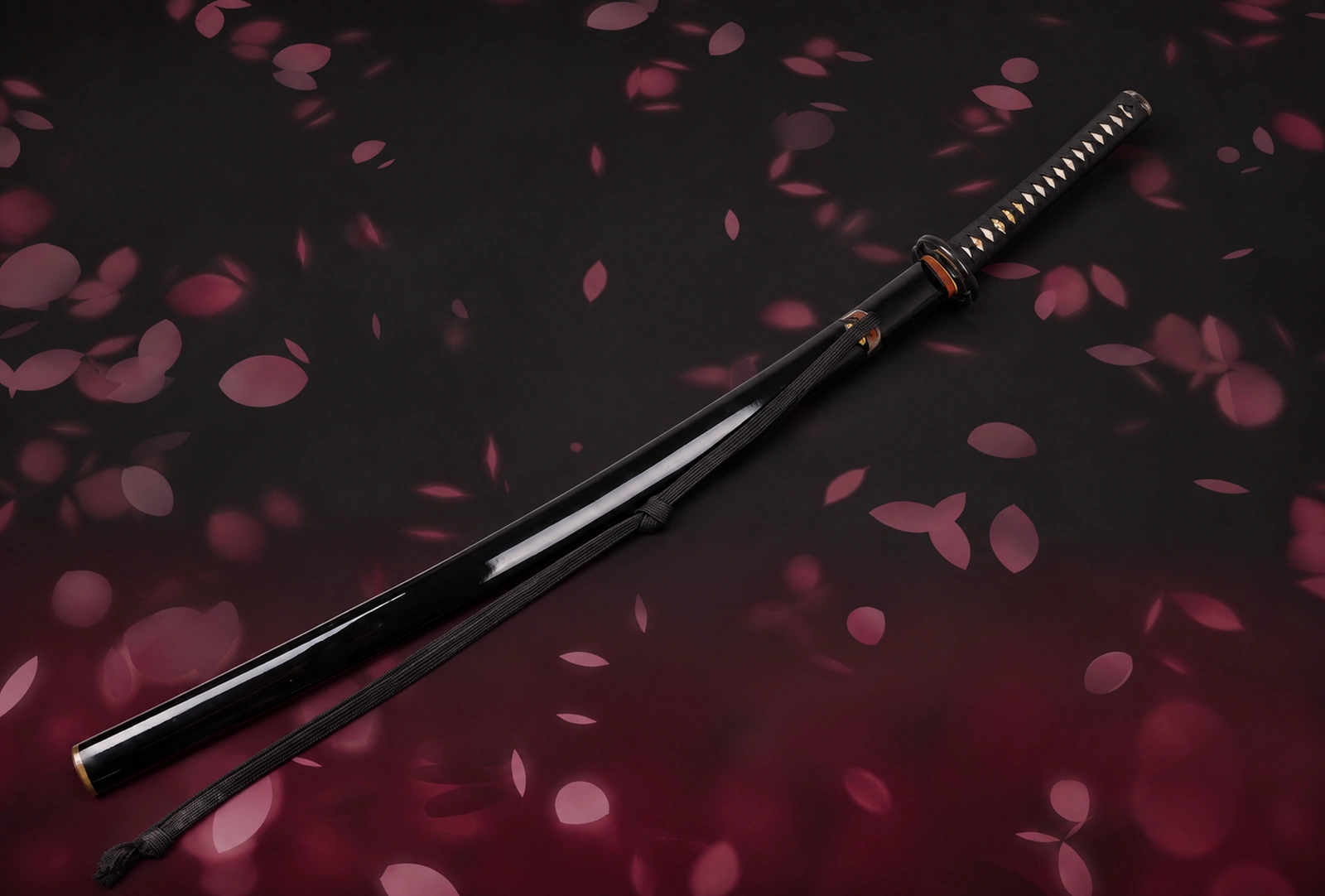
Black-sheathed katana displayed diagonally against a dark background scattered with red petals
The quiet outline of the katana, framed by dark lacquer and drifting red petals.

BLACK LACQUER / RED PETALS

A Silhouette in Stillness.

The composition begins with a single outline: black saya, dark wrapping, and a blade held out of sight. In the falling petals, restraint becomes its own kind of presence.
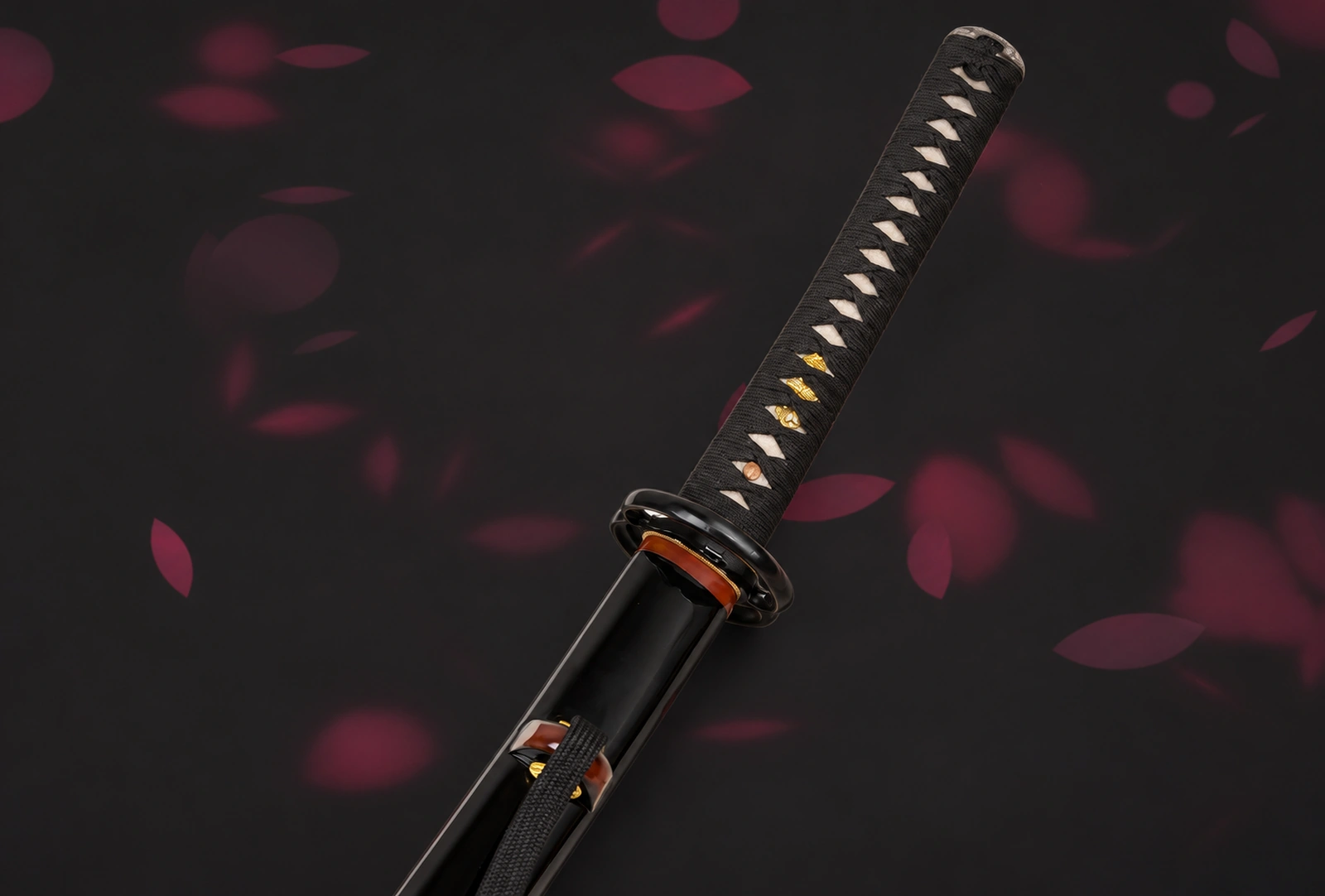
Angled portrait of a black-handled katana beside its black lacquered saya on a red-petal background
A slight shift of angle reveals the harmony between handle and scabbard.
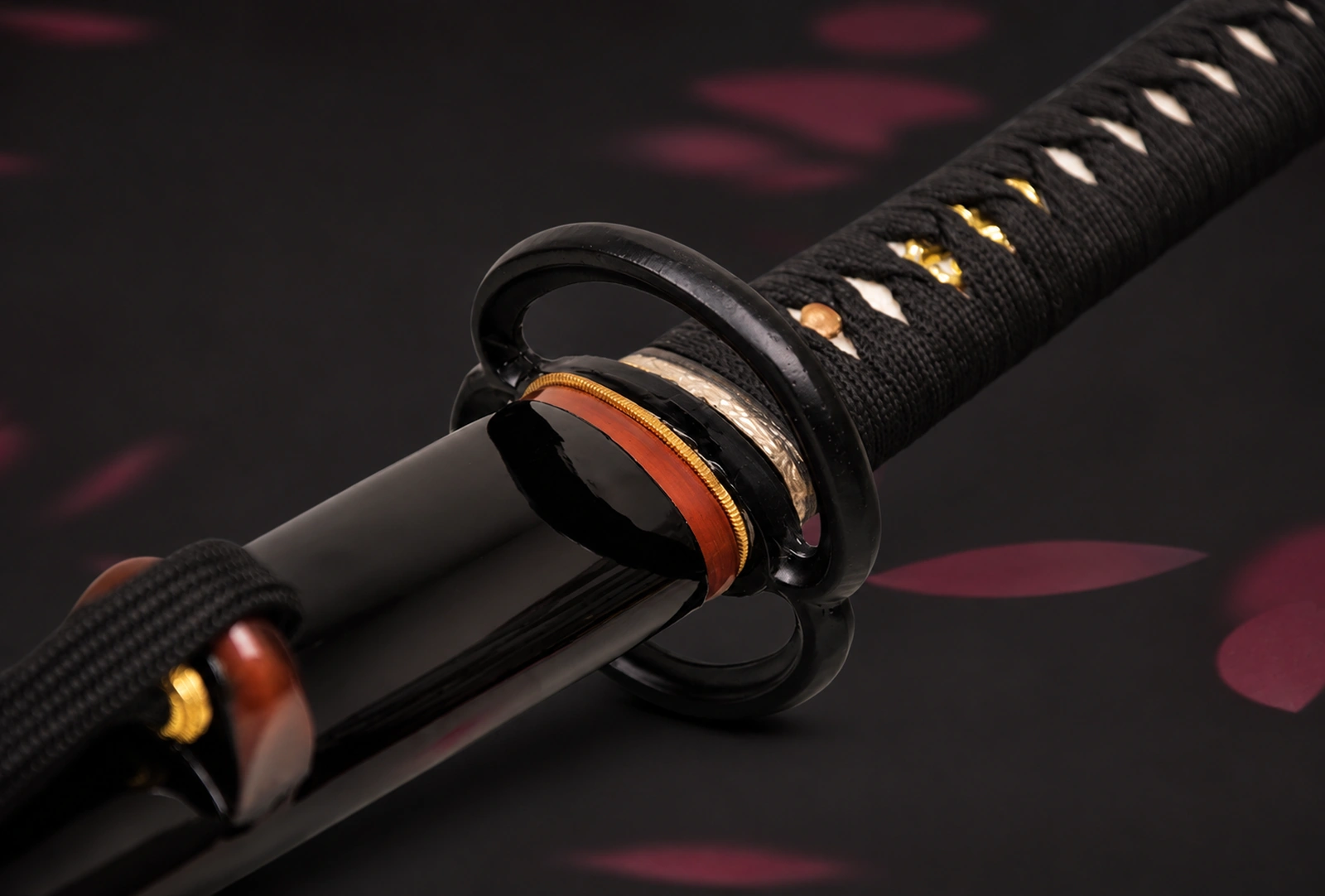
Close view of black katana tsuka wrapping and black lacquered saya fittings with warm metal accents
The dark tsukamaki meets the lacquered saya.

THE SWORD REVEALED

A Line Through the Dark.

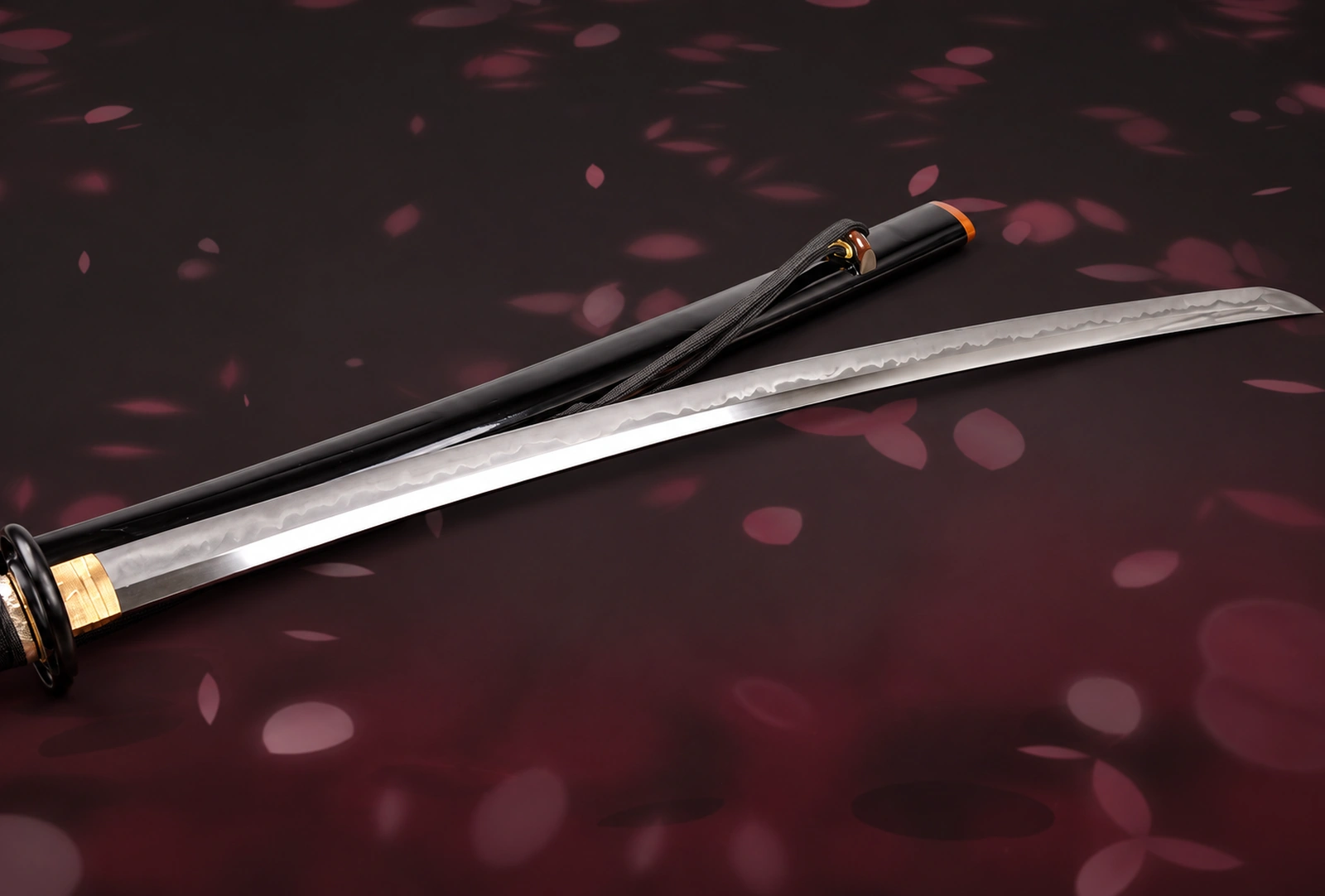
Beside the dark scabbard, the exposed blade changes the balance of the scene. Its curved length is simple at a distance; its hamon is anything but simple up close.
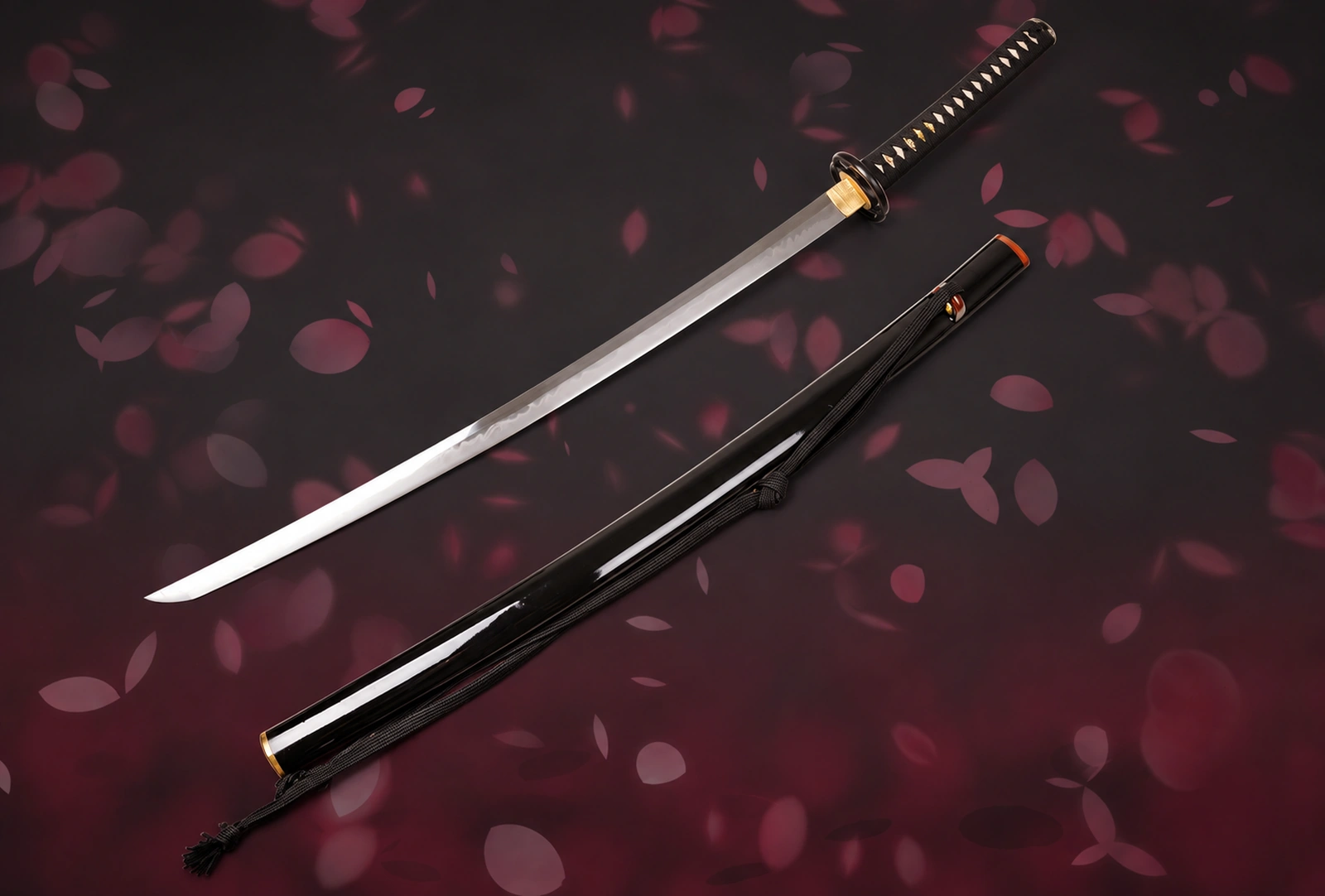
Full unsheathed katana with dark hilt and lacquered saya arranged over scattered crimson petals
Unsheathed, the bright curve interrupts the deep-red field.

IRON / BRASS / HAND-WRAPPED SILK-COTTON

The Weight of Small Details.

A dark tsuba guards the transition from grip to blade. The brass habaki brings a brief warm reflection, while the black tsukamaki and pale openings of the wrap keep the composition quietly measured.
Detail of gold-toned katana habaki, black tsuba and textured black tsuka wrapping
A flash of brass at the habaki, enclosed by the dark tsuba.
Close photograph of black katana handle wrapping and dark tsuba against muted crimson petals
The black grip and diamond-pattern tsukamaki seen from another angle.
Black lacquered katana saya with dark sageo cord and warm-toned horn-fitted details
The long reflection of the horn-fitted lacquered saya.
Close view of black and white diamond-pattern katana handle beside a polished blade and gold-toned fitting
The grip returns to view: light through the wrap, brass at the blade.

THE BLADE IN CHANGING LIGHT

The mounting gives the blade its presence.
The temper line gives the eye somewhere to wander.

CHŌJI-MIDARE / THE EDGE

A Rhythm Without Repetition.

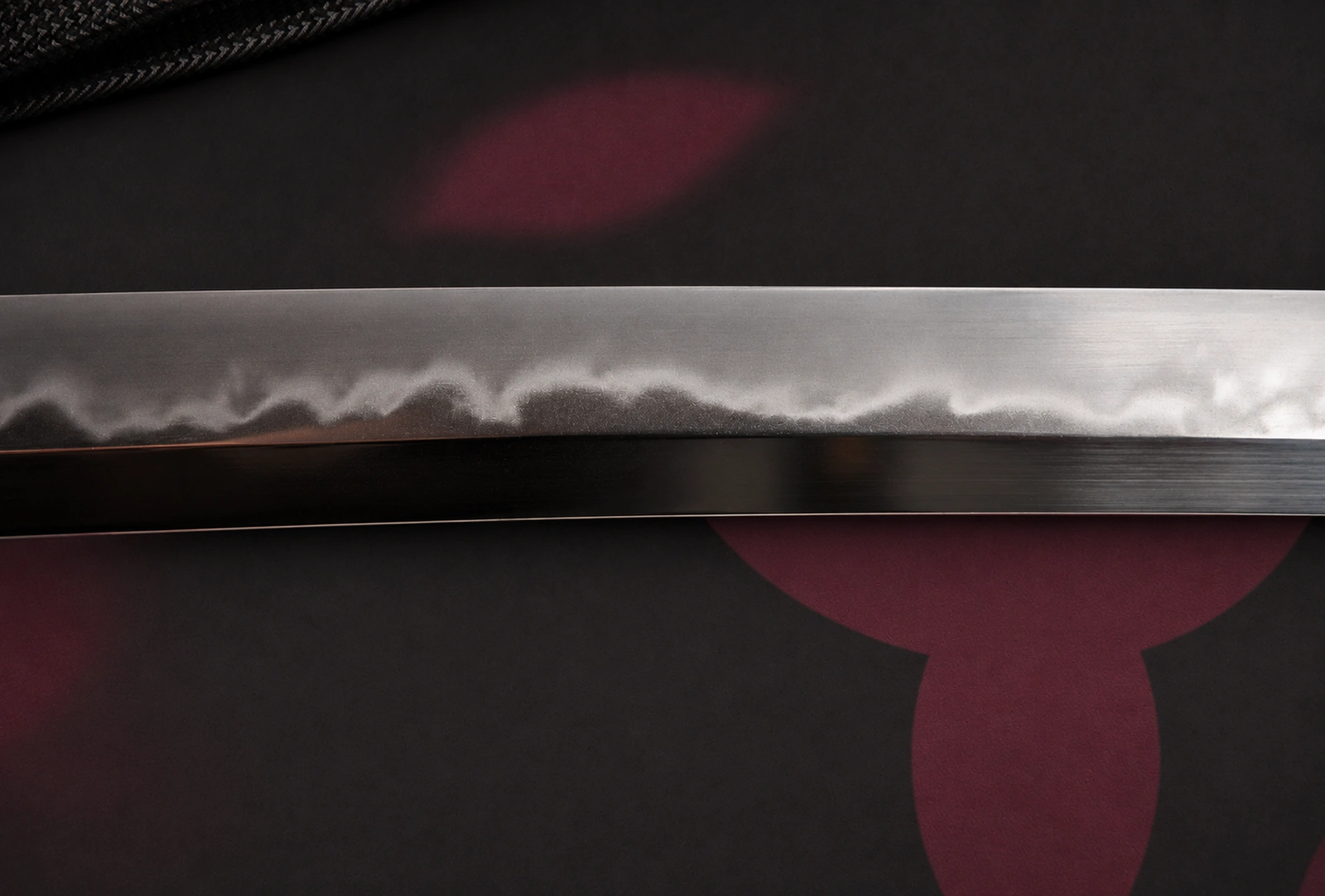
Across the polished steel, the Chōji-midare hamon rises and falls in clove-like forms. The pattern is recognizable, yet its individual turns resist perfect repetition. Here, the photographs allow the eye to follow that line rather than explain it away.
Unsheathed katana and dark saya displayed side by side diagonally above red petals
The complete work, with the drawn blade leading the eye toward its temper line.
Macro view of Choji-midare hamon with irregular pale clove-shaped peaks along the katana edge
First passage — small crests gather and separate along the hamon.
Close-up of a polished katana blade showing a bright irregular Choji-midare temper line
Second passage — light follows the uneven boundary of the hardened edge.

THE LAST TWO STUDIES

Where the Light Lingers.

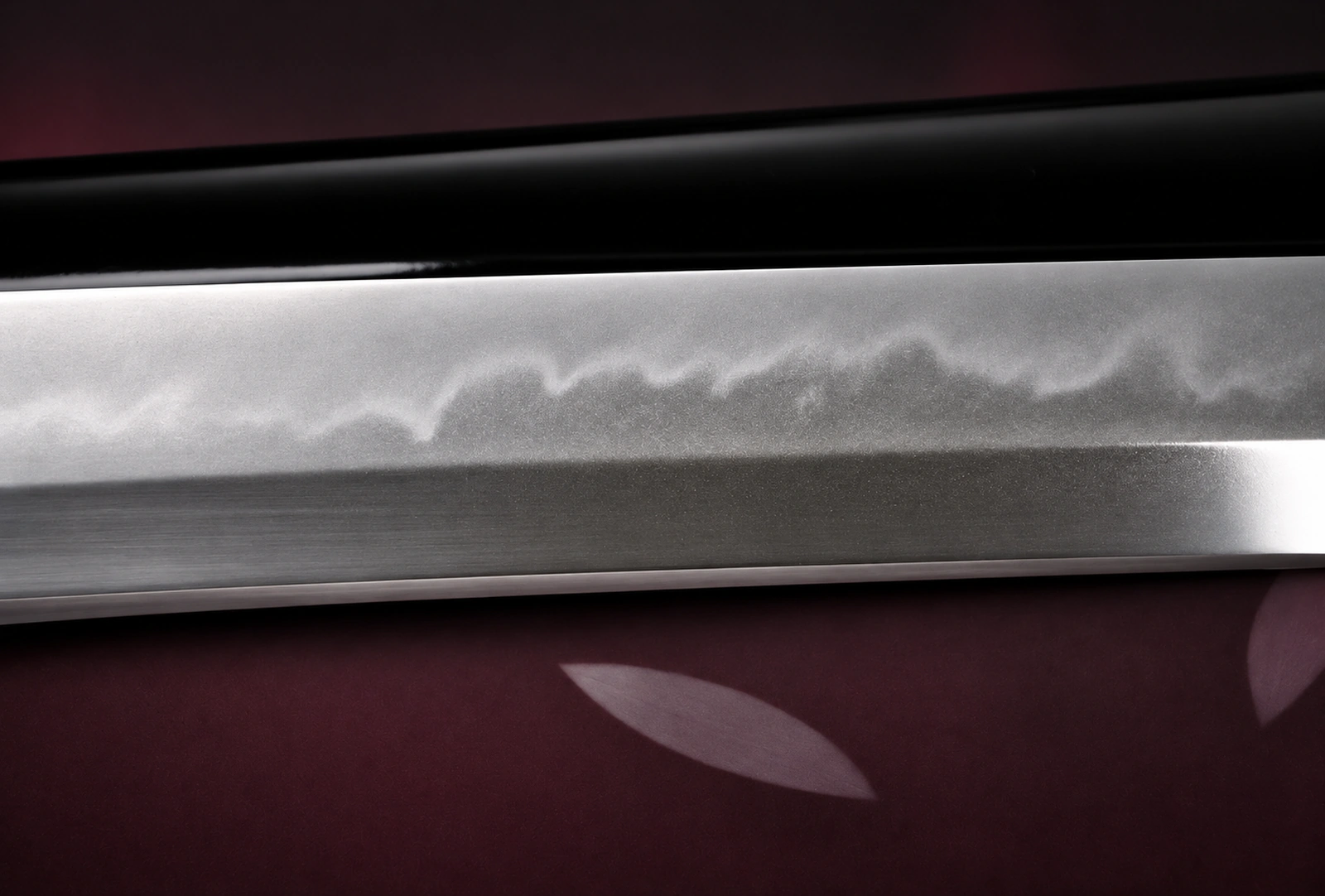
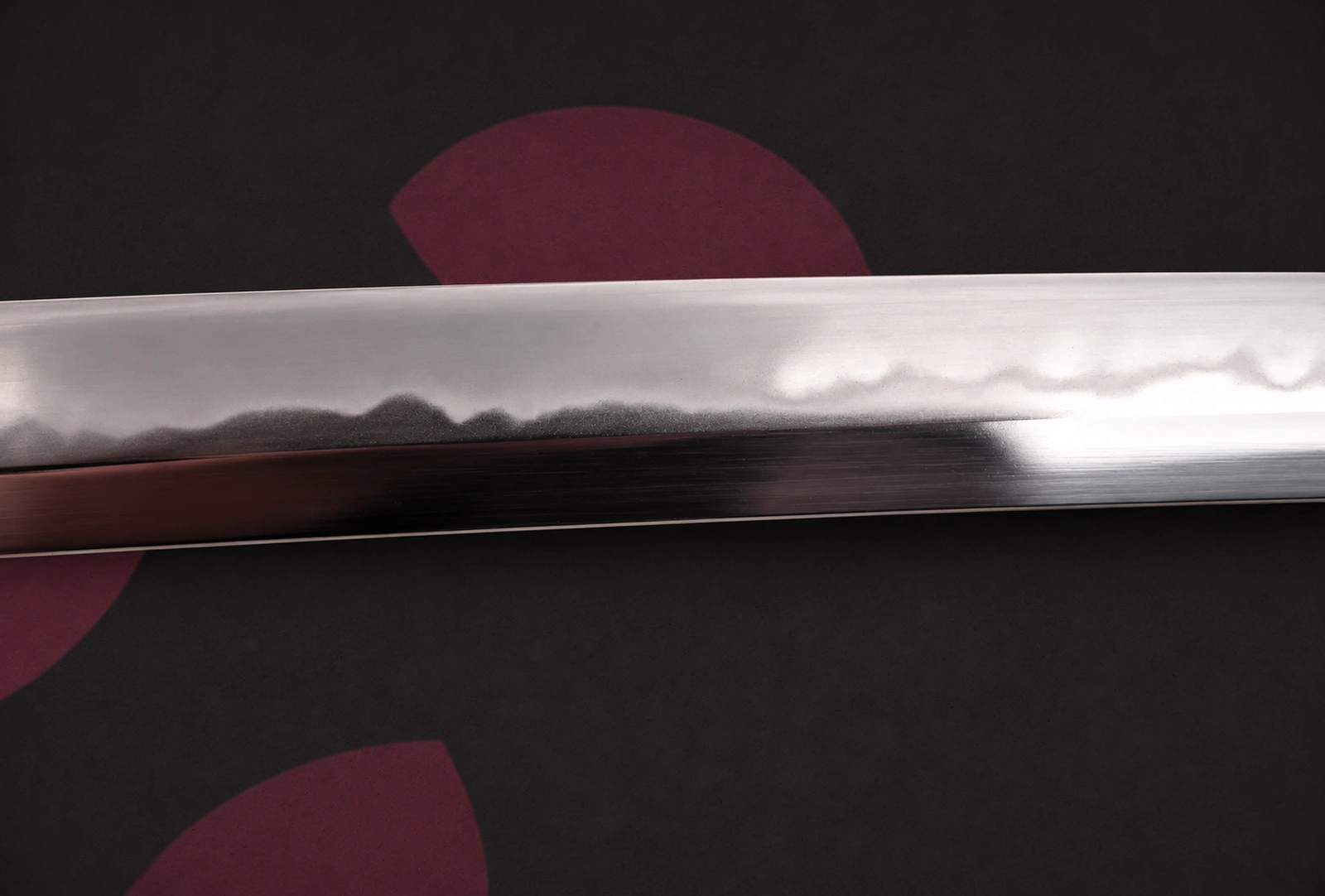
In a different reflection, the same hamon offers another reading: soft rising forms, calmer intervals, and polished steel that changes as the light moves.
Horizontal macro photograph of polished katana steel and the Chōji-midare temper pattern
A quieter stretch of the Chōji-midare pattern, seen in close light.
Extreme close-up of irregular Choji-midare hamon and reflective polished steel on a katana blade
The final curve — distinct in this blade, impossible to reduce to a fixed outline.

THE COLLECTOR'S GALLERY

The petals drift away.
The line remains.

Reviews

There are no reviews yet.

Be the first to review “Full-Steel Choji-Midare Katana”

Your email address will not be published. Required fields are marked *