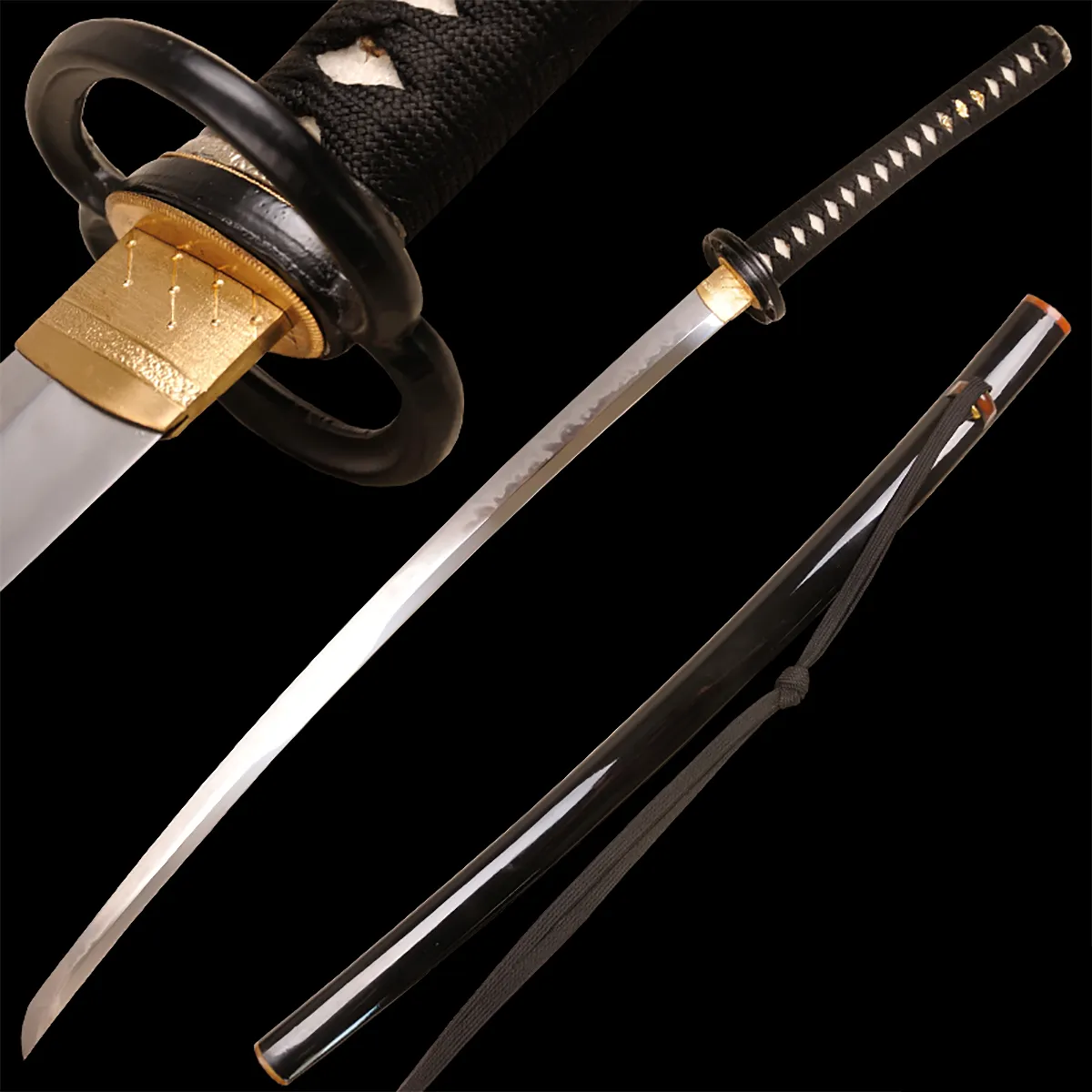
Description
01 / THE RHYTHM OF THE HAMON
A Line That
Never Repeats.
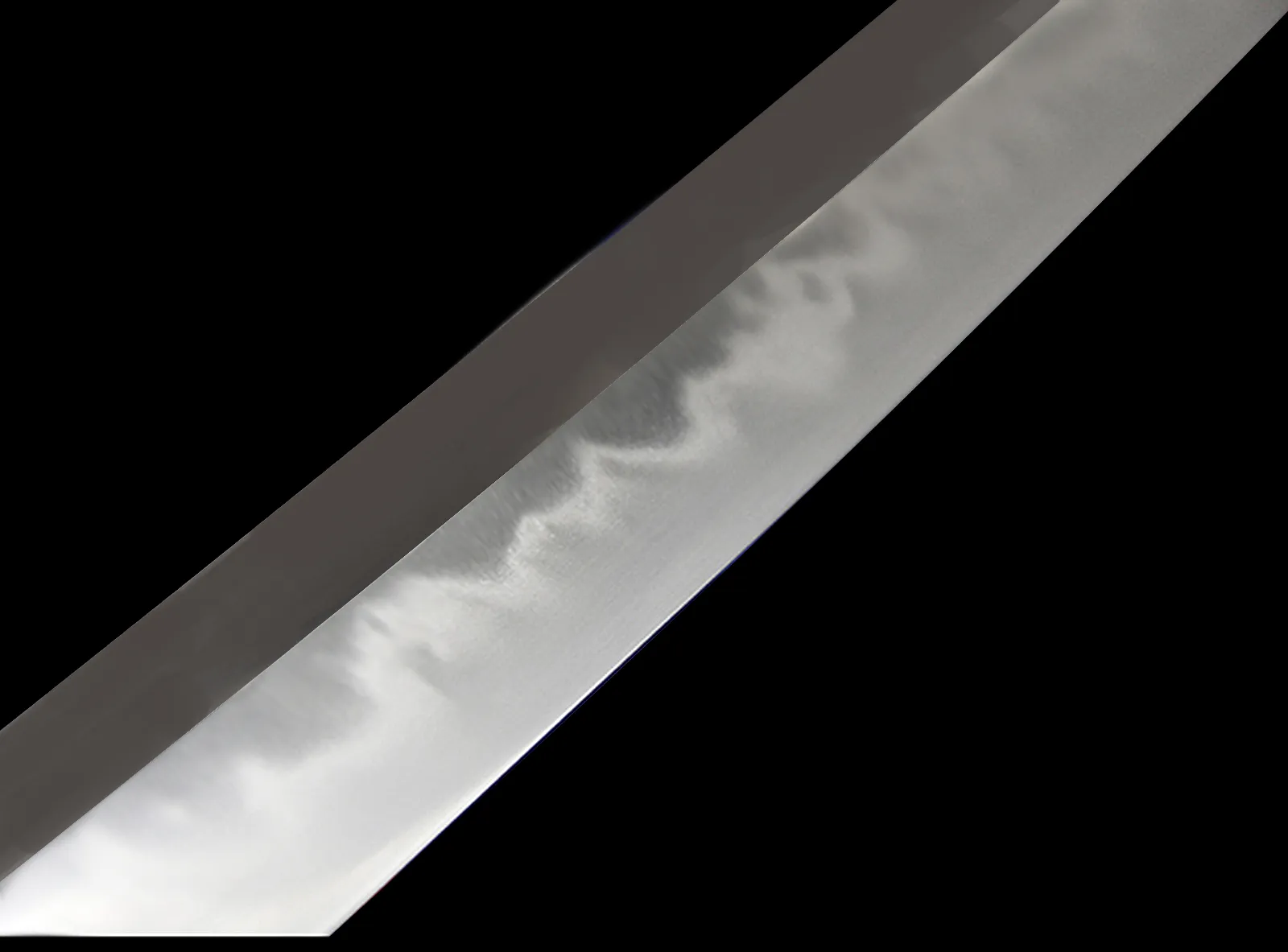
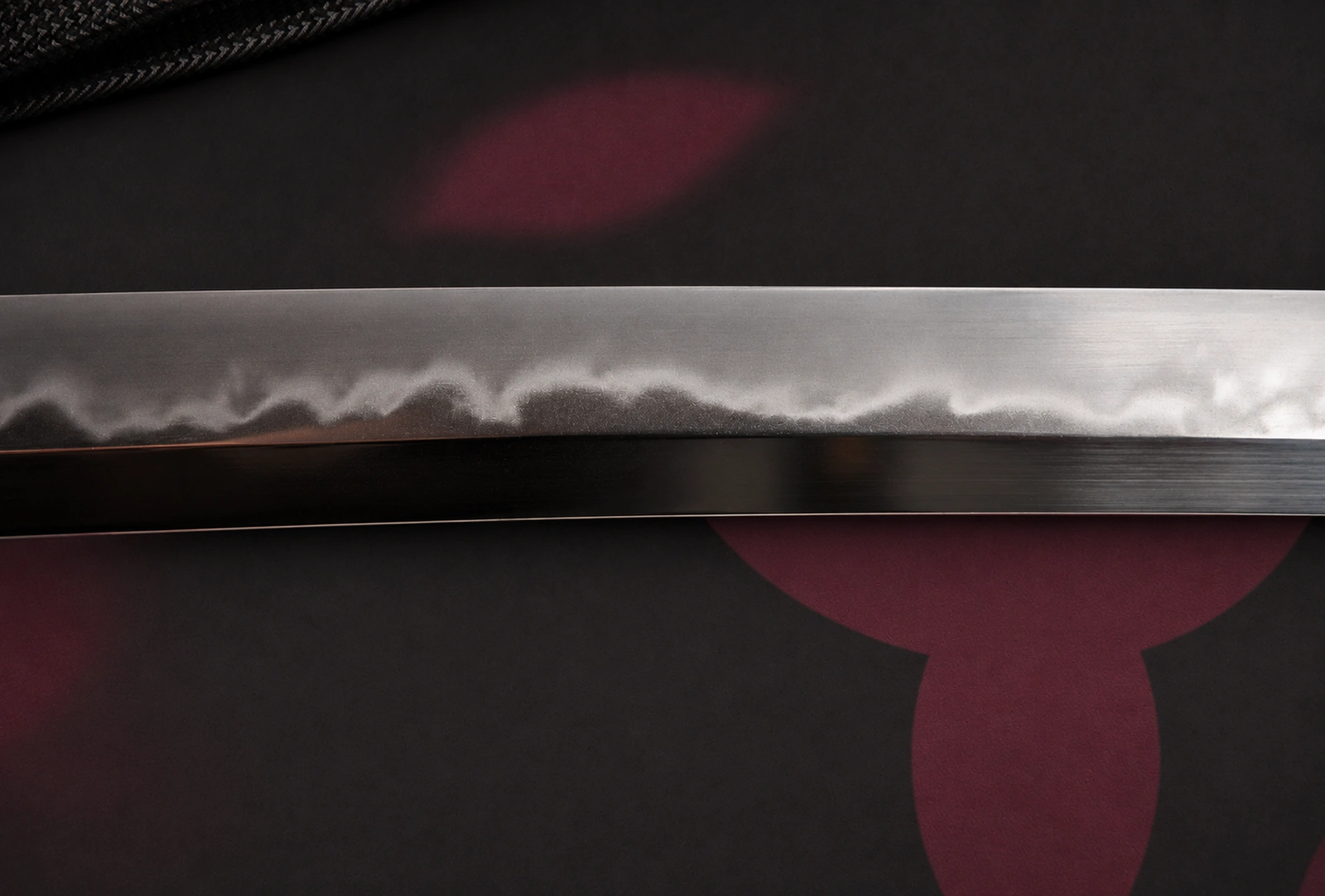
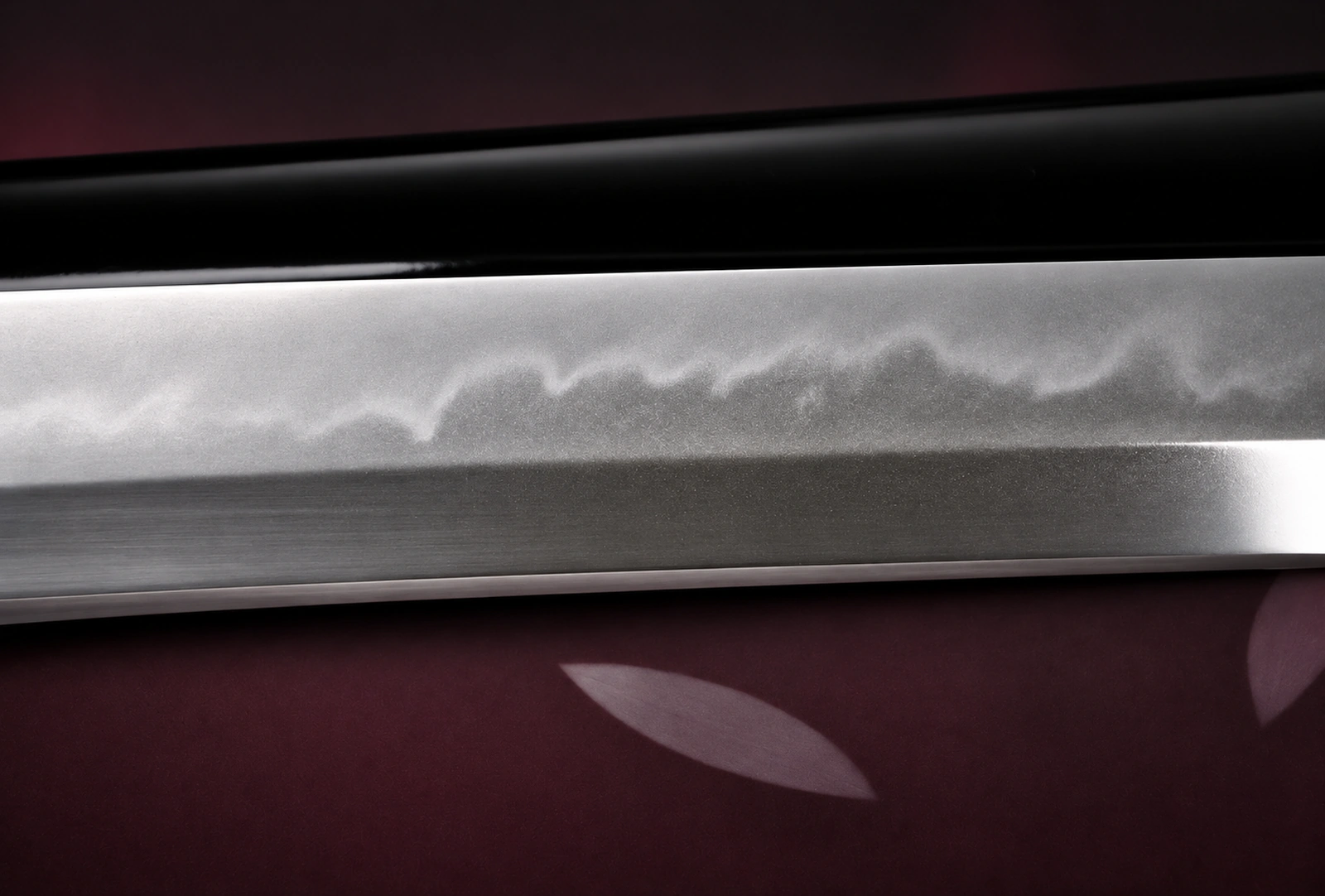
Under still light, a chōji-midare hamon rises and recedes along the polished edge. Its changing contours suggest movement — a line shaped by craft, yet never identical from one blade to the next.
THE TEMPER LINE
Movement Held in Steel.
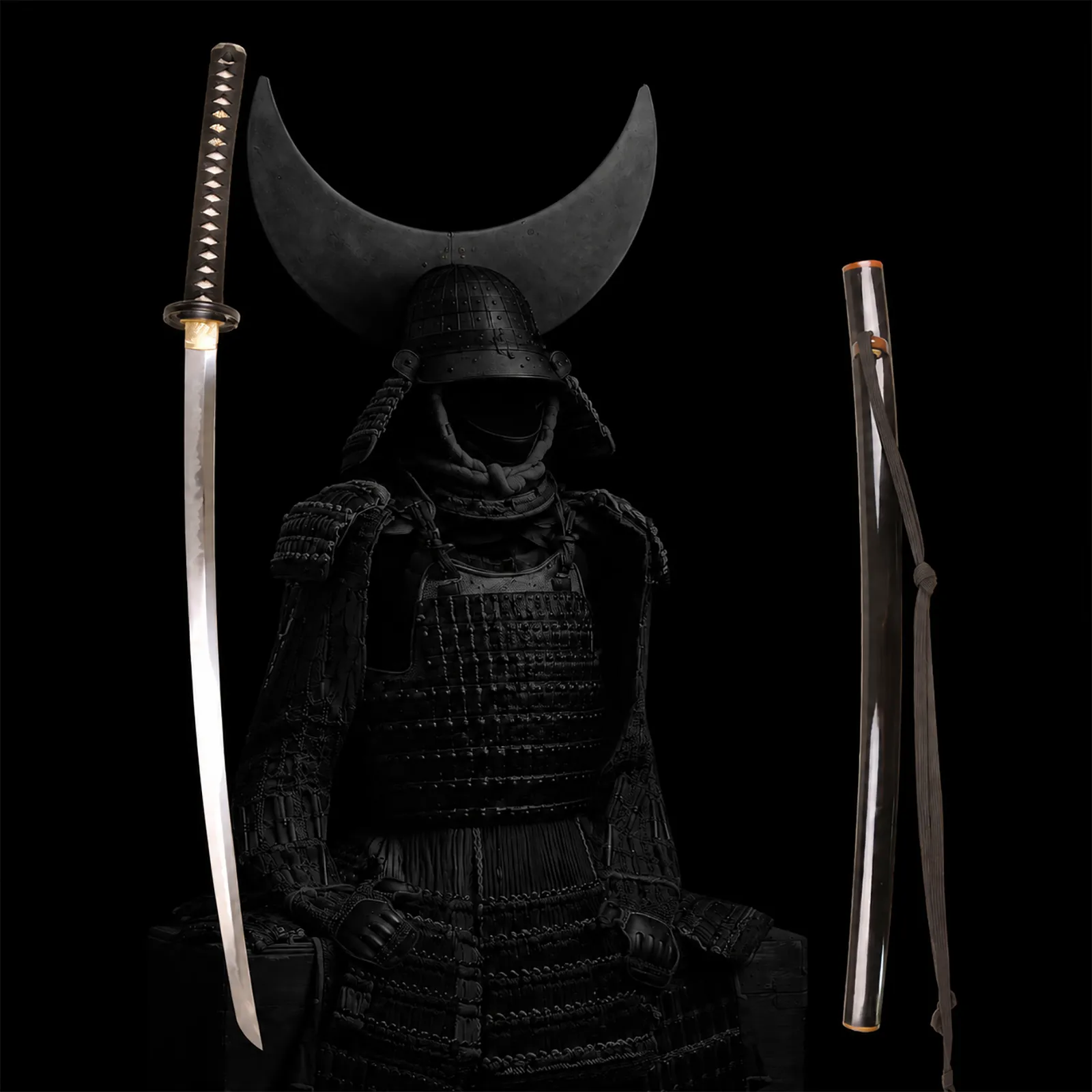
The blade follows a single-steel Maru construction. Clay tempering brings forward a chōji-midare hamon, with irregular rises and sweeping turns that lend the cutting edge its distinctive character.
The pattern belongs to a recognizable tradition, but its precise course is individual. Some crests gather closely; others open into broader curves. Japanese-style polishing allows these transitions to emerge in the reflected light.
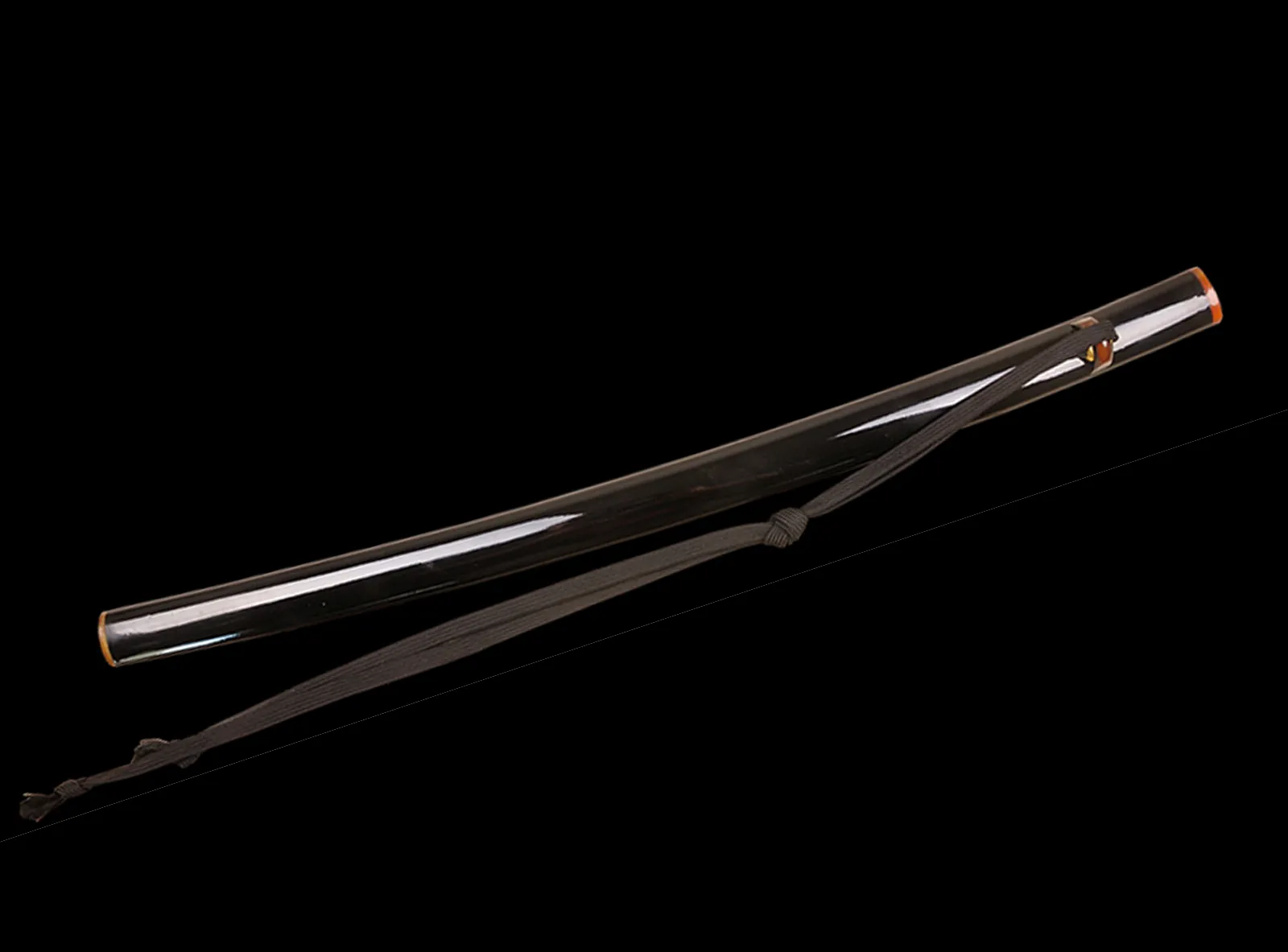
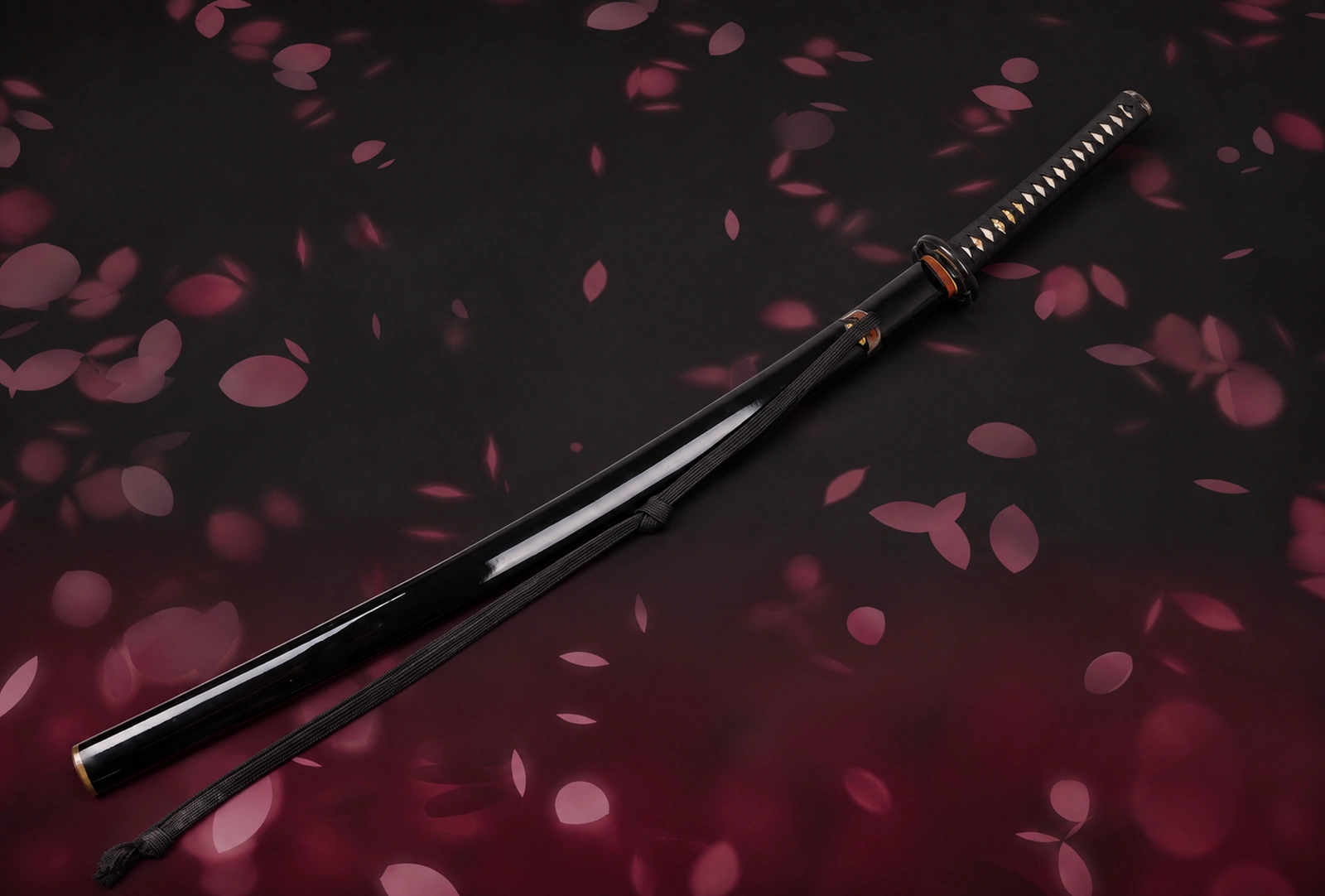
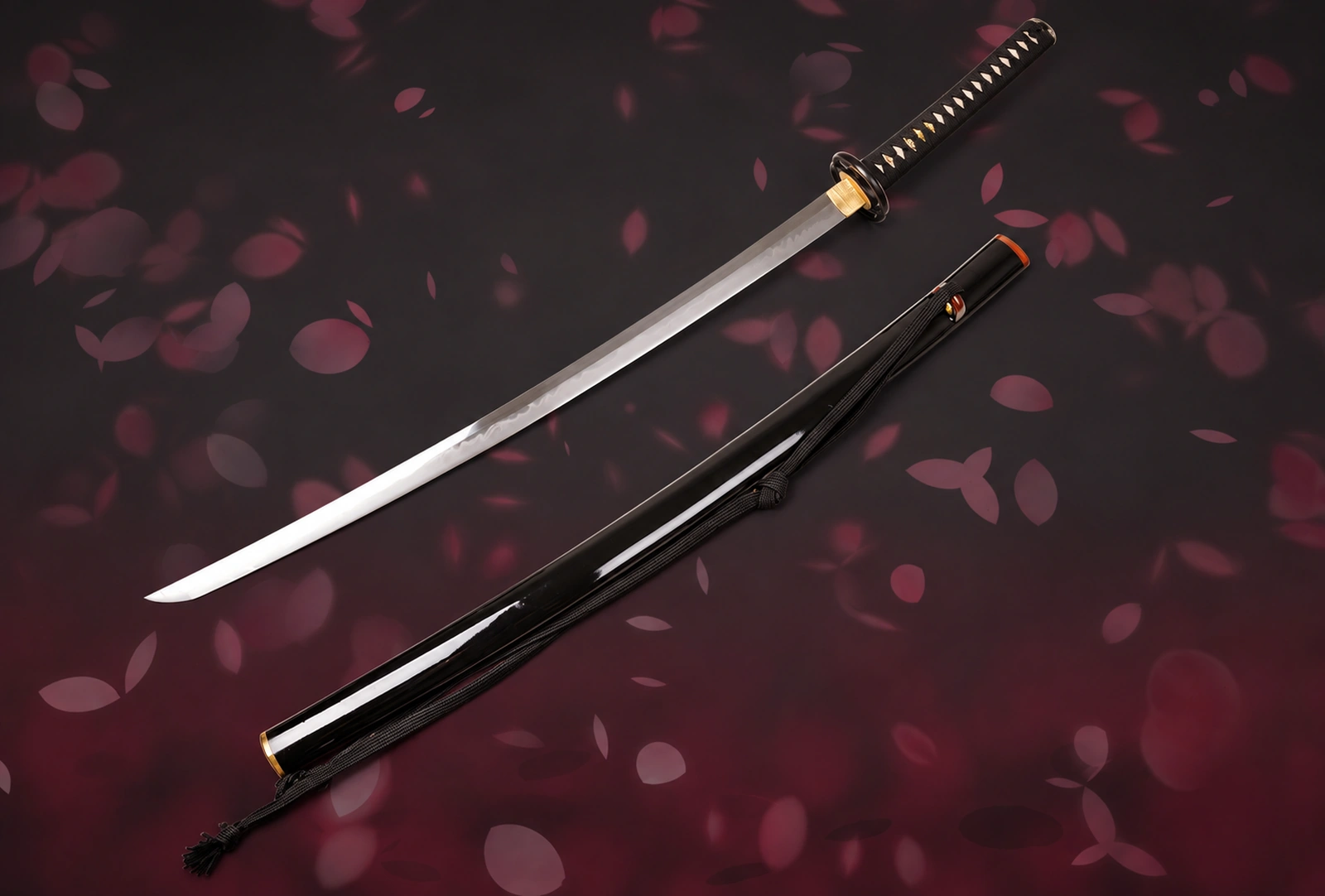
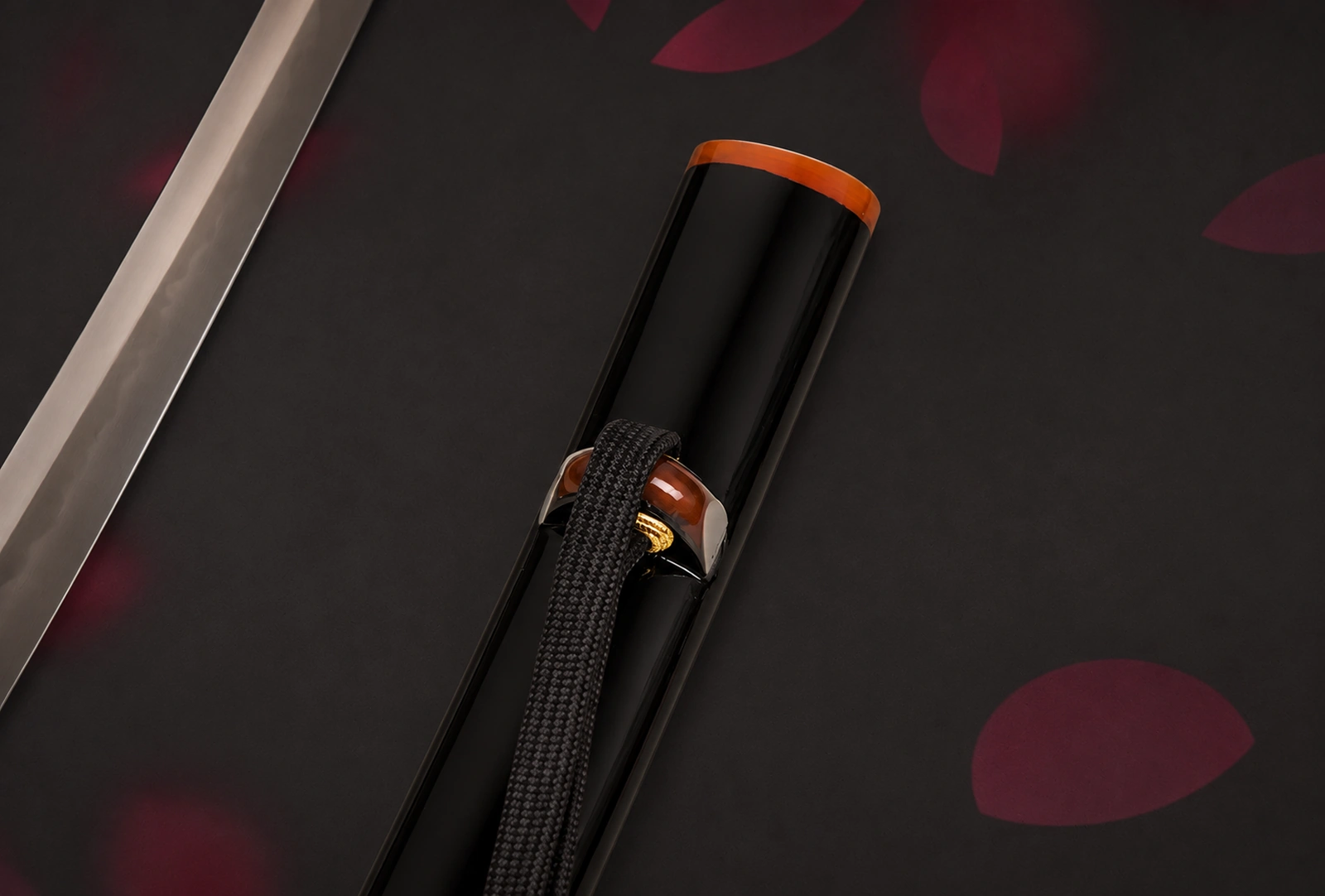
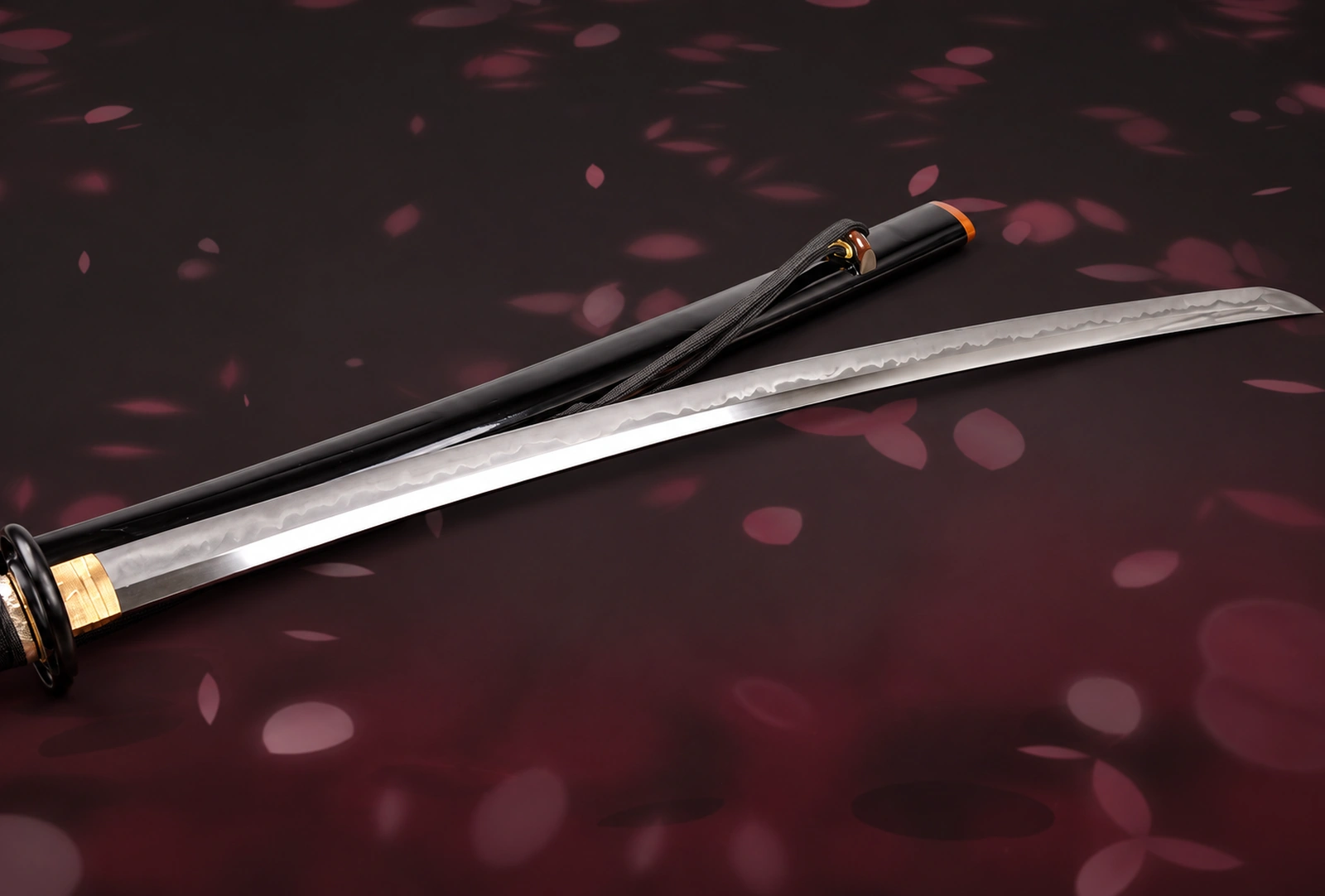
Black tsukamaki and dark fittings keep the silhouette restrained. Beside the drawn blade, the lacquered, horn-fitted saya holds a thin reflection. Nothing competes with the changing line in the steel.
A FORM, NEVER A COPY
The work is deliberate. The final line is individual. What heat leaves in steel can be studied, but never repeated in precisely the same way.
02 / A CLOSER READING
What Fire
Leaves Behind.
At a distance, the blade is a single bright line. Up close, the temper pattern rises and recedes in unexpected rhythms. The mountings offer a quieter counterpoint: dark steel, black lacquer, and measured touches of brass.
BLACK STEEL / BRASS / LACQUER
A Study in Restraint.
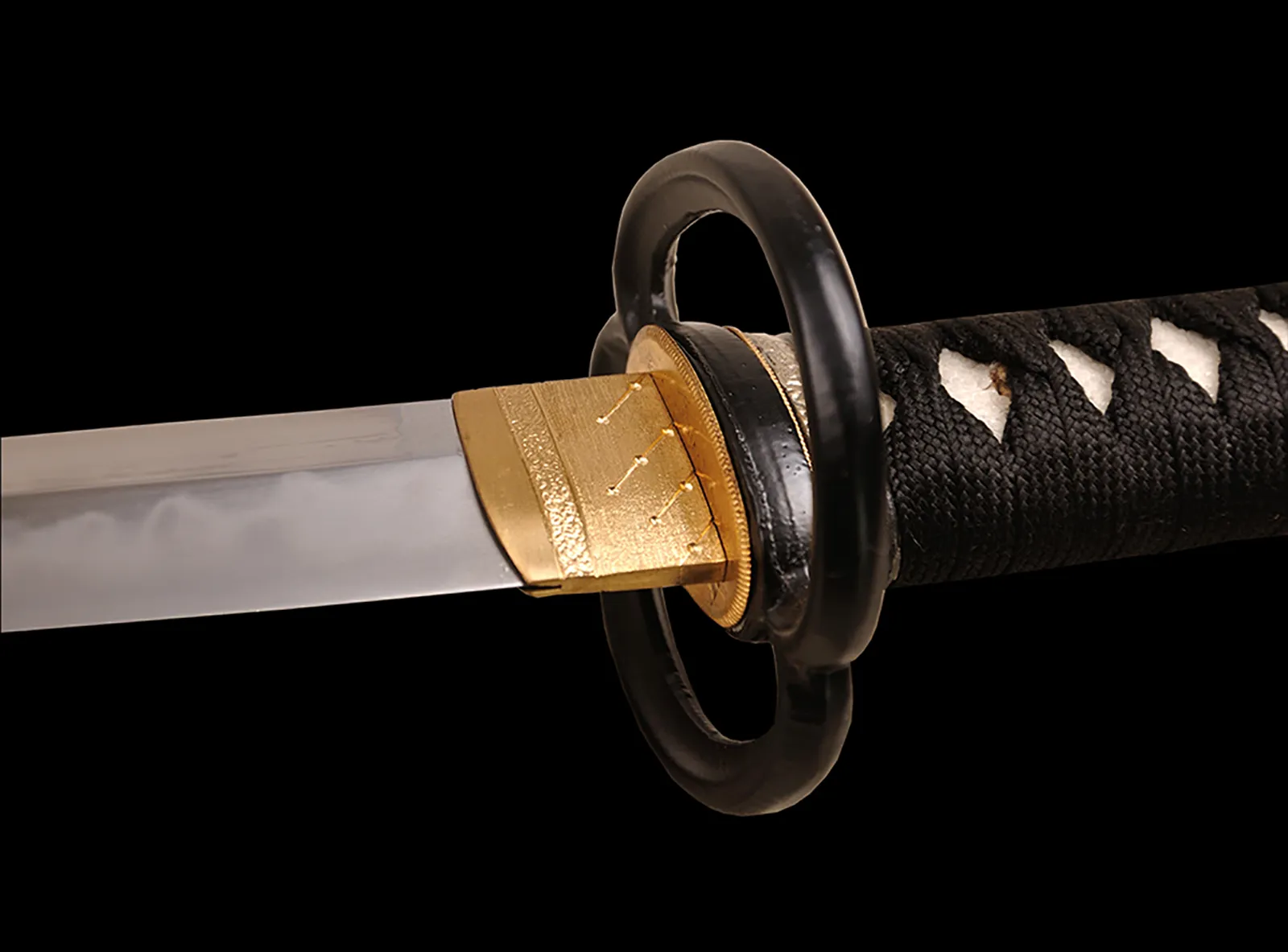
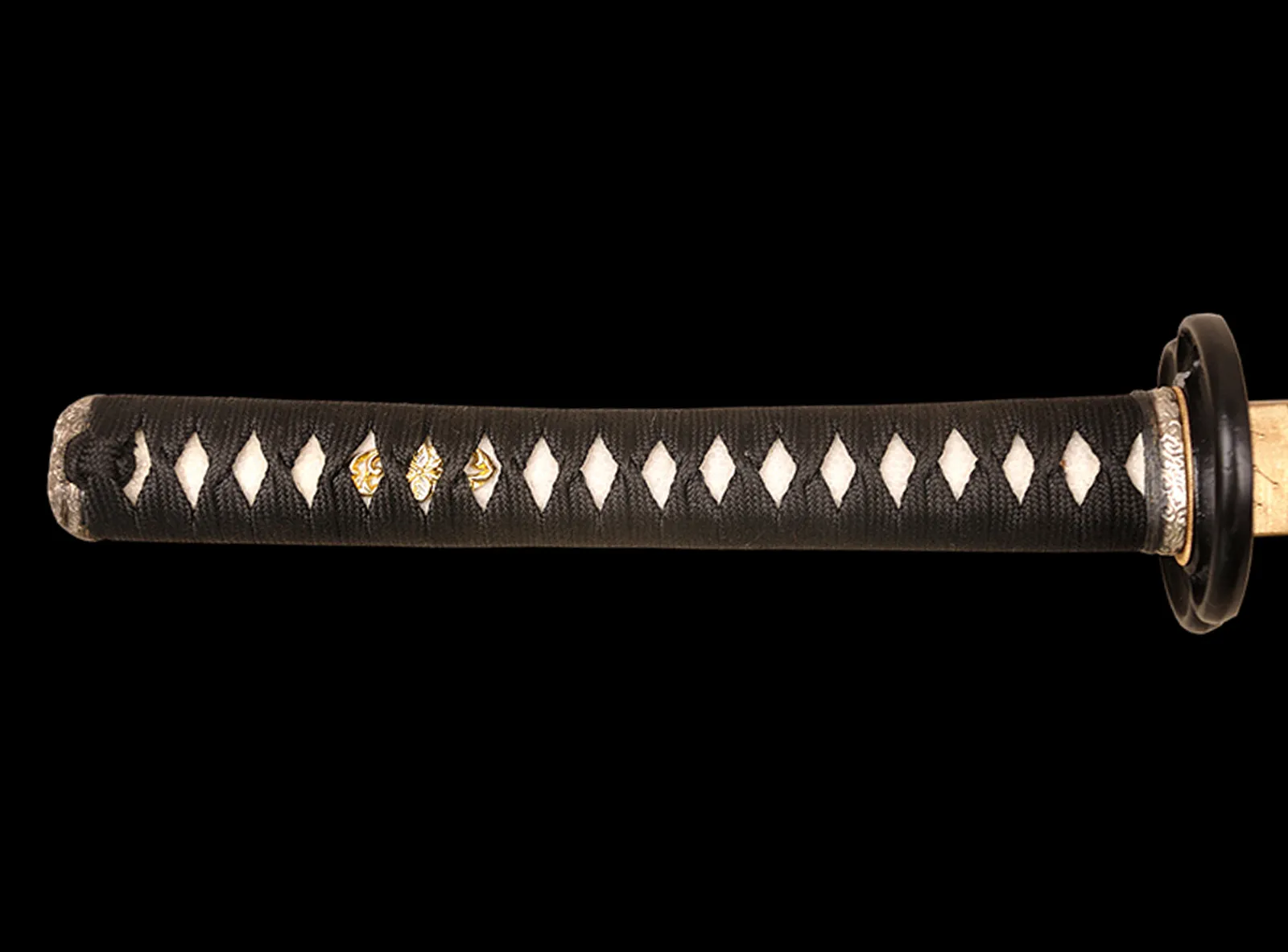
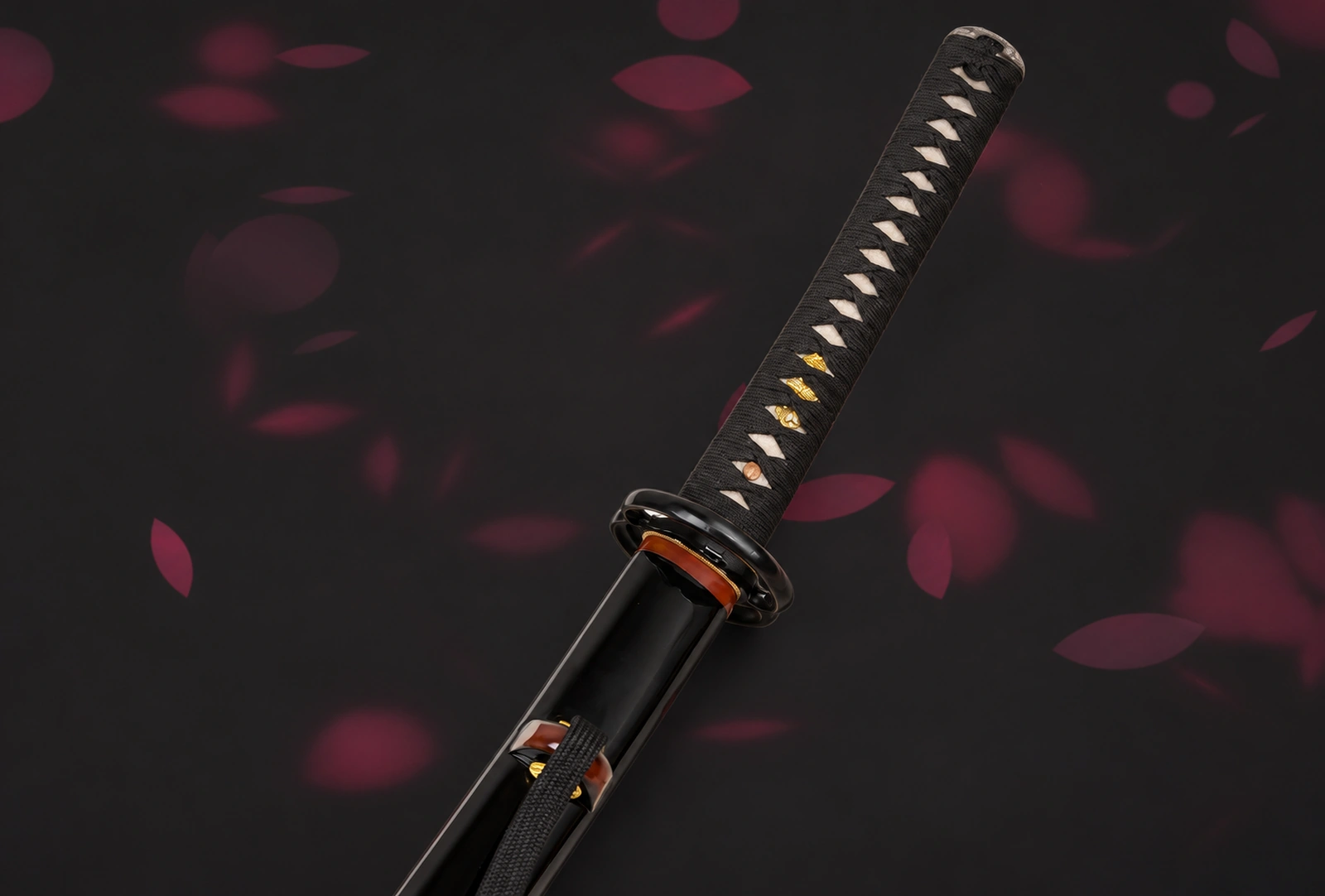
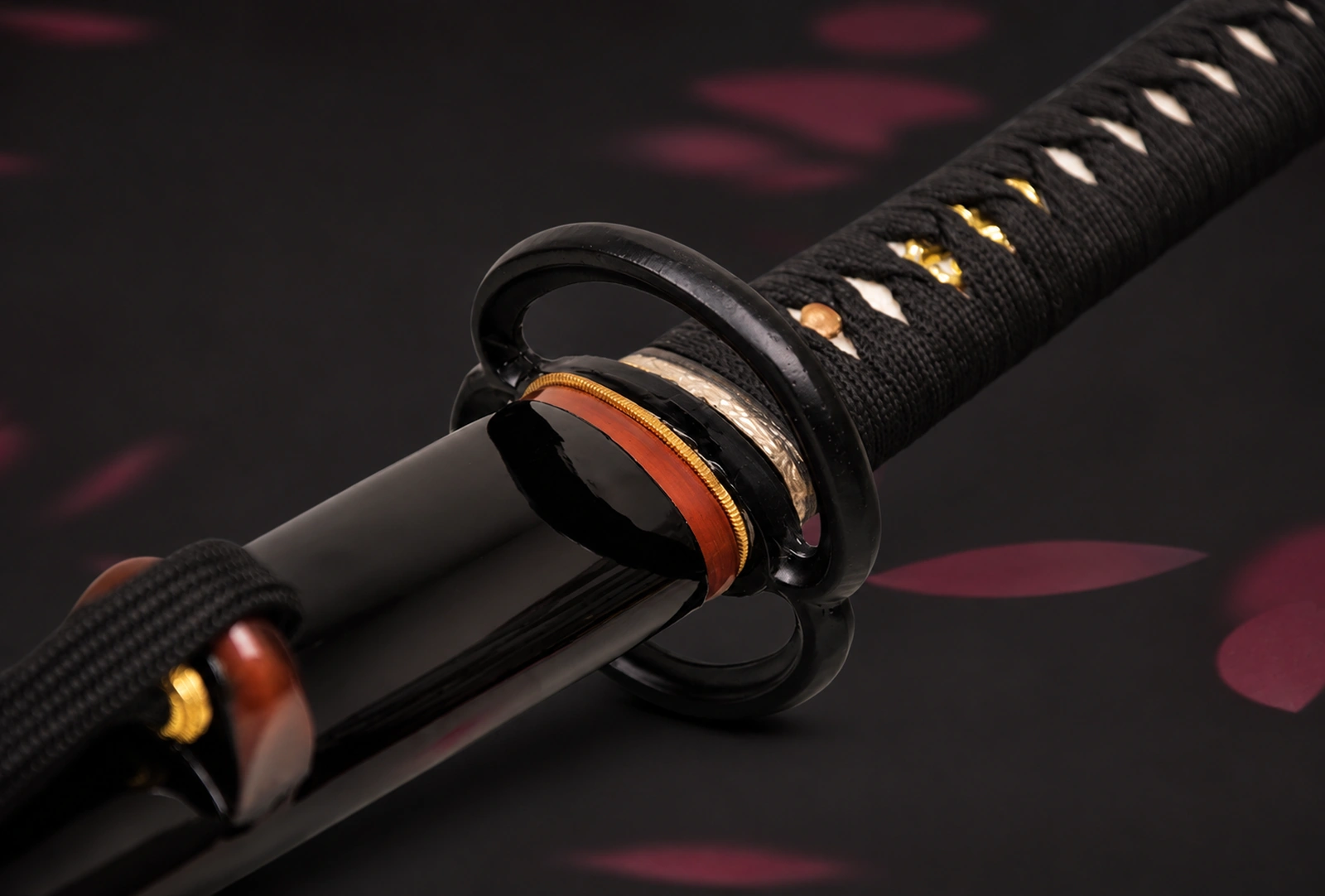
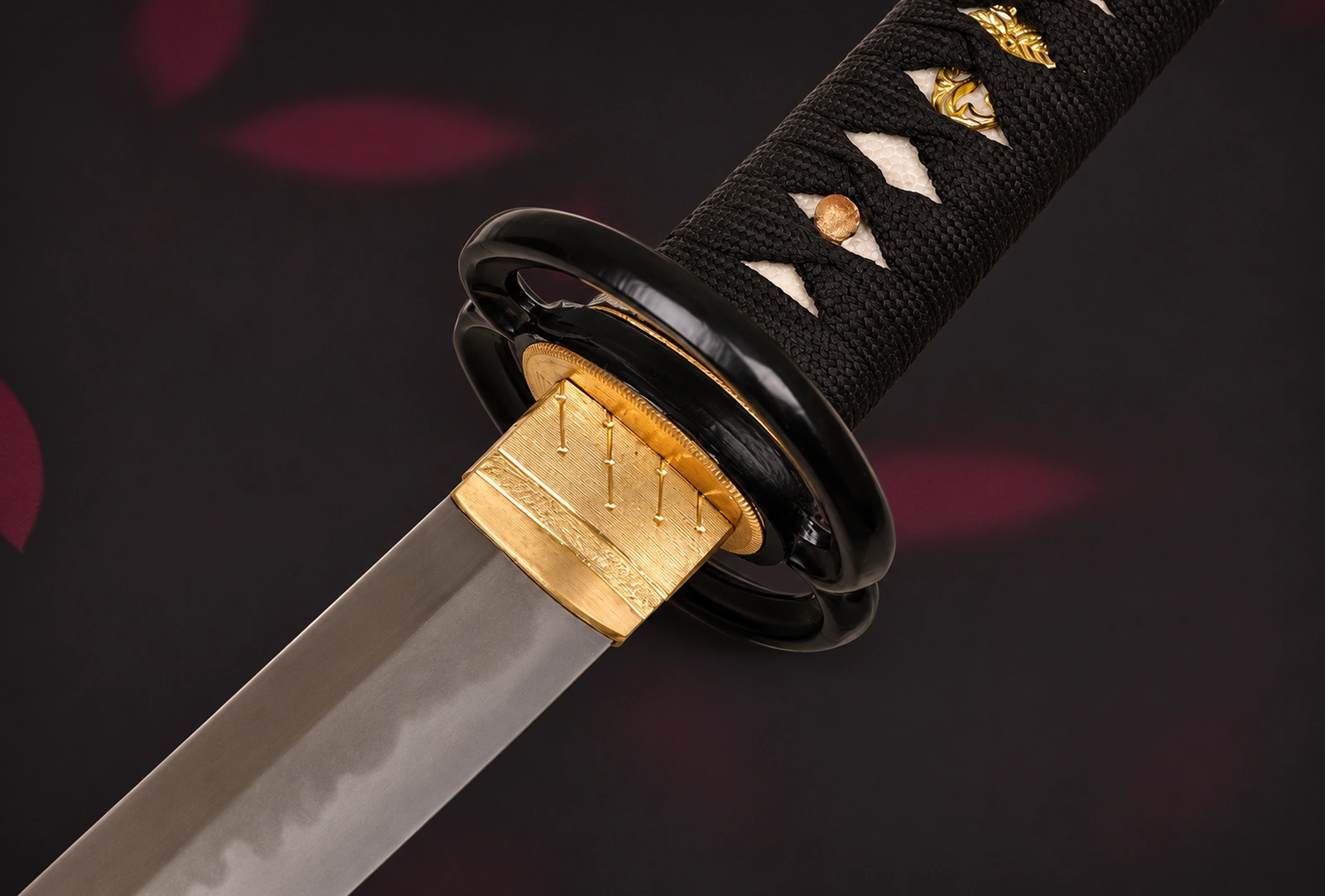
The blackened steel tsuba frames a warm brass habaki. Along the handle, black diamond-pattern tsukamaki opens onto white samegawa and small brass menuki. The details are distinct, yet none asks to stand apart from the blade.
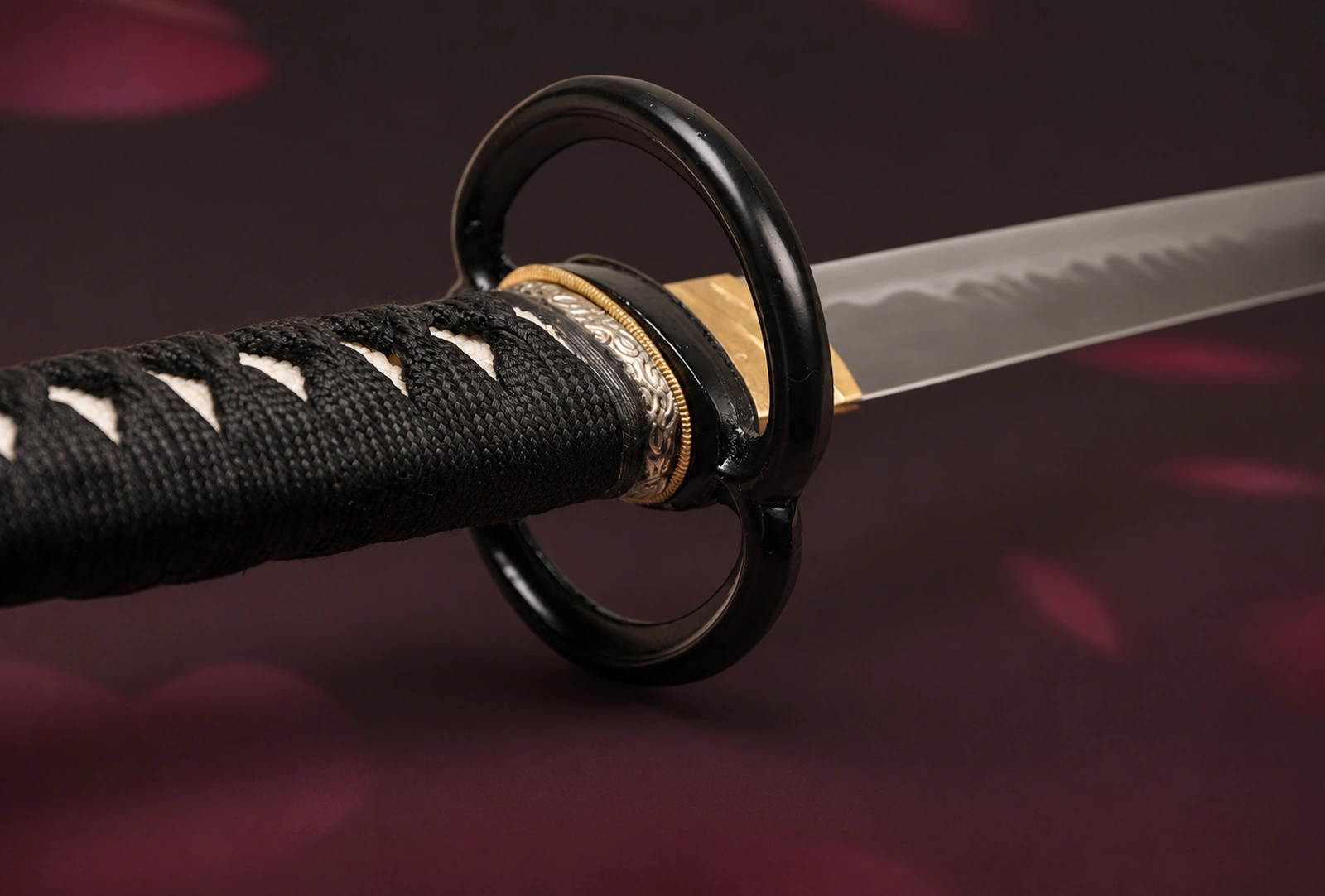
The silk-cotton wrapping is formed over hishigami paper supports, preserving the definition of the diamonds and the feel of the grip.
CLAY TEMPERING / CHŌJI-MIDARE
The Shape of the Quench.
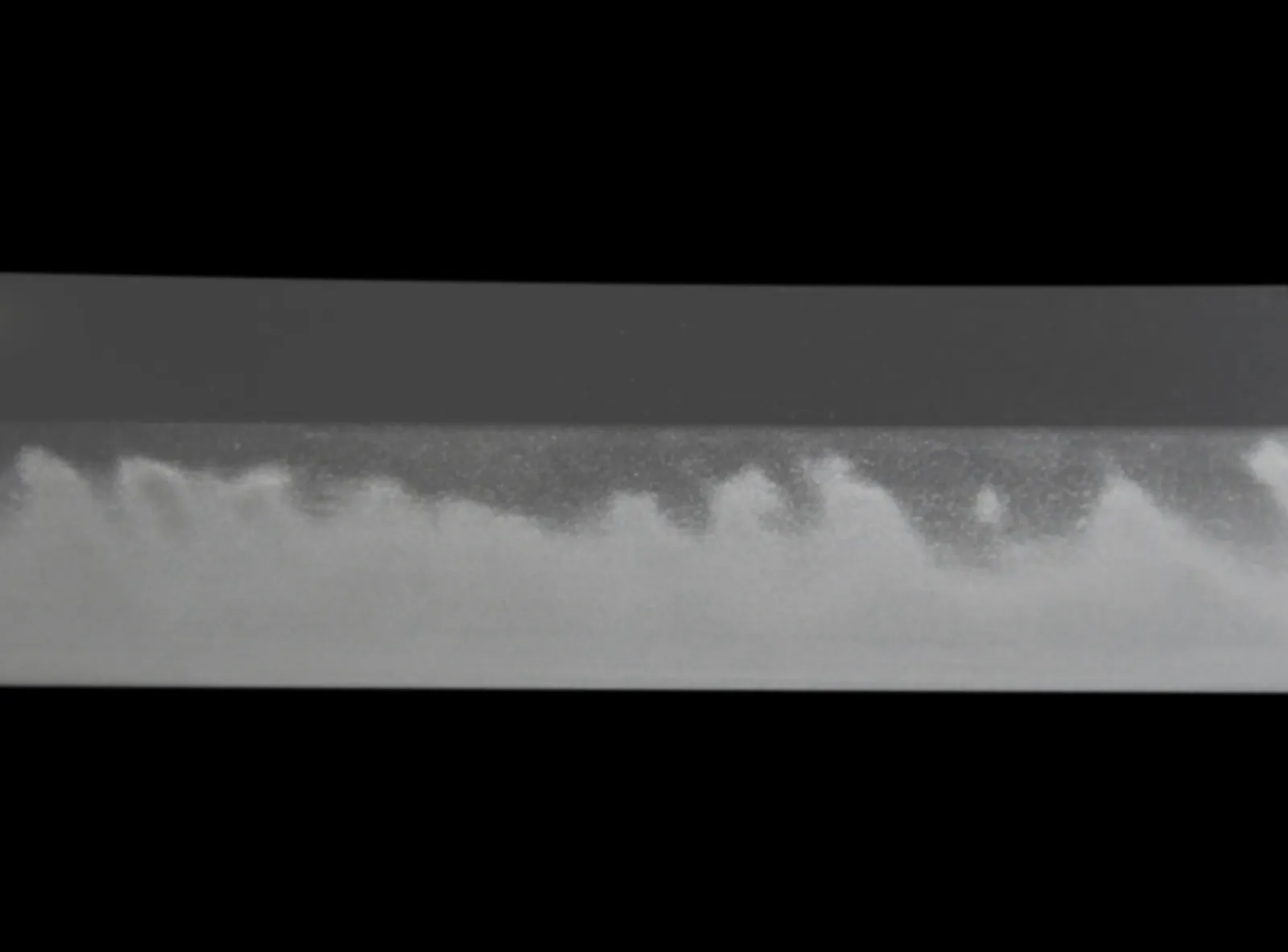
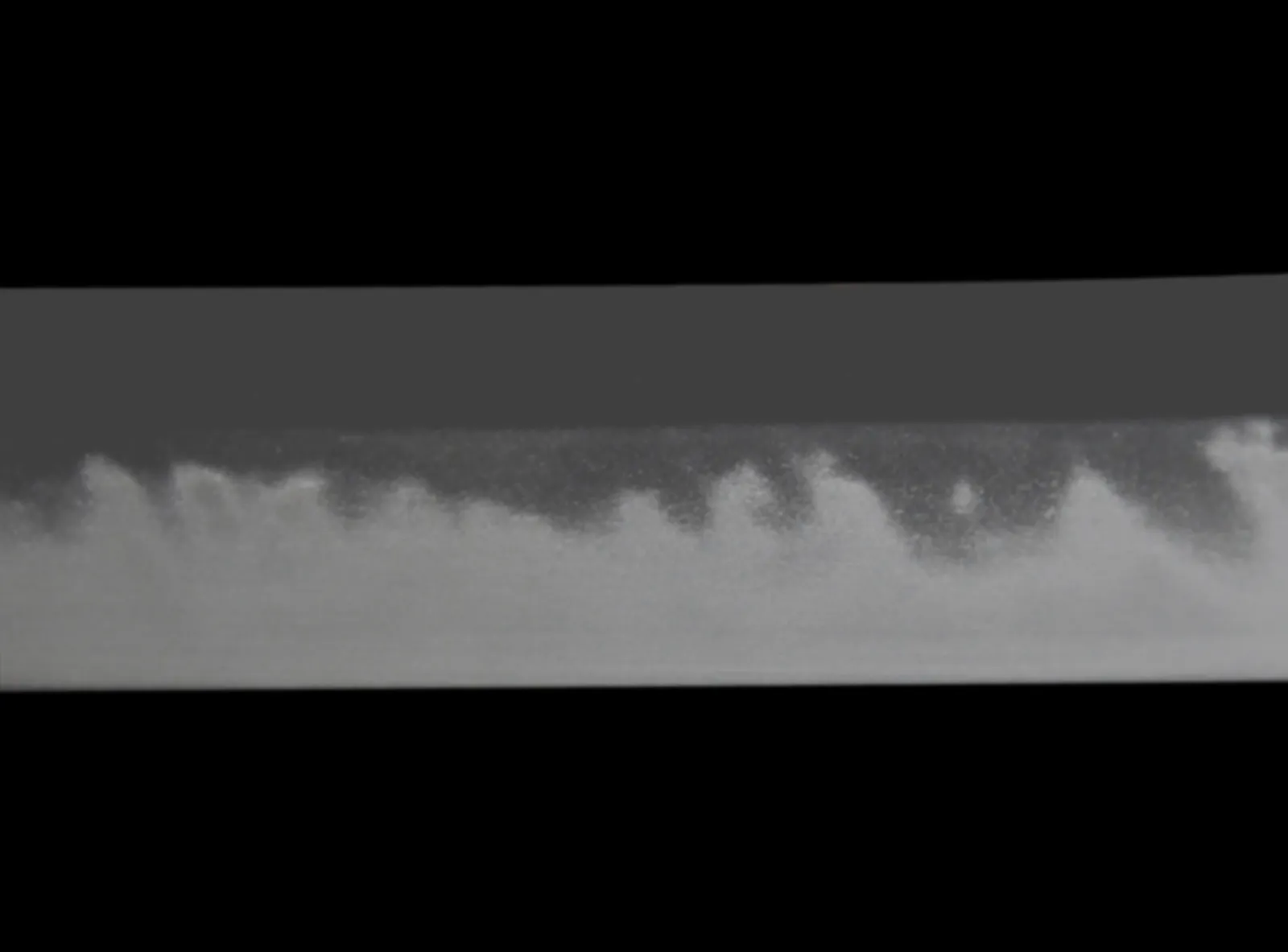
A single-steel Maru blade receives clay tempering. Along its edge, the Chōji-midare hamon forms a lively sequence of rising, clove-like shapes rather than a uniform wave.
Japanese-style polishing makes the boundary legible in changing light. The broad and narrow passages can be studied, but their exact course belongs to this individual blade.
THE LINE IS NOT A STENCIL
The Chōji-midare pattern has a recognizable character, but not a fixed outline. Its small changes in rhythm are part of what makes the hardened edge worth looking at closely.
03 / THE COLLECTOR'S GALLERY
What the Eye Returns To.
A black silhouette, a little warm brass, and the brief passage of red petals. Seen as a whole, this katana holds a reserved elegance. Seen closely, the changing temper line gives the eye a reason to stay.
BLACK LACQUER / RED PETALS
A Silhouette in Stillness.
The composition begins with a single outline: black saya, dark wrapping, and a blade held out of sight. In the falling petals, restraint becomes its own kind of presence.
THE SWORD REVEALED
A Line Through the Dark.
Beside the dark scabbard, the exposed blade changes the balance of the scene. Its curved length is simple at a distance; its hamon is anything but simple up close.
IRON / BRASS / HAND-WRAPPED SILK-COTTON
The Weight of Small Details.
A dark tsuba guards the transition from grip to blade. The brass habaki brings a brief warm reflection, while the black tsukamaki and pale openings of the wrap keep the composition quietly measured.
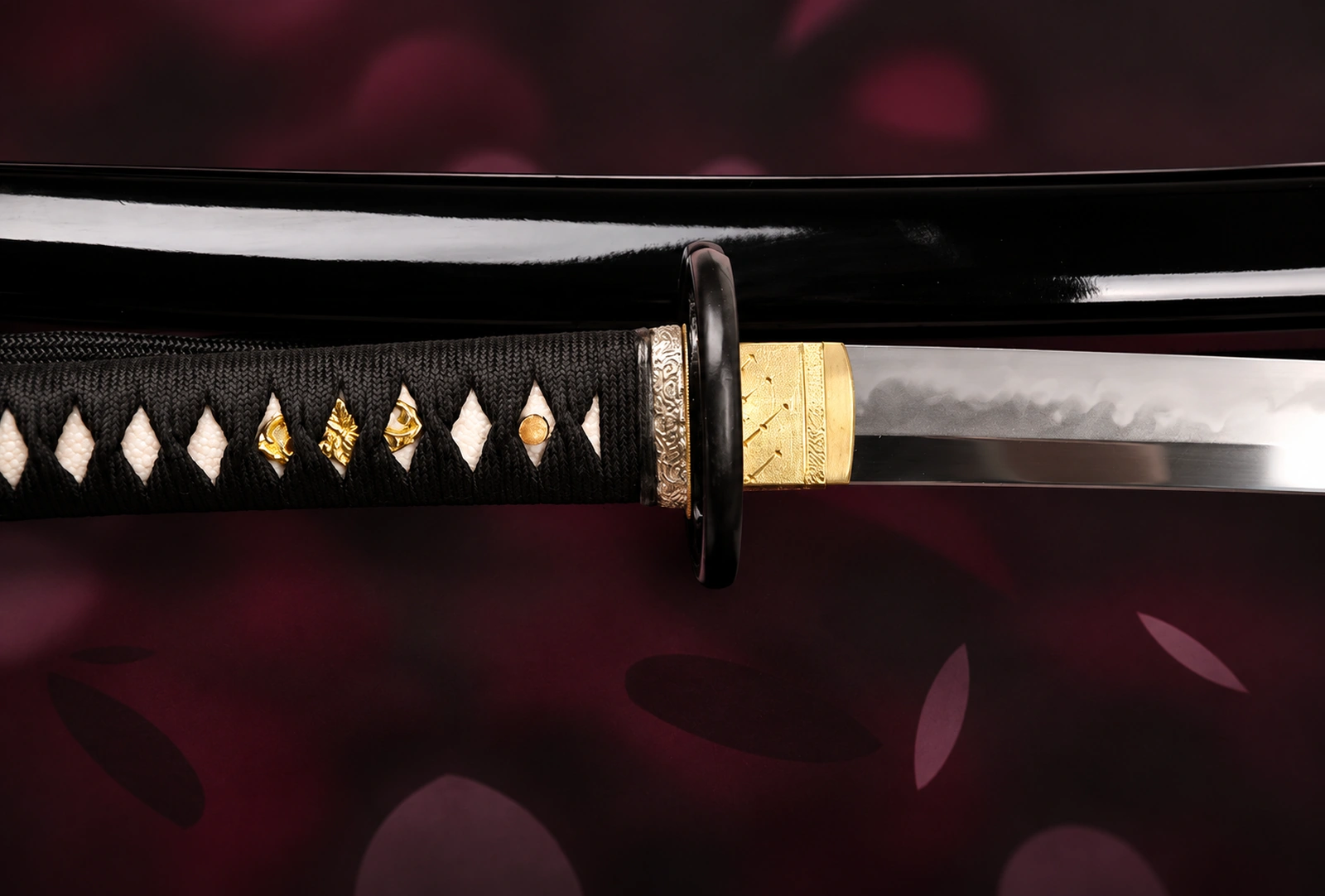
THE BLADE IN CHANGING LIGHT
The mounting gives the blade its presence.
The temper line gives the eye somewhere to wander.
CHŌJI-MIDARE / THE EDGE
A Rhythm Without Repetition.
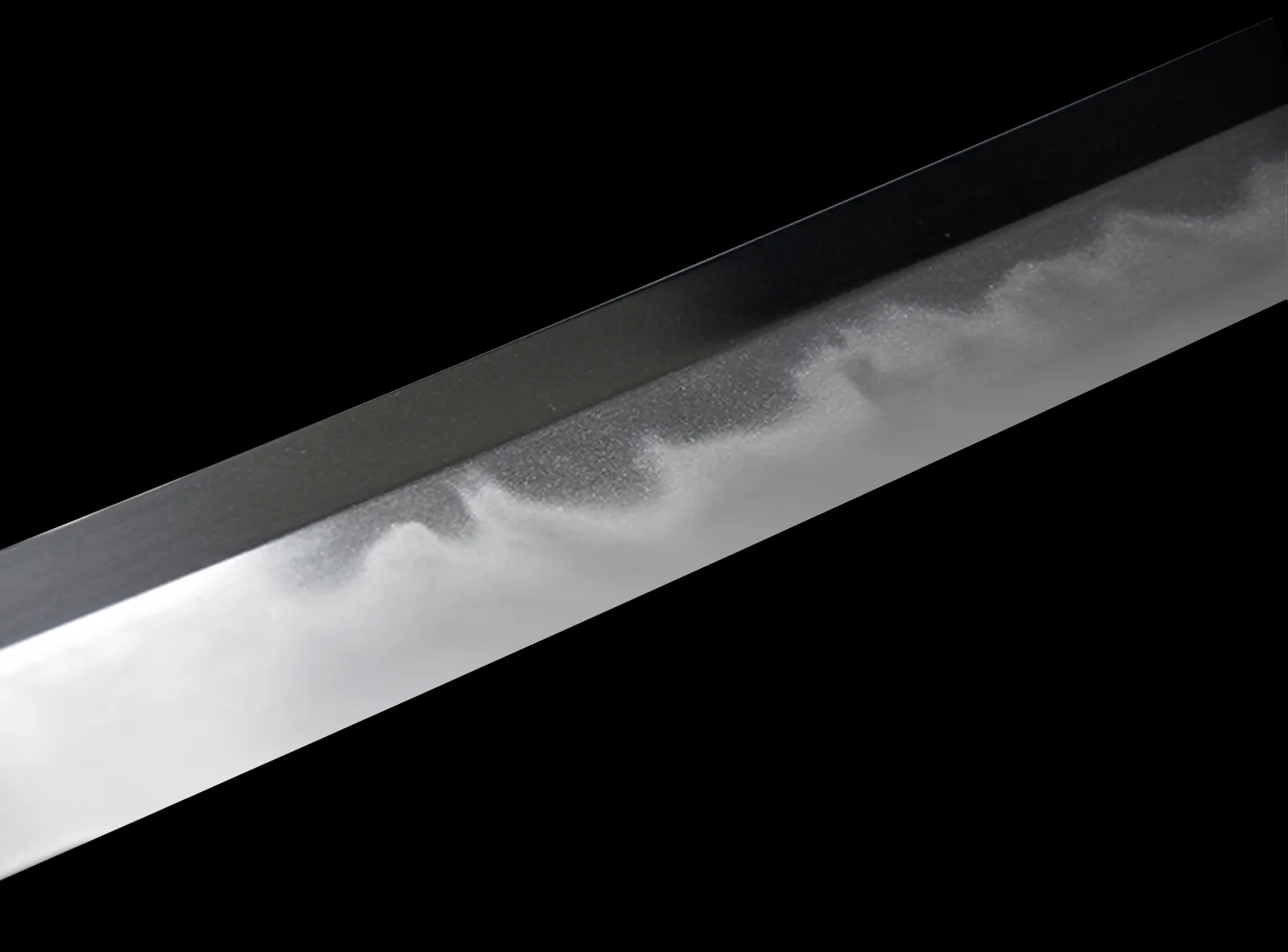
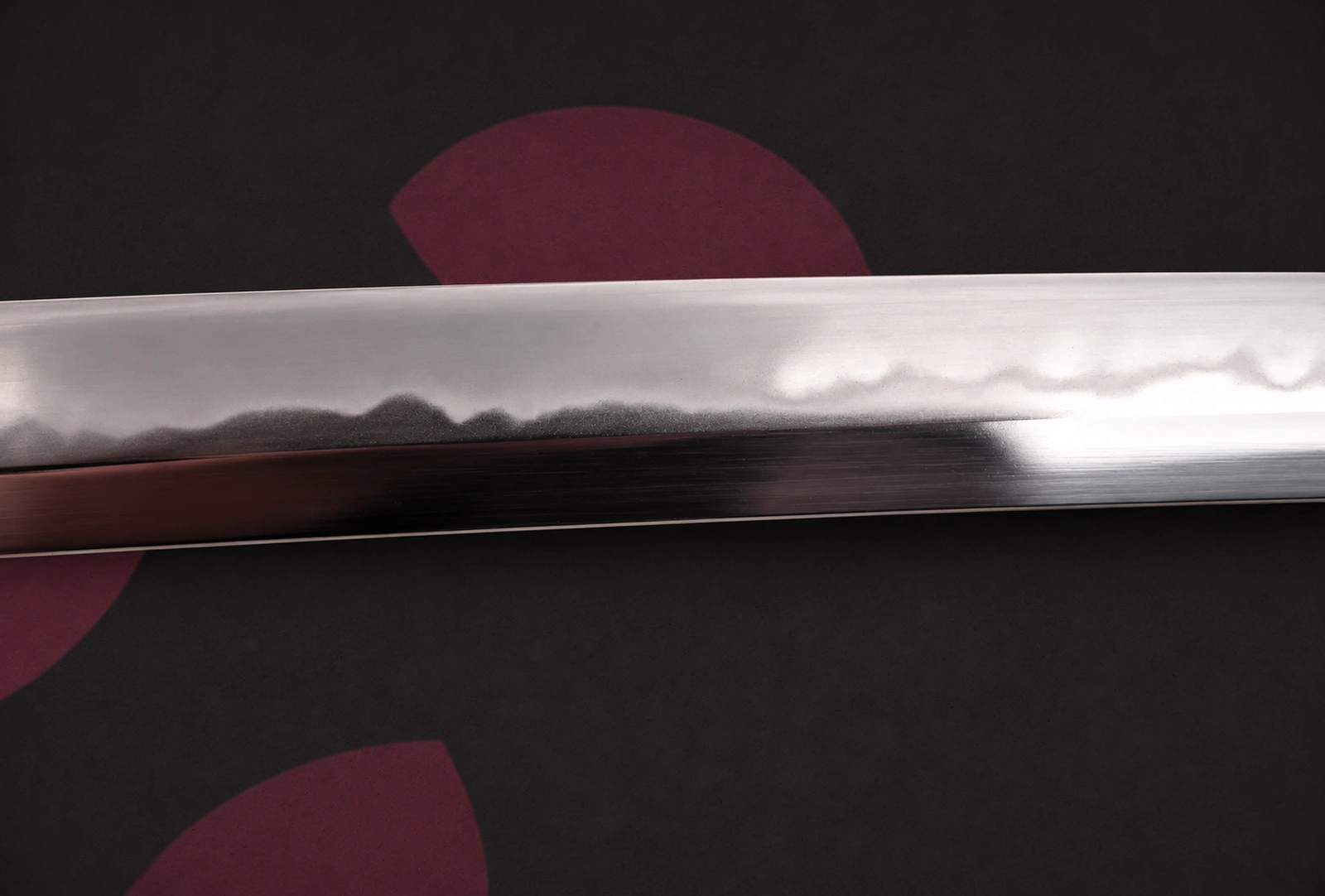
Across the polished steel, the Chōji-midare hamon rises and falls in clove-like forms. The pattern is recognizable, yet its individual turns resist perfect repetition. Here, the photographs allow the eye to follow that line rather than explain it away.
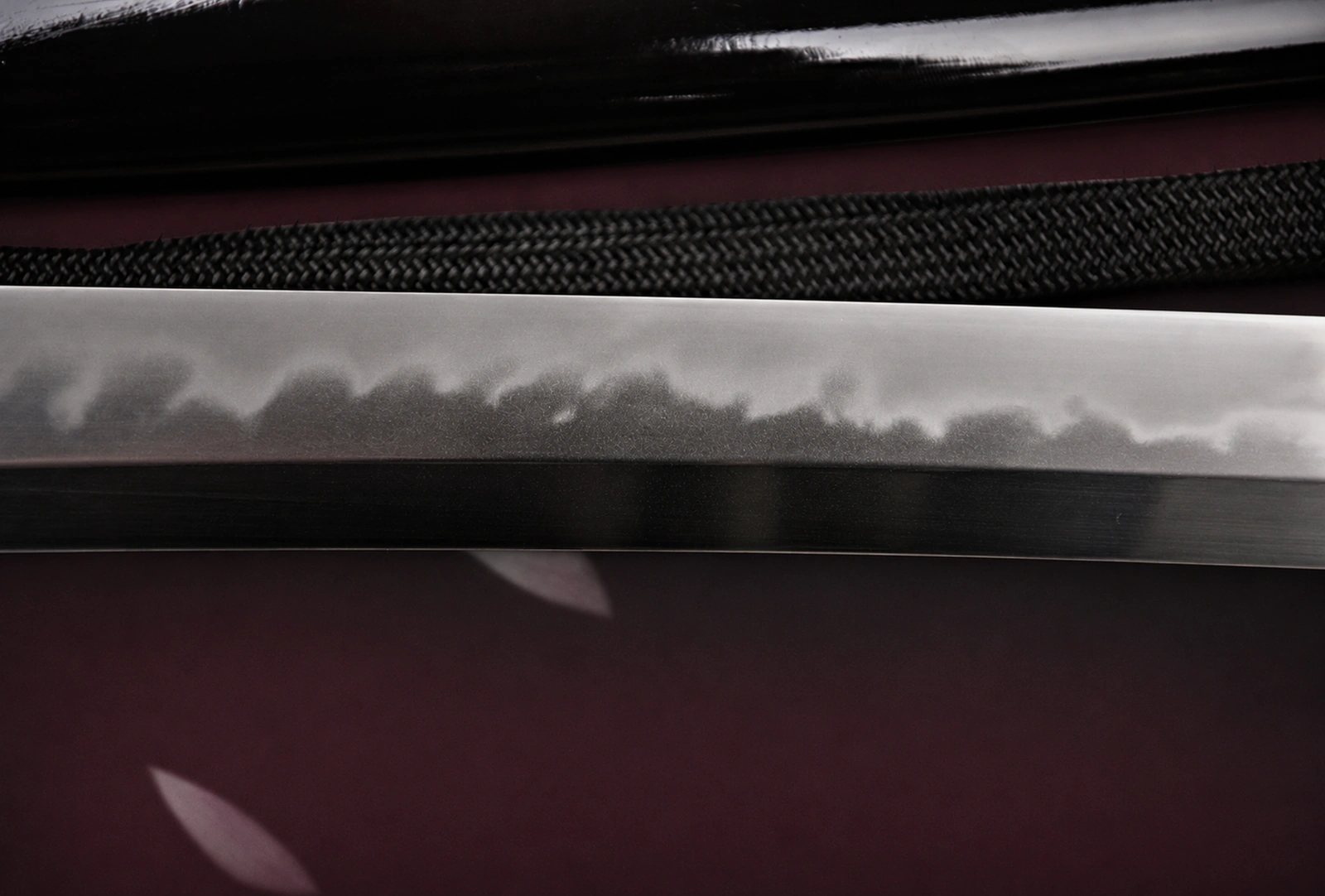
THE LAST TWO STUDIES
Where the Light Lingers.
In a different reflection, the same hamon offers another reading: soft rising forms, calmer intervals, and polished steel that changes as the light moves.
Reviews
There are no reviews yet.