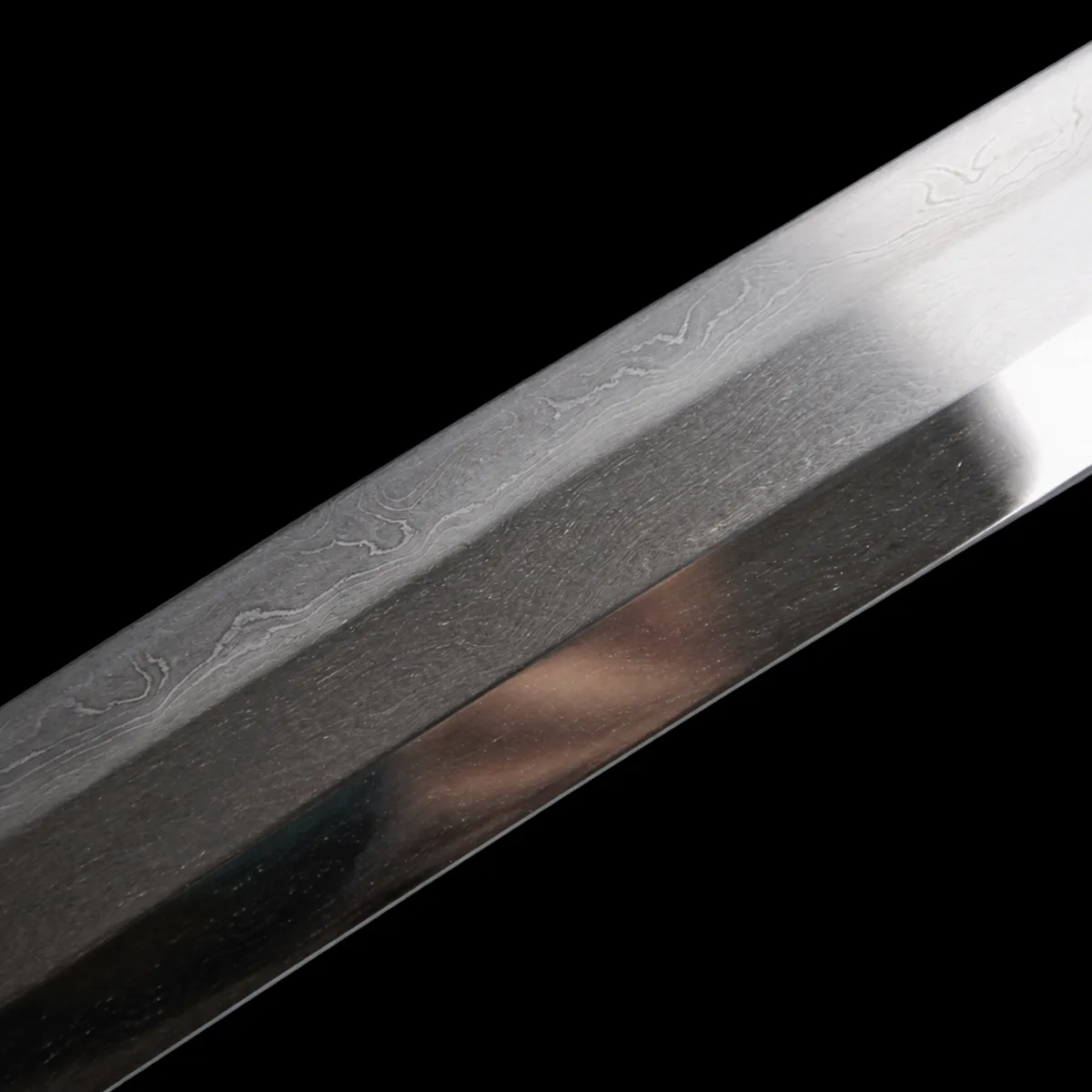
Description
STORY 01 / THE COMMISSION & RETURN
The Blade and Its Return
This katana began as a private commission. Its owner purchased Low-Temperature Workshop-Smeltered Steel for a blade made with Kobuse construction. Years later, the sword returned for a complete polish after wear and scratches had marked its surface.
CUSTOM-FORGED BLADE / ORIGINAL COMMISSION / REPOLISHED
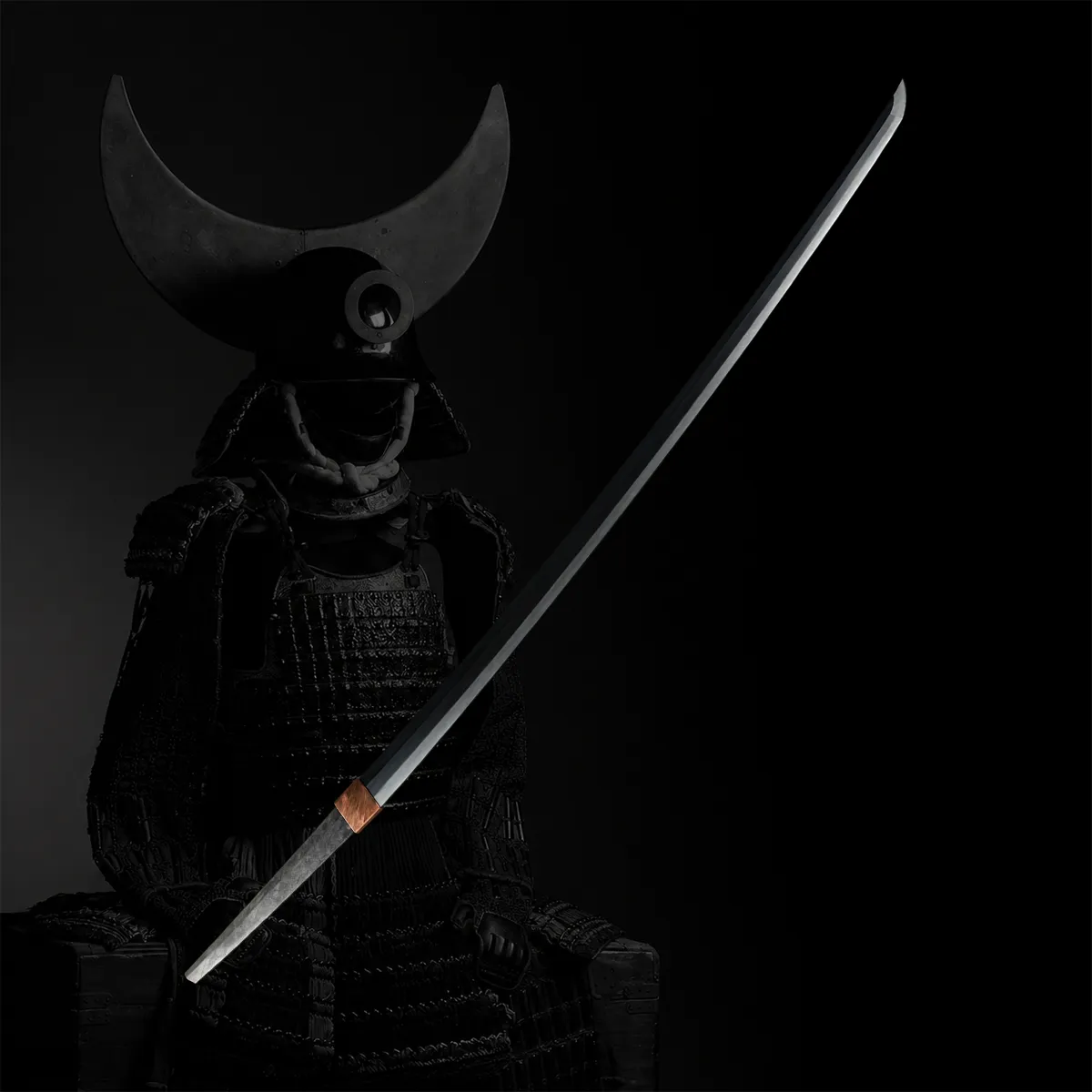
THE ORIGINAL COMMISSION
Steel Chosen by the Owner
Rather than choosing a finished sword, the owner purchased the steel for a made-to-order blade. The material was forged through Kobuse construction, a jacketed-steel arrangement that gives the blade its underlying structure.
THE RETURN TO THE WORKSHOP
Repolished After Years of Use
The sword had been with its owner since around 2016–2017. When the blade returned with visible wear, it received new Shiage-togi polishing. The workshop video records the renewed surface and the fine steel grain brought back into view.
THE BLADE
Form and Surface
With a 710 mm nagasa, 32 mm motohaba, and 7 mm base thickness, the blade combines a defined profile with visible Itame-hada grain and a straight Suguha hamon. The next chapter examines the forging, heat treatment, and polishing in detail.
NEXT / BLADE CRAFTSMANSHIP — KOBUSE, SUGUHA & SHIAGE-TOGI
Steel, Grain, and Finish.
This blade is forged in Kobuse construction from Low-Temperature Workshop-Smeltered Steel. Its character does not come from decoration, but from the steel itself, the blade geometry established in the foundation work, and the way the surface is brought out through Shiage-togi polishing.
Rather than presenting an active, irregular temper pattern, this sword follows a controlled Suguha line. That straight temper line works together with visible Itame-hada grain, making the blade read as a refined study in steel and finish.
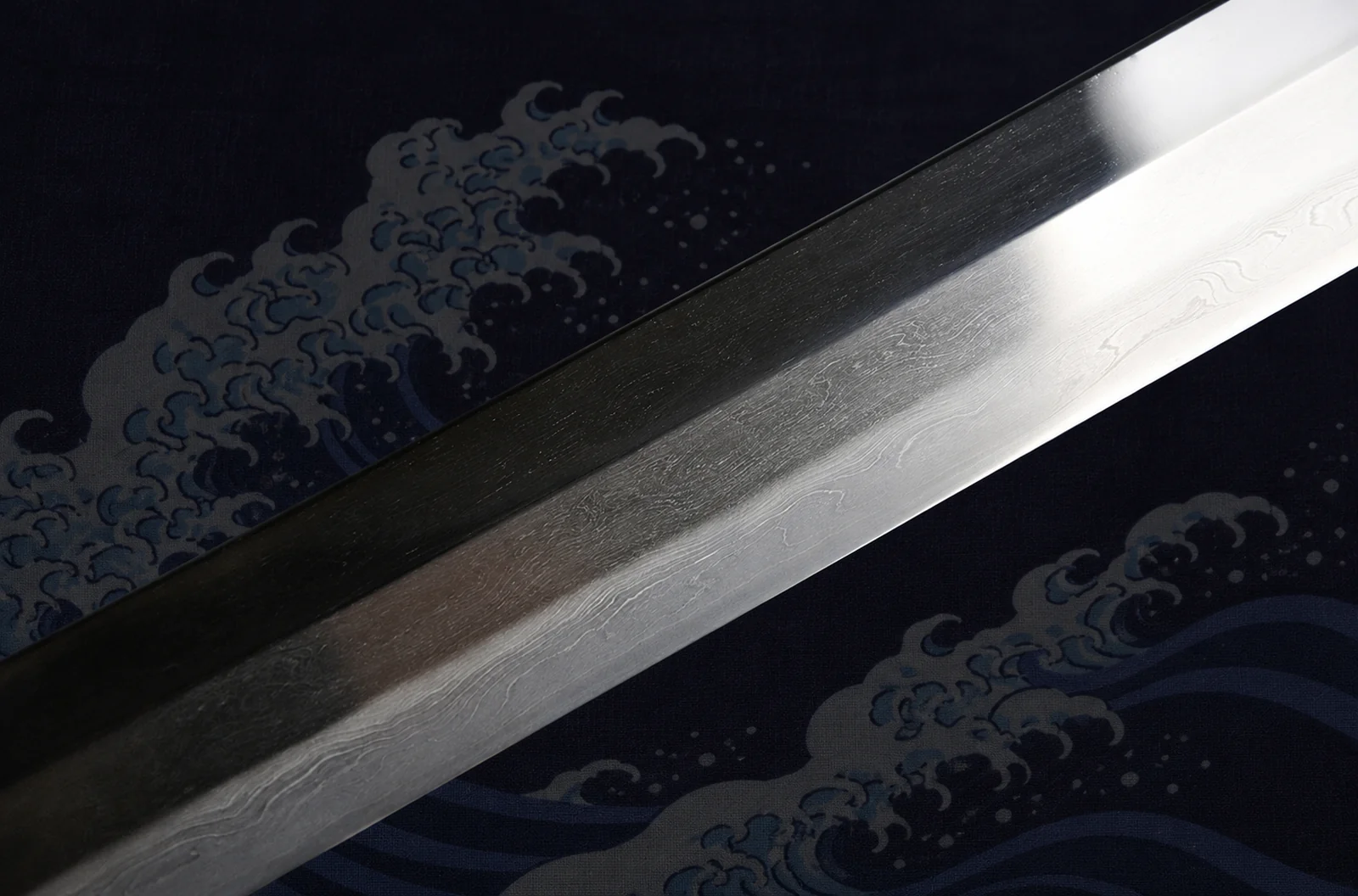
Itame-hada in View.
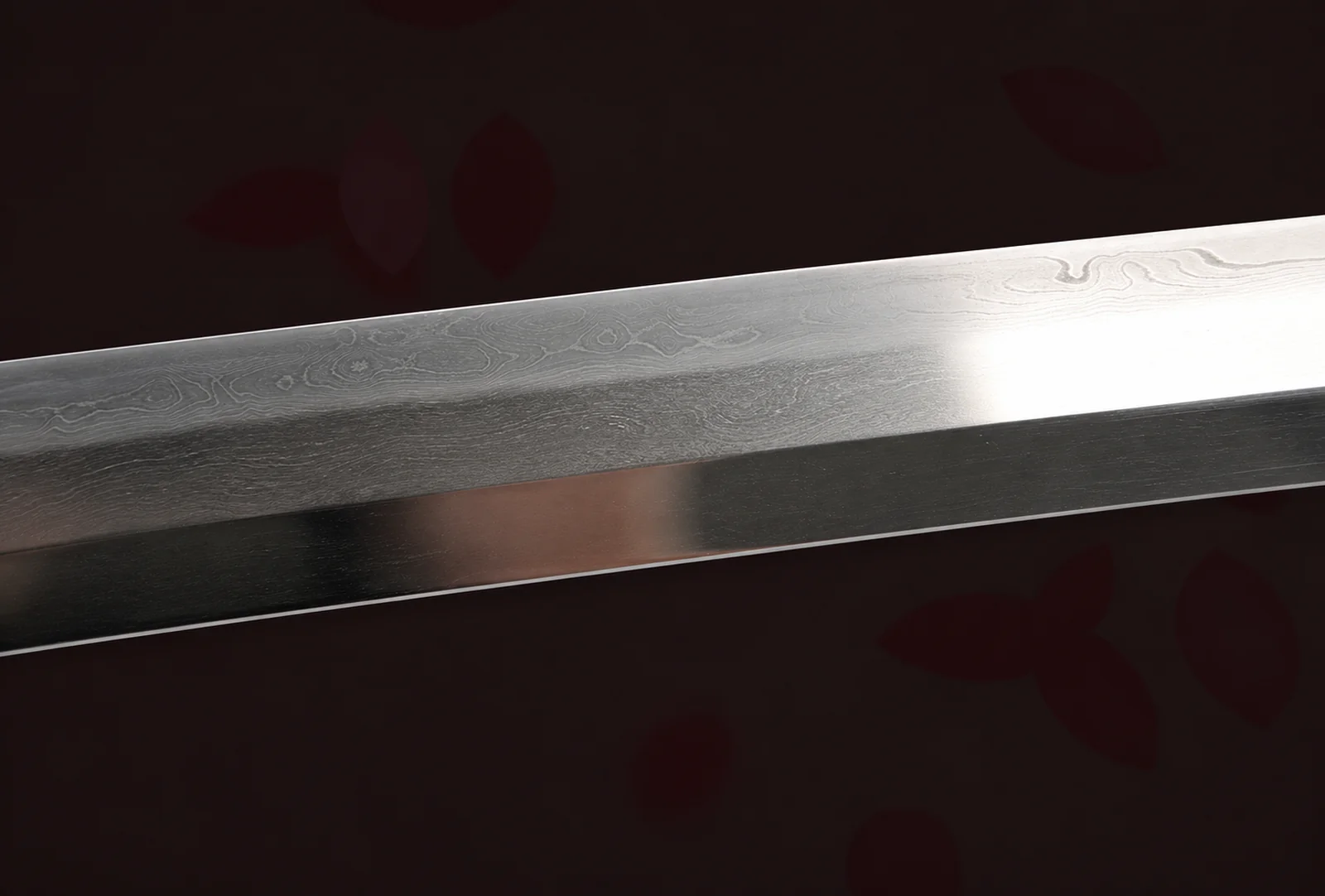
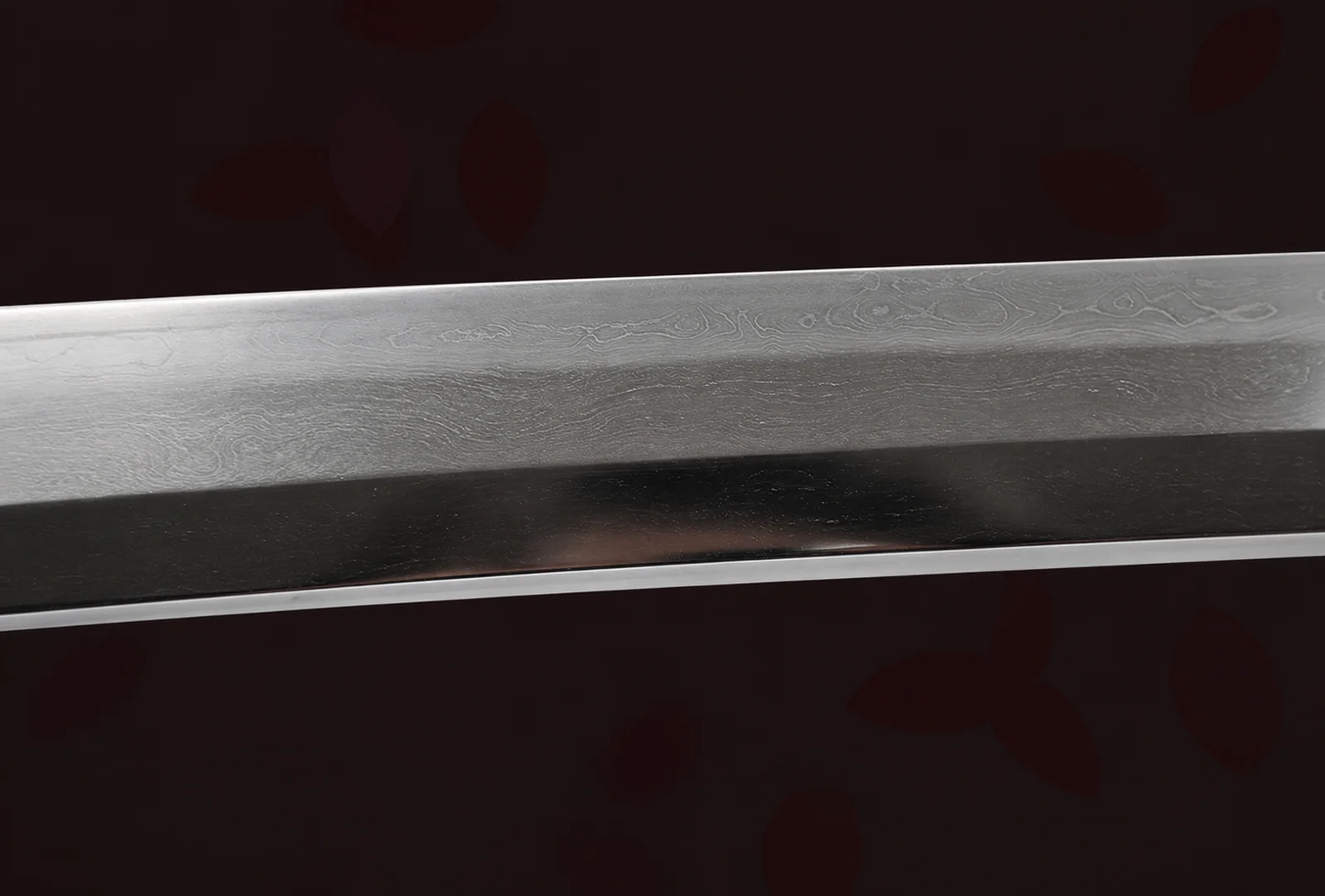
The blade shows a clear Itame-hada grain. In this piece, the grain is not hidden beneath a bright, uniform finish. Instead, it remains visible across the ji, giving the surface movement and depth while preserving a calm overall appearance.
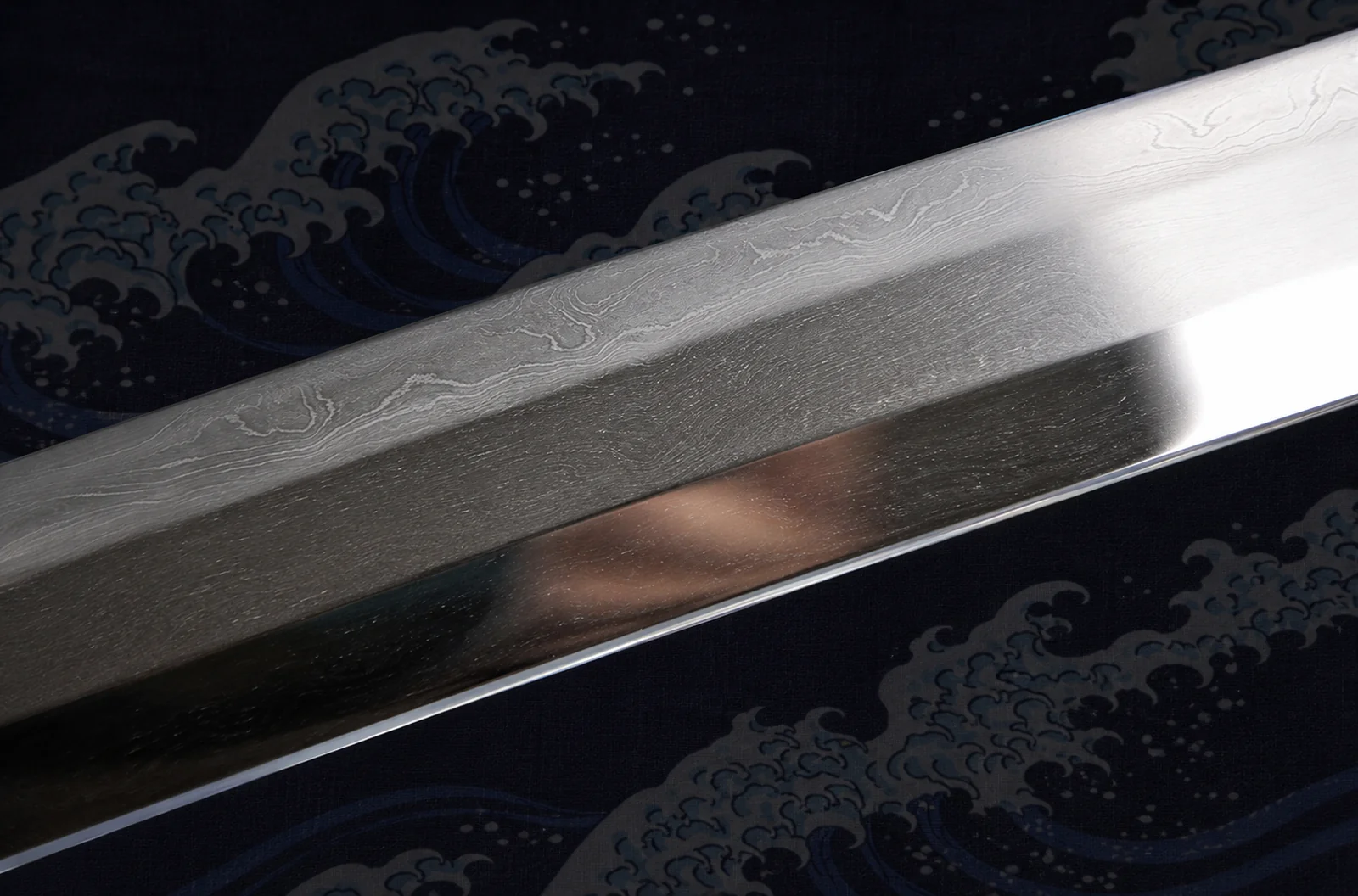
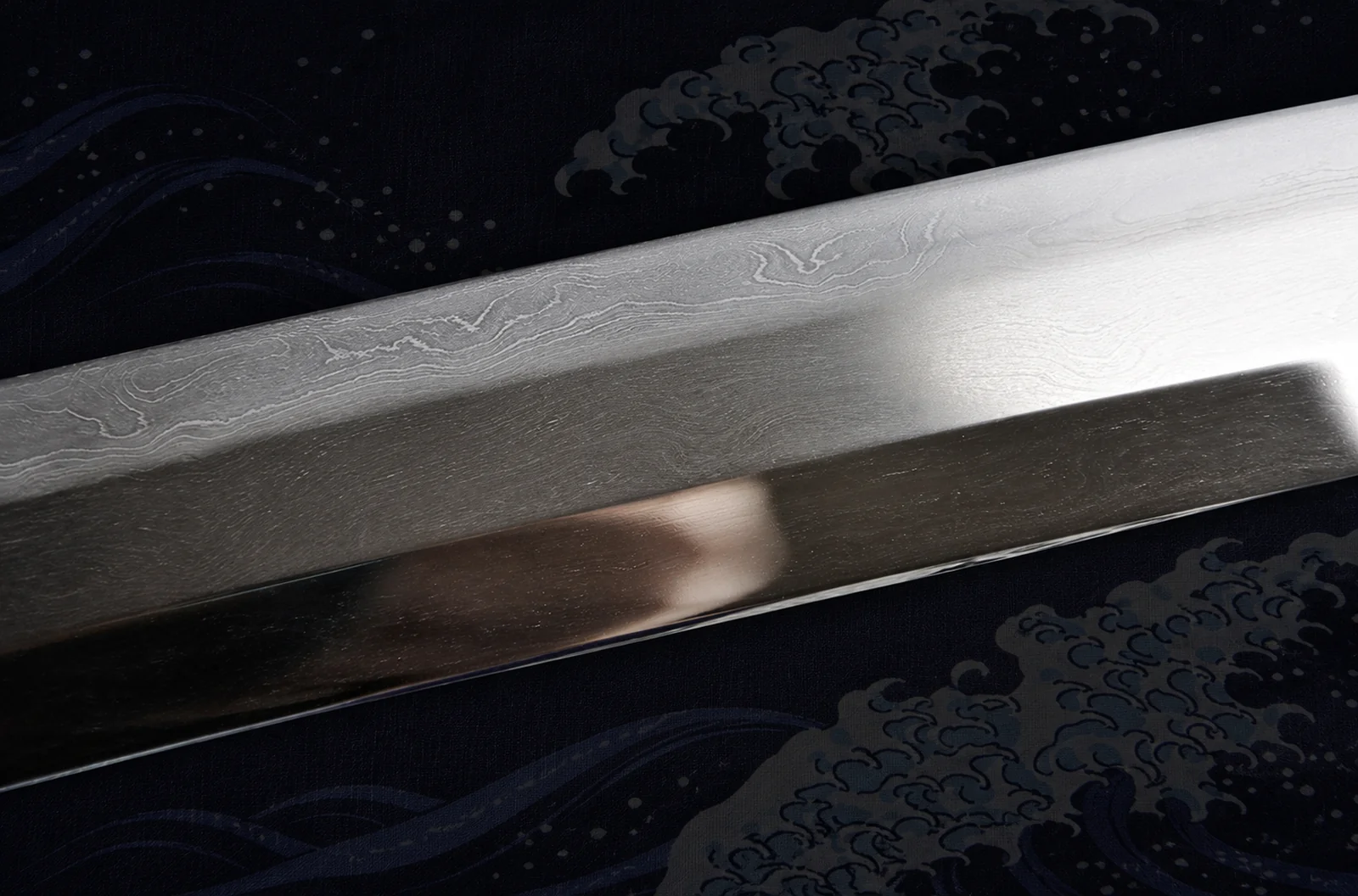
A Controlled Straight Hamon.
The blade is finished with Clay Tempering, producing a straight Suguha hamon rather than a showier pattern. This choice gives the blade a more disciplined visual rhythm and suits the overall character of the piece.
Because the hamon remains quiet, the eye naturally notices the relationship between the temper line, the ji, and the changing reflections across the polished surface.
Polishing Built on Good Foundation Work.
As discussed in the workshop video, a convincing final polish depends on careful groundwork. Here, Shiage-togi does more than add brightness. It clarifies the blade line, brings out the steel grain, and lets the ji and hamon read naturally instead of looking artificially emphasized.
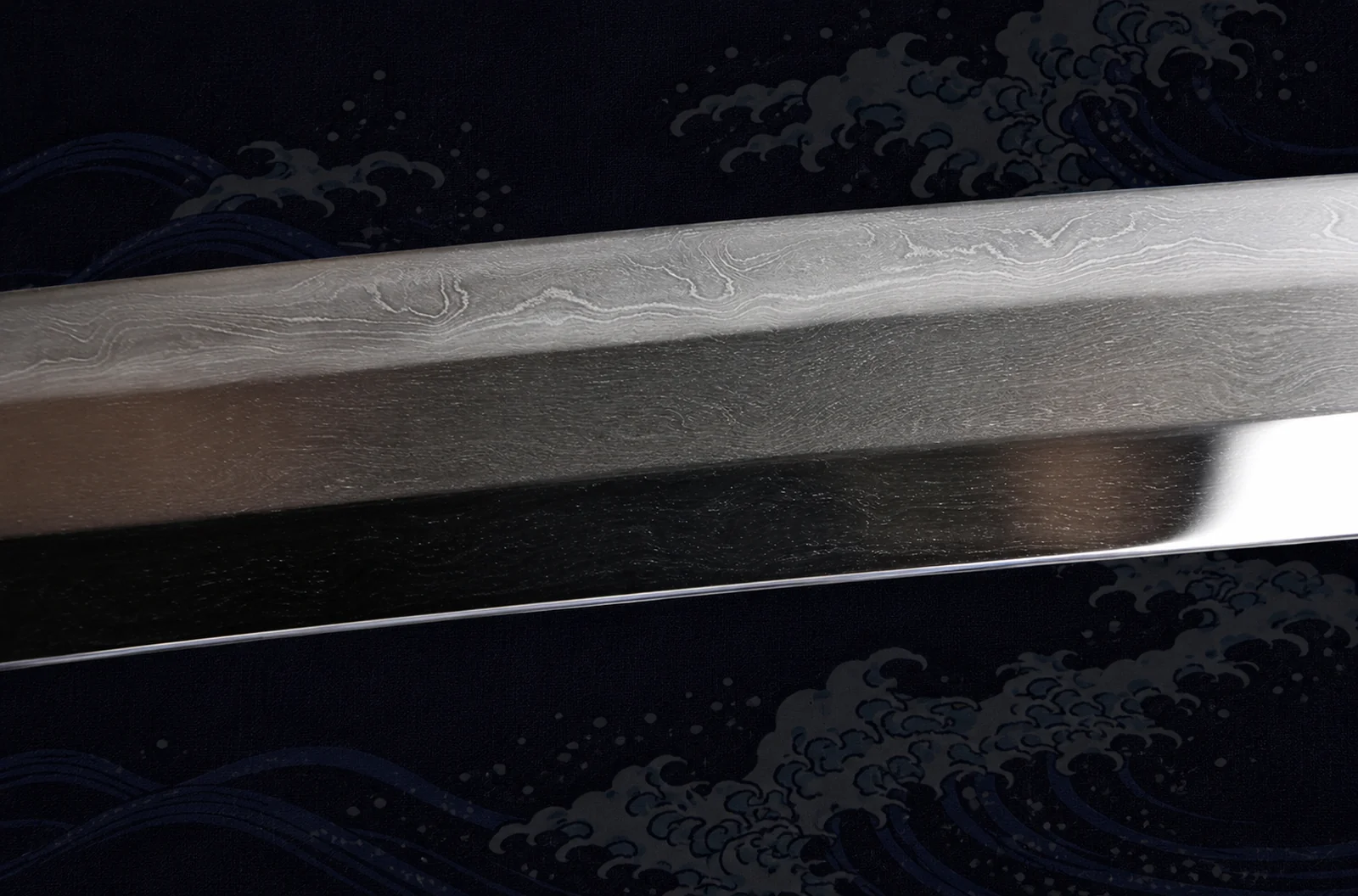
This is where the finish becomes persuasive: the edge line stays crisp, the ji remains coherent, and the surface does not flatten into a featureless shine. Instead, the blade keeps its structure and material identity.
The next chapter turns from technical reading to the finished presence of the blade, showing how these qualities appear in the completed work.
STORY 03 / FINISHED BLADE
The Finished Blade
The final polish shows different aspects of the blade as the light changes. Across these close views, the straight hamon, the steel grain, and the broad polished planes remain visible without competing for attention.
SURFACE / REFLECTION / BLADE DETAIL
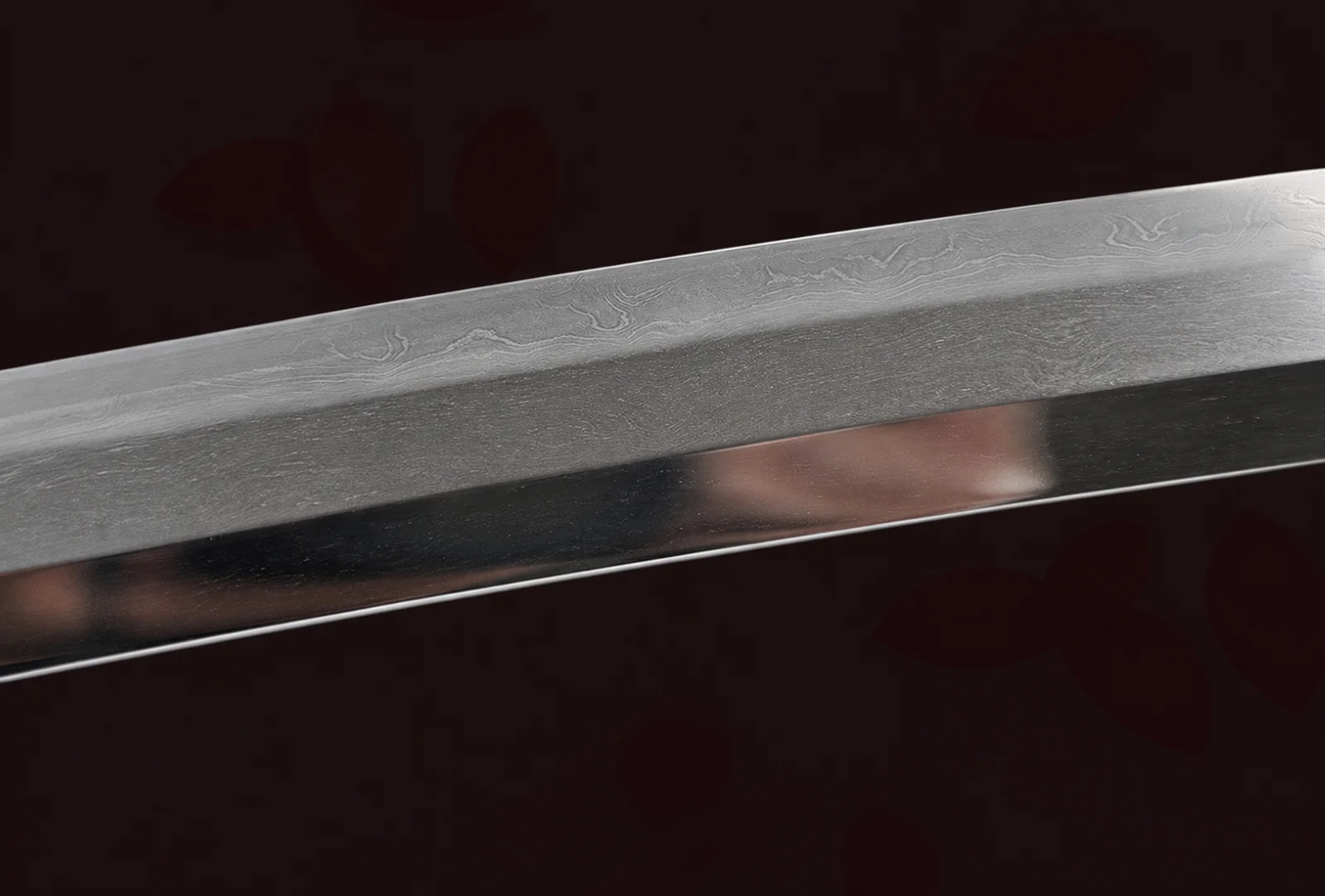
POLISHED STEEL
Light Across the Ji
The lighter and darker areas shift with the viewing angle. This view makes it easier to follow the uninterrupted finish across the blade's surface.
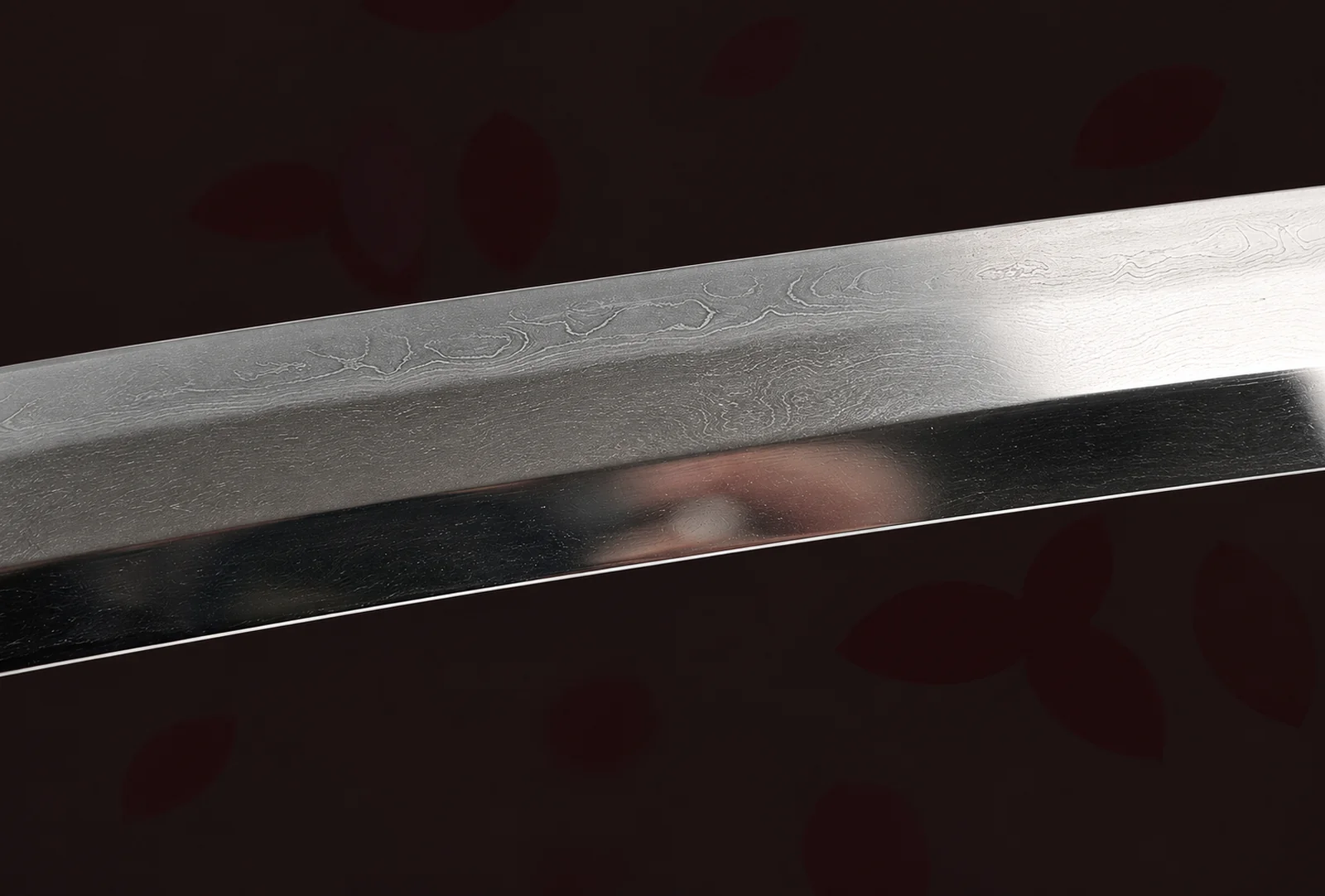
STEEL GRAIN
Texture Within the Finish
The Itame-hada is best seen close to the surface, where the pattern appears alongside the fine changes in reflection. The final Shiage-togi keeps the grain legible while maintaining a coherent polished face.
HAMON & LINE
The Straight Hamon
This angle follows the Suguha line along the blade. Its restrained shape allows the grain and the edge-side polish to remain distinct.
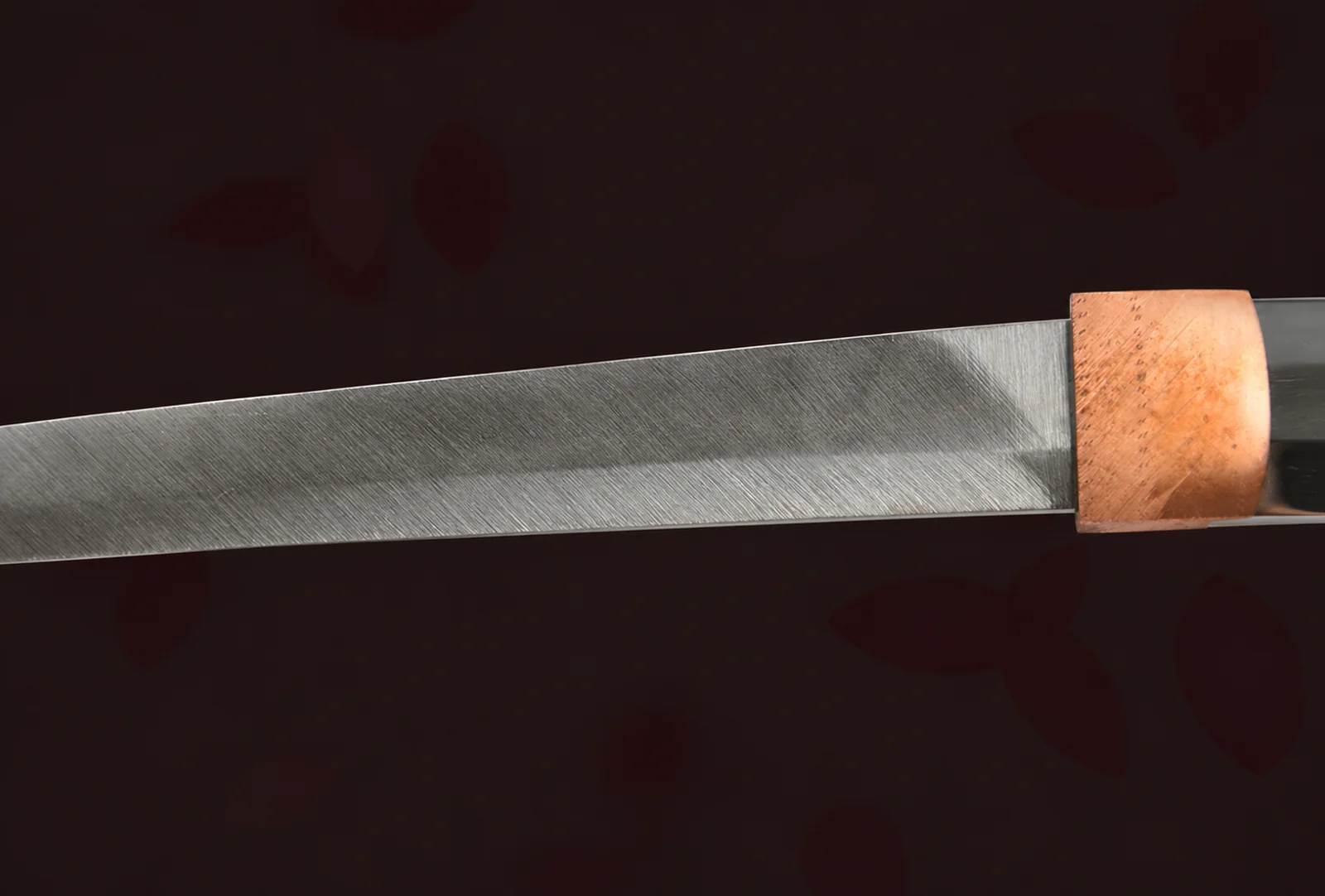
BLADE BASE
Steel and Copper
Near the base of the blade, the polished steel meets the copper habaki. This detail gives a clear view of the transition from the exposed blade to the fitted mounting.
The warm copper surface contrasts with the cooler steel, making the junction easy to examine without hiding the blade's finish.
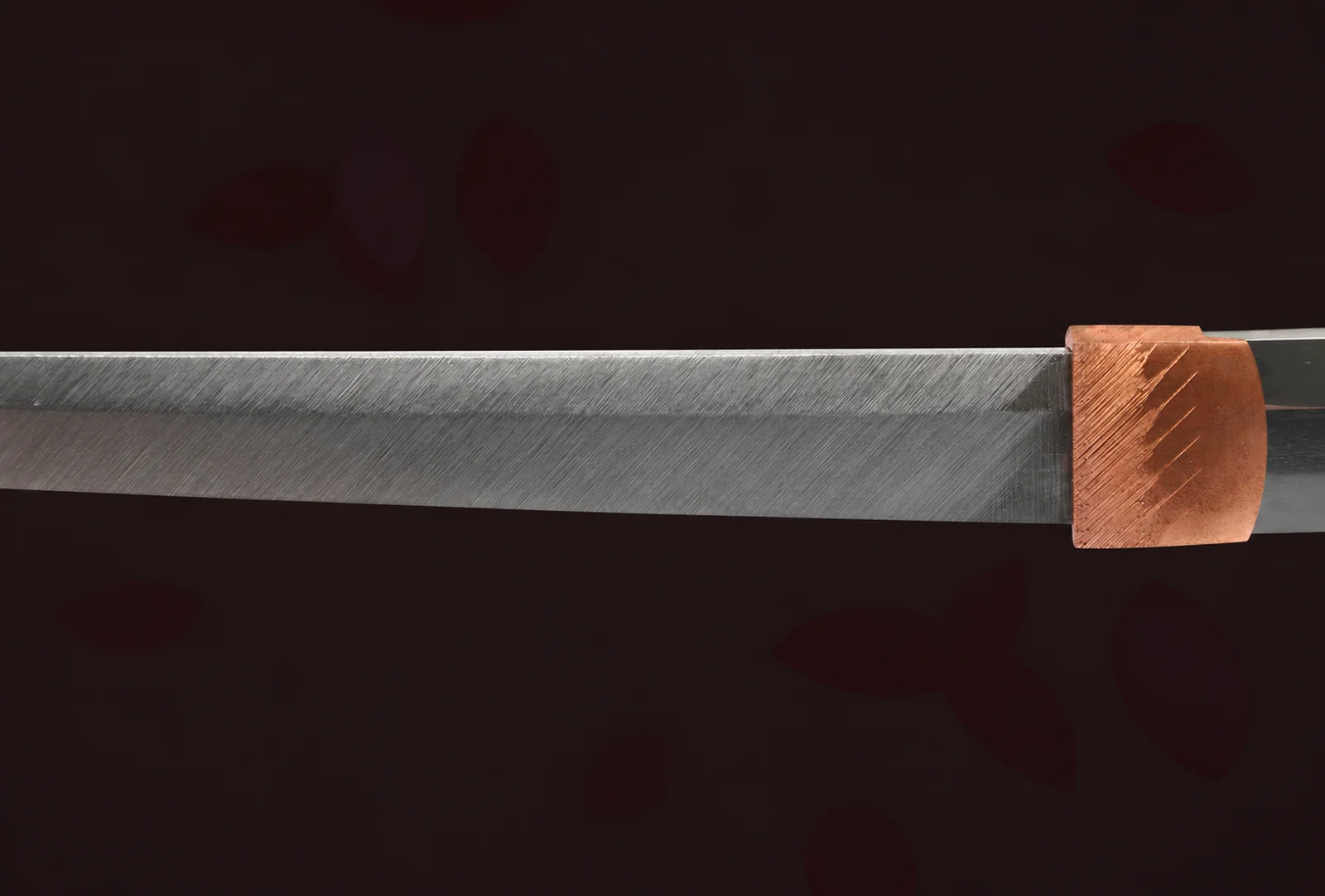
FINAL DETAIL
A Second View of the Base
The final close-up changes the angle slightly. The copper fitting, the polished edge, and the steel surface can be read together as parts of the same finished blade.
Reviews
There are no reviews yet.