QUIET CRAFTSMANSHIP · LONGQUAN

Low-Temperature Workshop-Smeltered Steel Kobuse Katana Blade

¥10,070.00

CUSTOMIZE THIS KATANA
Each katana is configured individually.
Multiple katana purchases are placed as separate orders.

KATANA CUSTOMIZER

Customize Your Katana.

Choose from the configuration options available for this katana.

WORKSHOP NOTES

Hello, everyone. Happy weekend! It’s Lao Yan from Zheyan Swords.

It’s been quite a while since my last video. The sword I’m showing today...

...was purchased by a customer back in 2016 or 2017. It was made with Low-Temperature Workshop-Smeltered Steel.

Some people also call it tamahagane. It’s a Kobuse katana, and the customer had it for several years.

It picked up scratches and wear over that time, so they sent it back for Shiage-togi polishing.

We also made a new, handmade wooden shirasaya for it.

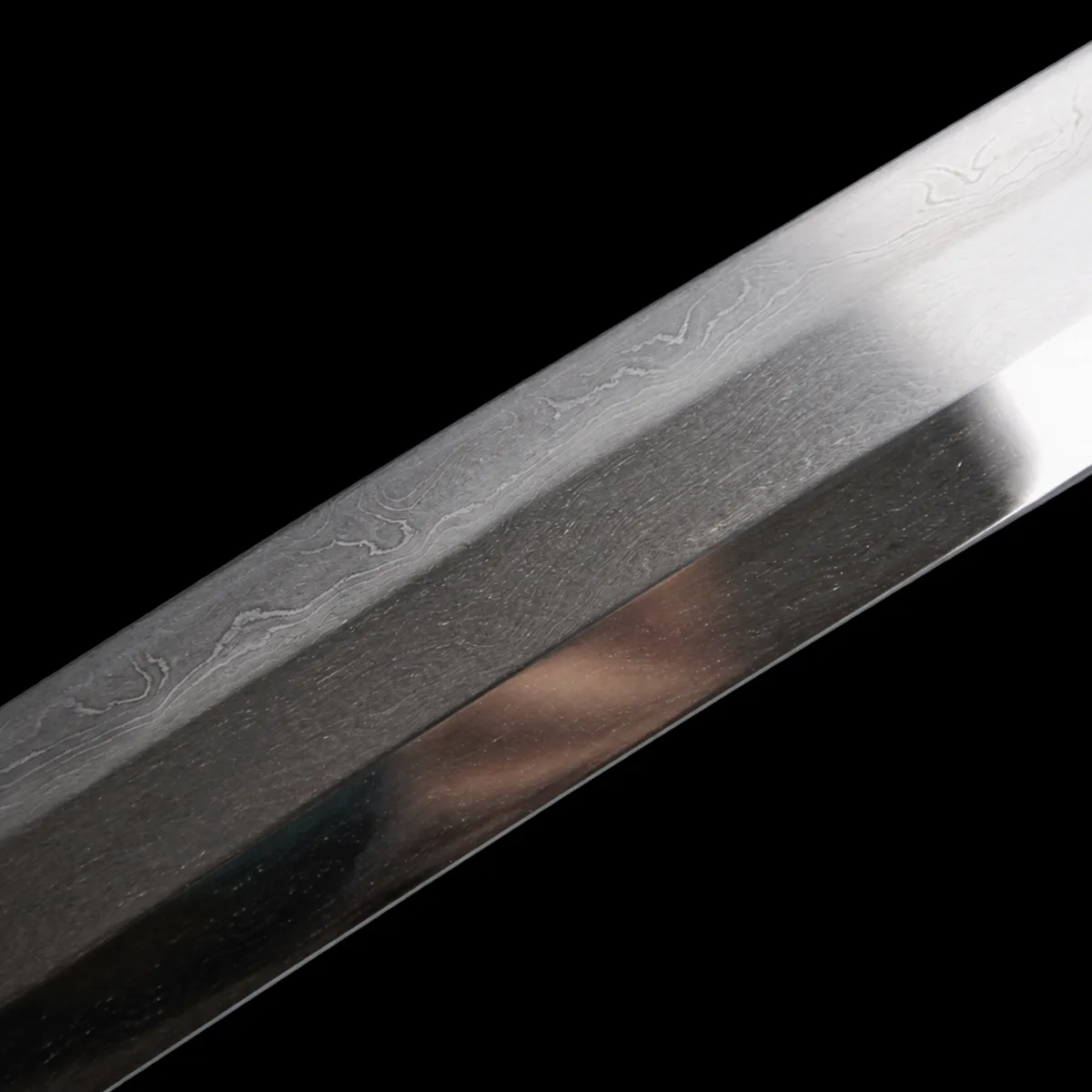
The jihada is very pleasing to look at. You can clearly see...

...the character of this low-temperature workshop-smelted steel. We completely repolished the blade.

I did the polishing myself back in 2016, and the result certainly wasn’t as good as this.

Even on video, you can get a sense of...

...the surface quality. I particularly like the tone of the steel achieved by this polisher.

It looks natural, unlike the finish produced by industrial acid etching.

That can look rather rigid. The foundation polishing, or Shitaji-togi, was also done very neatly.

The blade’s lines are exceptionally well defined.

When you give a sword a fine Shiage-togi finish...

...you need a solid foundation. The Shitaji-togi must be done properly. This one is excellent, and none of the necessary steps were skipped.

We fitted it with...

...a handmade wooden shirasaya. And this habaki...

...is a style I was using back in 2016 or 2017. I still haven’t seen others in Longquan making it this way.

It’s handmade from red copper, clad in silver, with a Yūjō-style pattern.

I don’t make these anymore myself. They take too much time—one habaki can keep a craftsman busy for two or three days.

That’s a lot of labor. Anyway, this is how the finished sword looks overall.

After repolishing, it really looks excellent. And the jihada on this blade...

...is exceptionally fine. I’ll try to show it on camera, though it looks much better in person.

Oh, one more thing, a little off topic.

We’ll probably be working for only about another month...

...less than 30 days, actually, before the holiday break. Lunar New Year comes early this year.

It falls in late January, so our workshop will definitely close sometime in mid-January.

We won’t be taking any more custom orders before the break.

Even if we did, they couldn’t ship before the holiday. I’ll do my best to finish the orders already placed with us...

...and get as many shipped out as possible.

I originally planned to put this video to music, but it’s been so long since I last talked through a sword...

...that I thought I’d say a few words. To me, this is a beautifully finished Kobuse blade with Shiage-togi polishing.

It’s made from Low-Temperature Workshop-Smeltered Steel. Thanks for watching!

Bye, everyone!

Technical Overview

Core specifications.

Nagasa
710 mm
Motohaba
32 mm
Motokasane
7 mm
Tsuka Length
260 mm
Weight without Saya
855 g
Blade & Craft

Blade craftsmanship.

Construction
Kobuse Construction
Blade Material
Low-Temperature Workshop-Smeltered Steel
Heat Treatment
Clay Tempering
Hamon
Clay-Tempered Hamon
Hamon Pattern
Suguha
Hada Pattern
Itame-hada
Polish
Shiage-togi

Description

STORY 01 / THE COMMISSION & RETURN

The Blade and Its Return

This katana began as a private commission. Its owner purchased Low-Temperature Workshop-Smeltered Steel for a blade made with Kobuse construction. Years later, the sword returned for a complete polish after wear and scratches had marked its surface.

CUSTOM-FORGED BLADE / ORIGINAL COMMISSION / REPOLISHED
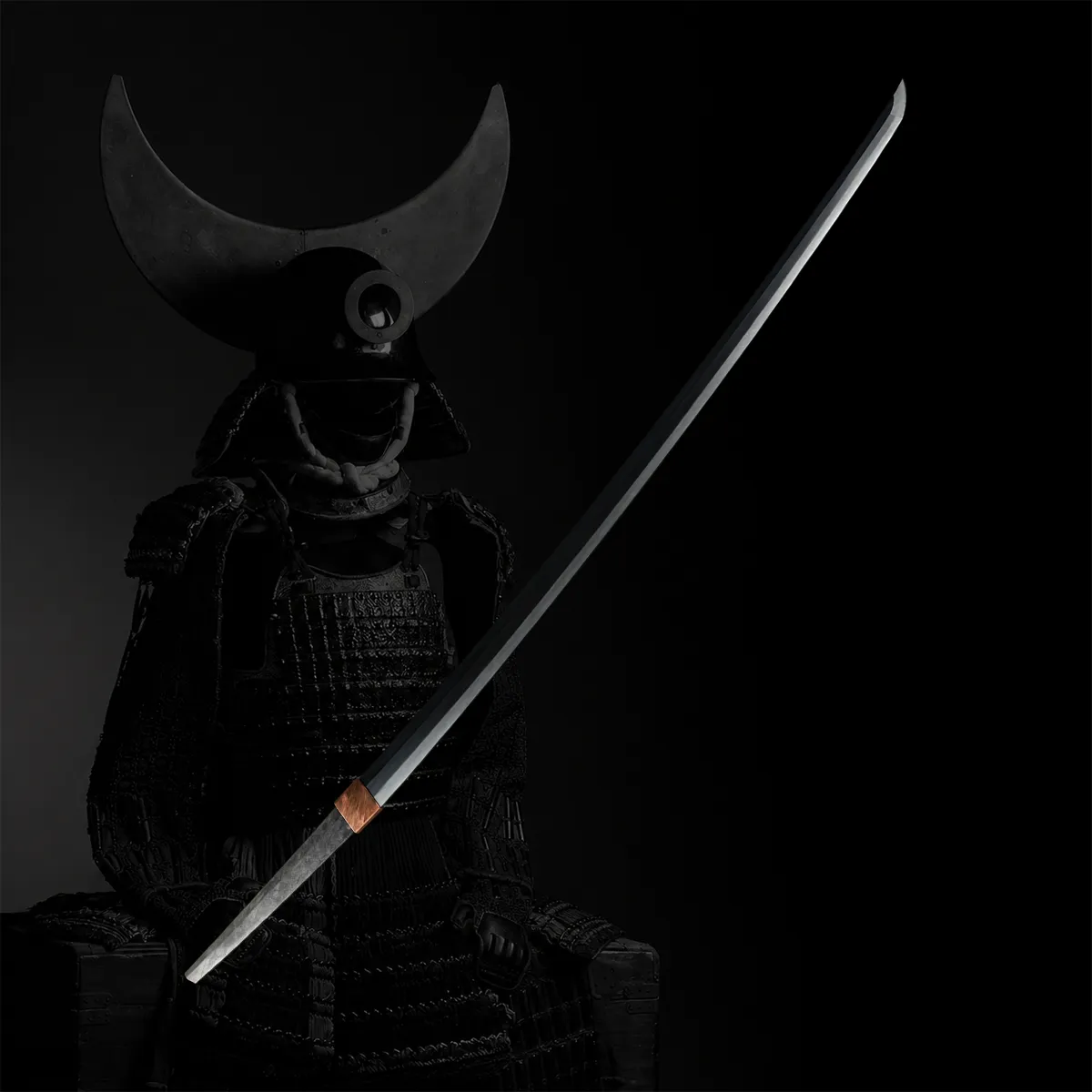
Low-Temperature Workshop-Smeltered Steel Kobuse Katana Blade displayed against a dark samurai armor backdrop, showing the full blade profile, copper habaki, and elegant curvature.
The long blade profile, photographed against a dark samurai armor backdrop.

THE ORIGINAL COMMISSION

Steel Chosen by the Owner

Rather than choosing a finished sword, the owner purchased the steel for a made-to-order blade. The material was forged through Kobuse construction, a jacketed-steel arrangement that gives the blade its underlying structure.

THE RETURN TO THE WORKSHOP

Repolished After Years of Use

The sword had been with its owner since around 2016–2017. When the blade returned with visible wear, it received new Shiage-togi polishing. The workshop video records the renewed surface and the fine steel grain brought back into view.

THE BLADE

Form and Surface

With a 710 mm nagasa, 32 mm motohaba, and 7 mm base thickness, the blade combines a defined profile with visible Itame-hada grain and a straight Suguha hamon. The next chapter examines the forging, heat treatment, and polishing in detail.

NEXT / BLADE CRAFTSMANSHIP — KOBUSE, SUGUHA & SHIAGE-TOGI

Story 02 / Steel, Hada & Polishing

Steel, Grain, and Finish.

This blade is forged in Kobuse construction from Low-Temperature Workshop-Smeltered Steel. Its character does not come from decoration, but from the steel itself, the blade geometry established in the foundation work, and the way the surface is brought out through Shiage-togi polishing.

Rather than presenting an active, irregular temper pattern, this sword follows a controlled Suguha line. That straight temper line works together with visible Itame-hada grain, making the blade read as a refined study in steel and finish.
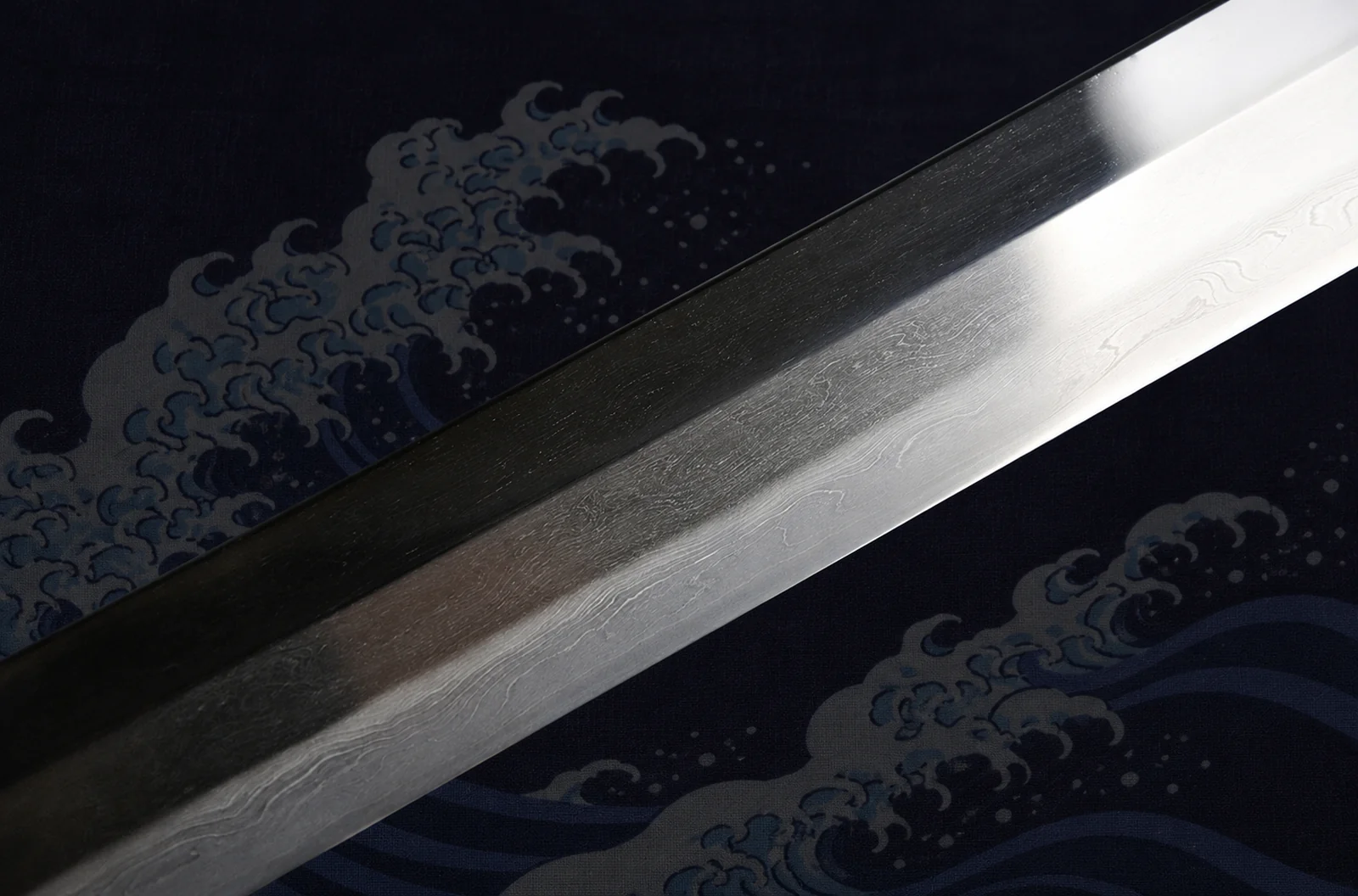
Close-up of the Low-Temperature Workshop-Smeltered Steel Kobuse katana blade showing the polished surface, visible grain, and straight hamon.
A close view of the blade surface, showing the straight temper line and the steel grain revealed by polishing.
The Steel Surface

Itame-hada in View.

The blade shows a clear Itame-hada grain. In this piece, the grain is not hidden beneath a bright, uniform finish. Instead, it remains visible across the ji, giving the surface movement and depth while preserving a calm overall appearance.
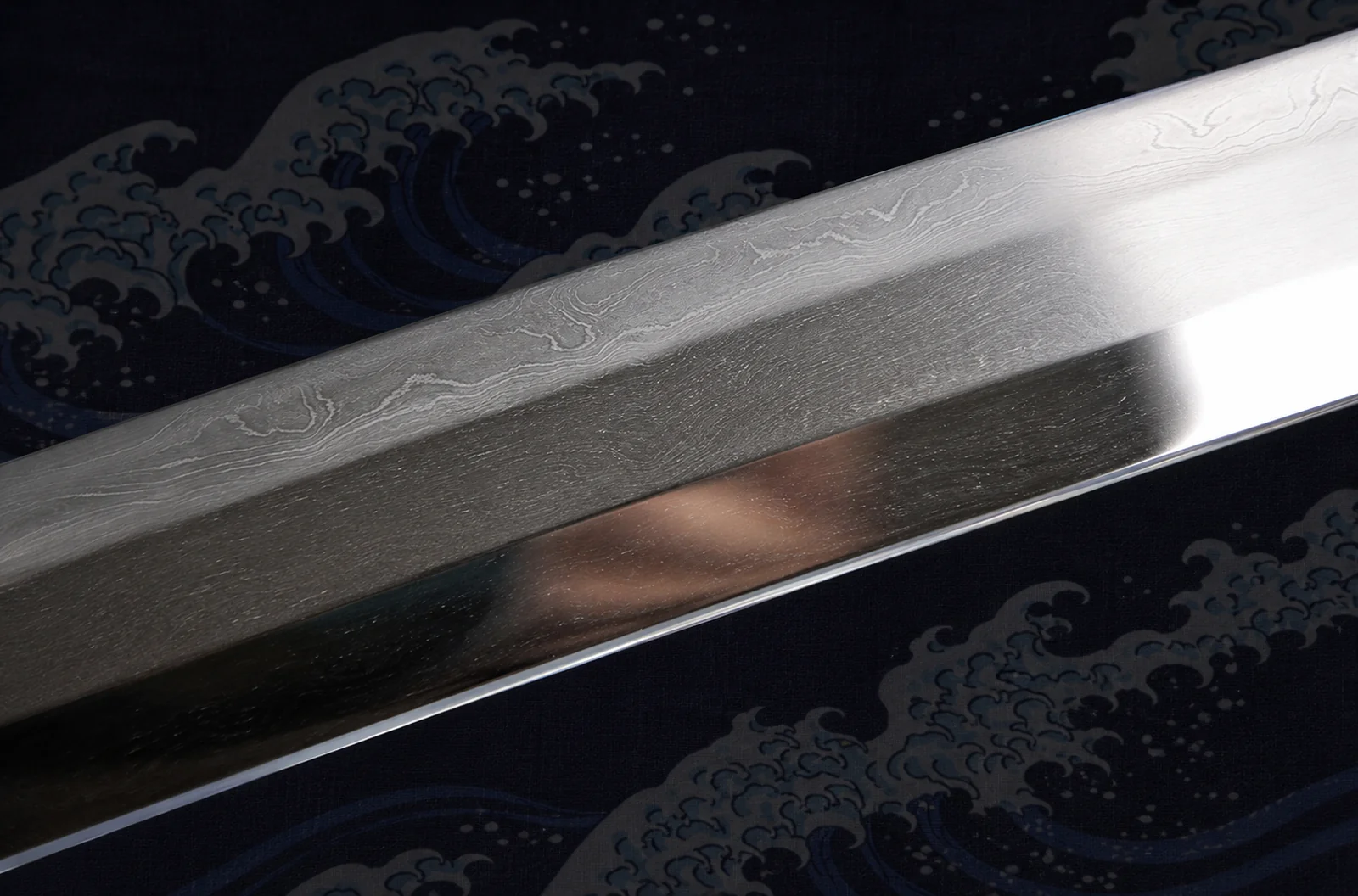
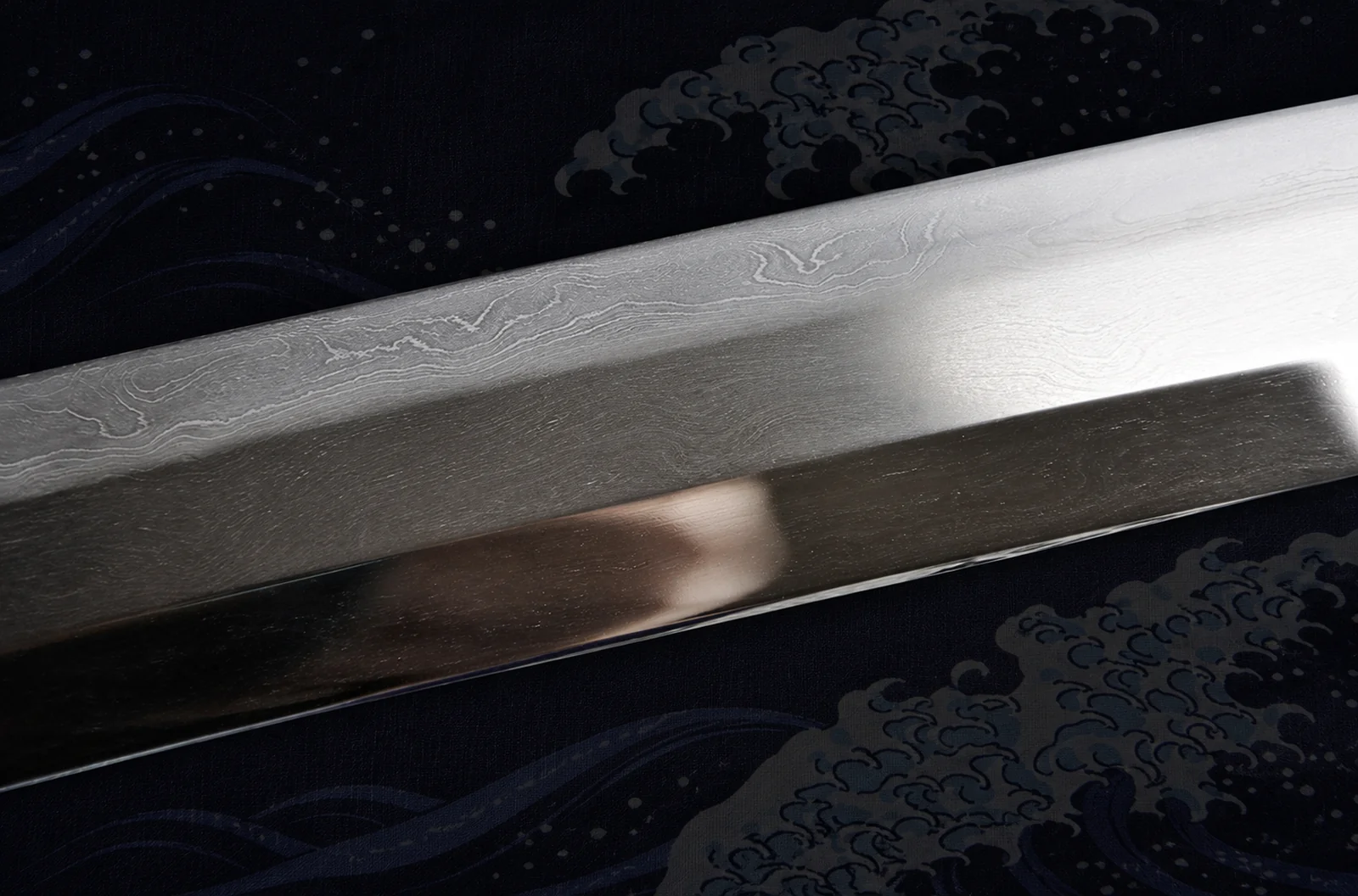
Wide blade detail of the Low-Temperature Workshop-Smeltered Steel Kobuse katana highlighting the steel surface and itame-hada grain.
The jihada remains visible within the polished surface, giving the blade a quiet, organic texture.
Detailed view of the Low-Temperature Workshop-Smeltered Steel Kobuse katana blade showing the suguha hamon and polished ji.
The straight Suguha temper line stays restrained, leaving more room for the steel texture to speak.
Heat Treatment & Hamon

A Controlled Straight Hamon.

The blade is finished with Clay Tempering, producing a straight Suguha hamon rather than a showier pattern. This choice gives the blade a more disciplined visual rhythm and suits the overall character of the piece.

Because the hamon remains quiet, the eye naturally notices the relationship between the temper line, the ji, and the changing reflections across the polished surface.

Shiage-togi

Polishing Built on Good Foundation Work.

As discussed in the workshop video, a convincing final polish depends on careful groundwork. Here, Shiage-togi does more than add brightness. It clarifies the blade line, brings out the steel grain, and lets the ji and hamon read naturally instead of looking artificially emphasized.
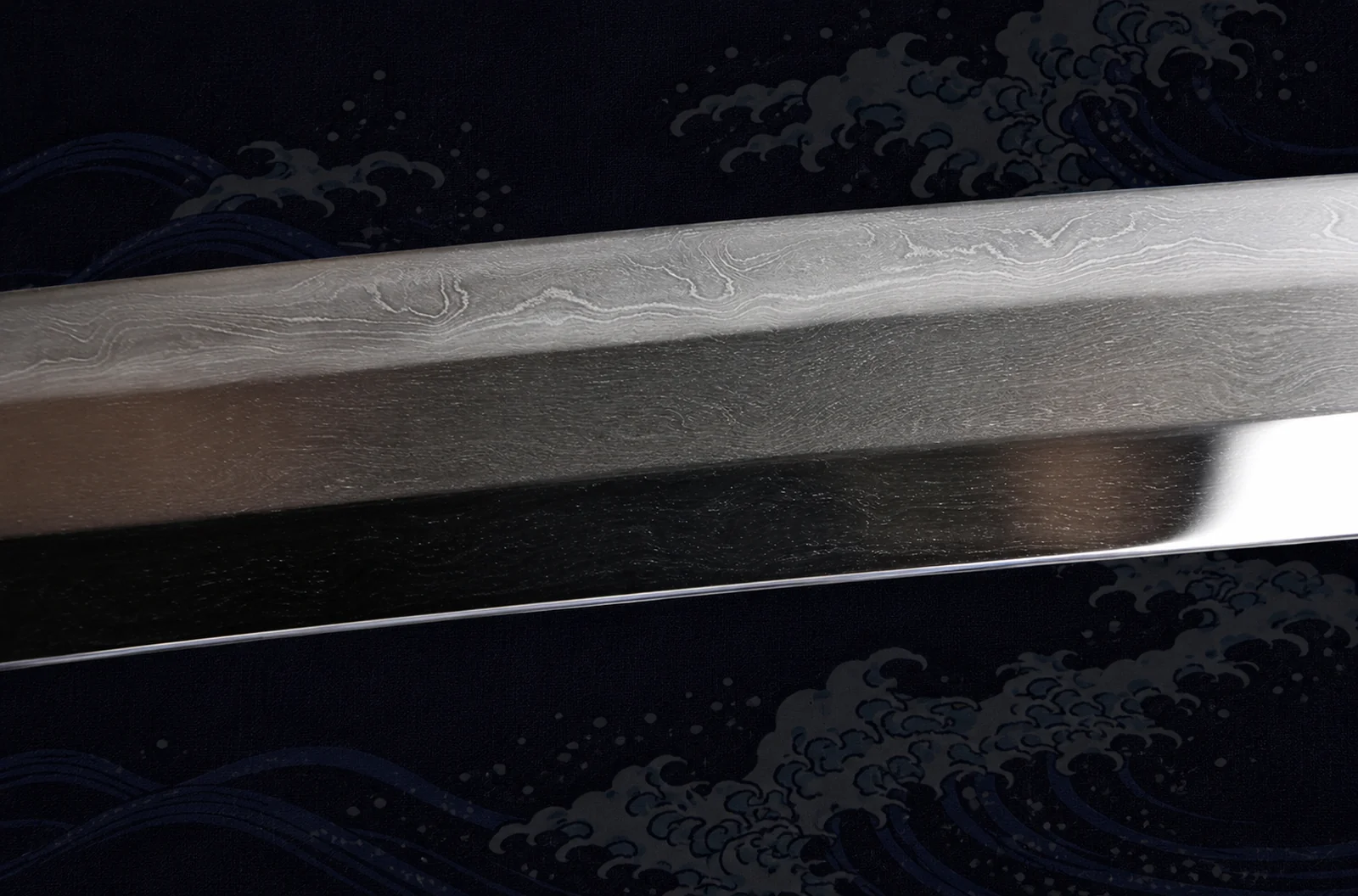
Polished blade detail of the Low-Temperature Workshop-Smeltered Steel Kobuse katana with clear reflections and visible grain.
Reflections travel cleanly along the ji, reinforcing the blade’s geometry.

This is where the finish becomes persuasive: the edge line stays crisp, the ji remains coherent, and the surface does not flatten into a featureless shine. Instead, the blade keeps its structure and material identity.

The next chapter turns from technical reading to the finished presence of the blade, showing how these qualities appear in the completed work.

Next / The Finished Blade — Overall Presence & Final Impression

STORY 03 / FINISHED BLADE

The Finished Blade

The final polish shows different aspects of the blade as the light changes. Across these close views, the straight hamon, the steel grain, and the broad polished planes remain visible without competing for attention.

SURFACE / REFLECTION / BLADE DETAIL
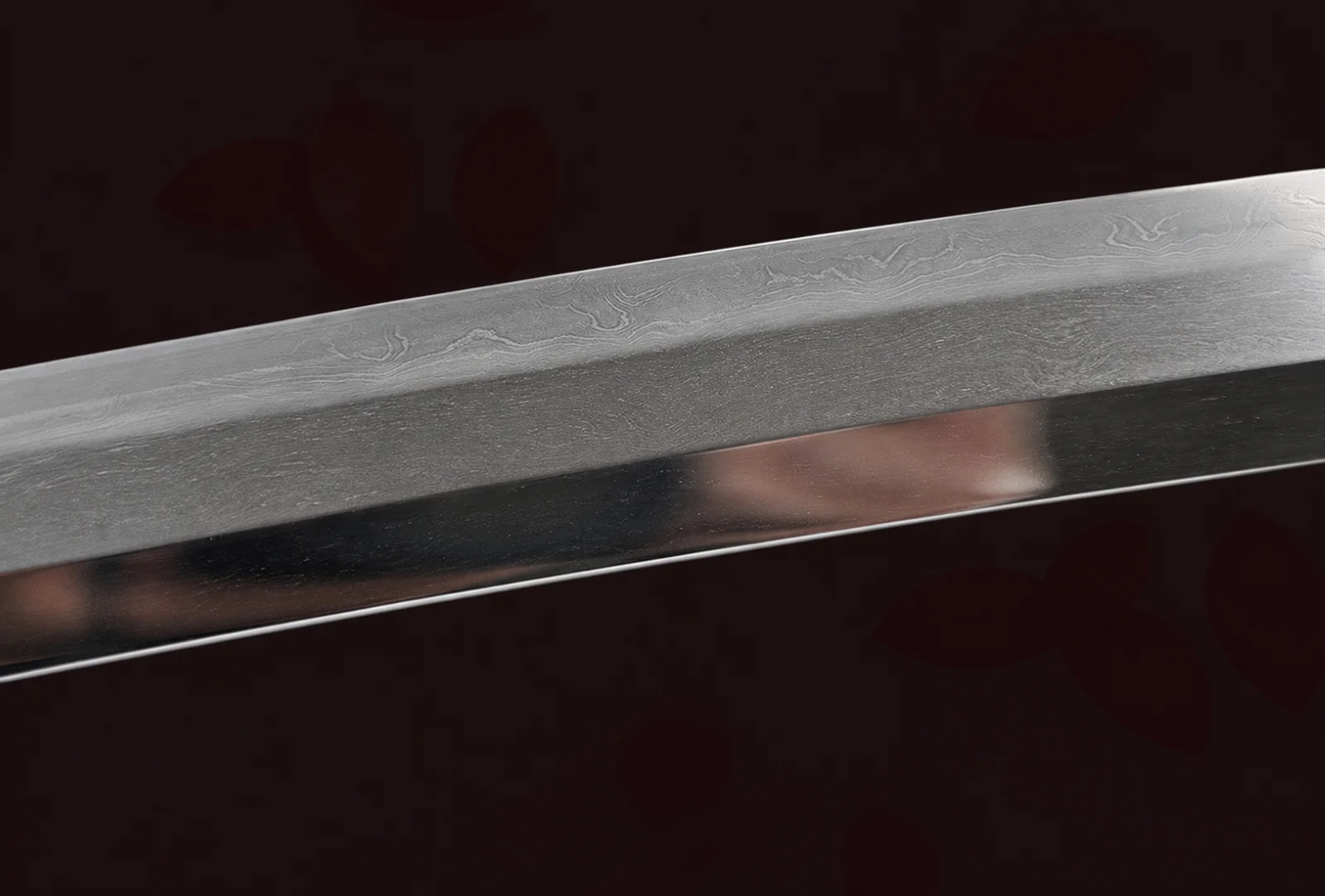
Close-up of the polished Kobuse katana blade against a dark red petal-pattern background, showing a straight hamon and contrasting steel surfaces.
The finished surface, photographed in soft, angled light.

POLISHED STEEL

Light Across the Ji

The lighter and darker areas shift with the viewing angle. This view makes it easier to follow the uninterrupted finish across the blade's surface.
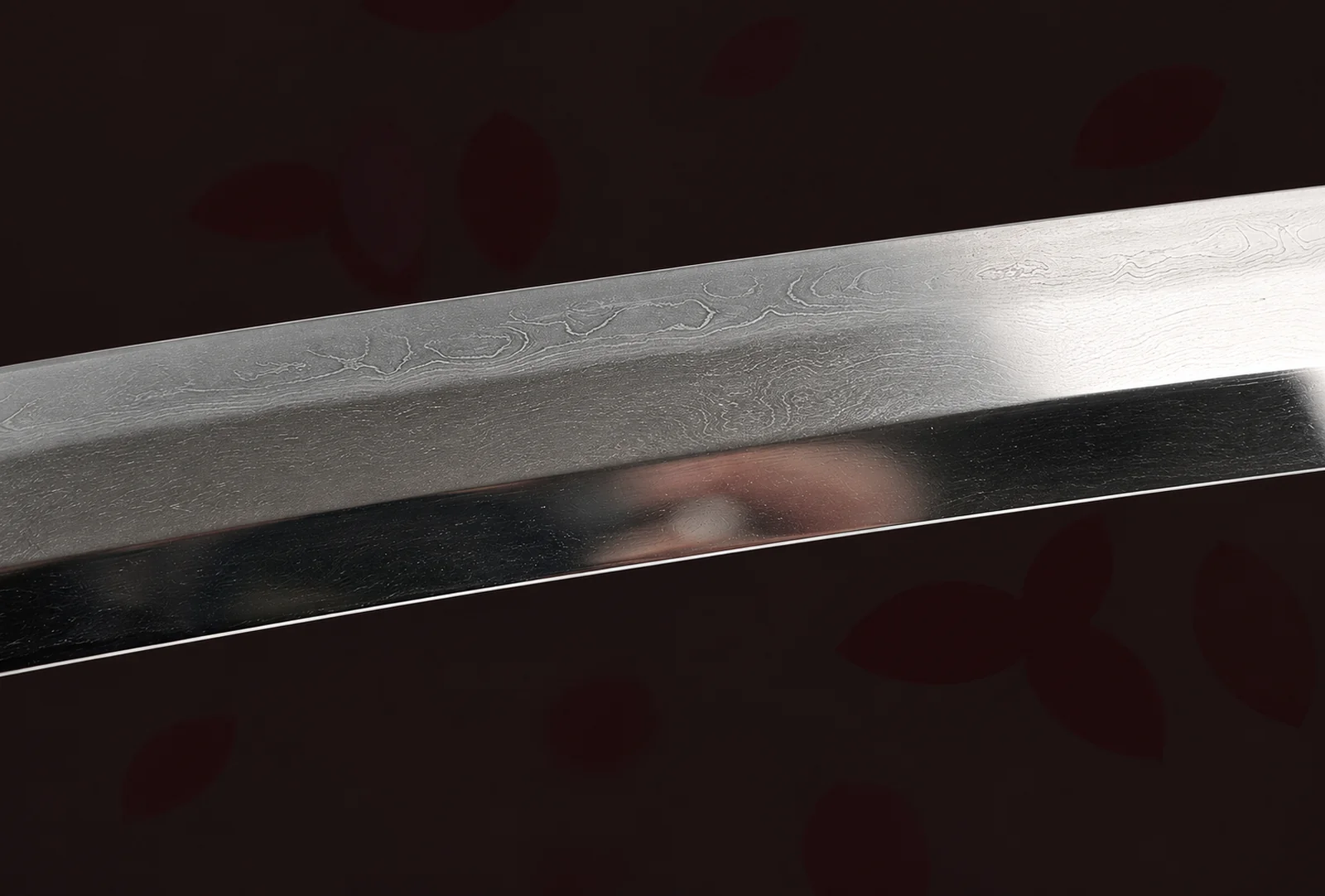
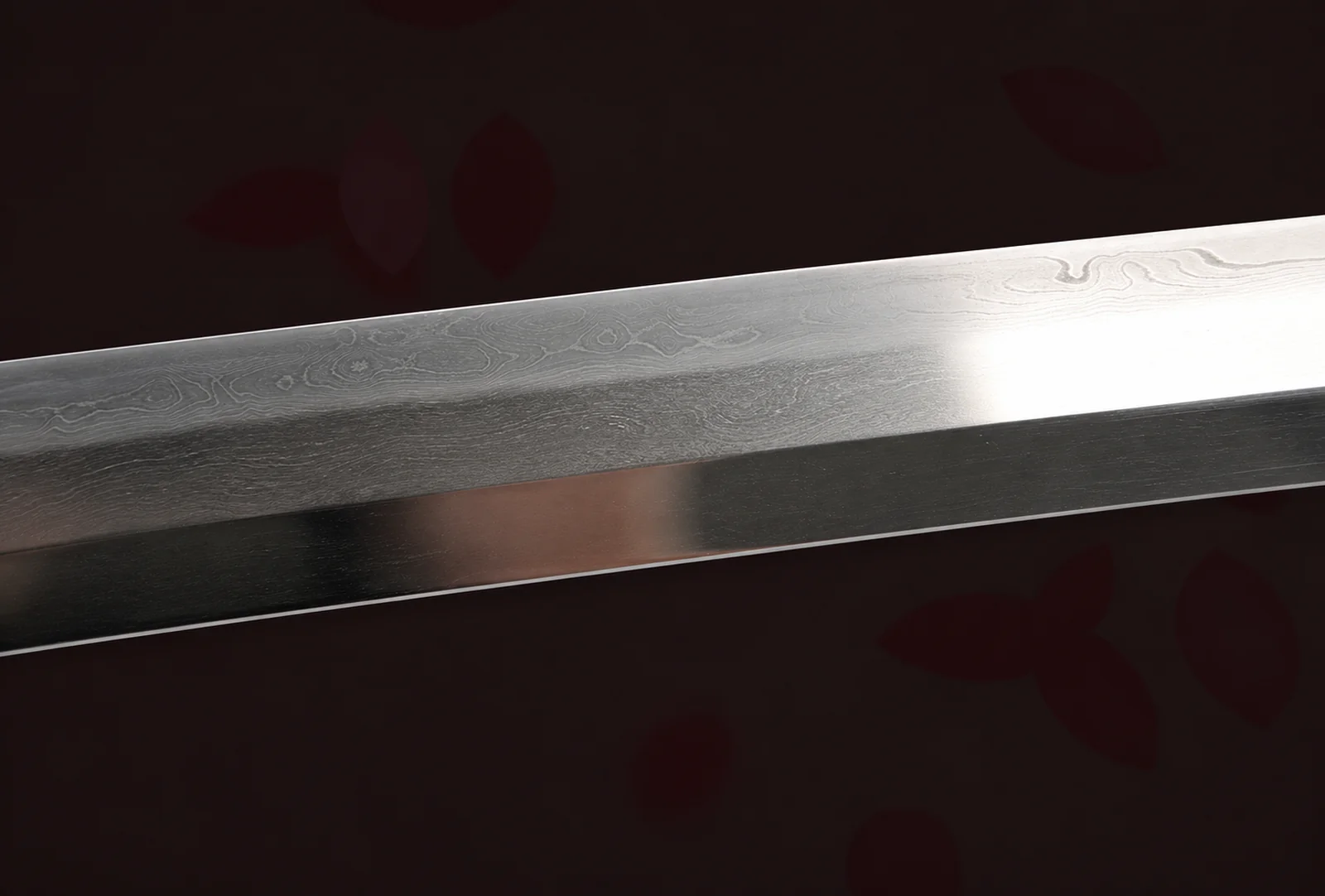
Broad close-up of a Kobuse katana blade with polished steel planes and soft reflections against a dark cherry-petal background.
A broader reflection reveals the polish across the ji.
Close view of the Low-Temperature Workshop-Smeltered Steel katana blade showing subtle surface grain near the polished edge.
Fine texture remains visible beneath the changing reflection.

STEEL GRAIN

Texture Within the Finish

The Itame-hada is best seen close to the surface, where the pattern appears alongside the fine changes in reflection. The final Shiage-togi keeps the grain legible while maintaining a coherent polished face.

HAMON & LINE

The Straight Hamon

This angle follows the Suguha line along the blade. Its restrained shape allows the grain and the edge-side polish to remain distinct.
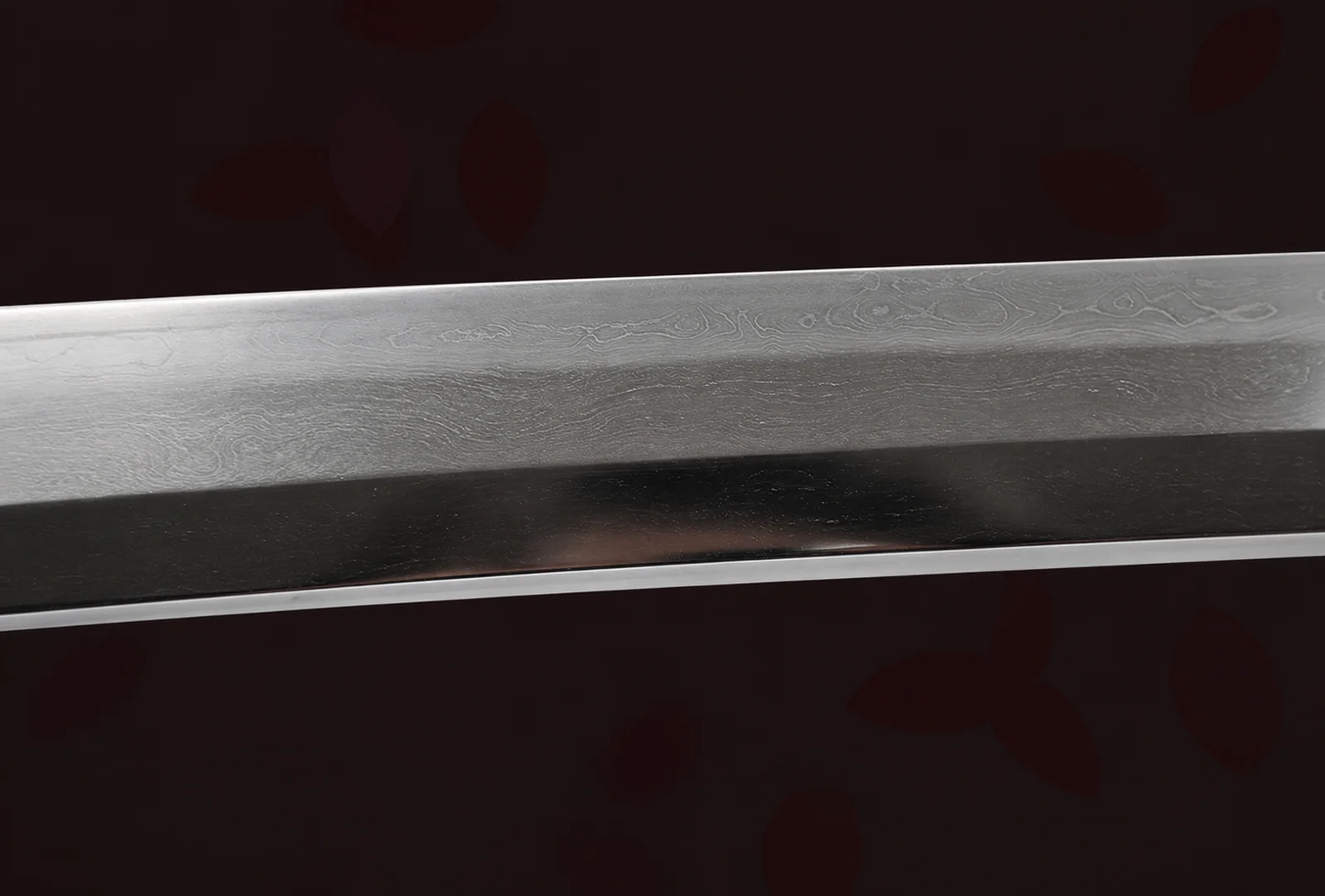
Horizontal close-up of a polished katana blade showing the straight suguha hamon and smooth steel finish against a deep red background.
A nearly level view of the straight temper line.

BLADE BASE

Steel and Copper

Near the base of the blade, the polished steel meets the copper habaki. This detail gives a clear view of the transition from the exposed blade to the fitted mounting.

The warm copper surface contrasts with the cooler steel, making the junction easy to examine without hiding the blade's finish.
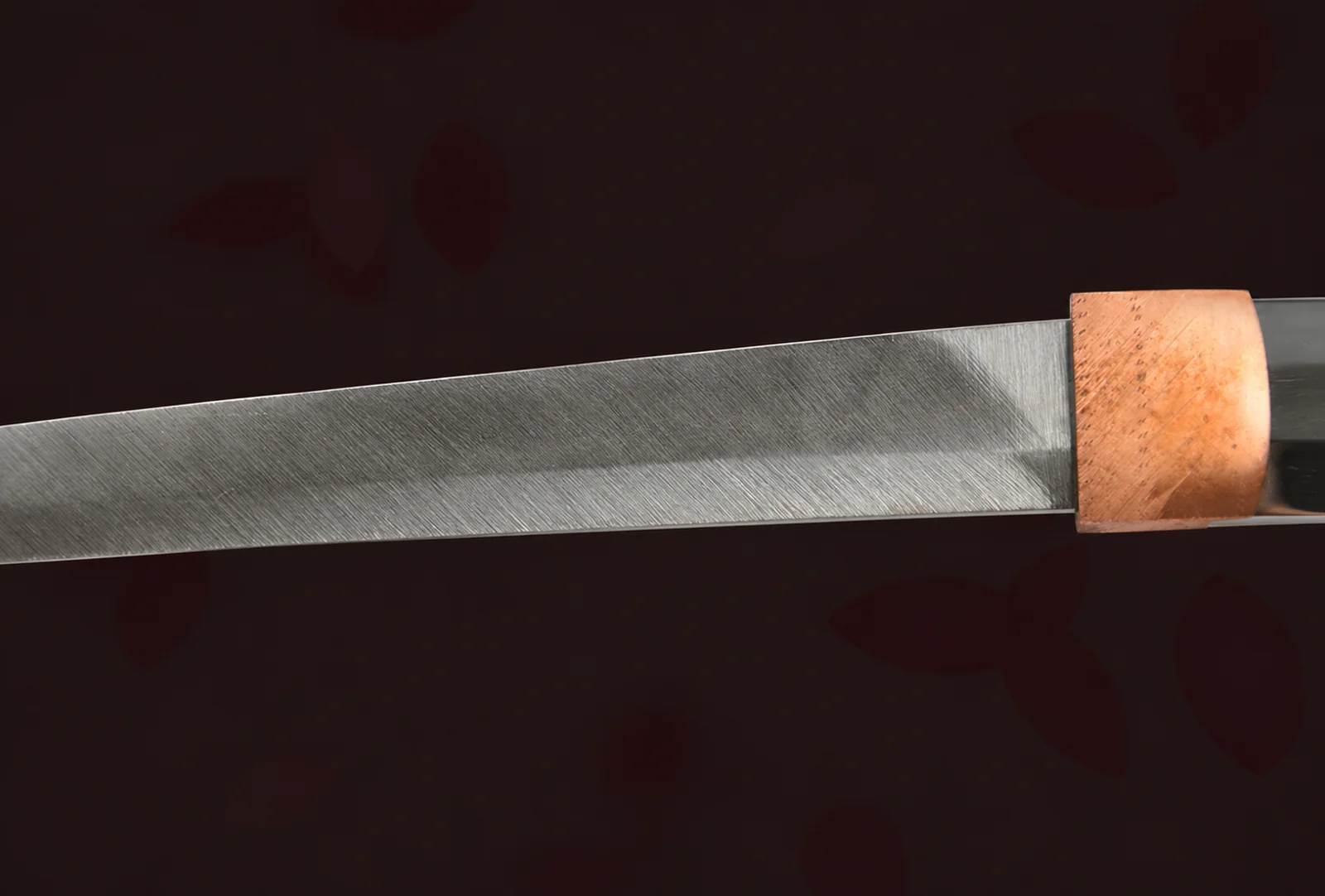
Detail of the polished Kobuse katana blade near its copper habaki, showing the meeting point between blade steel and fitting.
The copper habaki at the base of the blade.

FINAL DETAIL

A Second View of the Base

The final close-up changes the angle slightly. The copper fitting, the polished edge, and the steel surface can be read together as parts of the same finished blade.
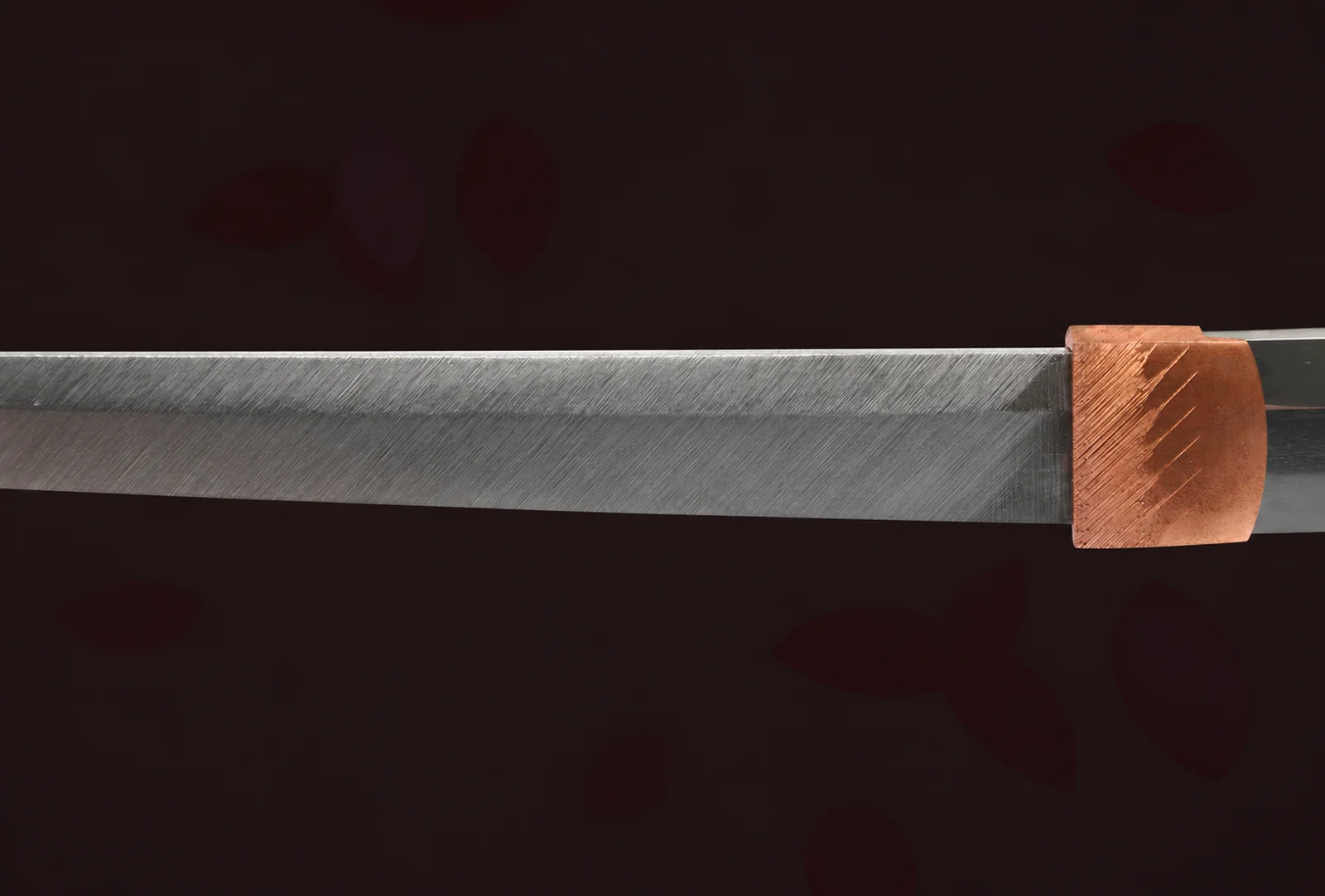
Final close-up of the Kobuse katana blade and copper habaki, with the polished blade surface displayed against a dark red petal background.
The completed blade and copper fitting, seen from another angle.

Reviews

There are no reviews yet.

Be the first to review “Low-Temperature Workshop-Smeltered Steel Kobuse Katana Blade”

Your email address will not be published. Required fields are marked *