Description
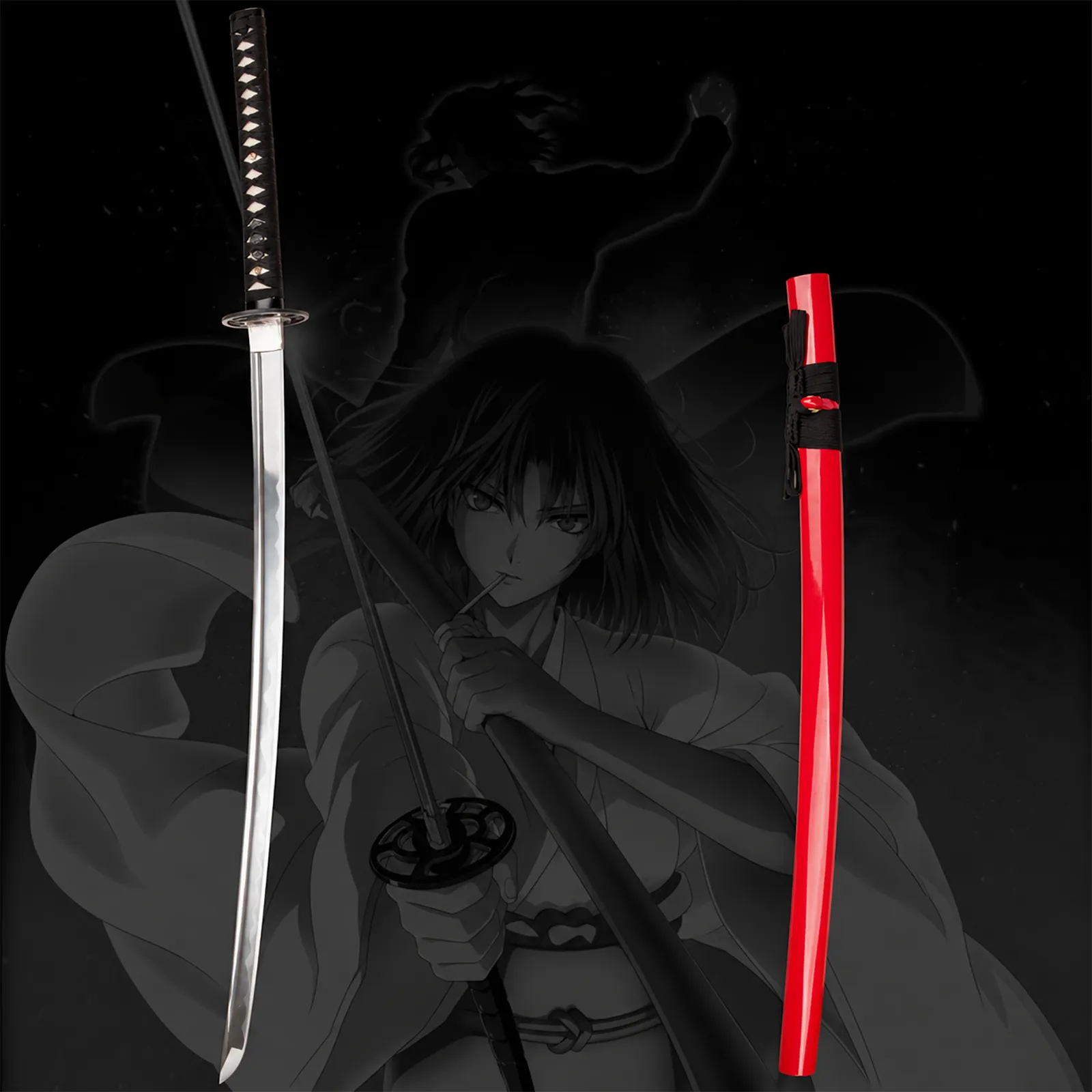
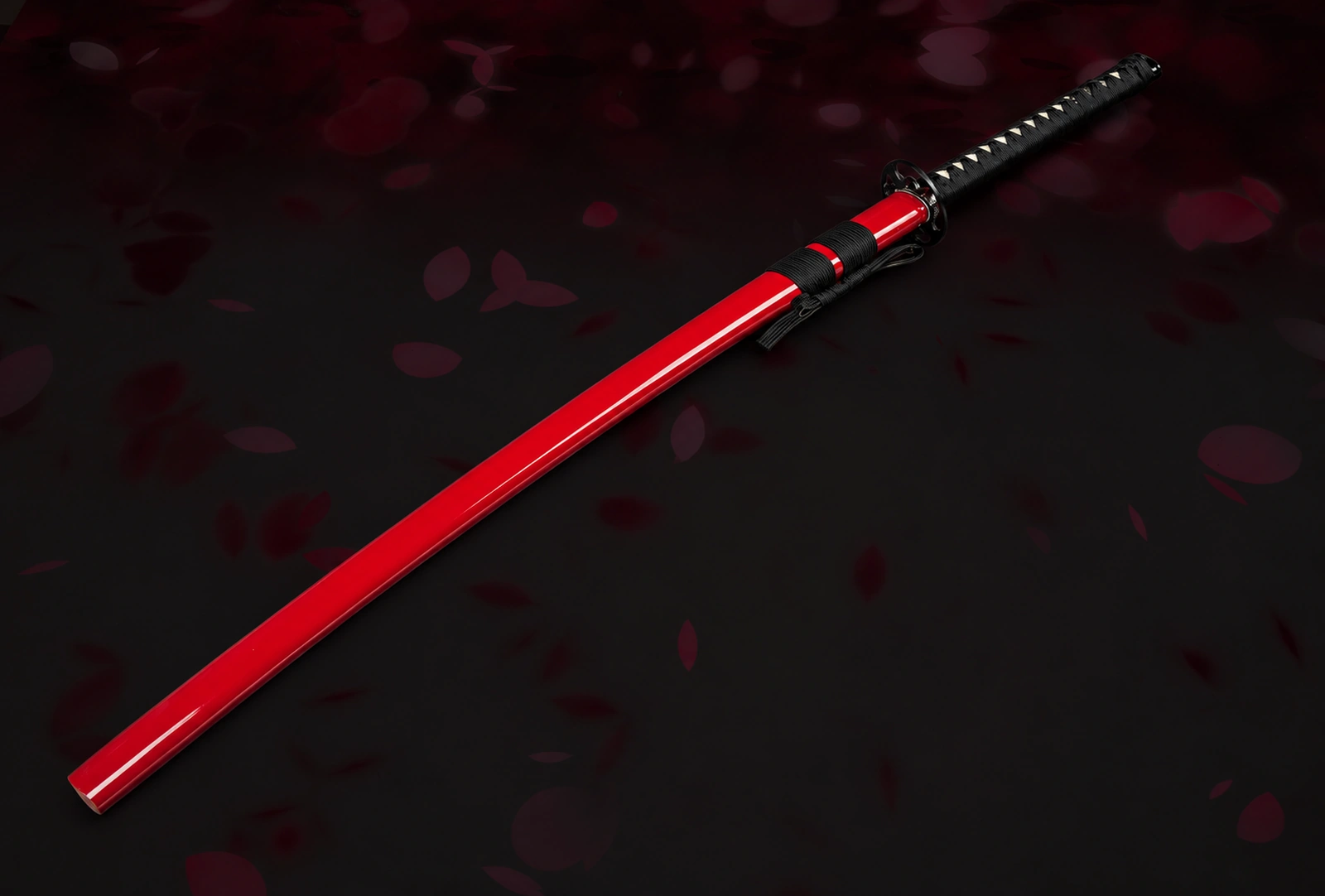
Kuji Kanesada. In Red and Black.
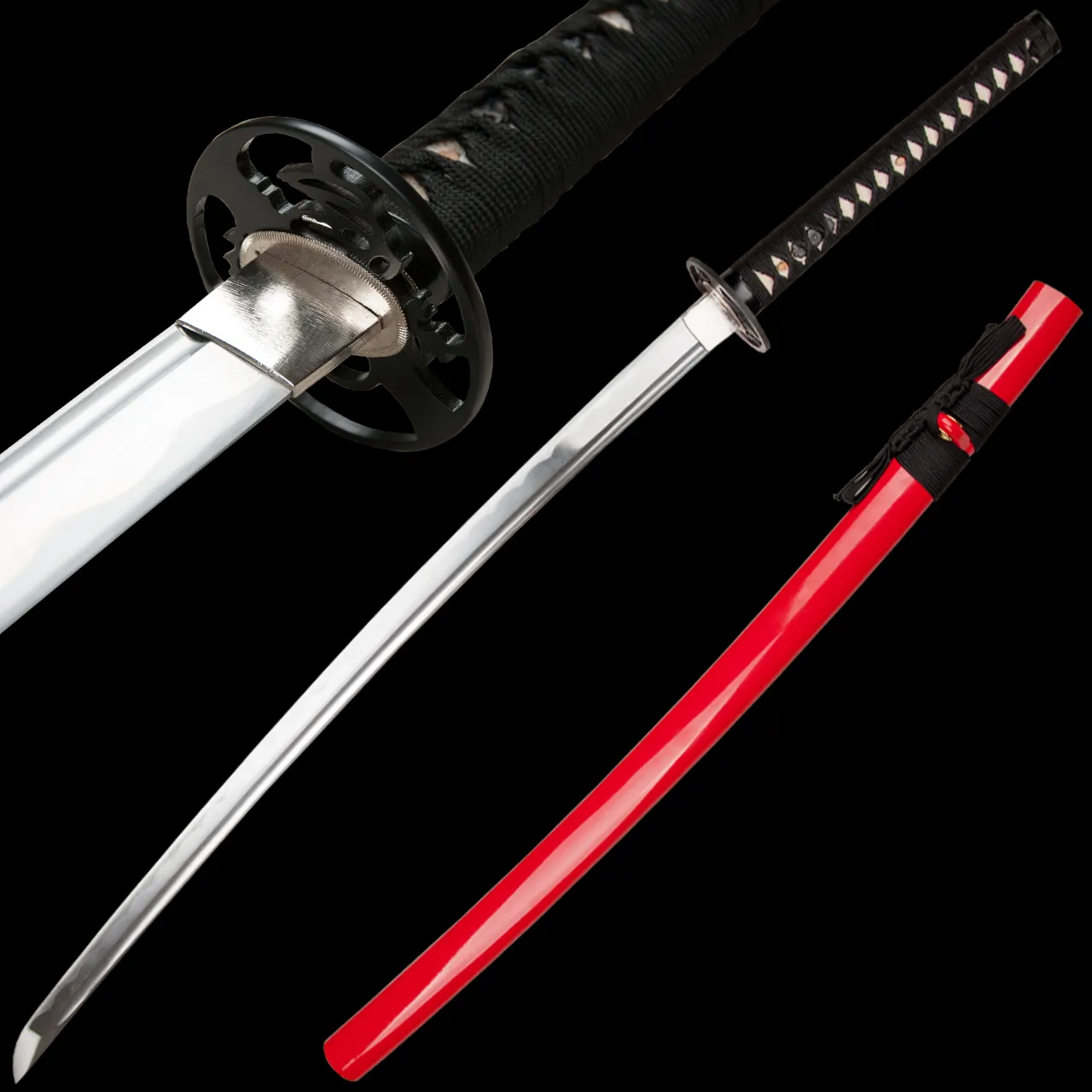
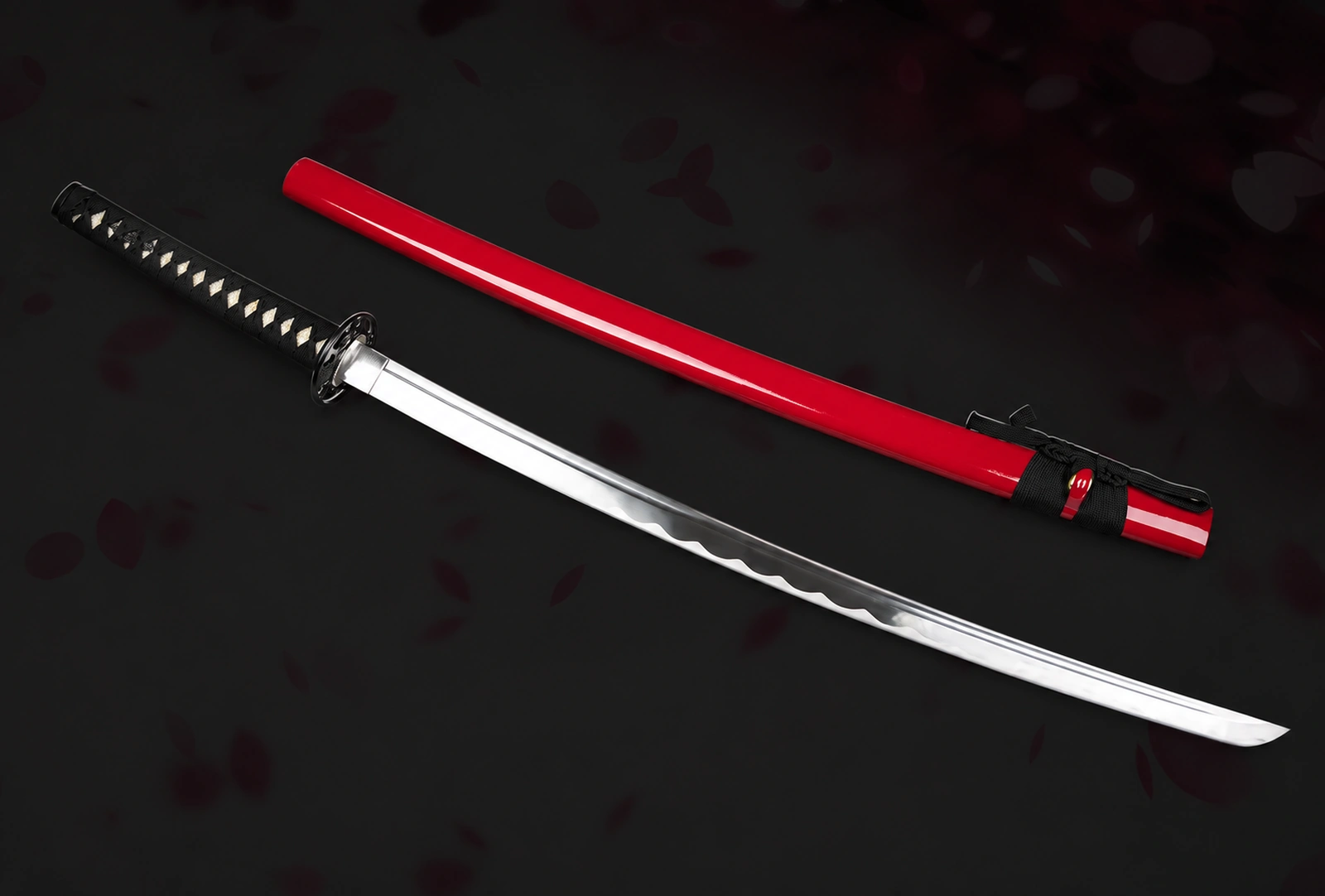
Presented here in a vivid red saya with restrained black fittings, the Kuji Kanesada Katana brings a striking visual identity to a traditional Japanese sword silhouette.
Five blade versions offer distinct combinations of steel, hardness, heat treatment, and polishing craftsmanship, allowing collectors to choose the blade that best reflects their preferences.
The Details Behind the Blade.
From the openwork iron fittings and genuine rayskin to five distinct blade configurations, the Kuji Kanesada Katana brings together traditional sword components, contrasting textures, and a choice of steels and finishes.
The Art of Restraint.
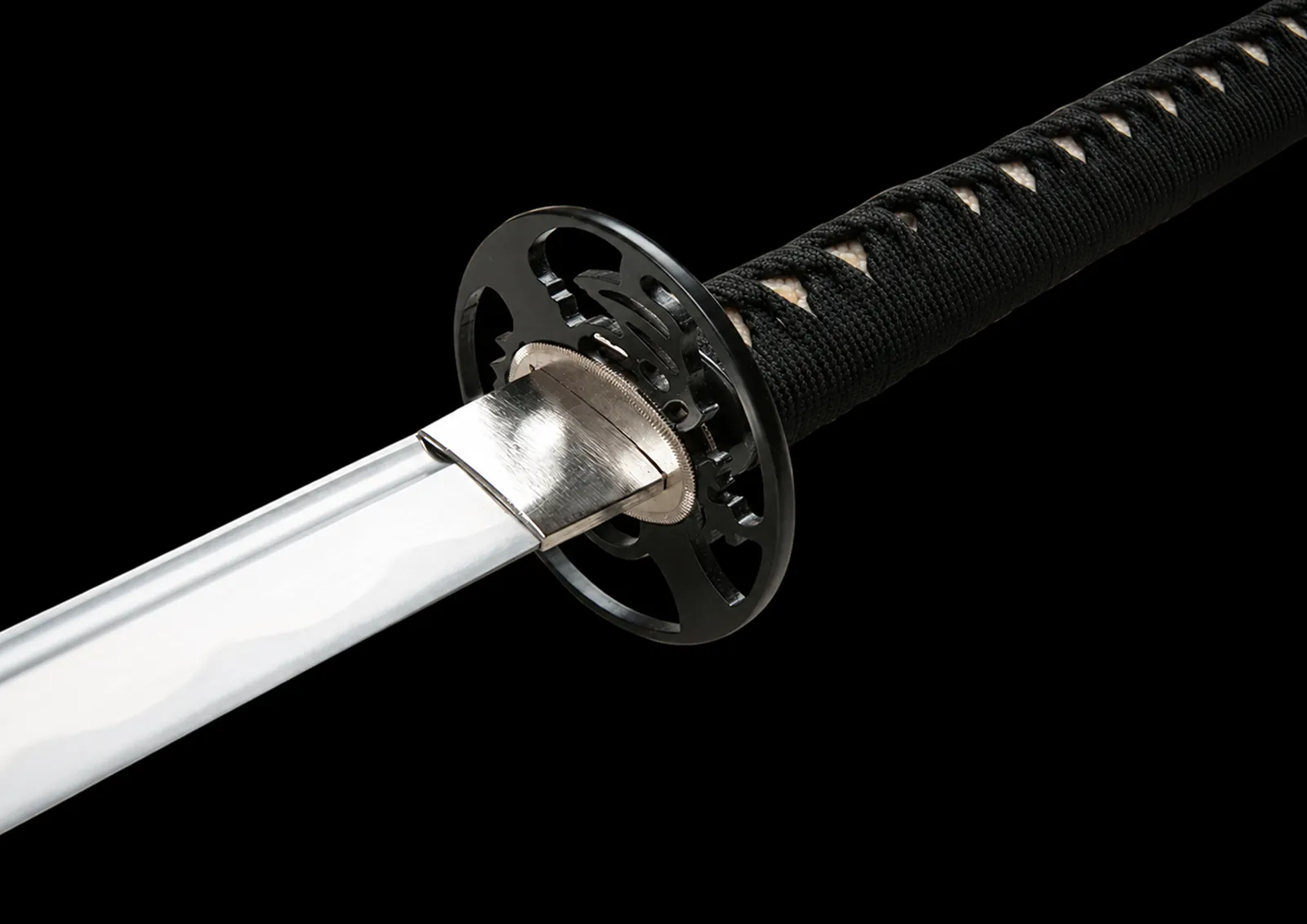
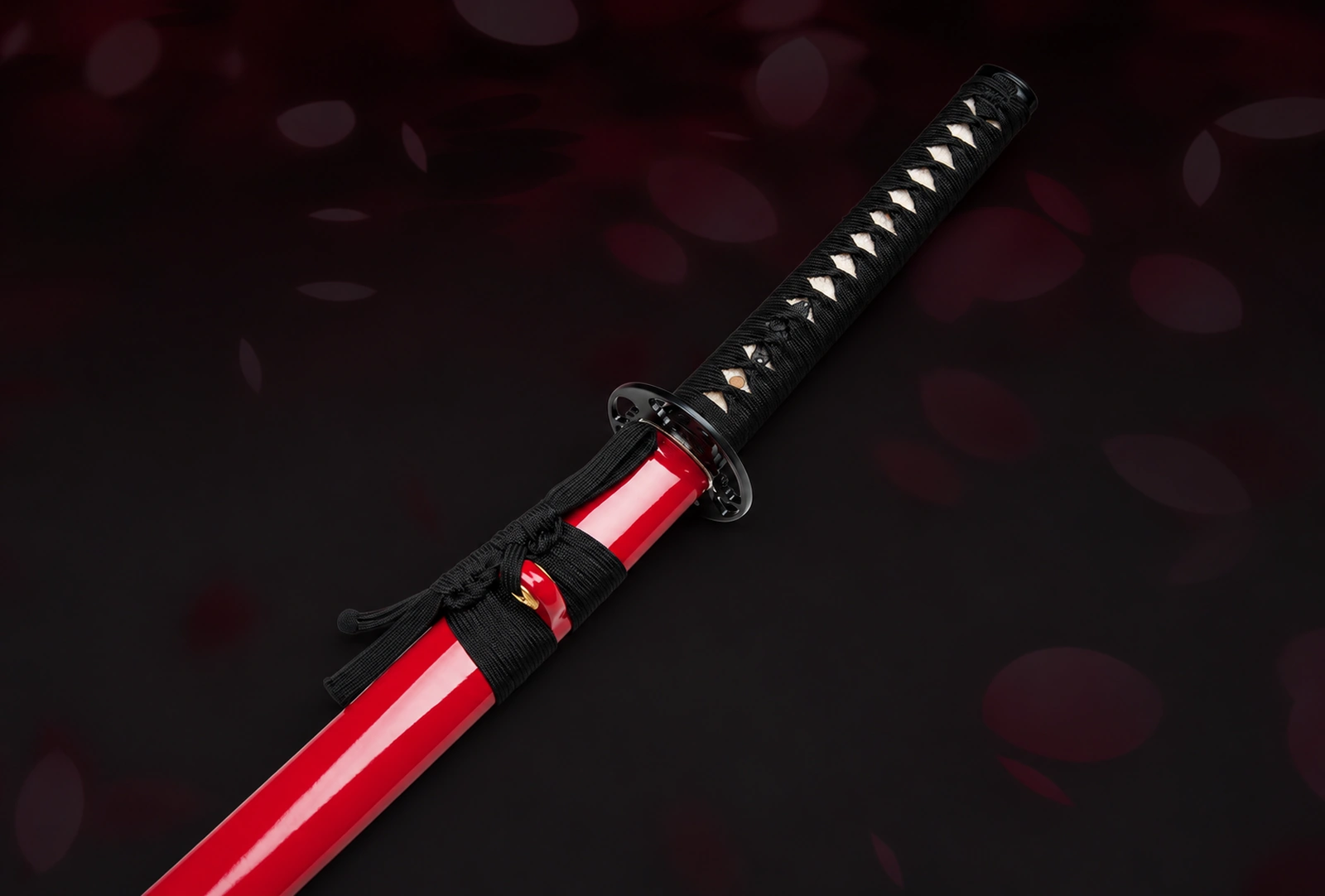
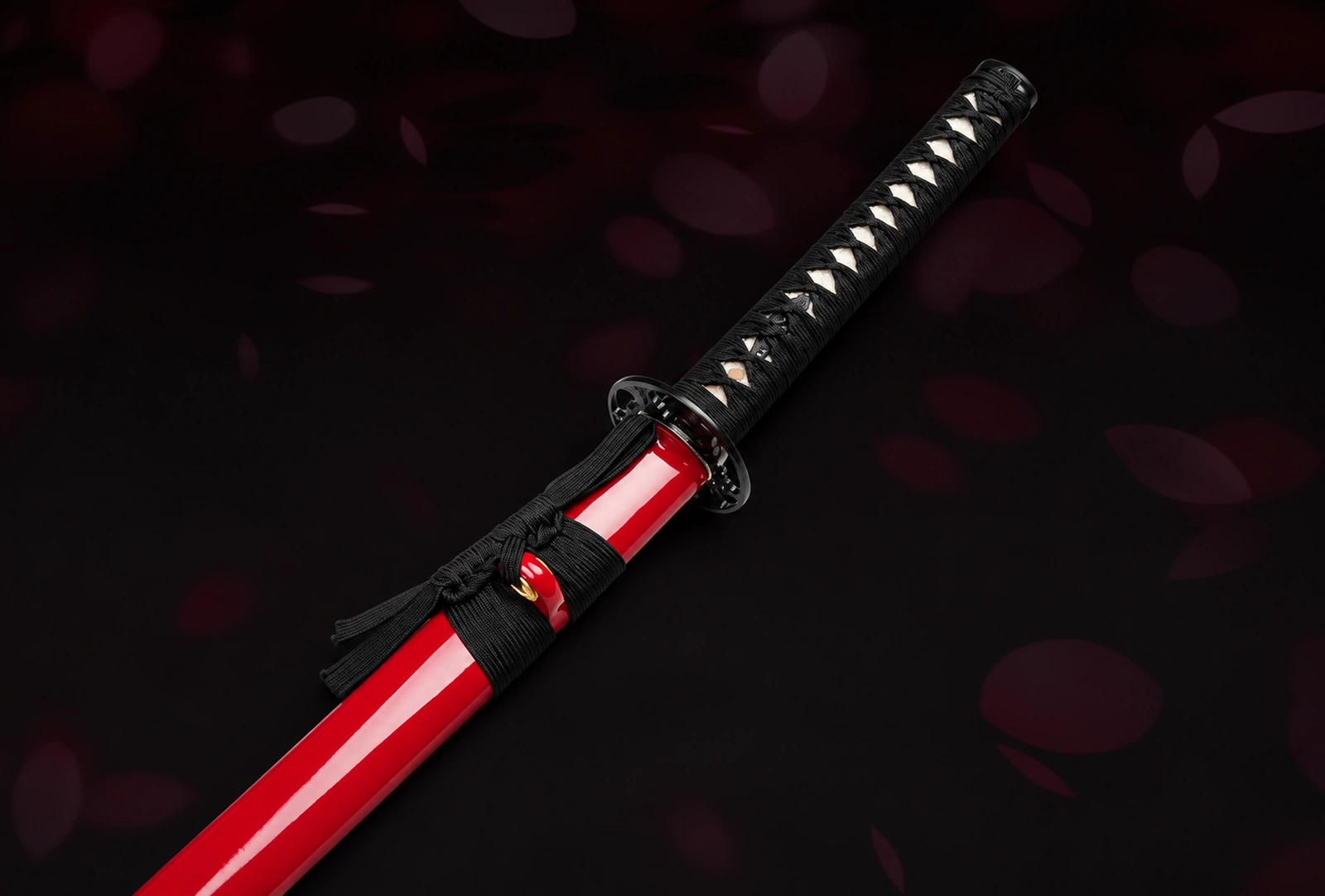
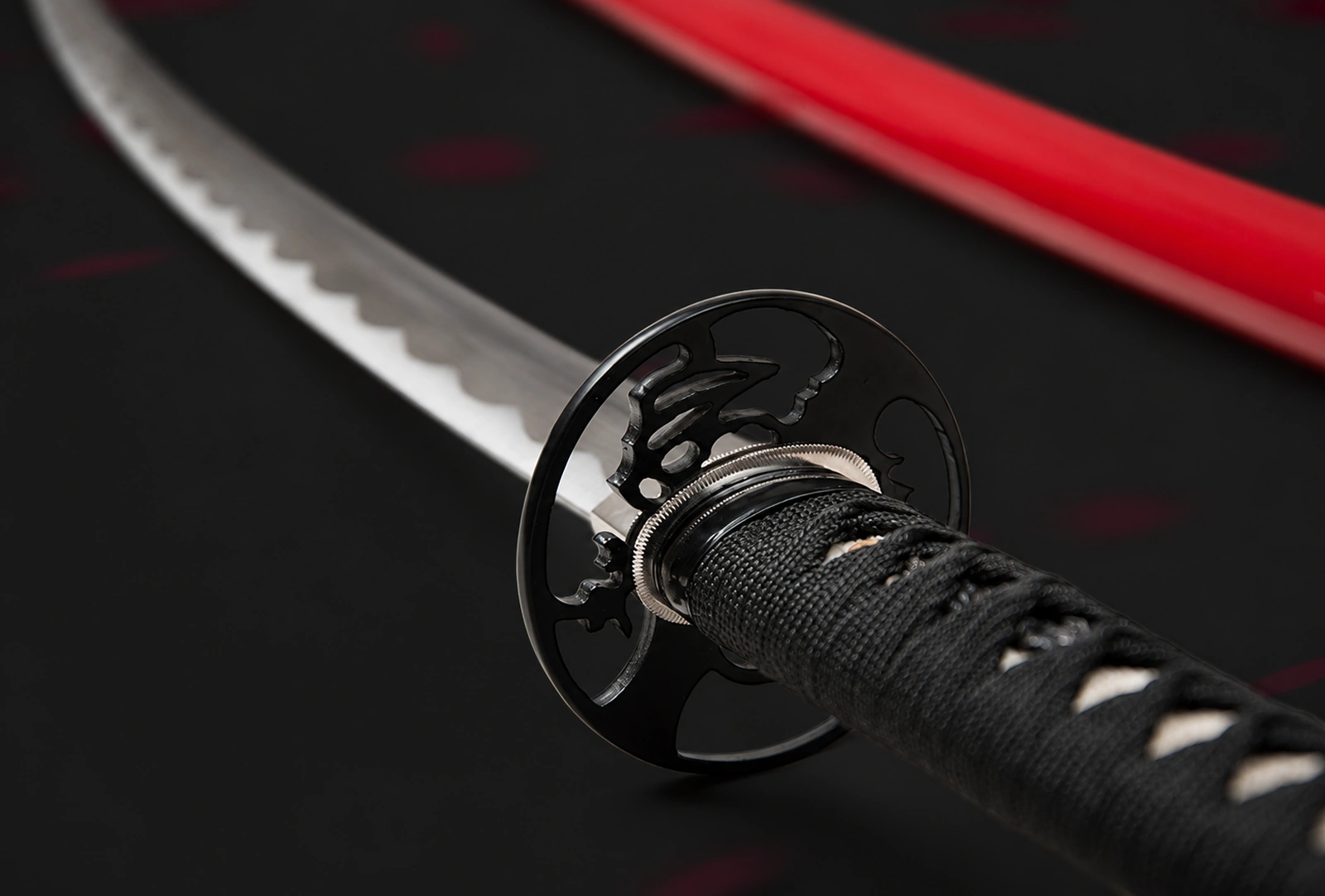
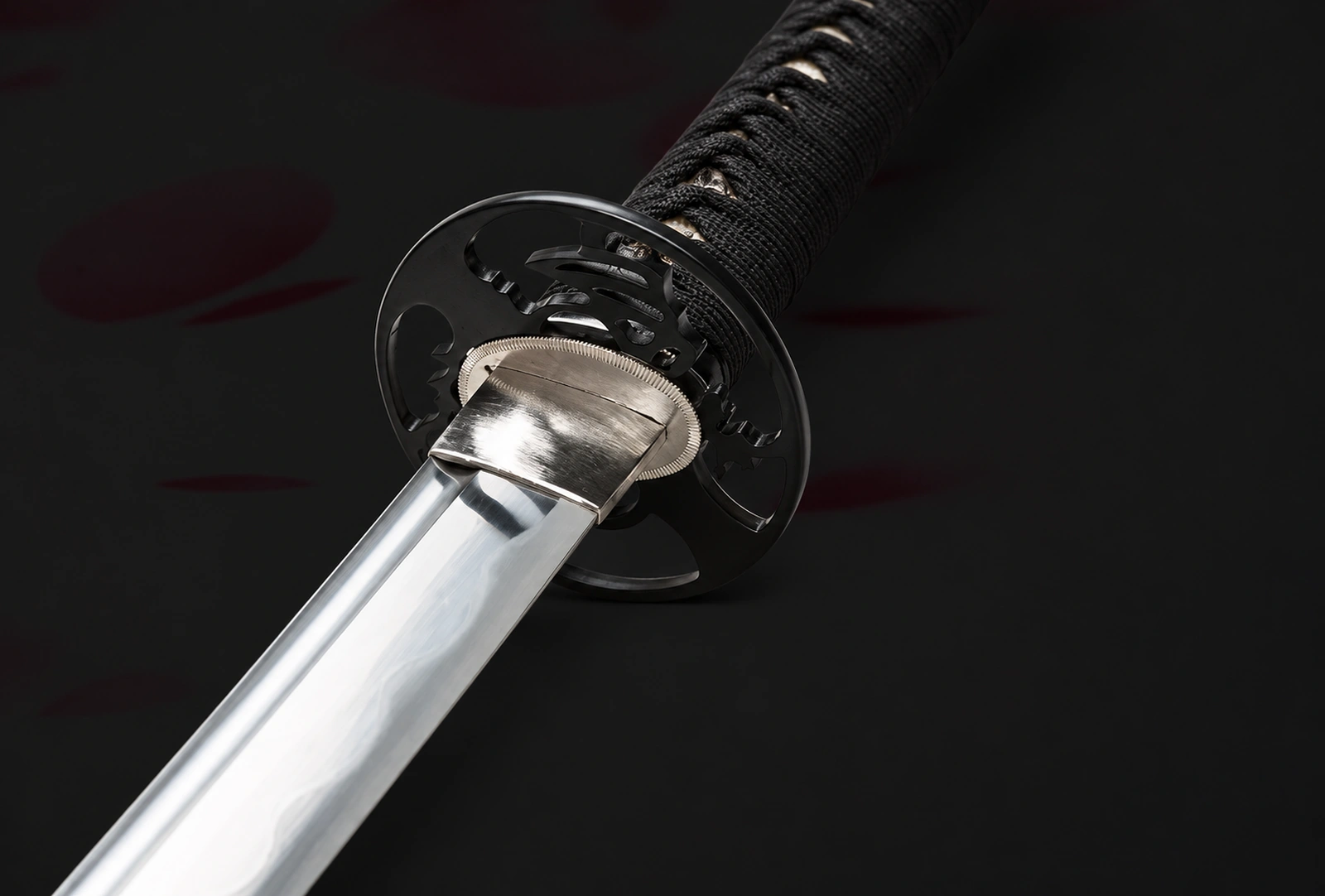
An openwork iron tsuba defines the character of this katana, combining a bold circular form with carefully balanced detailing. The silver-plated brass habaki and seppa introduce a subtle metallic contrast against the predominantly black fittings.
Texture Beneath the Wrap.
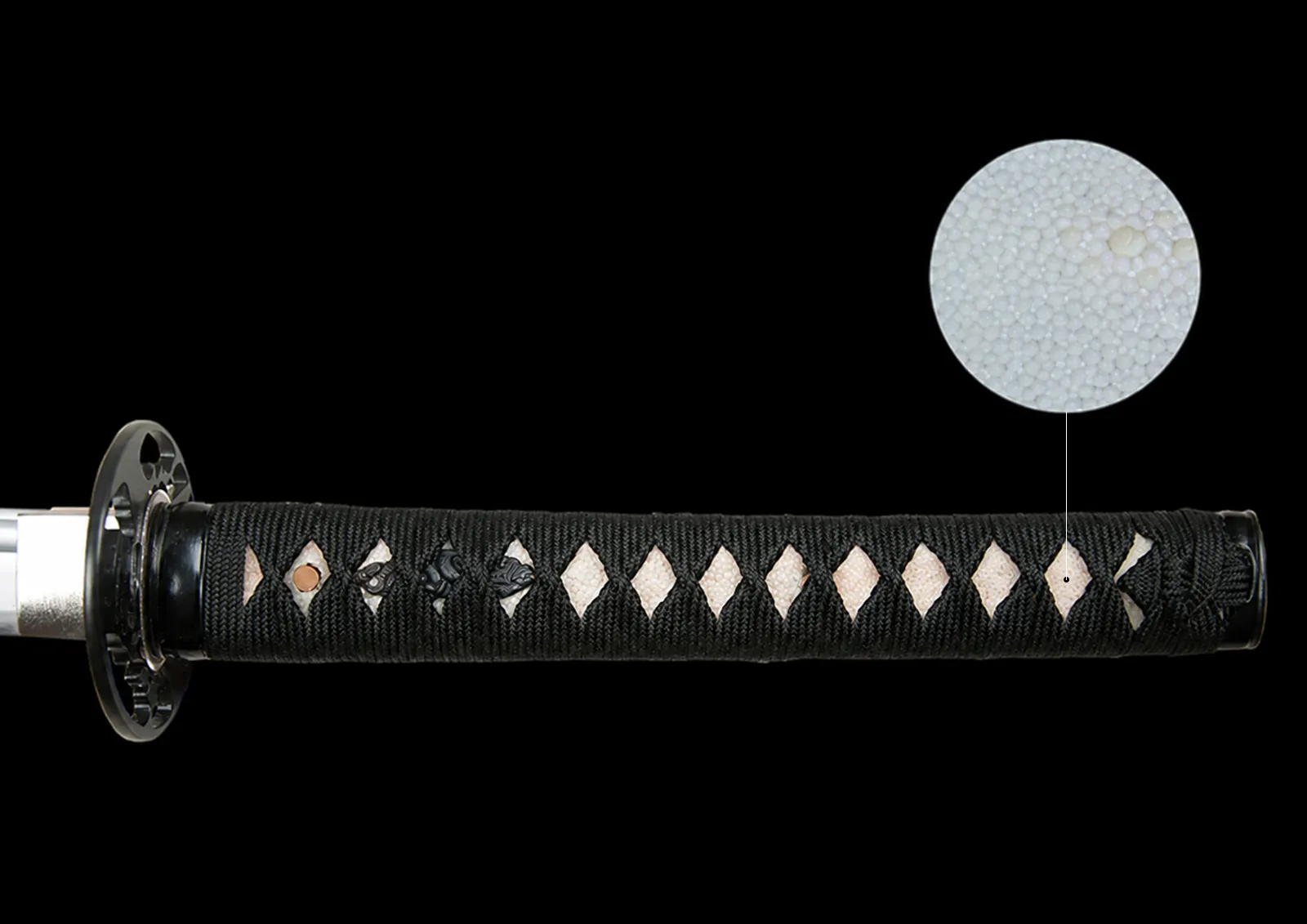
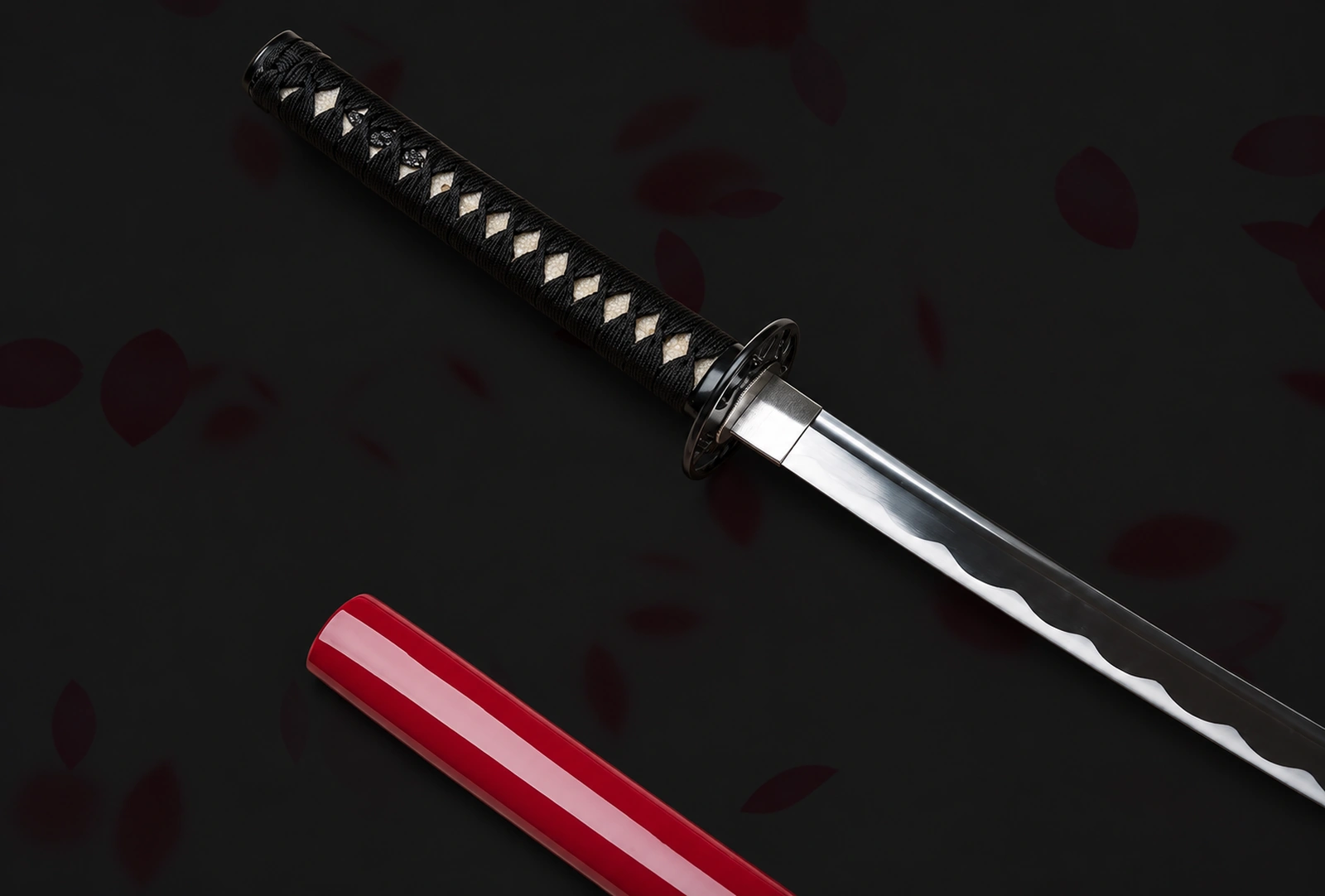
The black wrapping of the tsuka frames a series of traditional diamond-shaped openings, revealing genuine samegawa beneath. The naturally raised grain of the rayskin creates a distinctive contrast against the dark cord, bringing texture and visual rhythm to the handle.
Five Steels. Different Expressions.
The Kuji Kanesada Katana is available in five blade configurations, each with its own material, polishing process, and surface character. The options range from straightforward carbon steel to patterned steel with differential clay hardening.
Carbon Steel
The carbon steel version offers a straightforward interpretation of the Kuji Kanesada blade. Finished through a six-stage polishing process, it retains the sword's overall form without the additional surface character of the patterned steel versions.
Manganese Steel
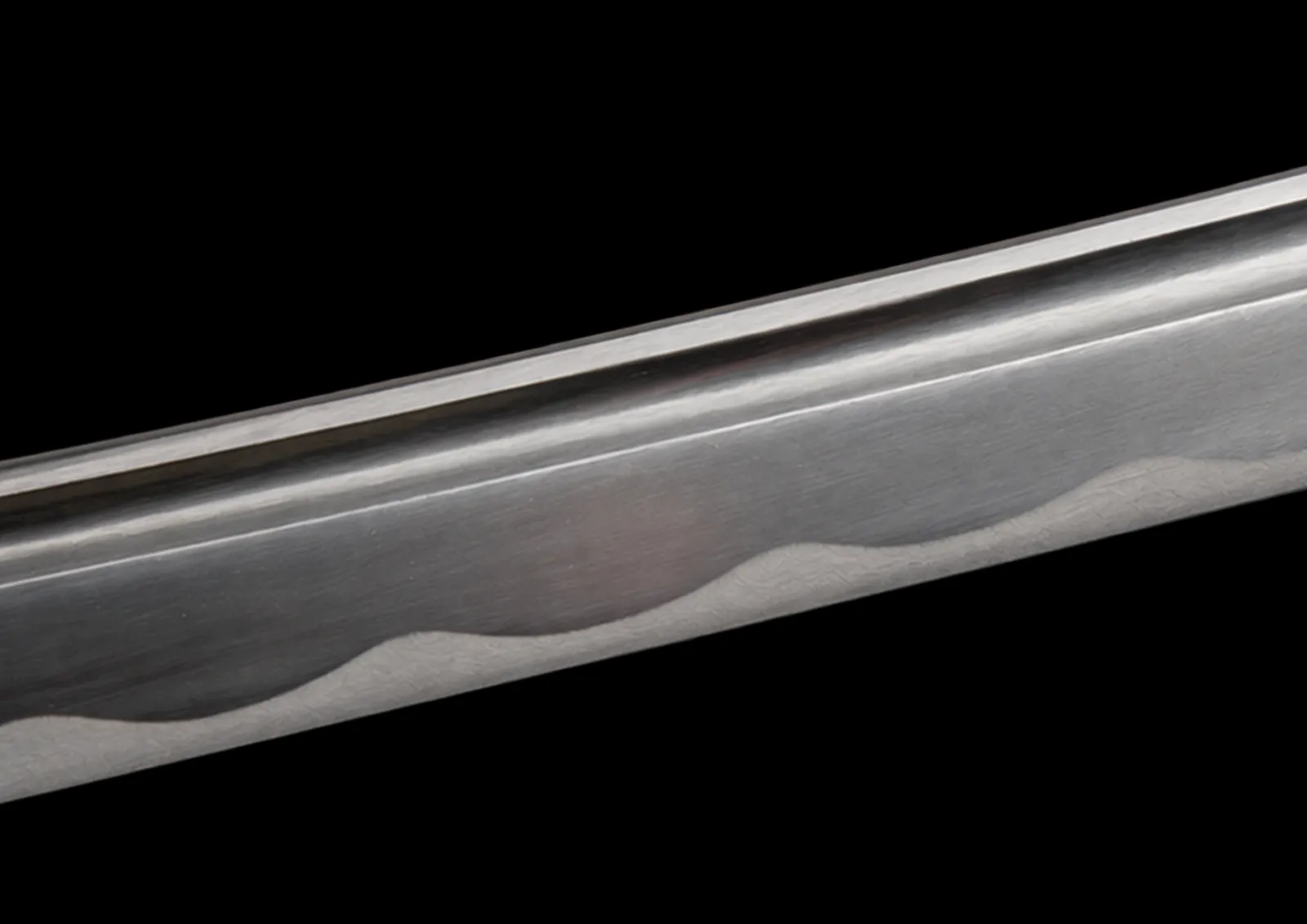
This manganese steel blade features a polished surface with a flowing decorative wave pattern along the edge. Produced through mechanical finishing, this visual effect is distinct from the hardened hamon formed by differential clay hardening. The blade receives a ten-stage polishing treatment.
T10 Clay-Tempered Steel
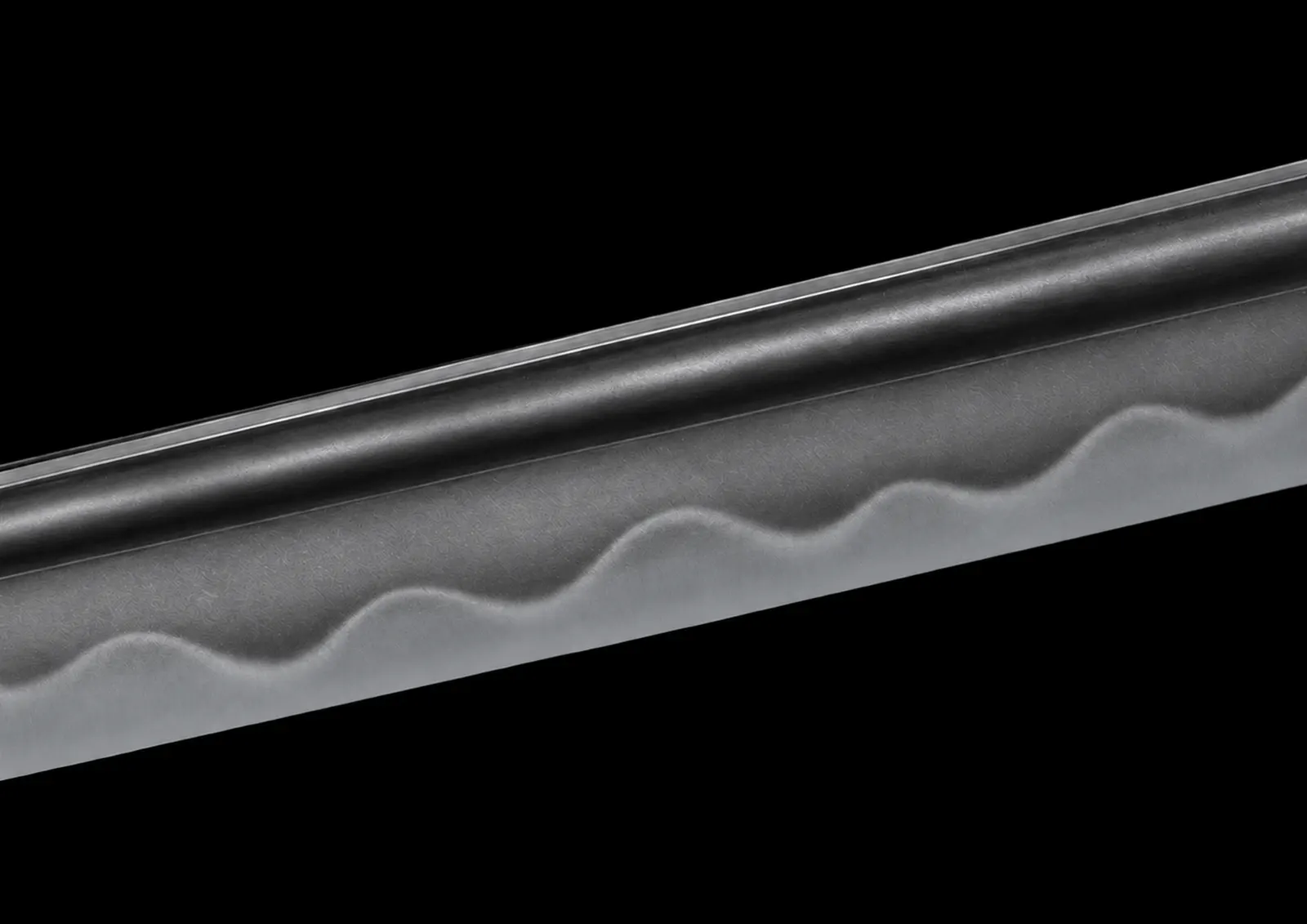
The T10 blade undergoes differential clay hardening, producing a visible hamon along the cutting edge. The close-up reveals the flowing hardening boundary, the contrasting steel surface, and the defined bo-hi. A ten-stage polish brings out these details while preserving the blade's character.
608 Patterned Steel
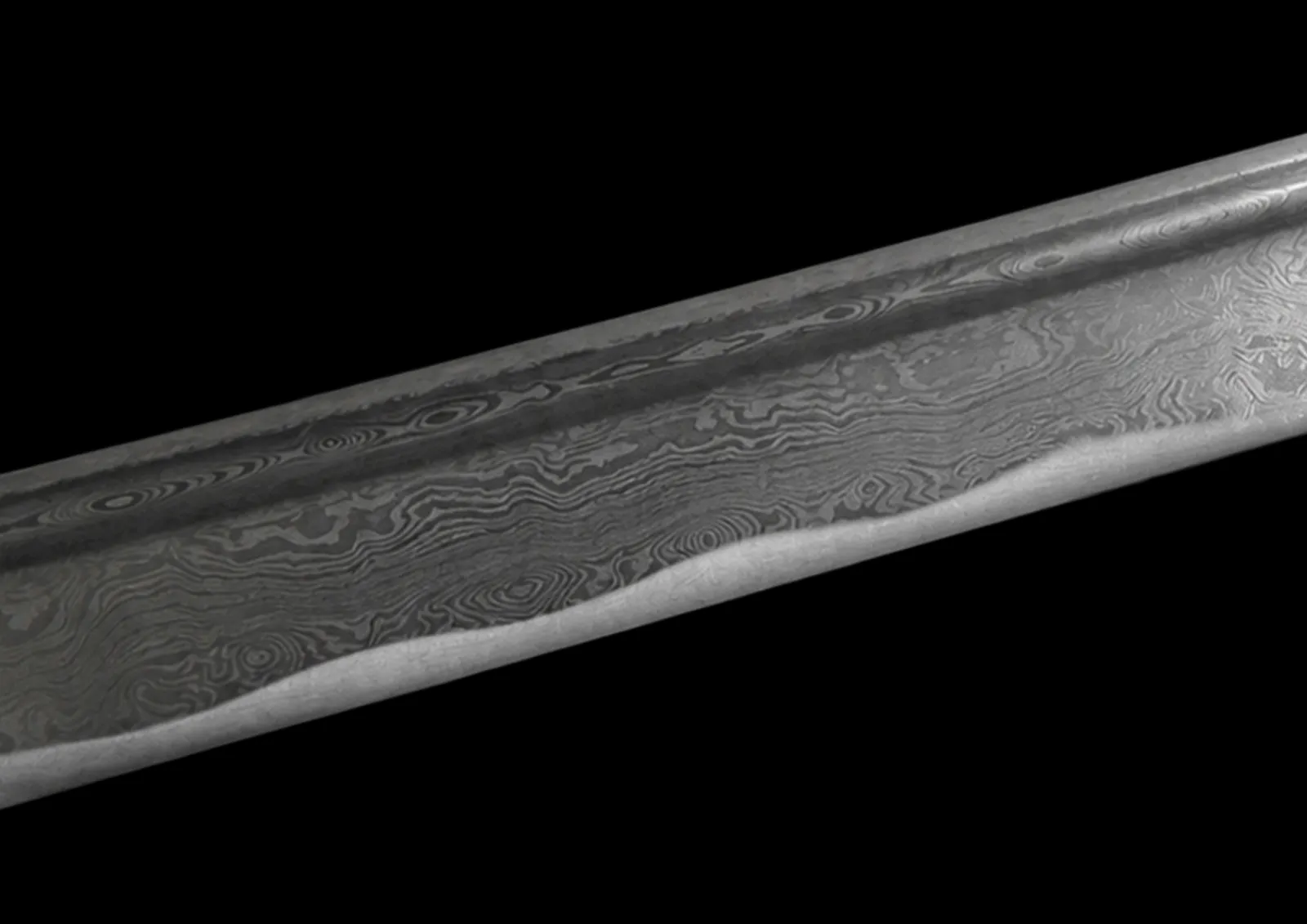
This version highlights the layered visual character of 608 patterned steel. Flowing lines and intricate surface patterns extend across the blade, creating a distinctive appearance. The ten-stage polishing process reveals the steel's detailed surface texture without relying on a clay-hardened hamon.
608 Patterned Steel — Clay-Tempered
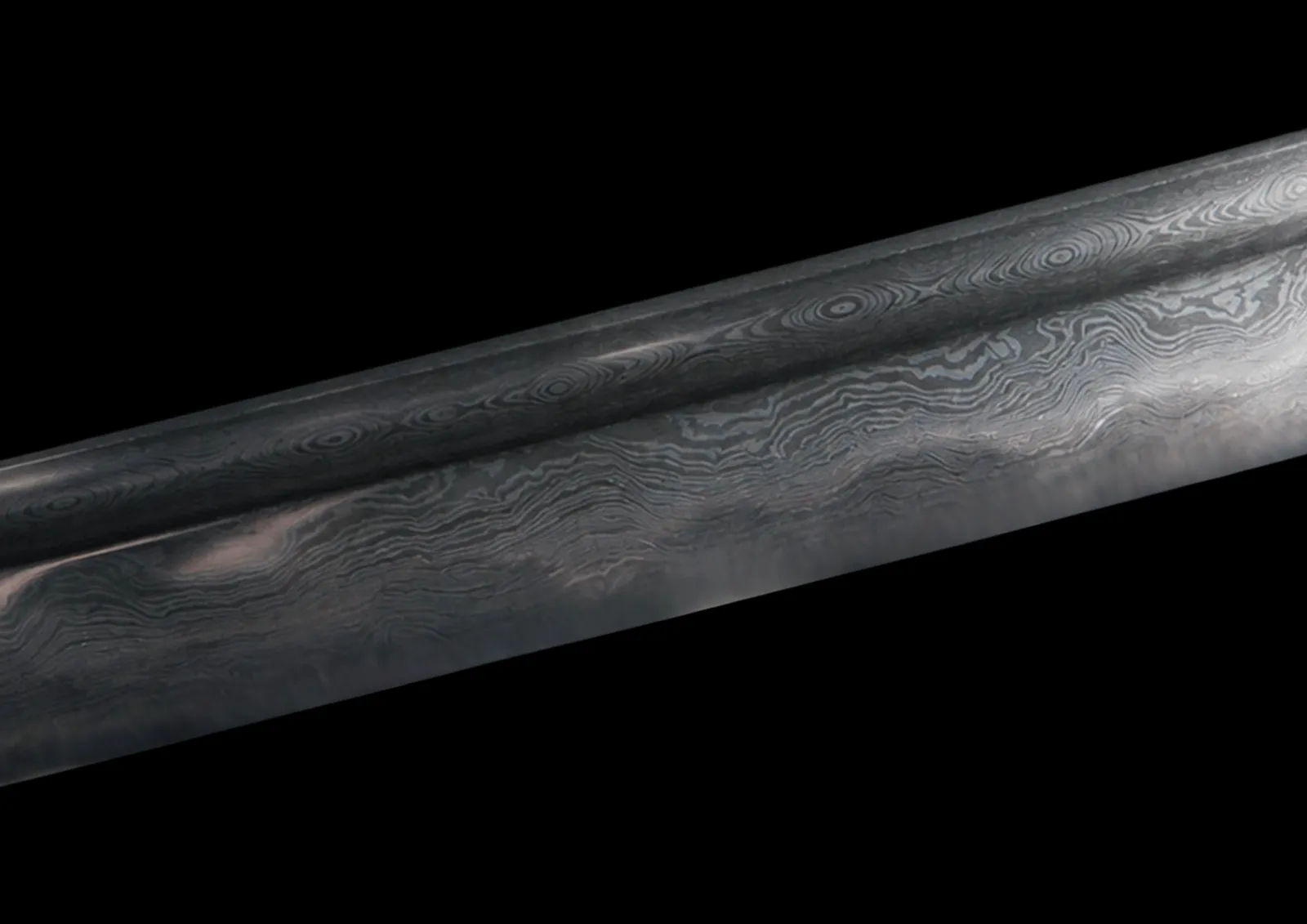
This version combines the layered surface character of 608 patterned steel with differential clay hardening. The steel's flowing grain remains visible across the blade, while the hardened cutting edge introduces another layer of visual and metallurgical character. A ten-stage polish brings these contrasting details into view.
A Study in Red and Black.
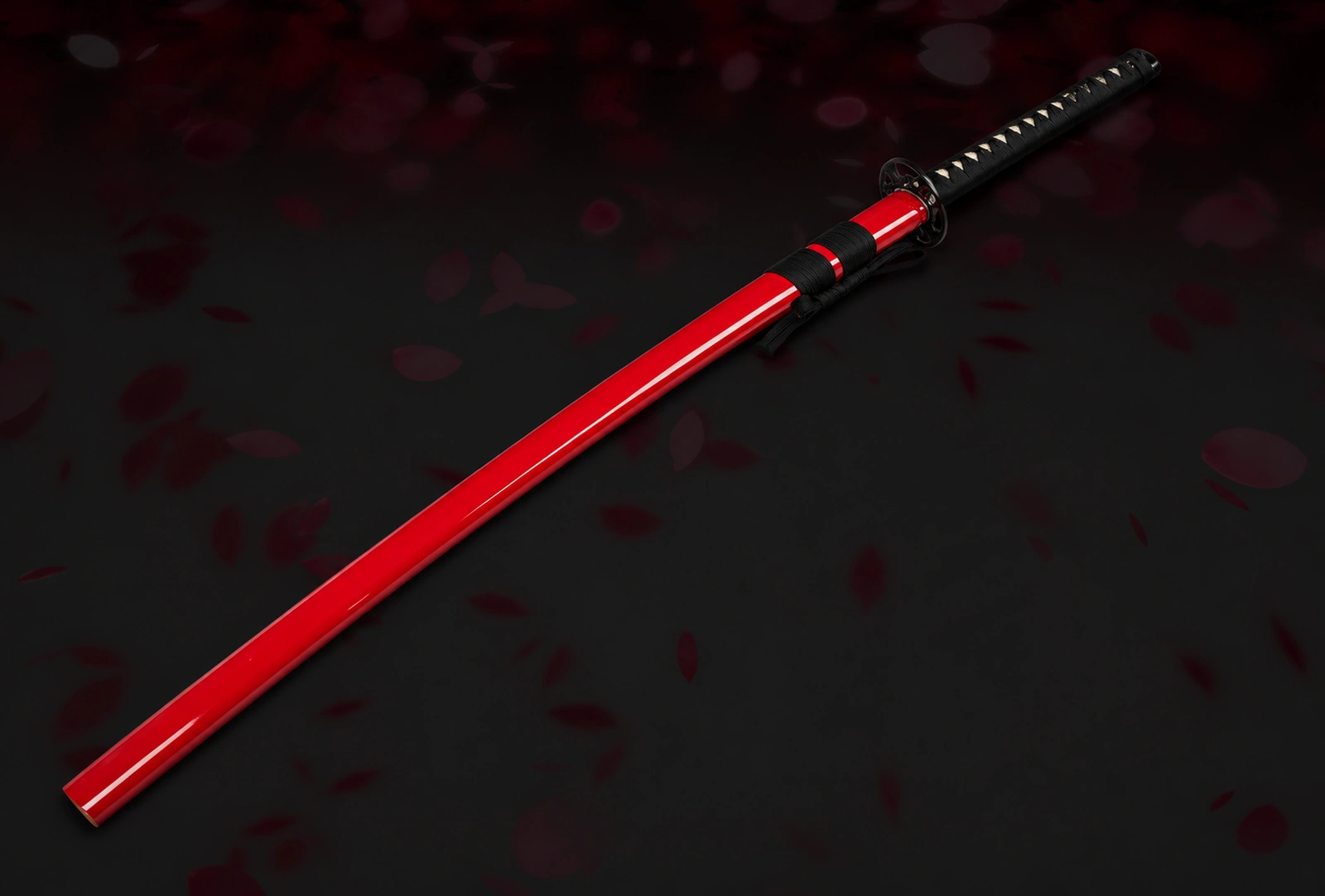
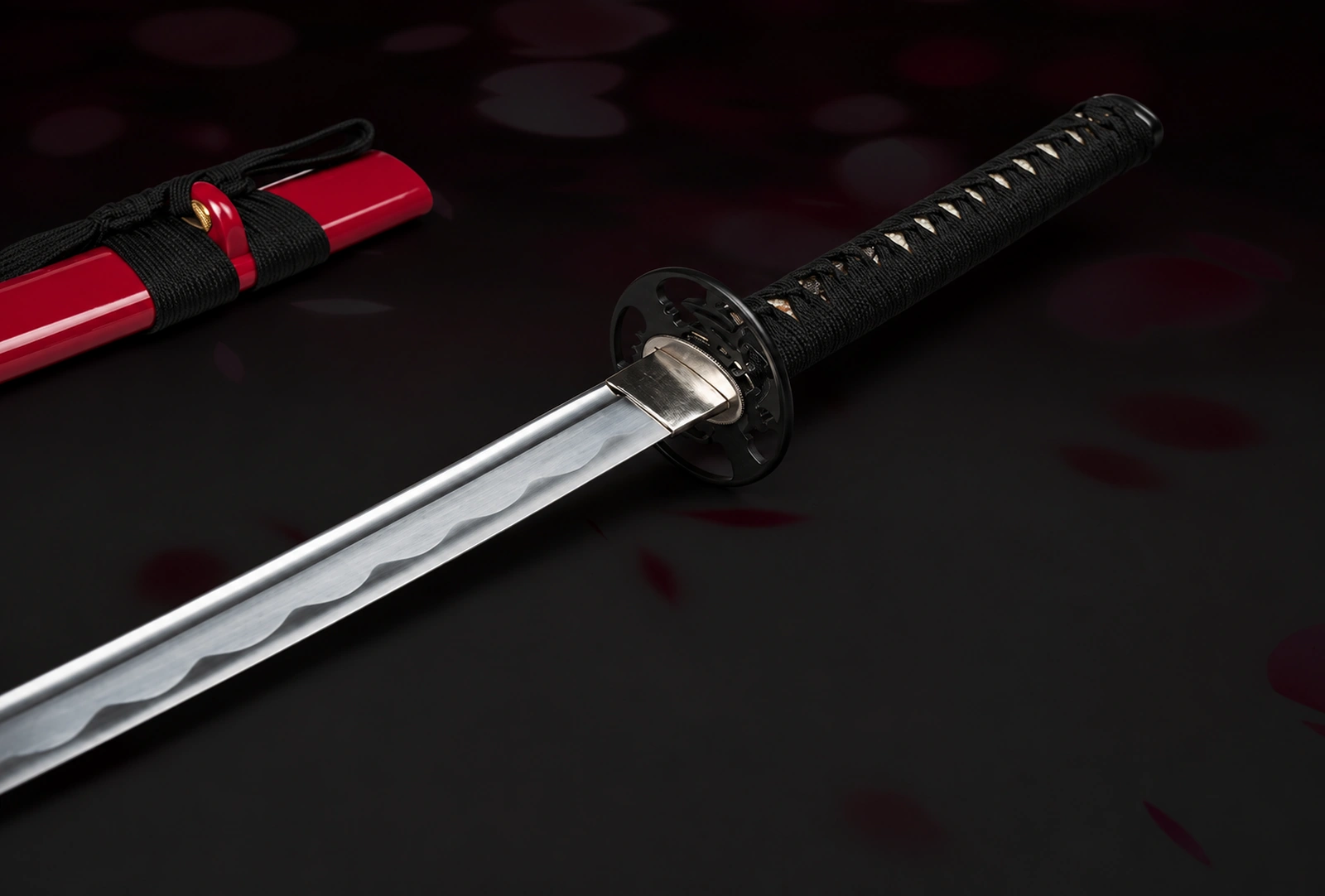
A vivid red saya, black handle wrapping, and restrained fittings define the character of this Kuji Kanesada presentation. The photographs show one visual configuration; the scabbard and other available details may be personalized when ordering.
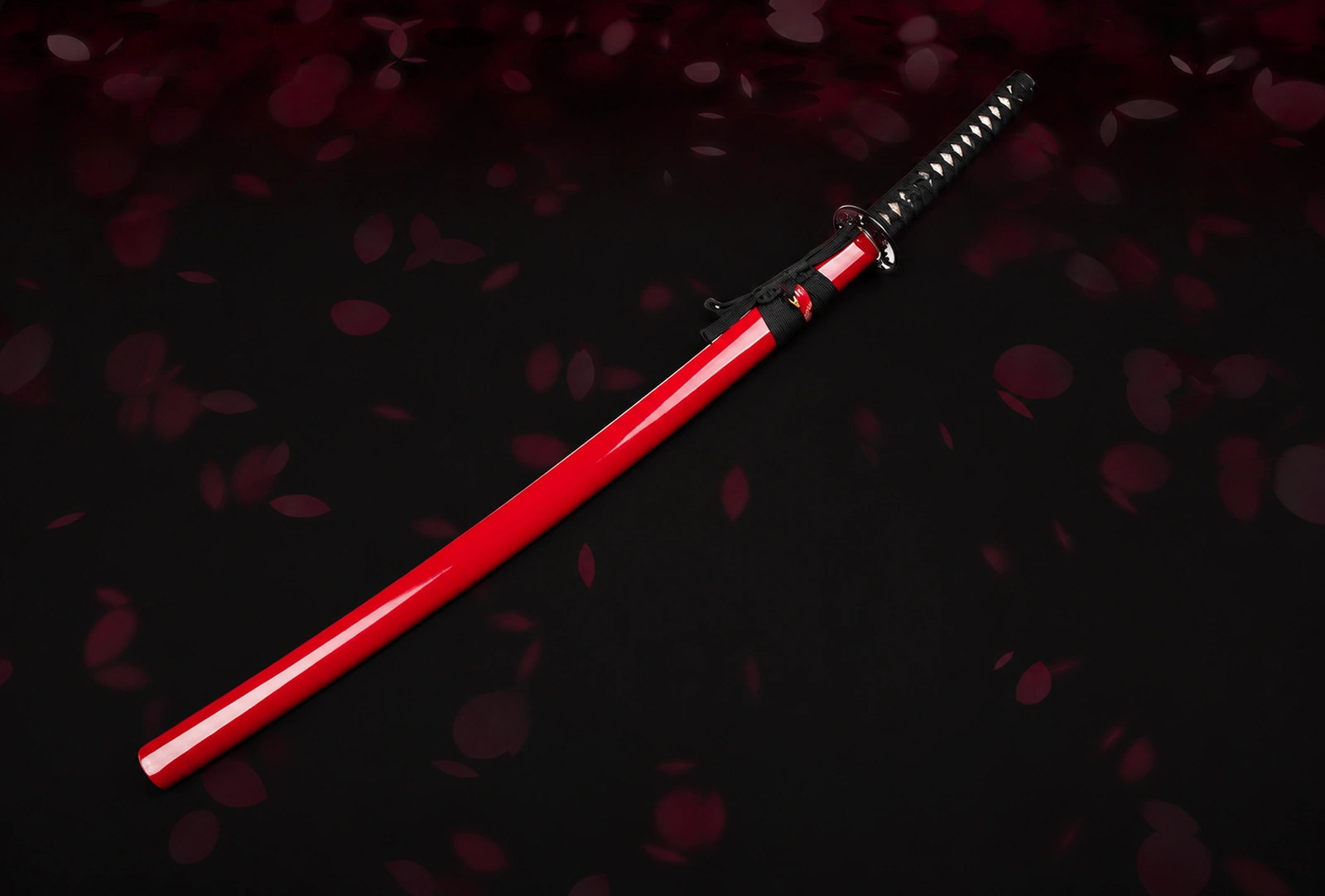
The Shape of the Unsheathed Blade.
Removed from the red saya, the curved blade takes visual precedence. These views move from a calm horizontal presentation to sweeping diagonals, revealing the silhouette, polished steel, and the relationship between blade and scabbard.
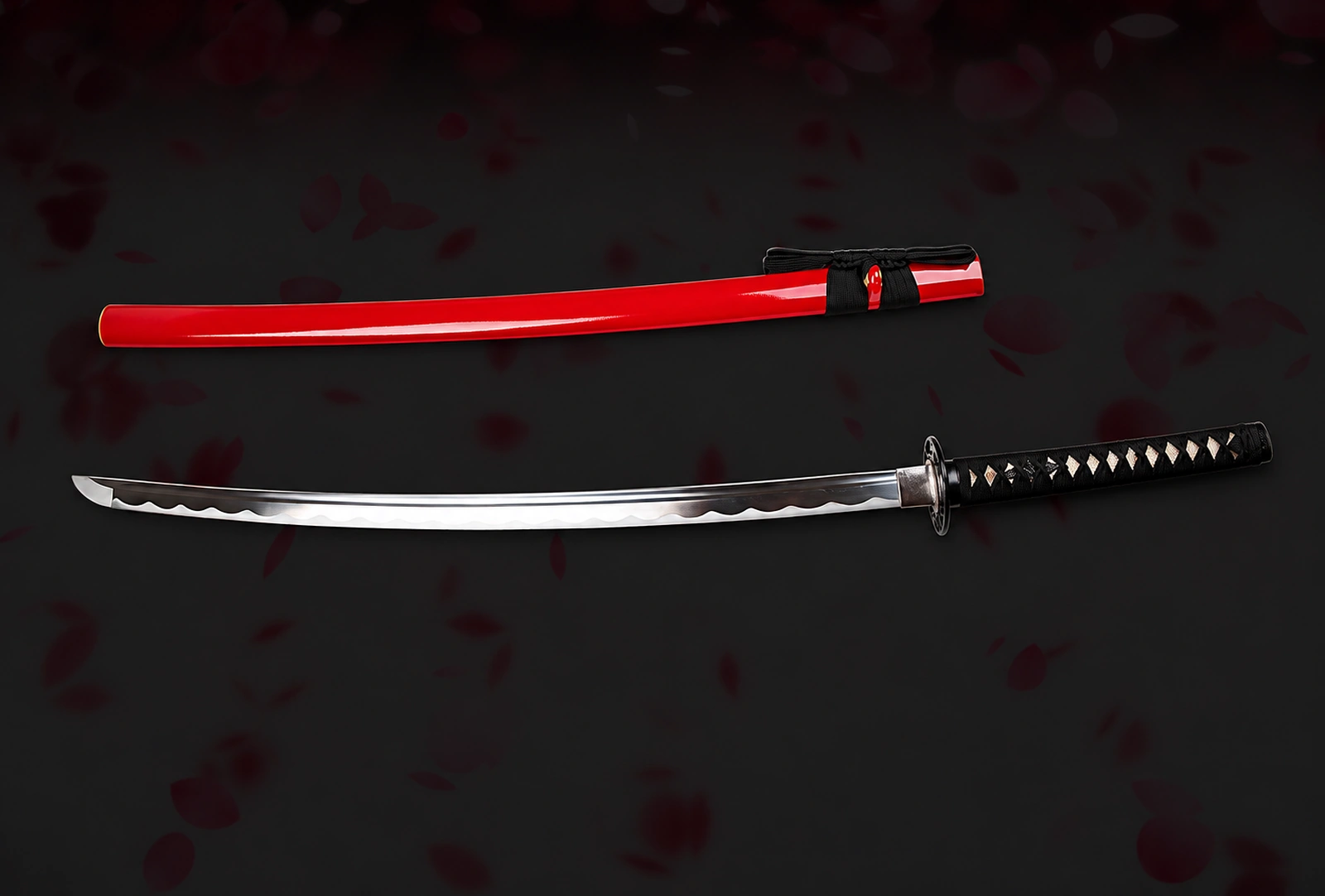
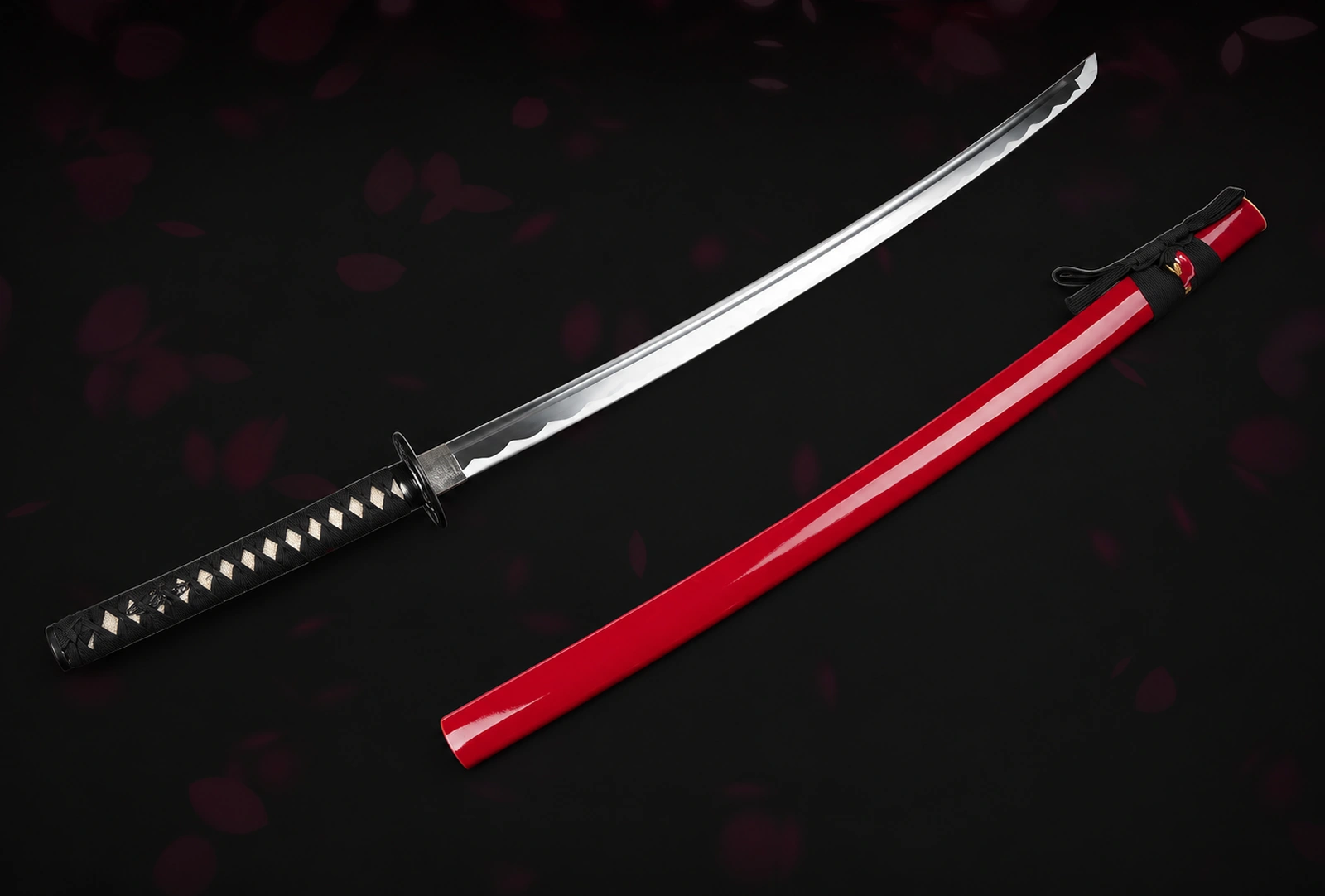
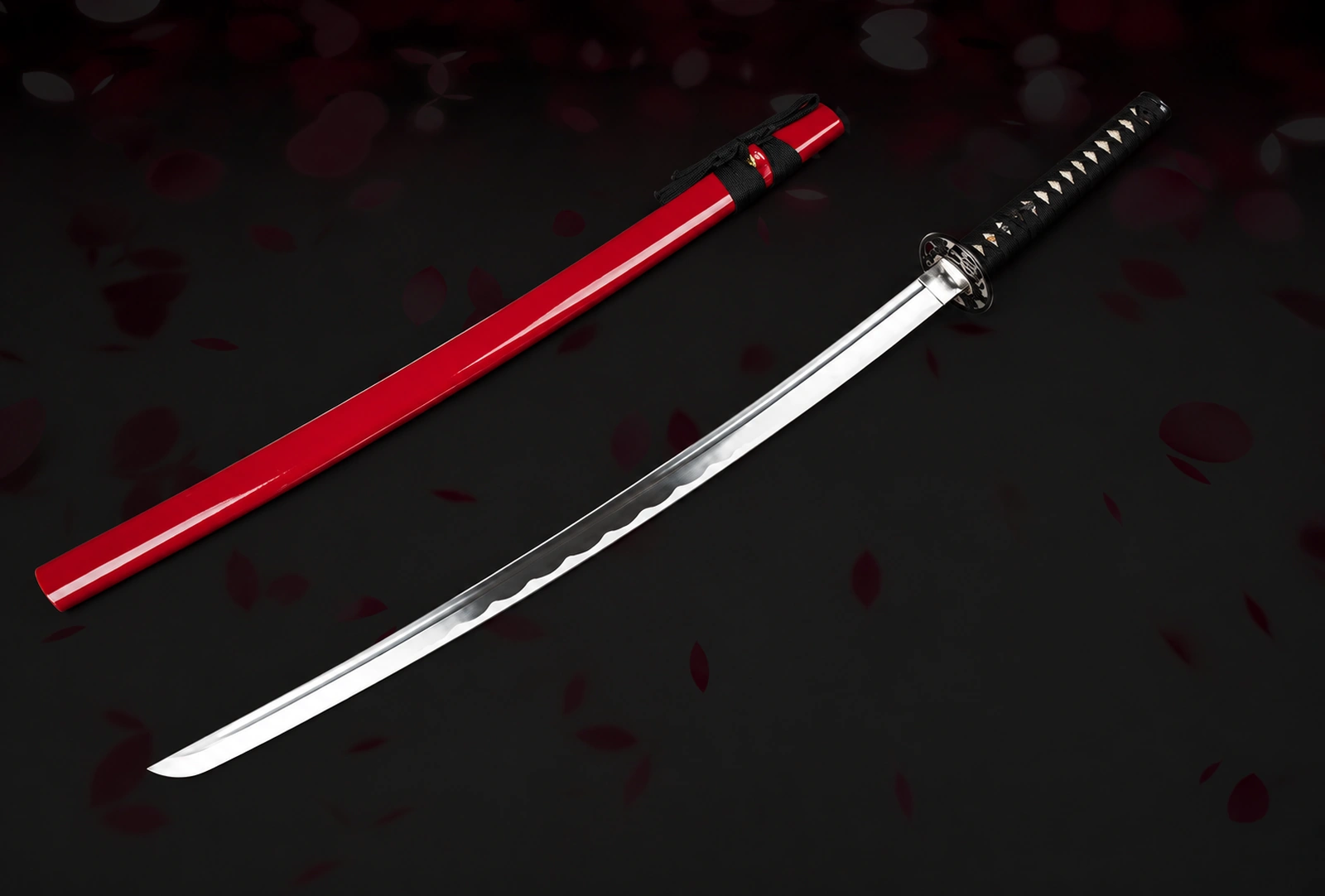
Details Worth a Second Look.
At close range, the openwork tsuba, metal habaki, and diamond-pattern handle wrapping take on greater presence. These angles emphasize the sword's visible fittings and finish rather than assigning the photographs to a specific blade-steel option.
A Distinctive Form, Seen in Full.
The final portrait brings the blade and red saya together once more: polished steel against deep black, balanced by one unmistakable line of red. It is a bold presentation of Kuji Kanesada, while the available customization options leave the final configuration to the collector.
Reviews
There are no reviews yet.