Description
STORY 01 / THE FIVE GREAT SWORDS
The Broad Blade of Ōdenta
Ōdenta Mitsuyo is one of Japan’s Tenka Goken, the Five Great Swords. Made by the Heian-period smith Mitsuyo, this historic tachi is known for a striking combination: a relatively short blade, a broad body, and a deep, commanding curve.
MIIKE MITSUYO / HEIAN PERIOD / TENKA GOKEN
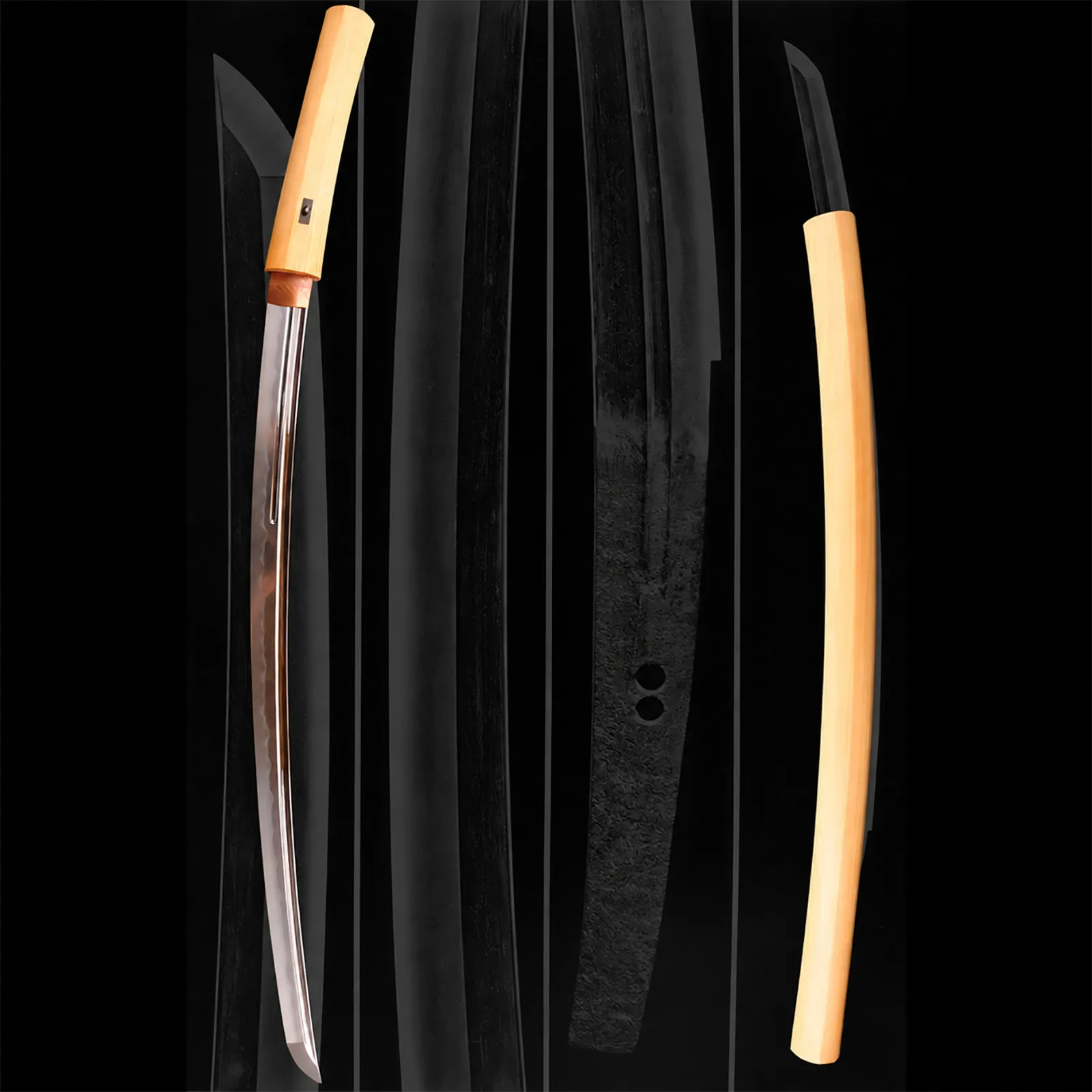
THE HISTORIC ŌDENTA
A Sword Kept Through Generations
The blade bears the signature Mitsuyo-saku—“made by Mitsuyo.” Long counted among the Five Great Swords, it passed from Toyotomi Hideyoshi to the Maeda family and was preserved as one of their most treasured swords.
Ōdenta survives as a Japanese National Treasure, celebrated not only for its place in history but for the unusually powerful shape of the blade itself.
A DISTINCTIVE SUGATA
Short. Broad. Deeply Curved.
The original blade measures 66.0 cm in nagasa and 2.7 cm in curvature. Its broad proportions, strong curvature near the base, and compact tip give it an unmistakable sugata.
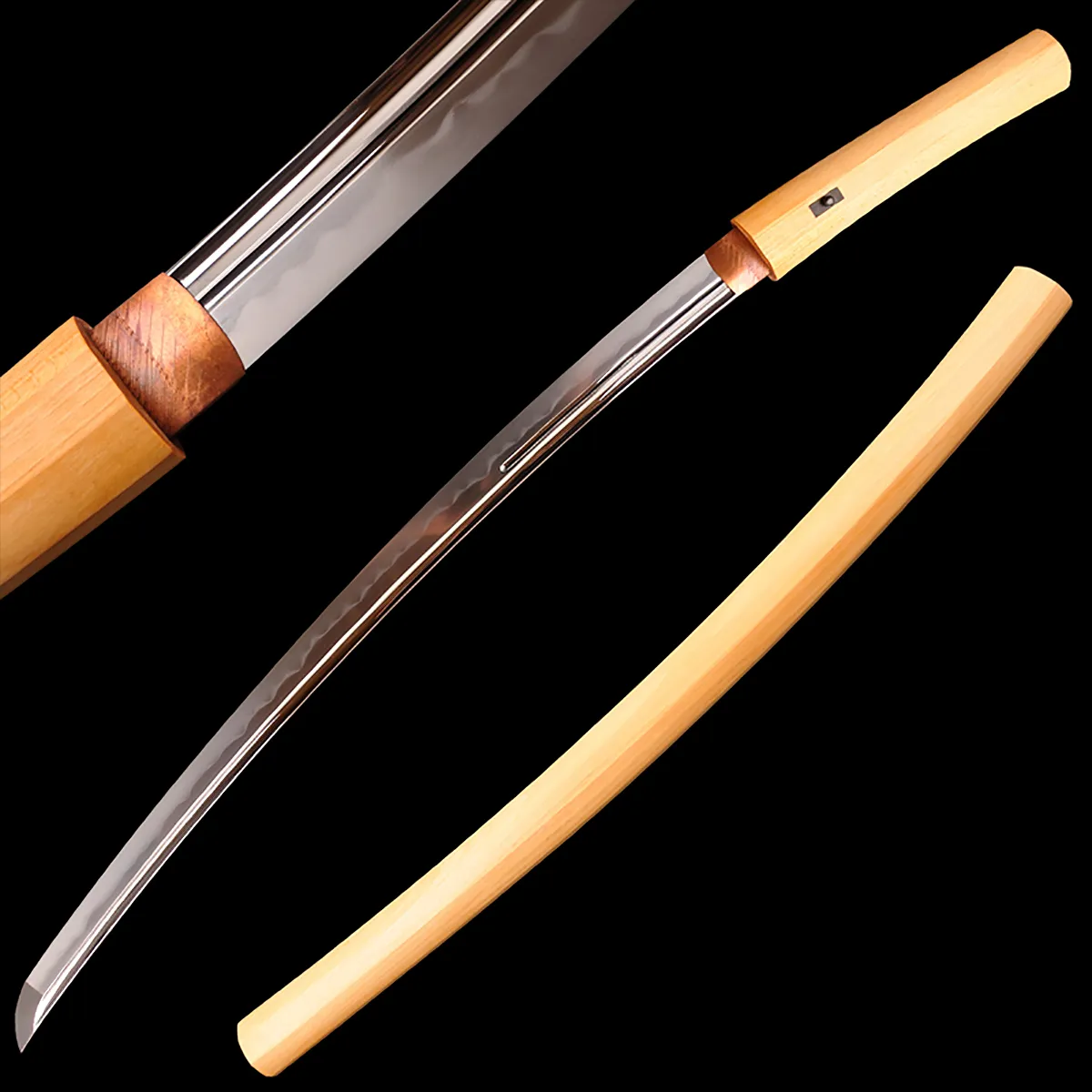
The modern Ōdenta-inspired work shown here carries a 660 mm blade with a stated blade width of 35 mm. The silhouette is compact, full-bodied, and immediately recognizable.
THE DETAIL ON TWO FACES
The Asymmetry of the Grooves
The historic Ōdenta has broad, shallow bō-hi along both faces of the blade. On one face, a narrower soe-bi runs alongside the main groove. That extra channel creates a subtle difference between the two sides— one of the sword’s most distinctive details.
This feature gives the Ōdenta form a character of its own. In the next chapter, we turn from the historic silhouette to the forging, grooves, and finished steel of this blade.
NEXT / BLADE CRAFTSMANSHIP — KOBUSE, FOLDED T10 & SHIAGE-TOGI
STORY 02 / BLADE CRAFTSMANSHIP
Kobuse, Grooves, and Shiage-togi.
A broad, deeply curved blade, finished with attention to its lines, grooves, and steel surface.
This Ōdenta Mitsuyo-inspired work combines Kobuse construction, folded T10 outer steel and a manganese-steel core. Its Shiage-togi finish gives the blade's geometry and hardened edge their final expression.
FOLDED T10 / MANGANESE CORE / KOBUSE
01 / THE STEEL STRUCTURE
The Kobuse Blade.
The construction places folded T10 carbon steel around a manganese-steel core. Each steel serves a different position in the blade, bringing the outer jacket and inner core together as one forged structure.
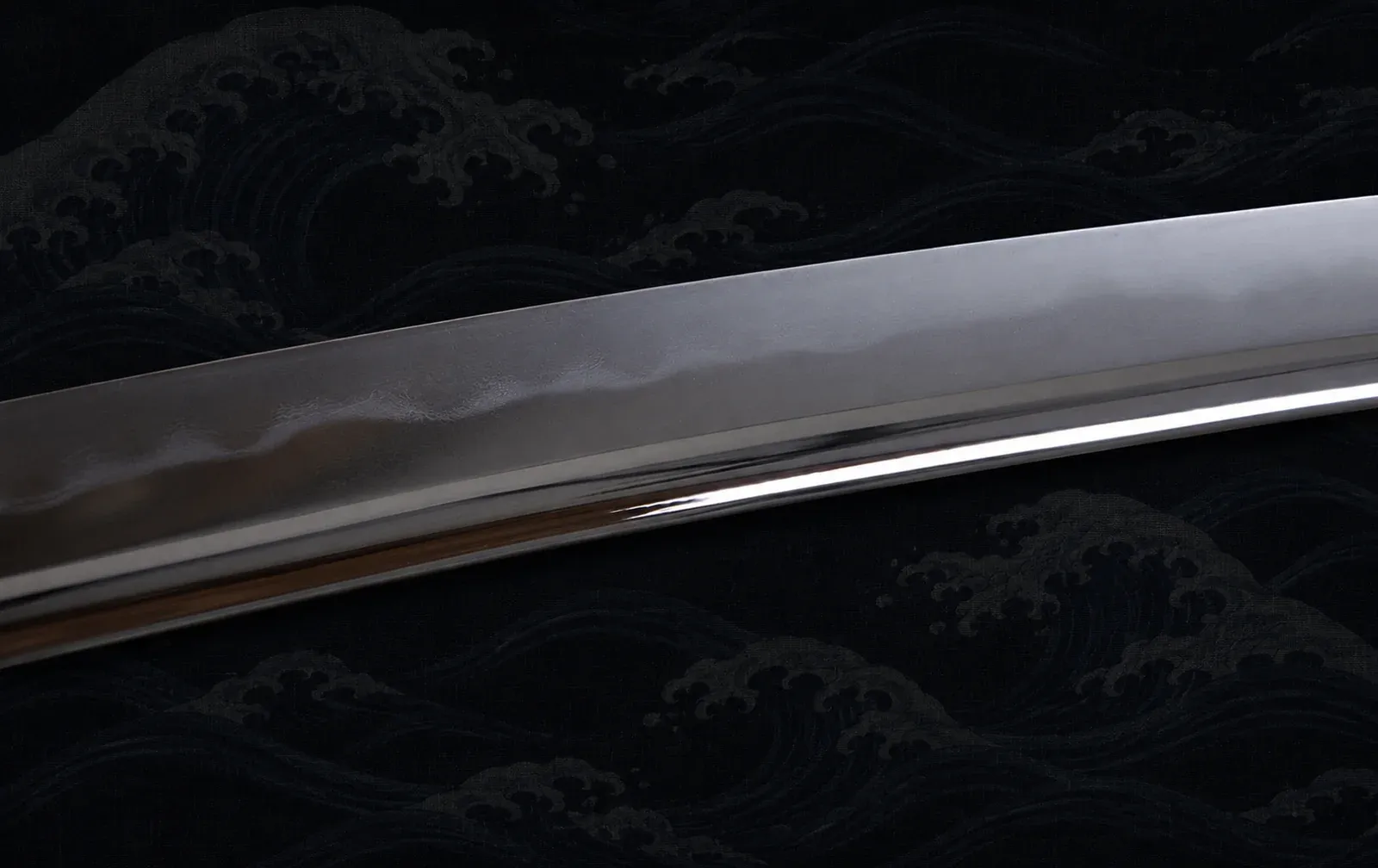
The finished surface is where that underlying work meets the eye. The blade's broad planes, raised shinogi and long grooves all have to hold their lines under a close polish.
02 / THE FINISHED SURFACE
Light Across the Steel.
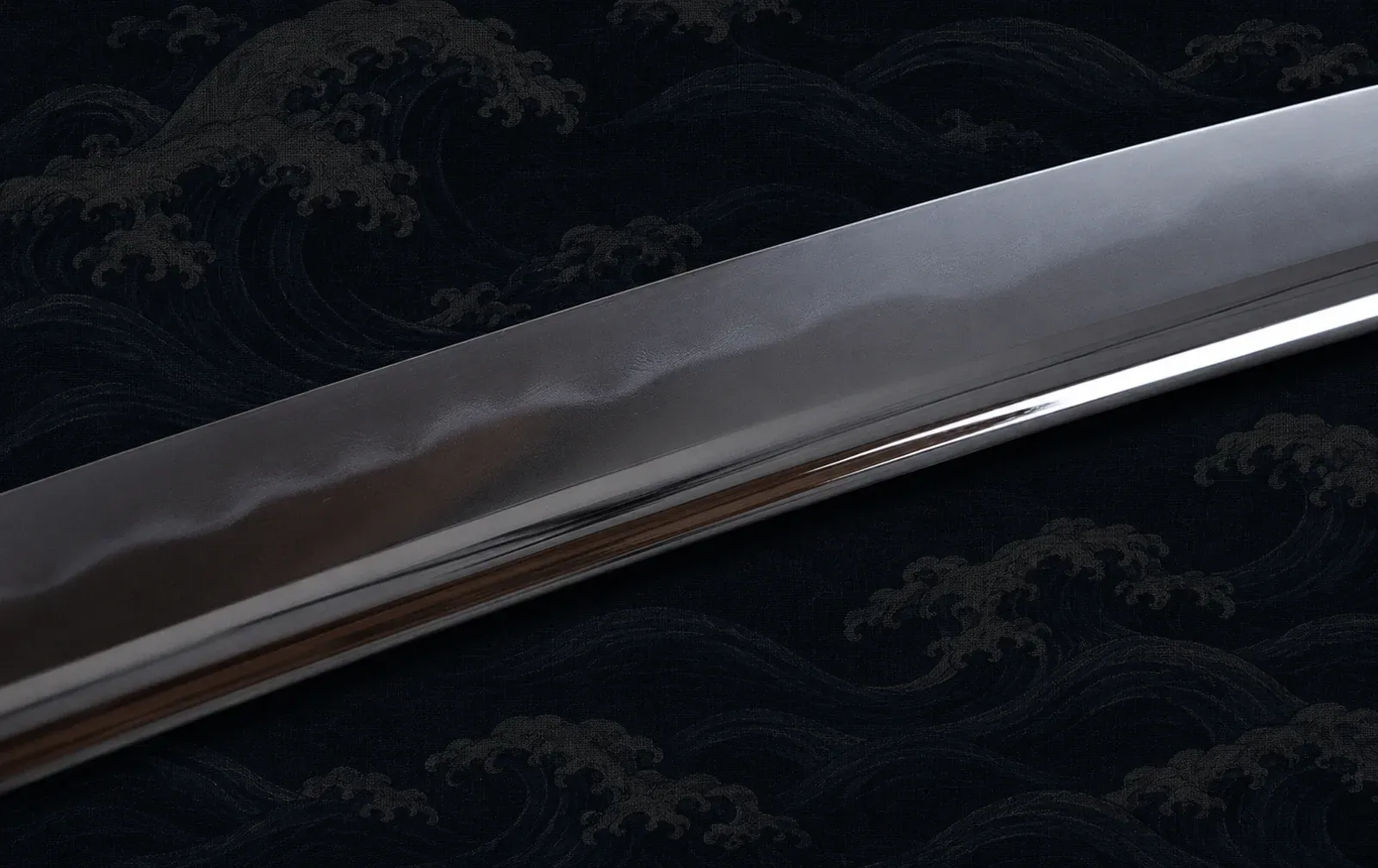
In Shiage-togi, the final polish is as much about clarity of shape as it is about brightness. Light moves differently across the blade face, the ridge and the recessed groove.
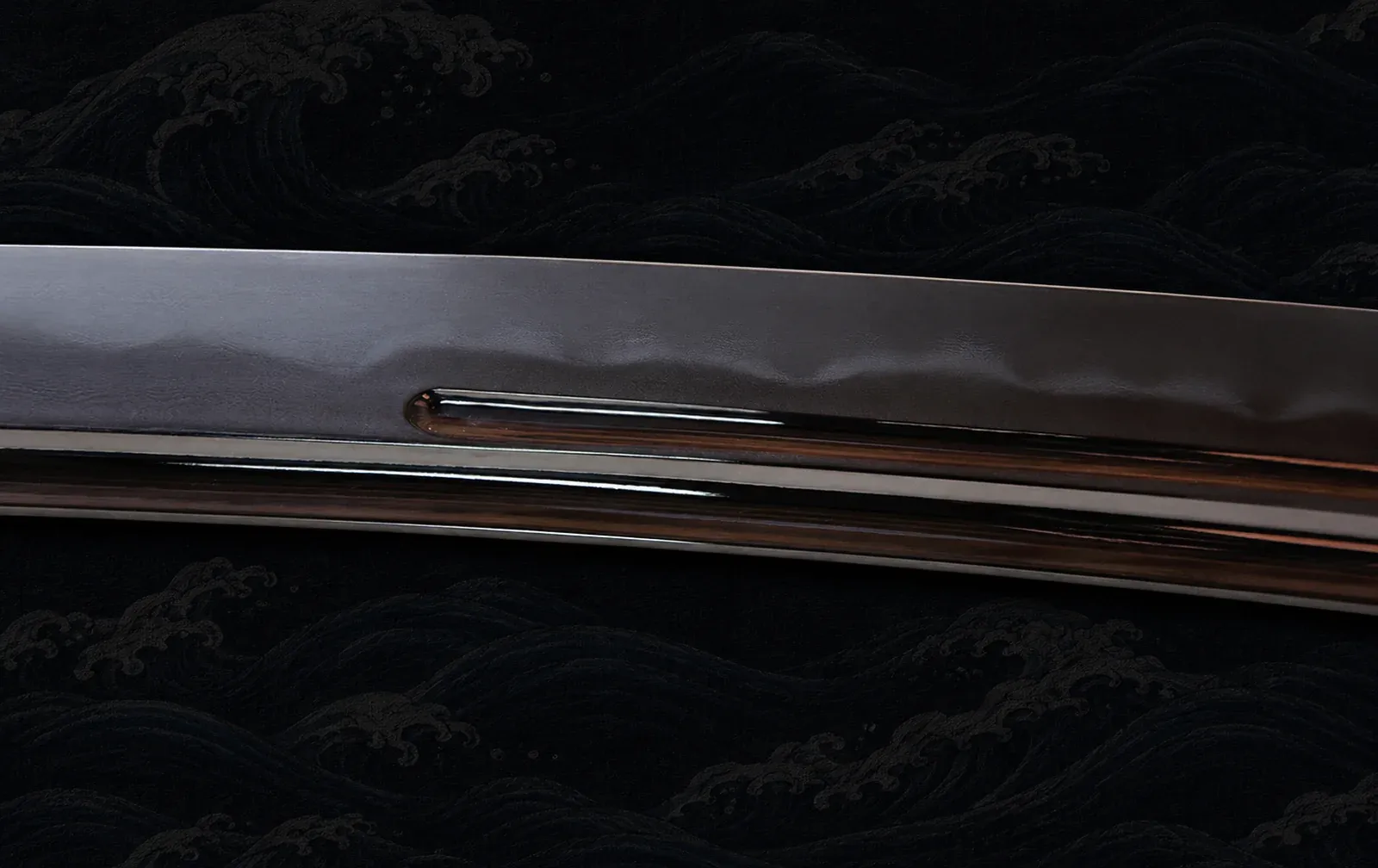
The workshop video draws attention to the groove itself: its smooth surface and precise borders are details that show the care taken during finishing.
03 / THE GROOVE WORK
A Detail That Changes From Side to Side.
The historic Ōdenta is known for wide, shallow bō-hi and an additional narrow soe-bi along one face. The unequal groove arrangement is part of the form that inspired this work.
Look closely at the groove's smooth interior and the light traveling along its edges. These seemingly small passages are an important part of the blade's finished character.
04 / CLAY TEMPERING
Gunome in the Finish.
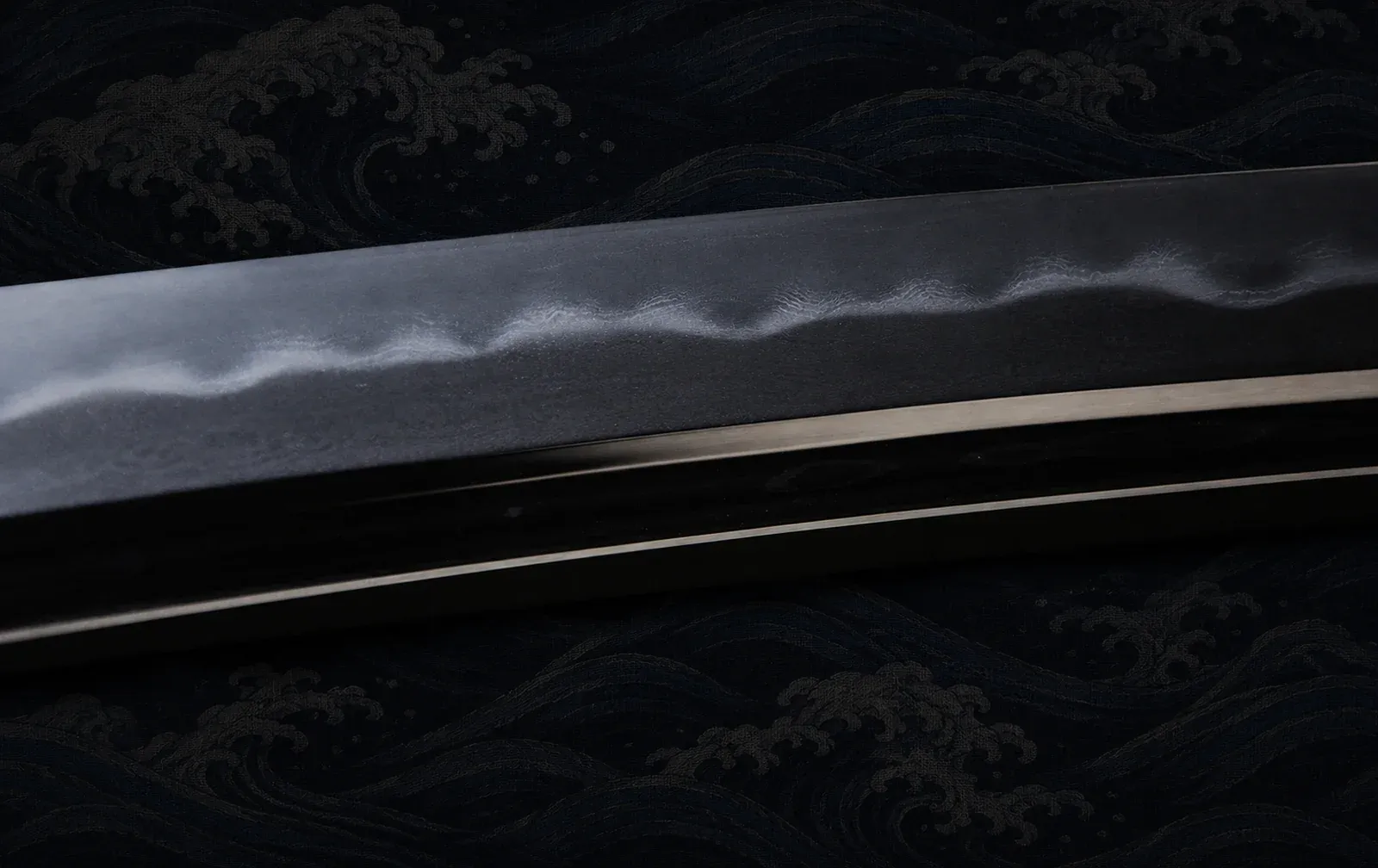
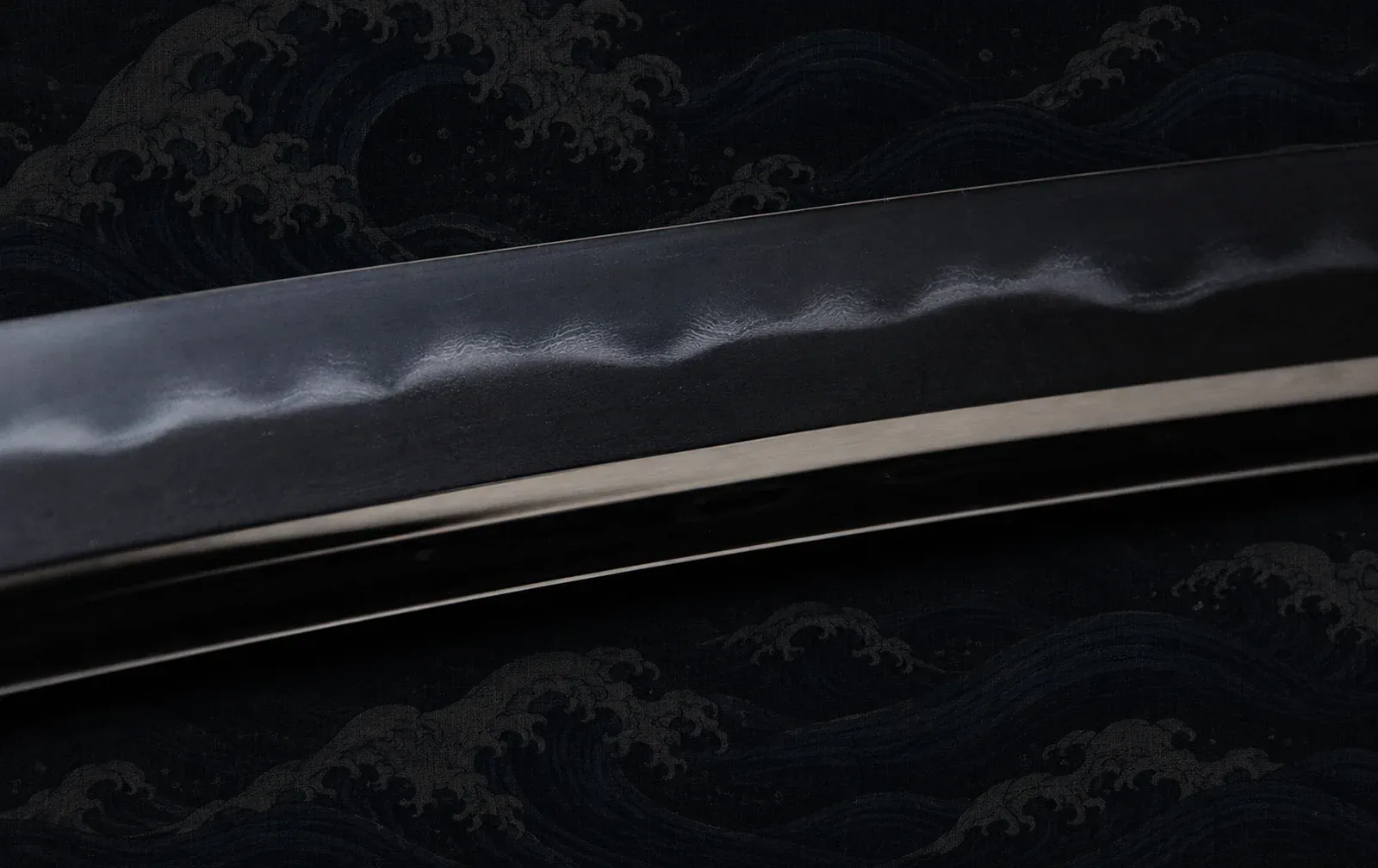
The blade is clay tempered, with a Gunome hamon. The irregular rhythm runs along the hardened edge, becoming more visible as the light changes across the polished steel.
Rather than competing with the broad blade shape, the hamon adds a quieter layer of movement to its surface.
A CLOSER VIEW
The Edge, Up Close.
05 / FROM STEEL TO WOOD
A Fitted Home for the Blade.
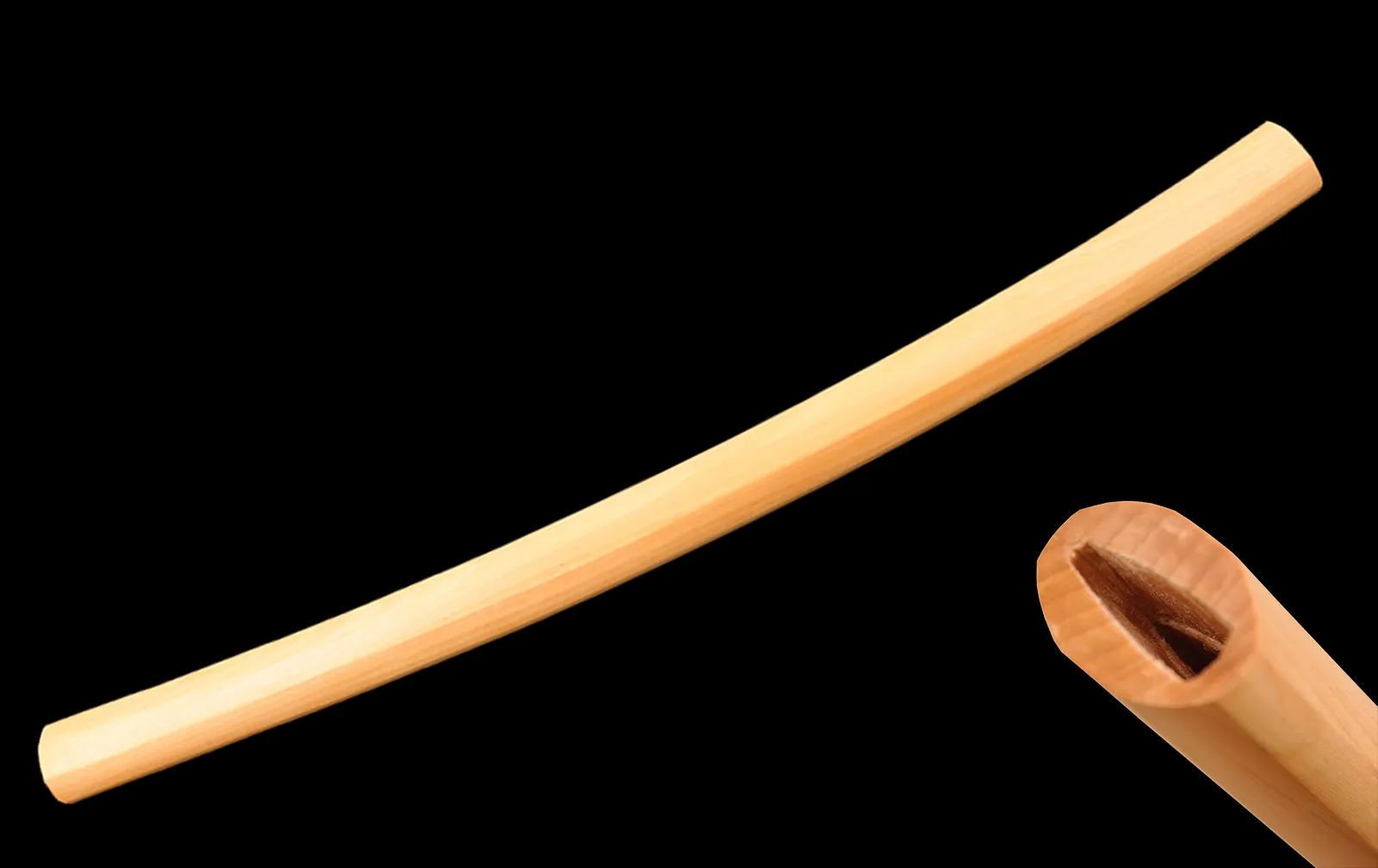
The finished sword rests in a handmade wooden shirasaya. Its long curve follows the blade, while the carved opening shows the fitted interior of the saya.
That meeting of polished steel and carefully shaped wood leads into the next chapter: the shirasaya, copper habaki and the finishing details of the complete work.
NEXT / SHIRASAYA, COPPER HABAKI & HAND FINISHING
STORY 03 / SHIRASAYA & FINISHING DETAILS
The Sword and Its Shirasaya.
Pale wood, curved steel, and a copper fitting at their meeting point. Nothing here needs elaborate ornament to hold the eye.
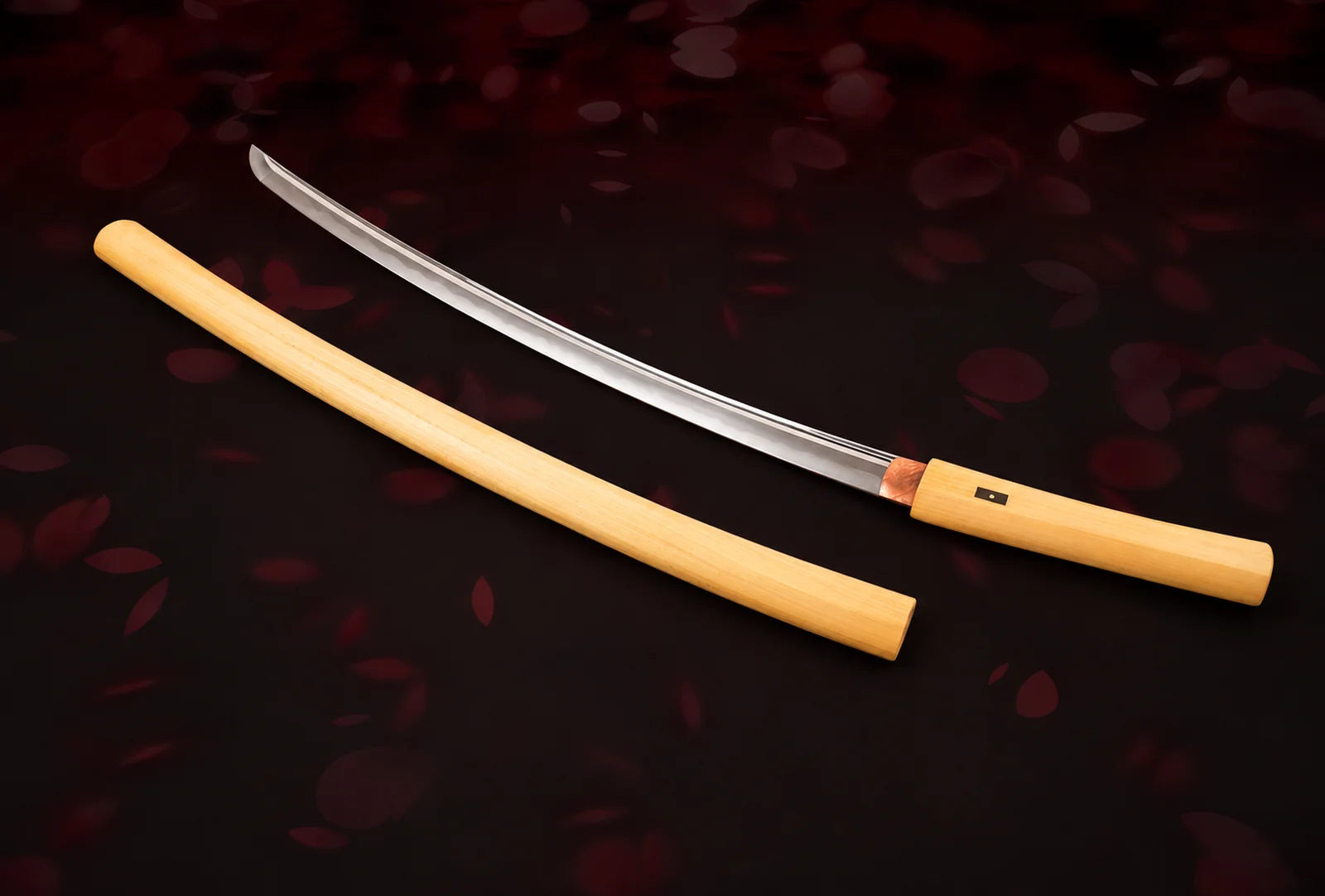
Drawn beside its handmade shirasaya, this Ōdenta Mitsuyo-inspired blade shows the connection between its broad silhouette and the wooden housing made to follow it.
01 / A CURVE IN WOOD
The Form of the Shirasaya.
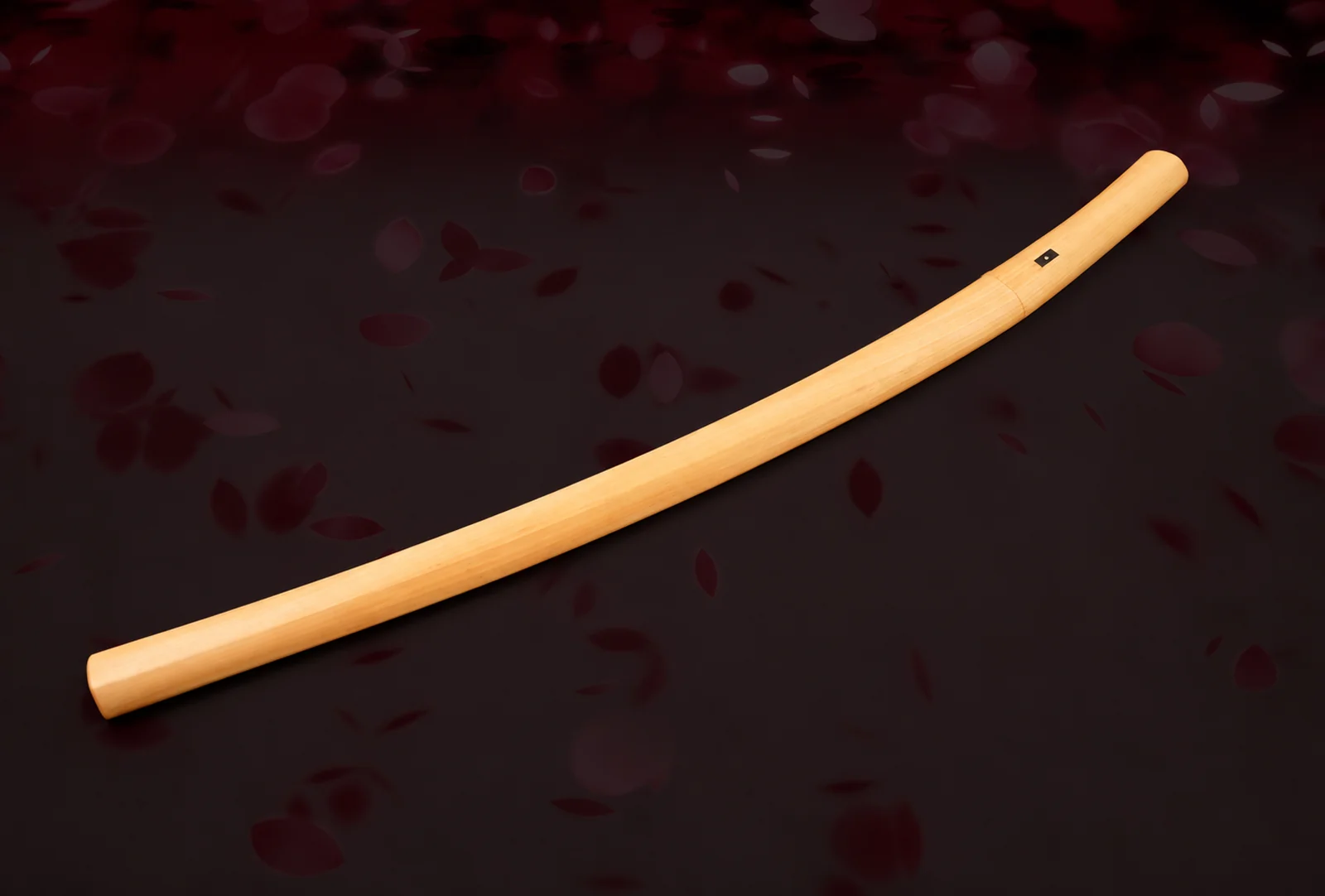
The long, uninterrupted curve is the defining feature of this plain wooden mounting. Its light grain and restrained surface allow the outline to speak for itself.
Made by hand to accommodate the sword, the wooden housing follows the blade's compact, strongly curved form rather than imposing a different shape upon it.
02 / THE OTHER FACE
A Shape That Holds Together.
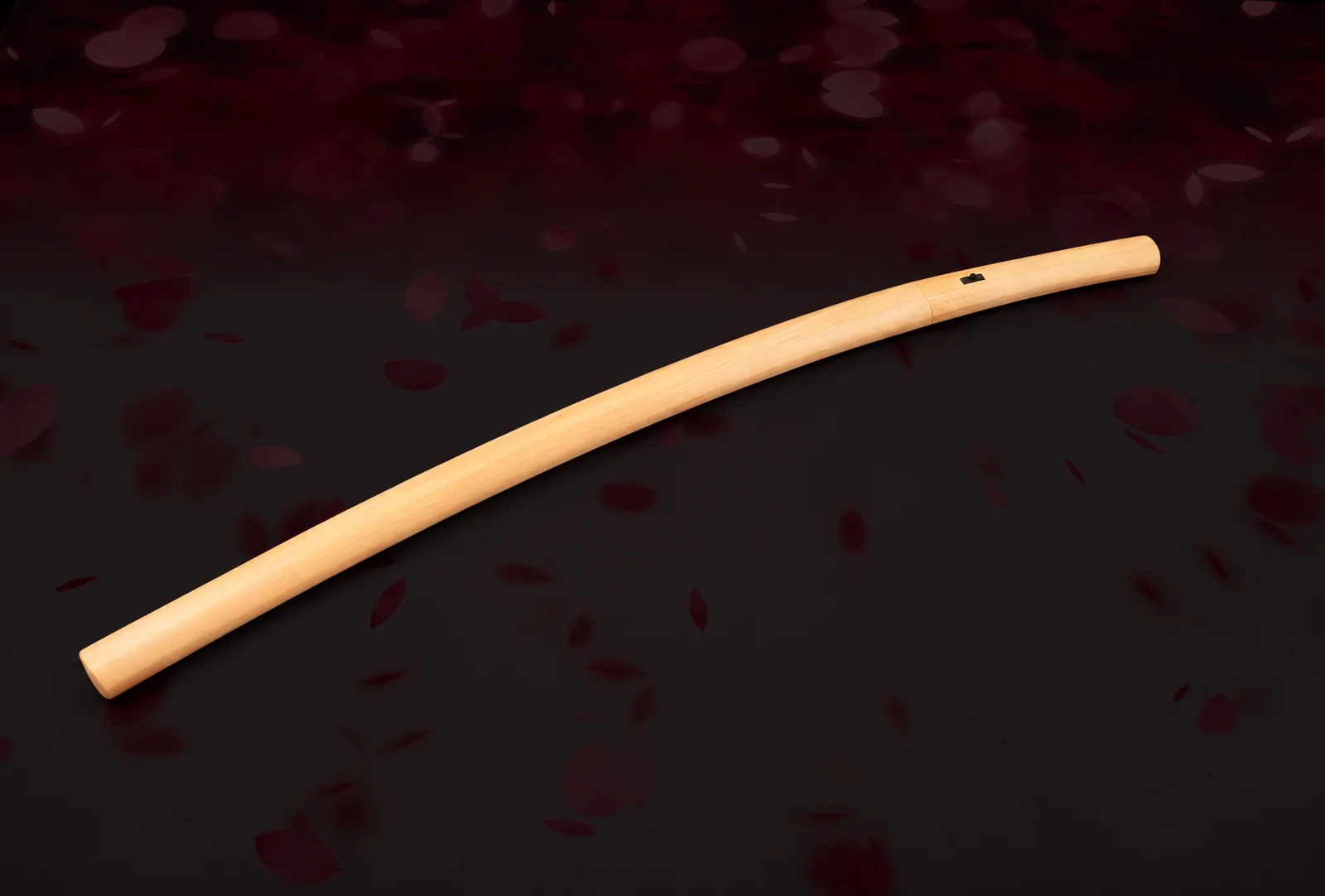
Viewed from the opposite side, the slight variations in the wood grain become visible while the overall silhouette remains consistent.
This simplicity makes small details more important: the alignment of the wooden parts, the evenness of the curve, and the clean transition at the opening.
03 / WHERE WOOD MEETS STEEL
Copper at the Blade's Base.
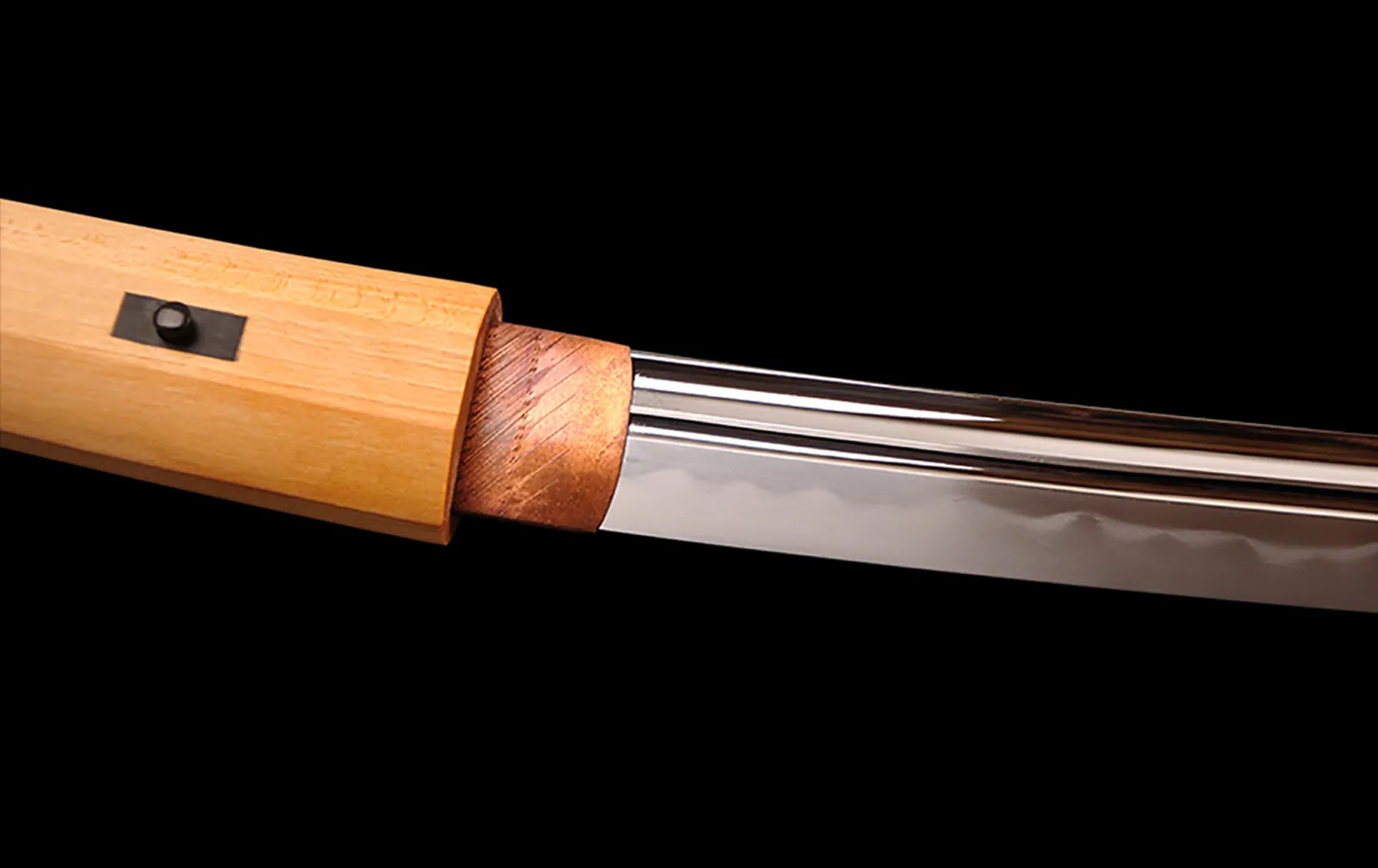
At the transition from the wooden handle to the exposed blade sits a handmade copper habaki, shaped in a traditional Yūjō-inspired style. Its warm tone offers a subtle contrast to the pale wood and polished steel.
A horn mekugi secures the mounting. The fitting and its surrounding joinery give this otherwise unadorned arrangement a carefully considered finish.
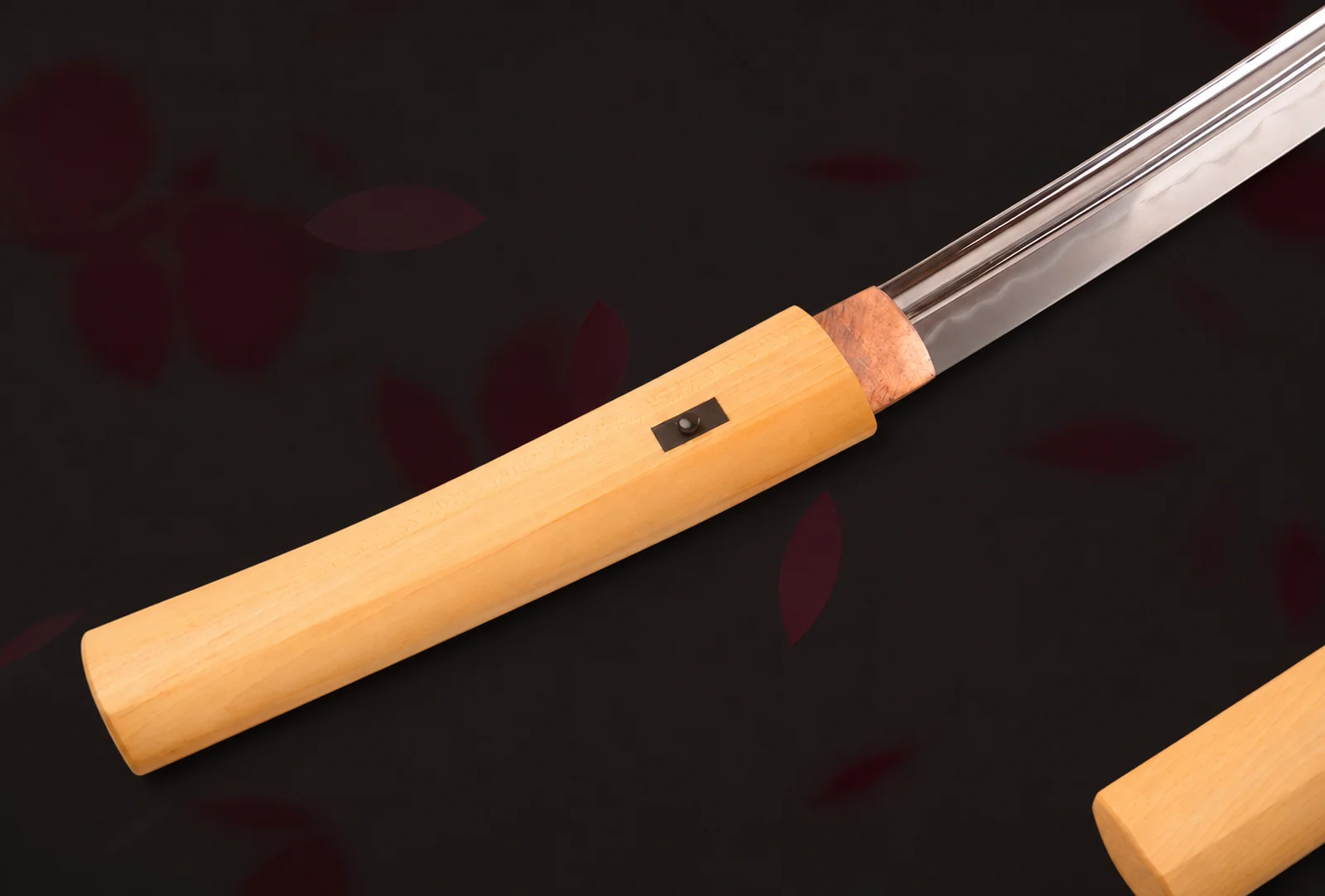
04 / A RECOGNIZABLE LINE
The Groove Within the Silhouette.
The bō-hi is more than a decorative stroke on this broad blade. Its straight, reflective borders introduce another line beside the blade's curve, while the finer soe-bi on one face recalls a defining detail of the historic Ōdenta.
Seen this close, the grooves become a study in transitions: from the recessed channel to the raised steel around it.
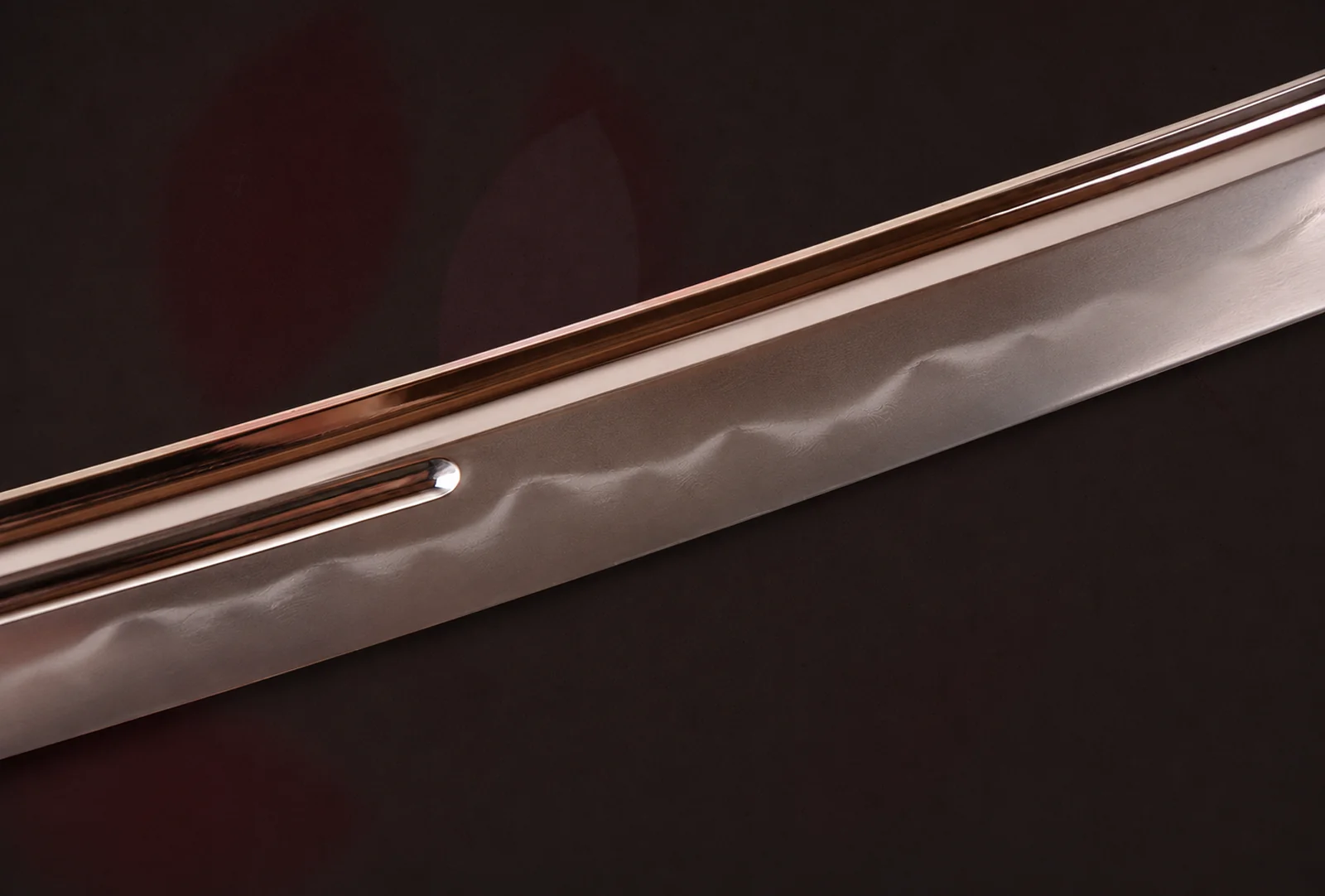
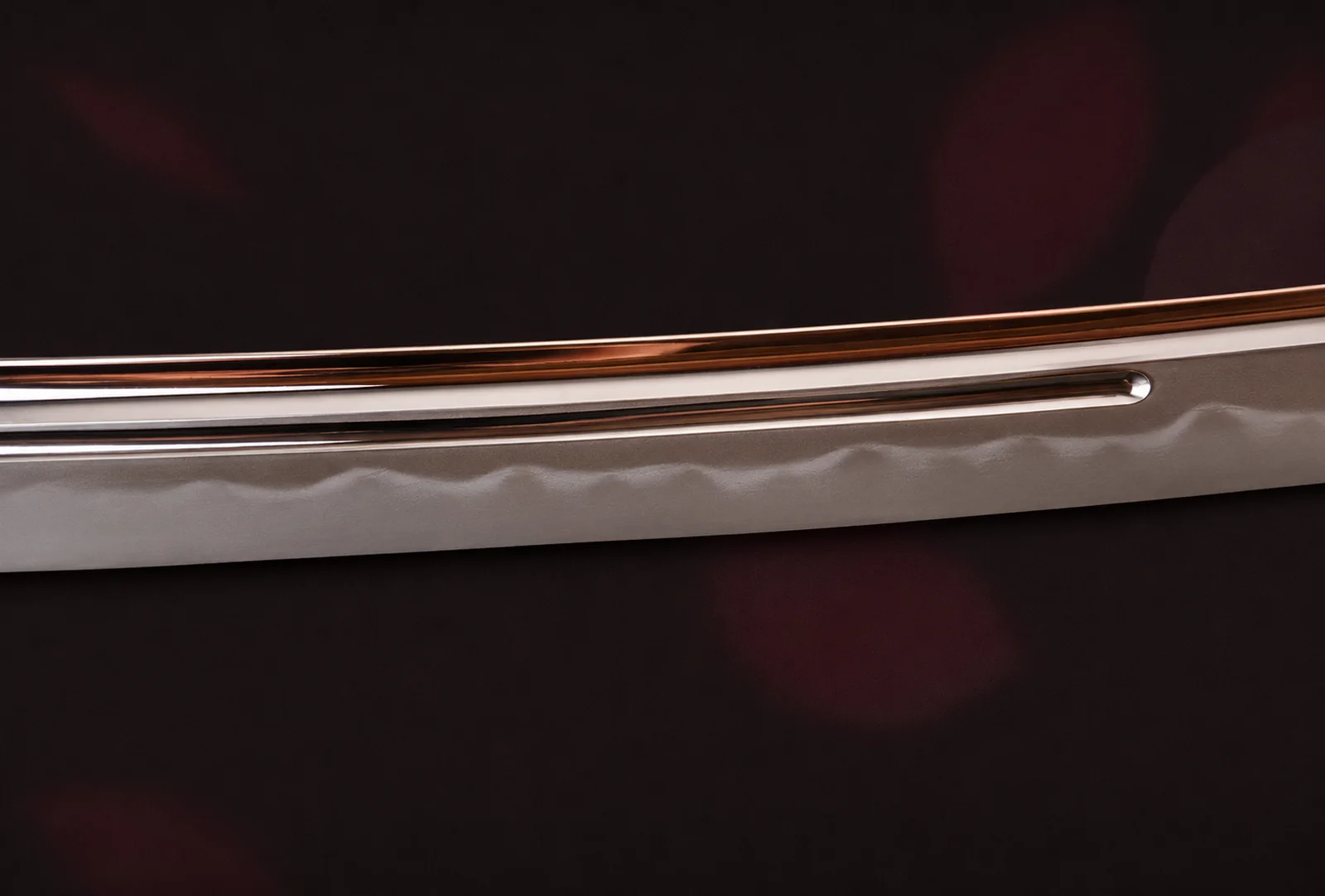
05 / TWO KINDS OF MOVEMENT
Straight Lines. Moving Edge.
The precisely bounded groove and the gently shifting hamon create two different rhythms across the steel.
The effect changes with the viewing angle. A line that appears quiet in one light becomes pronounced in another, without changing the underlying blade shape.
06 / THE SURFACE IN LIGHT
A Finish That Reveals Form.
The Shiage-togi polish makes the broad blade face, groove and edge readable as distinct surfaces. As the reflected light travels along the steel, the form becomes easier to appreciate without added ornament.
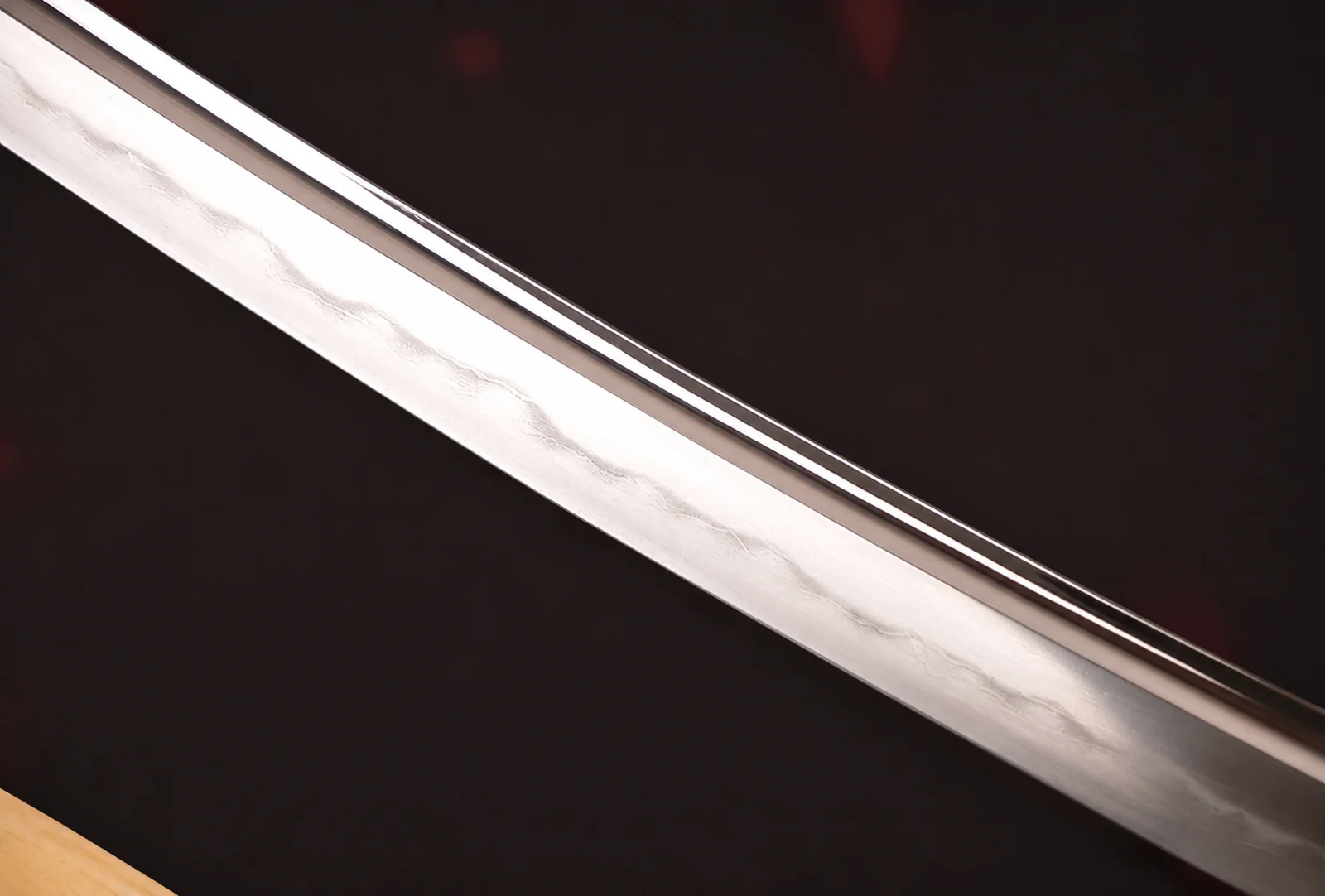
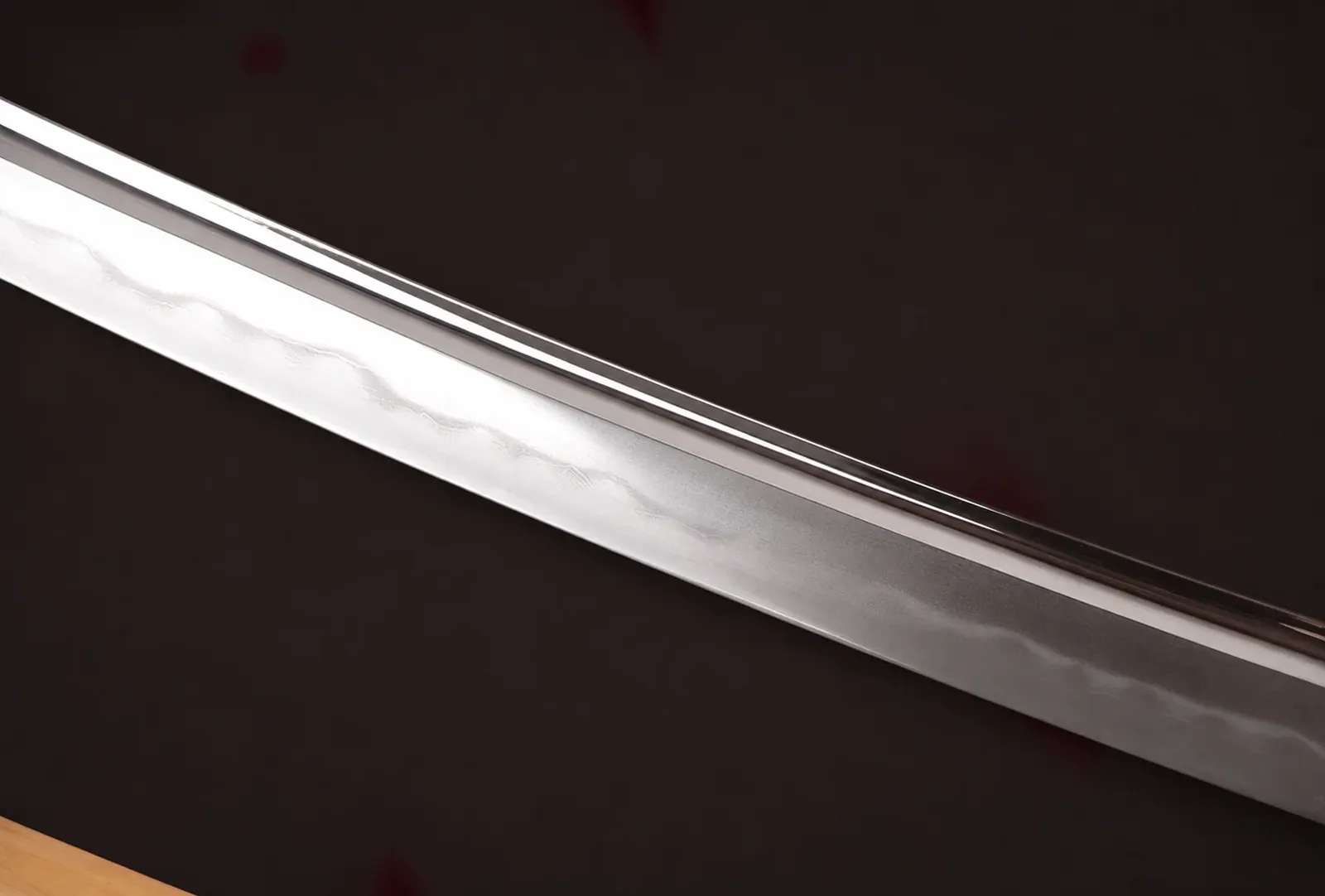
07 / THE LAST CLOSE VIEW
The Character of the Whole.
At this distance, the Gunome pattern becomes the focal point. Step back, and it returns to its place within the full curve of the sword.
That balance is the character of this Ōdenta-inspired work: broad forged steel, an expressive hardened edge, and a plain wooden shirasaya shaped to accompany it.
ŌDENTA MITSUYO / THE FINISHED WORK
A quiet wooden housing. A carefully fitted copper joint. A broad blade whose character is revealed in the smallest changes of light.
Reviews
There are no reviews yet.